Lou Jaworski

 “Nothing” work list


fullsizeoutput_1c5cLou Jaworski, Hyper Figure standing, 2017, ferrite magnet, dimensions variable


fullsizeoutput_1c5dLou Jaworski, Hyper Figure lying, 2017, ferrite magnet, dimensions variable


fullsizeoutput_1c5eLou Jaworski, Untitled, 2017, iron meteorite, brass pencil. 14 x 0,8 x 0,8 cm


fullsizeoutput_1c5fLou Jaworski, Untitled, 2017, iron meteorite, brass pencil. 14 x 0,8 x 0,8 cm (detail)


fullsizeoutput_1c60Lou Jaworski, Untitled, 2017, sewing needle, gold 7 cm


lou2
Lou Jaworski, Presence (silent version) 2017, vinyl 12 inch, edition of 2+1 AP


All images courtesy of the artist.

Tim Bennett

Beletage – 15th September – 27th October


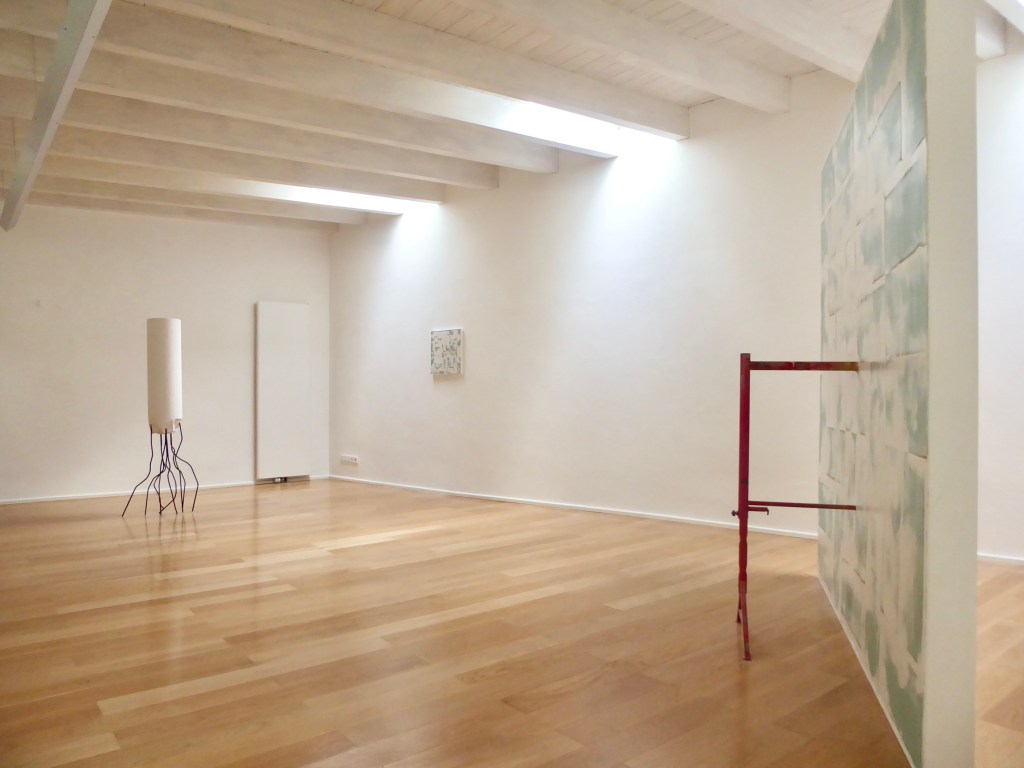
Beletageinstalltionview1Tim Bennett, Beletage, installation view. Photo: Johannes Wende


Beletageinstallation3Tim Bennett, Beletage, installation view. Photo: Johannes Wende


StillStandingTim Bennett, Still Standing, 2017,185 x 55 x 55 cm, plaster, steel and lacquer. Photo: Johannes Wende


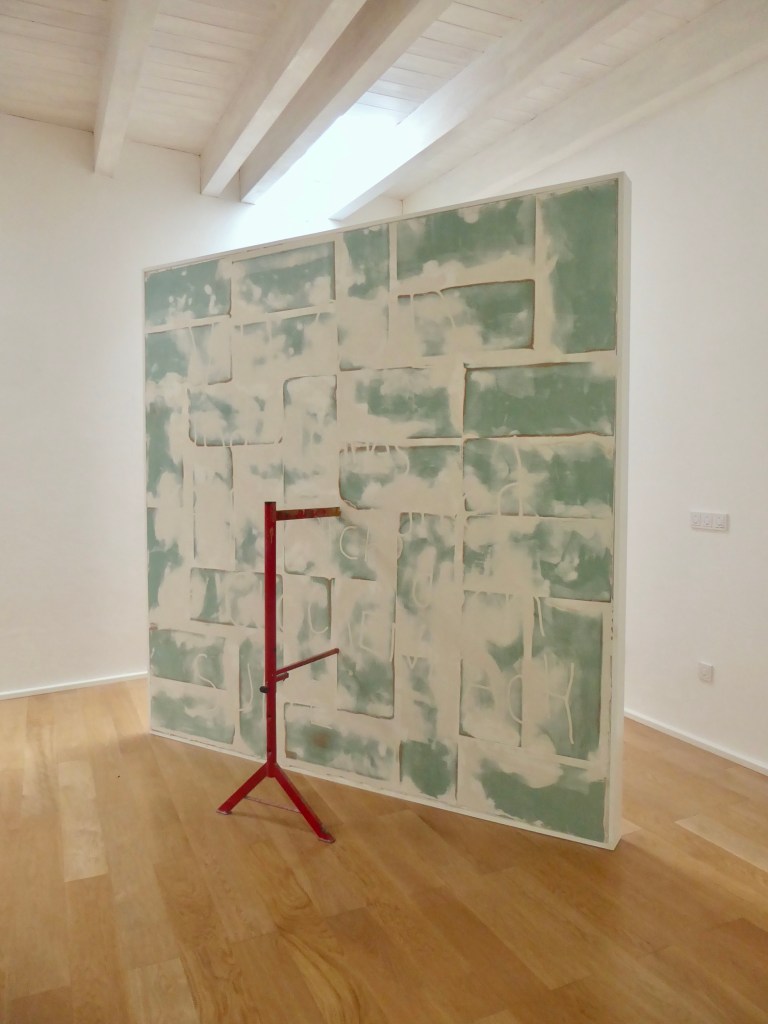
VielGeldTim Bennett, Untitled (Viel Geld und kleines Glied, kauf er sich doch ‘ne Glockenbachsuite), 2017, 246 x 246 x 80cm, plasterboard, plaster, wooden frame and steel. Photo: Johannes Wende

Tim Bennett

Beletage – images and text 15th September – 27th October


fullsizeoutput_1c51Tim Bennett, Beletage, installation view.


fullsizeoutput_1c52Tim Bennett, Beletage, installation view.


fullsizeoutput_1c40Tim Bennett, Still Standing, 2017,185 x 55 x 55 cm, plaster, steel and lacquer.


fullsizeoutput_1c43Tim Bennett, Untitled (Viel Geld und kleines Glied, kauf er sich doch ne’ Glockenbachsuite), 2017, 246 x 246 x 80 cm, plaster, plasterboard, wooden frame and  steel.


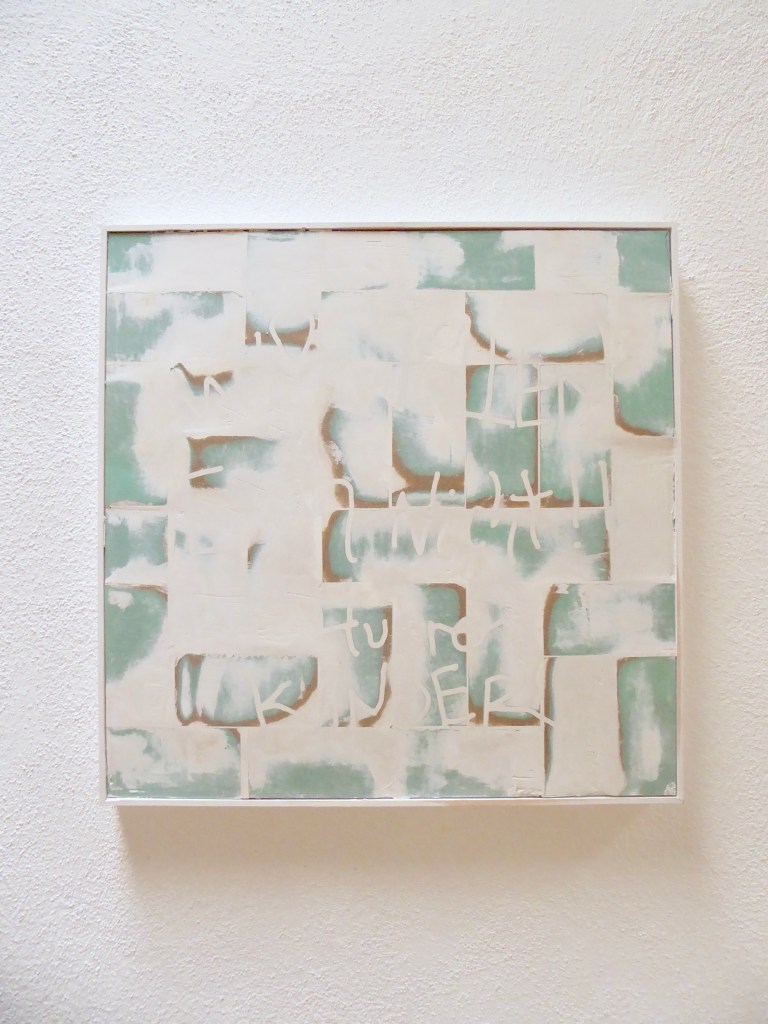
fullsizeoutput_1c49Tim Bennett, Untitled (Wir wollen euch nicht ihr huhren Kinder), 2017, 50 x 50 cm, plaster, plasterboard, wooden frame.


For his solo exhibition at GiG Munich, Tim Bennett (b. 1973, Rochdale) has created a new body of work, consisting of one large freestanding panel, Untitled (Viel Geld und kleines Glied, kauf’ er sich doch ne Glockenbachsuite), one small type painting, Untitled (Wir wollen euch nicht ihr huhren kinder) and one column-like structure resting on tangled steel, Standing Still. The starting point for the work was the process of gentrification, especially visible in the surrounding Glockenbach area. The plasterboard panels incorporate graffiti slogans, including one seen recently on the side of the newly built Glockenbachsuiten; Standing Still resembles a re-enforced concrete column, as found on a building site, toppled over during a rampage.

Despite its political aspects, the work is not intended to be a critique of the capitalist system of which gentrification is only a symptom. It is neither the kind of critical political art found many cultural institutions, nor a provocative gesture along the lines of urban artists such as Banksy. Instead, by acknowledging the all-subsuming nature of capitalism, Tim Bennett works from within. He takes a graffiti slogan and quite literally, by carefully remaking it in plaster, gentrifies it.

His work engages with the structure of disavowal characteristic of corporate anti-capitalism. Such is the time in which we live that most if not all anti-capitalist gestures have been incorporated within the capitalist system, alternative cultures given space in the mainstream. Graffiti slogans are a particularly ineffectual kind of protest, precisely because they offer us the space for rebelliousness – who doesn’t find these slogans a little bit funny? – while leaving us free to participate in capital exchange without guilt or shame. Their kind of protest leaves our status as consumers intact.

By incorporating corporate anti-capitalism structure of disavowal within his work, Tim Bennett’s Beletage demonstrates how we are participants in the process of gentrification we allegedly deplore. He does so however, with humour and good grace.

Tim Bennett

“Beletage”: Press release


image1

Vernissage: Freitag, 15. September, 18 Uhr – 21 Uhr
Einführung: Dr. Magdalena Wisniowska
Ausstellungsdauer: 16. September – 27. Oktober 2017
Geöffnet: Montag – Donnerstag, 15-18 Uhr,
bitte nach Vereinbarung unter 01795662699 und gigmunich@gmail.com


Beletage, Tim Bennett’s first show for GiG Munich takes gentrification as a theme. Taking the anger evident in the scribbles and defacement of gentrified property as his starting point, he incorporates these acts of destruction into his formal sculpture. “Yuppies verpisst euch” can be glimpsed in the large, freestanding picture made of plasterboard; a broken reinforced column stands precariously in front of it, as if left behind after some kind of rampage.

The work dissects the mechanisms of protest, to demonstrate the extent of our complicity in the workings of capital. It acknowledges our current inability to offer any viable political-economic alternative to the capitalist system.


Tim Bennetts erste Ausstellung für die GiG Munich – „Beletage“ – setzt sich mit dem Thema Gentrifizierung auseinander. Indem er die Wut, die sich in den Schmierereien und Verunstaltungen von gentrifiziertem Eigentum als Ausgangspunkt seines Werks nimmt, integriert er diese Akte der Zerstörung in seine formellen Skulpturen. „Yuppies verpisst euch“ kann man in dem großen, freistehenden Bild aus Gips lesen; eine gebrochene, verstärkte Säule steht gefährlich nah davor als ob sie so nach einer Randale einfach zurückgelassen worden wäre.

Die Arbeit analysiert den Mechanismus des Protests, um unser Ausmaß an Komplizenschaft bezüglich der Funktionsweise des Kapitals deutlich zu machen. Es bestätigt unsere aktuelle Unfähigkeit irgendeine realistische politisch-wirtschaftliche Alternative zum kapitalistischen System zu finden.

trans. Nadja Gebhardt


EASY images and text

fullsizeoutput_1b0d

fullsizeoutput_1b13

fullsizeoutput_1b2a

fullsizeoutput_1b2d

fullsizeoutput_1b6b

fullsizeoutput_1b69

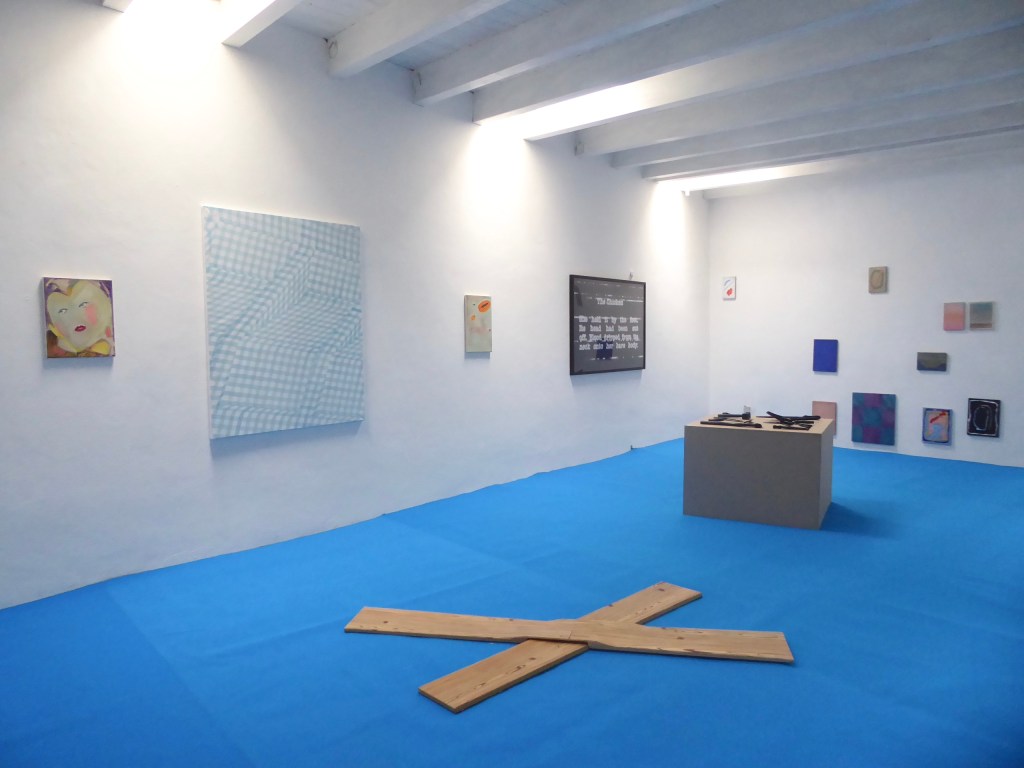
The exhibition was not meant to be called “EASY.” As is often the way, it started with the opposite idea. At the time I was reading Deleuze’s late essay on Beckett, “The Exhausted,” and wanted to do a show, which would make use of its definition of the image. “It is extremely difficult to make a pure and unsullied image, one that is nothing but an image,” writes Deleuze and seeing the late Beckett plays I could believe this was the case. “Of course it is not easy to make an image…”

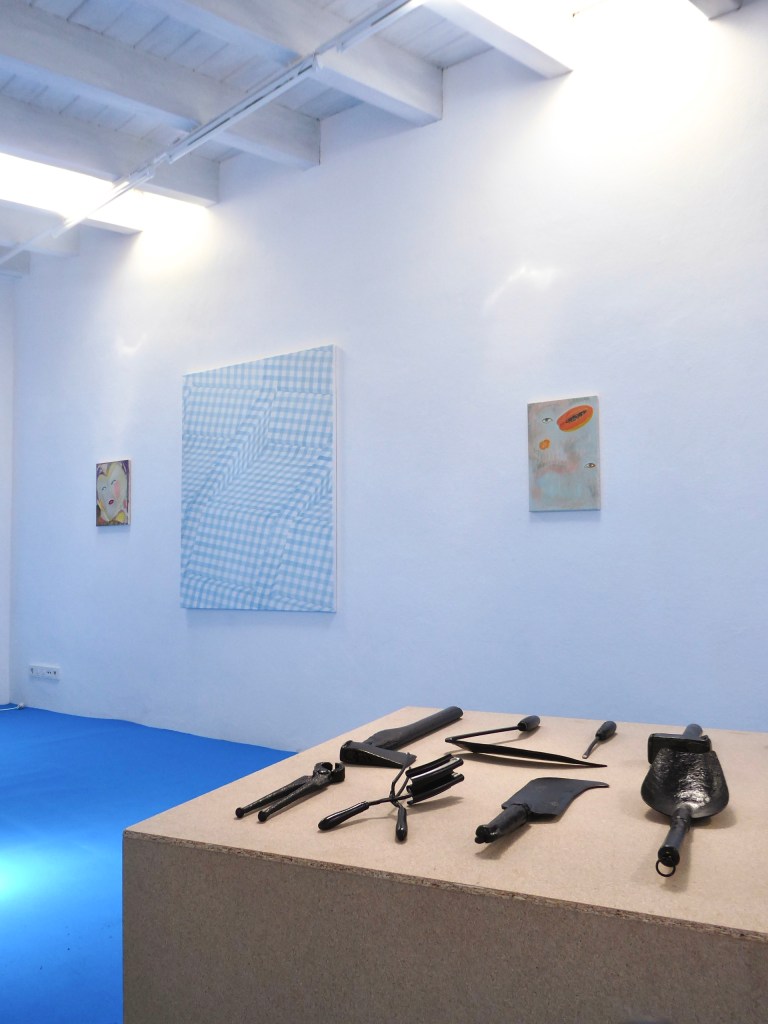
As all four artists – Jonah Gebka, Hannes Heinrich, Steffen Kern and Janka Zöller – work with images, Deleuze’s definition seemed appropriate. Things changed after I visited them in their studio. We were talking about the possibilities available to contemporary painting and I gave the example of Gerhard Richter – how at the time, to do both, abstraction and figuration, was a challenge that filled him with anxiety. To which Janka replied, “What, only two? Bah!”

Painting now is not difficult in the same way it was 40, 30 or even 10 years ago. Opening up to new possibilities, expanding some pre-conceived notion of what painting might be, what it might do in a contemporary critical context no longer holds the same kind of urgency. And if not, if painting is no longer defined by that kind of hardship and struggle, it would seem painting must be easy instead.

In various ways, Jonah Gebka, Hannes Heinrich, Steffen Kern and Janka Zöller acknowledge this lack of anxiety in their work. For them the fact that painting might seem easy is a strategy, offering a means with which they can engage with the viewer.

Jonah’s work is about surface. Through a variety of means (digital manipulation, engagement with printing processes, the use of mixed media) he makes the surface of the image, specifically its physical aspect, apparent to the viewer. For GiG, he shows a watercolour on paper, stretched around its wooden frame. The image is of a generic blue and white checked deck chair, like those found around pools in holiday resorts around the world. Yet the image is not found, but carefully constructed by the artist.

Janka’s interest lies in contemporary cultures, both high and low, traditional and post-digital. For her current project – and she has many – Janka combines lyrical, Matisse-like abstractions with paintings of eyes taken from her Instagram selfies. Always starting from scratch, always on the move, she paints with restless energy, quickly and directly. The two components of her work, abstraction and figuration, sit next to each other without speaking, never coming together to form a coherent whole.

Hannes works with painting’s capacity for illusion. At its most basic, a grey patch can be a shadow; a few crisscrossing lines make it clear that one lies on top of the other. Is it surprising how little it takes to produce the impression of an endless sunset? He paints wooden frames around his paintings and uses paintings of wood to make sculptures. But unlike the mythical Parrhasius he never tries to trick the viewer into believing that what he sees, might be real. For Hannes, illusion is something very obvious and in its obviousness, intimidating.

Steffen likes to transform one visual register into another, often changing the original narrative along the way. For his drawing “O.T.” he takes a performance by Ana Mendieta and describes it in a few lines of text, referring to the filmed nature of the piece through the introduction of VHS type glitches. In “Props” he takes some tools he found abandoned in an attic and covers them in black paint. They now exist in a no-man’s land, never quite achieving their fictional potential because never quite losing their status as useful objects.

Magdalena Wisniowska, 2017

Opening speech to Abstract Pleasures

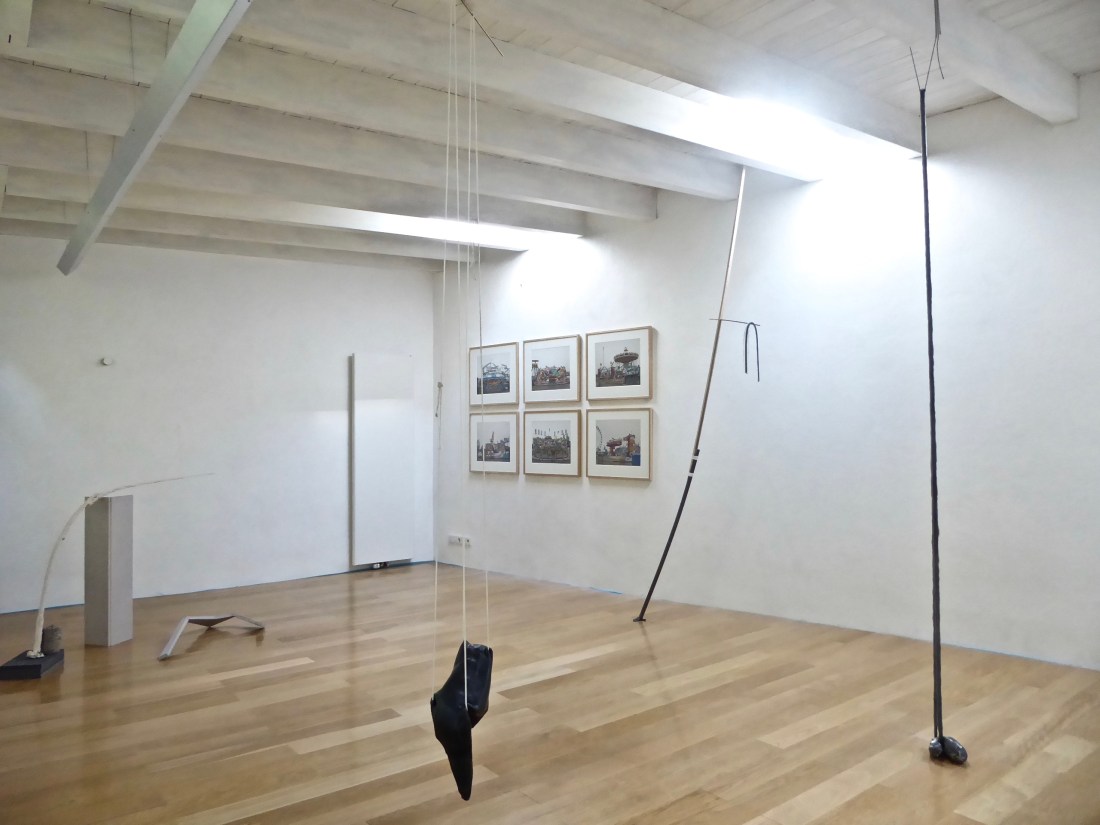
Hello and welcome to GiG Munich’s autumn exhibition coinciding with the Open Art Weekend 2016, ‘Abstract Pleasures,’ featuring new site specific sculptural work by Kathrin Partelli and a selection from the photographic series, Sleeping Beauties, by Thomas Wieland. Those of you who have visited us before, may know that in my introductions I do not give a standard biography of the artist, whose work GiG Munich is showing. Instead, I would like to talk a little about the title, ‘Abstract Pleasures’ and my reasons for bringing these two very different artists, sculpture and photography together.

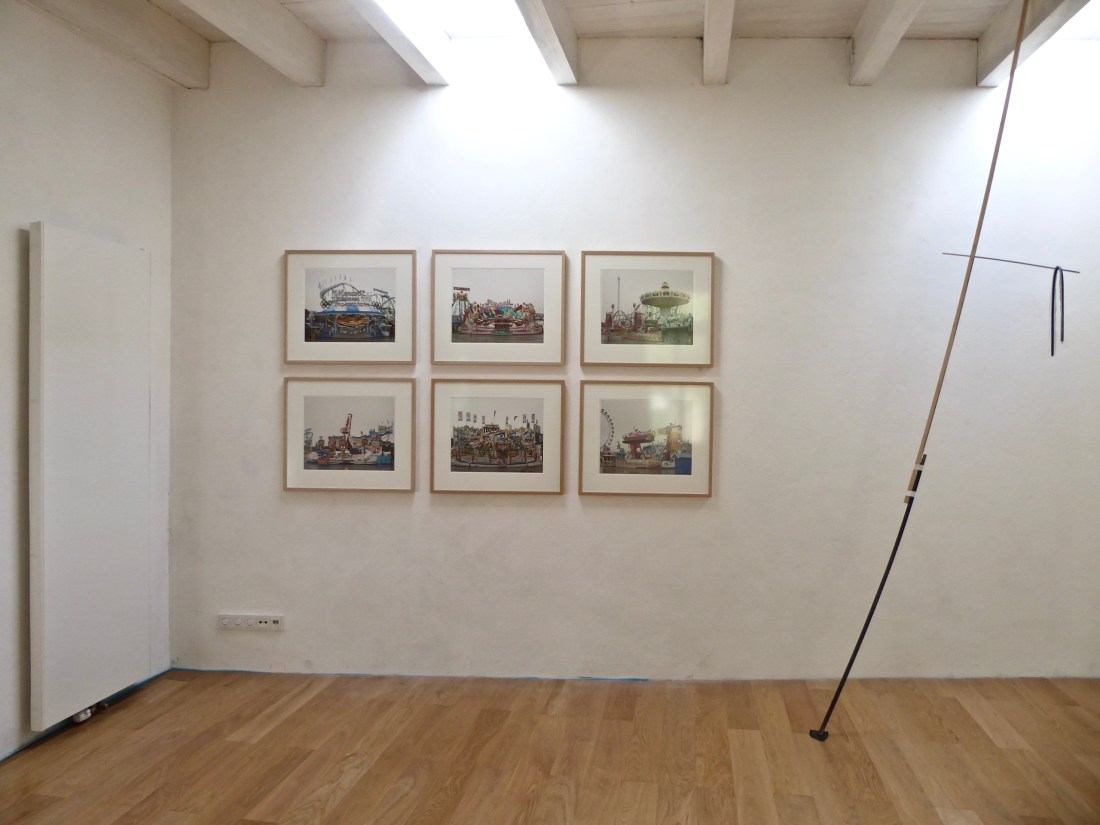
Let us turn to the second part of the title – pleasure – first. That the show has something to do with pleasure is immediately apparent from Thomas Wieland’s photos, which take the fairground rides of the annual Oktoberfest as a theme. Although the Oktoberfest marks the celebration of the marriage of Prince Ludwig and Therese of Saxe-Hildburghausen, the idea of the amusement park with fairground rides developed from the original pleasure gardens of the 18th century. Open to the public, these served as early venues of entertainment for the masses.

On the other hand, the first part of the title – abstract – seems to refer more to the work of Kathrin Partelli. Formal in quality, with a strong physical aspect her sculpture belongs to a minimalist tradition, rejecting composition and figuration for the disjunctive and the abstract. We can distinguish certain basic materials (metal, plaster and wood, wax and rubber) and certain basic mathematical shapes (lines, curves, quadrilaterals). Physical forces, such as stretching, pulling, and bending under gravity are at work. No element of construction is hidden; everything is laid out in a straightforward manner.

Yet equally, there is an abstract quality to Wieland’s photography. The very things which let us focus on the fairground rides – the fact that the images are unpopulated, that each ride is photographed separately from a standard distance, the neutral light, the depth of field and the cropping – also renders the image flat. The rides look more like a collage than a physical object, the various elements, bright colours, lights, slogans, placed next to each other without forming a coherent whole.

And similarly there is a pleasureable quality found in Kathrin Partelli’s work, a kind of humor, in common with the appropriation and the subversion of minimalist vocabulary by feminist and art povera artists. Her squares are wonky, the pieces of elastic might suddenly snap, the curved piece of plaster rests precariously on a gypsum board about to break.

Work that is about pleasure yet abstract, work that is abstract yet pleasureable – this is certainly one interpretation of the title. Nevertheless, ‘Abstract Pleasures’, refers to more. As mentioned in the brief text, which accompanied the invitation, it is also a matter of aesthetics. The pleasure of contemplation is associated with the appreciation of the beautiful object. First identified by the German philosopher, Immanuel Kant, this kind of pleasure has less to do with the object per se (indeed, Kant stresses that there can be no beautiful object), and more with the experience the human subject has when faced with beauty. Pleasure arises from the way our mind is engaged with the object of beauty. It is occupied with the object; it thinks about the object – and yet, despite all its efforts it cannot come to any conclusion other than, this object is beautiful.

If we now look at the work, we can see that, in both cases, it draws our attention. The photos rendered flat, allow our gaze to wonder, from slogan to paintwork, from light to colour. Similarly, the level of detail in Kathrin Partelli’s work belies its simple origins. There is a logic to her objects. No material is used more than once; the objects go from light to dark and from hard to soft; a curve in lead on the floor is repeated with a curve of rubber; what seems like a black stick is actually a drawing. We are occupied discerning these details, but as said, these objects allow no further conclusions to be drawn. Instead, they bring attention to the act of contemplation itself.

This is important, because historically speaking very few artworks engage with the pleasures of contemplation. Minimalism, art povera, or feminist art are more concerned with expanding the notion of the artwork. Indeed, it is rare that in everyday life we consider the joys of contemplation. Referring to Thomas Wieland’s photos: we are too busy spinning around half-drunk on the Oktoberfest rides to be thinking about their structures.

And all of this to what end? The pleasures of contemplation alert us to a basic relation, the fact we do have a relation to the outside world. That we can look at an object and recognize it as an object – that we think about the object and draw conclusions – this should be a source of wonder. I hope, that in a small way, this wonder is celebrated by the artwork featuring in this exhibition.

Magdalena Wisniowska, 2016

Abstract Pleasures

We are happy to announce GiG Munich’s latest exhibition, opening on the 10th of September, 3 pm. Hope to see many of you there!

Abstract pleasures web

“Abstract Pleasures” brings together a site-specific sculpture installation by Kathrin Partelli and Thomas Wieland’s series of photographs, Sleeping Beauties. The exhibition unites Partelli’s ephemeral, open-ended structures with Wieland’s images of empty Octoberfest rides to present the pleasures of contemplation: the enjoyment found in complex constructions.

Kathrin Partelli creates sculptures and large-scale installation pieces in the anti-monument tradition. Thomas Wieland is a photographer, who draws on his experience in the history of science. Already exhibiting on the online platforms, LandscapeStories and Humble Art Foundations, we are pleased to be the first gallery to present his work.


“Abstract Pleasures” bringt eine standortspezifische Skulptur von Kathrin Partelli und die Fotoserie “Sleeping Beauties” von Thomas Wieland zusammen. Sie vereint Partellis flüchtige, offene Strukturen mit Wielands Bildern der menschenleeren Fahrgeschäfte auf dem Oktoberfest, die das Vergnügen der Komtemplation präsentieren: die Freude, die in komplexen Konstruktionen zu finden ist.

Kathrin Partelli schafft Skulpturen und großangelegte Installationen in der Tradition der Anti-Monumente. Thomas Wieland ist ein Fotograf, der aus seiner Erfahrung in der Technikgeschichte schöpft. Nachdem er seine Arbeiten bereits auf den Onlineplatformen LandscapeStories und Humble Art Foundation ausgestellt hat, freuen wir uns diese nun als erste Galerie zu präsentieren.

trans. Nadja Gebhardt

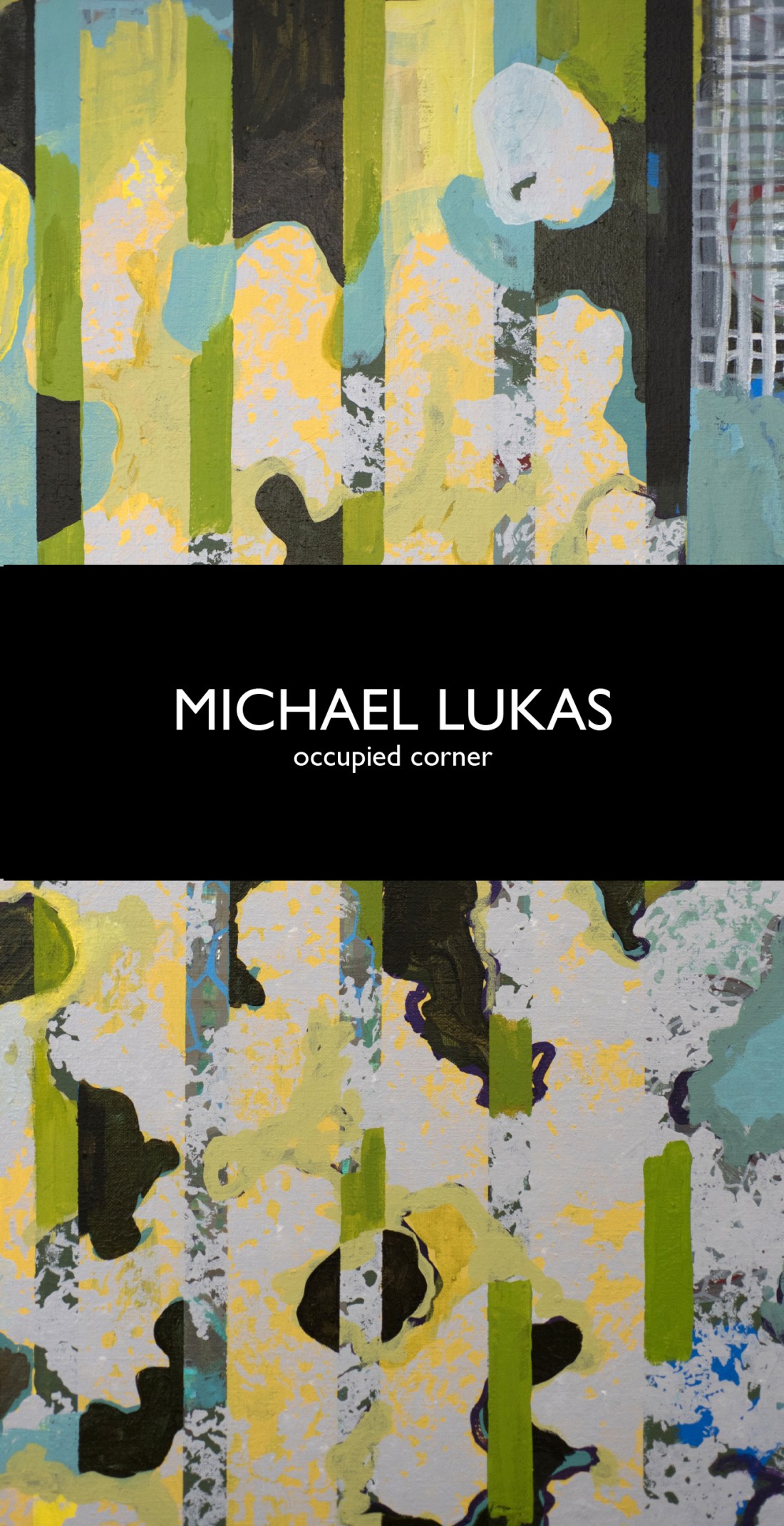
MICHAEL LUKAS occupied corner – opening soon!

reminder

Eröffnung: Samstag, den 18. Juni 2016 um 15:00 Uhr

Einführung: Dr. Magdalena Wisniowska

Ausstellungsdauer: 18. Juni – 26. Juli 2016

Öffnungszeiten: Montag – Donnerstag 15:00 – 18:00 Uhr und nach Vereinbarung unter: gigmunich@gmail.com


 Occupied Corner ist die neueste raumbezogene Arbeit von Michael Lukas, die er speziell für GIG Munich gestaltet. Die Installation ist eine fließende geometrische Konstruktion von Beziehungen, Verbindungen und Netzwerken, in der sich die einzelnen Elemente in ständiger Spannung befinden. In ihr vereint er Gemälde, Skulpturen und Zeichnungen, um unsere Rolle im größeren Zusammenhang einer globalen Landschaft zu untersuchen.

Der etablierte Münchner Künstler mit zahlreichen Einzel- und Gruppenausstellungen arbeitet auch als Kurator. Er organisierte Ausstellungen mit internationaler Besetzung u.a. in München den Weltkongress für Kartographie 2006 und in Berlin die von der Kulturstiftung des Bundes geförderte Ausstellung Luise. Die Inselwelt der Königin 2010. 


Occupied Corner is the latest art installation by Michael Lukas, made specifically for the GiG Munich site. The installation constructs a fluid geometry of relations, connections and networks, its different elements held in continual tension. Incorporating painting, sculpture, and drawing, it critically examines our place within a larger global landscape.

Michael Lukas is a well-established Munich artist, with numerous solo and group exhibitions. He has also worked as a curator, most notably organising the World Congress for Cartography in 2006 and the Berlin exhibition, Luise Die Inselwelt der Königin in 2010.


drAwn 2gether: Dan Wallis

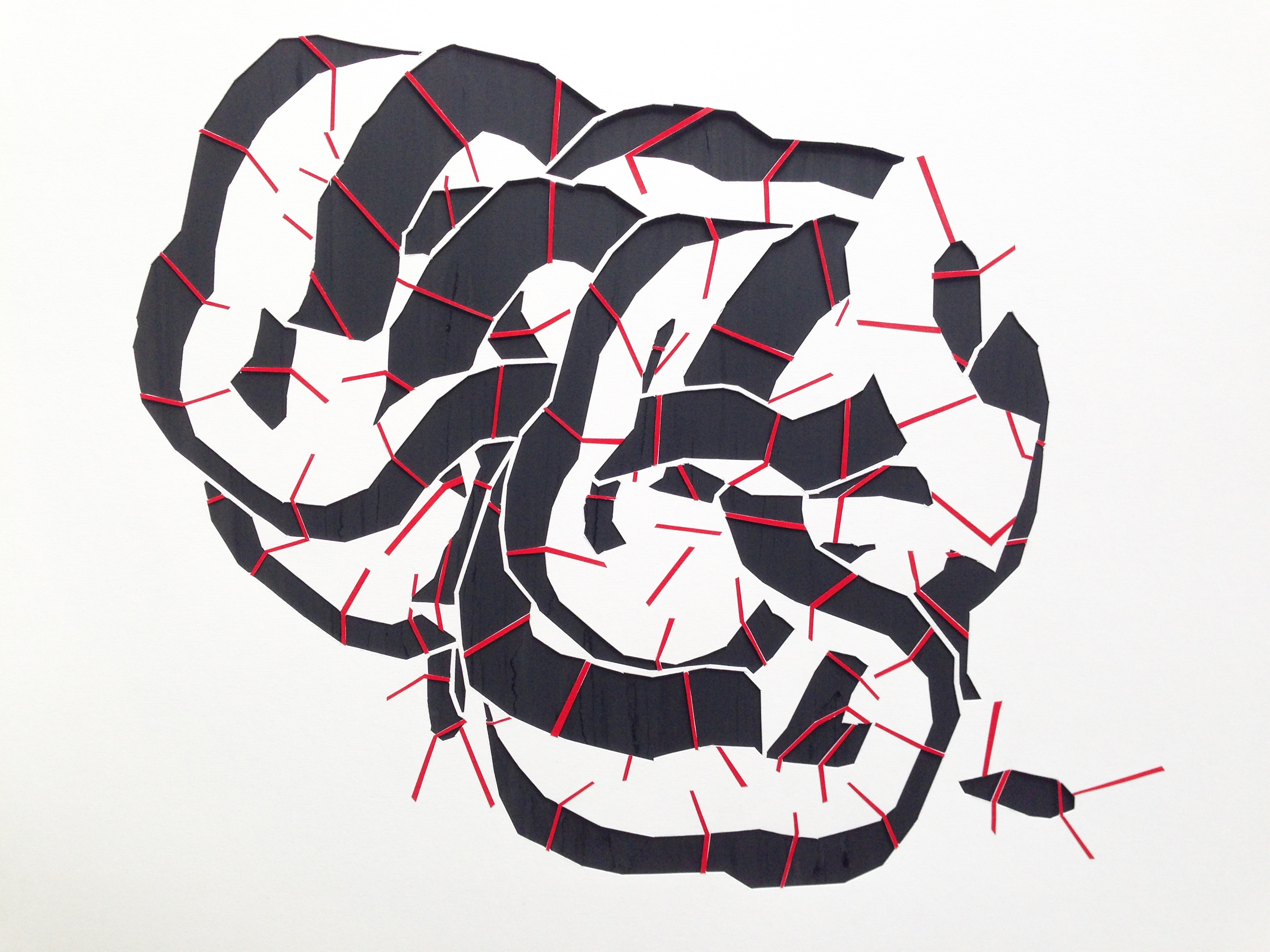
Plan of Coiled Object

The process of drawing is fundamental to my practice as a sculptor. It can at times direct me rigidly so I can practically construct an object and at other moments be a fluid and abstract spatial origin.

I have been making these cut out drafts of objects for a while now, they help me develop complex structures and visualise a spatial hierarchy of a virtual object.

Perhaps the use of a scalpel to draw instead of a pencil or ink blurs the line between two dimensions and three with its resulting depth. However the information taken from the resulting pictorial image does not rely on the carved dimension only the line removed or added as vinyl.

The image primarily illustrates two things; one face of a three sided object and a coloured detail that rotates around these three faces.

The resulting image seems abstract yet is actually a diagram or map of a potential thing.

Daniel Wallis 2014.