inorganic landscape – images and text

fullsizeoutput_1ad2

fullsizeoutput_1ac6

fullsizeoutput_1ade

fullsizeoutput_1ac8

fullsizeoutput_1ae0

fullsizeoutput_1ac9

fullsizeoutput_1acd

fullsizeoutput_1acf

fullsizeoutput_1ace

“Organic” in its current usage tends to be associated with organic farming, pesticide and chemical fertilizer free – the equivalent German term would be the familiar “bio” from the “bio” supermarket range. Food here is produced organically, meaning that it stays true to its biological origin. Organic is, chemically speaking, carbon-based.

Etymologically however, “organic” derives from the Greek “organikos” meaning “relating to organ or instrument.” An organic landscape is a landscape, which is organised. The natural environment surrounding us is a consequence of human activity, whether this is farming, building, mining etc. But the concept itself refers to a construction. Landscape as such is always constituted through a prior representation. There are picturesque landscapes or sublime ones. Landscape consists of a specific format, with a horizon, back- and foreground and certain distinguishable features. An inorganic landscape would be one that lacks this kind of organisation. It would somehow be free of human activity, both physically and conceptually. In an extreme sense, it would be non-biological, without animal or plant matter. It would also present a challenge to the relation we establish with it. Without the structure landscape offers, nature becomes something we cannot relate to.

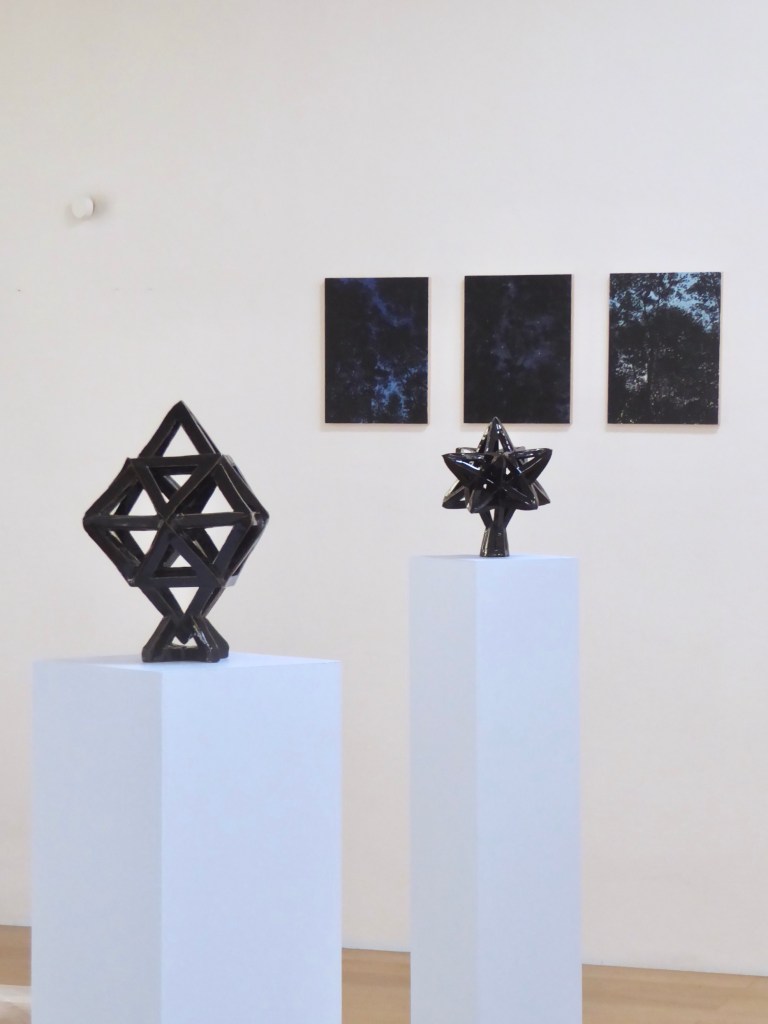
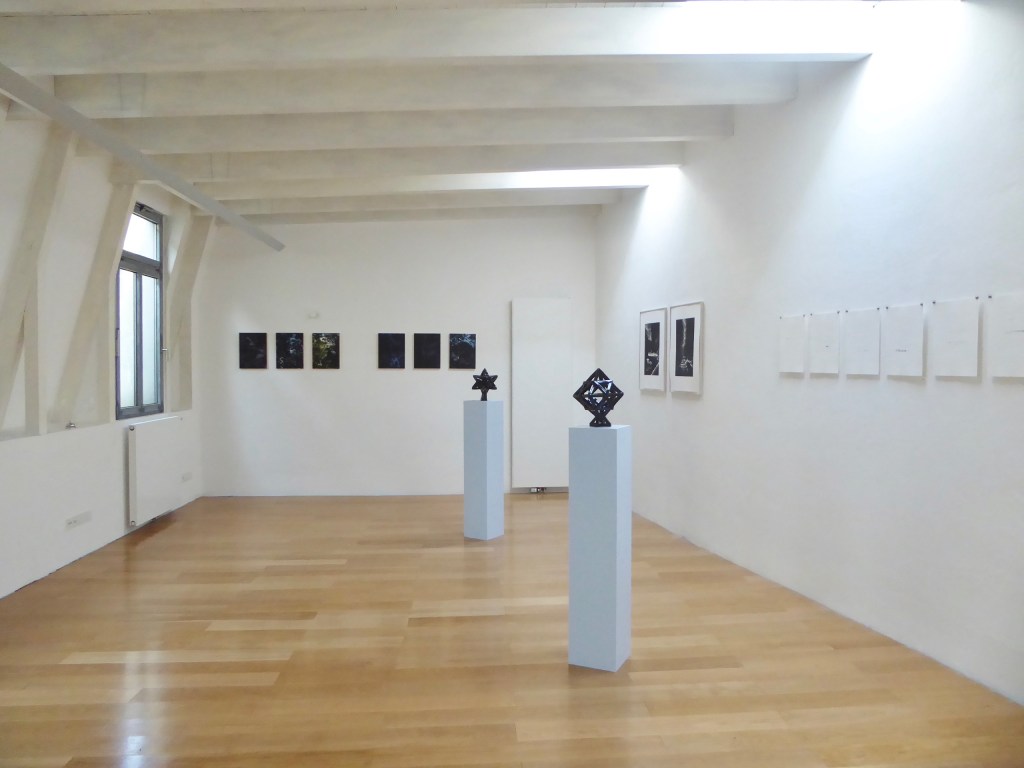
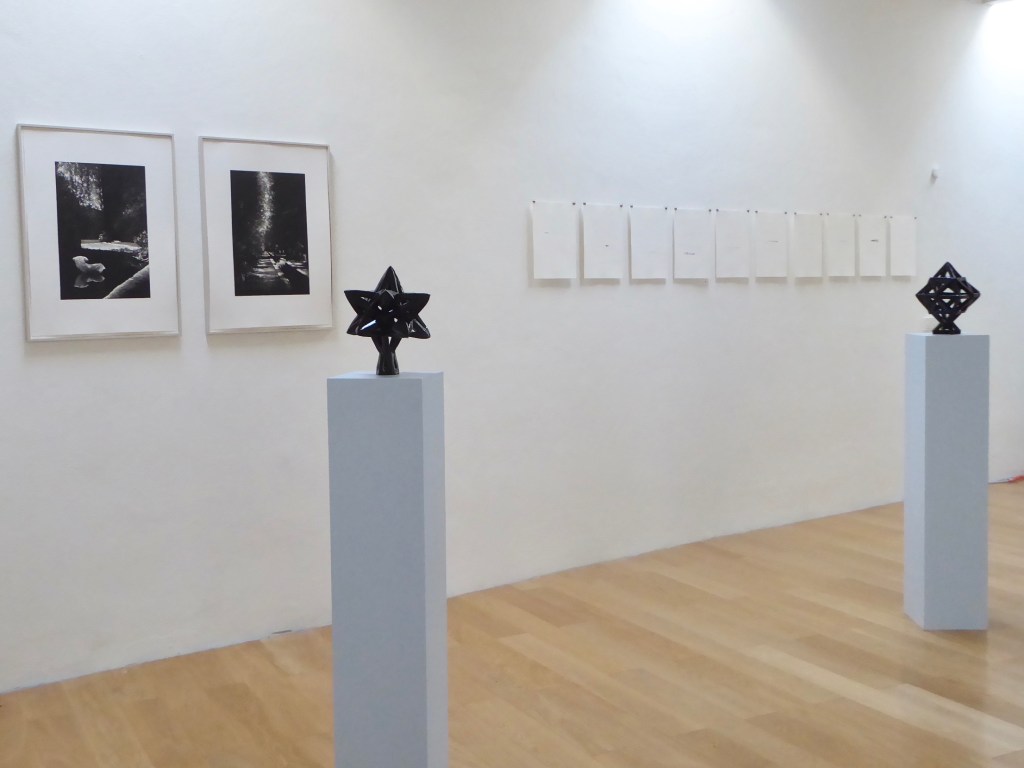
The three artists GiG presents as part of the current exhibition, inorganic landscape – Stefanie Hofer, Rebecca Partridge and Miriam Salamander – work with this constructed sense of landscape, often employing traditional techniques to make its mediated nature more apparent.

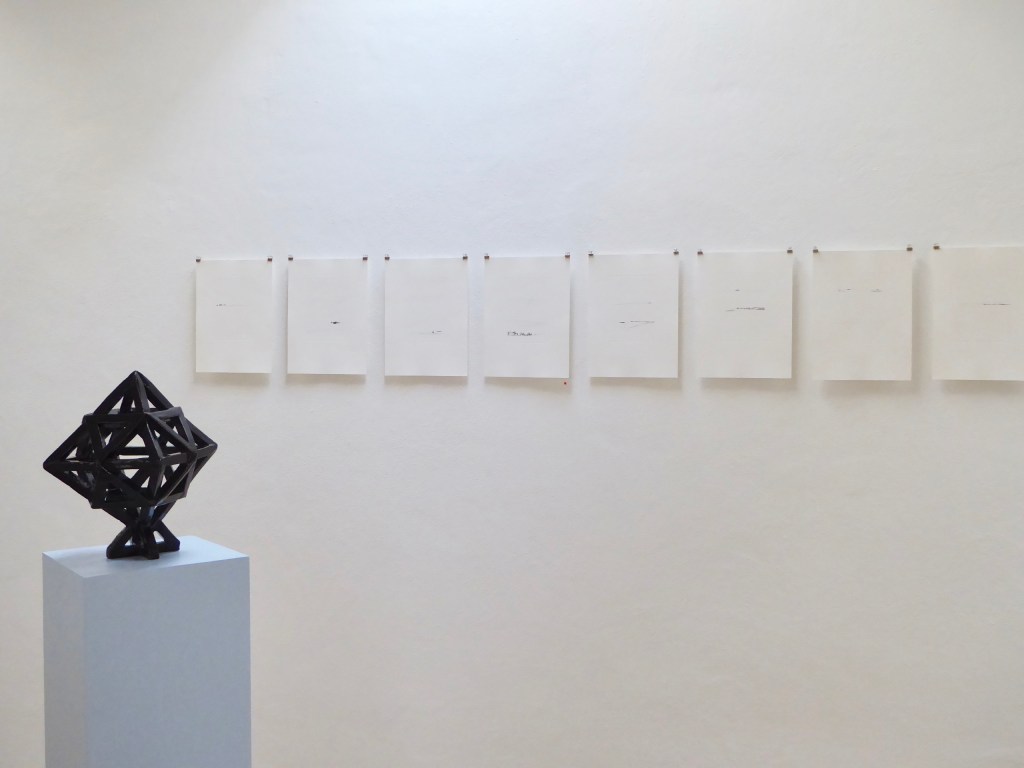
To produce her etchings Miriam Salamander, first disassembles her chosen environment (in this case, the fields and meadows of southern England) into its constituent components (field, line, path, plant) to then reconstitute them in an idealised form. The etchings are both minimal and matter of fact, consisting of the least amount of mark making required to produce the landscape form.

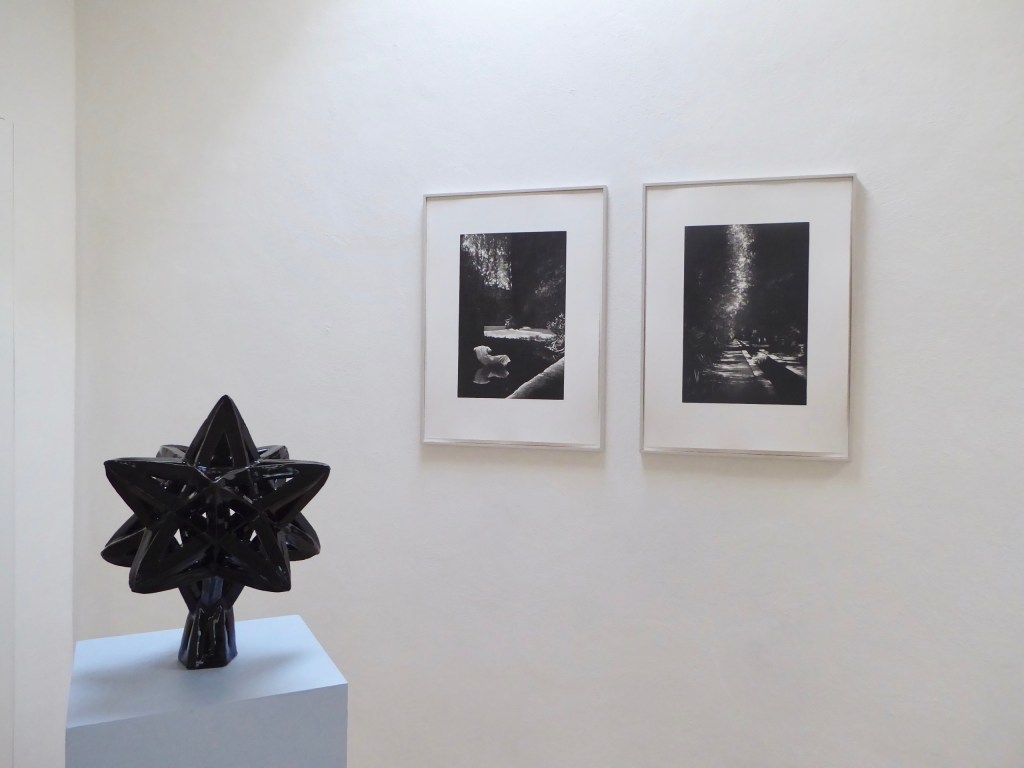
Stefanie Hofer’s aquatints of classical and modernist gardens take a highly idealised vision of nature and manipulate it further. For GiG she has made two new prints, based on found images of the “El Cabrío” gardens, part of the larger El Pedregal development in Mexico City by Luis Barragán. The gardens were designed according to modernist utopian principles, enclosed spaces where one can retire and enjoy nature. In Stefanie Hofer’s aquatints this harmony of the natural and the manmade becomes darker and foreboding, dismissive of utopian claims.

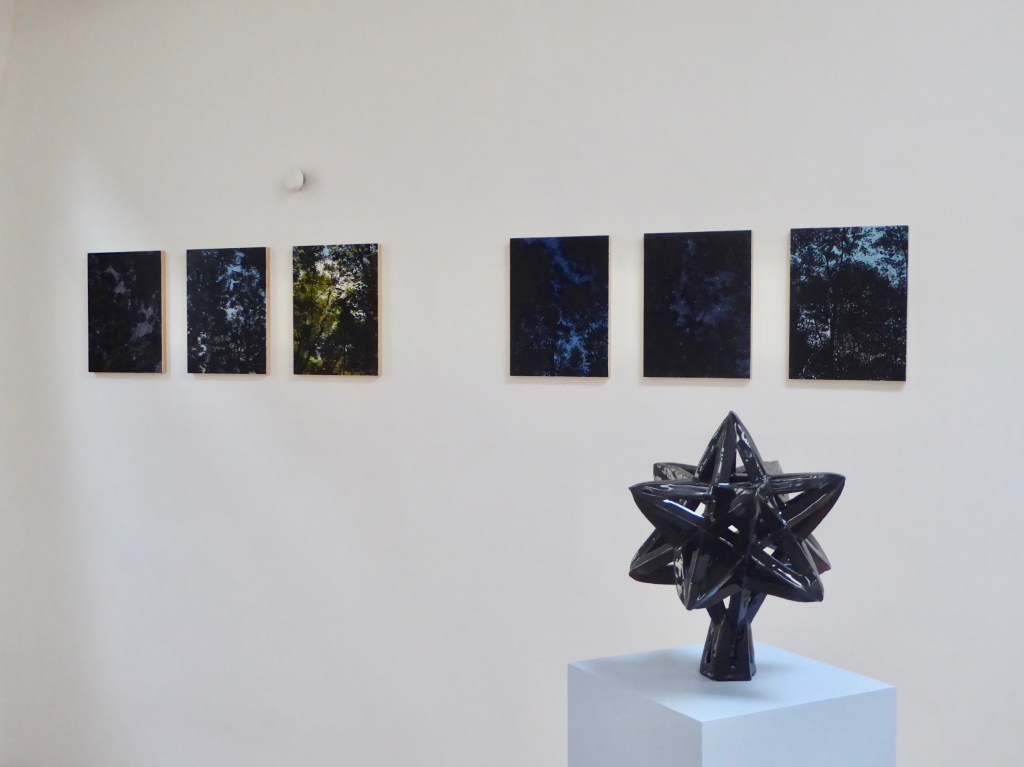
Rebecca Partridge has a longstanding interest in synaesthesia as a means of relating to the outside world without recourse to representation. Watercolour landscapes of trees painted at a specific time and location are to resonate with ceramic abstract sculpture, producing a constellation of different stimuli. The experience the work demands is no longer bound to representation, but allows for a zone of mimetic relationality, where mimesis becomes a form of collusion with nature.

Both Miriam Salamander and Stefanie Hofer are Munich-based. Rebecca Partridge is a UK artist, currently living and working in Berlin.

Magdalena Wisniowska 2017
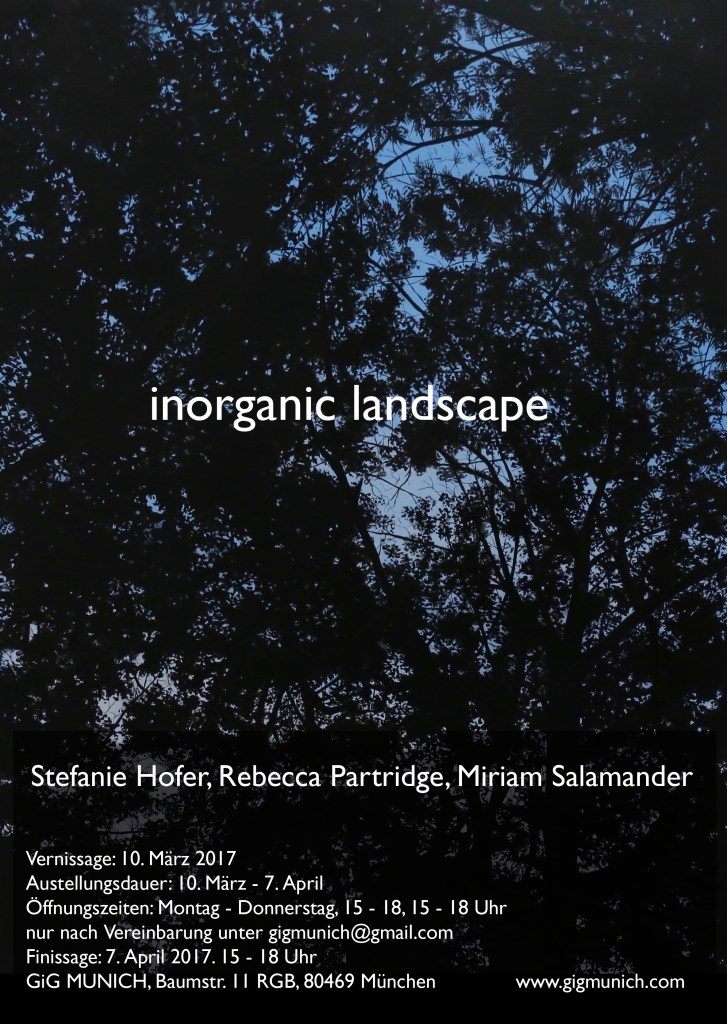
Save the date! New show opening on the 10th of March!

inorglandscape

The growing impact of human expansion on fragile global ecosystems is a well-established if not universally acknowledged 21st century concern. The opposition is a familiar one: on the one side, man with his polluting industries, and on the other, nature, unspoilt and pure. However, as already Adorno pointed out, this antithesis of technique and nature is a crude one. Nature, which has not been pacified by human hand – alpine moraines or inorganic outer space – looks precisely like the polluted landscape of industrial debris that is so repulsive to us. Landscape is a construction, organised and codified.

Stefanie Hofer, Rebecca Partridge and Miriam Salamander are three artists, who work in the landscape tradition, accepting that since the early 19th century discussions of the picturesque, culture has provided models of how we view and present our surrounding environment. In their work, they try to make the constructed nature of landscape apparent to the viewer. Central to their practice is the use of traditional technique: ceramic, watercolour, etching and aquatint. At a time when human progress harms as much as it assists nature, their exhibition, “inorganic landscape,” recognises the power these techniques hold.

Magdalena Wisniowska 2017


Das zunehmende Einwirken der menschlichen Expansion auf die fragile globale Umwelt ist ein wohl etabliertes, wenn auch nicht allseits anerkanntes Problem des 21. Jahrhunderts. Die Gegenspieler sind uns vertraut: auf der einen Seite der Mensch und seine verschmutzende Industrie und auf der anderen Seite die unveränderte und reine Natur. Jedoch führt diese Antithese von Technik und Natur, worauf bereits Adorno hinwies, in die Irre. Die Natur, die nicht durch die menschliche Hand besänftigt wurde – alpine Moränen oder der anorganische Weltraum – gleicht der verschmutzen Landschaft industriellen Abfalls, die wir so verabscheuen. Landschaft ist ein Konstrukt, organisiert und kodifiziert.

Stefanie Hofer, Rebecca Partridge und Miriam Salamander sind drei Künstlerinnen, die sich mit Landschaft beschäftigen und anerkennen, dass uns die Kultur seit den Diskussionen über das Pittoreske im 19. Jahrhundert Modelle zur Verfügung gestellt hat, wie wir die uns umgebende Landschaft sehen und präsentieren. In ihren Arbeiten versuchen sie die konstruierte Natur der Landschaft für das Auge des Betrachters wahrnehmbar zu machen. Im Fokus ihrer Praxis stehen dabei traditionelle Techniken: Keramik, Aquarell, Radierung und Aquatinta. In einer Zeit, in der der menschliche Fortschritt die Natur gleichermaßen schädigt wie fördert, zeigt ‘inorganic landscape’, welche übermittelnde Kraft von diesen traditionellen Techniken ausgeht.

Translation by Nadja Gebhardt 2017

STEFAN LENHART, fruits of the dawn, first pictures and press release

fullsizeoutput_19f0fullsizeoutput_19f5fullsizeoutput_19f4

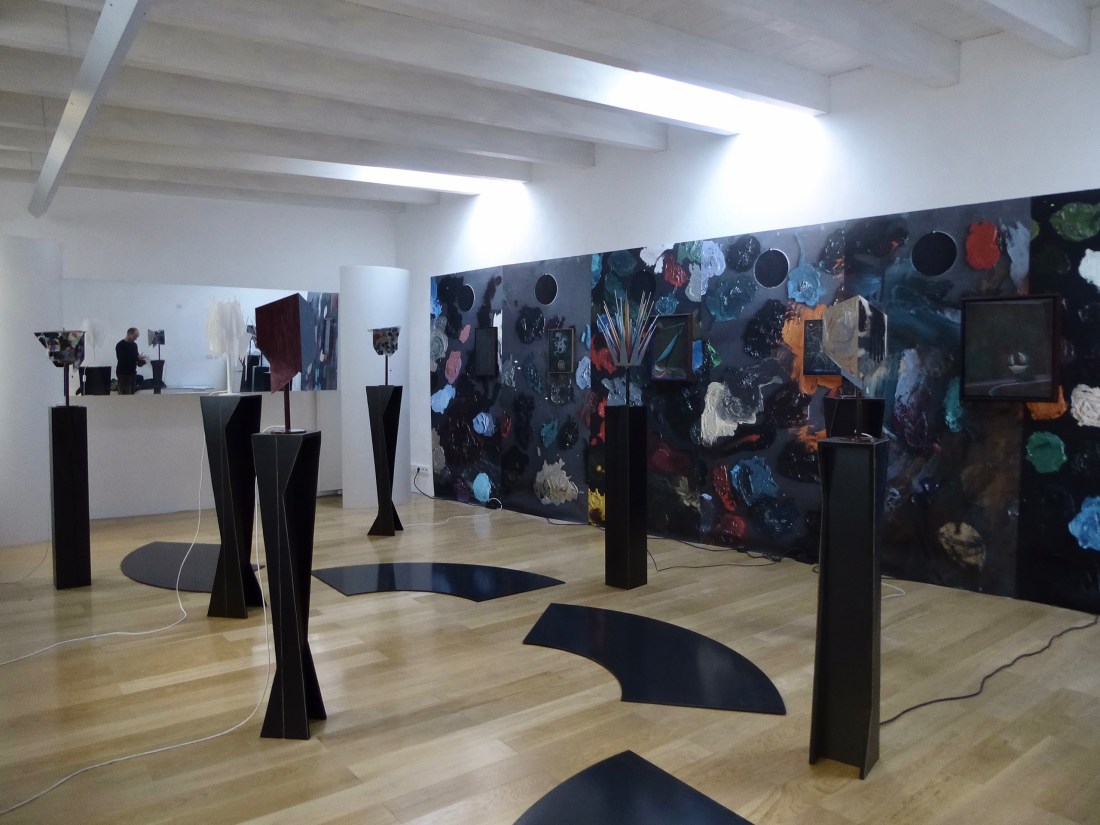
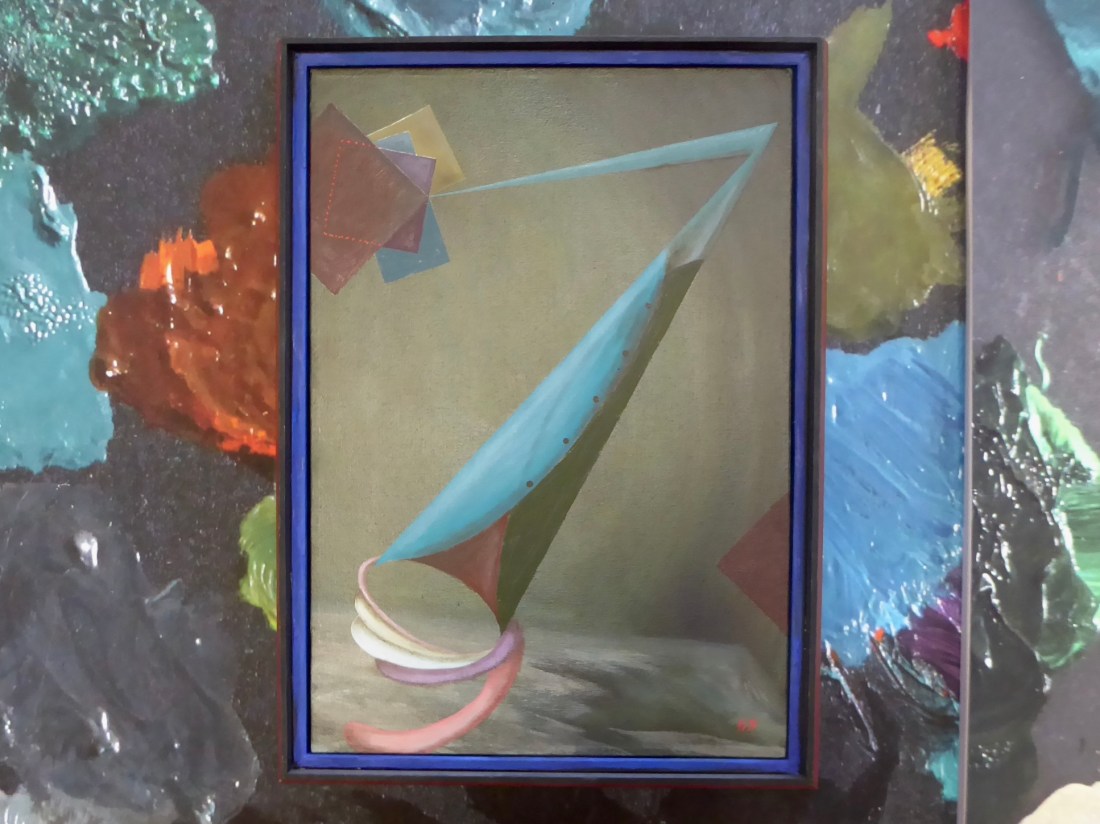
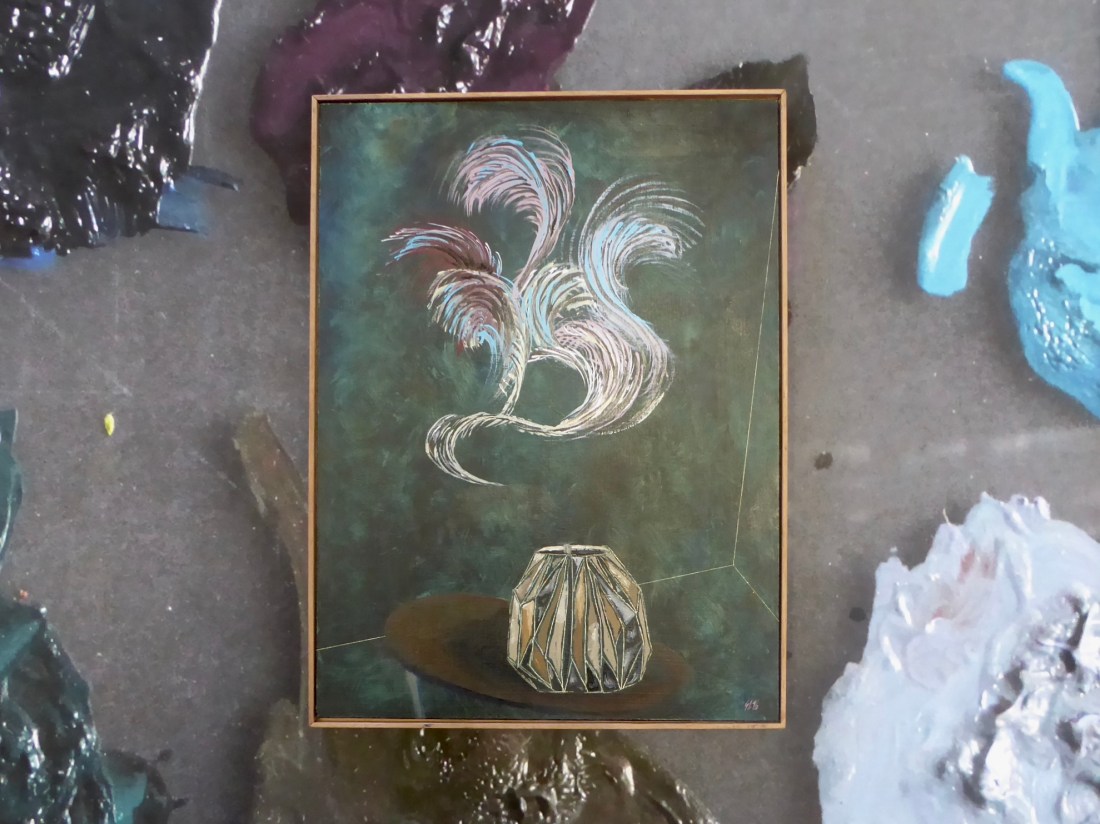
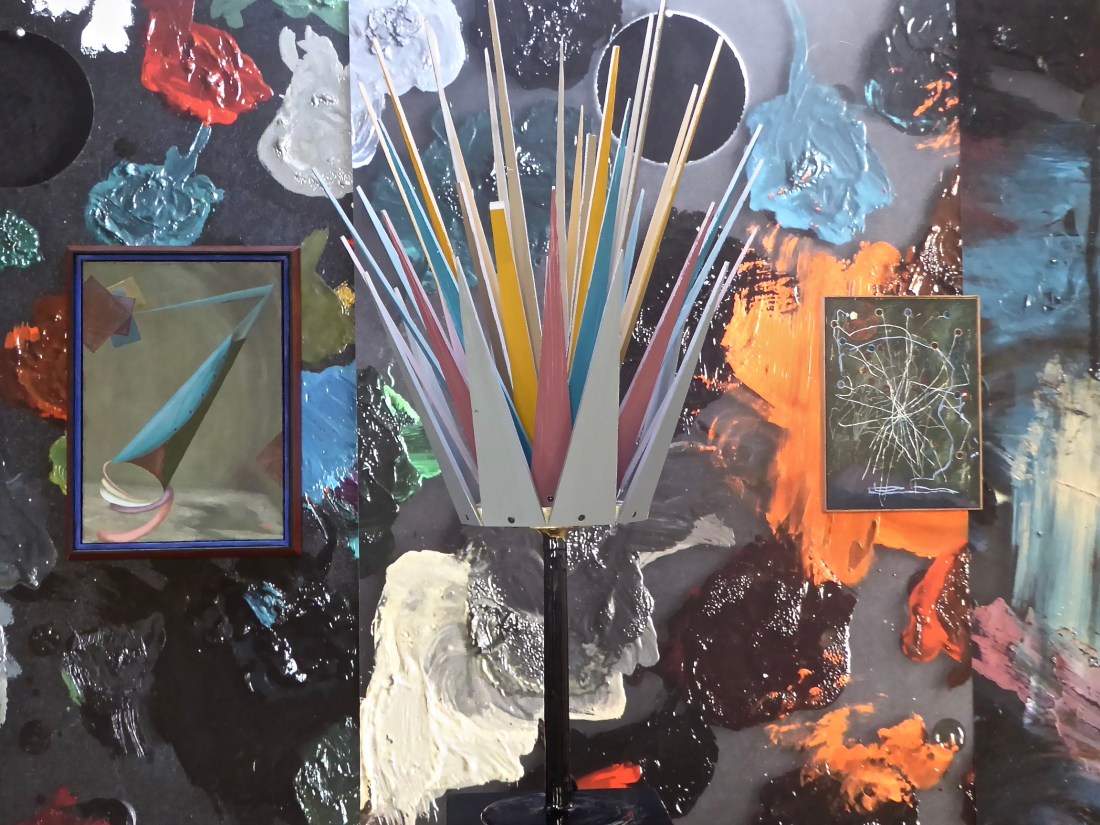
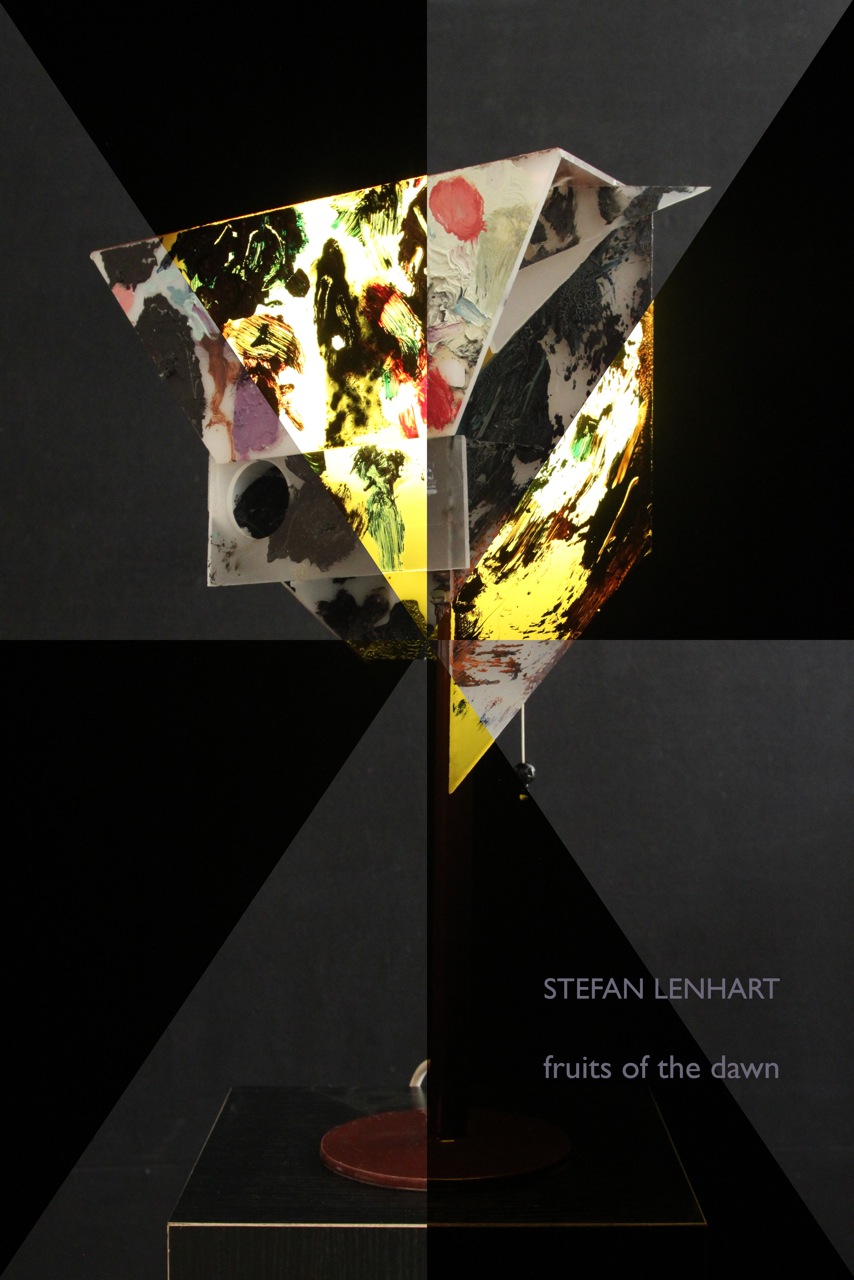
The landscape Stefan Lenhart constructed for GiG Munich could be described as a landscape of the mind. There is a path winding down the middle of the room, lit up on either side by brightly coloured lamps. The path leads up to a large mirror, which is framed by white acrylic columns. We see that the lights are also made of a similar acrylic material, painter’s palettes, that the artist cut up and then reassembled into a jagged spiral shape. The wall to the right is papered over, covered by large printouts of the same painter’s palettes in close-up. Dotted around are small, abstract paintings.

To go down the path marked out for us is to follow a narrative. We are asked to wonder down the length of the room, to pause at the points of interest, and then to stop when confronted with our own reflection and the room behind us. The random patterns on the lamps, the paintings and the posters are designed to capture our attention and allow our mind to drift.

The work has surrealist qualities, in that it shares surrealism’s interest in psychoanalytic concepts – like the unconscious or the expressive power of dreams. It lends itself to André Breton’s definition of surrealism as psychic automatism, as it incorporates into its structure the two means for capturing psychic processes: automatic writing and the irrational narrative of the dream. The uncontrolled production of Stefan Lenhart palette paintings is comparable to the meandering lines of Masson’s automatic drawings; the physical landscape Lenhart constructs, dreamlike, full of symbolism waiting to be uncovered.

But “fruits of the dawn” should not be seen as a historical anachronism. As much as the work shares surrealism’s interest in psychoanalytic concepts, it is very much post-Freudian, anti-oedipal in the sense of Giles Deleuze and Félix Guattari. Stefan Lenhart sets up a surrealist narrative in order to disrupt it. He shows its version of the unconscious is as tightly constructed as the controlled, conscious domain of reason. So the path we are meant to follow, is broken up; the lamps, instead of guiding us, distract and frustrate, providing insufficient light to see the paintings; and the destination too, the large mirror in which we see our reflections, is a kind of dead end. All we can do is turn around and walk back.

As the random configurations of paint on the wall and on the lights signal, to step onto the path Stefan Lenhart sets out for us is to enter a very different kind of unconscious space, one that Deleuze would compare to Murphy’s mind, Murphy being the central protagonist of Beckett’s same-titled 1936 novel. When the preconceptions constraining our understanding of the unconscious, are done away, nothing other than the “darkness of absolute freedom” remains. Here forms are in continual flux – commotion – with no principle to guide their actions. Through this ever-changing darkness, we can only travel, mere motes or points on the “ceaseless unconditioned generation and passing away of line.”

Magdalena Wisniowska 2016

STEFAN LENHART, fruits of the dawn

noname

Eröffnung: Freitag 9. December 2016, 18:00-21:00 Uhr

Austellungdauer: 9 December 2016 – 13 Januar 2017

Finissage: Freitag 13. Januar 2017, 8:00-21:00 Uhr

GiG Munich is happy to present “fruits of the dawn,” the latest installation by Munich based artist and curator, Stefan Lenhart .

Stefan Lenhart, born 1969, graduated from the Academy of Fine Art, Munich in 2007. Since then, he has exhibited widely in Germany and abroad, most recently “Anthophobia” at the Artothek, Munich, 2016. The extensive catalogue “M.A.D.” of his work was published by Distanz in  2012. He is also founder of the project space, “Tanzschule projects” which ran from 2007-2012.

His work consists of large-scale installations that use references to the historical avant-garde – modernism and surrealism – to produce new meaning. Taking a holistic approach, he combines painting, sculpture and other modes of presentation in ways that are simultaneously theatrical and conceptual, unexpected and strange.

At GiG Munich, Stefan Lenhart presents a new series of light pieces. Constructed out of  used painter’s palettes, cut and arranged in the same asymmetric spiral shape, this new work plays with ideas of order, chance, destruction and creation.

Opening speech to Abstract Pleasures

Hello and welcome to GiG Munich’s autumn exhibition coinciding with the Open Art Weekend 2016, ‘Abstract Pleasures,’ featuring new site specific sculptural work by Kathrin Partelli and a selection from the photographic series, Sleeping Beauties, by Thomas Wieland. Those of you who have visited us before, may know that in my introductions I do not give a standard biography of the artist, whose work GiG Munich is showing. Instead, I would like to talk a little about the title, ‘Abstract Pleasures’ and my reasons for bringing these two very different artists, sculpture and photography together.

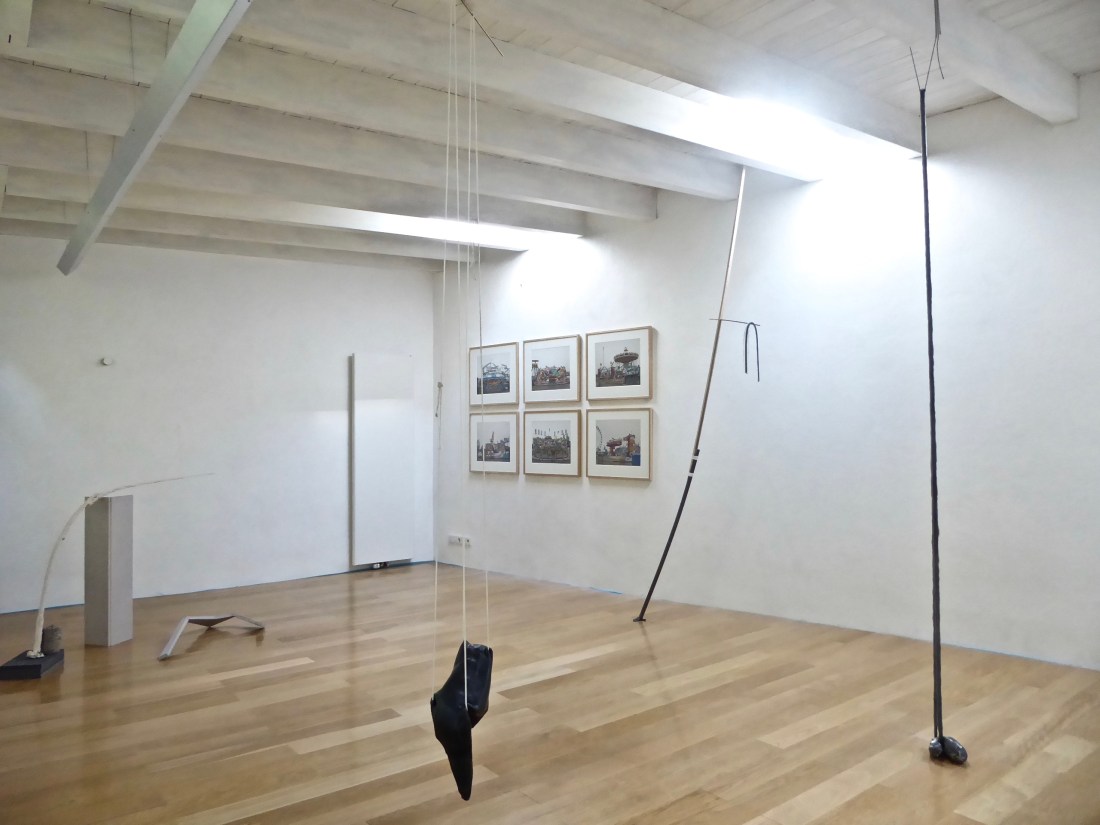
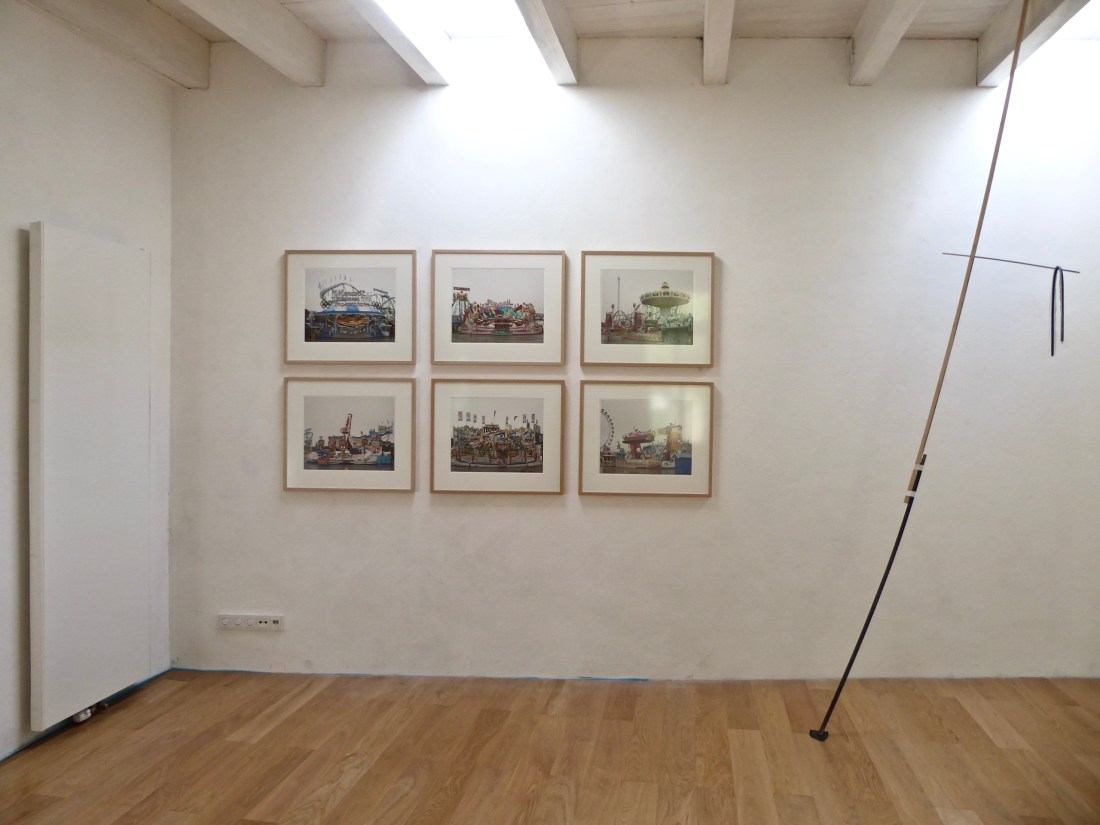
Let us turn to the second part of the title – pleasure – first. That the show has something to do with pleasure is immediately apparent from Thomas Wieland’s photos, which take the fairground rides of the annual Oktoberfest as a theme. Although the Oktoberfest marks the celebration of the marriage of Prince Ludwig and Therese of Saxe-Hildburghausen, the idea of the amusement park with fairground rides developed from the original pleasure gardens of the 18th century. Open to the public, these served as early venues of entertainment for the masses.

On the other hand, the first part of the title – abstract – seems to refer more to the work of Kathrin Partelli. Formal in quality, with a strong physical aspect her sculpture belongs to a minimalist tradition, rejecting composition and figuration for the disjunctive and the abstract. We can distinguish certain basic materials (metal, plaster and wood, wax and rubber) and certain basic mathematical shapes (lines, curves, quadrilaterals). Physical forces, such as stretching, pulling, and bending under gravity are at work. No element of construction is hidden; everything is laid out in a straightforward manner.

Yet equally, there is an abstract quality to Wieland’s photography. The very things which let us focus on the fairground rides – the fact that the images are unpopulated, that each ride is photographed separately from a standard distance, the neutral light, the depth of field and the cropping – also renders the image flat. The rides look more like a collage than a physical object, the various elements, bright colours, lights, slogans, placed next to each other without forming a coherent whole.

And similarly there is a pleasureable quality found in Kathrin Partelli’s work, a kind of humor, in common with the appropriation and the subversion of minimalist vocabulary by feminist and art povera artists. Her squares are wonky, the pieces of elastic might suddenly snap, the curved piece of plaster rests precariously on a gypsum board about to break.

Work that is about pleasure yet abstract, work that is abstract yet pleasureable – this is certainly one interpretation of the title. Nevertheless, ‘Abstract Pleasures’, refers to more. As mentioned in the brief text, which accompanied the invitation, it is also a matter of aesthetics. The pleasure of contemplation is associated with the appreciation of the beautiful object. First identified by the German philosopher, Immanuel Kant, this kind of pleasure has less to do with the object per se (indeed, Kant stresses that there can be no beautiful object), and more with the experience the human subject has when faced with beauty. Pleasure arises from the way our mind is engaged with the object of beauty. It is occupied with the object; it thinks about the object – and yet, despite all its efforts it cannot come to any conclusion other than, this object is beautiful.

If we now look at the work, we can see that, in both cases, it draws our attention. The photos rendered flat, allow our gaze to wonder, from slogan to paintwork, from light to colour. Similarly, the level of detail in Kathrin Partelli’s work belies its simple origins. There is a logic to her objects. No material is used more than once; the objects go from light to dark and from hard to soft; a curve in lead on the floor is repeated with a curve of rubber; what seems like a black stick is actually a drawing. We are occupied discerning these details, but as said, these objects allow no further conclusions to be drawn. Instead, they bring attention to the act of contemplation itself.

This is important, because historically speaking very few artworks engage with the pleasures of contemplation. Minimalism, art povera, or feminist art are more concerned with expanding the notion of the artwork. Indeed, it is rare that in everyday life we consider the joys of contemplation. Referring to Thomas Wieland’s photos: we are too busy spinning around half-drunk on the Oktoberfest rides to be thinking about their structures.

And all of this to what end? The pleasures of contemplation alert us to a basic relation, the fact we do have a relation to the outside world. That we can look at an object and recognize it as an object – that we think about the object and draw conclusions – this should be a source of wonder. I hope, that in a small way, this wonder is celebrated by the artwork featuring in this exhibition.

Magdalena Wisniowska, 2016

Abstract Pleasures

We are happy to announce GiG Munich’s latest exhibition, opening on the 10th of September, 3 pm. Hope to see many of you there!

Abstract pleasures web

“Abstract Pleasures” brings together a site-specific sculpture installation by Kathrin Partelli and Thomas Wieland’s series of photographs, Sleeping Beauties. The exhibition unites Partelli’s ephemeral, open-ended structures with Wieland’s images of empty Octoberfest rides to present the pleasures of contemplation: the enjoyment found in complex constructions.

Kathrin Partelli creates sculptures and large-scale installation pieces in the anti-monument tradition. Thomas Wieland is a photographer, who draws on his experience in the history of science. Already exhibiting on the online platforms, LandscapeStories and Humble Art Foundations, we are pleased to be the first gallery to present his work.


“Abstract Pleasures” bringt eine standortspezifische Skulptur von Kathrin Partelli und die Fotoserie “Sleeping Beauties” von Thomas Wieland zusammen. Sie vereint Partellis flüchtige, offene Strukturen mit Wielands Bildern der menschenleeren Fahrgeschäfte auf dem Oktoberfest, die das Vergnügen der Komtemplation präsentieren: die Freude, die in komplexen Konstruktionen zu finden ist.

Kathrin Partelli schafft Skulpturen und großangelegte Installationen in der Tradition der Anti-Monumente. Thomas Wieland ist ein Fotograf, der aus seiner Erfahrung in der Technikgeschichte schöpft. Nachdem er seine Arbeiten bereits auf den Onlineplatformen LandscapeStories und Humble Art Foundation ausgestellt hat, freuen wir uns diese nun als erste Galerie zu präsentieren.

trans. Nadja Gebhardt