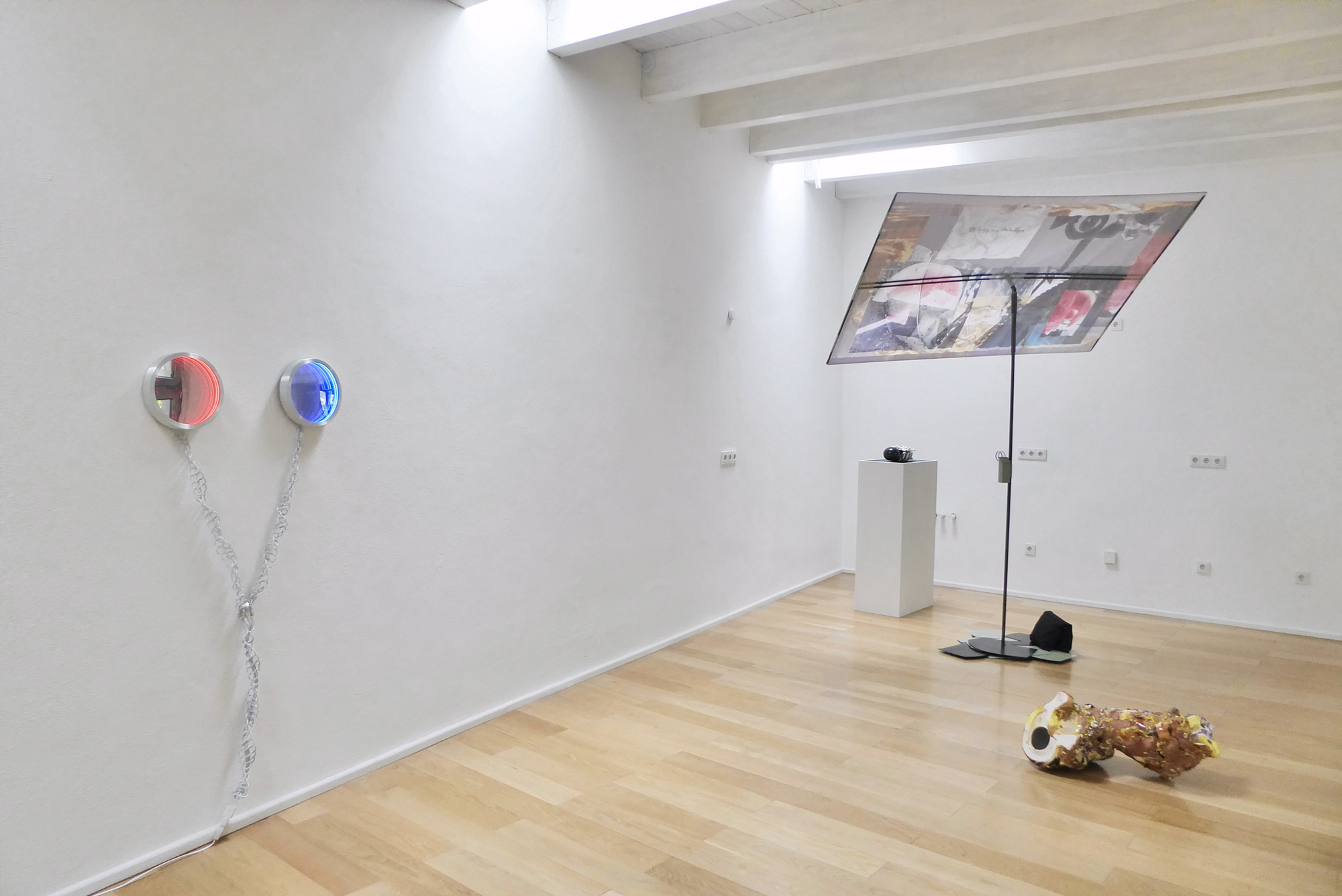
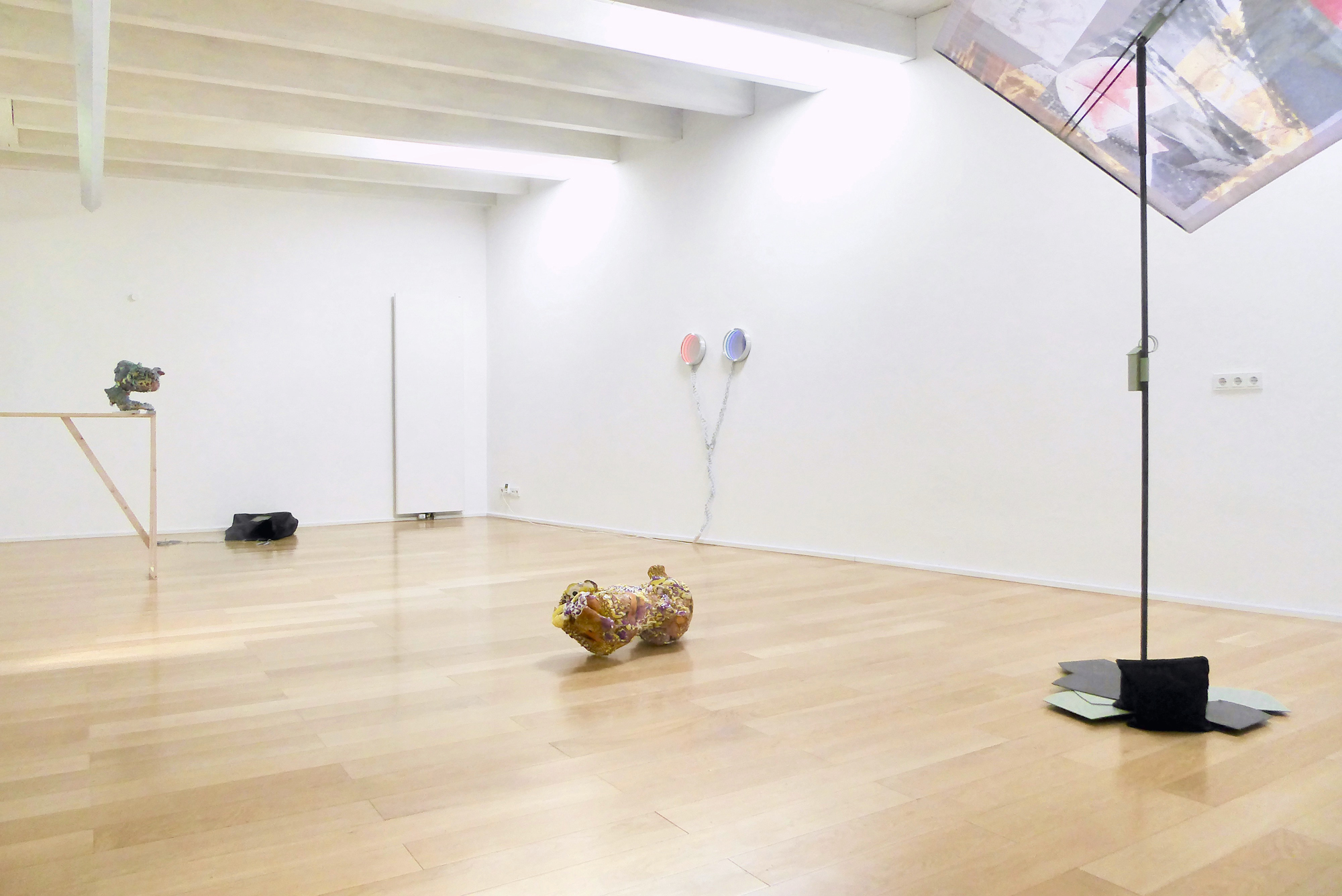
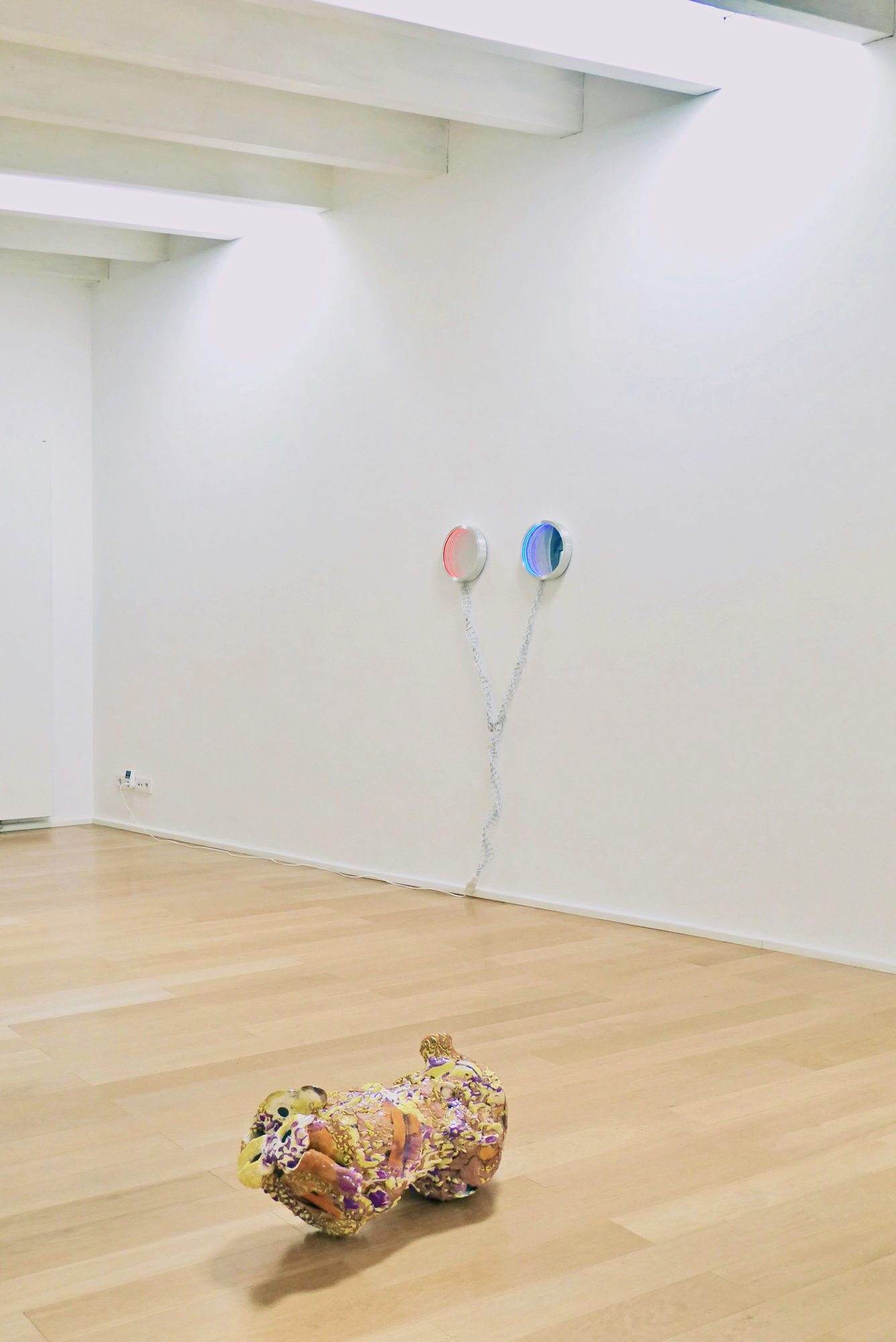
GiG Munich is excited to present the two-person exhibition ‘I feel like Ramses’ featuring new work by Philipp Messner and Jorge Peris. Together they explore the disappearance of the outside and the expanding inner-world.
Ramses II, the mighty pharaoh, held the mythical position of absolute power, looking down at his works, his land and his people. He was at the center of a cosmic order, all work and production flowing through him. Through their sculptural work, Messner and Peris bring the sensual world, the bestial and the disgusting as close to us as they dare. They are concerned with the process of production as desire, slippery and slimy, always escaping our grasp.
Philipp Messner (born in Bolzano, IT, 1975) lives and works in Munich. Recent exhibitions include eating harmony, Museum im Prediger, Schwäbisch, Gmünd (2021, solo); Welt in Teilen, Kunstverein St.Pauli, DE (2020, group); Dissolved Landscape, Mediafacade, Museion, Bozen, IT (2019, solo); Darkness loves to hide, Kunstraum., München, DE (2019, solo); Open Borders, Biennale Curitiba, BR (2019, group); Da lontano era un isola, Kunsthaus Meran, Merano, IT (2019, solo), Lust der Täuschung, Ludwig Forum Aachen, DE (2019, group); CLOUDS, Neues Museum, Nürnberg, DE (2017, solo).
Jorge Peris (born Alzira, Valencia, 1969) lives and works in El Palmar, Valencia, and Bucharest, Romania. Recent exhibitions include Desembarco en el País de Nunca Jamás, Nicodim Gallery, Los Angeles (2021, solo); Michiel Ceulers and Jorge Peris: Endangered Species, Galeria Nicodim, Bucharest (2020); Dark Man a lomos del Pájaro de Fuego, IVAM Instituto Valenciàno d’Arte Moderna, Valencia (2020, solo); Adam’s Resurrection, Sandwich Gallery, Bucharest, Romania (2019, solo); Al norte de la tormenta, MAXXI Museum, Rome, Italy (2019); Our Lady of the Flowers, Galeria Nicodim, Bucharest (2018).
The exhibition is the next of GiG Munich’s ‘Thinking Nature’ series supported by the Department of Art and Culture, Munich.
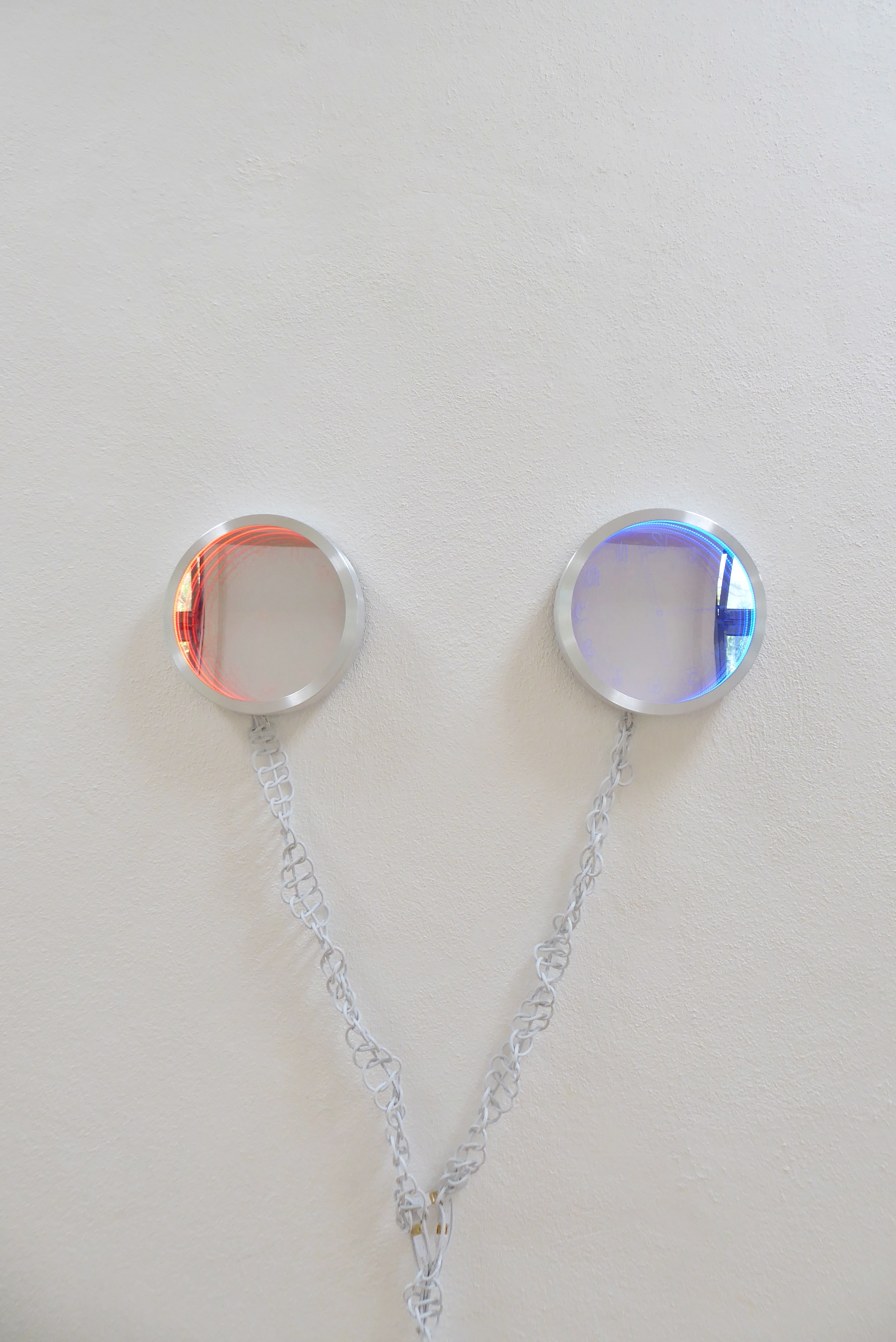
(clockwise and counterclockwise), LEDs, USB extension cords, digital timer, size variable (each approx. 25
x 25 x 5 cm)
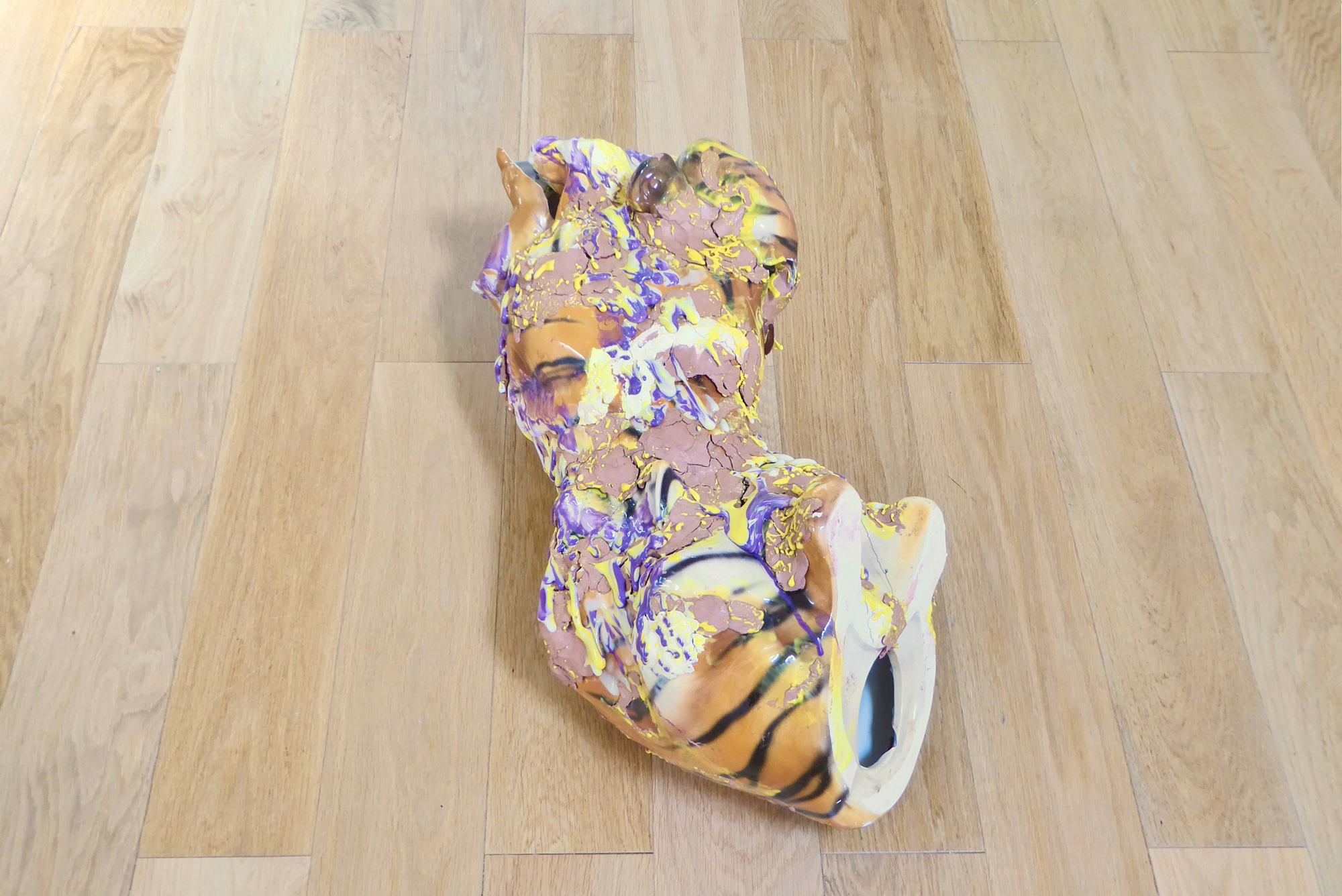
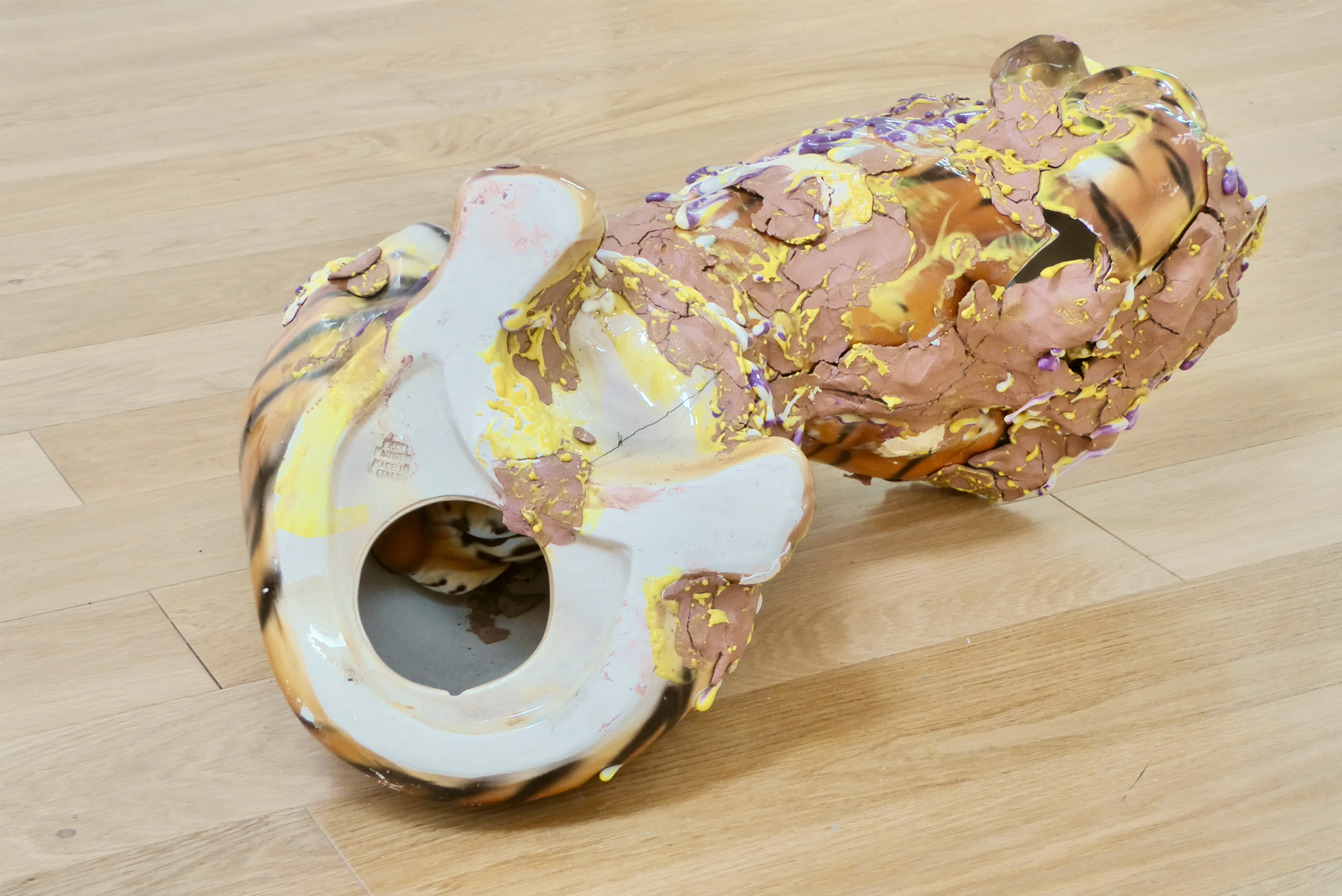
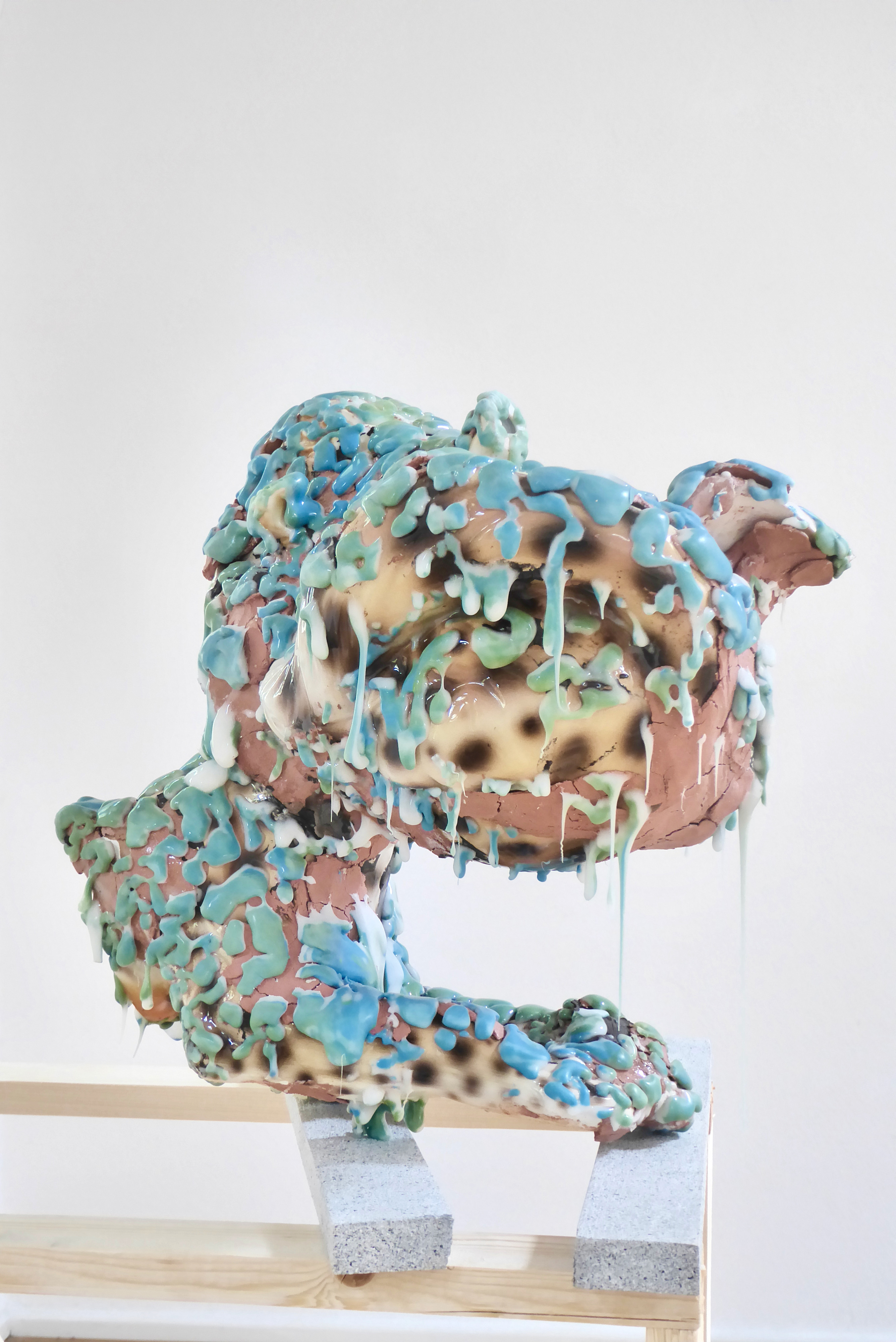
Julia Klemm, untitled, 2020, ceramic, glaze, second-hand ceramic leopards, 76 x 30 x 33 cm
Julia Klemm, untitled, 2020, ceramic, glaze, second-hand ceramic leopards, 76 x 30 x 33 cm
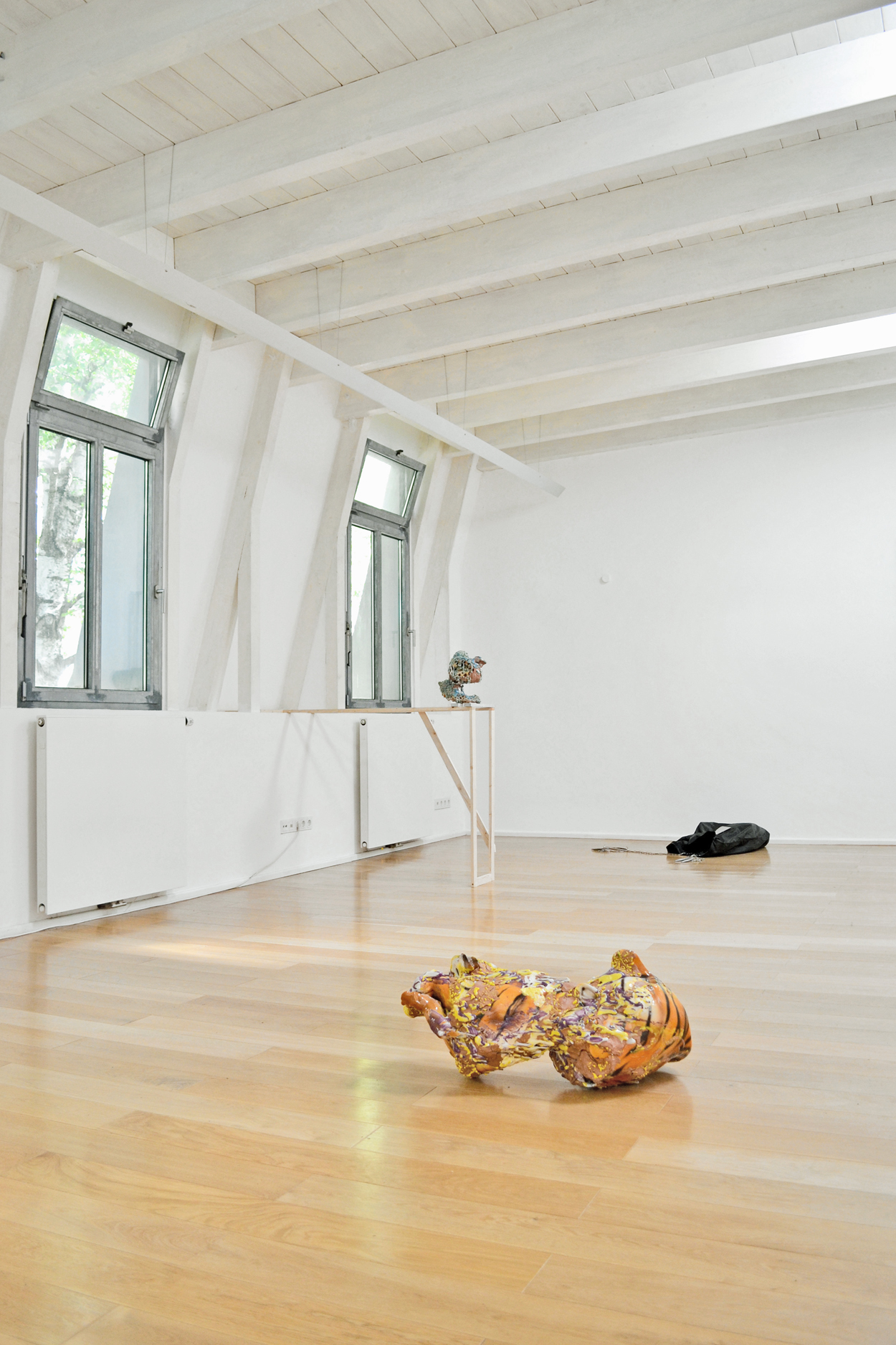
Lost and Found, 2021, installation view,
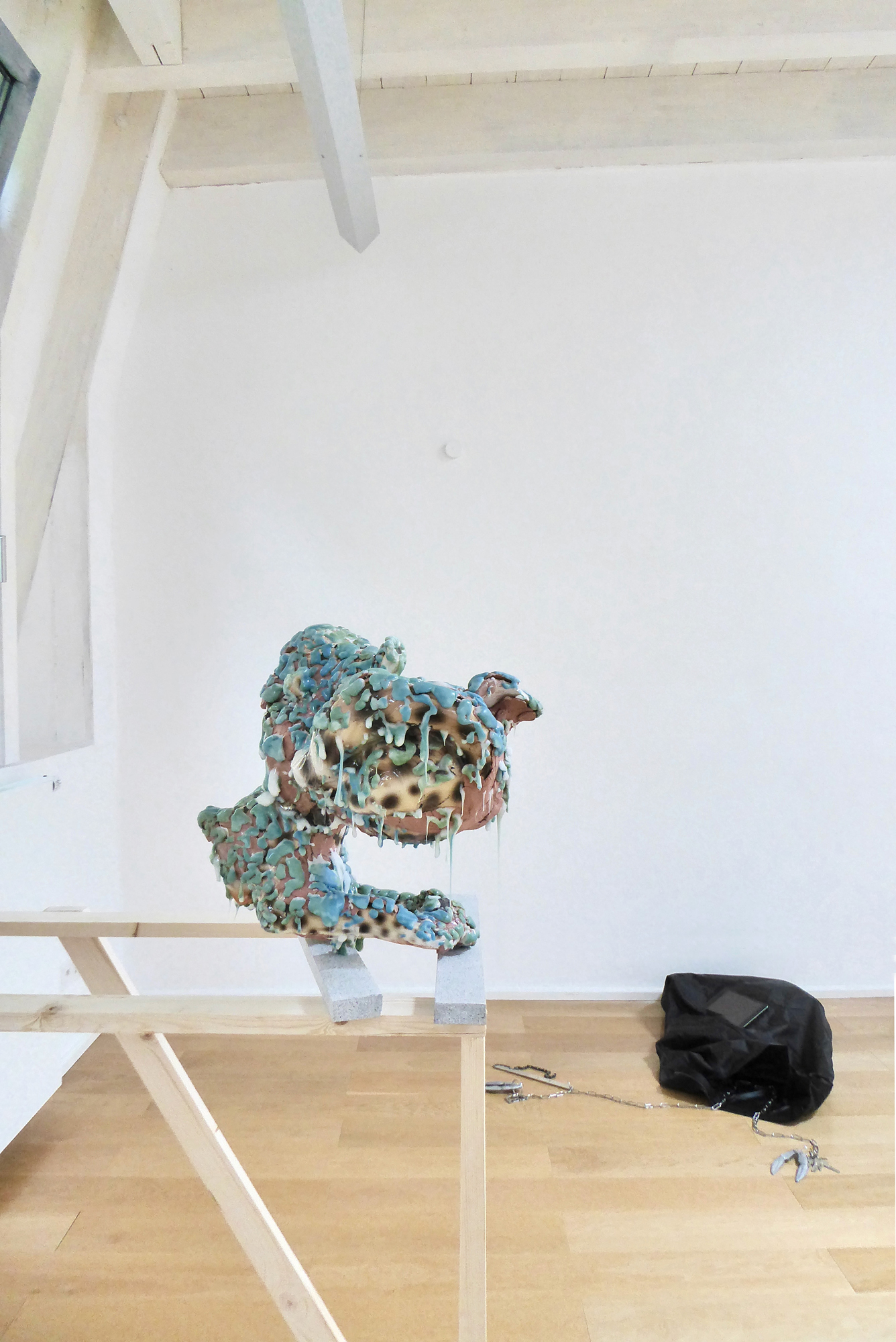
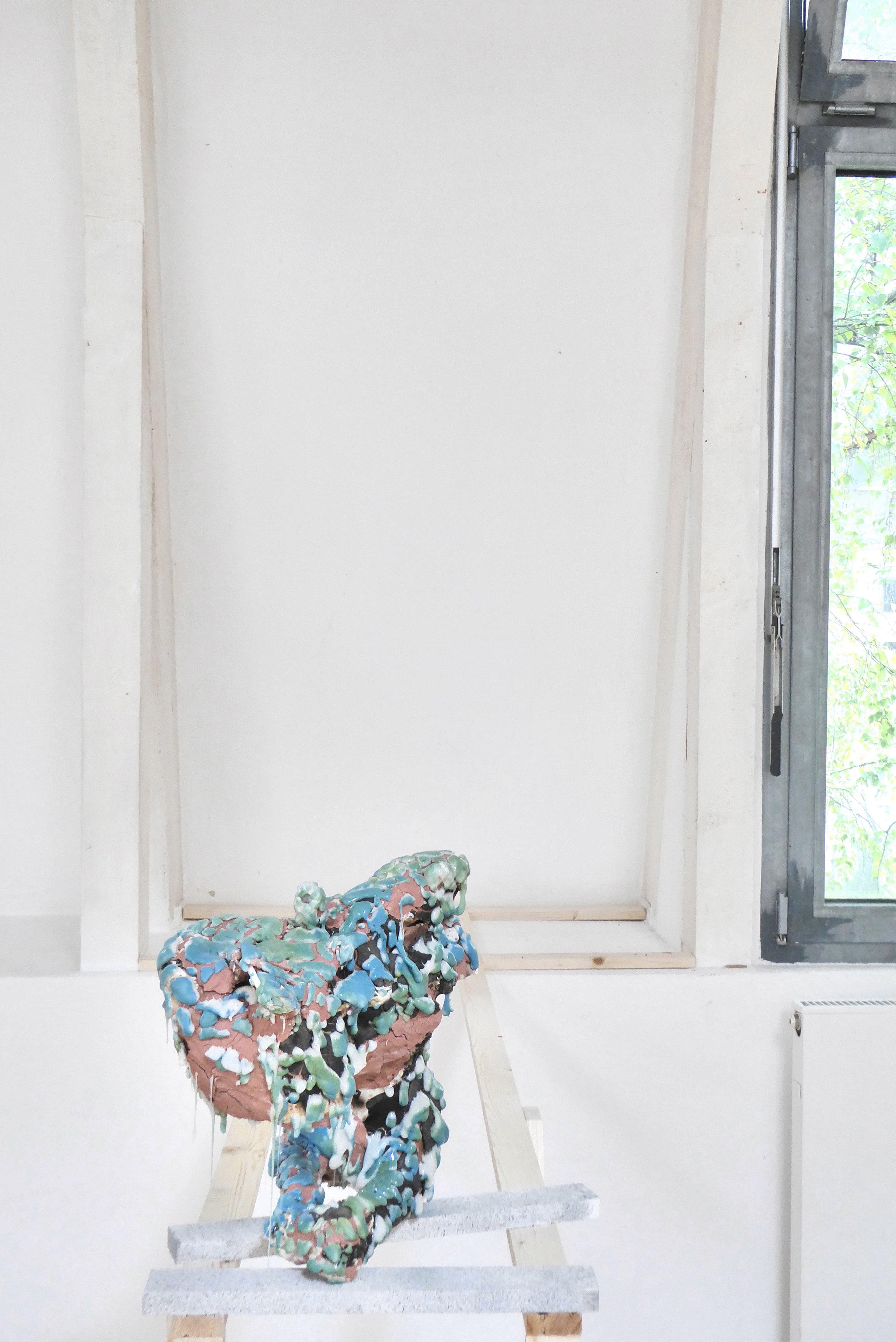
Julia Klemm, untitled, 2021, ceramic, glaze, second-hand ceramic leopard, 32 x 28 x 33 cm
Julia Klemm, untitled, 2021, ceramic, glaze, second-hand ceramic leopard, 32 x 28 x 33 cm
Julia Klemm, untitled, 2021, ceramic, glaze, second-hand ceramic leopard, 32 x 28 x 33 cm
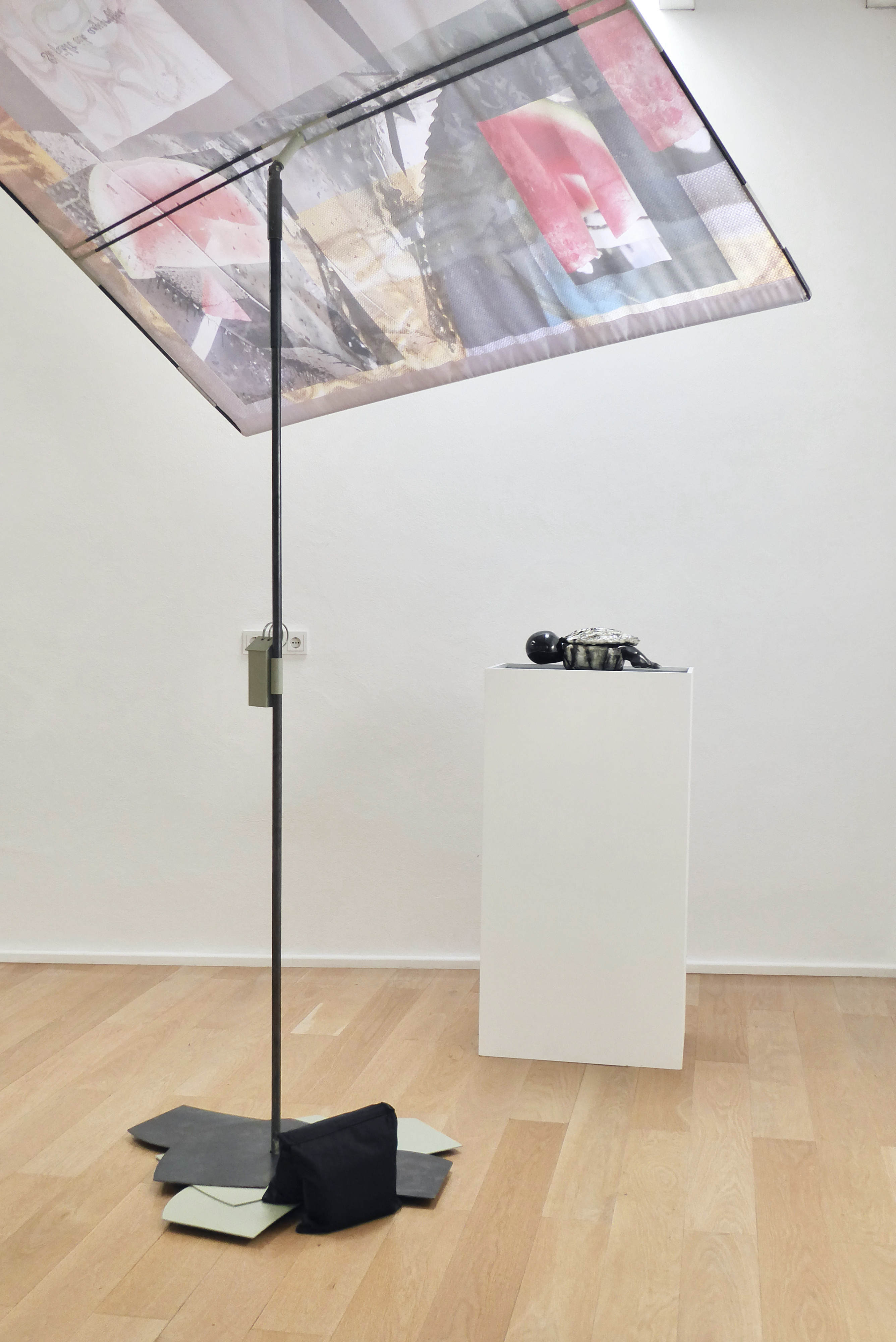
Pat Shoulder, Sun Umbrella, 2020, Steel, paint, print on textile
Lost and Found, 2021, installation view
Justin Lieberman, Obscure Readability, 2020, ceramic, glass and pedestal with sand, 41 x 22 x 12 cm (Courtesy of Galerie Christine Mayer)
Justin Lieberman, Obscure Readability, 2020, ceramic, glass and pedestal with sand, 41 x 22 x 12 cm (Courtesy of Galerie Christine Mayer)
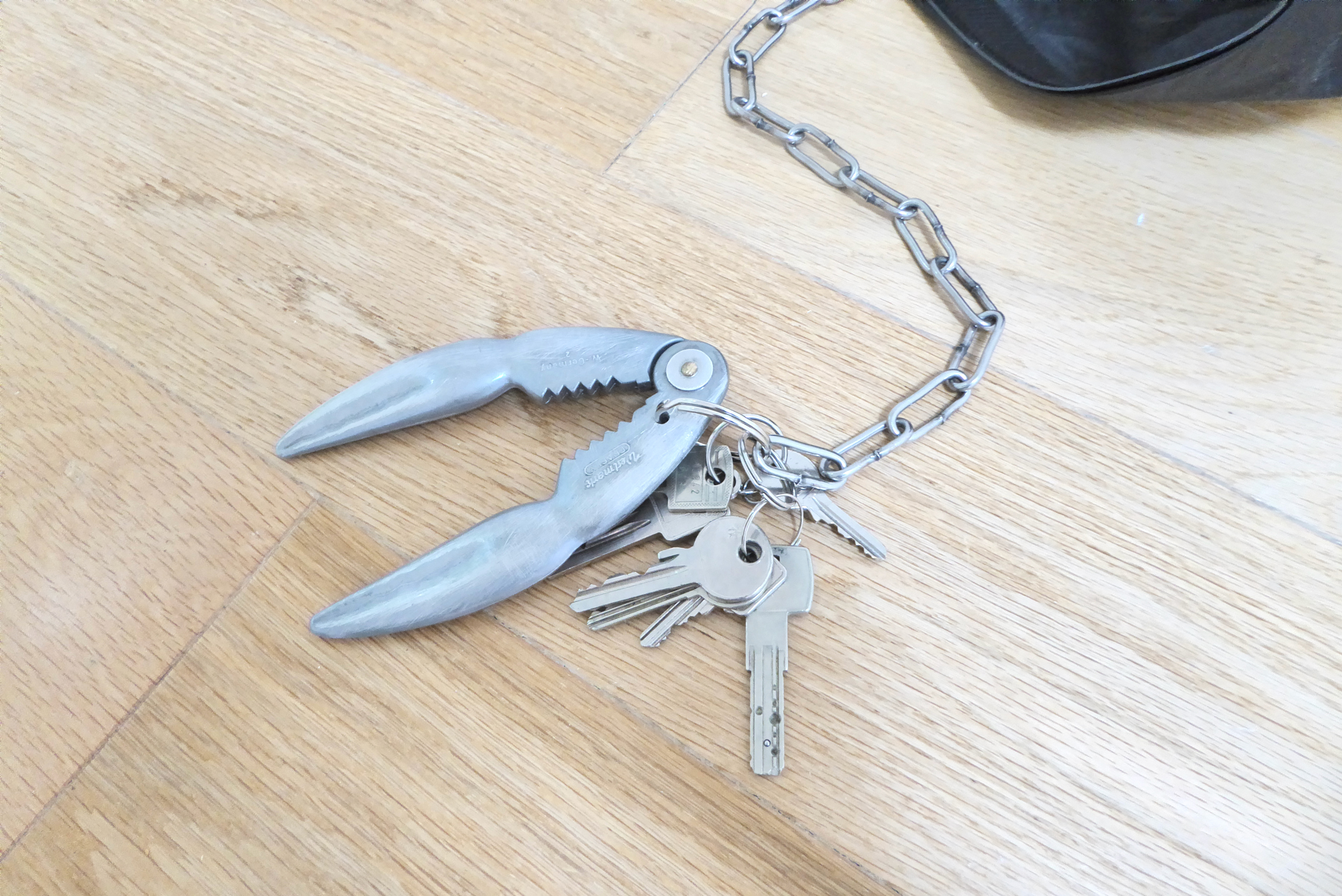
Lilian Robl,Winning Hearts and Minds, 2016, 5 min 55 sec (plus textile bag and assorted metal objects)
A naturalist, specifically an 18th century one, likes to classify. After an expedition to the jungles of some remote land he – and it is almost always a he – takes out his specimens and begins to compare. This one looks like the second, the third does not, the fourth has some features of the first two, but also some traits seen in the third. He makes up categories and puts labels on boxes, marking the time and place at which the specimens were found. He then takes out a scalpel and cuts them open in order to examine their inner structure. Here are the muscles and these are the breathing organs. This is the skin, and under the microscope he can see the epidermal structure. Visually speaking, the naturalist proceeds mimetically, by finding patterns and organising resemblances. He looks and compares. He judges accordingly.
There are however animals that escape the naturalist’s grasp. Fictional beings like vampires and werewolves, who live in darkness of our imaginations and spread by infecting others with their poisonous bite – these can be easily dismissed as unworthy of our serious attention. Viruses and pandemics less so. A virus can hardly be deemed alive, reproducing only in the host’s body. Although it mutates, it does not develop to evolve into ever more complex organisms. While it can be placed into groups of similar viruses, it eludes the classificatory system with its orders, families, genera and species.
The exhibition ‘Lost and Found’ has a slightly dystopian, even post-apocalyptic quality, of various objects assembled in haste and then disregarded, leftovers from a Mad-Max film set. A preview exhibition, it consists of artists who will hopefully be part of GiG Munich’s ‘Thinking Nature’ 2022 programme, which examines the relationship between man and nature, as it presents itself in thought. These artists were selected because their practices are not of class and order, but rather of mutation and infection. We see this most in Julia Klemm’s sculpture were kitsch ceramic animals are broken up and then reassembled, set precariously on their rickety plinths. Pat Shoulder’s work is collaborative, a result of an exchange of letters between the two artists during the first lockdown. The order of time is put into question with Johanna Strobel’s installations and logic disintegrates in Lilian Robl’s videos. There is a celebration of nature’s structures in the glass turtle shells of Justin Lieberman but again this order is not that of the naturalist. As with the others, it is a viral order of an unnatural kind.
As the previously planned exhibition had to unfortunately be cancelled, GiG Munich would like to use this opportunity to introduce a few artists, who it will be collaborating with next year as part of the ongoing ‘Thinking Nature’ series. Lost and Found is a preview exhibition, ‘lost’ because of the work that got lost in the post, ‘found’, because of the new work about to be discovered. The exhibition is a spontaneous one – what will happen, will happen.
Sadly, the exhibition will have to be postponed till further notice. The work was lost in the post. Hopefully we can make the exhibition happen later in the year, most likely in October. We apologise for the inconvenience caused.
GiG Munich is happy to present the next instalment of the series Thinking Nature, featuring new work by Johanna Strobel. For her solo exhibition low affinity, Johanna Strobel creates rhizomatic macramé-like structures from USB extension cords, using them to power her plexiglas and paraffin sculptures.
Entropy, the fact that once the USB 2.0 cable exceeds a certain length information gets lost while power still remains, forms the central component of this work. It ties together the ancient idea of ‘ether’ as a medium through which light travels, the fluid physics of translucency, and the decorative and practical craft of knot-making. Her practice is informed by her background in science, and explores such unwieldy concepts like time and space, information and entropy, language, the creation, attribution or suspension of meaning and the everyday perception and precipitation of these concepts in mundane life.
Johanna Strobel is an interdisciplinary artist from Germany, currently based in New York. She holds degrees in Information Science and Mathematics and graduated in painting and graphics from the Academy of Fine Arts Munich with Honors (Meisterschuelerin of Gregor Hildebrandt) in 2017. In 2020 she received her MFA from Hunter College New York (New Genres). Since then she has participated in numerous exhibitions in Germany, Italy, Taiwan and the US, with a solo exhibition at the Municipal Museum Cordonhaus Cham, 2019. In 2020 her work was included in The Immigrant Artist Biennial, New York, USA, Jahresgaben, Kunstverein Munich, Germany and featured online by Hauser & Wirth. Johanna was a fellowship artist in residence at NARS Foundation, Brooklyn in 2021.
The exhibition will include an online discussion event with Dr. Beth Lord, Professor of Philosophy, School of Divinity, History, Philosophy and Art History at the University of Aberdeen.
Online discussion with Elke Dreier and Arjen Kleinherenbrink
28.05.2021
As part of the series Thinking Nature, GiG Munich hosted the online discussion between Elke Dreier (currently showing her work Betrachtungen des Waldes at GiG) and Dr. Arjen Kleinherenbrink (assistant professor in metaphysics and philosophical anthropology at the Faculty of Philosophy, Theology and Religious Studies at the Radboud University Nijmegen, Netherlands) . The zoom discussion took place on the 28th of May.
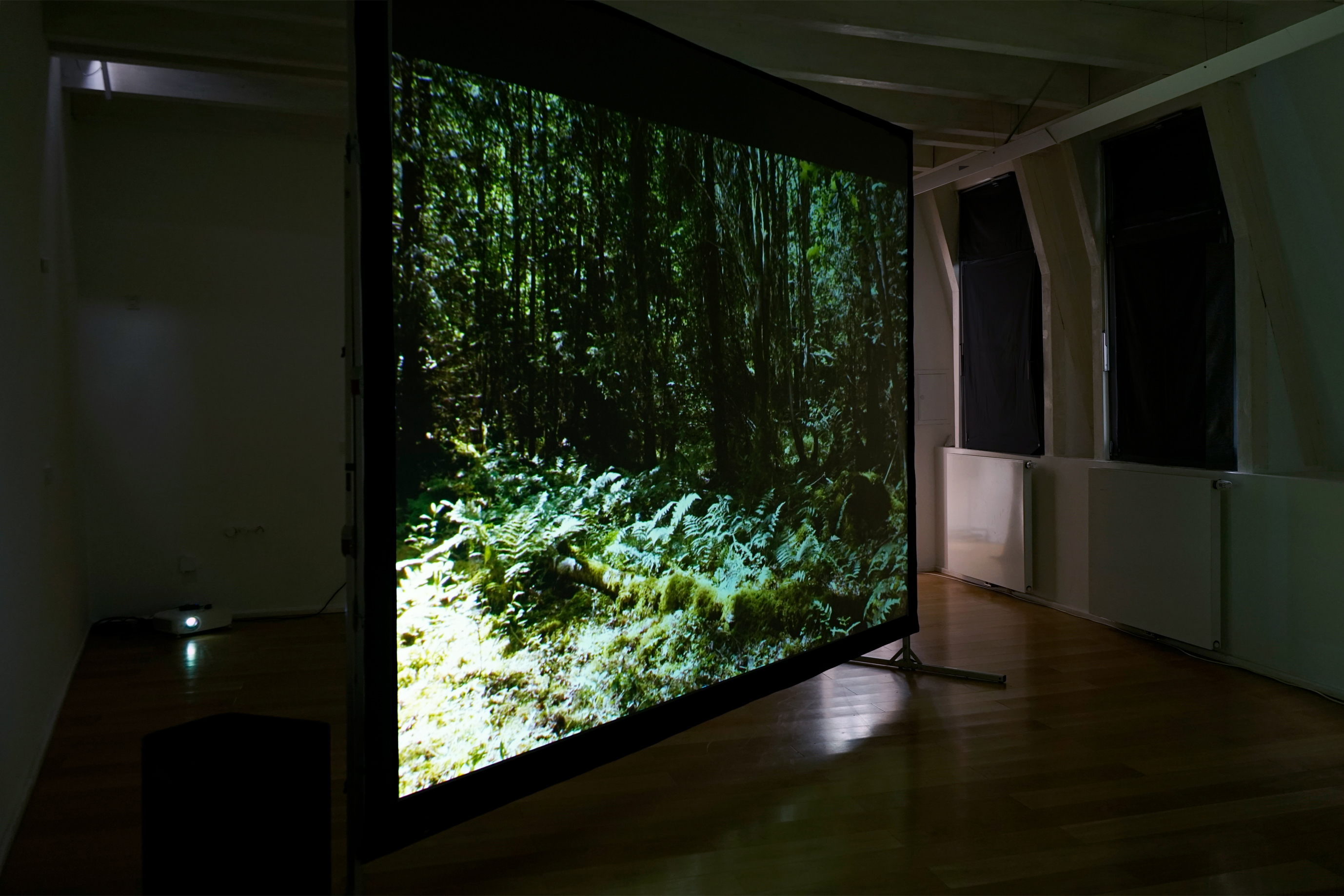
The image in Elke Dreier’s work is the forest clearing – Arjen Kleinherenbrink will be introducing Deleuze and Guattari’s idea of the plane of nature. In this way, we will move from clearing to plane, to see how things might reveal themselves to us and how things came about to be what they are.
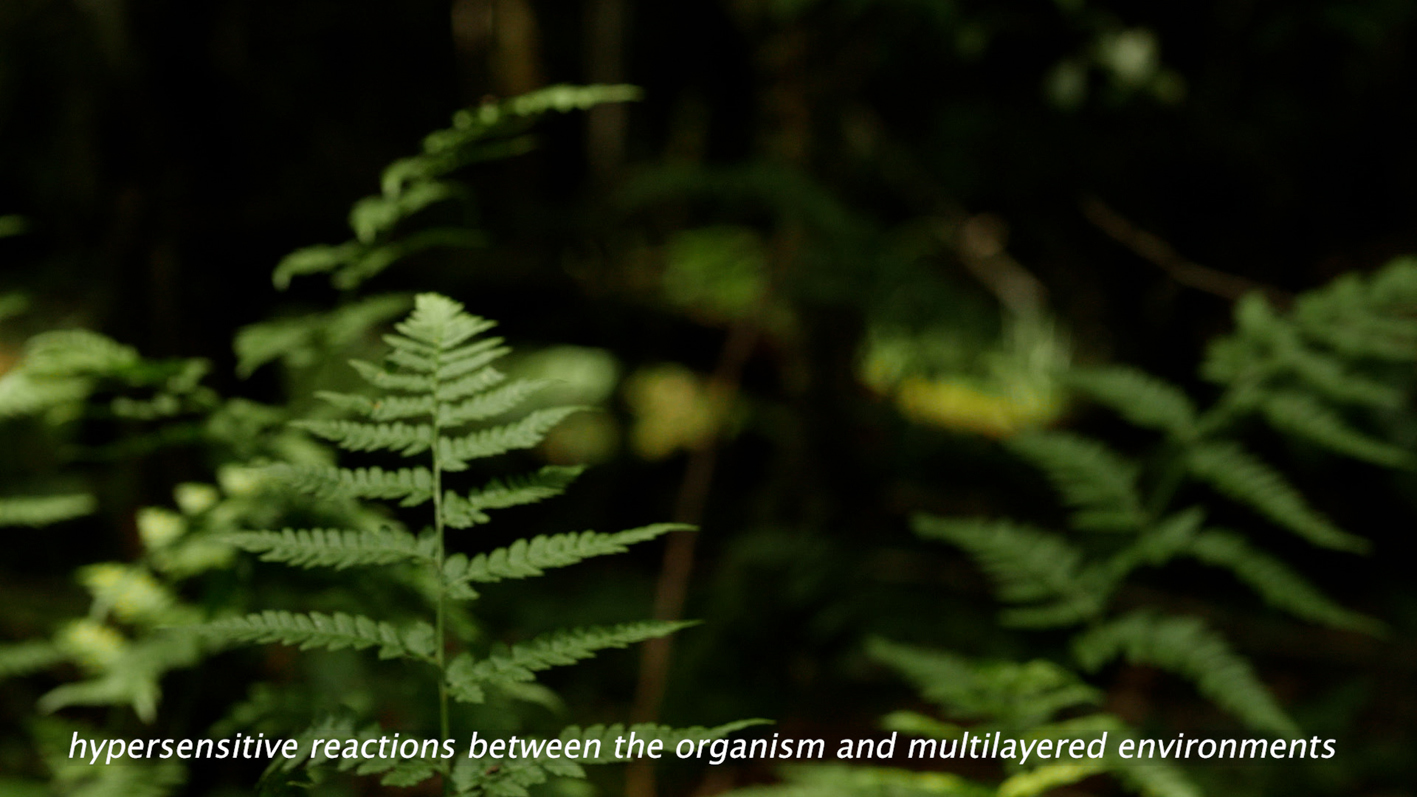
Elke Dreier, Betrachtungen des Waldes, 2021, video installation (still image)
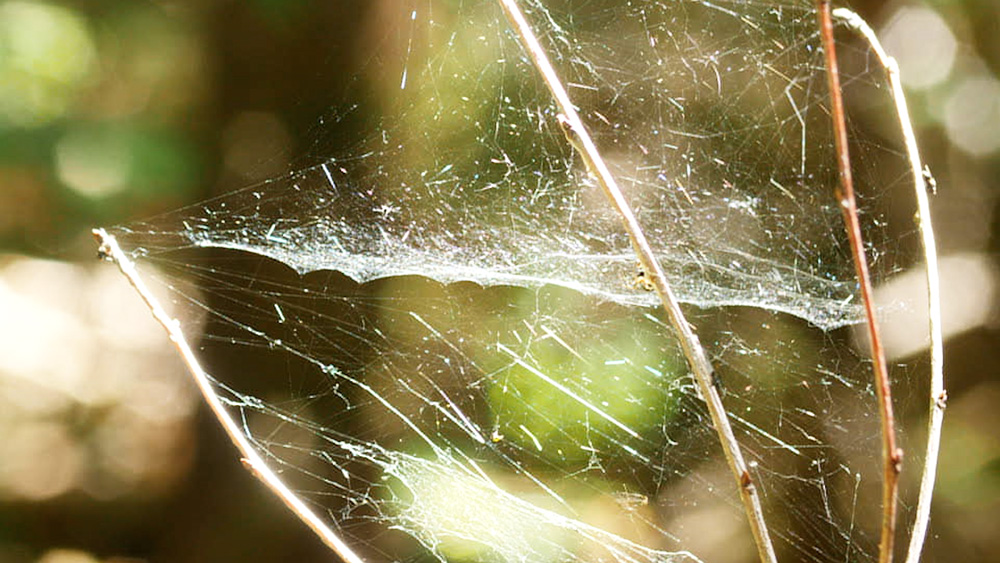
Elke Dreier, Betrachtungen des Waldes, 2021, video installation (still image)
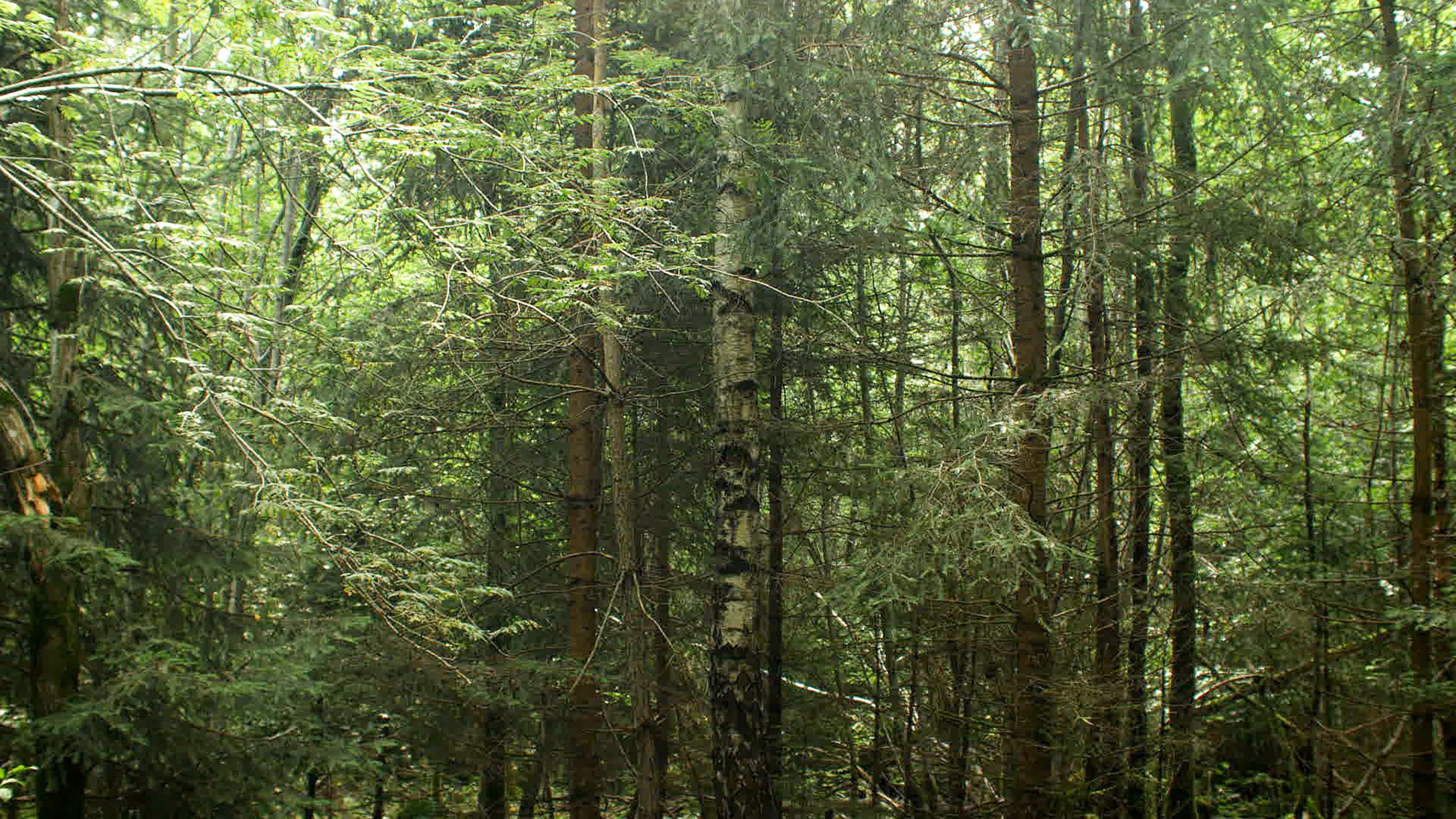
Elke Dreier, Betrachtungen des Waldes, 2021, video installation (still image)
Elke Dreier, Betrachtungen des Waldes, 2021, video installation (still image)
Elke Dreier, Betrachtungen des Waldes, 2021, video installation (still image)
Elke Dreier, Betrachtungen des Waldes, 2021, video installation (still image)
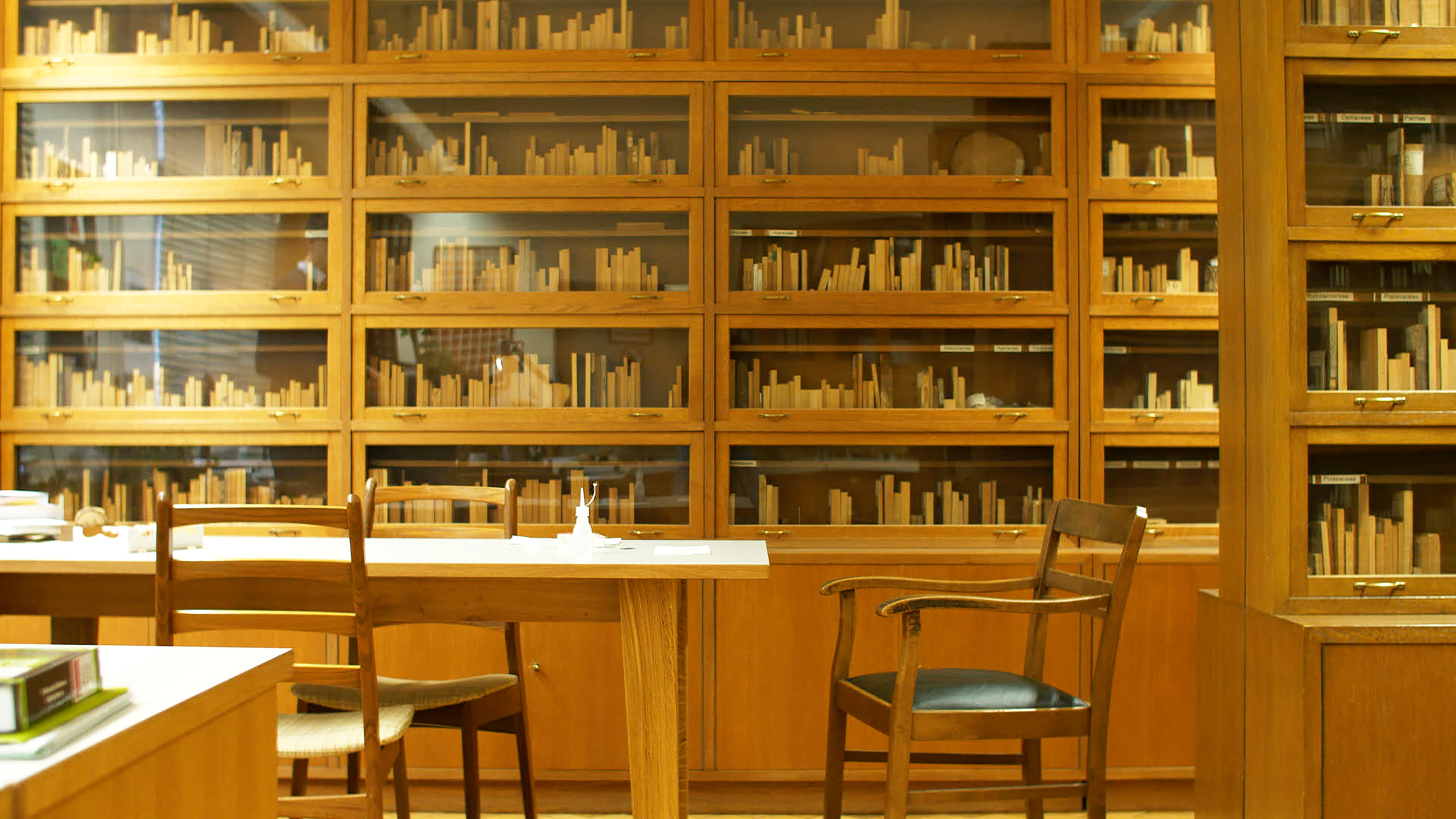
Camera: Daniel Asadi FasziXylothek, TUM Holzforschung München
Elke Dreier, Betrachtungen des Waldes, 2021, video installation (still image)
Elke Dreier, Betrachtungen des Waldes, 2021, video installation (installation view)
Elke Dreier, Betrachtungen des Waldes, 2021, video installation (installation view)
Elke Dreier, Betrachtungen des Waldes, 2021, video installation (installation view)
Elke Dreier, Betrachtungen des Waldes, 2021, video installation (installation view)
The clearing in the forest is such a compelling image. It always seems to happen quite suddenly. The trees fall away to reveal an empty space. The sun shines there. Birds sing. A butterfly flutters by. Things become visible in the clearing as the eye adjusts to the bright light. We begin to perceive things that were previously hidden — things that otherwise might have escaped our notice. When we enter the clearing things show themselves to us. But what are these things that we see? And who are the ‘we’ to who see them?
For me, the clearing always will belong to Heidegger. When in ‘The Origin of the Work of Art’ he starts to describe the relation between truth and unconcealment, it is the clearing to which he turns. He writes here so memorably,
In the midst of being as a whole an open place occurs. There is a clearing. Thought of in reference to beings, this being is more in being than are beings. Thos open center is therefore not surrounded by beings; rather, the clearing center itself encircles all that is, as does the nothing, which we scarcely know. (‘Origin of the Work of Art,’ in Heidegger, Basic Writings, 114)
Heidegger makes good use of the way the clearing makes the forest visible to us, the moment when we finally see the space, light, and air, that despite always being present, within the forest remaining unnoticed, overlooked. For Heidegger, the clearing then becomes the metaphor for how beings stand in Being.
But there are so many other approaches to the clearing, and it is this that the work of Elke Dreier shows so well: the clearing in its compelling-ness. We might look at the video footage of the local forest and see the light, the trees and the leaves. Those who are more observant might catch a glimpse of an insect or bird. An expert bird imitator however, would know the names of all the birds he hears and be able to replicate their song exactly. Similarly, the staff at Munich’s Xylotheque could identify the wood structures of each of the trees found there. The clearing is thus open to all those who wish to enter. It invites us in.
The clearing as presented by Elke Dreier in Betrachtungen des Waldes is the first in a series of exhibitions (entitled, Thinking Nature) held at GiG Munich. These exhibitions hope to examine man’s relation to nature, or more accurately, how man’s thinking is structured through the relation he has with nature. For too long this kind of thinking had been focused on the relationship man establishes with nature. Traditionally, the condition of knowledge lies within the human subject and whatever his experience of the world might be. More recently Marxist, feminist, and postmodern thought have set to critique this relationship further. I would argue the challenge is to think nature outside this relation, with our current climate crisis as well as the ongoing corona pandemic making this task all the more urgent. The clearing of Elke Dreier work is to provide the open space for discussion.
GiG Munich is happy to present its first exhibition of 2021, featuring new work by Munich-based artist, Elke Dreier, the video installation ‘Contemplation of the Forest’. This will be the first of a series of exhibitions exploring the relation between man and nature, supported by the City of Munich Department of Art and Culture.
Elke Dreier’s “Contemplation of the Forest” shows a forest clearing from different perspectives. The work uses film to stage and negotiate fundamental questions about forms of perception, visibility and physiological processes in the perceptual encounter.
Elke Dreier (* 1984) studied at the Academy of Fine Arts as a master class student of Prof. Olaf Nicolai and lives in Munich. In 2017 she received a scholarship at the Fondazione Pastificio Cerere in Rome and in 2018 was awarded the project grant for visual arts from the City of Munich. In her artist practice, Elke Dreier removes everyday communication and movements from their immediate context to re-enact them in videos and installations.
2020 Götzendämmerung, Künstlerverbund im Haus der Kunst, München
2019 Future Routines, Ausstellung, Lecture und Talk, mold, Karlsruhe in Kooperation mit dem Kunstbüro der Kunststiftung Baden-Württemberg (s)
2018 Memotion, Europäisches Künstlerhaus, Schafhof, Freising2017 SO LONG, Fondazione Pastificio Cerere, Rom
2016 Karin Wimmer – Young Art Space, München (s)
The exhibition will include an online discussion event with Dr. Arjen Kleinherenbrink, assistant professor at Radboud University, and author of ‘Against Continuity.’
.
.
.
GiG Munich freut sich, die erste Ausstellung 2021 mit einer neuen Arbeit der Münchner Künstlerin Elke Dreier, der Videoinstallation „Betrachtungen des Waldes“, eröffnen zu können. Dies ist der erste Teil einer Reihe von Ausstellungen, unterstützt vom Kulturreferat München, die sich mit der Beziehung zwischen Mensch und Natur befassen.
Die Videoinstallation “Betrachtungen des Waldes” zeigt eine Waldlichtung aus unterschiedlichen Perspektiven. Grundlegende Fragen nach Wahrnehmungsformen, Sichtbarkeit und physiologischen Abläufen in Wahrnehmungssituationen werden filmisch inszeniert und verhandelt.
Elke Dreier (*1984) hat an der Akademie der Bildenden Künste als Meisterschülerin von Prof. Olaf Nicolai studiert und lebt in München. 2017 erhielt sie ein Stipendium an der Fondazione Pastificio Cerere in Rom und wurde 2018 mit dem Projektstipendium für Bildende Kunst der Landeshauptstadt München ausgezeichnet. In ihren künstlerischen Arbeiten löst Elke Dreier alltägliche Kommunikations- und Bewegungsprozesse aus ihrer Unmittelbarkeit und reinszeniert diese in Videos und Installationen.
2020 Götzendämmerung, Künstlerverbund im Haus der Kunst, München
2019 Future Routines, Ausstellung, Lecture und Talk, mold, Karlsruhe in Kooperation mit dem Kunstbüro der Kunststiftung Baden-Württemberg (s)
2018 Memotion, Europäisches Künstlerhaus, Schafhof, Freising2017 SO LONG, Fondazione Pastificio Cerere, Rom
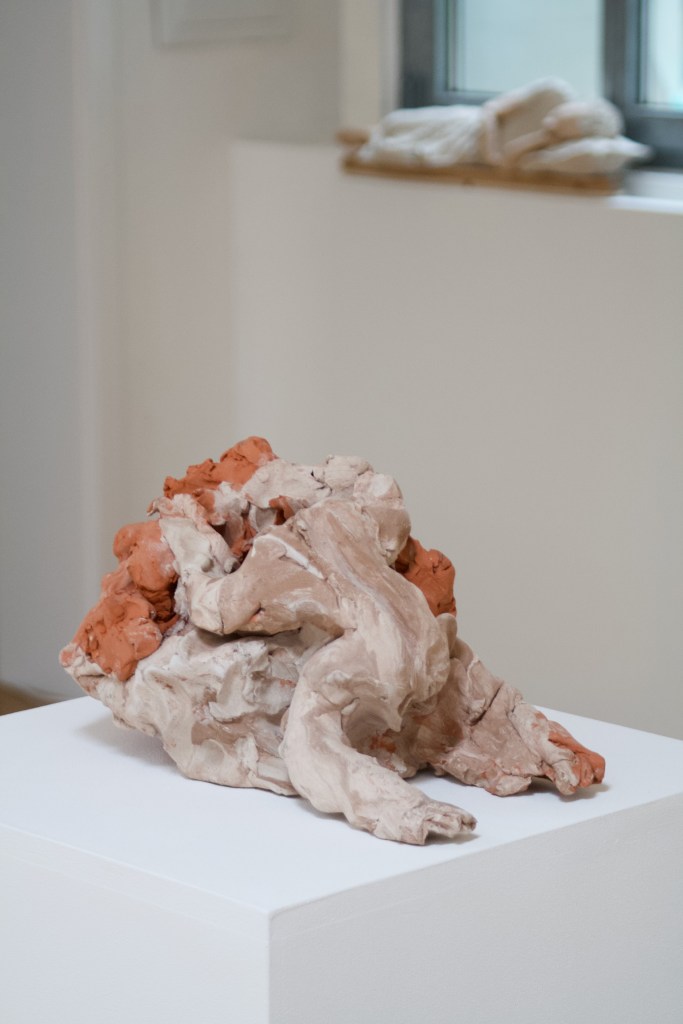
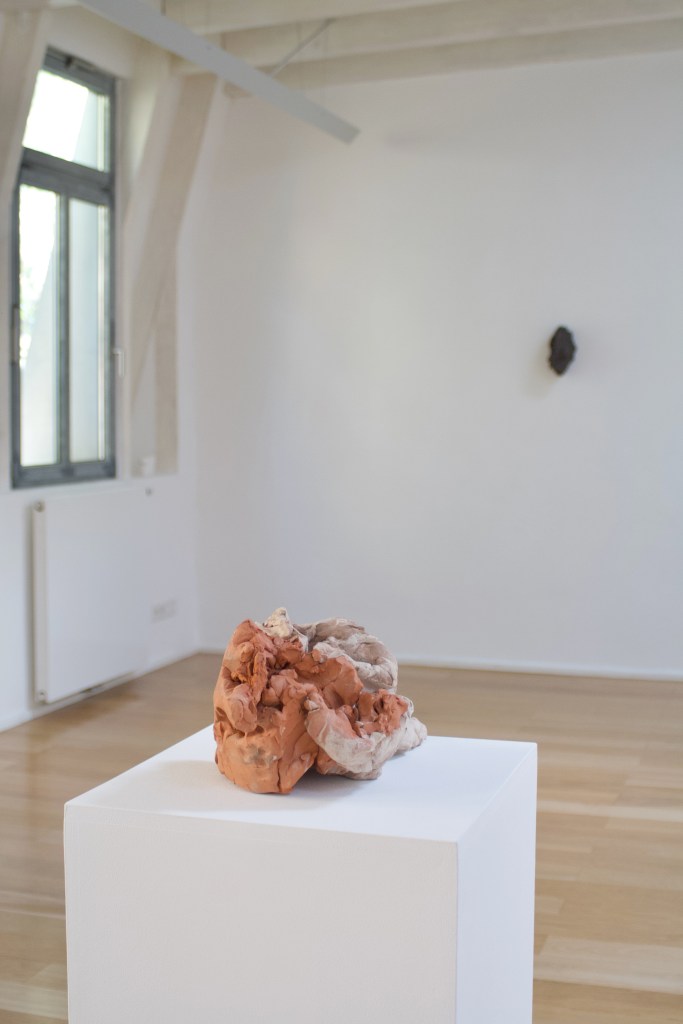
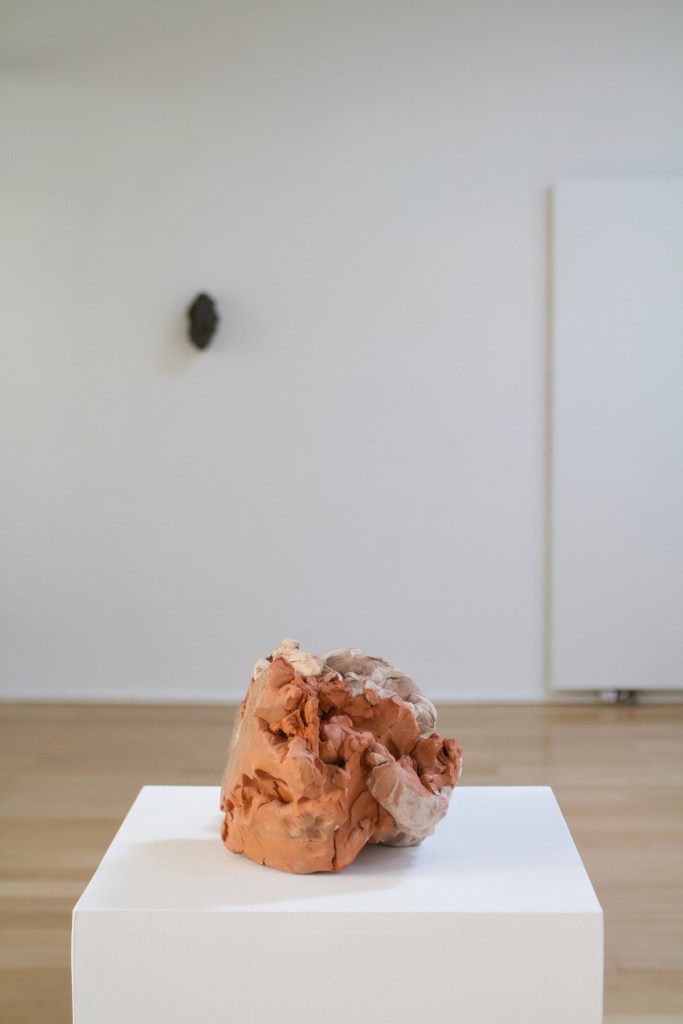
Emanuele Becheri, Assetato, 2020, terracotta, 50 x 50 x 20 cm
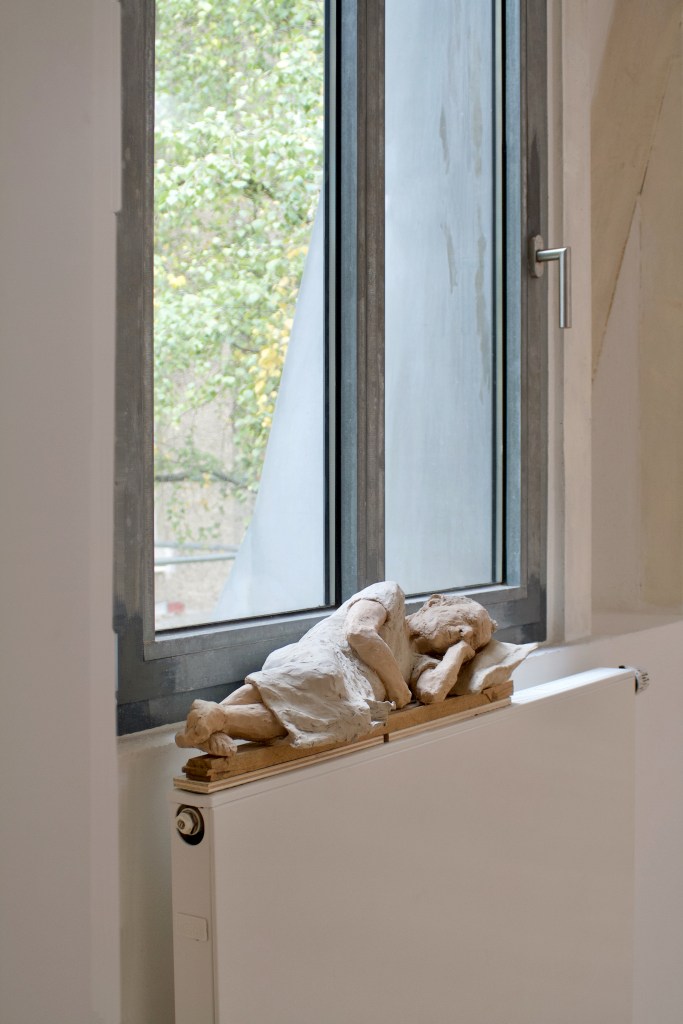
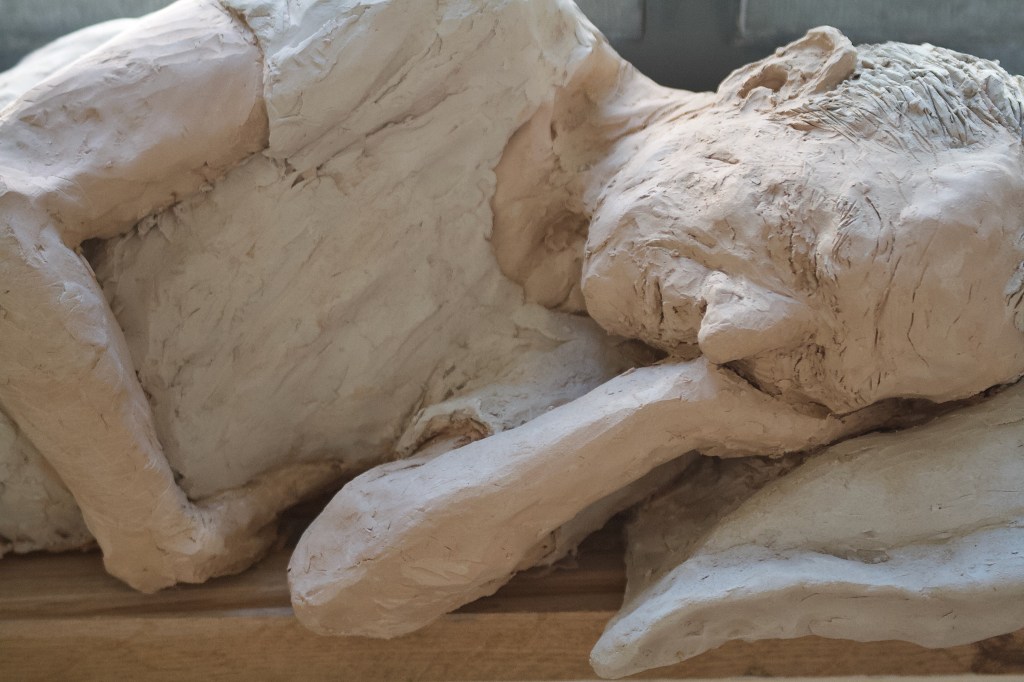
Beth Collar, Dad with Upset Tummy, 2017, Unfired clay on radiator, 60 x 23 x 15 cm
Beth Collar, Dad with Upset Tummy, 2017, Unfired clay on radiator, 60 x 23 x 15 cm (detail)
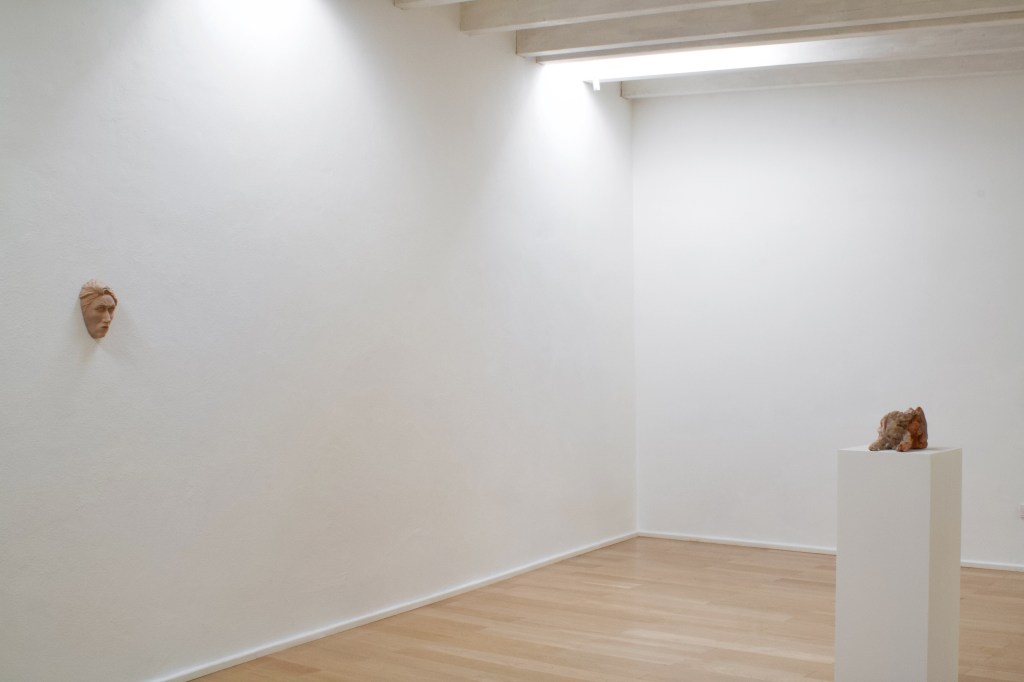
Bildhauer*in der Sinne, 2020, exhibition view
Bildhauer*in der Sinne, 2020, exhibition view
Bildhauer*in der Sinne, 2020, exhibition view
Emanuele Becheri, Testa, 2019, terracotta and manganese oxide, 25 x 15 x 15 cm
Beth Collar, Thinking Here Of How The Words Formulate In My Head As I Am Just Thinking, 2018, Linden Holz and M.A.C. cosmetics, 20 x 17 x 10 cm
Beth Collar, Thinking Here Of How The Words Formulate In My Head As I Am Just Thinking, 2018, Linden Holz and M.A.C. cosmetics, 20 x 17 x 10 cm
Bildhauer*in der Sinne, 2020, exhibition view
Emanuele Becheri, Assetato, 2020, terracotta, 50 x 50 x 20 cm
Emanuele Becheri, Assetato, 2020, terracotta, 50 x 50 x 20 cm
Emanuele Becheri, Assetato, 2020, terracotta, 50 x 50 x 20 cm
The title of the exhibition Bildhauer*in der Sinne is a quotation from a letter by Pietro Aretino, Italian volcanic poet of the first half of the 16th century and a grim critic of Renaissance classicism. In this letter, Aretino criticizes the classicist pedantry of contemporary poets and urges them to be “sculptors of senses and not miniaturists of words.” That is, to look and build with eyes and hands, instead of resorting to practices in the second degree, especially fashionable ones. There is provocatively something very contemporary in this sentence: if we take for granted that the discourse on and of the arts has become extremely logocentric, hiding itself behind labels and terminologies of efficient and immediate use, then it becomes interesting to look at artistic paths that are probably irregular, but that tell us more consistently about the state of contemporary art.
The exhibition focuses on the two international artists Beth Collar (UK, 1984) and Emanuele Becheri (IT, 1973). Collar and Becheri’s work is composed of a constellation of mediums (both share attitudes towards drawing, sculpture, video and performance), but this exhibition focuses only on the specificity of their respective sculptural work – oriented towards figuration. Art scholar and curator Beniamino Foschini presents the artists together for the first time.
For Beth Collar, sculpture does not always respond to the image of a closed work, but also of a performative event’s marginalia. For this reason, the artist does not define herself as a sculptor, but as a performer, since sculpture is for her a double-track instrument of investigation: it’s about its tradition and her role as a female artist in this tradition. Collar therefore looks at a patriarchal history with skepticism: rejecting modernist and post-modernist narratives, despite the haunting of their ghosts, her figurative acts come to propose an intimately powerful discourse of medieval inspiration, where the reflection on the sculptural object takes on a ritualistic function of a symbolic contact.
For Emanuele Becheri, on the other hand, the discourse on sculpture brings attention back to the work detached as much as possible from identity intentions. Always interested in the loss of control of trace in artistic practice, Becheri sees sculpture as impression on material. For this reason, his subject-matters show the abandonment of the symbolic, while generating recognizable forms, evidently coming from tradition. For Becheri, however, this tradition is something already given, something that has to do with the body, the self-portrait and the formal awareness of the history of sculpture: the movements of light generated by the material give us a reflection on the limits of plastic freedom.
In Collar and Becheri’s works there is always a complex and skeptical relationship with great narratives and the history of 20th and 21st century sculpture, an investigation that goes beyond the near past and constantly tends to question through the forms of art the sense of their respective artistic practice. Collar and Becheri are artists from very different backgrounds and directions – and their respective relationship with the sculpture of the past is evident in this – but the dialogue between the works on display has the ambition to set in motion an aesthetic reflection on current experimentation with sculpture, as well as to bring back to the center a discourse on the figurative as a mediator of meaning to the viewer.
Beth Collar (1984) is a British artist based in Berlin, working predominantly in performance, sculpture and drawing. Her solo shows include ‘End Quote’ at Stadium, Berlin in 2020; ‘Daddy Issues’ at Dilston Grove commissioned by Matt’s Gallery and Southwark Park Galleries and ‘Retrogression’ a collaborative exhibition with Eoghan Ryan at 427 in Riga, Latvia both 2019; Waldo @Mathew Gallery, New York, Matt’s Gallery, London, Primary, Nottingham all in 2018; at Standpoint, London in 2017 and at Fig2 at the ICA in London 2015. Her recent group exhibitions have been at Regatta 2, Düsseldorf, Litost, Prague, 2020; A PLUS A, Venice, The Academy of Fine Arts, Helsinki, Kunsthal ved siden af, Svendborg, Denmark, Marlborough Contemporary, New York, Bärenzwinger, Berlin, 2019; Cell Project Space, London, 2018; Kunstverein München, 2017; and KW, Berlin, 2016. Performances have taken place at Camden Arts Centre, London and Kunstverein Bamberg, 2020; Bob Shop, Berlin, 2019.
Emanuele Becheri (1973) is an Italian artist, whose practice incorporates sculpture, drawing and video. His most recent solo shows include ’Sculture e disegni’ at Museo del 900, Firenze, curated by Sergio Risaliti and Saretto Cincinelli in 2020, ‘Stati d’Animo’ at the FuoriCampo Gallery and Santa Maria della Scala, Siena in 2019. Group exhibitions include ‘Ragione e Sentimento’ at the Galleria Nazionale d’Arte Moderna e Contemporanea, Roma, curated by Chiara Stefani and Massimo Mininni in 2019, ‘Il disegno del disegno’ at the Museo del 900, Firenze, curated by Saretto Cincinelli, ‘Video from the Collection of the Galleria Nazionale d’Arte e Moderna e Contemporanea’ at the EMST National Museum of Contemporary Art, Athens, and ‘De scultura’ at Casa Masaccio Centro per l’Arte Contemporanea, San Giovanni Valdarno, all in 2018.
Beniamino Foschini is a doctoral candidate at the Institut für Kunstgeschichte, Ludwig-Maximilans-Universität München, and a research associate at the Akademie der Bildenden Künste München. He contributes to ‘Doppiozero’ (https://www.doppiozero.com), Milano, and is co-founder of ‘porcile’ ( https://porcile.org ).
This project is funded by the City of Munich, Department of Arts and Culture
Opening: 26.09.2020, 7 – 9 pm GiG Munich is delighted to be presenting the duo show “Bildhauer*in der Sinne,” opening on Saturday, September 26, 2020. As the title suggests, the exhibition focuses on the sculptural practices by international artists Beth Collar (UK) and Emanuele Becheri (IT). Guest curator Beniamino Foschini presents the two artists together for the first time.
While Collar and Becheri work with different mediums (drawing, performance, video), the idea of this exhibition and the juxtaposition between the two artists comes from an inquiry into a specific aspect of their practice: what we can commonly define as “figurative sculpture,” which they deal with through their critical and ironic visions of contemporary culture and its mannerisms.In the process of conceiving this exhibition, a quote from Pietro Aretino, a legendary poet, critic and intellectual of the 16th century, came into view:
[a poet should be] a sculptor of senses and not a miniaturist of words
This criticism of 16th century Mannerist poetry offers a particular stimulus for a metaphorical interpretation of the exhibition “Bidlhauer*in der Sinne” : what happens when a sculptor, and not a poet, is indeed a sculptor of senses?
Beth Collar (*1984) is a British artist based in Berlin, working predominantly in performance and sculpture. Her solo shows include ‘Daddy Issues’ at Dilston Grove commissioned by Matt’s Gallery and Southwark Park Galleries and ‘Retrogression’ a collaborative exhibition with Eoghan Ryan at 427 in Riga, Latvia both 2019; Waldo @Mathew Gallery, New York, Matt’s Gallery, London, Primary, Nottingham all in 2018; at Standpoint, London in 2017 and at Fig2 at the ICA in London 2015. Her recent group exhibitions have been at Regatta 2, Düsseldorf, Litost, Prague, 2020; A PLUS A, Venice, The Academy of Fine Arts, Helsinki, Kunsthal ved siden af, Svendborg, Denmark, Marlborough Contemporary, New York, Bärenzwinger, Berlin, 2019; Cell Project Space, London, 2018; Kunstverein München, 2017; and KW, Berlin, 2016. Performances have taken place at Camden Arts Centre, London and Kunstverein Bamberg, 2020; Bob Shop, Berlin, 2019.
Emanuele Becheri (*1973) is an Italian artist, whose practice incorporates sculpture, drawing and video. His most recent solo shows include ’Sculture e disegni’ at Museo del 900, Firenze, curated by Sergio Risaliti and Saretto Cincinelli in 2020, ‘Stati d’Animo’ at the FuoriCampo Gallery and Santa Maria della Scala, Siena in 2019. Group exhibitions include ‘Ragione e Sentimento’ at the Galleria Nazionale d’Arte Moderna e Contemporanea, Roma, curated by Chiara Stefani and Massimo Mininni in 2019, ‘Il disegno del disegno’ at the Museo del 900, Firenze, curated by Saretto Cincinelli, ‘Video from the Collection of the Galleria Nazionale d’Arte e Moderna e Contemporanea’ at the EMST National Museum of Contemporary Art, Athens, and ‘De scultura’ at Casa Masaccio Centro per l’Arte Contemporanea, San Giovanni Valdarno, all in 2018.
Beniamino Foschini is a doctoral candidate at the Institut für Kunstgeschichte, Ludwig-Maximilans-Universität München, and a research associate at the Akademie der Bildenden Künste München.
Tim Bennett, Jenny Dunseath, Jonah Gebka, Andrea Hanak, Jane Hayes-Greenwood, Hannes Heinrich, Melina Hennicker, David Henrichs, Stefanie Hofer, Lukas Hoffmann, Lou Jaworski, Steffen Kern, Stefan Lenhart, Jo Love, Michael Lukas, Robin Mason, Kathrin Partelli, Rebecca Partridge, Plastique Fantastique, Berthold Reiss, Miriam Salamander, Michael Schmidt, Maria Thurn und Taxis, Stefanie Ullmann, Maria VMier, Susanne Wagner, Youjin Yi, Andrea Zabric, Janka Zöller.
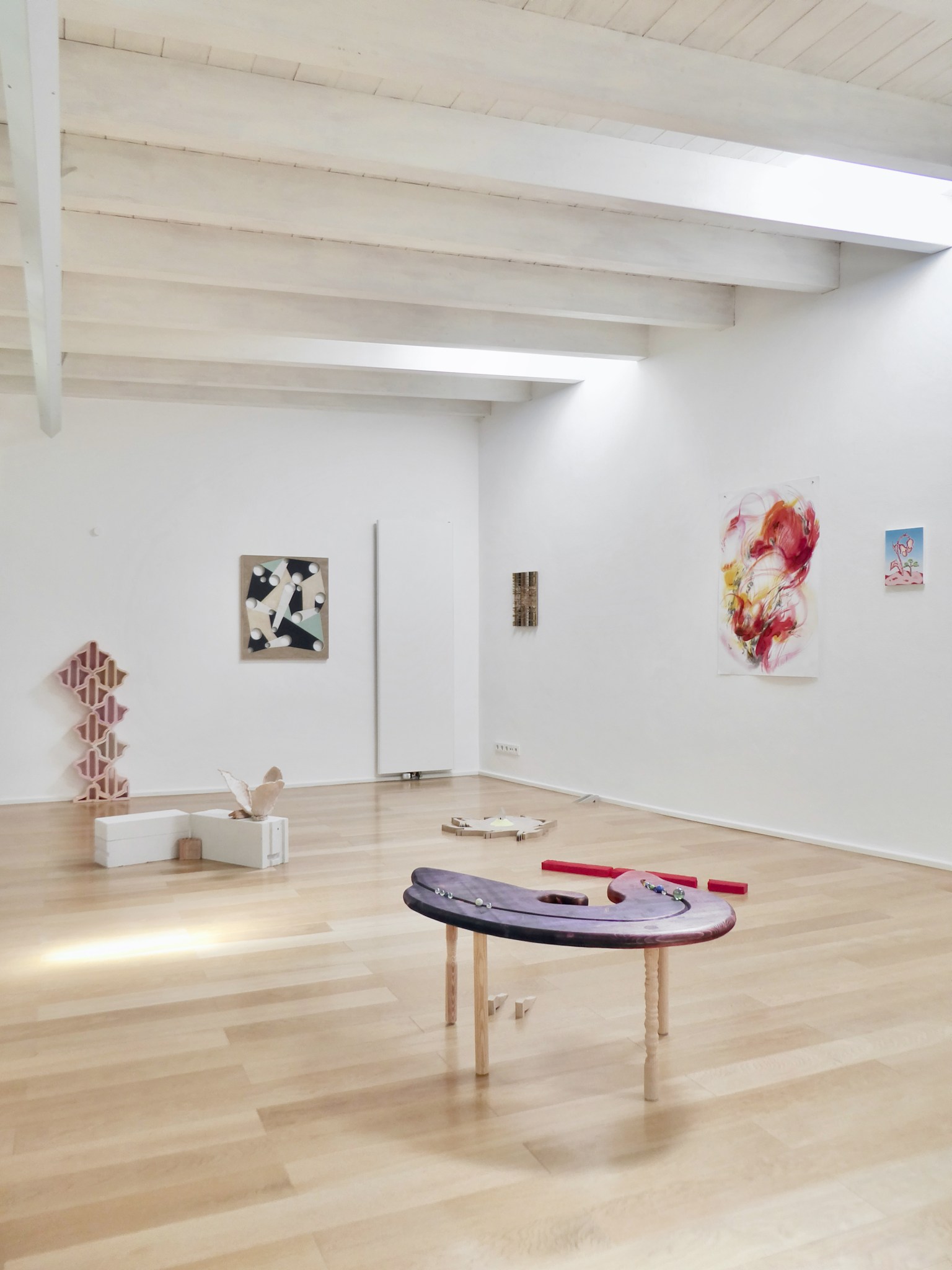
23.07 – 19.09.2020
5 Year GiG, installation view, 2020
Lukas Hoffmann, Untitled, 2020, MDF, Sulphur, Aluminium, 80 x 70 x 20 cm
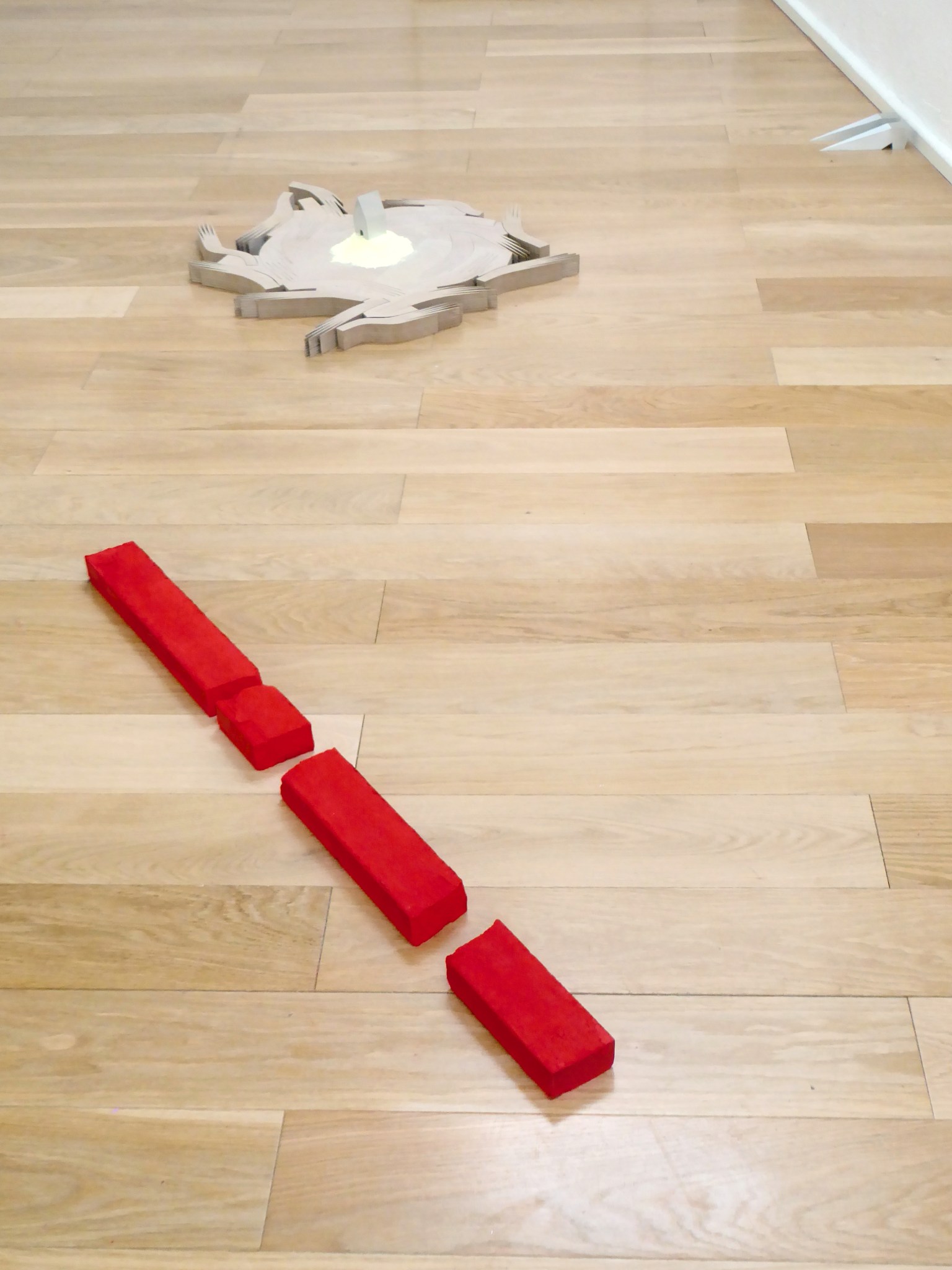
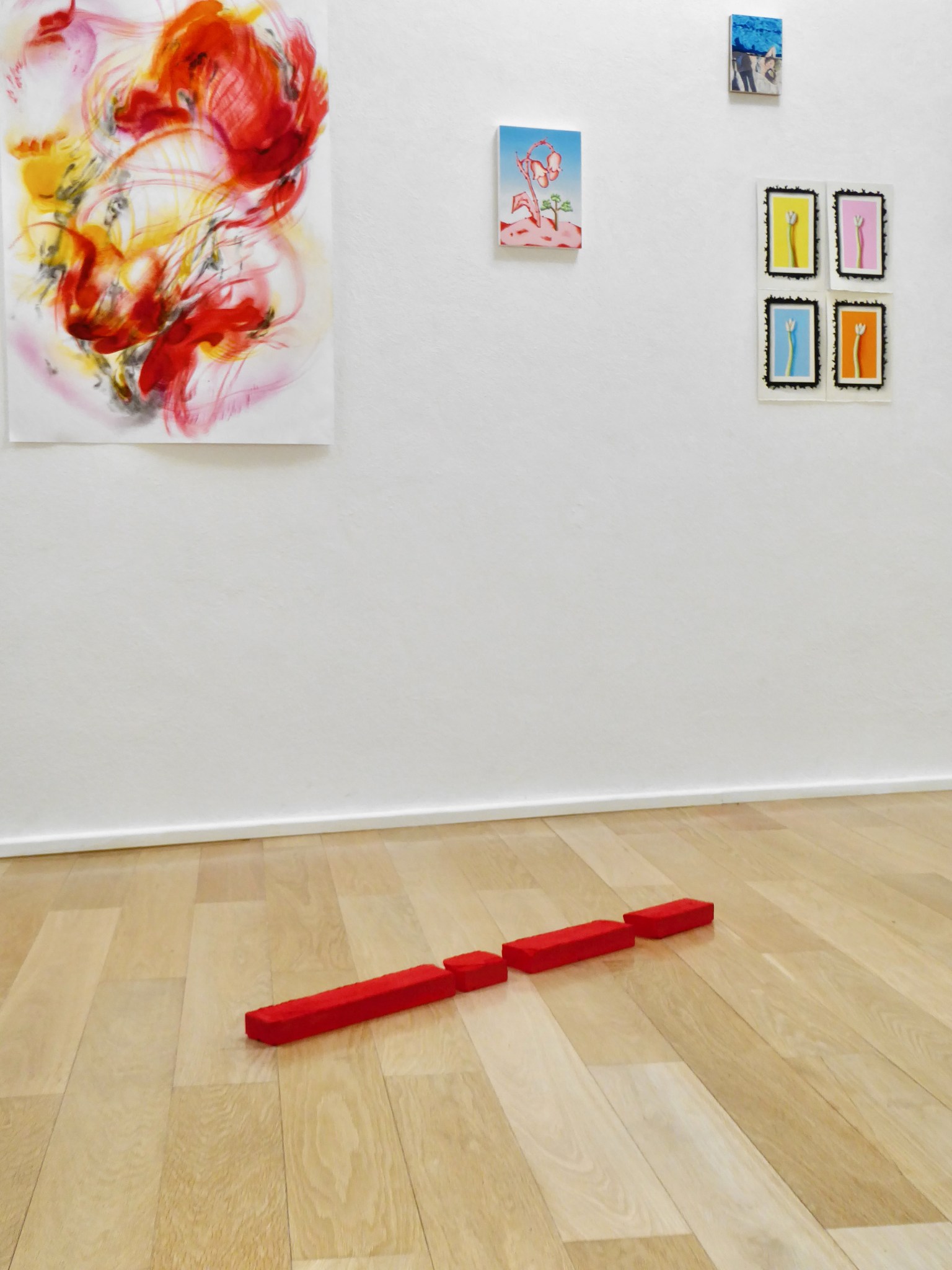
Foreground: Andrea Zabric, Pigment Sculpture 21110, 2020, 5 kg cadmium red pressed pigment, size variable
Background: Lukas Hoffmann, Untitled, 2020, MDF, Sulphur, Aluminium, 80 x 70 x 20 cm
5 Year GiG, installation view, 2020
5 Year GiG, installation view, 2020
5 Year GiG, installation view, 2020
Foreground: Maria VMier, o.T., 2020 stained wood and marbles, 140 x 50 x 50 cm and Lukas Hoffmann, Untitled, 2020, MDF, 15 x 2,5 x 4 cm
5 Year GiG, installation view, 2020
Foreground: Kathrin Partelli, Aus Tagundnachtgleiche, 2018, Gummi, Porenbeton, Ziegelstein, 55 x 65 x 95 cm
Background: Michael Lukas, Frame, 2013, Mixed technique on wood, 46 x 32 x 4 cm
5 Year GiG, installation view, 2020
Foreground: Kathrin Partelli, Aus Tagundnachtgleiche, 2018, Gummi, Porenbeton, Ziegelstein, 55 x 65 x 95 cm
Background: Susanne Wagner, Conchita, 2020, Gefärbter Gips, 120 x 40 x 10 cm and Tim Bennett, untitled (o-garden I) gipskartonrelief, akrylfarbe, 85 x 70 cm

























 GiG
GiG 