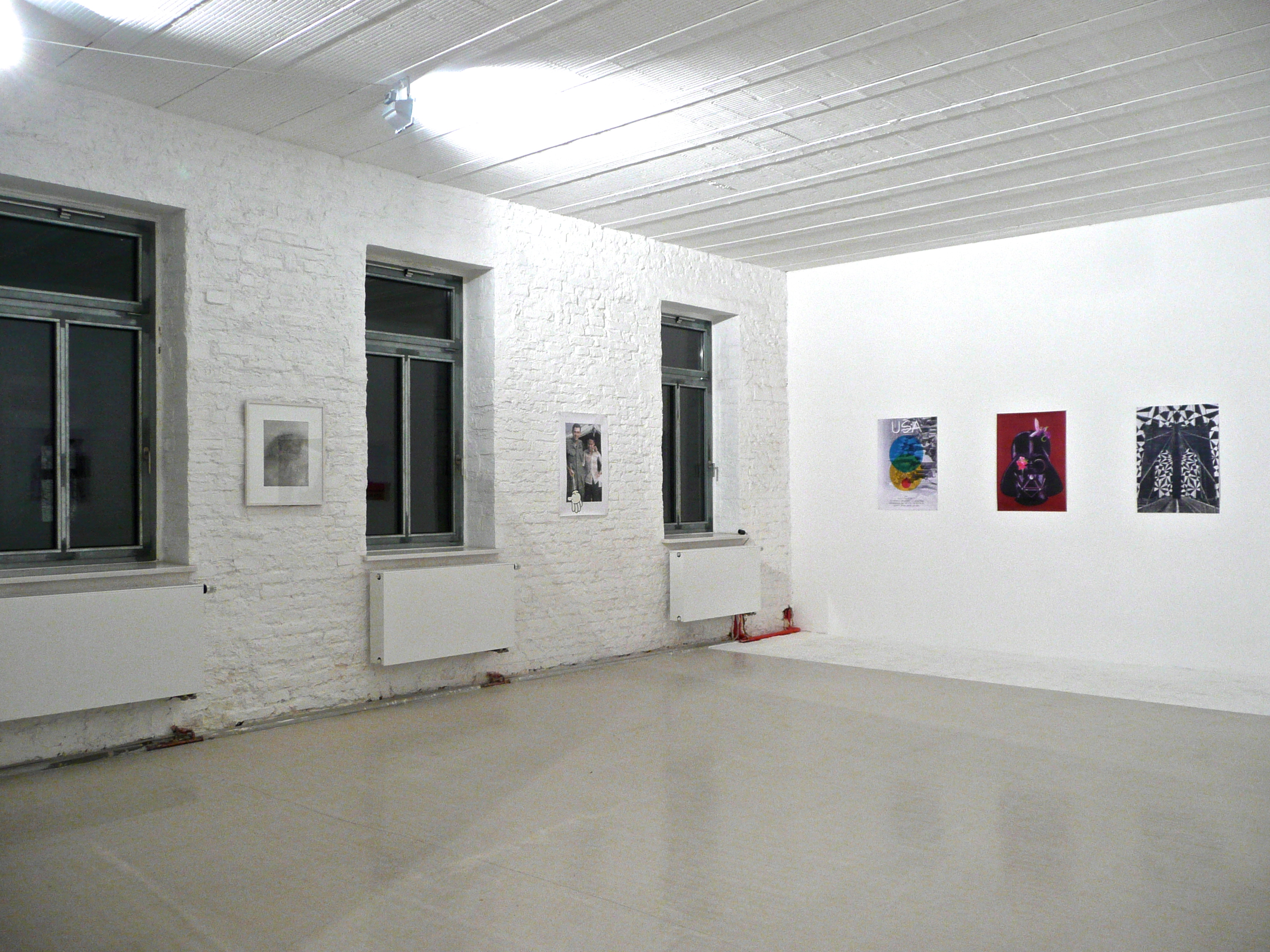
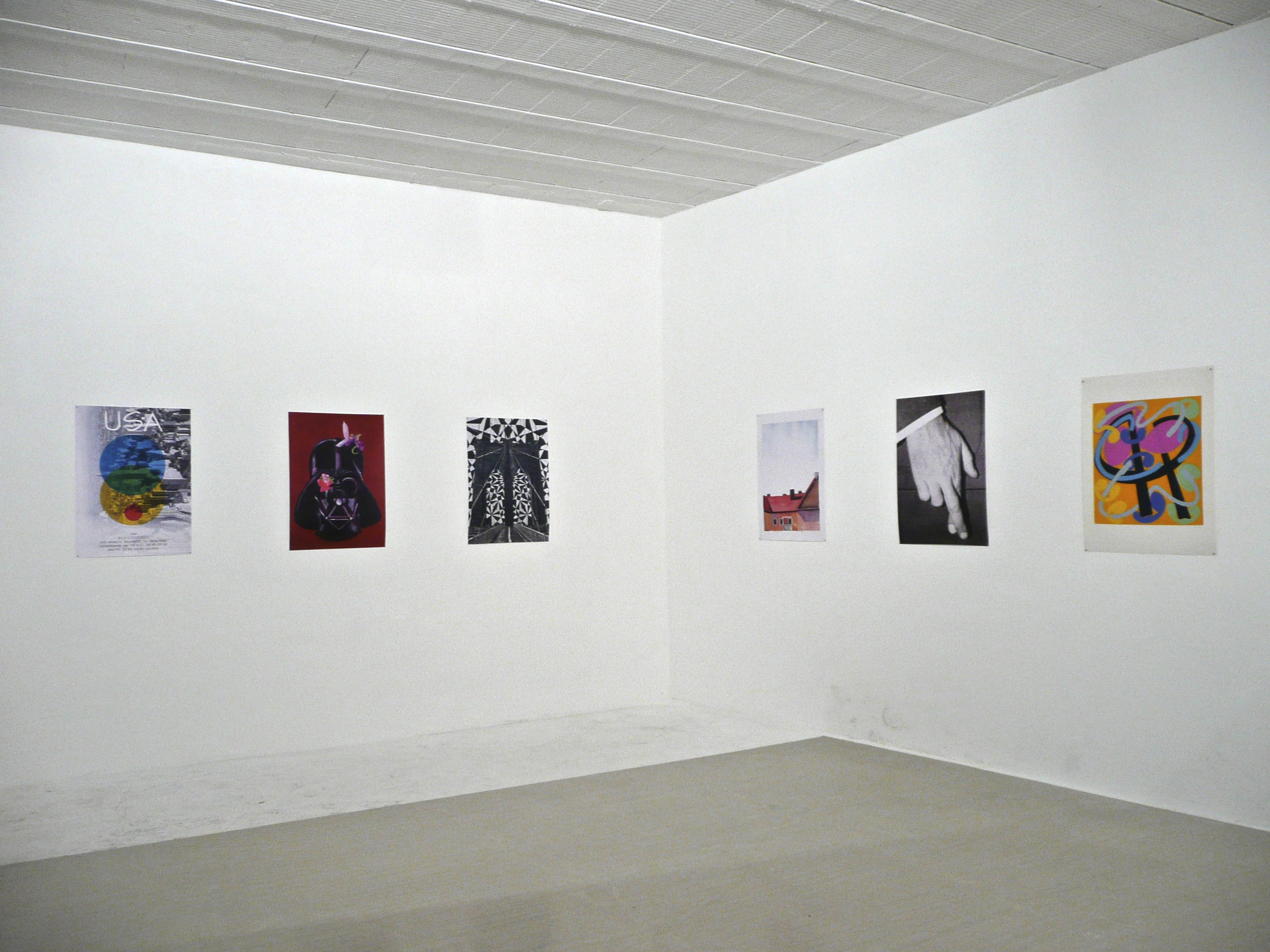
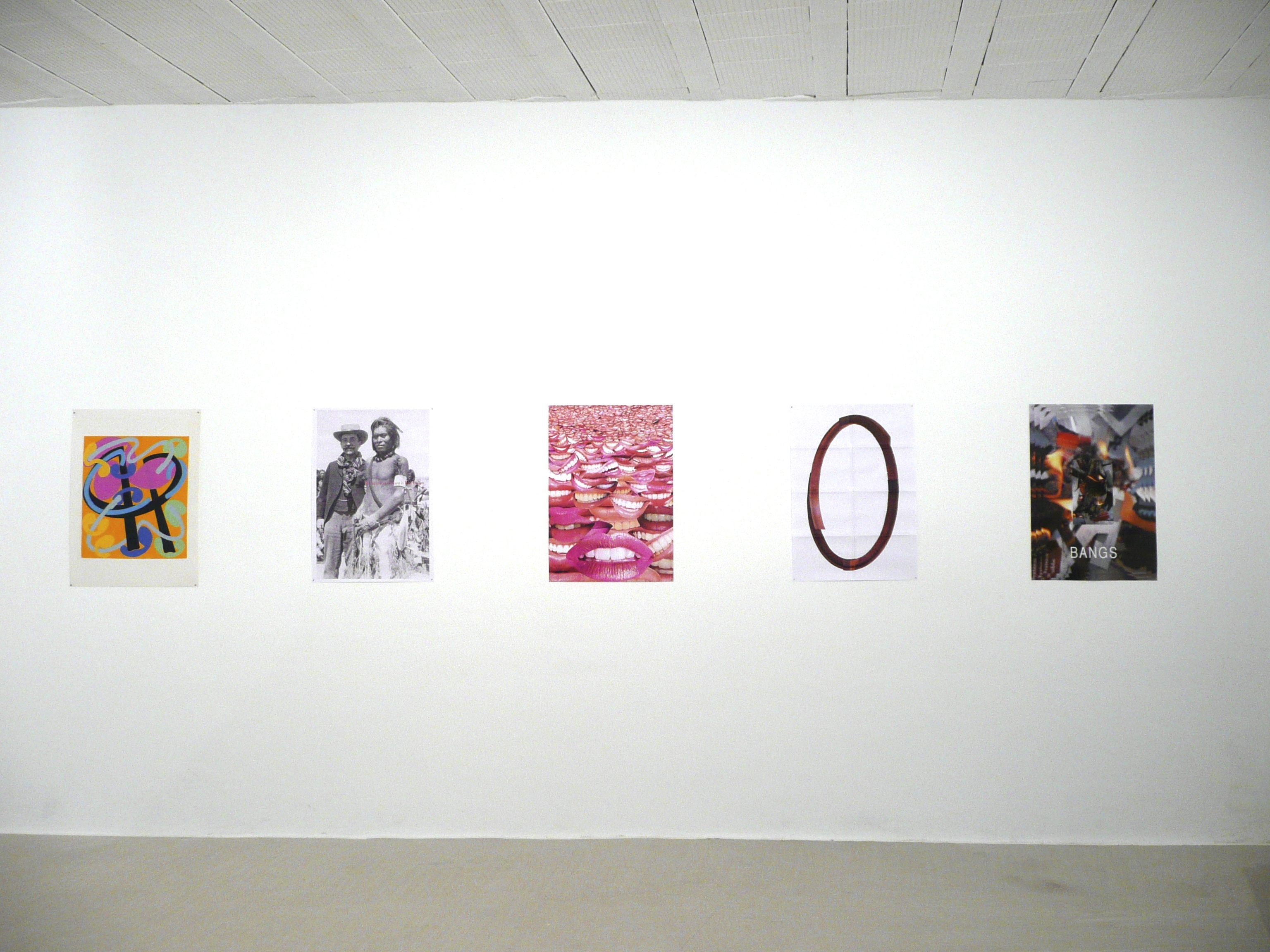
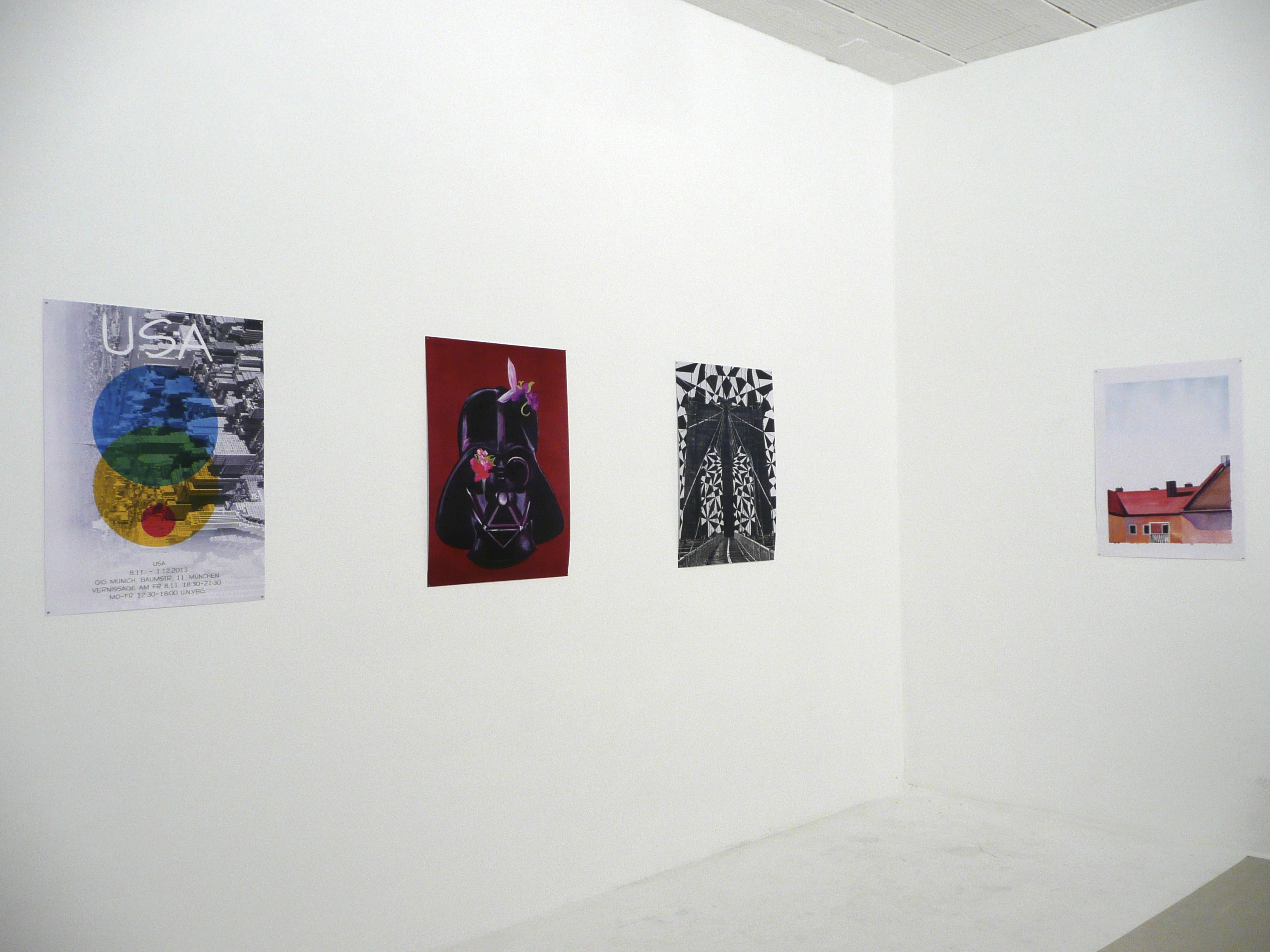
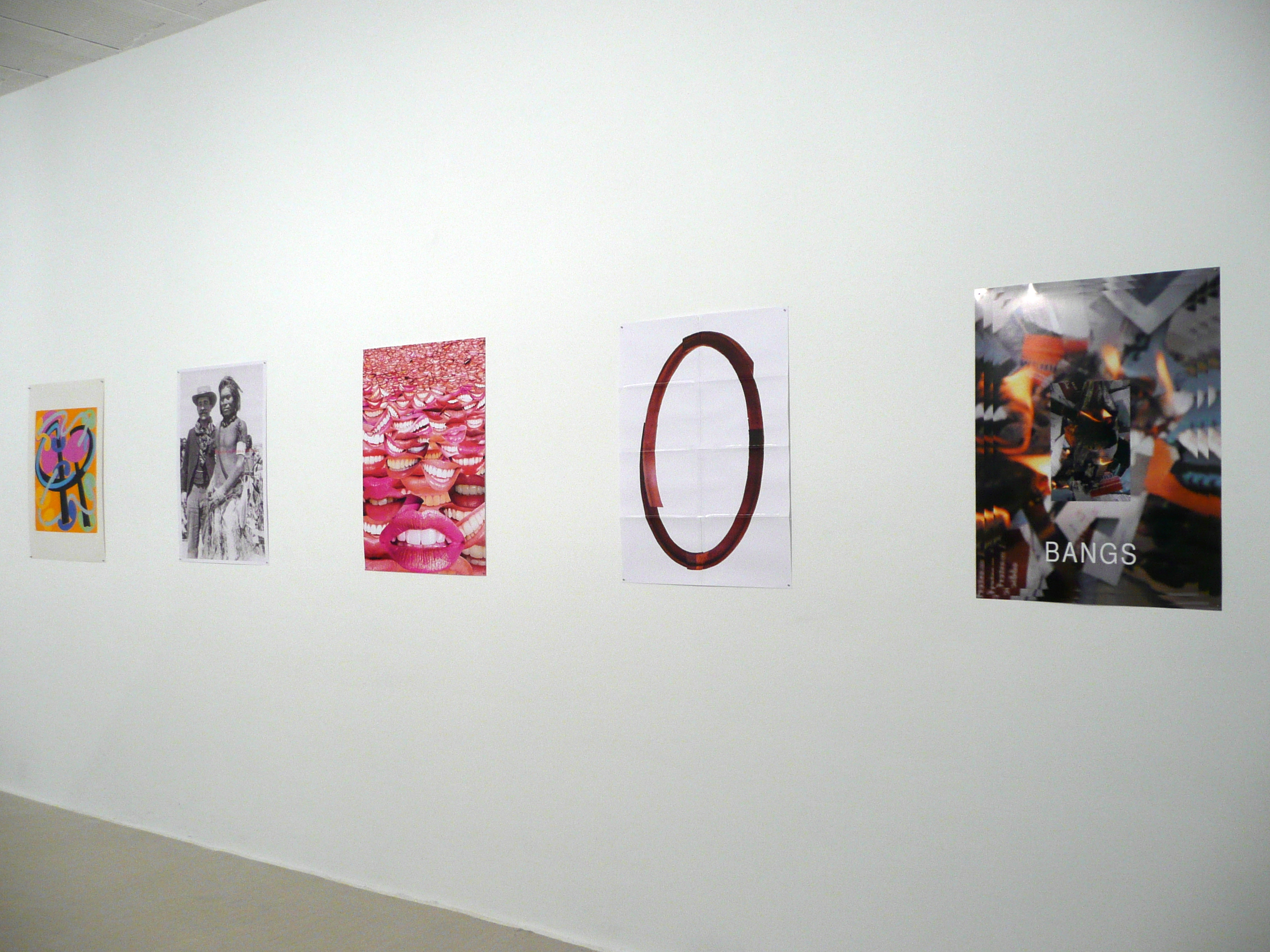
Some more pictures of the USA exhibition, showing more of the space:


MUNICH
Some more pictures of the USA exhibition, showing more of the space:

California
In regular intervals the beautiful woodlands of California blaze away in devastating forest fires. Soon after new trees grow in the very same places to await their inevitable fate in this repetitive and painful process of renewal. One might see a parallel to business culture in Silicon Valley and Joseph Schumpeter’s idea of destructive creation or just enjoy a depiction of burnt trees. Even though the picture might look like a hand drawing it was actually created by a custom software running on a computer designed in California. RA 2013
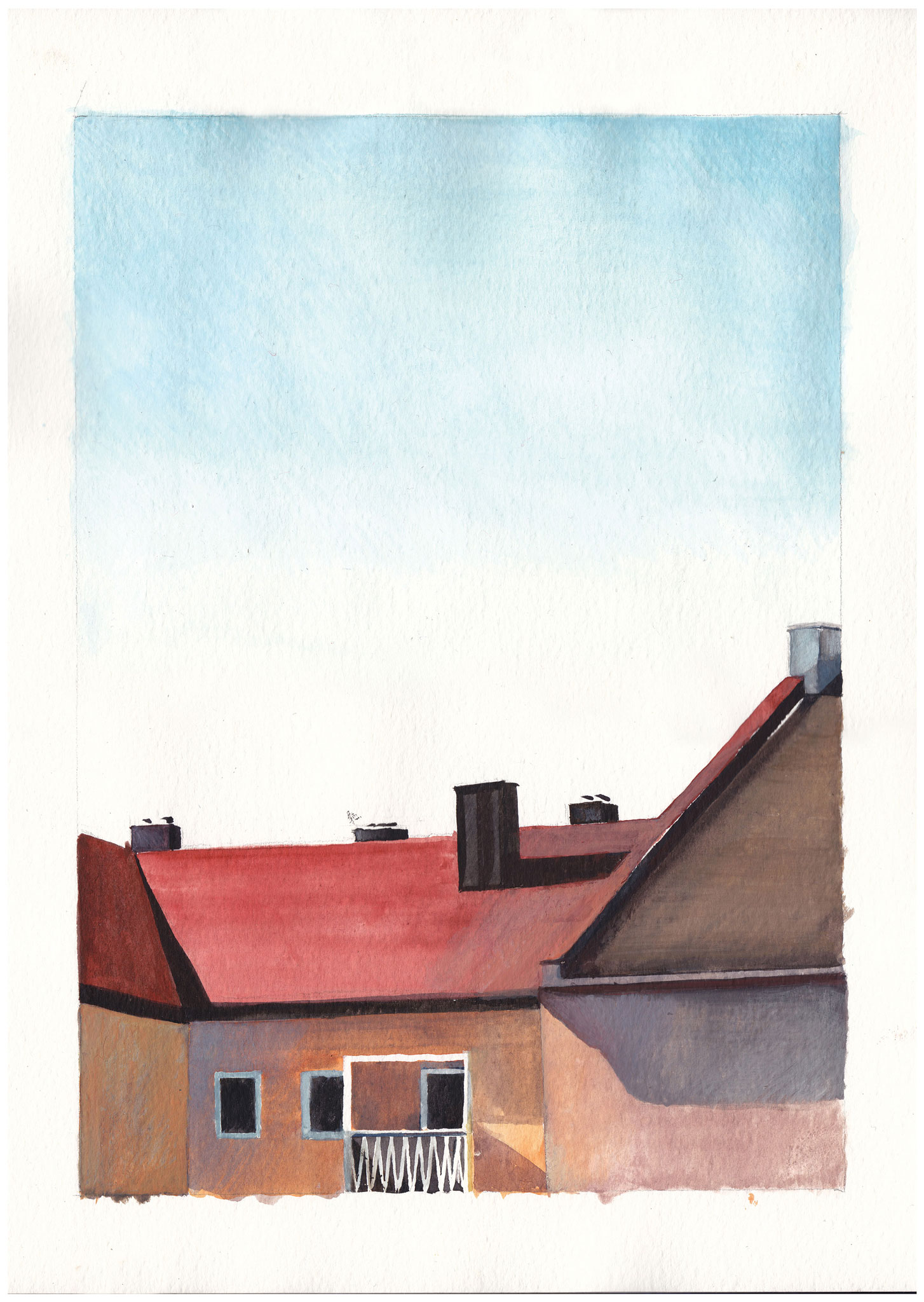
All of my recent work, no matter how abstract it might seem to an unsuspecting audience, has as its origin everyday life. By wiping away carefully built-up layers of paint, I have depicted many of my immediate surroundings: the trees outside my window, the buildings across the courtyard, the distant rooftops and their chimneys. Those more familiar with my painting would say it has an element of Edward Hopper’s work. Both the subject matter and the light quality are similar.
However, this aspect of my painting practice is not something that I have willingly acknowledged and actively pursued. To paint the way Edward Hopper did, uncritically and without self-consciousness, seemed to me an indulgence that I would not, could not, afford.
For me, ‘Amerika’ as a site of collective dreams, myths and fantasies offers a place for such indulgence. It is that imaginary space where I can look out of the window and paint simply what I see. And in this particular arrangement of roofs, brickwork, shuttered windows and blue sky I do see a Hopper painting, with the lonely figure about to step out on the white-railed balcony. MW2013


Florencia Guillen works with video, sound, text and drawing and explores notions of travel and migration. She has carried out art research projects in various locations, using objects to chart historical paths within specific geographical territories. Florencia Guillén did a masters degree at the Slade School of Art, London, and obtained her undergraduate degree in Art and Art History from Goldsmiths College in the same city. FG 2013
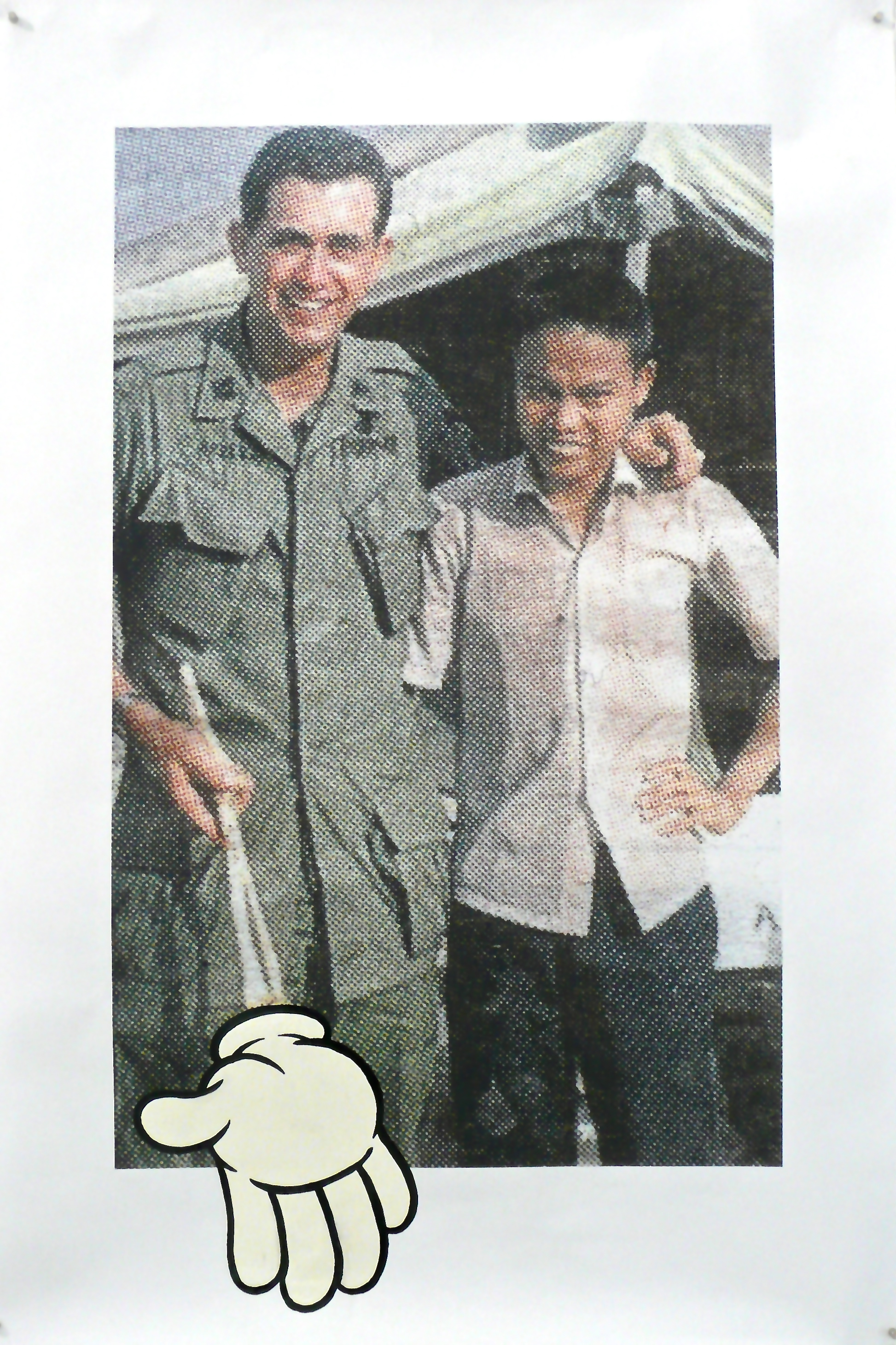
A young Vietnamese man poses with a US soldier. The American is holding the remains of an amputated arm, removed to prevent the Vietnamese man from dying of an infected gunshot wound. In a gesture of gratitude to the American, the cleaned bone was offered as a keepsake. Unlike many who received similar war gifts, the US soldier eventually returned to Vietnam. This year the missing arm was finally reunited with its owner.
Jack Lovell currently lives and works in London. His practice explores the hidden complexity and materiality of the found photograph. The use of enigmatic staged photography invites the viewer to consider the space that exists inside a ‘simulated reality’. JL 2013

I’m interested in the potential of images within image-literate societies: as visual information, as surrogates for ideas and as things. In Crossed Fingers, we see a familiar hand gesture staged for the camera. In the 1950s an American safe company used this image to criticise our reliance on luck and our faith in the supernatural. But images have a habit of not being the best at doing what they were intended to do. So what does this image mean now, here, and now, and now?
Mike Merkenschlager is a London-based visual artist, working primarily with photographic images. MM 2013
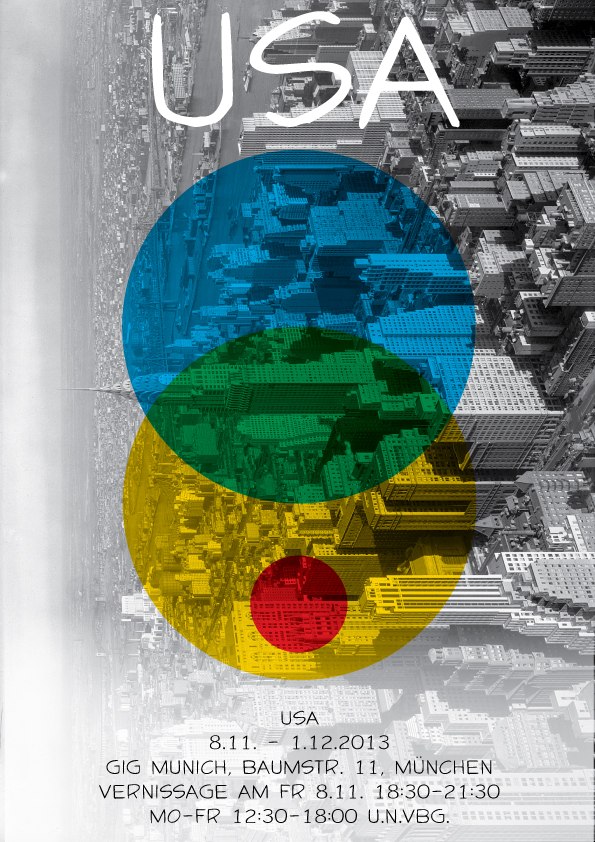
Alasdair Duncan, who co-organised USA, makes signs that are stand-ins, emblems for things that are yet to be. He’s long been interested in America as an abstract ideal, a kind of promise of something vaguely but certainly better, which is not firmly coupled to the reality of the place of America. His poster functions as an advertisment for the show by standing in for an idea, a placeholder of what the show might be. It superimposes a colour saturated sign – the exact meaning of which is held at bay – over an old photograph of New York – a fetishistic image – turned on its side. AD 2013

My America is Red Indian is a very obvious, blatant statement that I nevertheless felt compelled to make public. America has been many things during my life as a culturally colonised subject. One of my childhood icons is the Bonanza TV series and its tune will always be part of my memories. Something so distant, so disconnected and so unreal. With Bonanza, I associate the image of Aby Warburg and the Pueblo Indian men from Texas and Arizona. It makes me think of a possible parallel situation: the lands returning to its people and us only visiting every now and then. For this to happen is almost impossible. But it might be possible that we become more aware of what contemporary America has been built on. The real Americans, their world , their culture , their Icons and Spirits ….their Rituals … EP 2013
GiG Munich is very happy to post a longer interview with Will Tuck, one of the artists participating in the USA show:

How would you describe your recent practice?
I’ve been interested for a while in subjects that could broadly be described as ‘fantasy’, involving combinations of mythology, children’s toys and pin-ups. More recently I’ve begun combining images such as these with ‘motion illusions’ – abstract patterns that give the illusion of movement. I’m interested in the idea of over-saturation in painting.
What were the last couple of shows that you participated in?
The most recent one was “The Future Can Wait” in London, and before that was a show at Tallinn University of some animal paintings that I was involved in.
How would you describe your poster for the USA show?
It is one thousand smiles cut and pasted from digital images of Playboy models. The smiles have been left at their original resolution and have been arranged from top to bottom roughly according to size.
America has been described as a ‘property of the world’. We all have an idea of America that we feel quite strongly about. Have you ever visited the US and if so, what did you find striking?
I have been quite a few times, although just to the northeast. The first time I went I was 11 and what I remember finding most striking was how similar it was to home. I think after the long flight I was expecting a more ‘foreign’ culture! The friendliness of people and the air of positivity I also found striking. It’s something Europeans tend to be suspicious of.
Is there anything you particularly like or dislike about American culture?
I think one of the attractions of the US is that there are so many cultures, not just in different parts of the country but in many cases different parts of the same city, so I think it is hard to generalize. In my own experience seeing guns for sale in supermarkets is certainly odd, and coming from England, where flags and patriotism have been rather co-opted by the far right, the more overt patriotism you encounter can be unexpected.
Much of what I would say is ‘American’ culture has so thoroughly permeated the way we live here that it’s difficult to separate the two. Watching something like the Simpsons doesn’t feel like watching a ‘foreign’ cultural import, just part of a shared popular culture made elsewhere.
Politically, obviously things like the death penalty and the religious right are ones that I find hard to reconcile with my personal experiences of the country.
‘Identity’ – whether this is a thoroughly American identity or the idea of America that we as non-Americans identify with – is one of the themes explored in the show. Would you say ‘identity’ is one of the concerns of your practice?
Maybe ‘non-identity’ is more of an issue in my work! The fixed expressions of the toys are very similar to the fixed expressions of the glamour models, there is a kind of mass-produced sameness that runs through it. Even the tool itself (the airbrush) is a byword for fakeness and unreality of surface. In relation to this show, I would say the majority of influences in my work are from cultures and movements, both high and low, that have their roots in America.
Does your poster expand on some of these themes?
I wanted the poster to address the notion of the ‘Pan-American smile’, but also the European skepticism of it. The decision to use the smile of the Playboy model comes from the airhostess’s ‘perfect’ smile that gives it its name, but also the smile that is endemic in American advertising. Going back to the notion of fantasy, the Pan-American smile is the great signifier of the supposed happiness that consumerism can bring. The smile of the Playboy model, who takes this logic even further to become herself the object of consumption, is this fantasy’s nightmarish conclusion. However, having a thousand of these smiles together gives the work an additional quality – the industrial scale seems to offer something quite personal. When I started making the poster I expected the finished piece to look far more sinister and ‘fake’ than I think it has turned out to be. Instead, the poster seems to have a sort of jolliness, which I find surprising. Maybe the smiles are genuine after all. WT 2013

 GiG
GiG 