VO Special: Carrying the Earth to the Sky

Hêlîn Alas,Pierre-Yves Delannoy, Lukas Hoffmann, Veronika Hilger, Ju Young Kim, Anna McCarthy, Jonathan Penca, Curtis Talwst Santiago, Valio Tchenkov, Ayaka Terajima, Gülbin Ünlü, Paul Valentin, Max Weisthoff

7.09 -28.09.2024

Temporary venue at Schillerstr. 38, Munich
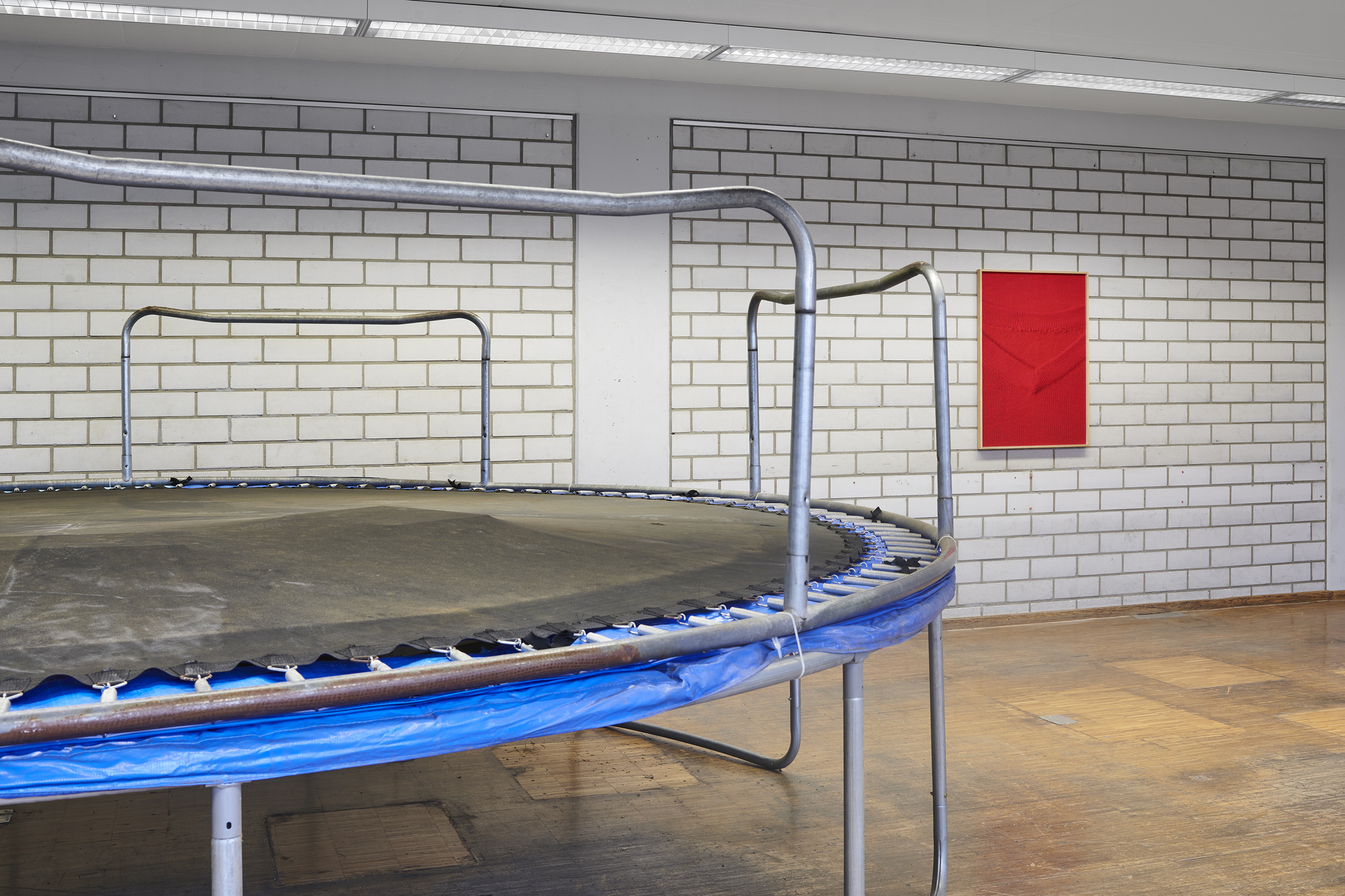
Hêlîn Alas, Carrying the Earth to the Sky, 2024, installation view with “Up and Up and Up and Up,” 2024, trampolines, cable ties, speakers, sound, cables, 490 x 165 cm and “Still Faced,” 2024
framed photo print (part of a series) 100 x 70 cm. Photo: Produktion Pitz
Hêlîn Alas, “Traumhaus junior,” 2024, caramel, 118 x 90 x 8 cm. Photo: Produktion Pitz
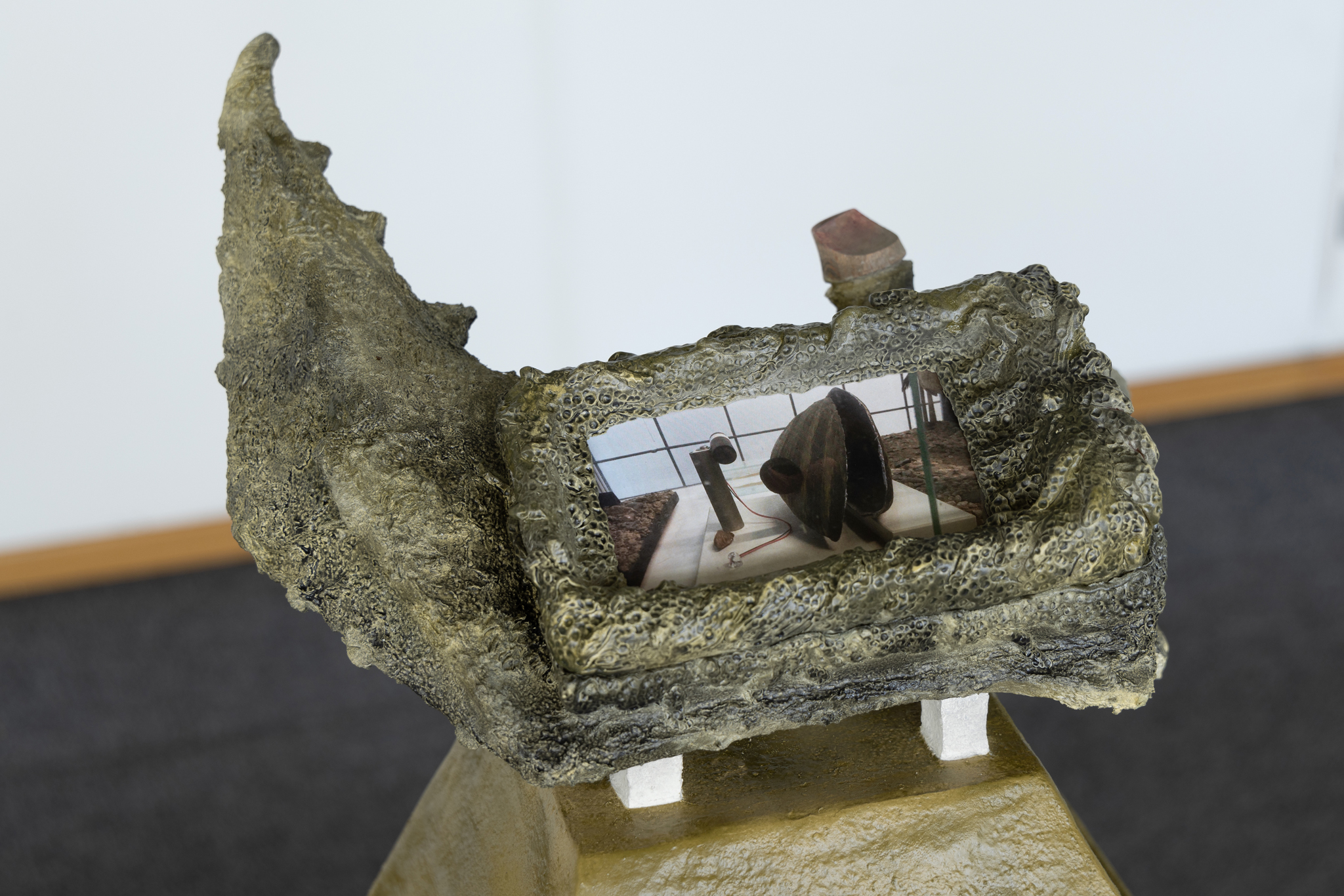
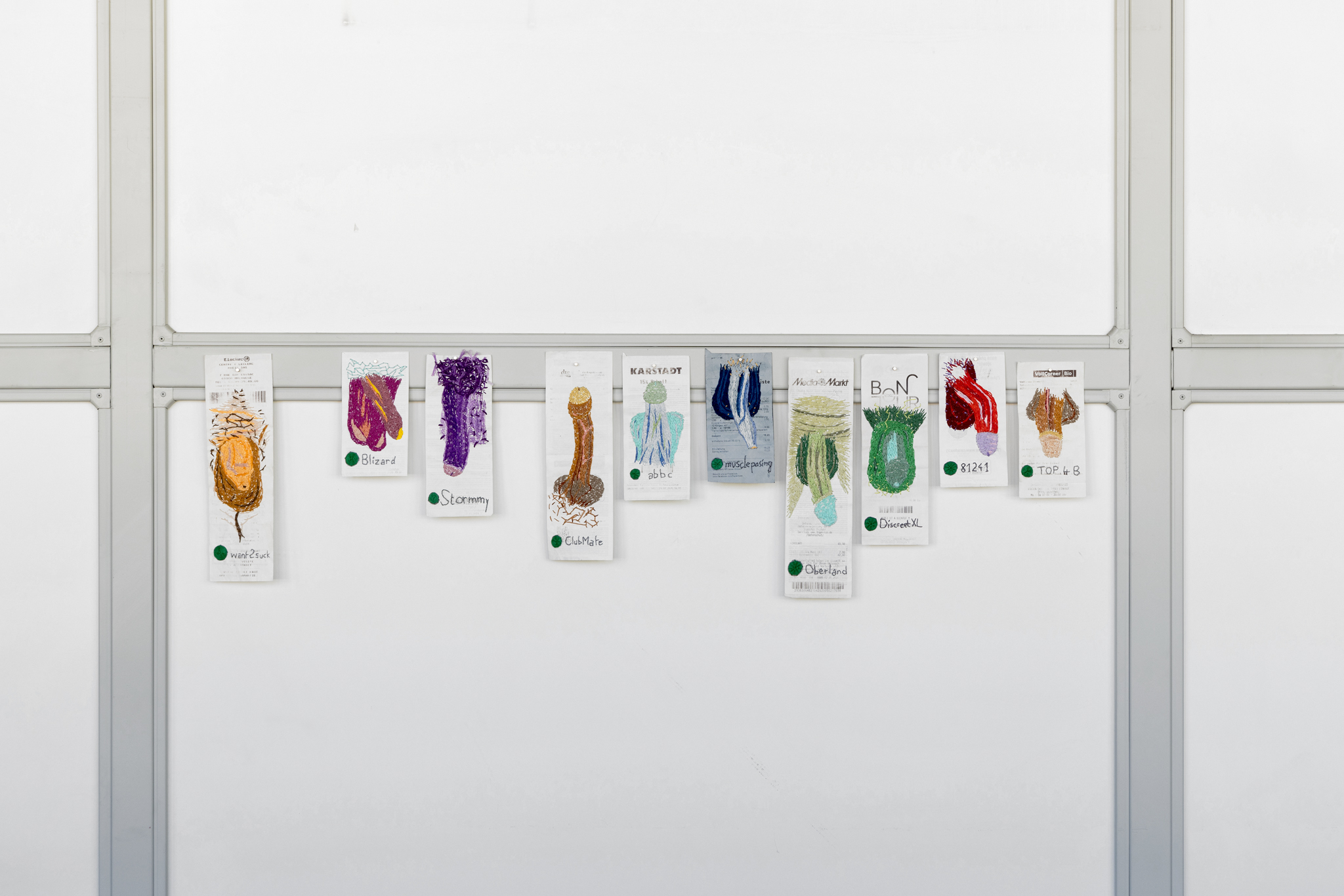
Pierre-Yves Delannoy, “embroideries on cashier’s ticket,” 2019-24, cotton yarns, thermo paper, dimensions variable (8 x 16 cm (X10)). Photo: Thomas Splett
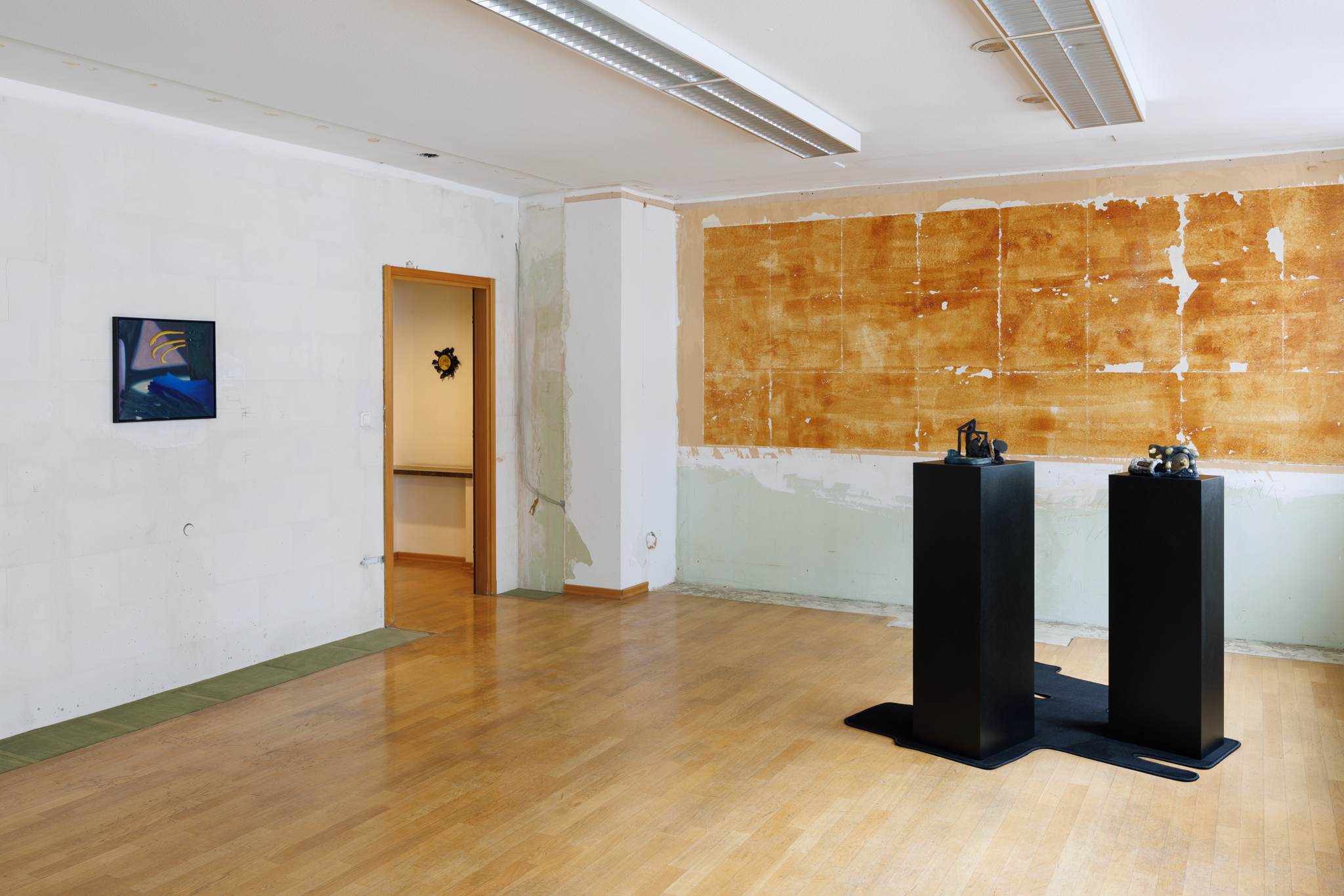
Veronika Hilger, Carrying the Earth to the Sky, 2024, installation view. Photo: Thomas Splett
Veronika Hilger, Untitled, 2024, ceramic, 27 × 24 × 3 cm. Photo: Thomas Splett
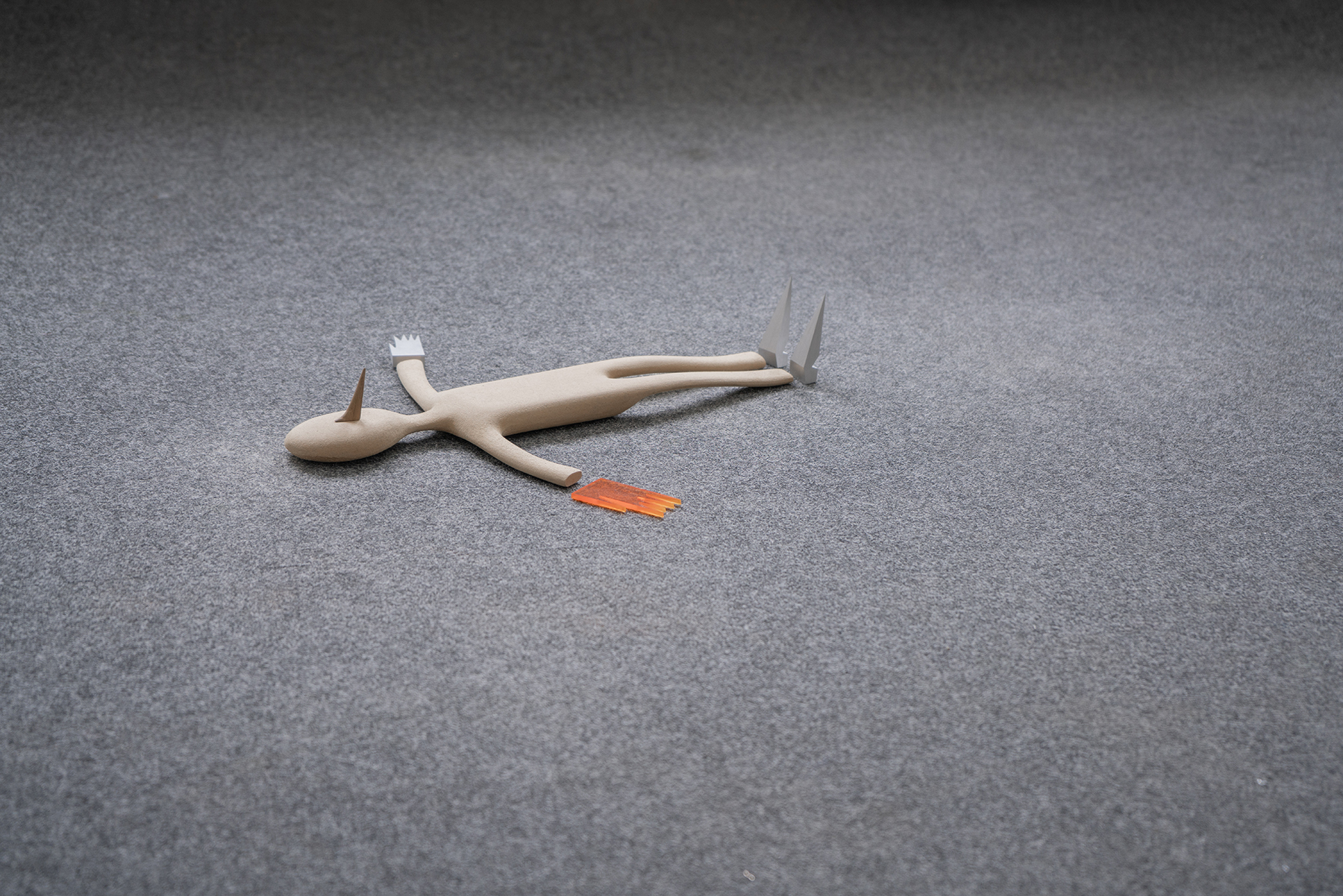
Lukas Hoffmann, “Figure,” 2020, MDF, oak, aluminum, acrylic glass, 50 x 45 x 8 cm. Photo: Lukas Hoffmann
Lukas Hoffmann, “Castle,” 2024, Spraypaint, plywood, screws, MDF dyed through, 100 x 100 x 200 cm. Photo: Lukas Hoffmann
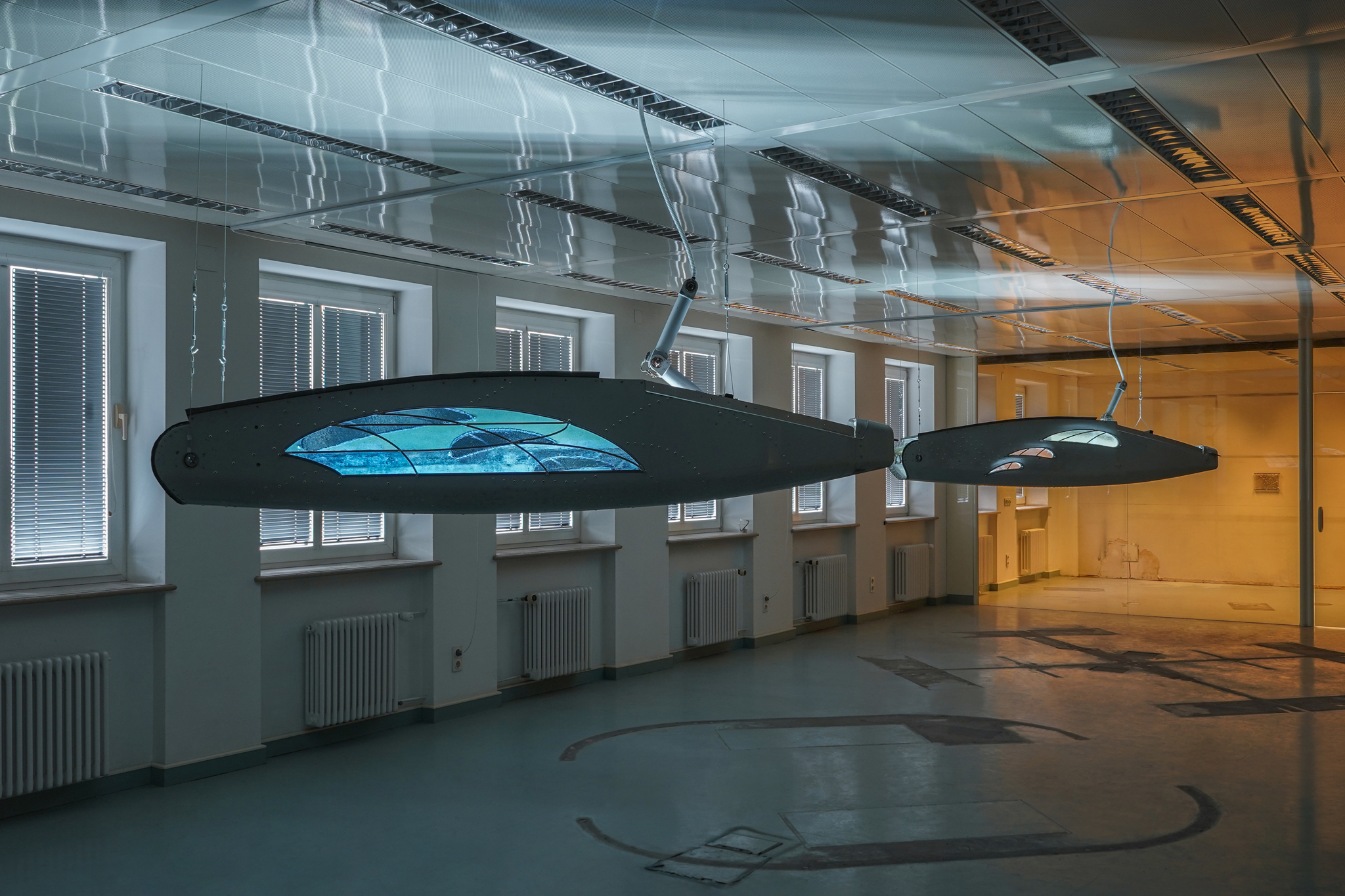
Ju Young Kim, “Almost like Whale Watching,” 2024, a pair of aircraft fairings, stained glass, rivets, LED, 240 x 38 x 46 cm (X2). Photo: Younsik Kim
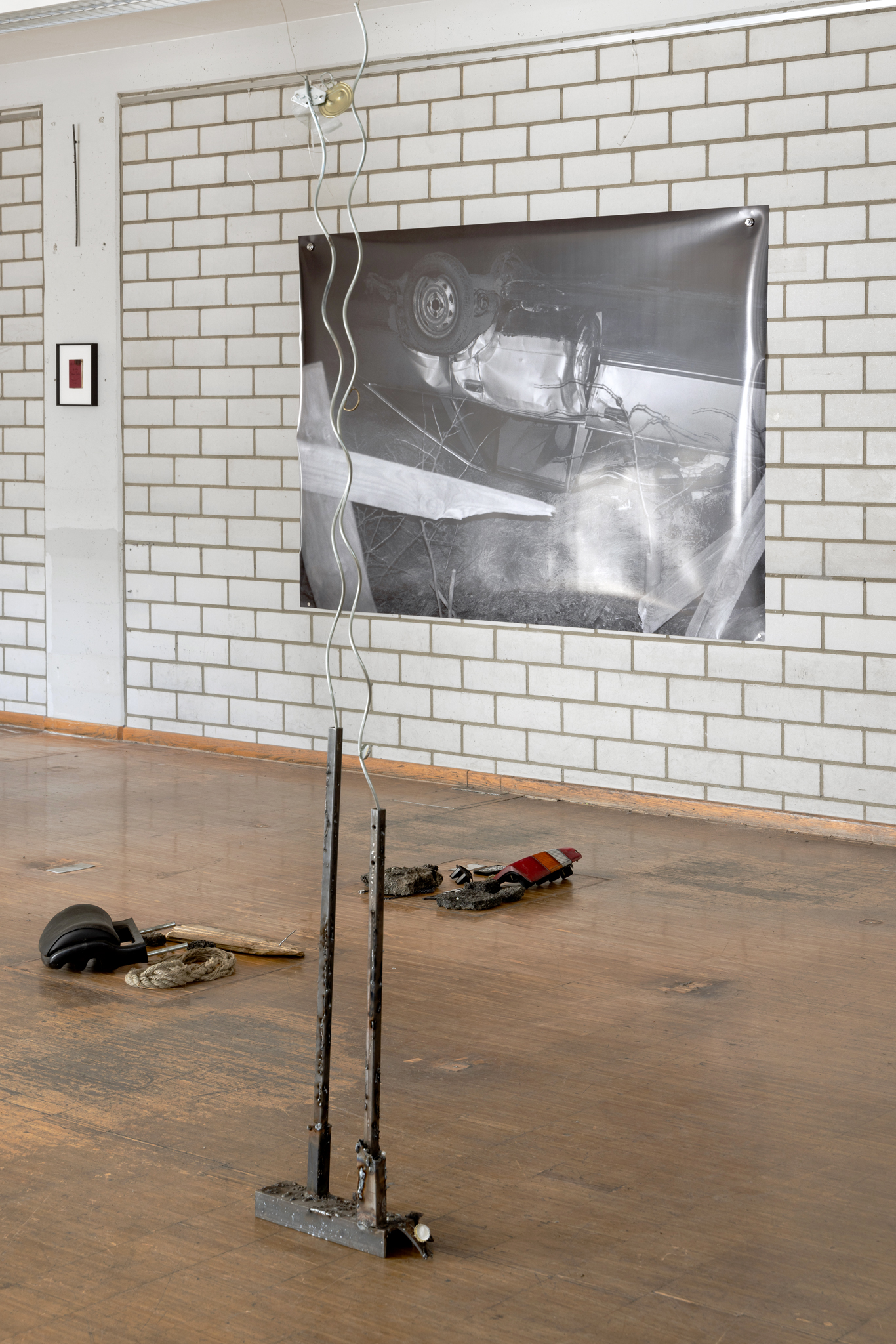
Anna McCarthy, Carrying the Earth to the Sky, 2024, installation view with “Car Crash b/w,” 2001, analogue photograph 230 x 160. Photo: Thomas Splett 
Anna McCarthy, “Car crash installation,” 2024, mixed media, dimensions variable. Photo: Thomas Splett
Jonathan Penca, “Synanthropop,” 2024, paper-maché, plaster, polymer clay, resin, cardboard, acrylic paint, wood, glass, digital print on paper, plinth, 120 x 60 x 60 cm. Photo: Thomas Splett
Jonathan Penca, “Mitten Crack,” 2024, paper-maché, plaster, polymer clay, resin, wooden bird whistle, lipstick, cardboard, acrylic paint, digital print on paper, plinth 120 x 60 x 60 cm. Photo: Thomas Splett
Curtis Talwst Santiago, “History of Touch” 2024, installation view detail. Photo: Thomas Splett
Curtis Talwst Santiago, “History of Touch” 2024, installation view. Photo: Thomas Splett
Valio Tchenkov, Carrying the Earth to the Sky, 2024, installation view. Photo: Thomas Splett
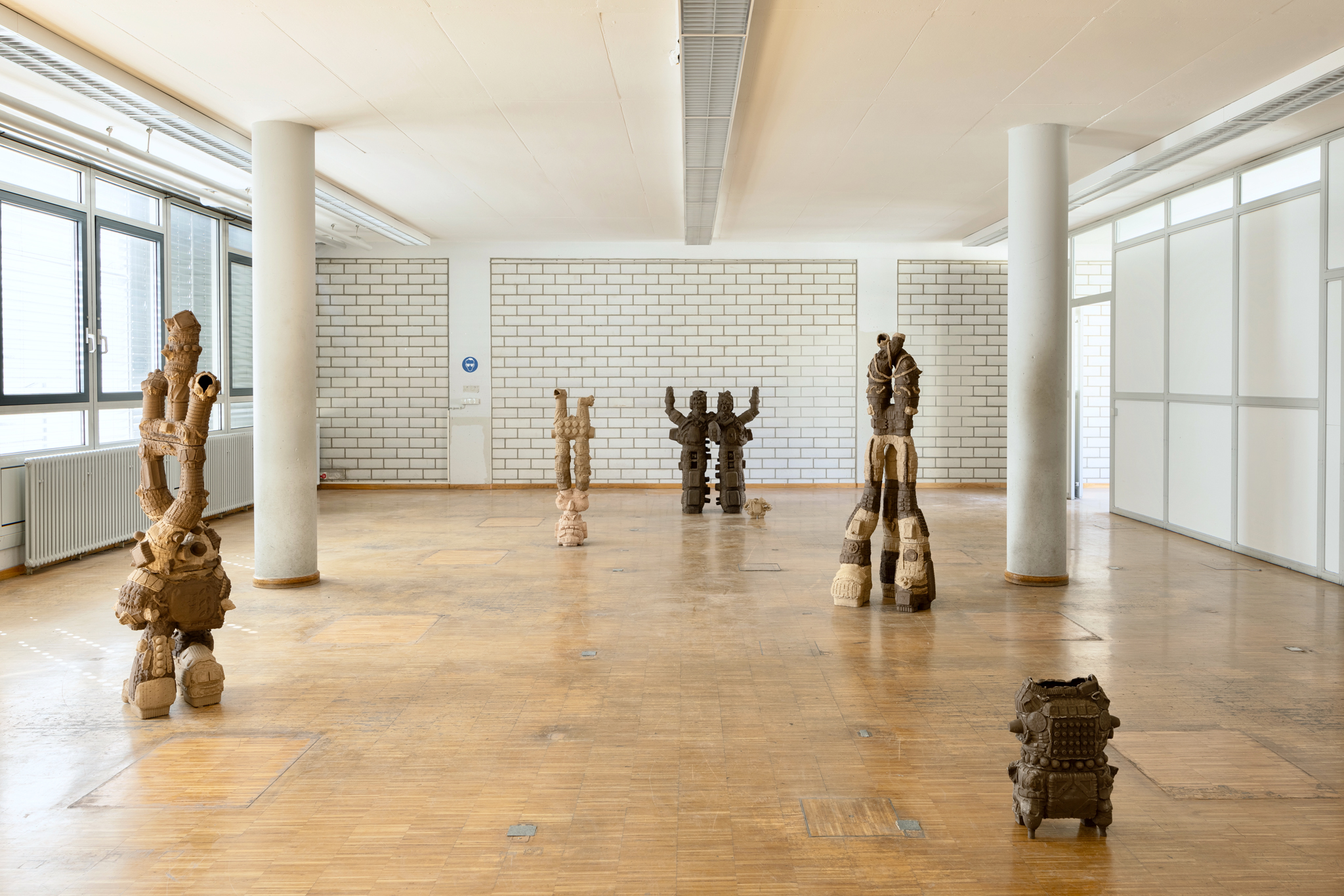
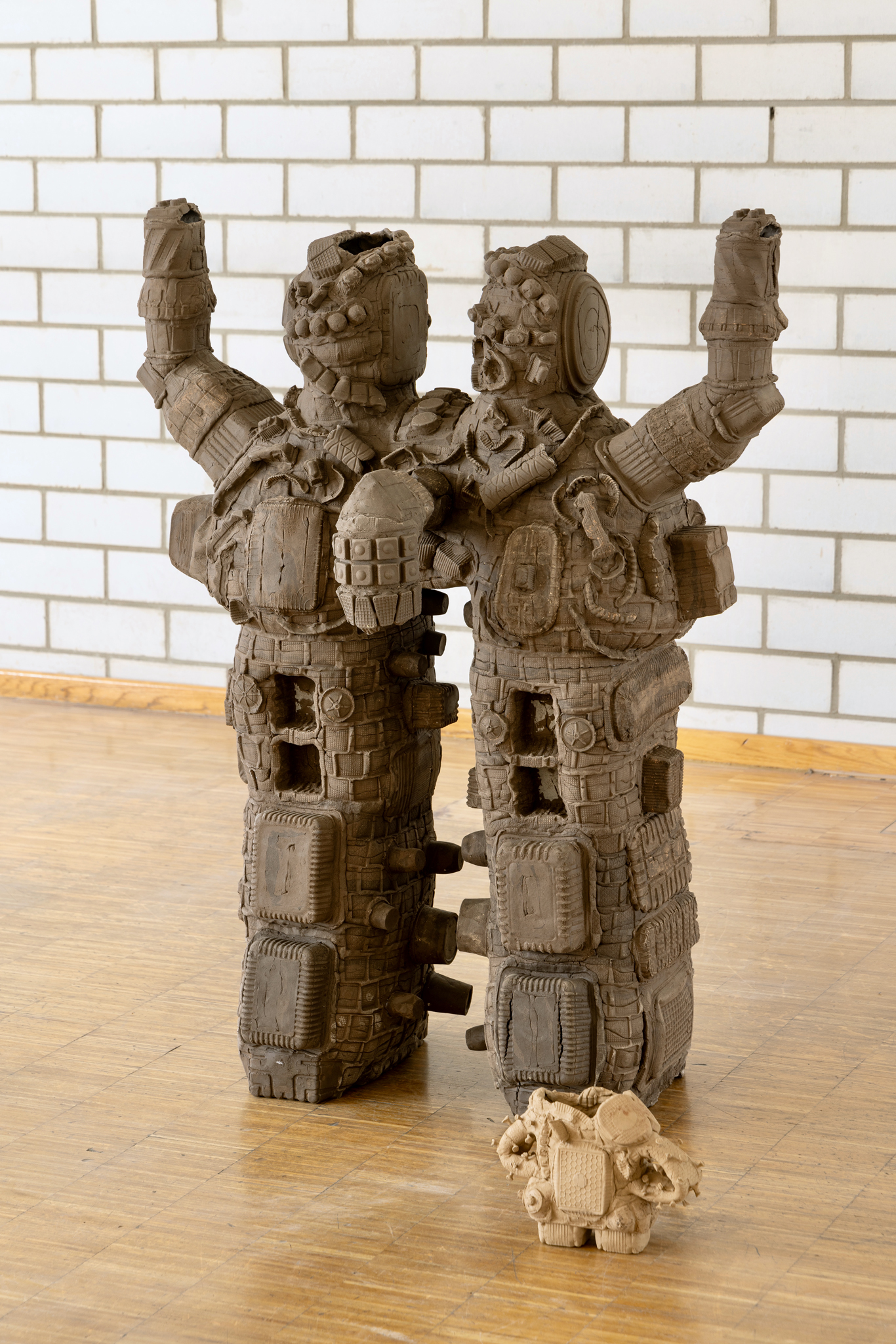
Ayaka Terajima, Carrying the Earth to the Sky, 2024, installation view. Photo: Thomas Splett
Ayaka Terajima, “Long legs doki,” 2023, Unglazed fired ceramic by recycled clay, 60 x 100 x 130 cm. Photo: Thomas Splett
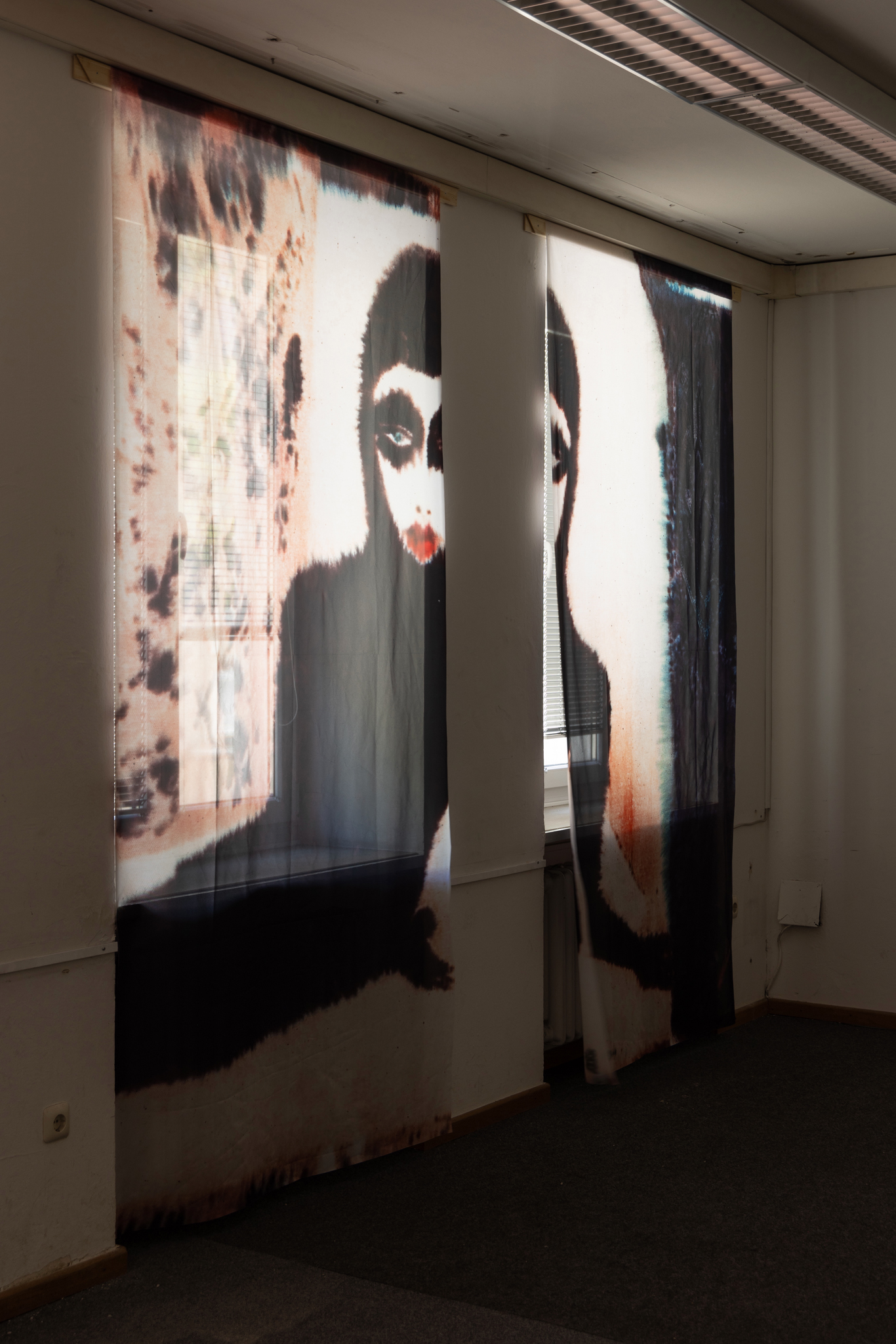
Gülbin Ünlü, “Karanlik isik,” 2024, wood, printed fabric, dimensions variable (site specific installation). Photo: Thomas Splett
Gülbin Ünlü, “Karanlik isik,” 2024, wood, printed fabric, dimensions variable (site specific installation) detail. Photo: Thomas Splett
Paul Valentin, “Kasside,” 2024,  site specific video installation. Photo: Thomas Splett
Max Weisthoff, “perpetuator,” 2024, sculptural sound installation, 5 objects, cable, dimensions variable (site specific installation). Photo: Thomas Splett
Max Weisthoff, “out of flesh,” 2024, mixed media installation, 2 channel video, x objects, dimensions variable (site specific installation). Photo: Thomas Splett

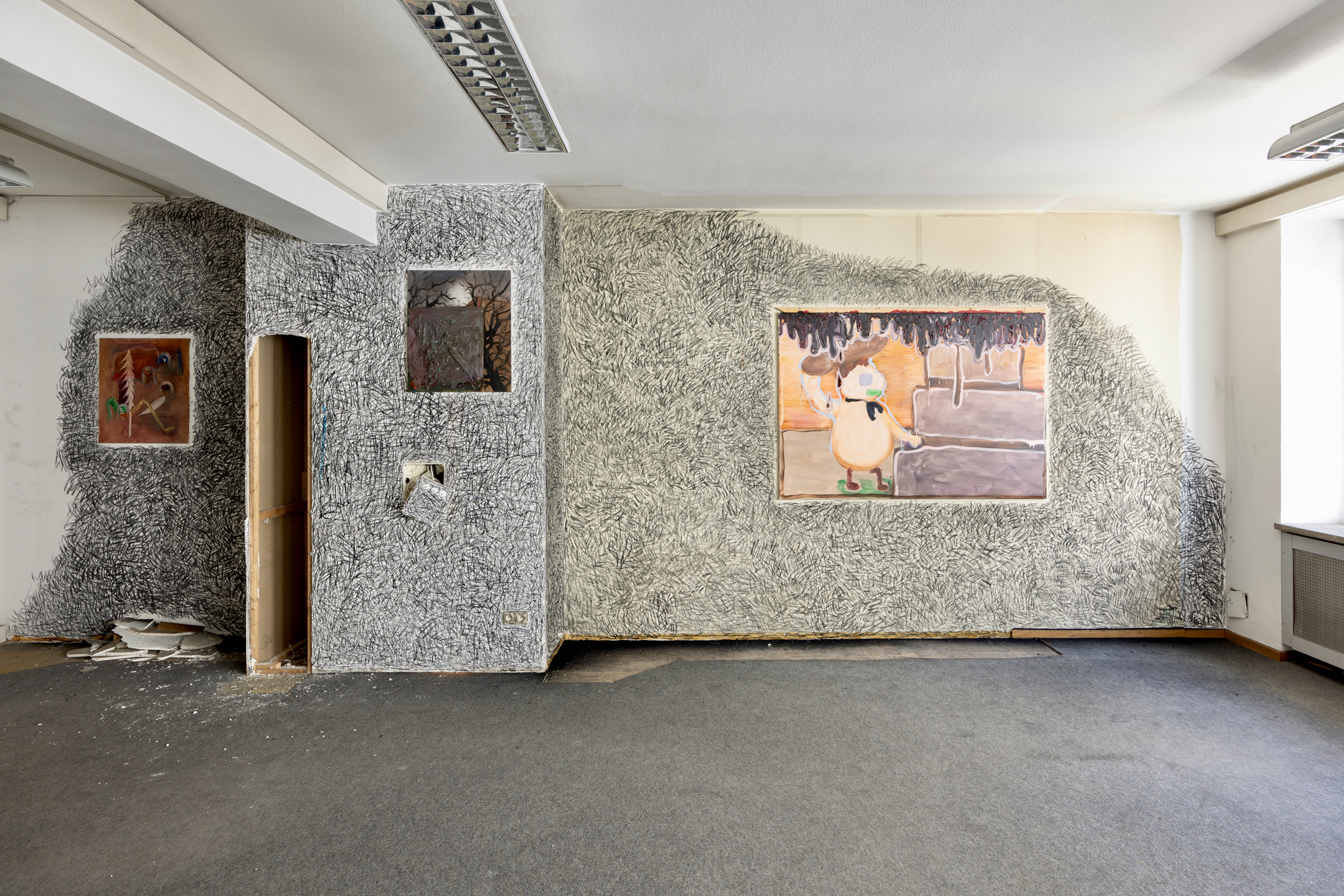
“Carrying the Earth to the Sky” will present works by 13 artists who are currently active in the contemporary art scene in Munich. The artists were selected in a two-stage process. First each of the 37 participants of VARIOUS OTHERS nominated one artist currently living in Munich. From this group, an international jury consisting of four institutional curators selected 13 artists who will show their work as part of the VARIOUS OTHERS program in September. The jury acknowledged that the quality of the applications received made their task both exciting and challenging. The final selection of multi-generational artists reflects the desire to see art beyond fixed categories and clichés and to honour distinctive works.

The exhibition’s curator, Magdalena Wisniowska, has meticulously chosen the works in collaboration with the artists. These will be presented together in an overarching curatorial concept at Schillerstraße 38 under the title “Carrying the Earth to the Sky”.

“The earth is something human, something we keep under our feet. The sky high above is without air, where no living thing can breathe. Moving away from one to the other means letting go of the earth and constructions that belong to it – actions, bodies, objects, sensations and desires – until only the elements, disconnected molecules, remain.”

We would like to express our gratitude to all supporters of the exhibition, particularly the owners of the property at Schillerstraße 38, the Cultural Department of the City of Munich, the Edith-Haberland-Wagner Foundation and Serviceplan Group for their generous support.

Jury:
Rosa Ferré (TBA21, Madrid)
Luis Silva (Kunsthalle Lissabon)
Nicola Trezzi (CCA, Tel Aviv)
Vivien Trommer (K21, Düsseldorf)
From Animal to Mineral

Judith Adelmann, Rachel Fäth, Sophia Mainka, Hannah Mitterwallner, Jonathan Penca, Maria VMier

15.12. 2023 – 18.02.2024

Lothringer Halle, Lothringer Str. 13, 81667 München

Filmstill_Mainka_HabitLoss(1)


“Animals” are wolves mainly, rats and the wasp. “Mineral” is everything imperceptible: elements, particles and molecules. To go from animal to mineral is to experience becoming, to step across a threshold and change. 

I began my reading of A Thousand Plateaus, specifically the chapter “1730: Becoming-Intense, Becoming-Animal, Becoming- Imperceptible …” 1 during the corona pandemic, when environmental concerns were at the forefront of almost every media discussion. Defining humanity’s role in nature seemed like an important task and Deleuze and Guattari’s work was useful in addressing the too easy distinction between nature and culture. I liked how Deleuze and Guattari saw the dominance of our species over others as a philosophical problem of autonomy where Man as a thinking being is subject only to the laws of his own construction. For them, the capacity for conscious thought conferred upon Man a dignity denied to other creatures, making their voices unheard. 

Whereas, in A Thousand Plateaus Deleuze and Guattari present nature as an endless variability, the “whole thousand-voiced multiple” of Difference and Repetition 2. Here, nature is a multi-voiced body, where the voices constituting this body resound in each other in a “clamor of Being.” In this din, my voice is one of many and many voices resonate in mine 3. For Deleuze and Guattari, to change the human collective relation, not just to animals, but to earth itself, would demand that we stop hearing just our own voice and become aware of the noise of others. This is the experience of becoming-animal, becoming-imperceptible. It is to shed Man’s mantle and learn how to listen, becoming the voice of many. 

Since 2021 I have realised a series of exhibitions at various locations in responses to different aspects of this chapter of A Thousand Plateaus, whether to its ideas of nature, technology or memory. This exhibition at Lothringer 13 Halle confronts the idea of becoming, specifically in our relation to nature, more directly. In different ways all the artists participating in this exhibition share these concerns, many acutely aware of working in the era of the Anthropocene, where the human impact on the planet can no longer be denied.

To their cluster of voices I add my own, belonging to the writer. The texts I have written over the past few years in response to Deleuze and Guattari’s chapter on becoming are on display throughout the room. The texts resonate with the artwork, and the art inhabits the text. The exhibition is an experiment in the construction of a multi-voiced population, a pack of wolves, a people of rats. 

Magdalena Wisniowska, November 2023

1) Deleuze, Gilles and Guattari, Félix, A Thousand Plateaus, trans. Brian Massumi, (Minneapolis, London: University of Minesota Press, 2005).
2) Deleuze, Gilles, Difference and Repetition, trans. Paul Patton (New York: Columbia University Press, 1994), 304.
3) Ibid.

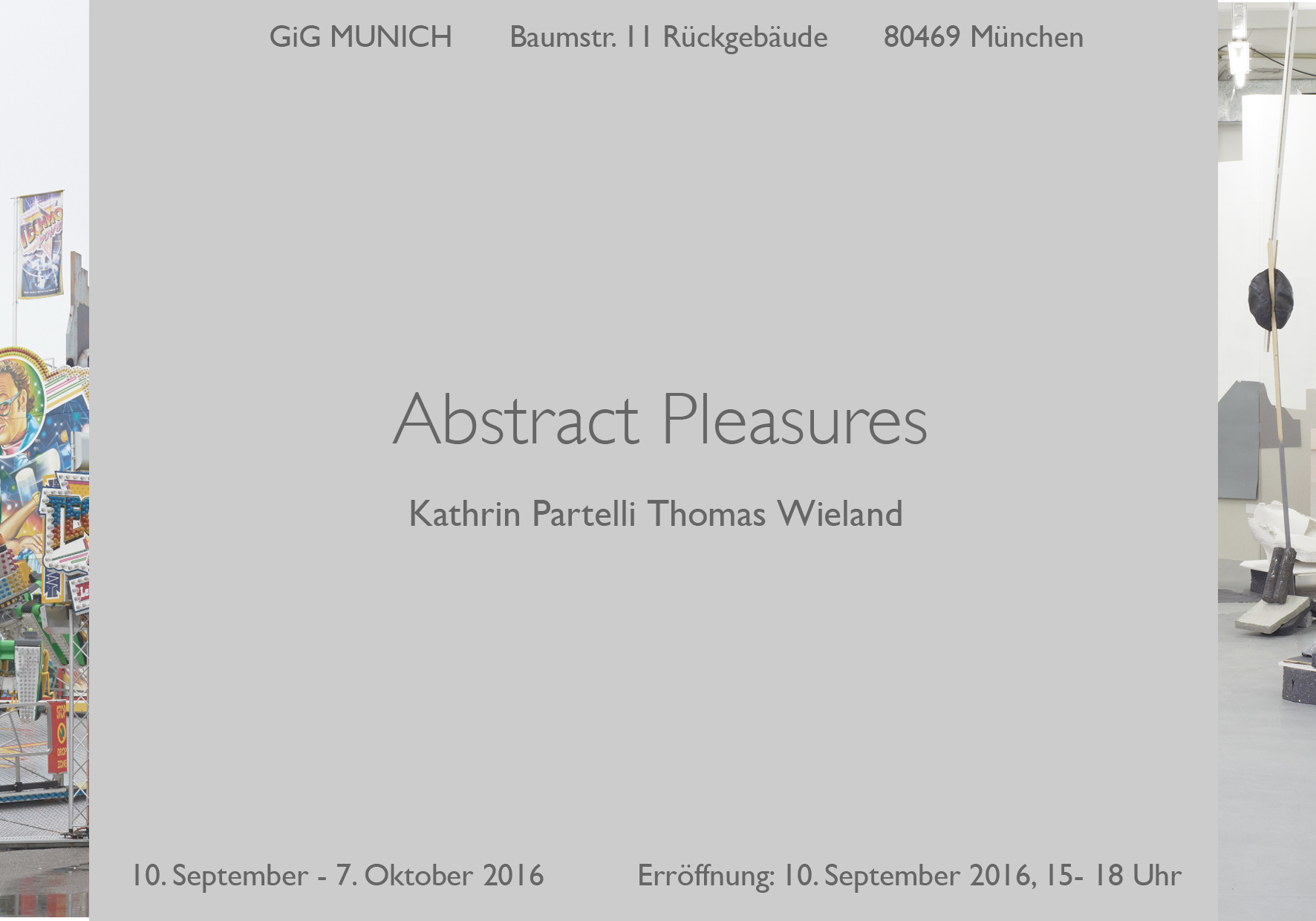
Abstract Pleasures

We are happy to announce GiG Munich’s latest exhibition, opening on the 10th of September, 3 pm. Hope to see many of you there!

Abstract pleasures web

“Abstract Pleasures” brings together a site-specific sculpture installation by Kathrin Partelli and Thomas Wieland’s series of photographs, Sleeping Beauties. The exhibition unites Partelli’s ephemeral, open-ended structures with Wieland’s images of empty Octoberfest rides to present the pleasures of contemplation: the enjoyment found in complex constructions.

Kathrin Partelli creates sculptures and large-scale installation pieces in the anti-monument tradition. Thomas Wieland is a photographer, who draws on his experience in the history of science. Already exhibiting on the online platforms, LandscapeStories and Humble Art Foundations, we are pleased to be the first gallery to present his work.


“Abstract Pleasures” bringt eine standortspezifische Skulptur von Kathrin Partelli und die Fotoserie “Sleeping Beauties” von Thomas Wieland zusammen. Sie vereint Partellis flüchtige, offene Strukturen mit Wielands Bildern der menschenleeren Fahrgeschäfte auf dem Oktoberfest, die das Vergnügen der Komtemplation präsentieren: die Freude, die in komplexen Konstruktionen zu finden ist.

Kathrin Partelli schafft Skulpturen und großangelegte Installationen in der Tradition der Anti-Monumente. Thomas Wieland ist ein Fotograf, der aus seiner Erfahrung in der Technikgeschichte schöpft. Nachdem er seine Arbeiten bereits auf den Onlineplatformen LandscapeStories und Humble Art Foundation ausgestellt hat, freuen wir uns diese nun als erste Galerie zu präsentieren.

trans. Nadja Gebhardt

Jo Love – Press release

GiG Munich is happy to introduce the work of Jo Love, a British artist living and working in London, course director at Camberwell College of Art, University of Arts London and senior lecturer at the University of Brighton. Jo Love has recently completed her PhD at Chelsea College of Art and Design, and her show at GiG Munich marks the continuation of her research into the viewed surface, the materiality and the time of the printed photographic image. Her work combines drawing with printmaking and photography, and uses the specks of dust found on the surface of the photographic image as the starting point of her investigations.

At GiG Munich Jo Love shows two bodies of work. The first consists of a series of landscape drawings made in collaboration with a senior scientist at the Natural History Museum in London. In this series Jo Love re-draws the electron microscope images of marble and graphite particles in order to reclaim the tactile materiality lost to modern technology. She also imbues the image with a different kind of temporality to that of the digital experience.

In the second body of work, Jo Love draws over a digital print of a video still, covering the inkjet surface with a layer of graphite. Only small pockets of saturated colour are left exposed. Taken together, the two different layers create an optically unstable image, disturbing and disrupting the act of viewing.

Both drawings operate at the limits of human perception and invoke ideas of the technological sublime. As Jo Love states, “My interest lies in constructing images which are resonant with my experience and perception of the world: more fractured, open and complex than the more coherent image can convey, and one that offers an arena within which we can contemplate themes of time, memory and mortality.”

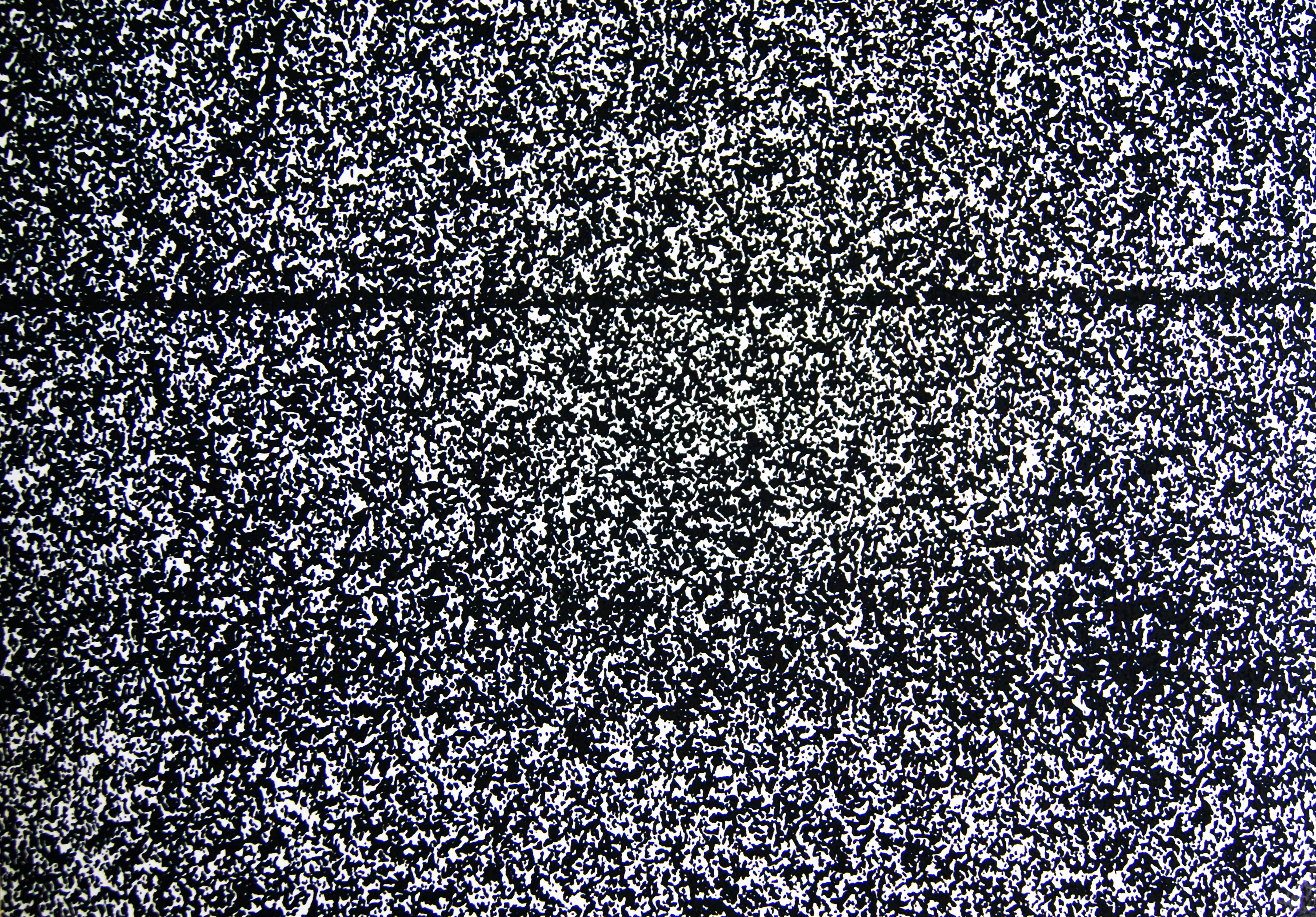
drAwn 2gether: Will Tuck

Drawing is not something I think of as particularly relevant to my everyday practice as I usually make paintings with an airbrush; so when asked to participate in this show, I found myself unsure about what to produce.

I was attracted to the idea of drawing the white noise seen on a television screen, because it reflects this feeling of being stuck, of being a subject, which also ‘jams’ itself.
The image is abstract in one sense and photoreal in another – the lines are the result of my camera having a shutter speed fast enough to record the television’s cathode ray.
As I worked on the drawing other aspects occurred to me. White noise is approximately 1% residual energy from the Big Bang and I liked the idea of visually representing (albeit in a small way) of this primal energy.
A friend also mentioned that some people believe the dead use white noise to communicate with the living and I thought the idea of drawing as a kind of portal was also interesting. Maybe it contains a message from the afterlife!  Will Tuck 2014

USA participating artists: Jack Lovell

Jack Lovell

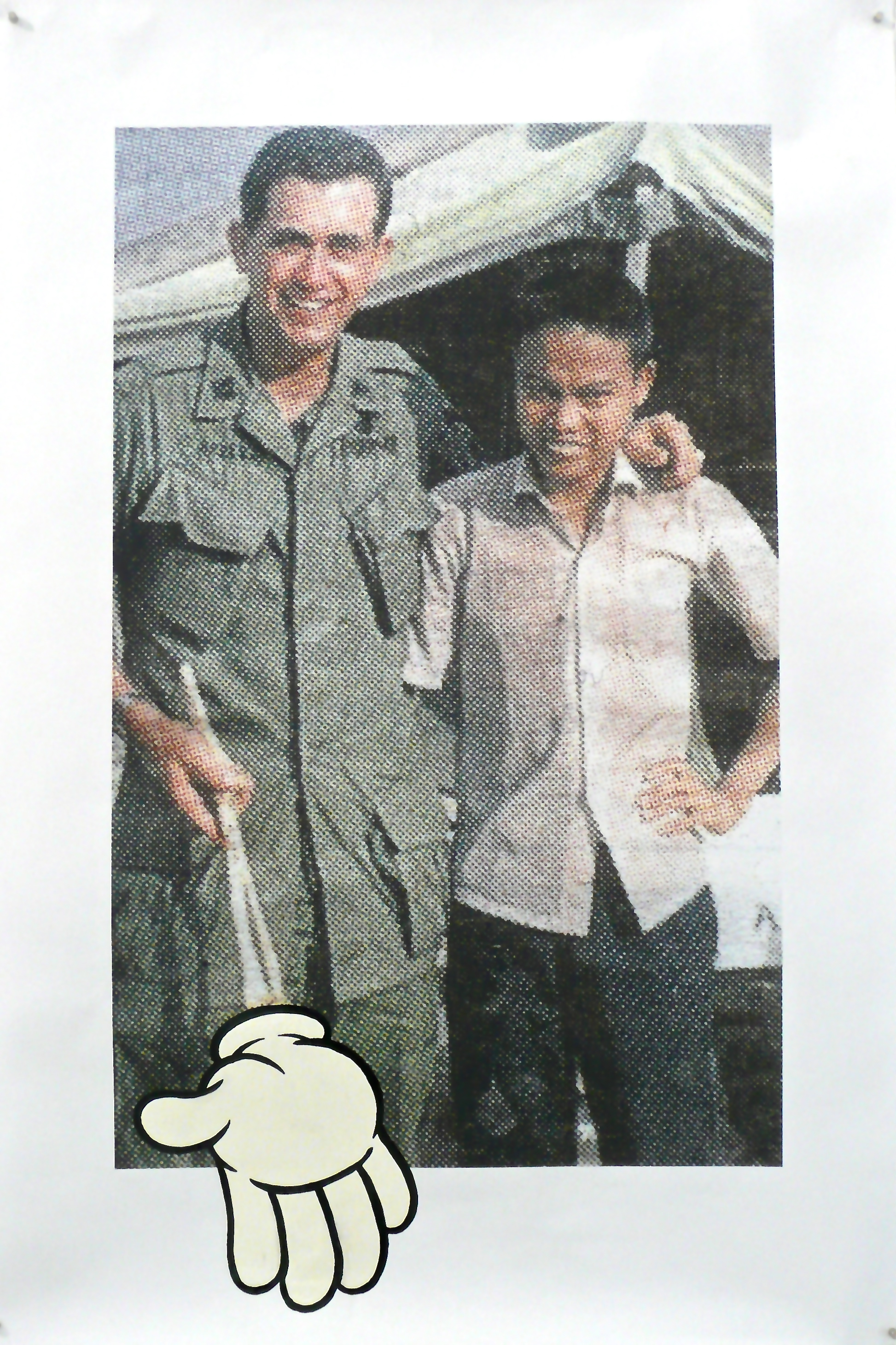
A young Vietnamese man poses with a US soldier. The American is holding the remains of an amputated arm, removed to prevent the Vietnamese man  from dying of an infected gunshot wound. In a gesture of gratitude to the American, the cleaned bone was offered as a keepsake. Unlike many who received similar war gifts,  the US soldier eventually returned to Vietnam. This year the missing arm was finally reunited with its owner.

Jack Lovell currently lives and works in London. His practice explores the hidden complexity and materiality of the found photograph. The use of enigmatic staged photography invites the viewer to consider the space that exists inside a ‘simulated reality’.                                                                                              JL 2013

USA participating artists: Mike Merkenschlager

Mike Merkenschlager

I’m interested in the potential of images within image-literate societies: as visual information, as surrogates for ideas and as things. In Crossed Fingers, we see a familiar hand gesture staged for the camera. In the 1950s an American safe company used this image to criticise our reliance on luck and our faith in the supernatural. But images have a habit of not being the best at doing what they were intended to do. So what does this image mean now, here, and now, and now?

Mike Merkenschlager is a London-based visual artist, working primarily with photographic images.                                                                                         MM 2013