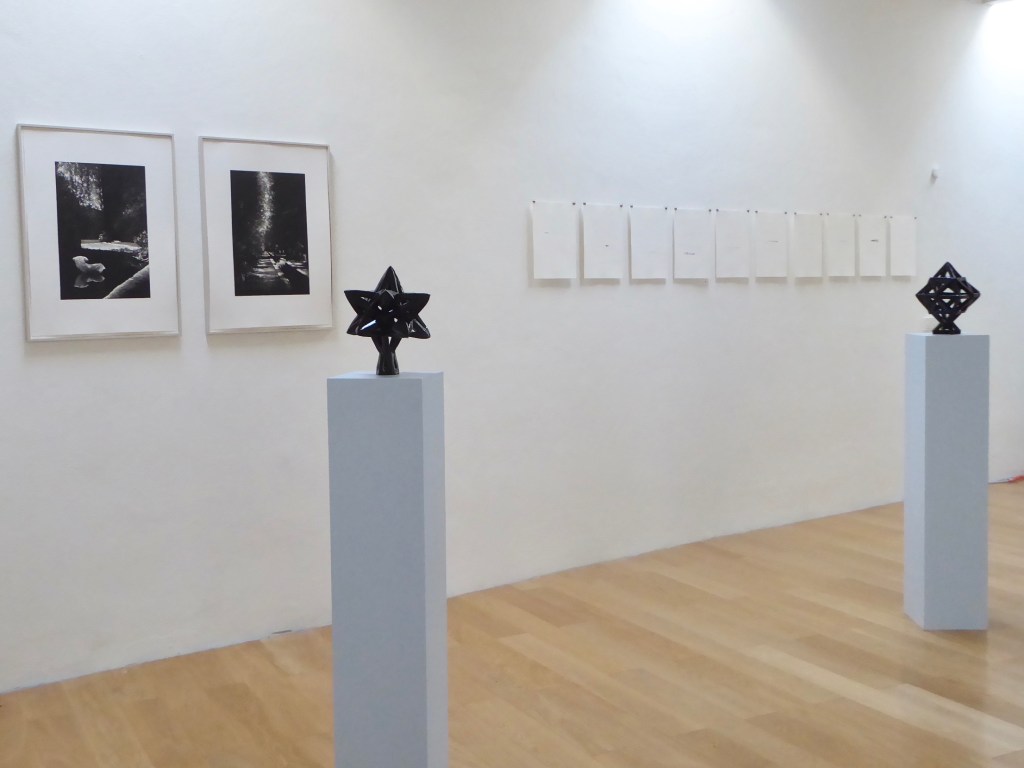
Save the date! New show opening on the 10th of March!

inorglandscape

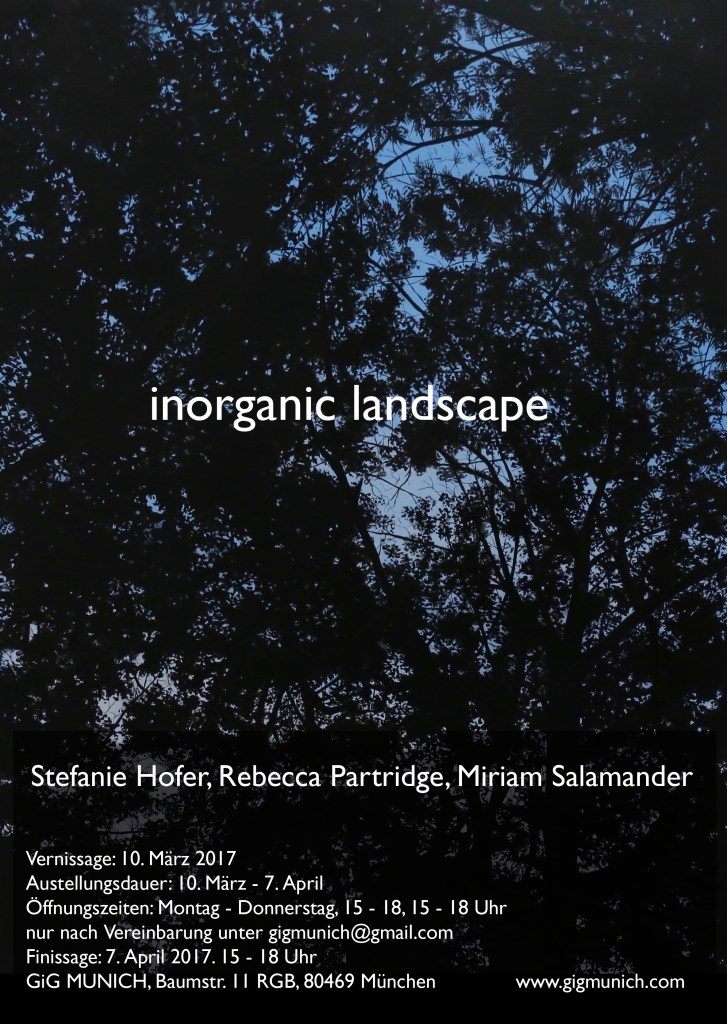
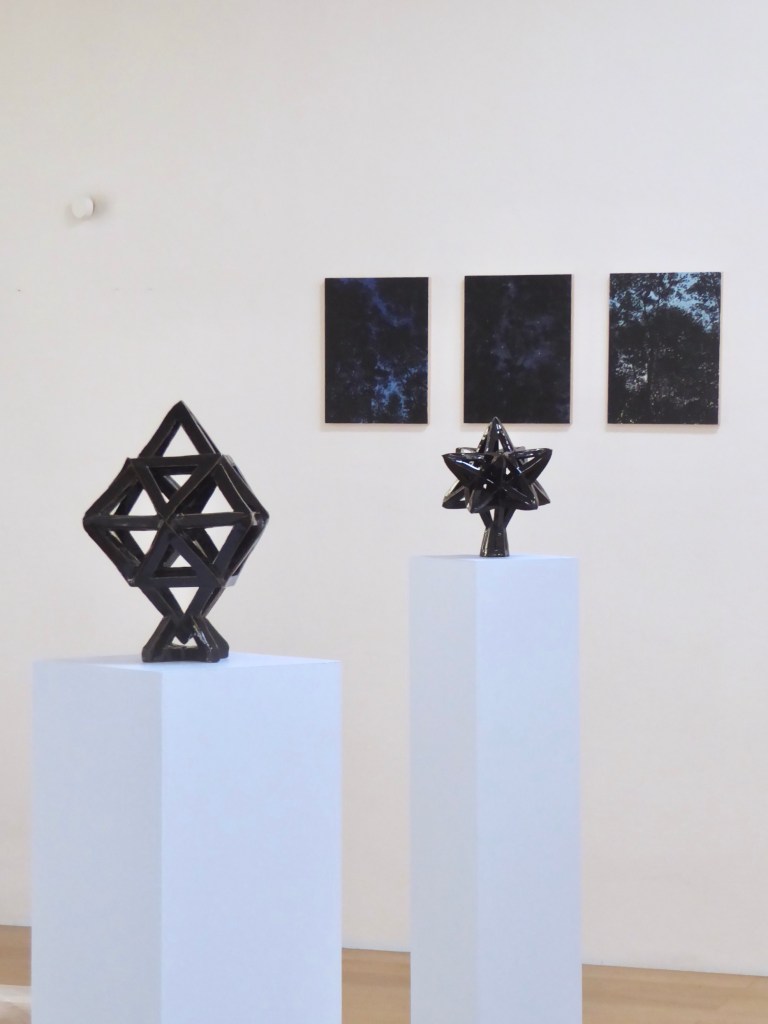
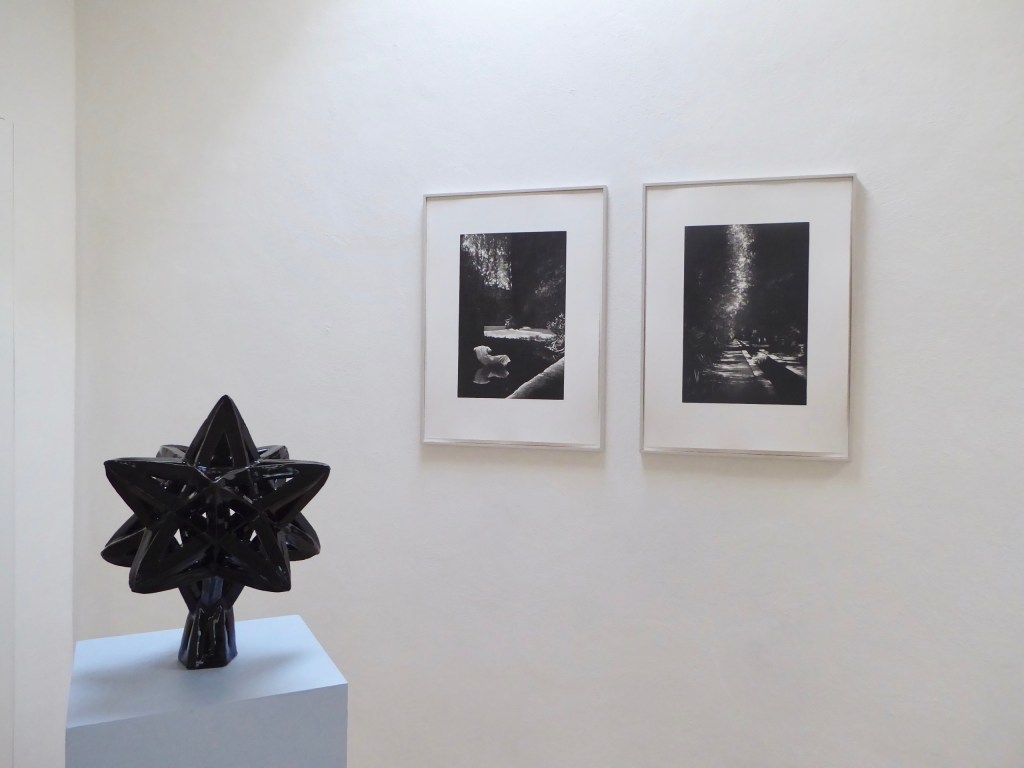
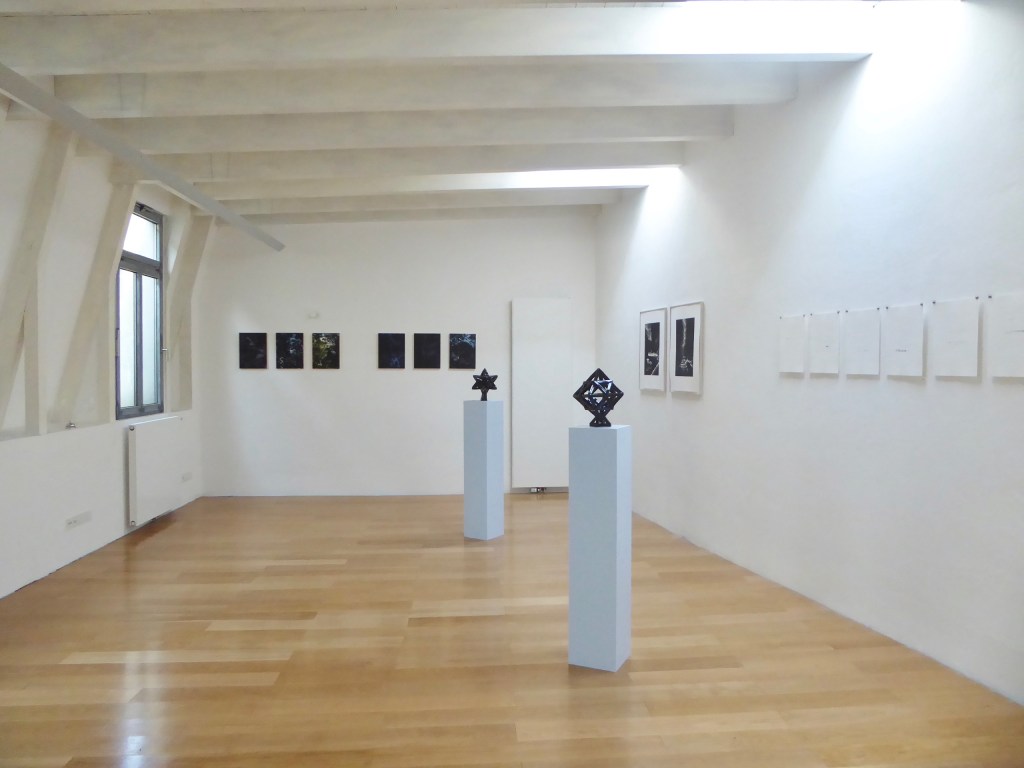
The growing impact of human expansion on fragile global ecosystems is a well-established if not universally acknowledged 21st century concern. The opposition is a familiar one: on the one side, man with his polluting industries, and on the other, nature, unspoilt and pure. However, as already Adorno pointed out, this antithesis of technique and nature is a crude one. Nature, which has not been pacified by human hand – alpine moraines or inorganic outer space – looks precisely like the polluted landscape of industrial debris that is so repulsive to us. Landscape is a construction, organised and codified.

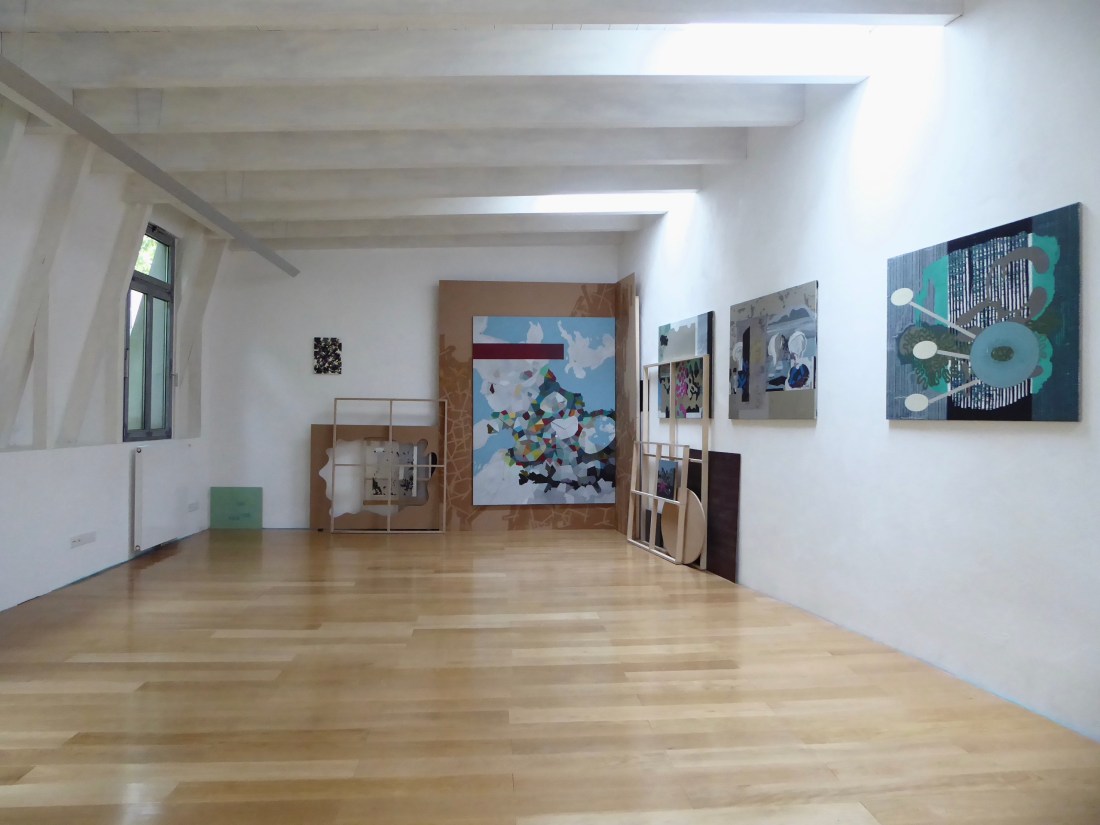
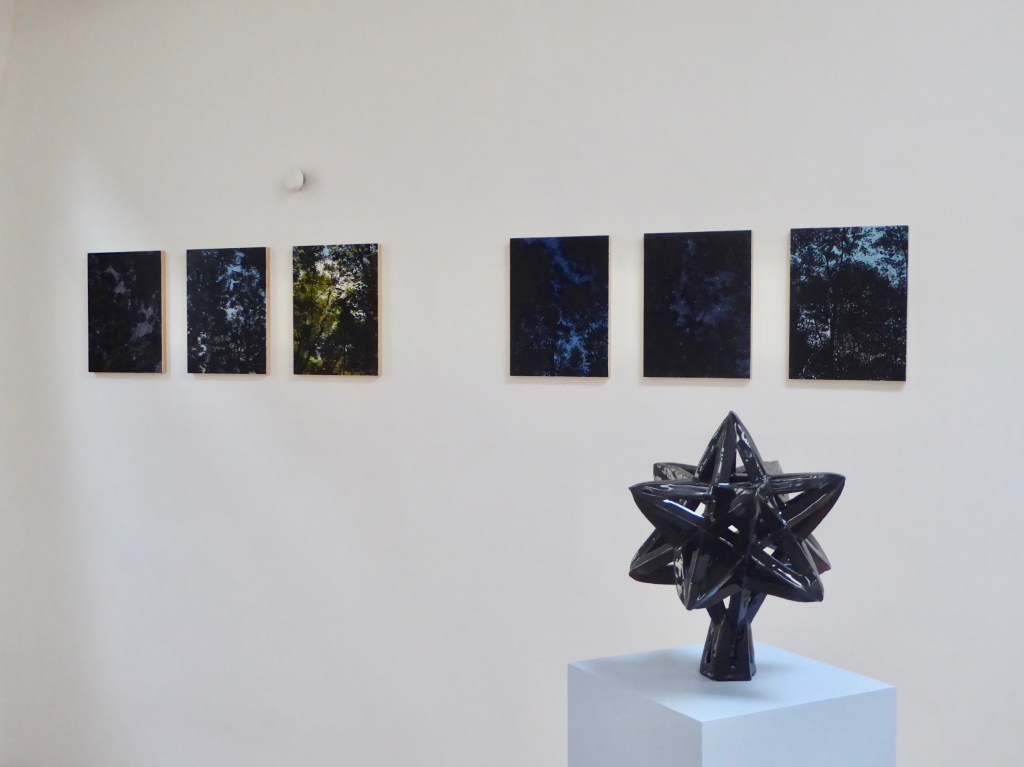
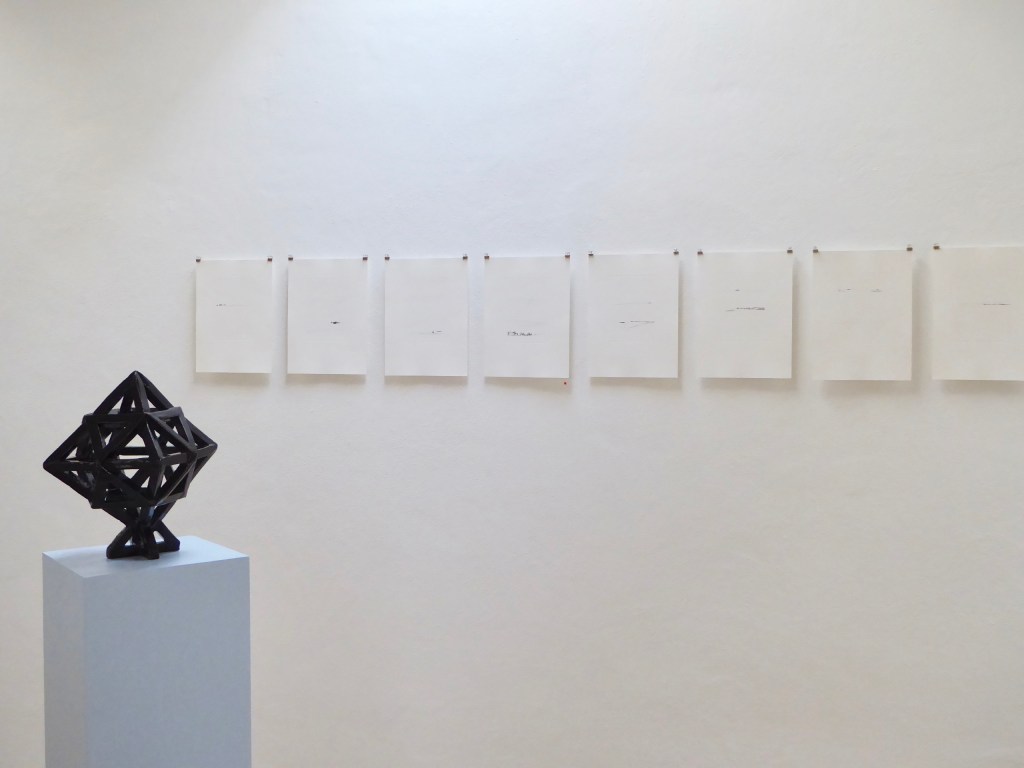
Stefanie Hofer, Rebecca Partridge and Miriam Salamander are three artists, who work in the landscape tradition, accepting that since the early 19th century discussions of the picturesque, culture has provided models of how we view and present our surrounding environment. In their work, they try to make the constructed nature of landscape apparent to the viewer. Central to their practice is the use of traditional technique: ceramic, watercolour, etching and aquatint. At a time when human progress harms as much as it assists nature, their exhibition, “inorganic landscape,” recognises the power these techniques hold.

Magdalena Wisniowska 2017


Das zunehmende Einwirken der menschlichen Expansion auf die fragile globale Umwelt ist ein wohl etabliertes, wenn auch nicht allseits anerkanntes Problem des 21. Jahrhunderts. Die Gegenspieler sind uns vertraut: auf der einen Seite der Mensch und seine verschmutzende Industrie und auf der anderen Seite die unveränderte und reine Natur. Jedoch führt diese Antithese von Technik und Natur, worauf bereits Adorno hinwies, in die Irre. Die Natur, die nicht durch die menschliche Hand besänftigt wurde – alpine Moränen oder der anorganische Weltraum – gleicht der verschmutzen Landschaft industriellen Abfalls, die wir so verabscheuen. Landschaft ist ein Konstrukt, organisiert und kodifiziert.

Stefanie Hofer, Rebecca Partridge und Miriam Salamander sind drei Künstlerinnen, die sich mit Landschaft beschäftigen und anerkennen, dass uns die Kultur seit den Diskussionen über das Pittoreske im 19. Jahrhundert Modelle zur Verfügung gestellt hat, wie wir die uns umgebende Landschaft sehen und präsentieren. In ihren Arbeiten versuchen sie die konstruierte Natur der Landschaft für das Auge des Betrachters wahrnehmbar zu machen. Im Fokus ihrer Praxis stehen dabei traditionelle Techniken: Keramik, Aquarell, Radierung und Aquatinta. In einer Zeit, in der der menschliche Fortschritt die Natur gleichermaßen schädigt wie fördert, zeigt ‘inorganic landscape’, welche übermittelnde Kraft von diesen traditionellen Techniken ausgeht.

Translation by Nadja Gebhardt 2017

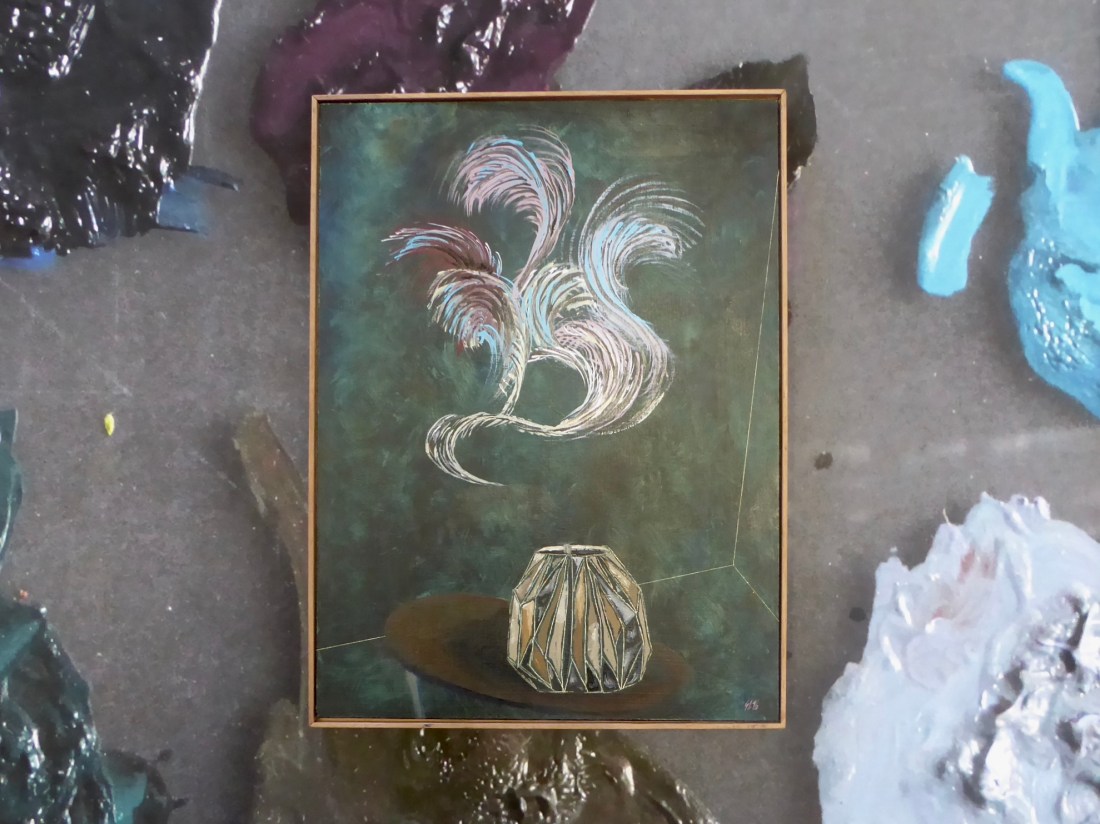
STEFAN LENHART, fruits of the dawn, first pictures and press release

fullsizeoutput_19f0fullsizeoutput_19f5fullsizeoutput_19f4

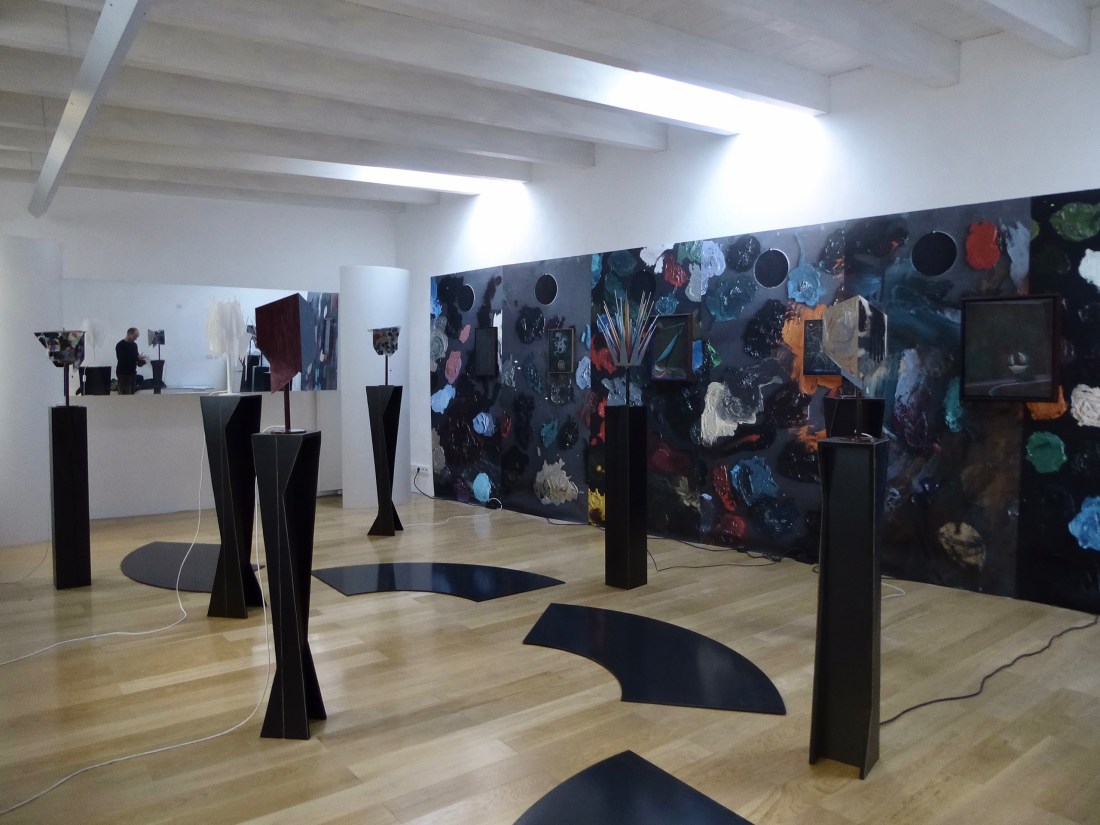
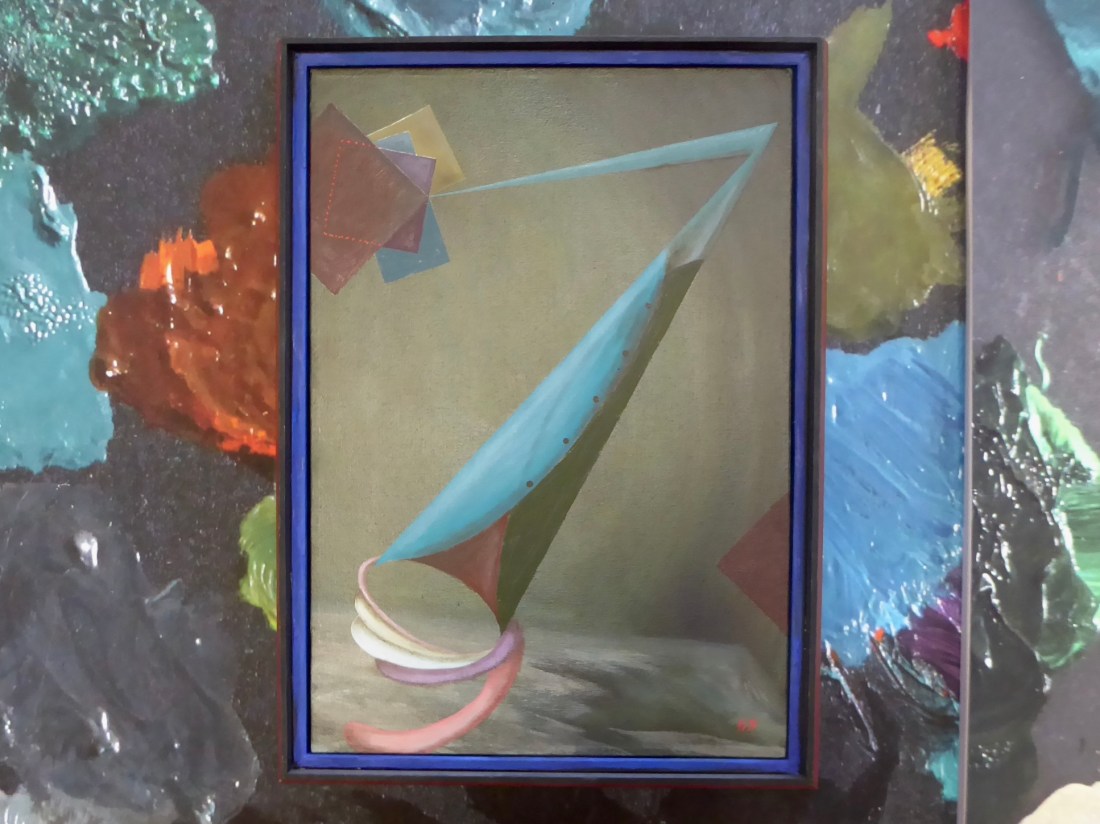
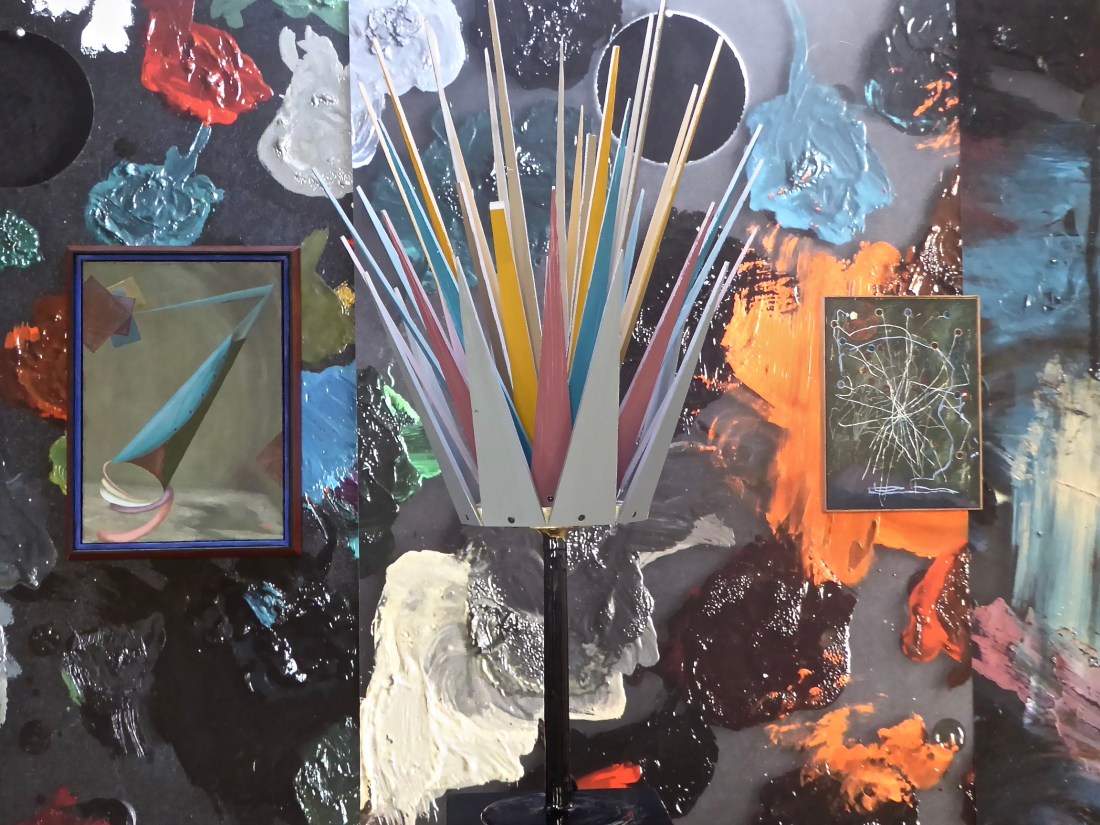
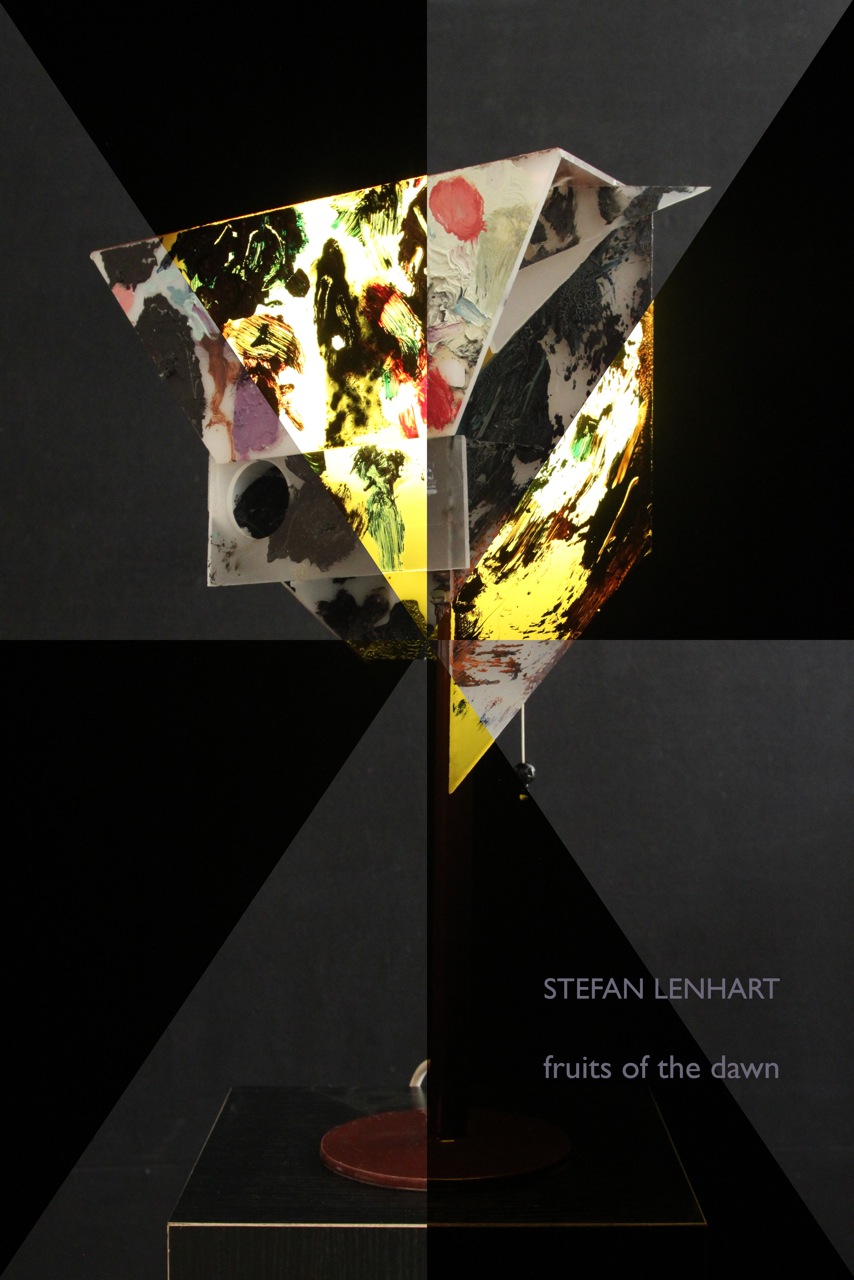
The landscape Stefan Lenhart constructed for GiG Munich could be described as a landscape of the mind. There is a path winding down the middle of the room, lit up on either side by brightly coloured lamps. The path leads up to a large mirror, which is framed by white acrylic columns. We see that the lights are also made of a similar acrylic material, painter’s palettes, that the artist cut up and then reassembled into a jagged spiral shape. The wall to the right is papered over, covered by large printouts of the same painter’s palettes in close-up. Dotted around are small, abstract paintings.

To go down the path marked out for us is to follow a narrative. We are asked to wonder down the length of the room, to pause at the points of interest, and then to stop when confronted with our own reflection and the room behind us. The random patterns on the lamps, the paintings and the posters are designed to capture our attention and allow our mind to drift.

The work has surrealist qualities, in that it shares surrealism’s interest in psychoanalytic concepts – like the unconscious or the expressive power of dreams. It lends itself to André Breton’s definition of surrealism as psychic automatism, as it incorporates into its structure the two means for capturing psychic processes: automatic writing and the irrational narrative of the dream. The uncontrolled production of Stefan Lenhart palette paintings is comparable to the meandering lines of Masson’s automatic drawings; the physical landscape Lenhart constructs, dreamlike, full of symbolism waiting to be uncovered.

But “fruits of the dawn” should not be seen as a historical anachronism. As much as the work shares surrealism’s interest in psychoanalytic concepts, it is very much post-Freudian, anti-oedipal in the sense of Giles Deleuze and Félix Guattari. Stefan Lenhart sets up a surrealist narrative in order to disrupt it. He shows its version of the unconscious is as tightly constructed as the controlled, conscious domain of reason. So the path we are meant to follow, is broken up; the lamps, instead of guiding us, distract and frustrate, providing insufficient light to see the paintings; and the destination too, the large mirror in which we see our reflections, is a kind of dead end. All we can do is turn around and walk back.

As the random configurations of paint on the wall and on the lights signal, to step onto the path Stefan Lenhart sets out for us is to enter a very different kind of unconscious space, one that Deleuze would compare to Murphy’s mind, Murphy being the central protagonist of Beckett’s same-titled 1936 novel. When the preconceptions constraining our understanding of the unconscious, are done away, nothing other than the “darkness of absolute freedom” remains. Here forms are in continual flux – commotion – with no principle to guide their actions. Through this ever-changing darkness, we can only travel, mere motes or points on the “ceaseless unconditioned generation and passing away of line.”

Magdalena Wisniowska 2016

STEFAN LENHART, fruits of the dawn

noname

Eröffnung: Freitag 9. December 2016, 18:00-21:00 Uhr

Austellungdauer: 9 December 2016 – 13 Januar 2017

Finissage: Freitag 13. Januar 2017, 8:00-21:00 Uhr

GiG Munich is happy to present “fruits of the dawn,” the latest installation by Munich based artist and curator, Stefan Lenhart .

Stefan Lenhart, born 1969, graduated from the Academy of Fine Art, Munich in 2007. Since then, he has exhibited widely in Germany and abroad, most recently “Anthophobia” at the Artothek, Munich, 2016. The extensive catalogue “M.A.D.” of his work was published by Distanz in  2012. He is also founder of the project space, “Tanzschule projects” which ran from 2007-2012.

His work consists of large-scale installations that use references to the historical avant-garde – modernism and surrealism – to produce new meaning. Taking a holistic approach, he combines painting, sculpture and other modes of presentation in ways that are simultaneously theatrical and conceptual, unexpected and strange.

At GiG Munich, Stefan Lenhart presents a new series of light pieces. Constructed out of  used painter’s palettes, cut and arranged in the same asymmetric spiral shape, this new work plays with ideas of order, chance, destruction and creation.

MICHAEL LUKAS occupied corner – opening soon!

reminder

Eröffnung: Samstag, den 18. Juni 2016 um 15:00 Uhr

Einführung: Dr. Magdalena Wisniowska

Ausstellungsdauer: 18. Juni – 26. Juli 2016

Öffnungszeiten: Montag – Donnerstag 15:00 – 18:00 Uhr und nach Vereinbarung unter: gigmunich@gmail.com


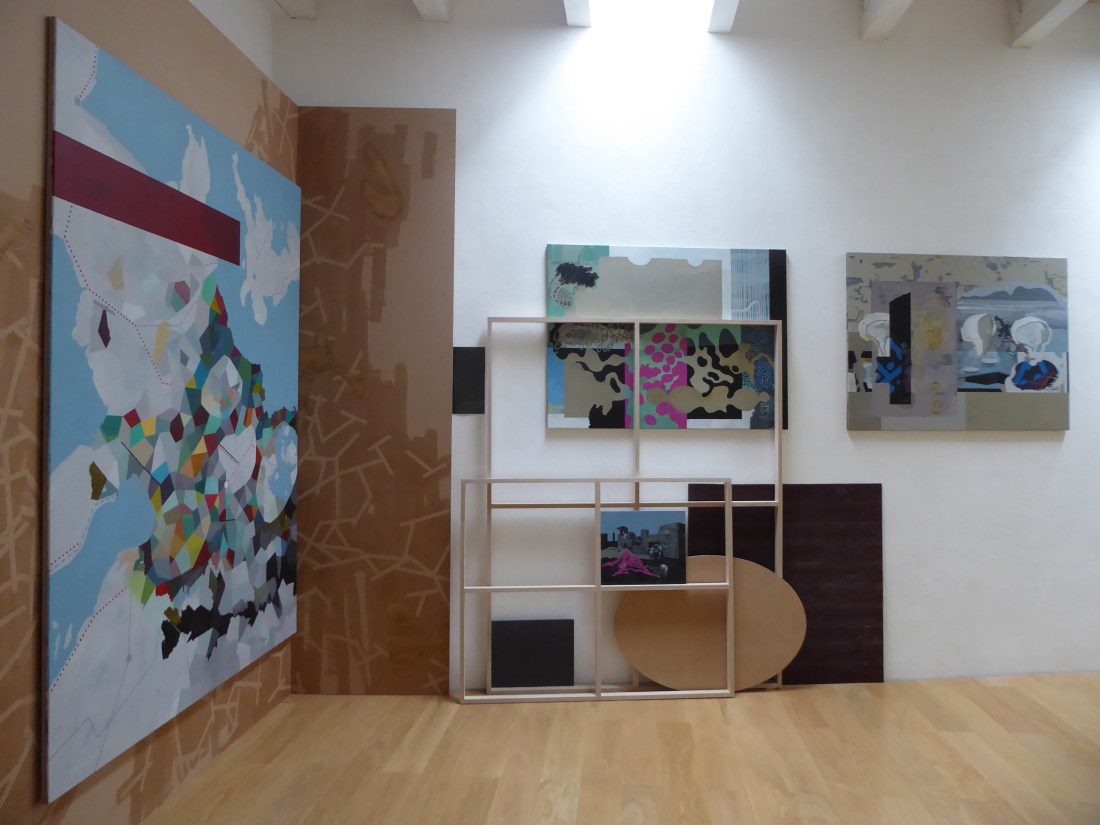
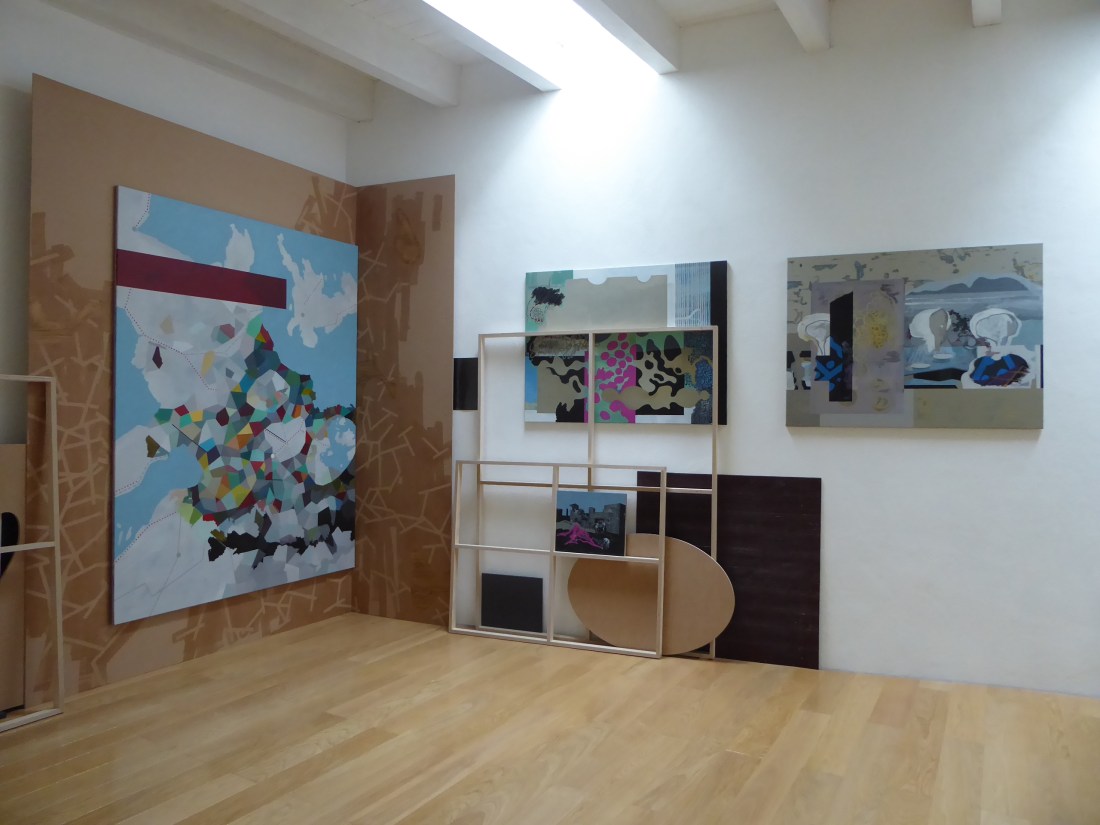
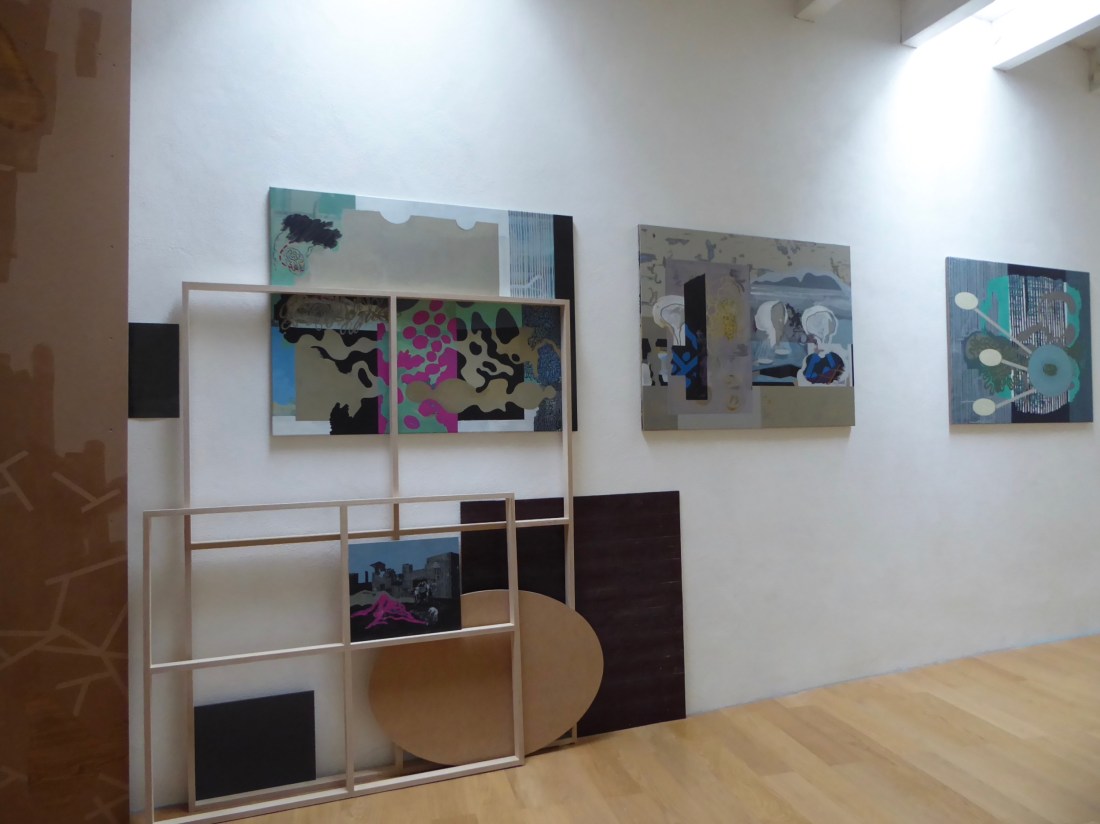
 Occupied Corner ist die neueste raumbezogene Arbeit von Michael Lukas, die er speziell für GIG Munich gestaltet. Die Installation ist eine fließende geometrische Konstruktion von Beziehungen, Verbindungen und Netzwerken, in der sich die einzelnen Elemente in ständiger Spannung befinden. In ihr vereint er Gemälde, Skulpturen und Zeichnungen, um unsere Rolle im größeren Zusammenhang einer globalen Landschaft zu untersuchen.

Der etablierte Münchner Künstler mit zahlreichen Einzel- und Gruppenausstellungen arbeitet auch als Kurator. Er organisierte Ausstellungen mit internationaler Besetzung u.a. in München den Weltkongress für Kartographie 2006 und in Berlin die von der Kulturstiftung des Bundes geförderte Ausstellung Luise. Die Inselwelt der Königin 2010. 


Occupied Corner is the latest art installation by Michael Lukas, made specifically for the GiG Munich site. The installation constructs a fluid geometry of relations, connections and networks, its different elements held in continual tension. Incorporating painting, sculpture, and drawing, it critically examines our place within a larger global landscape.

Michael Lukas is a well-established Munich artist, with numerous solo and group exhibitions. He has also worked as a curator, most notably organising the World Congress for Cartography in 2006 and the Berlin exhibition, Luise Die Inselwelt der Königin in 2010.