In Poland every year in spring, school children gather together at the banks of frozen rivers to drown the Marzanna. I remember throwing stones at the doll to make her sink faster. We then walked home without looking back.
Salmon swim upstream to lay their eggs in their home river. They die and their decomposing bodies help fertilise the water.
Everyone helps the rogue in the Dicken’s novel as he lays dying in Miss Abbey’s first-floor bedroom. But as he grows warm – “Did that eyelid tremble? Did that nostril twitch?” – the doctor and the four men cool and “their faces and their hearts harden to him.”
These occasions recognise what for Deleuze is not reducible to experience, but which nevertheless can be confronted: a life. Not the lived, individual life, so full of things that need to be done, but a life, singular and impersonal, indefinite; a life with no moments, but only the in-between, a passage, a becoming, of events yet to come that have already happened. “Pure power and bliss” Deleuze writes. Just life, only life, a life.
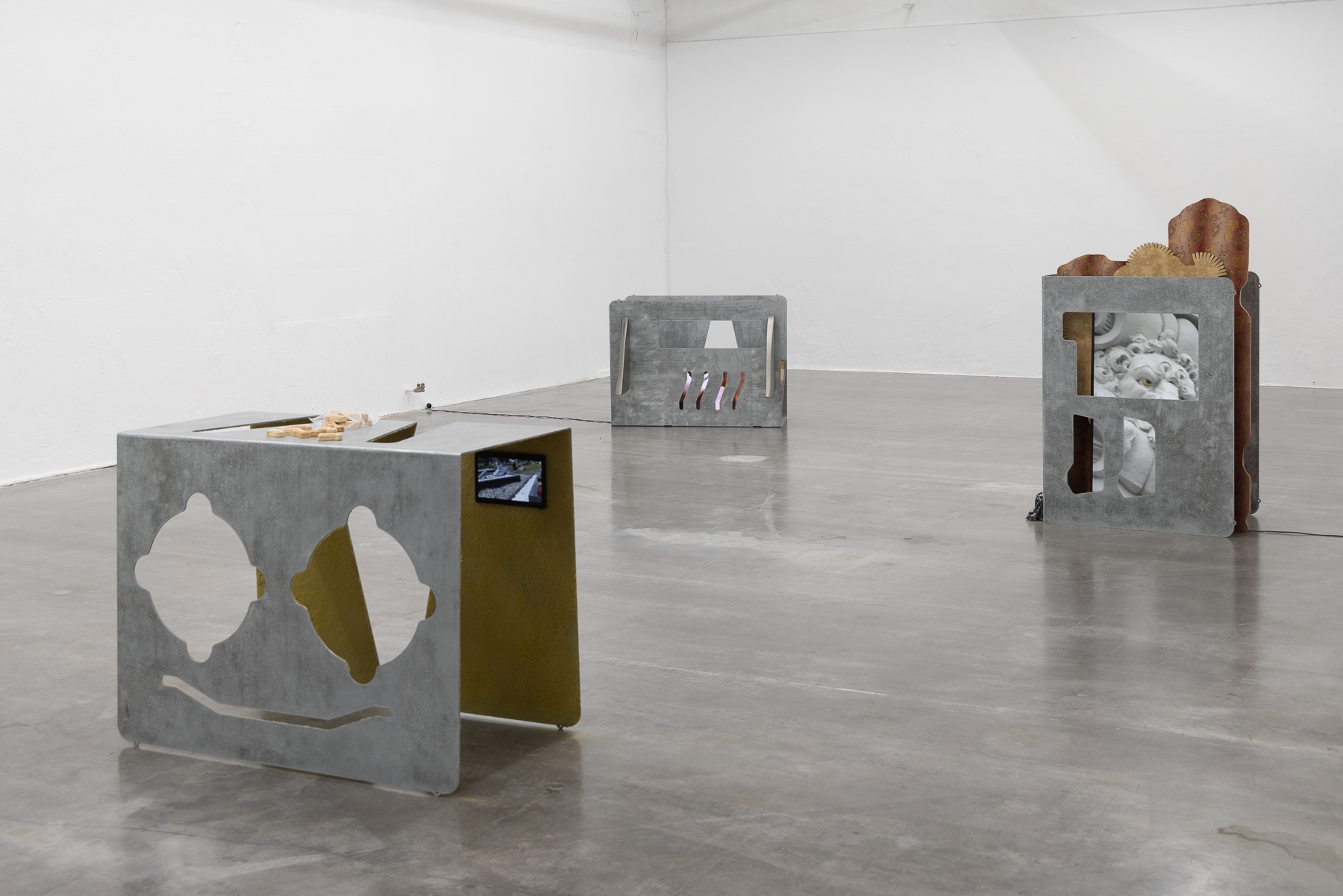
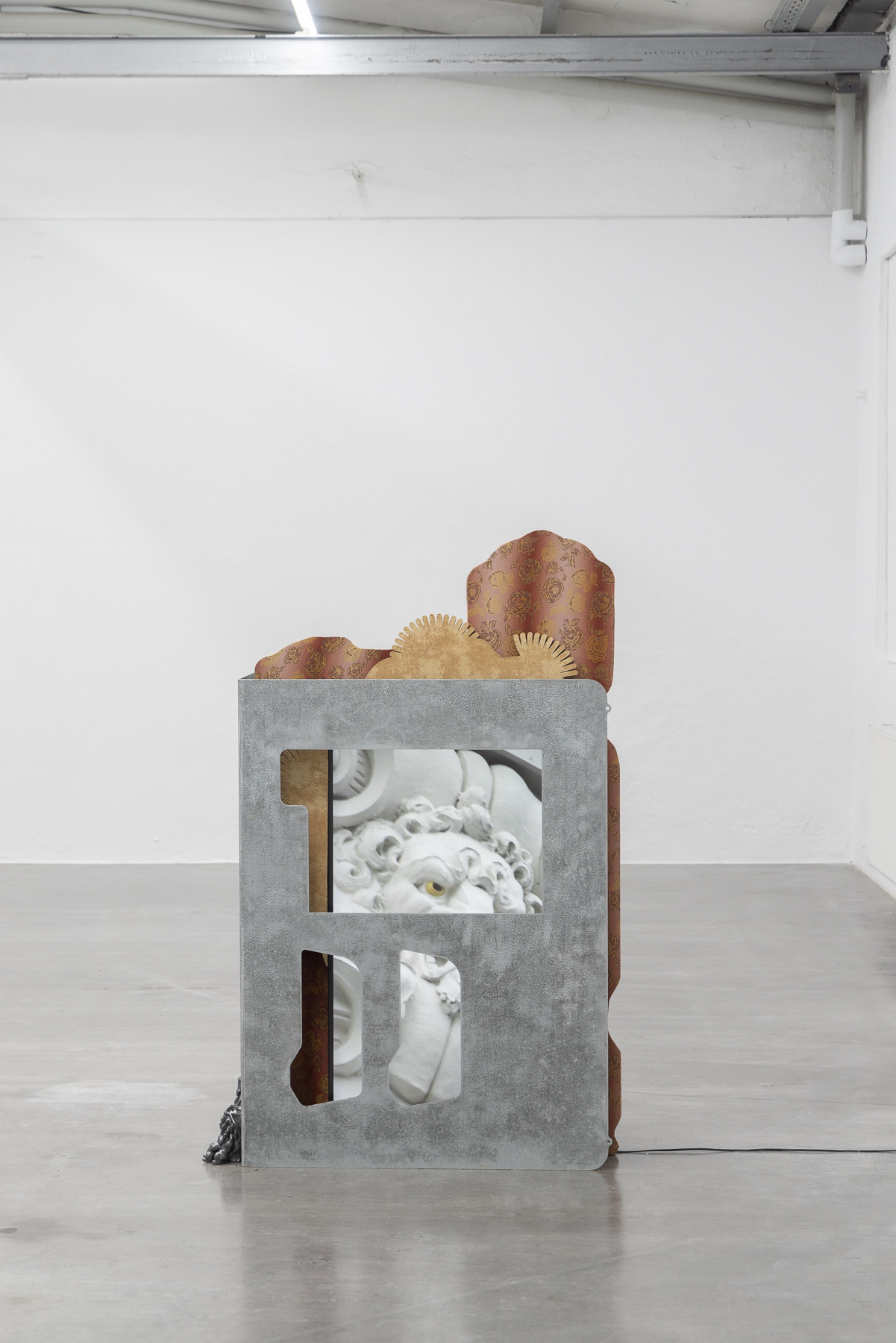
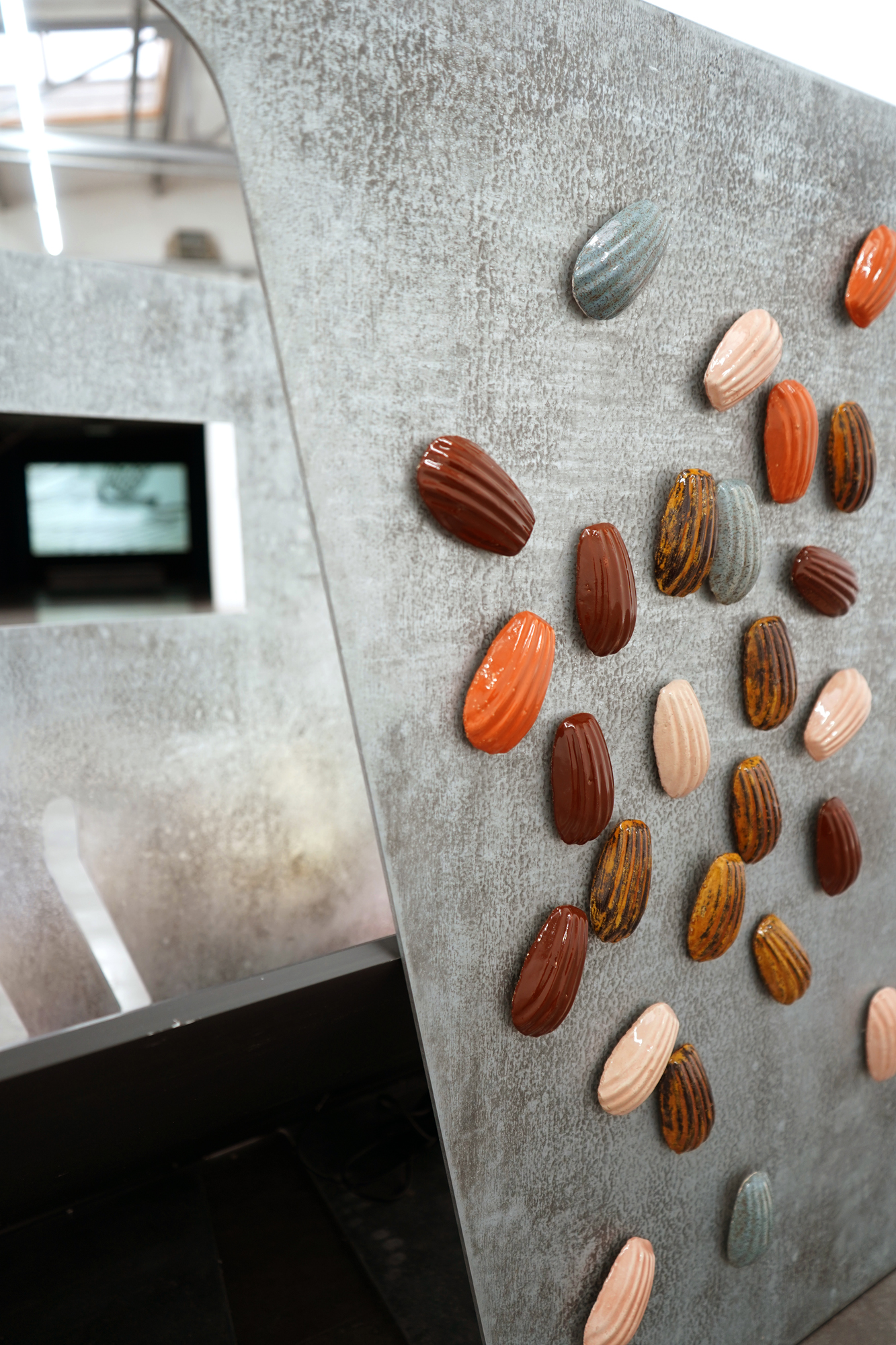
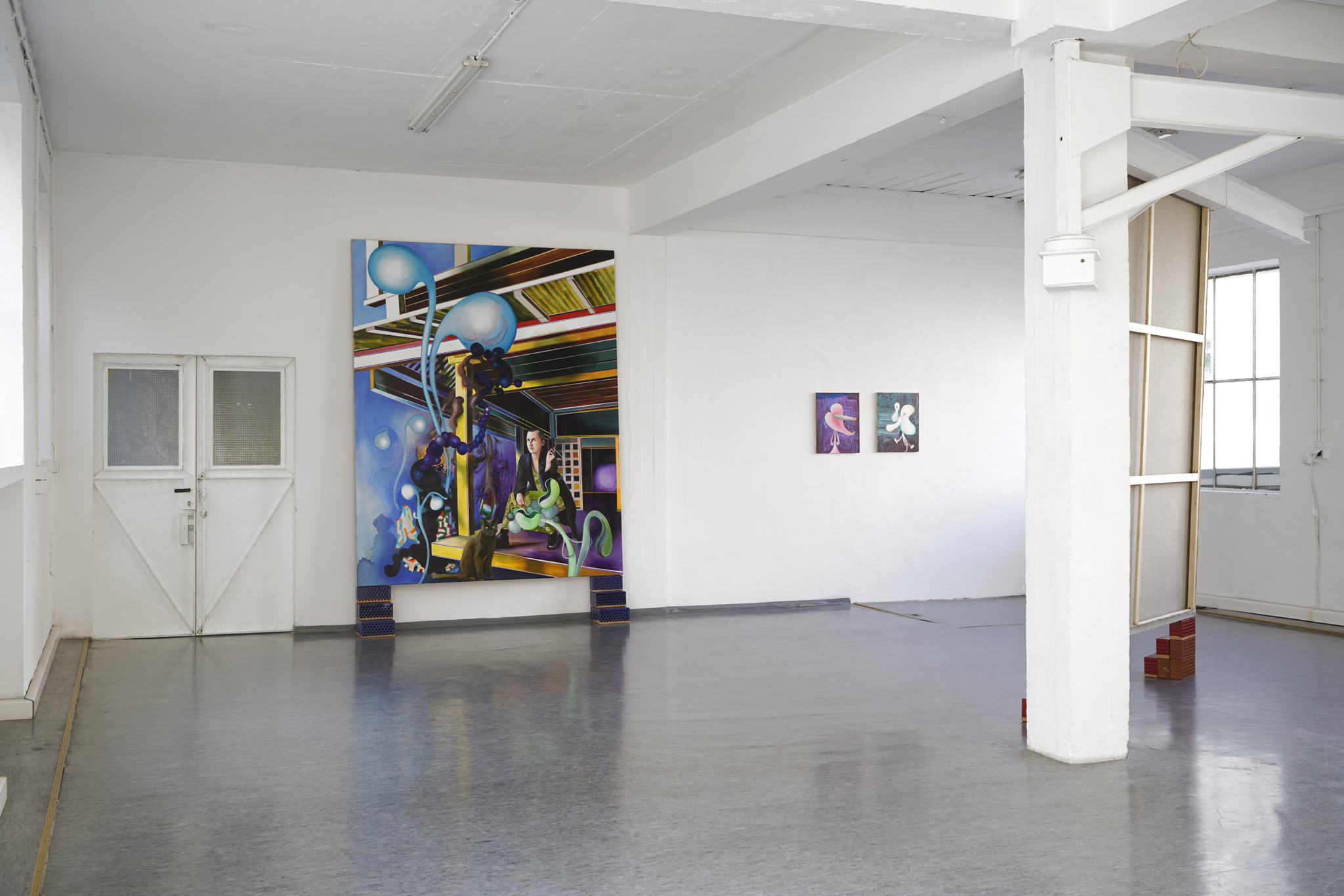
In “The Brutality of Spring” Anna Łuczak and Sophia Schmidt collaborate together in homage to a recently deceased mutual friend to produce a multimedia installation, a vanitas-type project, founded equally in the transience of domestic sphere and the fragility of the human body.
Hêlîn Alas,Pierre-Yves Delannoy, Lukas Hoffmann, Veronika Hilger, Ju Young Kim, Anna McCarthy, Jonathan Penca, Curtis Talwst Santiago, Valio Tchenkov, Ayaka Terajima, Gülbin Ünlü, Paul Valentin, Max Weisthoff
7.09 -28.09.2024
Temporary venue at Schillerstr. 38, Munich
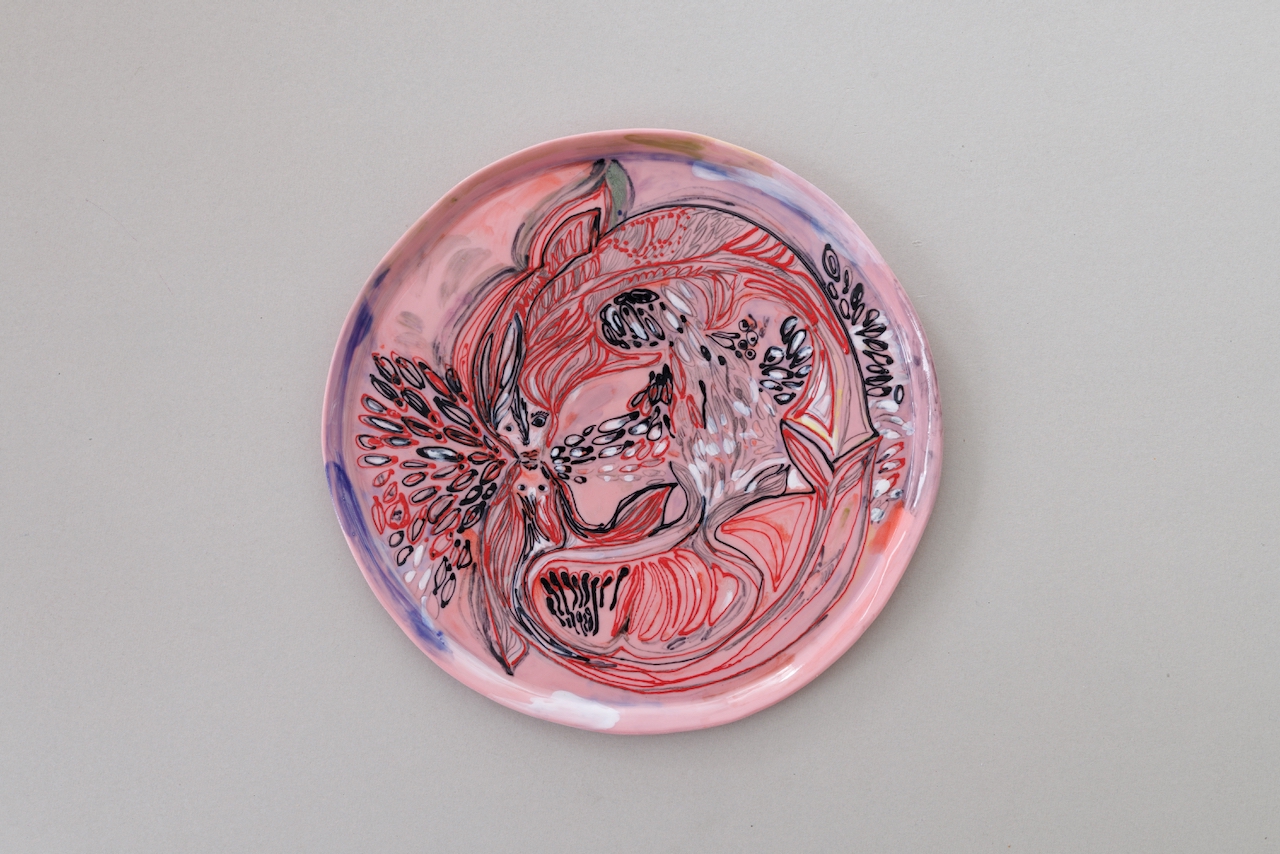
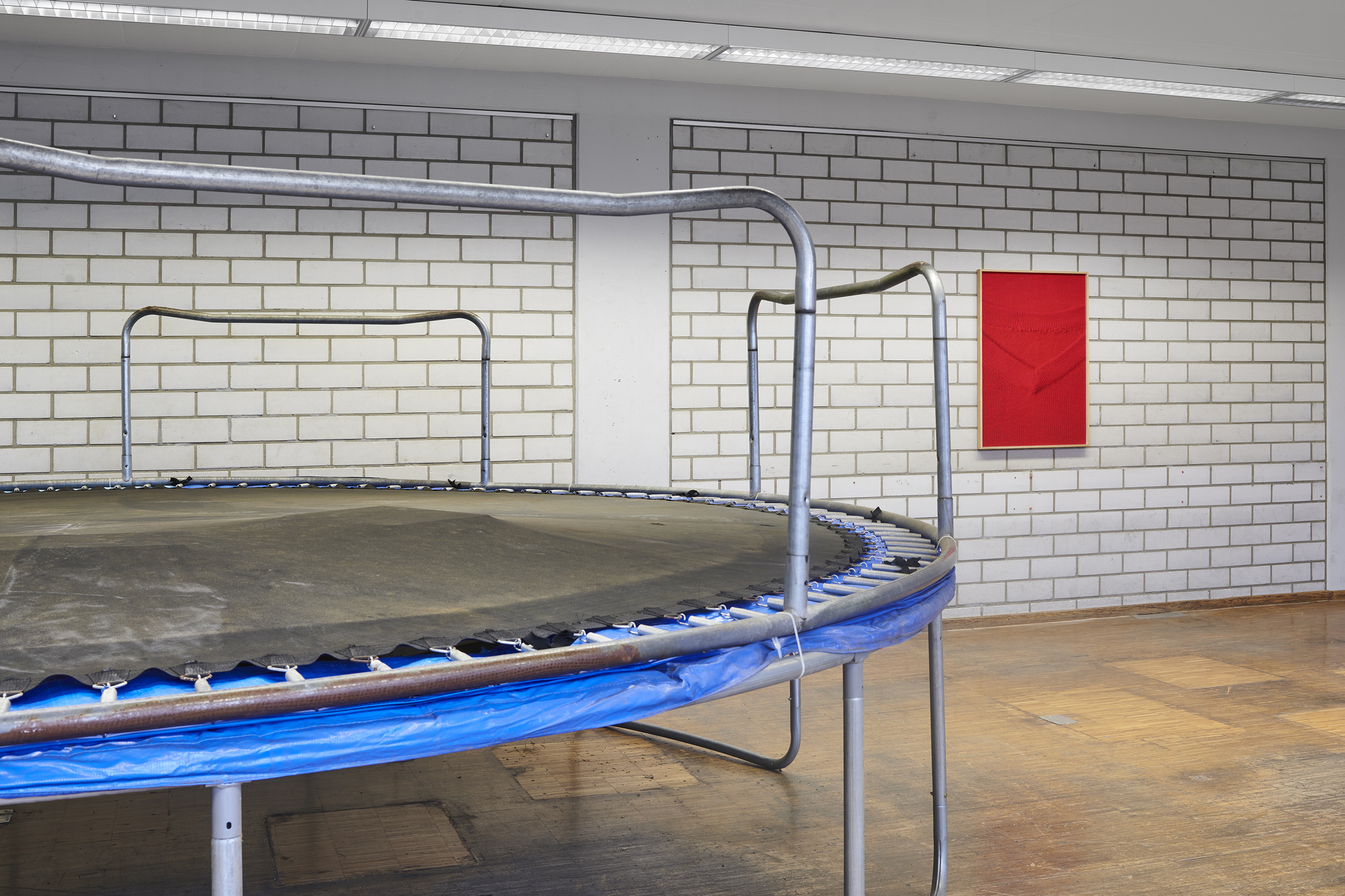
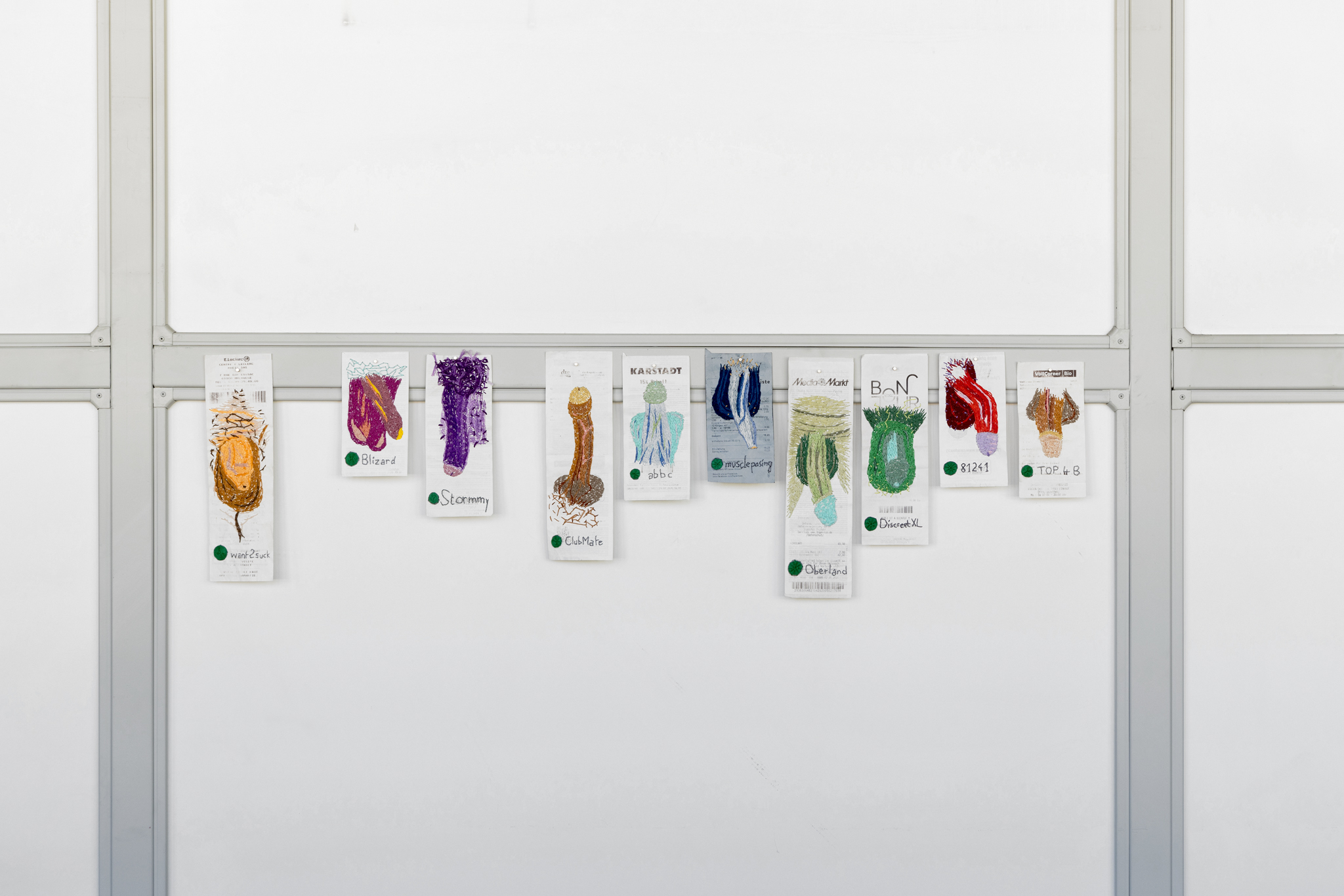
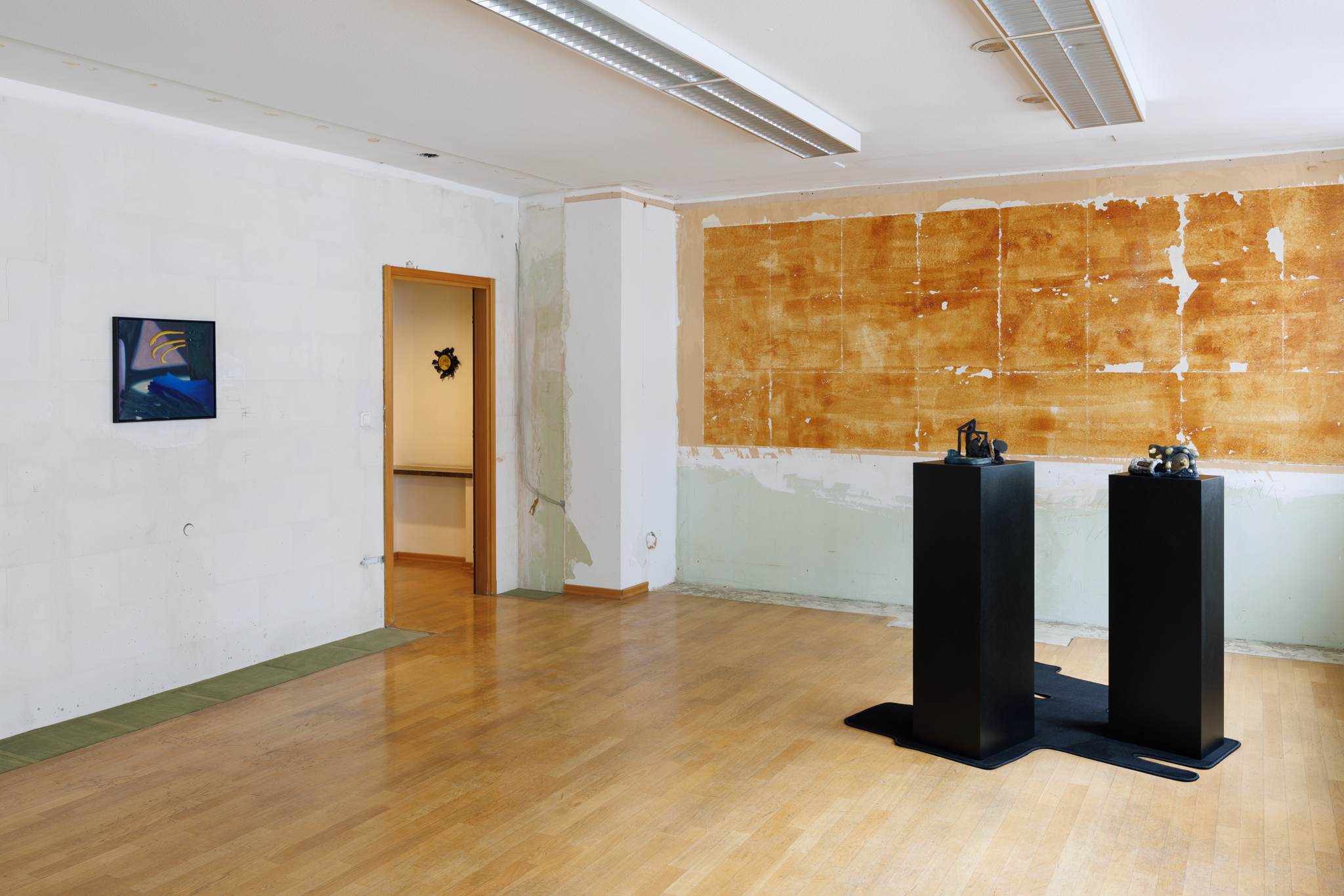
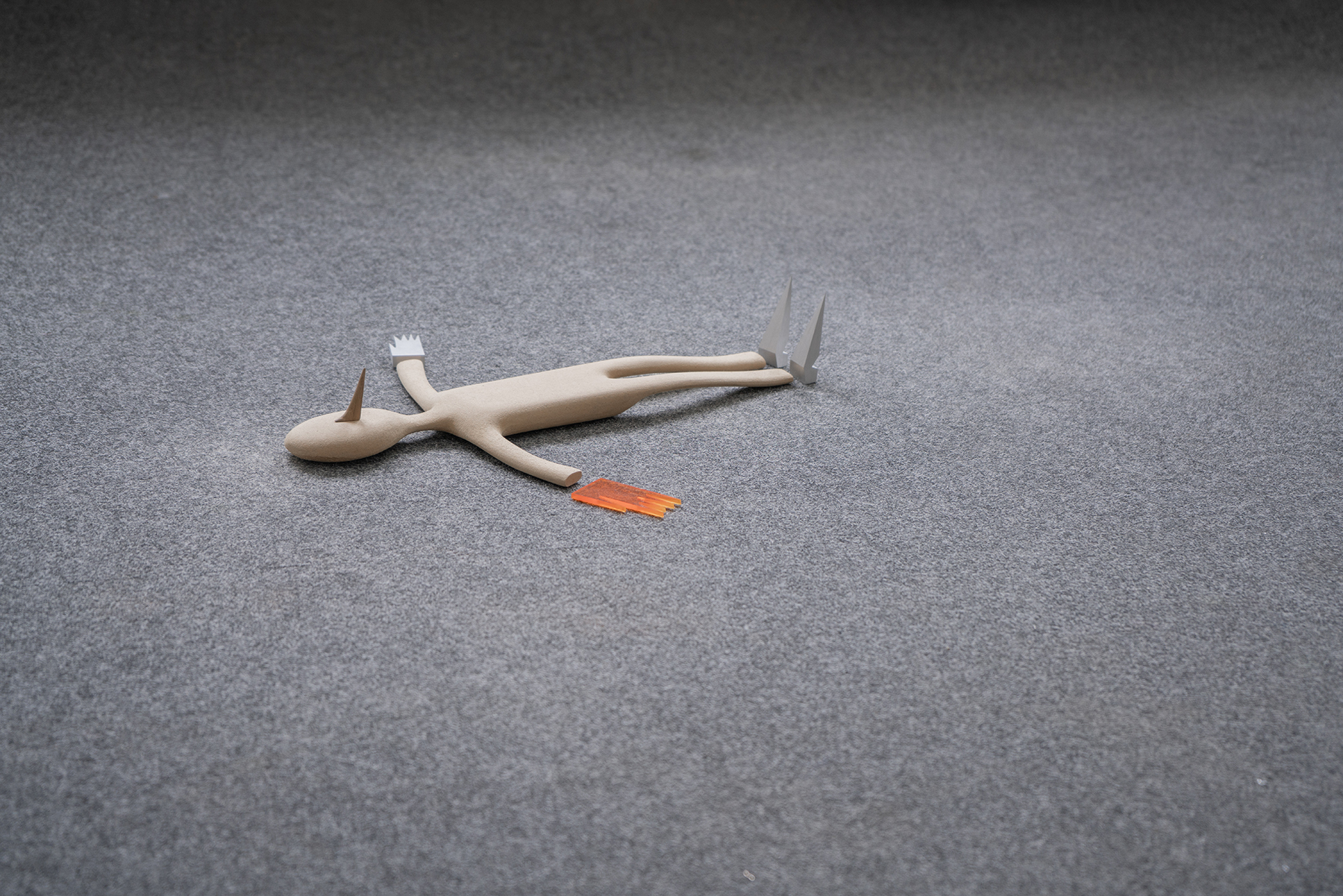
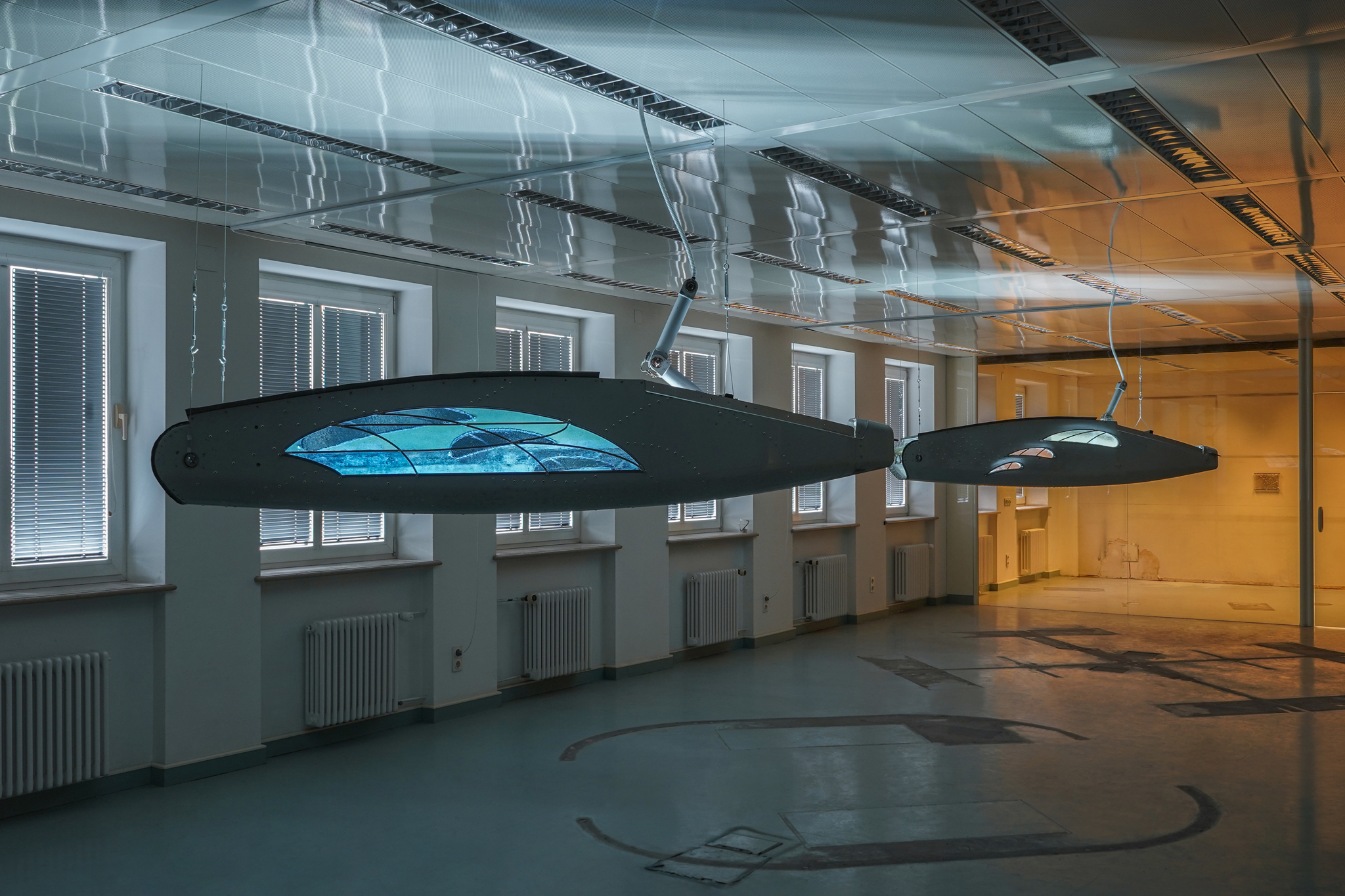
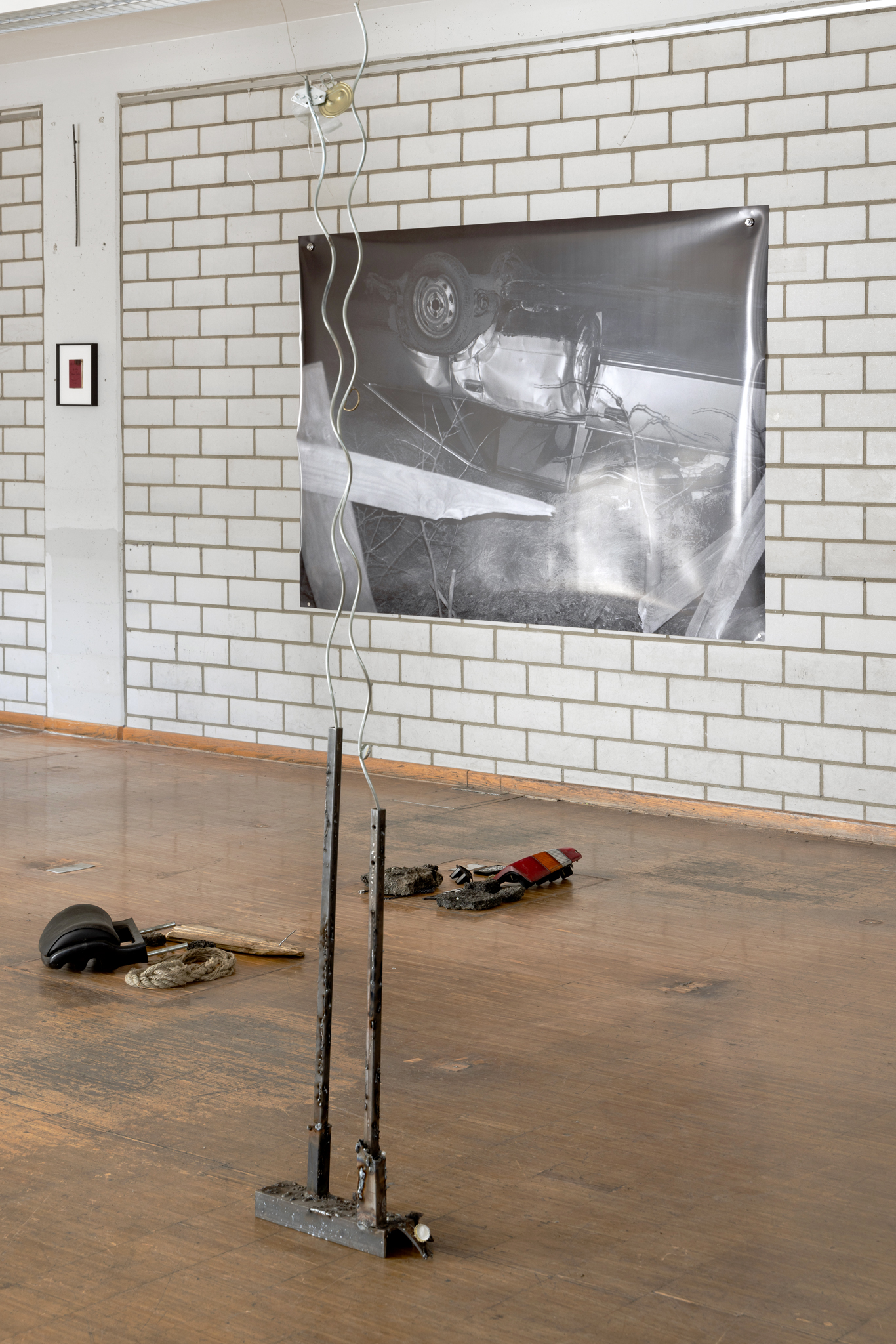
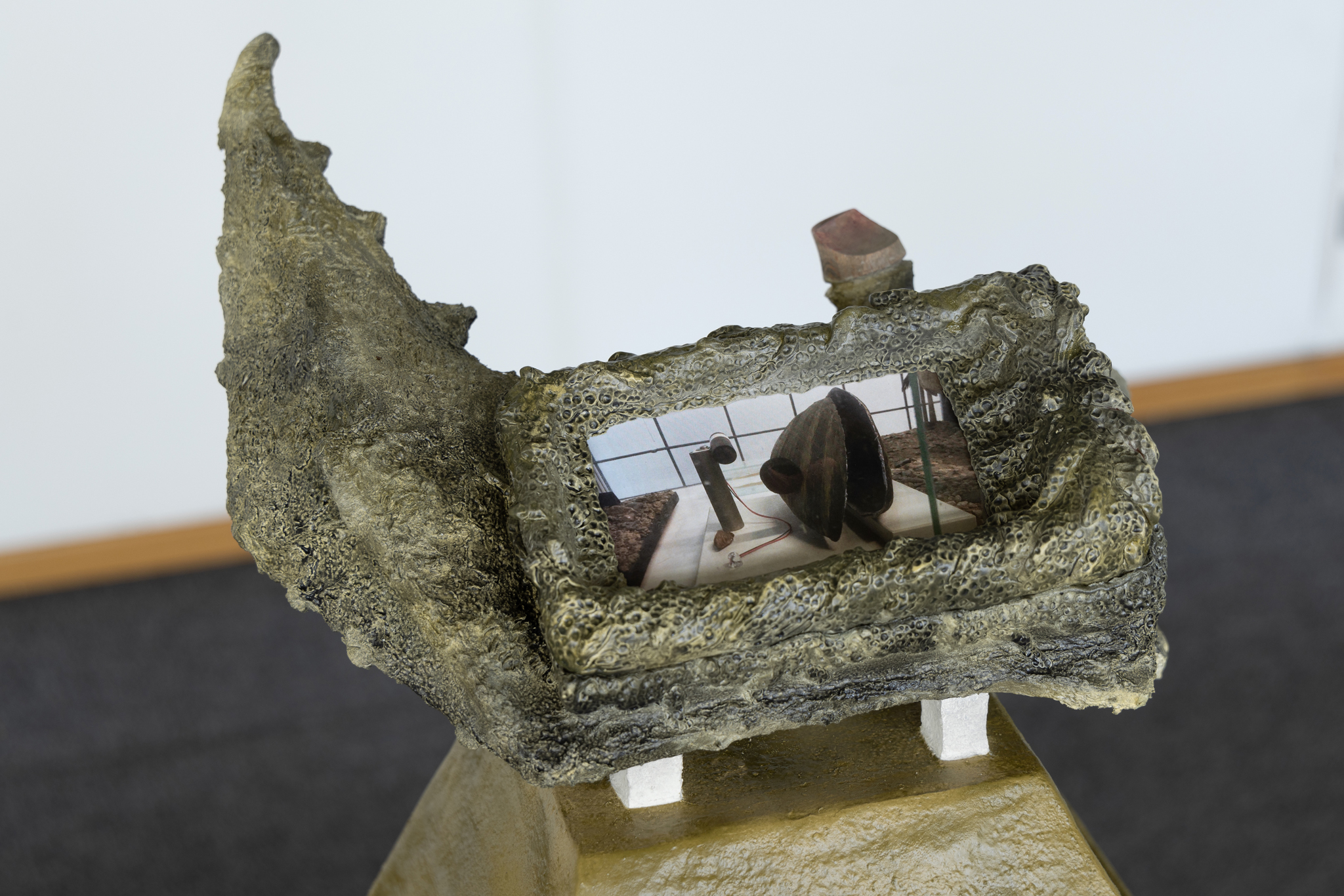
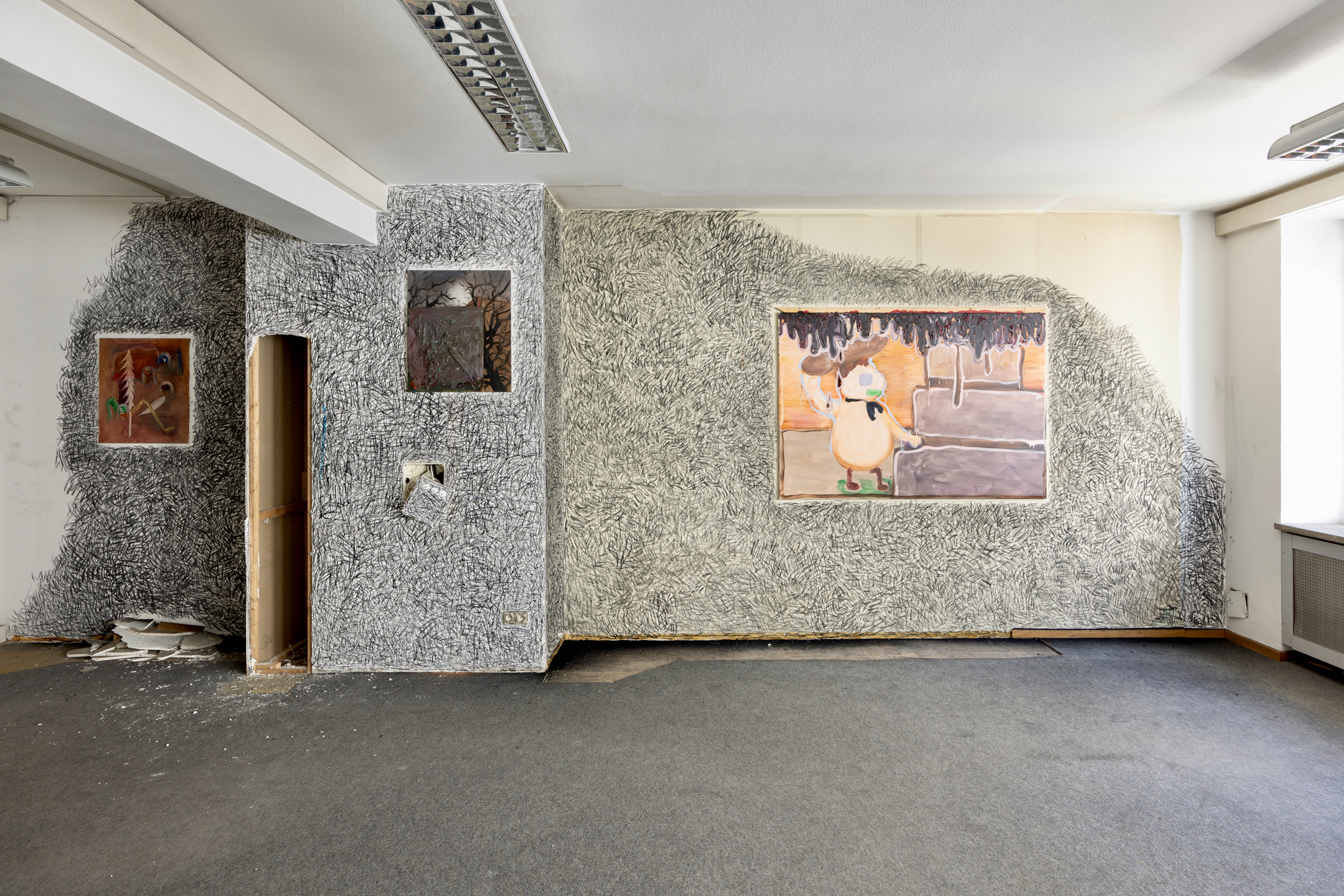
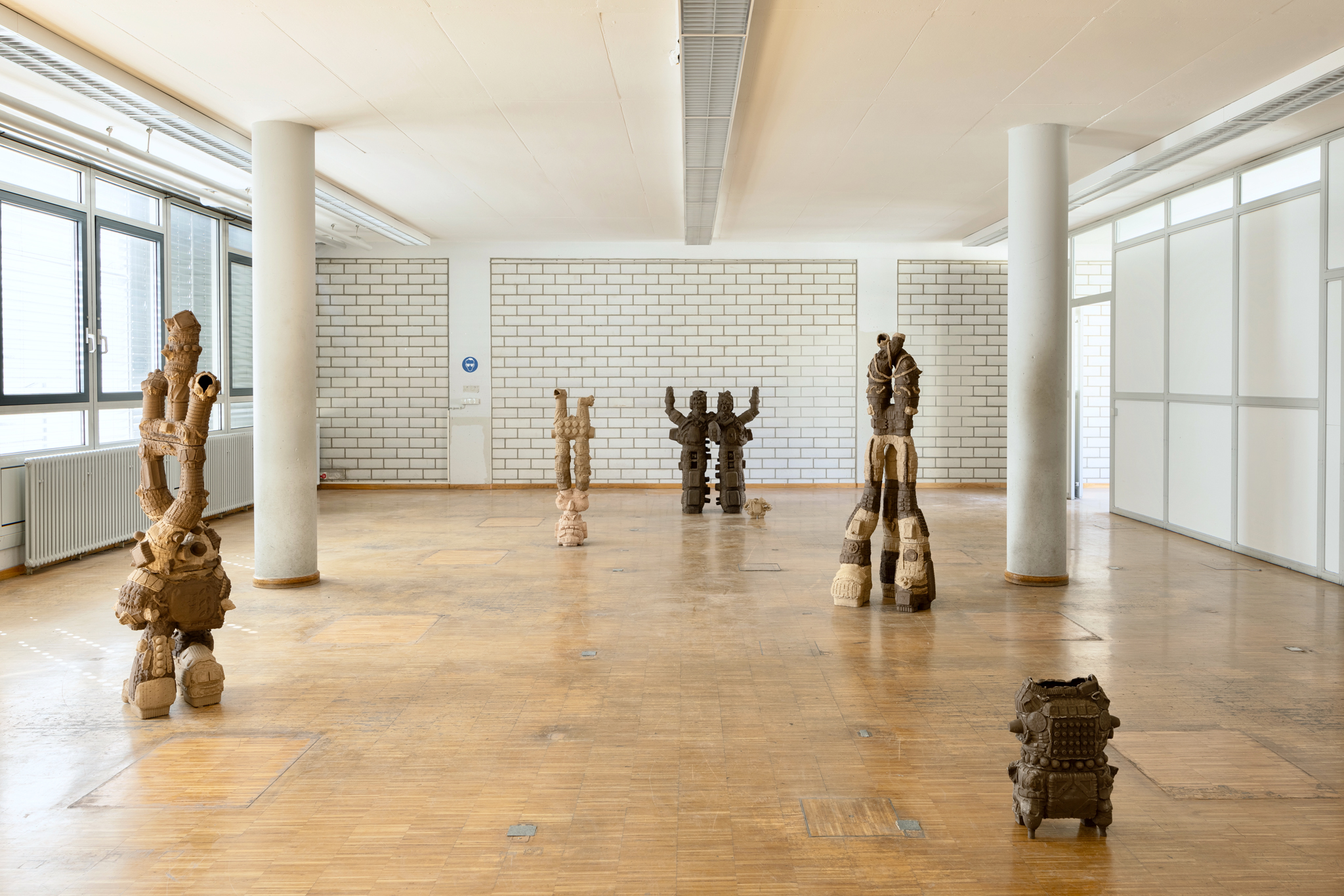
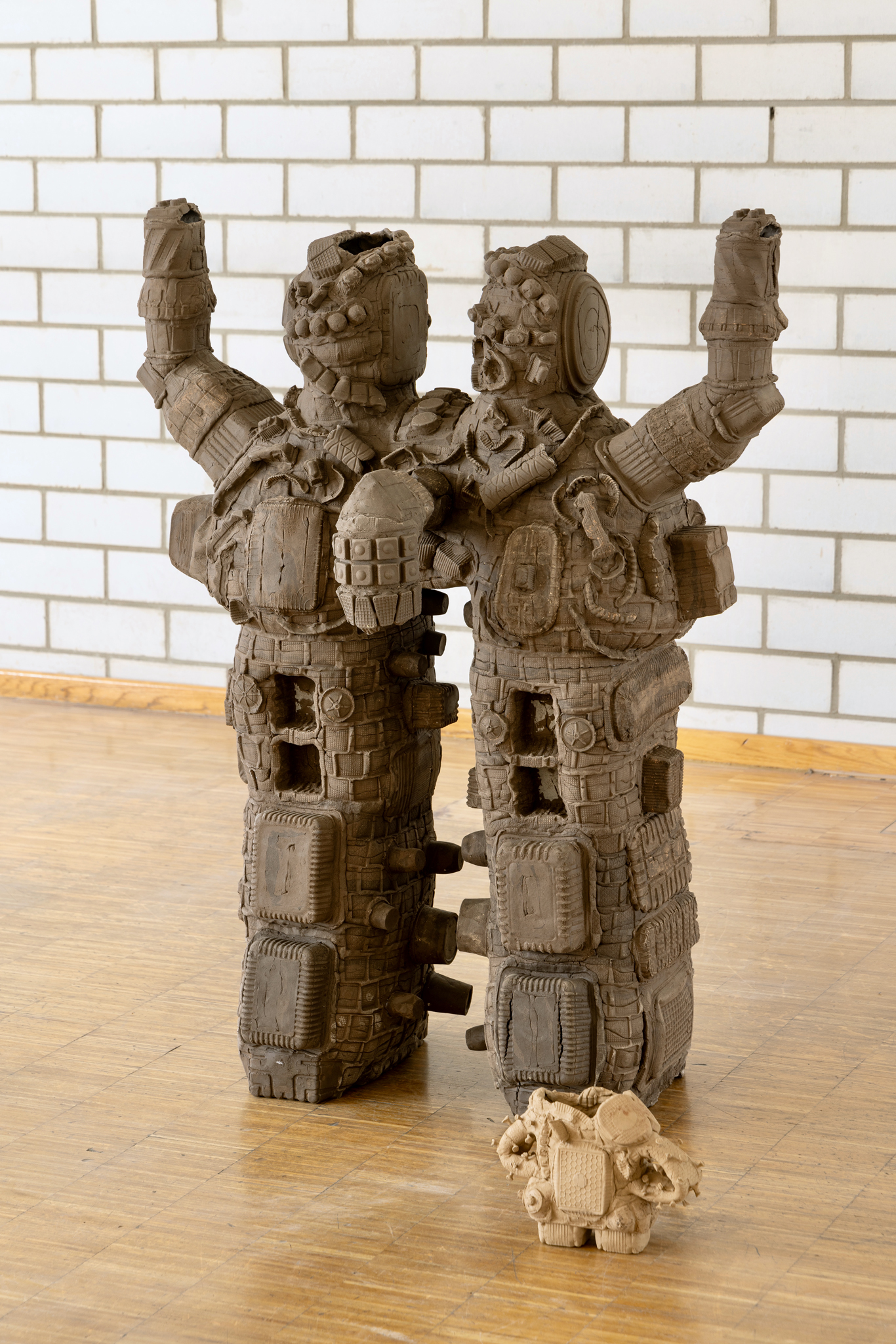
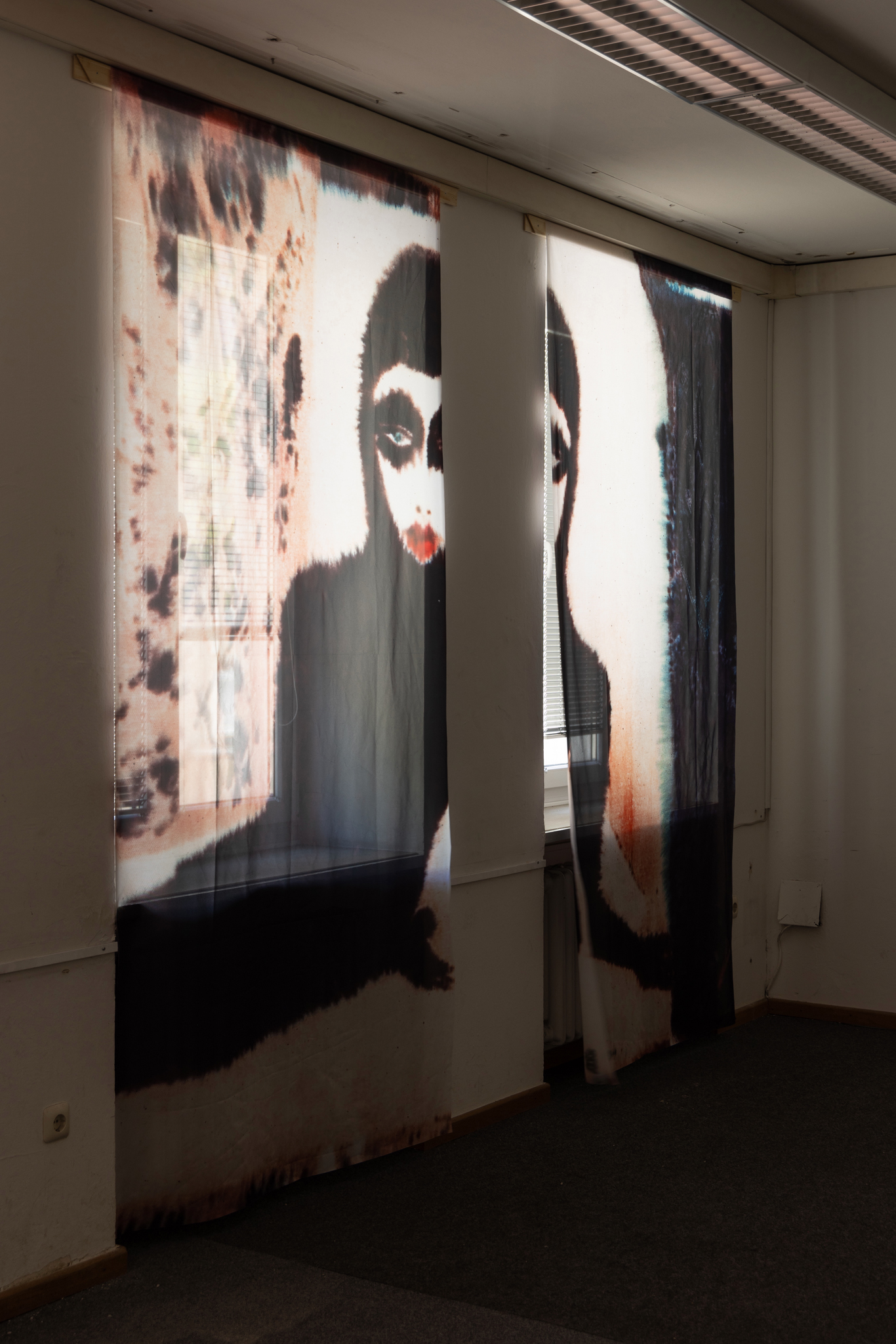
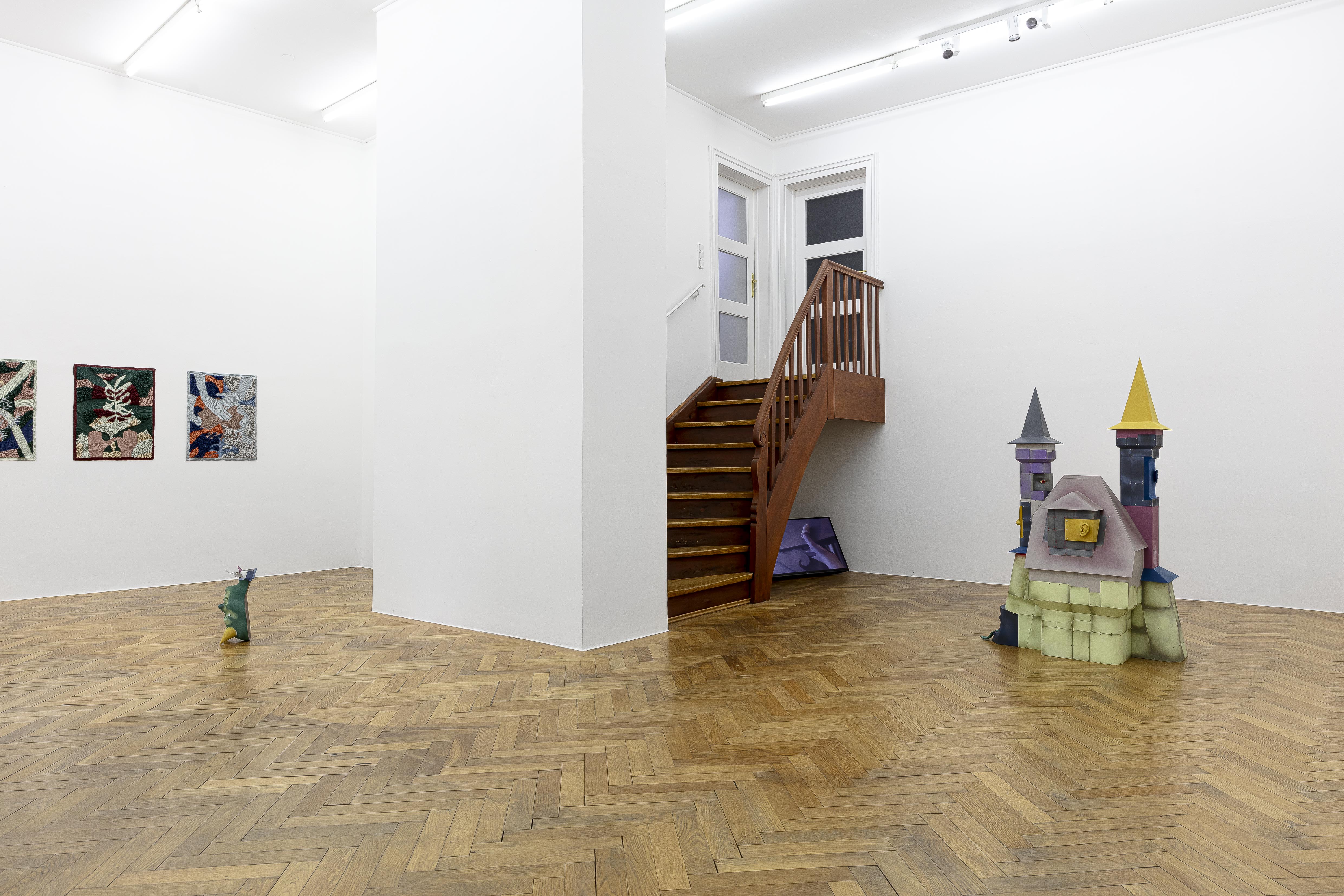
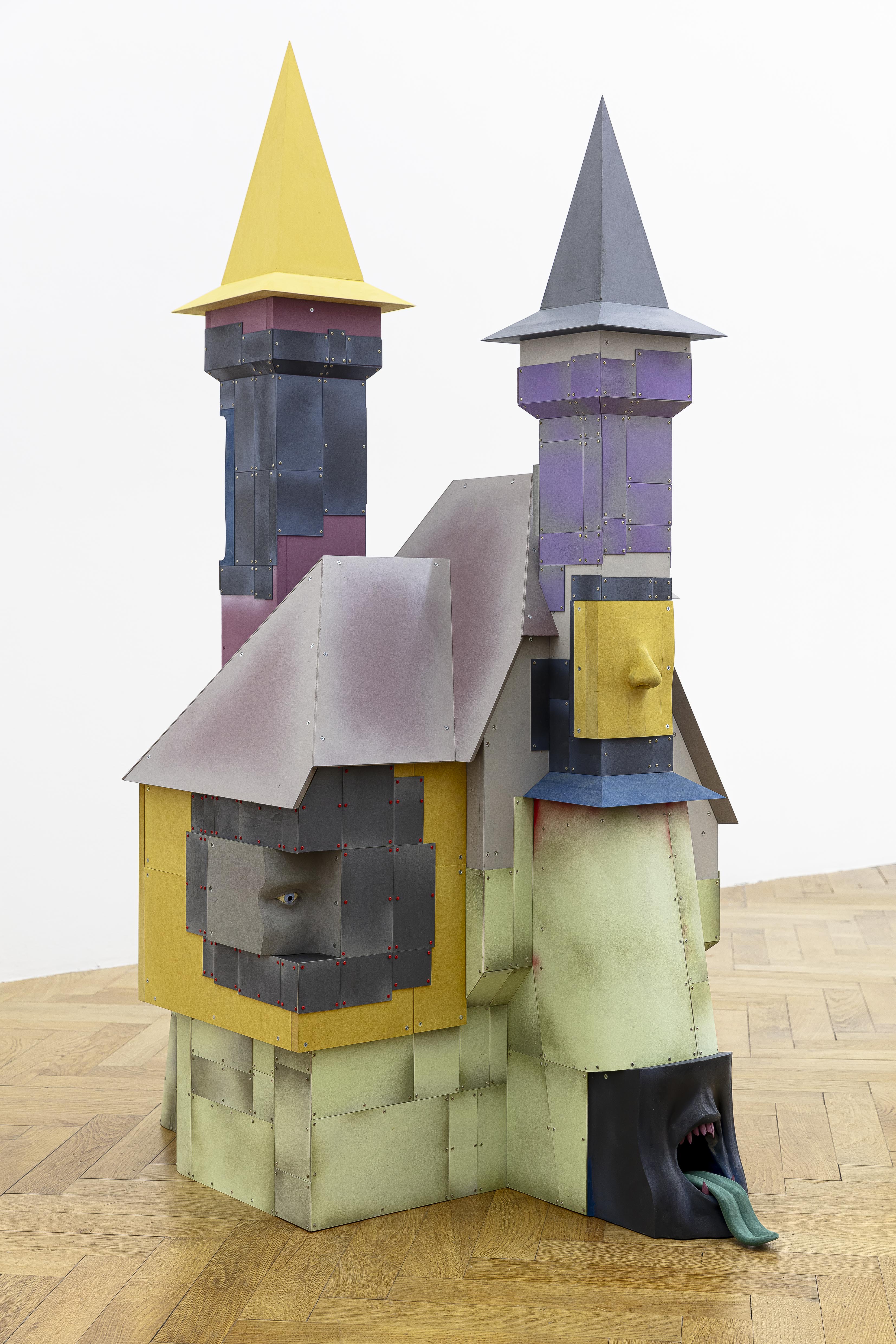
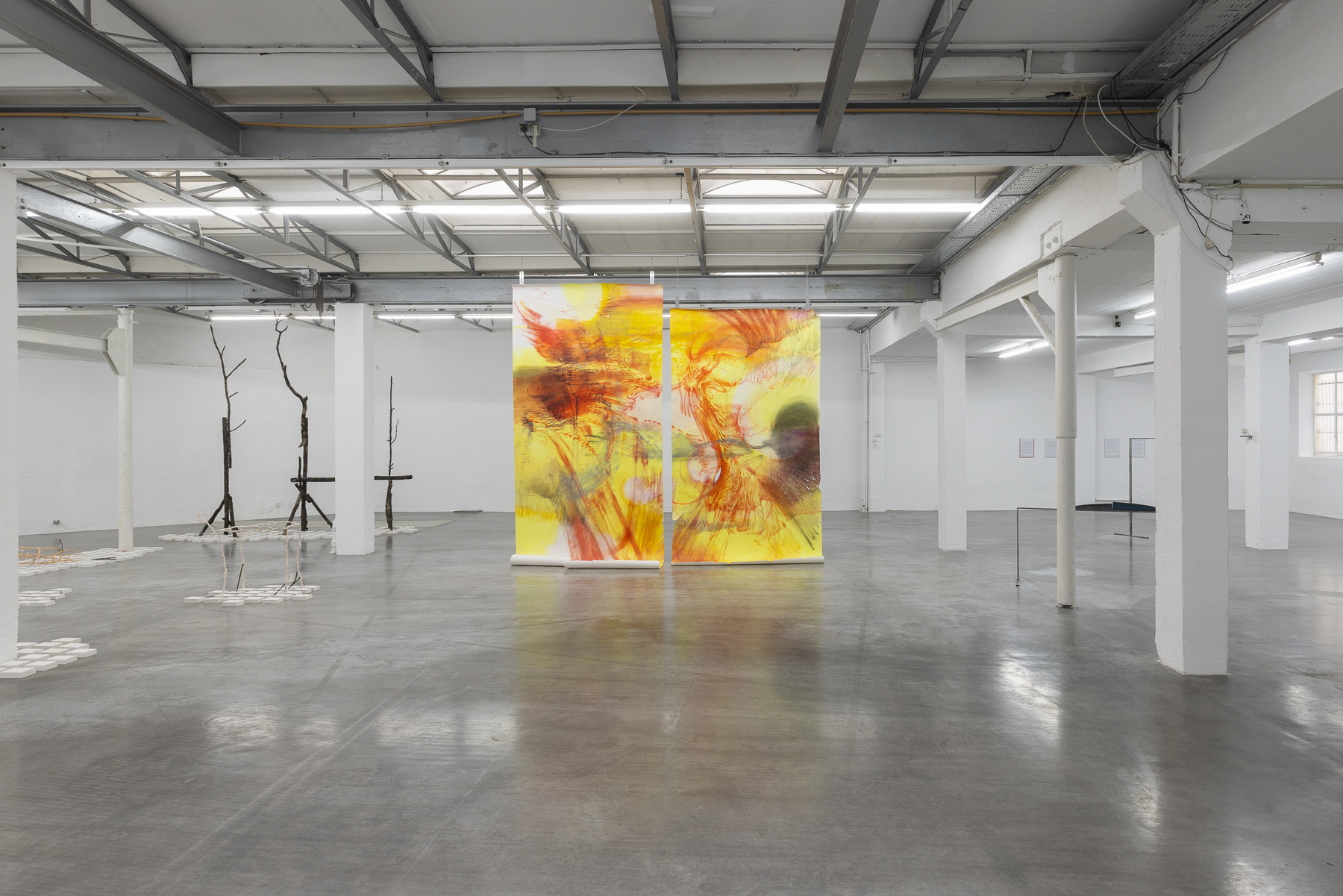
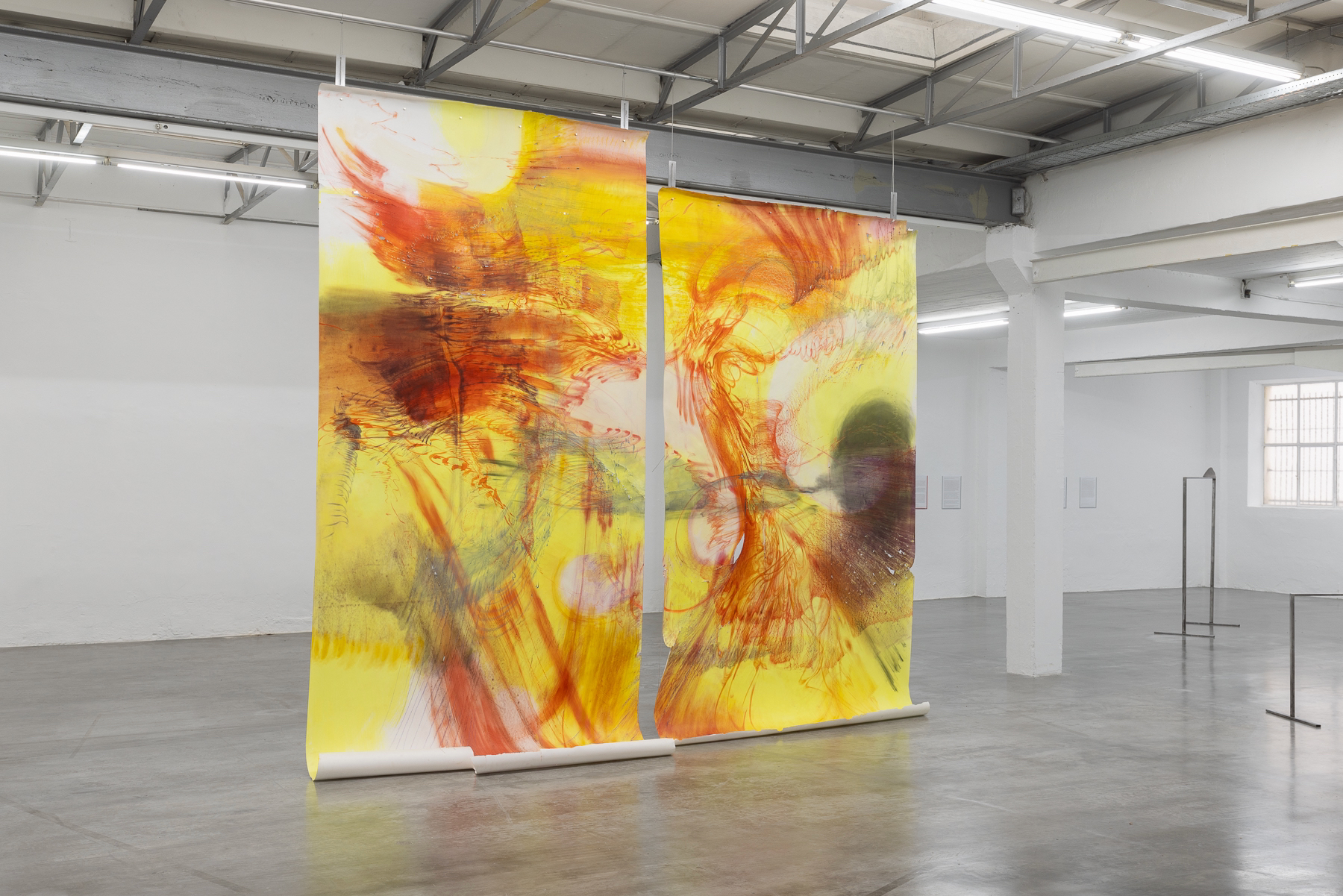
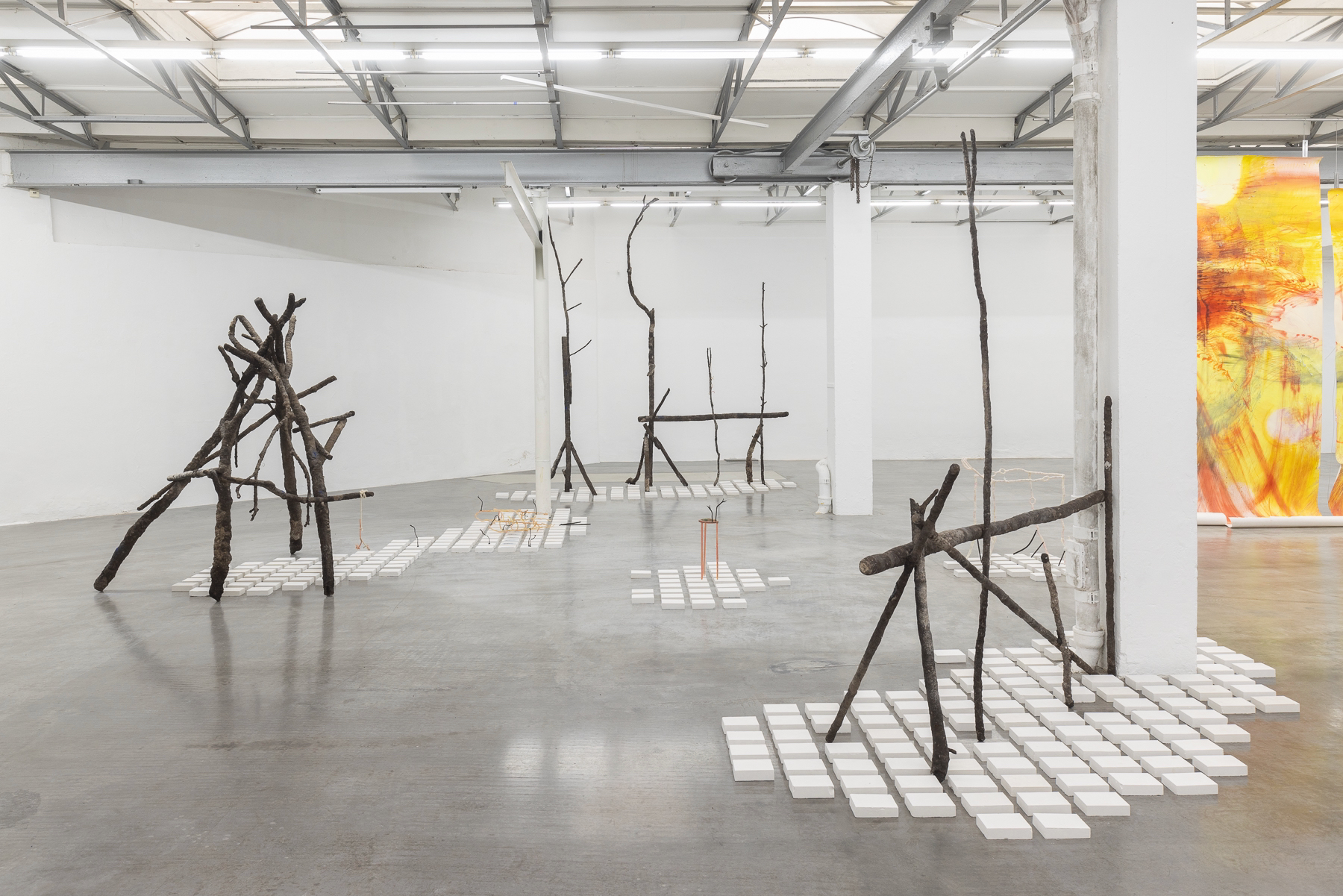
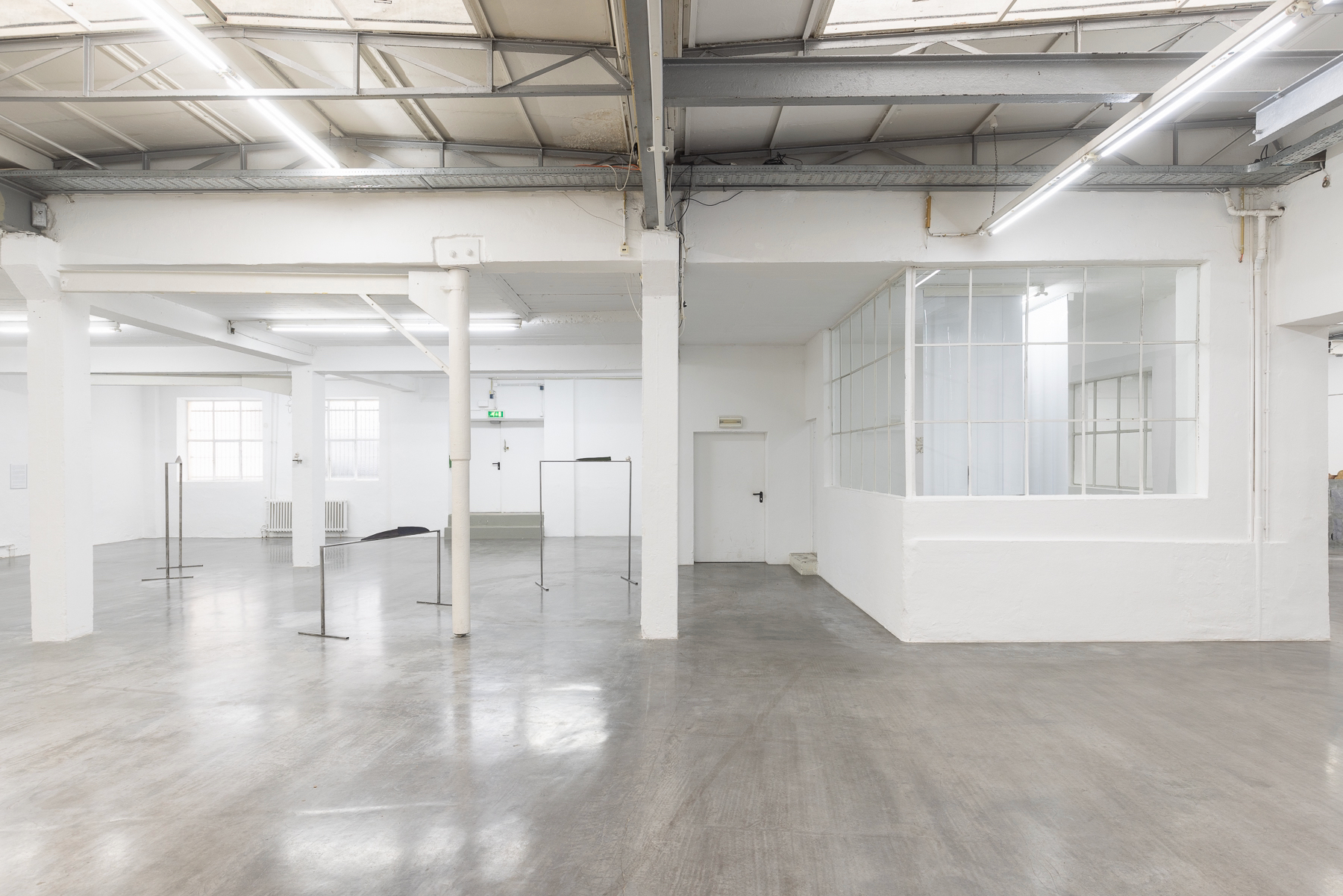
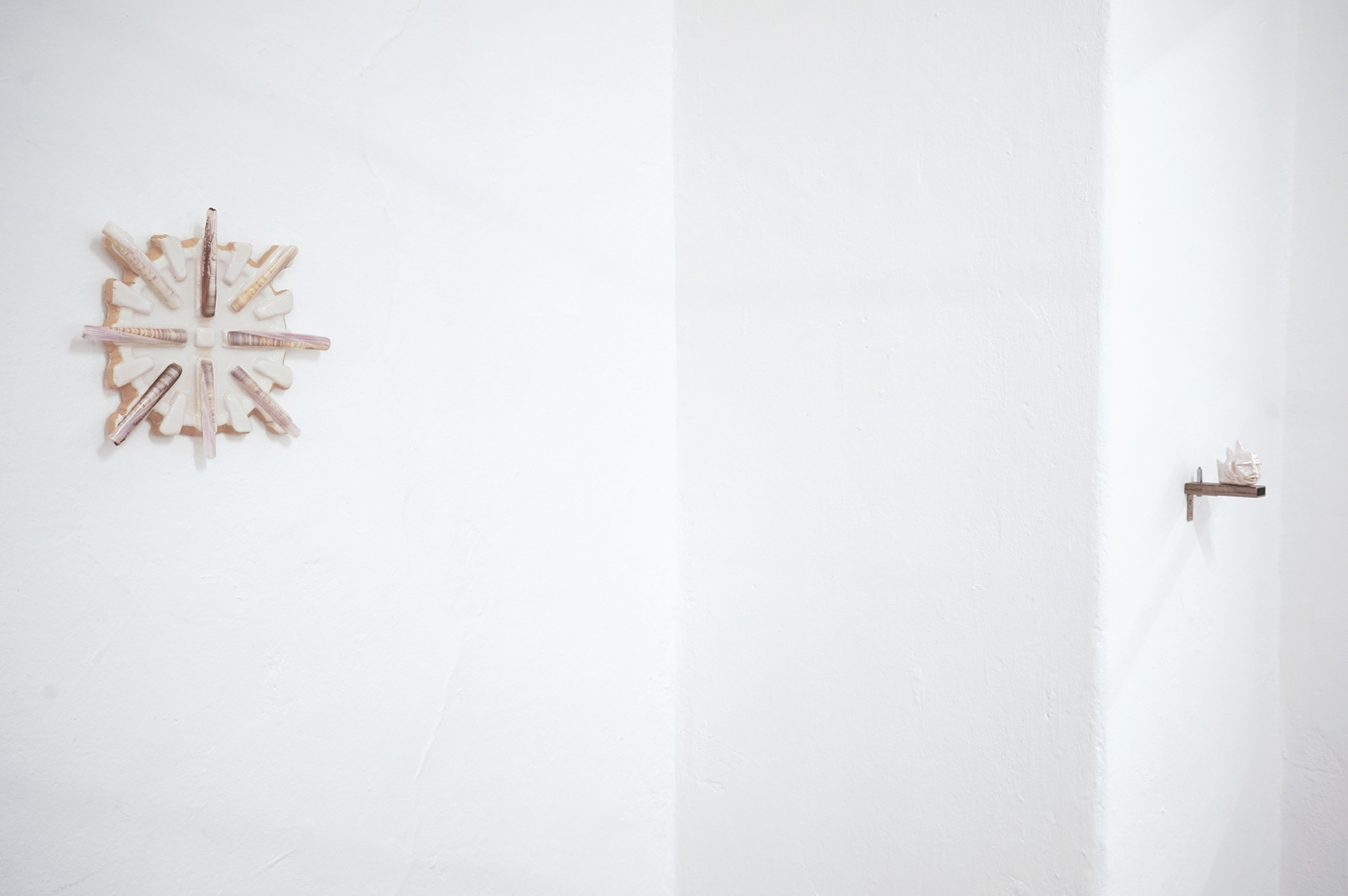
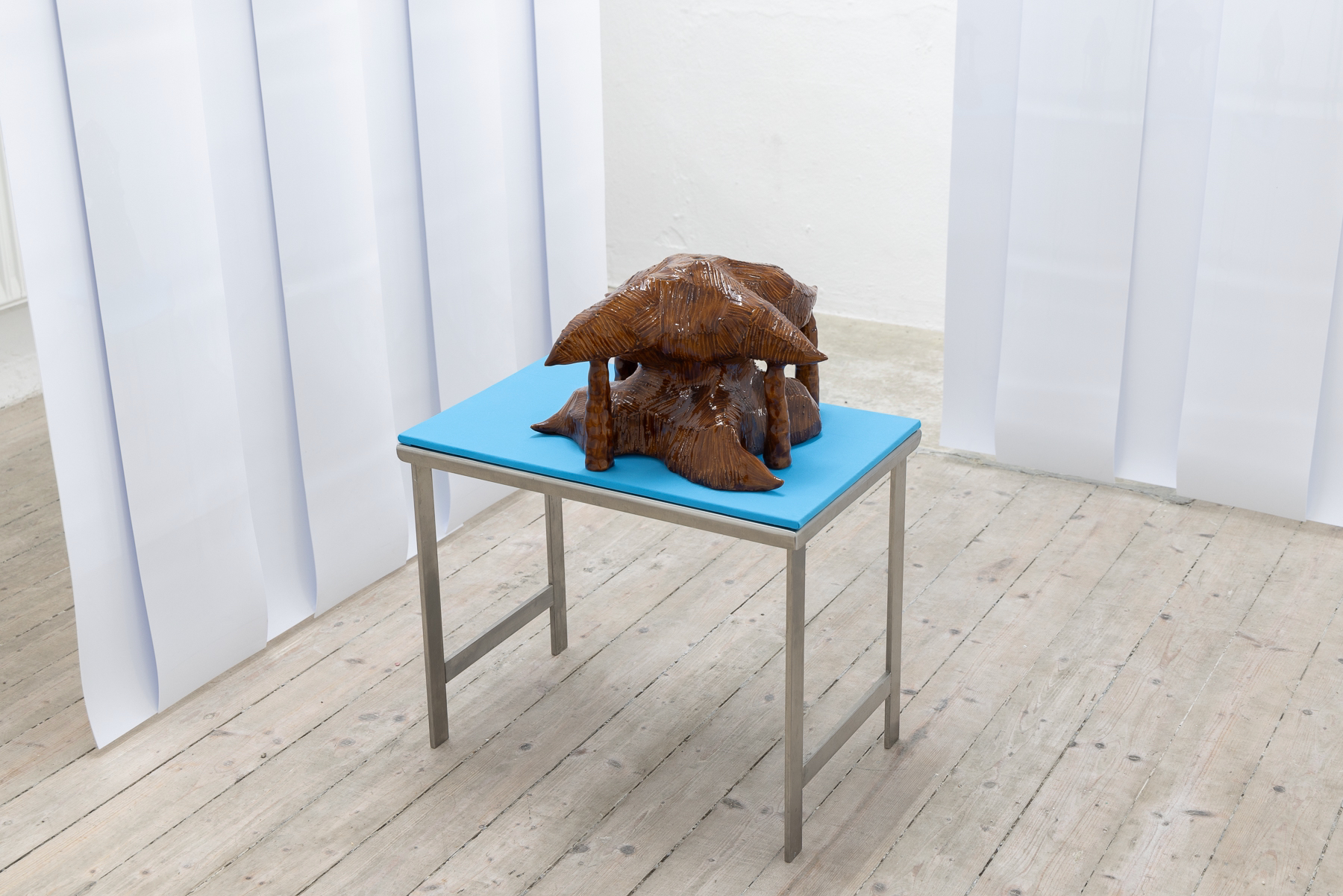
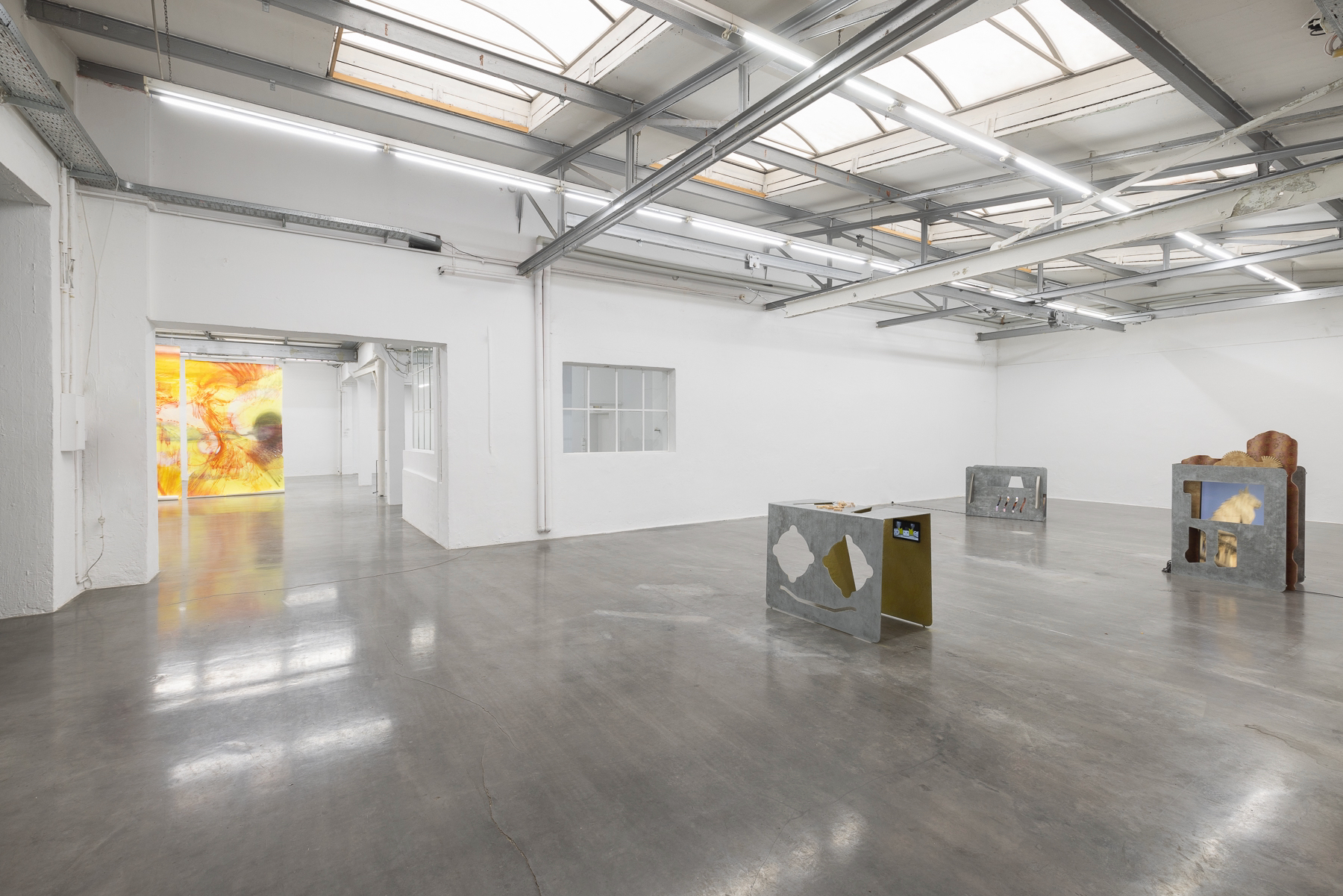
Hêlîn Alas, Carrying the Earth to the Sky, 2024, installation view with “Up and Up and Up and Up,” 2024, trampolines, cable ties, speakers, sound, cables, 490 x 165 cm and “Still Faced,” 2024 framed photo print (part of a series) 100 x 70 cm. Photo: Produktion PitzHêlîn Alas, “Traumhaus junior,” 2024, caramel, 118 x 90 x 8 cm. Photo: Produktion PitzHêlîn Alas, “Traumhaus junior,” 2024, caramel, 118 x 90 x 8 cm. Photo: Produktion PitzPierre-Yves Delannoy, “embroideries on cashier’s ticket,” 2019-24, cotton yarns, thermo paper, dimensions variable (8 x 16 cm (X10)). Photo: Thomas SplettVeronika Hilger, Carrying the Earth to the Sky, 2024, installation view. Photo: Thomas SplettVeronika Hilger, Untitled, 2024, ceramic, 27 × 24 × 3 cm. Photo: Thomas SplettLukas Hoffmann, “Figure,” 2020, MDF, oak, aluminum, acrylic glass, 50 x 45 x 8 cm. Photo: Lukas HoffmannLukas Hoffmann, “Castle,” 2024, Spraypaint, plywood, screws, MDF dyed through, 100 x 100 x 200 cm. Photo: Lukas HoffmannJu Young Kim, “Almost like Whale Watching,” 2024, a pair of aircraft fairings, stained glass, rivets, LED, 240 x 38 x 46 cm (X2). Photo: Younsik KimJu Young Kim, “Almost like Whale Watching,” 2024, a pair of aircraft fairings, stained glass, rivets, LED, 240 x 38 x 46 cm (X2). Photo: Younsik KimAnna McCarthy, Carrying the Earth to the Sky, 2024, installation view with “Car Crash b/w,” 2001, analogue photograph 230 x 160. Photo: Thomas Splett Anna McCarthy, “Car crash installation,” 2024, mixed media, dimensions variable. Photo: Thomas SplettJonathan Penca, “Synanthropop,” 2024, paper-maché, plaster, polymer clay, resin, cardboard, acrylic paint, wood, glass, digital print on paper, plinth, 120 x 60 x 60 cm. Photo: Thomas SplettJonathan Penca, “Mitten Crack,” 2024, paper-maché, plaster, polymer clay, resin, wooden bird whistle, lipstick, cardboard, acrylic paint, digital print on paper, plinth 120 x 60 x 60 cm. Photo: Thomas SplettCurtis Talwst Santiago, “History of Touch” 2024, installation view detail. Photo: Thomas SplettCurtis Talwst Santiago, “History of Touch” 2024, installation view. Photo: Thomas SplettValio Tchenkov, Carrying the Earth to the Sky, 2024, installation view. Photo: Thomas SplettValio Tchenkov, Carrying the Earth to the Sky, 2024, installation view. Photo: Thomas SplettAyaka Terajima, Carrying the Earth to the Sky, 2024, installation view. Photo: Thomas SplettAyaka Terajima, “Long legs doki,” 2023, Unglazed fired ceramic by recycled clay, 60 x 100 x 130 cm. Photo: Thomas SplettGülbin Ünlü, “Karanlik isik,” 2024, wood, printed fabric, dimensions variable (site specific installation). Photo: Thomas SplettGülbin Ünlü, “Karanlik isik,” 2024, wood, printed fabric, dimensions variable (site specific installation) detail. Photo: Thomas SplettPaul Valentin, “Kasside,” 2024, site specific video installation. Photo: Thomas SplettPaul Valentin, “Kasside,” 2024, site specific video installation. Photo: Thomas SplettMax Weisthoff, “perpetuator,” 2024, sculptural sound installation, 5 objects, cable, dimensions variable (site specific installation). Photo: Thomas SplettMax Weisthoff, “out of flesh,” 2024, mixed media installation, 2 channel video, x objects, dimensions variable (site specific installation). Photo: Thomas Splett
“Carrying the Earth to the Sky” will present works by 13 artists who are currently active in the contemporary art scene in Munich. The artists were selected in a two-stage process. First each of the 37 participants of VARIOUS OTHERS nominated one artist currently living in Munich. From this group, an international jury consisting of four institutional curators selected 13 artists who will show their work as part of the VARIOUS OTHERS program in September. The jury acknowledged that the quality of the applications received made their task both exciting and challenging. The final selection of multi-generational artists reflects the desire to see art beyond fixed categories and clichés and to honour distinctive works.
The exhibition’s curator, Magdalena Wisniowska, has meticulously chosen the works in collaboration with the artists. These will be presented together in an overarching curatorial concept at Schillerstraße 38 under the title “Carrying the Earth to the Sky”.
“The earth is something human, something we keep under our feet. The sky high above is without air, where no living thing can breathe. Moving away from one to the other means letting go of the earth and constructions that belong to it – actions, bodies, objects, sensations and desires – until only the elements, disconnected molecules, remain.”
We would like to express our gratitude to all supporters of the exhibition, particularly the owners of the property at Schillerstraße 38, the Cultural Department of the City of Munich, the Edith-Haberland-Wagner Foundation and Serviceplan Group for their generous support.
Jury: Rosa Ferré (TBA21, Madrid) Luis Silva (Kunsthalle Lissabon) Nicola Trezzi (CCA, Tel Aviv) Vivien Trommer (K21, Düsseldorf)
Lothringer 13 Studio, Lothringer Str. 13, 81667 München
Sophia Mainka, Notes on roommates (a dog, a parrot, a whale and a canal), 2024, installation view Sophia Mainka, Notes on roommates (a dog, a parrot, a whale and a canal), 2024, installation view Sophia Mainka, Notes on roommates (a dog, a parrot, a whale and a canal), 2024, installation view Sophia Mainka, Notes on roommates (a dog, a parrot, a whale and a canal), 2024, installation view Sophia Mainka, Notes on roommates (a dog, a parrot, a whale and a canal), 2024, installation view Sophia Mainka, Notes on roommates (a dog, a parrot, a whale and a canal), 2024, installation view Sophia Mainka, Notes on roommates (a dog, a parrot, a whale and a canal), 2024, installation view Sophia Mainka, Notes on roommates (a dog, a parrot, a whale and a canal), 2024, installation view Sophia Mainka, Notes on roommates (a dog, a parrot, a whale and a canal), 2024, installation view Sophia Mainka, Notes on roommates (a dog, a parrot, a whale and a canal), 2024, installation view Sophia Mainka, Notes on roommates (a dog, a parrot, a whale and a canal), 2024, detail Sophia Mainka, Notes on roommates (a dog, a parrot, a whale and a canal), 2024, detailSophia Mainka, Notes on roommates (a dog, a parrot, a whale and a canal), 2024, detailSophia Mainka, Notes on roommates (a dog, a parrot, a whale and a canal), 2024, detailSophia Mainka, Notes on roommates (a dog, a parrot, a whale and a canal), 2024, detailSophia Mainka, Notes on roommates (a dog, a parrot, a whale and a canal), 2024, installation view
Photos: Thomas Spelt
In the summer of 2022, a Beluga whale strayed into the river Seine and began swimming towards Paris. It was stopped by a lock, refused to eat and was subsequently euthanised. Nobody knows when parrots entered Parisian airspace, but they have been observed in the French capital since the 1970s. They can now be seen in most of Paris’s public parks, from the Bois de Boulogne in the west to the Bois de Vincennes in the east. And dogs – well, dogs have been roaming Parisian streets since forever. Terriers, Dachshunds, Spaniels, and of course, the French Bulldog.
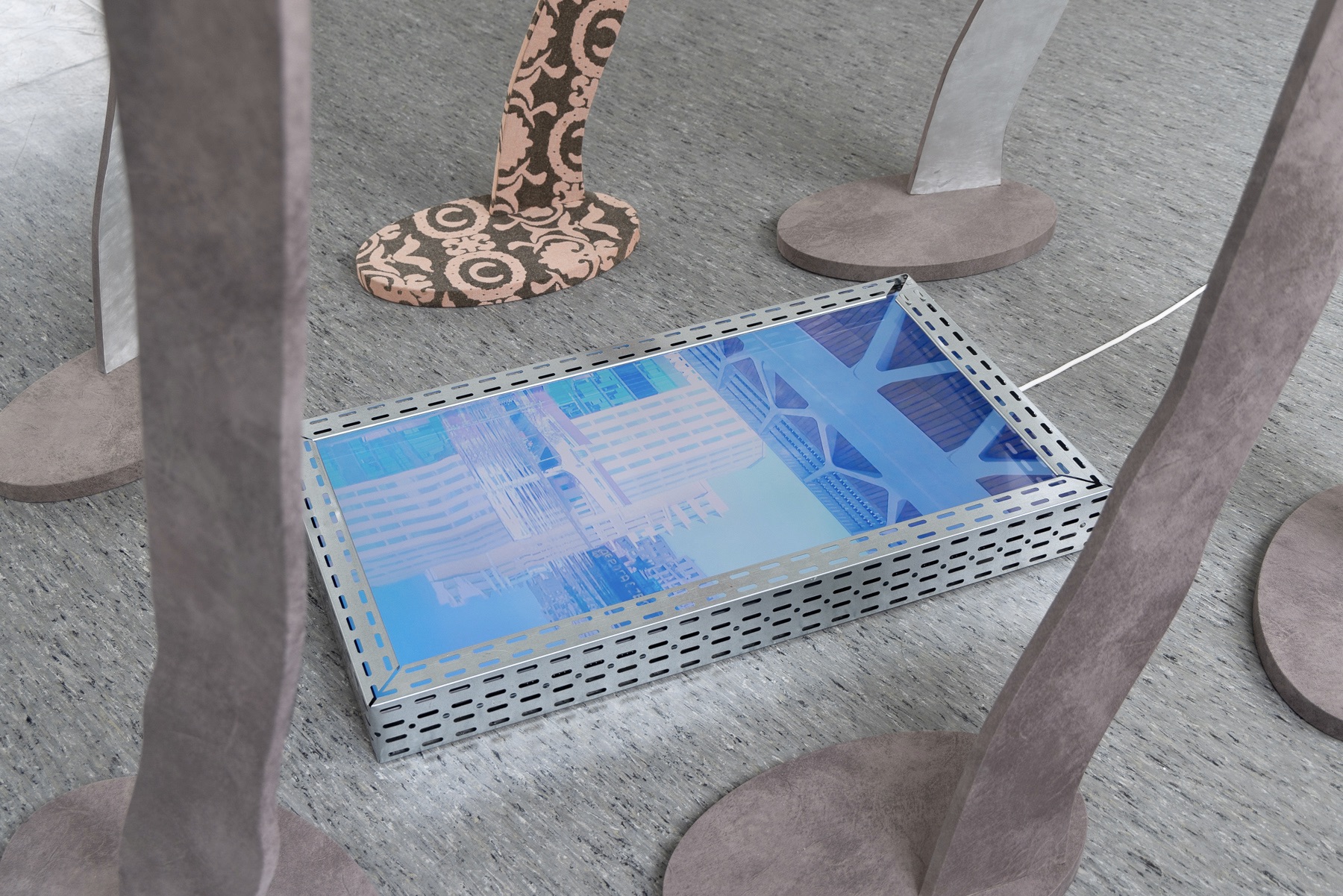
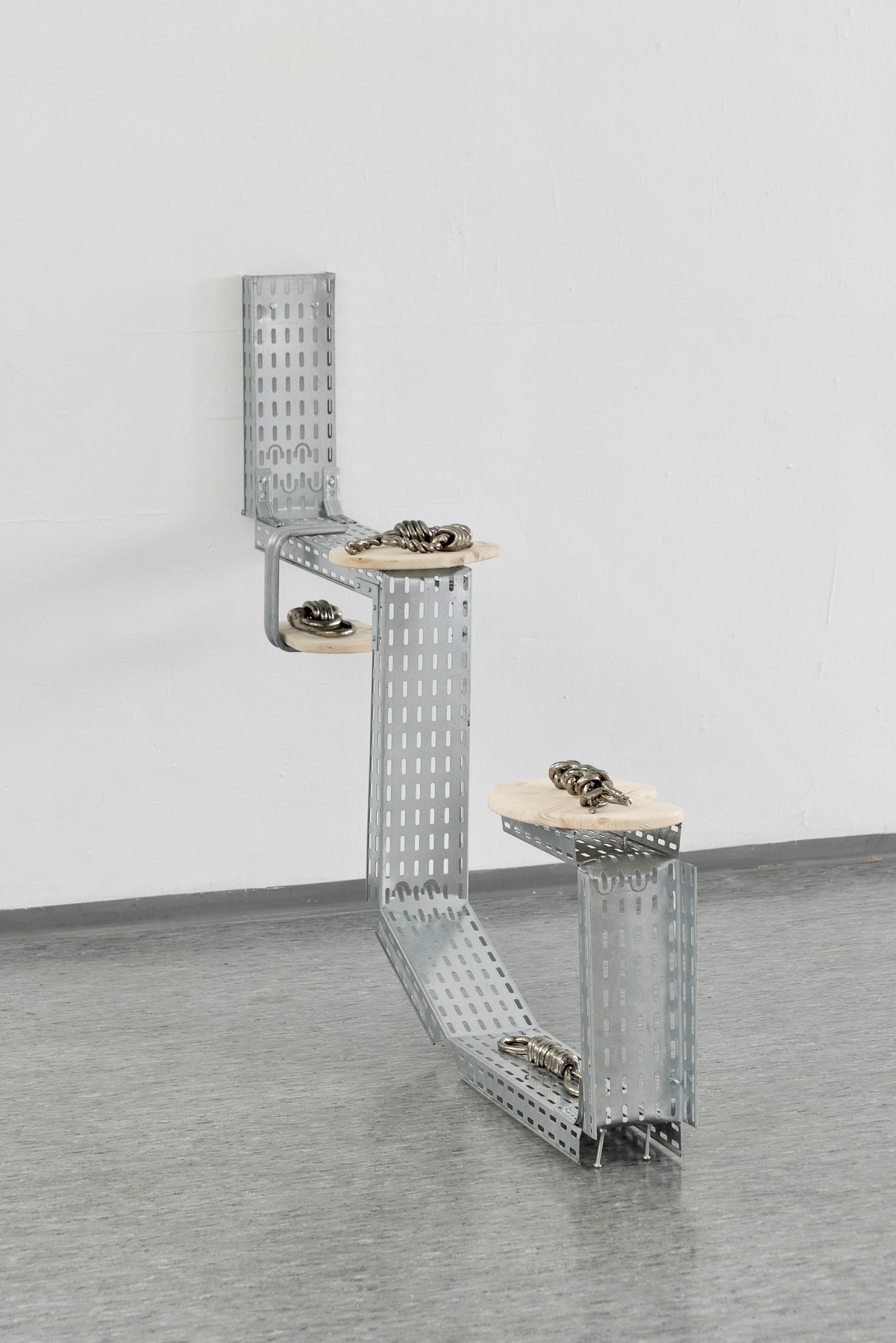
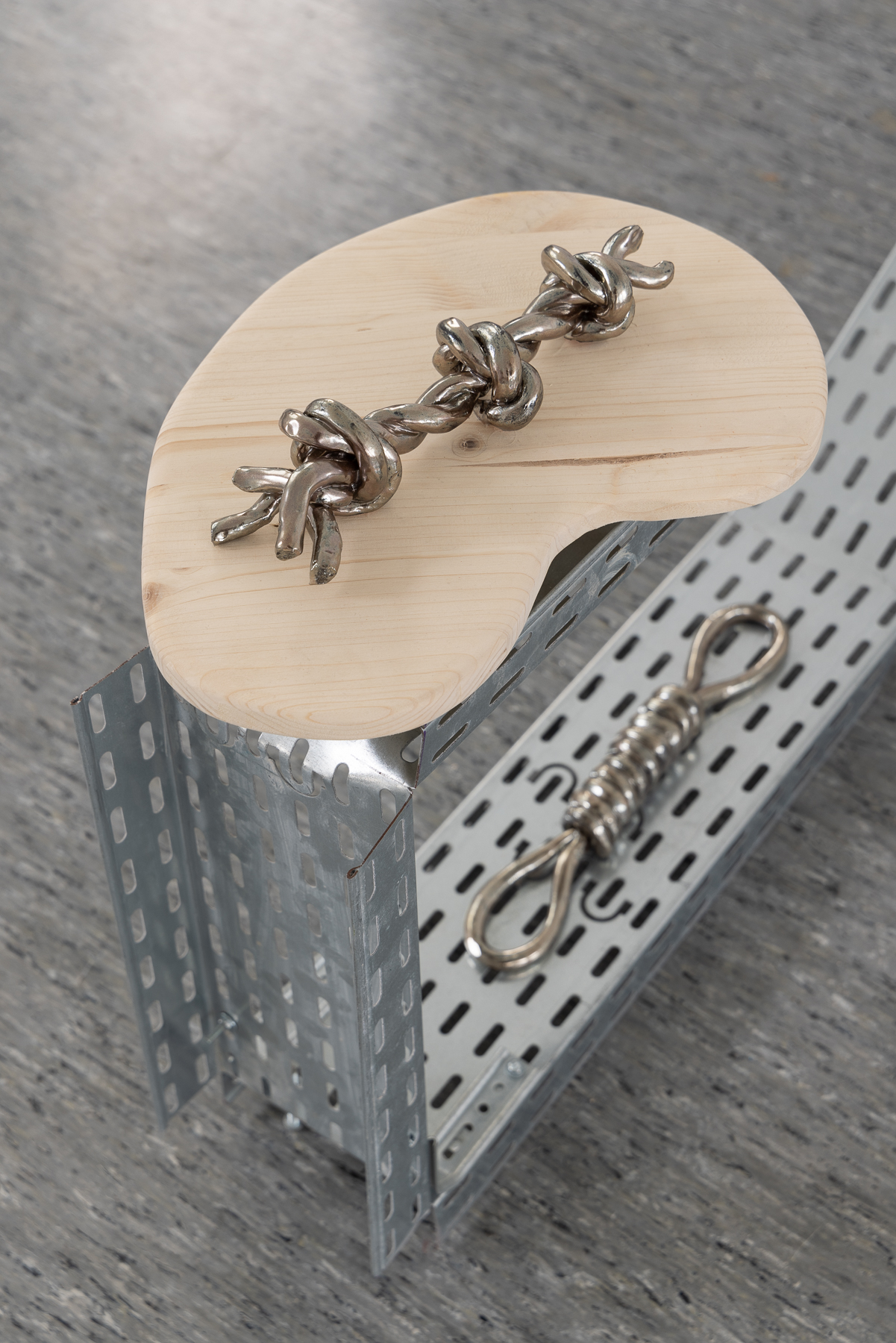
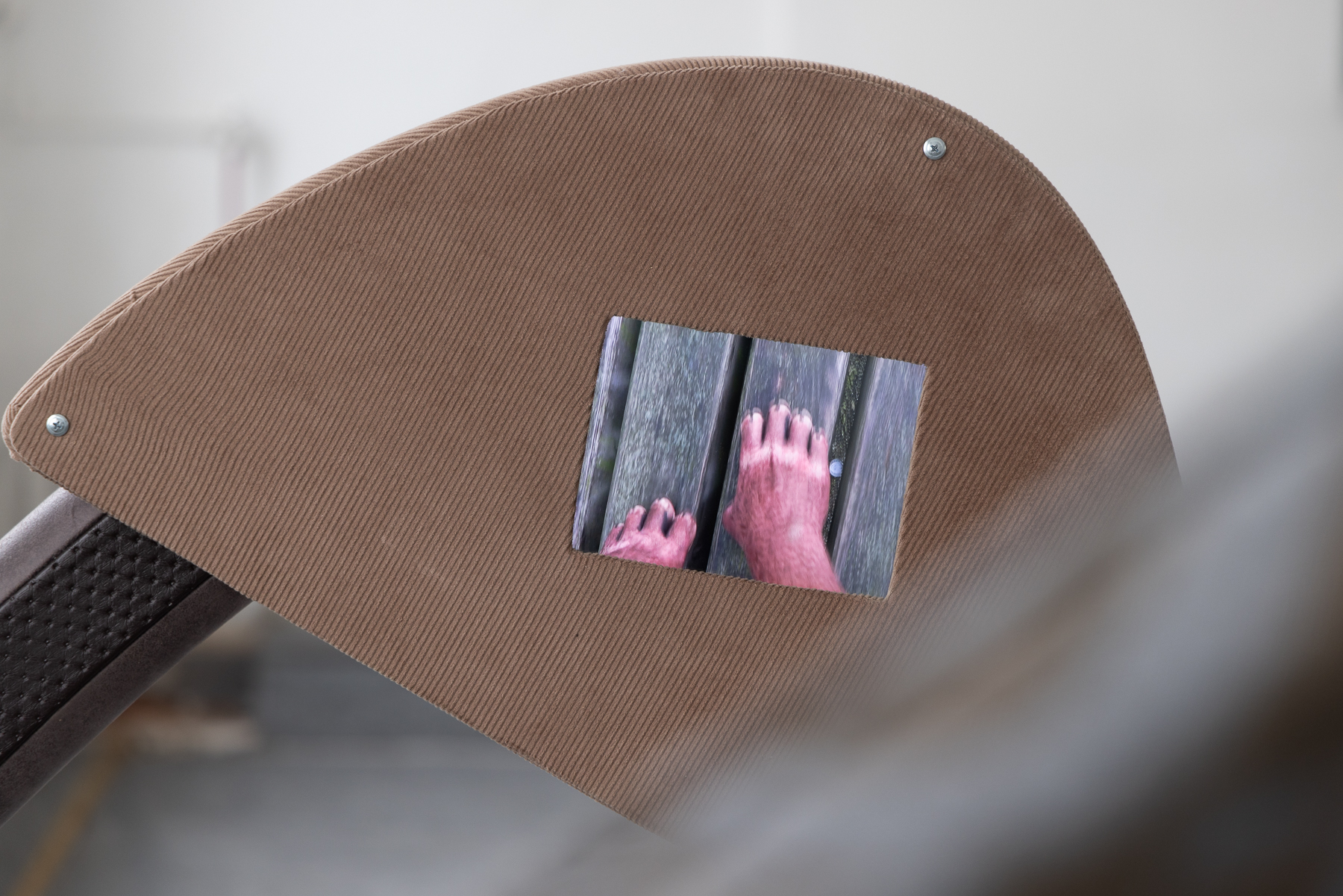
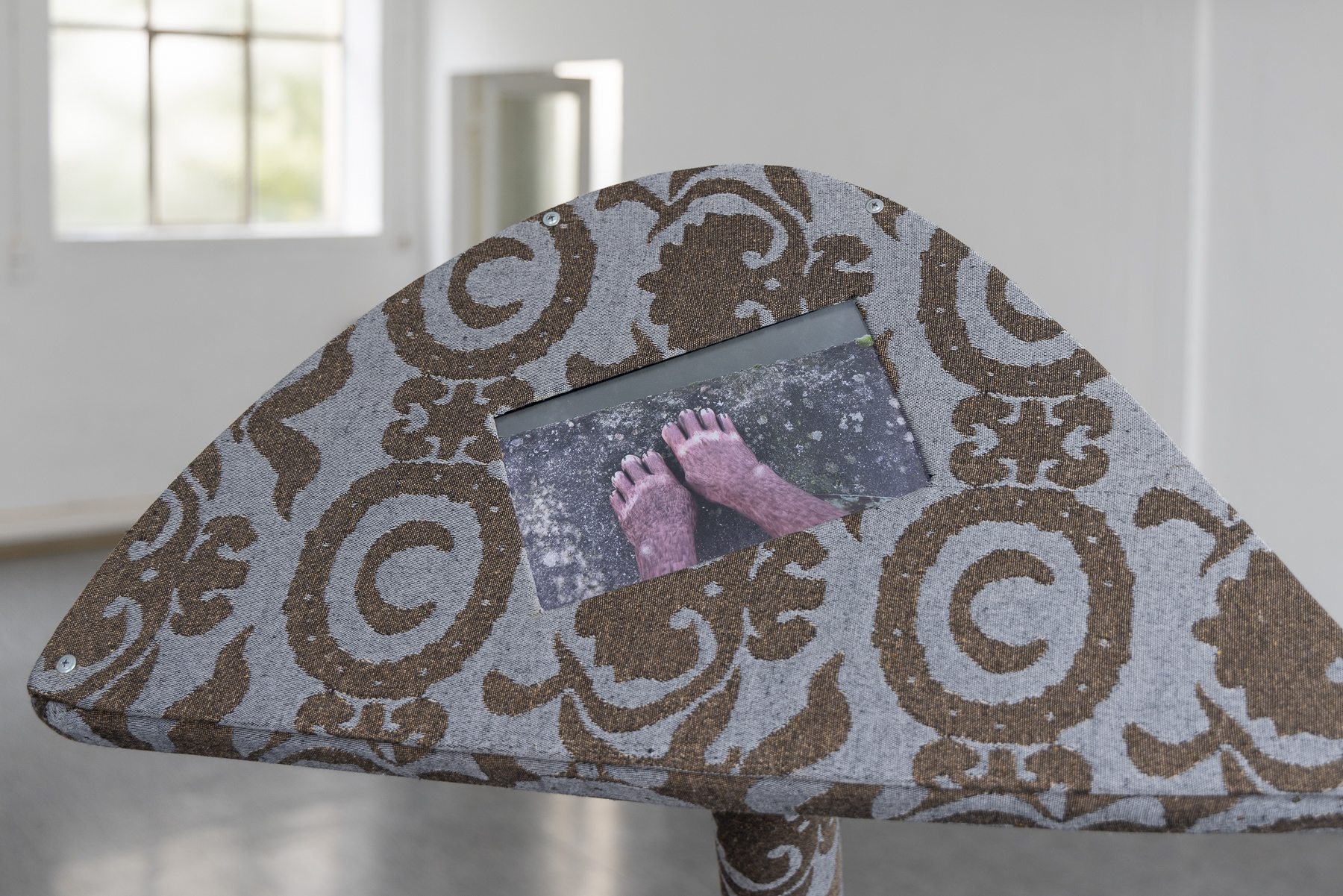
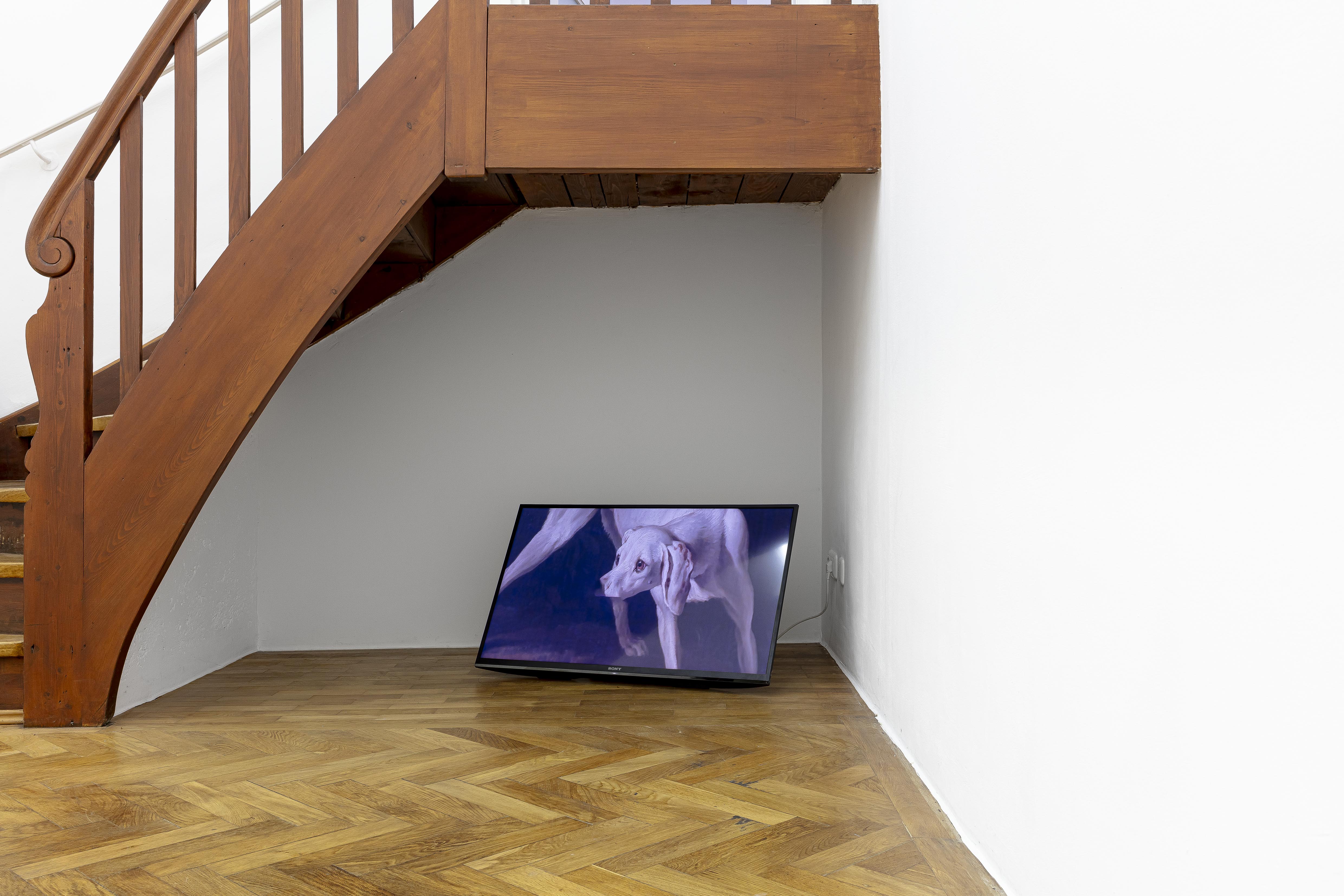
These stories of animals adapting to urban environments lay at the heart of Sophia Mainka’s video and sculpture installation, “Notes on Roommates (a dog, a parrot, a whale and a canal)” produced and first shown during her residency at Fondation Fiminco in Paris. Amid the organic playful forms of the metal sculptures there are three videos, all filmed from the animal perspective. In the first two, Mainka paints her arms and hands to resemble a dog’s paws, and we see these on screen as the fictional dog walks, stops and occasionally runs around the cobblestones and concrete pavements, once even jumping from a wooden bench. In the third, she takes on the perspective of the whale, the camera capturing what the whale would have seen, providing it swam further, into the city canals. The image rises and dips to the rhythm of the whale’s breathing. Surrounding us are the sounds of birds singing, except this too is staged: these are not parrots, but a toy, a bird whistle device.
Her work then, could be described as ethological in spirit. Sophia Mainka does not imitate animals, but rather behaves like them. She scratches, she sniffs, she swims, she trills and peeps. She acts the way an animal would act, if she were a animal in this situation and in this sense, we can think of her work in terms of what the French philosopher Gilles Deleuze would call becoming.
For Deleuze and Guattari, the process of becoming-animal is best described by Vladimir Slepian in his short text, “Fils de Chien.” Written in the first person, Slepian confesses how, despite being a man, his hunger leads him to behave like a dog, putting shoes on his hands and tying them using his mouth. It is a reversal of the evolutionary process described by anthropologist André Leroi-Gourhan, in which humans, through their adoption of an upright posture, free their mouths from the task of grasping and develop speech. Slepian recomposes himself, so that his mouth instead of speaking, grasps like a dog’s. And it is irrelevant how this dog looks like, whether this is the short snout of a bulldog or longer nose of a dachshund.
Similarly, Mainka makes us rethink our relation to nature, which is redrawn along affective lines as a participatory process. Animals are not considered as distinct molar entities, standing alongside the human. All entities are defined by their capacity to act, which changes depending on how they affect and how they are affected by others. There is a sensing of utopia in the environs of the Canal Saint-Martin that Mainka would walk along so happily – a secluded, sheltered place of inter-species co-existence. Or rather, it is a place where different populations, human, mammal and bird, continually compose and re-compose together.
Im Sommer 2022 verirrte sich ein Belugawal in die Seine und begann, in Richtung Paris zu schwimmen. Er geriet in eine Schleuse, fraß nicht mehr und wurde daraufhin eingeschläfert. Seit wann genau Papageien sich im Pariser Luftraum angesiedelt haben, ist unklar, aber sie werden seit den 1970ern in der französischen Hauptstadt beobachtet. Heute kann man sie in den meisten öffentlichen Parks der Stadt entdecken, vom Bois de Boulogne im Westen bis zum Bois de Vincennes im Osten. Und Hunde – nun ja, Hunde streifen seit jeher durch die Pariser Straßen, ob Terrier, Dackel, Spaniel und natürlich die französische Bulldogge.
Diese Erzählungen von Tieren, welche sich an urbane Lebensräume anpassen, stehen im Zentrum von Sophia Mainkas Installation “Notes on Roommates (a dog, a parrot, a whale and a canal)“ aus Videos und Skulpturen, die während ihres Residenzaufenthalts in der Fondation Fiminco in Paris produziert und dort auch zum ersten Mal gezeigt wurde. In die organischen und spielerischen Formen der Metallskulpturen sind drei Videos integriert, alle aufgenommen aus der Tierperspektive. Im ersten und zweiten Video sind Mainkas Arme und Hände wie Hundepfoten bemalt. Wir nehmen den Blickwinkel jenes fiktiven Hundes ein, laufen mit ihm über Kopfsteinpflaster und Bürgersteige, halten plötzlich an, rennen hin und her und springen einmal sogar von einer Holzbank. Im dritten Video nimmt Mainka die Perspektive des Wals ein, wobei die Kamera das wiedergibt, was jener wohl gesehen hätte, wenn er weiter in die Stadt hinein geschwommen wäre. Das Bild bewegt sich im Rhythmus der Atmung des Wals. Um uns herum erklingt Vogelgezwitscher, aber auch das ist eine Inszenierung: Es sind keine Papageien, sondern ein Spielzeug, eine Vogelpfeife.
Man könnte Sophia Mainkas Arbeit durchaus als ethologisch bezeichnen. Die Künstlerin imitiert keine Tiere, sondern verhält sich wie sie. Sie kratzt, schnüffelt, schwimmt, trällert und piepst. Sie verhält sich so, wie ein Tier sich verhalten würde, wenn sie ein Tier in dieser Situation wäre, und wir können ihre Arbeit im Sinne dessen betrachten, was der französische Philosoph Gilles Deleuze als Werden bezeichnen würde. Am besten wird der Prozess der Tierwerdung für Deleuze und Guattari von Vladimir Slepian in seinem kurzen Text “Fils de Chien“ beschrieben. In der ersten Person verfasst, bekennt Slepian, dass er sich, obwohl er ein Mann sei, aus Hunger wie ein Hund benehme, indem er sich Schuhe an die Hände binde und sie mit dem Maul zubinde. Dies ist eine Umkehrung des vom Anthropologen André Leroi-Gourhan beschriebenen evolutionären Prozesses, bei dem der Mensch durch die Entwicklung einer aufrechten Körperhaltung seinen Mund von der Aufgabe des Greifens befreit und Sprache entwickelt. Slepian setzt sich neu zusammen, so dass sein Mund nicht mehr spricht, sondern wie der eines Hundes zupackt. Dabei ist es unerheblich, wie dieser Hund aussieht, ob er die kurze Schnauze einer Bulldogge oder die längere Nase eines Dackels hat.
In ähnlicher Weise regt Mainka uns dazu an, unsere Beziehung zur Natur zu überdenken, wobei dieses Verhältnis entlang affektiver Linien zu einem partizipatorischen Prozess umgestaltet wird. Tiere werden nicht als getrennte molare Einheiten neben dem Menschen betrachtet, sondern alle Lebewesen werden durch ihre Handlungsfähigkeit definiert, die sich verändert, je nachdem, wie sie auf andere einwirken und wie sie von anderen beeinflusst werden. In der Umgebung des Canal Saint-Martin, an dem Mainka so gerne spazieren geht, ist ein Hauch von Utopie zu spüren – ein beschützter, ruhiger Ort, an dem verschiedene Arten koexistieren. Oder genauer gesagt: Es ist ein Ort, an dem sich verschiedene Spezien, ob Menschen, Säugetiere oder Vögel, immer wieder neu zusammensetzen.
Lothringer 13 Studio, Lothringer Str. 13, 81667 München
Sophia Mainka, Chien et canal, 2024 video still (3.44min, fullHD, without sound, loop)
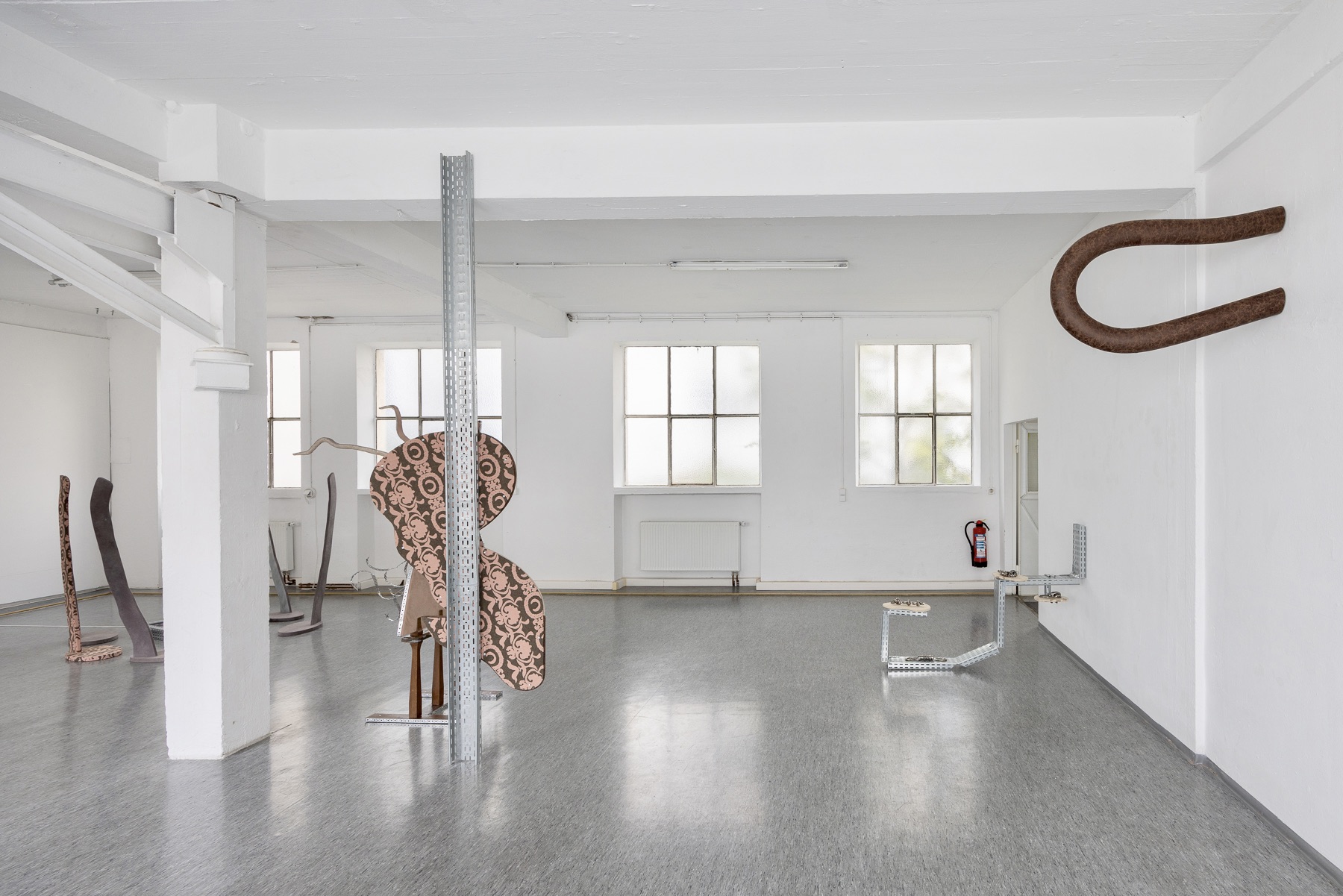
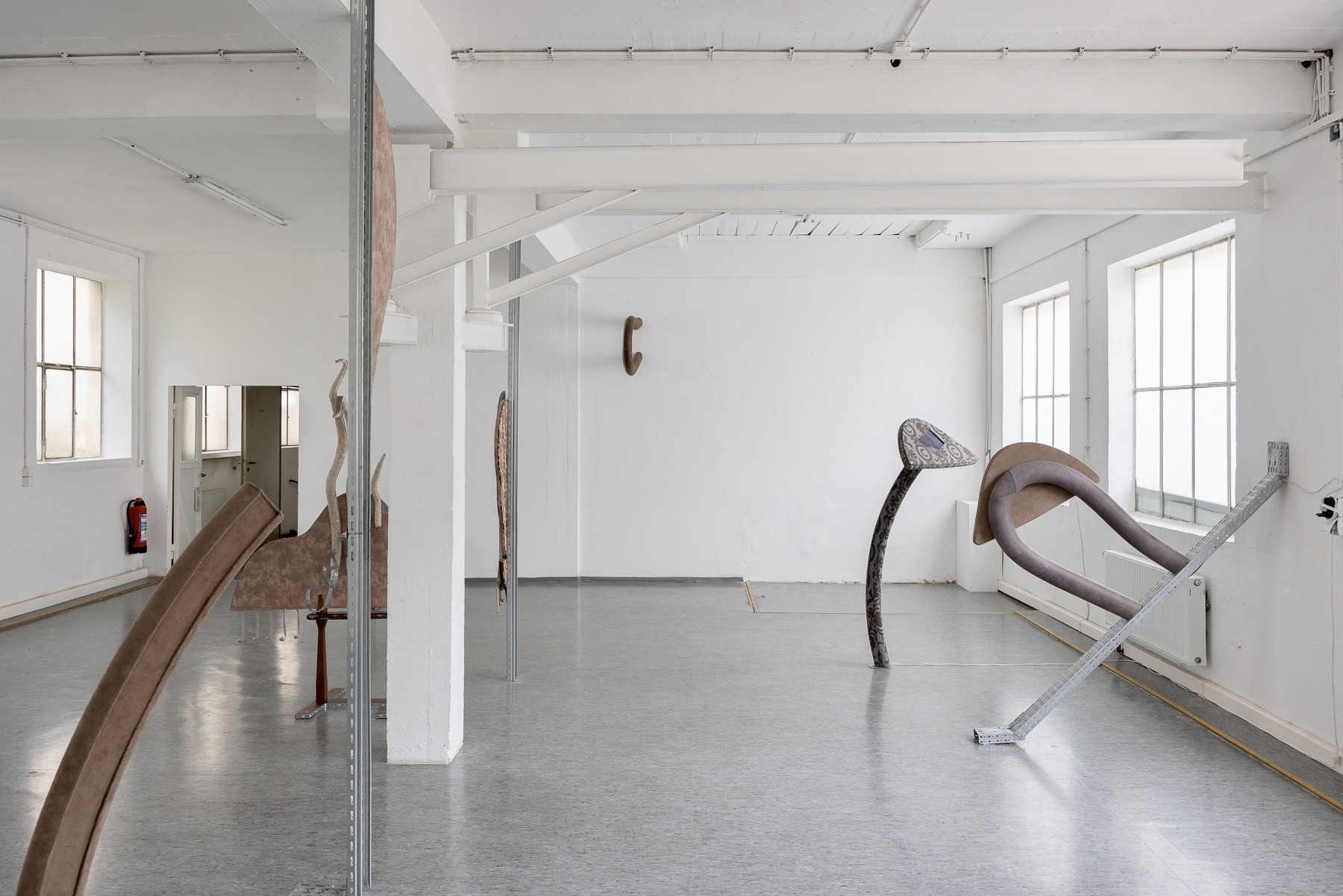
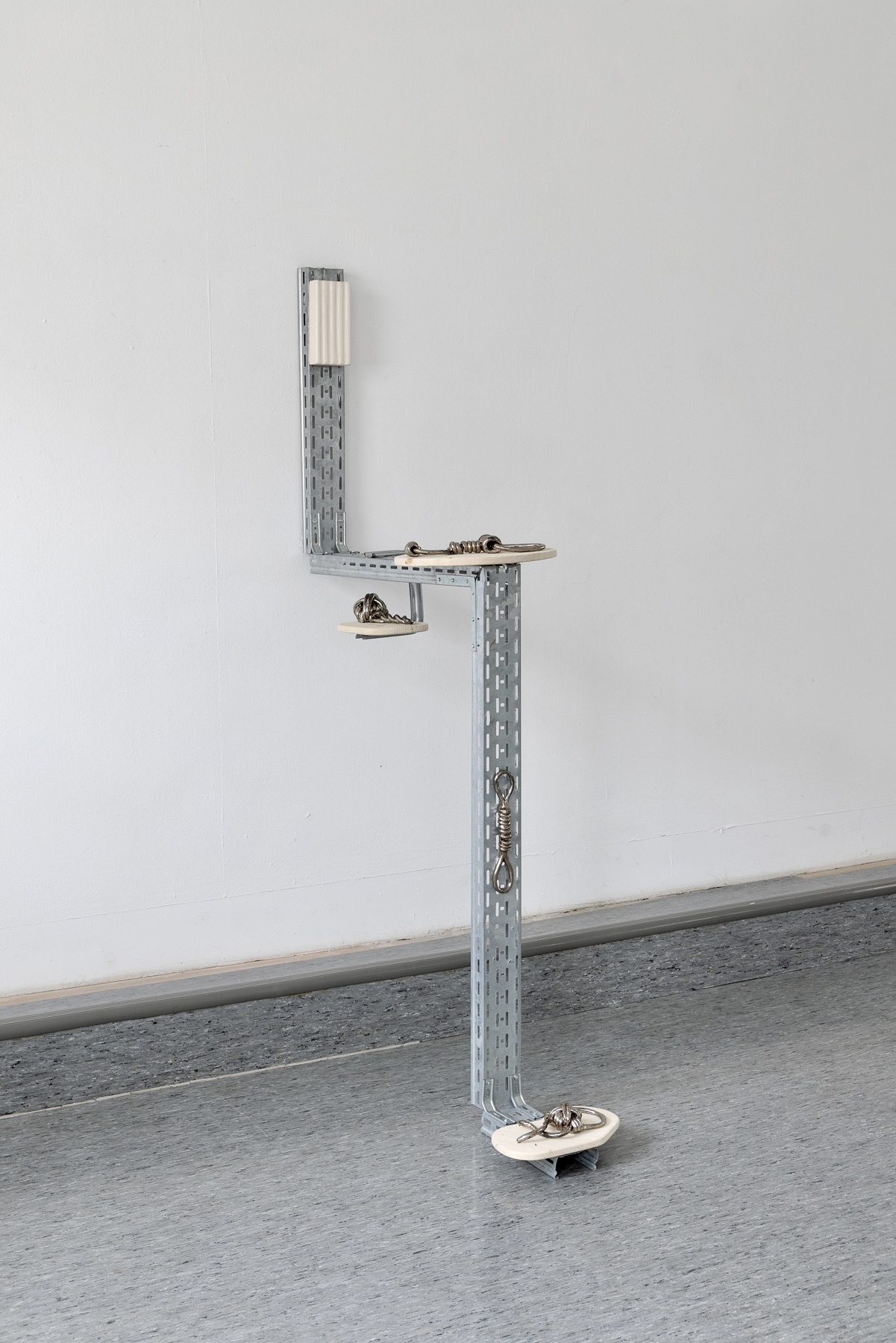
We participate in nature and nature participates in us: in her art practice, Sophia Mainka has always been open to strange encounters with animals, plants and minerals. The work created during her stay at the Fondation Fiminco in Paris deals with the coexistence of different species within an urban space. Parrots fly across the city, a whale swims up the Seine and dogs walk on paved streets. Mainka responds ethologically, allowing the animal encounter to affect the way she acts. “Notes on Roommates” is a series of video sculptures Mainka first presented at the residency, restaged at GiG Munich. To produce her fictitious gathering of animals, she builds a room for them: industrial material is bent into organic shapes and upholstered with fabrics featuring botanical patterns. Here we see her become dog, her painted fists becoming paws; we see her as the whale, in the murky river water, rising up to breathe.
Wir sind Teil der Natur und die Natur ist Teil von uns: Sophia Mainka öffnet sich in ihrer künstlerischen Praxis für ungewöhnliche Begegnungen mit Tieren, Pflanzen und Mineralien. Während ihres Aufenthalts in der Fondation Fiminco in Paris entstanden Werke, die das Miteinander verschiedener Arten im urbanen Raum thematisieren: Papageien fliegen durch die Stadt, ein Wal schwimmt die Seine hinauf, Hunde laufen auf gepflasterten Straßen. Mainka reagiert ethologisch, lässt zu, dass diese Begegnungen ihr Handeln beeinflussen. „Notes on Roommates“ ist eine Installation mit Videoskulpturen, die sie während ihrer Residency präsentierte und nun im GiG Munich neu inszeniert. Um die Zusammenkunft der Tiere darzustellen, baut sie einen Raum für sie: Industrielles Material wird zu organischen Formen gebogen und mit botanisch gemusterten Stoffen gepolstert. Mainka verwandelt sich selbst in einen Hund, ihre Fäuste werden zu Pfoten; wir sehen sie als Wal, der im trüben Wasser auftaucht, um zu atmen.
Kindly invited by Sperling Munich, Regerplatz 9, 81541 München
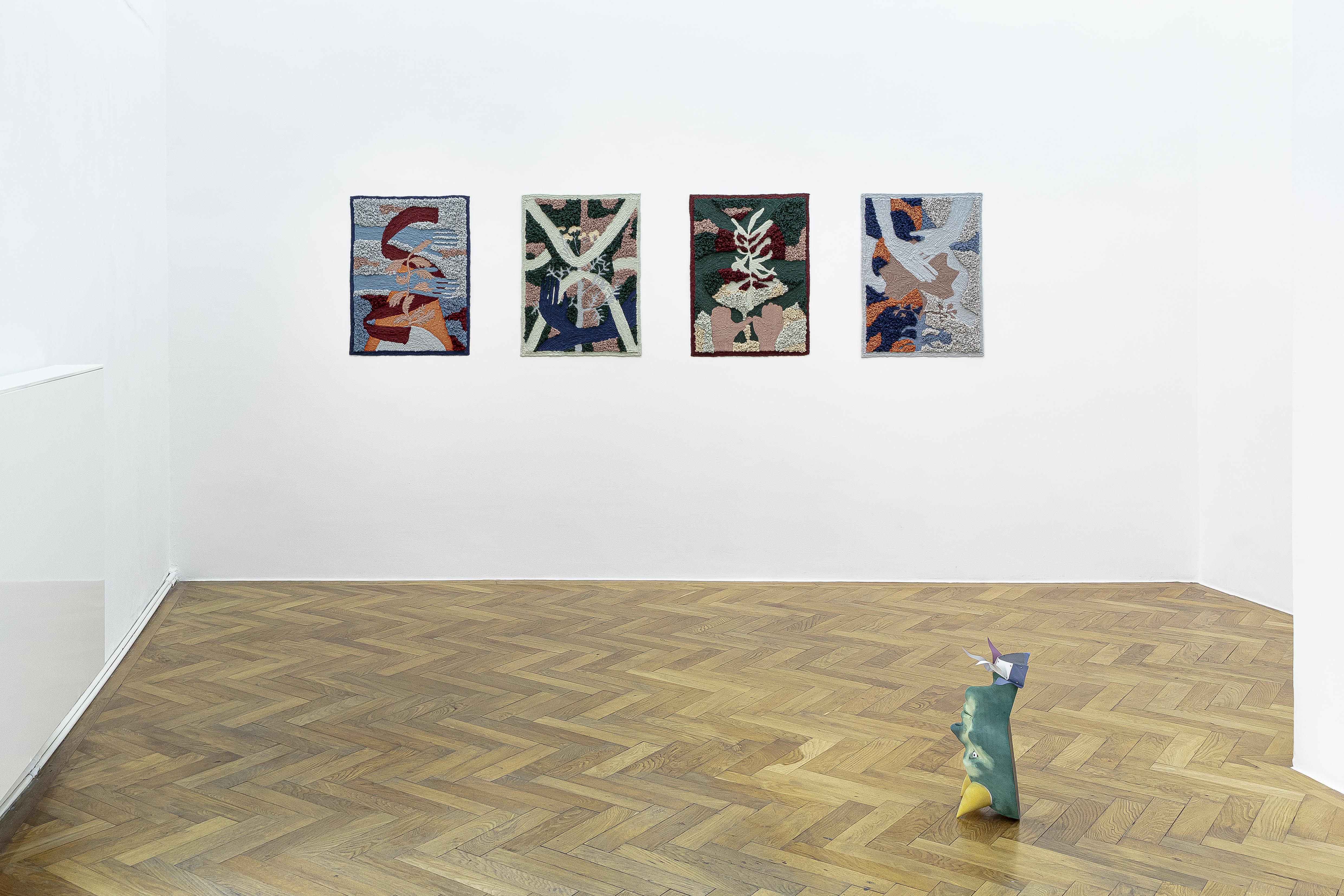
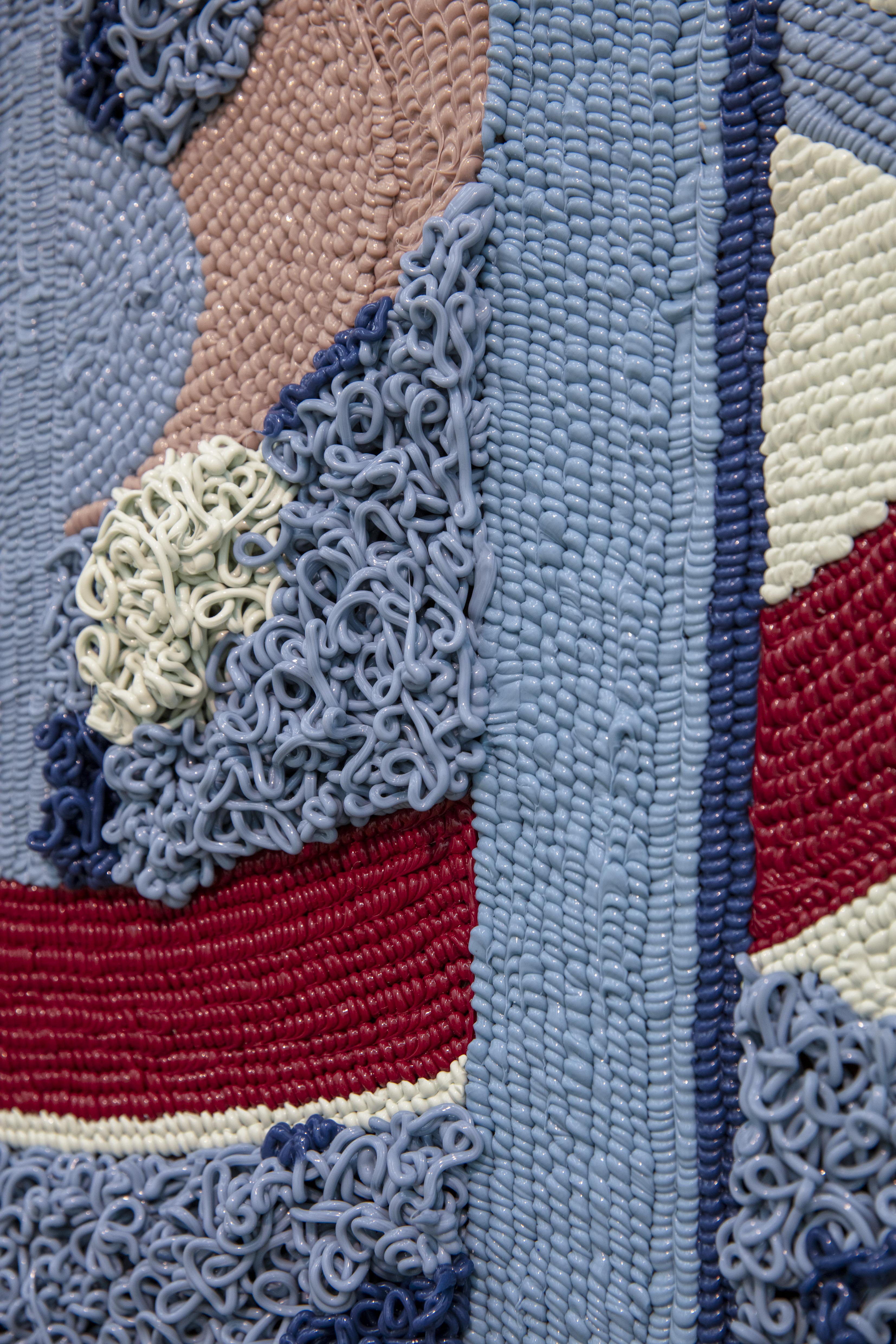
Throw of the dice, 2024, installation view. Photo: Sebastian Kissel, courtesy Sperling, Munich.Throw of the dice, 2024, installation view. Photo: Sebastian Kissel, courtesy Sperling, Munich.Throw of the dice, 2024, installation view. Photo: Sebastian Kissel, courtesy Sperling, Munich.Sophia Mainka, Oracle des Plantes series, 2024, silicone on cotton, 75 x 57 x 1 cm each. Photo: Sebastian Kissel, courtesy Sperling, Munich.Sophia Mainka, Tarot (Wheel of Fortune), 2924, silicone on cotton, 190 x 121 x 1 cm. Photo: Sebastian Kissel, courtesy Sperling, Munich.Sophia Mainka, Tarot (Wheel of Fortune), 2924, silicone on cotton, 190 x 121 x 1 cm (detail). Photo: Sebastian Kissel, courtesy Sperling, Munich.Lukas Hoffmann, Pan, MDF, paper, wood, spray-paint, 41 x 22 x 19 cm. Photo: Sebastian Kissel, courtesy Sperling, Munich.Throw off the dice, 2024, installation view. Photo: Sebastian Kissel, courtesy Sperling, Munich.Lukas Hoffmann, Schloss, 2024, paper, wood, screws, spray-paint, 158 x 102 x 75 cm. Photo: Sebastian Kissel, courtesy Sperling, Munich.Lukas Hoffmann, Schloss, 2024, paper, wood, screws, spray-paint, 158 x 102 x 75 cm. Photo: Sebastian Kissel, courtesy Sperling, Munich.Lukas Hoffmann, Schloss, 2024, paper, wood, screws, spray-paint, 158 x 102 x 75 cm (detail). Photo: Sebastian Kissel, courtesy Sperling, Munich.Lukas Hoffmann, Schloss, 2024, paper, wood, screws, spray-paint, 158 x 102 x 75 cm (detail). Photo: Sebastian Kissel, courtesy Sperling, Munich.Sophia Mainka, We used to be wild, 2024, video loop (full HD, stereo), 17 min & 17 sec. Photo: Sebastian Kissel, courtesy Sperling, Munich.
Throw of the dice – down a slippery slope
A standard game of dice is not a game of chance. At stake is probability, the odds of throwing this or that number, easily calculable. This is why we often lose, as the fable famously forewarns.[1] The young man inherits an estate and quickly gambles it away. In one sweep an entire forest is laid low. Is bad luck to blame? No, replies Fortune to an angry Pan. Just the foolishness of man.
A game of chance takes place on a far more slippery slope, like the round of croquet played in Alice in Wonderland, a game of cards of sorts.[2] Flamingos are mallets and a hedgehog is a ball. Whenever Alice wants to hit the hedgehog with the flamingo’s head, the bird turns floppy and spins round to look at her so comically that she laughs. And when she finally gets the flamingo’s head down, the hedgehog crawls away. In this game, cards move away from us and the players play all at once, quarrelling and fighting while the queen screams, “Off with their heads! Off with their heads!” For in a real game of chance, anything can happen. This would be the challenge: throwing the dice without knowing the rules of the game. To continue throwing the dice while accepting that each time the rules of the game change.
This is Nietzsche’s divine game, played across two tables, the earth and the sky.[3] Each time the dice is thrown the earth trembles, because the dice returns to us as divine. At that moment when the dice hover briefly in the air, they belong to the gods and all is possible. Our task is to affirm the entirety of possibility, any fate the gods prepared for us, cooking all of chance in one pot.[4] In this forest, we must wander bewildered and wild.[5]
In the exhibition, Sophia Mainka shows a series of wall mounted works made from silicone paste. Heavy and solid, yet curiously slippery, they are based on a Tarot deck of cards. It is peculiarly appropriate that the largest is the wheel of fortune, usually interpreted as standing for change or becoming. Fortune can be good or bad depending on the game, the question asked of the cards, open to interpretation. In Tarot, one card can mean many things and then change meaning at different times. In contrast, destiny is the thread woven through the image and cut by the three mythological sisters. The turn of the card is always fateful. Whatever the outcome of the roll of dice, this outcome is necessarily so: sky back to earth, slide and snip.
Perhaps then, we wander not quite so bewildered in this forest, as we necessarily follow our fate. But we wander on a surface without ground or depth, because free of cause. Everything in Mainka’s work takes place on the surface, like the hybrid creature scuttering around the ornate interiors of the Musée de la Chasse et de la Nature in her video. It imitates not animals, but depictions of them. The two talking dogs are not half-human but half-sculpture, their head and paws the same silicone as Mainka’s wall pieces. In Nazim Bakour’s music score, they do not bark, but whoop with the sound of the cuica drum.
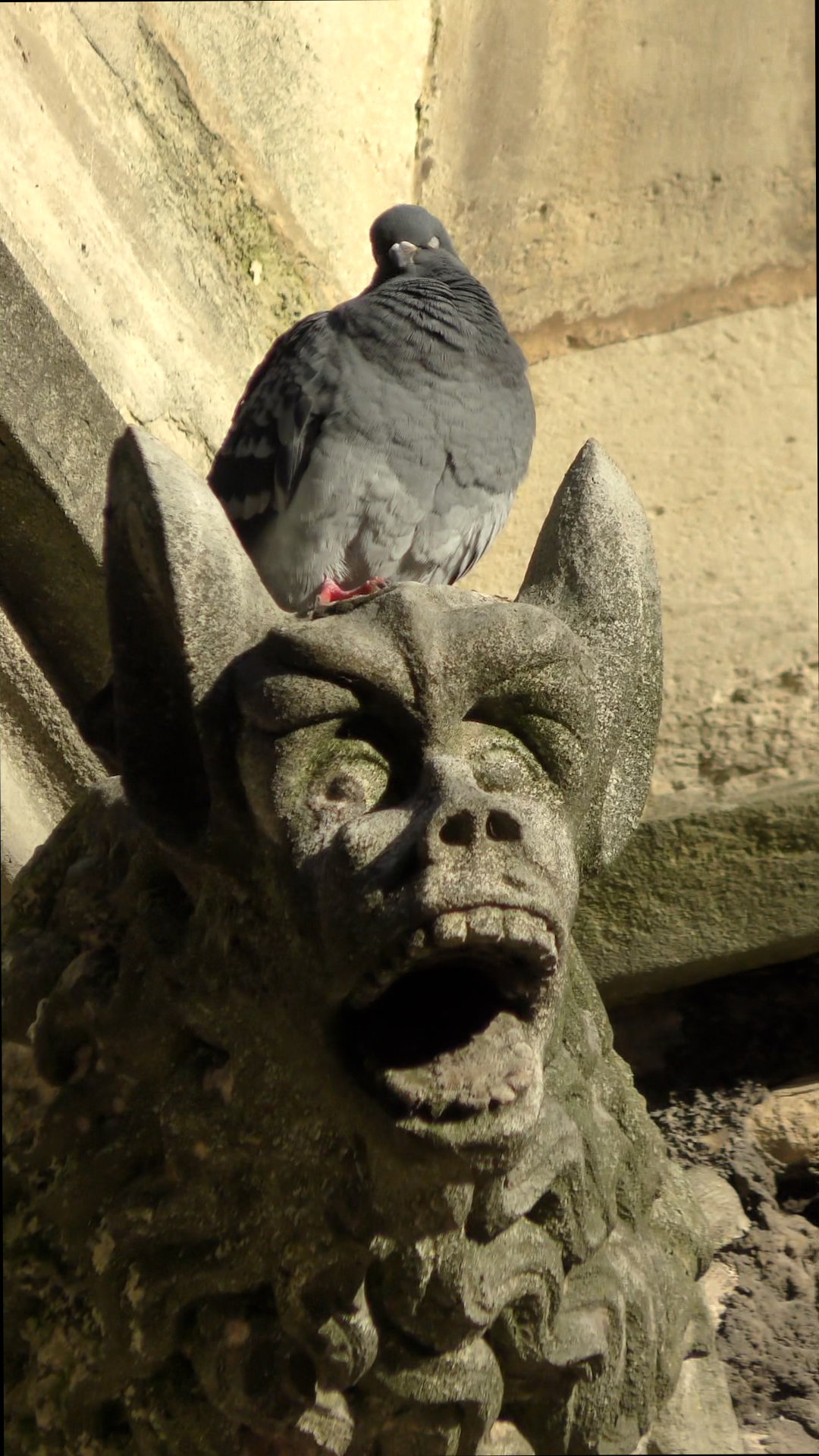
Lukas Hoffmann too stages a fictional world that has something of Lewis Carroll’s unsettling absurdity about it. There is a wooden castle with ears, eyes, a wide open mouth and a nose, and it is both too big and too small. Drink me, eat this, nibble both sides of the mushroom circle. As Alice grows bigger, her initial self also becomes smaller, pulled in both directions at once. With components jutting out and sliding in, the body both outside and inside, the castle too grows small as it becomes big. “Becoming without measure, a veritable becoming-mad.”[6] Observing this madness is the upside down head of Pan, the mischievous god of the wild. A mascaron fallen from its pediment. Run away in panic, it urges us – run away in chaos, it smiles.
[3] Friedrich Nietzsche, Thus Spoke Zarathustra, Book III, “Before Sunrise”, trans. Kaufmann, p.166cd and “The Seven Seals” 3, p. 258. See also Deleuze’s reading in Gilles Deleuze, Nietzsche and Philosophy, trans. Hugh Tomlinson, (London and New York: Continuum, 2002) p. 25–7.
[4] Zarathustra, Book III “The Bedwarfing Virtue” 3, p. 189.
Hey, make sure you do not miss Tim Barker talking with me tomorrow, Sunday the 7th at 3 pm at Lothringer 13 Lokal! Really interesting way of looking at now technology affects our experiences of time! Part of the current “From Animal to Mineral Exhibition”.
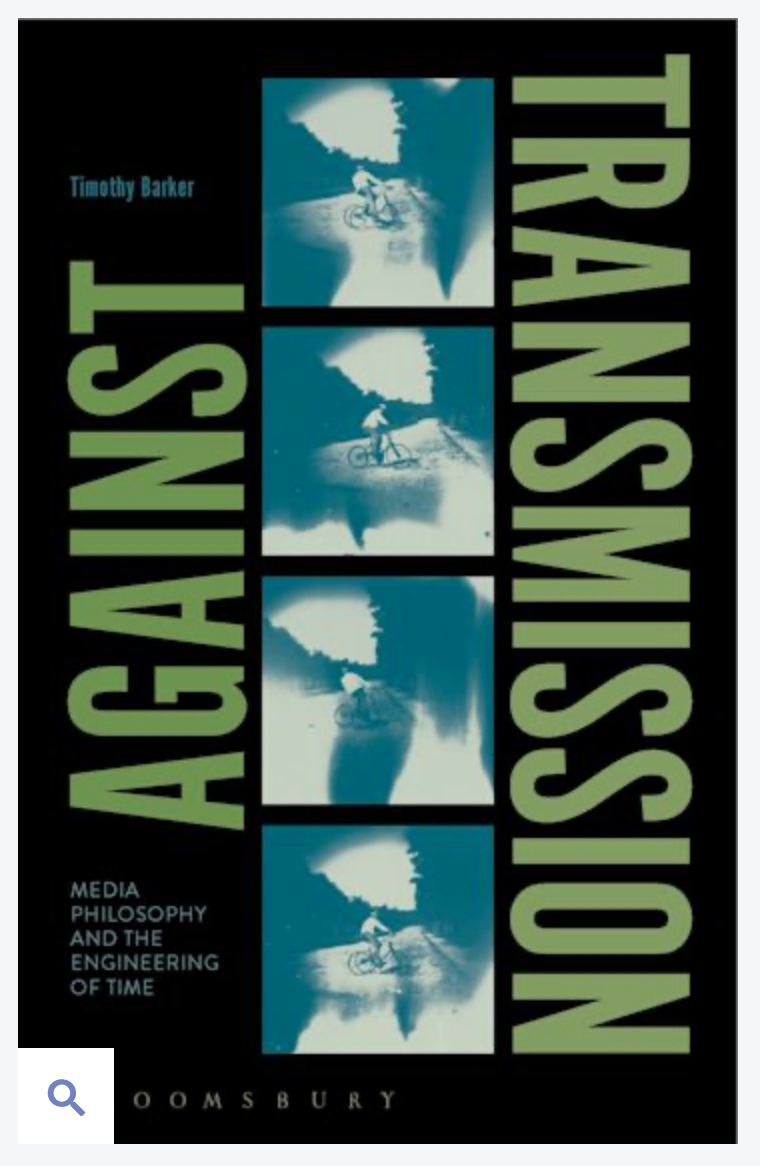
Tim Barker is Professor of Media Technology and Aesthetics at the School of Culture & Creative Arts, University of Glasgow. Tim’s research interests include digital technology and new media, aesthetics and the philosophy of time. He is the author of Time and the Digital: Connecting Technology, Aesthetics, and a Process Philosophy of Time (2012) and Against Transmission: Media Philosophy and the Engineering of Time (2018) and numerous articles including the most recent “Unplayable games: time and digital culture” Kunsttexte (2023); “Michel Serres and the philosophy of technology” Theory, Culture and Society (2023), “Michel Serres’ messengers” Media Theory (2021) and “Between emergence and emergencies: an introduction to the special issue ‘Media, Materiality, and Emergency’” MAST: The Journal of Media Art Study and Theory (2020).
One of the concepts of the exhibition From Animal to Mineral is the radical openness of Deleuze and Guattari’s becoming “tout le mode,” like everybody, like the whole world. In his short talk Tim Barker will introduce the concept of “totipotence” as discussed in the philosophy of Michel Serres, biologically defining the ability of a cell to give rise to unlike cells and so to develop a new organism. Serres uses this idea to discuss technological and cultural developments in evolutionary terms.
Judith Adelmann, Rachel Fäth, Sophia Mainka, Hannah Mitterwallner, Jonathan Penca, Maria VMier
15.12. 2023 – 18.02.2024
Lothringer Halle, Lothringer Str. 13, 81667 München
“Animals” are wolves mainly, rats and the wasp. “Mineral” is everything imperceptible: elements, particles and molecules. To go from animal to mineral is to experience becoming, to step across a threshold and change.
I began my reading of A Thousand Plateaus, specifically the chapter “1730: Becoming-Intense, Becoming-Animal, Becoming- Imperceptible …” 1 during the corona pandemic, when environmental concerns were at the forefront of almost every media discussion. Defining humanity’s role in nature seemed like an important task and Deleuze and Guattari’s work was useful in addressing the too easy distinction between nature and culture. I liked how Deleuze and Guattari saw the dominance of our species over others as a philosophical problem of autonomy where Man as a thinking being is subject only to the laws of his own construction. For them, the capacity for conscious thought conferred upon Man a dignity denied to other creatures, making their voices unheard.
Whereas, in A Thousand Plateaus Deleuze and Guattari present nature as an endless variability, the “whole thousand-voiced multiple” of Difference and Repetition 2. Here, nature is a multi-voiced body, where the voices constituting this body resound in each other in a “clamor of Being.” In this din, my voice is one of many and many voices resonate in mine 3. For Deleuze and Guattari, to change the human collective relation, not just to animals, but to earth itself, would demand that we stop hearing just our own voice and become aware of the noise of others. This is the experience of becoming-animal, becoming-imperceptible. It is to shed Man’s mantle and learn how to listen, becoming the voice of many.
Since 2021 I have realised a series of exhibitions at various locations in responses to different aspects of this chapter of A Thousand Plateaus, whether to its ideas of nature, technology or memory. This exhibition at Lothringer 13 Halle confronts the idea of becoming, specifically in our relation to nature, more directly. In different ways all the artists participating in this exhibition share these concerns, many acutely aware of working in the era of the Anthropocene, where the human impact on the planet can no longer be denied.
To their cluster of voices I add my own, belonging to the writer. The texts I have written over the past few years in response to Deleuze and Guattari’s chapter on becoming are on display throughout the room. The texts resonate with the artwork, and the art inhabits the text. The exhibition is an experiment in the construction of a multi-voiced population, a pack of wolves, a people of rats.
Magdalena Wisniowska, November 2023
1) Deleuze, Gilles and Guattari, Félix, A Thousand Plateaus, trans. Brian Massumi, (Minneapolis, London: University of Minesota Press, 2005). 2) Deleuze, Gilles, Difference and Repetition, trans. Paul Patton (New York: Columbia University Press, 1994), 304. 3) Ibid.
Lothringer 13 Studio, Lothringer Str. 13, 81667 München
Susanne Kühn, Lady’s Slipper, 2023, 240 x 190 cm, acrylics on canvas Photo credit: Bernhard StraussSusanne Kühn, Lady’s Slipper, 2023, 240 x 190 cm, acrylics on canvas, installation viewSusanne Kühn, Lady’s Slipper, 2023, 240 x 190 cm, acrylics on canvas, installation viewSusanne Kühn, ROBOTA CeLLs, 2023, installation viewSusanne Kühn, ROBOTA I, 2018, acrylics on canvas, glazed bricks, 250 x 380 cm (two parts) Photo: Bernhard StraussSusanne Kühn, ROBOTA I, 2018, acrylics on canvas, glazed bricks, 250 x 380 cm (two parts) installation viewSusanne Kühn, ROBOTA CeLLs, 2023, installation viewSusanne Kühn, ROBOTA CeLLs, 2023, installation viewSusanne Kühn, AUGINELLA from the series Her name is Amygadala Vertigo, 2022, acrylics on canvas, glazed bricks, 250 x 200 cm Photo: Bernhard StraussSusanne Kühn, AUGINELLA from the series Her name is Amygadala Vertigo, 2022, acrylics on canvas, glazed bricks, 250 x 200 cm (detail)Susanne Kühn, ROBOTA CeLLS, 2023, installation view. Susanne Kühn, Auturio, 2023, acrylics on board, 50 x 40 cm and Nierchen, 2023, acrylics on board, 50 x 40 cmSusanne Kühn, Auturio, 2023, acrylics on board, 50 x 40 cm Photo: Bernhard StraussSusanne Kühn, Nierchen, 2023, acrylics on board, 50 x 40 cm Photo: Bernhard Strauss
It begins with the amoeba, like the one we drew at school: flower-like, dotted with vacuoles, a circular nucleus in the middle. An amoeba, despite not having a brain, a nervous system or indeed any kind of sensory cells, can react. It moves around the murky pond water that makes up its environment, finding food, avoiding predators, anticipating, reacting. It has no need for organs. Organs developed later, in the course of evolution, as a means fulfilling functions to a higher degree. An organism with a brain, can think better than an organism without one.
French philosopher Raymond Ruyer considers all organs to be technical artefacts, technologies developed by the organism as it evolved. By having a brain and a nervous system, we have access to technologies an amoeba doesn’t have and this makes us feel sophisticated. We can make complex decisions, solve problems and form concepts, leaving murky pond water behind.
Like in Susanne Kühn’s paintings, there is no line between the artificial and the nature. If the organ is a technical artefact, it does not differ from the other artefacts, those tools and machines that we surround ourselves with. The organ belongs to an internal proto-technicity, while the machine is the externalised projection of the organ. Each also has its own evolutionary trajectory, one internal, the other external, an exo-darwinism.
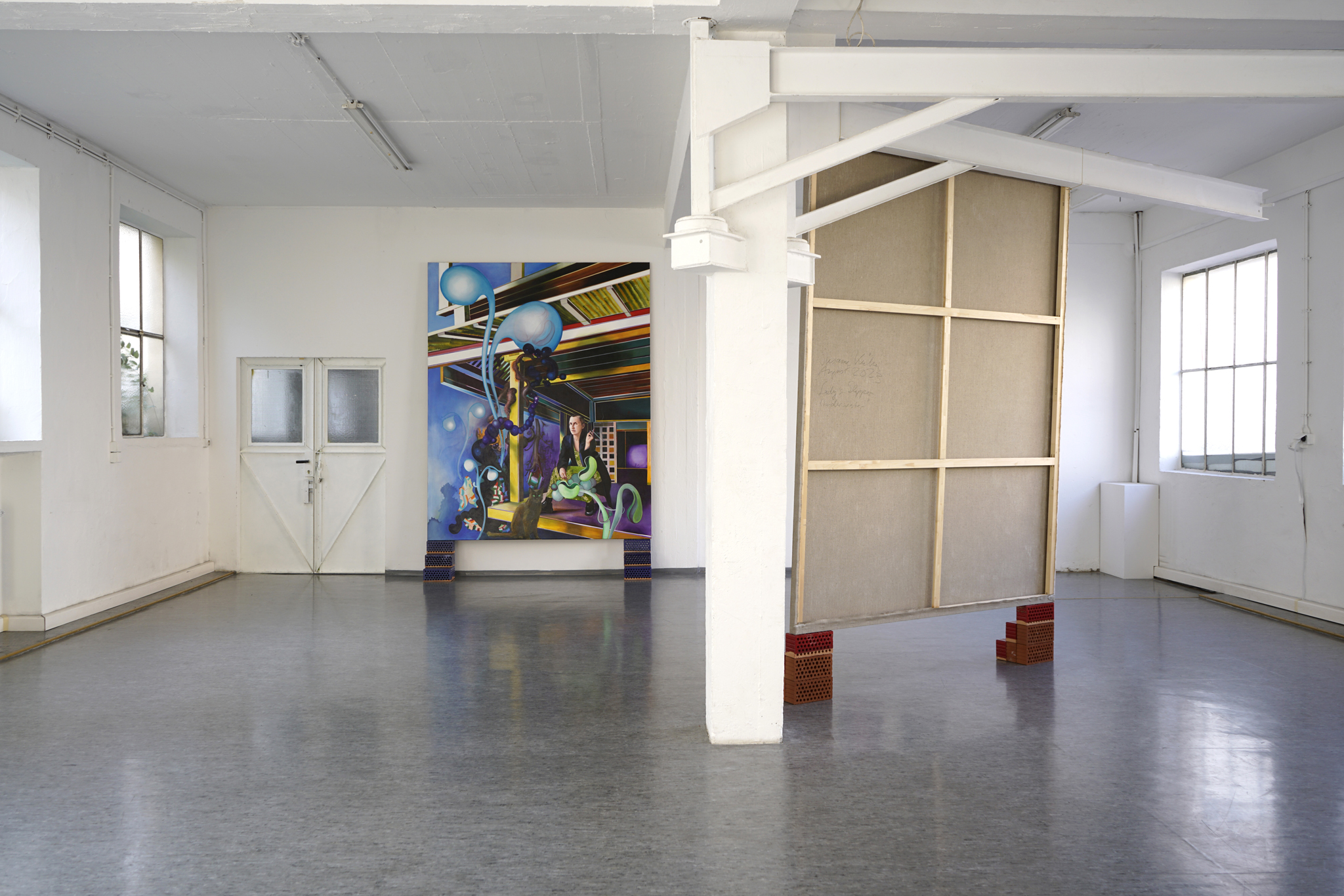
In the painting “Robota I” we see the artist in three different guises: as St. Barbara reading, as a young woman in East Germany working, and as a mother tending the fireplace. Three technologies are depicted here, all extensions of the body. There is the book, the pool of knowledge, acting as an extension of the brain. Tools and machines such as found in a factory are extensions of the human hand. Fire, to keep us warm and to heat up food, is the most primitive of technologies, an extension of our thermoregulation and digestive system. Working with these technologies makes up the life of the artist.
Similarly, the biological has a technological aspect in “Her name is Amygdala Vertigo.” The reference is to the amygdalae, two bean-shaped clusters of deep within the cerebrum of the brain, which we learn are responsible for memory, decision making and emotional response. Diagrammatically, they look like the EarPods which seem to sprout out of the picture frame, softly-curved and convex. They are surrounded by the sharp, multicoloured concave curves of the hand ax, one of the first man-made tools. The portrait is of an extended body, spread over various technologies depicted on the canvas.Foremost, Susanne Kühn is interested in those moments in which the forward pushing trajectory of evolution and technological development foams up in bubbles of effervescence. Her painting is not of lines which separate, marked by horizontal and vertical coordinates – the sharp perspective she often uses, stutters quickly in her work. Hers are lines without connecting points.
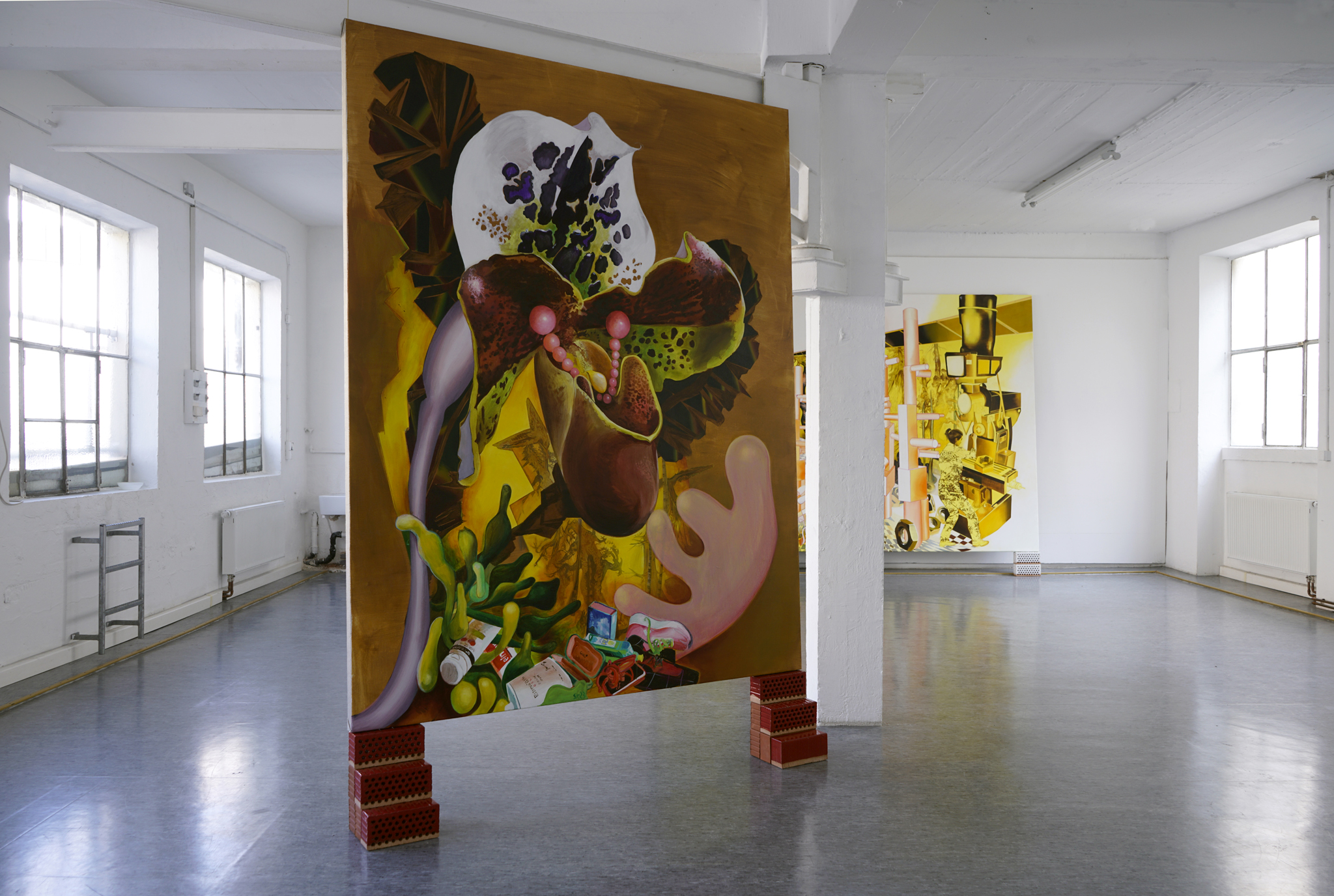
“Frauenschuh – Lady’s slipper” is a self-portrait, the mess of detritus standing in for the technologically extended body: we see a smartphone, medication for the menopause, a sneaker, toothpaste. The flower itself is a cultivated hybrid, its natural evolution determined by man. In this work, the extended body of man, is also a body outside of the dictates of evolution, a “deterritorialised” body no longer adapted to any particular environment. A “deterritorialised” hand is nothing more than a useless pink cartoon blob. It ends with the amoeba in the pond, the water now an acid yellow, surrounded by toxic corals and water plants.
Magdalena Wisniowska 2023
Es begann mit der Amöbe, wie wir sie in der Schule gezeichnet haben: blütenförmig, mit Vakuolen übersät, mit einem kreisförmigen Zellkern in der Mitte. Obwohl die Amöbe weder ein Gehirn, noch ein Nervensystem oder Sinneszellen hat, besitzt sie die Fähigkeit auf ihre Umgebung zu reagieren. Auf der Suche nach Nahrung bewegt sie sich im trüben Teichwasser, weicht Fressfeinden aus, antizipiert und reagiert. Dafür braucht sie keine Organe, denn erst im Laufe der Evolution entwickeln sich diese, um komplexere Funktionen erfüllen zu können. Ein Organismus mit einem Gehirn kann besser denken als ein Organismus ohne Gehirn.
Für den französischen Philosophen Raymond Ruyer sind alle Organe technische Artefakte; Technologien, die der Organismus mit der Zeit entwickelt hat. Im Gegensatz zur Amöbe haben wir durch unser menschliches Gehirn und unser Nervensystem Zugang zu diesen Technologien. Das gibt uns das Gefühl, hoch entwickelt zu sein. Wir sind in der Lage, komplexe Entscheidungen zu treffen, Probleme zu lösen und Konzepte zu entwickeln, und lassen dabei das trübe Teichwasser hinter uns.
In den Gemälden von Susanne Kühn gibt es keine Grenze zwischen dem Künstlichen und der Natur. Ist das Organ ein technisches Artefakt, unterscheidet es sich nicht von den anderen Artefakten; den Werkzeugen und Maschinen, mit denen wir uns umgeben. Das Organ gehört zu einer inneren Proto-Technizität, während die Maschine die externe Projektion des Organs ist. Beide haben zudem ihre eigene evolutionäre Entwicklung, die eine intern, die andere extern, ein Exo-Darwinismus.
Im Gemälde “Robota I” sehen wir die Künstlerin in drei verschiedenen Gestalten: als lesende Heilige Barbara, als junge Frau in Ostdeutschland bei der Arbeit und als Mutter, die das Feuer anfacht. Drei Technologien werden hier dargestellt, allesamt Erweiterungen des Körpers. Da ist das Buch: der Wissensspeicher, der als Erweiterung des Gehirns fungiert. Werkzeuge und Maschinen sind Erweiterungen der menschlichen Hand. Mit dem Feuermachen wärmen wir uns und bereiten Nahrung zu. Es ist die primitivste aller Techniken, sie ist eine Erweiterung unseres Thermoregulations- und Verdauungssystems. Die Arbeit mit diesen Technologien bildet das Schaffen der Künstlerin.
In ähnlicher Weise hat das Biologische einen technischen Aspekt in “Her name is Amygdala Vertigo”. Im menschlichen Gehirn besteht die Amygdala aus zwei tiefsitzenden mandelförmigen Zellstrukturen, die, wie wir lernen, für Gedächtnis, Entscheidungsfindung und emotionale Reaktionen zuständig sind. Schematisch gesehen gleichen sie den EarPods, die aus dem Gemälde herauszuwachsen scheinen, sanft gebogen und konvex. Sie sind umgeben von den scharfen, vielfarbig konkaven Kanten des Faustkeils, einem der ersten vom Menschen hergestellten Werkzeuge. Das Porträt, als „extended body“, beinhaltet die auf der Leinwand dargestellten Technologien.
Susanne Kühn interessiert sich vor allem für jene Momente, in denen das Fortschreiten der Evolution und der technologischen Entwicklung aufschäumen. Die klaren Linien ihrer Malerei entstammen keinem präzisen Koordinatensystem, vielmehr zerbricht das perspektivische Konstrukt des Bildes schnell. Ihren Linien fehlen die Verbindungspunkte.
“Frauenschuh” ist ein Selbstporträt, in dem die Ansammlung von nicht abbaubarem Müll für den technologisch erweiterten Körper steht: Wir sehen ein Smartphone, Medikamente für die Wechseljahre, einen Turnschuh, Zahnpasta. Die Blume selbst ist eine gezüchtete Hybride, deren natürliche Entwicklung vom Menschen bestimmt wurde. In diesem Gemälde ist der erweiterte Körper des Menschen auch ein Körper außerhalb des Diktats der Evolution, ein “deterritorialisierter” Körper, der nicht mehr an eine bestimmte Umgebung angepasst ist. Eine „deterritorialisierte“ Hand ist nichts weiter als ein nutzloser rosa Cartoon-Klecks.
Es endet mit der Amöbe im Teich, dessen Wasser nun säuregelb ist, umgeben von giftigen Korallen und Wasserpflanzen.