A chimera is not a pet

Julia Klemm

28.06 – 26.07.2025

together with The Tiger Room at Heßstr. 48 b, 80798 Munich
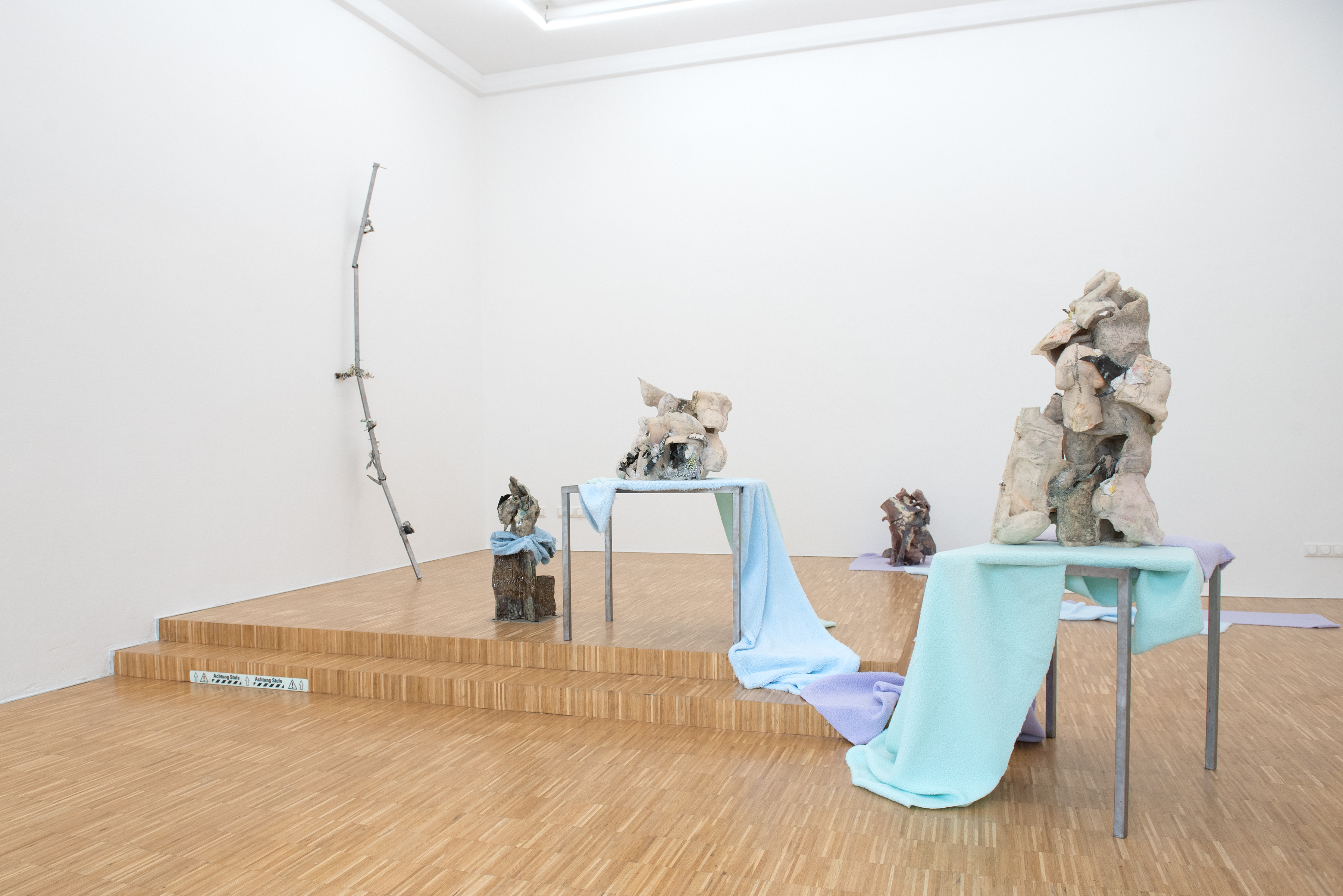
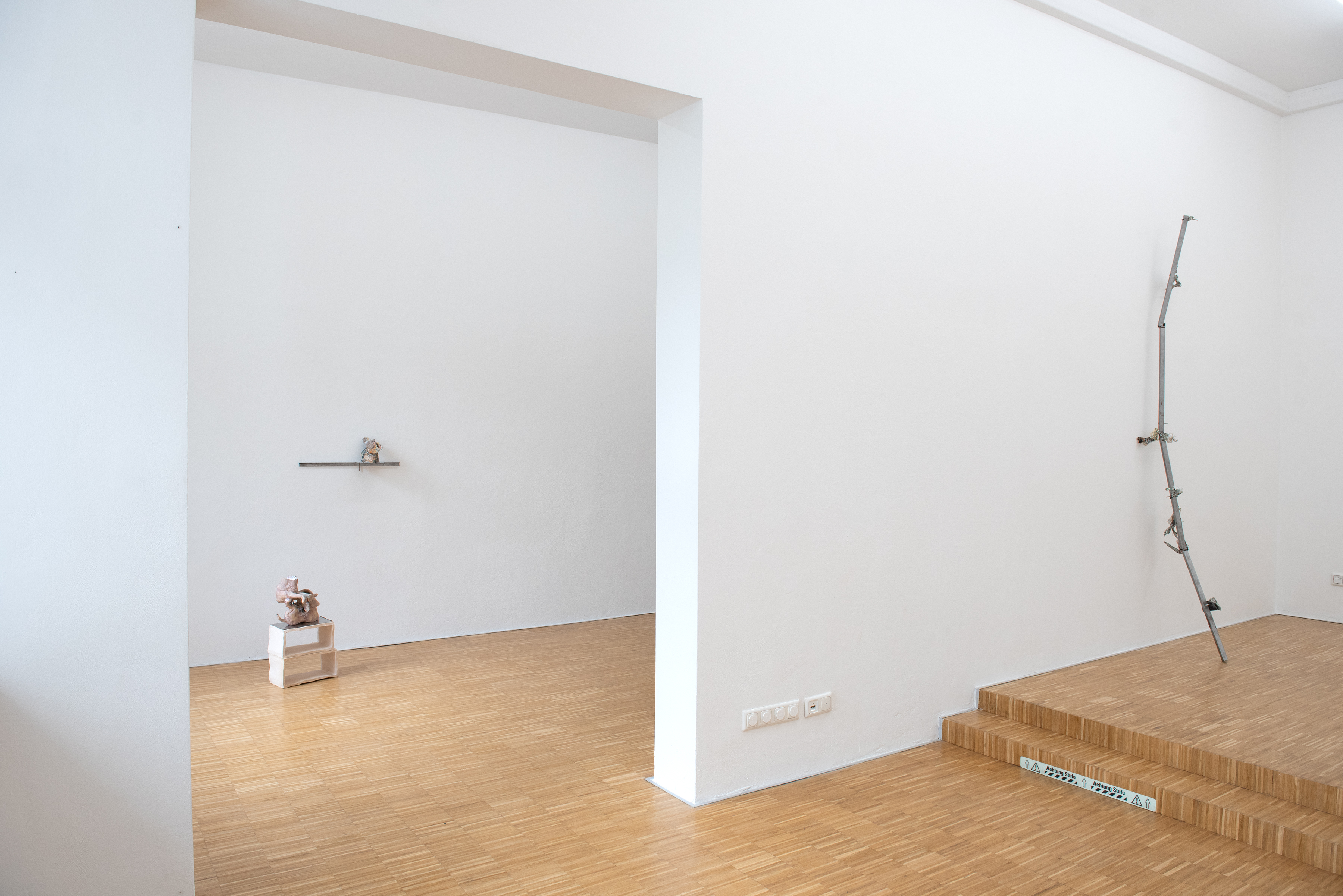
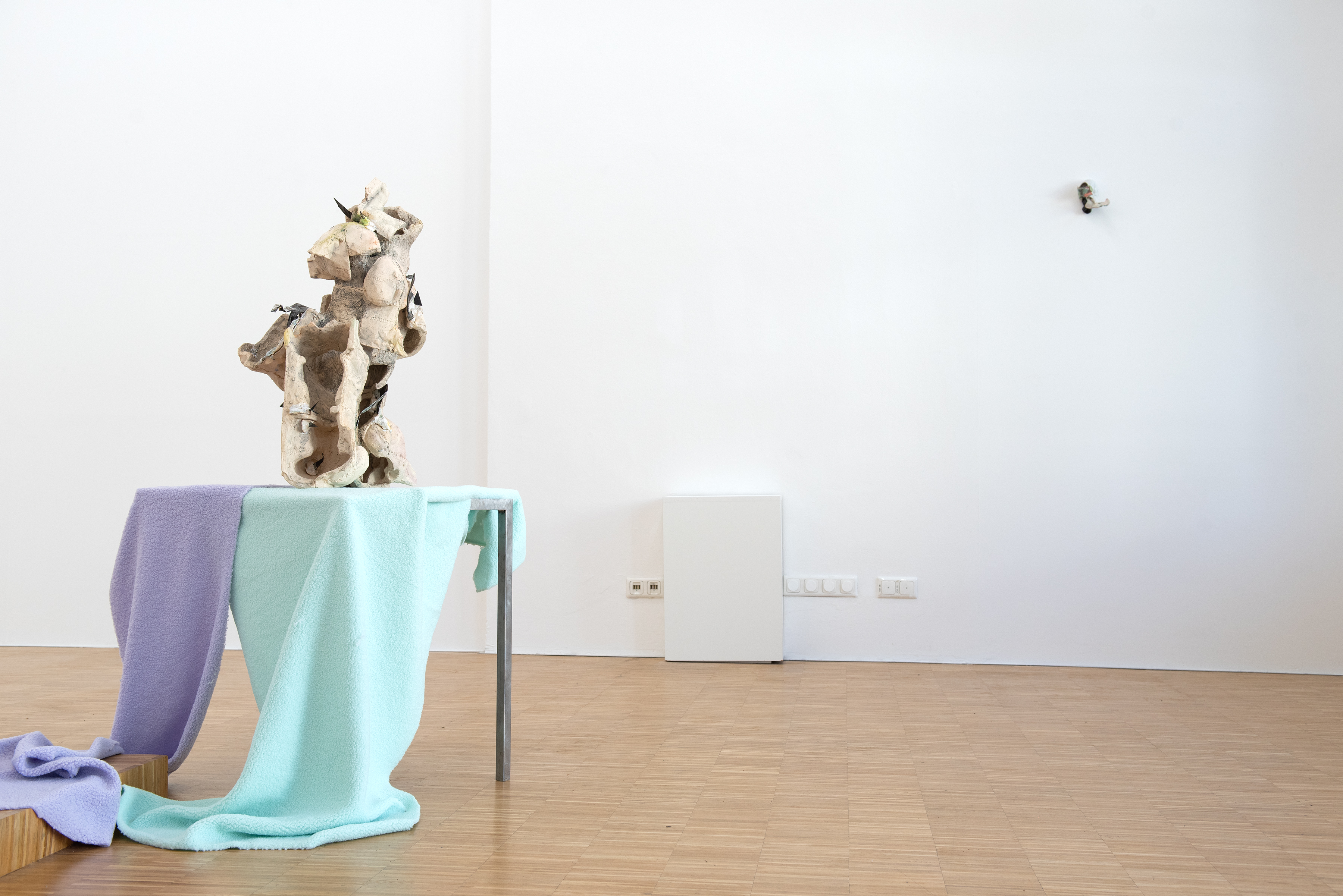
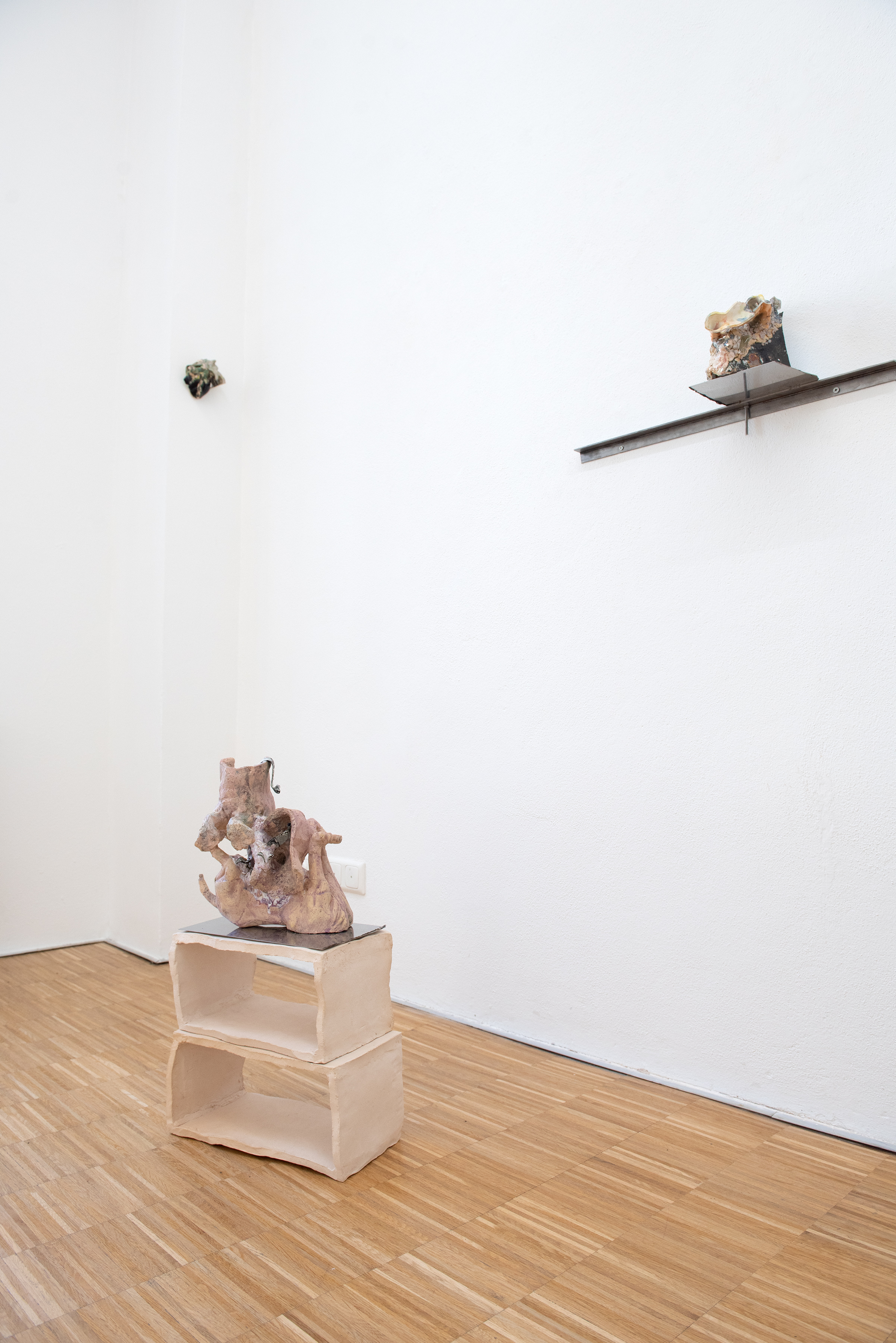
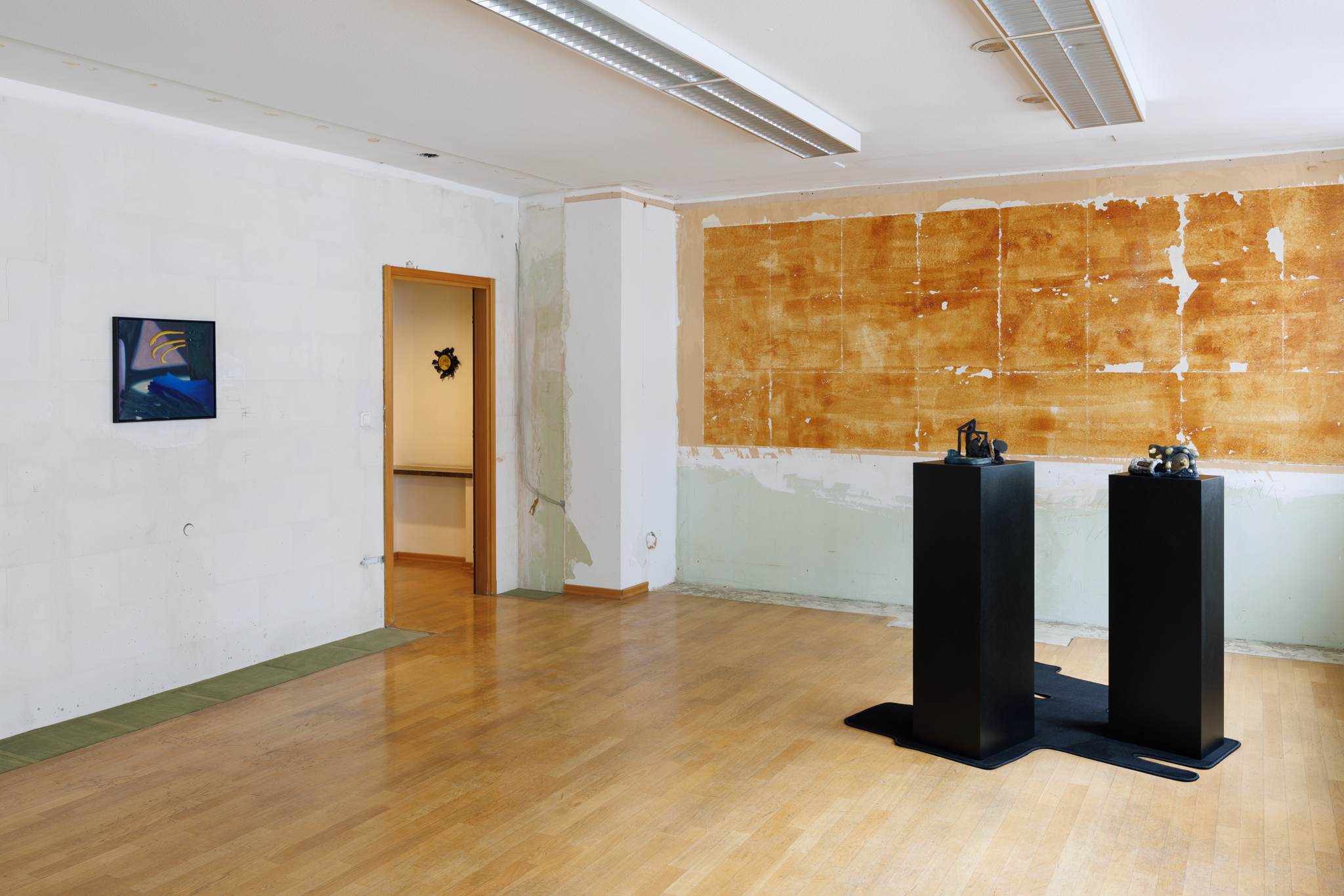
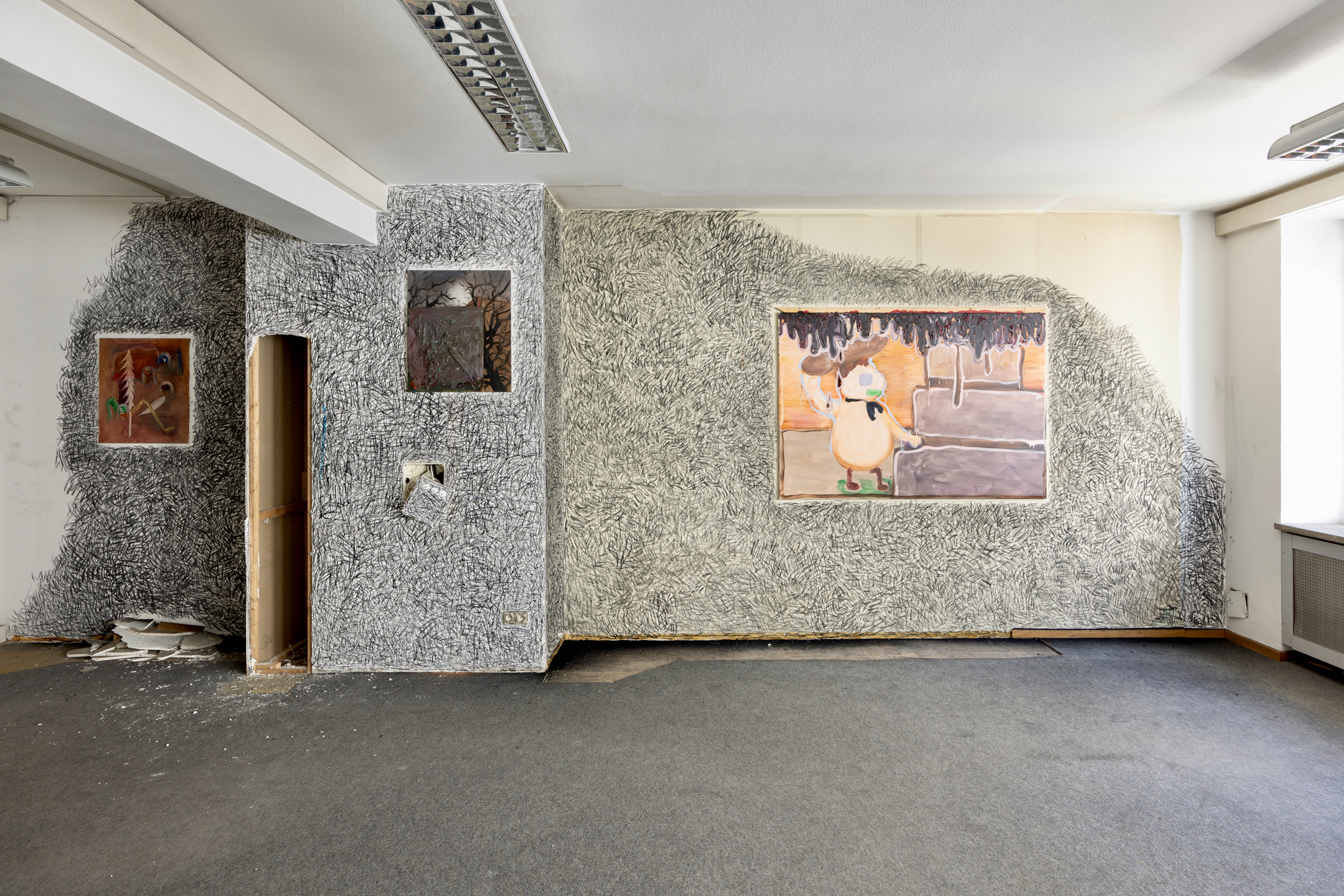
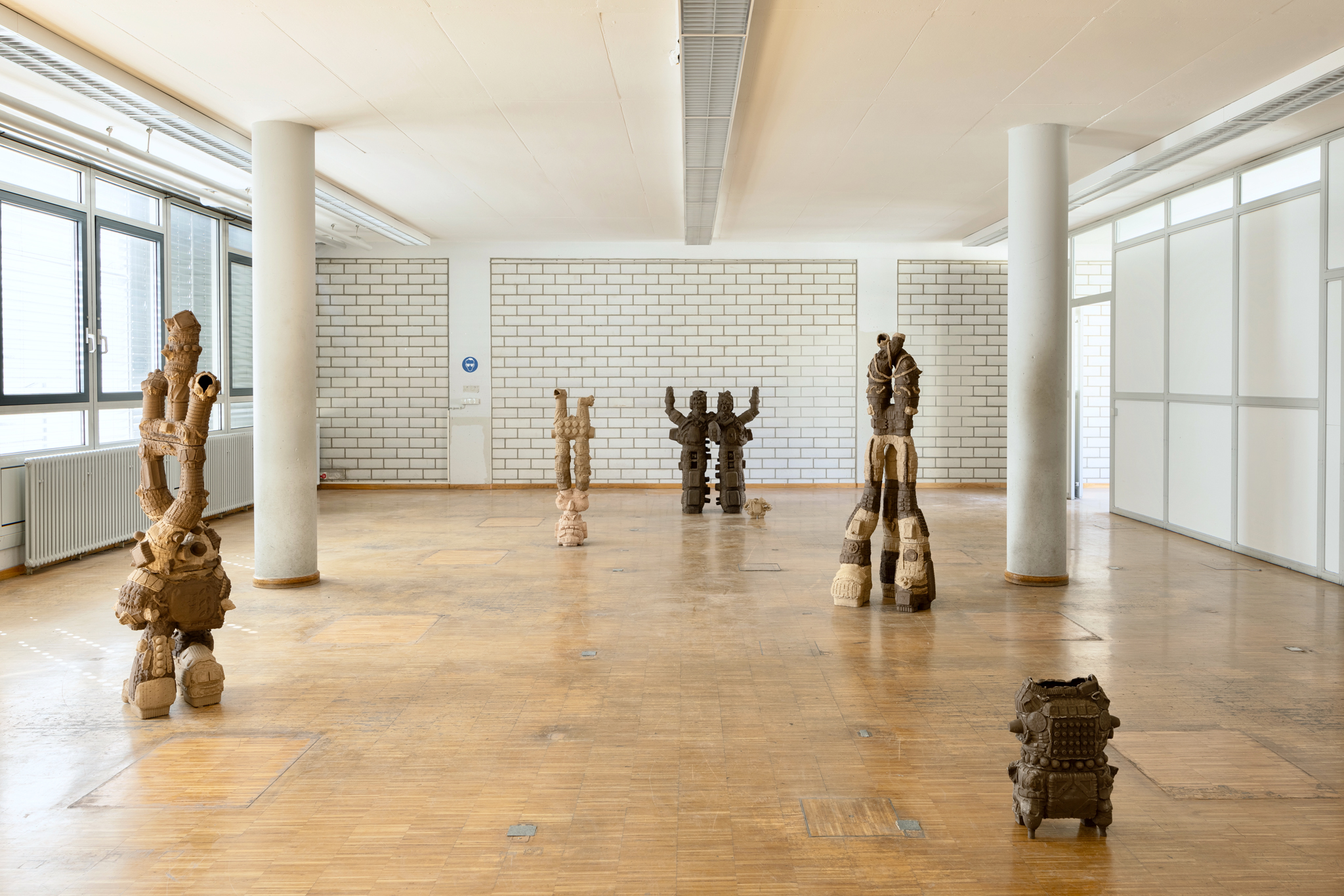
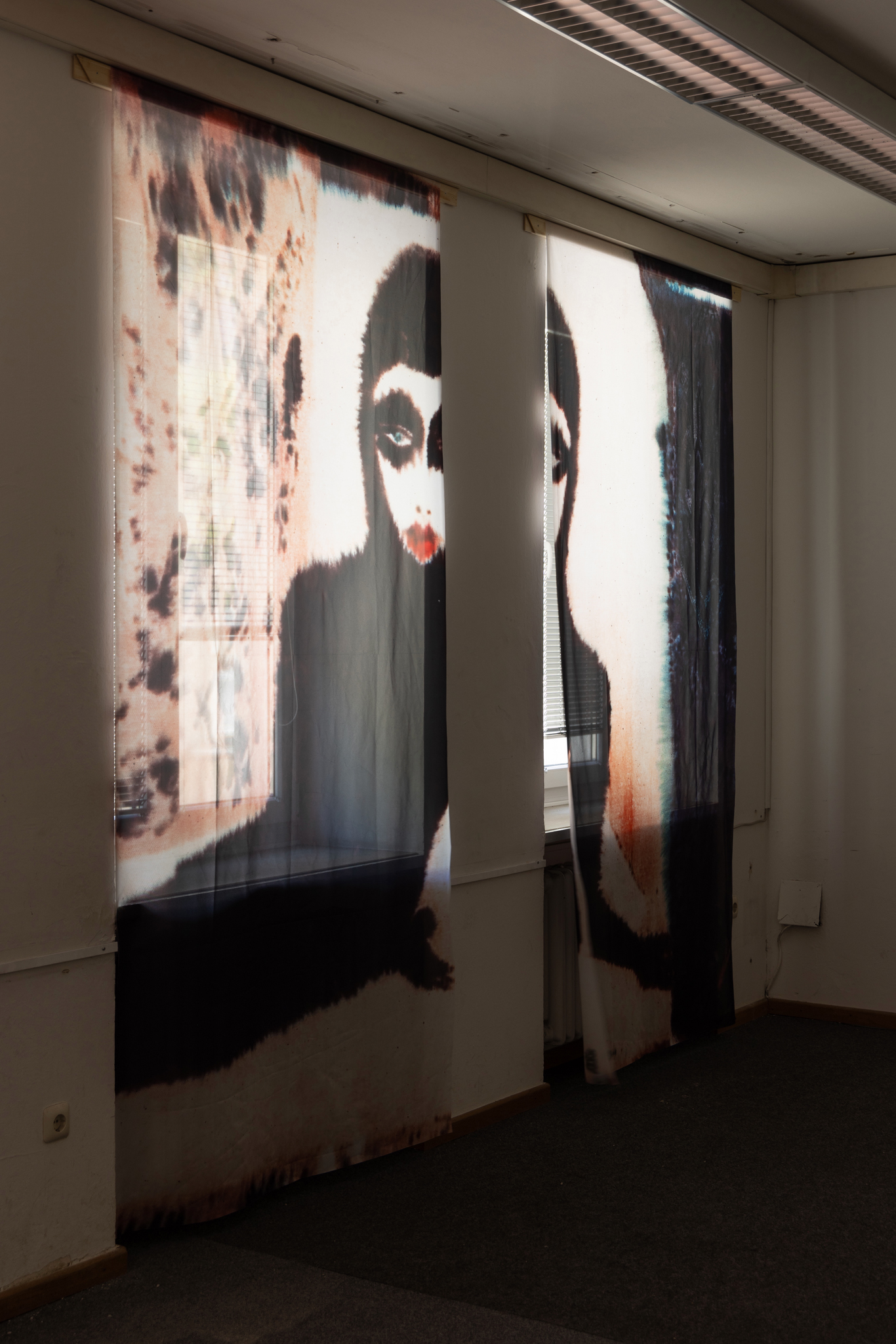
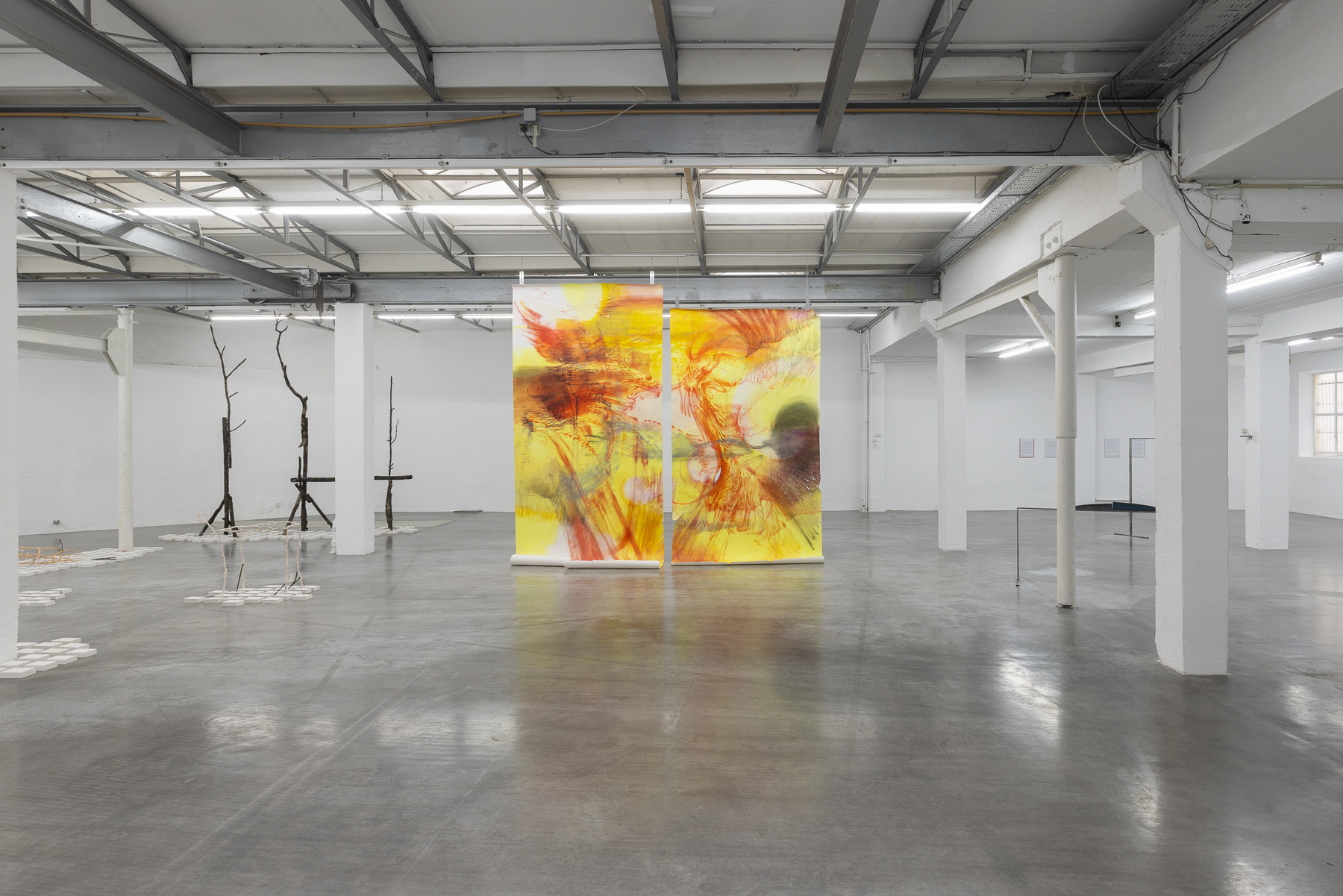
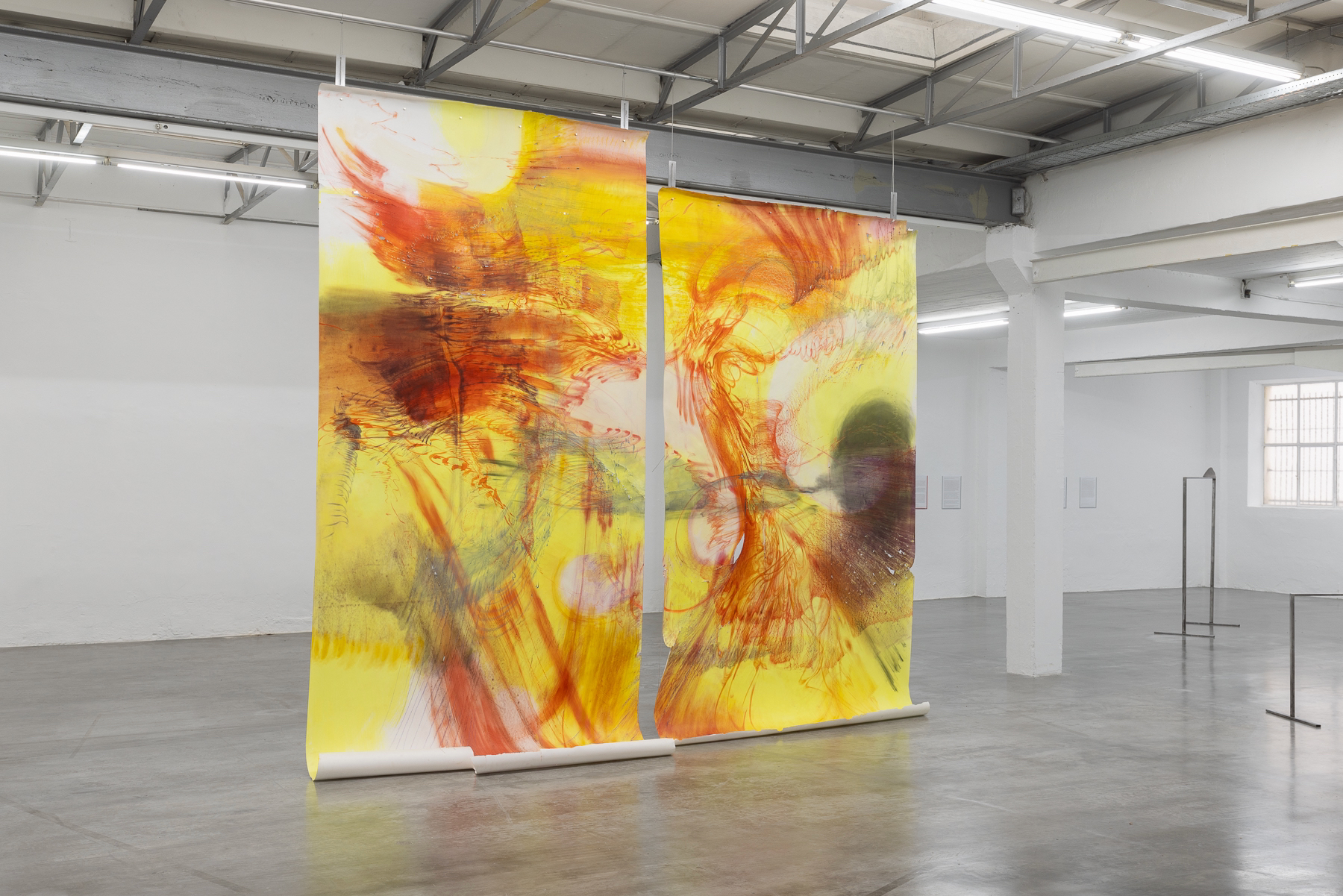
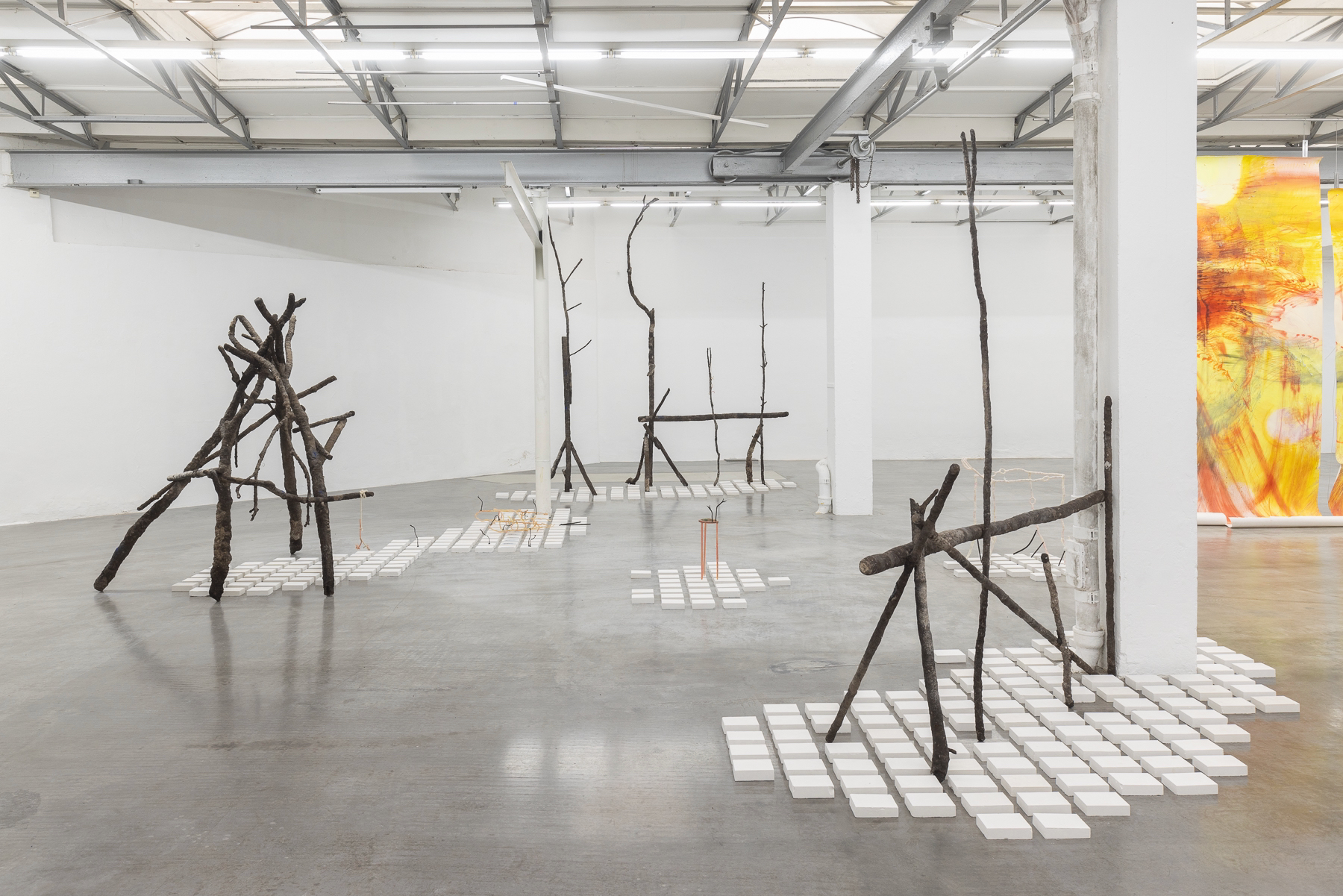
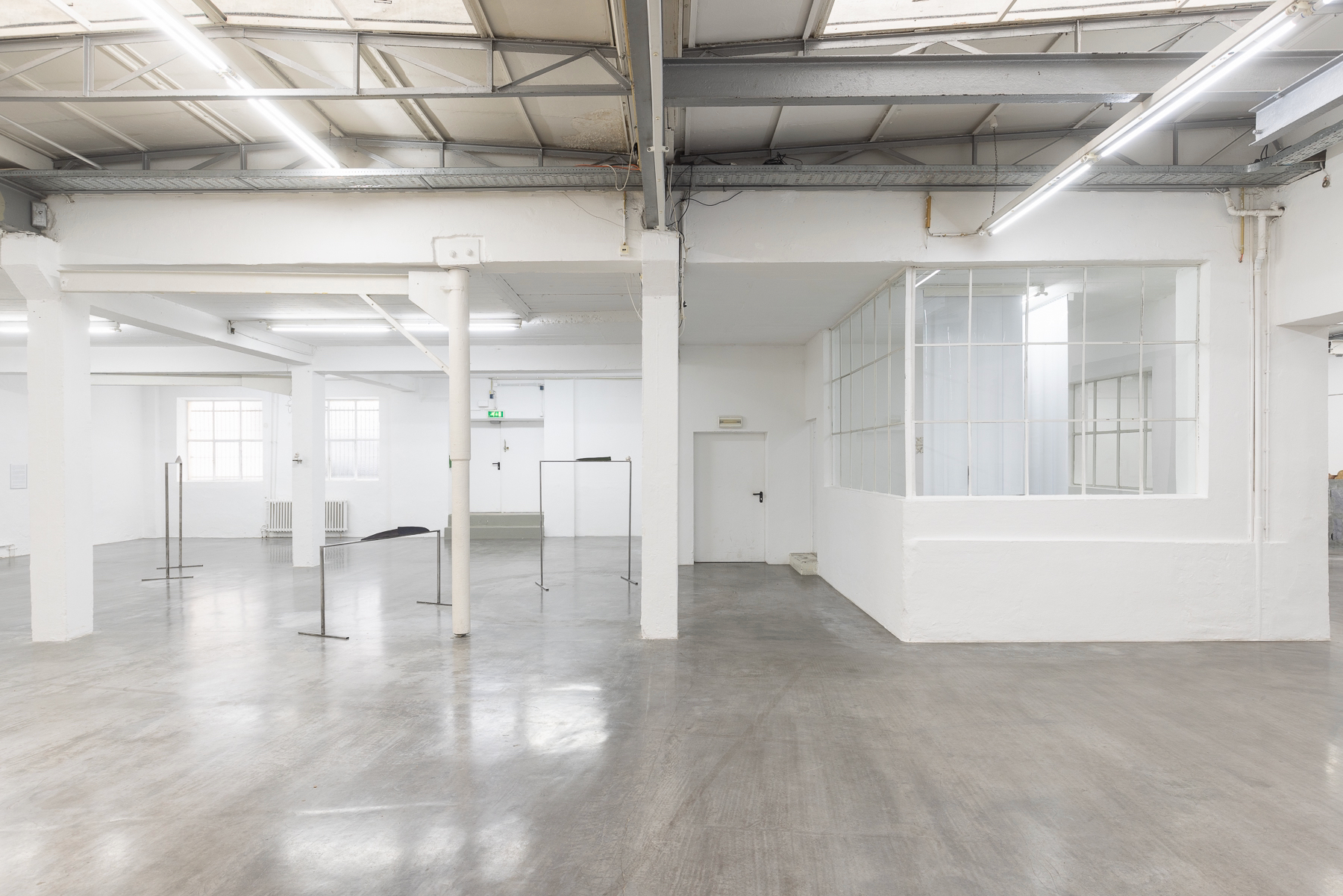
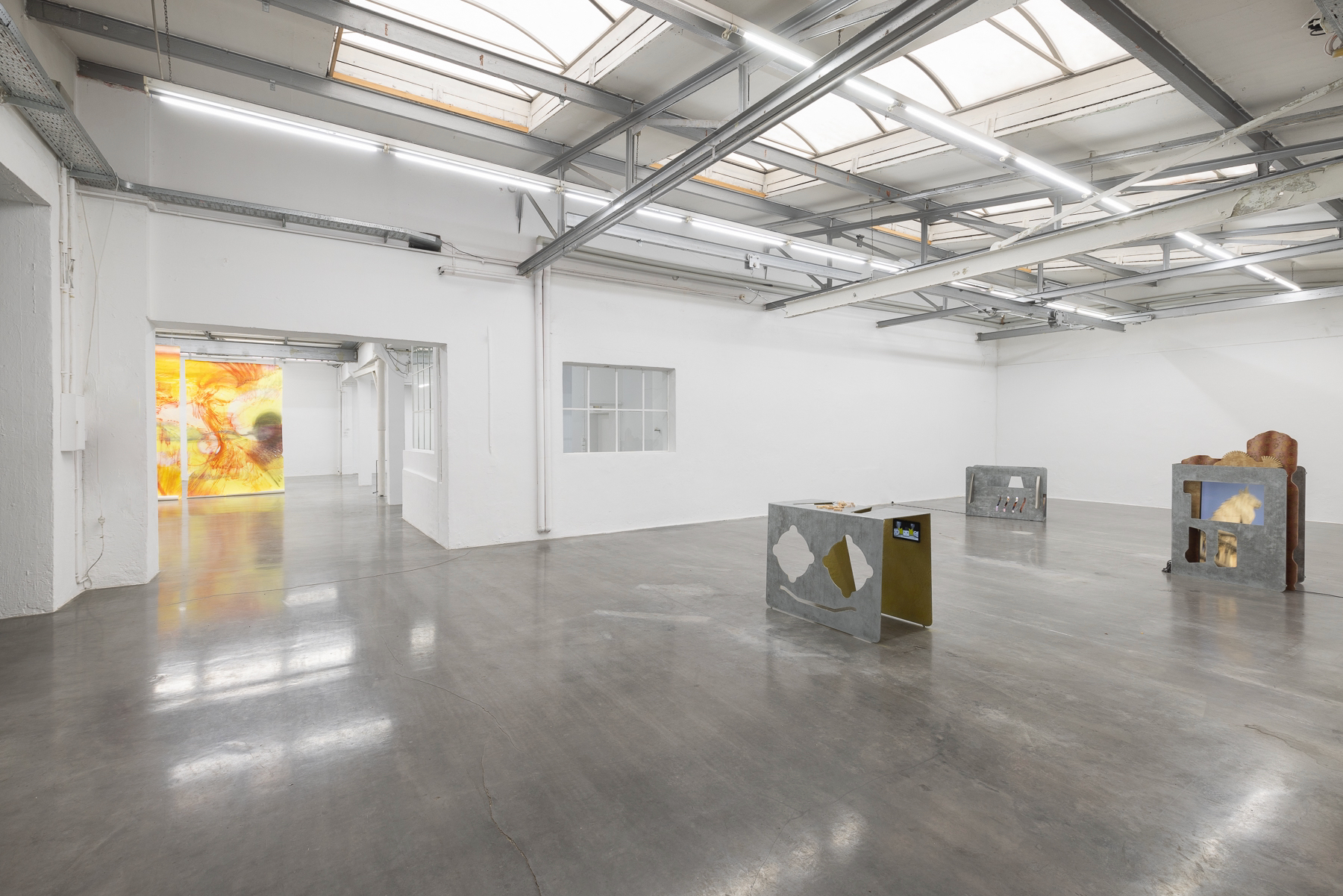
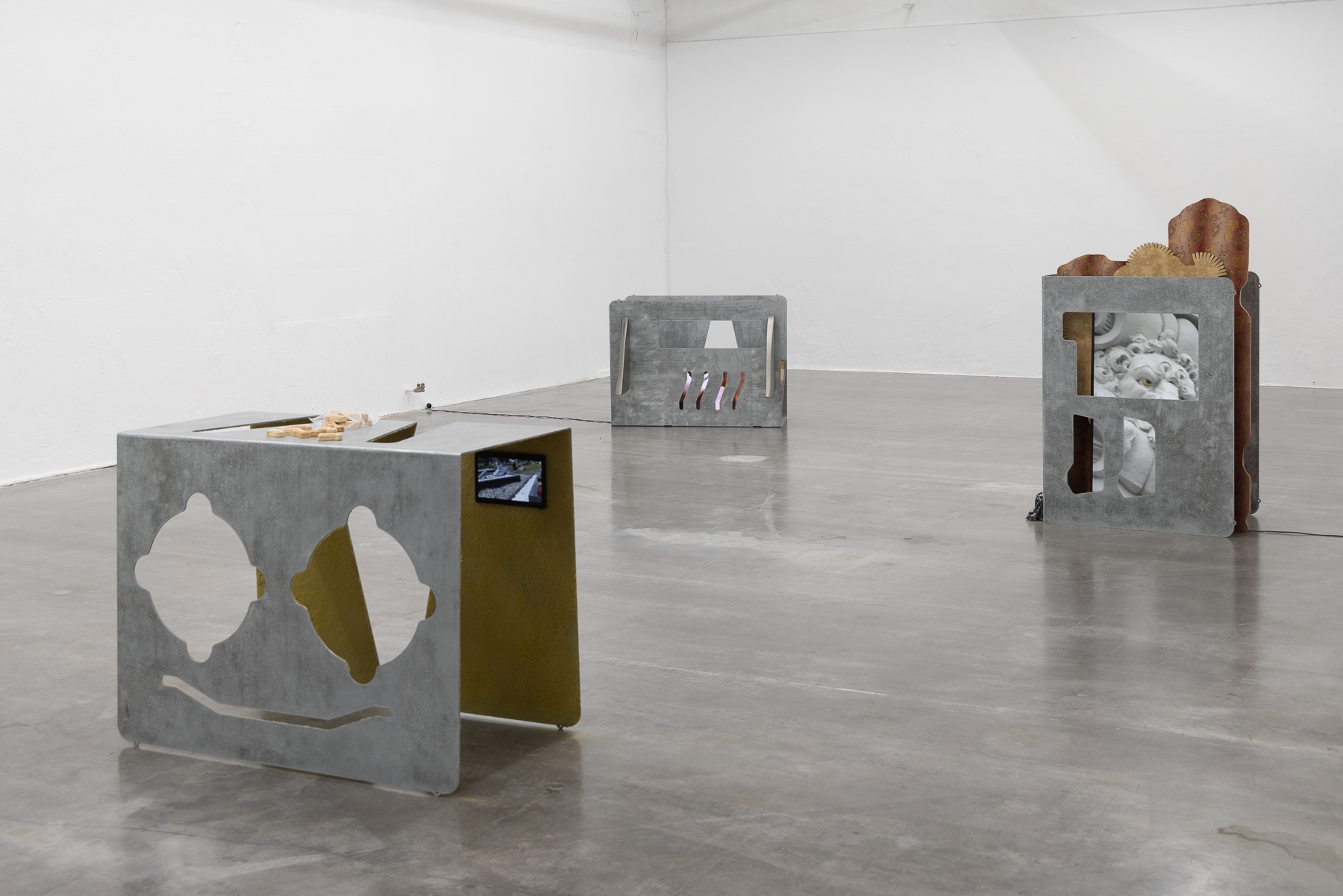
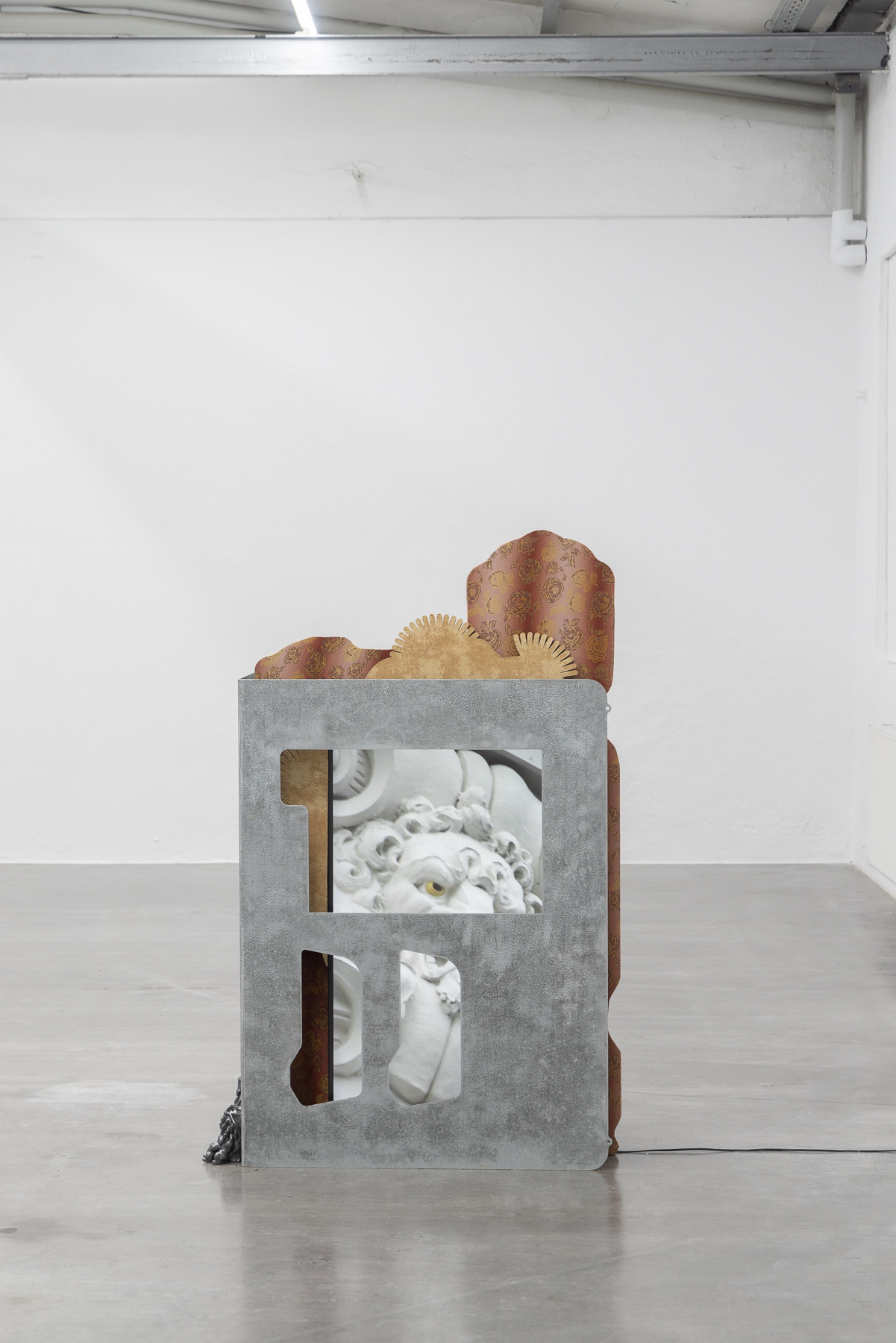
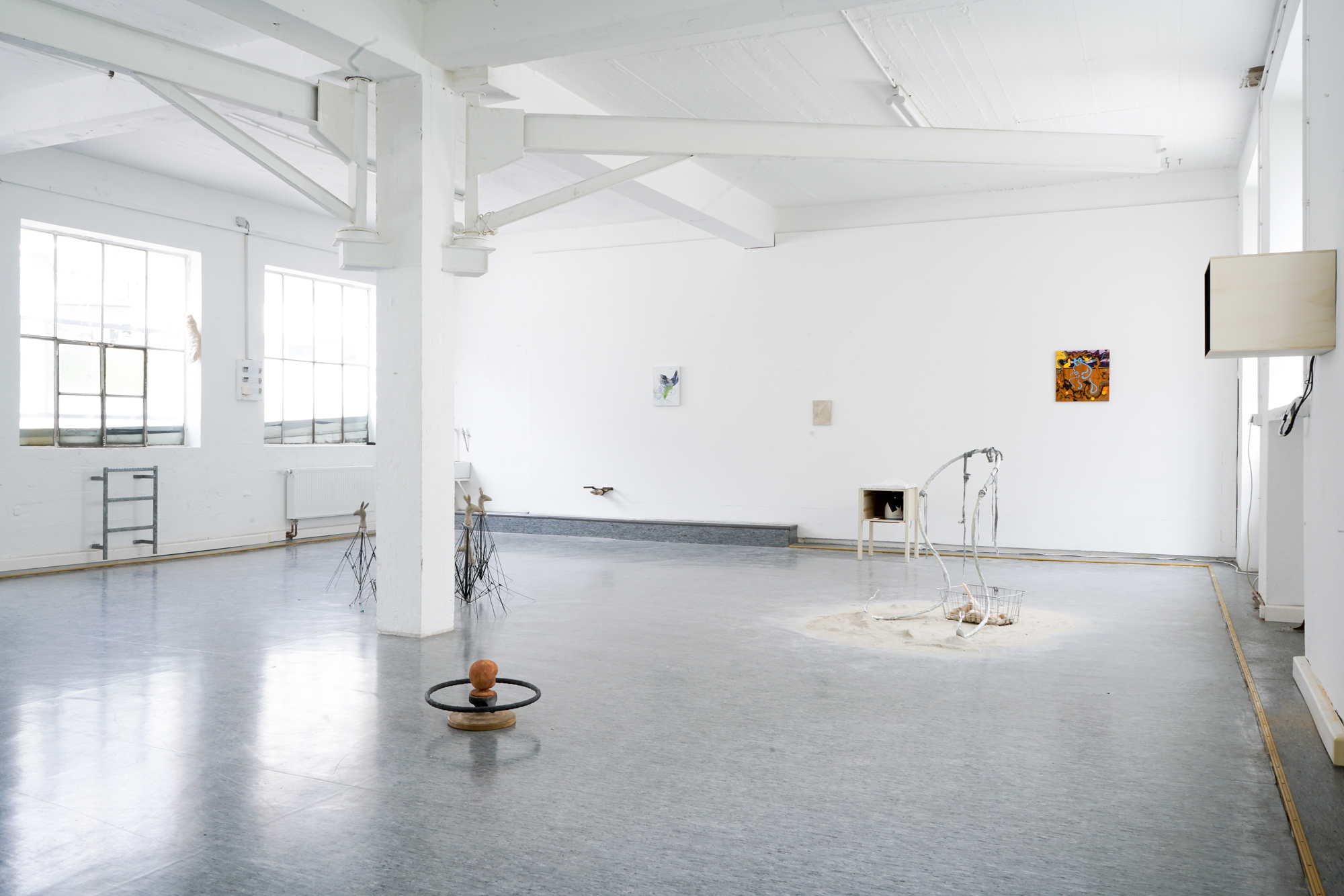
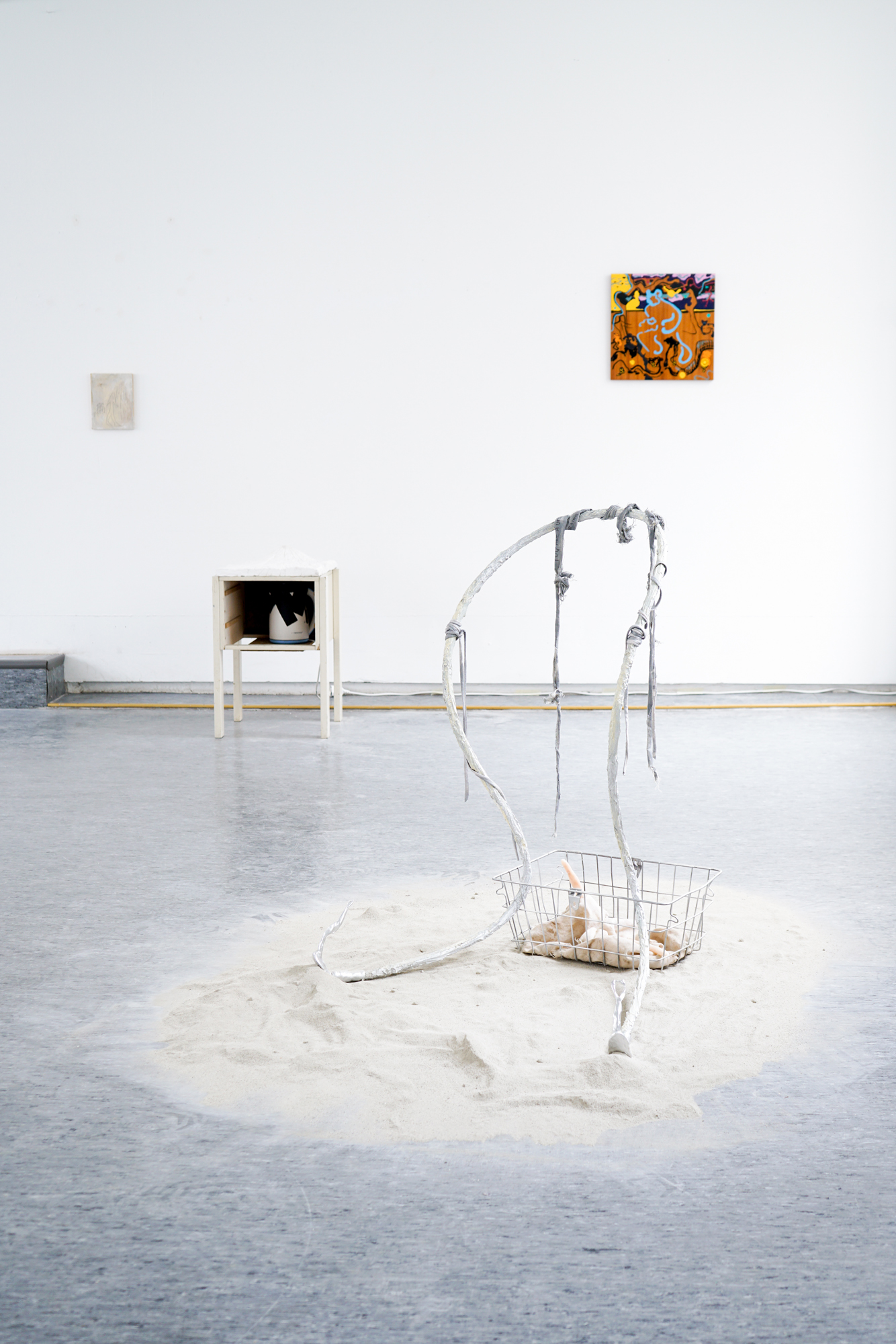
Julia Klemm, A chimera is not a pet, 2025, installation view
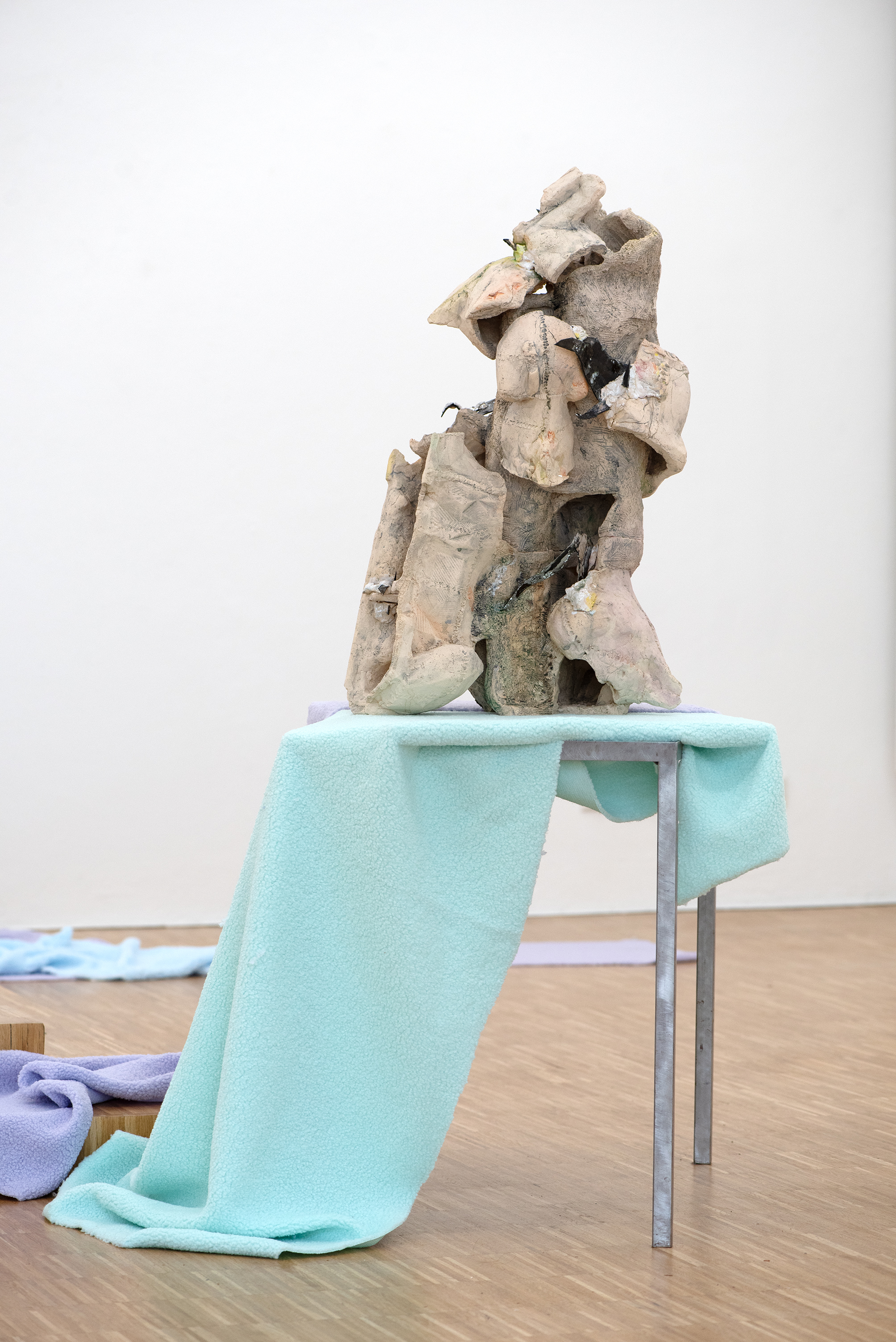
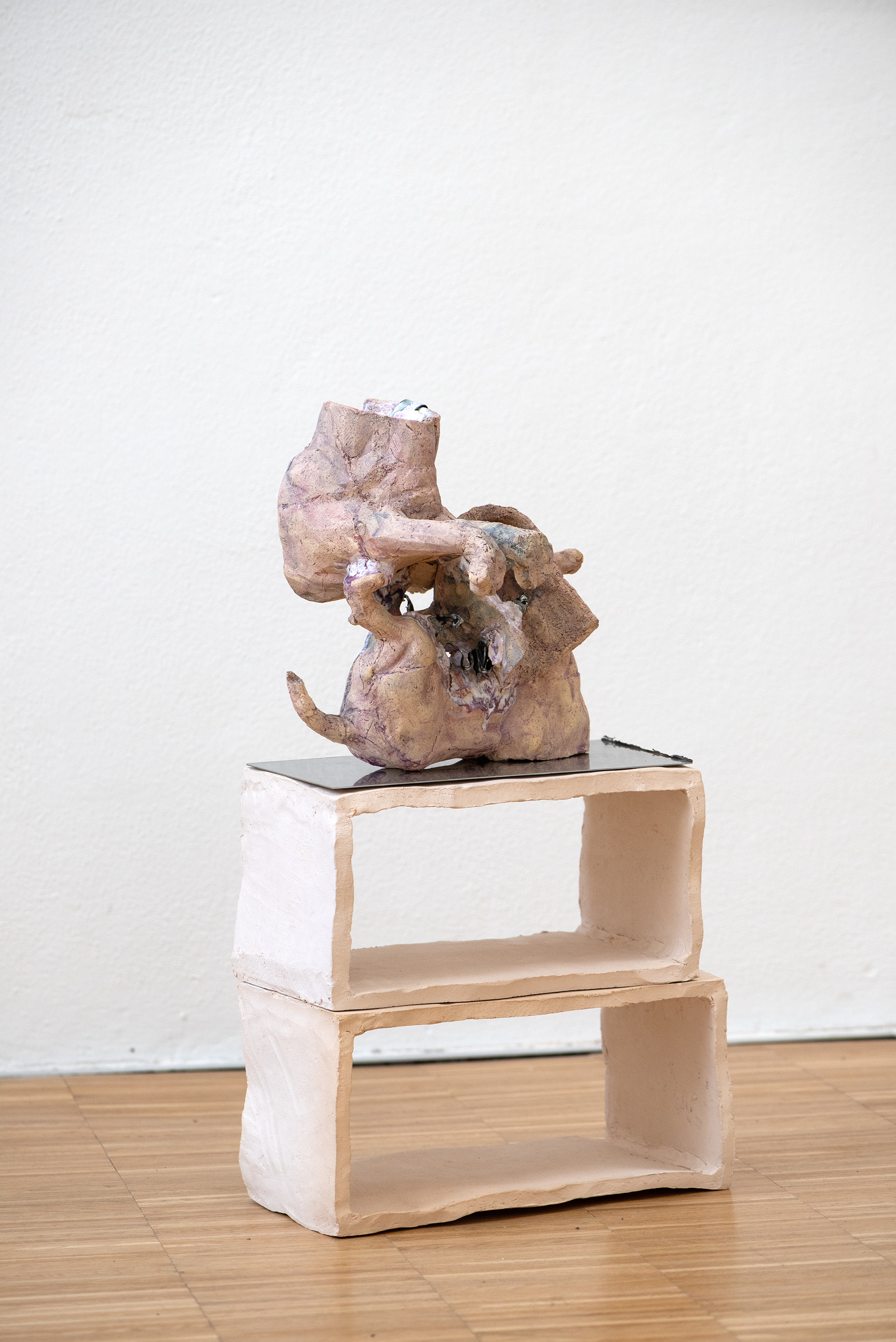
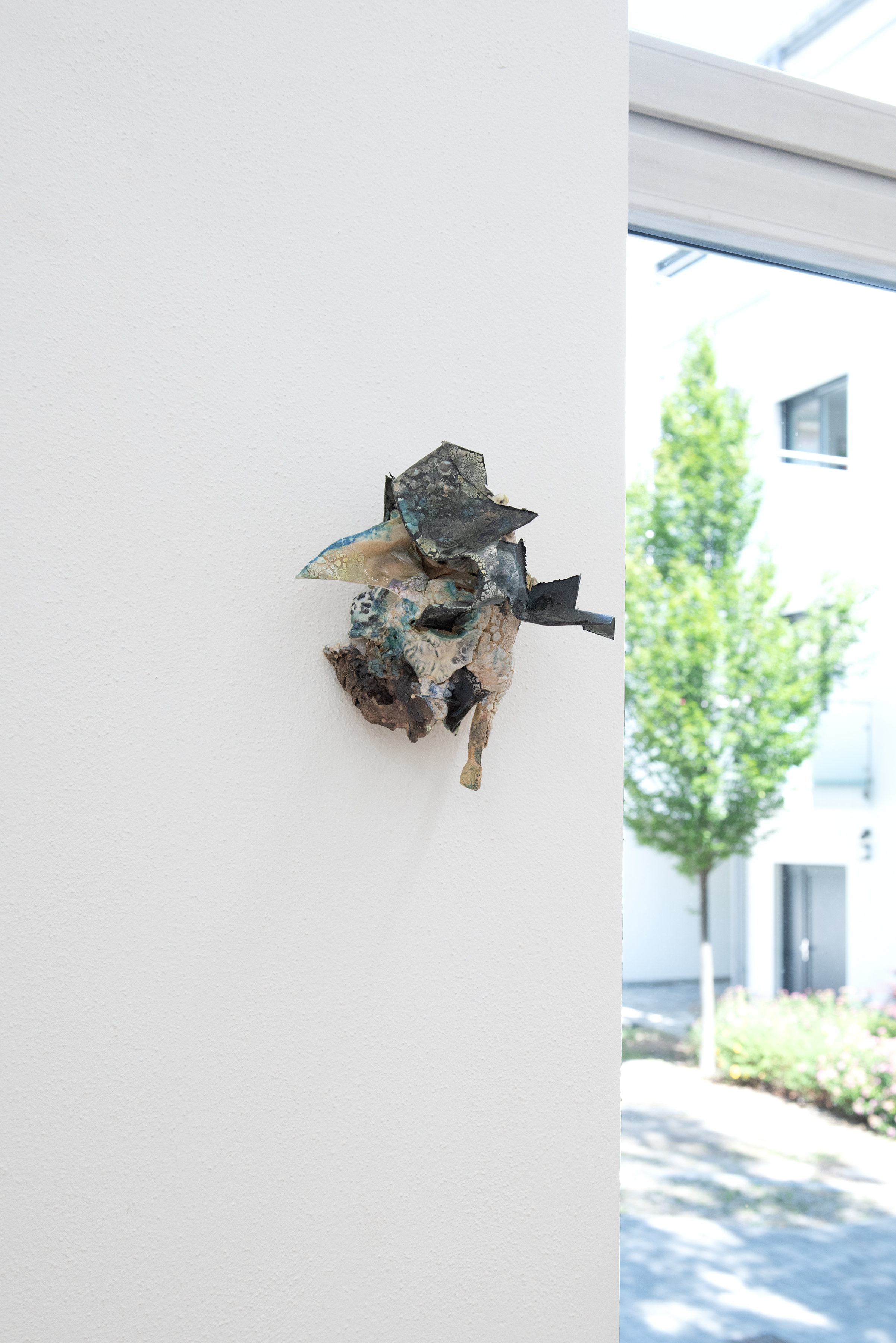
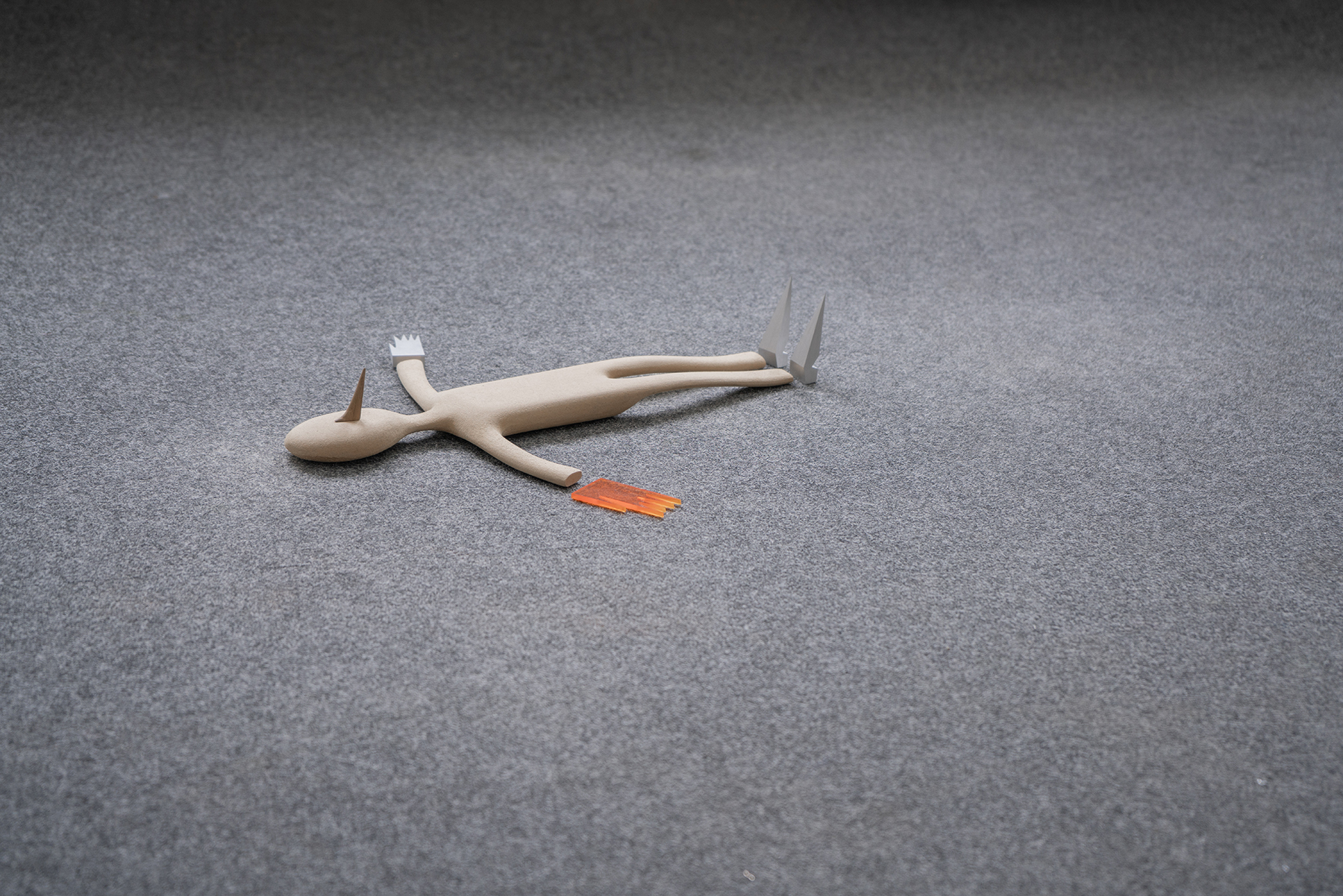
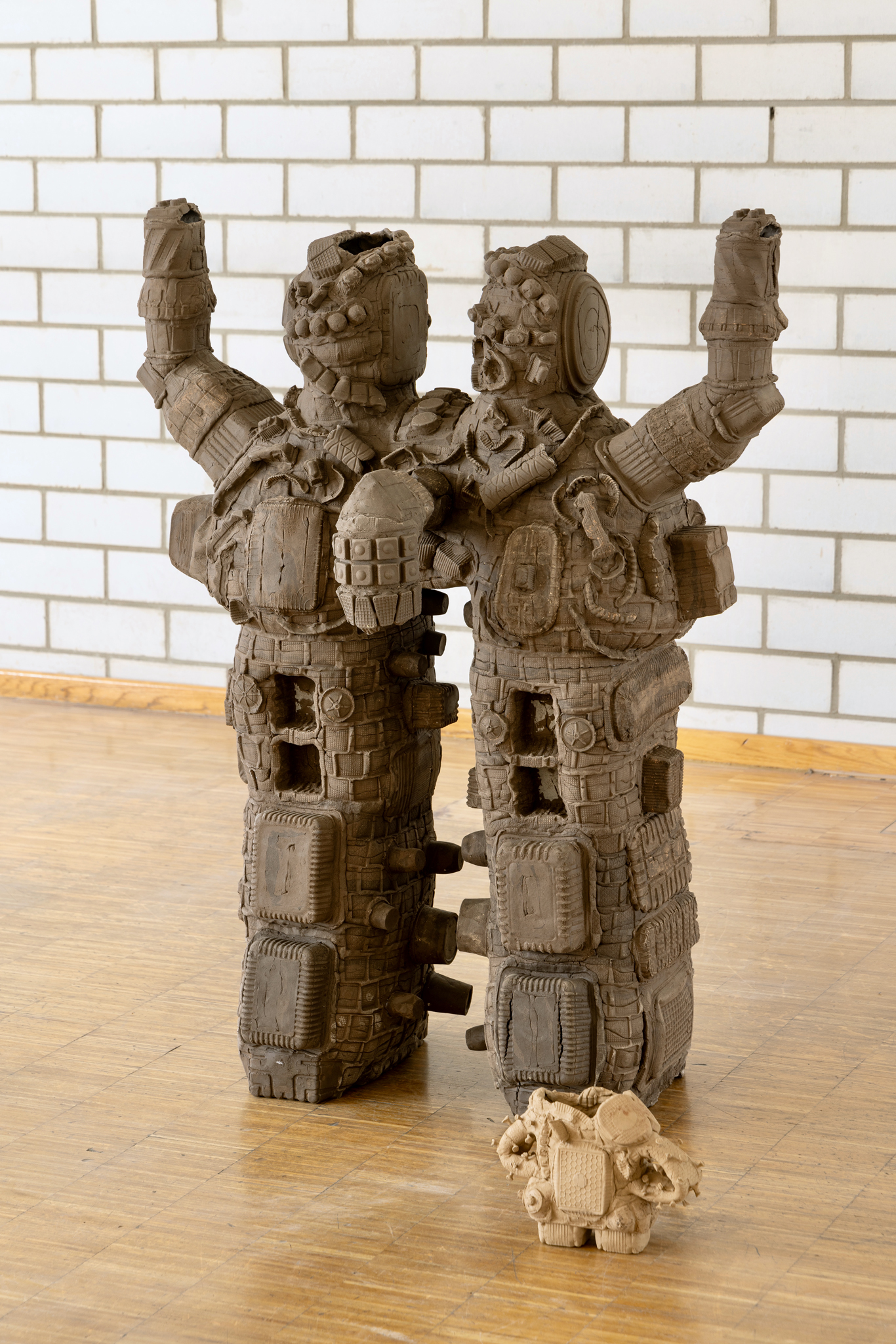
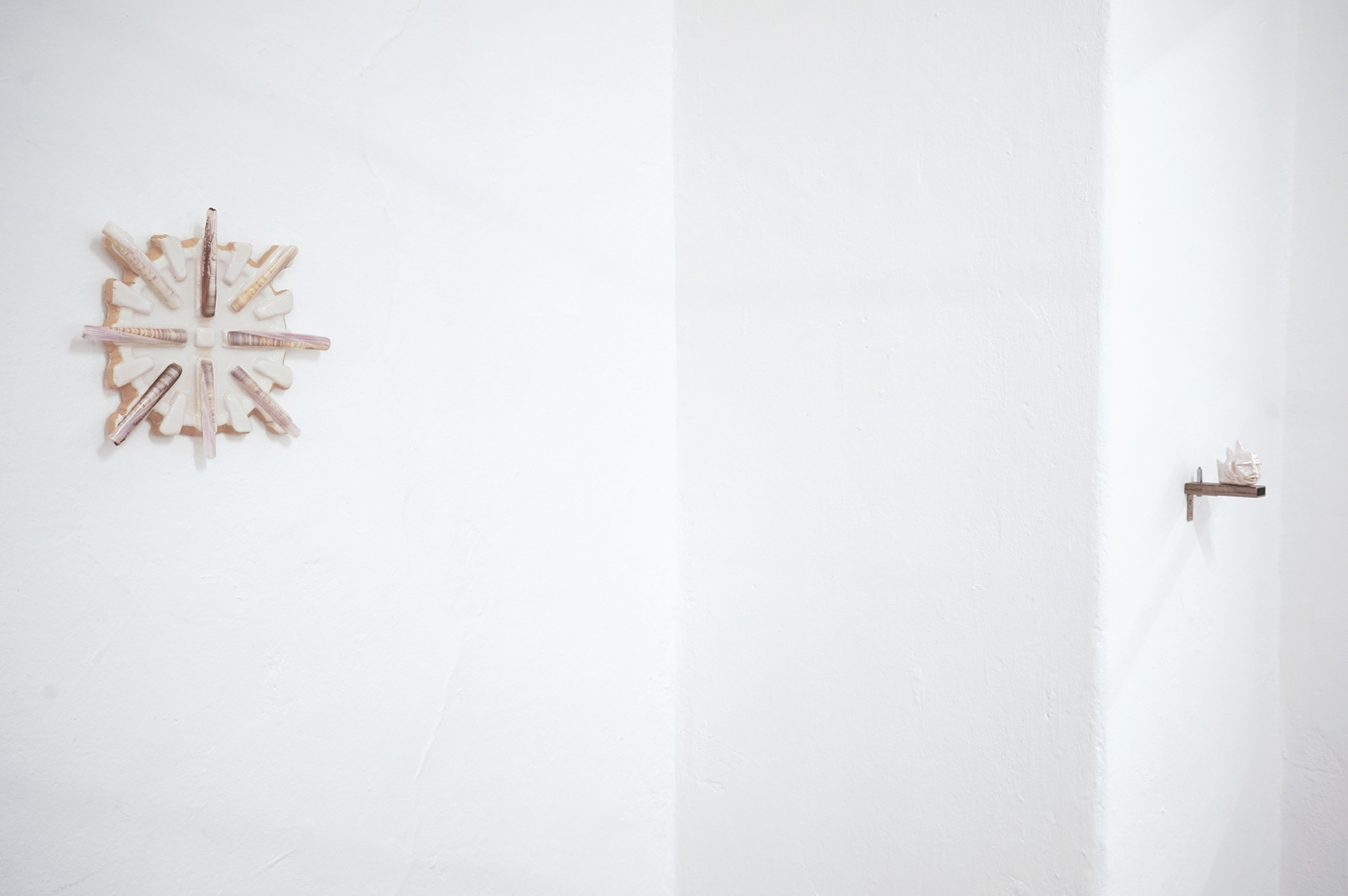
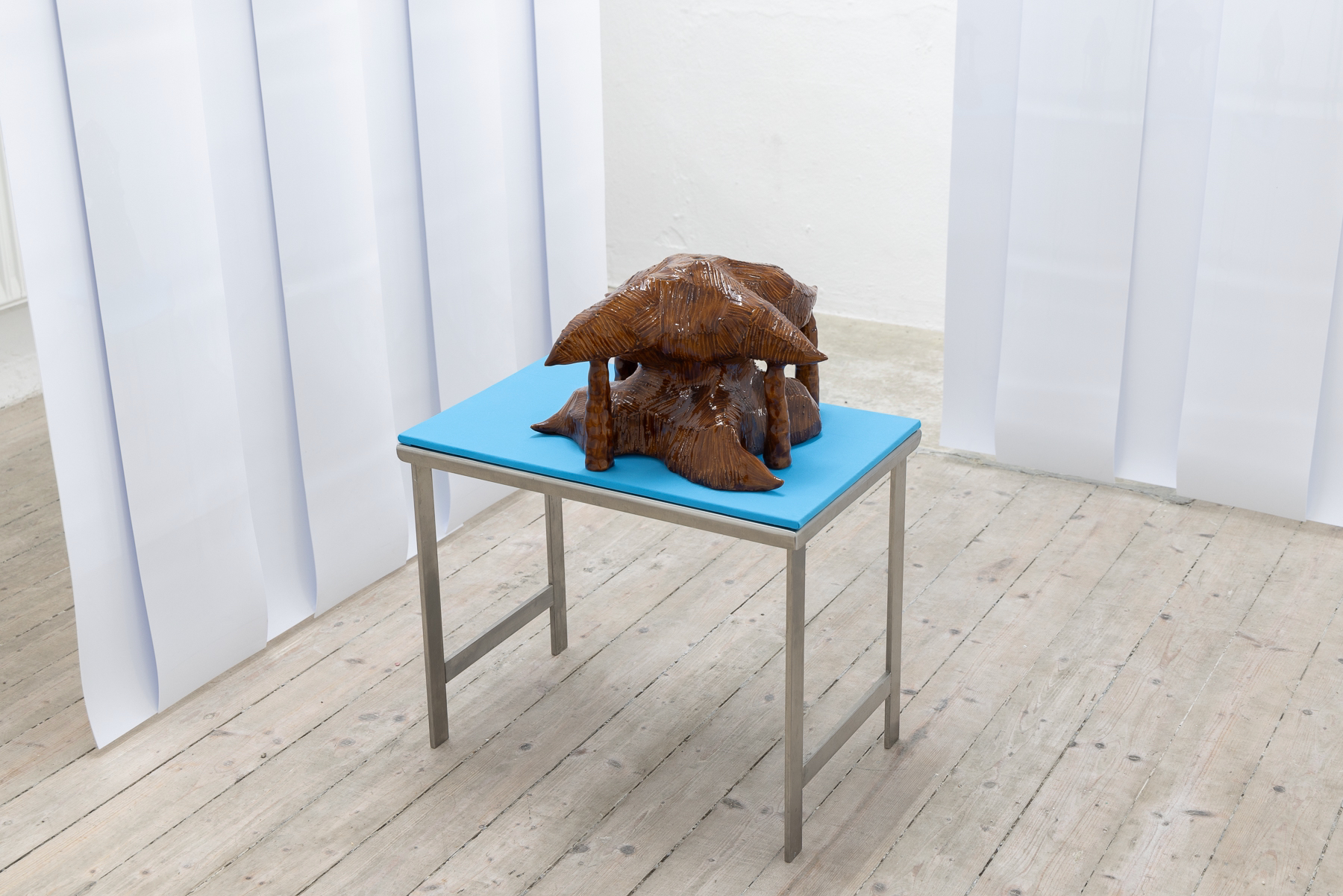
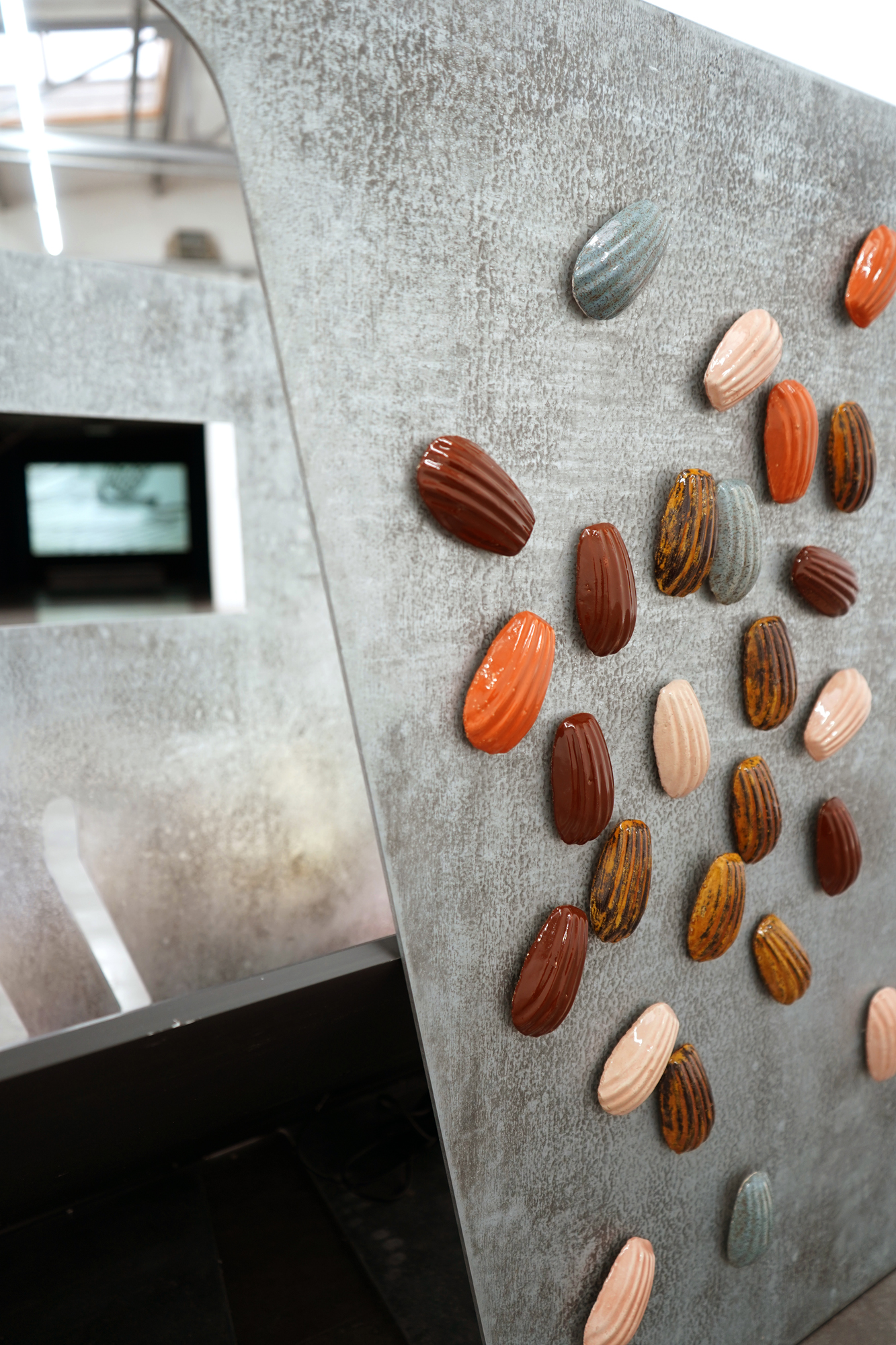
Julia Klemm, A chimera is not a pet 3, 2025, steel, glaze, ceramic, pigment, 46 × 34 × 42 cm
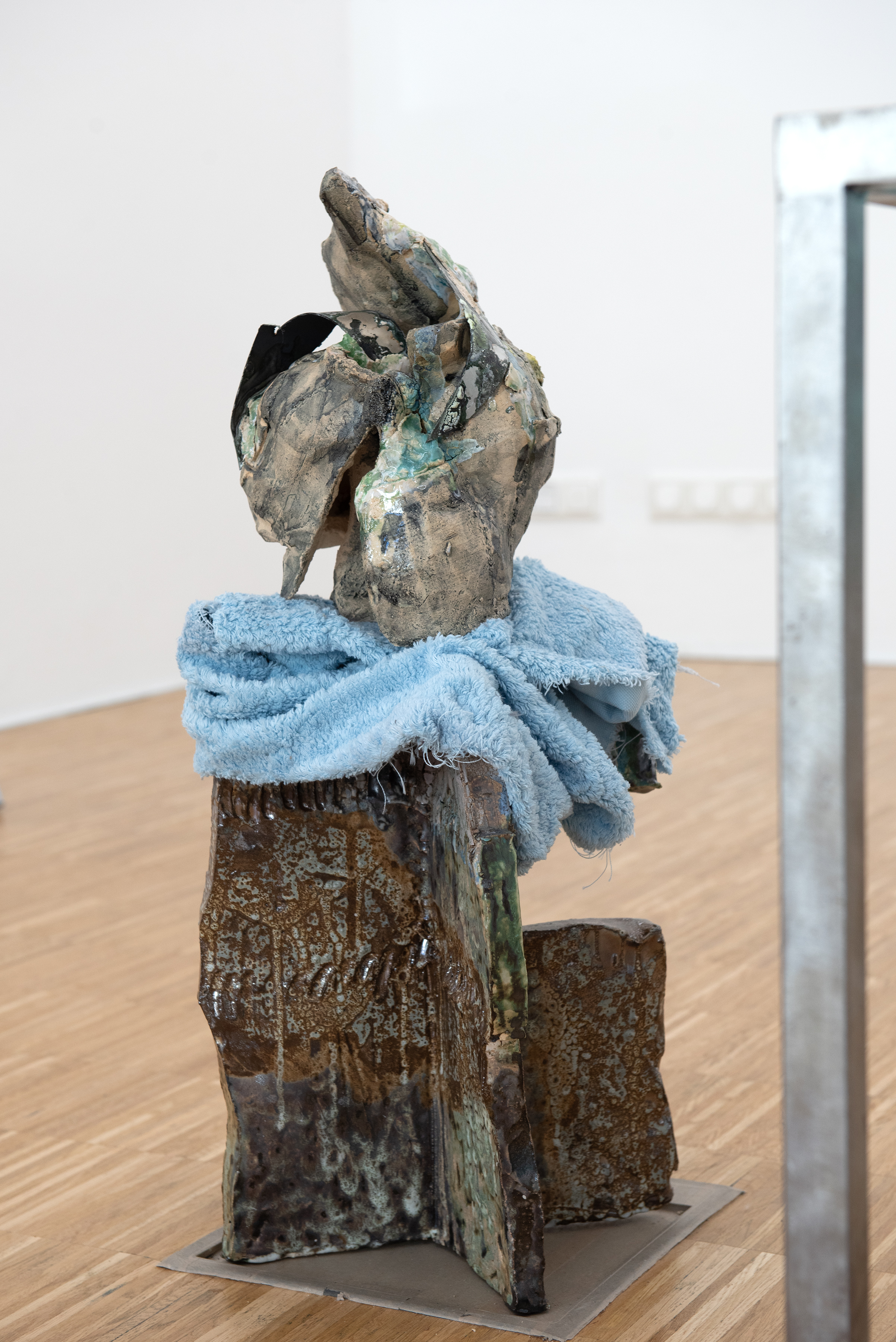
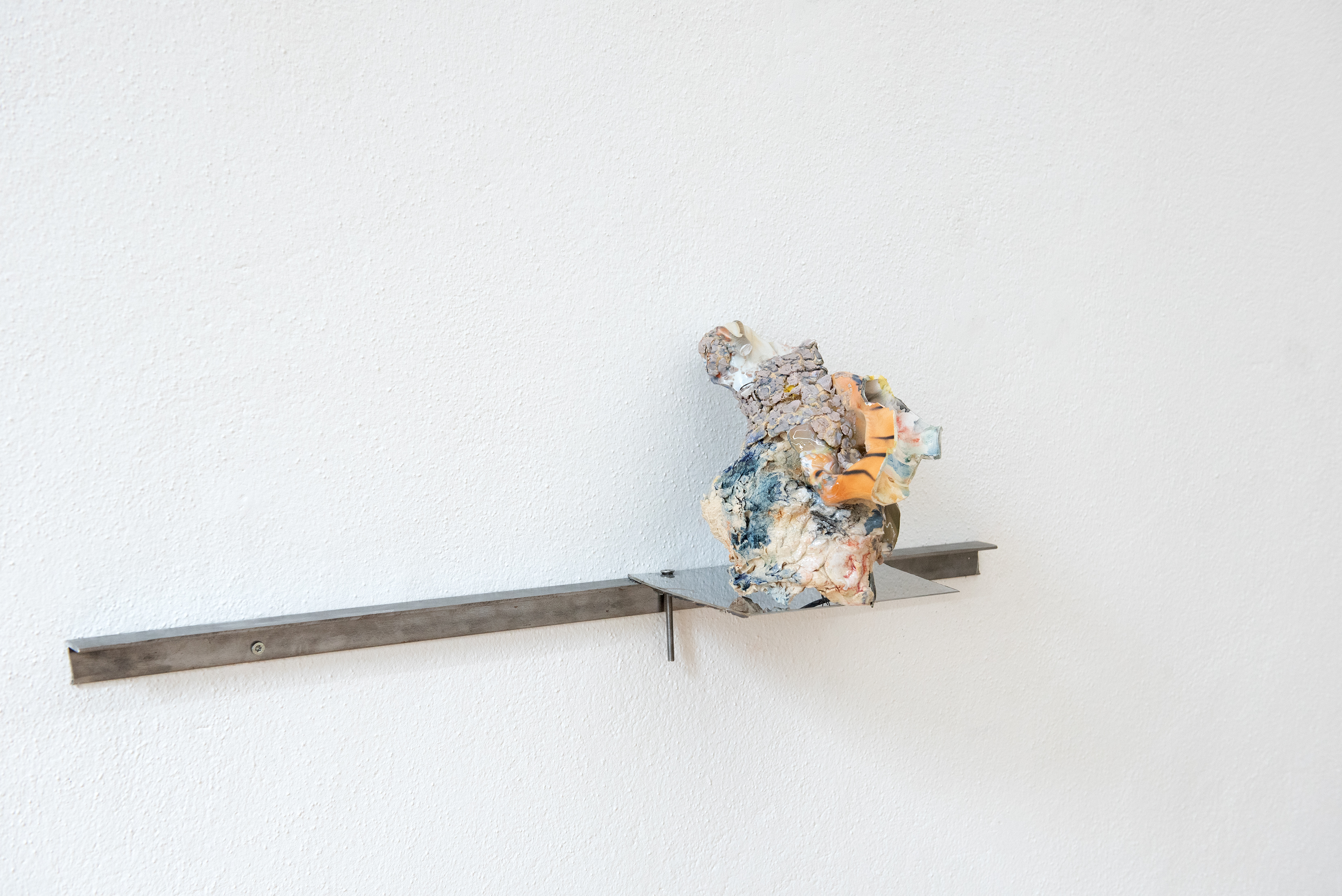
Julia Klemm, Evasion, 2025, steel, glaze, ceramic, pigment, cloth, 23 × 23 × 65 cm
Julia Klemm, A chimera is not a pet, 2025, installation view
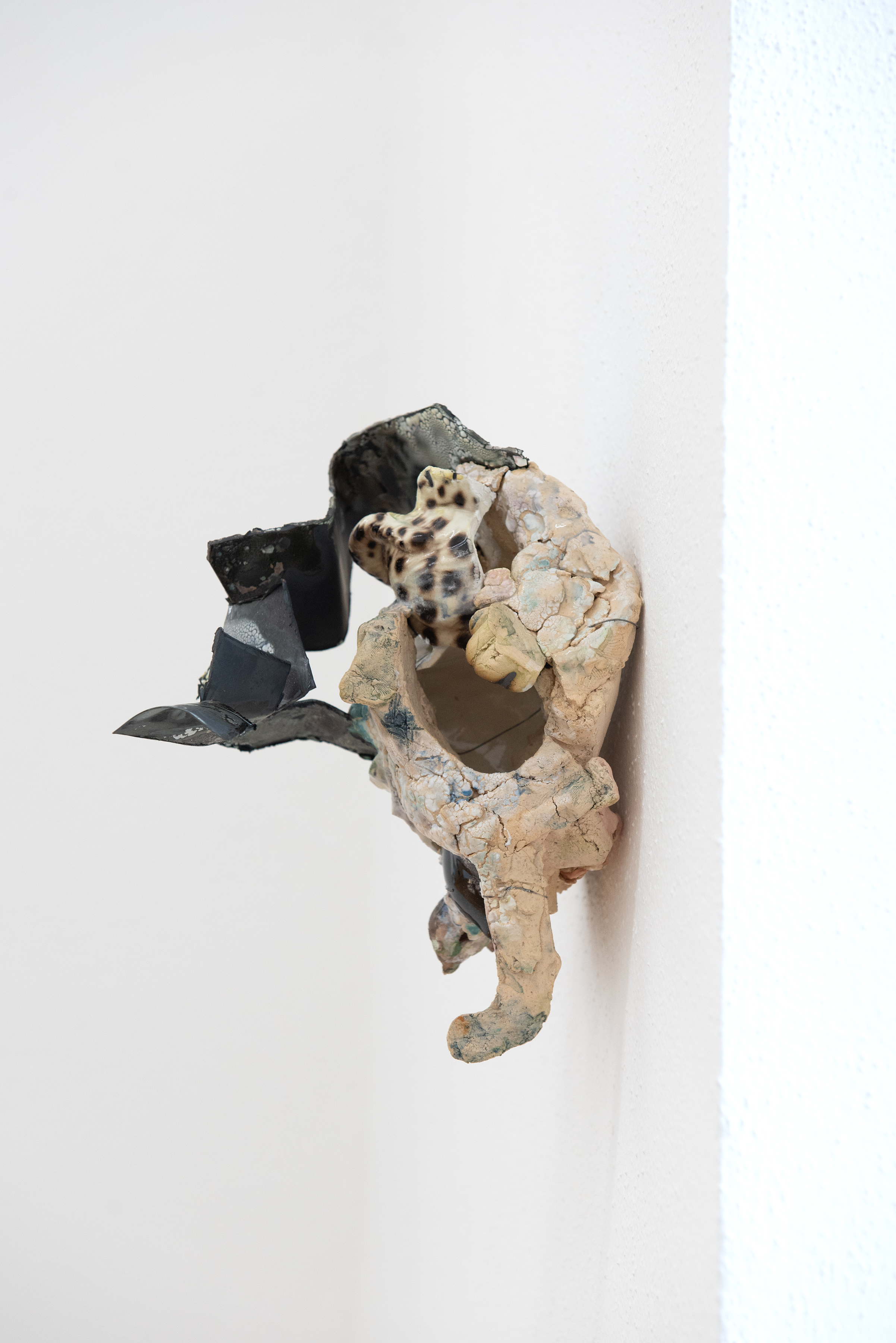
Julia Klemm, Transcending territories, 2024, glaze, ceramic, pigment, 32 × 30 × 48 cm
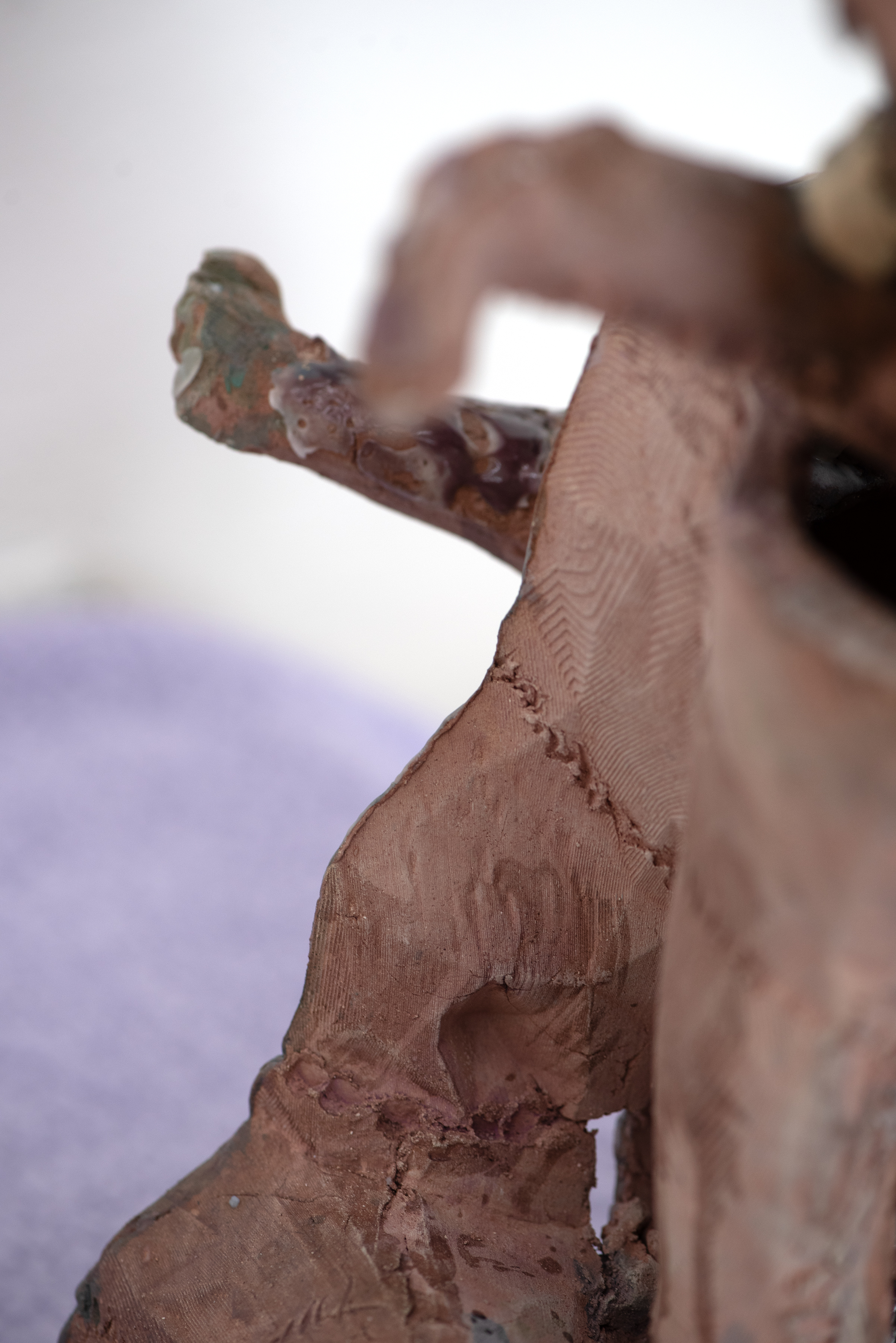
Julia Klemm, Julia Klemm, Transcending territories, 2024, glaze, ceramic, pigment, 32 × 30 × 48 cm (detail)
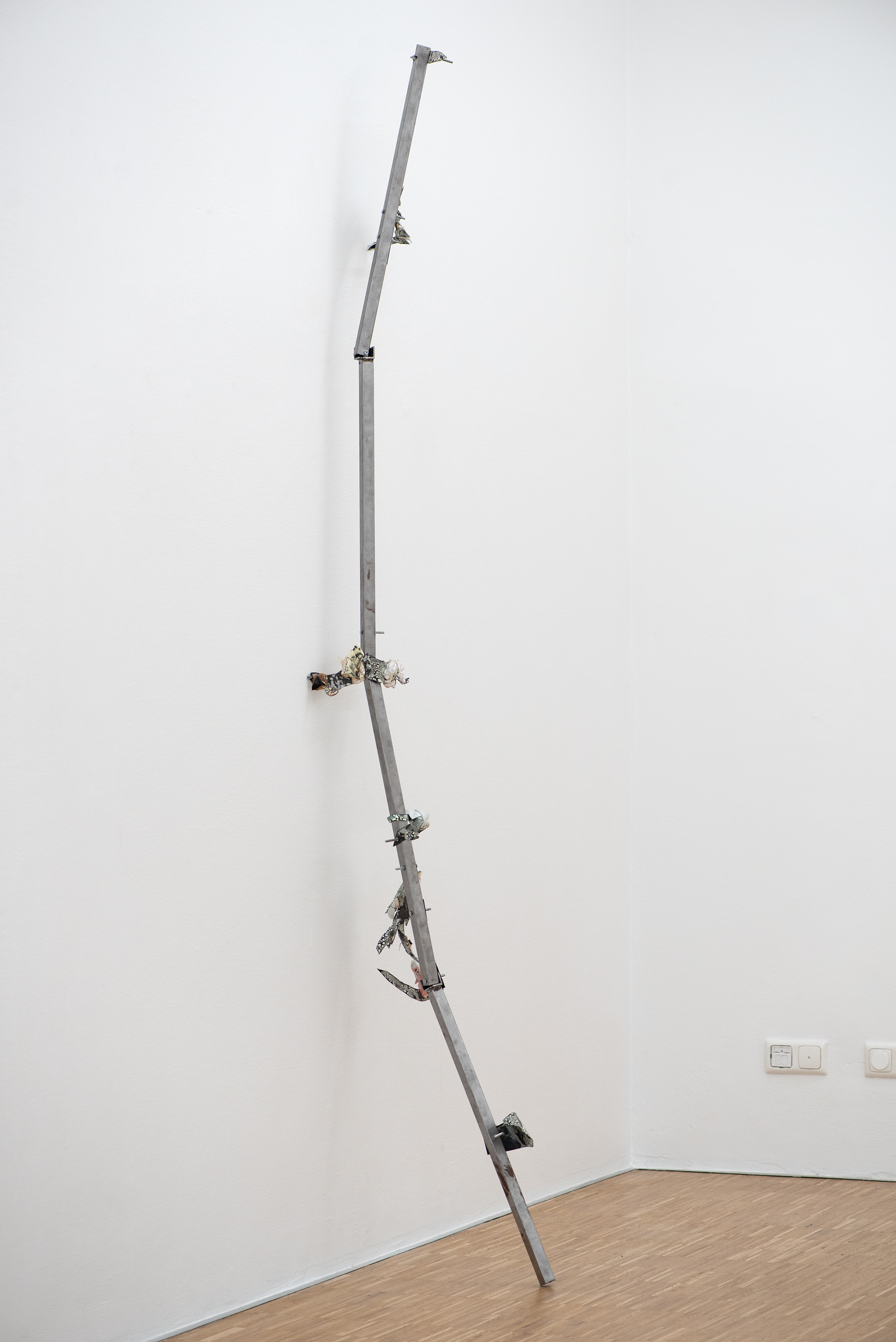
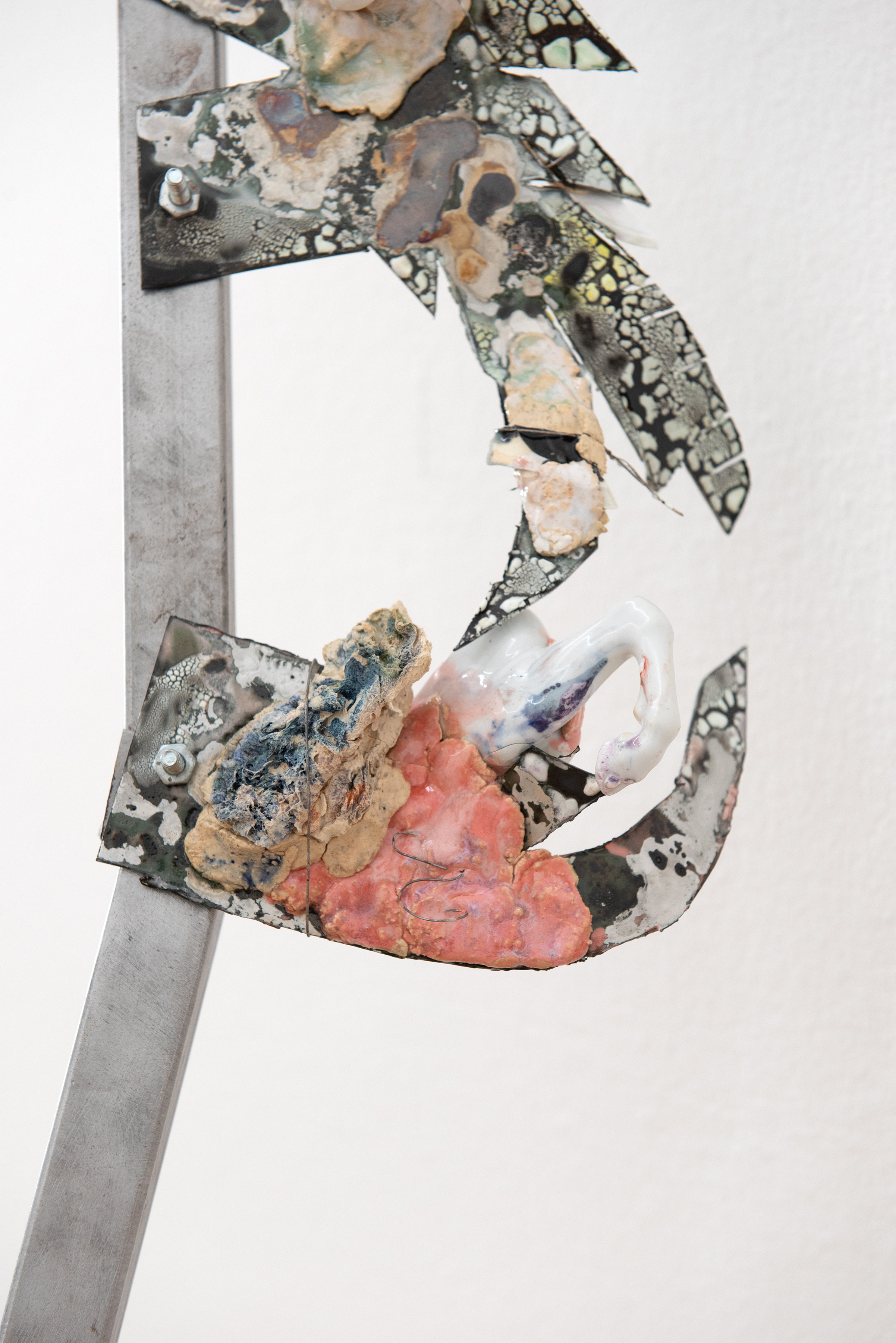
Julia Klemm, A chimera is not a pet 4, 2025, secondhand ceramic figures, steel, glaze, ceramic, screws, 27 × 46 × 260 cm
Julia Klemm, A chimera is not a pet 4, 2025, secondhand ceramic figures, steel, glaze, ceramic, screws, 27 × 46 × 260 cm (detail)
Julia Klemm, A chimera is not a pet, 2025, installation view
Julia Klemm, A chimera is not a pet 2, 2025, steel, glaze, ceramic, pigment, 44 × 38 × 74 cm
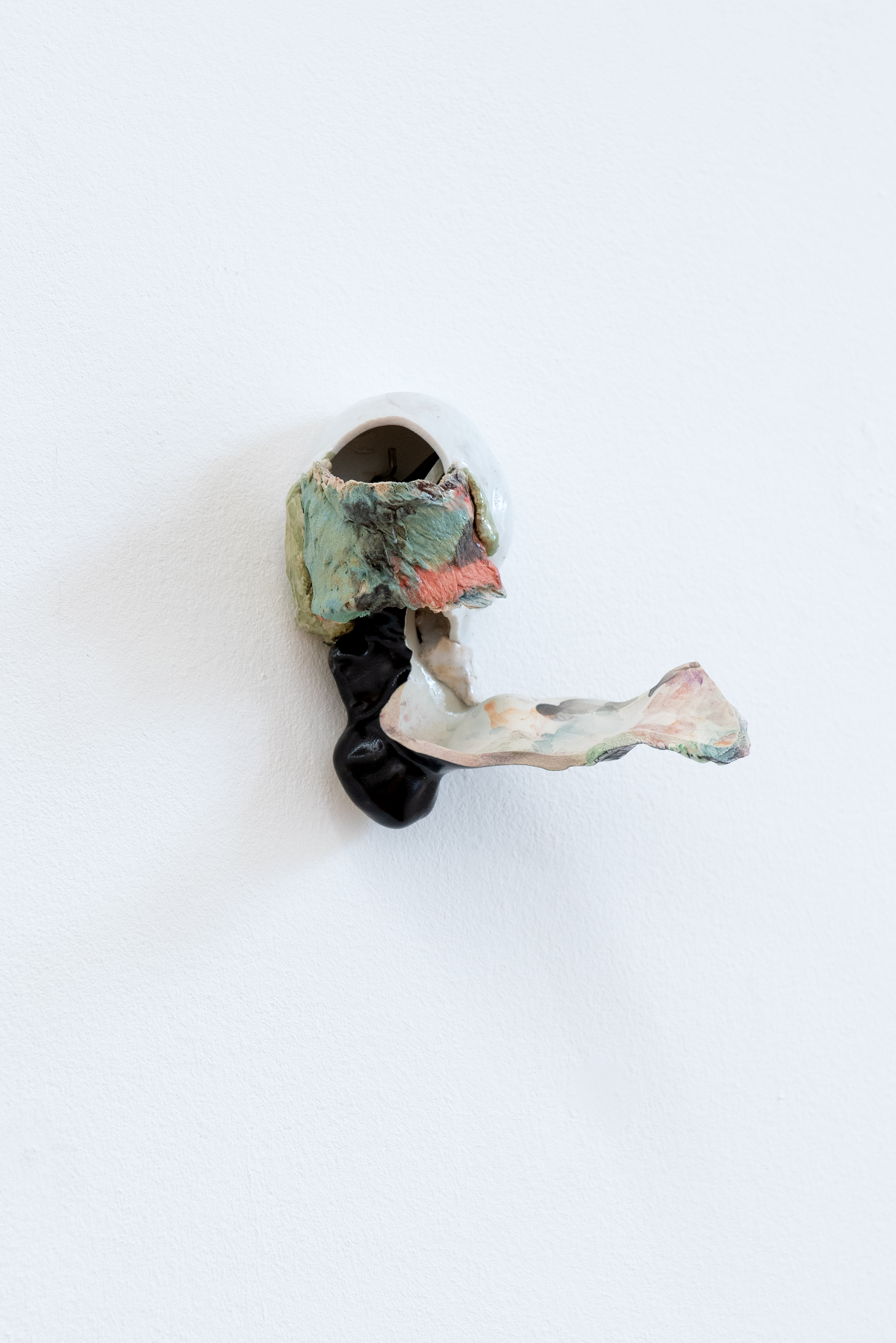
Julia Klemm, Untitled, 2025, secondhand ceramic figures, glaze, ceramic, fired soft toy, chandelier, 12 × 14 × 11 cm
Julia Klemm, A chimera is not a pet, 2025, installation view
Julia Klemm, Double trouble, 2025, ceramic, steel, pigment, glaze, 24 × 34× 60 cm
Julia Klemm, A chimera is not a pet 1, 2025, secondhand ceramic figures, glaze, ceramic, steel, fired soft toy, 15 × 25 × 14,5 cm
Julia Klemm, A chimera is not a pet, 2025, installation view
Julia Klemm, Mimicry, 2025, second ceramic figures, steel, chandelier, glaze, ceramic, 12 × 14 × 8 cm
Julia Klemm, Gryphon, 2025, secondhand ceramic figures, glaze, ceramic, steel, fired soft toy, 18 × 22 × 17cm

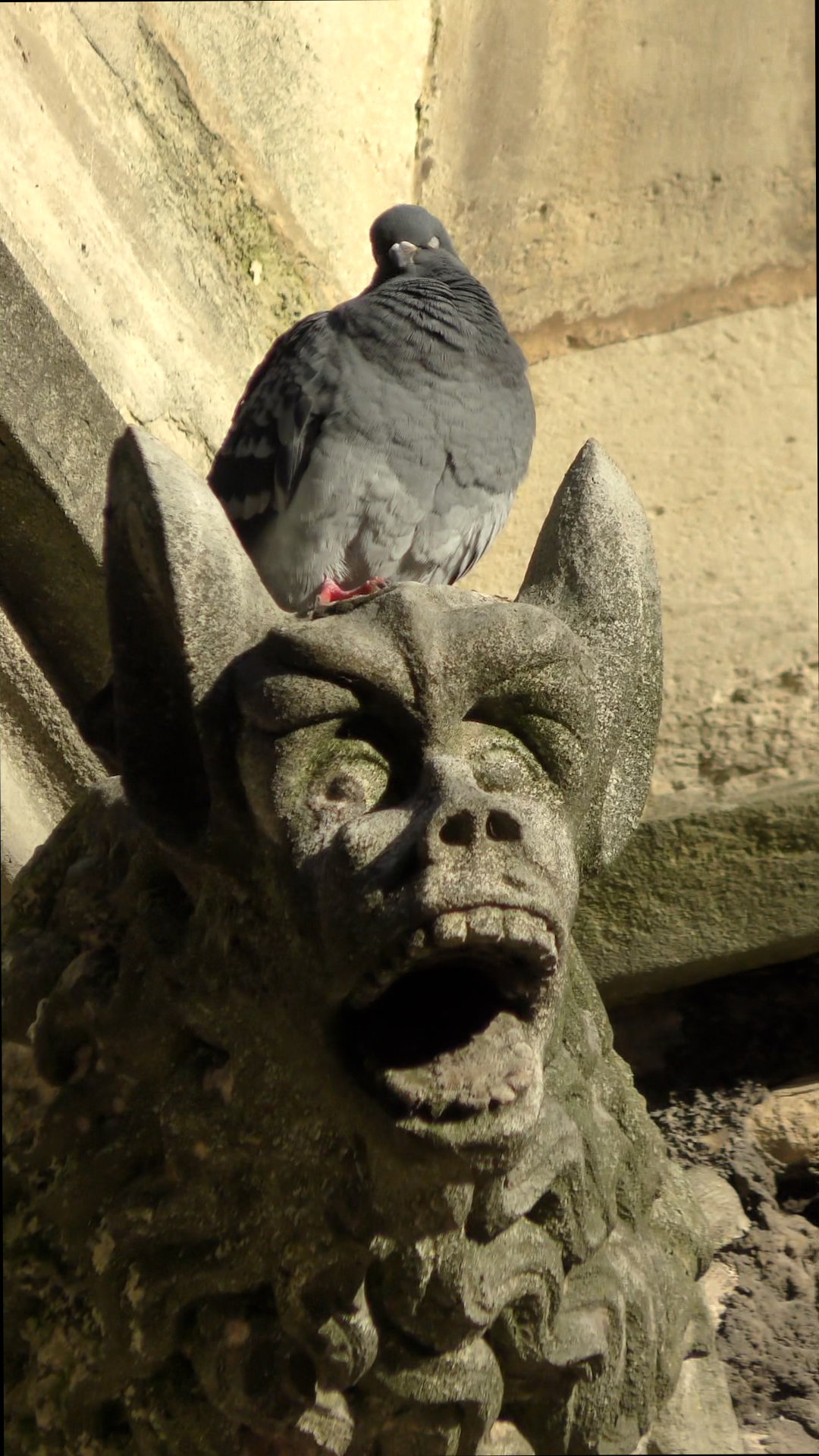
The problem I think, is that too often a chimera is seen as a pet. We visualise chimeras as these mythical fire breathing monsters, maybe with a lion’s head, a body of a goat, and a serpent for a tail. Three distinct animals are combined into one, their individual characteristics clearly visible for us to see. In contrast, biologically,a genetic chimera is often invisible, a nightmarish combination of two different sets of DNA, a result of one or more zygotes fusing together during the early stages of prenatal development. How this alien DNA might manifest is not altogether clear, but you hear stories of mothers having different DNA than their children, and the DNA from semen and saliva not matching in rape tests. To look for distinctions in chimeras would be the first step towards their domestication, treating the hybrid animal as another family member, a pet. But you cannot cuddle the long lost twin you might be carrying with you, inside.

Julia Klemm’s ceramic work often involves a combination of several smaller ceramic pieces, each with their own specific animal DNA. Sometimes these are readymade figurines of cats, lions or horses, glossy and kitsch, inhabitants of Flohmärkte and Omas’ living rooms. At other times, these are recreations of existing public art, of lion statues such as those found on Odeonsplatz, scanned, scaled down and then modelled with a 3D-printed negative mould. Rarely, an animal-type structure is moulded in clay by Julia on the spot, traces of fur scratched with a serrated scraper onto its surface. These smaller animal ceramics are first broken, smashed into almost unrecognisable fragments before they are combined, their intertwining made permanent by the heat of the ceramic oven. I look for these fragments as I walk around the work and try to classify them: look, here are some lion’s legs, and here, a cat’s head, but upside down and half-broken, so that I can see the form inside and outside. Focussing on the surface helps, as I detect the glossy spots of a panther or the layer lines of the 3D printer.

In doing so, I am looking for a pet, with fur strokable like a pastel-coloured soft toy. I try to make the strange shapes of Julia Klemm’s work once again familiar to me. But their outward appearance is a result of a logic that remains hidden. The work demands I see it as a multiplicity, which means in animal terms, as a population. And science teaches us that a population is not a fixed set of individuals of the same species, but an always evolving, interacting mass that changes in relation to its location and environment. The alliances made in a population are not just of the filial kind between individual members of the group, but those made with other groups, other animals, with plants, and with geography.  To see the inner workings of the animal in Julia Klemm’s ceramics, I need to step away from the animal and take a more expansive view, one that acknowledges population change forged by mutation. It is very alien to see the world in this way, as foreign and as violent as the shards of steel that interpenetrate the work, both holding it together and ripping it apart. 

Magdalena Wiśniowska 2025

The Brutality of Spring

Anna Łuczak, Sophie Schmidt

14.12.2024-2.02.2025

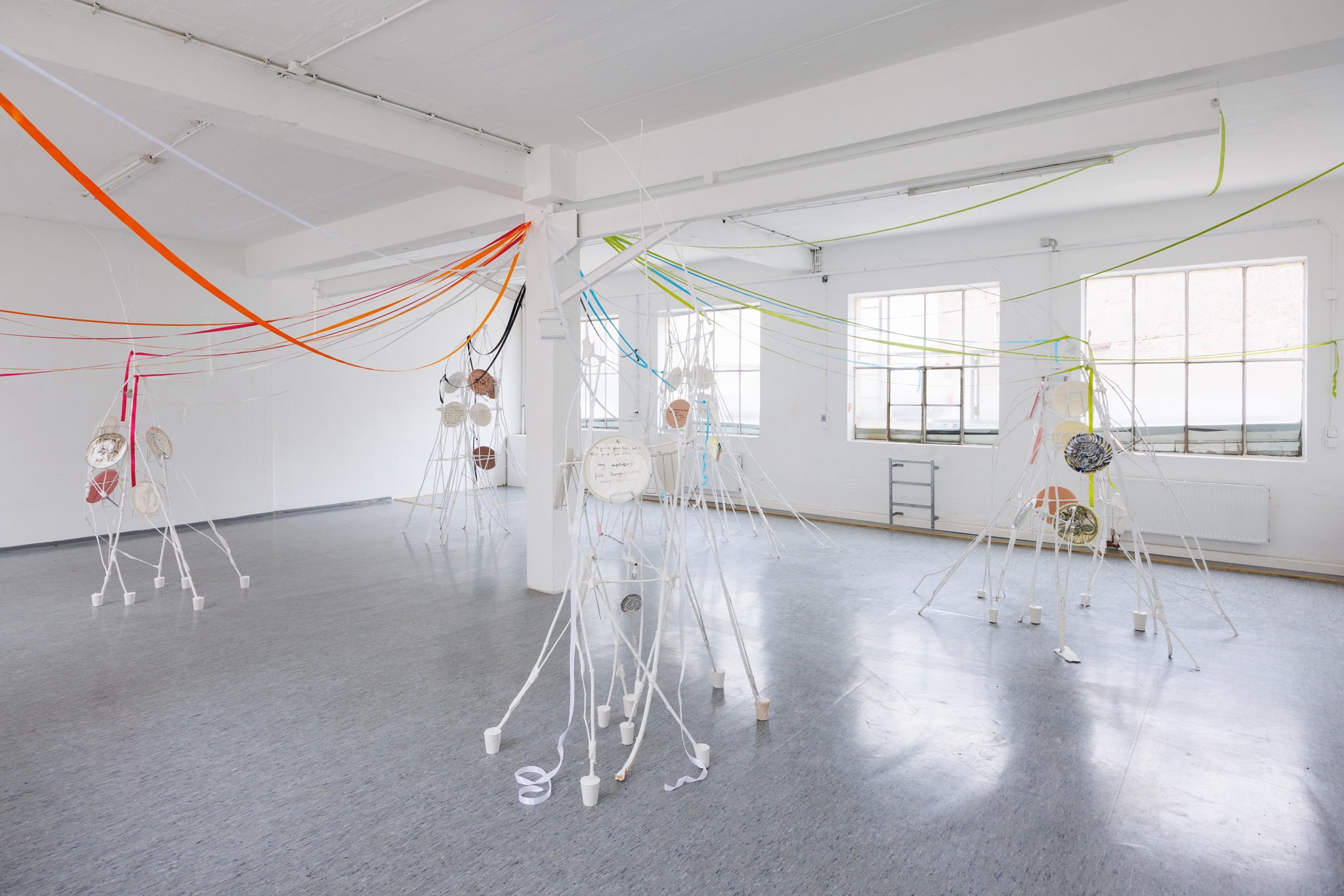
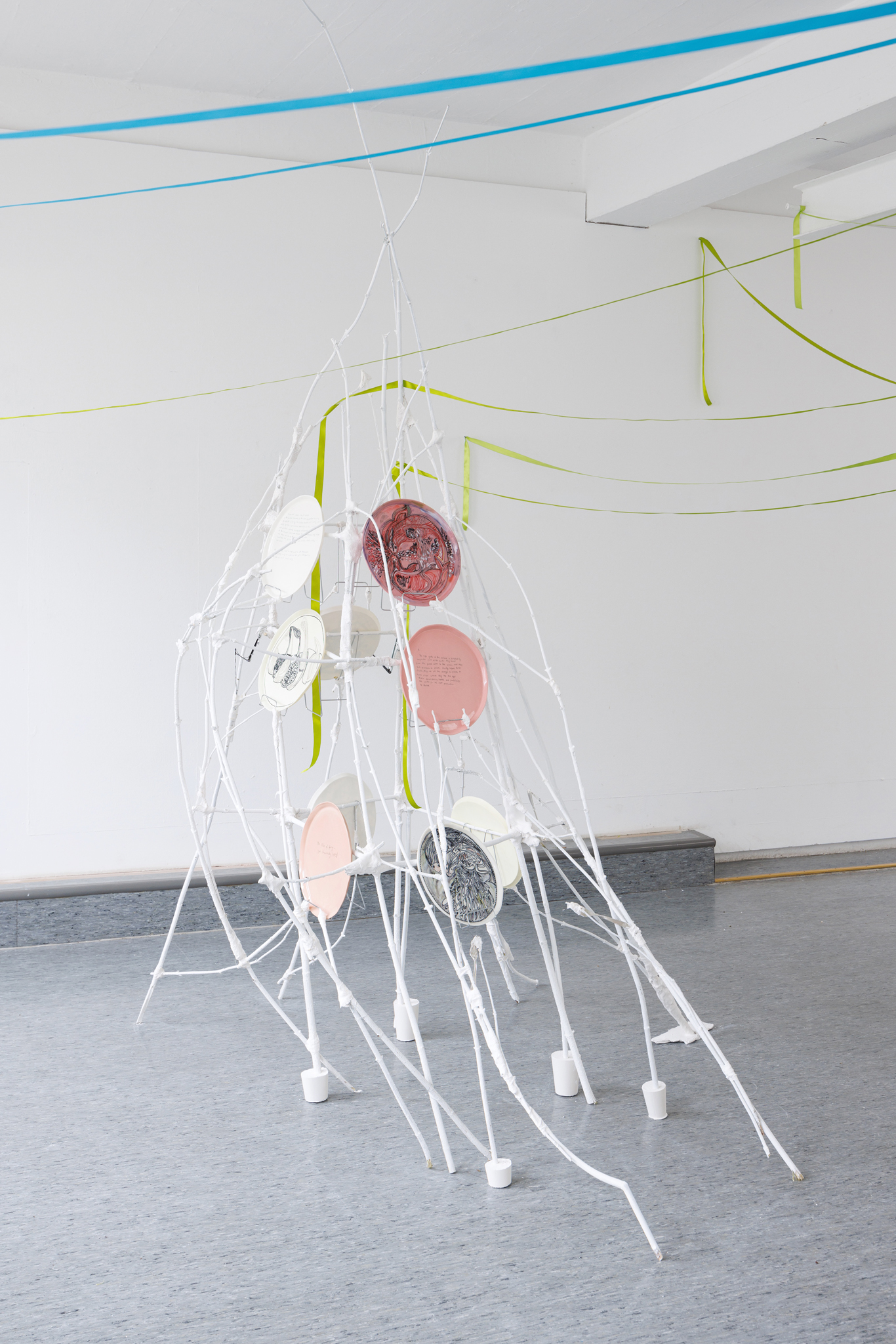
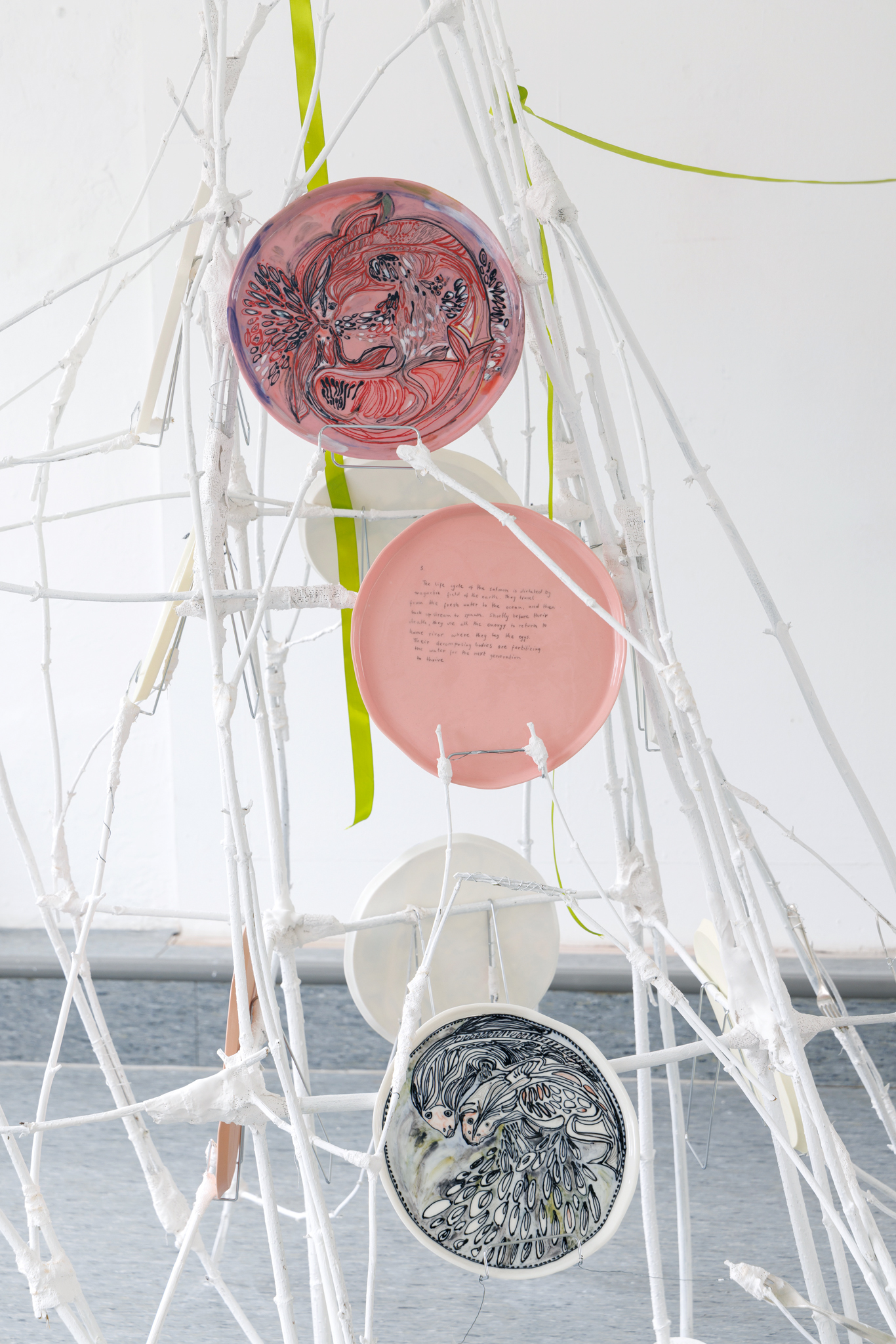
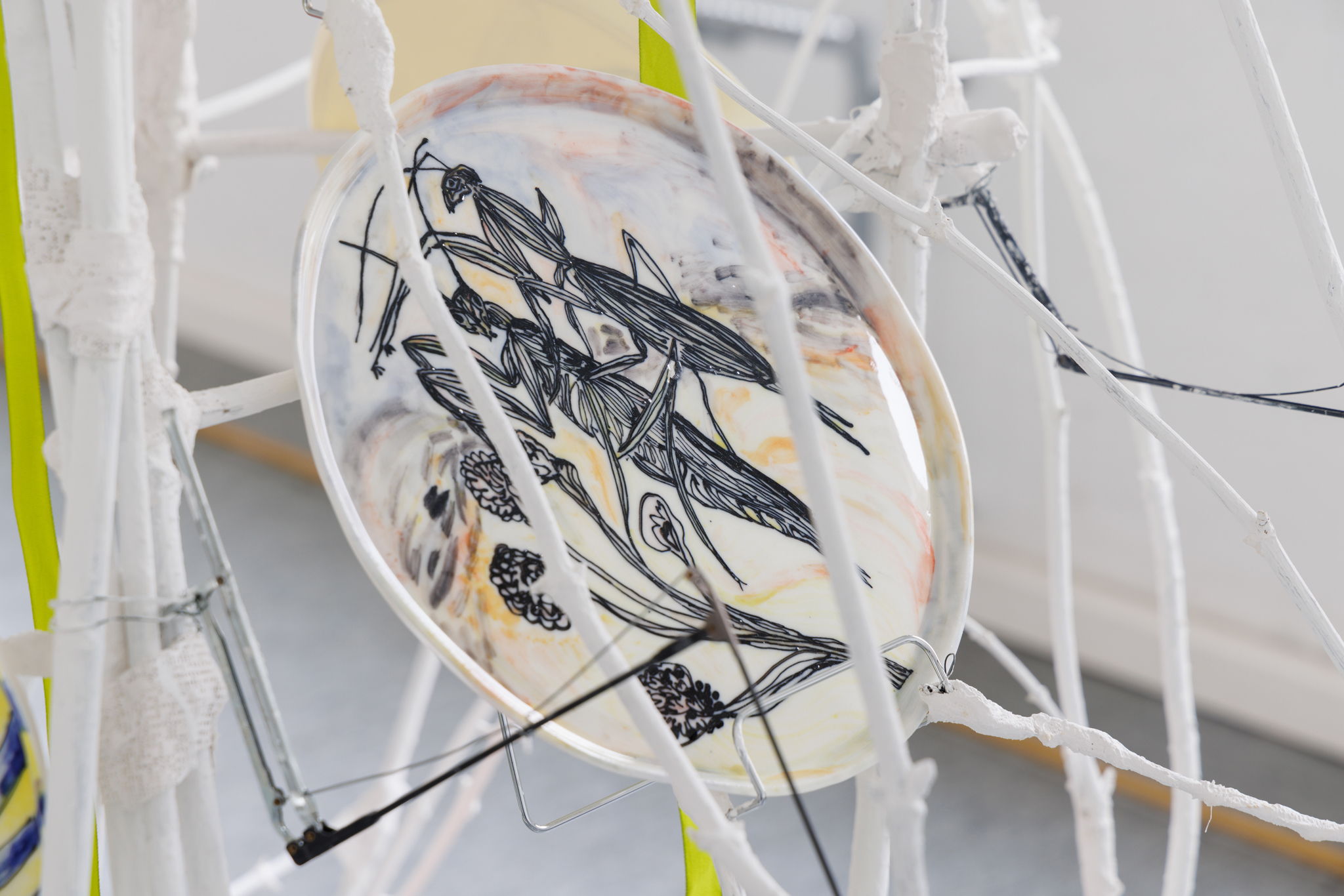
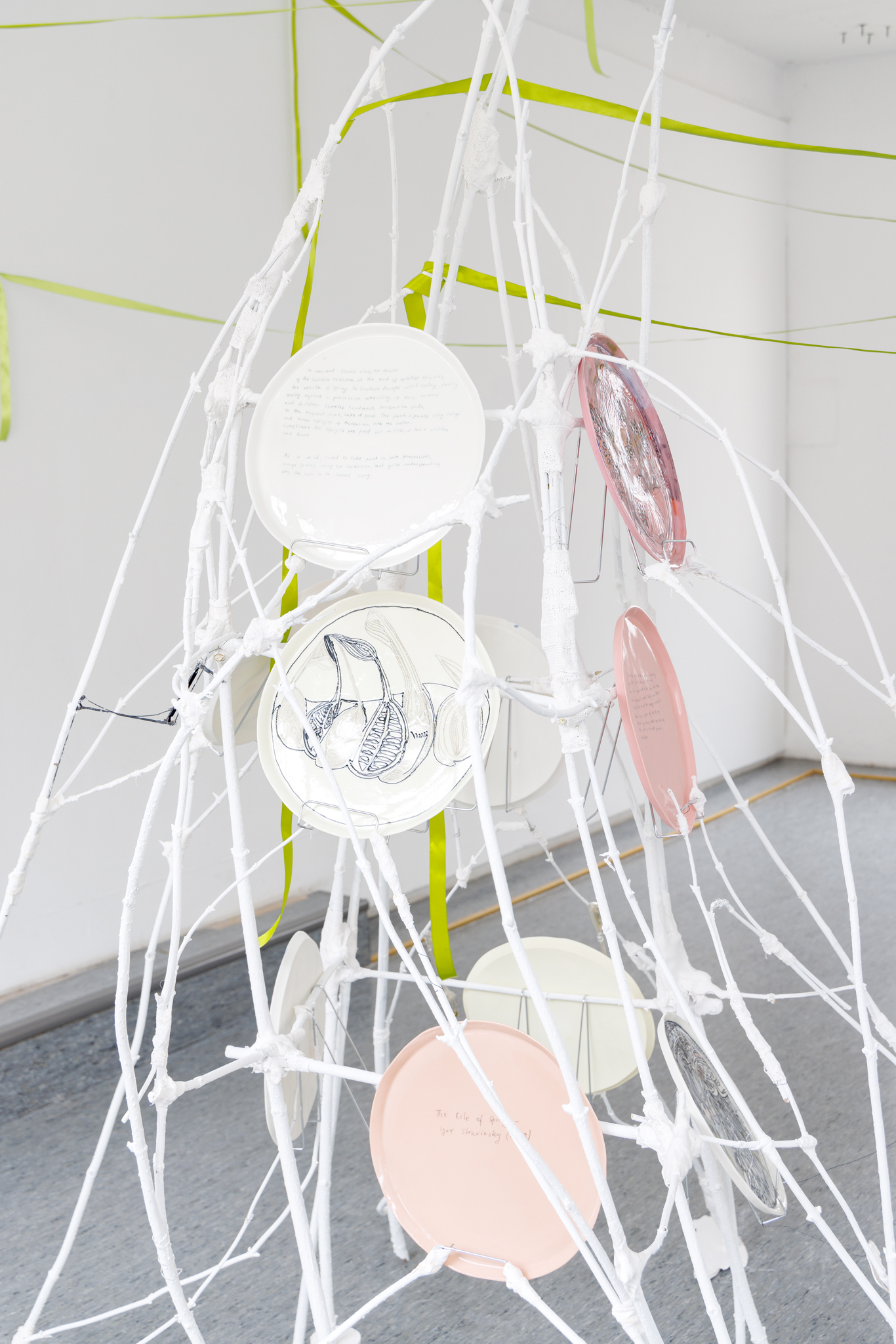
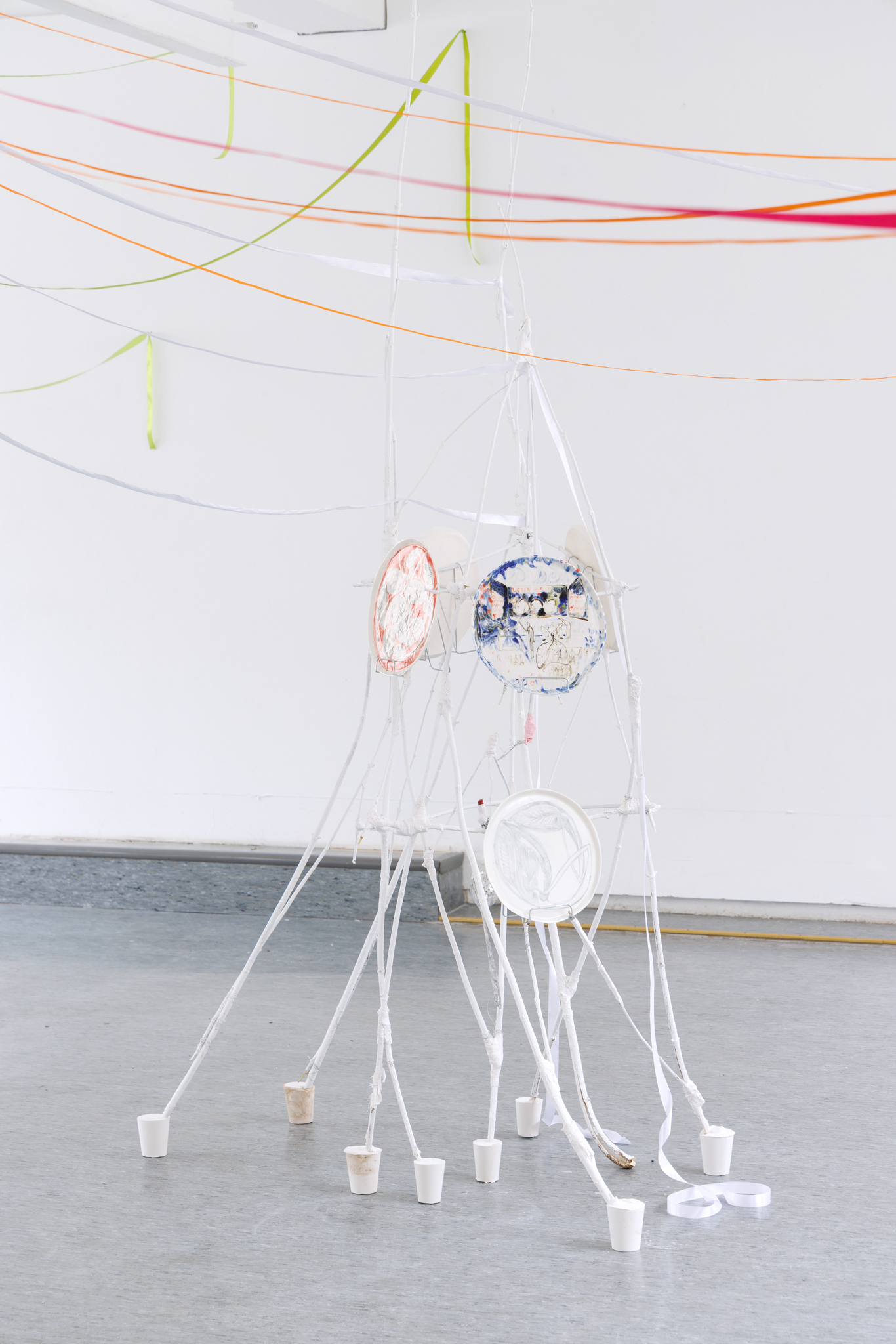
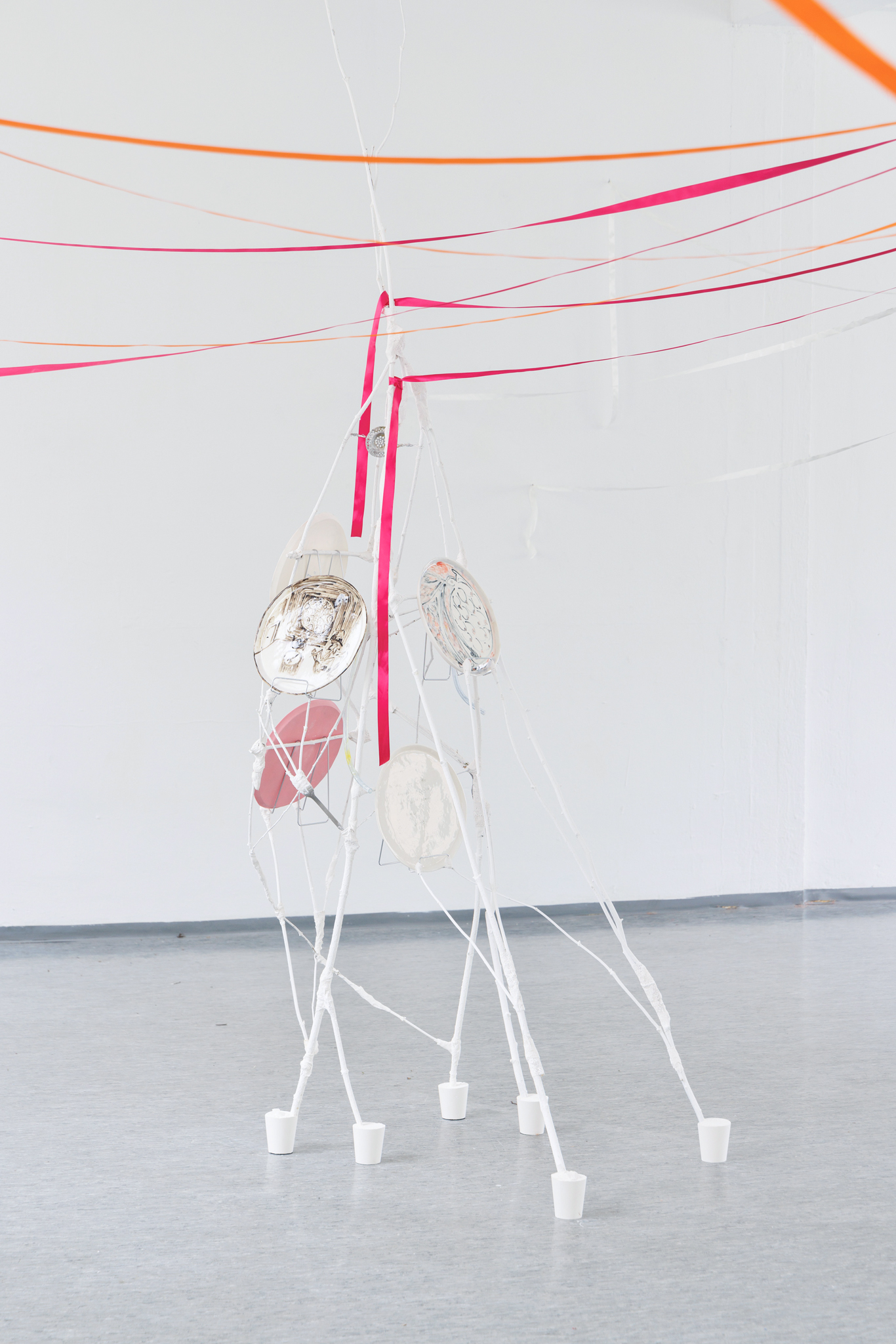
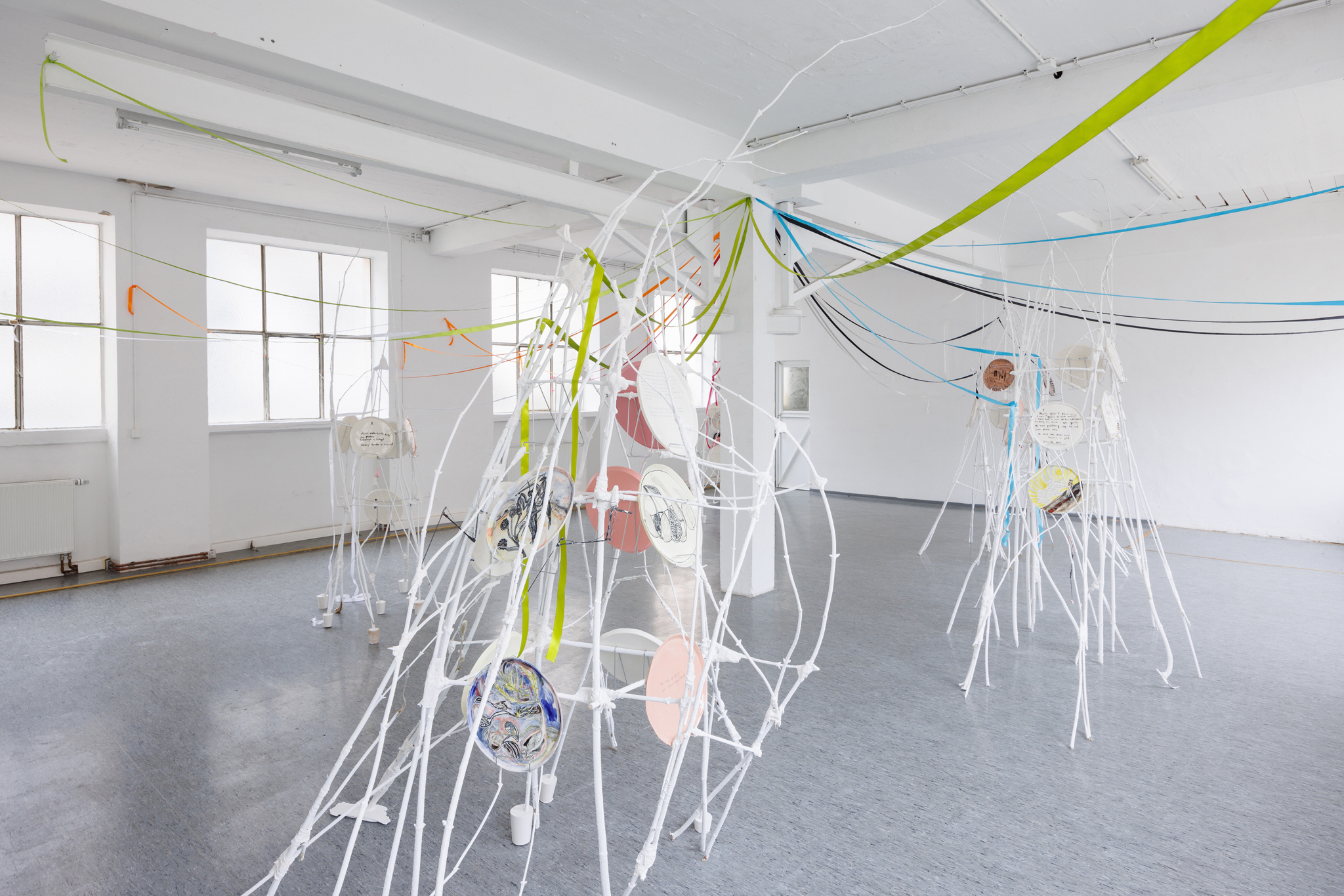
Anna Łuczak, Sophie Schmidt, “Brutality of Spring,” 2024, installation view (porcelain plates, white paint, wood ribbon, metal plate holders, cutlery, make up). Photo: Thomas Splett
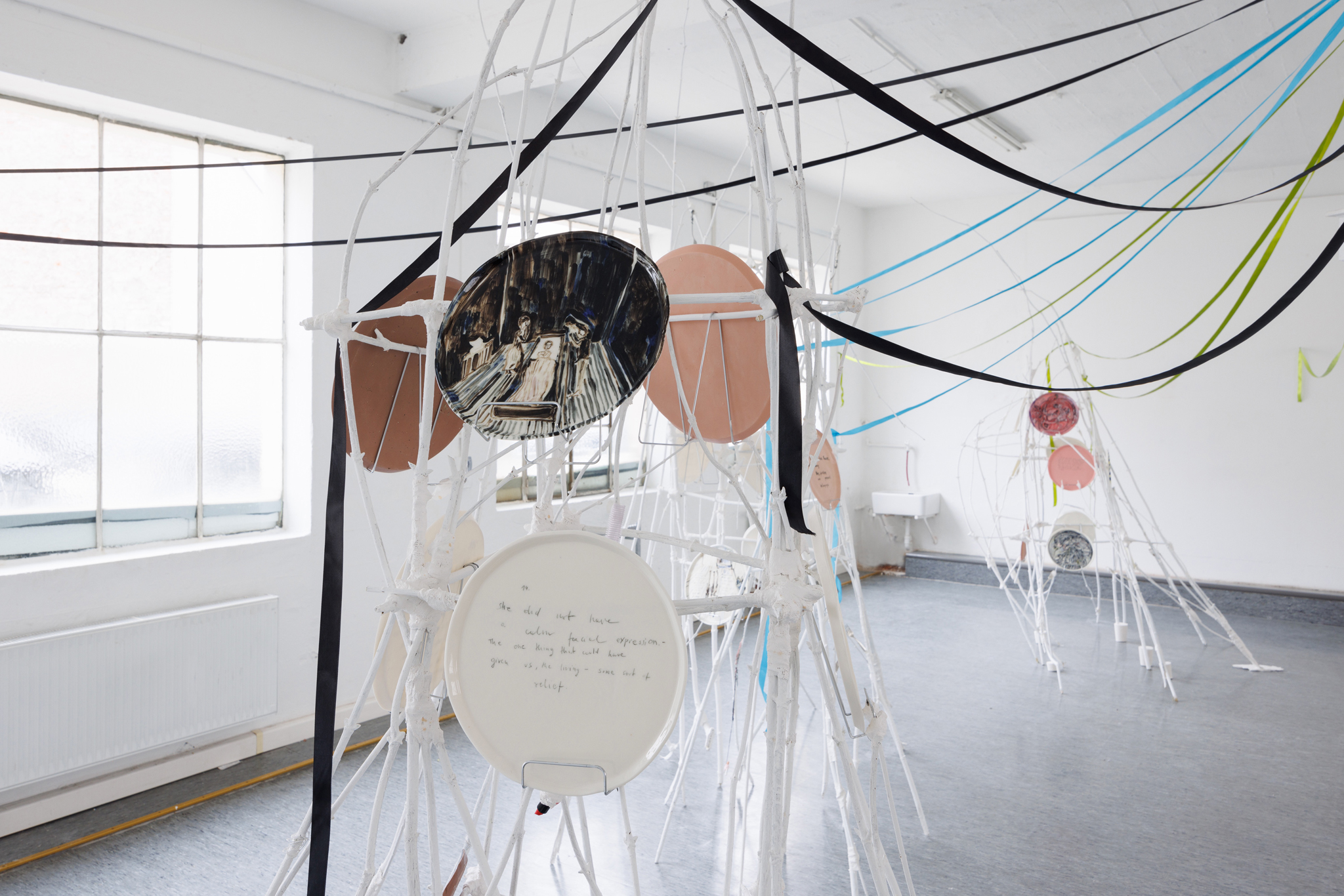
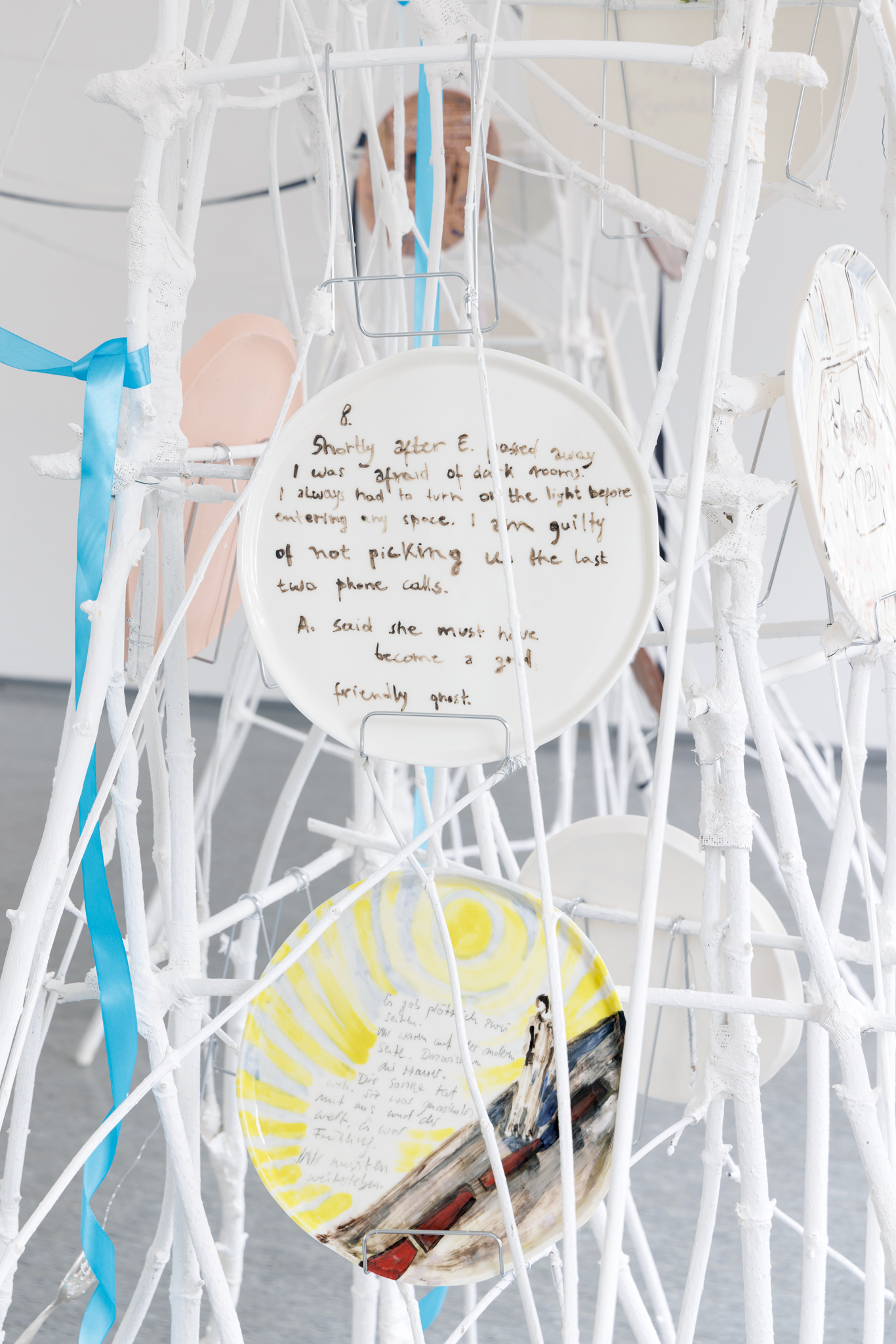
Anna Łuczak, Sophie Schmidt, “Brutality of Spring,” 2024, detail (porcelain plates, white paint, wood ribbon, metal plate holders, cutlery, make up). Photo: Thomas Splett
Anna Łuczak, Sophie Schmidt, “Brutality of Spring,” 2024, installation view (porcelain plates, white paint, wood ribbon, metal plate holders, cutlery, make up). Photo: Thomas Splett
Anna Łuczak, Sophie Schmidt, “Brutality of Spring,” 2024, detail (porcelain plates, white paint, wood ribbon, metal plate holders, cutlery, make up). Photo: Thomas Splett
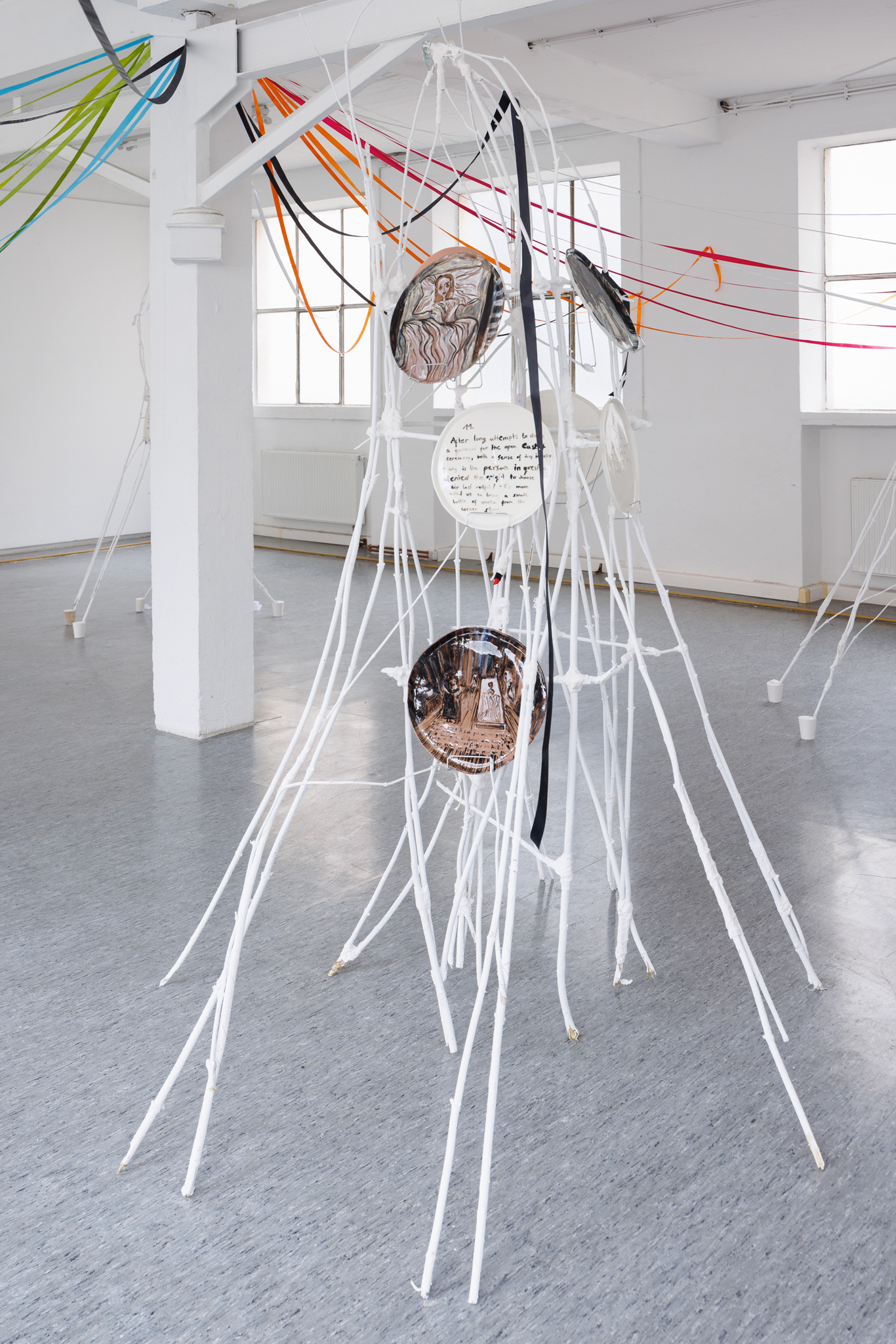
Anna Łuczak, Sophie Schmidt, “Brutality of Spring,” 2024, installation view (porcelain plates, white paint, wood ribbon, metal plate holders, cutlery, make up). Photo: Thomas Splett
Anna Łuczak, Sophie Schmidt, “Brutality of Spring,” 2024, detail (porcelain plates, white paint, wood ribbon, metal plate holders, cutlery, make up). Photo: Thomas Splett
Anna Łuczak, Sophie Schmidt, “Brutality of Spring,” 2024, installation view (porcelain plates, white paint, wood ribbon, metal plate holders, cutlery, make up). Photo: Thomas Splett
Anna Łuczak, Sophie Schmidt, “Brutality of Spring,” 2024, detail (porcelain plates, white paint, wood ribbon, metal plate holders, cutlery, make up). Photo: Thomas Splett
Anna Łuczak, Sophie Schmidt, “Brutality of Spring,” 2024, installation view (porcelain plates, white paint, wood ribbon, metal plate holders, cutlery, make up). Photo: Thomas Splett
Anna Łuczak, Sophie Schmidt, “Brutality of Spring,” 2024, detail (porcelain plates, white paint, wood ribbon, metal plate holders, cutlery, make up). Photo: Thomas Splett

A person has died.

Andrea Éva Győri is dead. 

These two statements are not the same, though they might seem very similar. When I say, E. is dead, I think of her and how she was, someone I never met but heard so much about: the tone of her voice, her laugh, her enthusiasm and strong personality. She is someone with a consciousness, a memory, a personal identity. But when I say, a person has died, I mean something different. The logic is different because it is impersonal. It has nothing to do with E. and yet everything to do with her.  A person is singular – the one – yet not particular. I cannot say anything specific about a person.  A person is dead is an indefinite statement, because a person is a life, and life is indefinite, singular, impersonal. 

How can I describe a life?  Without talking about E. who lived? Deleuze was right, this requires an empiricism, an empirical kind of thinking, an almost scientific kind of rigour. I keep making lists:

  • There is the Marzanna, an effigy out of twigs and straw that Polish children drown in a nearby river as spring approaches.
  • There is the life cycle of the salmon, swimming upstream and spawning, then dying and their bodies fertilising the river.
  • Did you know that skeletal muscle stem cells continue living up to 17 days after all other cells have died? 
  • That scene in Dicken’s novel, “Our Mutual Friend,” when the Rogue lays dying in Miss Abbey’s first-floor bedroom. While he barely breaths everyone tries to help, but as soon as his eyelid trembles, his nose twitches, the doctor and the four men grow distant and caution returns. 

Anna Łuczak and Sophie Schmidt made a series of porcelain plates together, as individual responses to E.’s passing.  Anna made the plates and wrote the texts, Sophie painted images: 

  • There is the day of E.’s diagnosis. The breast cancer. 
  • There is the day at the crematorium. 
  • And the time just after, laying on the floor.
  • There is salmon spawning, seeds germinating. 

The plates refer to the domestic language of the vanitas. We eat on them with fork and knife, we wash them and we put them away. The colourful ribbons belong to the “kapliczka,” the wayside shrine found on nearly every road in Poland, equally catholic and pagan. Sophie Schmidt’s wooden structures hold everything together ever so precariously, extensions of the body, with the body’s fragility, strength and breakability. 

Magdalena Wiśniowska 2024

The Brutality of Spring

Anna Łuczak, Sophie Schmidt

14.12.2024-2.02.2025

Opening: 13.12.2024, 6-9 pm 

  • In Poland every year in spring, school children gather together at the banks of frozen rivers to drown the Marzanna. I remember throwing stones at the doll to make her sink faster. We then walked home without looking back. 
  • Salmon swim upstream to lay their eggs in their home river. They die and their decomposing bodies help fertilise the water. 
  • Everyone helps the rogue in the Dicken’s novel as he lays dying in Miss Abbey’s first-floor bedroom. But as he grows warm – “Did that eyelid tremble? Did that nostril twitch?” – the doctor and the four men cool and “their faces and their hearts harden to him.”

These occasions recognise what for Deleuze is not reducible to experience, but which nevertheless can be confronted: a life. Not the lived, individual life, so full of things that need to be done, but a life, singular and impersonal, indefinite; a life with no moments, but only the in-between, a passage, a becoming, of events yet to come that have already happened. “Pure power and bliss” Deleuze writes. Just life, only life, a life. 

  • In “The Brutality of Spring” Anna Łuczak and Sophia Schmidt collaborate together in homage to a recently deceased mutual friend to produce a multimedia installation, a vanitas-type project, founded equally in the transience of domestic sphere and the fragility of the human body. 

VO Special: Carrying the Earth to the Sky

Hêlîn Alas,Pierre-Yves Delannoy, Lukas Hoffmann, Veronika Hilger, Ju Young Kim, Anna McCarthy, Jonathan Penca, Curtis Talwst Santiago, Valio Tchenkov, Ayaka Terajima, Gülbin Ünlü, Paul Valentin, Max Weisthoff

7.09 -28.09.2024

Temporary venue at Schillerstr. 38, Munich

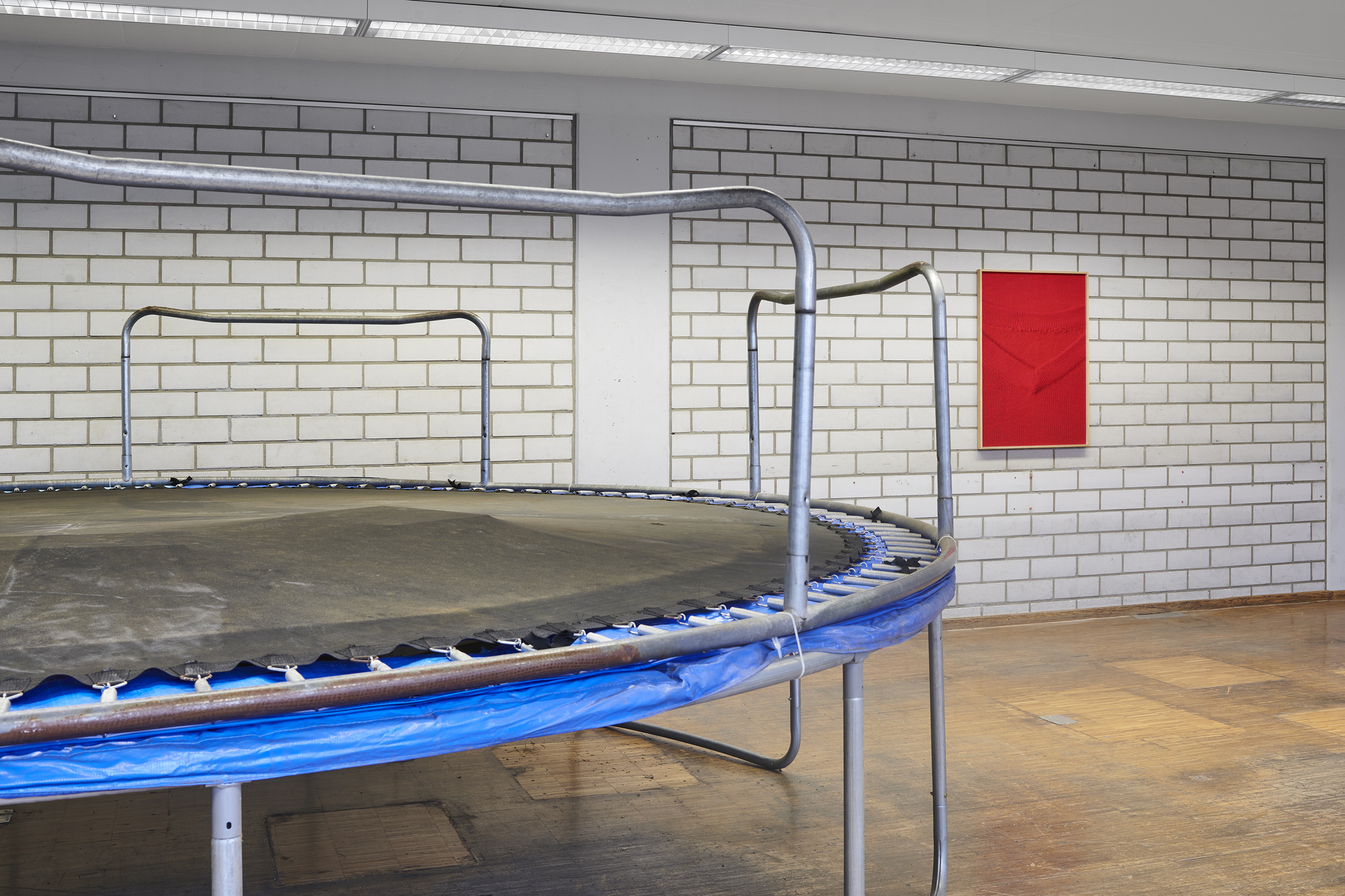
Hêlîn Alas, Carrying the Earth to the Sky, 2024, installation view with “Up and Up and Up and Up,” 2024, trampolines, cable ties, speakers, sound, cables, 490 x 165 cm and “Still Faced,” 2024
framed photo print (part of a series) 100 x 70 cm. Photo: Produktion Pitz
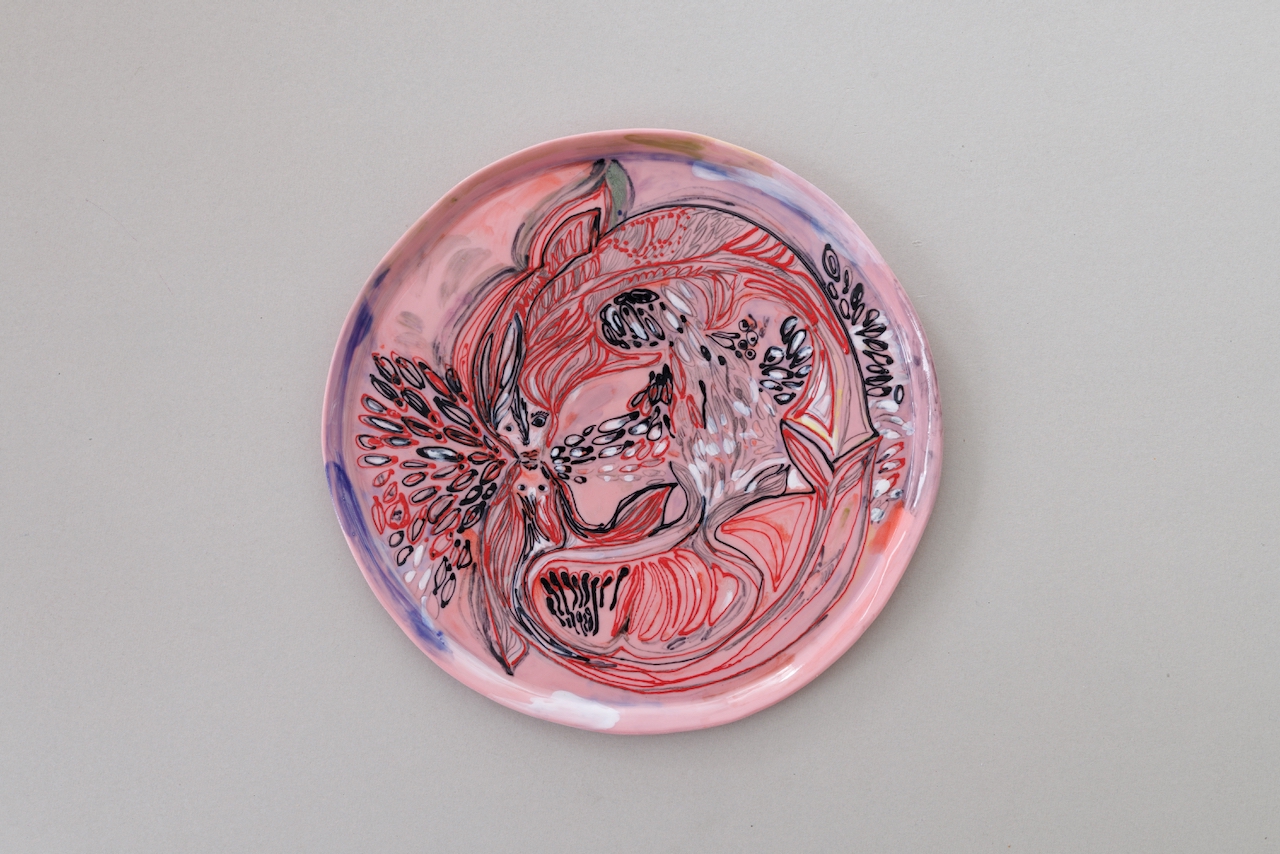
Hêlîn Alas, “Traumhaus junior,” 2024, caramel, 118 x 90 x 8 cm. Photo: Produktion Pitz
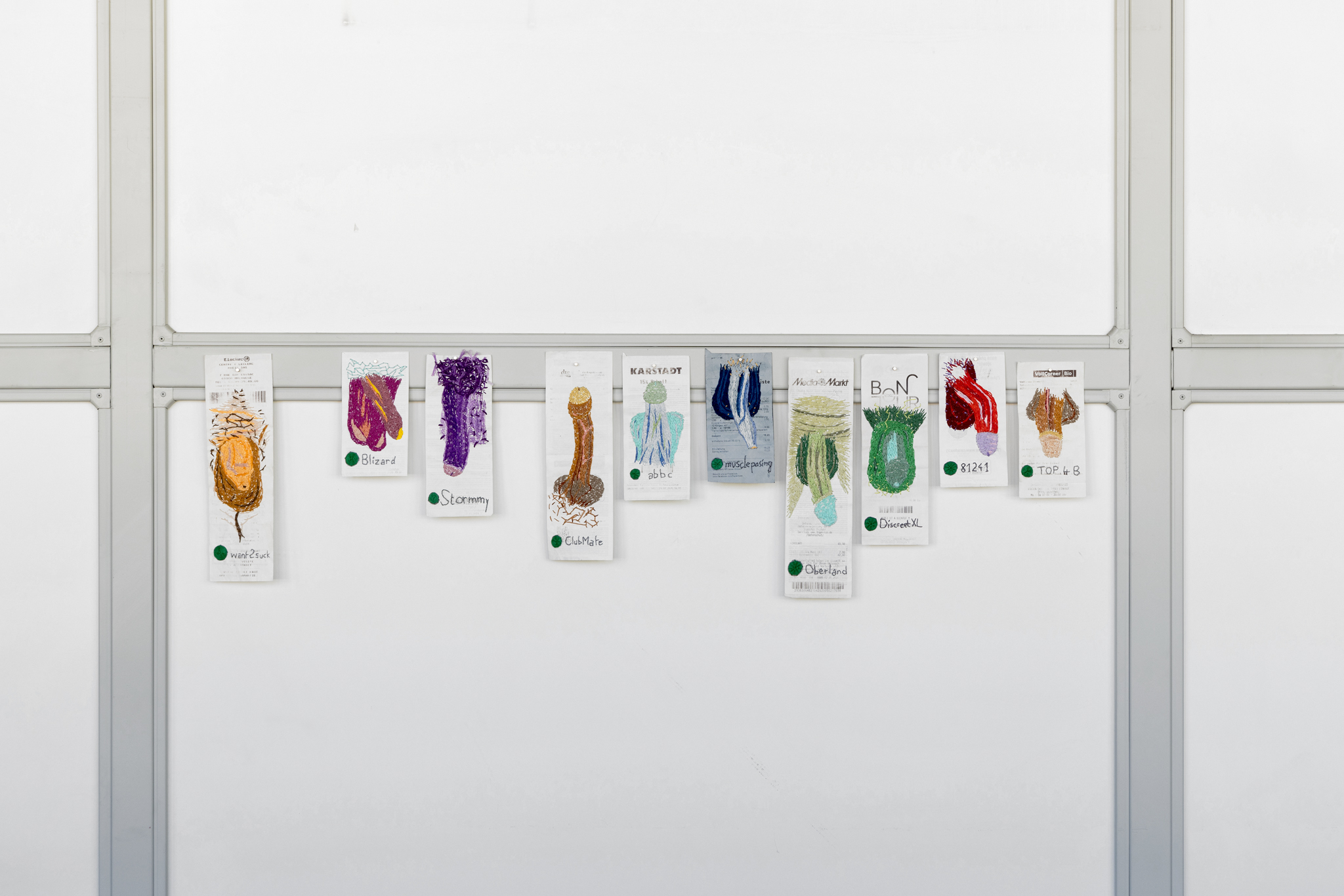
Pierre-Yves Delannoy, “embroideries on cashier’s ticket,” 2019-24, cotton yarns, thermo paper, dimensions variable (8 x 16 cm (X10)). Photo: Thomas Splett
Veronika Hilger, Carrying the Earth to the Sky, 2024, installation view. Photo: Thomas Splett
Veronika Hilger, Untitled, 2024, ceramic, 27 × 24 × 3 cm. Photo: Thomas Splett
Lukas Hoffmann, “Figure,” 2020, MDF, oak, aluminum, acrylic glass, 50 x 45 x 8 cm. Photo: Lukas Hoffmann
Lukas Hoffmann, “Castle,” 2024, Spraypaint, plywood, screws, MDF dyed through, 100 x 100 x 200 cm. Photo: Lukas Hoffmann
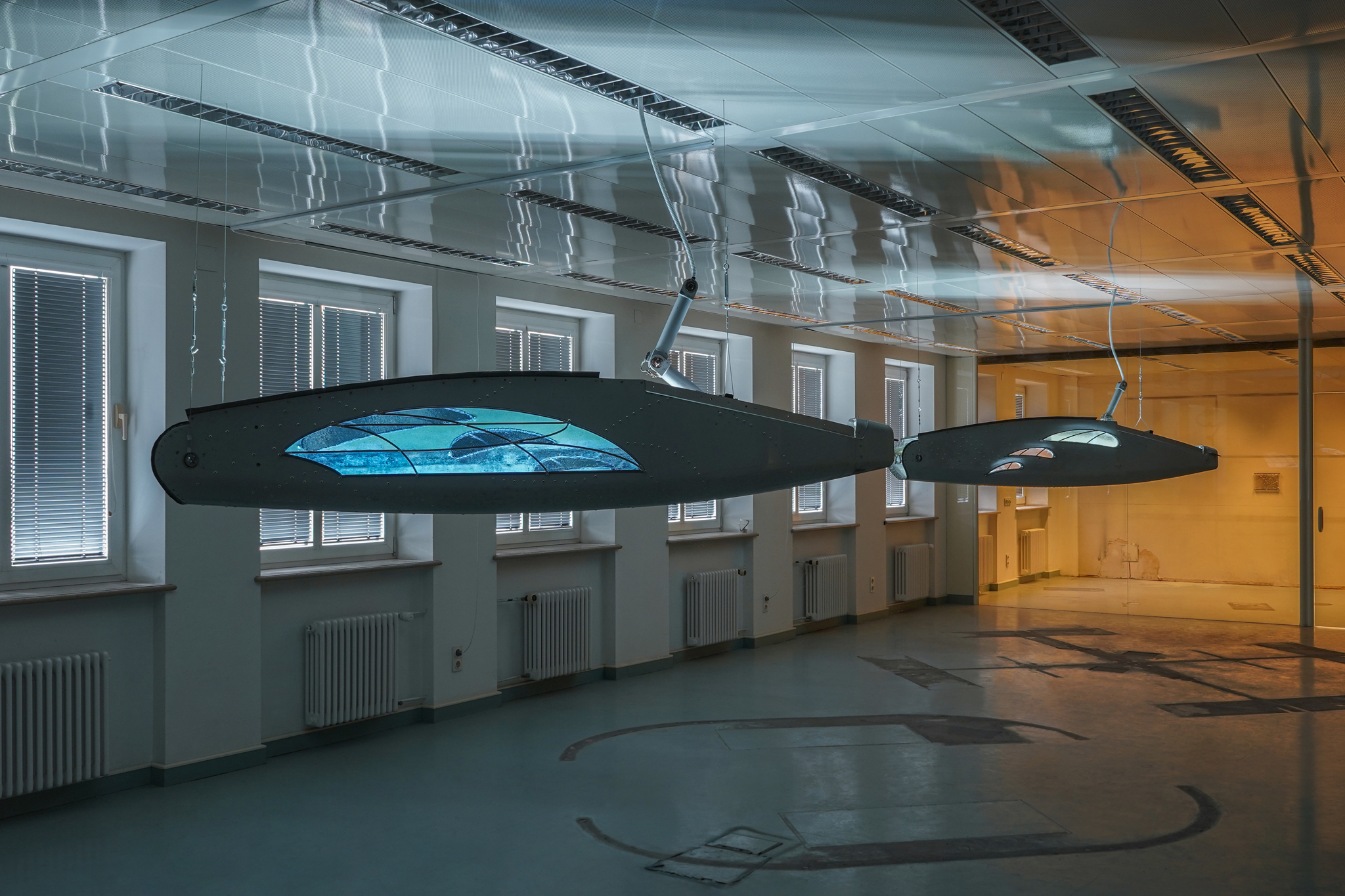
Ju Young Kim, “Almost like Whale Watching,” 2024, a pair of aircraft fairings, stained glass, rivets, LED, 240 x 38 x 46 cm (X2). Photo: Younsik Kim
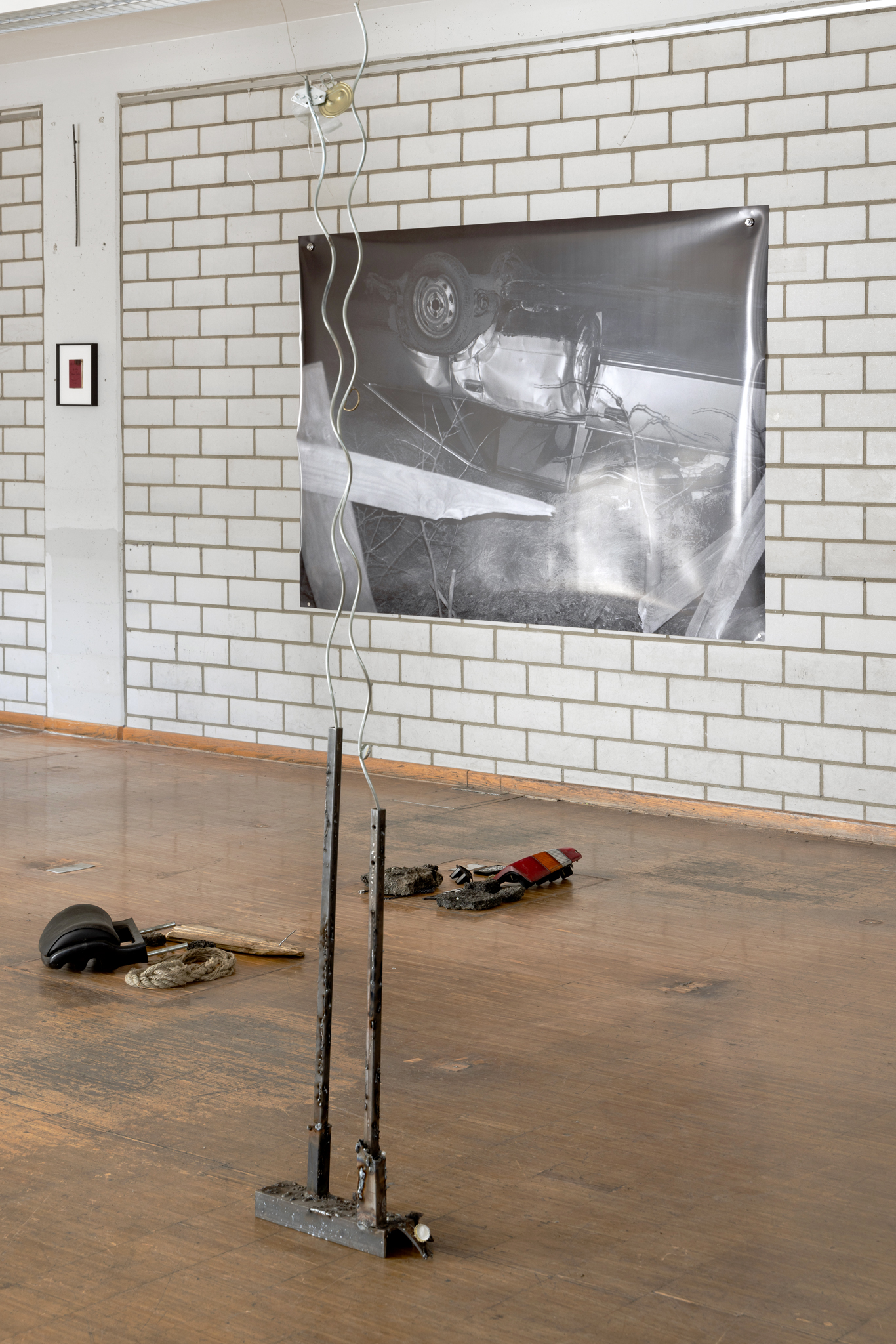
Anna McCarthy, Carrying the Earth to the Sky, 2024, installation view with “Car Crash b/w,” 2001, analogue photograph 230 x 160. Photo: Thomas Splett 
Anna McCarthy, “Car crash installation,” 2024, mixed media, dimensions variable. Photo: Thomas Splett
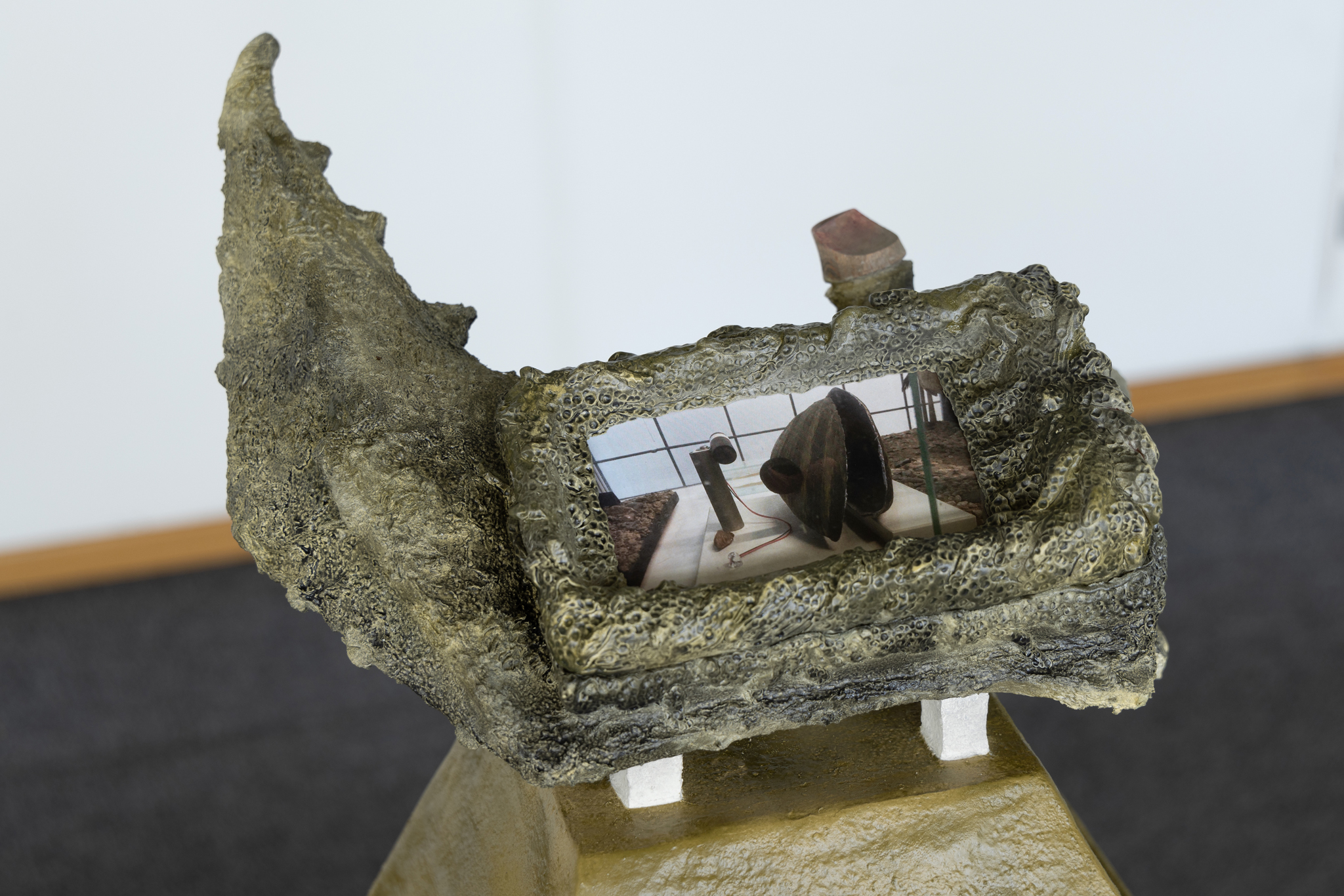
Jonathan Penca, “Synanthropop,” 2024, paper-maché, plaster, polymer clay, resin, cardboard, acrylic paint, wood, glass, digital print on paper, plinth, 120 x 60 x 60 cm. Photo: Thomas Splett
Jonathan Penca, “Mitten Crack,” 2024, paper-maché, plaster, polymer clay, resin, wooden bird whistle, lipstick, cardboard, acrylic paint, digital print on paper, plinth 120 x 60 x 60 cm. Photo: Thomas Splett
Curtis Talwst Santiago, “History of Touch” 2024, installation view detail. Photo: Thomas Splett
Curtis Talwst Santiago, “History of Touch” 2024, installation view. Photo: Thomas Splett
Valio Tchenkov, Carrying the Earth to the Sky, 2024, installation view. Photo: Thomas Splett
Ayaka Terajima, Carrying the Earth to the Sky, 2024, installation view. Photo: Thomas Splett
Ayaka Terajima, “Long legs doki,” 2023, Unglazed fired ceramic by recycled clay, 60 x 100 x 130 cm. Photo: Thomas Splett
Gülbin Ünlü, “Karanlik isik,” 2024, wood, printed fabric, dimensions variable (site specific installation). Photo: Thomas Splett
Gülbin Ünlü, “Karanlik isik,” 2024, wood, printed fabric, dimensions variable (site specific installation) detail. Photo: Thomas Splett
Paul Valentin, “Kasside,” 2024,  site specific video installation. Photo: Thomas Splett
Max Weisthoff, “perpetuator,” 2024, sculptural sound installation, 5 objects, cable, dimensions variable (site specific installation). Photo: Thomas Splett
Max Weisthoff, “out of flesh,” 2024, mixed media installation, 2 channel video, x objects, dimensions variable (site specific installation). Photo: Thomas Splett

“Carrying the Earth to the Sky” will present works by 13 artists who are currently active in the contemporary art scene in Munich. The artists were selected in a two-stage process. First each of the 37 participants of VARIOUS OTHERS nominated one artist currently living in Munich. From this group, an international jury consisting of four institutional curators selected 13 artists who will show their work as part of the VARIOUS OTHERS program in September. The jury acknowledged that the quality of the applications received made their task both exciting and challenging. The final selection of multi-generational artists reflects the desire to see art beyond fixed categories and clichés and to honour distinctive works.

The exhibition’s curator, Magdalena Wisniowska, has meticulously chosen the works in collaboration with the artists. These will be presented together in an overarching curatorial concept at Schillerstraße 38 under the title “Carrying the Earth to the Sky”.

“The earth is something human, something we keep under our feet. The sky high above is without air, where no living thing can breathe. Moving away from one to the other means letting go of the earth and constructions that belong to it – actions, bodies, objects, sensations and desires – until only the elements, disconnected molecules, remain.”

We would like to express our gratitude to all supporters of the exhibition, particularly the owners of the property at Schillerstraße 38, the Cultural Department of the City of Munich, the Edith-Haberland-Wagner Foundation and Serviceplan Group for their generous support.

Jury:
Rosa Ferré (TBA21, Madrid)
Luis Silva (Kunsthalle Lissabon)
Nicola Trezzi (CCA, Tel Aviv)
Vivien Trommer (K21, Düsseldorf)

From Animal to Mineral

Judith Adelmann, Rachel Fäth, Sophia Mainka, Hannah Mitterwallner, Jonathan Penca, Maria VMier

15.12. 2023 – 18.02.2024

Lothringer Halle, Lothringer Str. 13, 81667 München

From Animal to Mineral, 2023, installation view. Photo: Thomas Splett
Maria VMier, Noch o.T. [ZINNOBER-SCHWEFEL],2023, Ink, pigment, tempera, pencil, chalk and charcoal on perforated paper. Photo: Thomas Splett.
Maria VMier, Noch o.T. [ZINNOBER-SCHWEFEL],2023, Ink, pigment, tempera, pencil, chalk and charcoal on perforated paper (detail) Photo: Thomas Splett
Hannah Mitterwallner, Mis-play, 2023, plaster, wood, sugar, installation view. Photo: Thomas Splett
Hannah Mitterwallner, Mis-play, 2023, plaster, wood, sugar, detail. Photo: Thomas Splett
Hannah Mitterwallner, Mis-play, 2023, plaster, wood, sugar, installation view. Photo: Thomas Splett
Hannah Mitterwallner, Mis-play, 2023, plaster, wood, sugar (detail). Photo: Hannah Mitterwallner
Judith Adelmann, I like your curvy waves, 2023, glazed ceramic, steel, plastic, installation view. Photo: Thomas Splett
Judith Adelmann, I like your curvy waves, 2023, glazed ceramic, steel, installation view. Photo: Thomas Splett
Judith Adelmann, I like your curvy waves, 2023, glazed ceramic, steel (detail). Photo: Thomas Splett
Hannah Mitterwallner, Mis-play, 2023, plaster, wood, sugar (detail).
Judith Adelmann, I like your curvy waves, 2023, glazed ceramic, metal, readymades (detail). Photo: Thomas Splett
From Animal to Mineral, 2023, installation view
Sophia Mainka, Habit Loss, 2023, Metal, fabric, wood, leather imitate, plastics, glazed ceramics, video. Photo: Thomas Splett
Sophia Mainka, Habit Loss, 2023, Metal, fabric, wood, leather imitate, plastics, glazed ceramics, video (detail).
Sophia Mainka, Habit Loss, 2023, Metal, fabric, wood, leather imitate, plastics, glazed ceramics, video. Photo: Thomas Splett
Jonathan Penca with Jakob Penca, Field Plots, 2023, animation film, 14 min, installation view. Photo: Thomas Splett.
Rachel Fäth, Passage, 2022, Glass, steel, screws and nuts. Photo: Thomas Splett.

Texts included in the exhibition:

From Animal to Mineral

Judith Adelmann, Rachel Fäth, Sophia Mainka, Hannah Mitterwallner, Jonathan Penca, Maria VMier

15.12. 2023 – 18.02.2024

Lothringer Halle, Lothringer Str. 13, 81667 München

Filmstill_Mainka_HabitLoss(1)


“Animals” are wolves mainly, rats and the wasp. “Mineral” is everything imperceptible: elements, particles and molecules. To go from animal to mineral is to experience becoming, to step across a threshold and change. 

I began my reading of A Thousand Plateaus, specifically the chapter “1730: Becoming-Intense, Becoming-Animal, Becoming- Imperceptible …” 1 during the corona pandemic, when environmental concerns were at the forefront of almost every media discussion. Defining humanity’s role in nature seemed like an important task and Deleuze and Guattari’s work was useful in addressing the too easy distinction between nature and culture. I liked how Deleuze and Guattari saw the dominance of our species over others as a philosophical problem of autonomy where Man as a thinking being is subject only to the laws of his own construction. For them, the capacity for conscious thought conferred upon Man a dignity denied to other creatures, making their voices unheard. 

Whereas, in A Thousand Plateaus Deleuze and Guattari present nature as an endless variability, the “whole thousand-voiced multiple” of Difference and Repetition 2. Here, nature is a multi-voiced body, where the voices constituting this body resound in each other in a “clamor of Being.” In this din, my voice is one of many and many voices resonate in mine 3. For Deleuze and Guattari, to change the human collective relation, not just to animals, but to earth itself, would demand that we stop hearing just our own voice and become aware of the noise of others. This is the experience of becoming-animal, becoming-imperceptible. It is to shed Man’s mantle and learn how to listen, becoming the voice of many. 

Since 2021 I have realised a series of exhibitions at various locations in responses to different aspects of this chapter of A Thousand Plateaus, whether to its ideas of nature, technology or memory. This exhibition at Lothringer 13 Halle confronts the idea of becoming, specifically in our relation to nature, more directly. In different ways all the artists participating in this exhibition share these concerns, many acutely aware of working in the era of the Anthropocene, where the human impact on the planet can no longer be denied.

To their cluster of voices I add my own, belonging to the writer. The texts I have written over the past few years in response to Deleuze and Guattari’s chapter on becoming are on display throughout the room. The texts resonate with the artwork, and the art inhabits the text. The exhibition is an experiment in the construction of a multi-voiced population, a pack of wolves, a people of rats. 

Magdalena Wisniowska, November 2023

1) Deleuze, Gilles and Guattari, Félix, A Thousand Plateaus, trans. Brian Massumi, (Minneapolis, London: University of Minesota Press, 2005).
2) Deleuze, Gilles, Difference and Repetition, trans. Paul Patton (New York: Columbia University Press, 1994), 304.
3) Ibid.

You call but not to me

Hannes Heinrich, Buket Isgören

As part of Various Others and in collaboration with Temporary Gallery, Centre for Contemporary Art, Cologne

Milchstr. 4, 81667 Munich

09.09.2022 – 29.09.2022

Opening: 9.09.2022, 5 pm


Hannes Heinrich, o.T. (Hoody) 2022, charcaol and paper on canvas, 45 x 35 cm

GiG Munich is excited to collaborate with the Temporary Gallery. Centre for Contemporary Art, a Cologne-based art association and center for contemporary art, in presenting the work of Hannes Heinrich and Buket Isgören.

The work of GiG Munich and the Temporary Gallery. Centre for Contemporary Art is strongly theoretical and both spaces strive to establish a critically relevant and broad cultural, historical, social, and scientific framework for each of their curatorial projects.

Hannes Heinrich and Buket Isgören paint and draw what is personal and close by: flowers and oil on canvas, found objects in their studios, pencil drawings. Yet their intense shared approach leads beyond the mundane. In a world where the distribution of power is semiotically organized via meaning, each thing a sign for something else, Heinrich’s and Isgören’s objects are so imbued with meaning, they turn away and forge their own paths. Curated by Aneta Rostkowska and Magdalena Wisniowska.

We breathe the remains of everything that was

Zuza Piekoszewska, Natalia Karczewska, Magda Starska, Grzegorz Bożek, Paweł Marcinek und Przemysław Piniak

(curated by Łęctwo)

31.07 – 19.08.2022

Lothringer 13 Studio, Lothringer Straße 13, 81667 Munich


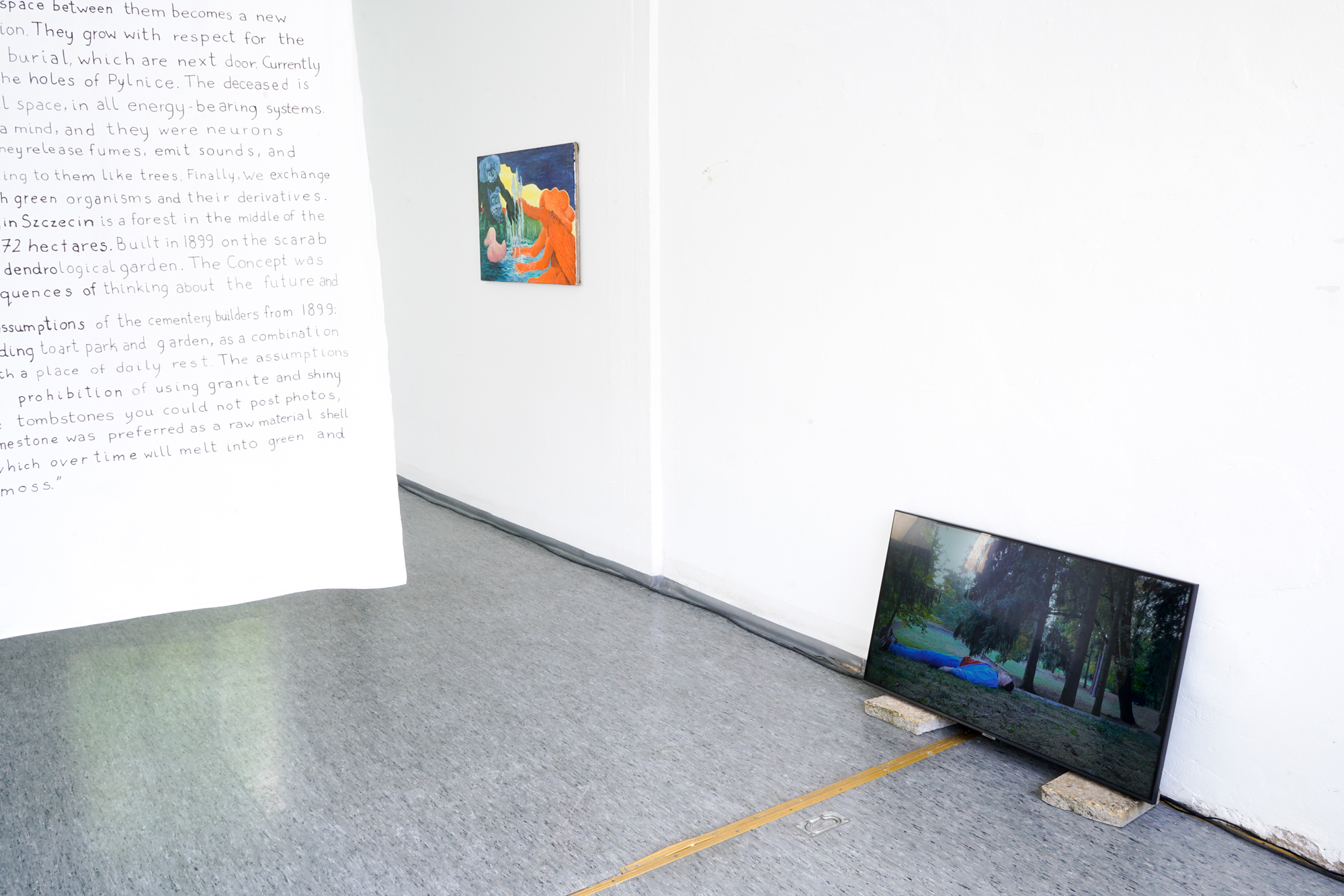
We breathe the remains of everything that was, 2022, exhibition view
Zuza Piekoszewska, Future Traveller II, 2022, mixed media: bioplastic,
spray paint, varnish
Zuza Piekoszewska, Future Traveller II, 2022, mixed media: bioplastic,
spray paint, varnish (detail)
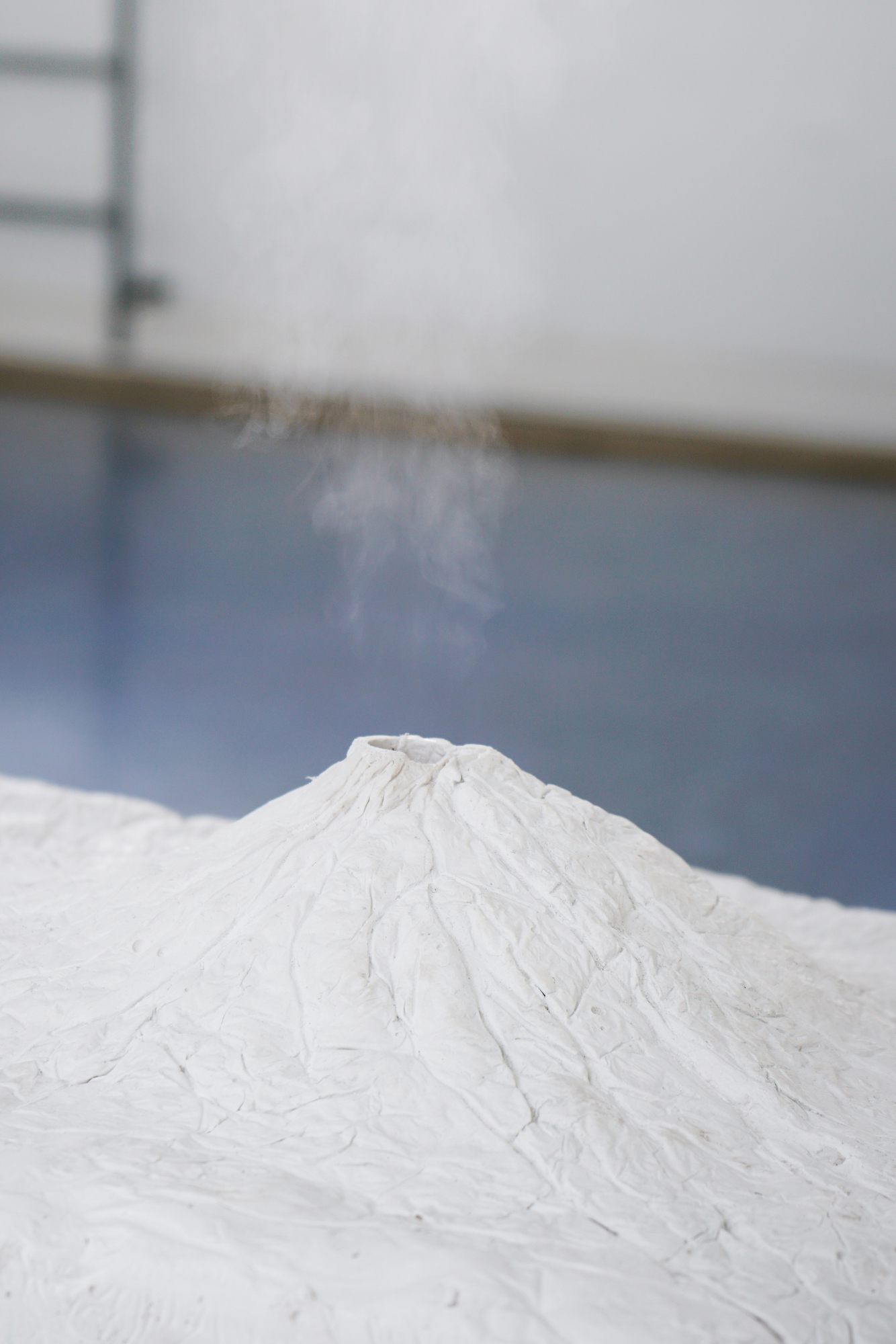
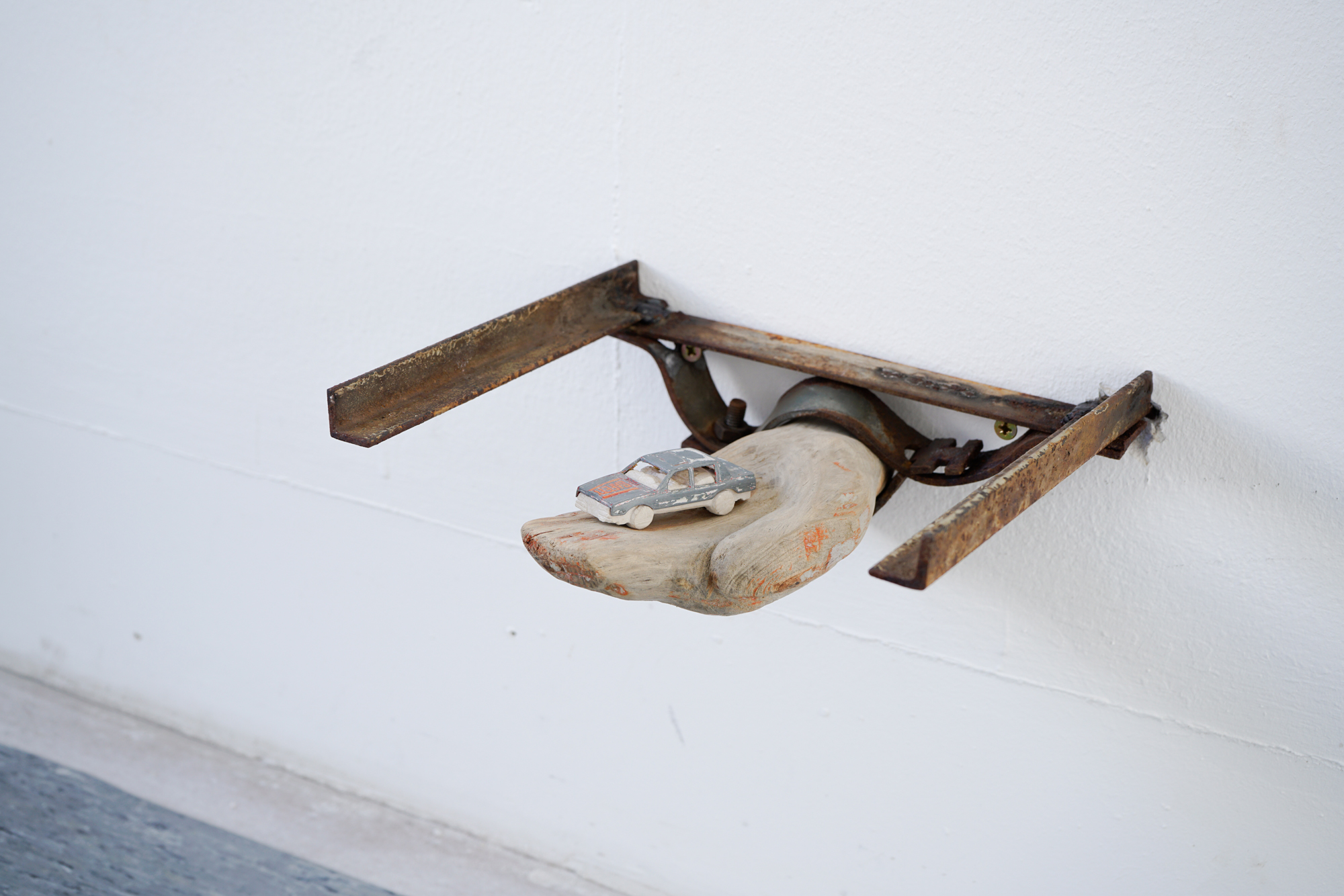
Magda Starska, Volcano, 2012, assisted readymade: sideboard,
kettle, plaster
Magda Starska, Volcano, 2012, assisted readymade: sideboard,
kettle, plaster (detail)
We breathe the remains of everything that was, 2022, exhibition view
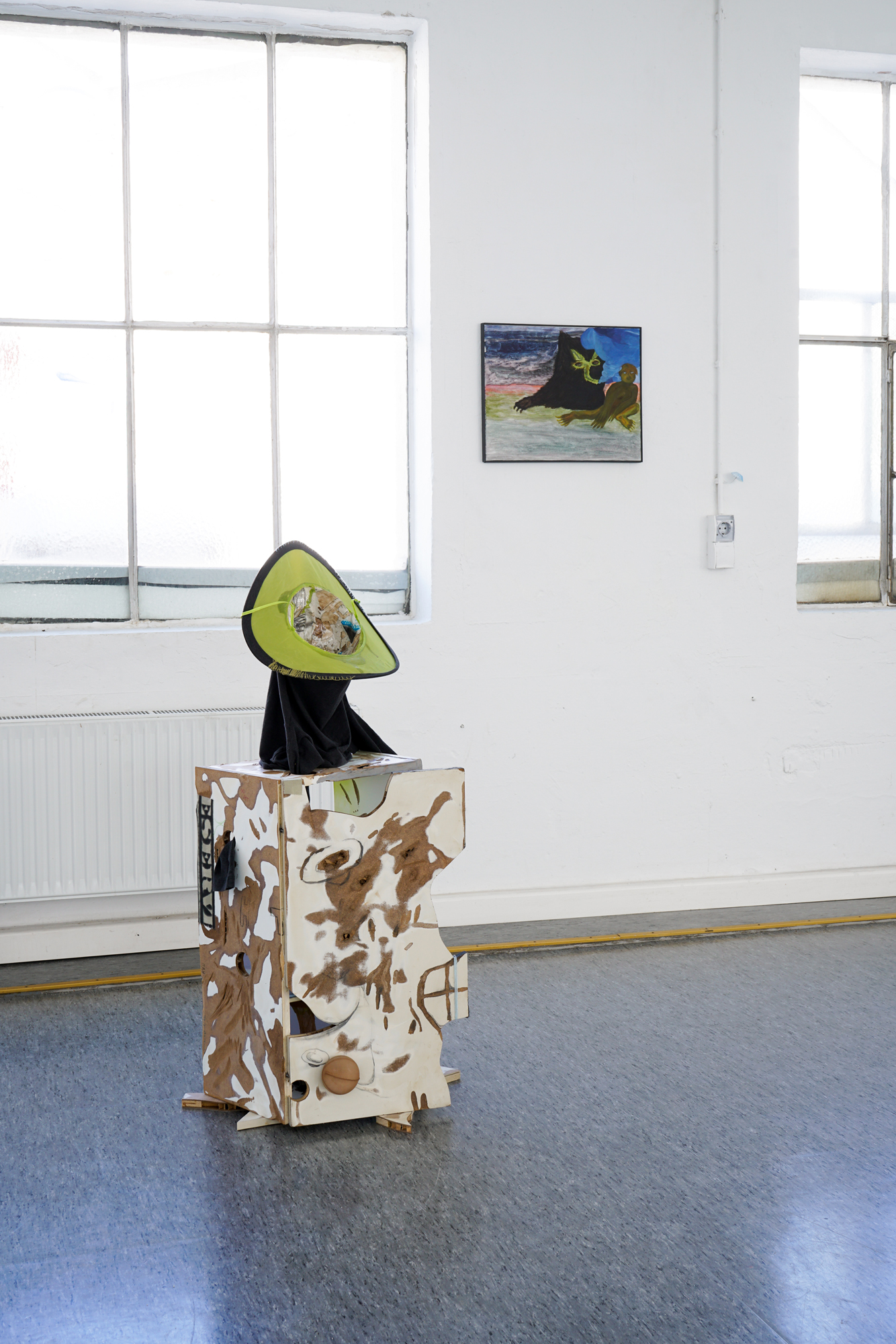
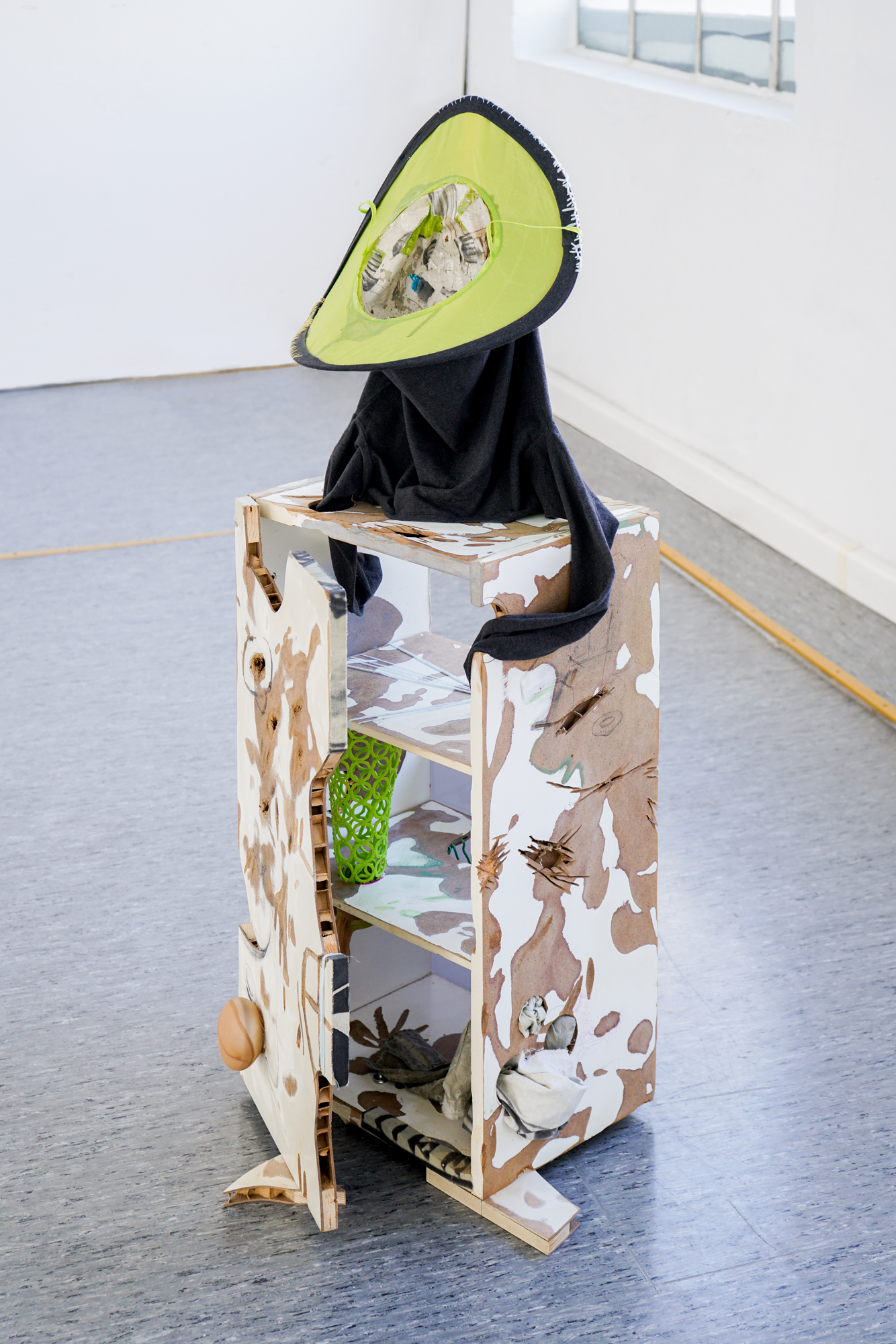
Natalia Karczewska, Avo-hat-touch, 2022, mixed media installation:
wood, paper, textiles, lightbulb, pencil, marker, resin, plexi,
Magda Starska, Together better, 2021, acrylic on canvas

Natalia Karczewska, Avo-hat-touch, 2022, mixed media installation:
wood, paper, textiles, lightbulb, pencil, marker, resin, plexi,
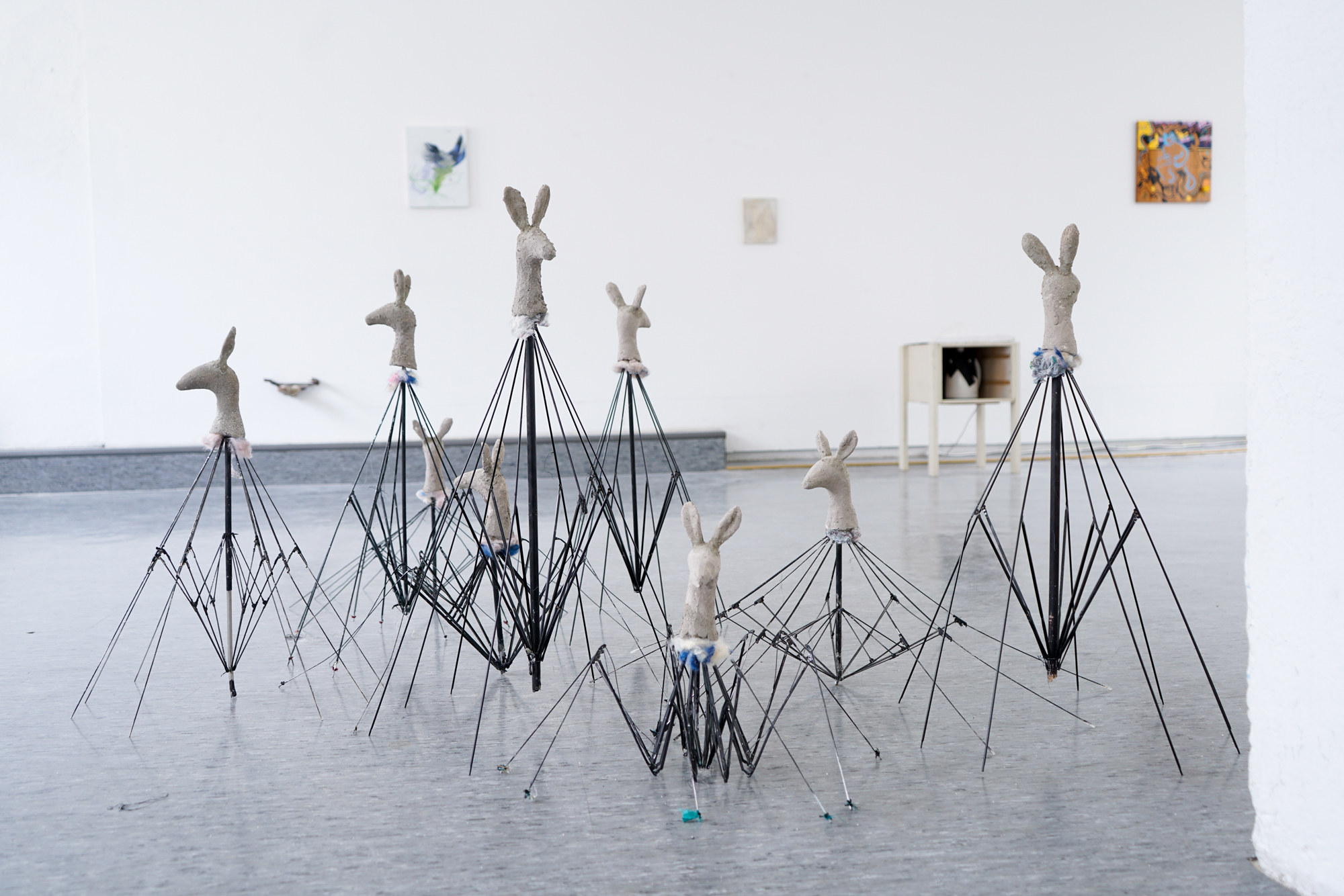
Pawel Marcinek, Common Horizon, 2022, mixed media installation:
umbrella wires, plaster, ashes, dust
Zuza Piekoszewska, Coarctate pupa, 2021, mixed media:
bioplastic, linen and Future Traveller II, mixed media: bioplastic,
spray paint, varnish
Zuza Piekoszewski, Future Traveller II, mixed media: bioplastic,
spray paint, varnish
Pawel Marcinek, Feeling Secure, 2021, mixed media: iron, wood,
plaster and Grzegorz Bozek, Gray Crow Spirit, 2022, egg tempera on wooden
board
Pawel Marcinek, Feeling Secure, 2021, mixed media: iron, wood,
plaster

Grzegorz Bozek, Gray Crow Spirit, 2022, egg tempera on wooden
board
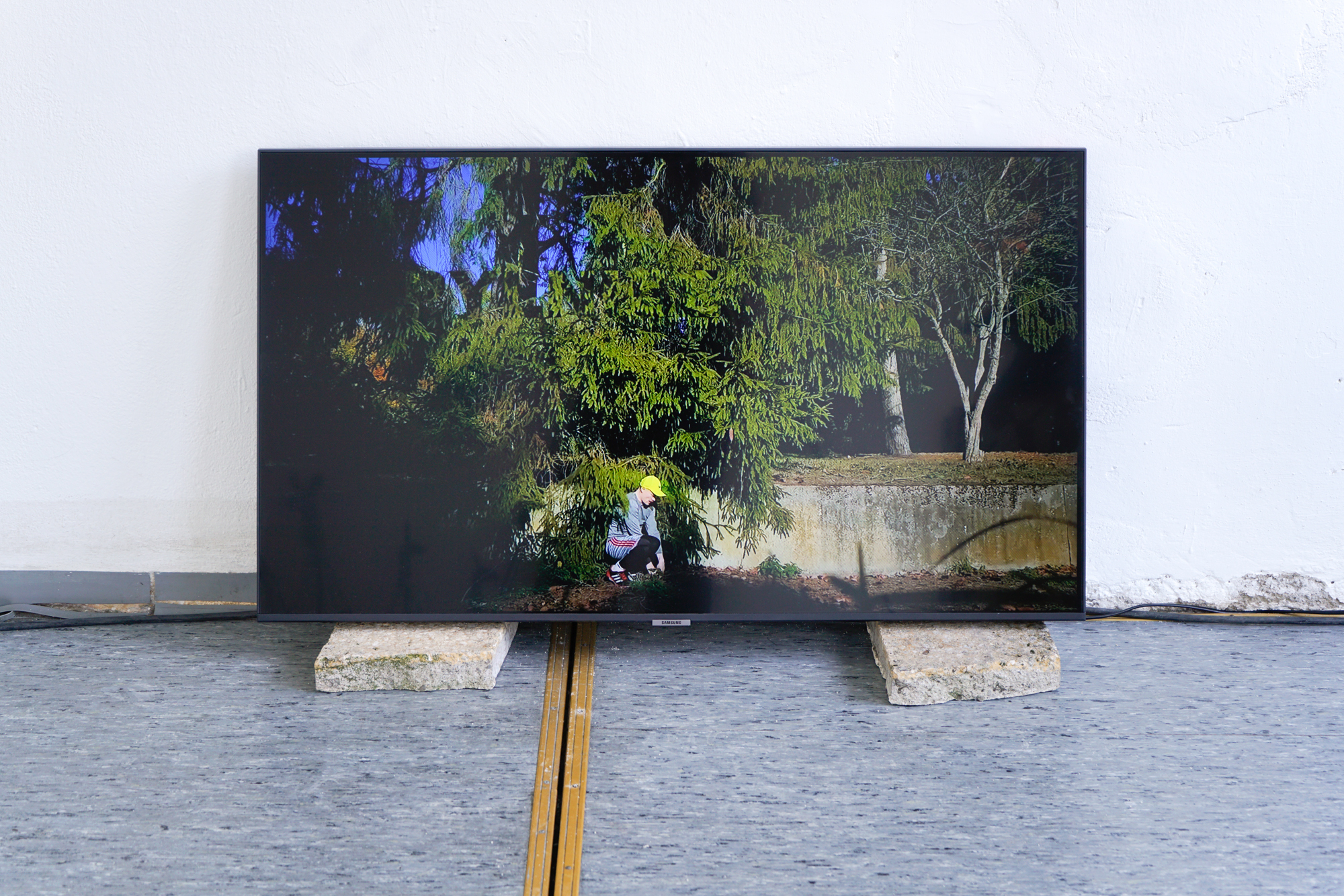
Przemyslaw Piniak, PylniceP, 2019, video installation, markerpen
on cotton
Przemyslaw Piniak, PylniceP, 2019, video installation, markerpen
on cotton
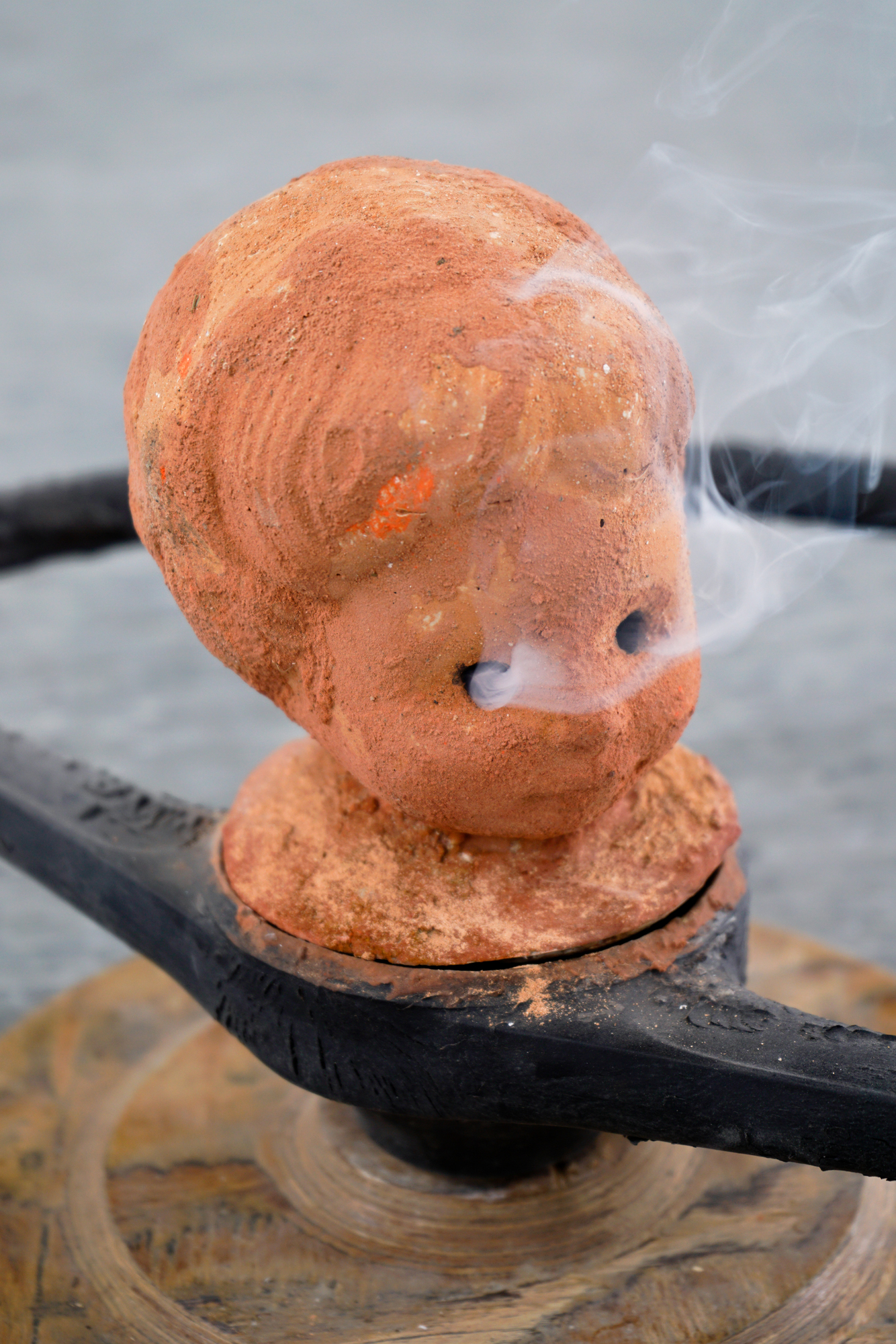
Pawel Marcinek, The year before, 2021, mixed media: burnt
steering wheel, plaster
Pawel Marcinek, The year before, 2021, mixed media: burnt
steering wheel, plaster
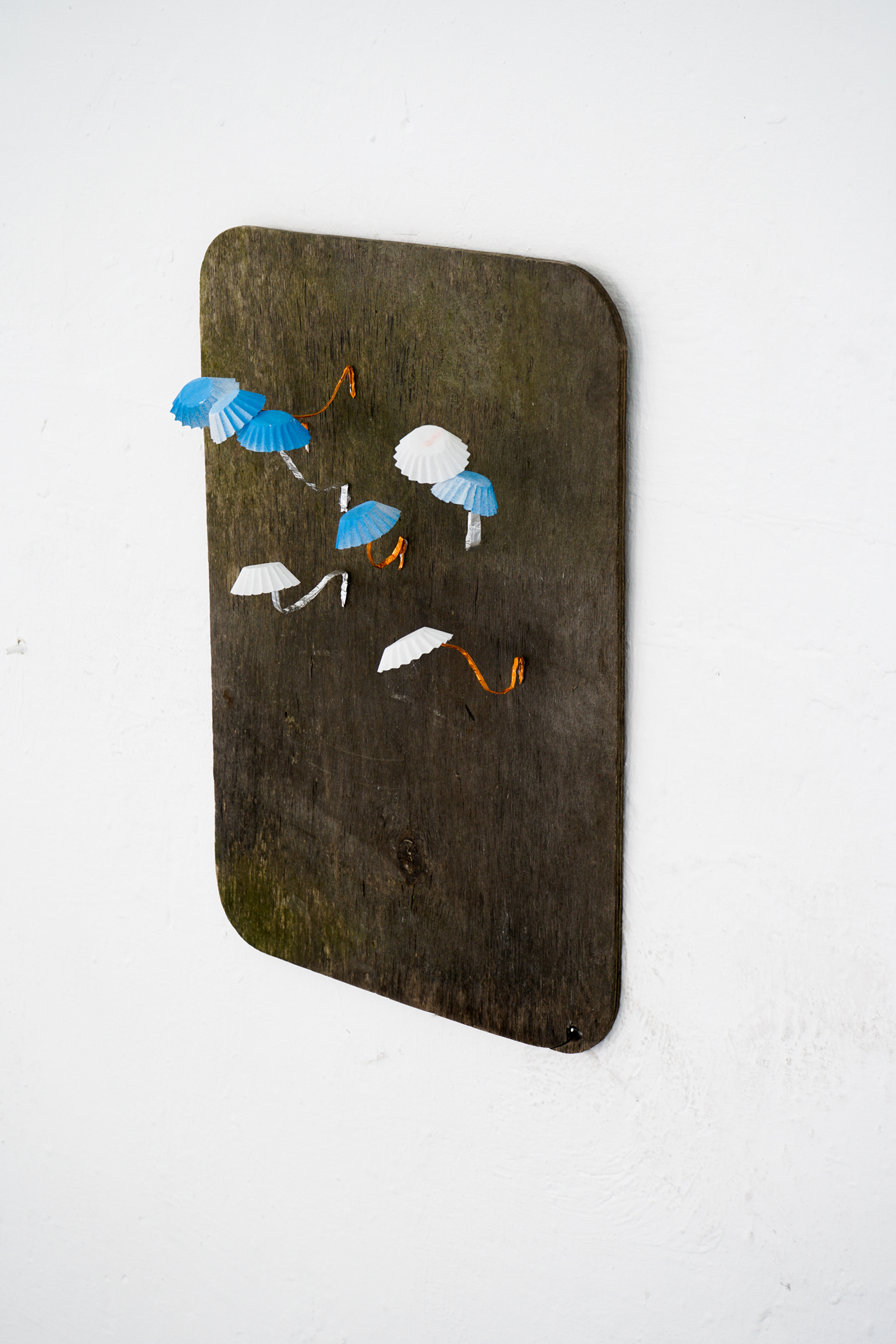
Przemyslaw Piniak, Niebieskis, blue-eyed mushroom found on
Pucka island, 2022, paper and gold sweet-wrappers, wooden board

Opening Speech:

Many of you here know GiG from its days at Baumstr. 11. Some of you might even remember the last series of exhibitions there, ‘Thinking Nature’ featuring artists such as Elke Dreier, Johanna Strobel, Kalas Liebfried, Julia Klemm, Justin Liebermann, Lilian Robl and many others. This exhibition is a continuation of that series, but with a slight shift in focus: instead of thought, the theme is memory. How it relates to our thinking about nature remains unchanged. 

For this exhibition, GiG invite Lectwo from Poznan, Poland, and its director, Przemek Sowiński to be the curator. He in turn responded to the theme through this idea of ‘breath’ as something physical, something shared and something transformative. We breathe out slowly when we hear something surprising – we inhale sharply in fear. Together with our heartbeat, breathing structures our sense of time, each breath already past, present and future. If when thinking, the concept of memory often becomes too much like the concept of history, a series of events arranged according to importance, the memories held in a breath have a linearity free from such punctuation. They are alive. 

As an introduction to the exhibition, Dr. Sebastian Truskolaski traveling from Berlin, kindly agreed to hold a brief discussion of Adorno’s short text, ‘Heliotrope’. We chose this  text together as a good way of engaging with the themes of the exhibition: breathing, memory, nature (Heliotropism being the ability of plants to turn towards the sun). The text takes the shape of Adorno’s childhood memory. A glamorous aunt comes to visit, carrying suitcases with stickers from exotic locations. Little Theodor breaths in the heavy scent of her French perfume and is immediately transported to the world of grown-ups, which is also a long-lost fairyland. The child at once gains access to a foreign land, and recovers what he once had.