Prof. Dr. Alexander Düttmann, Philipp Messner, Jorge Peris
26.10.2021, 6pm
As part of the series Thinking Nature, GiG Munich hosted the online discussion between Philipp Messner, Jorge Peris (recently showing their work I feel like Ramses at GiG) and Prof. Dr. Alexander Düttmann (Professor für Philosophische Ästhetik, Kunstphilosophie, Kulturtheorie und Kunsttheorie an der Universität der Künste, Berlin). The discussion took place on zoom on Tuesday evening at 6 pm, the 26th of October.
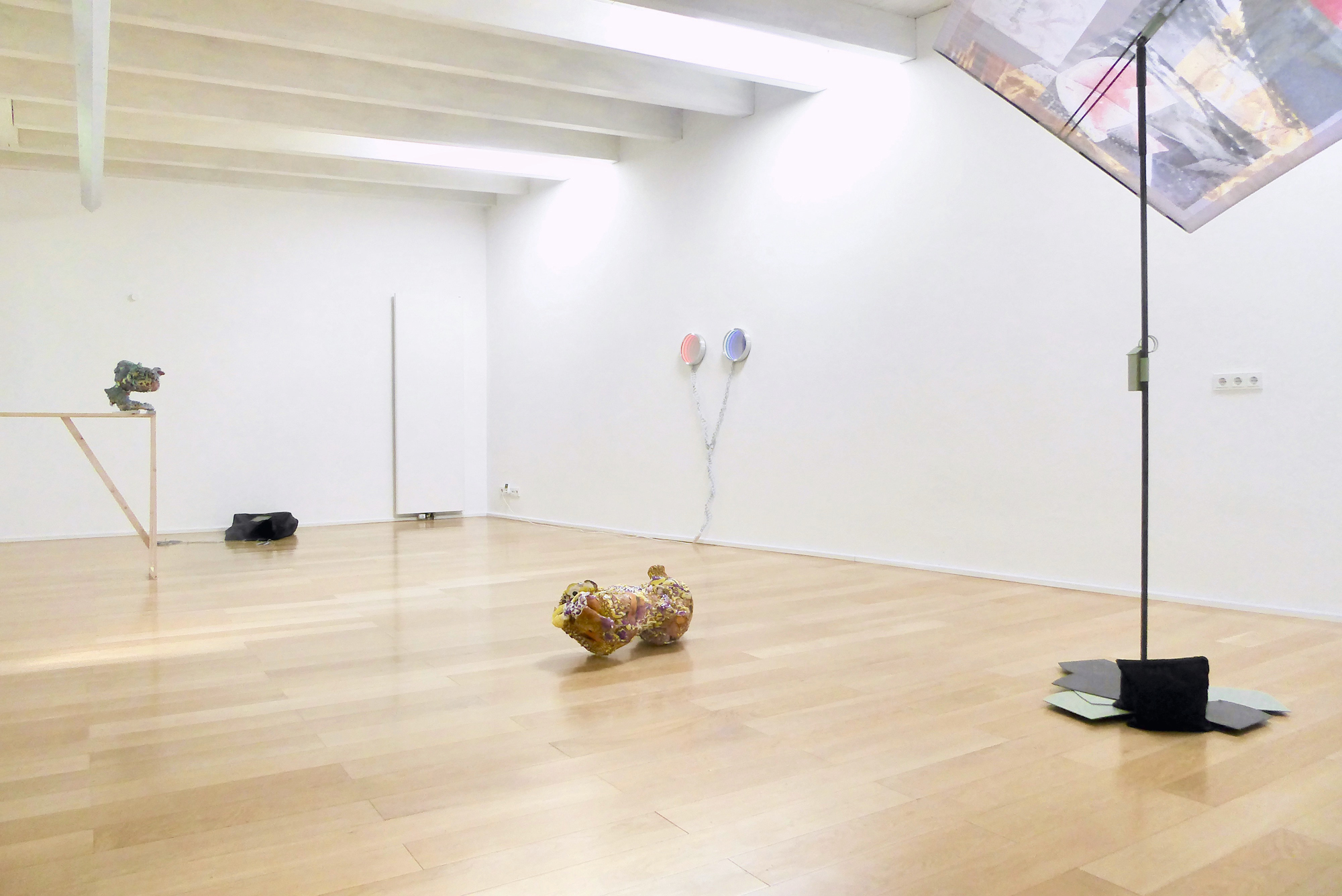
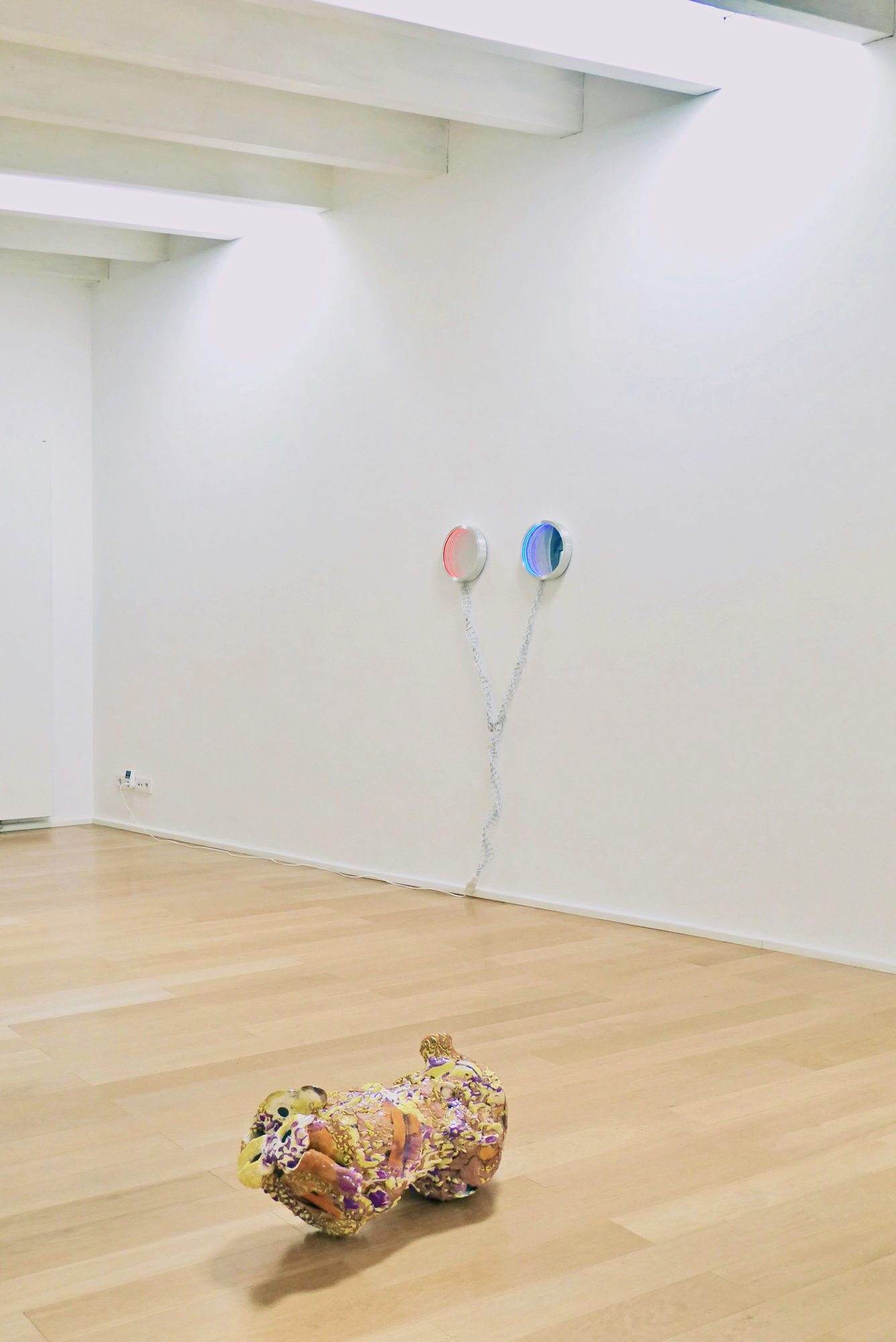
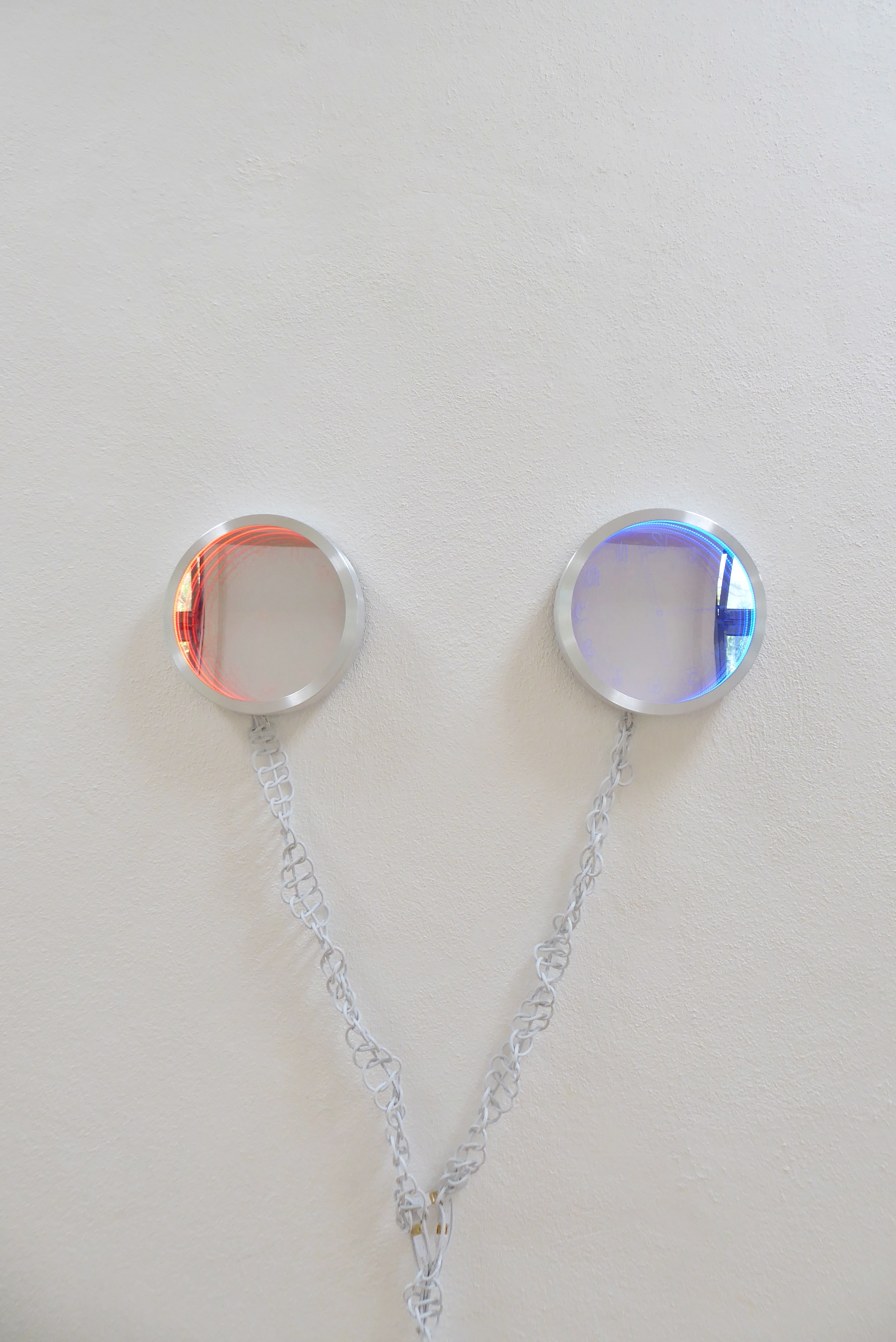
GiG Munich is happy to present the next instalment of the series Thinking Nature, featuring new work by Johanna Strobel. For her solo exhibiton low affinity, Johanna Strobel creates rhizomatic macramé-like structures from USB extension cords, using them to power her plexiglas and paraffin sculptures.
Enthropy, the fact that once the USB 2.0 cable exceeds a certain length information gets lost while power still remains, forms the central component of this work. It ties together the ancient idea of ‘ether’ as a medium through which light travels, the fluid physics of translucency, and the decorative and practical craft of knot-making. Her practice is informed by her background in science, and explores such unwieldy concepts like time and space, information and entropy, language, the creation, attribution or suspension of meaning and the everyday perception and precipitation of these concepts in mundane life.
Johanna Strobel is an interdisciplinary artist from Germany, currently based in New York. She holds degrees in Information Science and Mathematics and graduated in painting and graphics from the Academy of Fine Arts Munich with Honors (Meisterschuelerin of Gregor Hildebrandt) in 2017. In 2020 she received her MFA from Hunter College New York (New Genres). Since then she has participated in numerous exhibitions in Germany, Italy, Taiwan and the US, with a solo exhibition at the Municipal Museum Cordonhaus Cham, 2019. In 2020 her work has been included in The Immigrant Artist Biennial, New York, USA, Jahresgaben, Kunstverein Munich, Germany and featured online by Hauser & Wirth. Johanna was a fellowship artist in residence at NARS Foundation, Brooklyn in 2021.
The exhibition will include an online discussion event with Dr. Beth Lord, Professor of Philosophy, School of Divinity, History, Philosophy and Art History at the University of Aberdeen.
From the 5.10.2021 GiG Munich will be away, doing the SWAB fair in Barcelona Spain with Lukas Hoffmann and Jane Hayes Greenwood. Come and visit us at our stand, Booth S4, or have a look online, on the website or on SWAB’s instagram profile. During this time the work will be also available to view on GiG Munich’s Artland page.
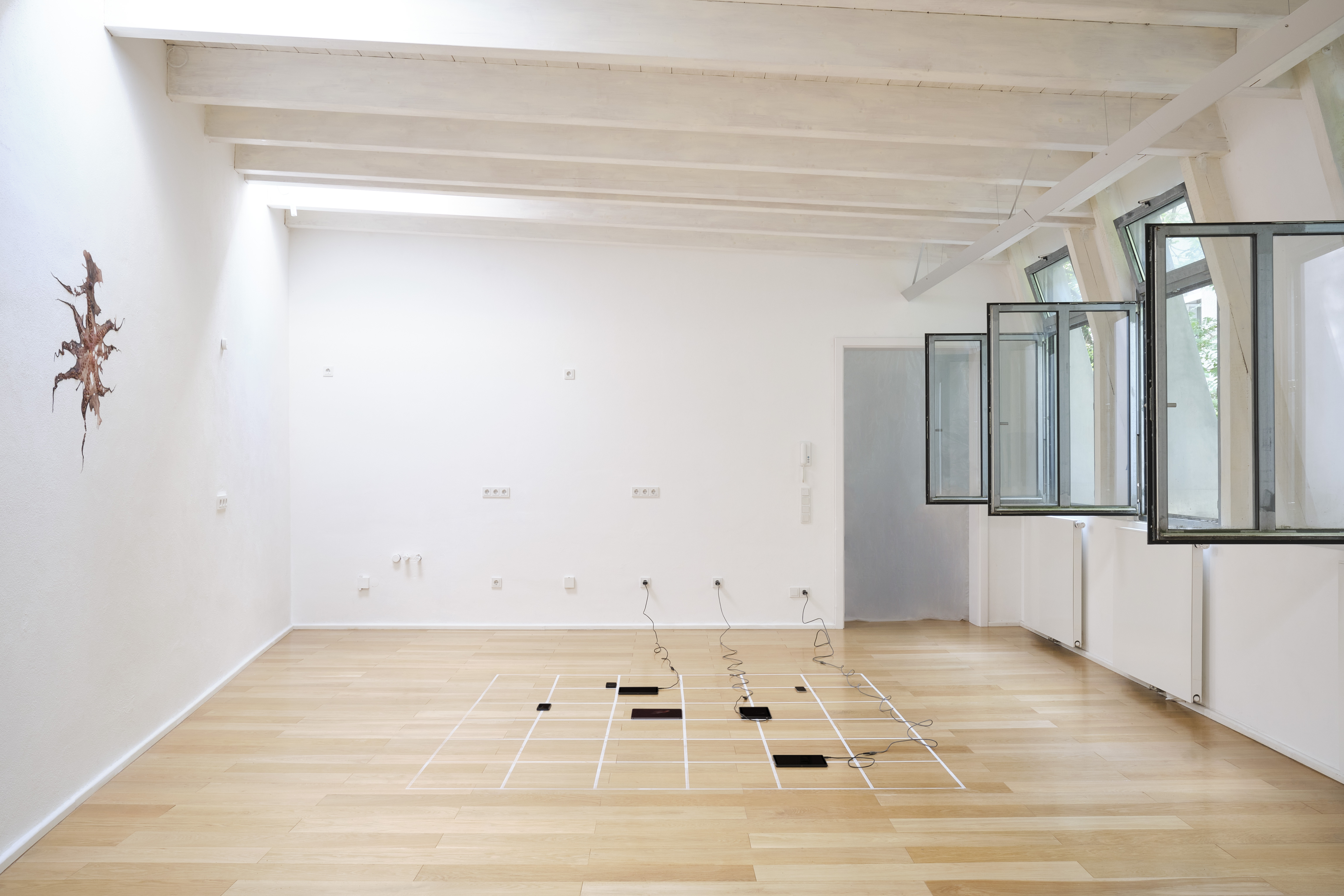
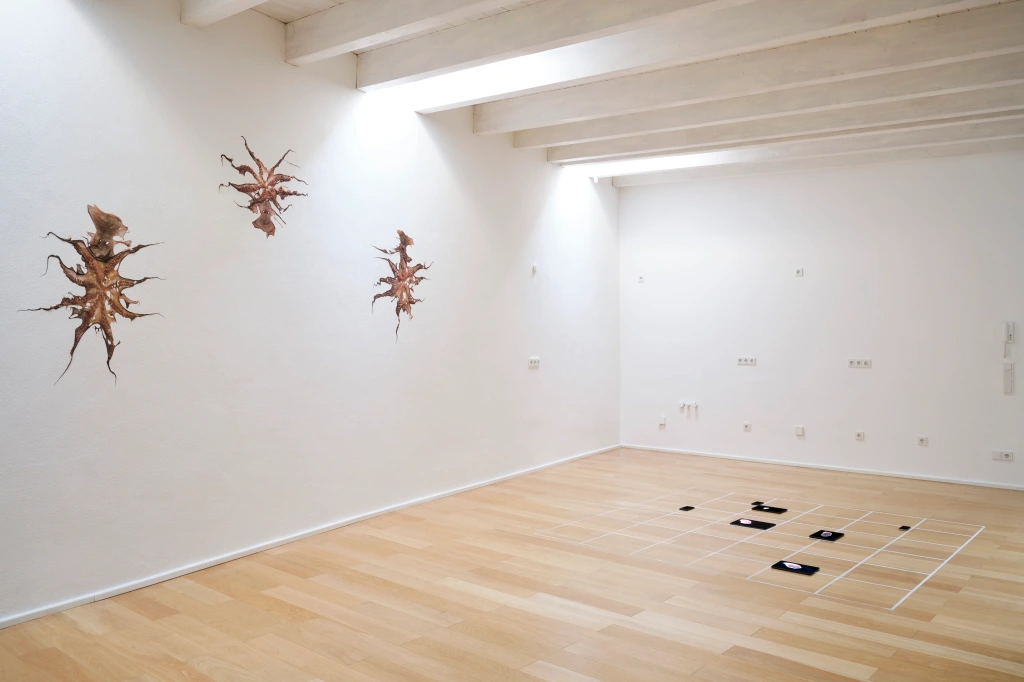
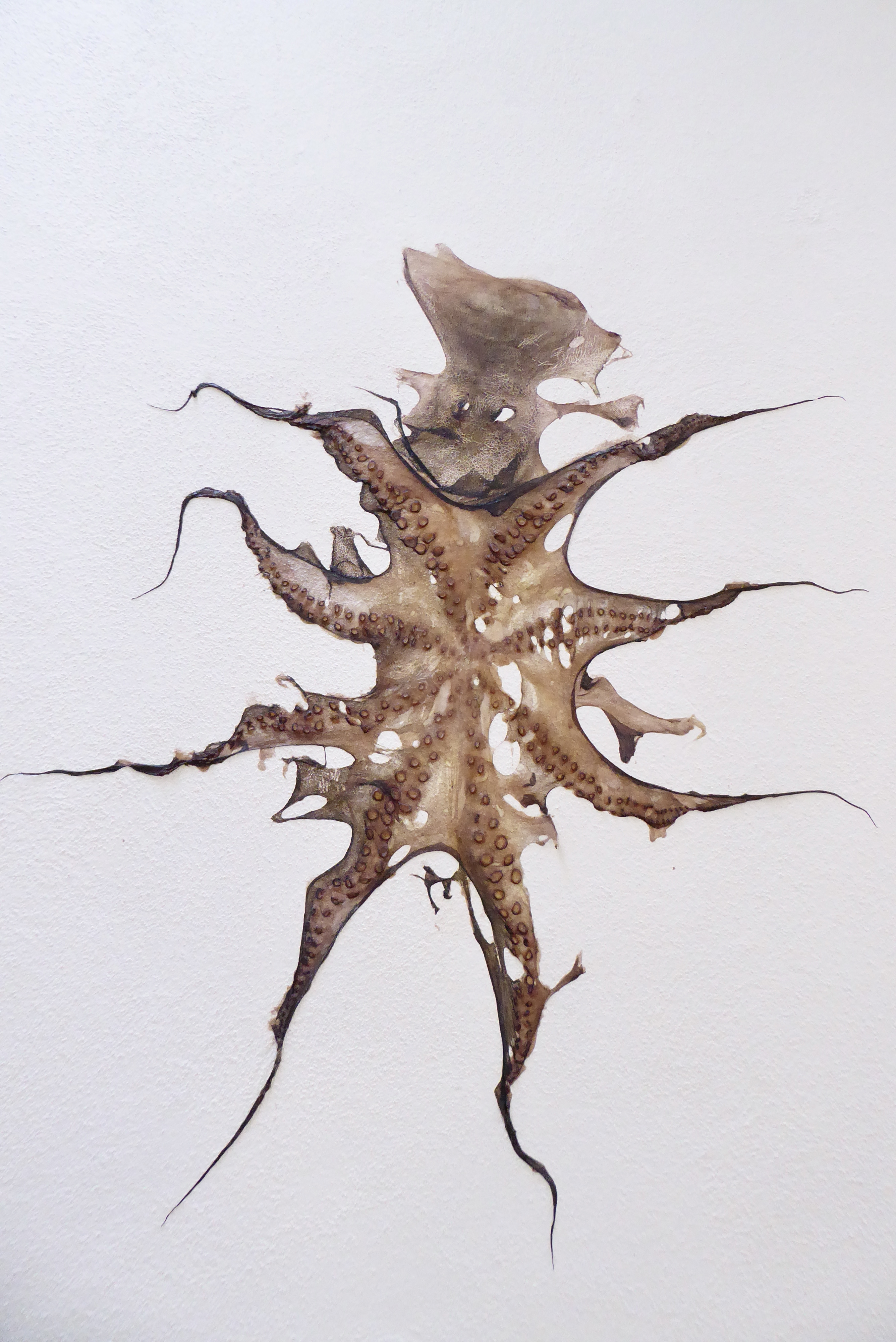
Jorge Peris, untitled, 2021, octopus skin, 80 x 70 cm
Jorge Peris, untitled, 2021, octopus skin, 80 x 70 cm
Jorge Peris, untitled, 2021, octopus skin, 80 x 70 cm (detail)
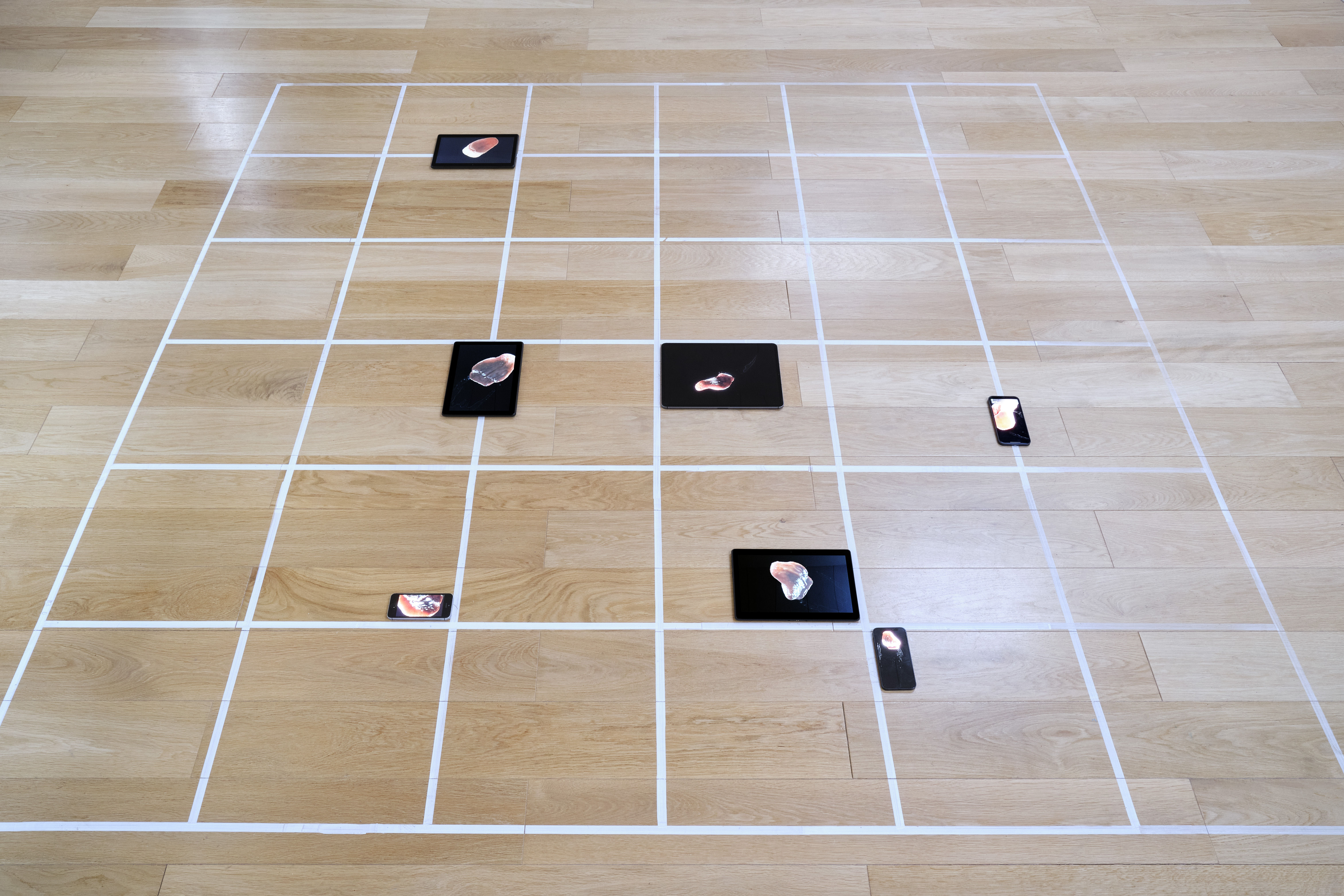
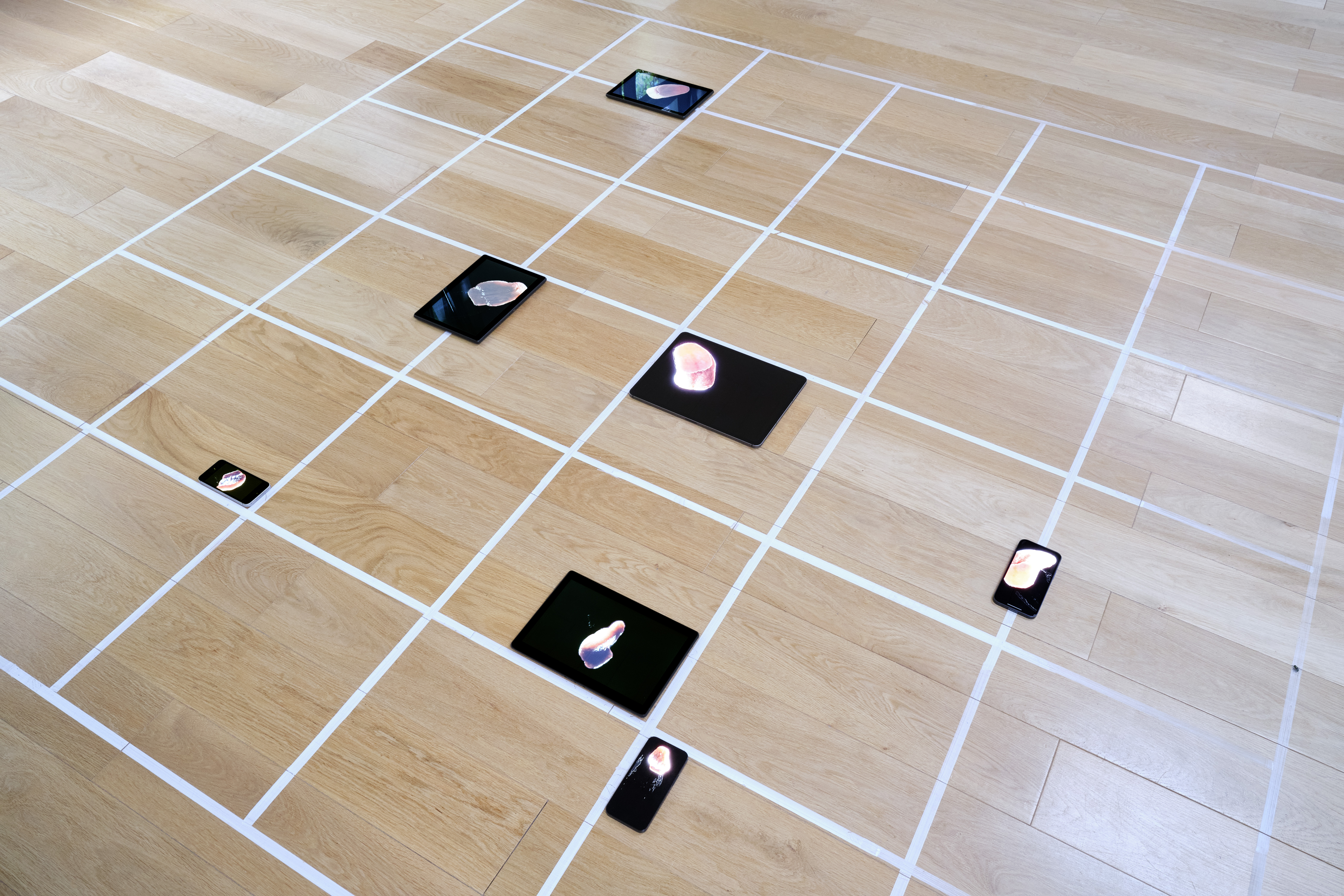
Philipp Messner, to be added, 2021, 3d animated tongues, tablets, smartphones, chalkgrid, 240x240cm
Philipp Messner, to be added, 2021, 3d animated tongues, tablets, smartphones, chalkgrid, 240x240cm
Philipp Messner, to be added, 2021, 3d animated tongues, tablets, smartphones, chalkgrid, 240x240cm
Photo credits: Laura Egger (photos 7, 8, 11: Magdalena Wisniowska)
The film ‘Pharaoh’ (Kawalerowicz, 1966) begins, not as one might expect, with an image of the pyramids in the vast Egyptian desert, but with a close-up shot of two scarab beetles battling to push their dung ball across a dry, hard plane. In the film, Ramses does eventually confront the Great Pyramid of Cheops, but even then, we only see what he does, a wall of massive stone stretching upwards and across the screen. As Ramses laments to the High Priest, a thousand years ago Cheops still had the power and resources to build something so enormous, so spectacular. He, Ramses, no longer can. When he sees the pyramid he does not see a grave, but the might of Cheops’s will.
When Philipp Messner and Jorge Peris say, ‘They feel like Ramses’, they too talk about a position of power and its subsequent loss. For me, the figure of Ramses represents what Maurice Merleau-Ponty would call, ‘scientific thinking’, a kind of approach to the world that ‘looks from above’. In his essay, ‘Eye and Mind’ (1960) Merleau-Ponty describes science as something that we impose on the world; as he writes, ‘Science manipulates things and gives up living in them.’ However bright and dazzling its results may be, to science the ‘there is’ of things is lost. This would be the sensible world, its soil, such as it is lived by us and for our body. Merleau-Ponty distinguishes between the body of science, which for him, is a mere information machine, and the actual body, a haunting presence that is always there. ‘I haunt a single, present, and actual Being’.’
Merleau-Ponty’s is a critique of science, his worry, scientific thought’s continual success. When the world is seen only as an object to be operated upon, then science becomes absolute, and if this was further extended to humanity and history, Merleau-Ponty argues we would then enter ‘a nightmare from which there is no awakening’. Yet like Ramses before us, we now stand at science’s ruins. The corona pandemic made sure that no one can claim science’s position as absolute. And with the loss of this absolute position we also lose something else, which is what the work of Messner and Peris show so well. What we lose, is the soil underneath, the hauntings of our and the other’s bodies.
The octopus slowly drying out on the wall has the look of a scientific specimen, pinned up for classification and analysis. Equally, it has the feel of witchcraft, about to be thrown into a bubbling cauldron. We can look at its obscenely exposed body but we cannot get away from its fishy smell. Its exposed body haunts the room it is in. When we look down on the floor below, we see a tongue licking the screen from behind. We see only the pink muscle, as it emerges from the darkness, before coming closer and lapping away at the glass. It too is like a ghost that only appears to us when we stand above, in our assumed position of power.
GiG Munich is excited to present the two-person exhibition ‘I feel like Ramses’ featuring new work by Philipp Messner and Jorge Peris. Together they explore the disappearance of the outside and the expanding inner-world.
Ramses II, the mighty pharaoh, held the mythical position of absolute power, looking down at his works, his land and his people. He was at the center of a cosmic order, all work and production flowing through him. Through their sculptural work, Messner and Peris bring the sensual world, the bestial and the disgusting as close to us as they dare. They are concerned with the process of production as desire, slippery and slimy, always escaping our grasp.
Philipp Messner (born in Bolzano, IT, 1975) lives and works in Munich. Recent exhibitions include eating harmony, Museum im Prediger, Schwäbisch, Gmünd (2021, solo); Welt in Teilen, Kunstverein St.Pauli, DE (2020, group); Dissolved Landscape, Mediafacade, Museion, Bozen, IT (2019, solo); Darkness loves to hide, Kunstraum., München, DE (2019, solo); Open Borders, Biennale Curitiba, BR (2019, group); Da lontano era un isola, Kunsthaus Meran, Merano, IT (2019, solo), Lust der Täuschung, Ludwig Forum Aachen, DE (2019, group); CLOUDS, Neues Museum, Nürnberg, DE (2017, solo).
Jorge Peris (born Alzira, Valencia, 1969) lives and works in El Palmar, Valencia, and Bucharest, Romania. Recent exhibitions include Desembarco en el País de Nunca Jamás, Nicodim Gallery, Los Angeles (2021, solo); Michiel Ceulers and Jorge Peris: Endangered Species, Galeria Nicodim, Bucharest (2020); Dark Man a lomos del Pájaro de Fuego, IVAM Instituto Valenciàno d’Arte Moderna, Valencia (2020, solo); Adam’s Resurrection, Sandwich Gallery, Bucharest, Romania (2019, solo); Al norte de la tormenta, MAXXI Museum, Rome, Italy (2019); Our Lady of the Flowers, Galeria Nicodim, Bucharest (2018).
The exhibition is the next of GiG Munich’s ‘Thinking Nature’ series supported by the Department of Art and Culture, Munich.
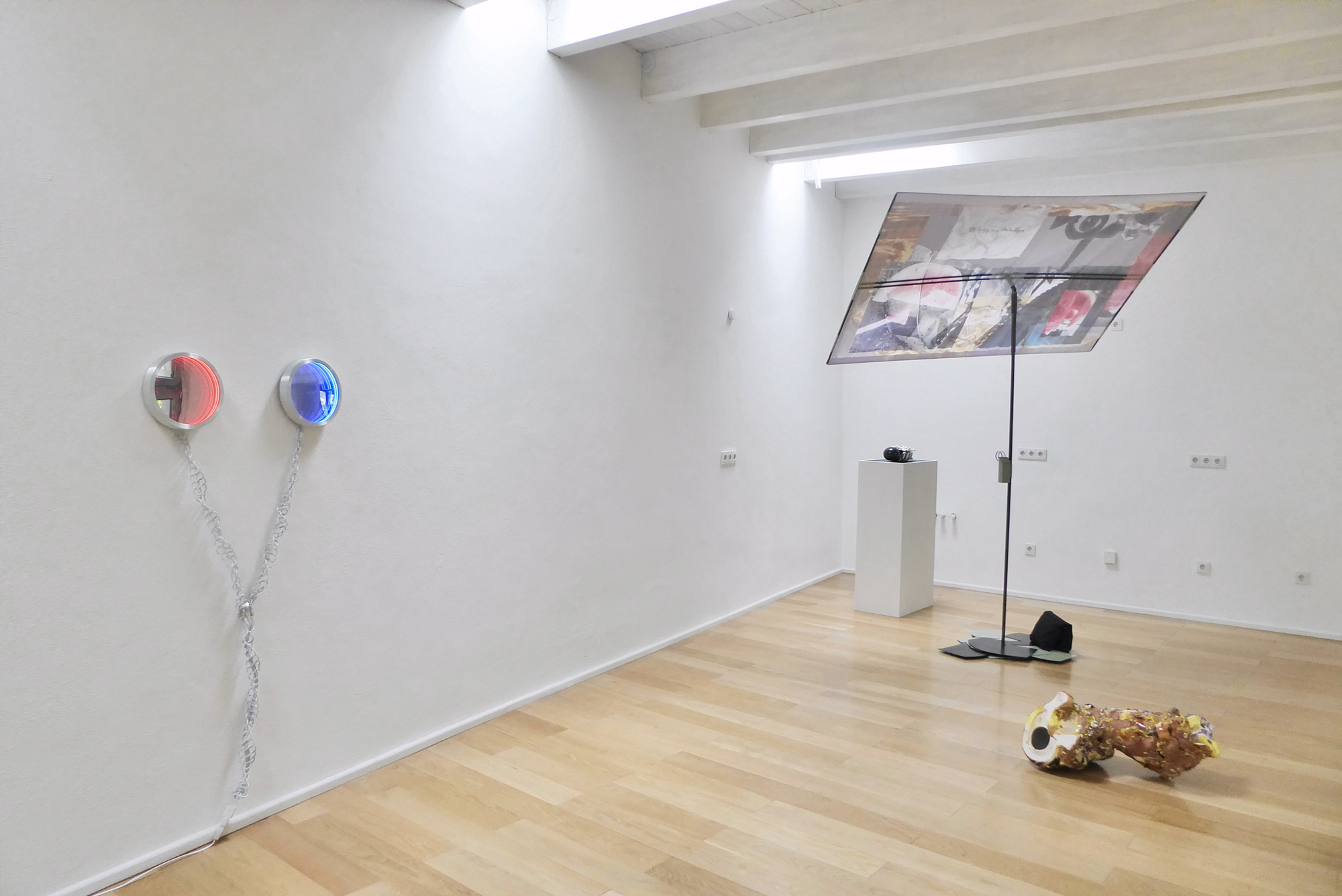
(clockwise and counterclockwise), LEDs, USB extension cords, digital timer, size variable (each approx. 25
x 25 x 5 cm)
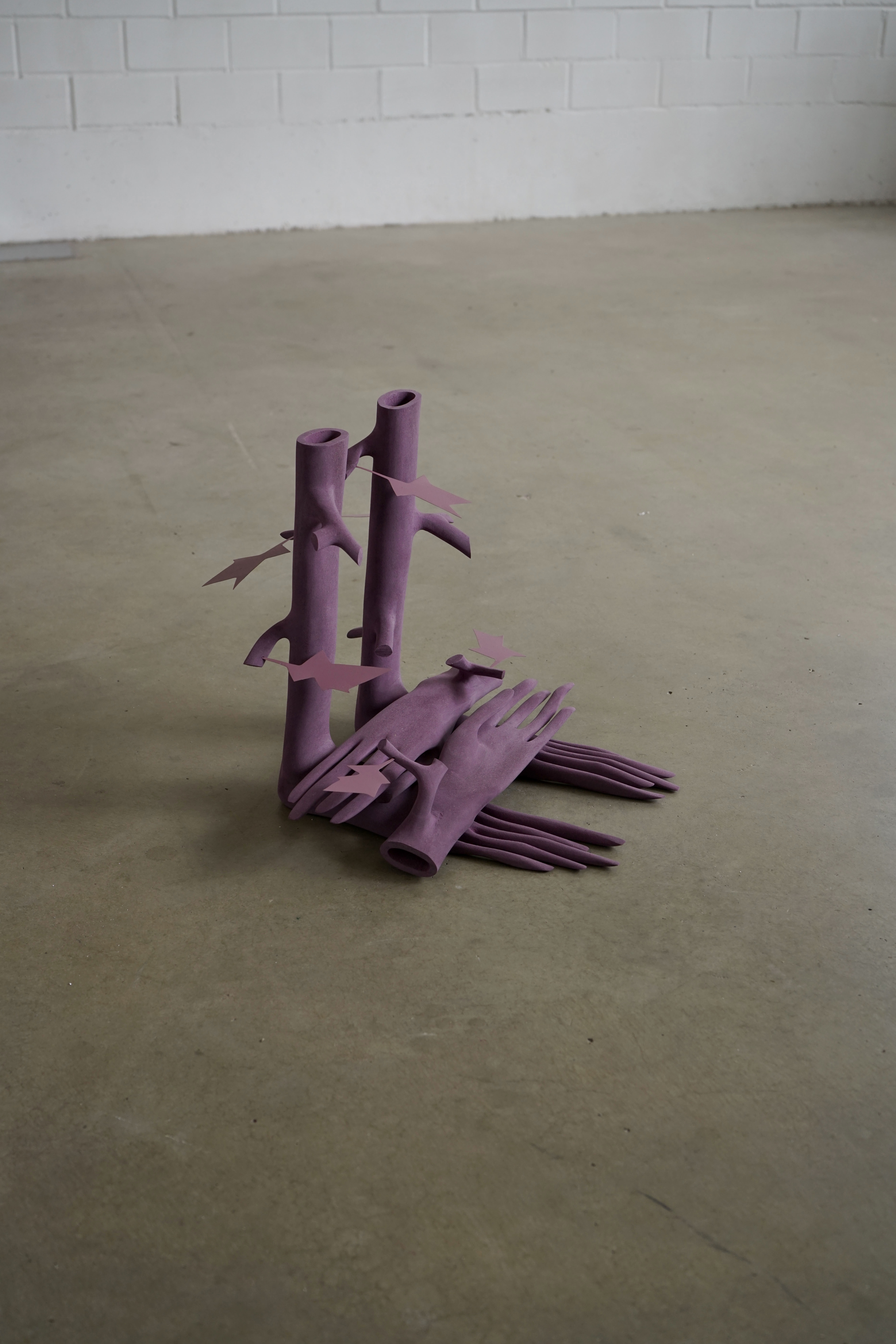
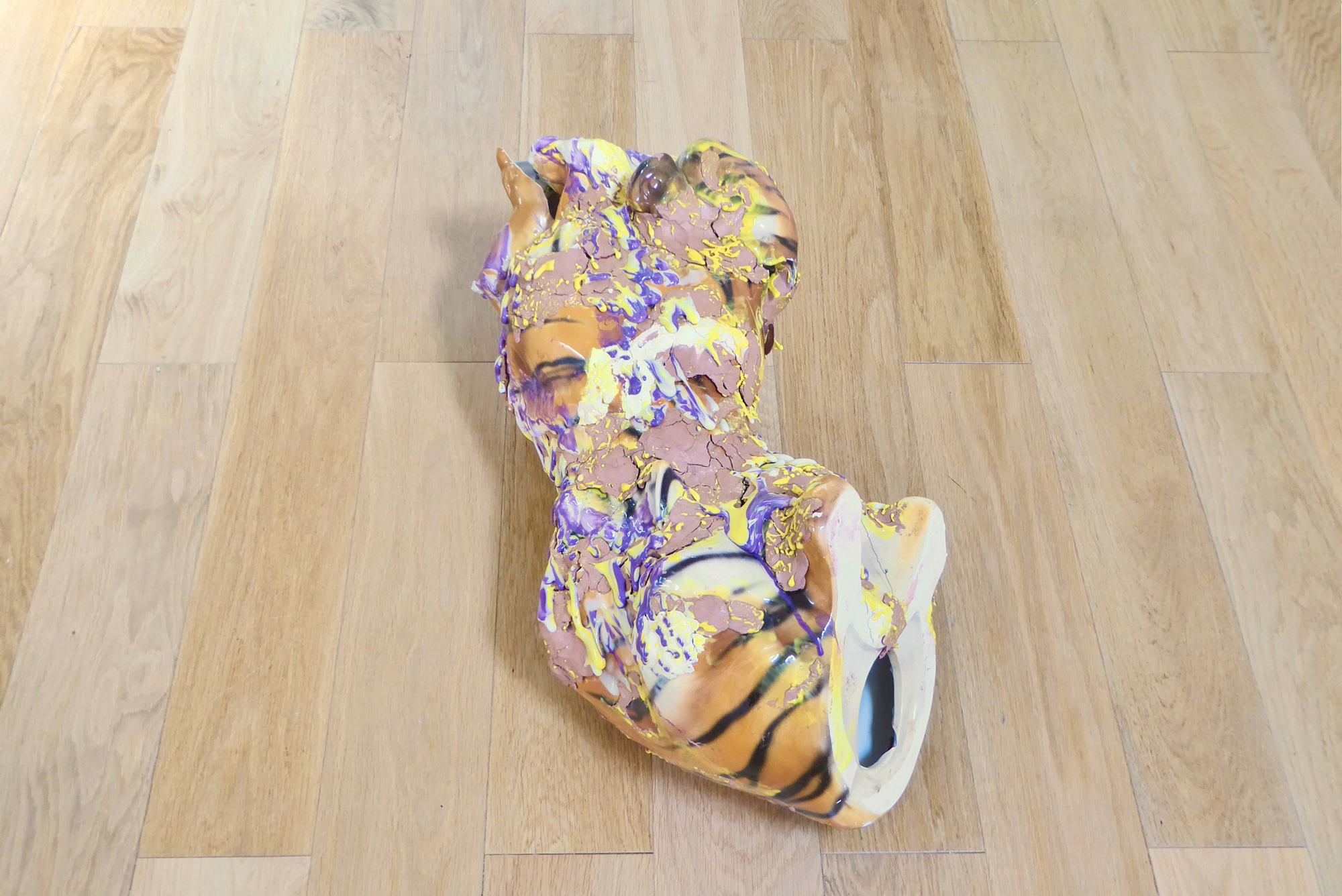
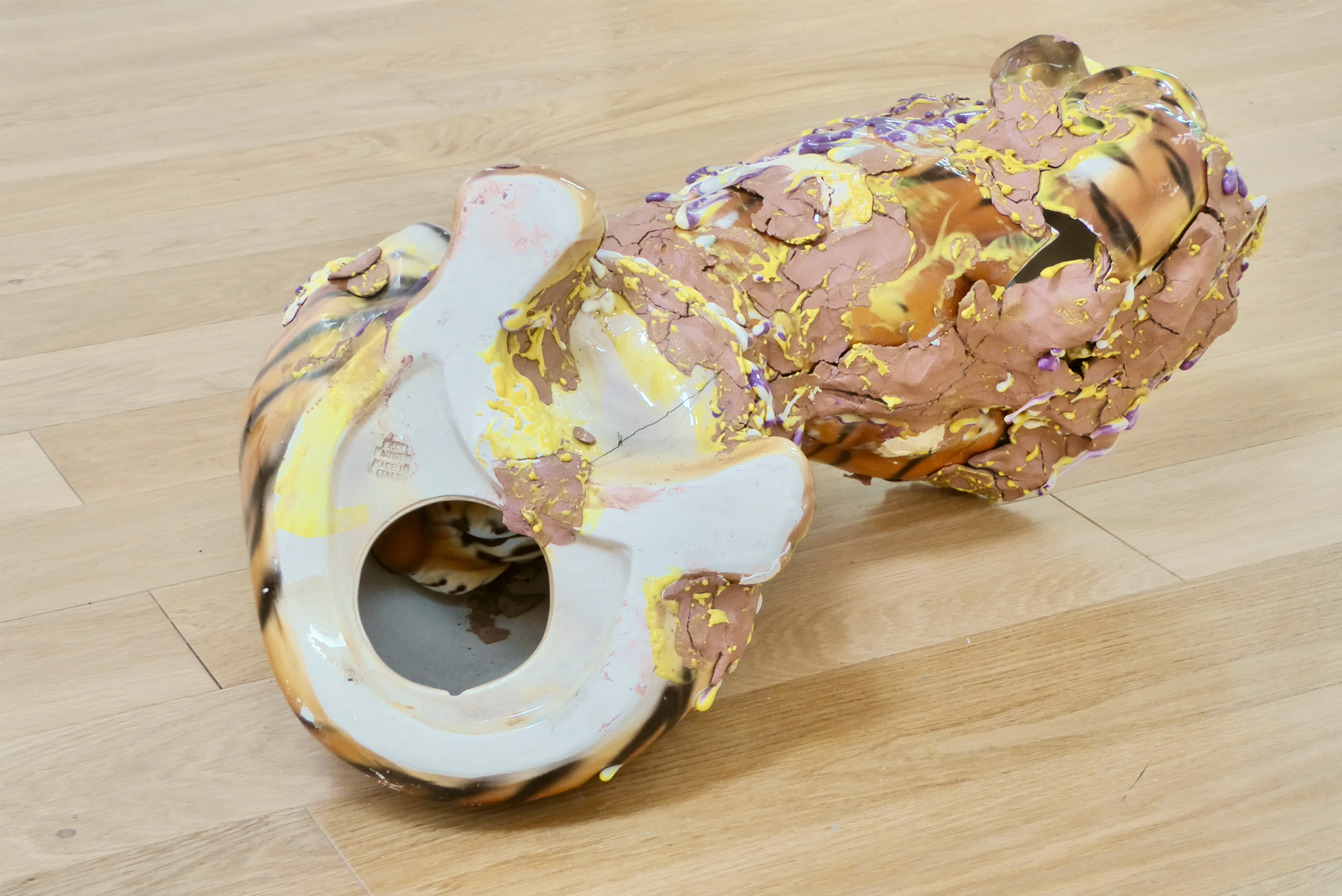
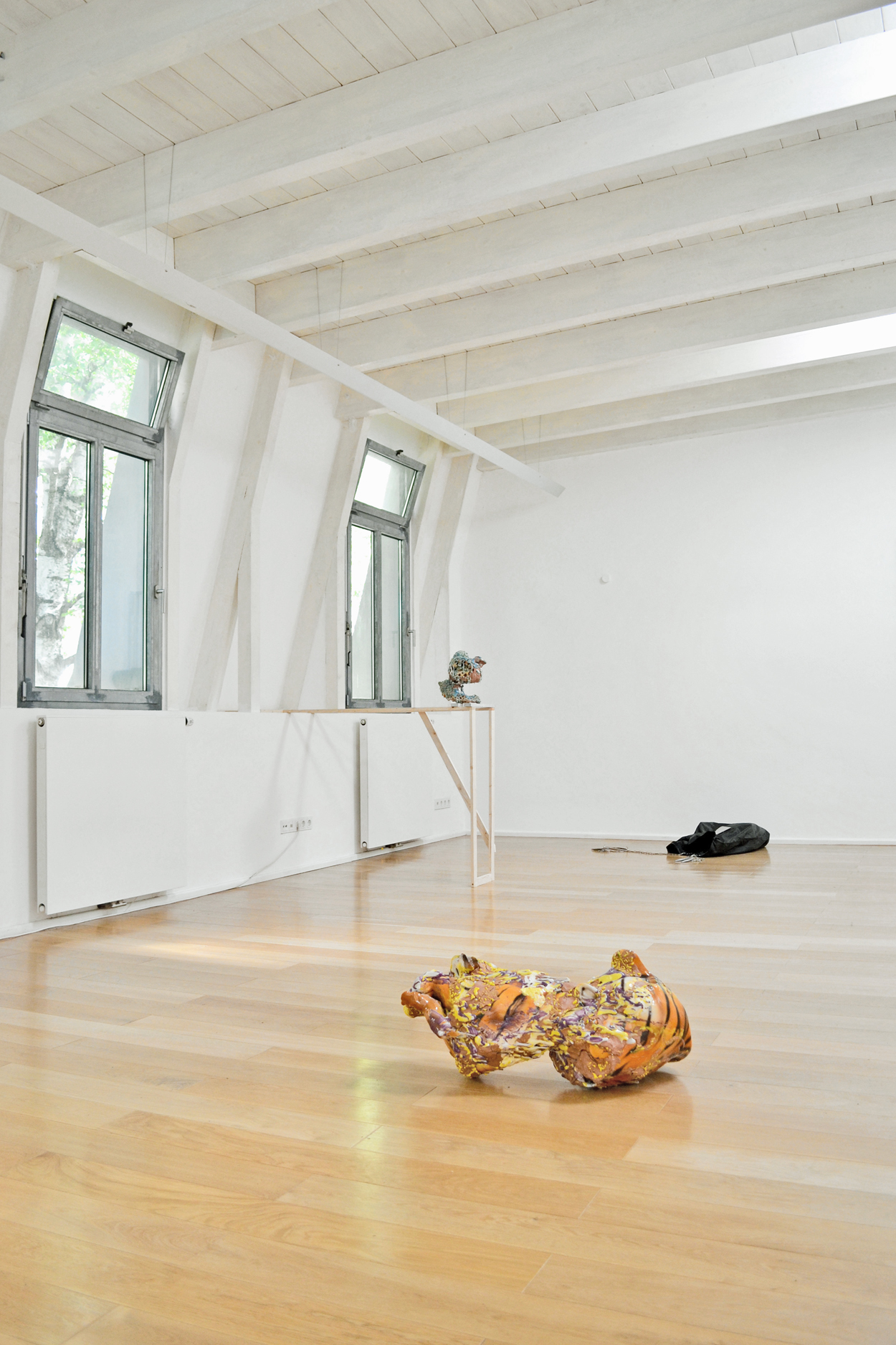
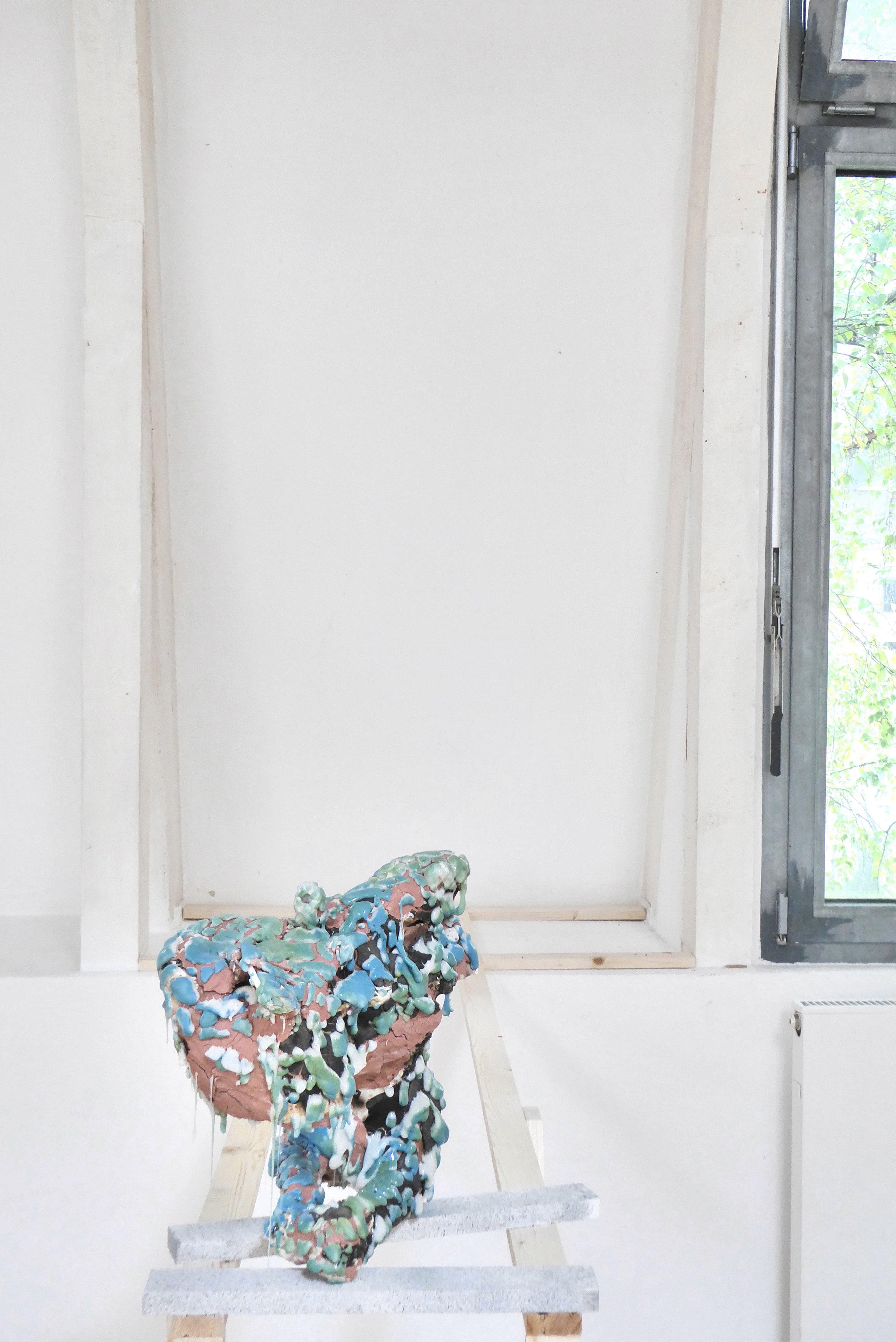
Julia Klemm, untitled, 2020, ceramic, glaze, second-hand ceramic leopards, 76 x 30 x 33 cm
Julia Klemm, untitled, 2020, ceramic, glaze, second-hand ceramic leopards, 76 x 30 x 33 cm
Lost and Found, 2021, installation view,
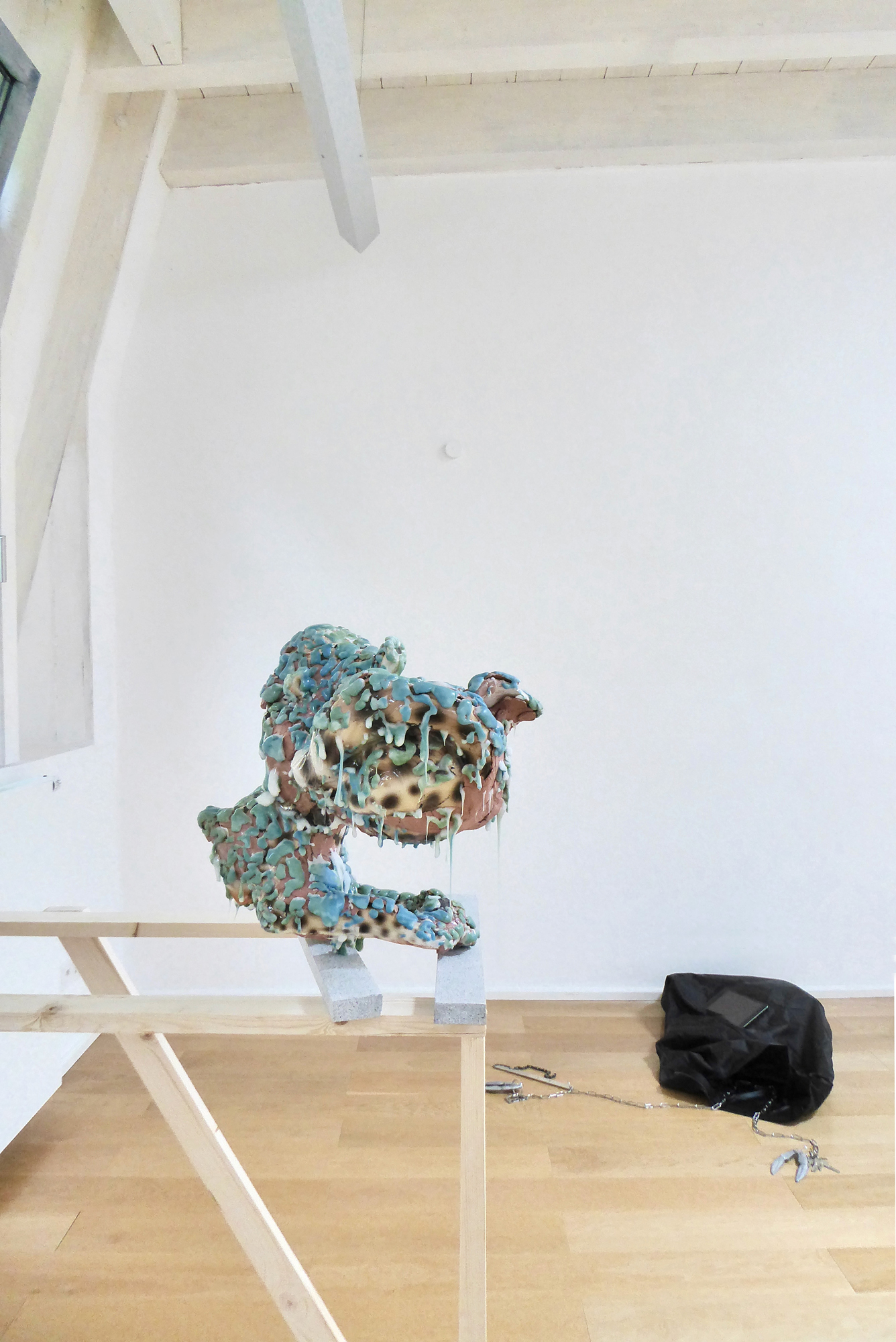
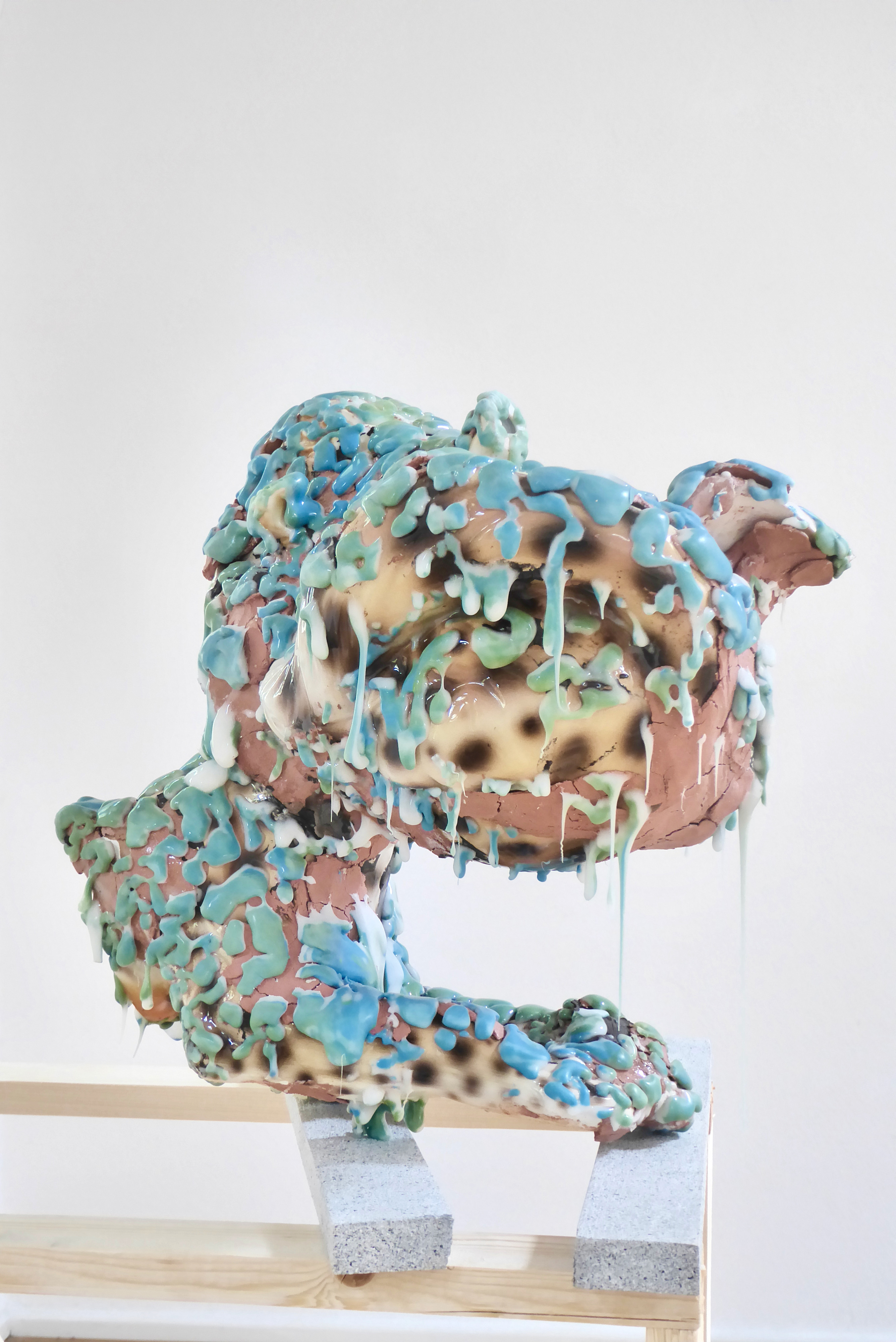
Julia Klemm, untitled, 2021, ceramic, glaze, second-hand ceramic leopard, 32 x 28 x 33 cm
Julia Klemm, untitled, 2021, ceramic, glaze, second-hand ceramic leopard, 32 x 28 x 33 cm
Julia Klemm, untitled, 2021, ceramic, glaze, second-hand ceramic leopard, 32 x 28 x 33 cm
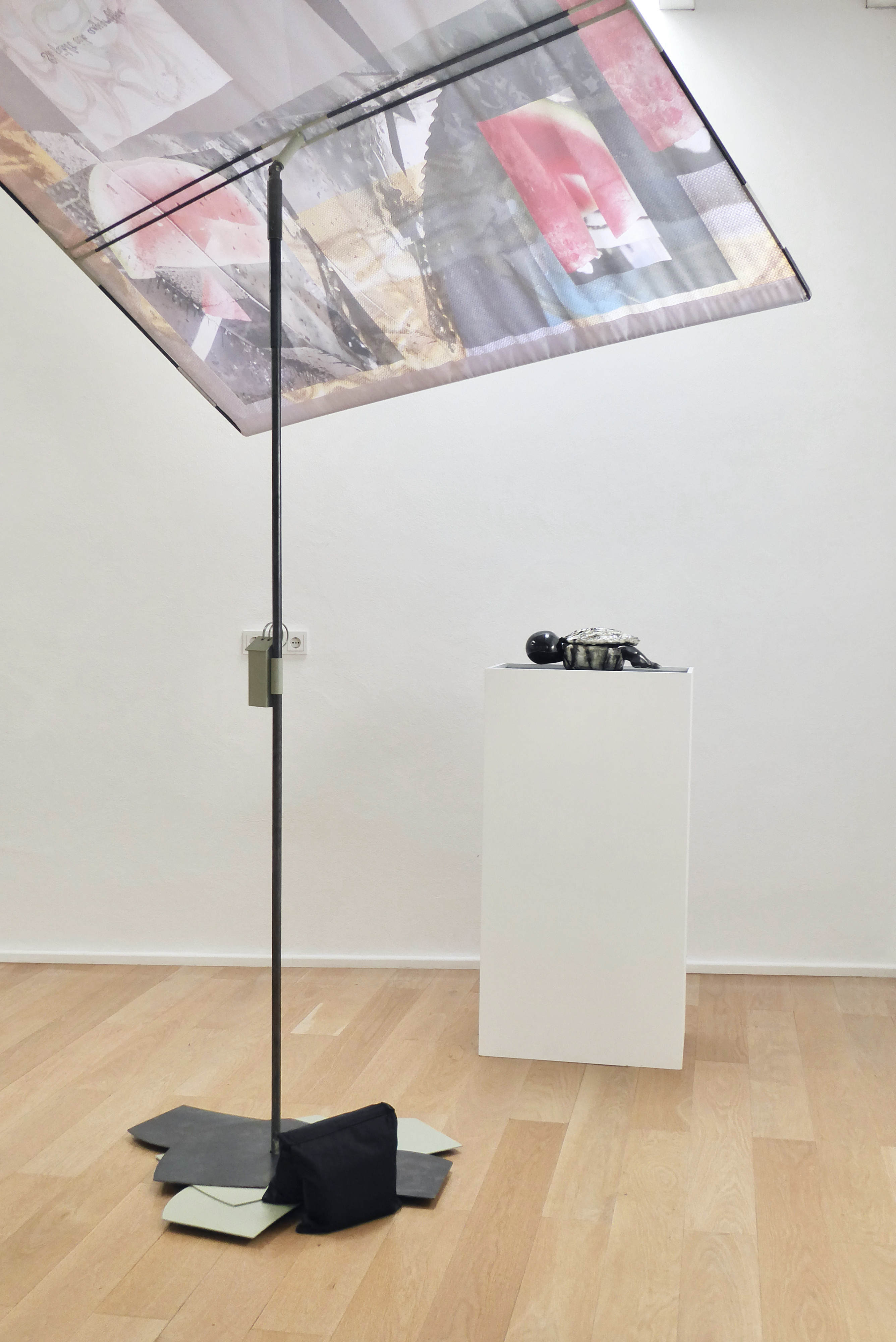
Pat Shoulder, Sun Umbrella, 2020, Steel, paint, print on textile
Lost and Found, 2021, installation view
Justin Lieberman, Obscure Readability, 2020, ceramic, glass and pedestal with sand, 41 x 22 x 12 cm (Courtesy of Galerie Christine Mayer)
Justin Lieberman, Obscure Readability, 2020, ceramic, glass and pedestal with sand, 41 x 22 x 12 cm (Courtesy of Galerie Christine Mayer)
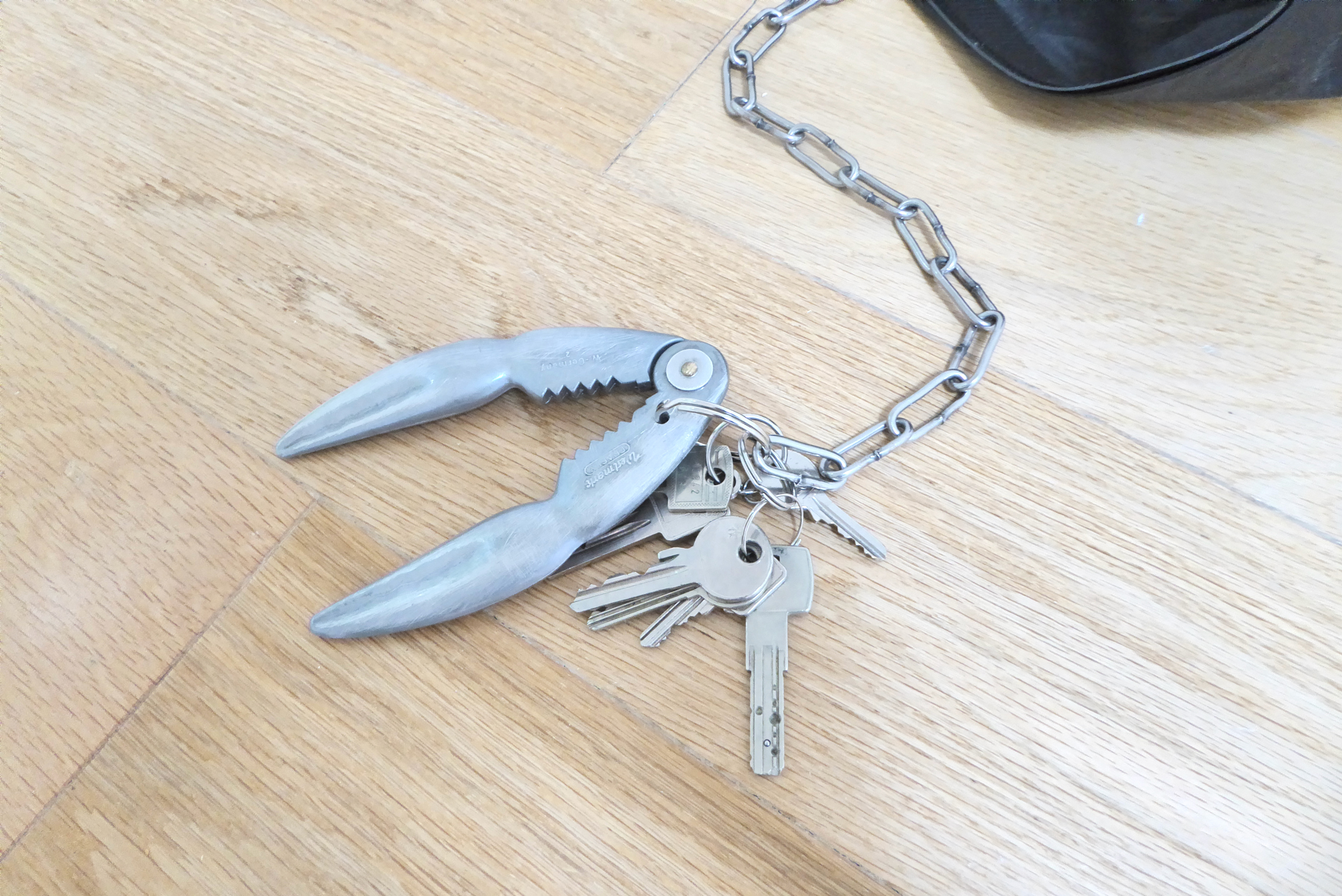
Lilian Robl,Winning Hearts and Minds, 2016, 5 min 55 sec (plus textile bag and assorted metal objects)
A naturalist, specifically an 18th century one, likes to classify. After an expedition to the jungles of some remote land he – and it is almost always a he – takes out his specimens and begins to compare. This one looks like the second, the third does not, the fourth has some features of the first two, but also some traits seen in the third. He makes up categories and puts labels on boxes, marking the time and place at which the specimens were found. He then takes out a scalpel and cuts them open in order to examine their inner structure. Here are the muscles and these are the breathing organs. This is the skin, and under the microscope he can see the epidermal structure. Visually speaking, the naturalist proceeds mimetically, by finding patterns and organising resemblances. He looks and compares. He judges accordingly.
There are however animals that escape the naturalist’s grasp. Fictional beings like vampires and werewolves, who live in darkness of our imaginations and spread by infecting others with their poisonous bite – these can be easily dismissed as unworthy of our serious attention. Viruses and pandemics less so. A virus can hardly be deemed alive, reproducing only in the host’s body. Although it mutates, it does not develop to evolve into ever more complex organisms. While it can be placed into groups of similar viruses, it eludes the classificatory system with its orders, families, genera and species.
The exhibition ‘Lost and Found’ has a slightly dystopian, even post-apocalyptic quality, of various objects assembled in haste and then disregarded, leftovers from a Mad-Max film set. A preview exhibition, it consists of artists who will hopefully be part of GiG Munich’s ‘Thinking Nature’ 2022 programme, which examines the relationship between man and nature, as it presents itself in thought. These artists were selected because their practices are not of class and order, but rather of mutation and infection. We see this most in Julia Klemm’s sculpture were kitsch ceramic animals are broken up and then reassembled, set precariously on their rickety plinths. Pat Shoulder’s work is collaborative, a result of an exchange of letters between the two artists during the first lockdown. The order of time is put into question with Johanna Strobel’s installations and logic disintegrates in Lilian Robl’s videos. There is a celebration of nature’s structures in the glass turtle shells of Justin Lieberman but again this order is not that of the naturalist. As with the others, it is a viral order of an unnatural kind.
As the previously planned exhibition had to unfortunately be cancelled, GiG Munich would like to use this opportunity to introduce a few artists, who it will be collaborating with next year as part of the ongoing ‘Thinking Nature’ series. Lost and Found is a preview exhibition, ‘lost’ because of the work that got lost in the post, ‘found’, because of the new work about to be discovered. The exhibition is a spontaneous one – what will happen, will happen.
Sadly, the exhibition will have to be postponed till further notice. The work was lost in the post. Hopefully we can make the exhibition happen later in the year, most likely in October. We apologise for the inconvenience caused.
GiG Munich is happy to present the next instalment of the series Thinking Nature, featuring new work by Johanna Strobel. For her solo exhibition low affinity, Johanna Strobel creates rhizomatic macramé-like structures from USB extension cords, using them to power her plexiglas and paraffin sculptures.
Entropy, the fact that once the USB 2.0 cable exceeds a certain length information gets lost while power still remains, forms the central component of this work. It ties together the ancient idea of ‘ether’ as a medium through which light travels, the fluid physics of translucency, and the decorative and practical craft of knot-making. Her practice is informed by her background in science, and explores such unwieldy concepts like time and space, information and entropy, language, the creation, attribution or suspension of meaning and the everyday perception and precipitation of these concepts in mundane life.
Johanna Strobel is an interdisciplinary artist from Germany, currently based in New York. She holds degrees in Information Science and Mathematics and graduated in painting and graphics from the Academy of Fine Arts Munich with Honors (Meisterschuelerin of Gregor Hildebrandt) in 2017. In 2020 she received her MFA from Hunter College New York (New Genres). Since then she has participated in numerous exhibitions in Germany, Italy, Taiwan and the US, with a solo exhibition at the Municipal Museum Cordonhaus Cham, 2019. In 2020 her work was included in The Immigrant Artist Biennial, New York, USA, Jahresgaben, Kunstverein Munich, Germany and featured online by Hauser & Wirth. Johanna was a fellowship artist in residence at NARS Foundation, Brooklyn in 2021.
The exhibition will include an online discussion event with Dr. Beth Lord, Professor of Philosophy, School of Divinity, History, Philosophy and Art History at the University of Aberdeen.
Online discussion with Elke Dreier and Arjen Kleinherenbrink
28.05.2021
As part of the series Thinking Nature, GiG Munich hosted the online discussion between Elke Dreier (currently showing her work Betrachtungen des Waldes at GiG) and Dr. Arjen Kleinherenbrink (assistant professor in metaphysics and philosophical anthropology at the Faculty of Philosophy, Theology and Religious Studies at the Radboud University Nijmegen, Netherlands) . The zoom discussion took place on the 28th of May.
The image in Elke Dreier’s work is the forest clearing – Arjen Kleinherenbrink will be introducing Deleuze and Guattari’s idea of the plane of nature. In this way, we will move from clearing to plane, to see how things might reveal themselves to us and how things came about to be what they are.
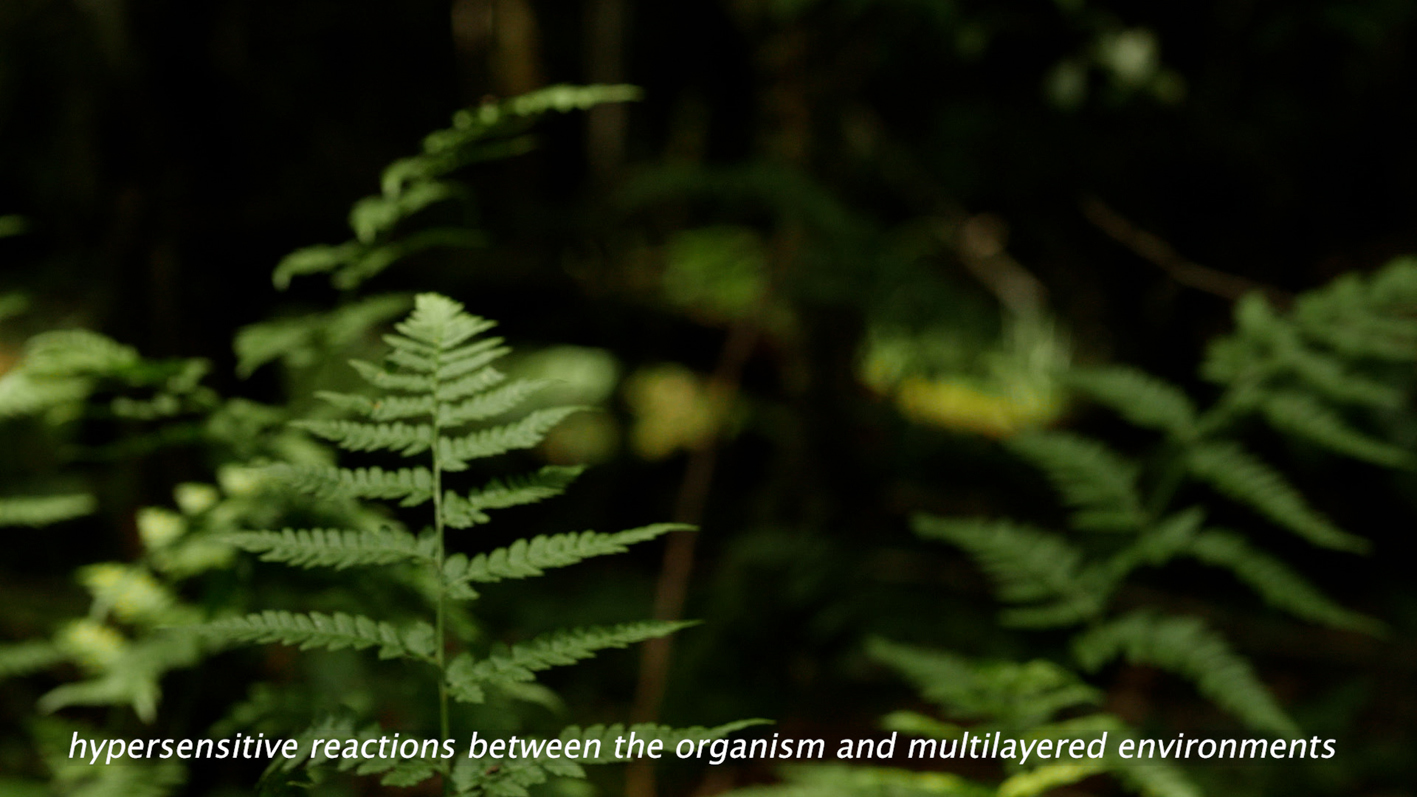
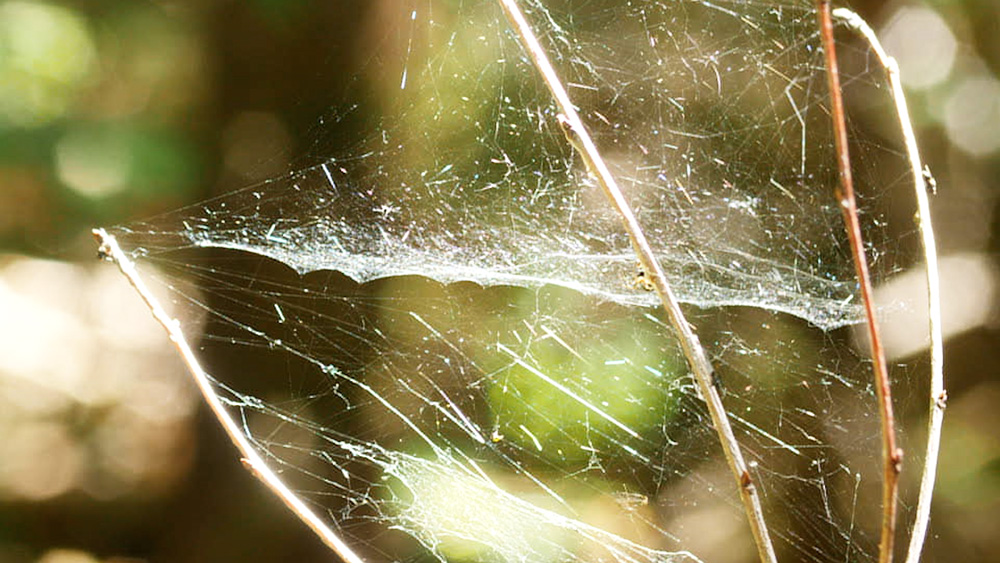
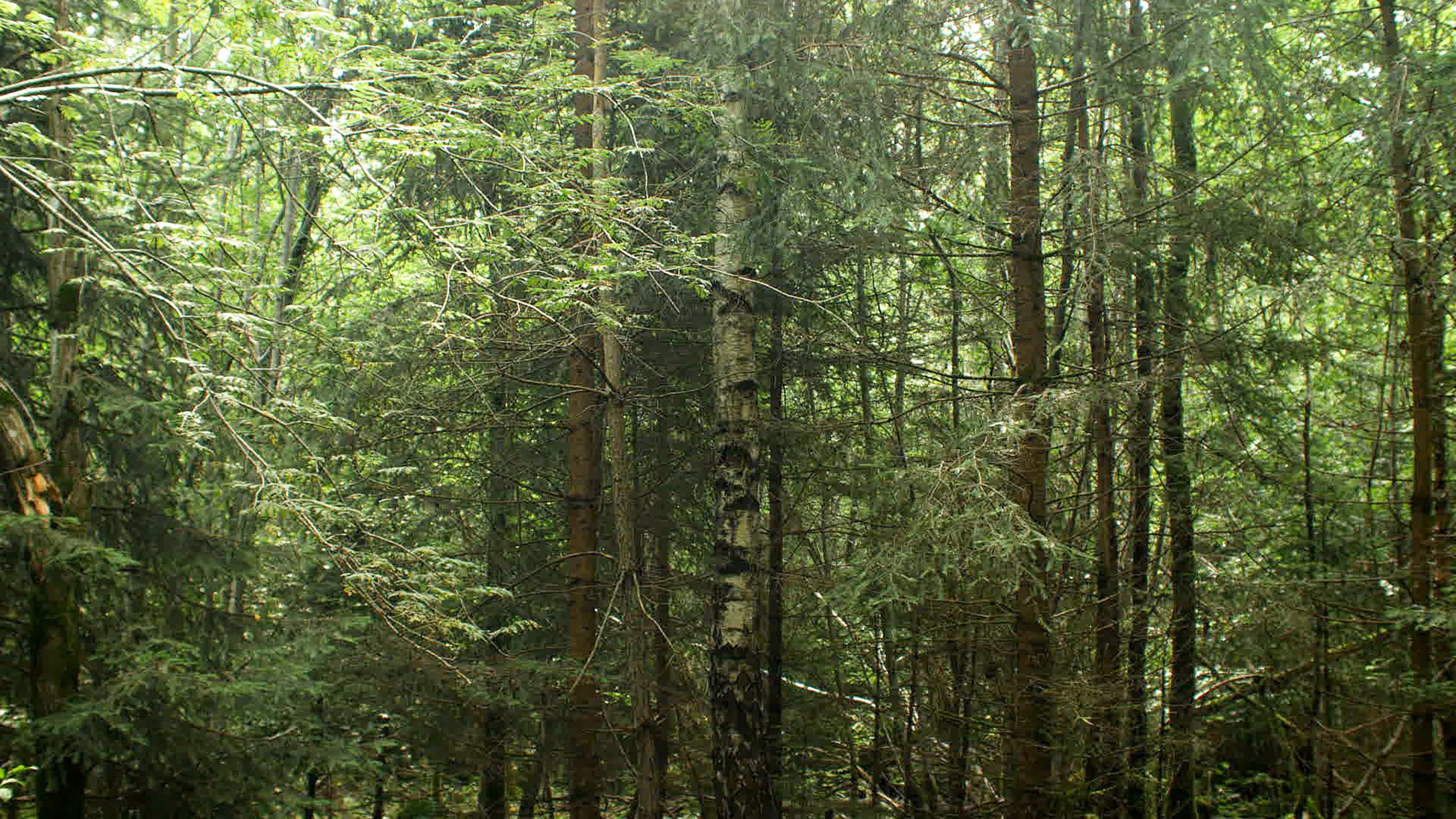
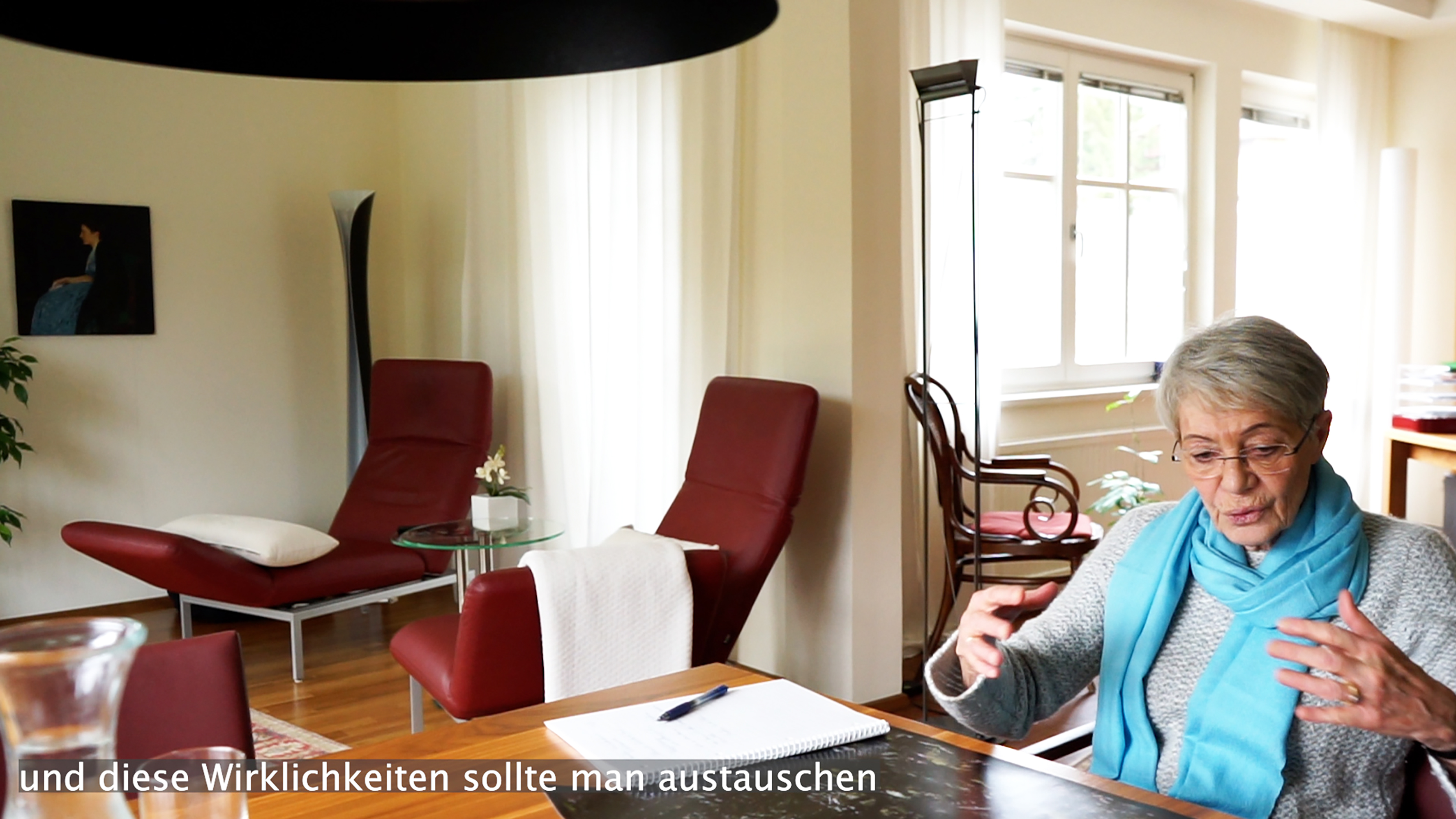
Elke Dreier, Betrachtungen des Waldes, 2021, video installation (still image)
Elke Dreier, Betrachtungen des Waldes, 2021, video installation (still image)
Elke Dreier, Betrachtungen des Waldes, 2021, video installation (still image)
Elke Dreier, Betrachtungen des Waldes, 2021, video installation (still image)
Elke Dreier, Betrachtungen des Waldes, 2021, video installation (still image)
Elke Dreier, Betrachtungen des Waldes, 2021, video installation (still image)
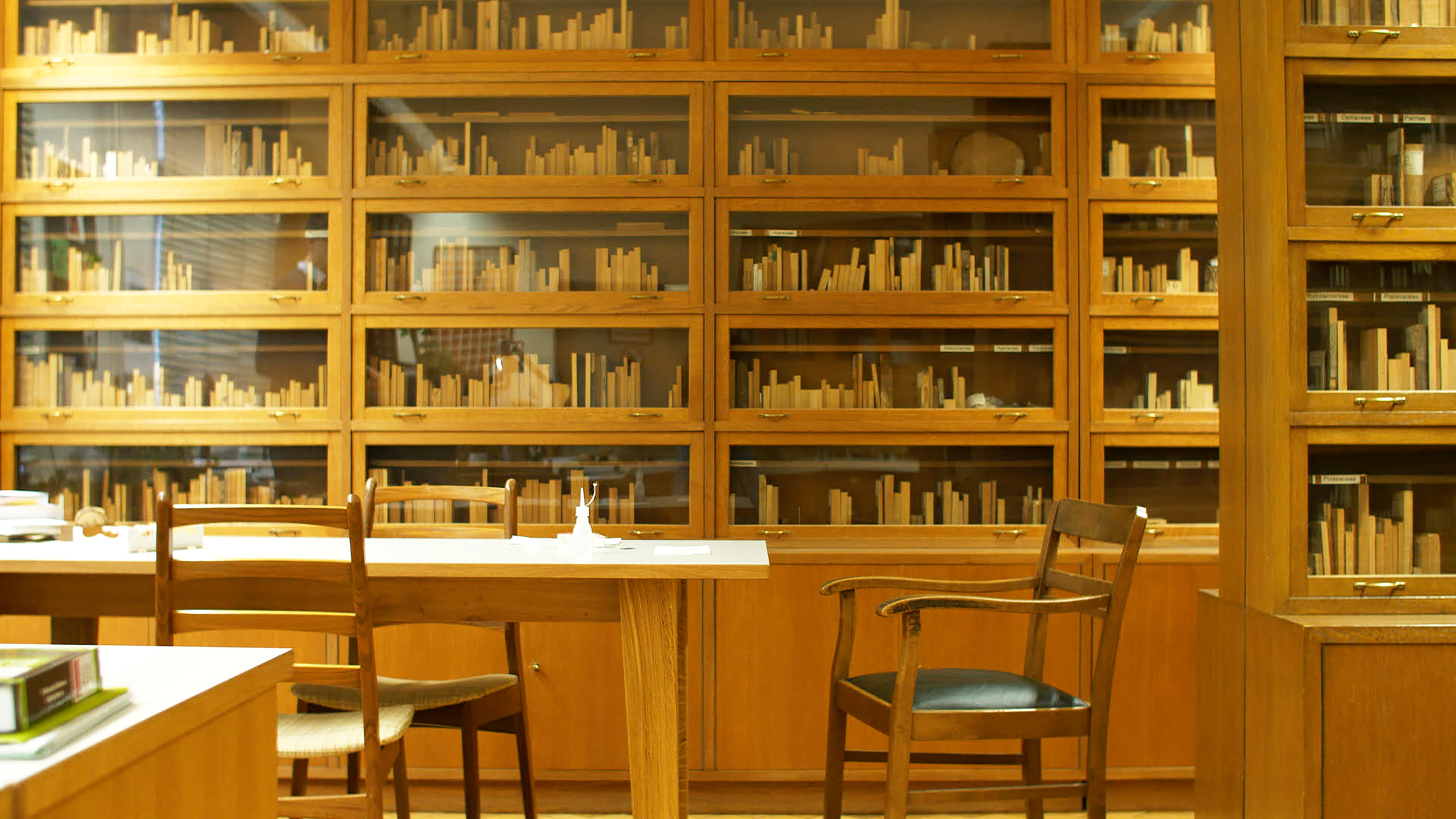
Camera: Daniel Asadi FasziXylothek, TUM Holzforschung München
Elke Dreier, Betrachtungen des Waldes, 2021, video installation (still image)
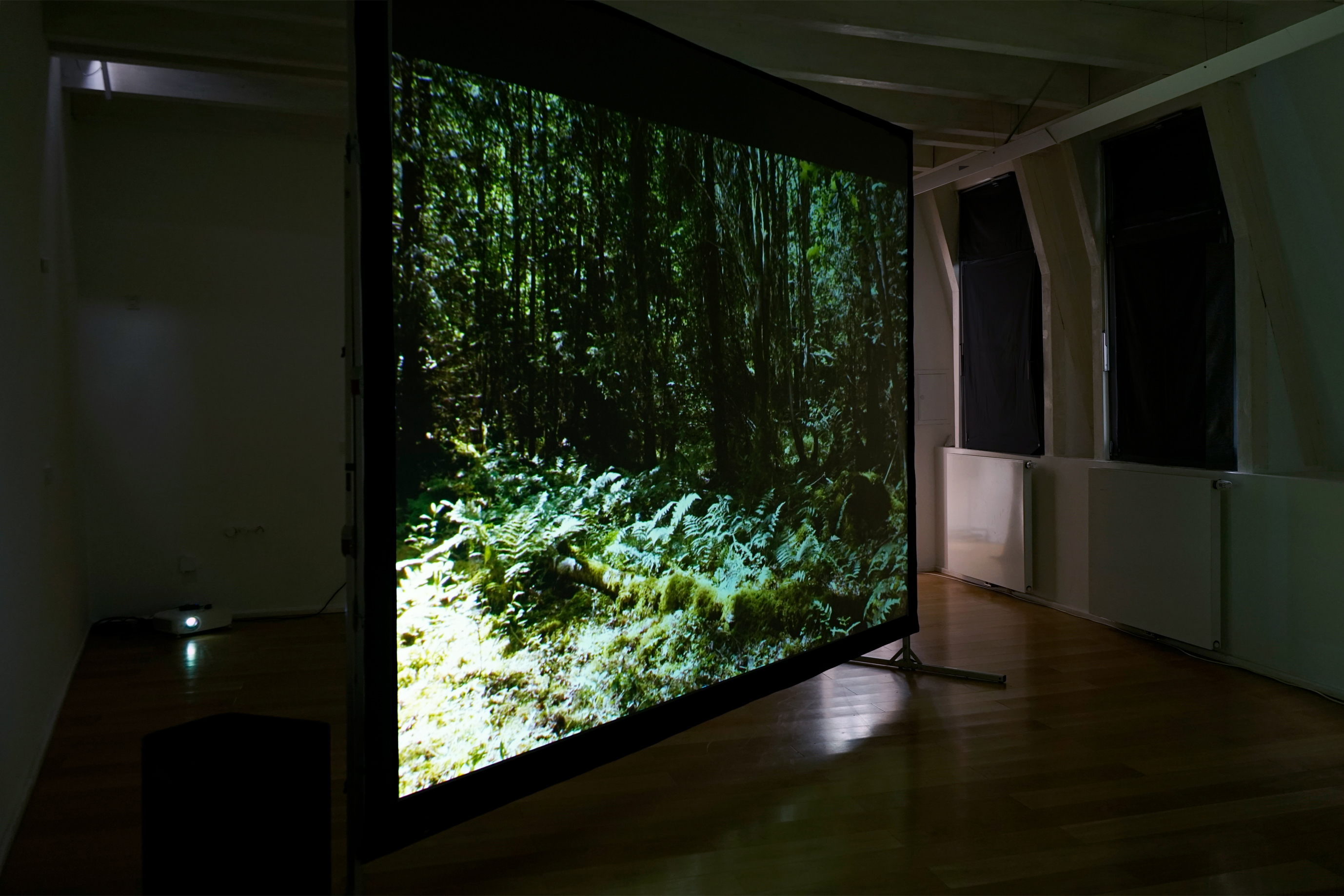
Elke Dreier, Betrachtungen des Waldes, 2021, video installation (installation view)
Elke Dreier, Betrachtungen des Waldes, 2021, video installation (installation view)
Elke Dreier, Betrachtungen des Waldes, 2021, video installation (installation view)
Elke Dreier, Betrachtungen des Waldes, 2021, video installation (installation view)
The clearing in the forest is such a compelling image. It always seems to happen quite suddenly. The trees fall away to reveal an empty space. The sun shines there. Birds sing. A butterfly flutters by. Things become visible in the clearing as the eye adjusts to the bright light. We begin to perceive things that were previously hidden — things that otherwise might have escaped our notice. When we enter the clearing things show themselves to us. But what are these things that we see? And who are the ‘we’ to who see them?
For me, the clearing always will belong to Heidegger. When in ‘The Origin of the Work of Art’ he starts to describe the relation between truth and unconcealment, it is the clearing to which he turns. He writes here so memorably,
In the midst of being as a whole an open place occurs. There is a clearing. Thought of in reference to beings, this being is more in being than are beings. Thos open center is therefore not surrounded by beings; rather, the clearing center itself encircles all that is, as does the nothing, which we scarcely know. (‘Origin of the Work of Art,’ in Heidegger, Basic Writings, 114)
Heidegger makes good use of the way the clearing makes the forest visible to us, the moment when we finally see the space, light, and air, that despite always being present, within the forest remaining unnoticed, overlooked. For Heidegger, the clearing then becomes the metaphor for how beings stand in Being.
But there are so many other approaches to the clearing, and it is this that the work of Elke Dreier shows so well: the clearing in its compelling-ness. We might look at the video footage of the local forest and see the light, the trees and the leaves. Those who are more observant might catch a glimpse of an insect or bird. An expert bird imitator however, would know the names of all the birds he hears and be able to replicate their song exactly. Similarly, the staff at Munich’s Xylotheque could identify the wood structures of each of the trees found there. The clearing is thus open to all those who wish to enter. It invites us in.
The clearing as presented by Elke Dreier in Betrachtungen des Waldes is the first in a series of exhibitions (entitled, Thinking Nature) held at GiG Munich. These exhibitions hope to examine man’s relation to nature, or more accurately, how man’s thinking is structured through the relation he has with nature. For too long this kind of thinking had been focused on the relationship man establishes with nature. Traditionally, the condition of knowledge lies within the human subject and whatever his experience of the world might be. More recently Marxist, feminist, and postmodern thought have set to critique this relationship further. I would argue the challenge is to think nature outside this relation, with our current climate crisis as well as the ongoing corona pandemic making this task all the more urgent. The clearing of Elke Dreier work is to provide the open space for discussion.




















 GiG
GiG 