Hey, make sure you do not miss Tim Barker talking with me tomorrow, Sunday the 7th at 3 pm at Lothringer 13 Lokal! Really interesting way of looking at now technology affects our experiences of time! Part of the current “From Animal to Mineral Exhibition”.
Tim Barker is Professor of Media Technology and Aesthetics at the School of Culture & Creative Arts, University of Glasgow. Tim’s research interests include digital technology and new media, aesthetics and the philosophy of time. He is the author of Time and the Digital: Connecting Technology, Aesthetics, and a Process Philosophy of Time (2012) and Against Transmission: Media Philosophy and the Engineering of Time (2018) and numerous articles including the most recent “Unplayable games: time and digital culture” Kunsttexte (2023); “Michel Serres and the philosophy of technology” Theory, Culture and Society (2023), “Michel Serres’ messengers” Media Theory (2021) and “Between emergence and emergencies: an introduction to the special issue ‘Media, Materiality, and Emergency’” MAST: The Journal of Media Art Study and Theory (2020).
One of the concepts of the exhibition From Animal to Mineral is the radical openness of Deleuze and Guattari’s becoming “tout le mode,” like everybody, like the whole world. In his short talk Tim Barker will introduce the concept of “totipotence” as discussed in the philosophy of Michel Serres, biologically defining the ability of a cell to give rise to unlike cells and so to develop a new organism. Serres uses this idea to discuss technological and cultural developments in evolutionary terms.
Lothringer 13 Studio, Lothringer Str. 13, 81667 München
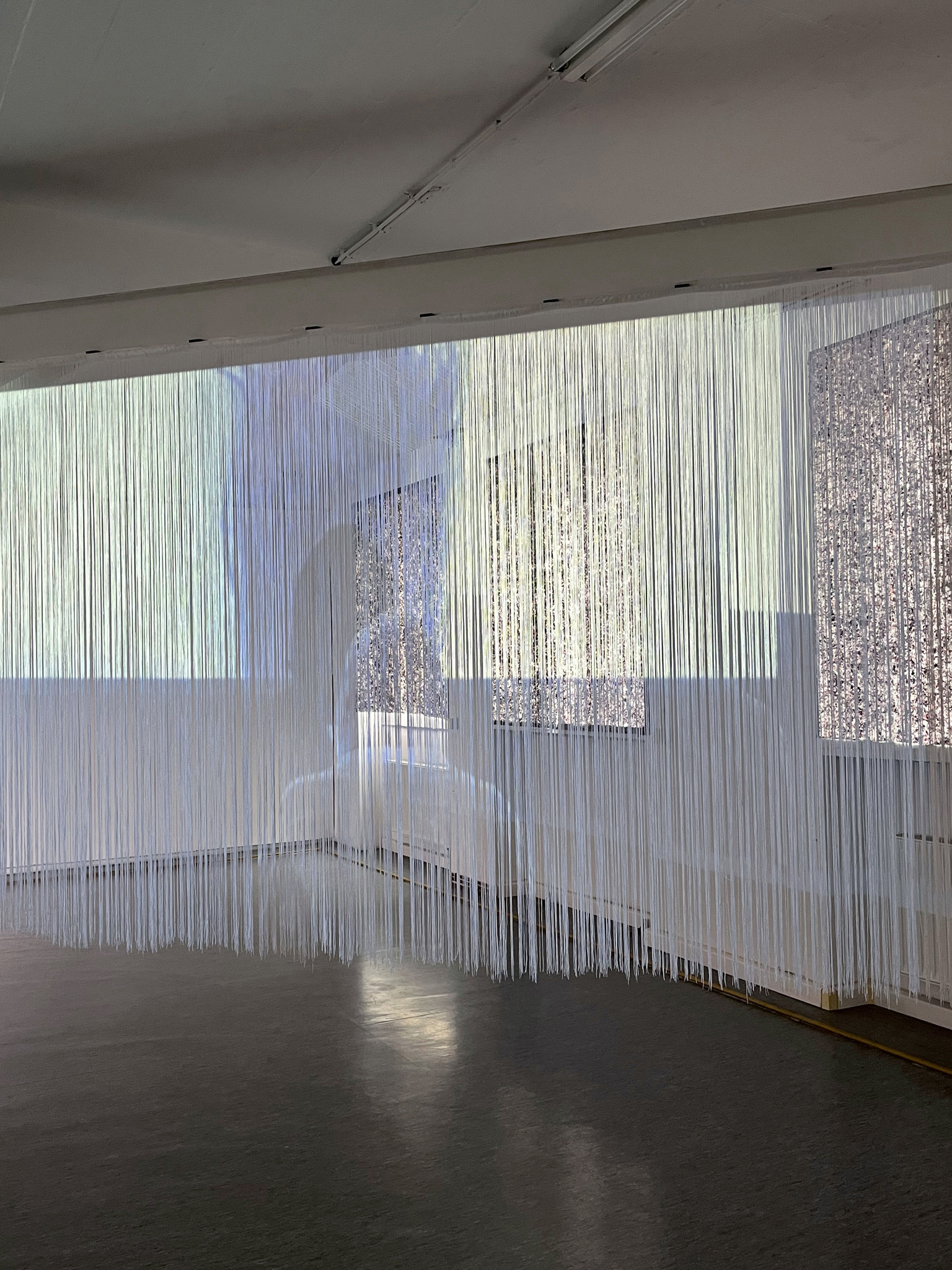
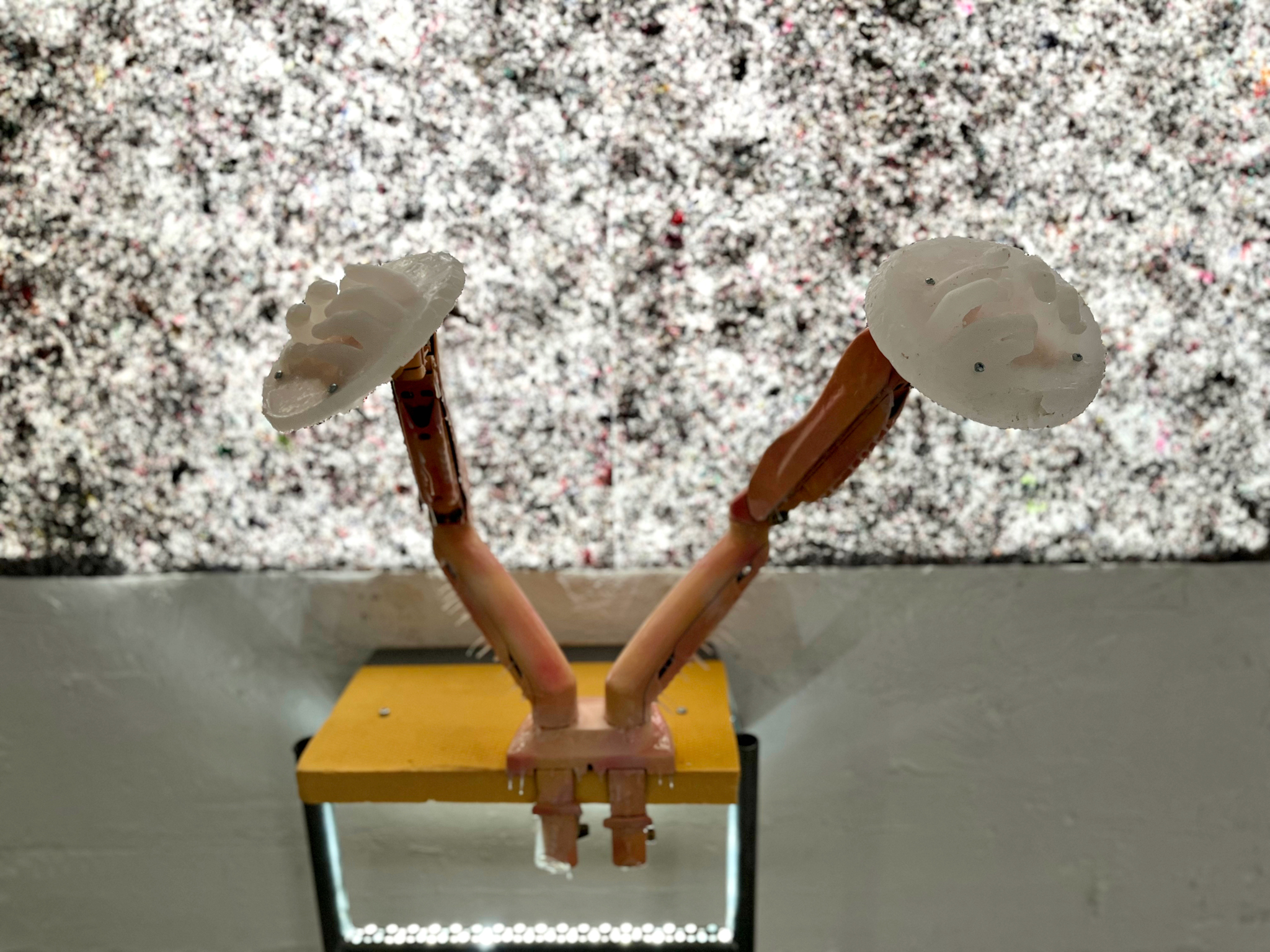
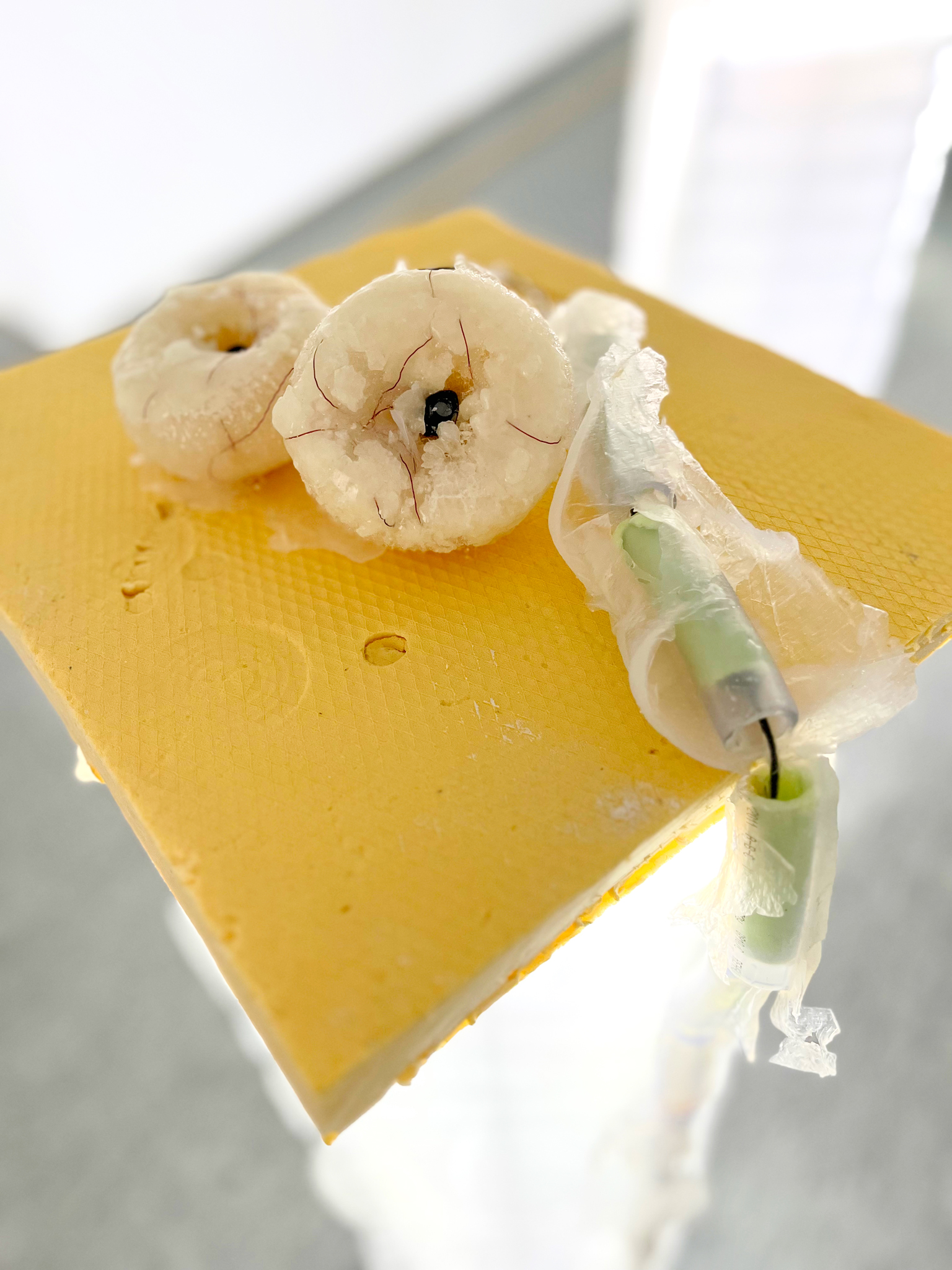
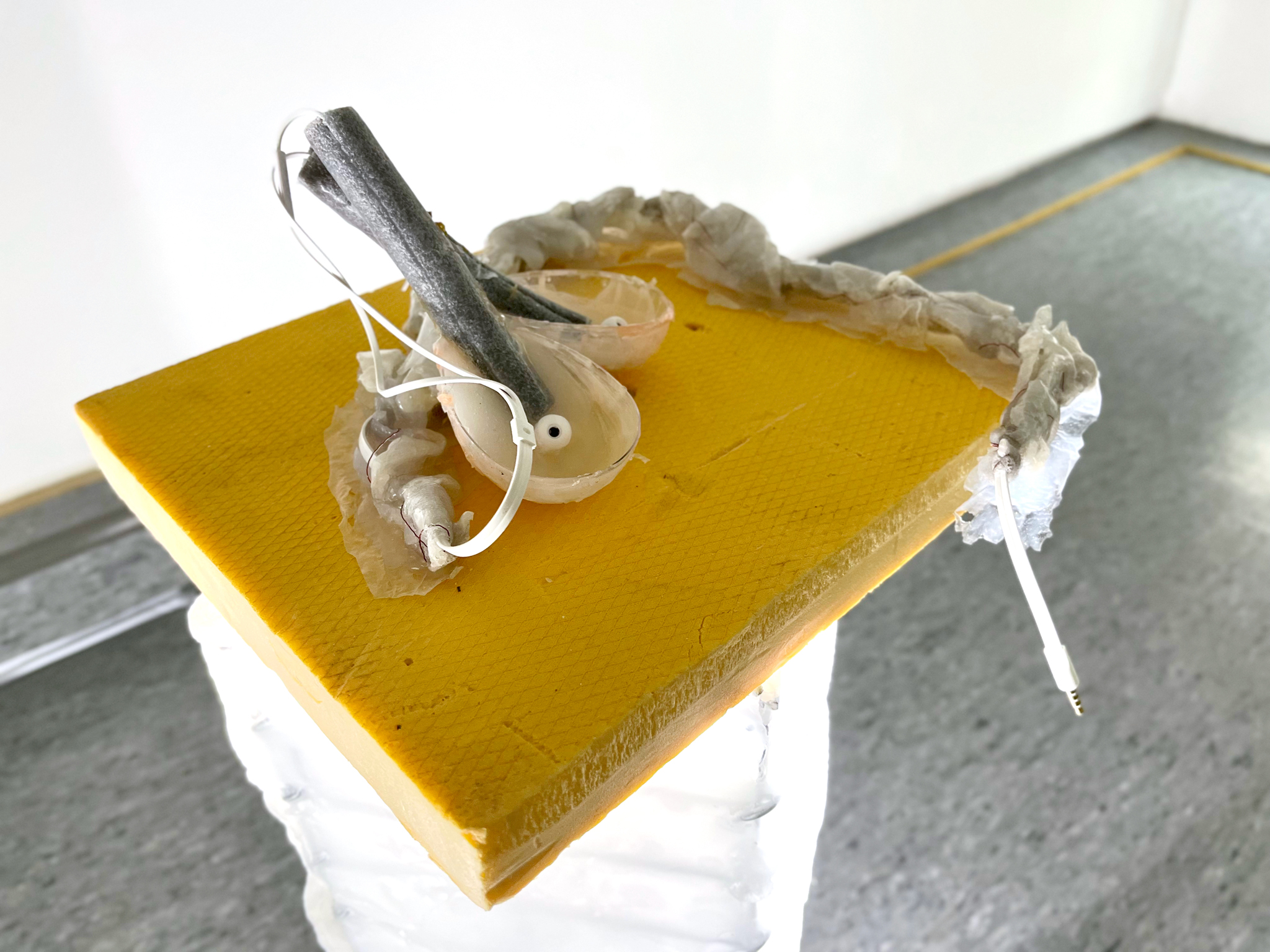
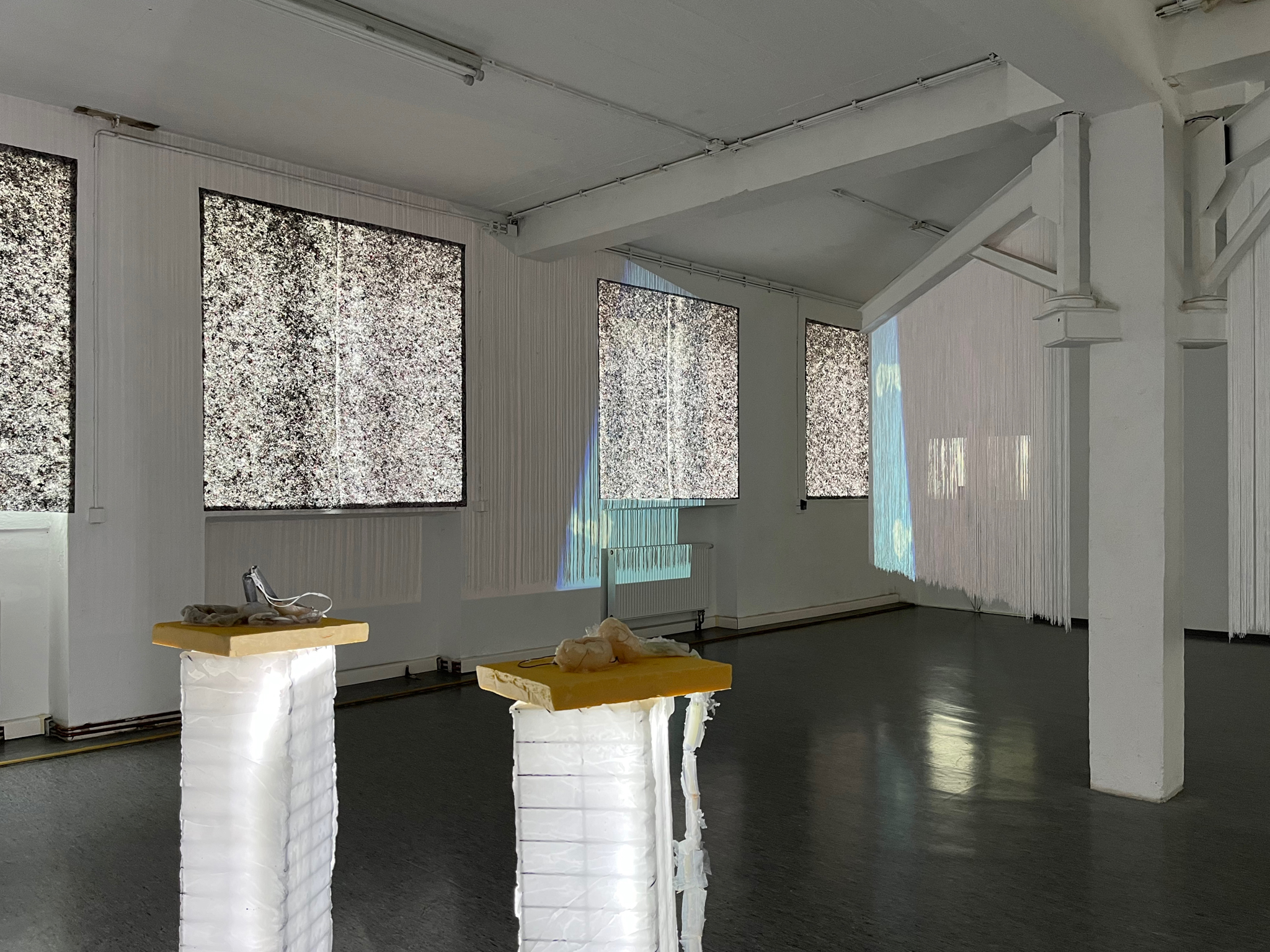
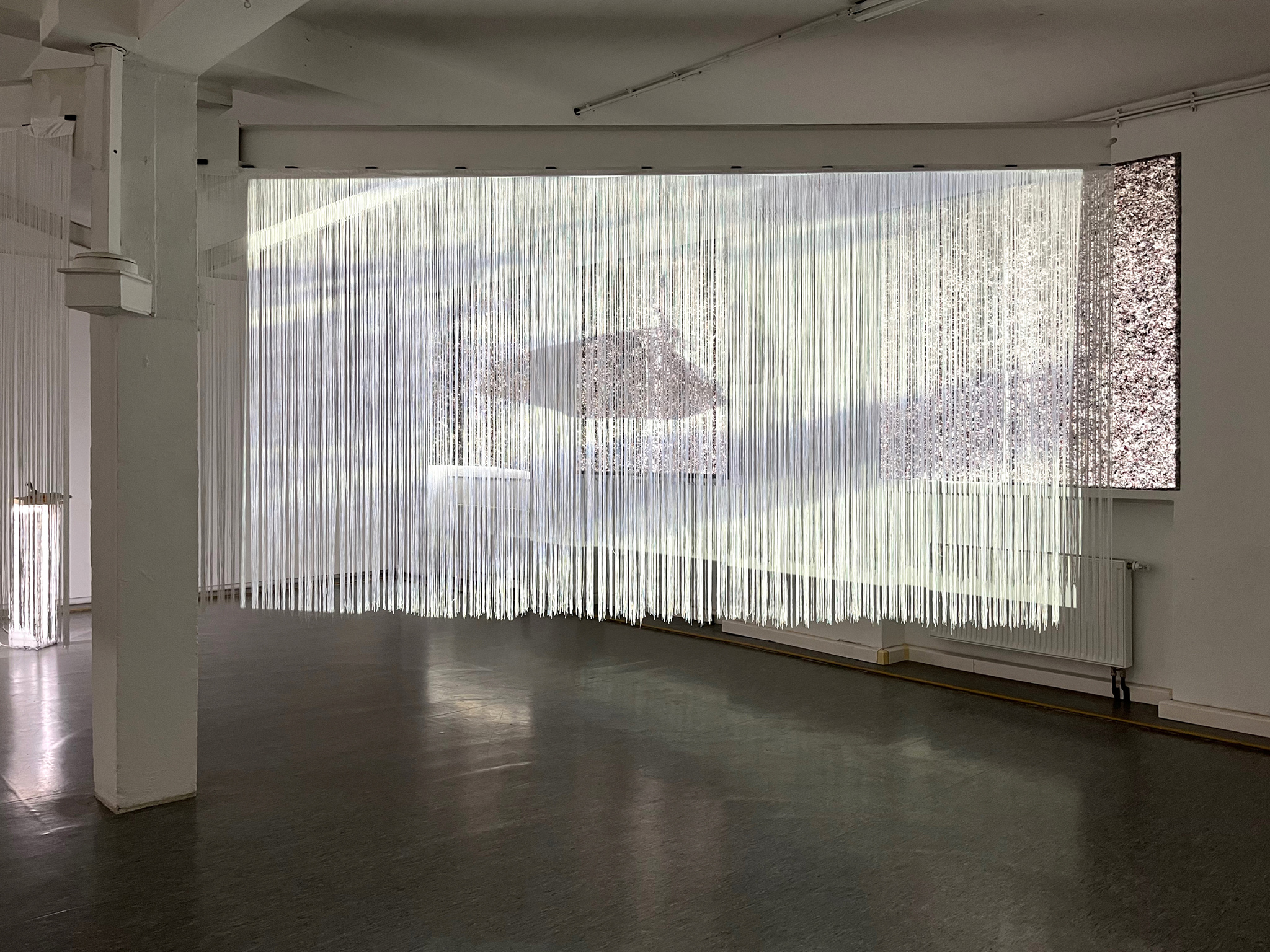
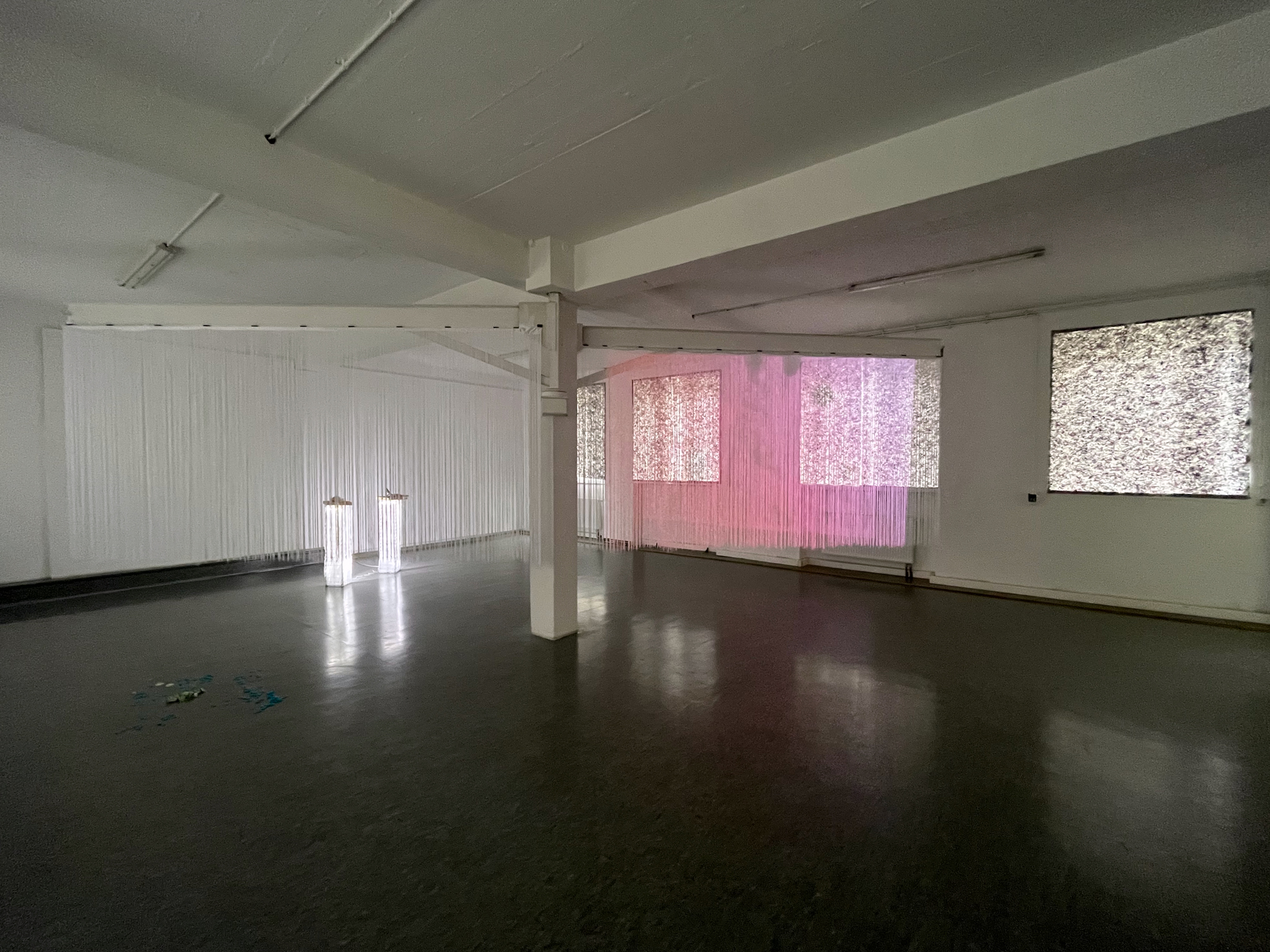
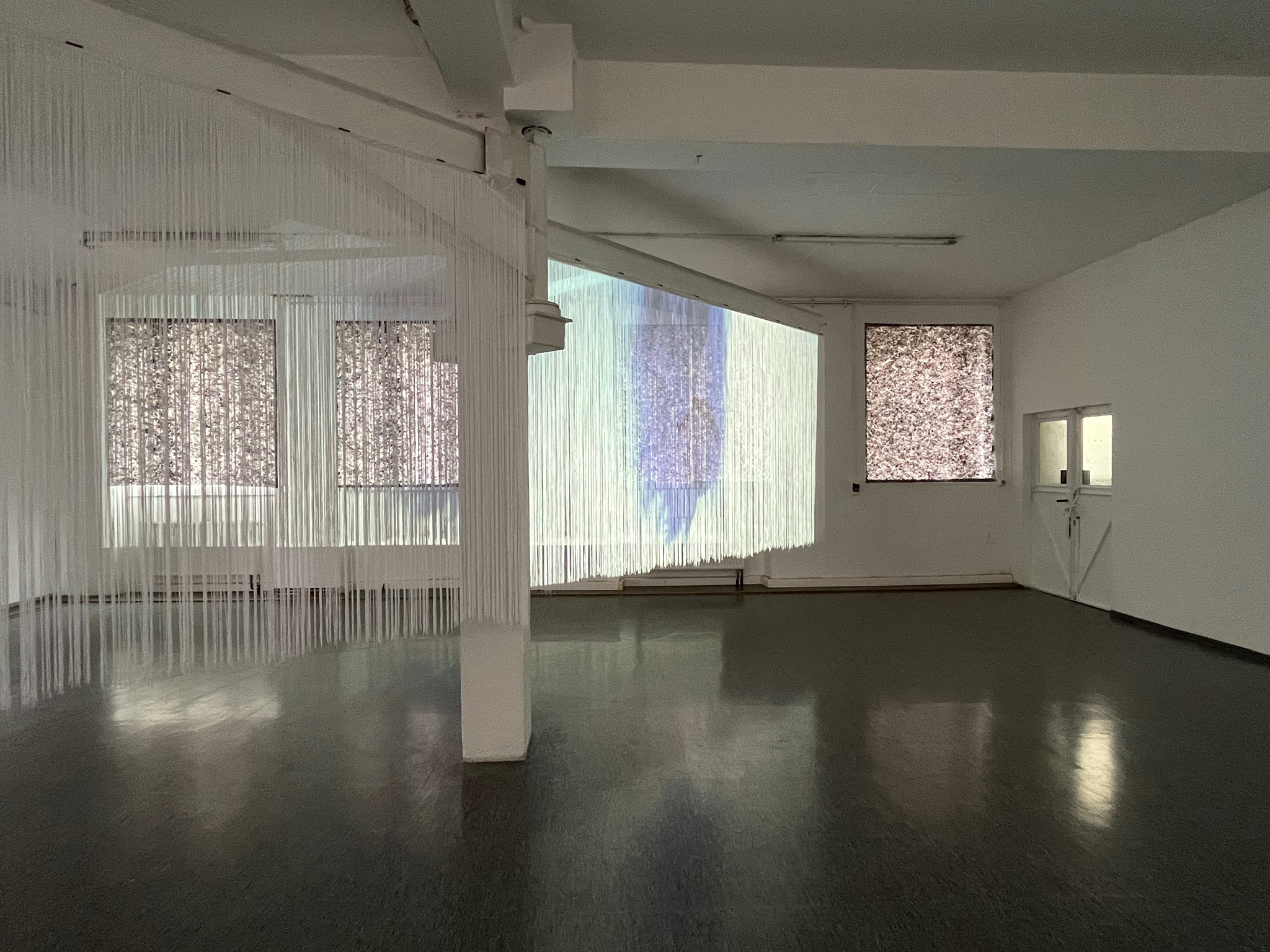
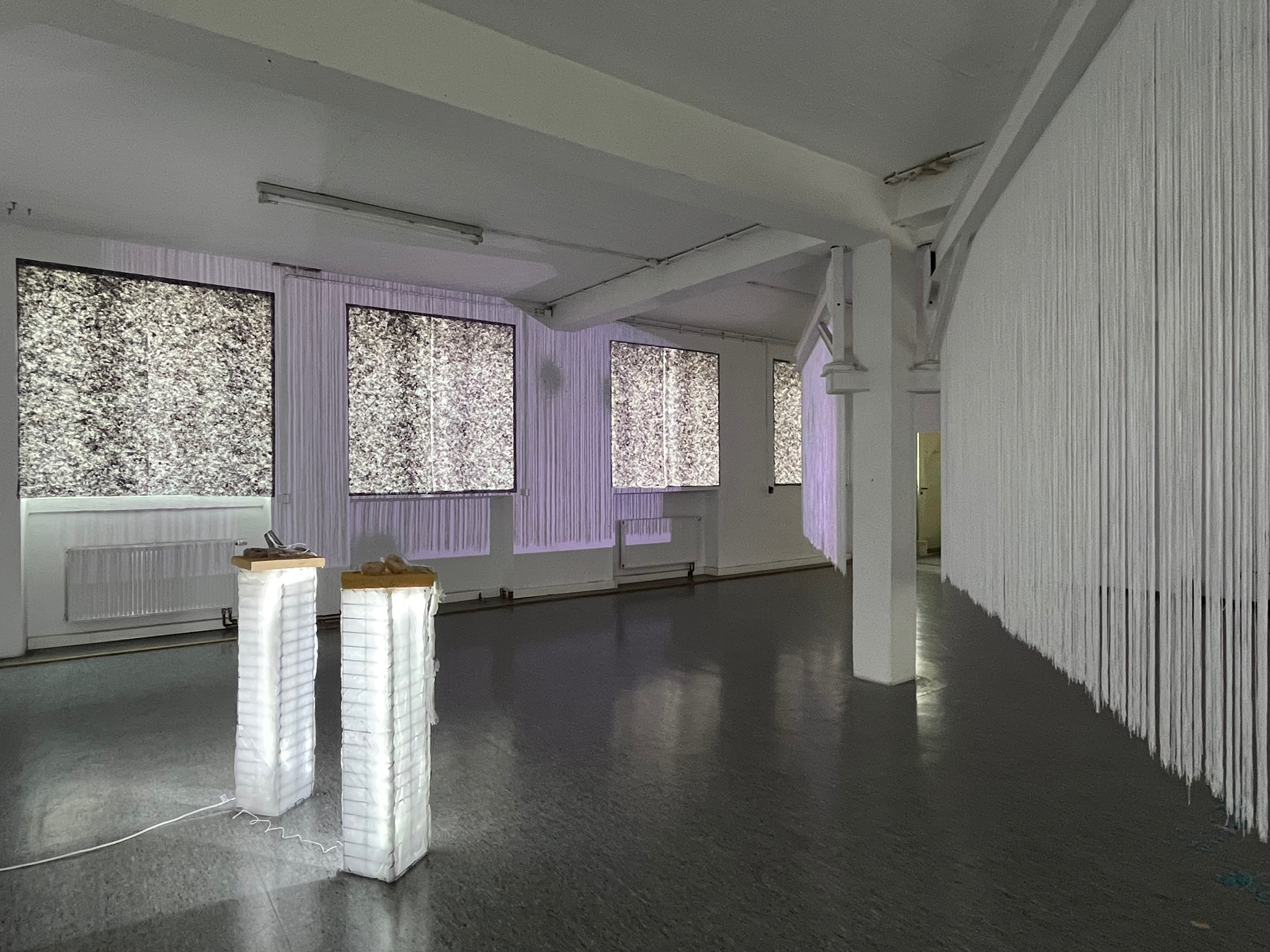
Janna Jirkova, Electric bodies shooting through space, 2022, installation viewJanna Jirkova, Her Do, 2022, video, HD, 16:9, 7:32 min, Sound: Daniel Geßlanna Jirkova, Feeler, 2022, monitor mount, spray paint, silicon, waxanna Jirkova, Feeler, 2022, monitor mount, spray paint, silicon, waxJanna Jirkova, Audiobun, 2022, headphones, silicon, hairwax, PVC, wire, hair donutJanna Jirkova, Braidphones, 2022, headphones, silicon, wax, wire, nylon ribbonJanna Jirkova, Electric bodies shooting through space, 2022, installation viewJanna Jirkova, Electric bodies shooting through space, 2022, installation viewJanna Jirkova, Electric bodies shooting through space, 2022, installation viewJanna Jirkova, Her Do, 2022, video, HD, 16:9, 7:32 min, Sound: Daniel GeßlJanna Jirkova, Electric bodies shooting through space, 2022, installation viewJanna Jirkova, Her Do, 2022, video, HD, 16:9, 7:32 min, Sound: Daniel GeßlJanna Jirkova, Her Do, 2022, video, HD, 16:9, 7:32 min, Sound: Daniel GeßlJanna Jirkova, Her Do, 2022, video, HD, 16:9, 7:32 min, Sound: Daniel Geßl
I have long, straight hair, slightly dry at the ends, too seldom cut. When I read or write, I tuck the loose strands behind my ear. It is always present, over there, too much to count yet infinitely countable. Oddly, I think of hair when I read Brian Massumi’s definition of the virtual (“Envisioning the Virtual” in The Oxford handbook of Virtuality, 55-70), and not only because of his arguments about value (because you are worth it!). For he opposes the virtual to the actual, rather than the natural or the real, and explains through Whitehead’s opposition of the sensuous and non-sensuous. Hair is sensuous because it exists over there, ready to be counted. There is a reference to space – counting unfolds in time. But hair is also virtual I guess, because it also appears to perception all at once: I do not have to pick a strand and start counting. Hair is there in one fell swoop, or rather swoosh. I already have a rough idea of a number – through habit, previous knowledge and earlier, other experiences. But as soon as I try to locate and fix this dimension – to grasp it in my hand – this virtual aspect disappears into the actual. Massumi describes the non-sensuous as having “a strangely compelling, shimmering sterility” (60) and this makes me think of the hair in this exhibition, Electric bodies shooting through space, silky white curtains on which the video work, Her do, shimmers.
In her work, Janna Jirkova plays with the natural and the artificial. Natural are our bodies: nails, mouth, belly, hair; artificial is the technology, both high and low tech, she attaches to her body in cyborg-like fashion. The electric bodies shooting through space are us, joggers wearing headlights in the dark, Major Tom floating in a tin can. But it is not that technology functions as some sort of extension of our body and its capacities, rather, Jirkova shows how our bodies are already artificial (and by extension, the artificial is already also natural). “Self-prosthetic” is Massumi’s term (64).
The English labels Jirkova reads out in her video, “pretty package… high performance …. the type I like” – but also negatively, “broken … malfunctioning” – are ways to describe both: the human body and technology, the natural and the artificial tangled together in language. On the shimmering screen, we see purple hair being used to tickle a belly, except that the hair is another video projection and the belly, a plaster cast. Again, she touches her navel, but this is on a mobile phone screen, forward facing, in a pouch of a rubber apron, worn over a white protective suit. “Samson, Samson, show me your hair!” Her hair, the hair of the empress Elisabeth. There is body hair shown as a video of a fern unfurling, and the abstract red and pinks are made by placing fingers over the recording device. Jirkova sets out to produce a field of tensions between different modes of existence, actual and virtual. These are tensions that come with the contrast between the sensuous and the non-sensuous. As Massumi argues, modes do not add up to anything – they do not form anything. Experience emerges when the pressure becomes unsustainable and these tensions break (62).
Through this intensive force field all of our experience is conditioned. What we bring to the conditional field phenomenon is our tendencies, in which they are a formative factor. Only these tendencies can be either natural, in the sense of a genetic predisposition or artificial, as in learnt. For Massumi, art and technology merely extend the body’s pre-existing regime of natural and acquired artifice, “already long in active duty in producing the virtual reality of our everyday lives” (64). We are caught between our tendencies in an intensive force field of emergence, indeed like “motes,” “caught up in a tumult of non-Newtonian motion” (Beckett, Murphy, Chapter 6).
As part of the series Thinking Nature, GiG Munich is hosting the online discussion between the artist, Kalas Liebfried and Dr Sebastian Truskolaski, Lecturer (Assistant Professor) in German Cultural Studies at the University of Manchester. The discussion takes place on Zoom on Wednesday evening at 7 pm, the 12th of January.
Please note that while the discussion is free to attend, make sure to keep your microphone on mute and your video off. The discussion will also be recorded for later viewing.
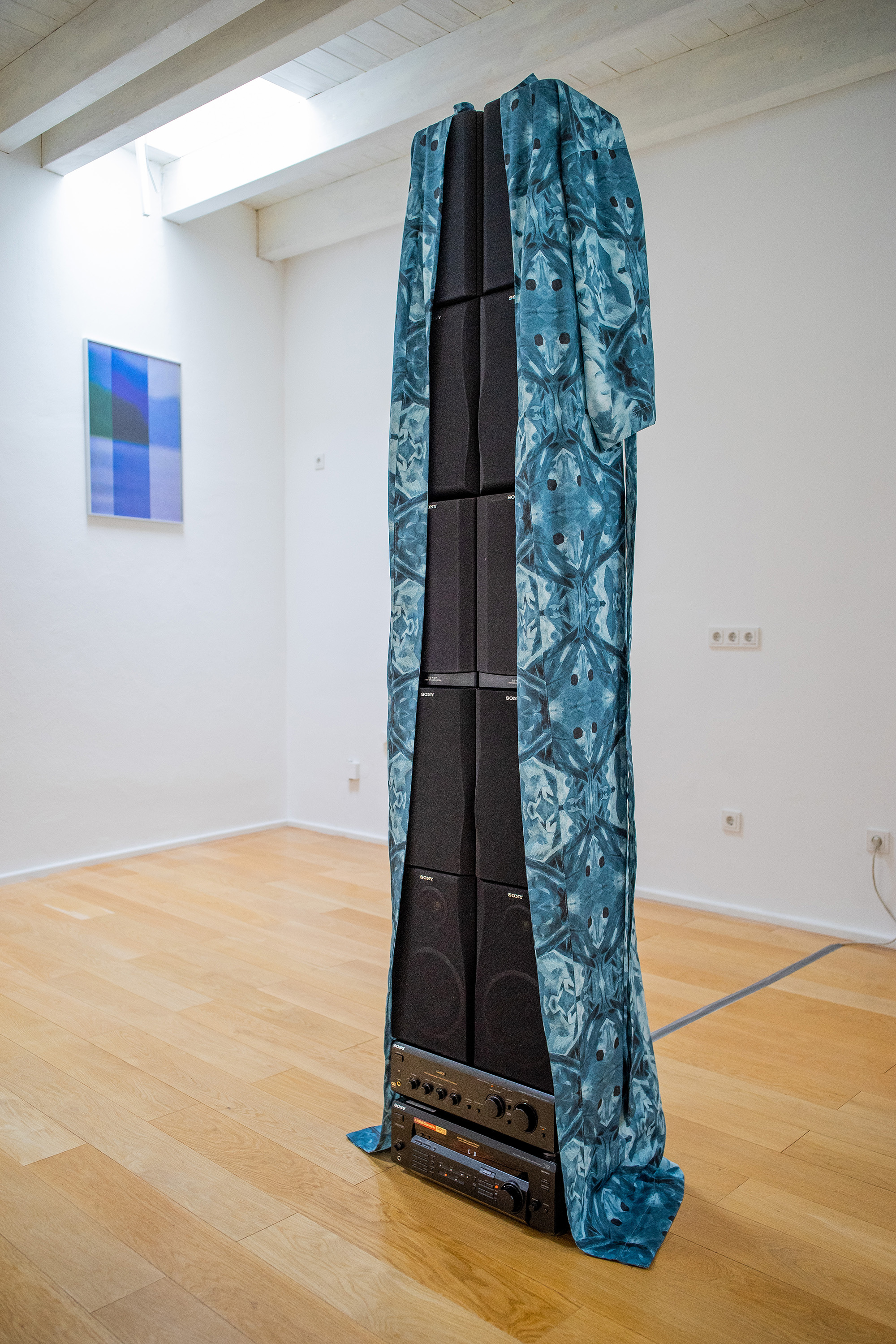
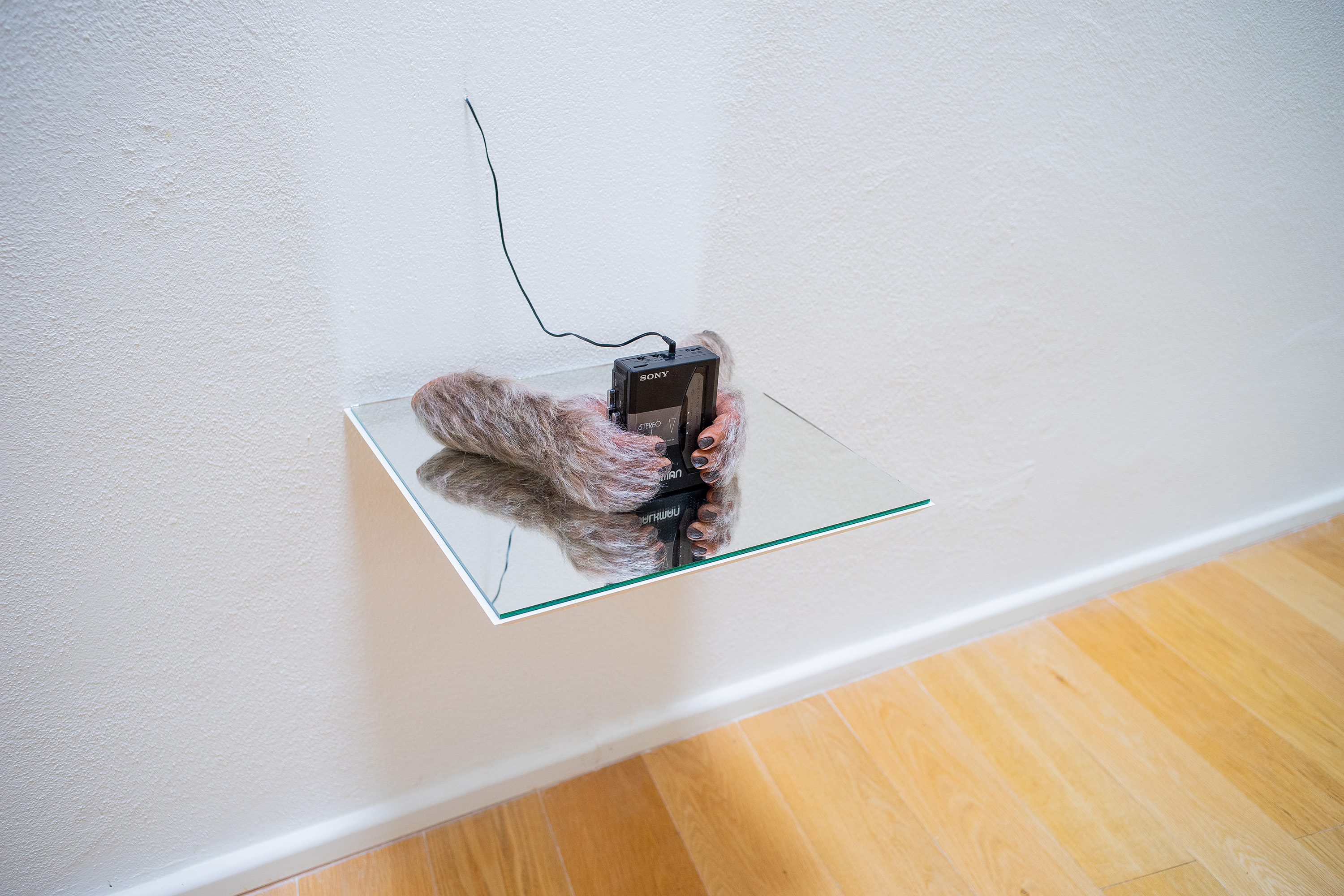
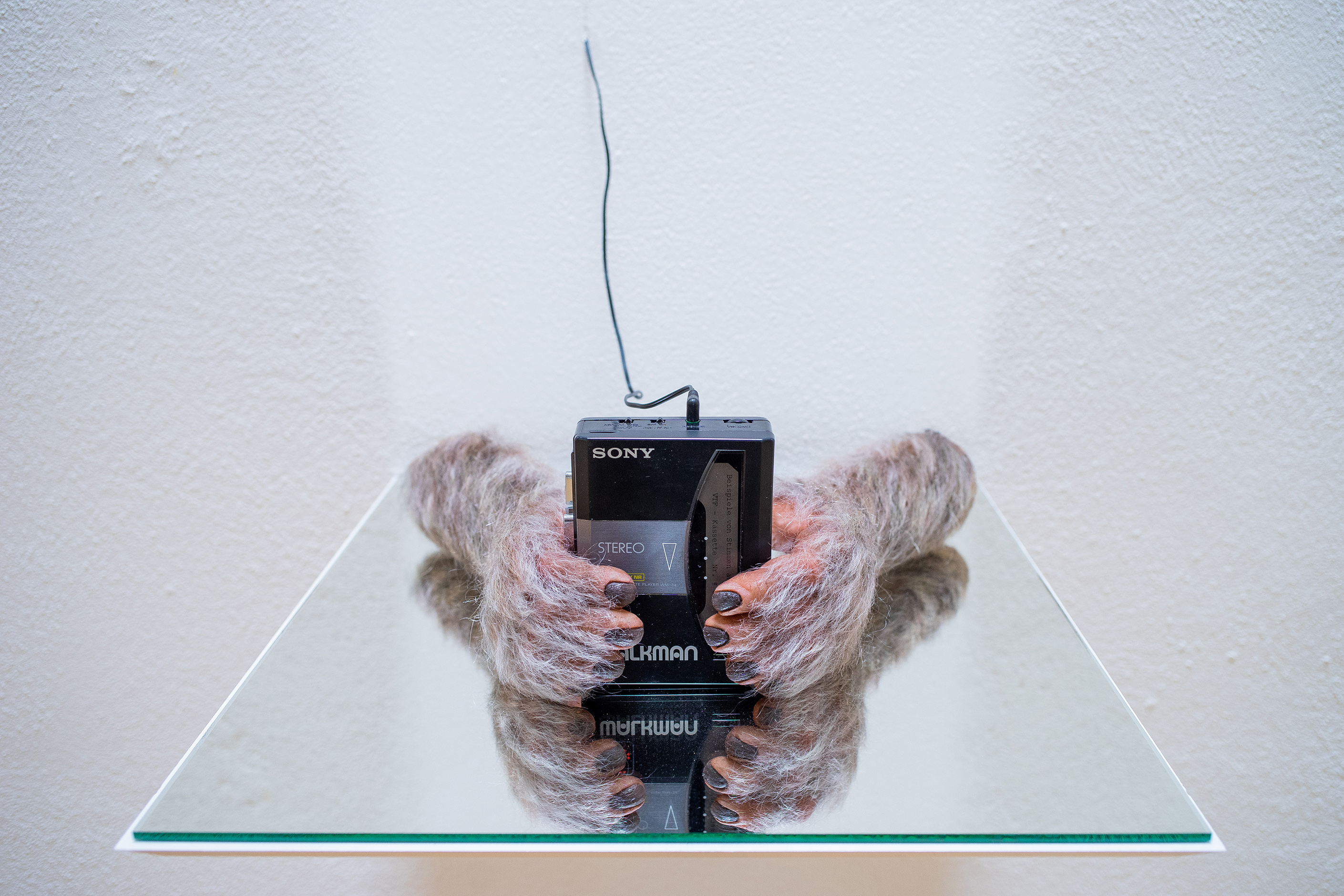
When we first see Choromatsu, the monkey starring in Sony’s groundbreaking commercial, he is standing still, eyes closed, listening to music on his walkman. He seems at peace, lost in his hidden inner world. He breathes deeply and slowly. We then read in subtitles below, ‘The progress in sound continues, but what about mankind?’ For music can now be everywhere. Not limited to the concert hall or the family piano, the radio or the hifi, it is now outside, with us, in nature.
For Kalas Liebfried, this is the point at which music becomes truly impressionist, catching up with the history of art. Impressionism in painting was in part a consequence of artists, who with the help of the then newly developed tubes of paint, taking their easels outside and painting en plein air. Impressionism for him is thus less about a technique or style of painting and more about bringing the outside in, or rather the inside out.
This inside longing for the outside is what Adorno means when he writes after Kant,
Authentic artworks, which hold fast to the idea of reconciliation with nature by making themselves completely a second nature, have consistently felt the urge, as if in need of a breath of fresh air, to step outside of themselves. Since identity is not to be their last word , they have sought consolation in first nature: Thus the last act of Figaro is played out of doors (…)
Art can be a copy of nature, in that something, anything, can be painted or drawn from life. But in the Kantian aesthetics Adorno is working with, art is like nature, because the aesthetic experience of art is based on and is the same as the aesthetic experience of natural beauty. Already when we experience nature as beautiful, we experience it as something more than it is, an image if you will. The nature that we see and feel is both the same nature as always and yet different, because it is beautiful for us. For art to share in the beauty of nature it must also have this ‘more’ and become in this way a ‘second nature’. Art that must be both itself and an excess, steps outside of itself, and this is why it seeks nature, even if, as Adorno mentions, it is only by staging Mozart’s Marriage of Figaro’s fourth act in the moonlit garden. In nature, art can take a breath. It breathes.
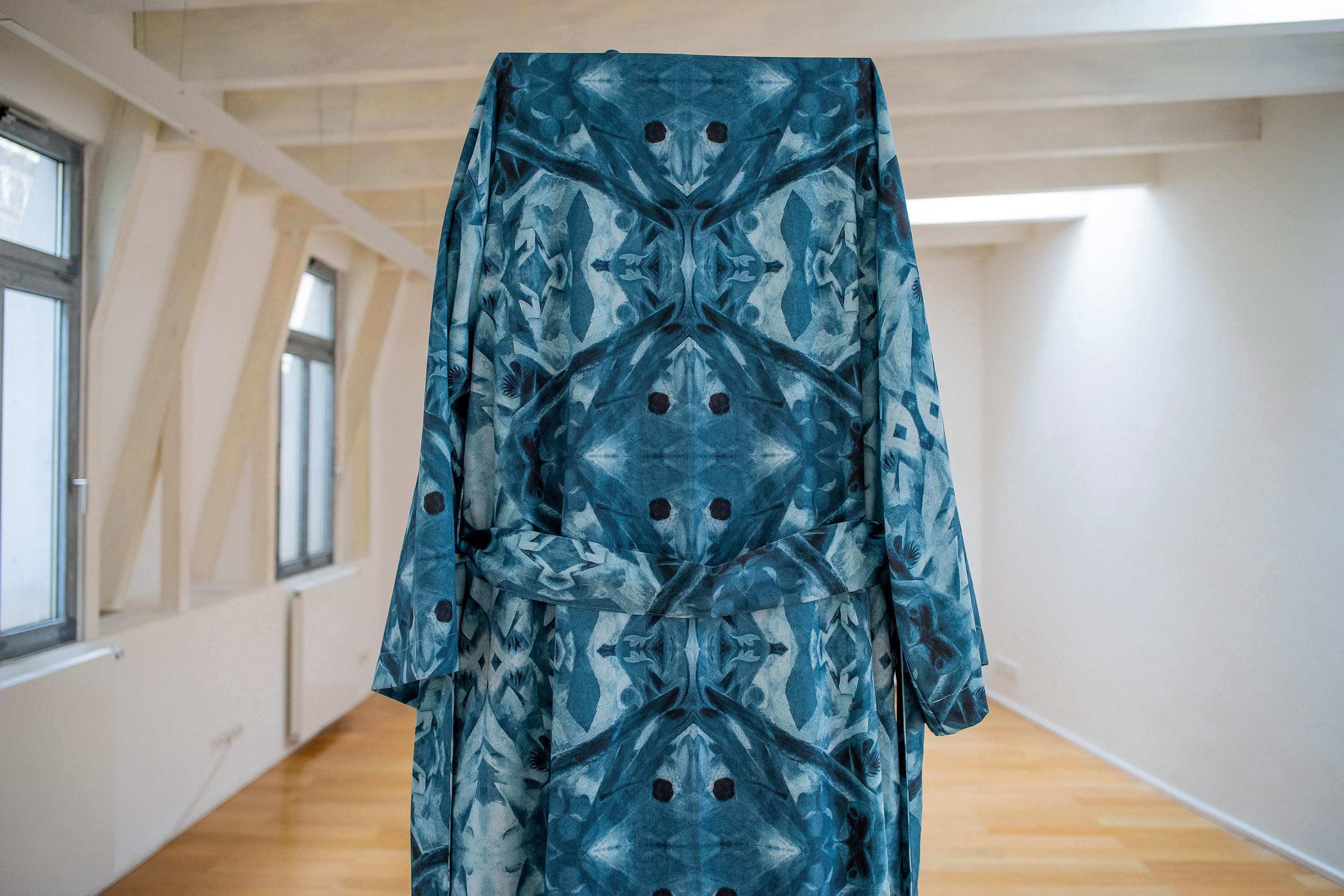
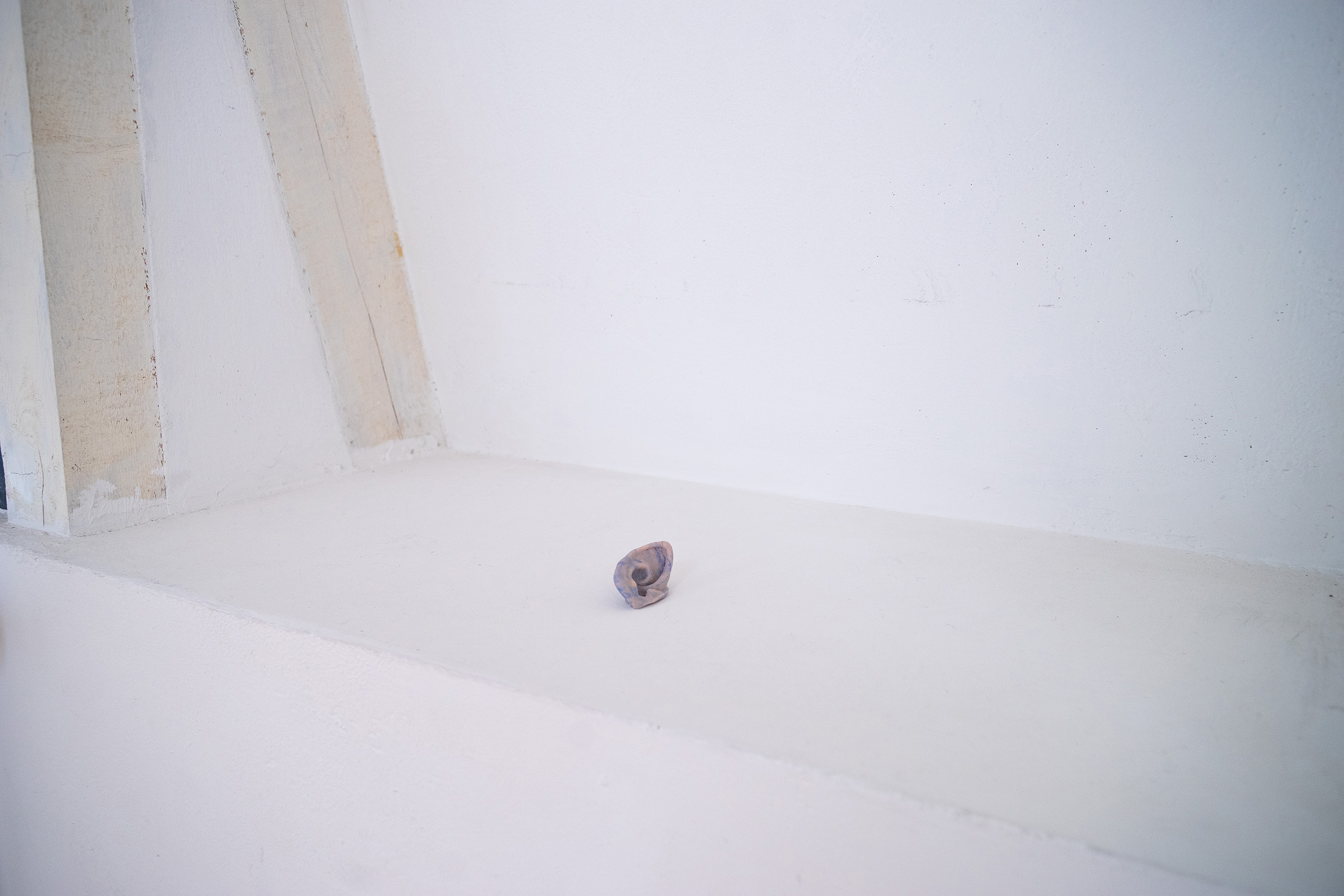
The advert for Sony’s walkman marks a moment in time in which the reconciliation between art and nature that Adorno had deemed impossible, seemed almost tangible: a rare moment of technological joy and optimism. Liebfried’s exhibition ‘Reading the Air’ is a reminder of the tangibility of this reconciliation. We see a hyperreal Choromatsu, listening with his headphones; we see his hands holding the walkman. And what we hear is the inside that always surrounds us – that we bring with us outside. This is the sound of our own breath, air rushing through the canal of our inner ear.

















 GiG
GiG 