Notes on Roommates (a dog, a parrot, a whale and a canal)

Sophia Mainka

in collaboration with Fondation Fiminco, Paris

6.09 – 13.10.2023

Lothringer 13 Studio, Lothringer Str. 13, 81667 München

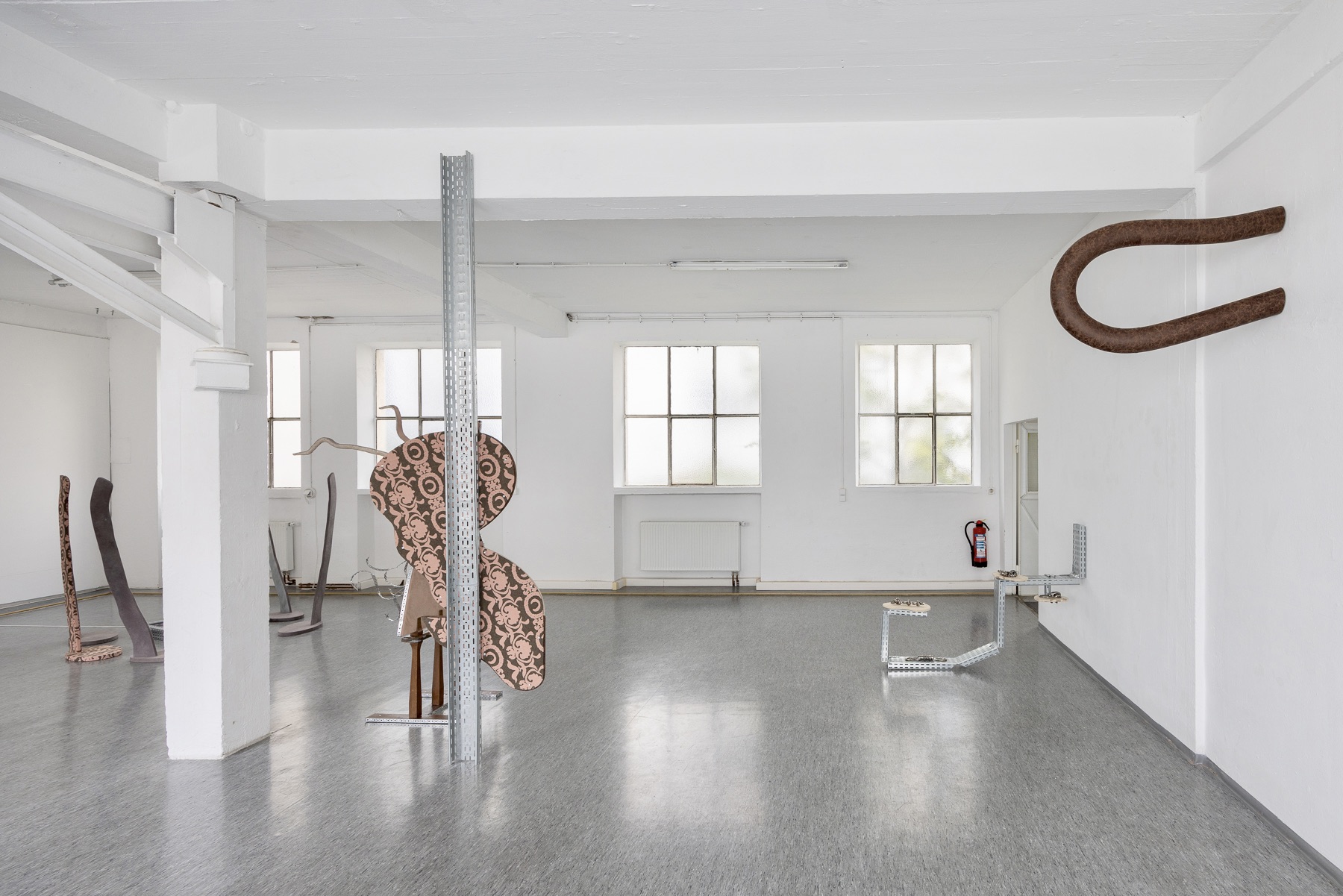
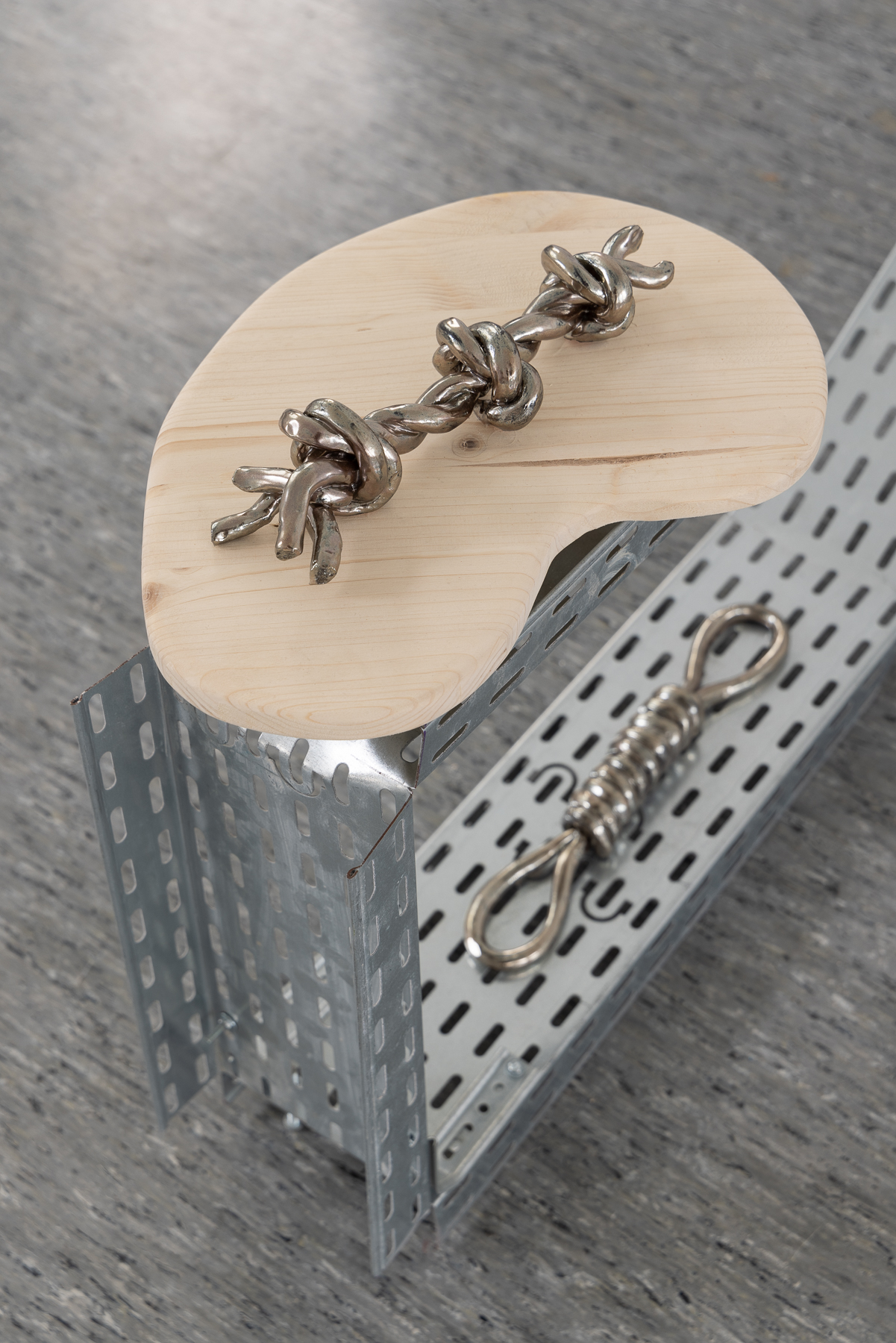
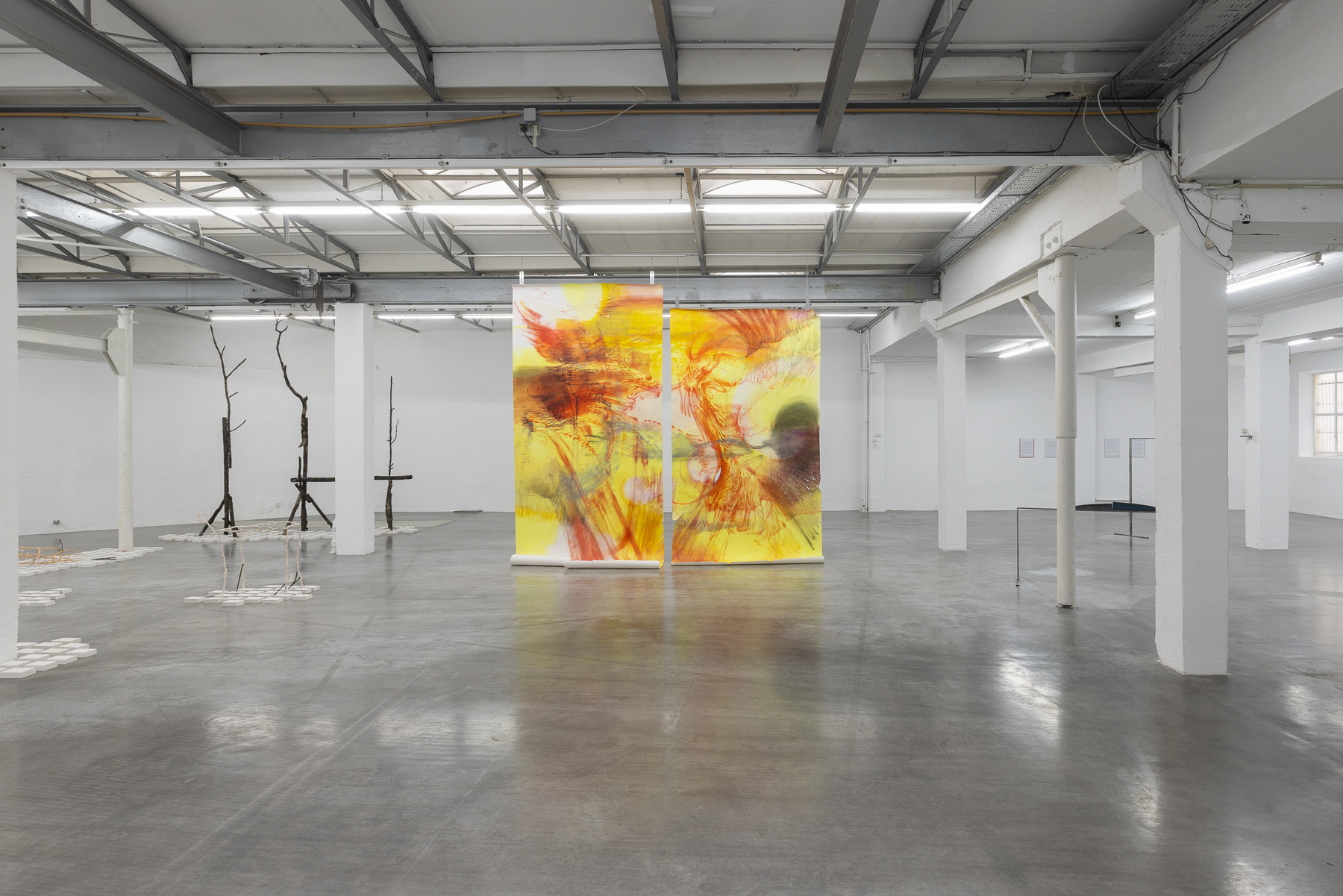
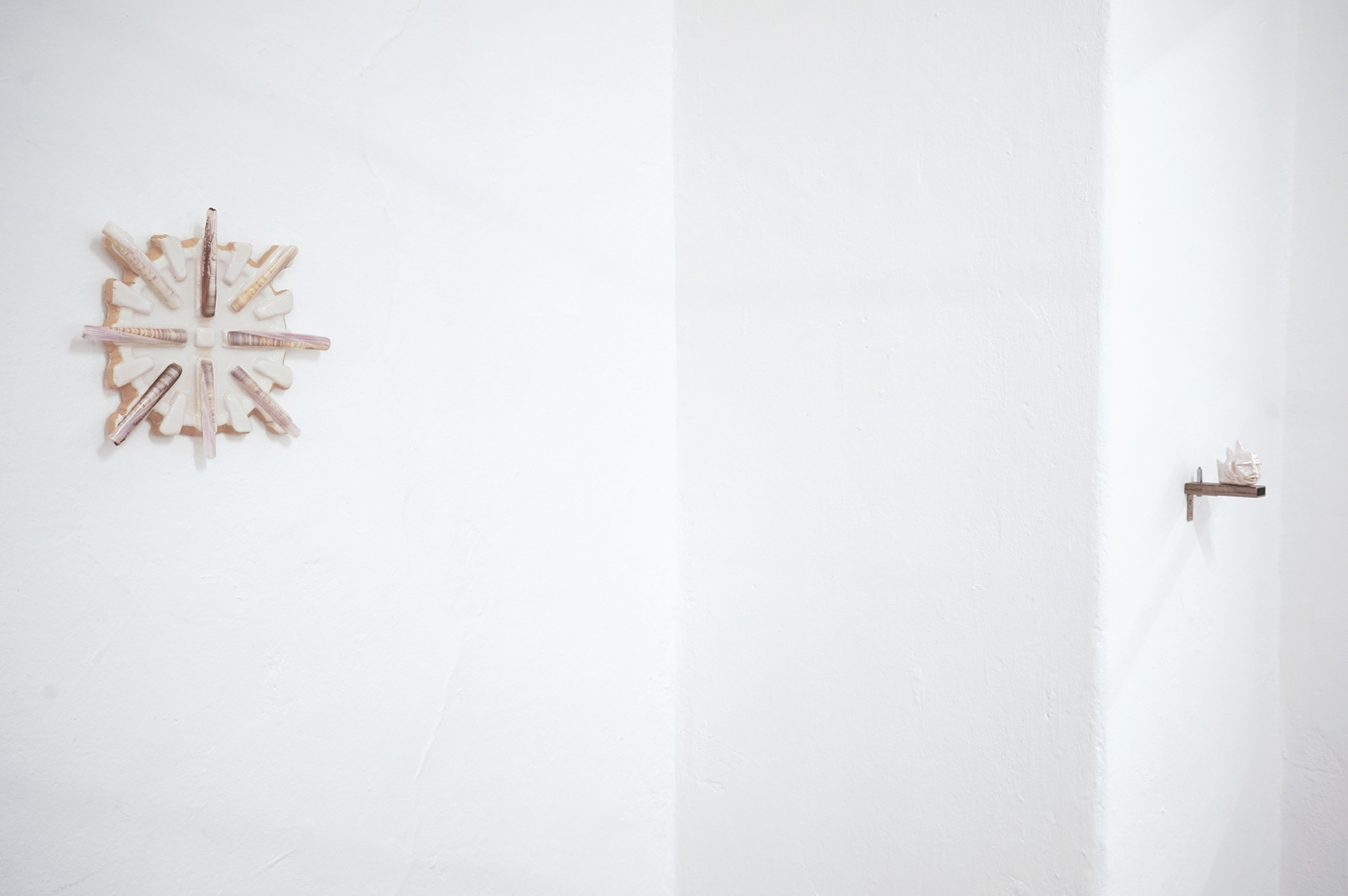
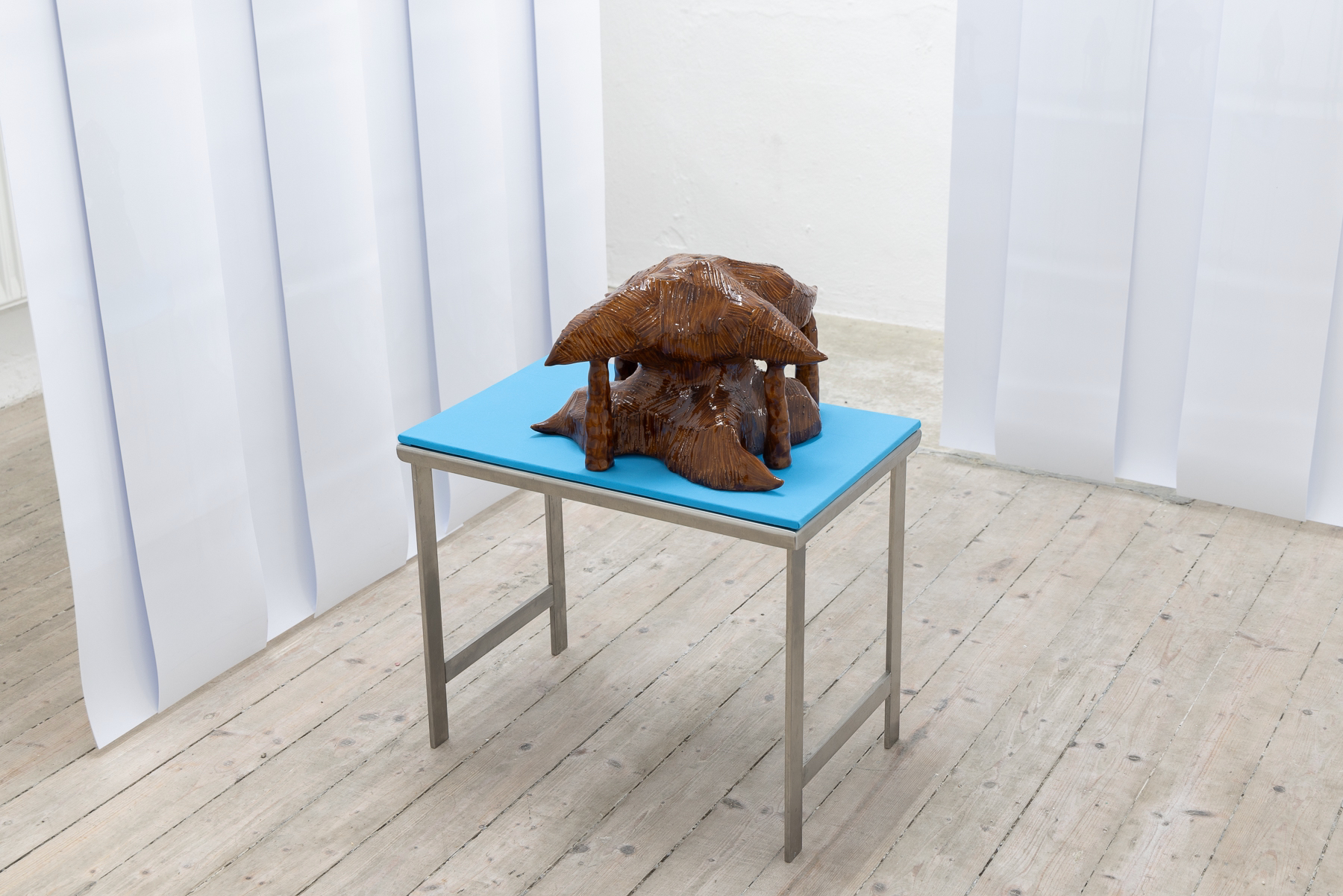
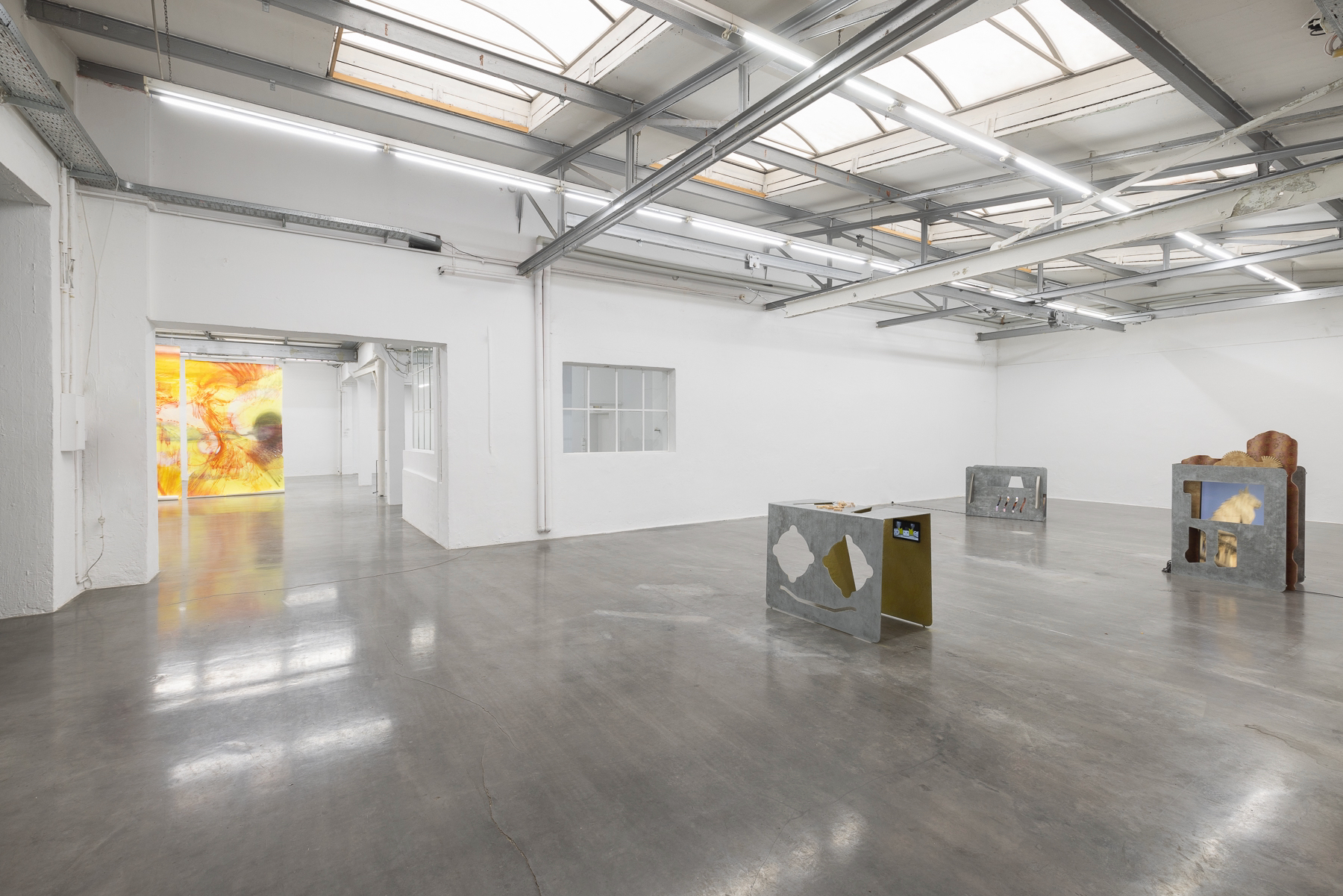
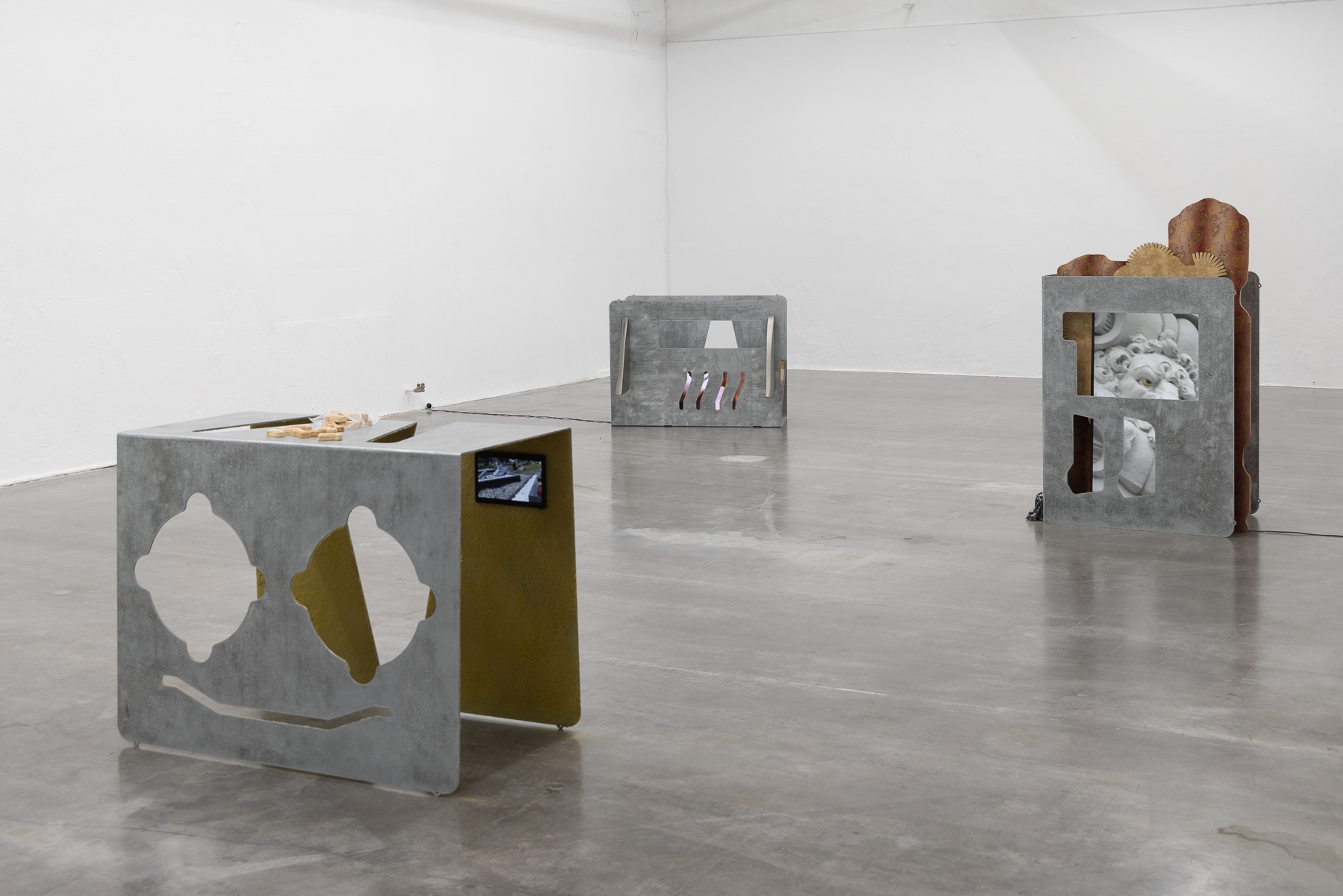
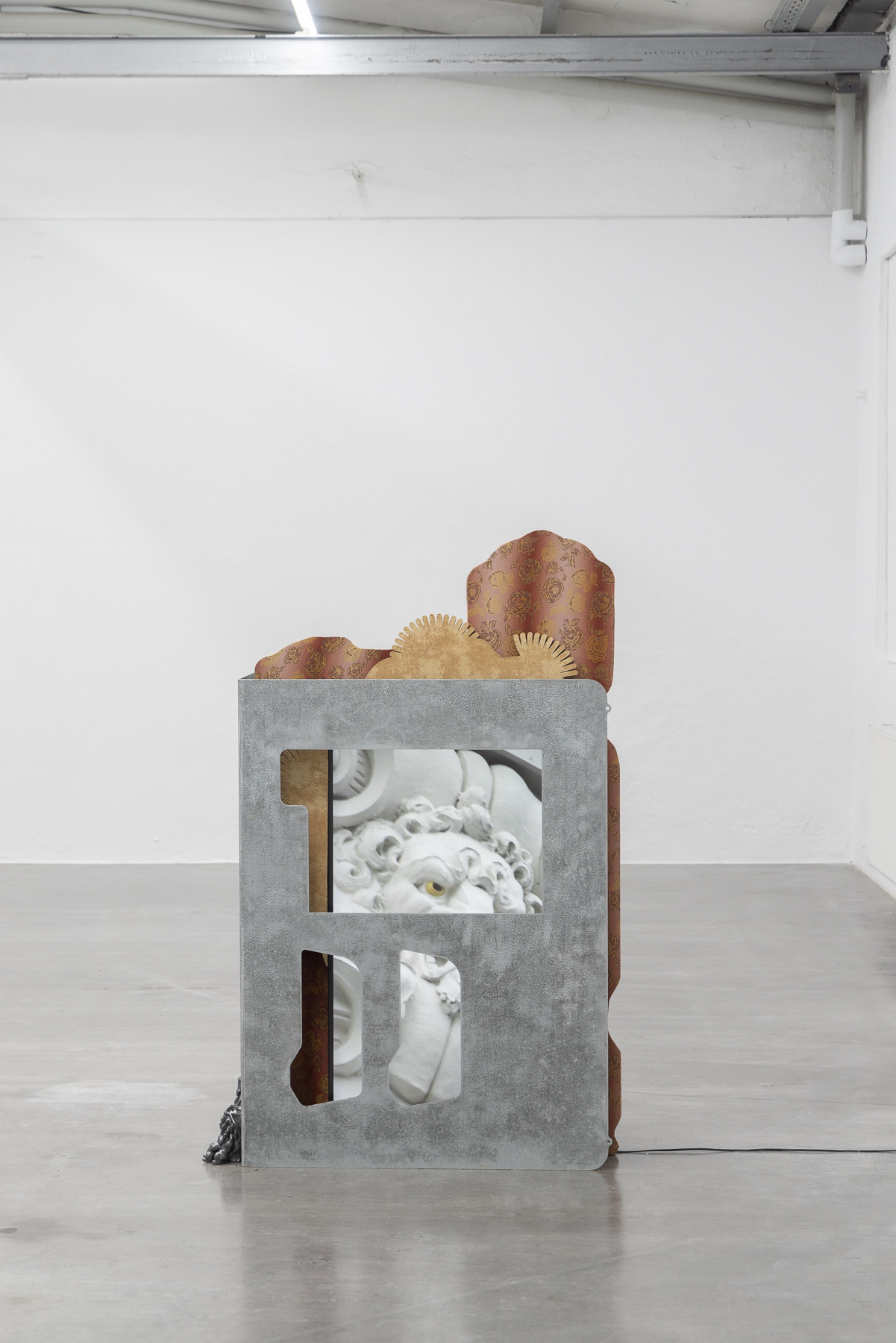
Sophia Mainka, Notes on roommates (a dog, a parrot, a whale and a canal), 2024, installation view
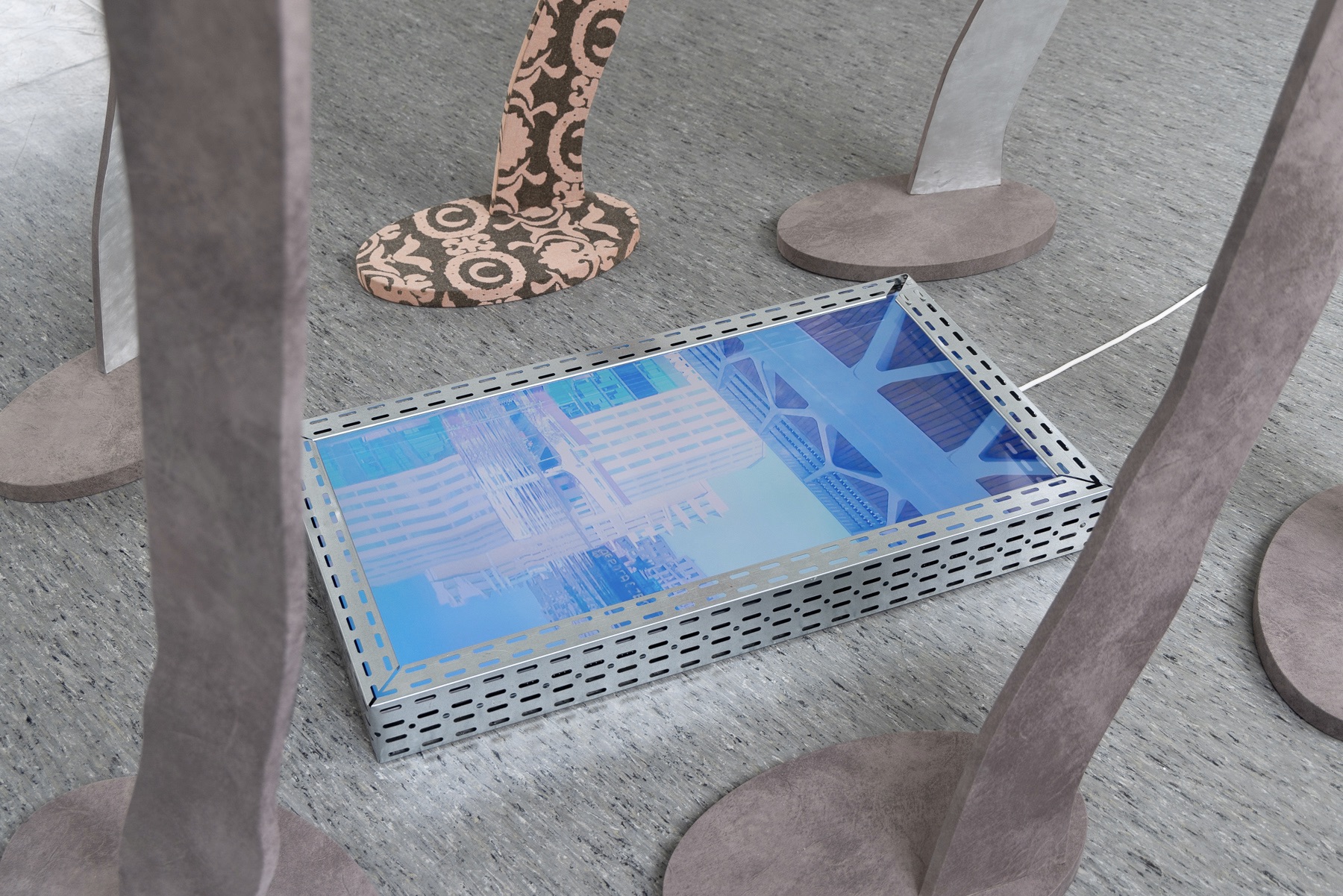
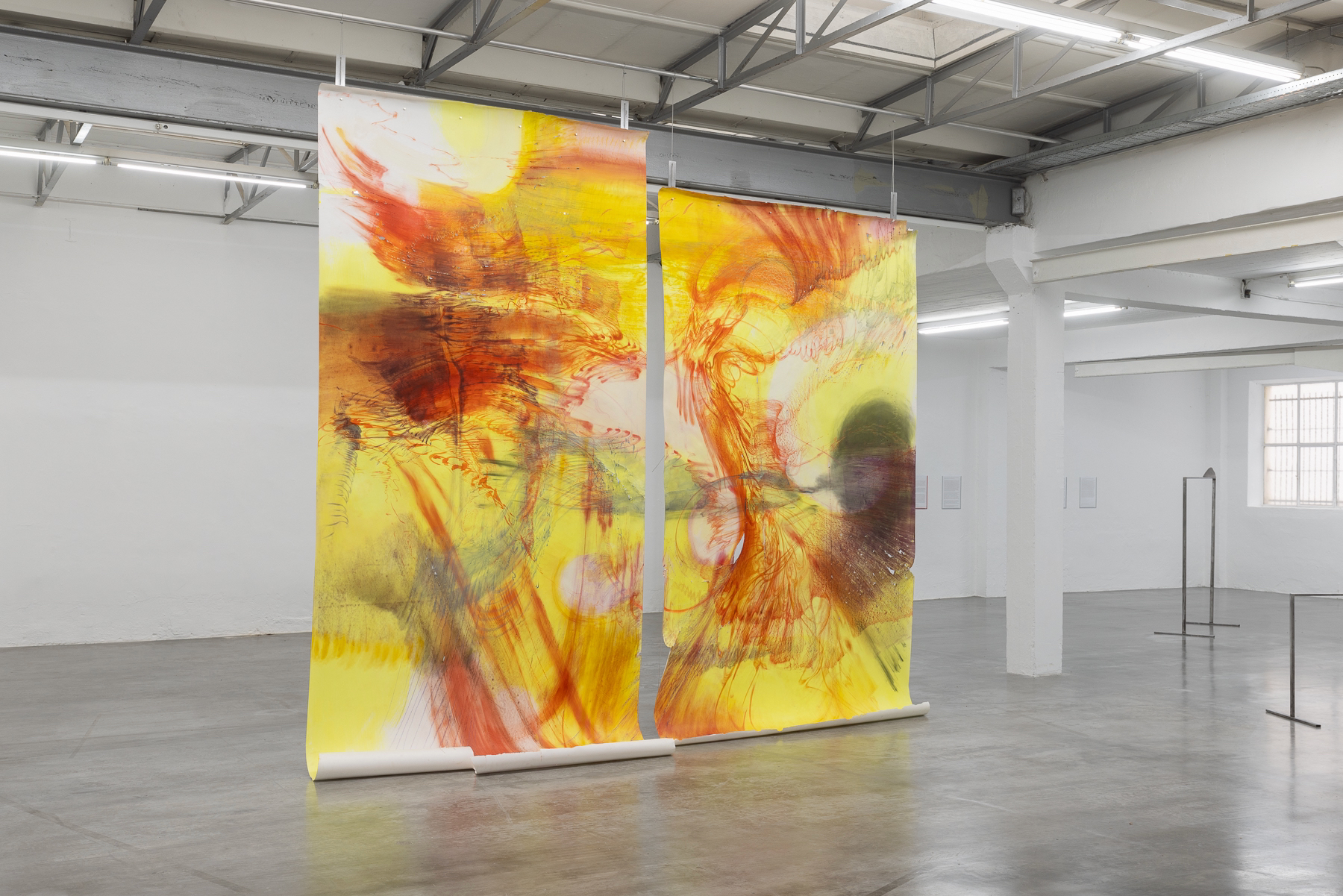
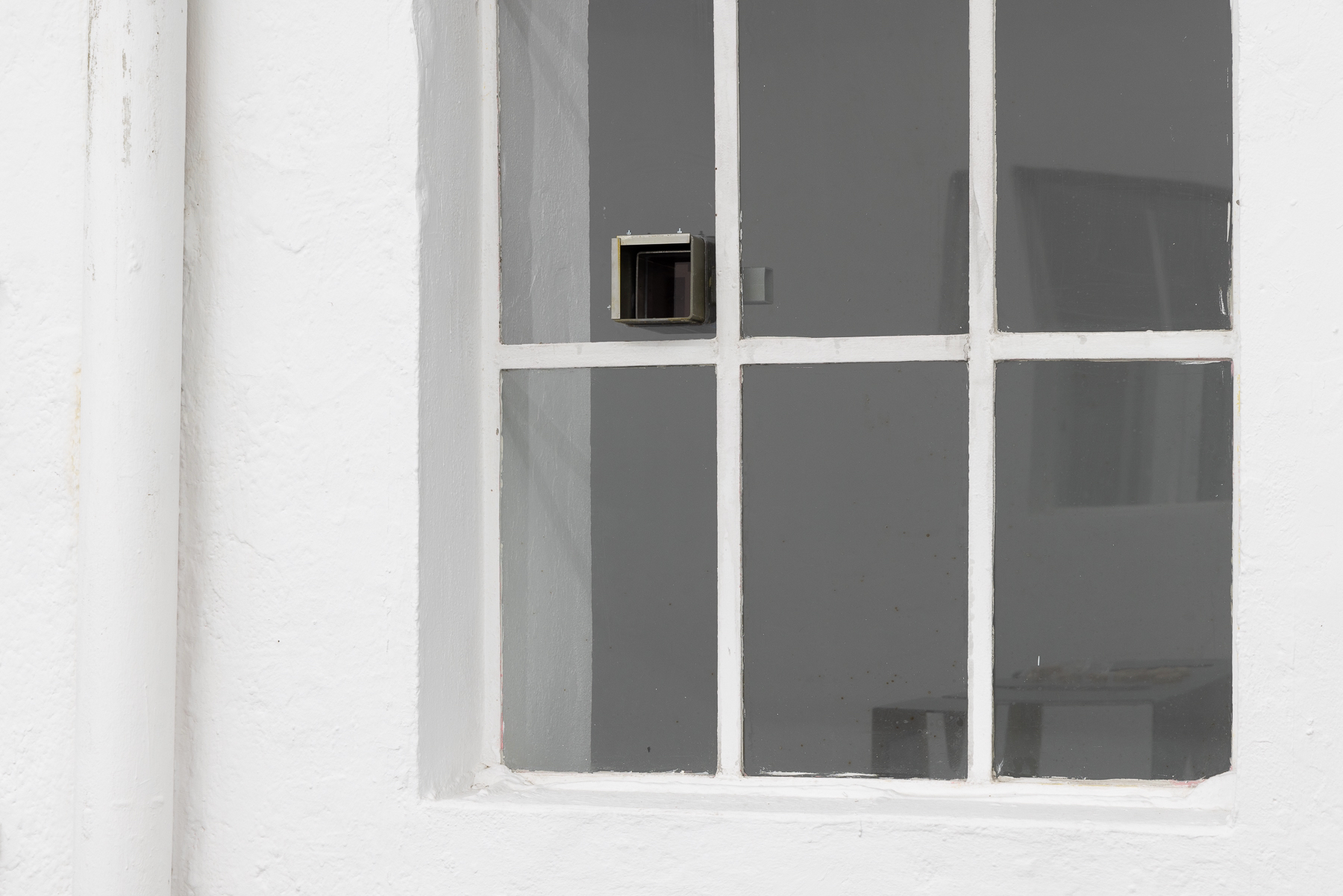
Sophia Mainka, Notes on roommates (a dog, a parrot, a whale and a canal), 2024, detail
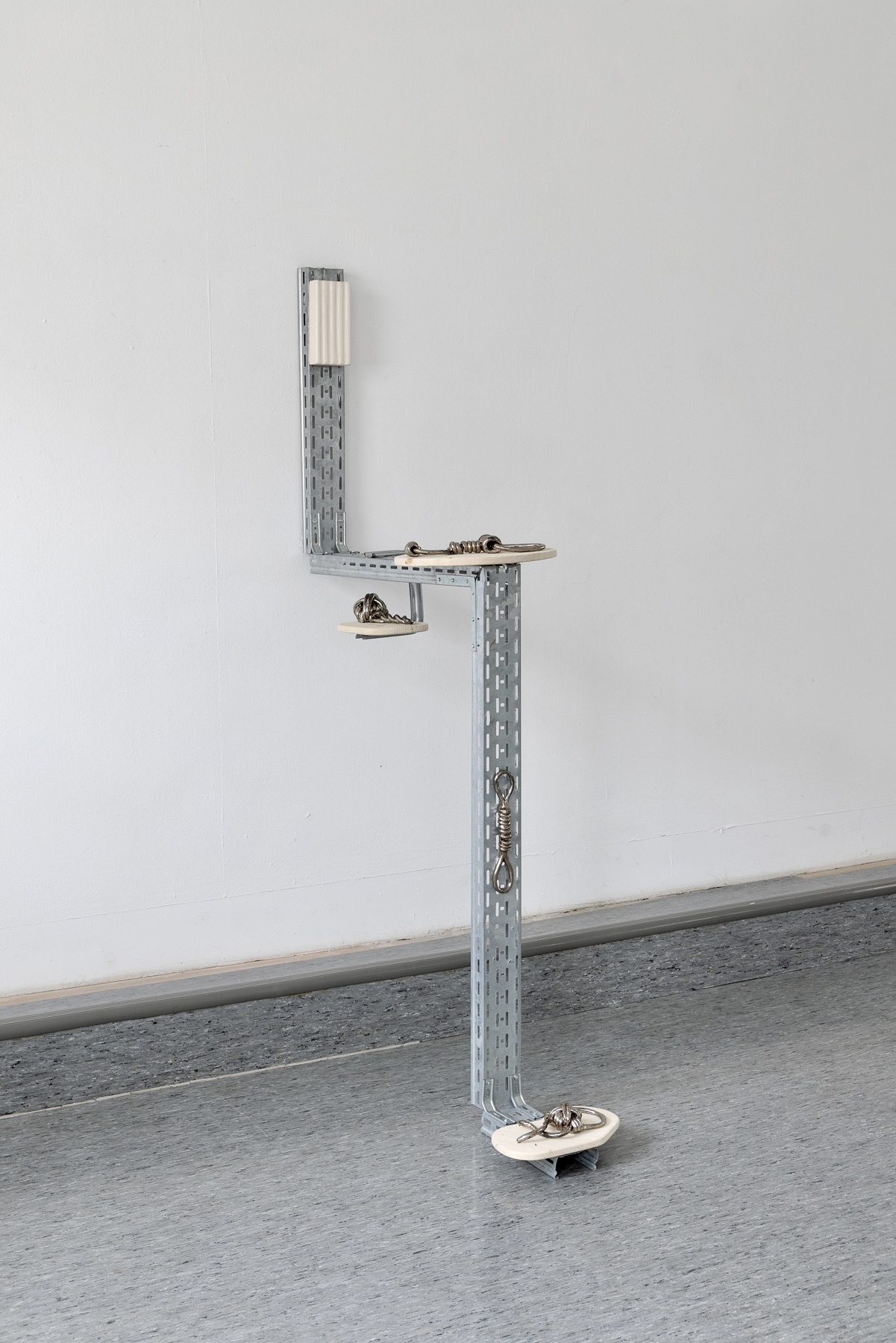
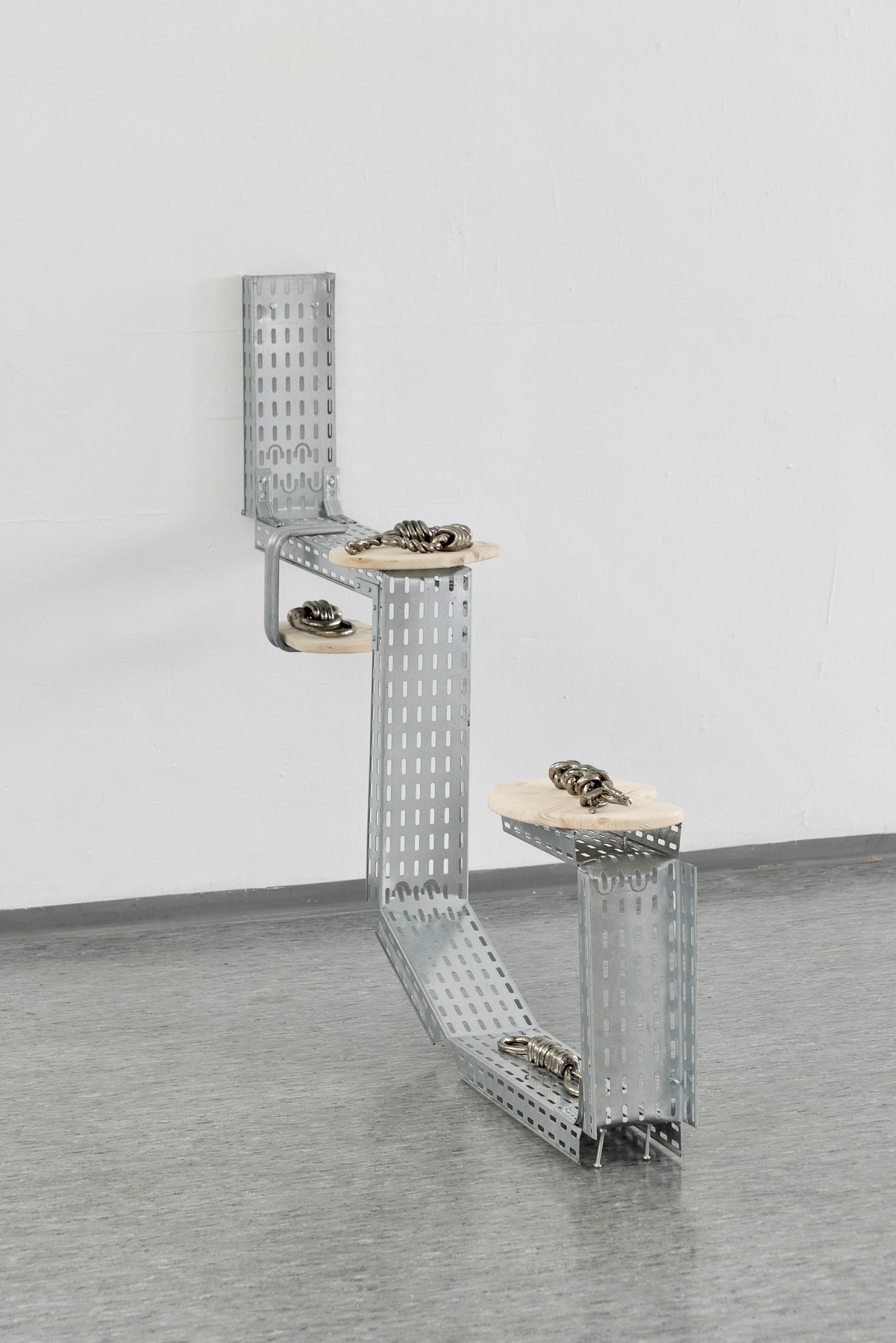
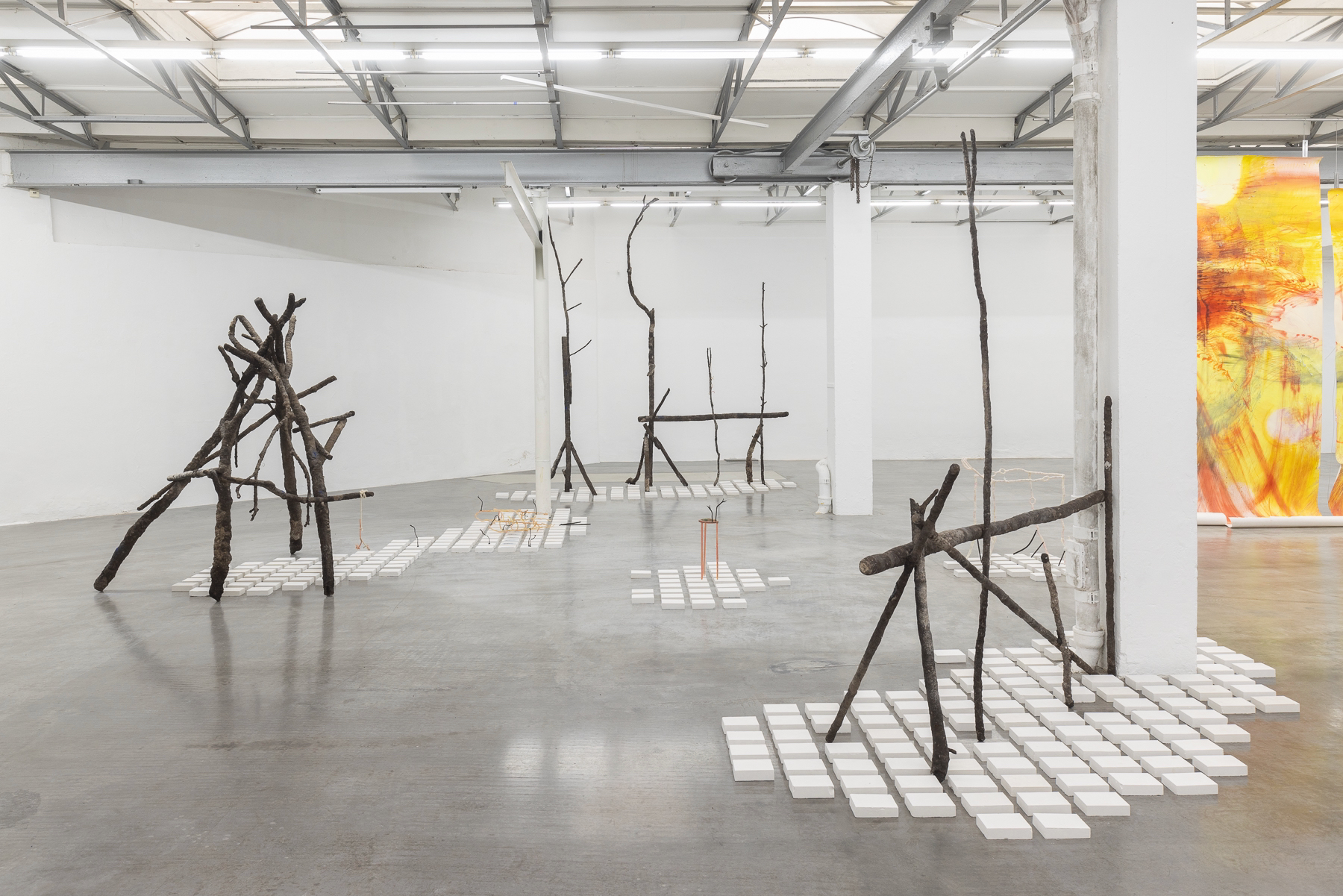
Sophia Mainka, Notes on roommates (a dog, a parrot, a whale and a canal), 2024, installation view

Photos: Thomas Spelt

In the summer of 2022, a Beluga whale strayed into the river Seine and began swimming towards Paris. It was stopped by a lock, refused to eat and was subsequently euthanised. Nobody knows when parrots entered Parisian airspace, but they have been observed in the French capital since the 1970s. They can now be seen in most of Paris’s public parks, from the Bois de Boulogne in the west to the Bois de Vincennes in the east. And dogs – well, dogs have been roaming Parisian streets since forever. Terriers, Dachshunds, Spaniels, and of course, the French Bulldog.


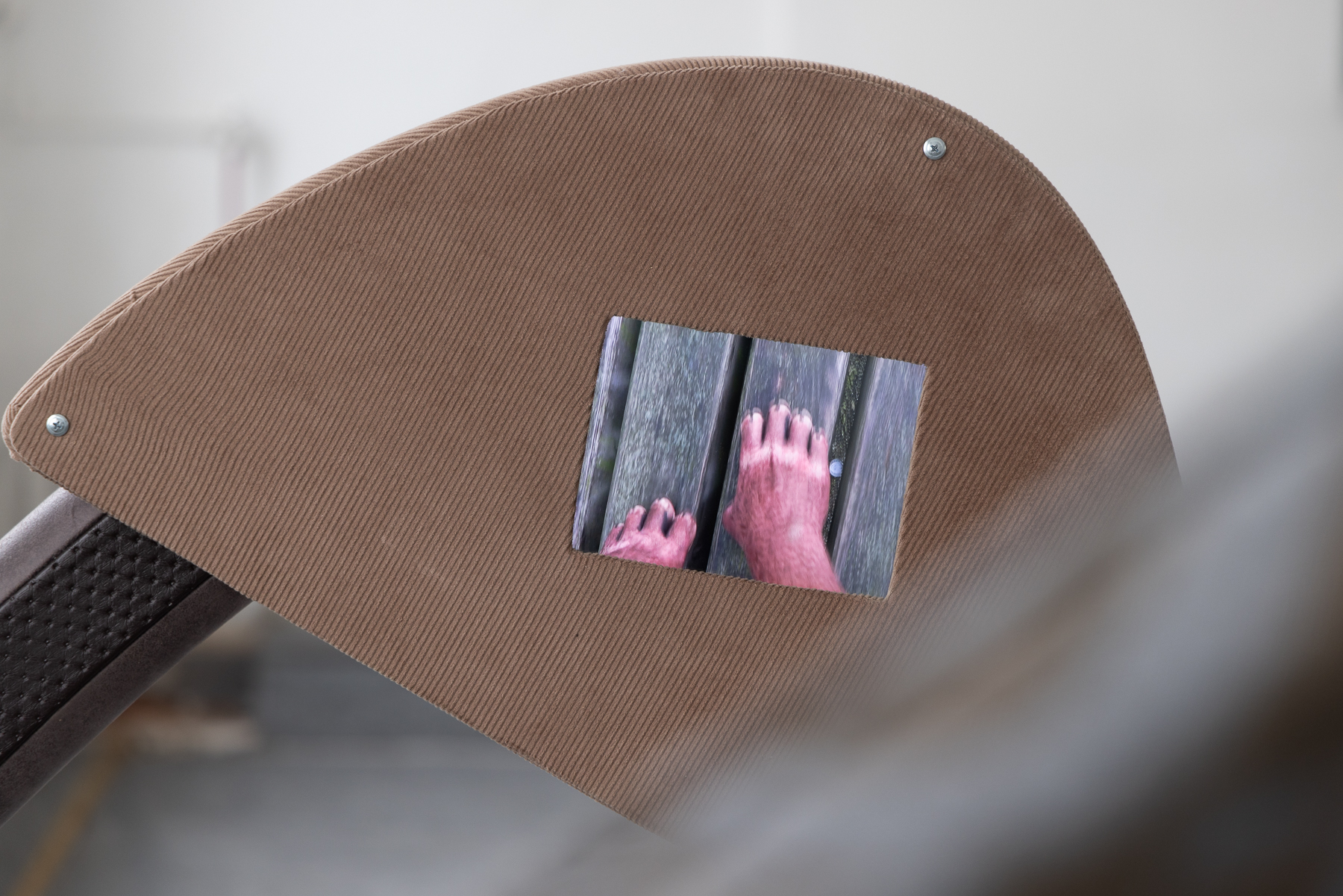
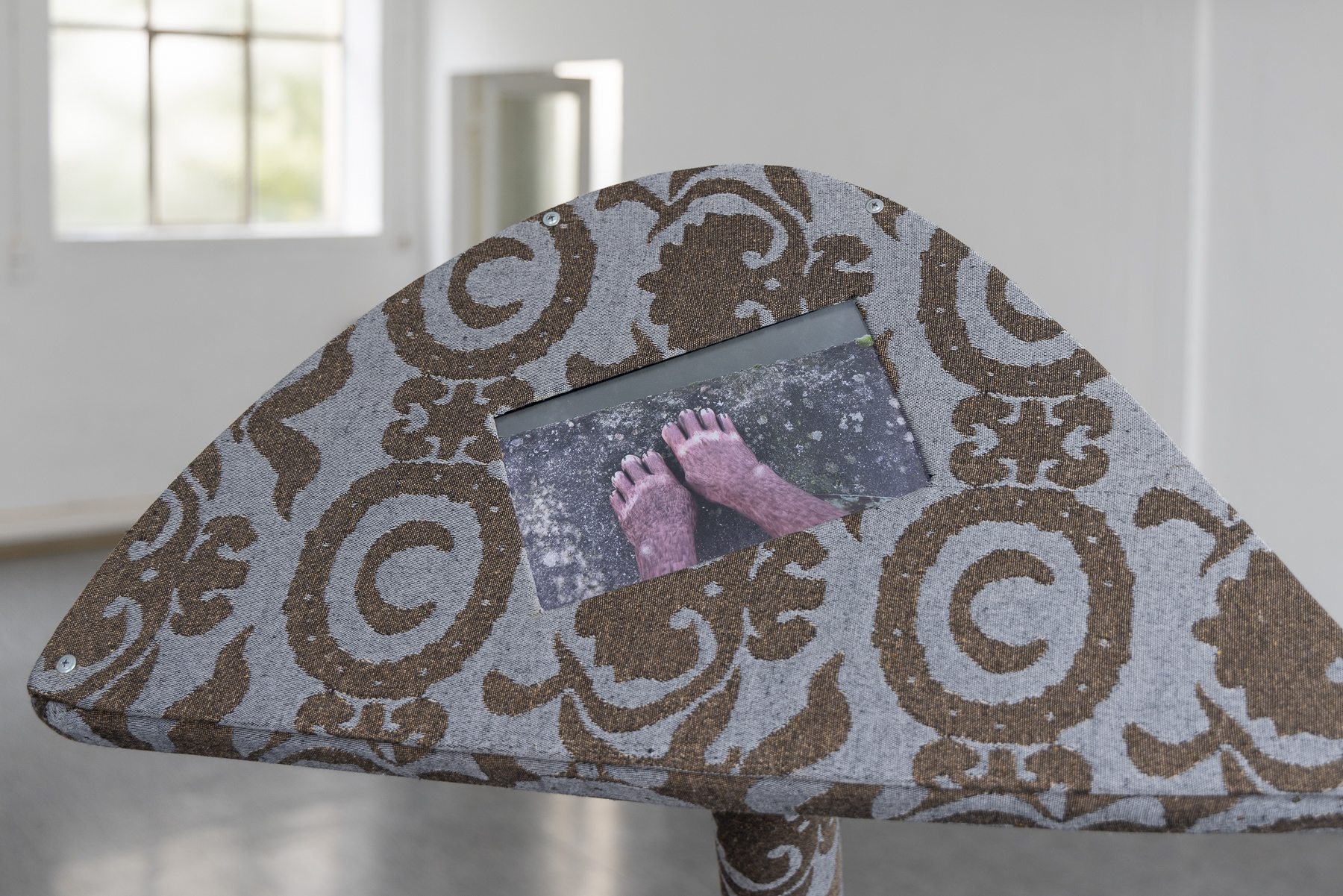
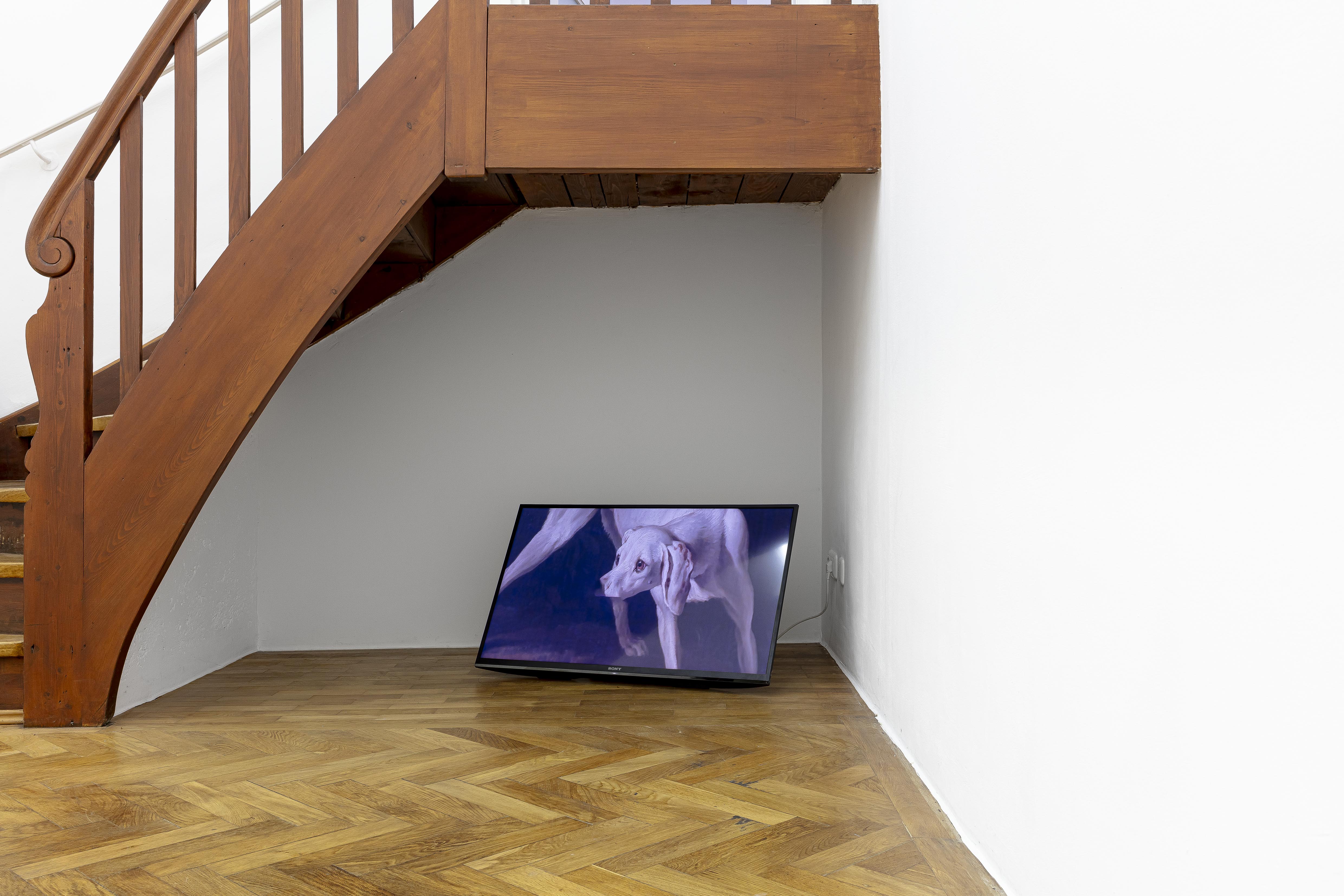
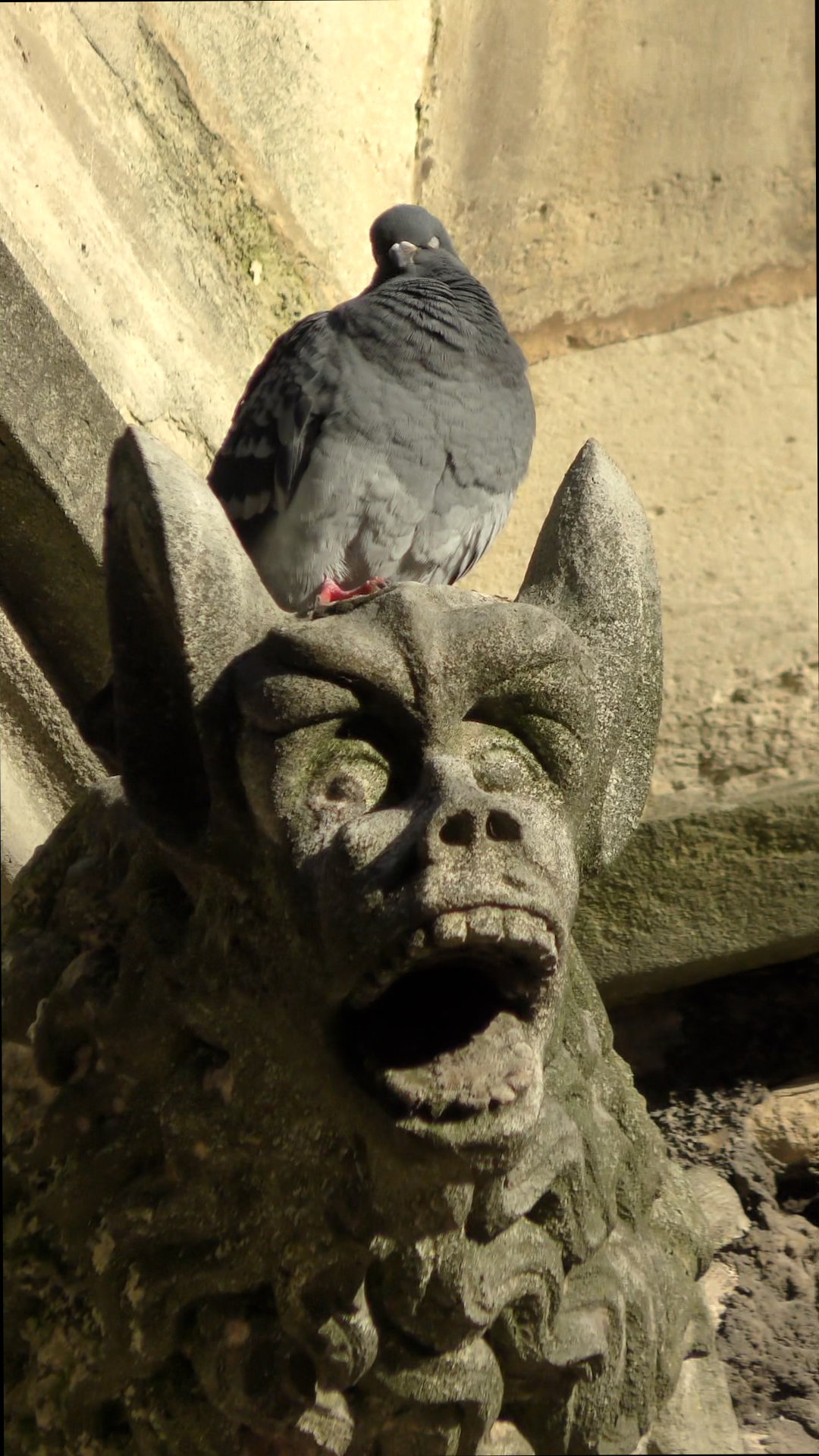
These stories of animals adapting to urban environments lay at the heart of Sophia Mainka’s video and sculpture installation, “Notes on Roommates (a dog, a parrot, a whale and a canal)” produced and first shown during her residency at Fondation Fiminco in Paris. Amid the organic playful forms of the metal sculptures there are three videos, all filmed from the animal perspective. In the first two, Mainka paints her arms and hands to resemble a dog’s paws, and we see these on screen as the fictional dog walks, stops and occasionally runs around the cobblestones and concrete pavements, once even jumping from a wooden bench. In the third, she takes on the perspective of the whale, the camera capturing what the whale would have seen, providing it swam further, into the city canals. The image rises and dips to the rhythm of the whale’s breathing. Surrounding us are the sounds of birds singing, except this too is staged: these are not parrots, but a toy, a bird whistle device.


Her work then, could be described as ethological in spirit. Sophia Mainka does not imitate animals, but rather behaves like them. She scratches, she sniffs, she swims, she trills and peeps. She acts the way an animal would act, if she were a animal in this situation and in this sense, we can think of her work in terms of what the French philosopher Gilles Deleuze would call becoming.


For Deleuze and Guattari, the process of becoming-animal is best described by Vladimir Slepian in his short text, “Fils de Chien.” Written in the first person, Slepian confesses how, despite being a man, his hunger leads him to behave like a dog, putting shoes on his hands and tying them using his mouth. It is a reversal of the evolutionary process described by anthropologist André Leroi-Gourhan, in which humans, through their adoption of an upright posture, free their mouths from the task of grasping and develop speech. Slepian recomposes himself, so that his mouth instead of speaking, grasps like a dog’s. And it is irrelevant how this dog looks like, whether this is the short snout of a bulldog or longer nose of a dachshund.


Similarly, Mainka makes us rethink our relation to nature, which is redrawn along affective lines as a participatory process. Animals are not considered as distinct molar entities, standing alongside the human. All entities are defined by their capacity to act, which changes depending on how they affect and how they are affected by others. There is a sensing of utopia in the environs of the Canal Saint-Martin that Mainka would walk along so happily – a secluded, sheltered place of inter-species co-existence. Or rather, it is a place where different populations, human, mammal and bird, continually compose and re-compose together.

Notes on Roommates (a dog, a parrot, a whale and a canal)

Sophia Mainka

in collaboration with Fondation Fiminco, Paris

6.09 – 13.10.2023

Lothringer 13 Studio, Lothringer Str. 13, 81667 München

Sophia Mainka, Chien et canal, 2024 video still (3.44min, fullHD, without sound, loop)

We participate in nature and nature participates in us: in her art practice, Sophia Mainka has always been open to strange encounters with animals, plants and minerals. The work created during her stay at the Fondation Fiminco in Paris deals with the coexistence of different species within an urban space. Parrots fly across the city, a whale swims up the Seine and dogs walk on paved streets. Mainka responds ethologically, allowing the animal encounter to affect the way she acts.
“Notes on Roommates” is a series of video sculptures Mainka first presented at the residency, restaged at GiG Munich. To produce her fictitious gathering of animals, she builds a room for them: industrial material is bent into organic shapes and upholstered with fabrics featuring botanical patterns. Here we see her become dog, her painted fists becoming paws; we see her as the whale, in the murky river water, rising up to breathe.

Wir sind Teil der Natur und die Natur ist Teil von uns: Sophia Mainka öffnet sich in ihrer künstlerischen Praxis für ungewöhnliche Begegnungen mit Tieren, Pflanzen und Mineralien. Während ihres Aufenthalts in der Fondation Fiminco in Paris entstanden Werke, die das Miteinander verschiedener Arten im urbanen Raum thematisieren: Papageien fliegen durch die Stadt, ein Wal schwimmt die Seine hinauf, Hunde laufen auf gepflasterten Straßen. Mainka reagiert ethologisch, lässt zu, dass diese Begegnungen ihr Handeln beeinflussen.
„Notes on Roommates“ ist eine Installation mit Videoskulpturen, die sie während ihrer Residency präsentierte und nun im GiG Munich neu inszeniert. Um die Zusammenkunft der Tiere darzustellen, baut sie einen Raum für sie: Industrielles Material wird zu organischen Formen gebogen und mit botanisch gemusterten Stoffen gepolstert. Mainka verwandelt sich selbst in einen Hund, ihre Fäuste werden zu Pfoten; wir sehen sie als Wal, der im trüben Wasser auftaucht, um zu atmen.

Throw of the dice

Lukas Hoffmann, Sophia Mainka

29.06 – 3.08. 2024

Kindly invited by Sperling Munich, Regerplatz 9, 81541 München

Throw of the dice, 2024, installation view. Photo: Sebastian Kissel, courtesy Sperling, Munich.
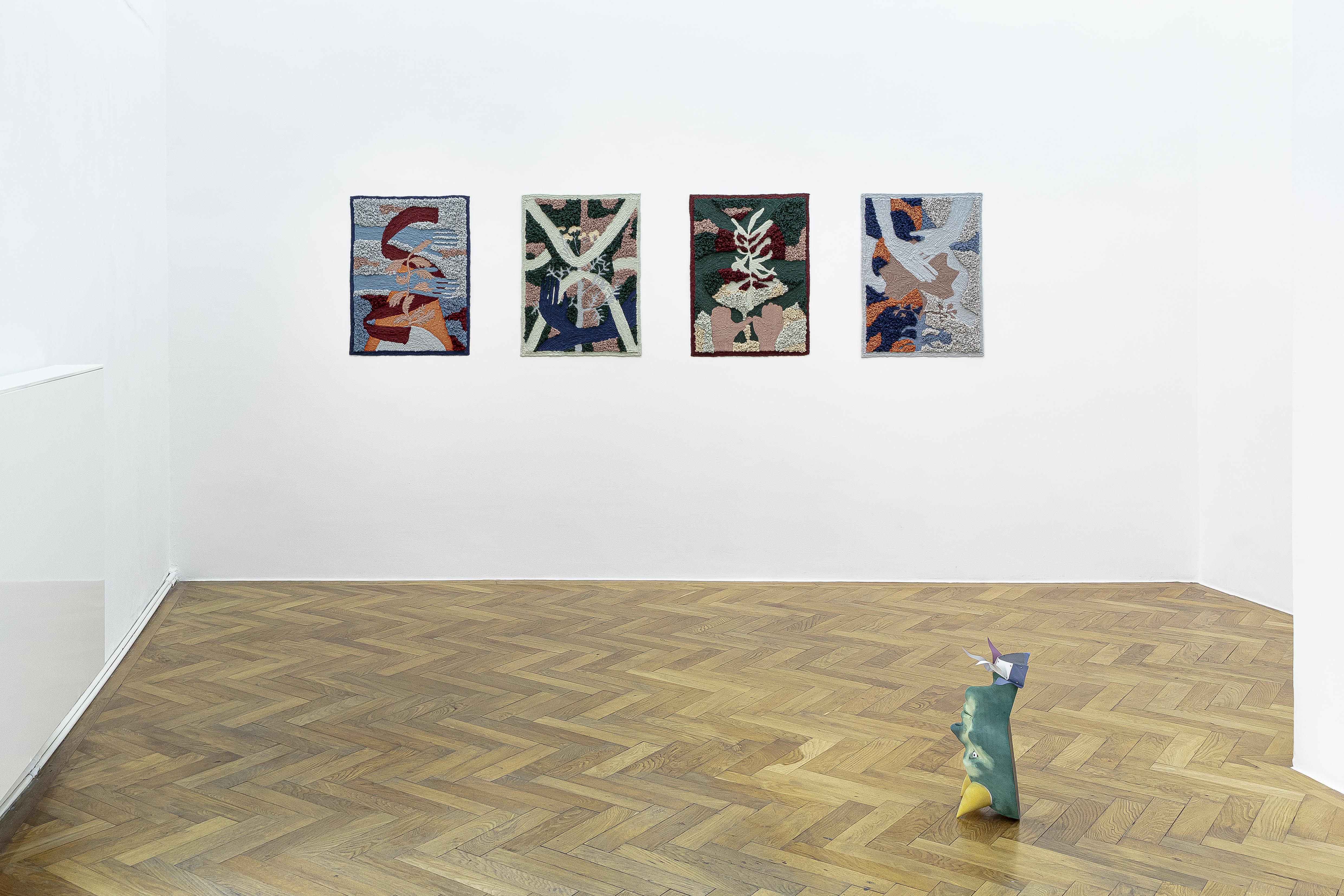
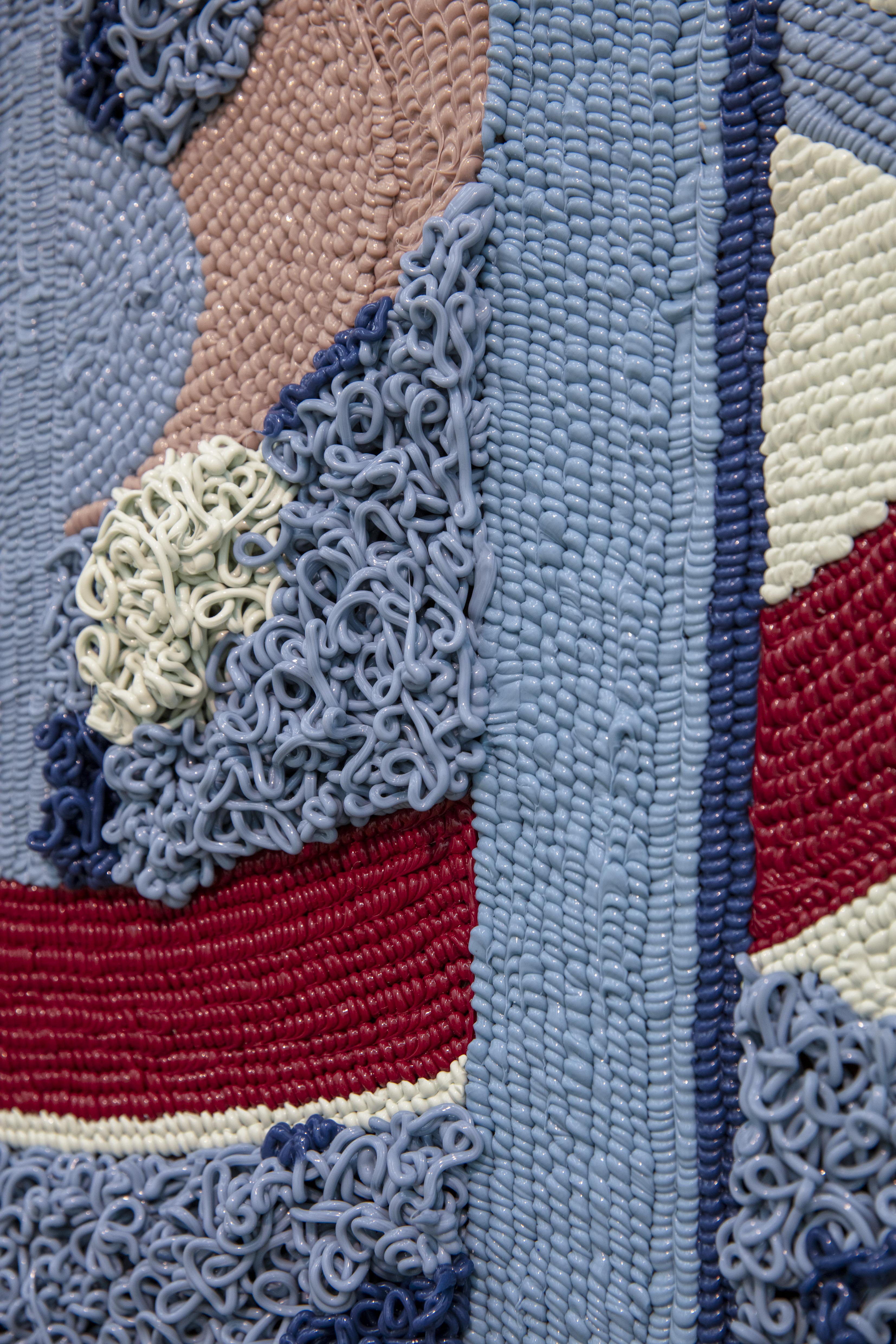
Sophia Mainka, Oracle des Plantes series, 2024, silicone on cotton, 75 x 57 x 1 cm each. Photo: Sebastian Kissel, courtesy Sperling, Munich.
Sophia Mainka, Tarot (Wheel of Fortune), 2924, silicone on cotton, 190 x 121 x 1 cm. Photo: Sebastian Kissel, courtesy Sperling, Munich.
Sophia Mainka, Tarot (Wheel of Fortune), 2924, silicone on cotton, 190 x 121 x 1 cm (detail). Photo: Sebastian Kissel, courtesy Sperling, Munich.
Lukas Hoffmann, Pan, MDF, paper, wood, spray-paint, 41 x 22 x 19 cm. Photo: Sebastian Kissel, courtesy Sperling, Munich.
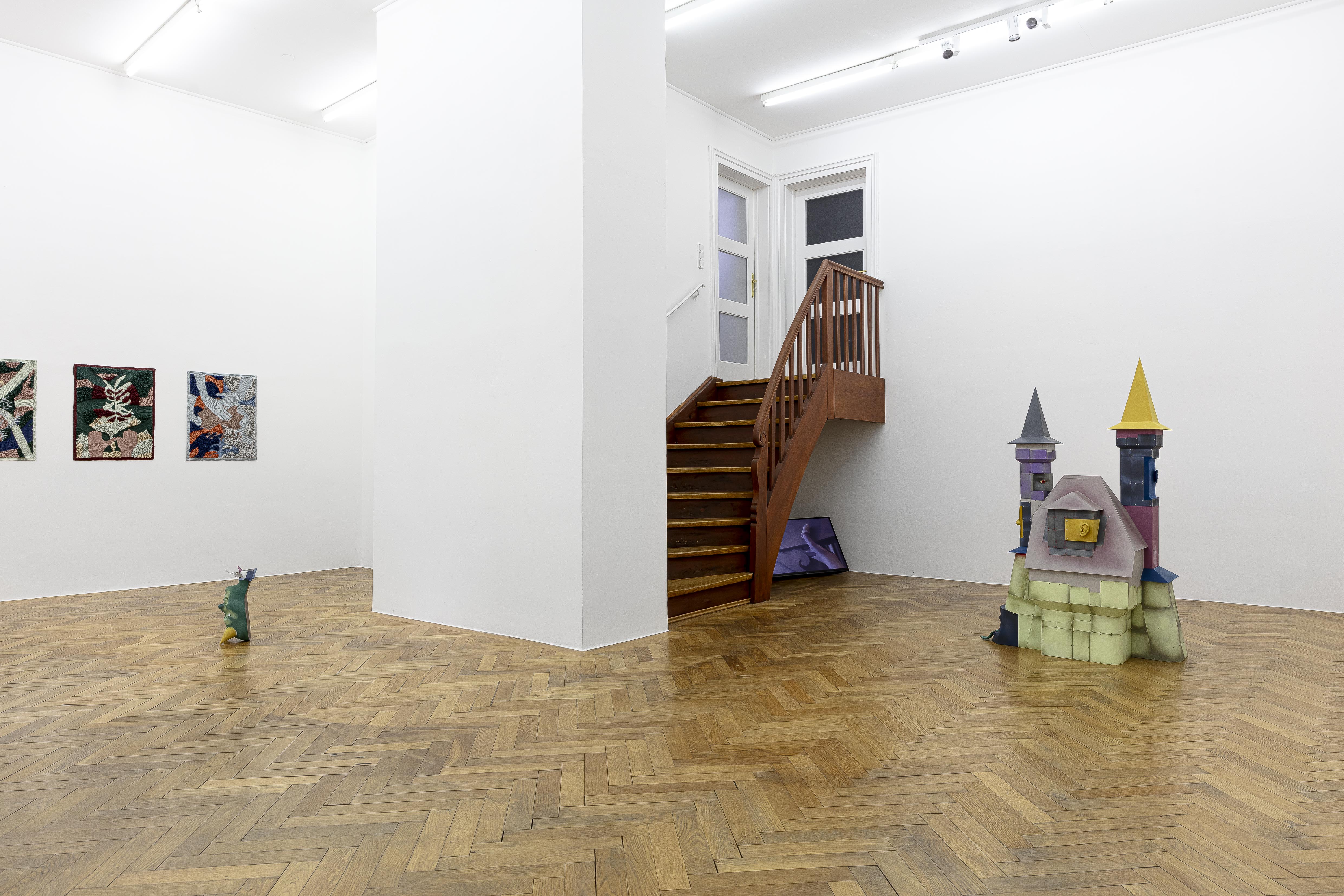
Throw off the dice, 2024, installation view. Photo: Sebastian Kissel, courtesy Sperling, Munich.
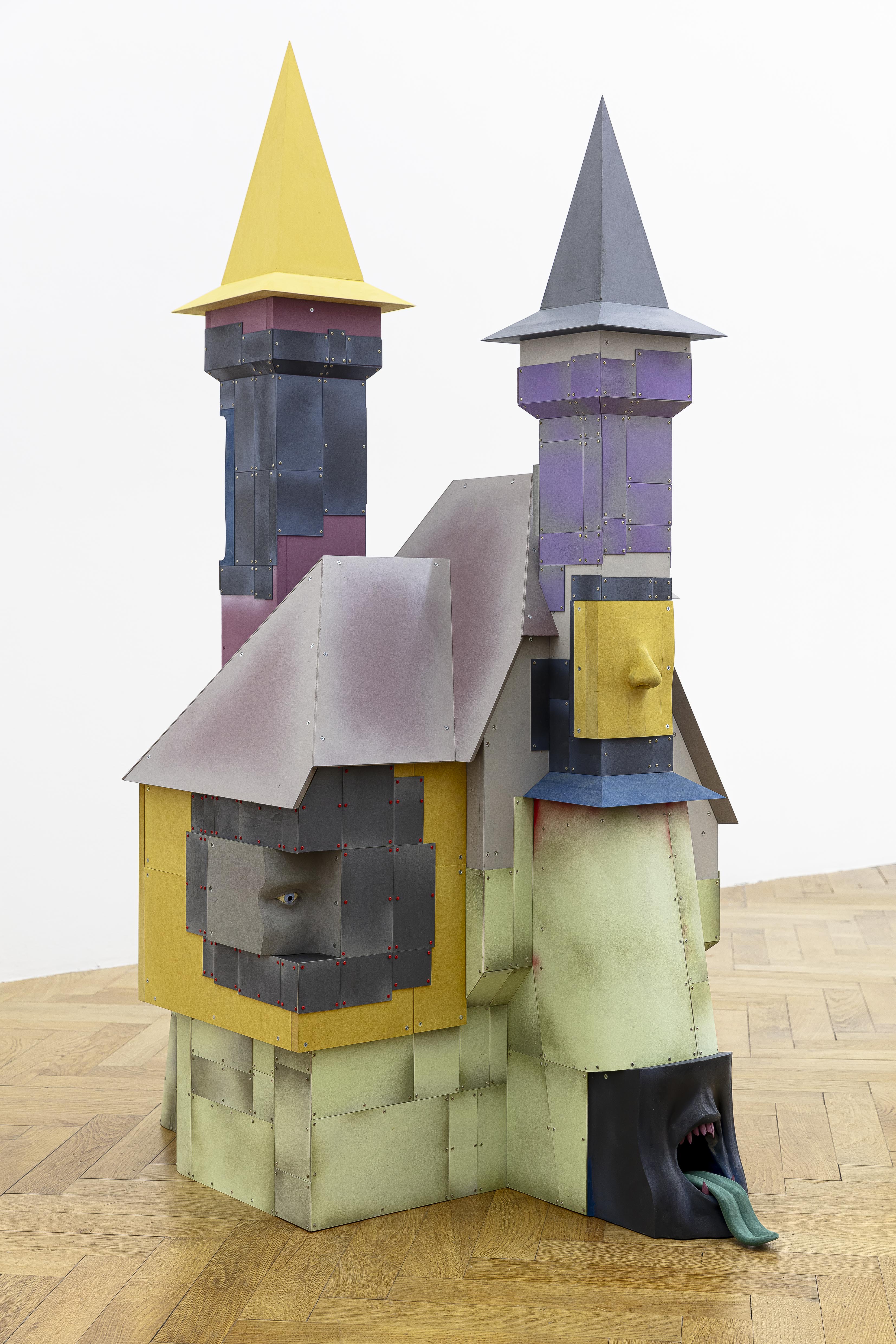
Lukas Hoffmann, Schloss, 2024, paper, wood, screws, spray-paint, 158 x 102 x 75 cm. Photo: Sebastian Kissel, courtesy Sperling, Munich.
Lukas Hoffmann, Schloss, 2024, paper, wood, screws, spray-paint, 158 x 102 x 75 cm (detail). Photo: Sebastian Kissel, courtesy Sperling, Munich.
Sophia Mainka, We used to be wild, 2024, video loop (full HD, stereo), 17 min & 17 sec. Photo: Sebastian Kissel, courtesy Sperling, Munich.

Throw of the dice – down a slippery slope

A standard game of dice is not a game of chance. At stake is probability, the odds of throwing this or that number, easily calculable. This is why we often lose, as the fable famously forewarns.[1] The young man inherits an estate and quickly gambles it away. In one sweep an entire forest is laid low. Is bad luck to blame? No, replies Fortune to an angry Pan. Just the foolishness of man.

A game of chance takes place on a far more slippery slope, like the round of croquet played in Alice in Wonderland, a game of cards of sorts.[2] Flamingos are mallets and a hedgehog is a ball. Whenever Alice wants to hit the hedgehog with the flamingo’s head, the bird turns floppy and spins round to look at her so comically that she laughs. And when she finally gets the flamingo’s head down, the hedgehog crawls away. In this game, cards move away from us and the players play all at once, quarrelling and fighting while the queen screams, “Off with their heads! Off with their heads!” For in a real game of chance, anything can happen. This would be the challenge: throwing the dice without knowing the rules of the game. To continue throwing the dice while accepting that each time the rules of the game change.

This is Nietzsche’s divine game, played across two tables, the earth and the sky.[3] Each time the dice is thrown the earth trembles, because the dice returns to us as divine. At that moment when the dice hover briefly in the air, they belong to the gods and all is possible. Our task is to affirm the entirety of possibility, any fate the gods prepared for us, cooking all of chance in one pot.[4] In this forest, we must wander bewildered and wild.[5]

In the exhibition, Sophia Mainka shows a series of wall mounted works made from silicone paste. Heavy and solid, yet curiously slippery, they are based on a Tarot deck of cards. It is peculiarly appropriate that the largest is the wheel of fortune, usually interpreted as standing for change or becoming. Fortune can be good or bad depending on the game, the question asked of the cards, open to interpretation. In Tarot, one card can mean many things and then change meaning at different times. In contrast, destiny is the thread woven through the image and cut by the three mythological sisters. The turn of the card is always fateful. Whatever the outcome of the roll of dice, this outcome is necessarily so: sky back to earth, slide and snip.

Perhaps then, we wander not quite so bewildered in this forest, as we necessarily follow our fate. But we wander on a surface without ground or depth, because free of cause. Everything in Mainka’s work takes place on the surface, like the hybrid creature scuttering around the ornate interiors of the Musée de la Chasse et de la Nature in her video. It imitates not animals, but depictions of them. The two talking dogs are not half-human but half-sculpture, their head and paws the same silicone as Mainka’s wall pieces. In Nazim Bakour’s music score, they do not bark, but whoop with the sound of the cuica drum.

Lukas Hoffmann too stages a fictional world that has something of Lewis Carroll’s unsettling absurdity about it. There is a wooden castle with ears, eyes, a wide open mouth and a nose, and it is both too big and too small. Drink me, eat this, nibble both sides of the mushroom circle. As Alice grows bigger, her initial self also becomes smaller, pulled in both directions at once. With components jutting out and sliding in, the body both outside and inside, the castle too grows small as it becomes big. “Becoming without measure, a veritable becoming-mad.”[6] Observing this madness is the upside down head of Pan, the mischievous god of the wild. A mascaron fallen from its pediment. Run away in panic, it urges us – run away in chaos, it smiles.

Magdalena Wisniowska

[1] John Gay, Pan and Fortune, Fable XII, ”Yo a young Heir” see https://kalliope.org/en/text/gay2005052971

[2] Lewis Carroll, Alice in Wonderland, for a replica of the original first edition see https://www.adobe.com/be_en/active-use/pdf/Alice_in_Wonderland.pdf

[3] Friedrich Nietzsche, Thus Spoke Zarathustra, Book III, “Before Sunrise”, trans. Kaufmann, p.166cd and “The Seven Seals” 3, p. 258. See also Deleuze’s reading in Gilles Deleuze, Nietzsche and Philosophy, trans. Hugh Tomlinson, (London and New York: Continuum, 2002) p. 25–7.

[4] Zarathustra, Book III “The Bedwarfing Virtue” 3, p. 189.

[5] See blog by Corry Shores, https://piratesandrevolutionaries.blogspot.com/2009/05/dicethrow-11-in-deleuze-nietzsche.html

[6] Gilles Deleuze, The Logic of Sense, trans. Mark Lester (London and New York: Bloomsbury, 2004), p. 3.

Throw of the dice

Lukas Hoffmann, Sophia Mainka

29.06 – 3.08. 2024

Kindly invited by Sperling Munich, Regerplatz 9, 81541 München

Credit: William Blake, Gay’s Fables: Pan and Fortune, 1793, engraving, 25.5 × 15 cm (10 1/16 × 5 7/8 in)

GiG Munich will be collaborating with Sperling Munich to curate the two-person show at the Sperling gallery space. Opening on Friday, June 28, 6–9 pm.

From Animal to Mineral

Judith Adelmann, Rachel Fäth, Sophia Mainka, Hannah Mitterwallner, Jonathan Penca, Maria VMier

15.12. 2023 – 18.02.2024

Lothringer Halle, Lothringer Str. 13, 81667 München
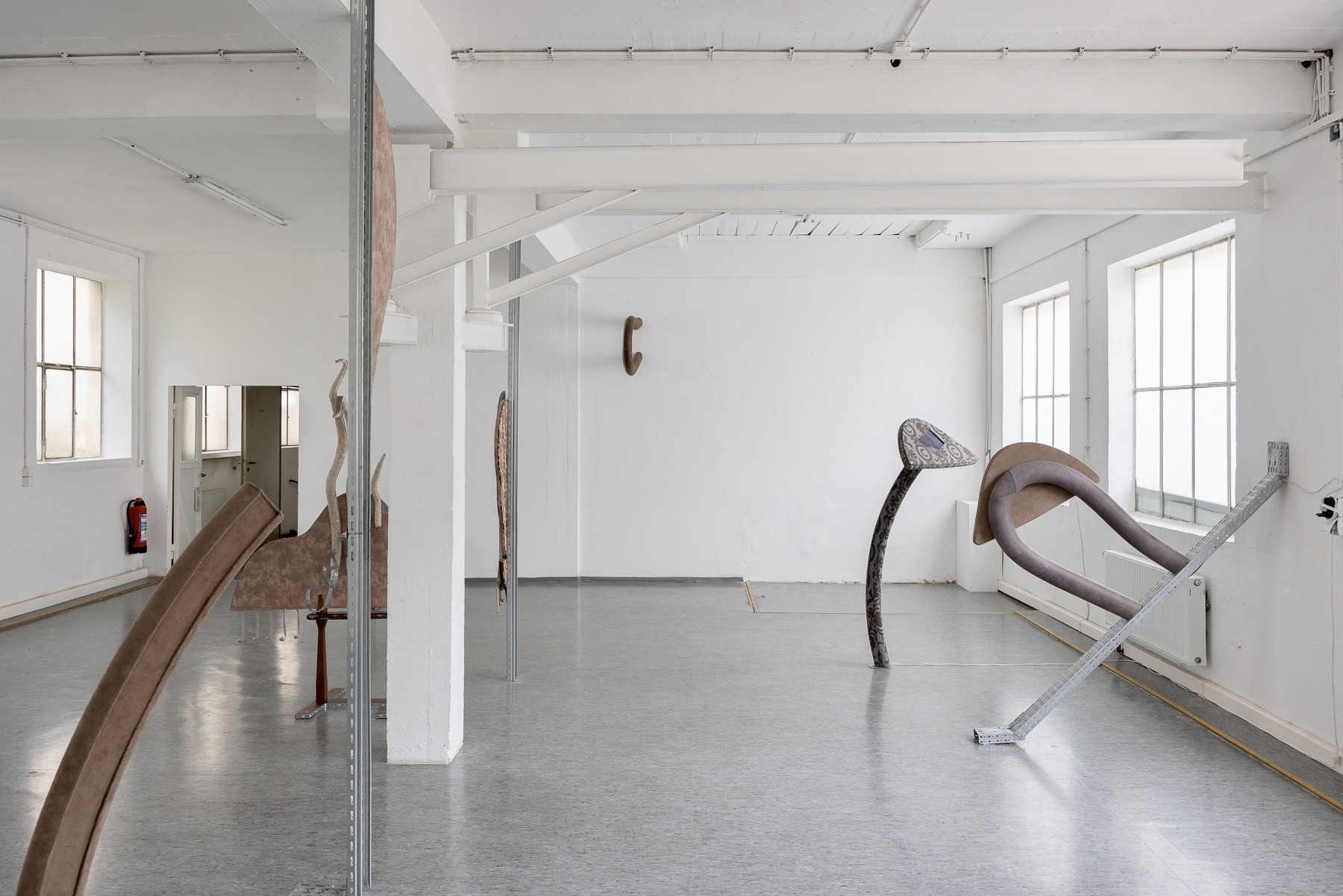
From Animal to Mineral, 2023, installation view. Photo: Thomas Splett
Maria VMier, Noch o.T. [ZINNOBER-SCHWEFEL],2023, Ink, pigment, tempera, pencil, chalk and charcoal on perforated paper. Photo: Thomas Splett.
Maria VMier, Noch o.T. [ZINNOBER-SCHWEFEL],2023, Ink, pigment, tempera, pencil, chalk and charcoal on perforated paper (detail) Photo: Thomas Splett
Hannah Mitterwallner, Mis-play, 2023, plaster, wood, sugar, installation view. Photo: Thomas Splett
Hannah Mitterwallner, Mis-play, 2023, plaster, wood, sugar, detail. Photo: Thomas Splett
Hannah Mitterwallner, Mis-play, 2023, plaster, wood, sugar, installation view. Photo: Thomas Splett
Hannah Mitterwallner, Mis-play, 2023, plaster, wood, sugar (detail). Photo: Hannah Mitterwallner
Judith Adelmann, I like your curvy waves, 2023, glazed ceramic, steel, plastic, installation view. Photo: Thomas Splett
Judith Adelmann, I like your curvy waves, 2023, glazed ceramic, steel, installation view. Photo: Thomas Splett
Judith Adelmann, I like your curvy waves, 2023, glazed ceramic, steel (detail). Photo: Thomas Splett
Hannah Mitterwallner, Mis-play, 2023, plaster, wood, sugar (detail).
Judith Adelmann, I like your curvy waves, 2023, glazed ceramic, metal, readymades (detail). Photo: Thomas Splett
From Animal to Mineral, 2023, installation view
Sophia Mainka, Habit Loss, 2023, Metal, fabric, wood, leather imitate, plastics, glazed ceramics, video. Photo: Thomas Splett
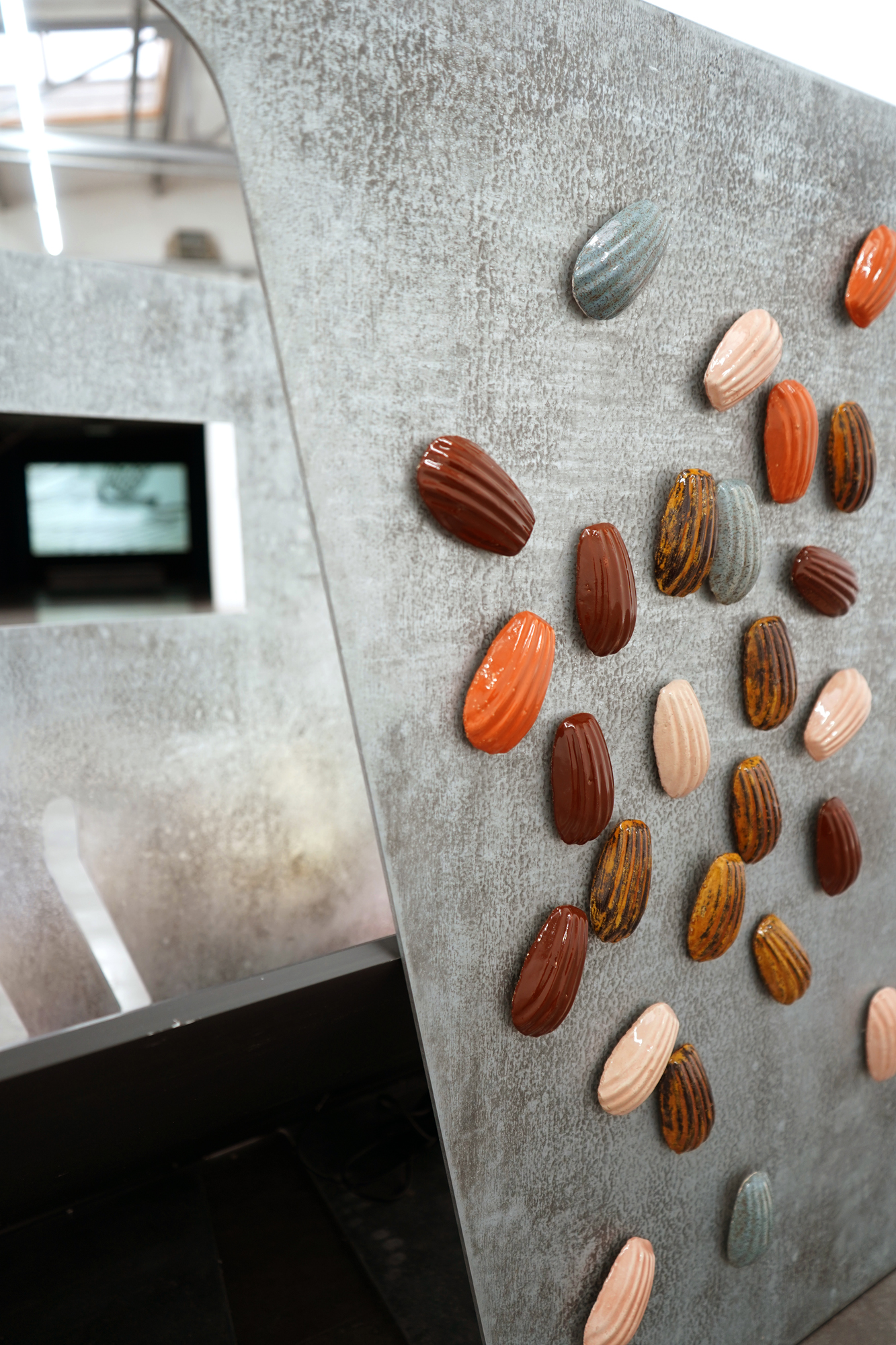
Sophia Mainka, Habit Loss, 2023, Metal, fabric, wood, leather imitate, plastics, glazed ceramics, video (detail).
Sophia Mainka, Habit Loss, 2023, Metal, fabric, wood, leather imitate, plastics, glazed ceramics, video. Photo: Thomas Splett
Jonathan Penca with Jakob Penca, Field Plots, 2023, animation film, 14 min, installation view. Photo: Thomas Splett.
Rachel Fäth, Passage, 2022, Glass, steel, screws and nuts. Photo: Thomas Splett.

Texts included in the exhibition:

From Animal to Mineral

Judith Adelmann, Rachel Fäth, Sophia Mainka, Hannah Mitterwallner, Jonathan Penca, Maria VMier

15.12. 2023 – 18.02.2024

Lothringer Halle, Lothringer Str. 13, 81667 München

Filmstill_Mainka_HabitLoss(1)


“Animals” are wolves mainly, rats and the wasp. “Mineral” is everything imperceptible: elements, particles and molecules. To go from animal to mineral is to experience becoming, to step across a threshold and change. 

I began my reading of A Thousand Plateaus, specifically the chapter “1730: Becoming-Intense, Becoming-Animal, Becoming- Imperceptible …” 1 during the corona pandemic, when environmental concerns were at the forefront of almost every media discussion. Defining humanity’s role in nature seemed like an important task and Deleuze and Guattari’s work was useful in addressing the too easy distinction between nature and culture. I liked how Deleuze and Guattari saw the dominance of our species over others as a philosophical problem of autonomy where Man as a thinking being is subject only to the laws of his own construction. For them, the capacity for conscious thought conferred upon Man a dignity denied to other creatures, making their voices unheard. 
Whereas, in A Thousand Plateaus Deleuze and Guattari present nature as an endless variability, the “whole thousand-voiced multiple” of Difference and Repetition 2. Here, nature is a multi-voiced body, where the voices constituting this body resound in each other in a “clamor of Being.” In this din, my voice is one of many and many voices resonate in mine 3. For Deleuze and Guattari, to change the human collective relation, not just to animals, but to earth itself, would demand that we stop hearing just our own voice and become aware of the noise of others. This is the experience of becoming-animal, becoming-imperceptible. It is to shed Man’s mantle and learn how to listen, becoming the voice of many. 

Since 2021 I have realised a series of exhibitions at various locations in responses to different aspects of this chapter of A Thousand Plateaus, whether to its ideas of nature, technology or memory. This exhibition at Lothringer 13 Halle confronts the idea of becoming, specifically in our relation to nature, more directly. In different ways all the artists participating in this exhibition share these concerns, many acutely aware of working in the era of the Anthropocene, where the human impact on the planet can no longer be denied.

To their cluster of voices I add my own, belonging to the writer. The texts I have written over the past few years in response to Deleuze and Guattari’s chapter on becoming are on display throughout the room. The texts resonate with the artwork, and the art inhabits the text. The exhibition is an experiment in the construction of a multi-voiced population, a pack of wolves, a people of rats. 

Magdalena Wisniowska, November 2023

1) Deleuze, Gilles and Guattari, Félix, A Thousand Plateaus, trans. Brian Massumi, (Minneapolis, London: University of Minesota Press, 2005).
2) Deleuze, Gilles, Difference and Repetition, trans. Paul Patton (New York: Columbia University Press, 1994), 304.
3) Ibid.