Animal Elegance

Jakob Gilg, Anka Helfertova, Julia Klemm and Jonathan Penca

9.10. – 7.11.2025

with Pracownia Portretu, Łódź, Poland
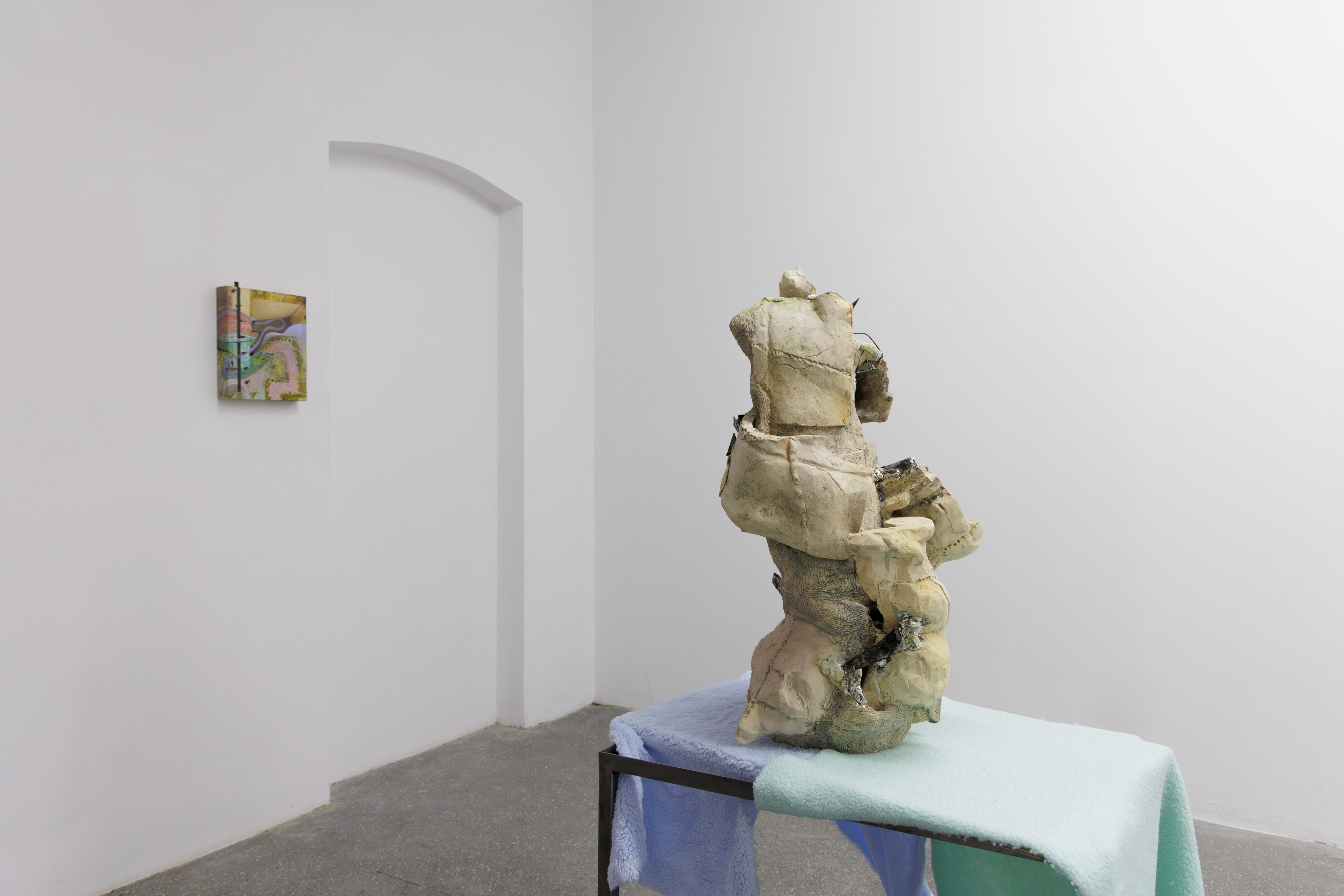
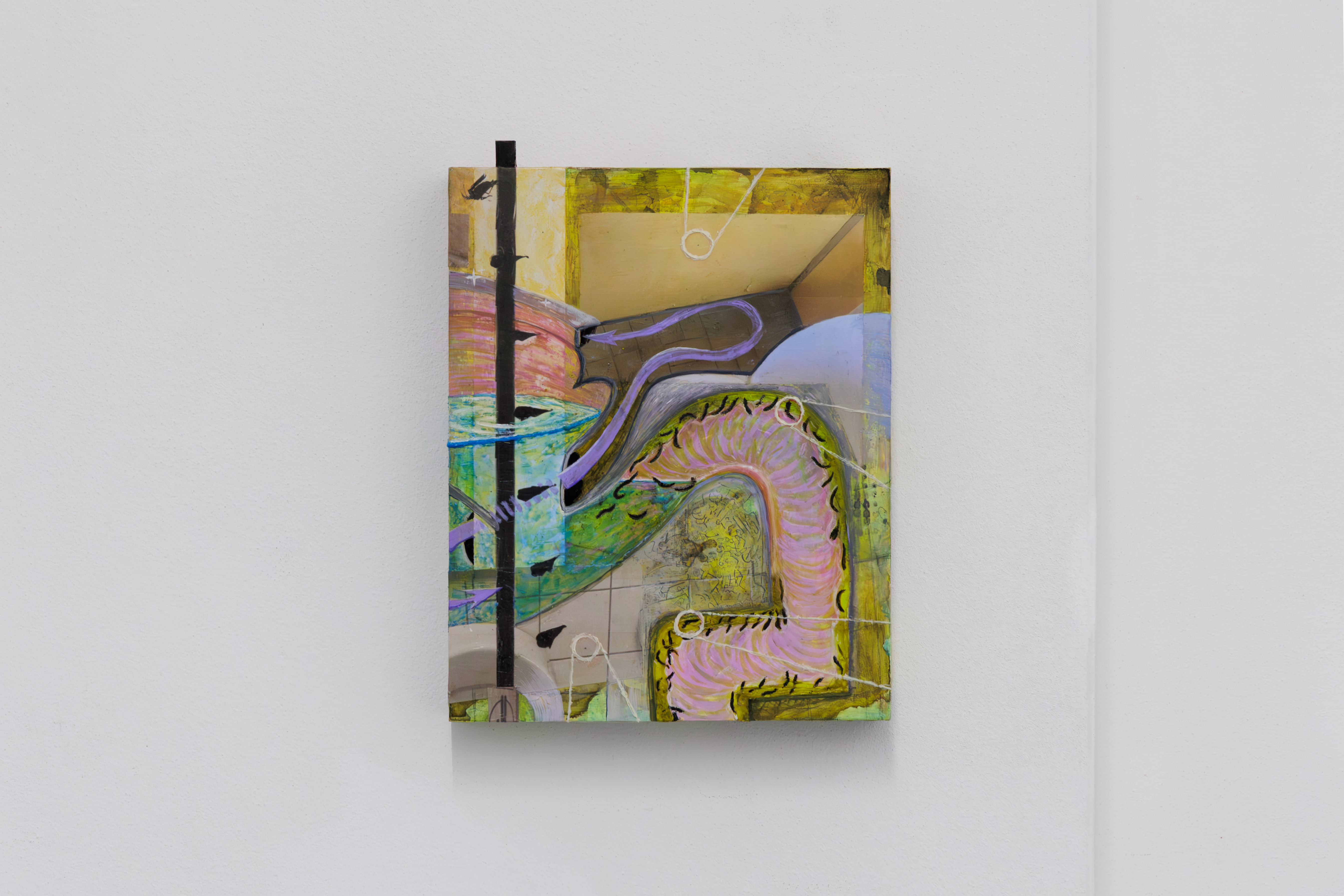
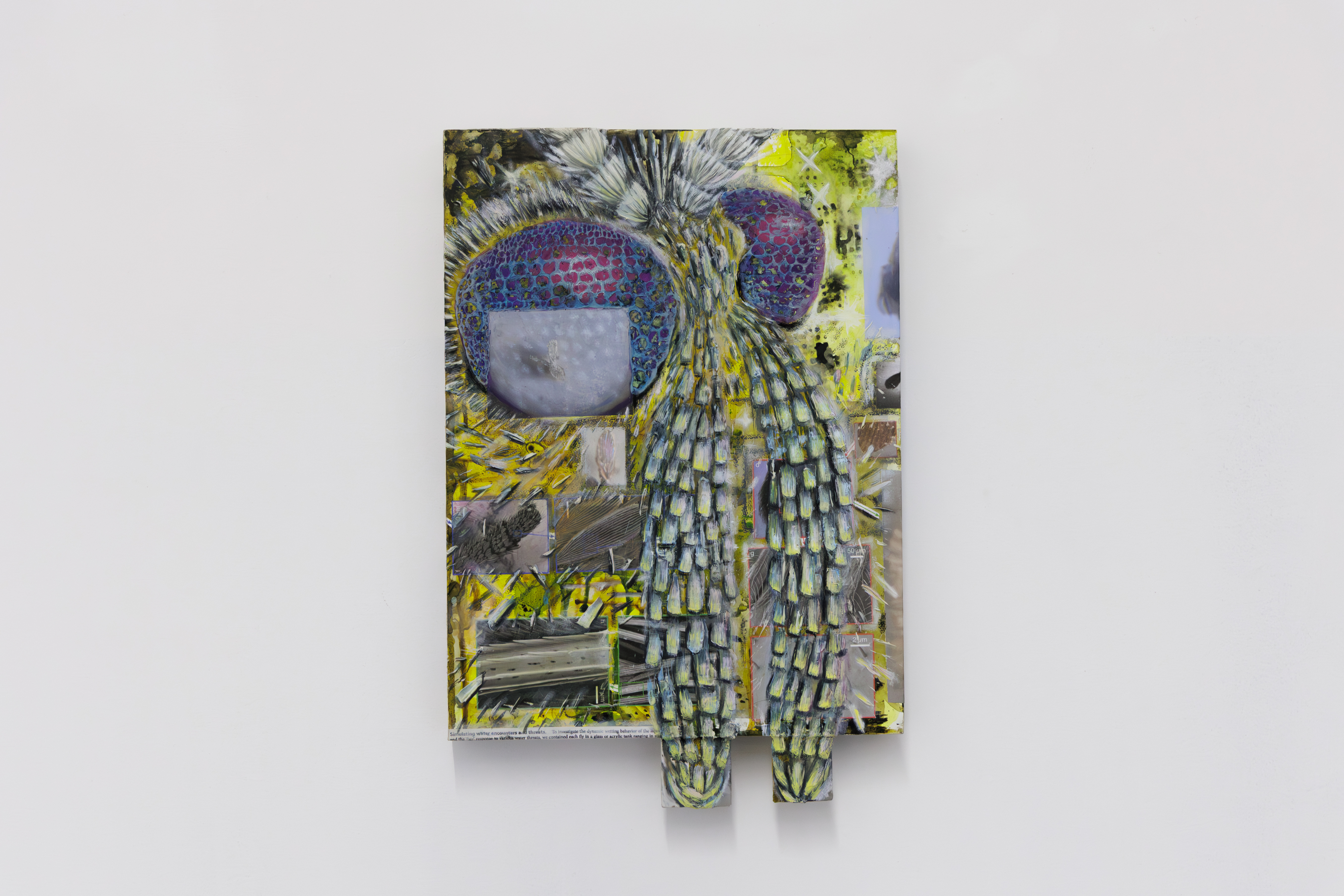
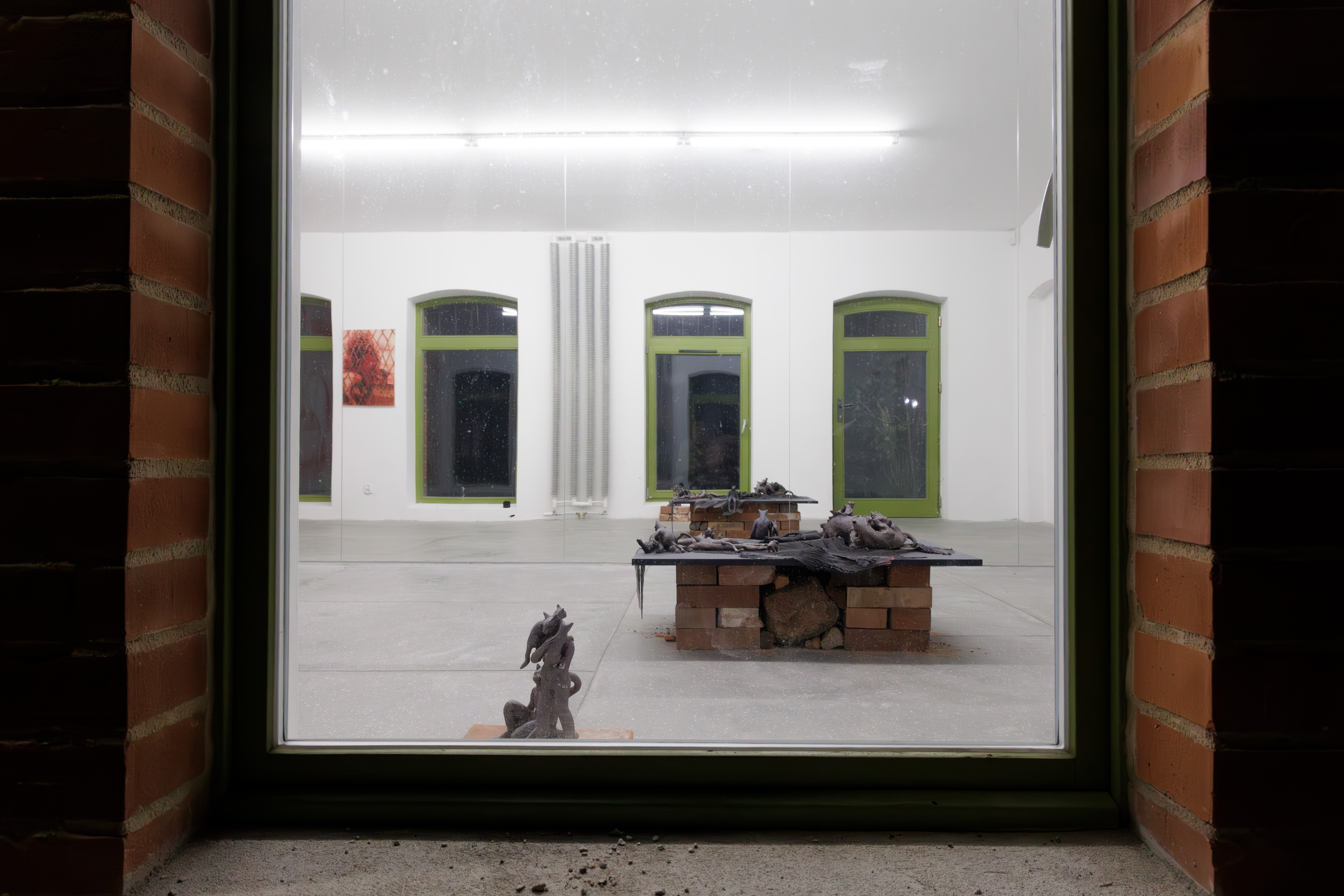
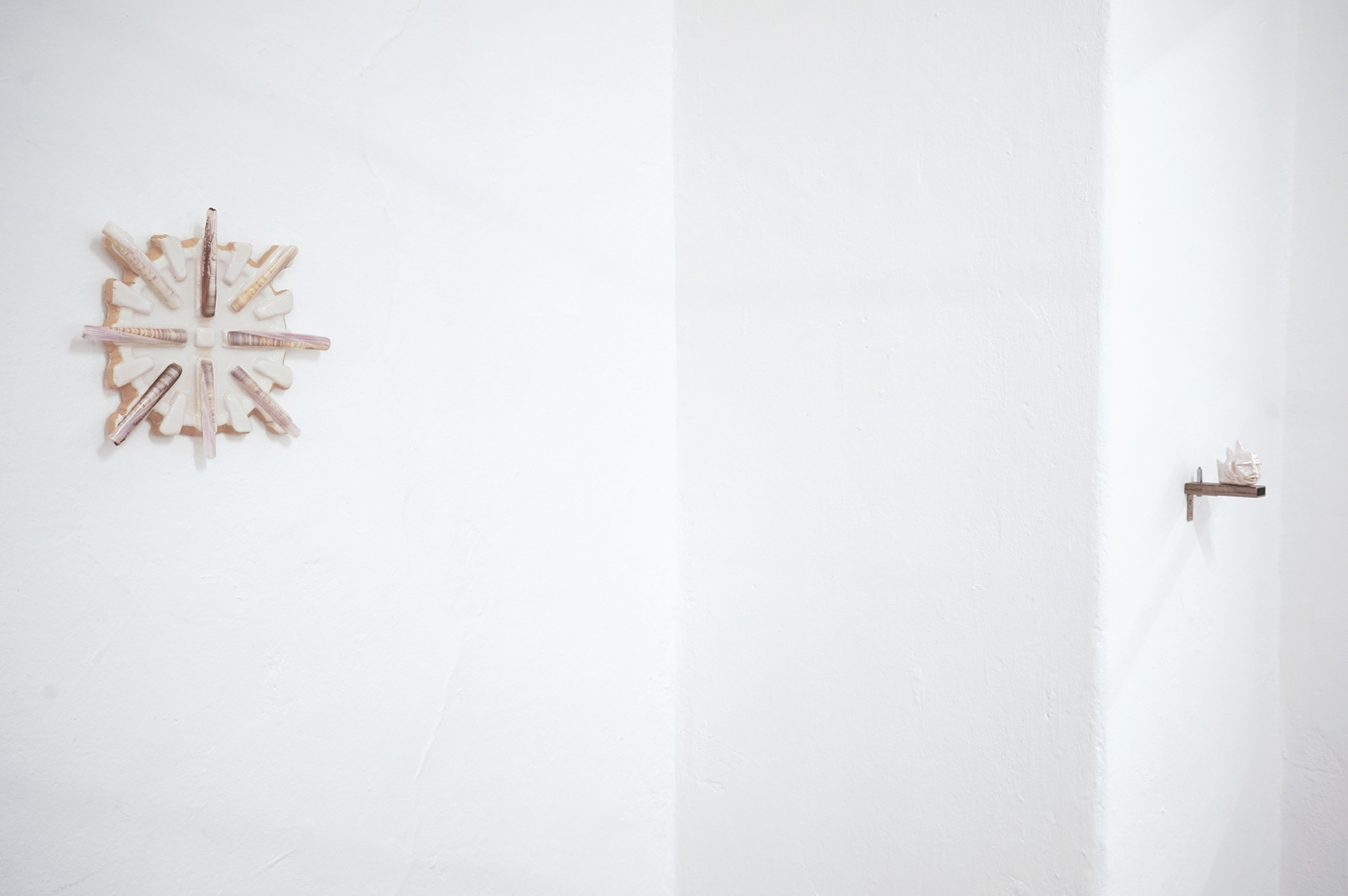
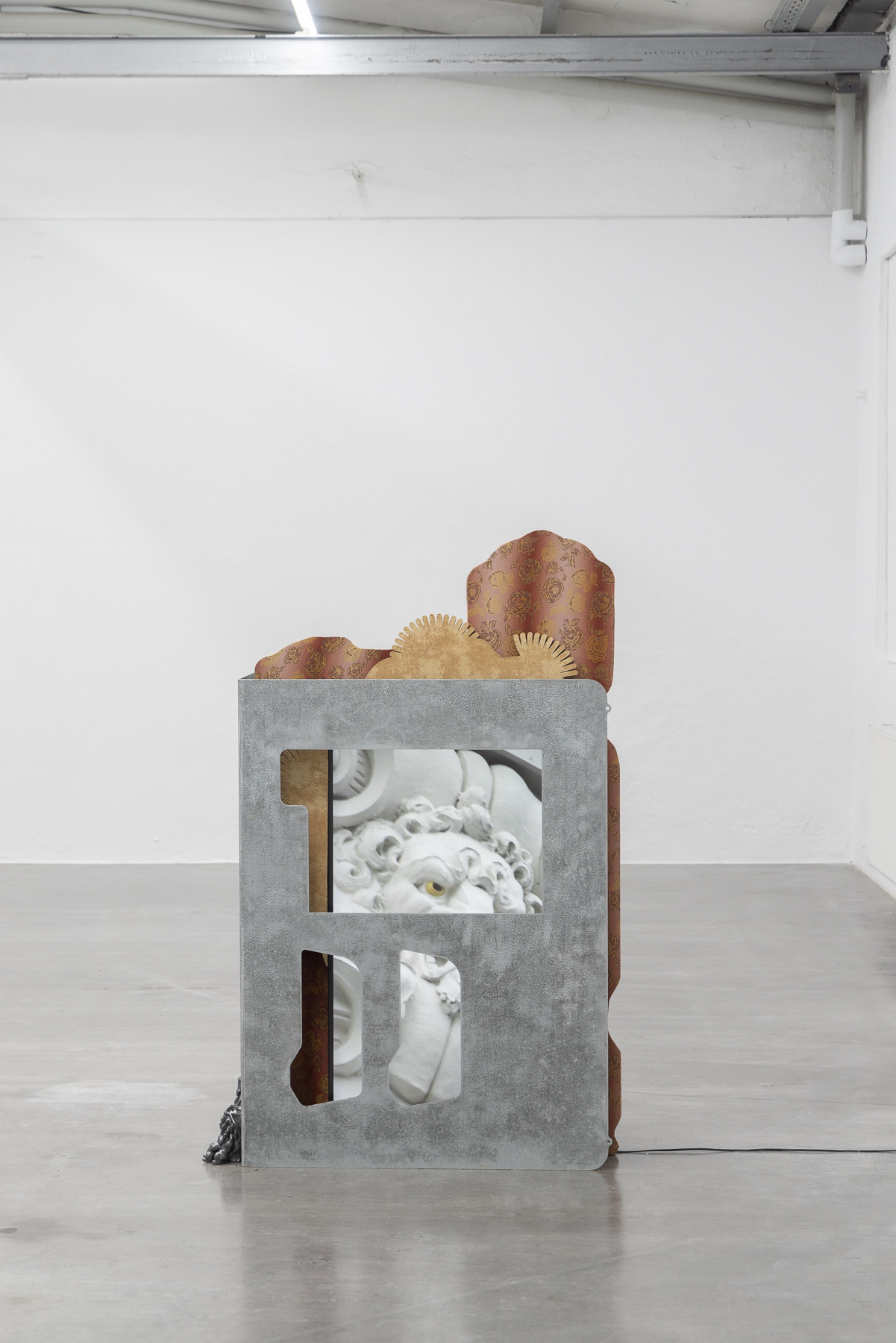
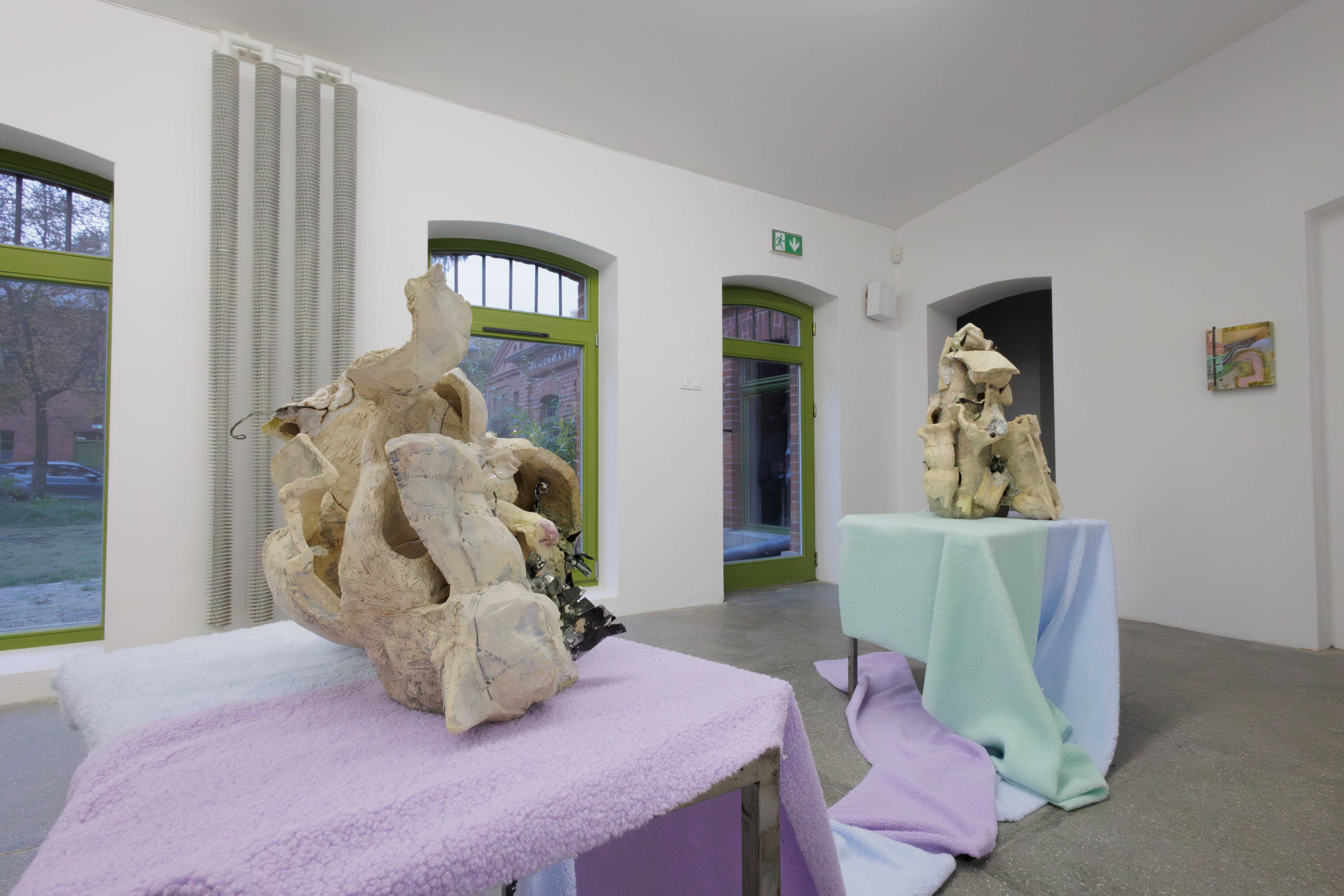
Animal Elegance, installation view (Jonathan Penca, Colonna Sonora, 2025, acrylic and
gouache paint, acrylic resin, biro, pencil, gesso and ink on wood. 31 x 24 x 5 cm; Julia Klemm, A chimera is not a pet 2, 2025, steel, glaze, ceramic, pigment, 44 x 38 x 74 cm, )
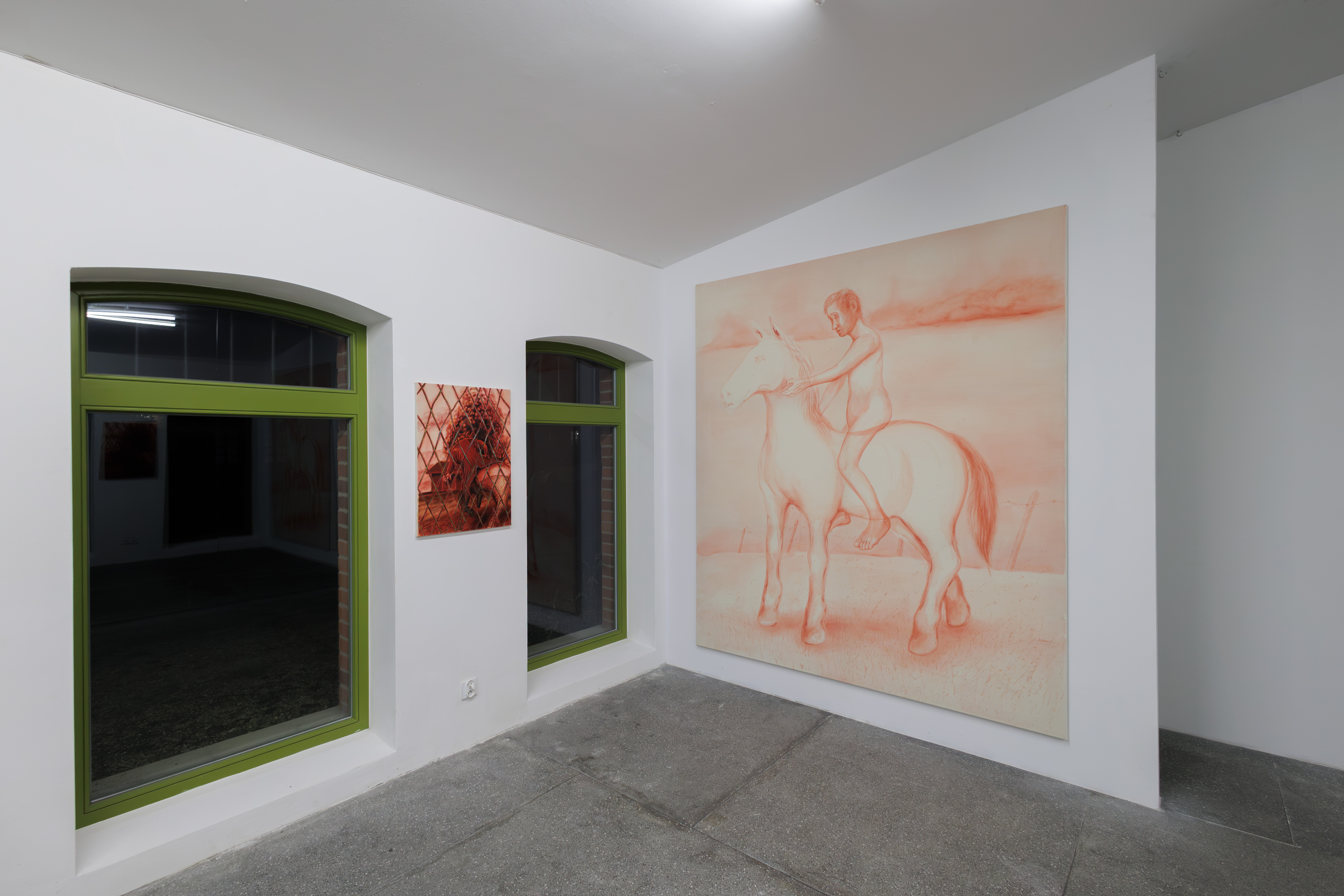
Animal Elegance, installation view (Jonathan Penca, Colonna Sonora, 2025, acrylic and
gouache paint, acrylic resin, biro, pencil, gesso and ink on wood. 31 x 24 x 5 cm, ; Julia Klemm, A chimera is not a pet 2, 2025, steel, glaze, ceramic, pigment, 44 x 38 x 74 cm,; Julia Klemm, A chimera is not a pet 3 , 2025, steel, glaze, ceramic, pigment, 46 x 34 x 42 cm)
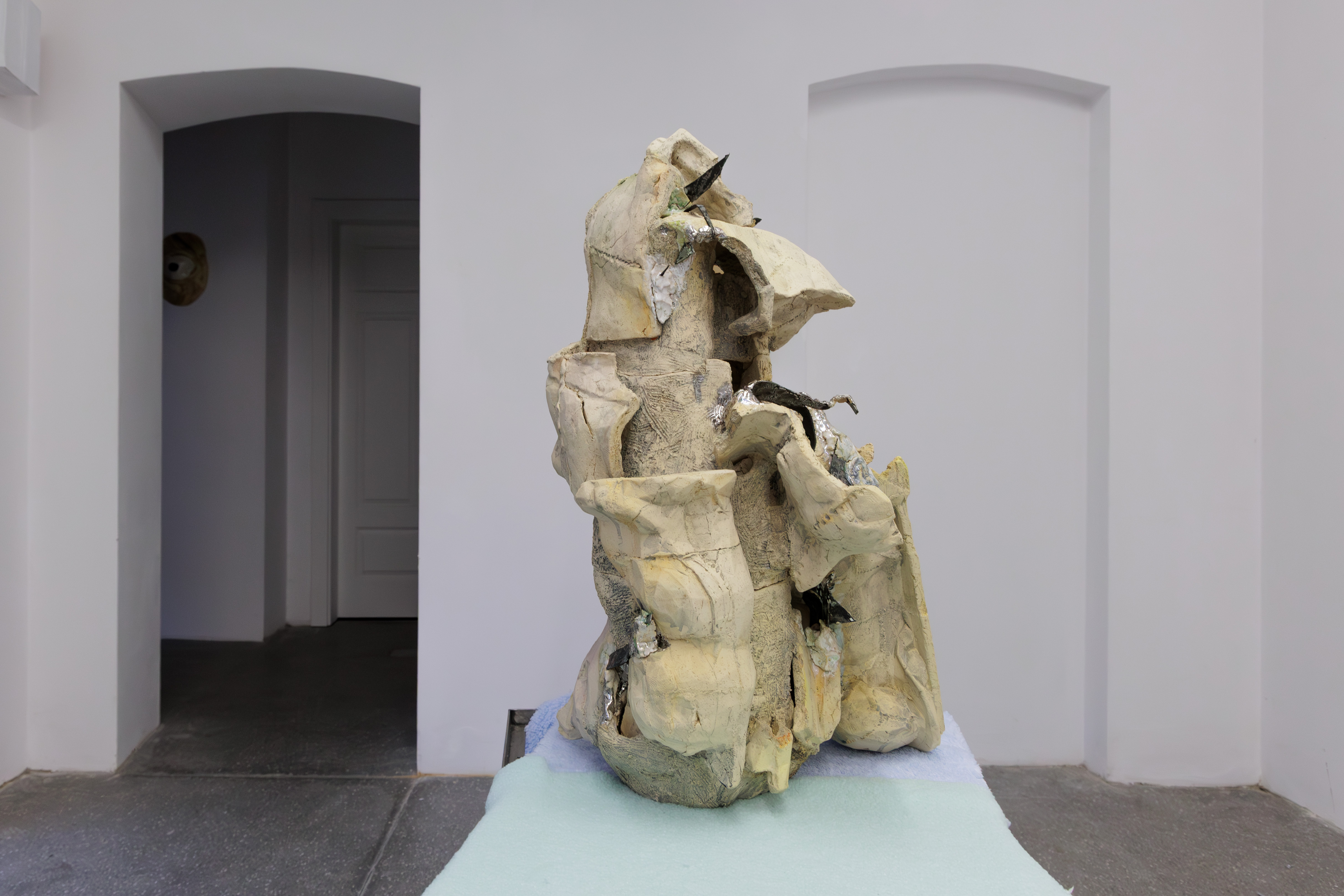
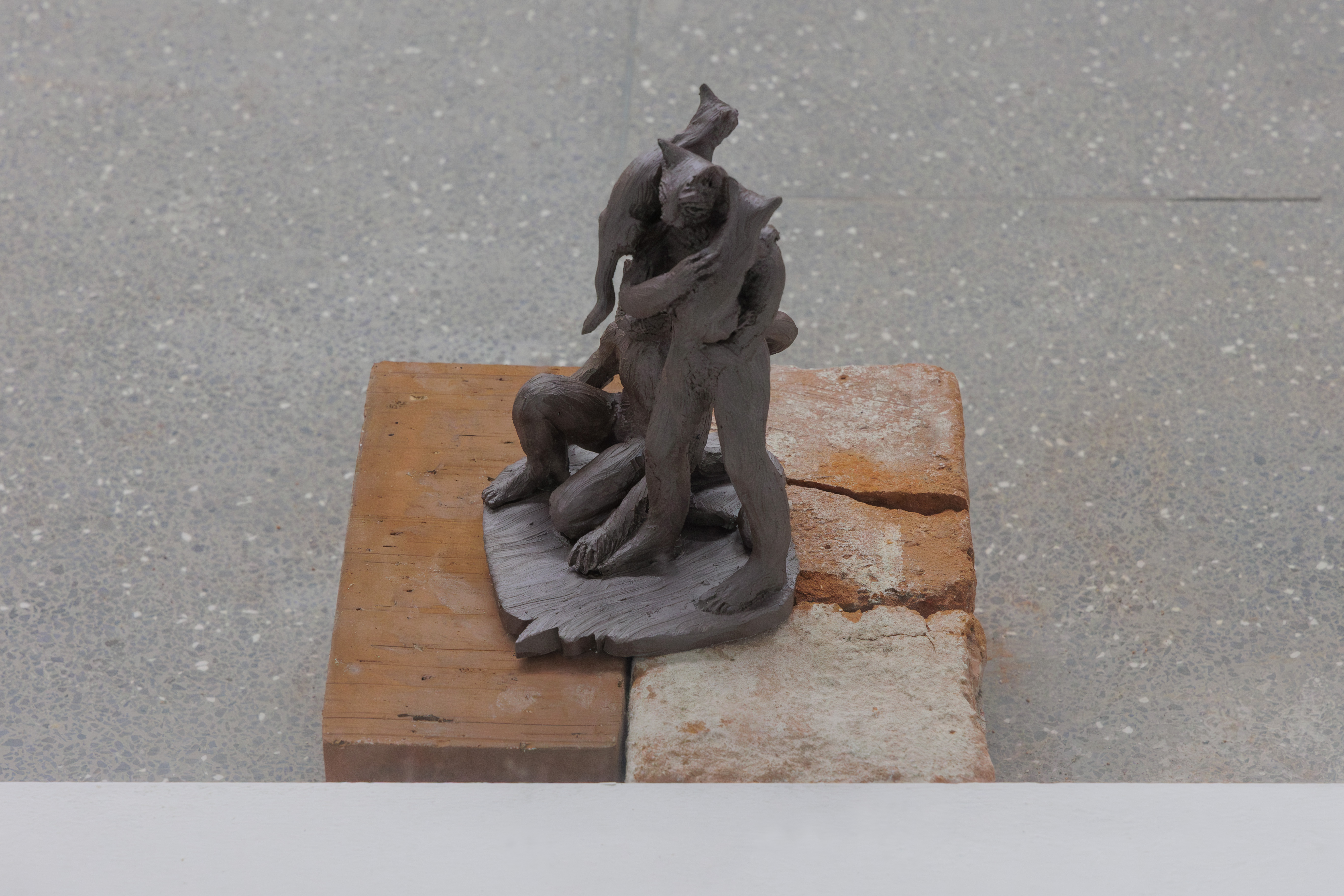
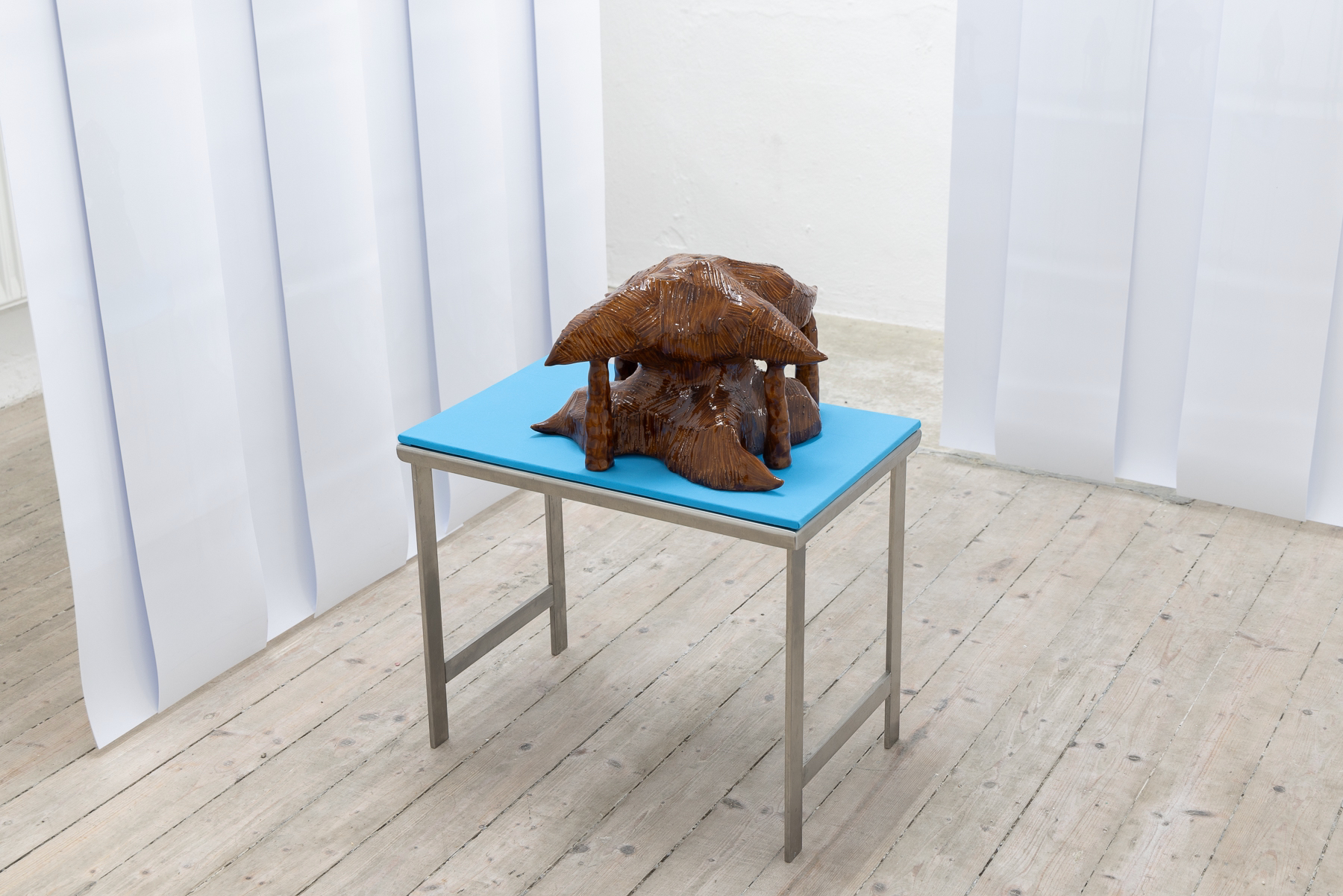
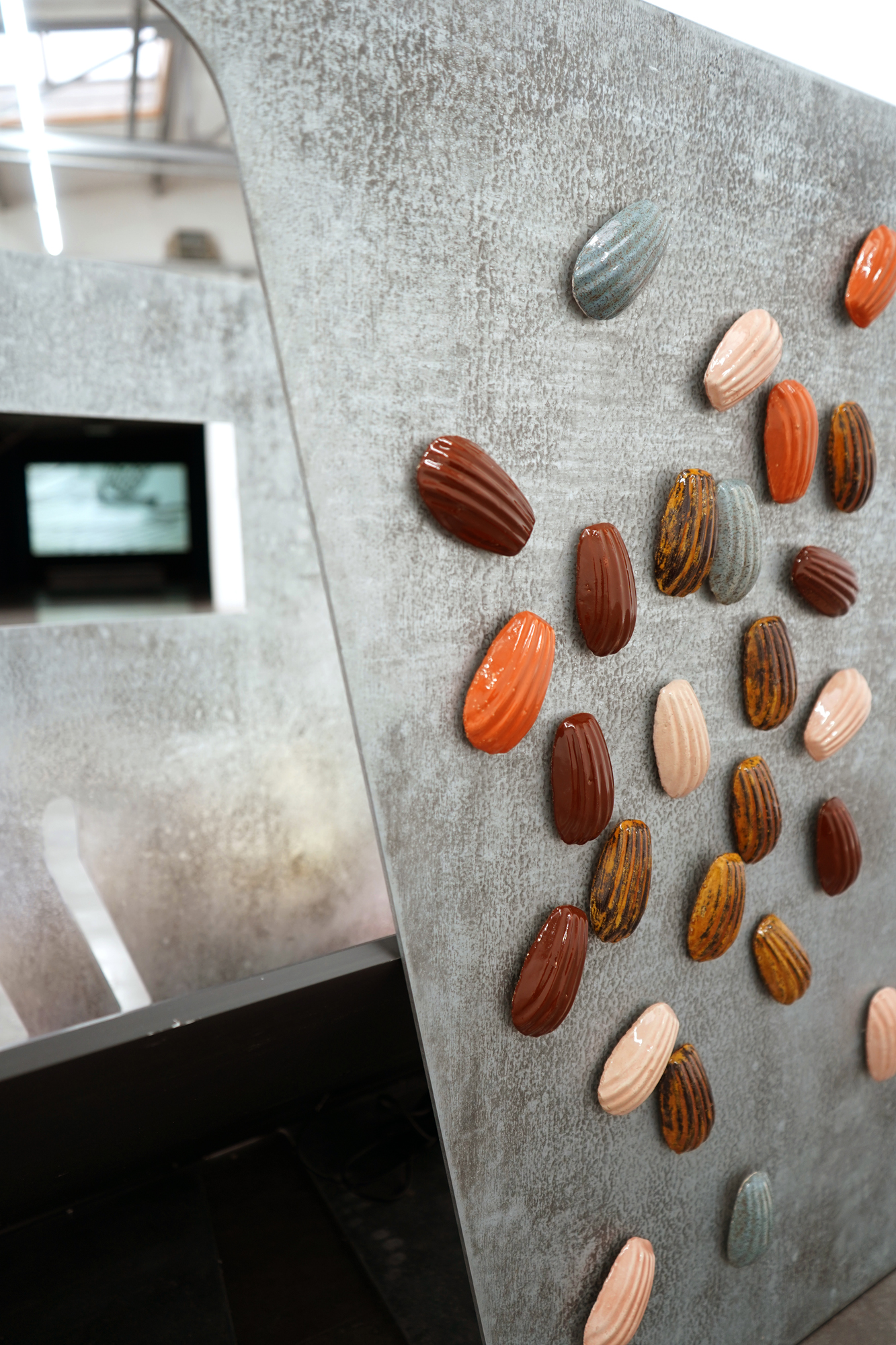
Julia Klemm, A chimera is not a pet 2,2025, steel, glaze, ceramic, pigment, 44 x 38 x 74 cm,
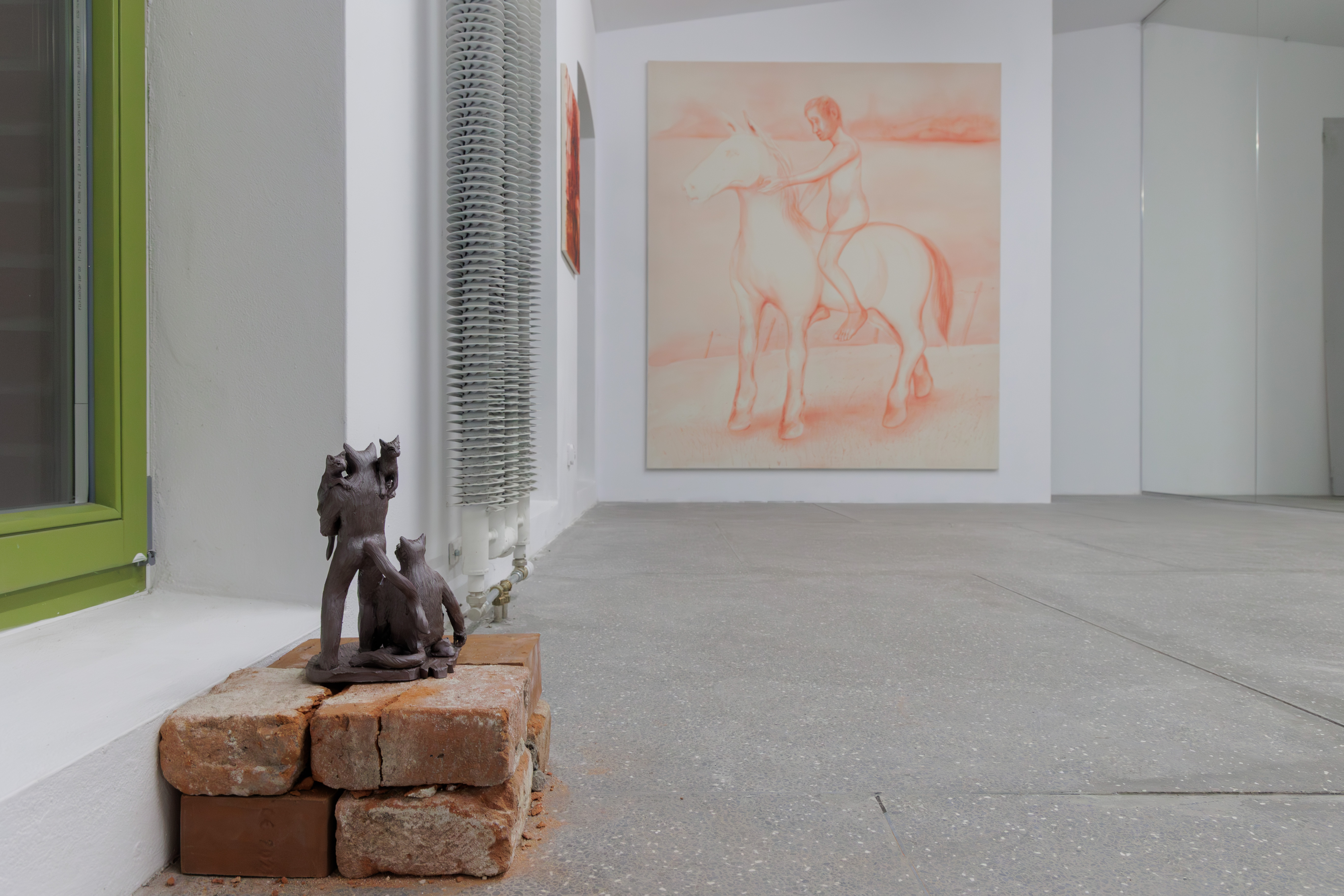
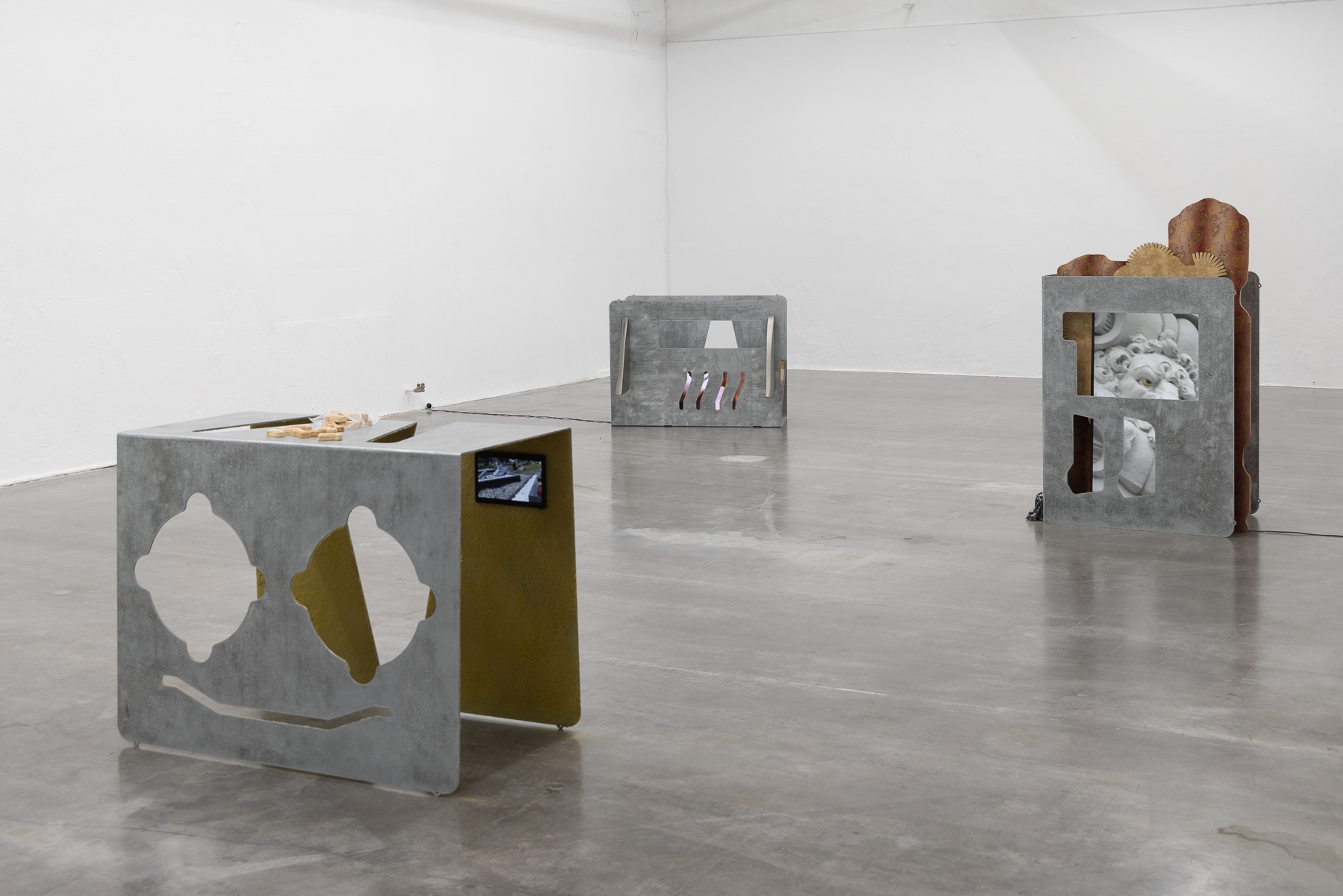
Animal Elegance, installation view (Jonathan Penca, Colonna Sonora, 2025, acrylic and
gouache paint, acrylic resin, biro, pencil, gesso and ink on wood. 31 x 24 x 5 cm; Julia Klemm, A chimera is not a pet 2,2025, steel, glaze, ceramic, pigment, 44 x 38 x 74 cm,; Julia Klemm, A chimera is not a pet 3 , 2025, steel, glaze, ceramic, pigment, 46 x 34 x 42 cm)
Jonathan Penca, Colonna Sonora, 2025, acrylic and
gouache paint, acrylic resin, biro, pencil, gesso and ink on wood. 31 x 24 x 5 cm,
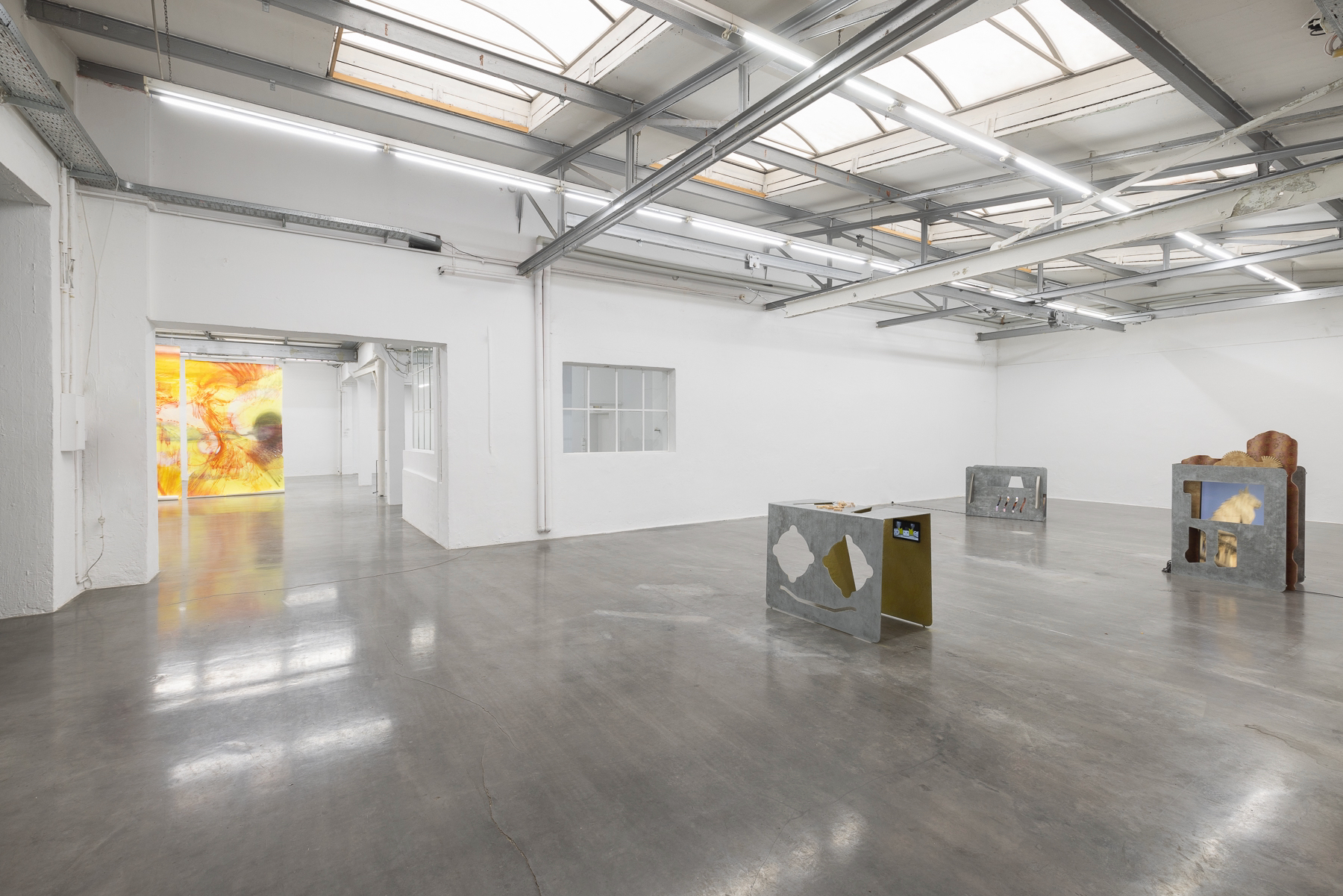
Animal Elegance, installation view , 2025
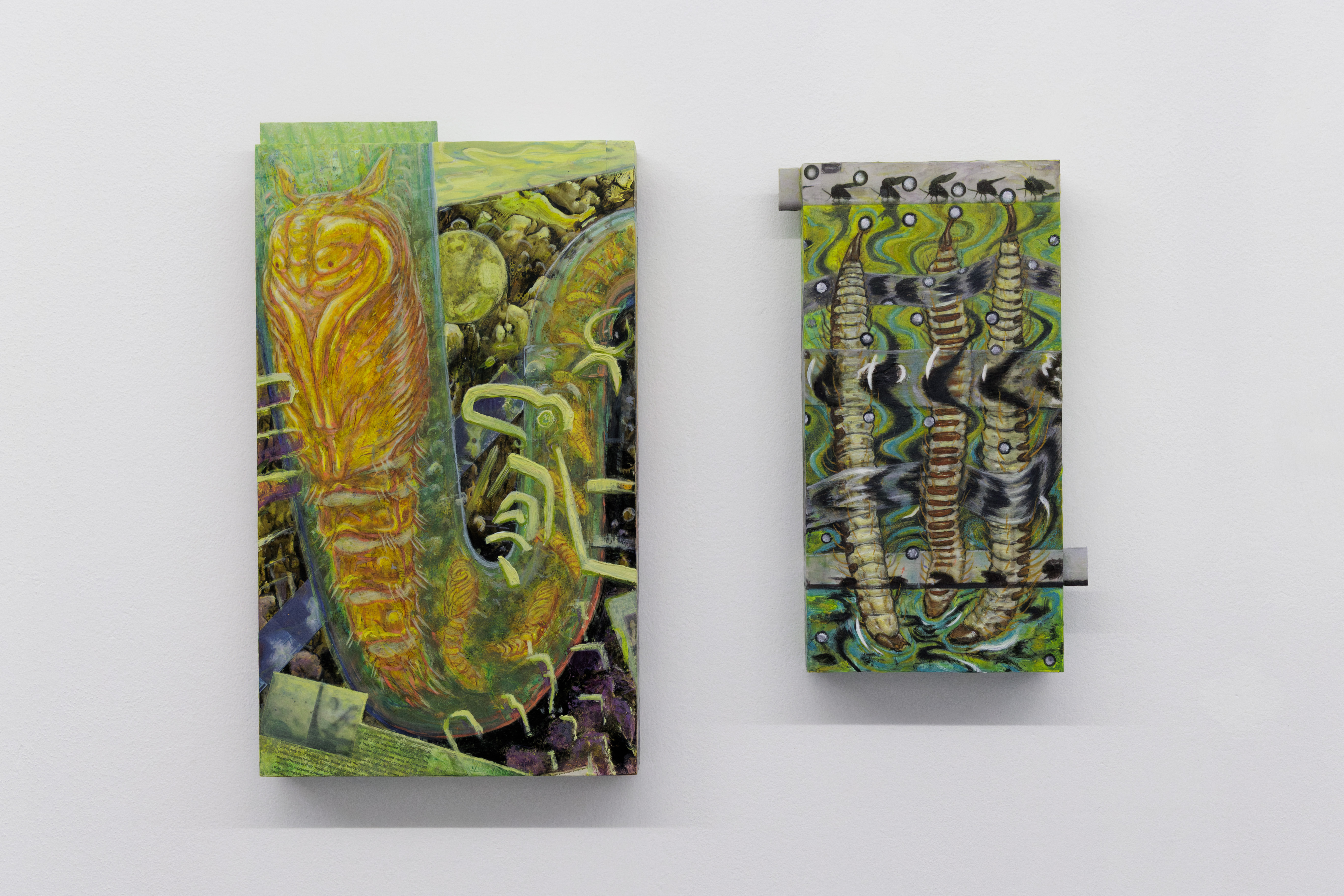
Jonathan Penca, inglers Groove, 2025, gouache, acrylic, watercolour, acrylic resin, pencil, gesso, ink and paper on wood, 52 x 30 x 5 cm; Jonathan Penca, Tufty Sequence, 2025, gouache, acrylic, acrylic resin, biro, gesso, ink and paper on wood, 40 x 19 x 5 cm)
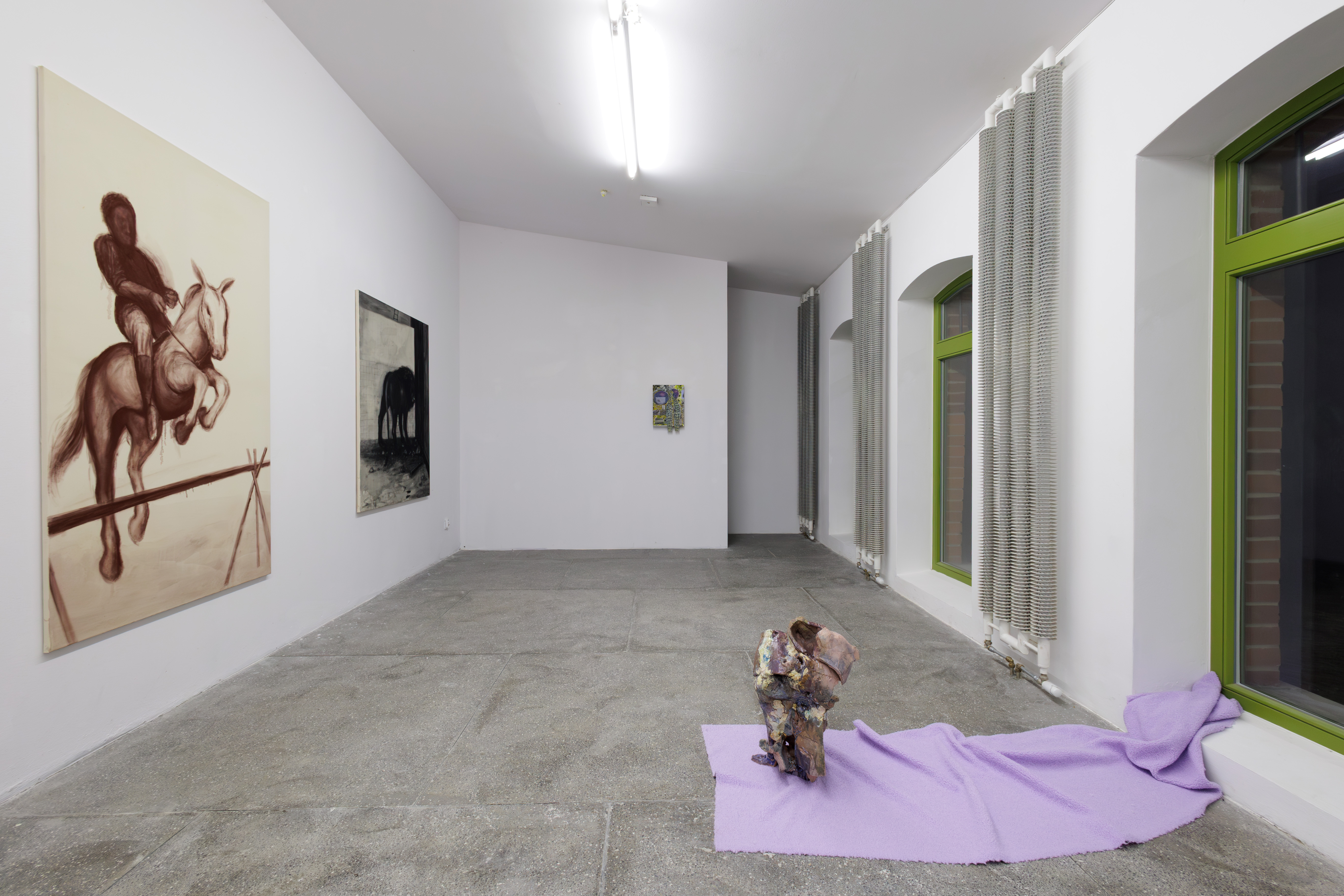
Animal Elegance, 2025, installation view

Julia Klemm, Transcending territories, 2024, glaze, ceramic, pigment, 32 x 30 x 48 cm
Animal Elegance, 2025, installation view
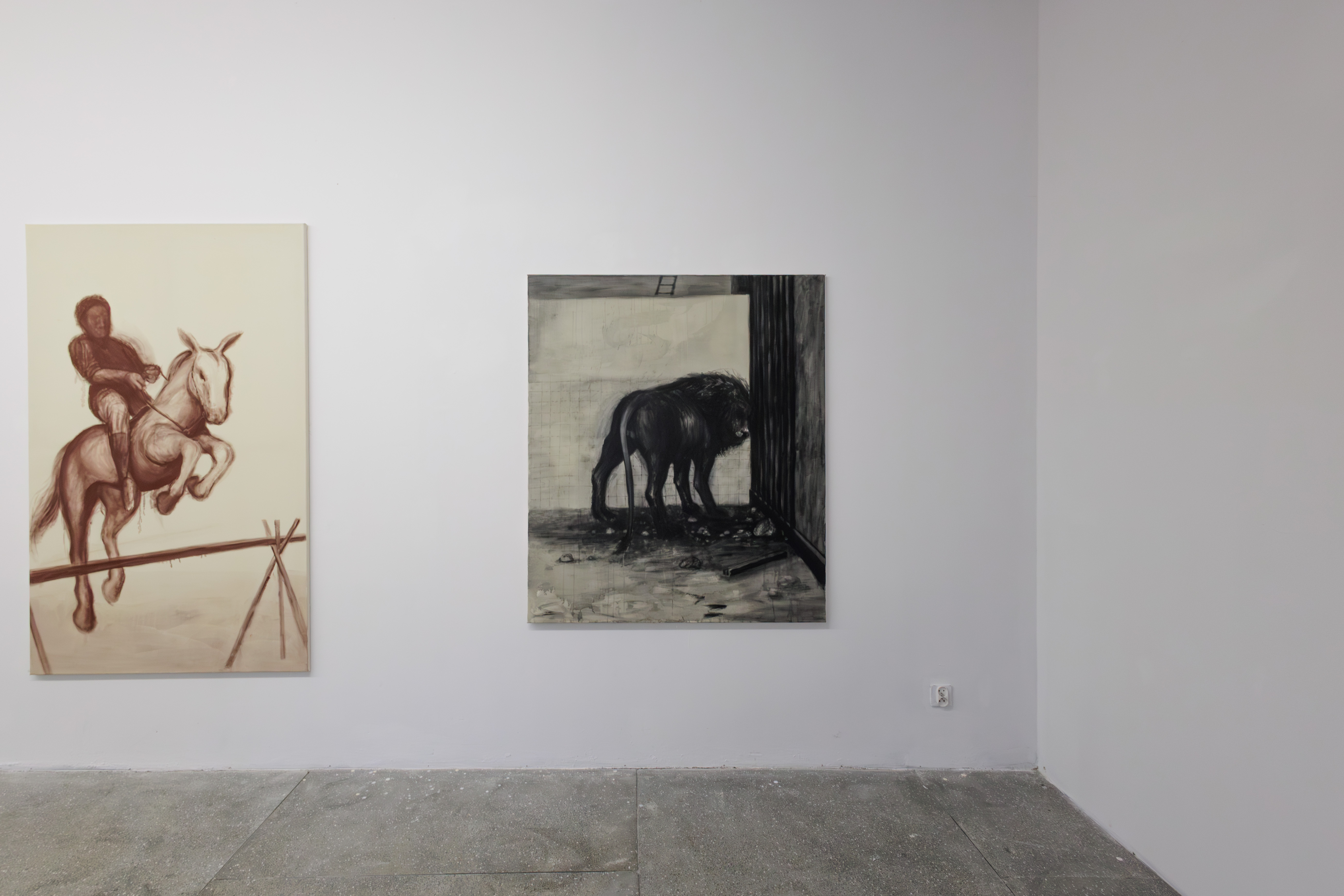
Jakob Gilg, Alignment, 2025, pigment and acrylic medium on canvas, 180 x 110 cm; Jakob Gilg, Virgo, 2025, pigment and acrylic medium on canvas, 140 x 120 cm)
Jonathan Penca, Clogmia, 2025, gouache, acrylic resin, gesso, ink, makeup powder and paper on wood, 44 x 30 x 5 cm
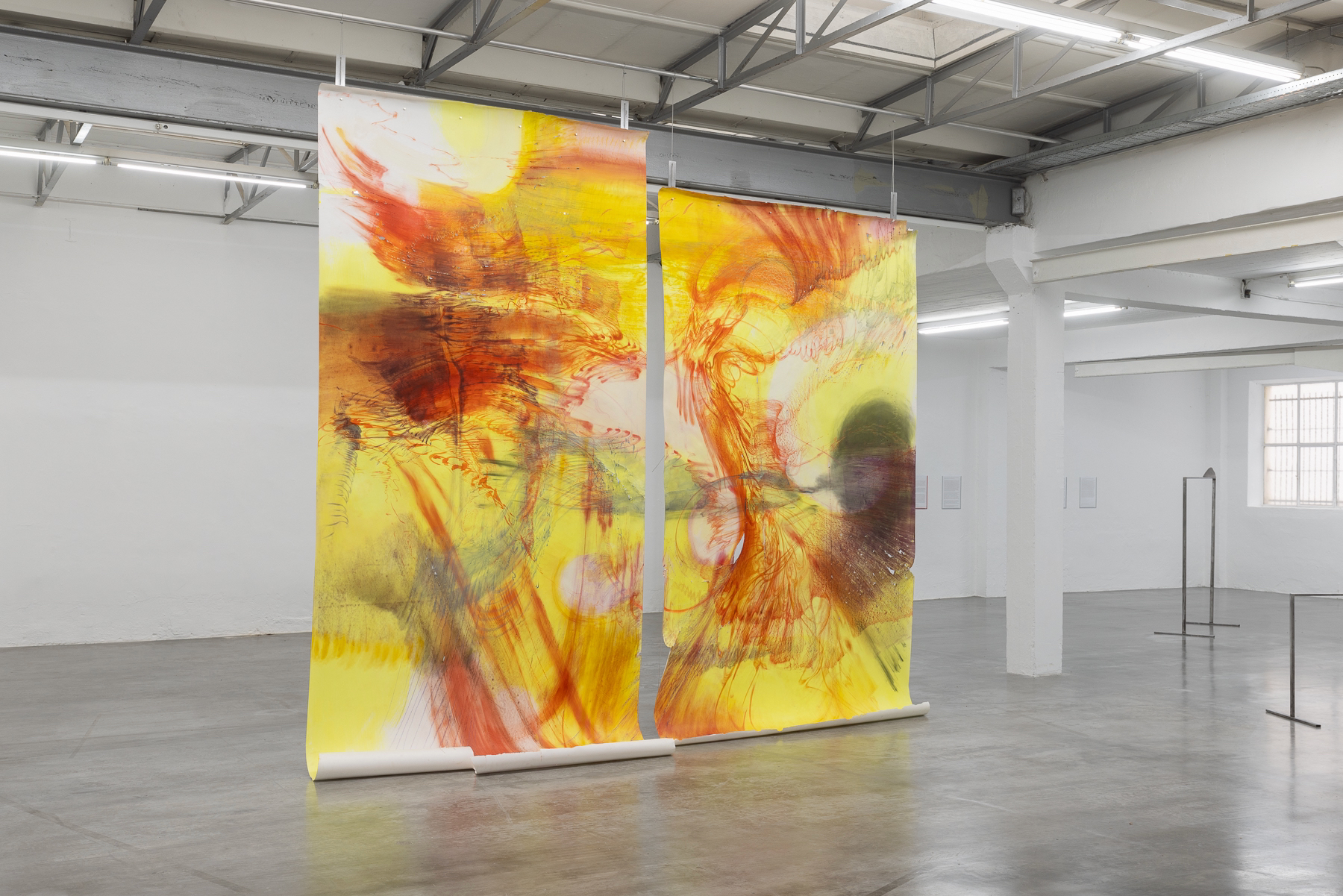
Jakob Gilg, I’m sorry, 2024, pigment and acrylic medium on canvas, 25o x 200 cm; Jakob Gilg, Kindling, 2025, pigment and acrylic medium on canvas, 70 x 50 cm
Jakob Gilg, Kindling, 2025, pigment and acrylic medium on canvas, 70 x 50 cm
Animal Elegance, 2025, installation view
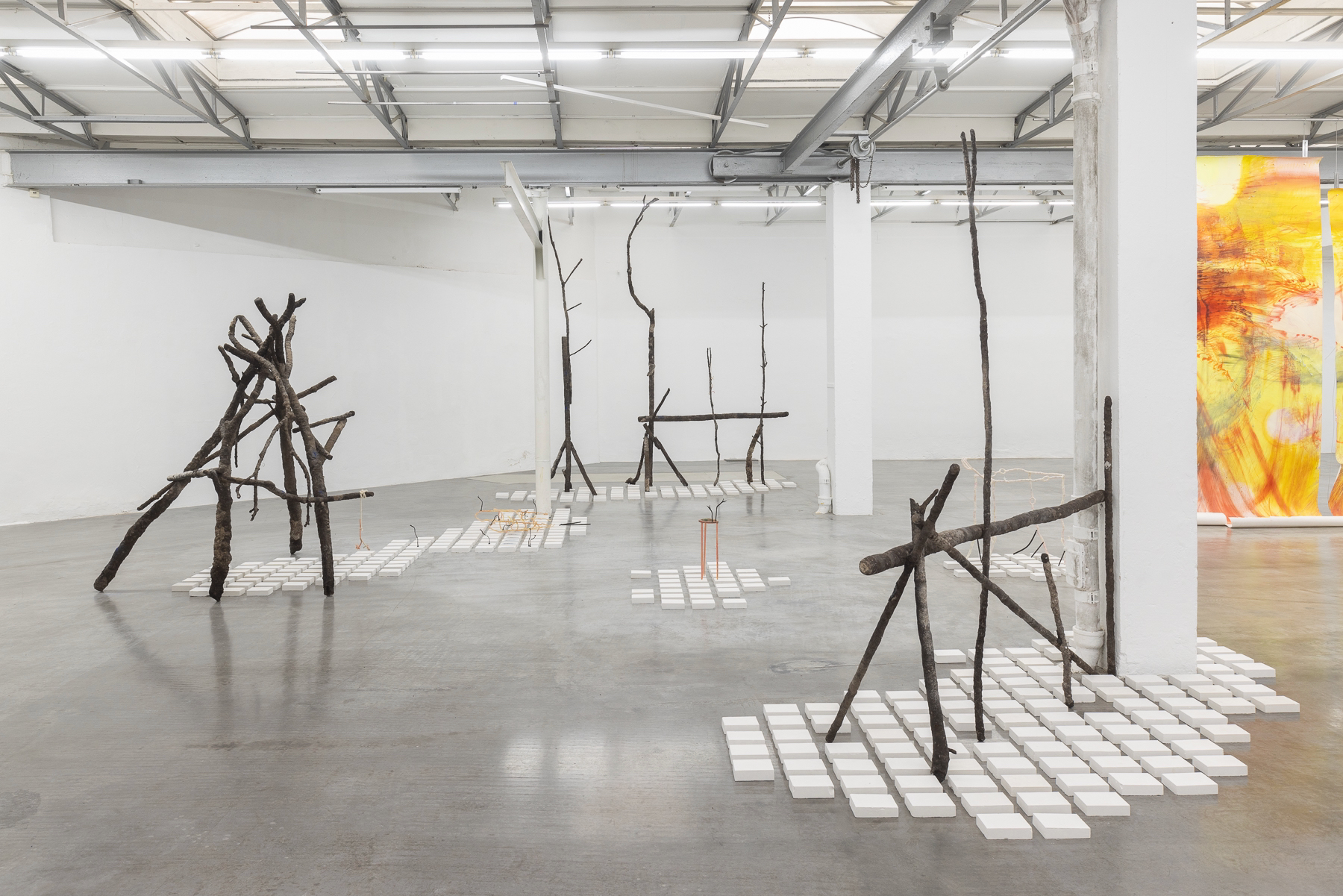
Anka Helfertova, To be in a time of war ( I keep changing my address but war never loses my scent) 2025, bricks, stone, MDF board, silicon, pigment, ceramic, 55 x 120 x 77 cm and 40 x 30 x 30 cm
Animal Elegance, 2025, installation view

There is a fascist, who lives in my head, and he has been there for a while. I speak to him almost everyday about different things, mainly things I see in the news or read about online, but sometimes also about art. Recently I was telling him about the fish, Kluzinger’s wrasse, which reminded me of a passage I read in “A Thousand Plateaus” by Deleuze and Guattari. They ascribe to a tropical fish an animal elegance, because of the way it uses its colourful design to blend in with its surroundings. The lines of the design are abstract and yet have the capacity to construct an entire underwater world. 

Look, I tell him, we think we know what a fish is, the way you think you know what a dog or horse or lion is, an animal, a species, a type. Certainly your lot has made enough statues and animal monuments – porcelain shepherd dog figurines graced your tables. A fish lives in water and like all other fish has scales, fins and gills.  We can compare this fish to another and note down the similarities of their characteristics, in order to classify them, genus: Thalassoma, family: Labridae. You think we know what kind of an animal a fish is. There it is. Put it in an aquarium. 

Ah, I say, but can we see the animal Deleuze and Guattari describe as possessing an English kind of elegance? With a refinement that does not seek attention, but that remains quietly unobtrusive?  This involves the appreciation of the small and the detailed, like those drain moths found in Jonathan Penca’s paintings, charming us with their fuzzy faces and furry wings. More than that, unobtrusiveness requires an effort. To go through life unnoticed is not easy and drain moths have a life cycle with four stages, larvae feeding on toilet sludge before developing into pupae. 

There are animals we see and animals we do not. The animals we do see, we organise and use, tame and breed. We control them as meticulously as Eadweard Muybridge did, when he set up multiple cameras to capture the image of the horse in motion or a lion in a cage, the starting point of Jakob Gilg’s paintings. We assign animals different roles: you there, you look soft and cuddly, you will be a pet. And you, you over there, so powerful and strong, you we will make into a symbol. Kitsch ceramic cats and scaled-down digital scans of lion monuments tumble, shatter and recombine in Julia Klemm’s work. 

But this animal you don’t see, is something other than a molar entity, a different “affair” as Deleuze and Guattari would say, involving “becoming” not “being.” And it might seem we are meant to think this becoming morphologically, as the becoming of something else, a change from one permanent state to another, equally permanent one. A human could become a cat perhaps – or a cat, a human – as in the work of Anka Helfertova. Violence swirls around and we try to find our peace, not to lose ourselves within. To think becoming is to think loss, the elimination of all of our complaints, demands, unsatisfied desires, “everything that roots us in ourselves,” so that at the end, we are left with nothing, which is also everything. Becoming-animal is always a becoming-imperceptible, a shrinking best found in science fiction novels, the shrinking man becoming smaller and smaller without ever disappearing. Because when animals are thought in their becoming, the molecular comes into play, those invisible abstract forces that in their millions of interactions are actually responsible for constituting a world. To think an animal in its becoming is to engage with these molecular forces at work.

This is the demand elegance places on us: to think less of ourselves and more of the other. It is to be more attuned to our surroundings by paying attention to what continues to constitute us, which is always small and inorganic, indiscernible and impersonal. Elegance is a kind of molecular attention, but with a focus that opens out onto the world. To think things in their becoming molecularly is also to think in terms of the cosmos in its entirety. And then we might indeed stop seeing fish, but we will begin to see everything else.

Magdalena Wiśniowska 2025
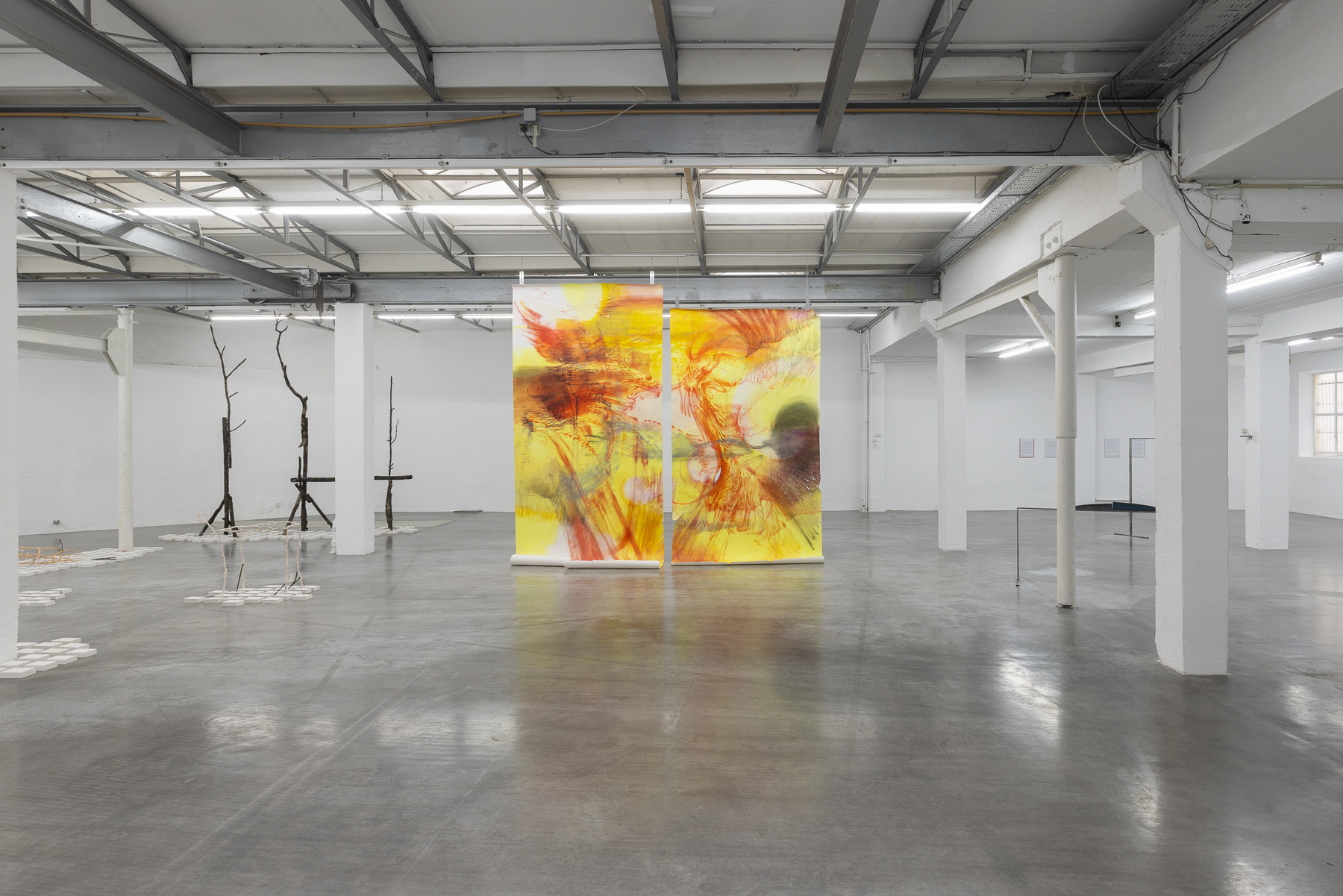
From Animal to Mineral

Judith Adelmann, Rachel Fäth, Sophia Mainka, Hannah Mitterwallner, Jonathan Penca, Maria VMier

15.12. 2023 – 18.02.2024

Lothringer Halle, Lothringer Str. 13, 81667 München

From Animal to Mineral, 2023, installation view. Photo: Thomas Splett
Maria VMier, Noch o.T. [ZINNOBER-SCHWEFEL],2023, Ink, pigment, tempera, pencil, chalk and charcoal on perforated paper. Photo: Thomas Splett.
Maria VMier, Noch o.T. [ZINNOBER-SCHWEFEL],2023, Ink, pigment, tempera, pencil, chalk and charcoal on perforated paper (detail) Photo: Thomas Splett
Hannah Mitterwallner, Mis-play, 2023, plaster, wood, sugar, installation view. Photo: Thomas Splett
Hannah Mitterwallner, Mis-play, 2023, plaster, wood, sugar, detail. Photo: Thomas Splett
Hannah Mitterwallner, Mis-play, 2023, plaster, wood, sugar, installation view. Photo: Thomas Splett
Hannah Mitterwallner, Mis-play, 2023, plaster, wood, sugar (detail). Photo: Hannah Mitterwallner
Judith Adelmann, I like your curvy waves, 2023, glazed ceramic, steel, plastic, installation view. Photo: Thomas Splett
Judith Adelmann, I like your curvy waves, 2023, glazed ceramic, steel, installation view. Photo: Thomas Splett
Judith Adelmann, I like your curvy waves, 2023, glazed ceramic, steel (detail). Photo: Thomas Splett
Hannah Mitterwallner, Mis-play, 2023, plaster, wood, sugar (detail).
Judith Adelmann, I like your curvy waves, 2023, glazed ceramic, metal, readymades (detail). Photo: Thomas Splett
From Animal to Mineral, 2023, installation view
Sophia Mainka, Habit Loss, 2023, Metal, fabric, wood, leather imitate, plastics, glazed ceramics, video. Photo: Thomas Splett
Sophia Mainka, Habit Loss, 2023, Metal, fabric, wood, leather imitate, plastics, glazed ceramics, video (detail).
Sophia Mainka, Habit Loss, 2023, Metal, fabric, wood, leather imitate, plastics, glazed ceramics, video. Photo: Thomas Splett
Jonathan Penca with Jakob Penca, Field Plots, 2023, animation film, 14 min, installation view. Photo: Thomas Splett.
Rachel Fäth, Passage, 2022, Glass, steel, screws and nuts. Photo: Thomas Splett.

Texts included in the exhibition:

Low Affinity

Johanna Strobel

14.10 – 14.11.2021

GiG Munich is happy to present the next instalment of the series Thinking Nature, featuring new work by Johanna Strobel. For her solo exhibiton low affinity, Johanna Strobel creates rhizomatic macramé-like structures from USB extension cords, using them to power her plexiglas and paraffin sculptures. 

Enthropy, the fact that once the USB 2.0 cable exceeds a certain length information gets lost while power still remains, forms the central component of this work. It ties together the ancient idea of ‘ether’ as a medium through which light travels, the fluid physics of translucency, and the decorative and practical craft of knot-making. Her practice is informed by her background in science, and explores such unwieldy concepts like time and space, information and entropy, language, the creation, attribution or suspension of meaning and the everyday perception and precipitation of these concepts in mundane life. 

Johanna Strobel is an interdisciplinary artist from Germany, currently based in New York. She holds degrees in Information Science and Mathematics and graduated in painting and graphics from the Academy of Fine Arts Munich with Honors (Meisterschuelerin of Gregor Hildebrandt) in 2017. In 2020 she received her MFA from Hunter College New York (New Genres). Since then she has participated in numerous exhibitions in Germany, Italy, Taiwan and the US, with a solo exhibition at the Municipal Museum Cordonhaus Cham, 2019. In 2020 her work has been included in The Immigrant Artist Biennial, New York, USA, Jahresgaben, Kunstverein Munich, Germany and featured online by Hauser & Wirth. Johanna was a fellowship artist in residence at NARS Foundation, Brooklyn in 2021.  


The exhibition will include an online discussion event with Dr. Beth Lord, Professor of Philosophy, School of Divinity, History, Philosophy and Art History at the University of Aberdeen.    

BILDHAUER*IN DER SINNE

Emanuele Becheri, Beth Collar

26.09. – 4.12.2020

Opening: 26.09.2020, 7 – 9 pm GiG Munich is delighted to be presenting the duo show “Bildhauer*in der Sinne,” opening on Saturday, September 26, 2020. As the title suggests, the exhibition focuses on the sculptural practices by international artists Beth Collar (UK) and Emanuele Becheri (IT). Guest curator Beniamino Foschini presents the two artists together for the first time. 

While Collar and Becheri work with different mediums (drawing, performance, video), the idea of this exhibition and the juxtaposition between the two artists comes from an inquiry into a specific aspect of their practice: what we can commonly define as “figurative sculpture,” which they deal with through their critical and ironic visions of contemporary culture and its mannerisms.In the process of conceiving this exhibition, a quote from Pietro Aretino, a legendary poet, critic and intellectual of the 16th century, came into view:

            [a poet should be] a sculptor of senses and not a miniaturist of words

This criticism of 16th century Mannerist poetry offers a particular stimulus for a metaphorical interpretation of the exhibition “Bidlhauer*in der Sinne” : what happens when a sculptor, and not a poet, is indeed a sculptor of senses? 

Beth Collar (*1984) is a British artist based in Berlin, working predominantly in performance and sculpture. Her solo shows include ‘Daddy Issues’ at Dilston Grove commissioned by Matt’s Gallery and Southwark Park Galleries and ‘Retrogression’ a collaborative exhibition with Eoghan Ryan at 427 in Riga, Latvia both 2019; Waldo @Mathew Gallery, New York, Matt’s Gallery, London, Primary, Nottingham all in 2018; at Standpoint, London in 2017 and at Fig2 at the ICA in London 2015. Her recent group exhibitions have been at Regatta 2, Düsseldorf, Litost, Prague, 2020; A PLUS A, Venice, The Academy of Fine Arts, Helsinki, Kunsthal ved siden af, Svendborg, Denmark, Marlborough Contemporary, New York, Bärenzwinger, Berlin, 2019; Cell Project Space, London, 2018; Kunstverein München, 2017; and KW, Berlin, 2016. Performances have taken place at Camden Arts Centre, London and Kunstverein Bamberg, 2020; Bob Shop, Berlin, 2019. 

Emanuele Becheri (*1973) is an Italian artist, whose practice incorporates sculpture, drawing and video. His most recent solo shows include ’Sculture e disegni’ at Museo del 900, Firenze, curated by Sergio Risaliti and Saretto Cincinelli in 2020, ‘Stati d’Animo’ at the FuoriCampo Gallery and Santa Maria della Scala, Siena in 2019. Group exhibitions include ‘Ragione e Sentimento’ at the Galleria Nazionale d’Arte Moderna e Contemporanea, Roma, curated by Chiara Stefani and Massimo Mininni in 2019, ‘Il disegno del disegno’ at the Museo del 900, Firenze, curated by Saretto Cincinelli, ‘Video from the Collection of the Galleria Nazionale d’Arte e Moderna e Contemporanea’ at the EMST National Museum of Contemporary Art, Athens, and ‘De scultura’ at Casa Masaccio Centro per l’Arte Contemporanea, San Giovanni Valdarno, all in 2018.

 Beniamino Foschini is a doctoral candidate at the Institut für Kunstgeschichte, Ludwig-Maximilans-Universität München, and a research associate at the Akademie der Bildenden Künste München.
Beniamino Foschini 2020
https://s3.amazonaws.com/flashissue/FwFHH7GMRLaQbY4wLzYg_5Udg3mkQyyhhQtxnezgy_cHJvamVjdF9mdW5kZWQucG5n

5 Years

Tim Bennett, Jenny Dunseath, Jonah Gebka, Andrea Hanak, Jane Hayes-Greenwood, Hannes Heinrich, Melina Hennicker, David Henrichs, Stefanie Hofer, Lukas Hoffmann, Lou Jaworski, Steffen Kern, Stefan Lenhart, Jo Love, Michael Lukas, Robin Mason, Kathrin Partelli, Rebecca Partridge, Plastique Fantastique, Berthold Reiss, Miriam Salamander,  Michael Schmidt, Maria Thurn und Taxis, Stefanie Ullmann, Maria VMier, Susanne Wagner, Youjin Yi, Andrea Zabric, Janka Zöller.

23.07 – 19.09.2020

71285180-985E-477D-B87A-CEE20FBADEF6

Image: Hannes Heinrich

elements

Lukas Hoffmann, Andrea Zabric

16.12.2018 – 11.01.2019


fullsizeoutput_820elements, 2018, installation view


fullsizeoutput_82delements, 2018, installation view


fullsizeoutput_823Andrea Zabric, Pigment sculptures (Berlin red and Naples Yellow)  2018, pigment, dimensions variable


fullsizeoutput_835Andrea Zabric, Pigment sculptures (Berlin red and Naples Yellow)  2018, pigment, dimensions variable
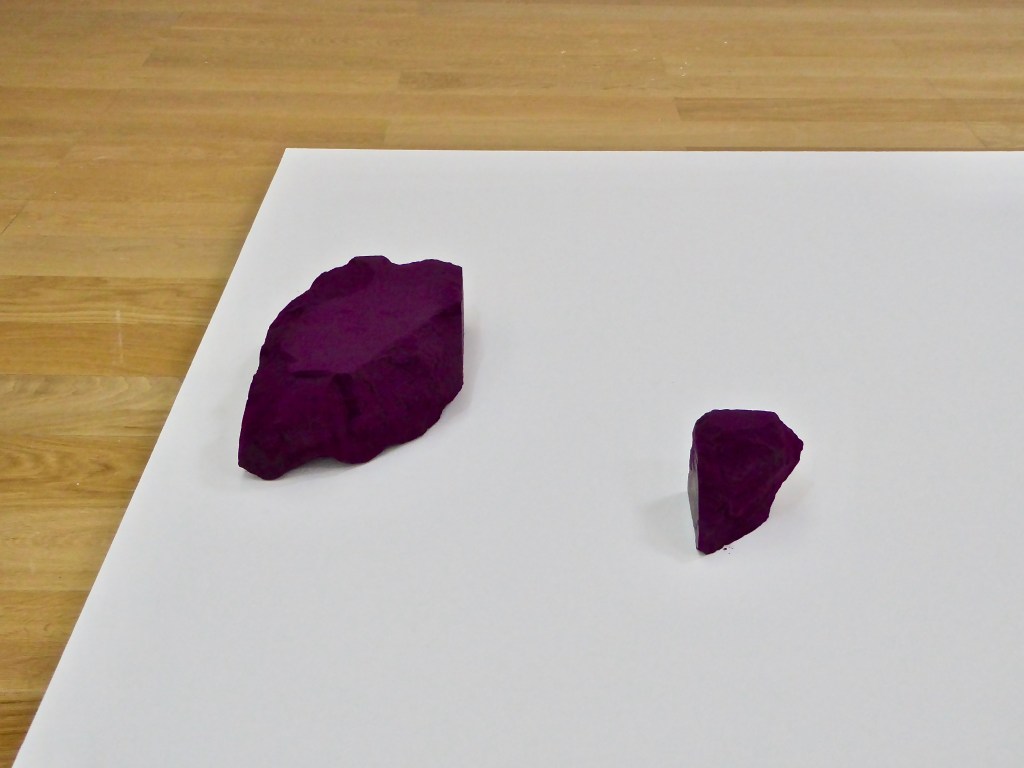
 

fullsizeoutput_824Andrea Zabric, Pigment sculpture (Berlin red)  2018, pigment, dimensions variable
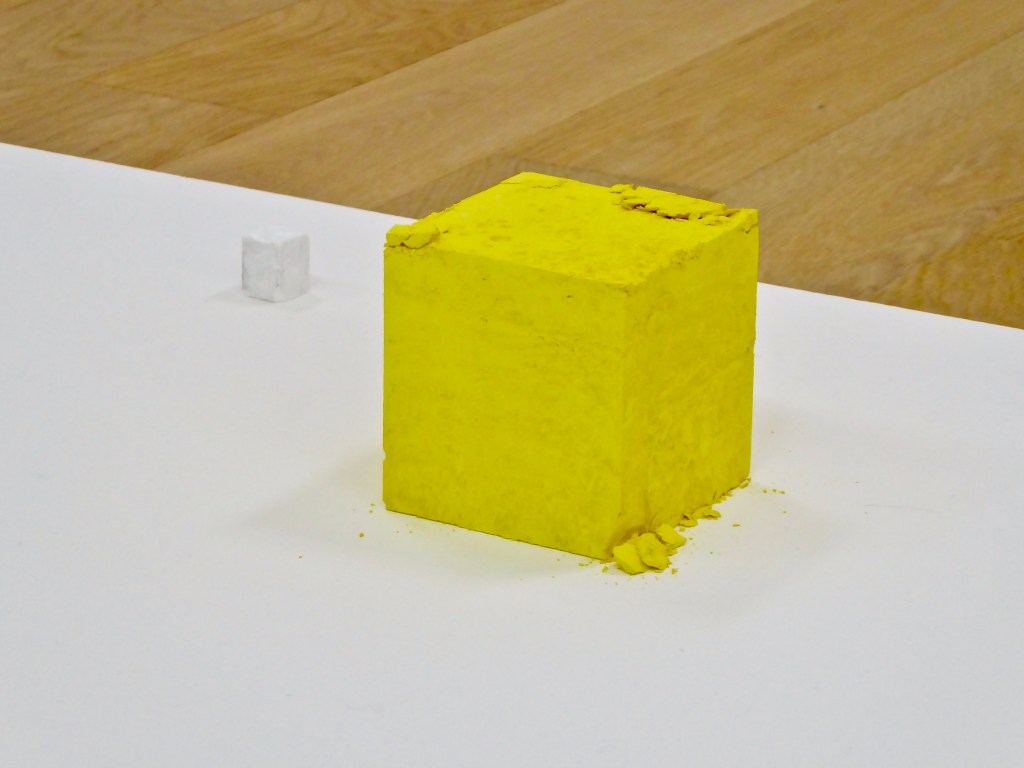
 

fullsizeoutput_825Andrea Zabric, Pigment sculptures (Naples yellow, 43870,)  2018, pigment, 12 x 10 x 10 cm


fullsizeoutput_827elements, 2018, installation view


fullsizeoutput_828Lukas Hoffmann, o. T., 2018, Series of 4, each in edition of 10, Stainless steel, dimensions variable


fullsizeoutput_830Lukas Hoffmann, o. T. and o. T, 2018, stainless steel, various textiles, pvc, plastic fittings, steel, aluminium bronze, German silver, 150 x 3 x 3 cm and 50 x 15 x 3 cm


fullsizeoutput_82aLukas Hoffman, o. T., 2018, various textiles, pvc, plastic fittings, steel, aluminium bronze, german silver, 150 x 3 x 3 cm
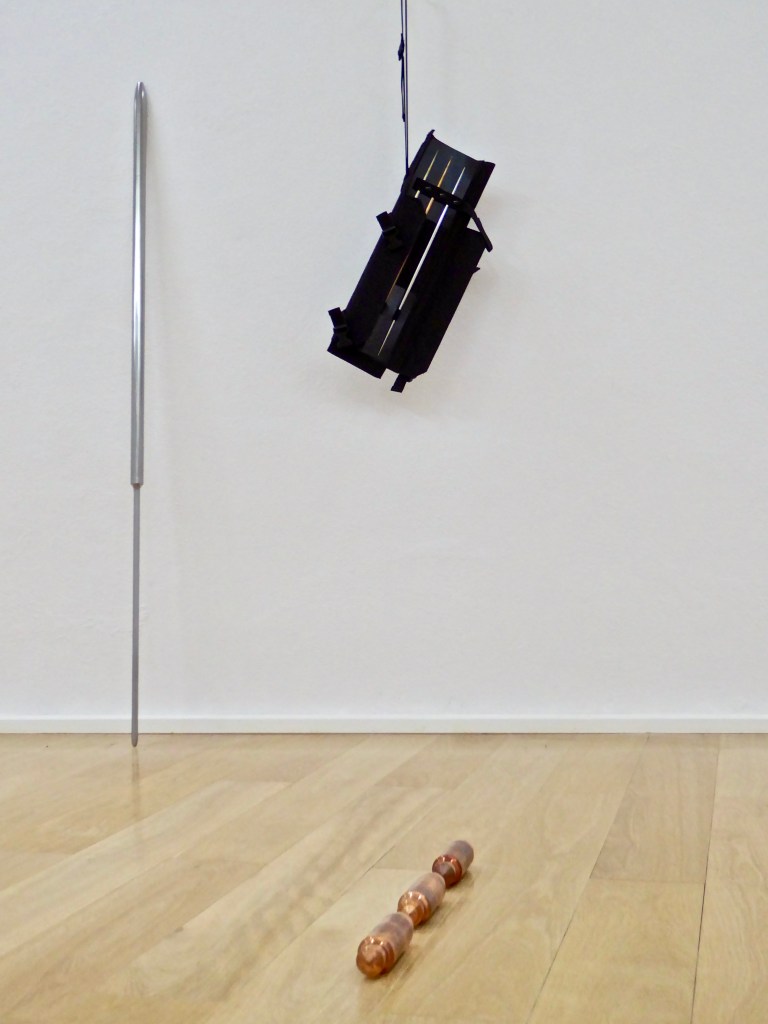
 

fullsizeoutput_832Lukas Hoffmann in elements, 2018, installation view
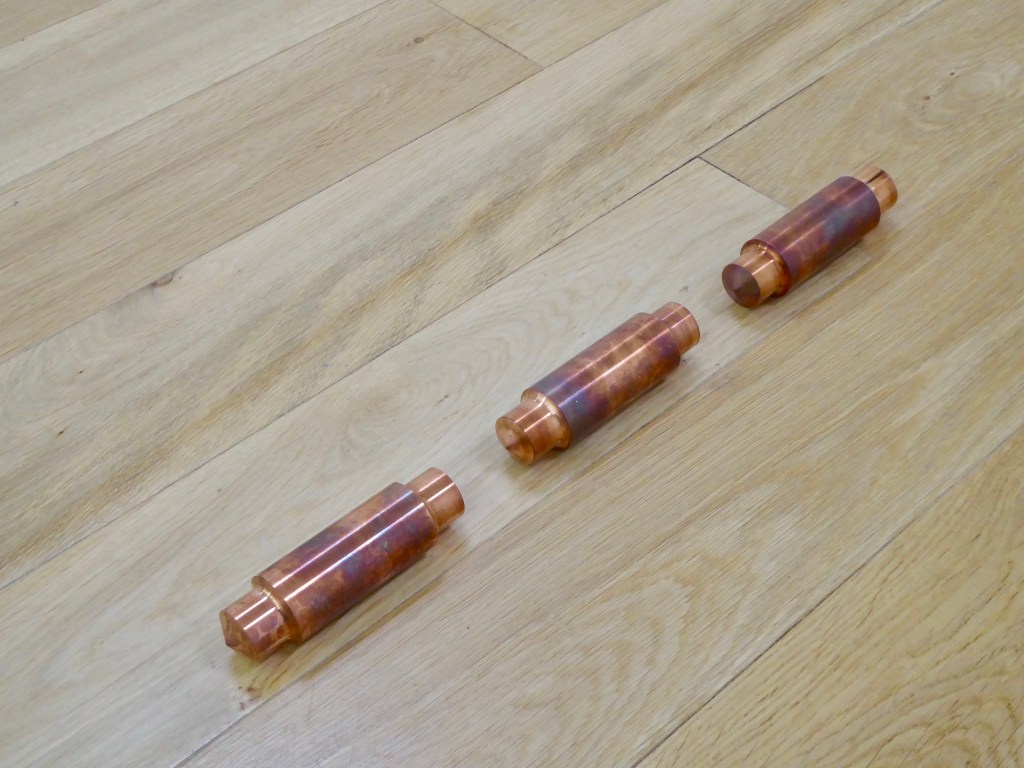
 

fullsizeoutput_82cLukas Hoffmann, o. T., 2018, bronze, 15 x 4 x 4 cm each
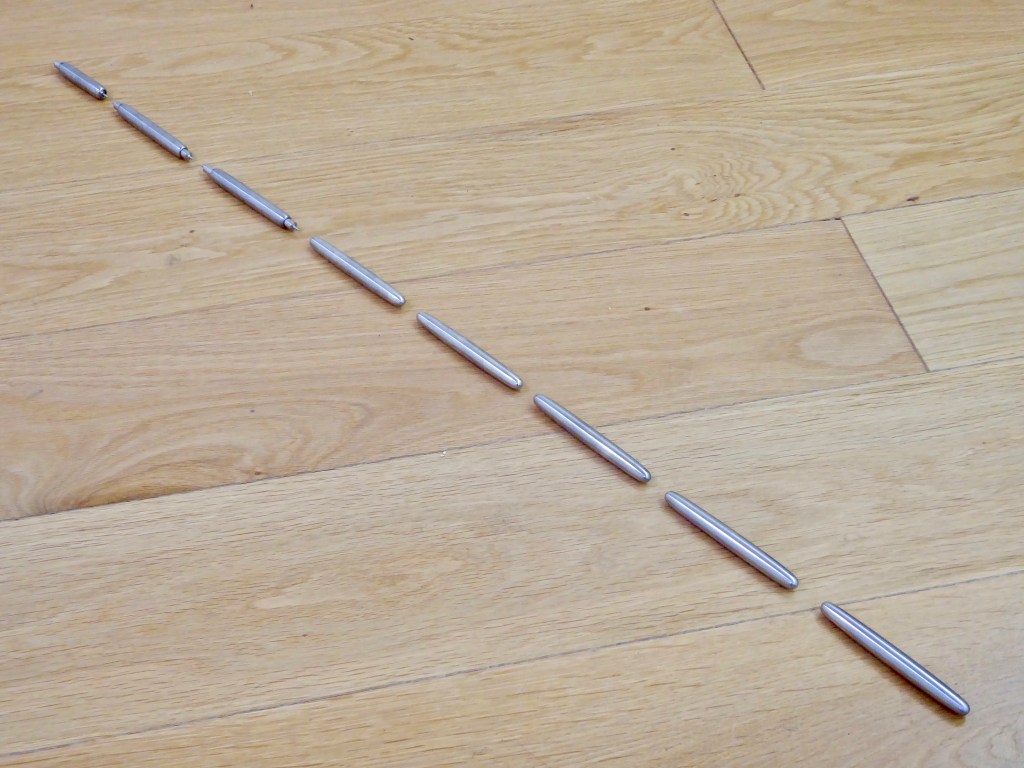
 

fullsizeoutput_82eLukas Hoffmann, o. T., 2018, series of 5, stainless steel, 9 x 1 cm each
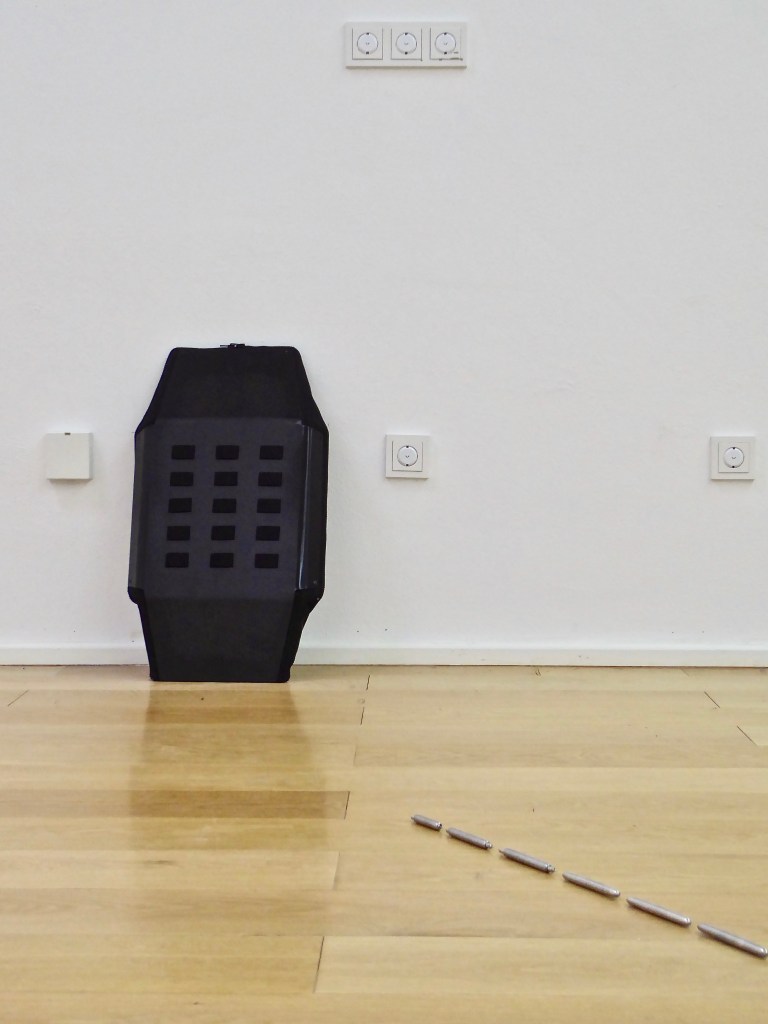
 

fullsizeoutput_82fLukas Hoffmann, o. T. and o. T., 2018, stainless steel and various textiles, pvc, 9 x 1 cm each and 65 x 35 x 8 cm
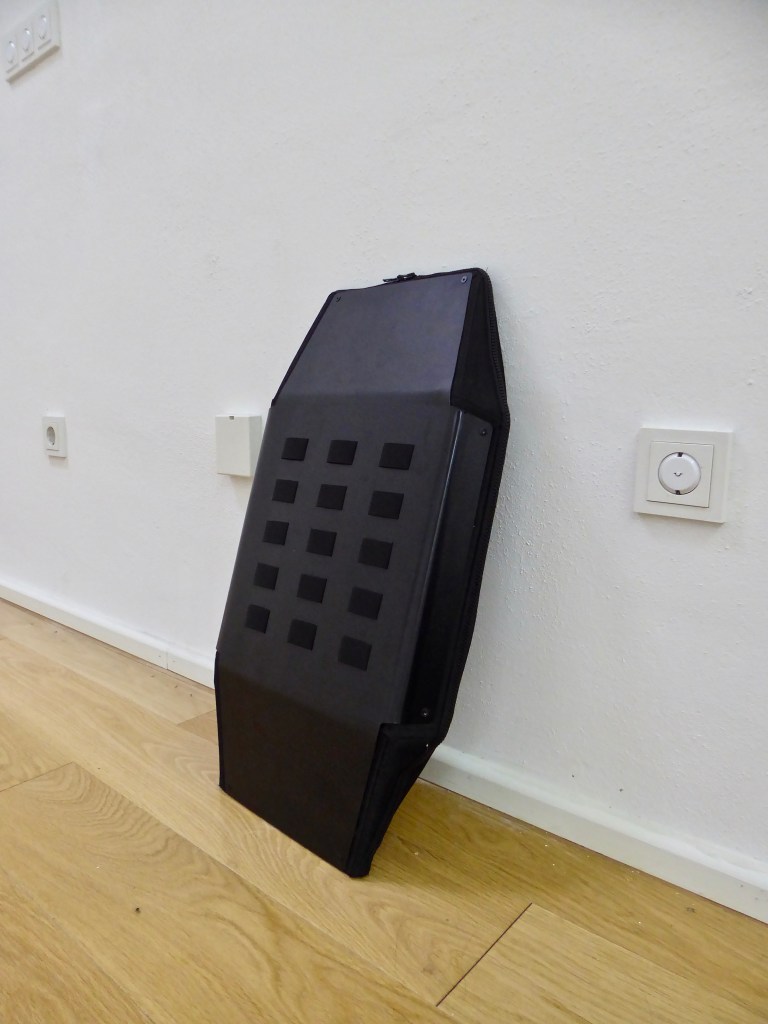
 

fullsizeoutput_833Lukas Hoffmann, o. T., 2018, various textiles, pvc, 65 x 35 x 8 cm

 

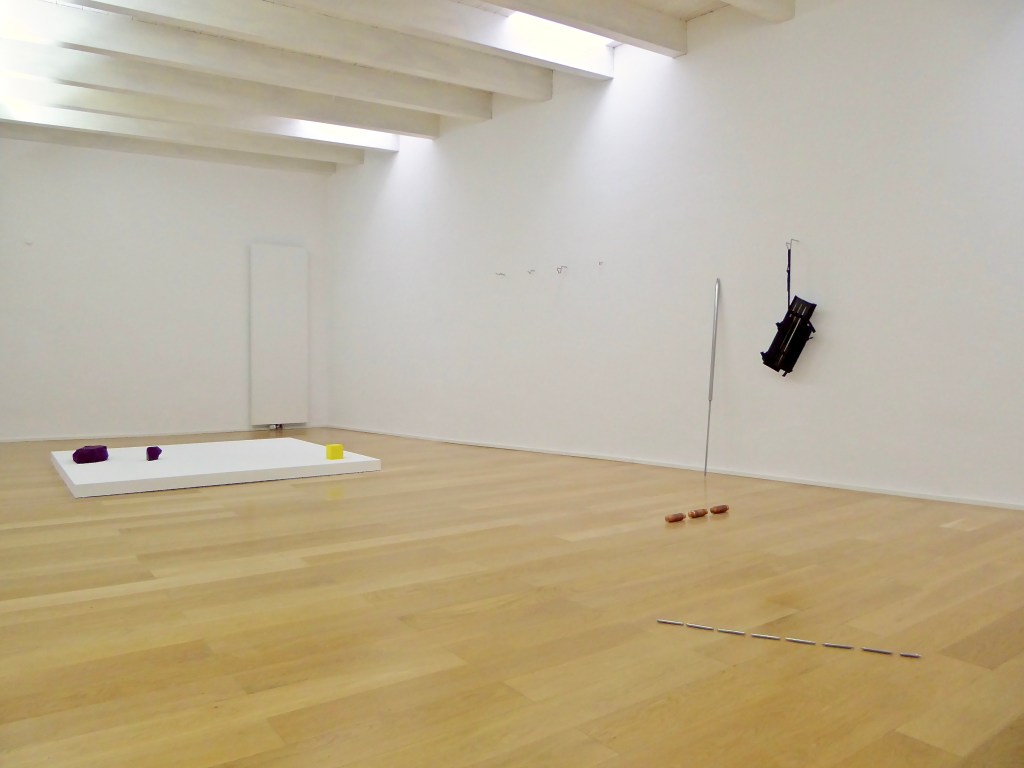
The show elements, featuring new work by Lukas Hoffmann and Andrea Zabric, is GiG Munich’s first collaboration with Klasse Pia Fries, Akademie der bildene Kunst, München. Klasse Pia Fries is well known for its focus on abstract painting, especially in its material aspect. Both Andrea Zabric, a recent graduate (2018), and Lukas Hoffmann, a student at the class, incorporate material elements in their practice, but in a strongly conceptual rather than a painterly fashion.

Carbon, aluminium, iron, copper – basic chemical elements are at play in the work, often in their purest form. These instead of being manipulated by the artist’s hand are left in their natural alien state. Matter is subject to its own internal logic not the artist’s touch, and the method of production incorporates industrial, mechanical, and printing processes. While this is obviously human in origin, technology as much a product of man as any painting, when combined with the emphasis on materiality, lends their investigations a scientific rather than artistic quality. As an attempt to think the world outside of the personal relationship we have with it, the work relates to speculative realist concerns currently present in art and philosophy. It shares with speculative realism a taste for the dogmatic, the formal and the mathematical.  

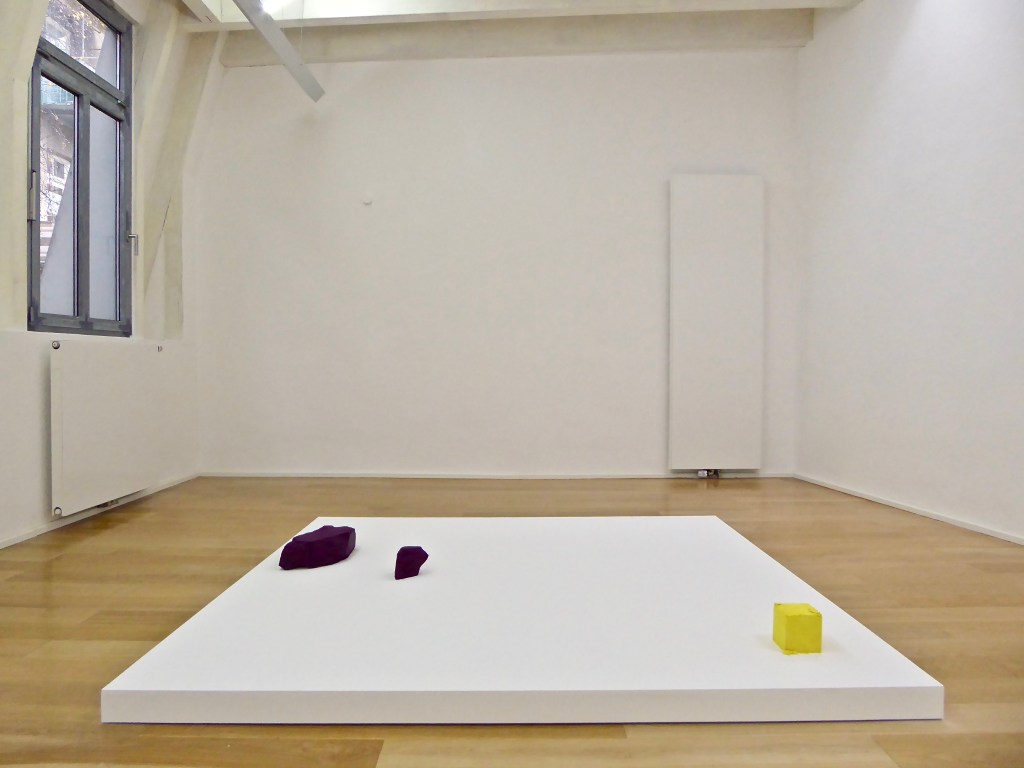
Zabric’s signature pigment sculptures, quite literally, take centre stage. Painting becomes reduced to its primary components: space, ground and pigment. The pigment is not mixed with medium and spread across the ground in its customary way, but is compressed at high pressure to form unusually perfect cuboid shapes. This gives her colours an uncanny density, a new found depth that recalls the violence of its making. For GiG Munich Zabric has produced three new pieces in pigments she had not used before. The work is also more experimental than previously, in that she allows the pieces to crumble, thus exposing their innate vulnerability. 

For all its implications of aggression, Hoffmann’s work is curiously invisible, scattered around the room, sometimes disguised as items of furniture.  Instead of paintings, we encounter clothes hooks, a javelin is placed against the wall ready for use. Bullets (or are they exercise bars? maybe dildos?) lie waiting on the floor. The casual method of display serves to highlight the works tactile qualities, drawing us in. In a moment of masochism, we want to touch the sharp points with our fingertip and wait for the skin to break. Yet simultaneously we feel that to do so would be an imposition, we would enter a space that its not for us, that belongs to someone else, or indeed to the work itself. Quietly, the work turns away from us and withdraws into its own realm. 

Magdalena Wisniowska 2018

elements

Lukas Hoffmann, Andrea Zabric

26.11.2018 – 18.01.2019


fullsizeoutput_76e


Vernissage: Freitag 16. November, 18 – 21 Uhr,
16 November 2018 – 18 Januar 2019
Bitte nach Vereinbarung unter contact@gig-munich.com
Finissage: Freitag 18. Januar 2019, 19 – 21 Uhr


The exhibition elements, showcasing new work by Lukas Hoffmann and Andrea Zabric is GiG Munich’s first collaboration with Klasse Pia Fries, Akademie der Bildenden Künste München.

What connects the two young, upcoming artists is a shared interest in materialism, where their version of materialism belongs more to the philosophical developments centred around Speculative Realism than to the handmade, expressive variety traditionally associated with the activity of painting. Operating at the intersection of materialism and realism, they submit to the view that the primacy afforded to matter necessarily demotes the importance of the human understanding of it. If matter is all there is, then its reality must be encountered for itself. In their quasi-scientific, quasi-magical approaches, they reject the emphasis on the multiplicity of interpretations that art borrowed from dominant modes of contemporary critical theory (post-structuralism, deconstruction, psychoanalysis) in order to pursue an almost essential, almost dogmatic, grounding of reality. With this comes a violence, whether this is manifested in the high pressure Zabric submits her pigments to, or the highly polished weapon-like quality of Hoffmann’s metal work. They show that the material world, the inhuman one, is intense, forceful, elemental.


Magdalena Wisniowska 2018