Roztopy

Dominika Olszowy, Klaudia Figura, Julia Woronowicz, Czaro Malinkiewicz, Paweł Marcinek, Przemysław Piniak, Zuza Piekoszewska, Maryna Sakowska, Karolina Szwed

curated by Przemek Sowiński (Łęctwo, Poznań) and hosted by The Tiger Room

9.05 – 14.06.2025

together with The Tiger Room at Heßstr. 48 b, 80798 Munich

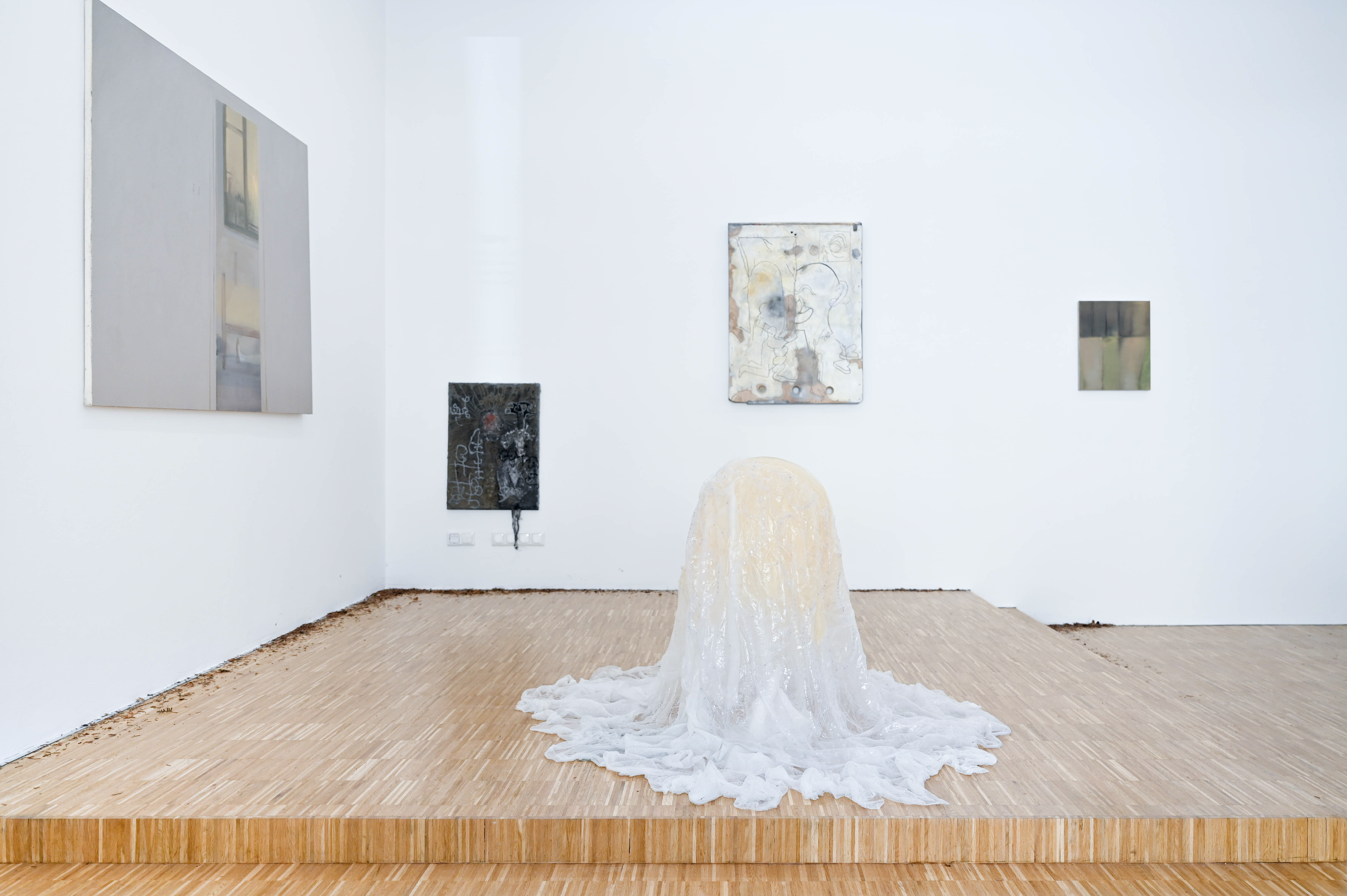
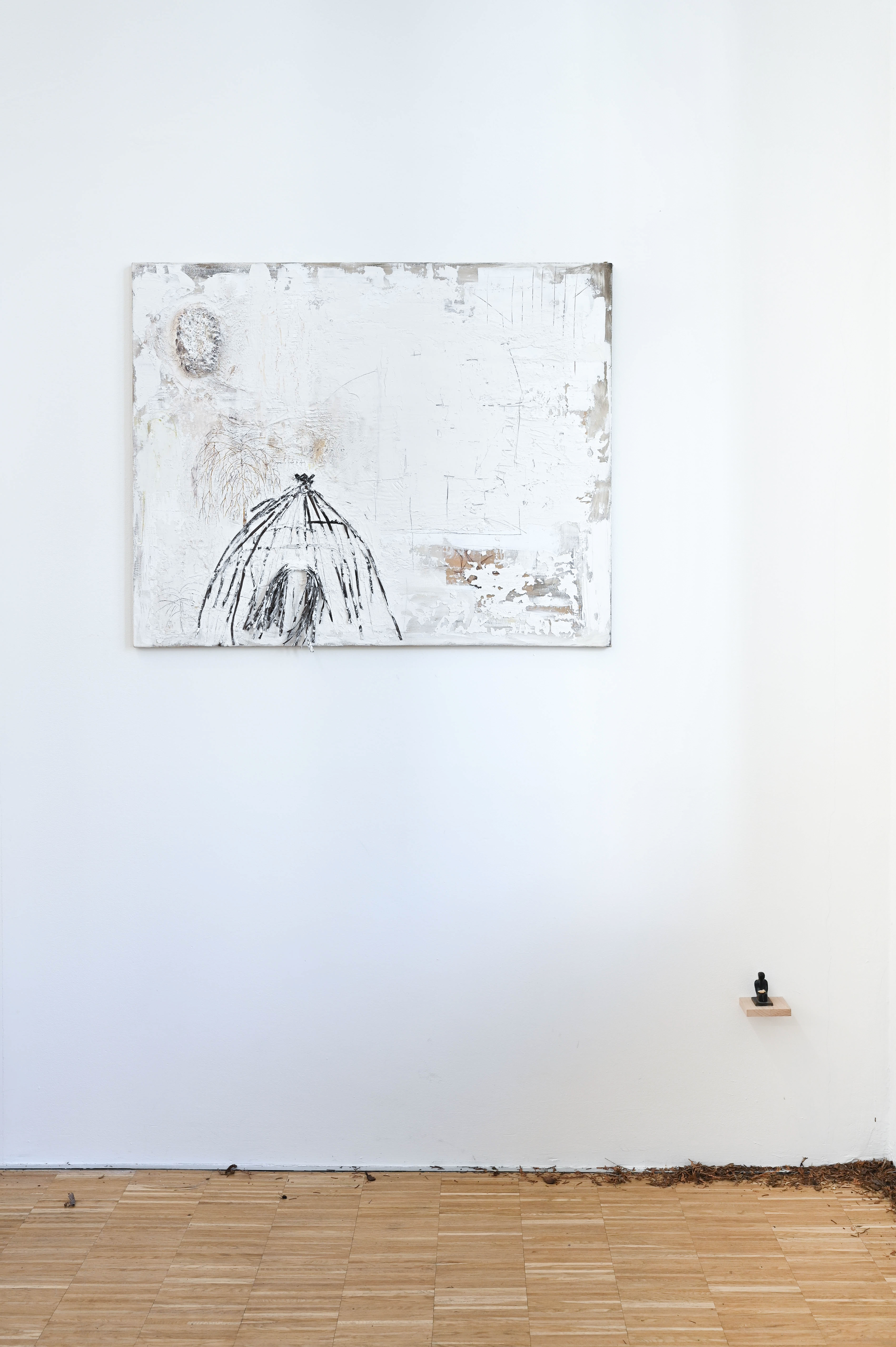
Roztopy, 2025, installation view. Photo: Przemek Sowinski
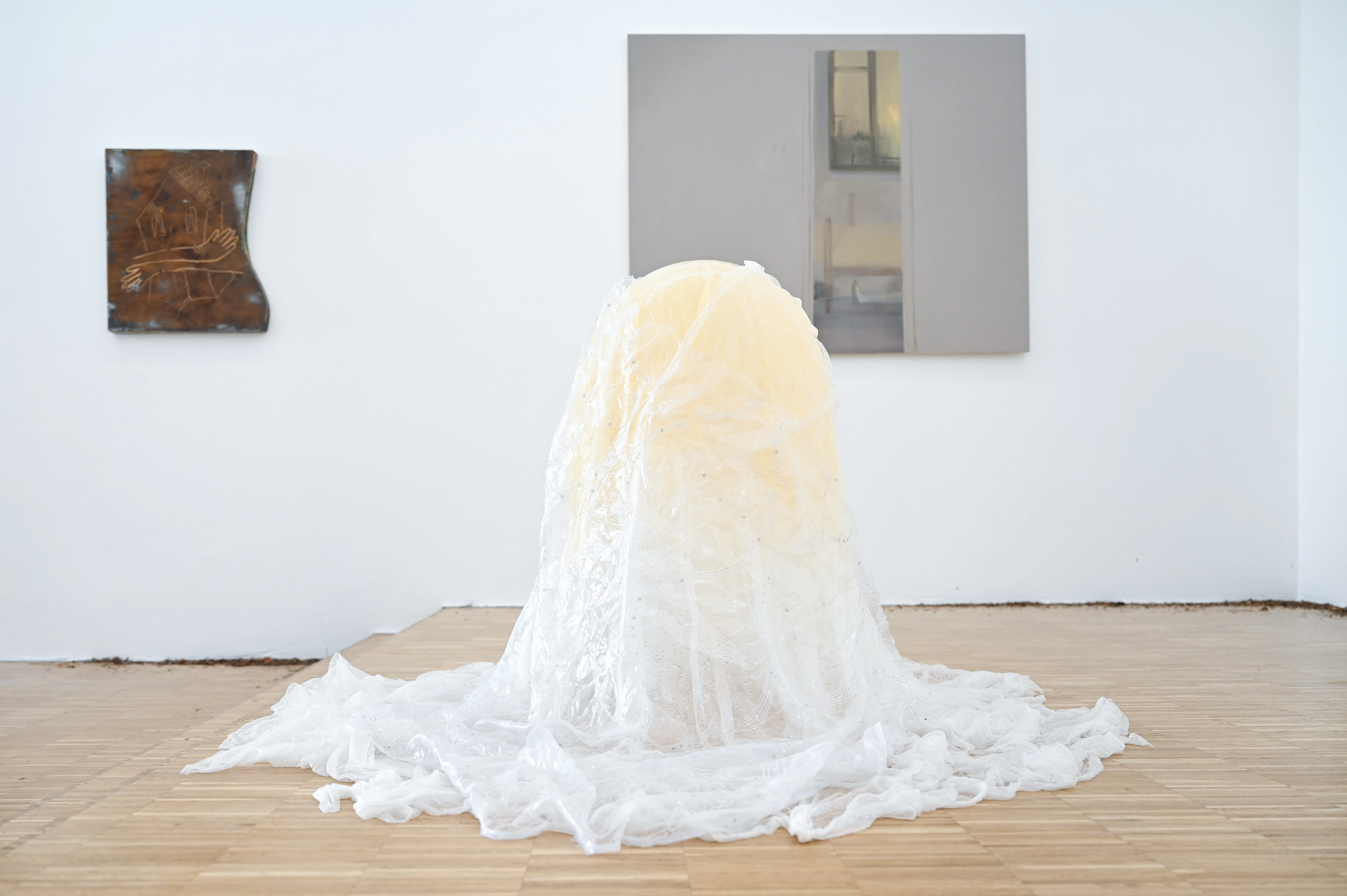
Dominika Olszowy, Suń in the Sheer Curtains, 2024, sheer curtains, epoxy resin. Photo: Przemek Sowinski
Paweł Marcinek, Sick House, 2024, 67 x 58 cm, furniture, acrylic, spray paint. Courtesy of the artist and Lectwo Gallery.
Paweł Marcinek, Complex Problem (Zlozony Problem) . 100 x 74 cm. Furniture, acrylic. Photo: Przemek Sowiński.
Czaro Malinkiewicz, Behind the Barrack, 2024, 70 x 50 cm silicon, bandage, acrylic, prints, ink, dust. Photo: Przemek Sowinski
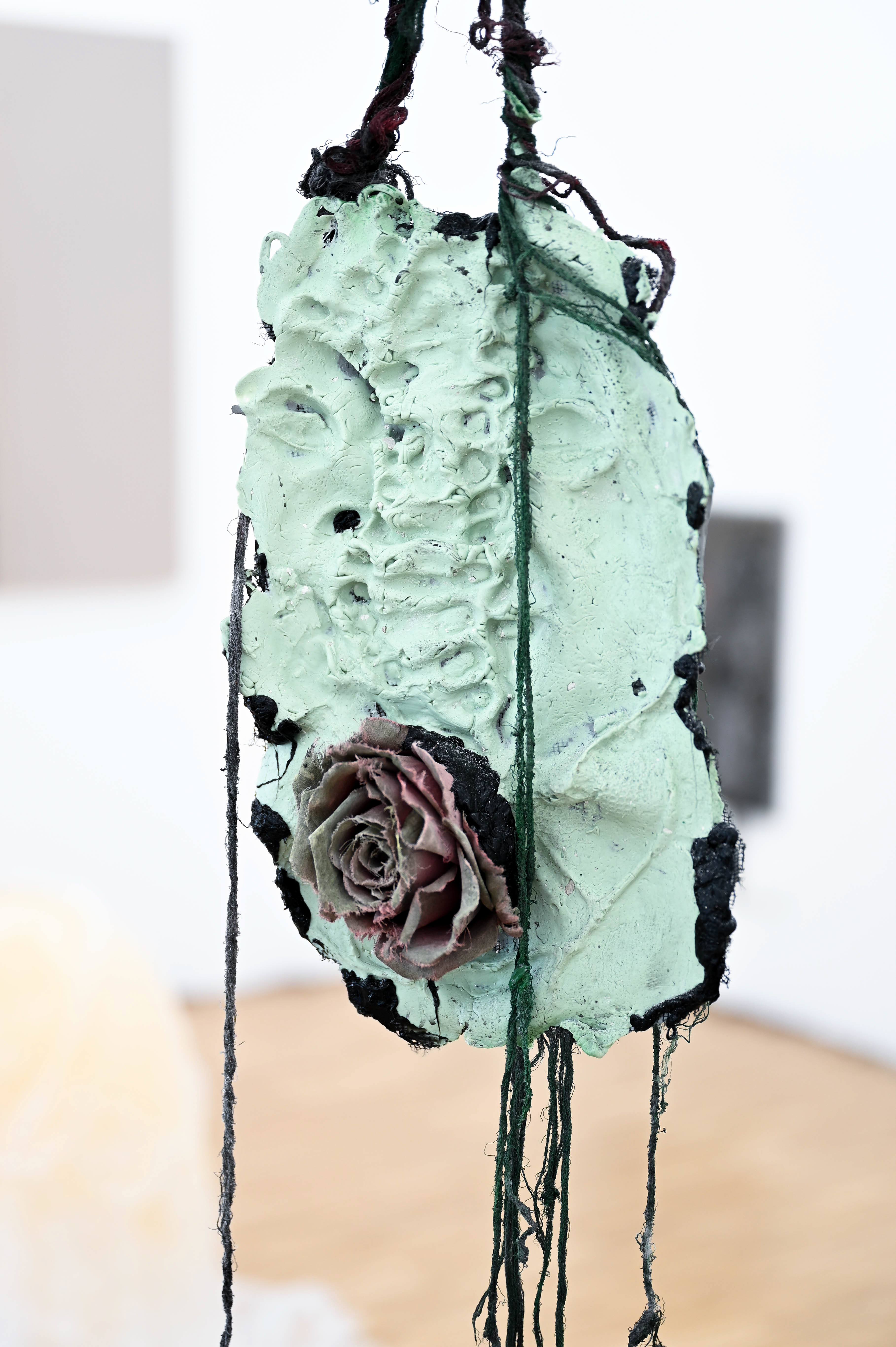
Czaro Malinkiewicz, The Sadness that Comes at the End of the Day, 2024, 38 x 20 cm, silicone, bandage, acrylic. Photo: Przemek Sowinski
Karolina Szwed, I Skipped the Test and Passed, 150 x 120 cm, oil on canvas. Photo: Przemek Sowinski
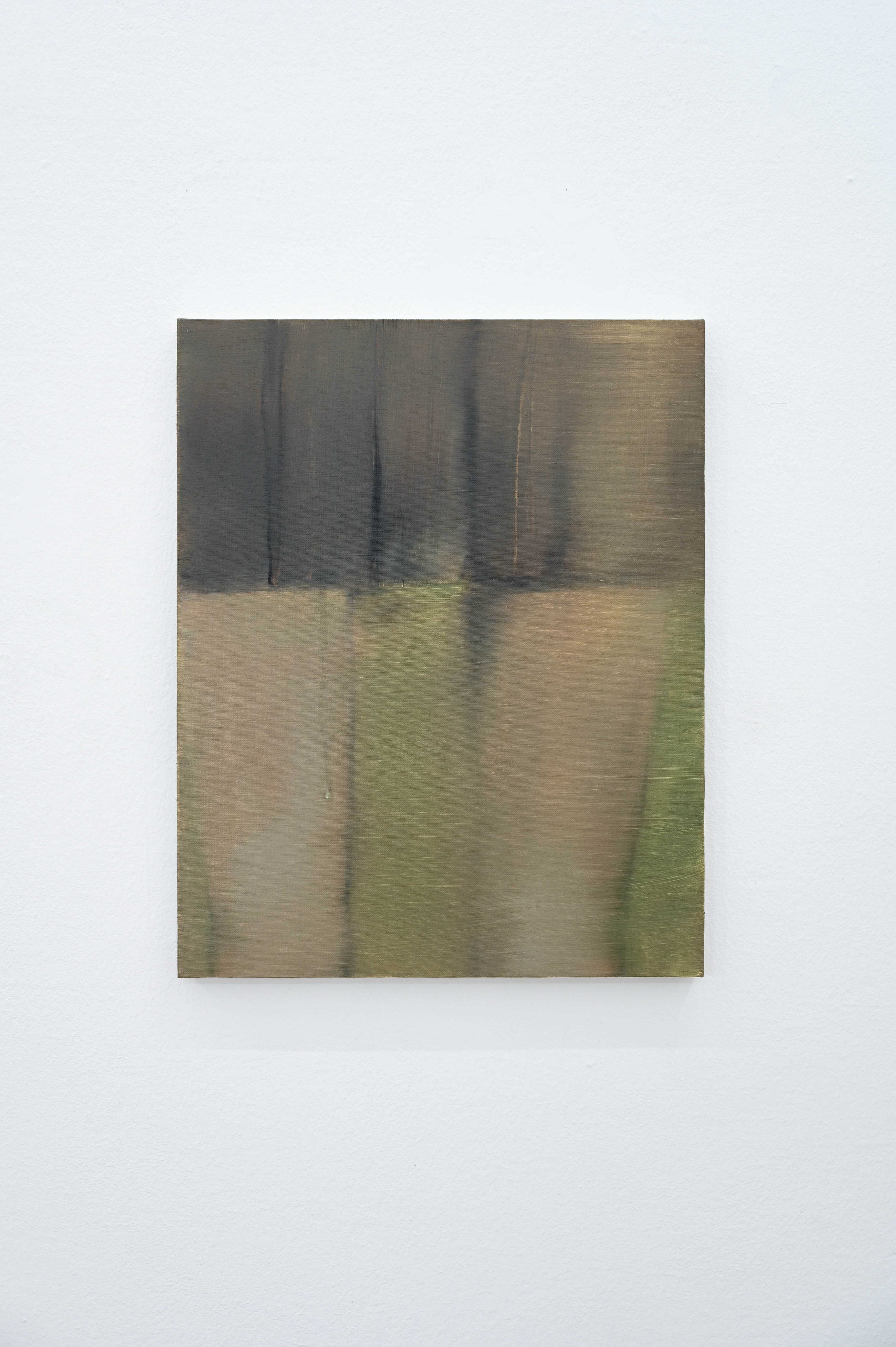
Karolina Szwed, Spring, 40 x 50 cm, oil on canvas. Photo: Przemek Sowinski
Przemysław Piniak, Wróblok, Video, 1’36. Photo: Przemek Sowiński
Dominika Olszowy, Suń Clown, 2023, concrete, nappies, epoxy resin. Photo: Przemek Sowiński
Julia Woronowicz, Rise and Fall of the Pandcity Universe, 2024, oil on canvas. Photo: Przemek Sowinski
Klaudia Figura, Negative Sentiment, 164 x 90 cm, oil on canvas, crayon, pastel. Photo: Przemek Sowinski
Zuza Piekoszweska, Base for Little Ones, 100 x 80 cm, wool, plaster on canvas, acrylic, crayons, corn, raffia.
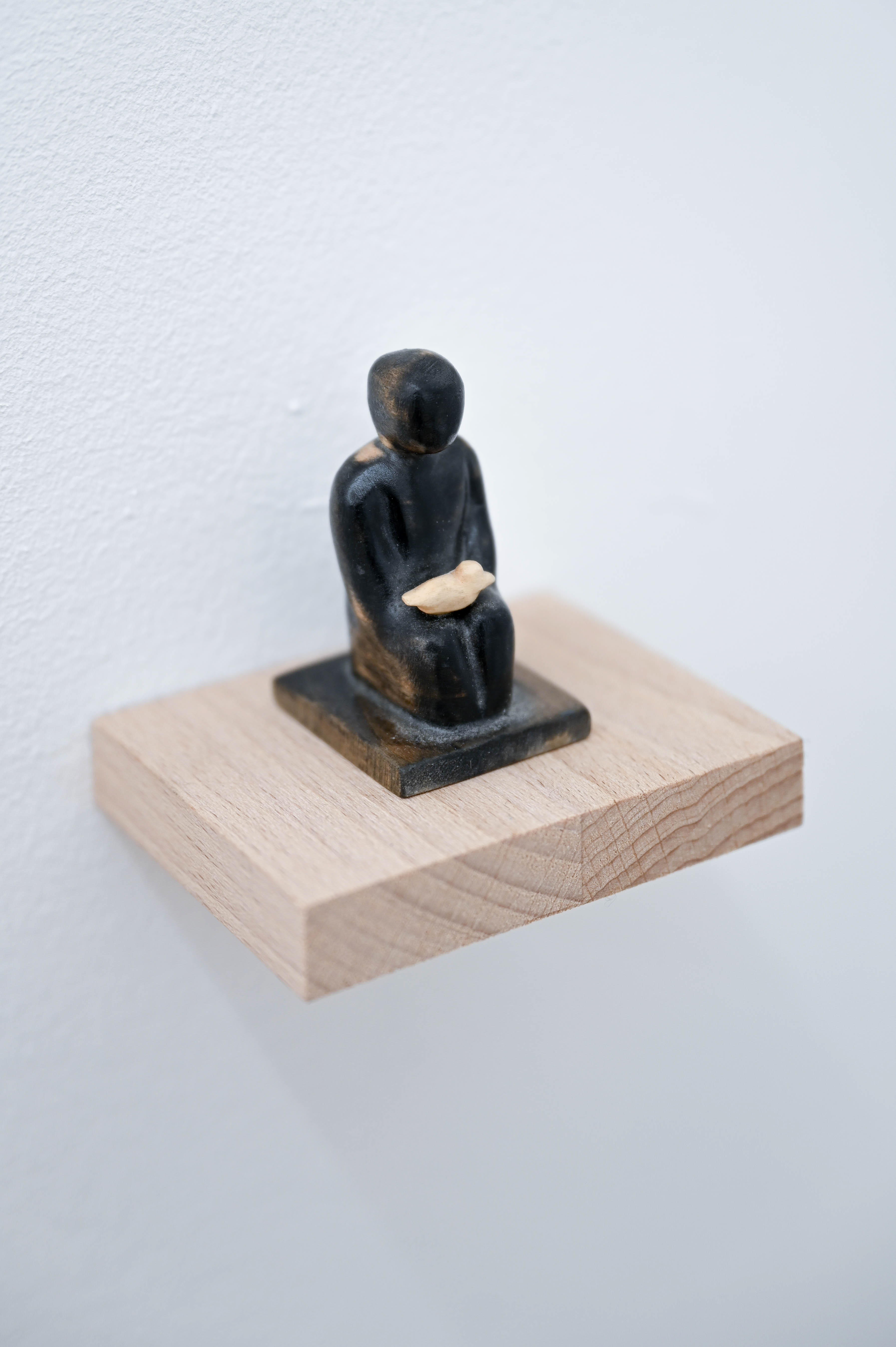
Pawel Marcinek. Inner Observer with Duck, 4 x 5 x 7 cm, wood, varnish. Photo: Przemek Sowinski
Roztopy, 2025, installation view. Photo: Przemek Sowinski.
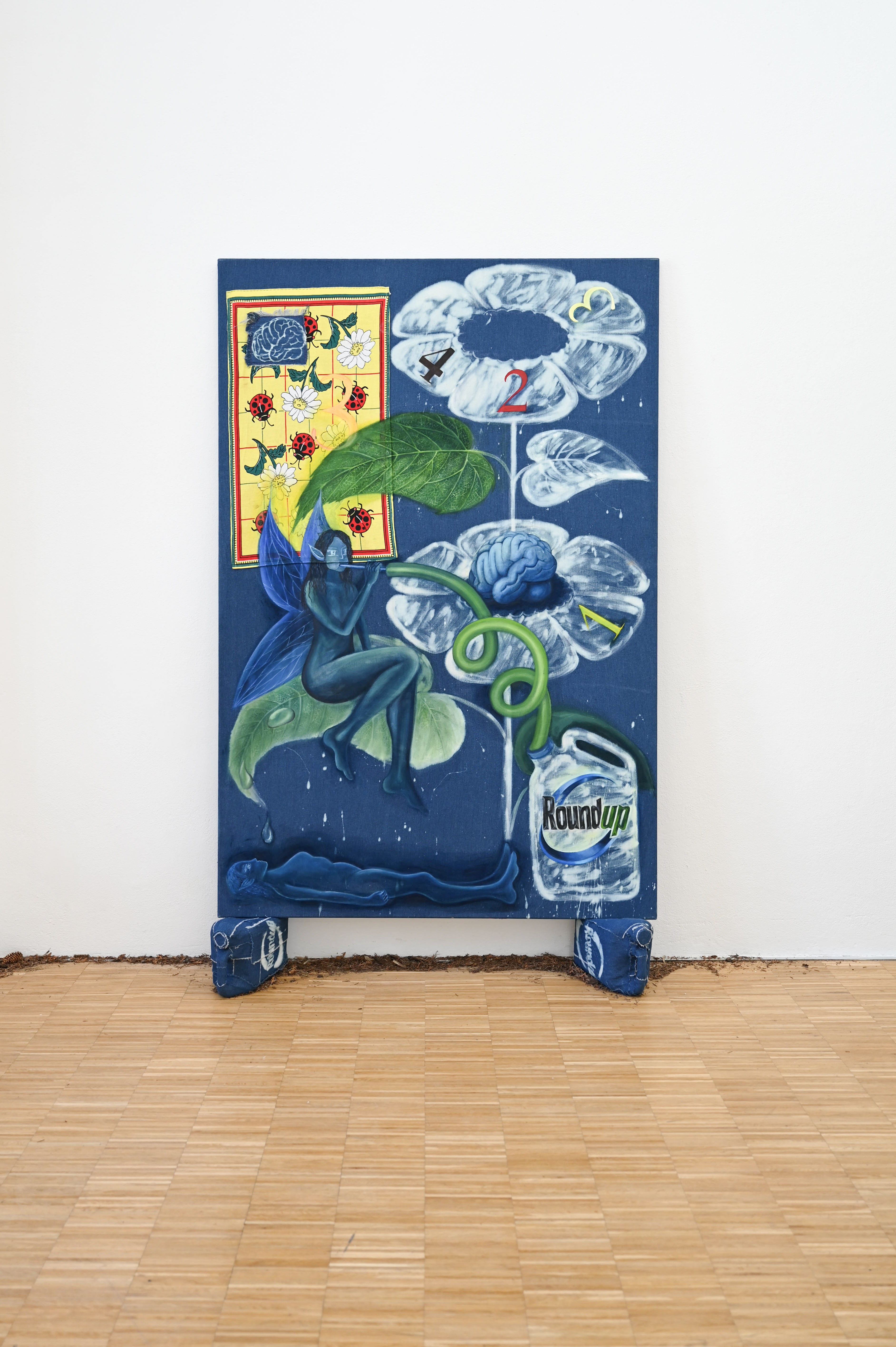
Maryna Sakoszewska, Roulette. 180 x 120 cm, bleach, oil and domestic in jeans and kitchen cloth. Photo: Przemek Sowinski
Dominika Olszowy, House of Little Coffee. 140 x 70 x 2 cm, stained glass, gravel, epoxy resin. Photo: Przemek Sowinski
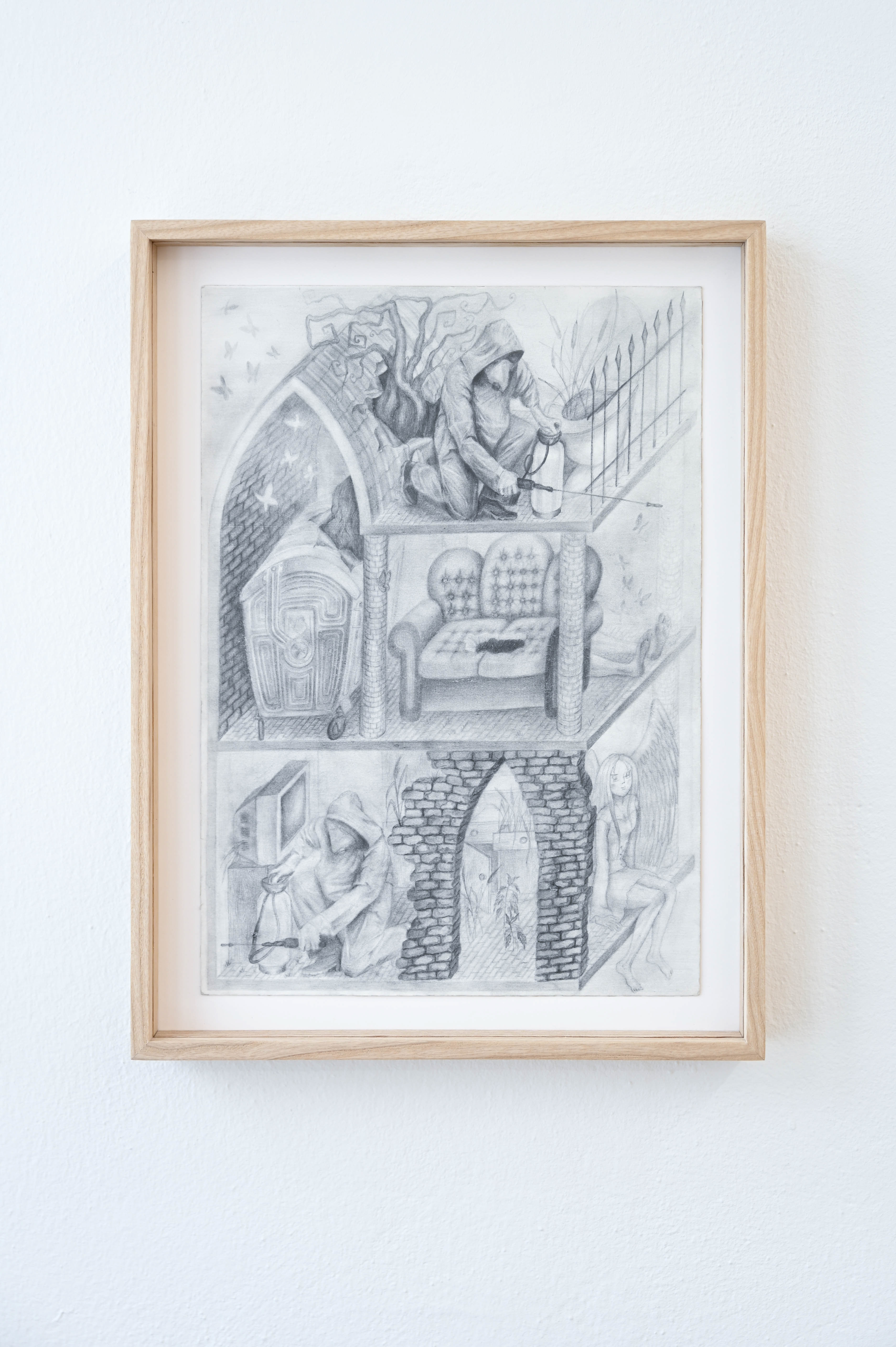
Maryna Sakoszewska, Post Mortem, 21 x 29 cm, pencil on paper. Photo: Przemek Sowinski
Pawel Marcinek, Unititled, 21 x 29 cm, pencil on paper. Photo: Przemek Sowinski

Jestem już na to za stara – I am too old for this.  I still remember when everything changed. It was the little things that I noticed at first. At the beginning there was only one or two vegetable stands close to the tram stop across the street. They were soon joined by others selling second hand clothes from the west. Advent calendars followed with real chocolate inside (!) – then a baker – then a stand with underwear and nylon stockings and slippers with elastic bands. Dynasty was on TVP after the news each Sunday at a quarter past eight and a chewing gum cost 1.000 zloty. The next week it was 1.500 zloty. 100.000 zloty was a Christmas gift from my grandmother and I was told to spend this quickly. When I visit Poland, which is not at all often, these are the memories I carry with me and their images of the past always shape how I see the place where my parents live now.

Most of the artists in the exhibition “Roztopy” curated by Przemek Sowinski and hosted by the Tiger Room were born much later, in the late 90s, and they are not burdened with these particular recollections. When Przemek writes of the “thaw” this is what he means. I admit that initially I misunderstood. I assumed the period of transition that the exhibition refers to was the historical transition from one political system to the next. I guess I really am too old for this – I am too late. In 1990, as a ten year old child I only witnessed the beginnings of a transition. But it is this transition time, which is now perhaps coming to an end, melting away as it were, like old winter’s snow. And in the green-tinted light we can see the dirt that has been left behind. Spring is here at last – a sun is rising in Dominika Olszowy’s work! It is also there in the small drawing by Paweł Marcinek, outside his block of flats, on an advertising banner. Yet in the painting by Karolina Szwed, spring is a girl’s short skirt, a drop of liquid like a tear, tricking down her bare thigh. In the work by Klaudia Figura another girl stomps on her schoolwork with clumpy shoes. So vomit spews from the second sun by Olszowy setting in the corner of the gallery space – and from the wooden sick house by Paweł Marcinek hanging in the other corner. Two arms embrace it from behind, whether to comfort it in its distress or to stop it from choking, we cannot tell. In a small drawing by Maryna Sakowska, a gothic, multi-story dwelling is being disinfected by men in biohazard suits, after a grandmother was found lying dead behind the stained sofa. Whereas, the dwelling in Zuza Piekoszewska’s piece is one made for insects to crawl in. 

There are other memories present here as well, but these refer to a past I do not share because it was an impossible future for me, the turn of the century when everything was supposed to get better, cooler somehow. Czaro Malinkiewicz’s heavily textured reliefs of silicon and paste and dirt, refer to splatter film gore and manga comics and more references to manga are also present in Sakowska’s work. Whereas we in the early 90s would try to find old copies of Lucky Luke. Przemysław Piniak celebrates this time to come in his video, dancing wildly in front of his grey block of flats while dressed in his most shiny and colourful sports clothes. Julia Woronowicz, who often reinterprets local histories and myths, has also seen the future in her painting, and it looks like Piaseczno! Presiding over this detritus of change is s small kneeling figure, shiny and black holding a duck in its arms. Like Benjamin’s angel, it looks towards us as it is blown to the future.  

Magdalena Wiśniowska 2025

We breathe the remains of everything that was

Zuza Piekoszewska, Natalia Karczewska, Magda Starska, Grzegorz Bożek, Paweł Marcinek und Przemysław Piniak

(curated by Łęctwo)

31.07 – 19.08.2022

Lothringer 13 Studio, Lothringer Straße 13, 81667 Munich

Opening: Sunday 31st July, 3 – 8 pm

Guest Speaker: Dr. Sebastian Truskolaski, 6 pm

Zuza Piekoszewska, Future Traveller, 2020, metal, bioplastic and acrylic

‘We breathe the remains of everything that was’ is the first of the exhibition series ‘Re-collection’ organised by GiG Munich at Lothringer 13 Studio from July to December 2022. 

GiG Munich is currently operating nomadically as GiG air, presenting work at different locations both physical and virtual. For 2022, Lothringer 13 Halle  invited GiG Munich to produce the ‘Re-collection’ exhibition series at the Lothringer 13 Studio, a continuation of the previous series ‘Thinking Nature’ that took place at GiG Munich in 2021, For this first exhibition at a new location, GiG Munich collaborates with the hybrid space Łęctwo run by Przemek Sowiński, to present the work of Zuza Piekoszewska, Natalia Karczewska, Magda Starska, Grzegorz Bożek, Paweł Marcinek and Przemysław Piniak.

If GiG Munich’s focus has always been the more abstract and theoretical, Łęctwo’s interests tend to lie in the immediate and physical, as well as the intimate. Łęctwo’s programme of contemporary art always has had this utopian element, art as a deeply personal drive to transform the surrounding reality, enacting real change in our cognitive lives. In their exhibition together, GiG Munich and Łęctwo look together at the idea of cultural memory, in relation to nature, biology and human.


“Wir atmen die Überreste von allem, was war” ist der erste Teil der Ausstellungsreihe “Re-collection”, die von GiG Munich im Lothringer 13 Studio von Juli bis Dezember 2022 organisiert wird. 

 GiG Munich ist derzeit als GiG air nomadisch aktiv und präsentiert Arbeiten an verschiedenen Orten, sowohl physisch als auch virtuell. Für 2022 hat die Lothringer 13 Halle GiG Munich  eingeladen, die Ausstellungsreihe “Re-collection” im Lothringer 13 Studio zu produzieren in Fortsetzung der Reihe “Thinking Nature”, die 2021 bei GiG Munich stattfand. Für diese erste Ausstellung an einem neuen Ort kooperiert GiG Munich mit Łęctwo von Przemek Sowiński und zeigt Arbeiten von Zuza Piekoszewska, Natalia Karczewska, Magda Starska, Grzegorz Bożek, Paweł Marcinek und Przemysław Piniak.

Während sich GiG Munich seit jeher auf das Abstrakte und Theoretische konzentriert, liegt das Interesse von Łęctwo eher im Unmittelbaren und Körperlichen sowie im Intimen. Das Programm von Łęctwo für zeitgenössische Kunst hatte schon immer diesen utopischen Aspekt, da es die Kunst als einen zutiefst persönlichen Antrieb zur Veränderung der uns umgebenden Realität ansieht, der einen echten Wandel in unserem kognitiven Leben bewirkt. In ihrer gemeinsamen Ausstellung befassen sich GiG Munich und Łęctwo mit der Idee des kulturellen Gedächtnisses in Bezug auf die Natur, die Biologie und die menschliche Existenz.


Na każdych kroku trafiamy na rozciągnięte w czasie pozostałości naszej własnej egzystencji. Szczątki i pyły poprzedniego istnienia przenikają nasze płuca, przywołując pamięć tego co robili nasi przodkowie. Pozostawione przez nas rzeczy stają się surowcami nowych procesów, a śmierć  jest tylko epizodem nigdy niekończocęgo się cyklu. W tym wszystkim najbardziej realna wydaje się teraźniejszość, ale czmyże jest skoro ciągle się od nas odsuwa. Każdy nasz oddech wypełnia atmosferę, stając się przeszłością w chwili zaczerpnięcia nowego. Każdy nasz wydech zawiera ułamek przewidywanej przyszłości. Te dwa czasy pozostają w ścisłej relacji. Być może odzyskujemy to, co już dawno zniknęło nam z zasięgu wzroku. Ciągłość rzeczy, w której każda materia, przeszłość i przyszłość przenikają do nas horyzontalnie, nie tylko na poziomie odczuwania metafizycznego, ale realnej zmiany genów, dając nadzieję na zupełnie inną, hybrydyczną formę istnienia.

Przemek Sowiński

At every step, we encounter the remnants our own existence spread out in time. The debris and dust of our previous lives penetrate our lungs, evoking the memory of what our ancestors did. The things left behind by us become the raw materials of new processes, and death is only an episode of a never ending cycle. In all of this, the present seems to be the most real, but what is this present, when it always moves away from us? Each of our breaths fills the atmosphere, becoming the past with every new gulp of air we inhale. Each exhaled breath contains a fraction of the foreseeable future.  These two times remains in close relation.  Perhaps we are recovering what has long since disappeared from our sight. The continuity of things, in which all matter, past and future permeate us horizontally, not only at the level of metaphysical feeling, but of real genetic transformation, giving hope for a completely different, hybrid form of being.

trans. Magdalena Wisniowska

Auf Schritt und Tritt stoßen wir auf die zeitlich gestreckten Überreste unserer eigenen Existenz. Der Schutt und Staub unseres früheren Lebens dringt in unsere Lungen ein und ruft die Erinnerung an das hervor, was unsere Vorfahren getan haben. Die Dinge, die wir zurückgelassen haben, werden zu Rohstoffen für neue Prozesse, und der Tod ist nur eine Episode in einem nie endenden Kreislauf. In all dem scheint die Gegenwart am realsten zu sein, aber wie kann die das sein, wenn sie sich ständig von uns entfernt. Jeder Atemzug, den wir nehmen, füllt die Atmosphäre und wird in dem Moment, in dem wir einen neuen Atemzug nehmen, zur Vergangenheit. Jedes Ausatmen enthält einen Bruchteil der vorhersehbaren Zukunft. Diese beiden Zeiten stehen in engem Zusammenhang. Vielleicht holen wir zurück, was schon lange aus unserem Blickfeld verschwunden ist. Die Kontinuität der Dinge, in der alle Materie, Vergangenheit und Zukunft uns horizontal durchdringen, nicht nur auf der Ebene des metaphysischen Gefühls, sondern der realen genetischen Transformation, die Hoffnung auf eine völlig andere, hybride Form des Daseins gibt.