Roztopy

Dominika Olszowy, Klaudia Figura, Julia Woronowicz, Czaro Malinkiewicz, Paweł Marcinek, Przemysław Piniak, Zuza Piekoszewska, Maryna Sakowska, Karolina Szwed

curated by Przemek Sowiński (Łęctwo, Poznań) and hosted by The Tiger Room

9.05 – 14.06.2025

together with The Tiger Room at Heßstr. 48 b, 80798 Munich

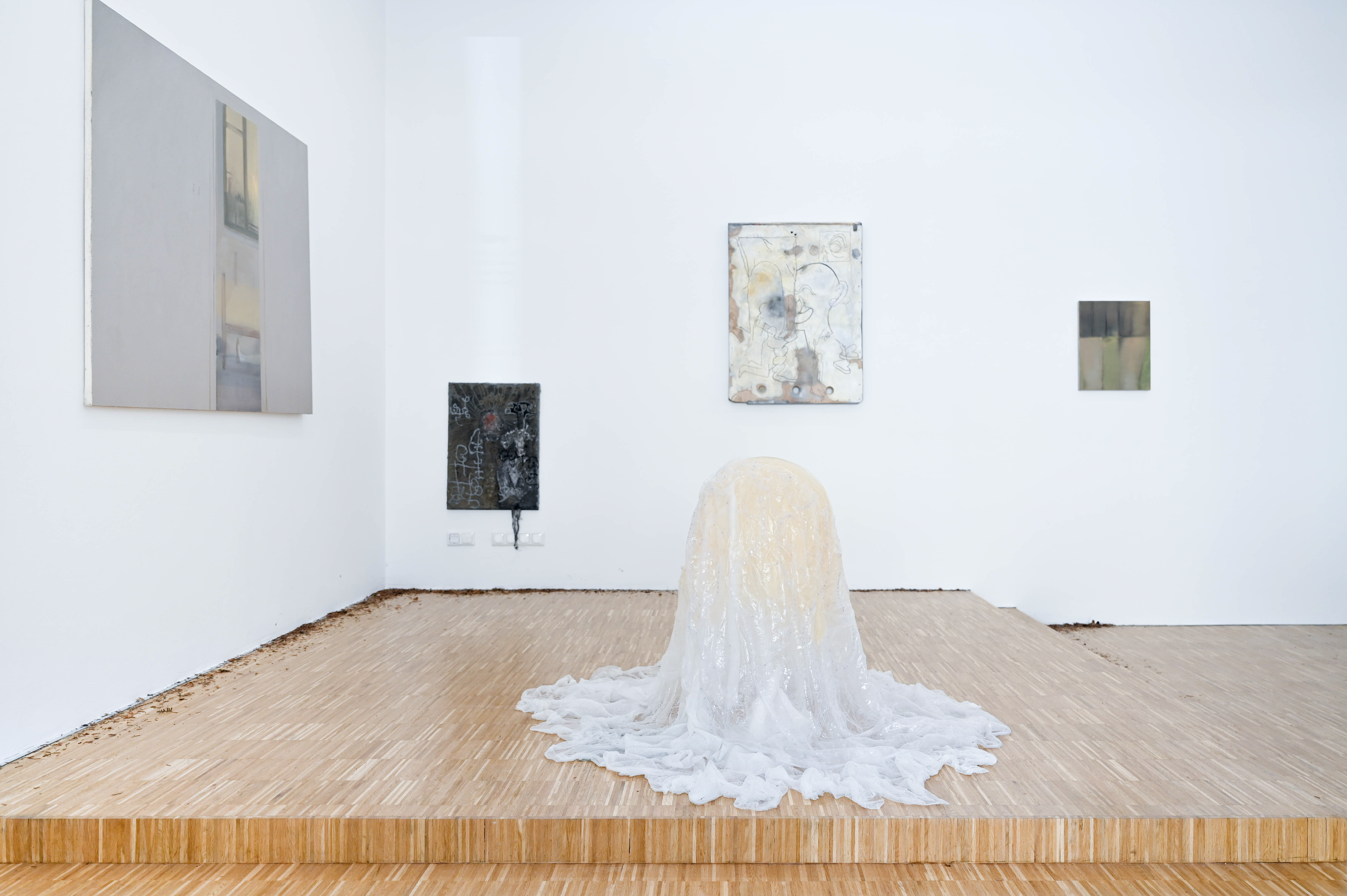
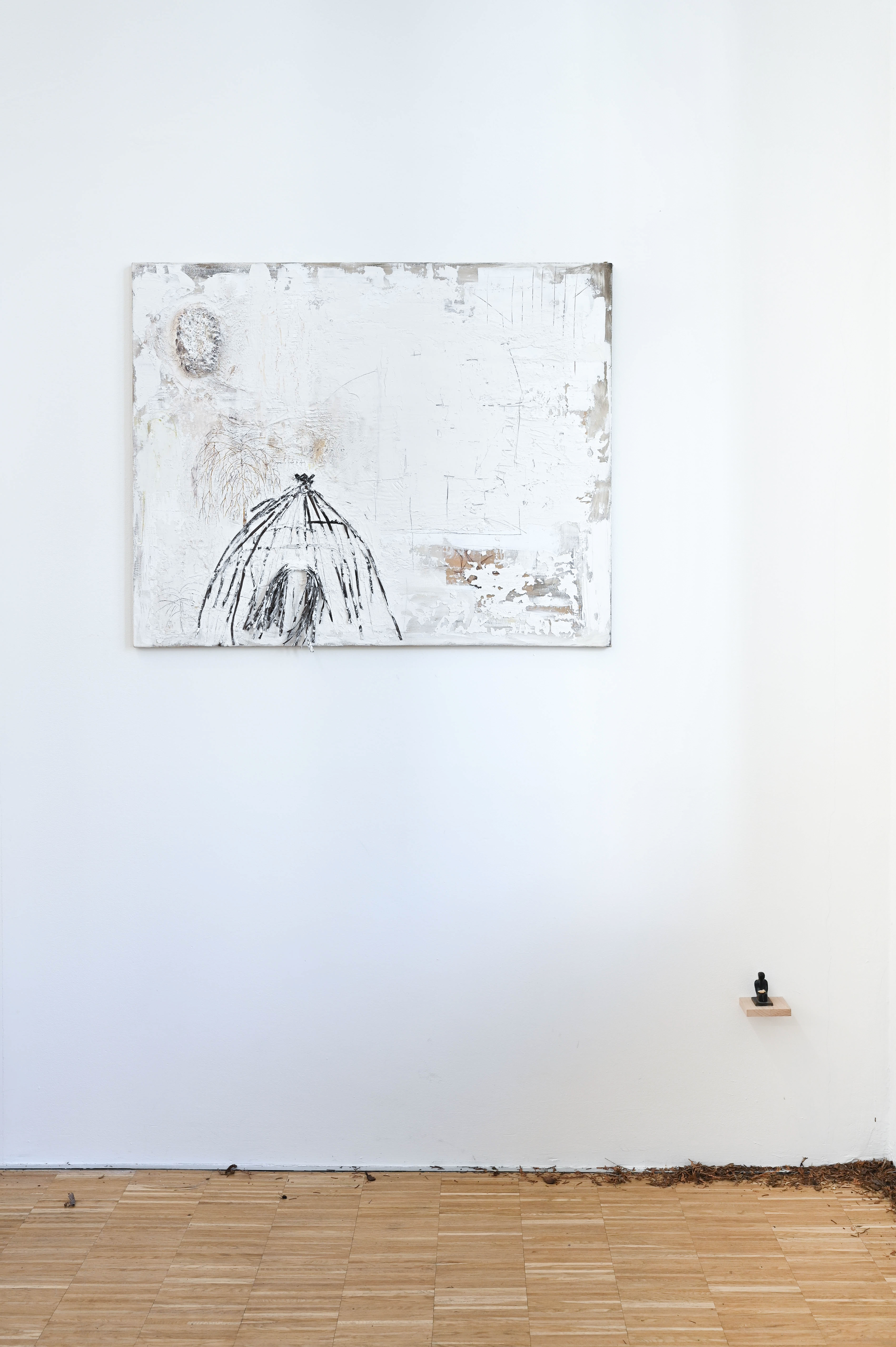
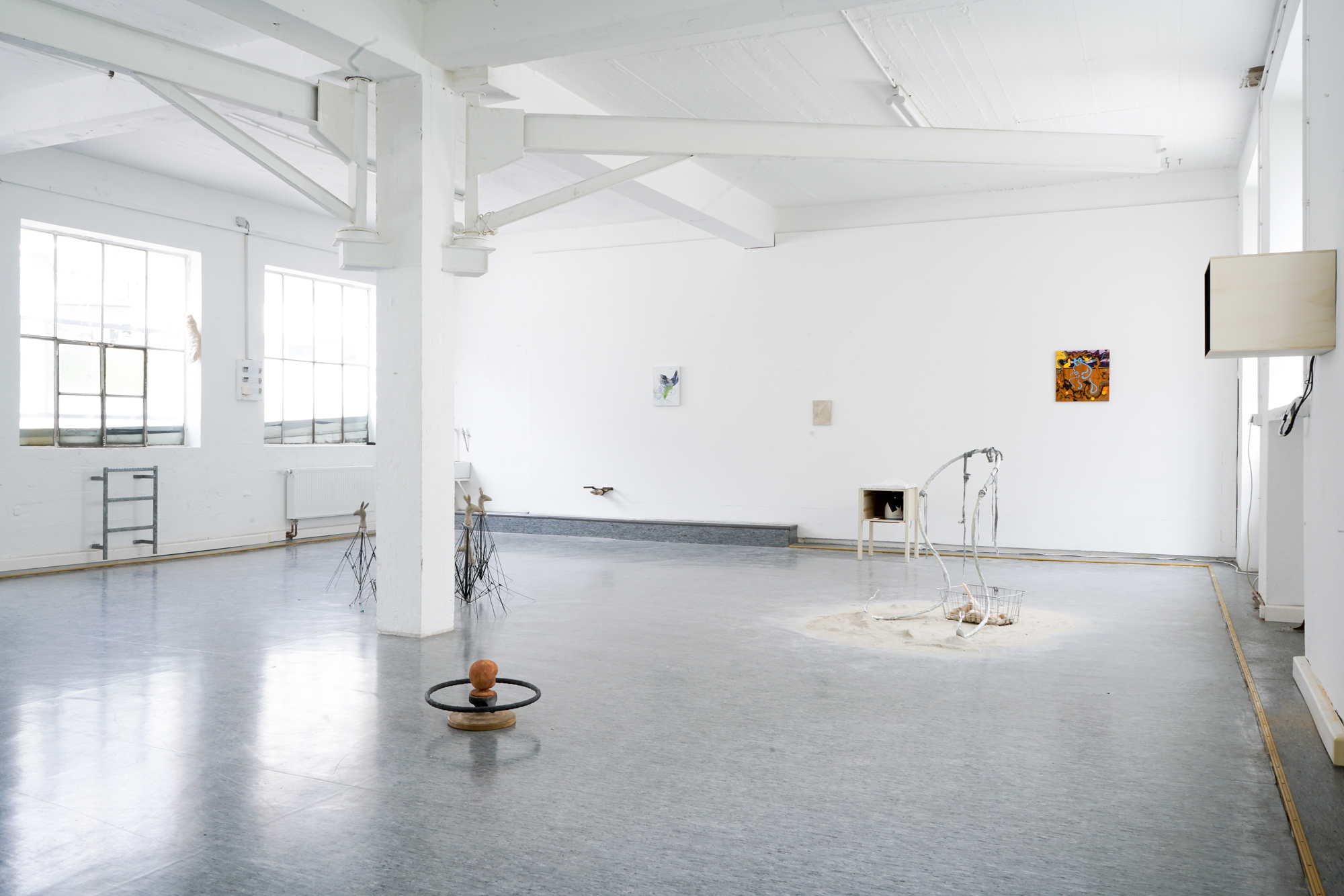
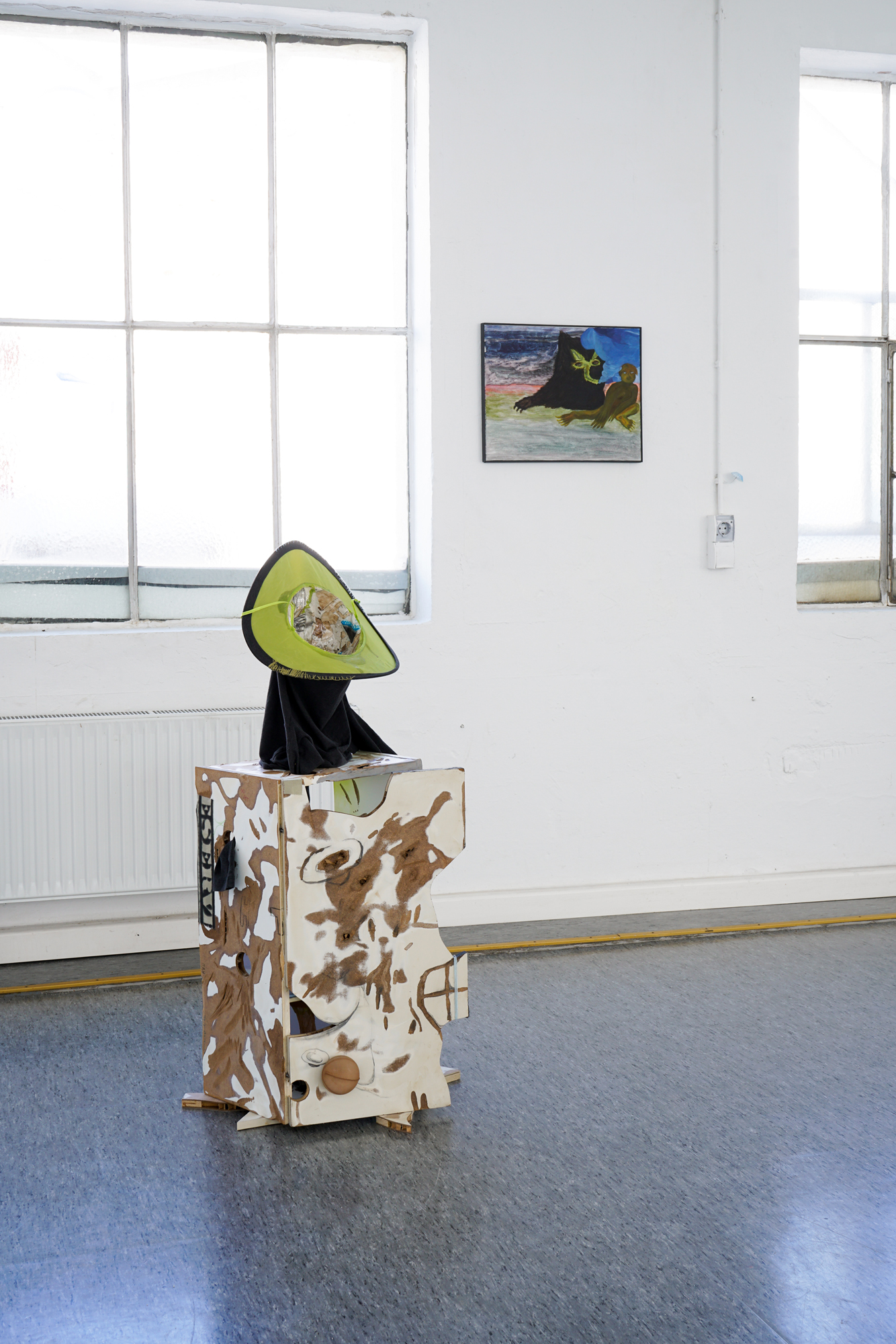
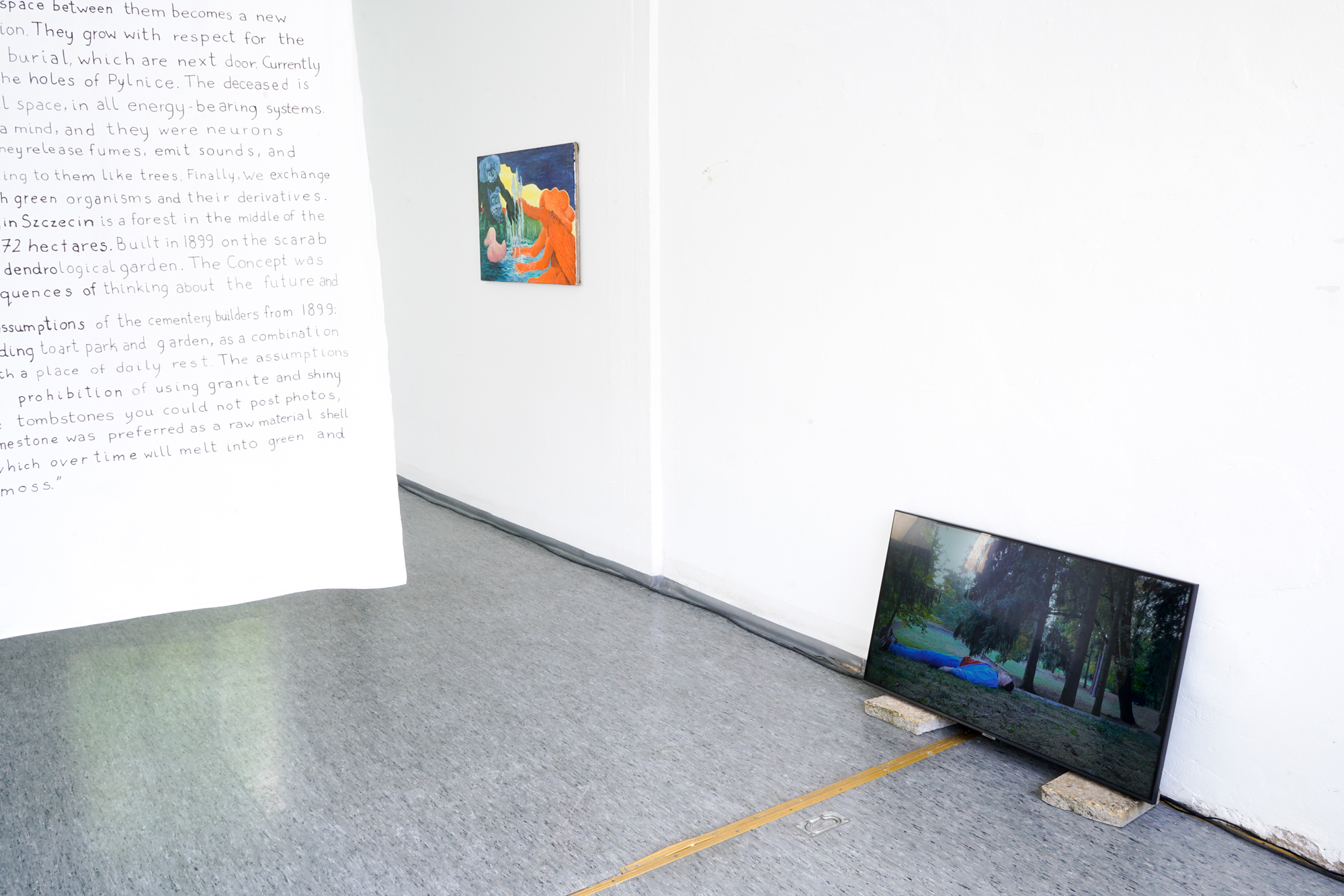
Roztopy, 2025, installation view. Photo: Przemek Sowinski
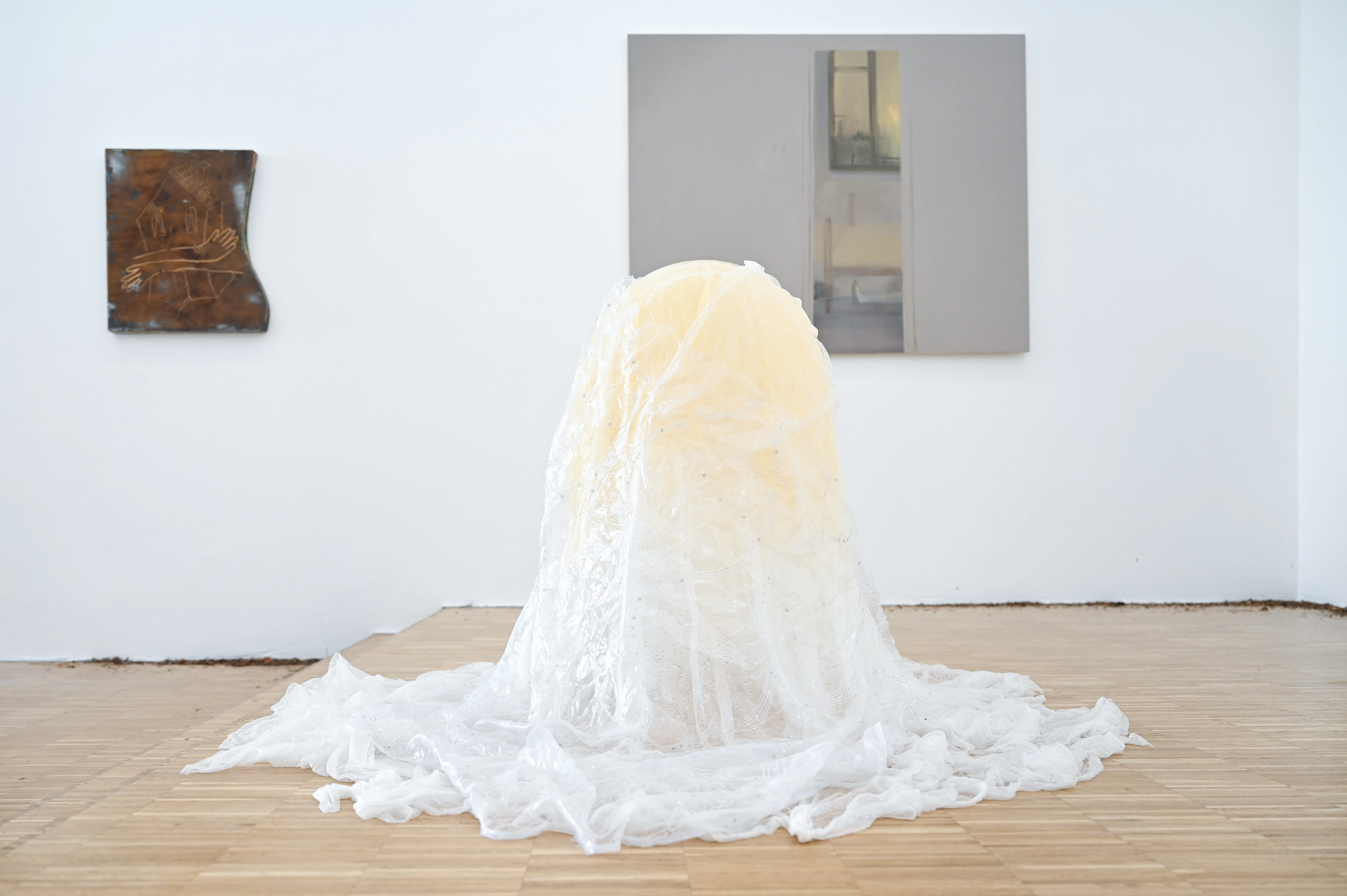
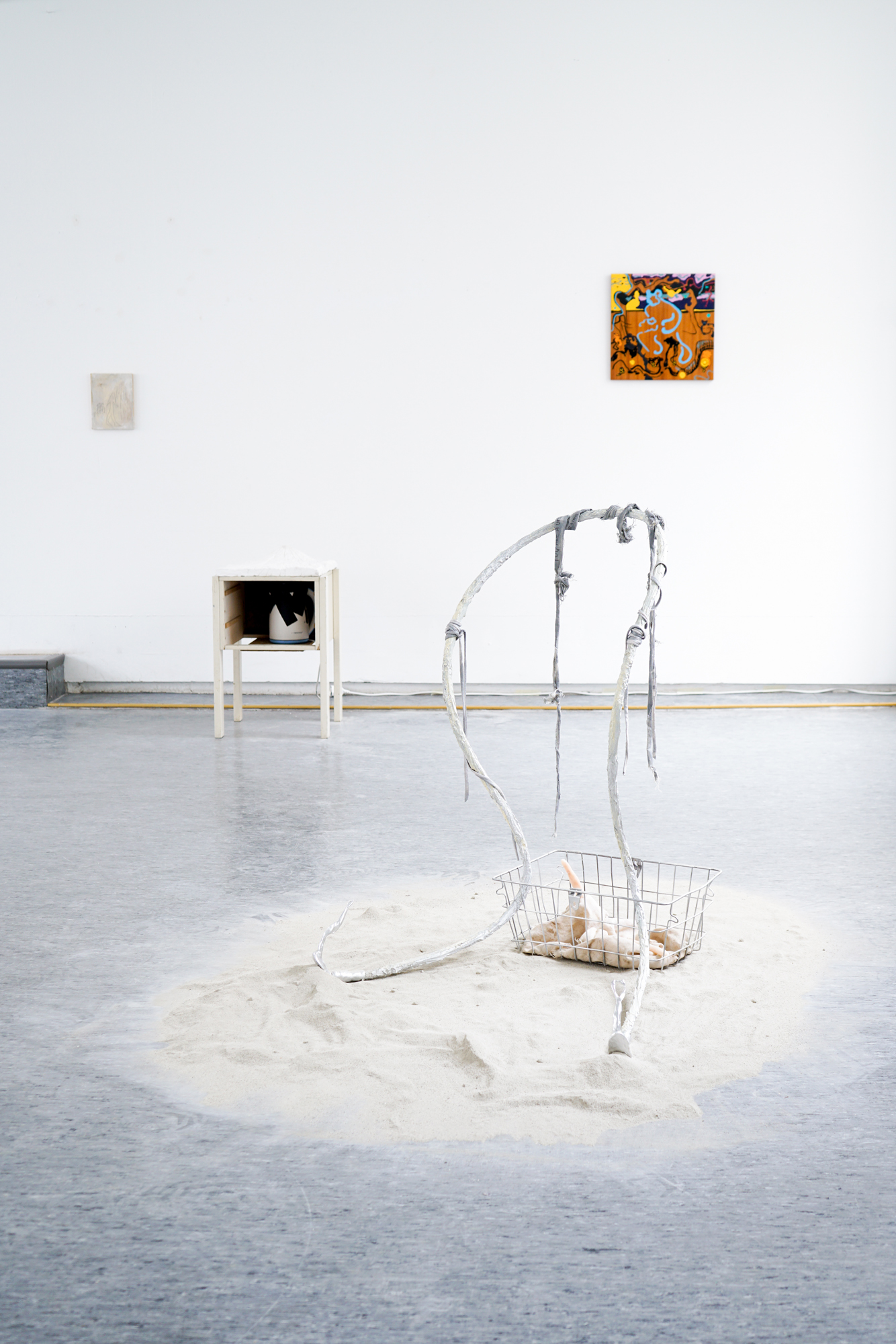
Dominika Olszowy, Suń in the Sheer Curtains, 2024, sheer curtains, epoxy resin. Photo: Przemek Sowinski
Paweł Marcinek, Sick House, 2024, 67 x 58 cm, furniture, acrylic, spray paint. Courtesy of the artist and Lectwo Gallery.
Paweł Marcinek, Complex Problem (Zlozony Problem) . 100 x 74 cm. Furniture, acrylic. Photo: Przemek Sowiński.
Czaro Malinkiewicz, Behind the Barrack, 2024, 70 x 50 cm silicon, bandage, acrylic, prints, ink, dust. Photo: Przemek Sowinski
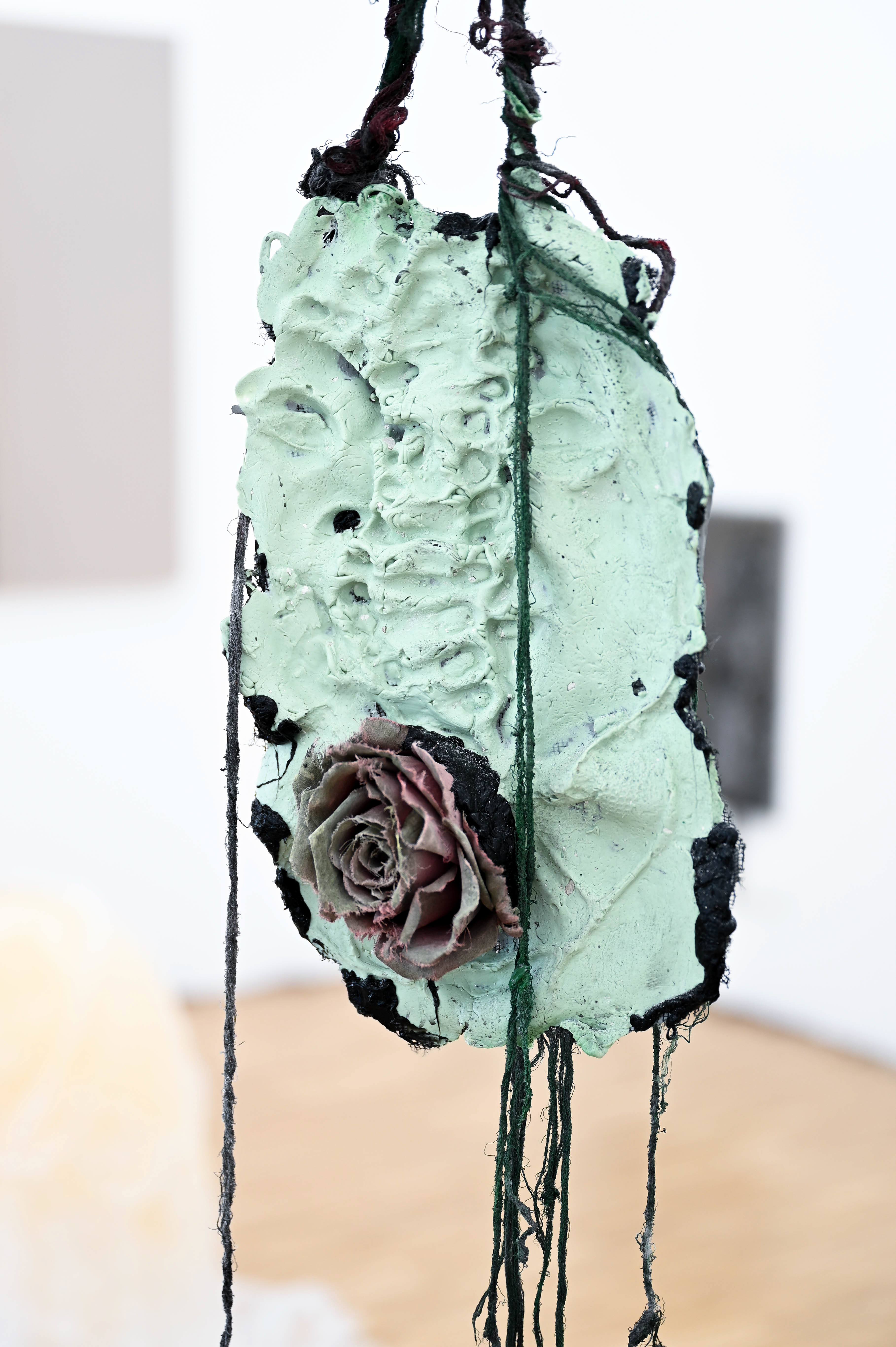
Czaro Malinkiewicz, The Sadness that Comes at the End of the Day, 2024, 38 x 20 cm, silicone, bandage, acrylic. Photo: Przemek Sowinski
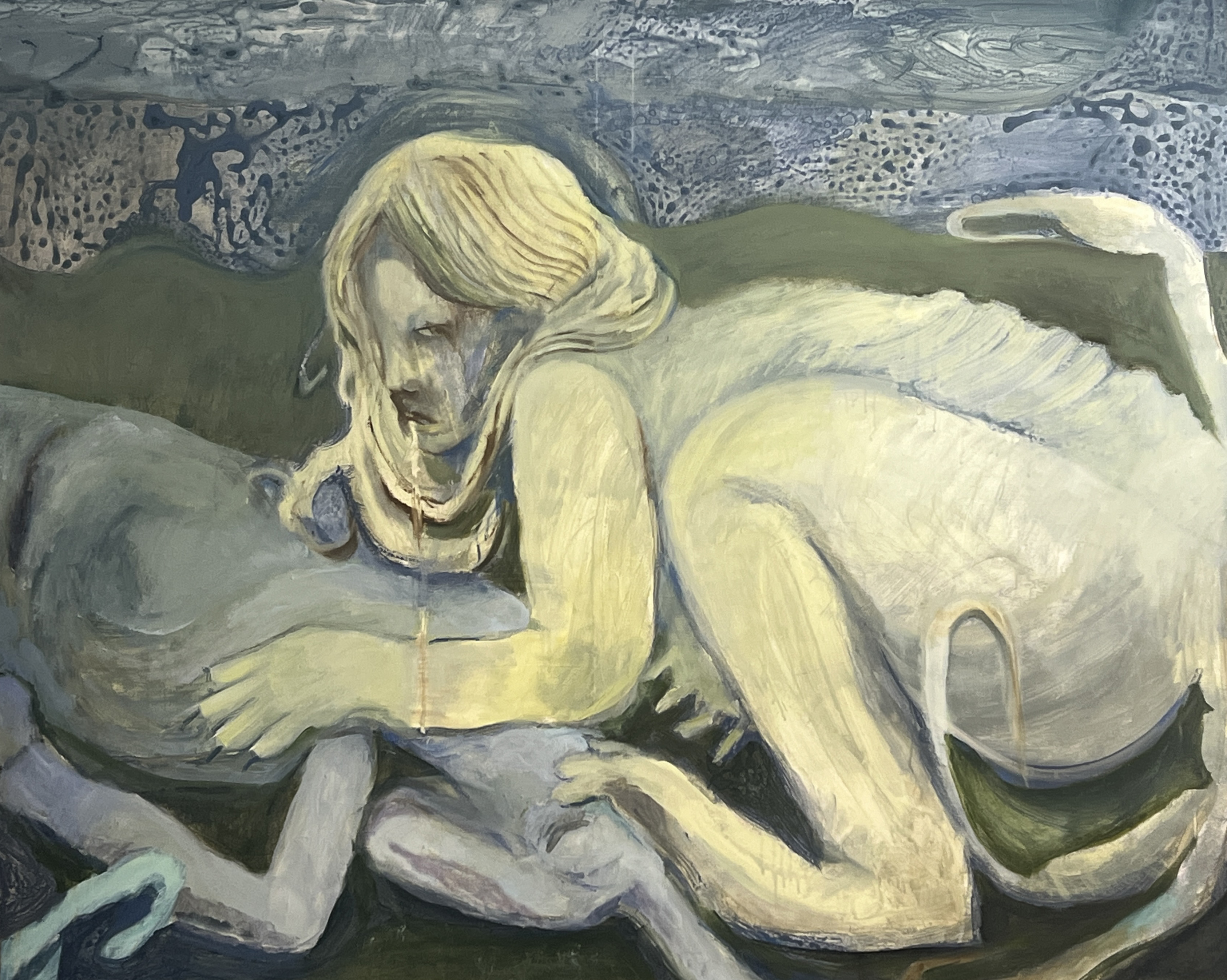
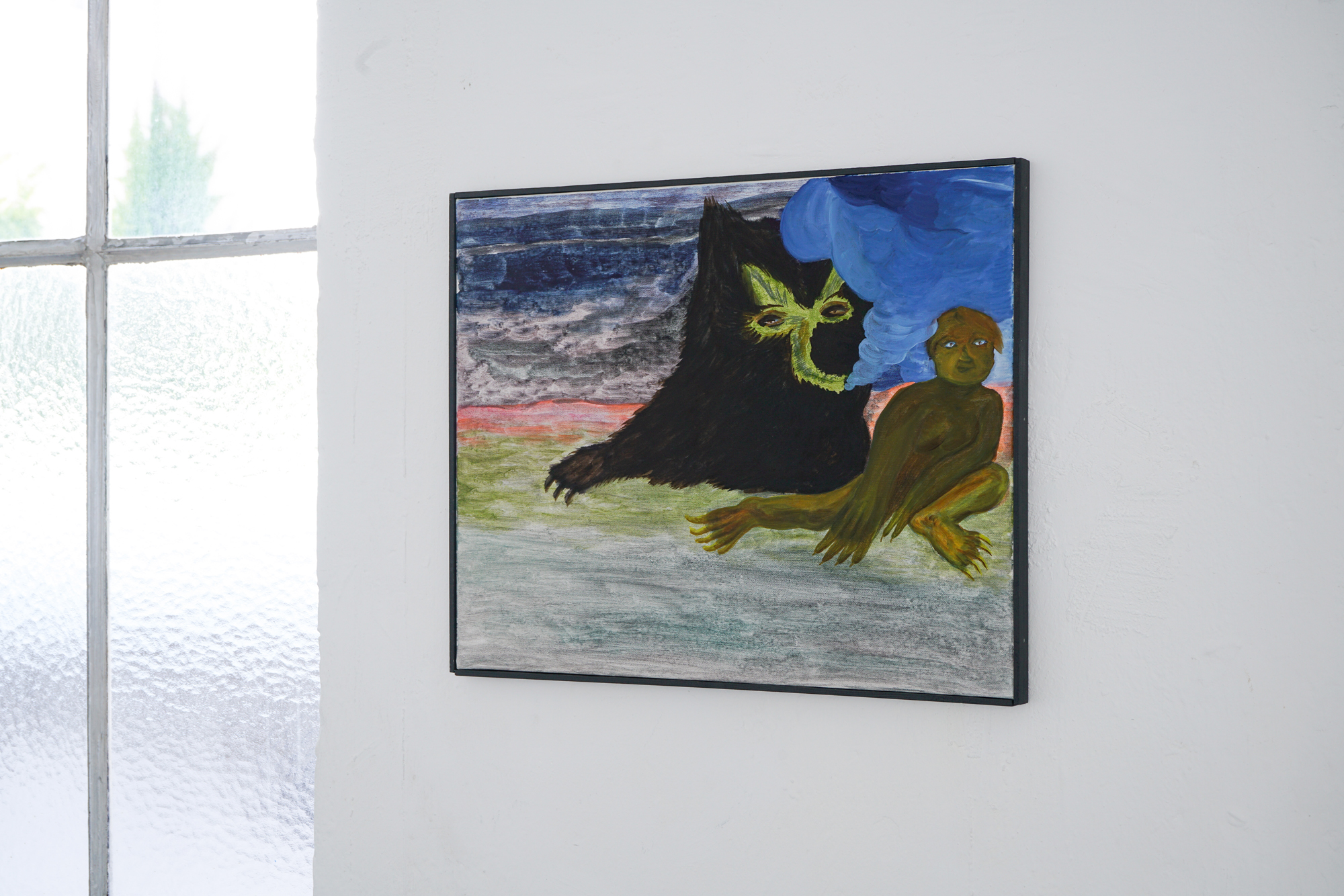
Karolina Szwed, I Skipped the Test and Passed, 150 x 120 cm, oil on canvas. Photo: Przemek Sowinski
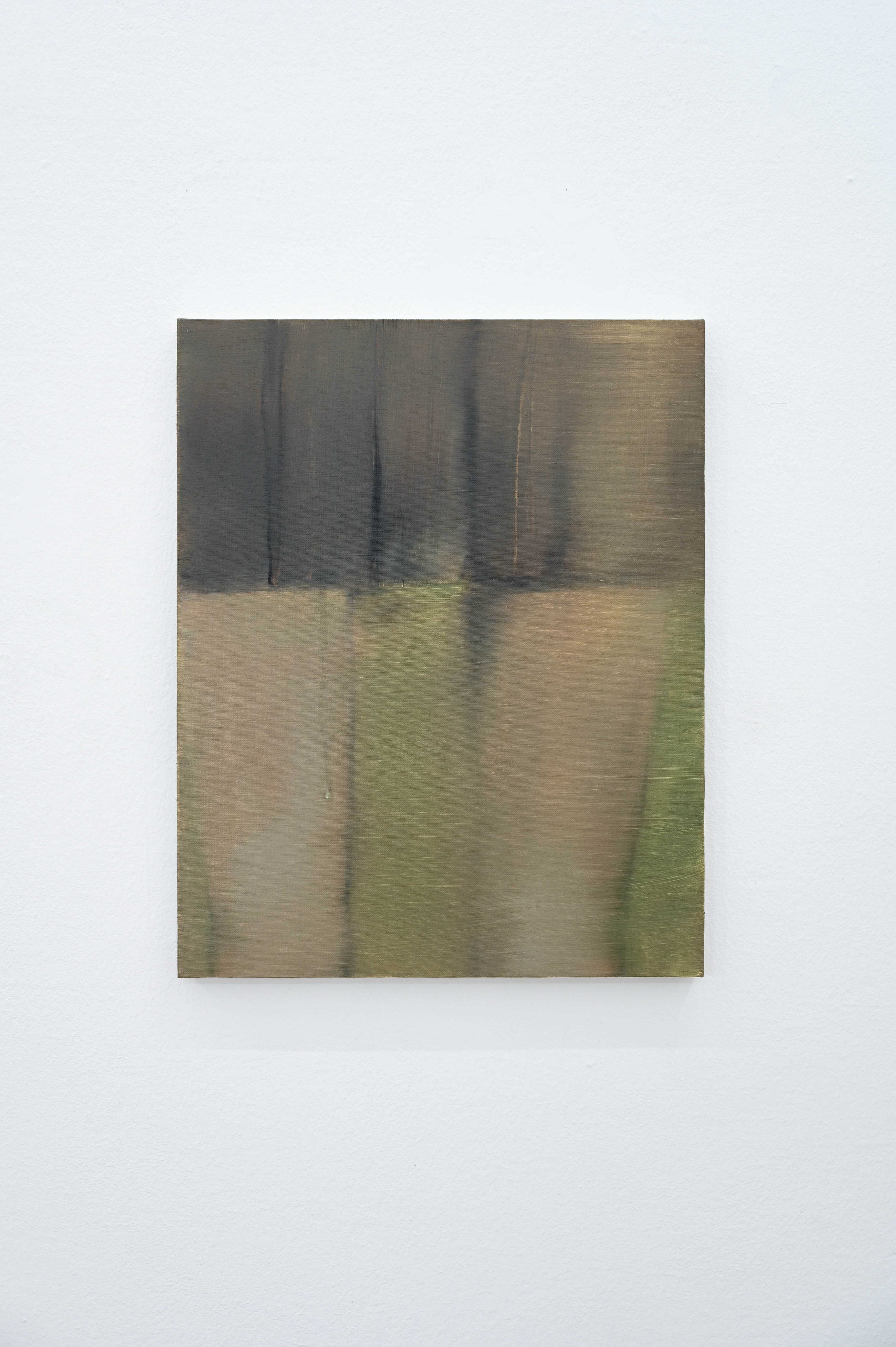
Karolina Szwed, Spring, 40 x 50 cm, oil on canvas. Photo: Przemek Sowinski
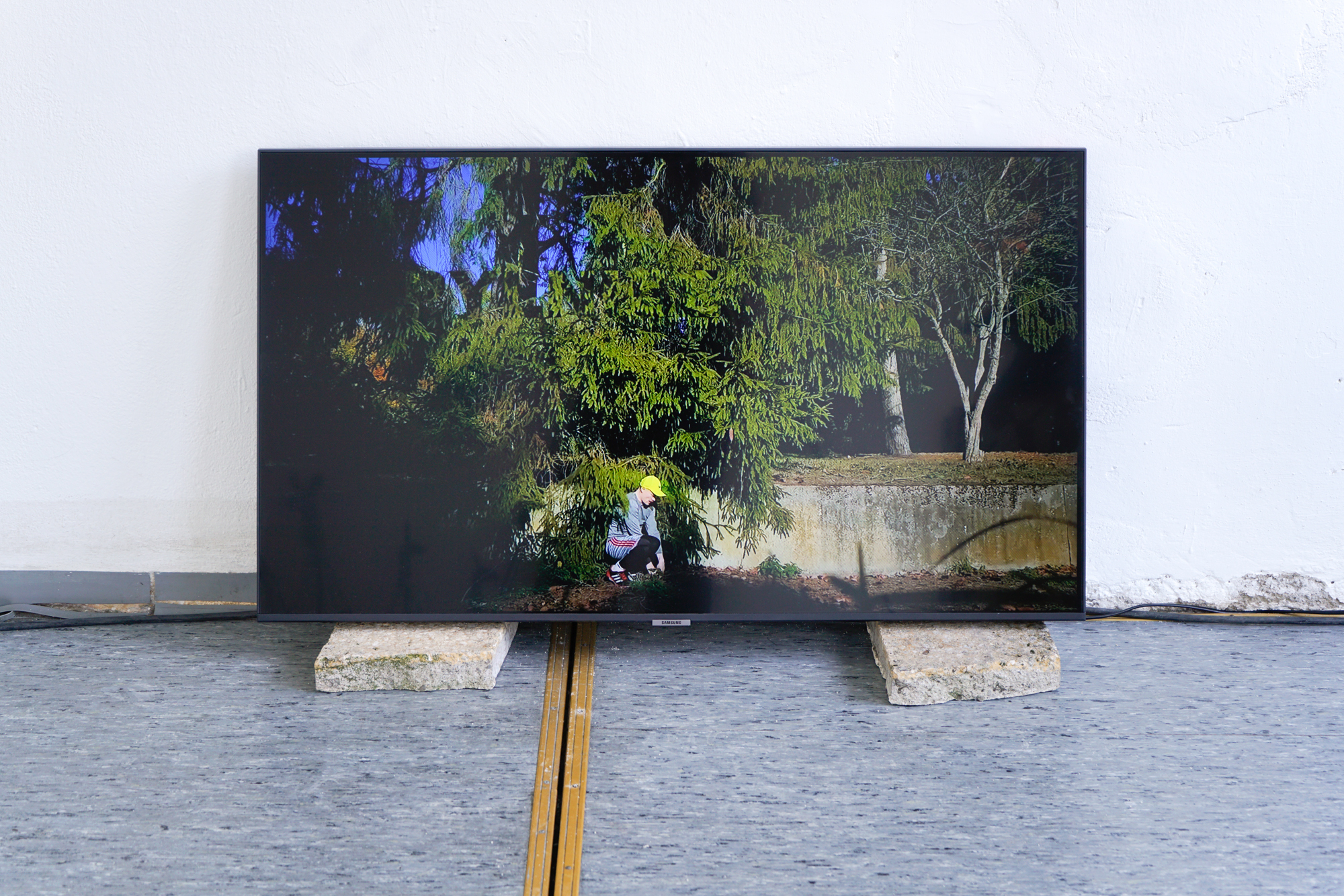
Przemysław Piniak, Wróblok, Video, 1’36. Photo: Przemek Sowiński
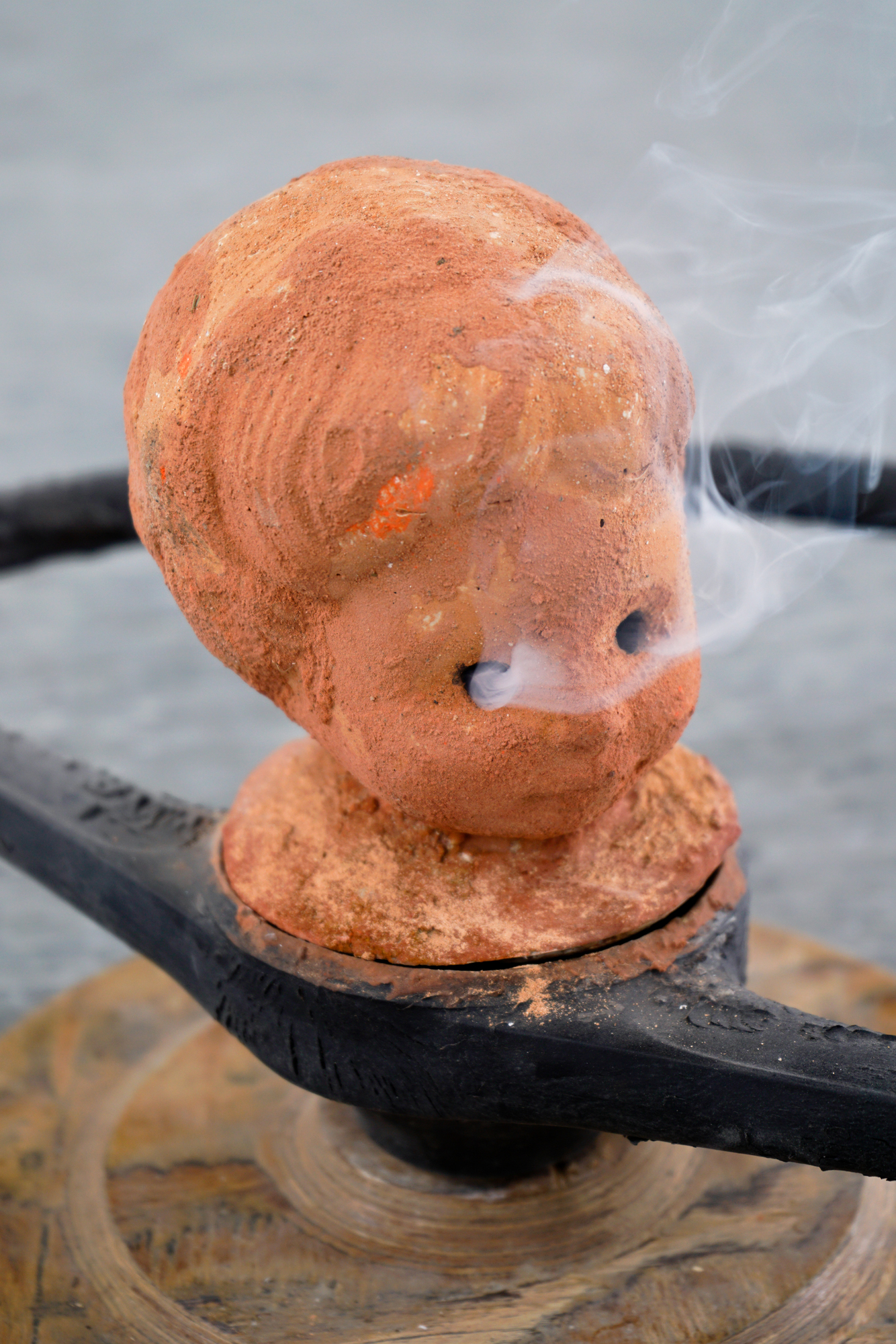
Dominika Olszowy, Suń Clown, 2023, concrete, nappies, epoxy resin. Photo: Przemek Sowiński
Julia Woronowicz, Rise and Fall of the Pandcity Universe, 2024, oil on canvas. Photo: Przemek Sowinski
Klaudia Figura, Negative Sentiment, 164 x 90 cm, oil on canvas, crayon, pastel. Photo: Przemek Sowinski
Zuza Piekoszweska, Base for Little Ones, 100 x 80 cm, wool, plaster on canvas, acrylic, crayons, corn, raffia.
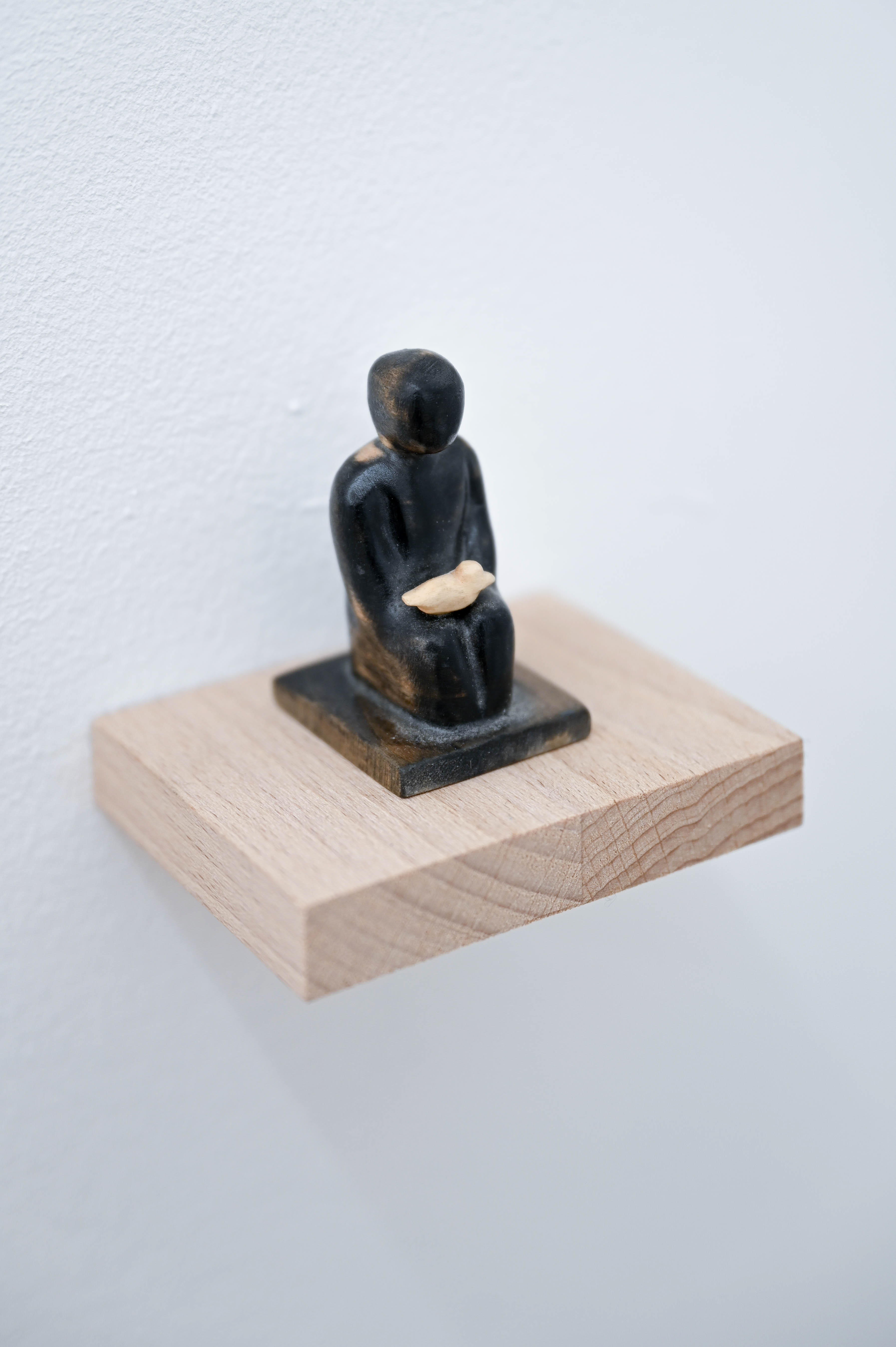
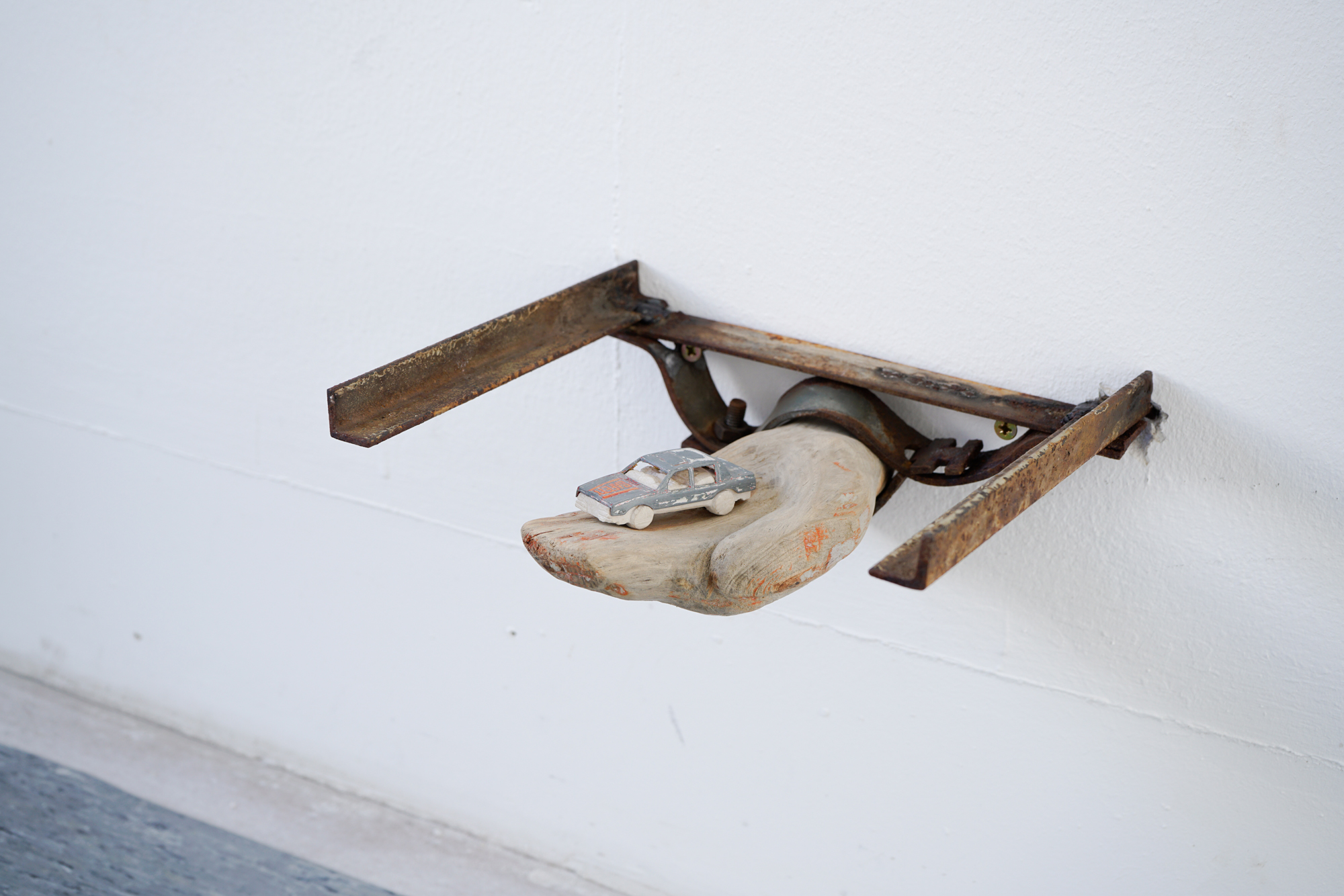
Pawel Marcinek. Inner Observer with Duck, 4 x 5 x 7 cm, wood, varnish. Photo: Przemek Sowinski
Roztopy, 2025, installation view. Photo: Przemek Sowinski.
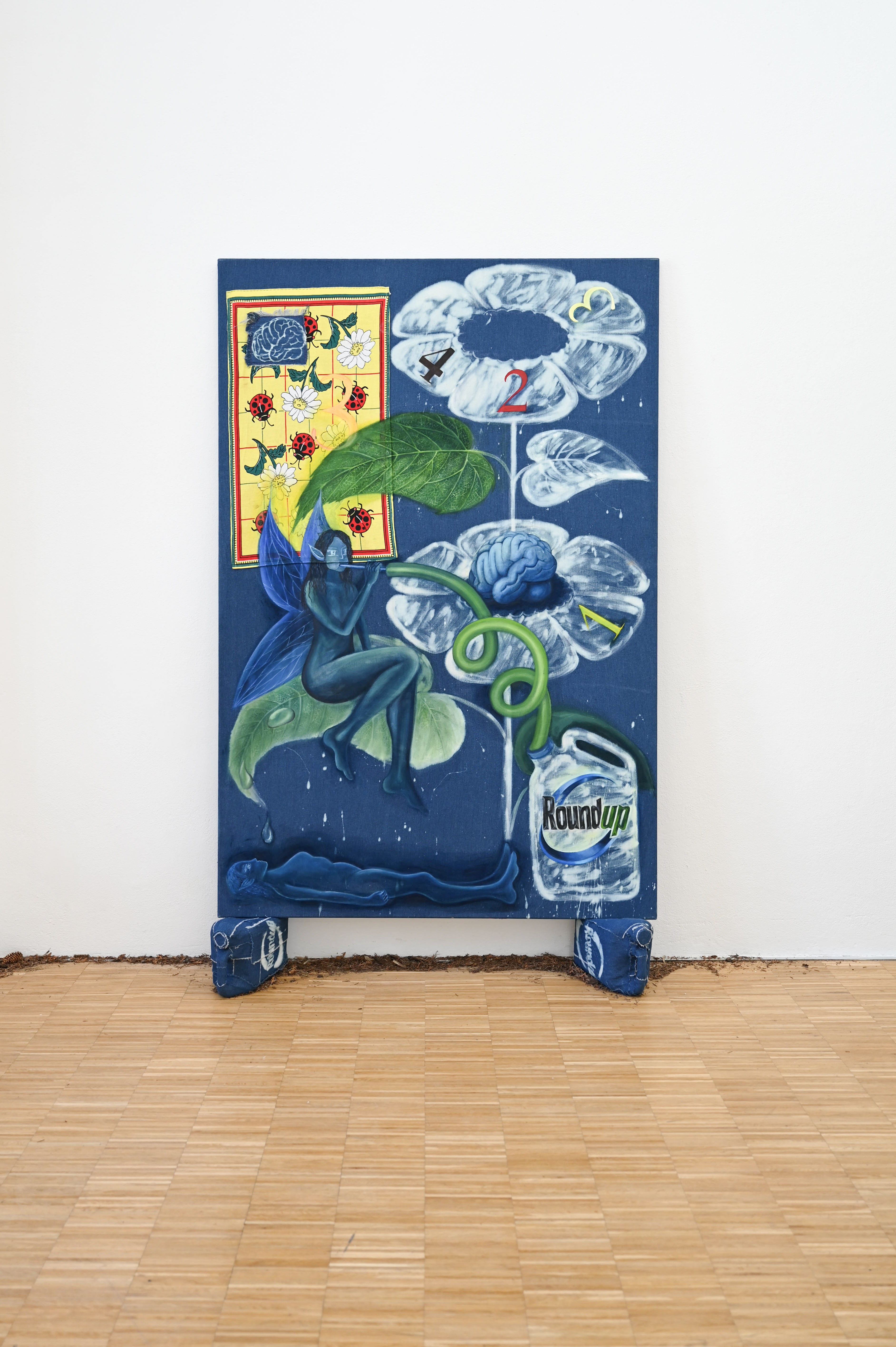
Maryna Sakoszewska, Roulette. 180 x 120 cm, bleach, oil and domestic in jeans and kitchen cloth. Photo: Przemek Sowinski
Dominika Olszowy, House of Little Coffee. 140 x 70 x 2 cm, stained glass, gravel, epoxy resin. Photo: Przemek Sowinski
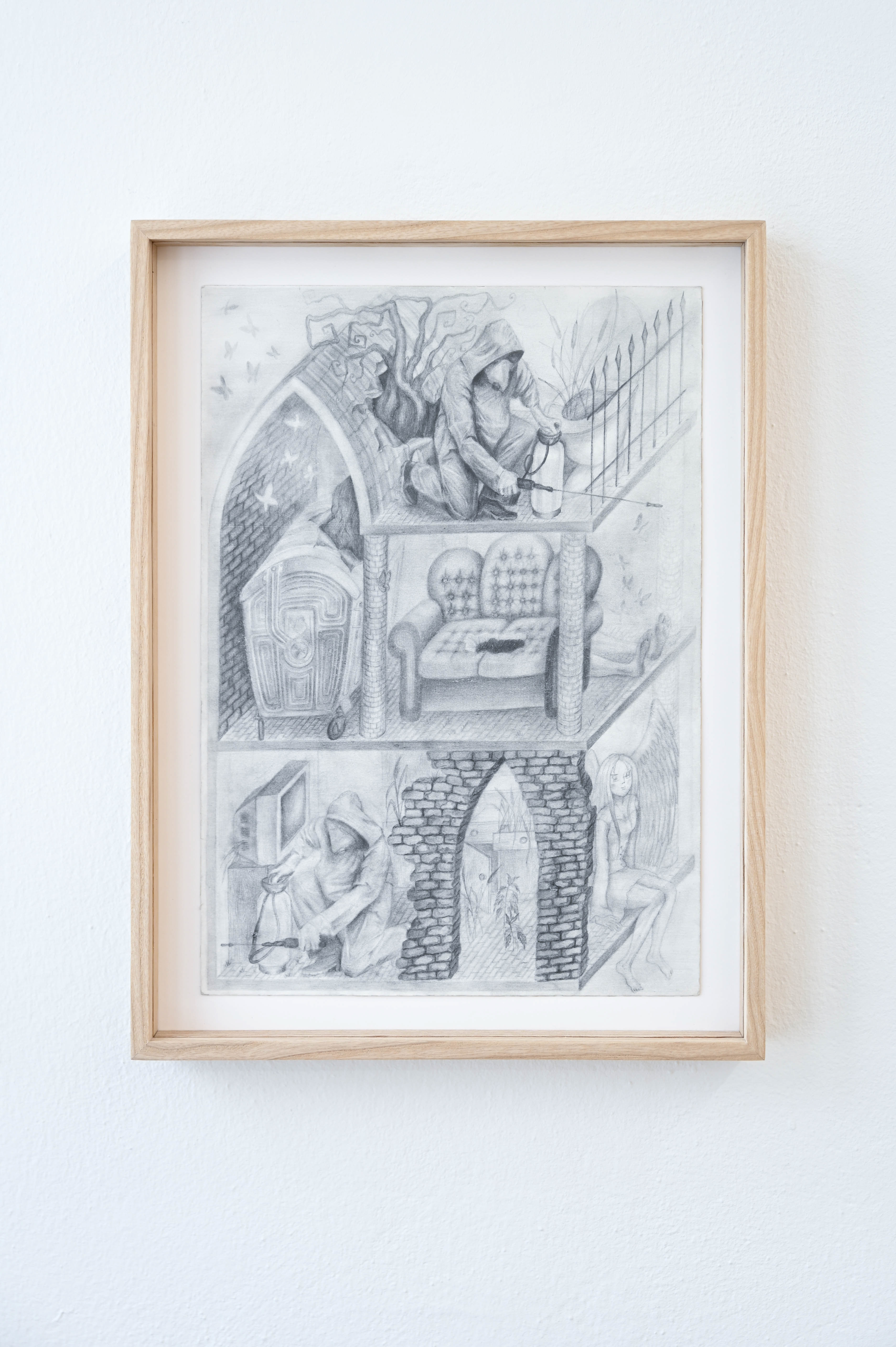
Maryna Sakoszewska, Post Mortem, 21 x 29 cm, pencil on paper. Photo: Przemek Sowinski
Pawel Marcinek, Unititled, 21 x 29 cm, pencil on paper. Photo: Przemek Sowinski

Jestem już na to za stara – I am too old for this.  I still remember when everything changed. It was the little things that I noticed at first. At the beginning there was only one or two vegetable stands close to the tram stop across the street. They were soon joined by others selling second hand clothes from the west. Advent calendars followed with real chocolate inside (!) – then a baker – then a stand with underwear and nylon stockings and slippers with elastic bands. Dynasty was on TVP after the news each Sunday at a quarter past eight and a chewing gum cost 1.000 zloty. The next week it was 1.500 zloty. 100.000 zloty was a Christmas gift from my grandmother and I was told to spend this quickly. When I visit Poland, which is not at all often, these are the memories I carry with me and their images of the past always shape how I see the place where my parents live now.

Most of the artists in the exhibition “Roztopy” curated by Przemek Sowinski and hosted by the Tiger Room were born much later, in the late 90s, and they are not burdened with these particular recollections. When Przemek writes of the “thaw” this is what he means. I admit that initially I misunderstood. I assumed the period of transition that the exhibition refers to was the historical transition from one political system to the next. I guess I really am too old for this – I am too late. In 1990, as a ten year old child I only witnessed the beginnings of a transition. But it is this transition time, which is now perhaps coming to an end, melting away as it were, like old winter’s snow. And in the green-tinted light we can see the dirt that has been left behind. Spring is here at last – a sun is rising in Dominika Olszowy’s work! It is also there in the small drawing by Paweł Marcinek, outside his block of flats, on an advertising banner. Yet in the painting by Karolina Szwed, spring is a girl’s short skirt, a drop of liquid like a tear, tricking down her bare thigh. In the work by Klaudia Figura another girl stomps on her schoolwork with clumpy shoes. So vomit spews from the second sun by Olszowy setting in the corner of the gallery space – and from the wooden sick house by Paweł Marcinek hanging in the other corner. Two arms embrace it from behind, whether to comfort it in its distress or to stop it from choking, we cannot tell. In a small drawing by Maryna Sakowska, a gothic, multi-story dwelling is being disinfected by men in biohazard suits, after a grandmother was found lying dead behind the stained sofa. Whereas, the dwelling in Zuza Piekoszewska’s piece is one made for insects to crawl in. 

There are other memories present here as well, but these refer to a past I do not share because it was an impossible future for me, the turn of the century when everything was supposed to get better, cooler somehow. Czaro Malinkiewicz’s heavily textured reliefs of silicon and paste and dirt, refer to splatter film gore and manga comics and more references to manga are also present in Sakowska’s work. Whereas we in the early 90s would try to find old copies of Lucky Luke. Przemysław Piniak celebrates this time to come in his video, dancing wildly in front of his grey block of flats while dressed in his most shiny and colourful sports clothes. Julia Woronowicz, who often reinterprets local histories and myths, has also seen the future in her painting, and it looks like Piaseczno! Presiding over this detritus of change is s small kneeling figure, shiny and black holding a duck in its arms. Like Benjamin’s angel, it looks towards us as it is blown to the future.  

Magdalena Wiśniowska 2025

Roztopy

Dominika Olszowy, Klaudia Figura, Julia Woronowicz, Czaro Malinkiewicz, Paweł Marcinek, Przemysław Piniak, Zuza Piekoszewska, Maryna Sakowska, Karolina Szwed

curated by Przemek Sowiński (Łęctwo, Poznań) and hosted by The Tiger Room

9.05 – 14.06.2025

Opening: 9.05.2025, 5pm

Heßstr. 48 b, 80798 Munich

Julia Woronowicz, Sphinx and Foal, 2024, courtesy of the artist

The exhibition “Roztopy” explores the relationship between a characteristic Polish landscape of melting snow, folklore, and tradition, and what remains following the political, social, and economic upheavals of the 1990s. “Roztopy” translates as snowmelt, a transitional period in which one condition changes into another. It refers to a specific moment in time that captures the tension between what has passed and what is to come. The show features recent work of young Polish artists, approaching the theme from an economic perspective, the shifting locations and the resurfacing of emotions that are becoming more obvious after a period of stagnation. Just like any transformation, melting snow reveals what lies beneath. Cracks, debris, and everything else that went unseen is forced into a confrontation, just like we face buried memories. The works are connected by the notions of transgression and experimentation. This is a story about the mud we bring from the streets into our own homes.

Roztopy widmet sich der Verbindung zwischen der schmelzenden Schneelandschaft Polens, ihrer Folklore und Tradition sowie den Spuren, die die politischen, sozialen und wirtschaftlichen Umbrüche der 1990er Jahre hinterlassen haben. Roztopy bedeutet Schneeschmelze – eine Übergangsphase, in der ein Zustand in einen anderen übergeht. Der Begriff beschreibt einen Moment der Spannung zwischen Vergangenem und Zukünftigem. Gezeigt werden aktuelle Arbeiten junger polnischer Künstler*innen, die sich dem Thema aus einer wirtschaftlichen Perspektive nähern und die Veränderungen sichtbar machen, die nach einer Zeit der Stagnation einsetzen. Wie die Schneeschmelze verborgene Risse und Trümmer freilegt, zwingen uns die Werke, sich mit verschütteten Erinnerungen auseinanderzusetzen. Was die Arbeiten vereint, ist die Bereitschaft zum Experiment und das Spiel mit Grenzen. Die Ausstellung erzählt die Geschichte des Schlamms, den wir unweigerlich von draußen mit nach Hause bringen.

We breathe the remains of everything that was

Zuza Piekoszewska, Natalia Karczewska, Magda Starska, Grzegorz Bożek, Paweł Marcinek und Przemysław Piniak

(curated by Łęctwo)

31.07 – 19.08.2022

Lothringer 13 Studio, Lothringer Straße 13, 81667 Munich


We breathe the remains of everything that was, 2022, exhibition view
Zuza Piekoszewska, Future Traveller II, 2022, mixed media: bioplastic,
spray paint, varnish
Zuza Piekoszewska, Future Traveller II, 2022, mixed media: bioplastic,
spray paint, varnish (detail)
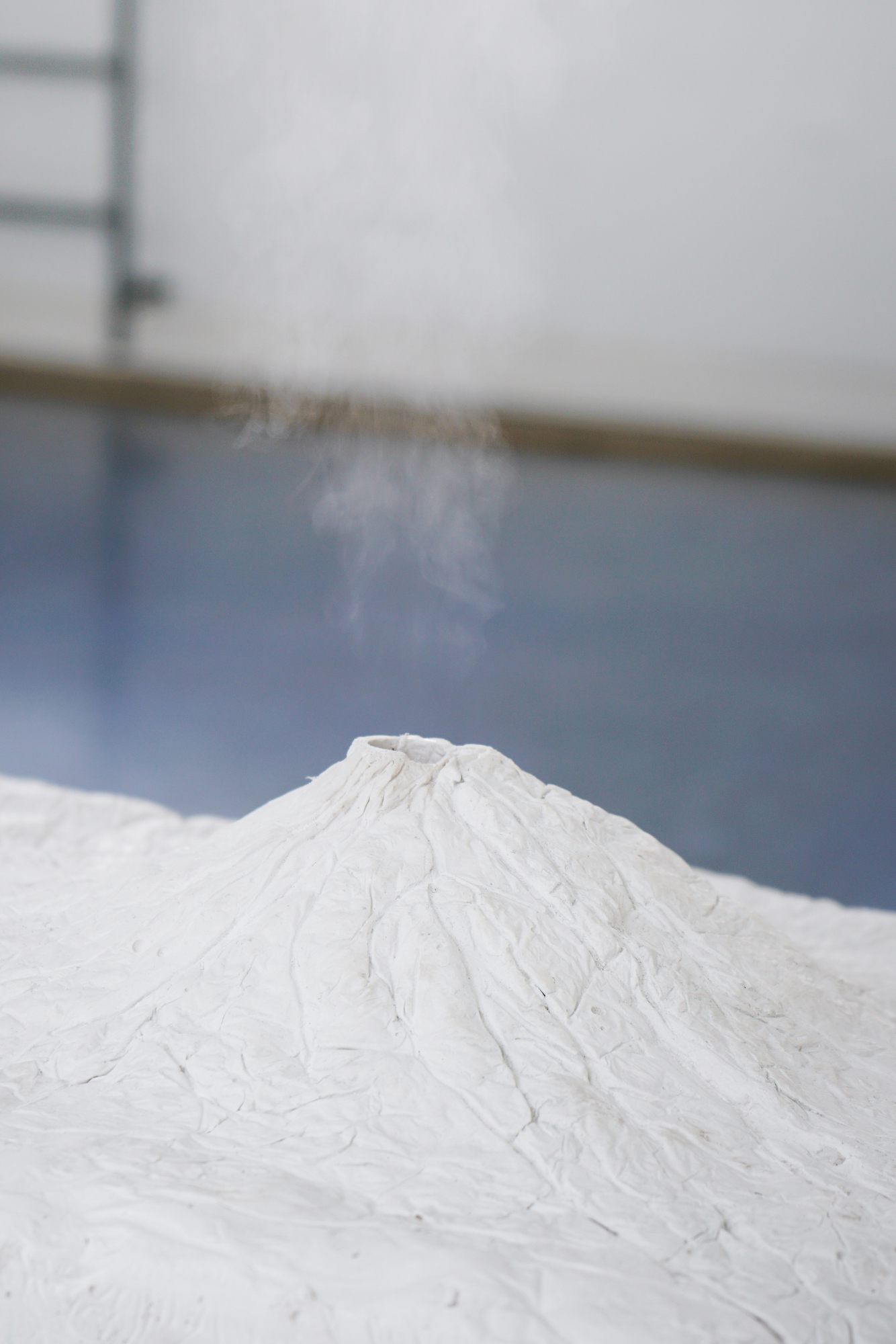
Magda Starska, Volcano, 2012, assisted readymade: sideboard,
kettle, plaster
Magda Starska, Volcano, 2012, assisted readymade: sideboard,
kettle, plaster (detail)
We breathe the remains of everything that was, 2022, exhibition view
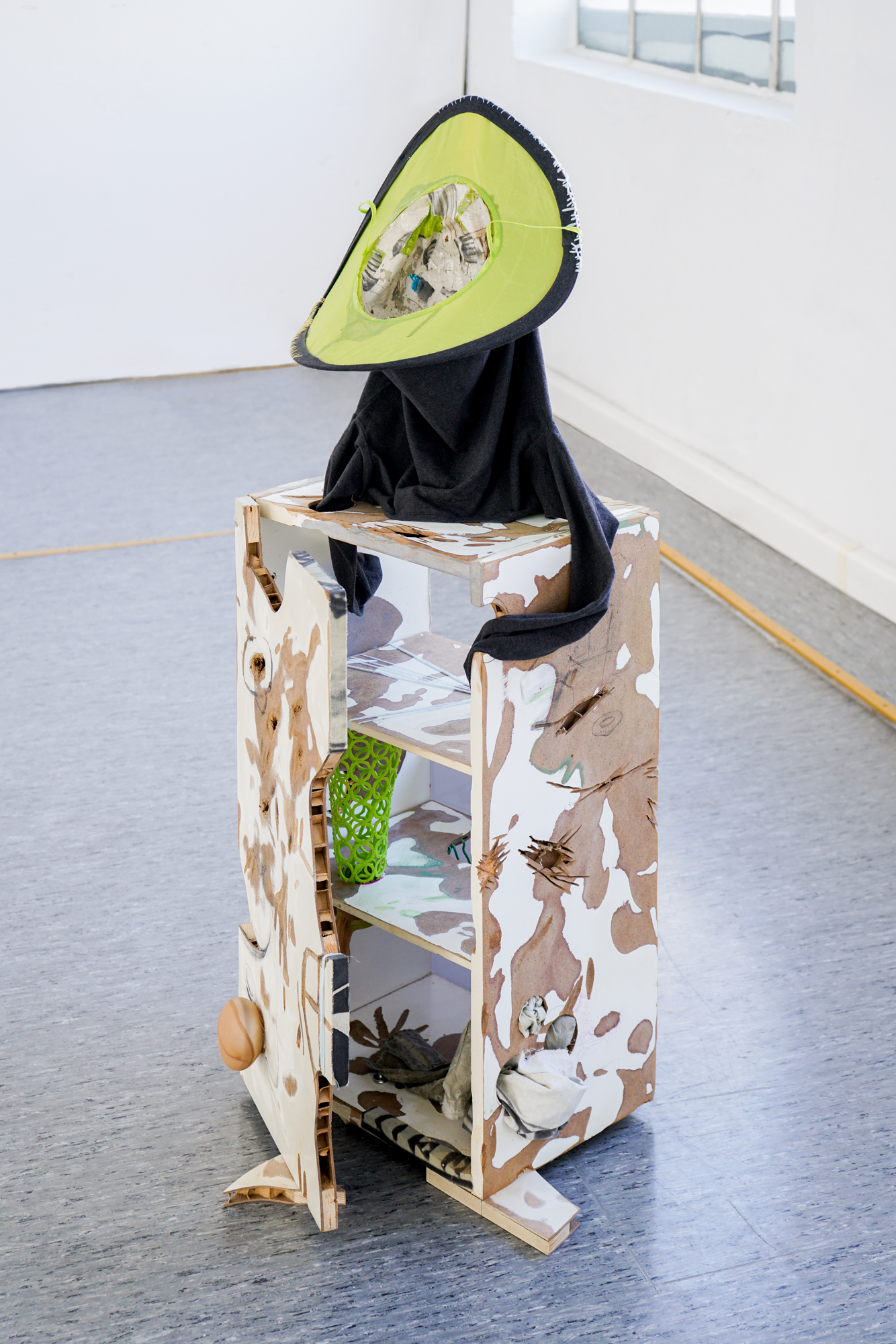
Natalia Karczewska, Avo-hat-touch, 2022, mixed media installation:
wood, paper, textiles, lightbulb, pencil, marker, resin, plexi,
Magda Starska, Together better, 2021, acrylic on canvas

Natalia Karczewska, Avo-hat-touch, 2022, mixed media installation:
wood, paper, textiles, lightbulb, pencil, marker, resin, plexi,
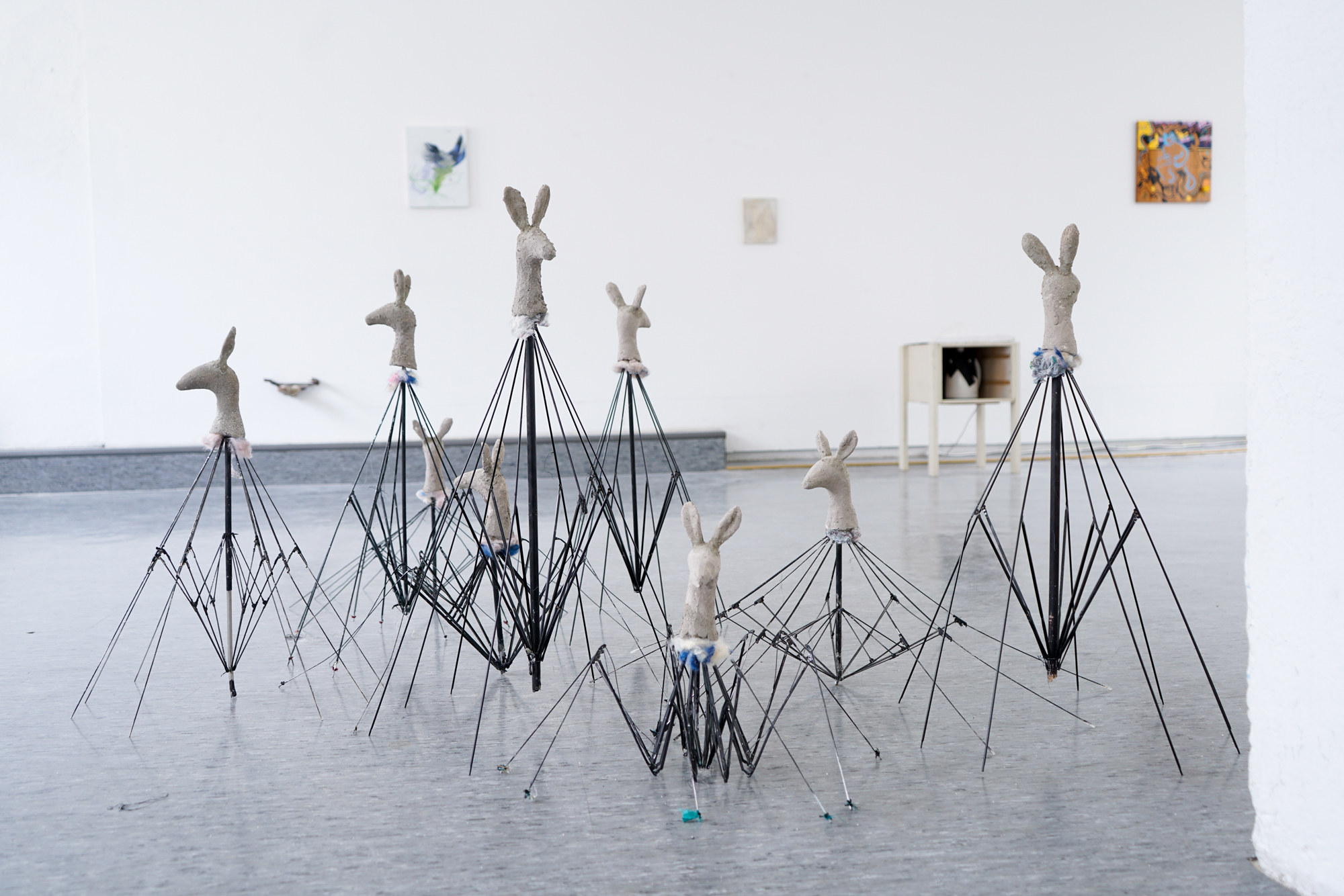
Pawel Marcinek, Common Horizon, 2022, mixed media installation:
umbrella wires, plaster, ashes, dust
Zuza Piekoszewska, Coarctate pupa, 2021, mixed media:
bioplastic, linen and Future Traveller II, mixed media: bioplastic,
spray paint, varnish
Zuza Piekoszewski, Future Traveller II, mixed media: bioplastic,
spray paint, varnish
Pawel Marcinek, Feeling Secure, 2021, mixed media: iron, wood,
plaster and Grzegorz Bozek, Gray Crow Spirit, 2022, egg tempera on wooden
board
Pawel Marcinek, Feeling Secure, 2021, mixed media: iron, wood,
plaster

Grzegorz Bozek, Gray Crow Spirit, 2022, egg tempera on wooden
board
Przemyslaw Piniak, PylniceP, 2019, video installation, markerpen
on cotton
Przemyslaw Piniak, PylniceP, 2019, video installation, markerpen
on cotton
Pawel Marcinek, The year before, 2021, mixed media: burnt
steering wheel, plaster
Pawel Marcinek, The year before, 2021, mixed media: burnt
steering wheel, plaster
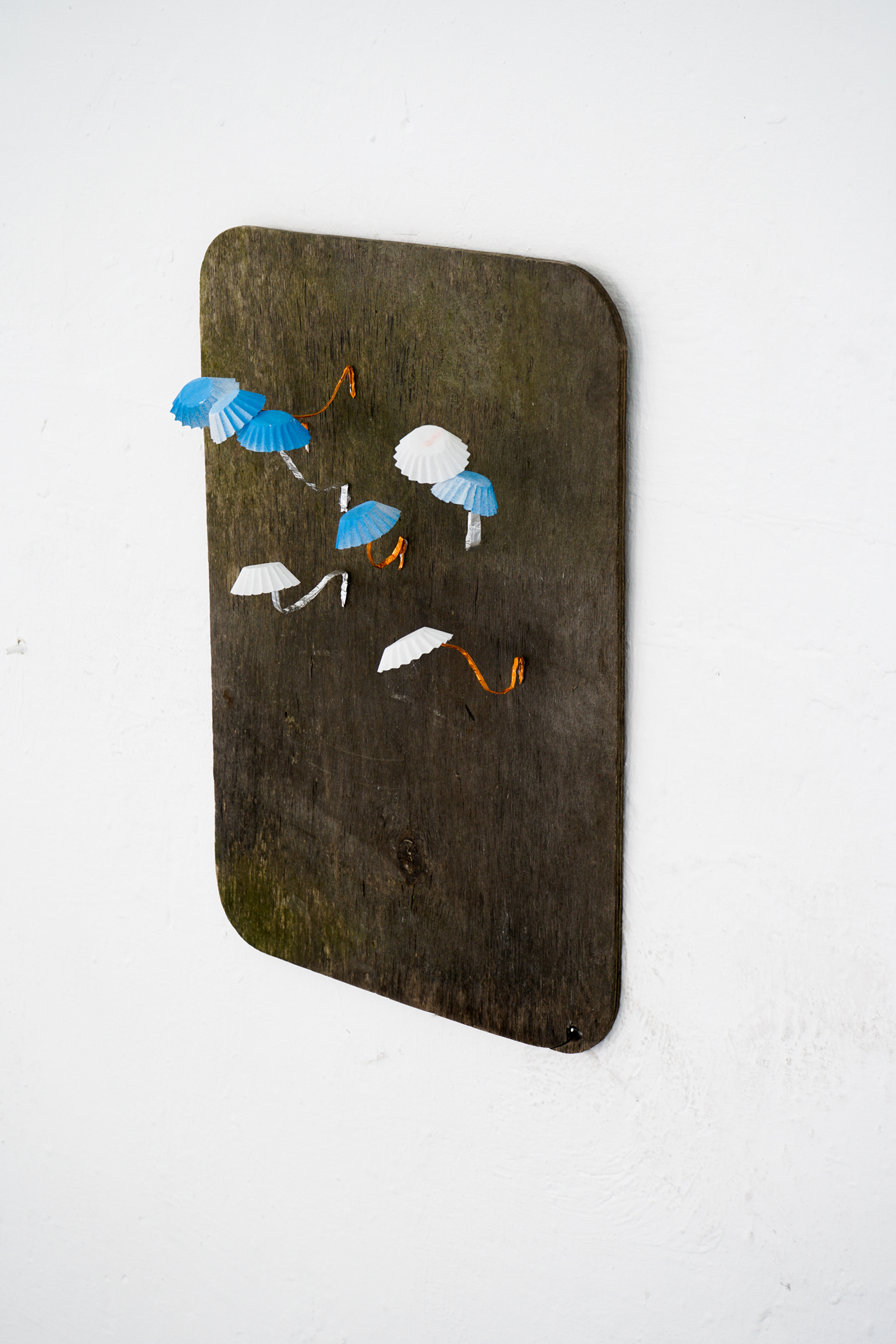
Przemyslaw Piniak, Niebieskis, blue-eyed mushroom found on
Pucka island, 2022, paper and gold sweet-wrappers, wooden board

Opening Speech:

Many of you here know GiG from its days at Baumstr. 11. Some of you might even remember the last series of exhibitions there, ‘Thinking Nature’ featuring artists such as Elke Dreier, Johanna Strobel, Kalas Liebfried, Julia Klemm, Justin Liebermann, Lilian Robl and many others. This exhibition is a continuation of that series, but with a slight shift in focus: instead of thought, the theme is memory. How it relates to our thinking about nature remains unchanged. 

For this exhibition, GiG invite Lectwo from Poznan, Poland, and its director, Przemek Sowiński to be the curator. He in turn responded to the theme through this idea of ‘breath’ as something physical, something shared and something transformative. We breathe out slowly when we hear something surprising – we inhale sharply in fear. Together with our heartbeat, breathing structures our sense of time, each breath already past, present and future. If when thinking, the concept of memory often becomes too much like the concept of history, a series of events arranged according to importance, the memories held in a breath have a linearity free from such punctuation. They are alive. 

As an introduction to the exhibition, Dr. Sebastian Truskolaski traveling from Berlin, kindly agreed to hold a brief discussion of Adorno’s short text, ‘Heliotrope’. We chose this  text together as a good way of engaging with the themes of the exhibition: breathing, memory, nature (Heliotropism being the ability of plants to turn towards the sun). The text takes the shape of Adorno’s childhood memory. A glamorous aunt comes to visit, carrying suitcases with stickers from exotic locations. Little Theodor breaths in the heavy scent of her French perfume and is immediately transported to the world of grown-ups, which is also a long-lost fairyland. The child at once gains access to a foreign land, and recovers what he once had.