Notes on Roommates (a dog, a parrot, a whale and a canal)

Sophia Mainka

in collaboration with Fondation Fiminco, Paris

6.09 – 13.10.2023

Lothringer 13 Studio, Lothringer Str. 13, 81667 München

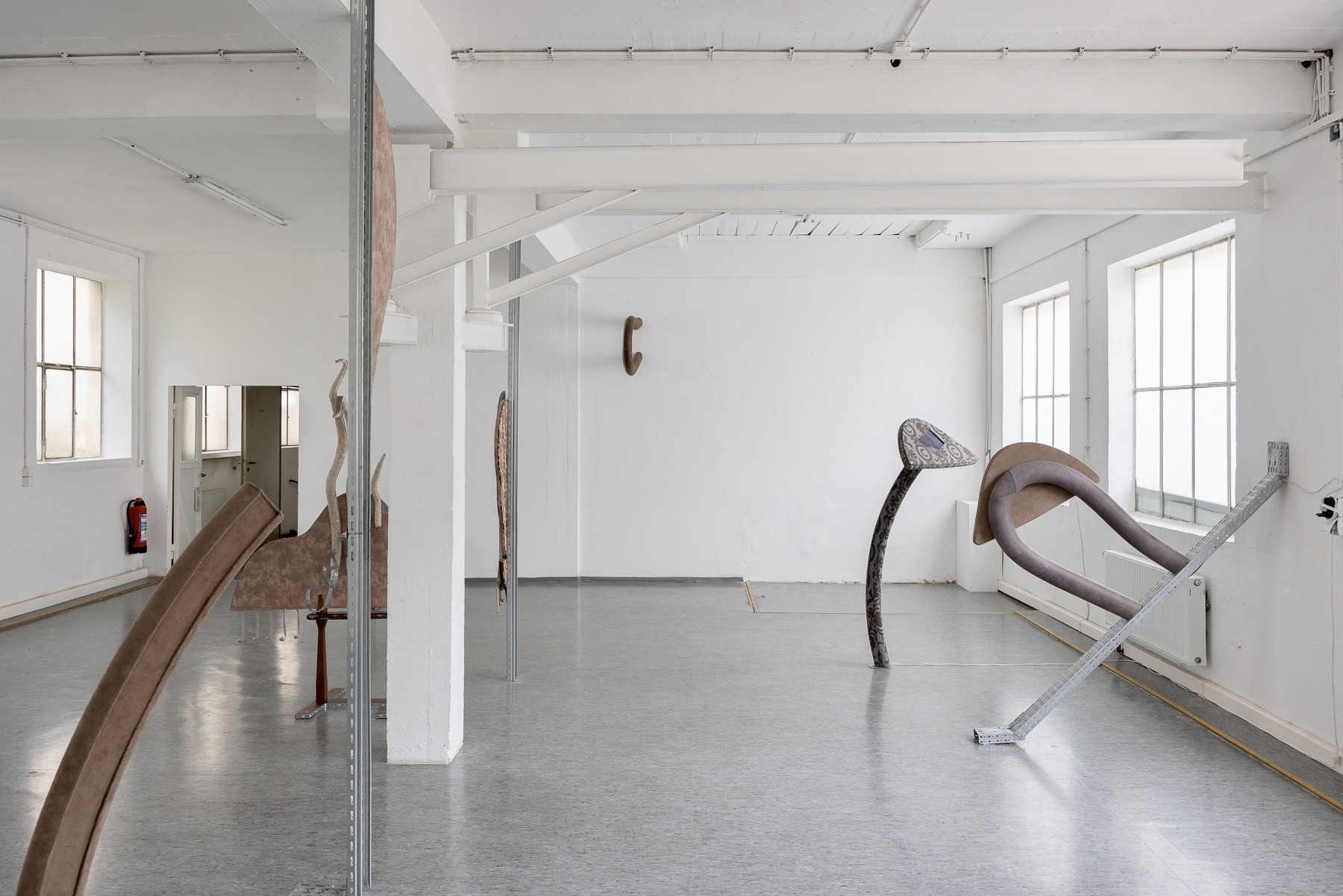
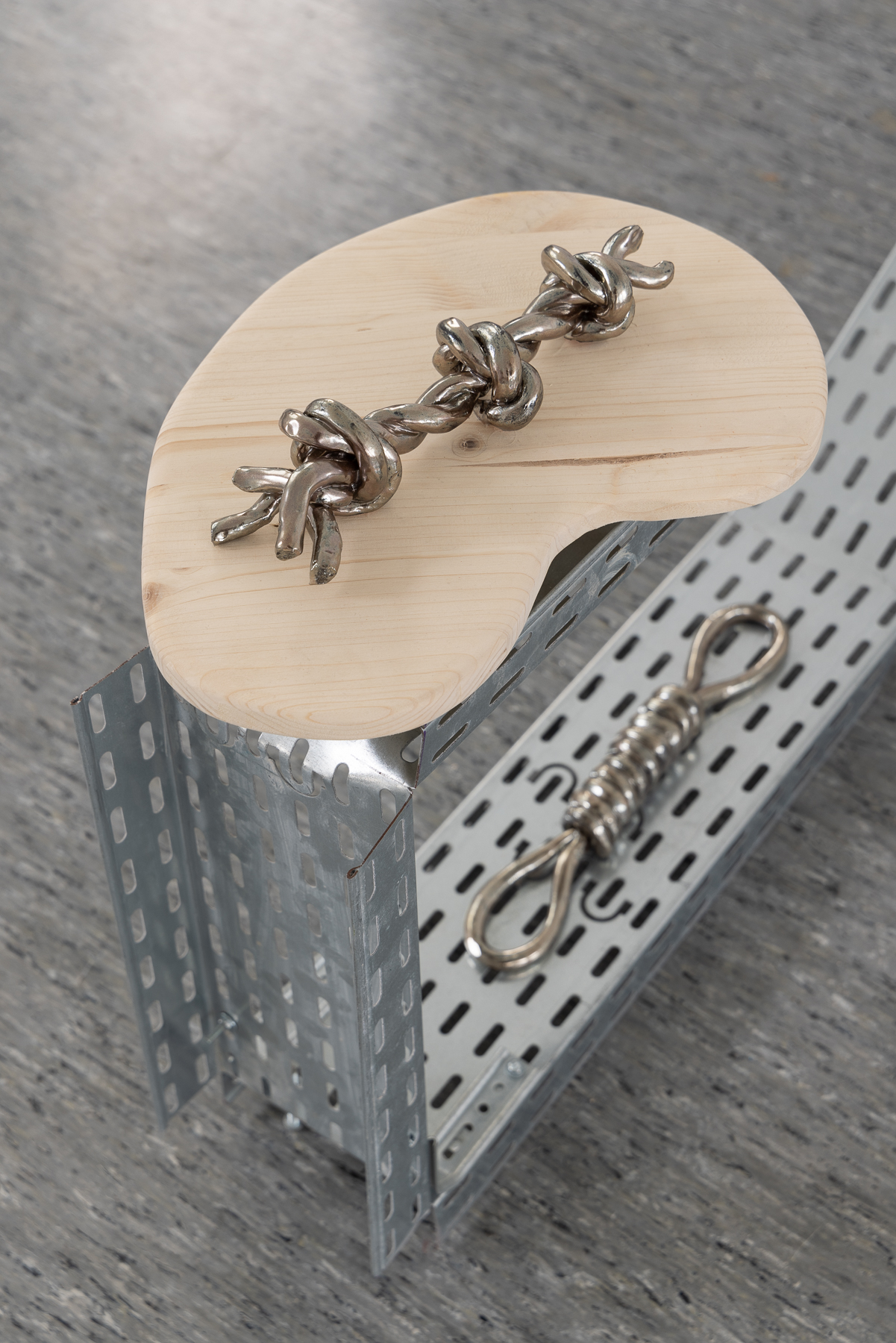
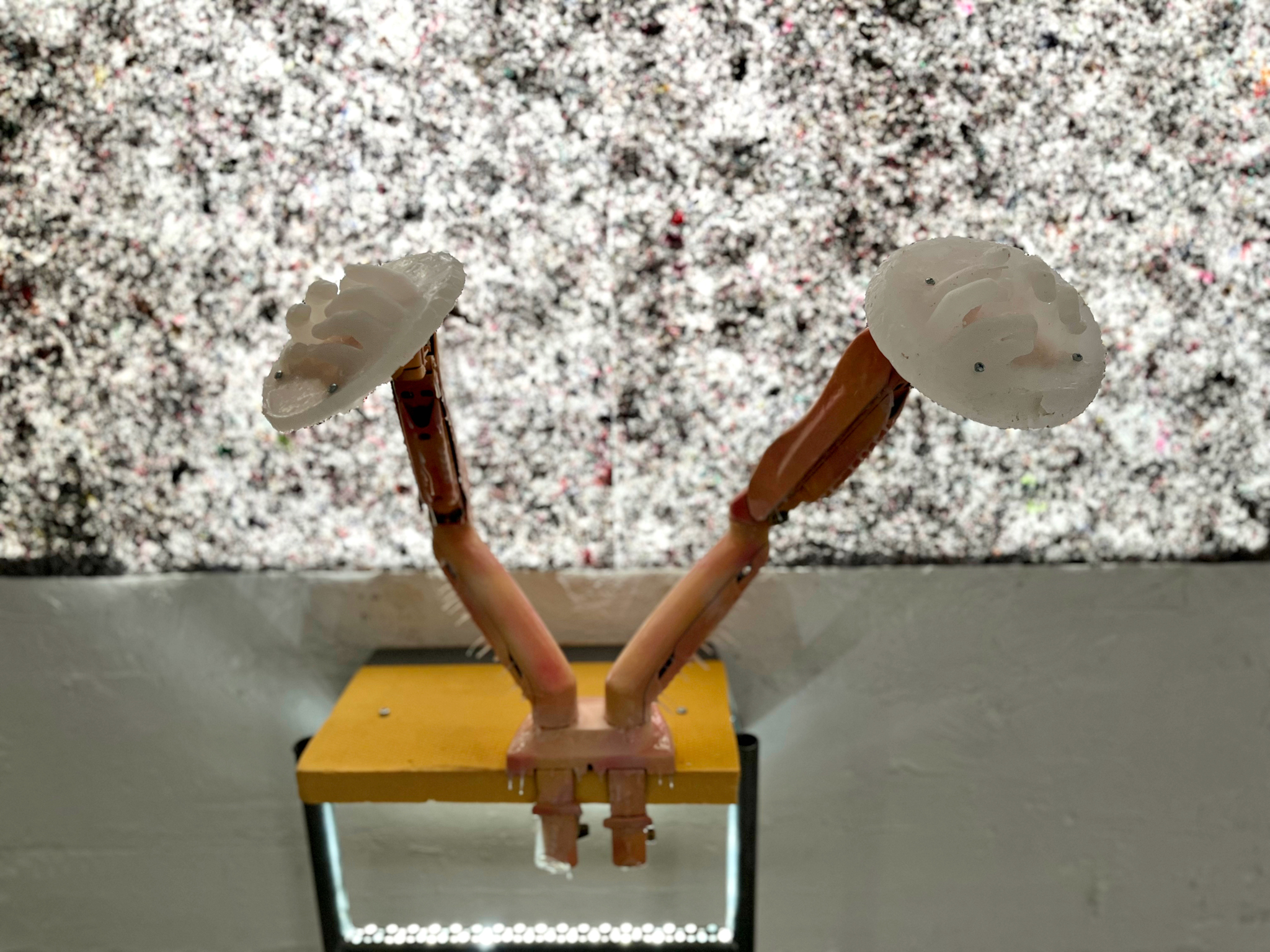
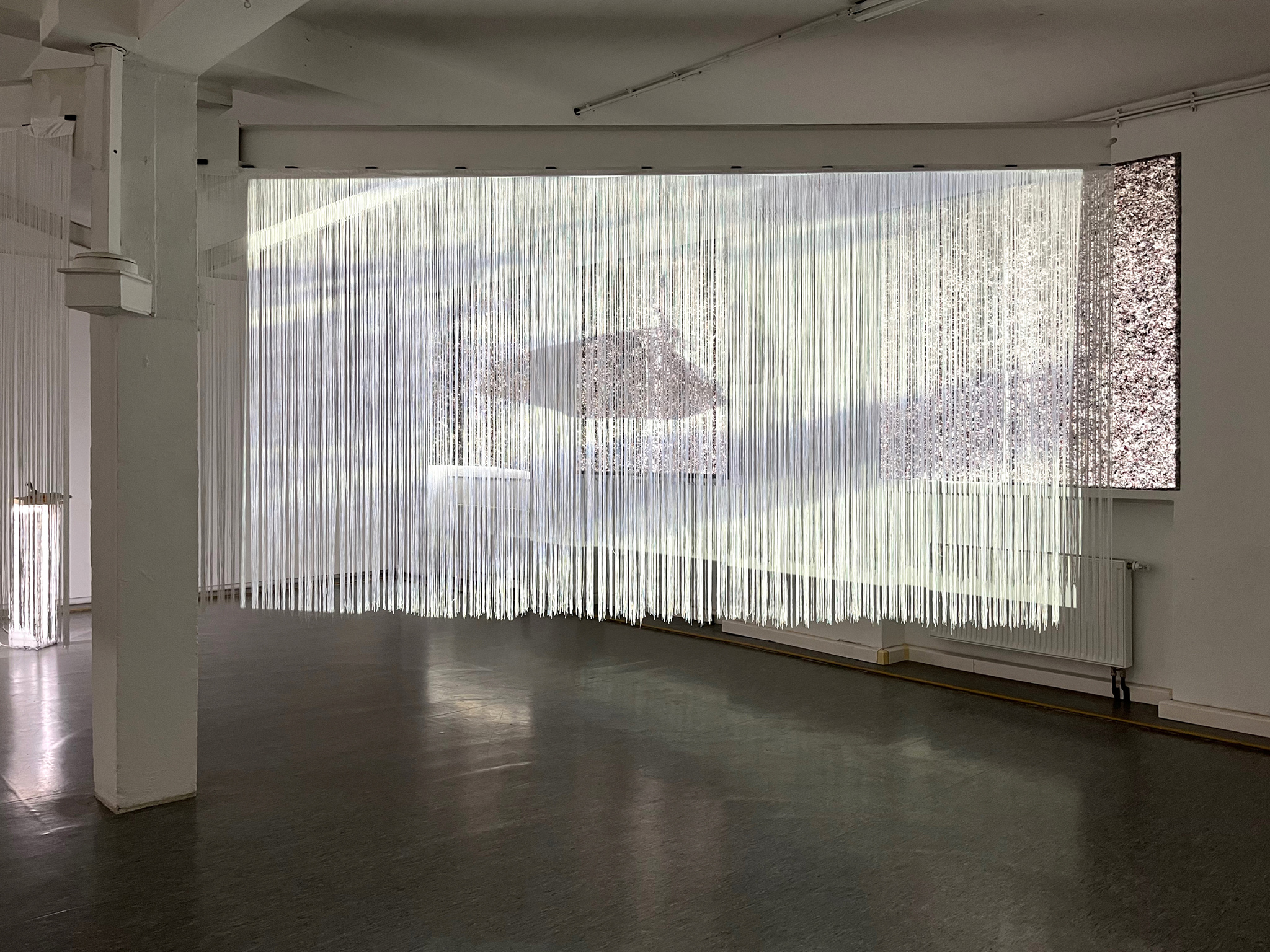
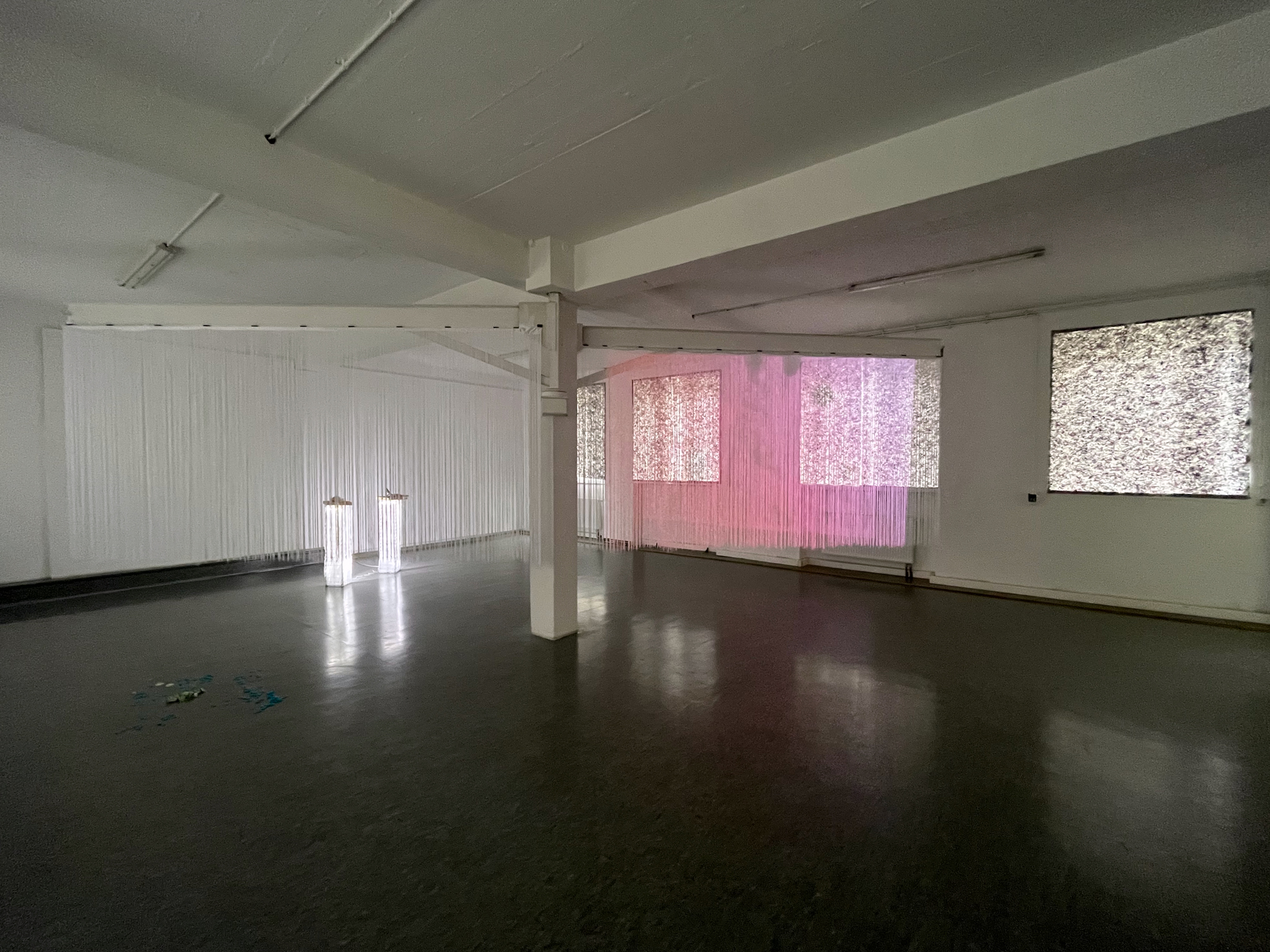
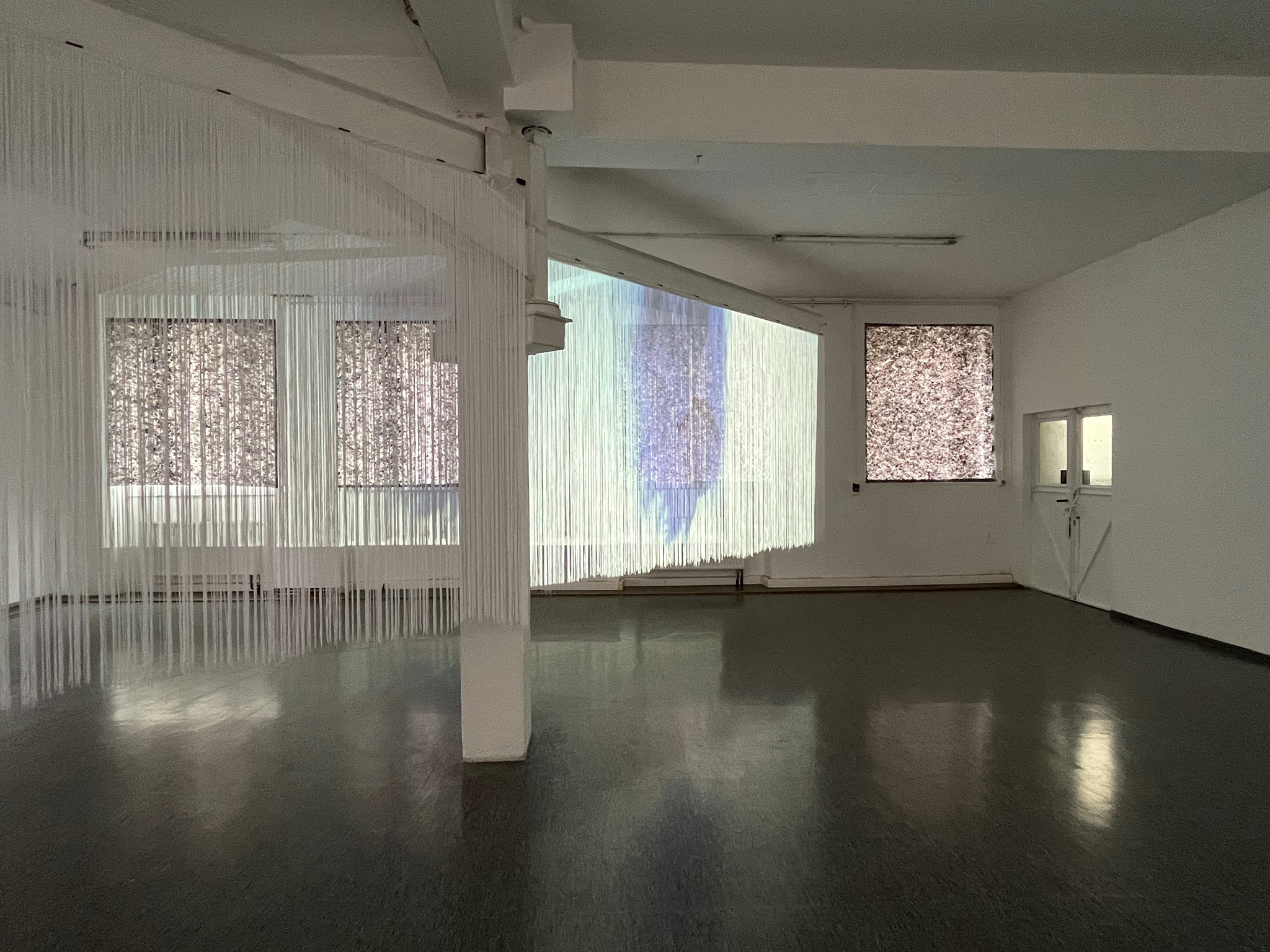
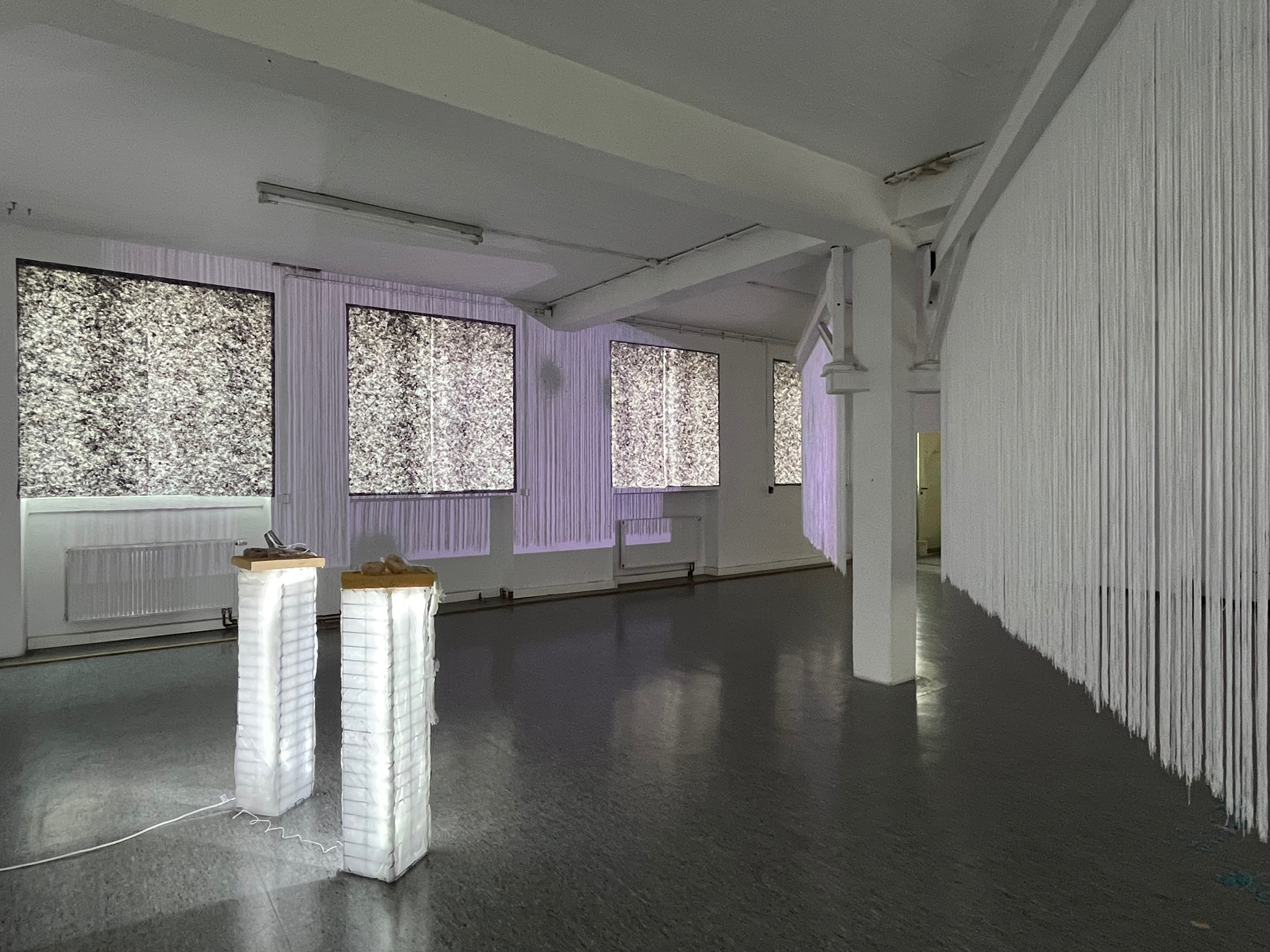
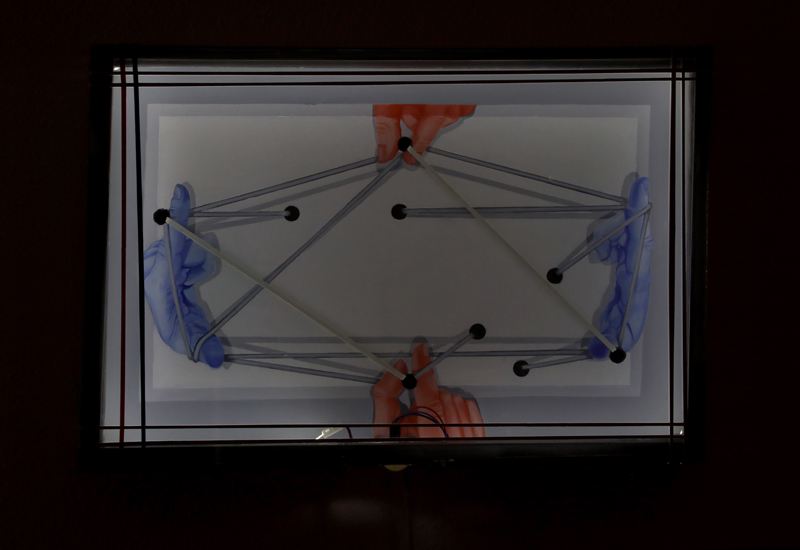
Sophia Mainka, Notes on roommates (a dog, a parrot, a whale and a canal), 2024, installation view
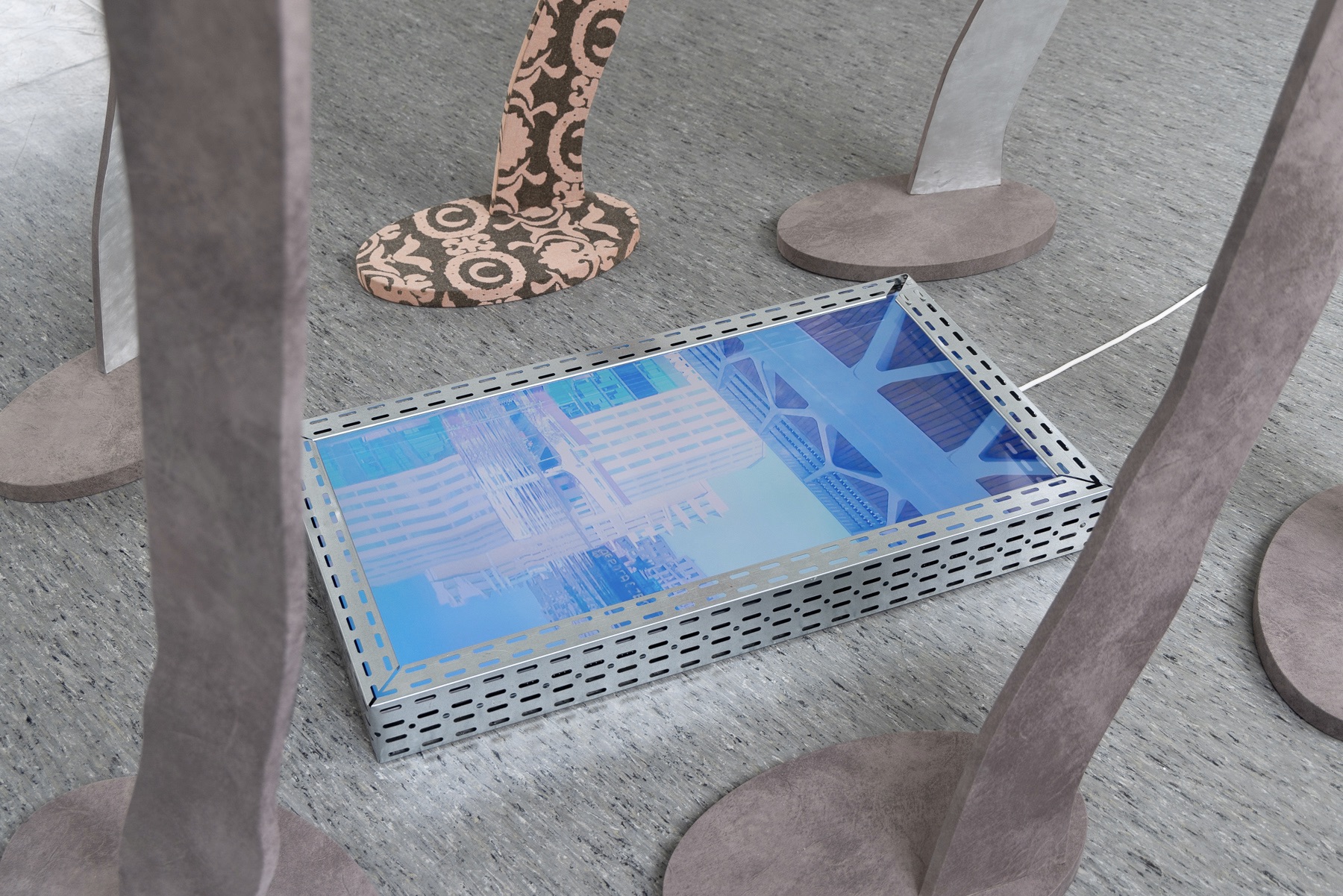
Sophia Mainka, Notes on roommates (a dog, a parrot, a whale and a canal), 2024, detail
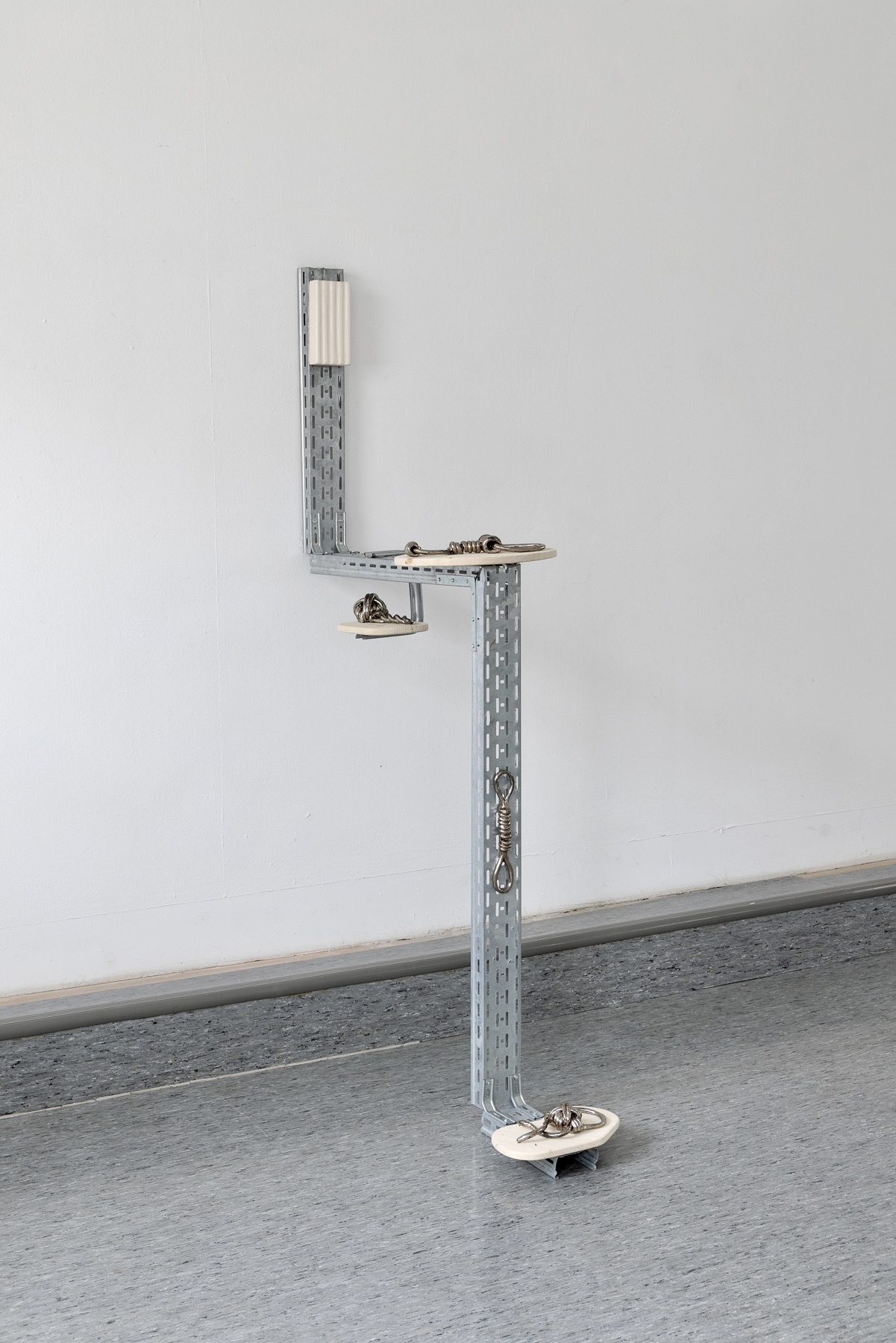
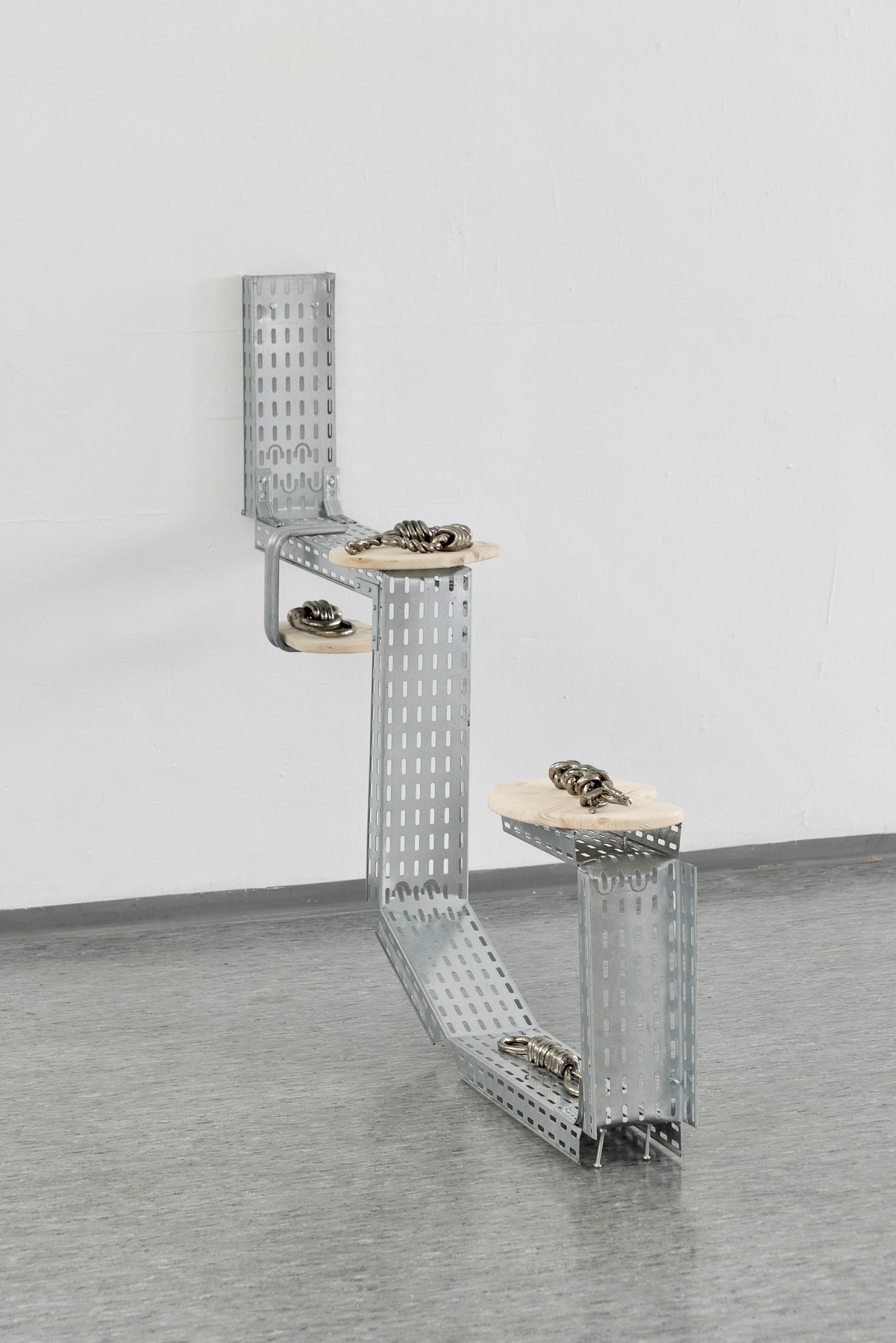
Sophia Mainka, Notes on roommates (a dog, a parrot, a whale and a canal), 2024, installation view

Photos: Thomas Spelt

In the summer of 2022, a Beluga whale strayed into the river Seine and began swimming towards Paris. It was stopped by a lock, refused to eat and was subsequently euthanised. Nobody knows when parrots entered Parisian airspace, but they have been observed in the French capital since the 1970s. They can now be seen in most of Paris’s public parks, from the Bois de Boulogne in the west to the Bois de Vincennes in the east. And dogs – well, dogs have been roaming Parisian streets since forever. Terriers, Dachshunds, Spaniels, and of course, the French Bulldog.


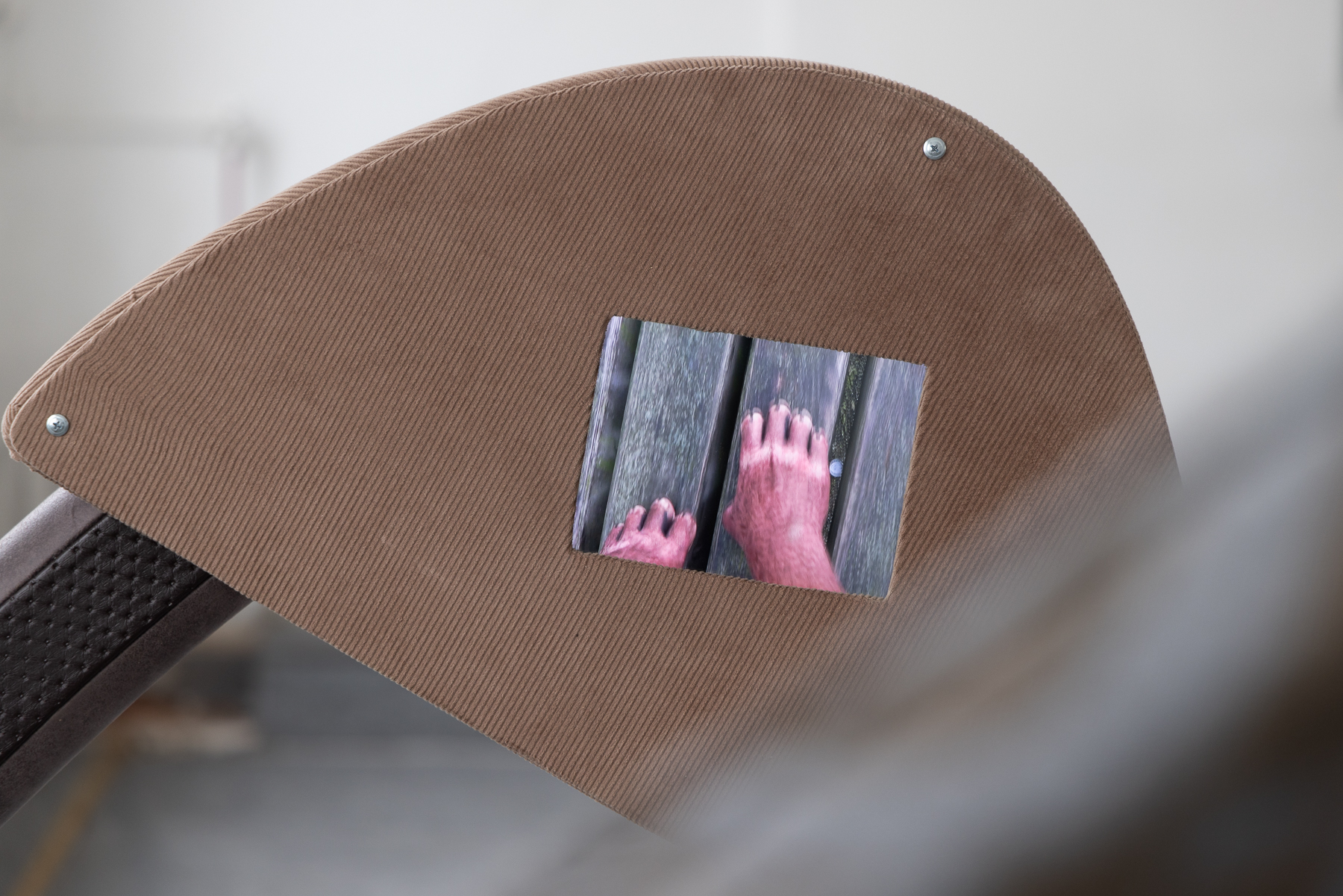
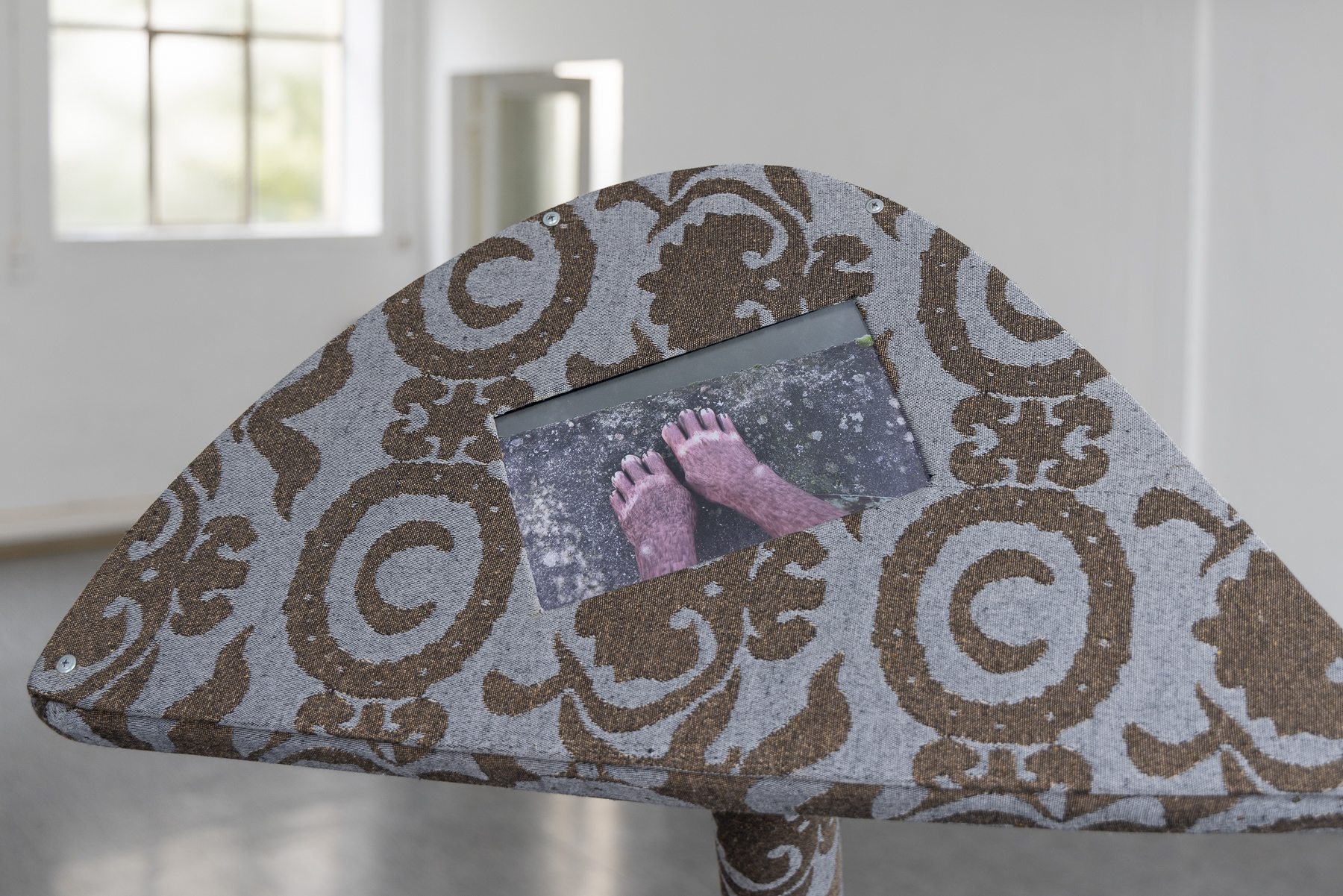
These stories of animals adapting to urban environments lay at the heart of Sophia Mainka’s video and sculpture installation, “Notes on Roommates (a dog, a parrot, a whale and a canal)” produced and first shown during her residency at Fondation Fiminco in Paris. Amid the organic playful forms of the metal sculptures there are three videos, all filmed from the animal perspective. In the first two, Mainka paints her arms and hands to resemble a dog’s paws, and we see these on screen as the fictional dog walks, stops and occasionally runs around the cobblestones and concrete pavements, once even jumping from a wooden bench. In the third, she takes on the perspective of the whale, the camera capturing what the whale would have seen, providing it swam further, into the city canals. The image rises and dips to the rhythm of the whale’s breathing. Surrounding us are the sounds of birds singing, except this too is staged: these are not parrots, but a toy, a bird whistle device.


Her work then, could be described as ethological in spirit. Sophia Mainka does not imitate animals, but rather behaves like them. She scratches, she sniffs, she swims, she trills and peeps. She acts the way an animal would act, if she were a animal in this situation and in this sense, we can think of her work in terms of what the French philosopher Gilles Deleuze would call becoming.


For Deleuze and Guattari, the process of becoming-animal is best described by Vladimir Slepian in his short text, “Fils de Chien.” Written in the first person, Slepian confesses how, despite being a man, his hunger leads him to behave like a dog, putting shoes on his hands and tying them using his mouth. It is a reversal of the evolutionary process described by anthropologist André Leroi-Gourhan, in which humans, through their adoption of an upright posture, free their mouths from the task of grasping and develop speech. Slepian recomposes himself, so that his mouth instead of speaking, grasps like a dog’s. And it is irrelevant how this dog looks like, whether this is the short snout of a bulldog or longer nose of a dachshund.


Similarly, Mainka makes us rethink our relation to nature, which is redrawn along affective lines as a participatory process. Animals are not considered as distinct molar entities, standing alongside the human. All entities are defined by their capacity to act, which changes depending on how they affect and how they are affected by others. There is a sensing of utopia in the environs of the Canal Saint-Martin that Mainka would walk along so happily – a secluded, sheltered place of inter-species co-existence. Or rather, it is a place where different populations, human, mammal and bird, continually compose and re-compose together.

Notes on Roommates (a dog, a parrot, a whale and a canal)

Sophia Mainka

in collaboration with Fondation Fiminco, Paris

6.09 – 13.10.2023

Lothringer 13 Studio, Lothringer Str. 13, 81667 München

Sophia Mainka, Chien et canal, 2024 video still (3.44min, fullHD, without sound, loop)

We participate in nature and nature participates in us: in her art practice, Sophia Mainka has always been open to strange encounters with animals, plants and minerals. The work created during her stay at the Fondation Fiminco in Paris deals with the coexistence of different species within an urban space. Parrots fly across the city, a whale swims up the Seine and dogs walk on paved streets. Mainka responds ethologically, allowing the animal encounter to affect the way she acts.
“Notes on Roommates” is a series of video sculptures Mainka first presented at the residency, restaged at GiG Munich. To produce her fictitious gathering of animals, she builds a room for them: industrial material is bent into organic shapes and upholstered with fabrics featuring botanical patterns. Here we see her become dog, her painted fists becoming paws; we see her as the whale, in the murky river water, rising up to breathe.

Wir sind Teil der Natur und die Natur ist Teil von uns: Sophia Mainka öffnet sich in ihrer künstlerischen Praxis für ungewöhnliche Begegnungen mit Tieren, Pflanzen und Mineralien. Während ihres Aufenthalts in der Fondation Fiminco in Paris entstanden Werke, die das Miteinander verschiedener Arten im urbanen Raum thematisieren: Papageien fliegen durch die Stadt, ein Wal schwimmt die Seine hinauf, Hunde laufen auf gepflasterten Straßen. Mainka reagiert ethologisch, lässt zu, dass diese Begegnungen ihr Handeln beeinflussen.
„Notes on Roommates“ ist eine Installation mit Videoskulpturen, die sie während ihrer Residency präsentierte und nun im GiG Munich neu inszeniert. Um die Zusammenkunft der Tiere darzustellen, baut sie einen Raum für sie: Industrielles Material wird zu organischen Formen gebogen und mit botanisch gemusterten Stoffen gepolstert. Mainka verwandelt sich selbst in einen Hund, ihre Fäuste werden zu Pfoten; wir sehen sie als Wal, der im trüben Wasser auftaucht, um zu atmen.

Electric bodies shooting through space

Janna Jirkova

25.11 – 30.12.2022

Lothringer 13 Studio, Lothringer Str. 13, 81667 München
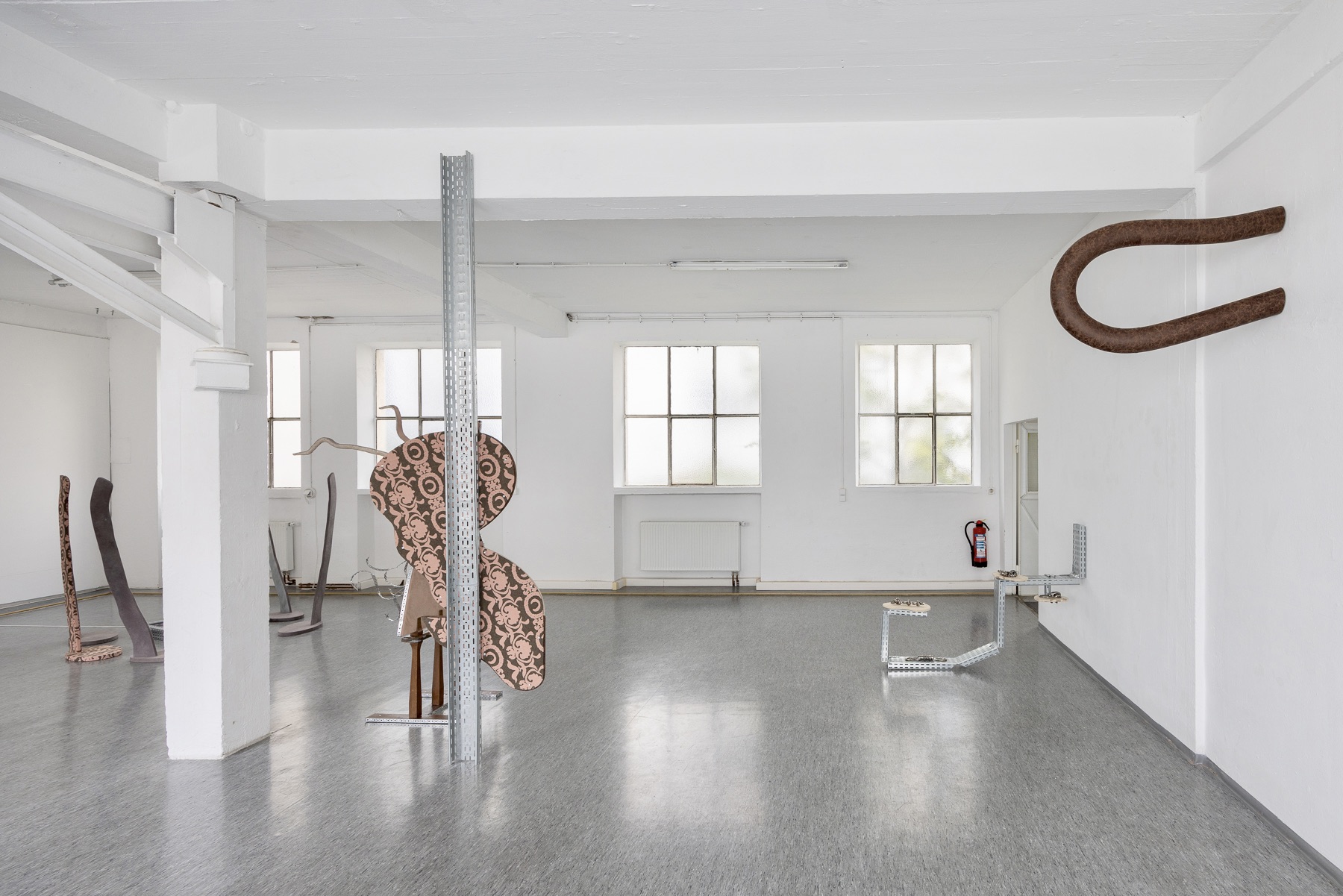
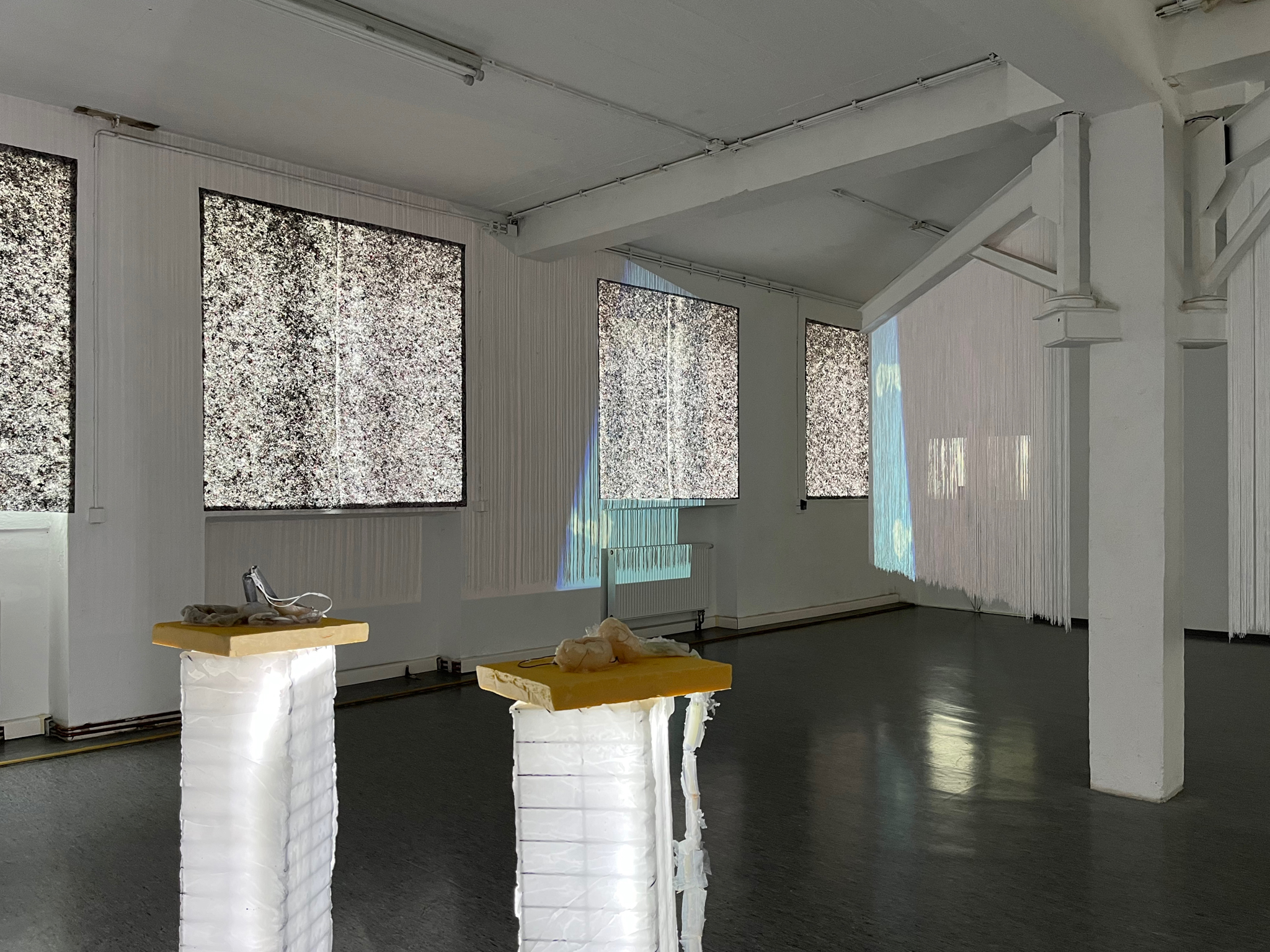
Janna Jirkova, Electric bodies shooting through space, 2022, installation view
Janna Jirkova, Her Do, 2022, video, HD, 16:9, 7:32 min, Sound: Daniel Geßl
anna Jirkova, Feeler, 2022, monitor mount, spray paint, silicon, wax
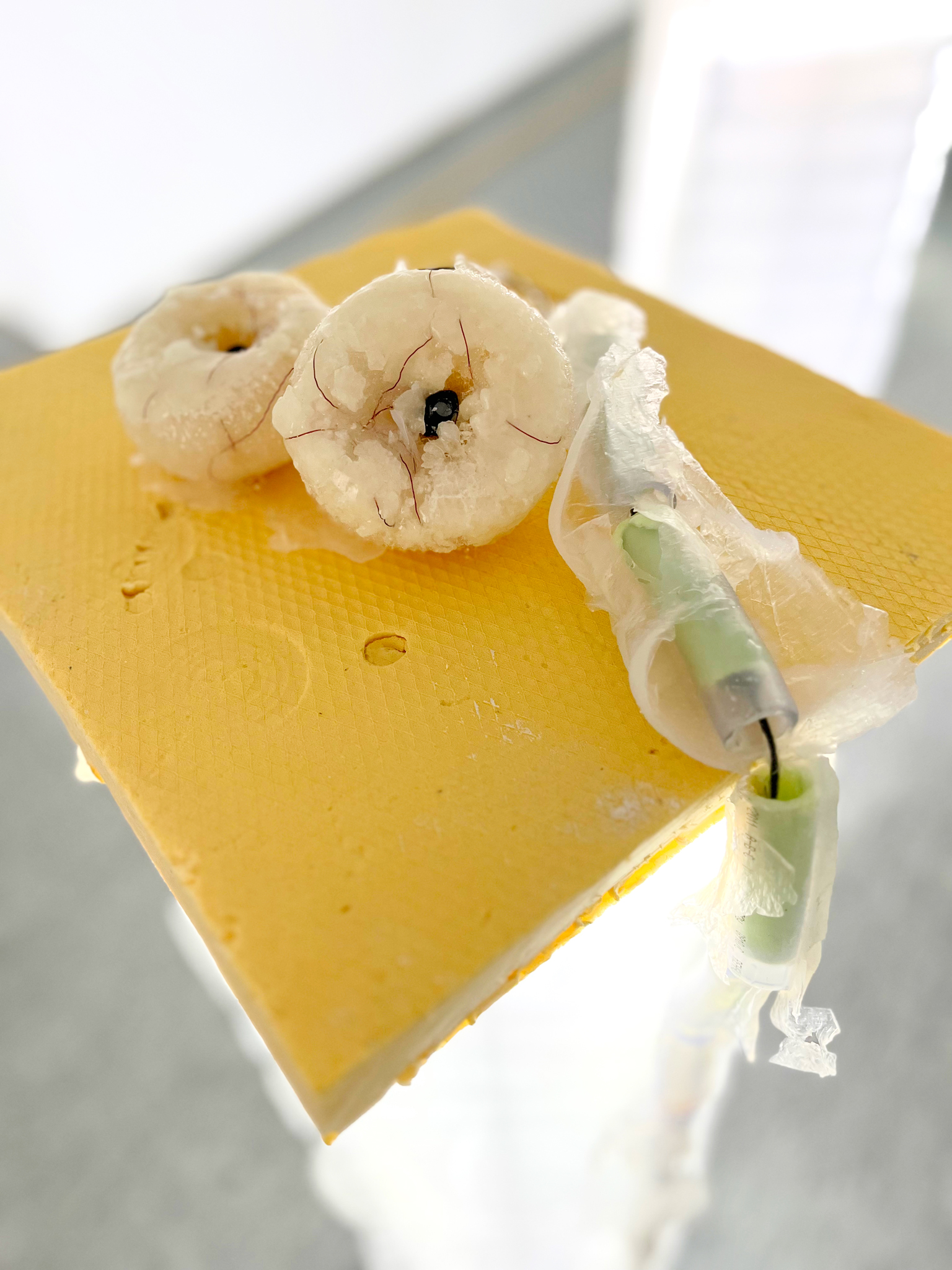
Janna Jirkova, Audiobun, 2022, headphones, silicon, hairwax, PVC, wire, hair donut
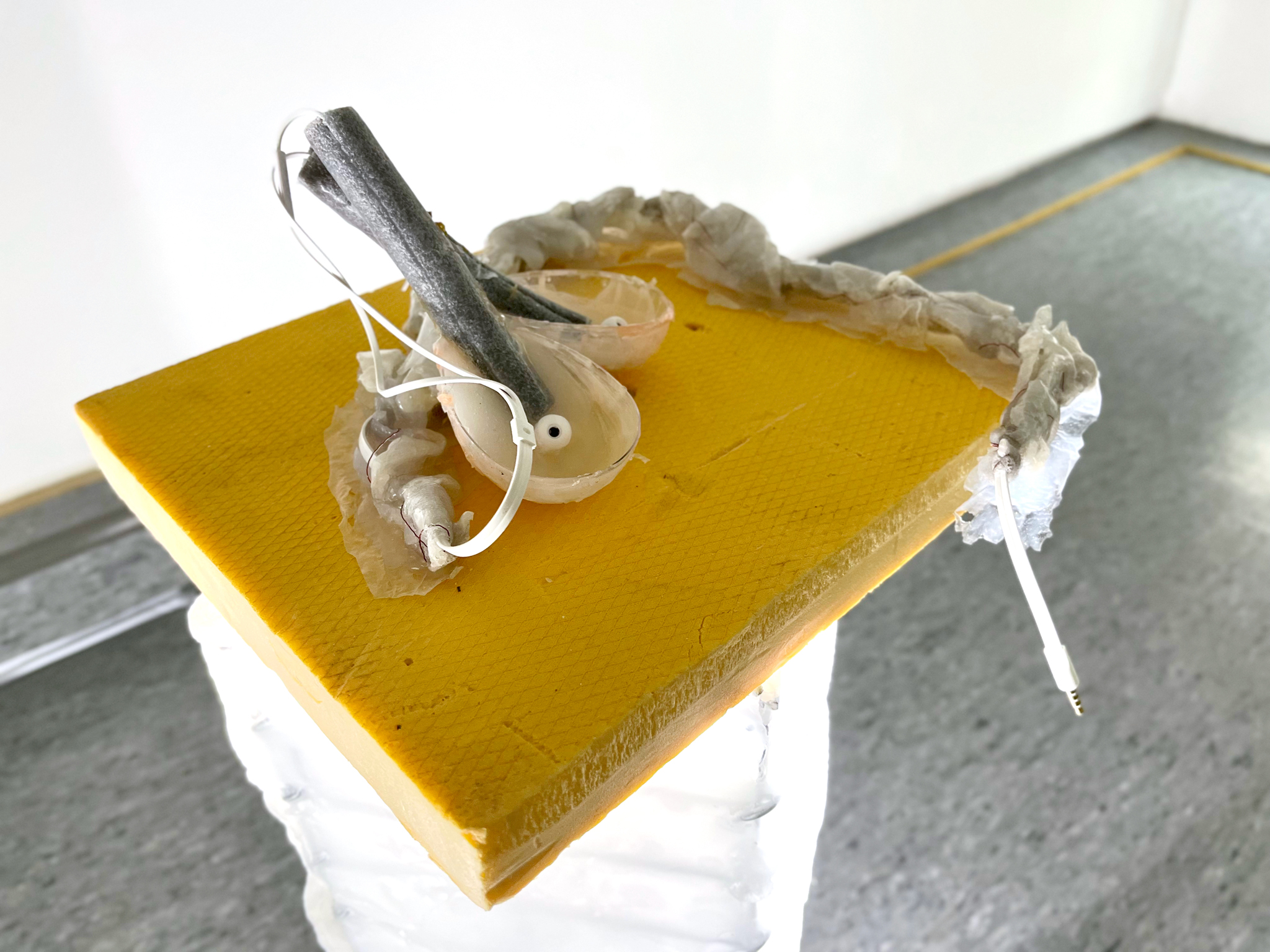
Janna Jirkova, Braidphones, 2022, headphones, silicon, wax, wire, nylon ribbon
Janna Jirkova, Electric bodies shooting through space, 2022, installation view
Janna Jirkova, Her Do, 2022, video, HD, 16:9, 7:32 min, Sound: Daniel Geßl
Janna Jirkova, Electric bodies shooting through space, 2022, installation view
Janna Jirkova, Her Do, 2022, video, HD, 16:9, 7:32 min, Sound: Daniel Geßl

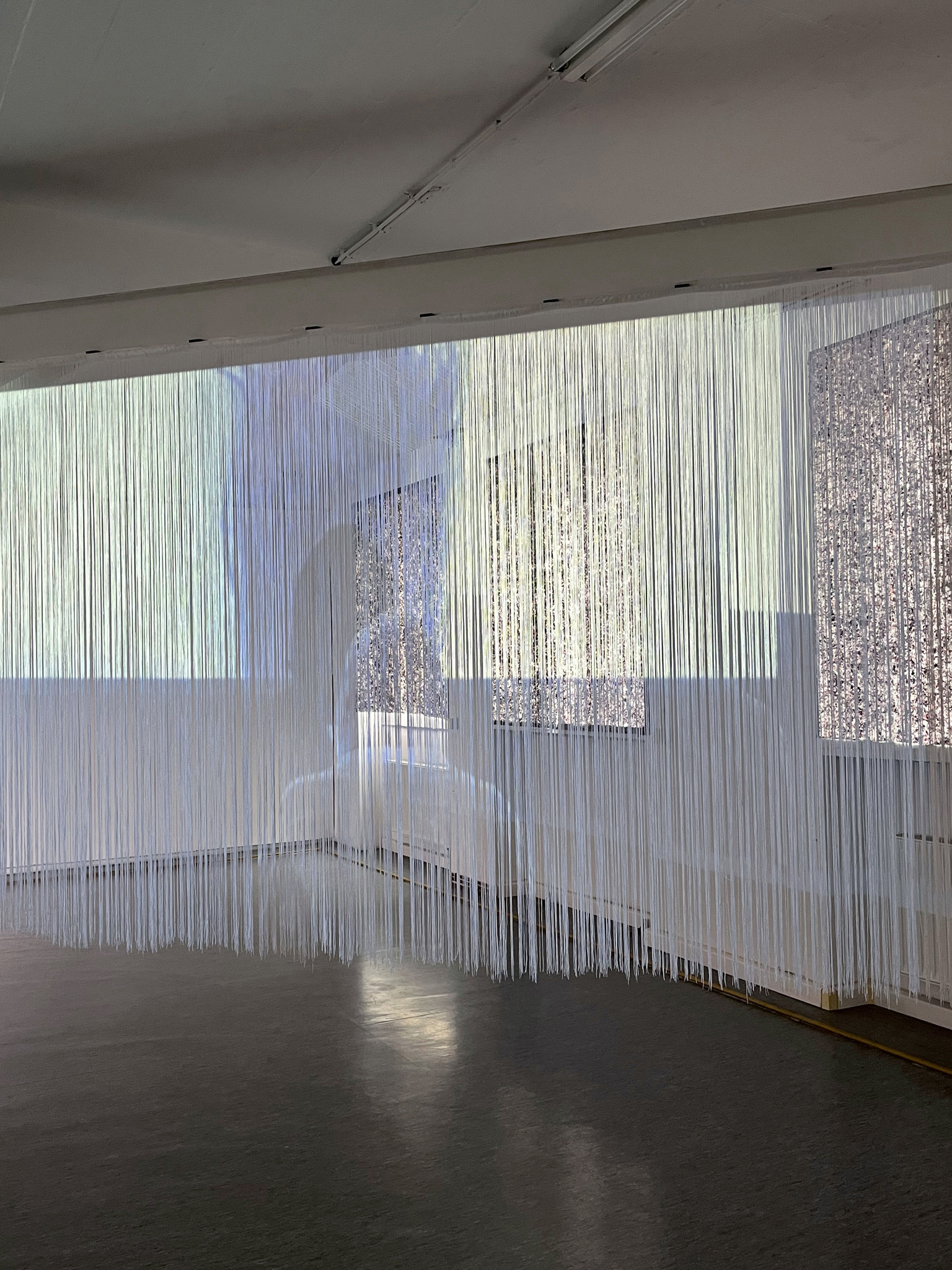
I have long, straight hair, slightly dry at the ends, too seldom cut. When I read or write, I tuck the loose strands behind my ear. It is always present, over there, too much to count yet infinitely countable. Oddly, I think of hair when I read Brian Massumi’s definition of the virtual (“Envisioning the Virtual” in The Oxford handbook of Virtuality, 55-70), and not only because of his arguments about value (because you are worth it!). For he opposes the virtual to the actual, rather than the natural or the real, and explains through Whitehead’s opposition of the sensuous and non-sensuous. Hair is sensuous because it exists over there, ready to be counted. There is a reference to space – counting unfolds in time. But hair is also virtual I guess, because it also appears to perception all at once: I do not have to pick a strand and start counting. Hair is there in one fell swoop, or rather swoosh. I already have a rough idea of a number – through habit, previous knowledge and earlier, other experiences. But as soon as I try to locate and fix this dimension – to grasp it in my hand – this virtual aspect disappears into the actual. Massumi describes the non-sensuous as having “a strangely compelling, shimmering sterility” (60) and this makes me think of the hair in this exhibition, Electric bodies shooting through space, silky white curtains on which the video work, Her do, shimmers. 

In her work, Janna Jirkova plays with the natural and the artificial. Natural are our bodies: nails, mouth, belly, hair; artificial is the technology, both high and low tech, she attaches to her body in cyborg-like fashion. The electric bodies shooting through space are us, joggers wearing headlights in the dark, Major Tom floating in a tin can. But it is not that technology functions as some sort of extension of our body and its capacities, rather, Jirkova shows how our bodies are already artificial (and by extension, the artificial is already also natural). “Self-prosthetic” is Massumi’s term (64). 

The English labels Jirkova reads out in her video, “pretty package… high performance …. the type I like” – but also negatively, “broken … malfunctioning” – are ways to describe both: the human body and technology, the natural and the artificial tangled together in language. On the shimmering screen, we see purple hair being used to tickle a belly, except that the hair is another video projection and the belly, a plaster cast. Again, she touches her navel, but this is on a mobile phone screen, forward facing, in a pouch of a rubber apron, worn over a white protective suit. “Samson, Samson, show me your hair!” Her hair, the hair of the empress Elisabeth. There is body hair shown as a video of a fern unfurling, and the abstract red and pinks are made by placing fingers over the recording device. Jirkova sets out to produce a field of tensions between different modes of existence, actual and virtual. These are tensions that come with the contrast between the sensuous and the non-sensuous. As Massumi argues, modes do not add up to anything – they do not form anything. Experience emerges when the pressure becomes unsustainable and these tensions break (62). 

Through this intensive force field all of our experience is conditioned. What we bring to the conditional field phenomenon is our tendencies, in which they are a formative factor. Only these tendencies can be either natural, in the sense of a genetic predisposition or artificial, as in learnt. For Massumi, art and technology merely extend the body’s pre-existing regime of natural and acquired artifice, “already long in active duty in producing the virtual reality of our everyday lives” (64).  We are caught between our tendencies in an intensive force field of emergence, indeed like “motes,” “caught up in a tumult of non-Newtonian motion” (Beckett, Murphy, Chapter 6).

Magdalena Wisniowska  2022

Online Discussion Reading the Air

Kalas Liebfried, Dr. Sebastian Truskolaski

12.01.2022, 7 pm

As part of the series Thinking Nature, GiG Munich is hosting the online discussion between the artist, Kalas Liebfried and Dr Sebastian Truskolaski, Lecturer (Assistant Professor) in German Cultural Studies at the University of Manchester. The discussion takes place on Zoom on Wednesday evening at 7 pm, the 12th of January. 

Please note that while the discussion is free to attend, make sure to keep your microphone on mute and your video off. The discussion will also be recorded for later viewing. 

Join Zoom Meeting
https://zoom.us/j/97973485525

Betrachtungen des Waldes

Online discussion with Elke Dreier and Arjen Kleinherenbrink

28.05.2021

As part of the series Thinking Nature, GiG Munich hosted the online discussion between Elke Dreier (currently showing her work Betrachtungen des Waldes at GiG) and Dr. Arjen Kleinherenbrink (assistant professor in metaphysics and philosophical anthropology at the Faculty of Philosophy, Theology and Religious Studies at the Radboud University Nijmegen, Netherlands) . The zoom discussion took place on the 28th of May. 

 The image in Elke Dreier’s work is the forest clearing – Arjen Kleinherenbrink will be introducing Deleuze and Guattari’s idea of the plane of nature. In this way, we will move from clearing to plane, to see how things might reveal themselves to us and how things came about to be what they are. 

To watch the discussion on Vimeo, please find the link here:  https://vimeo.com/558918382.

The project is funded by the City of Munich Department of Art and Culture.

Betrachtungen des Waldes

Elke Dreier

11.05 – 11.06.2021

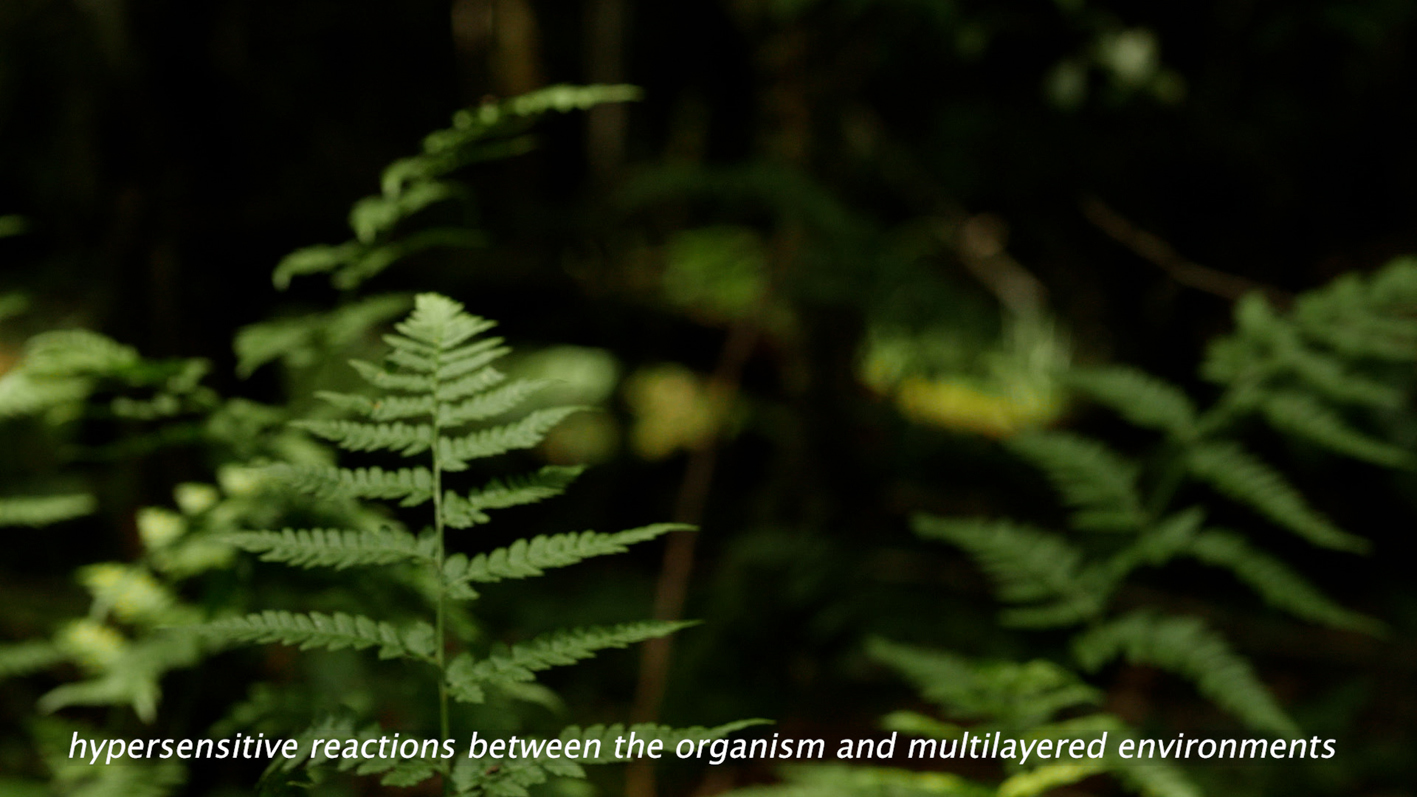
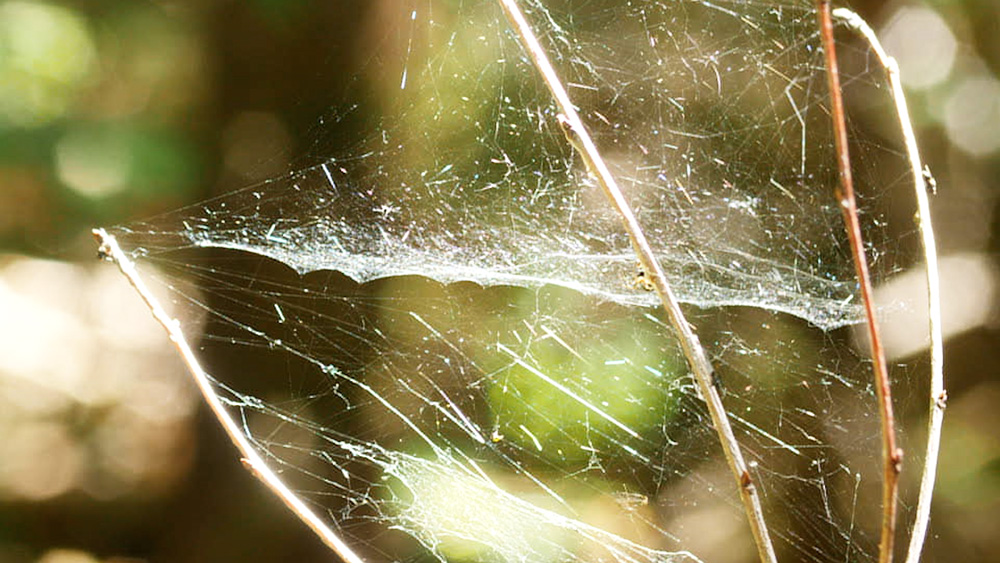
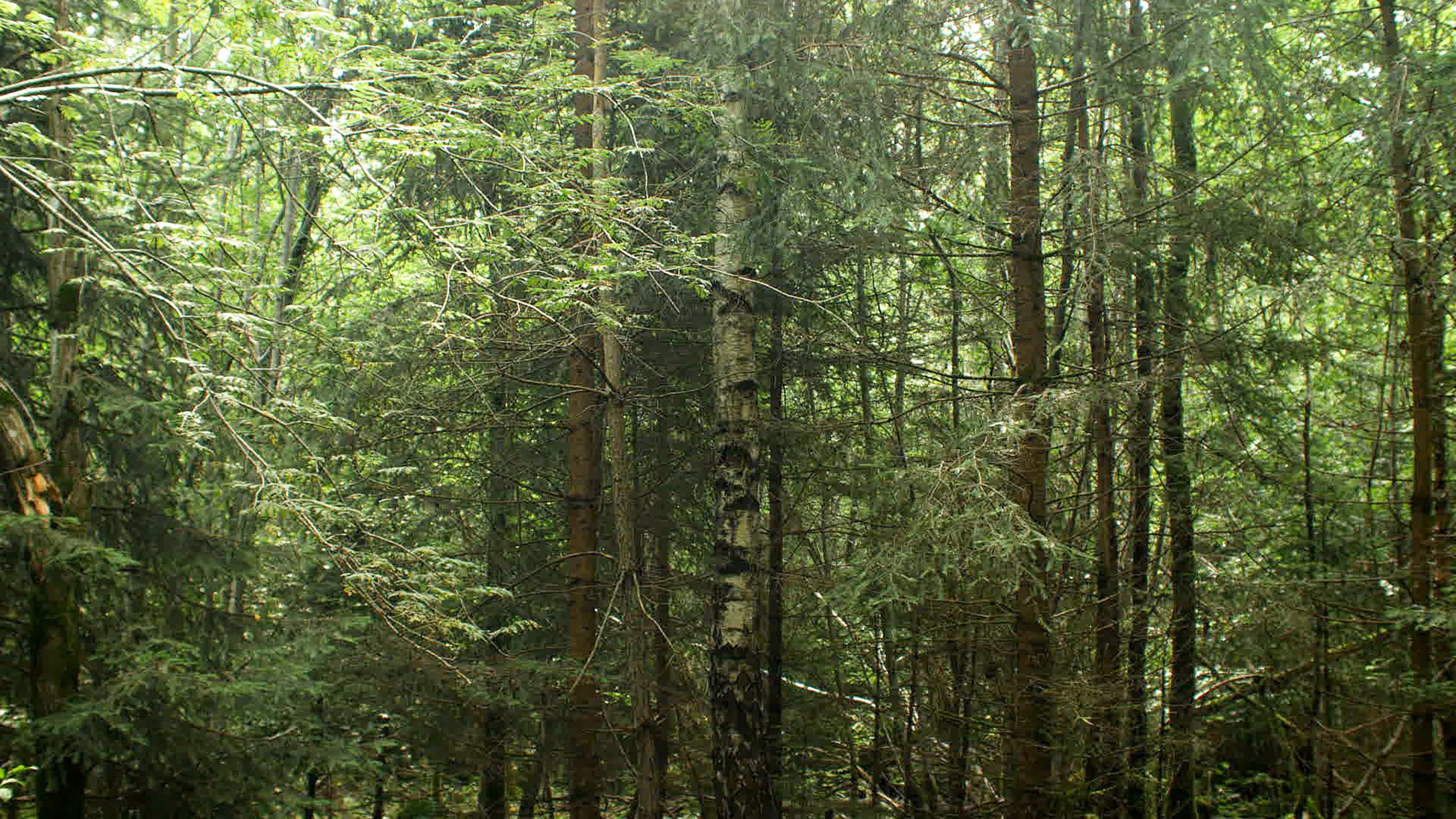
Elke Dreier, Betrachtungen des Waldes, 2021, video installation (still image)

Elke Dreier, Betrachtungen des Waldes, 2021, video installation (still image)

Elke Dreier, Betrachtungen des Waldes, 2021, video installation (still image)

Elke Dreier, Betrachtungen des Waldes, 2021, video installation (still image)

Elke Dreier, Betrachtungen des Waldes, 2021, video installation (still image)

Elke Dreier, Betrachtungen des Waldes, 2021, video installation (still image)

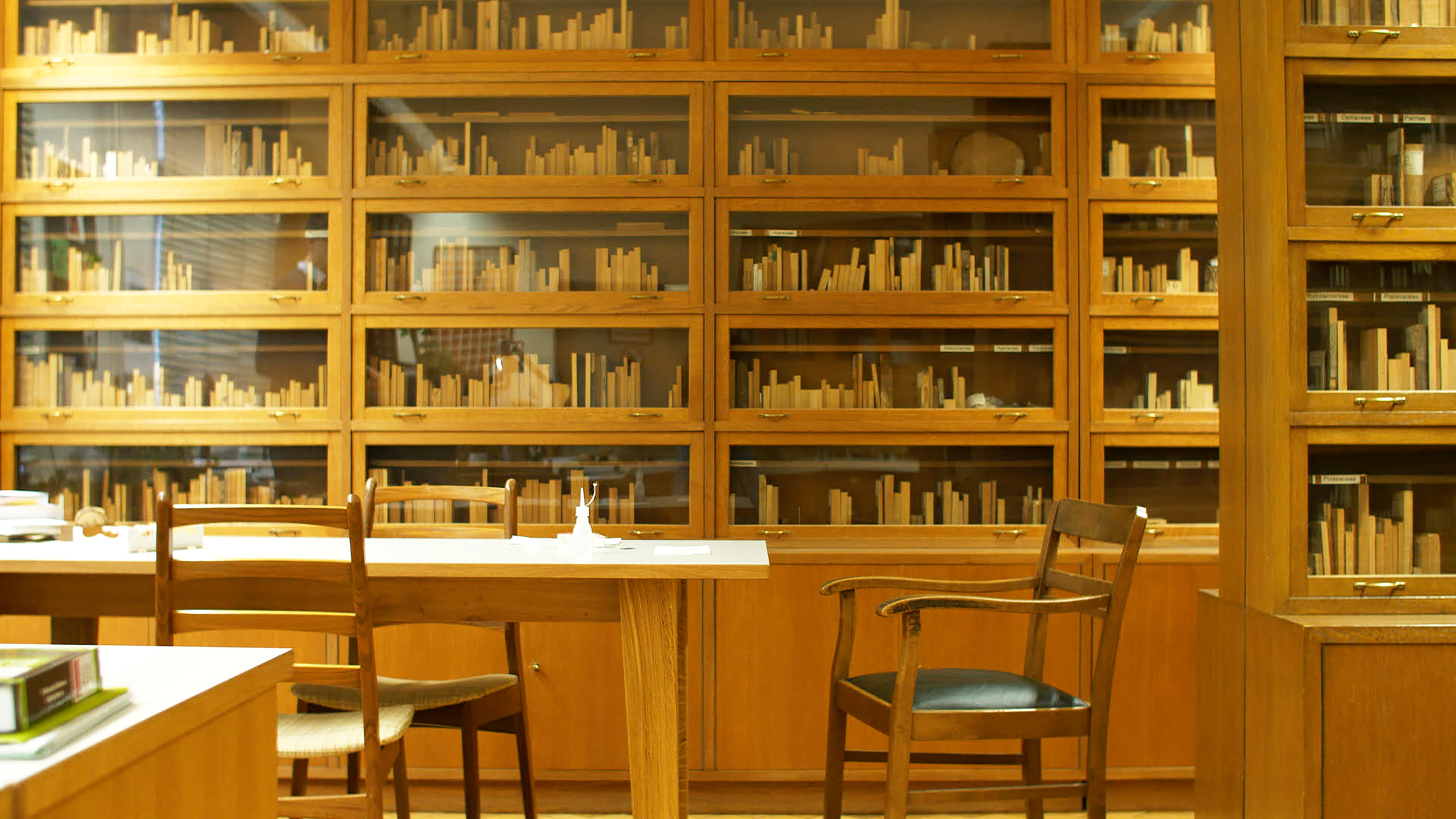
Camera: Daniel Asadi FasziXylothek, TUM Holzforschung München

Elke Dreier, Betrachtungen des Waldes, 2021, video installation (still image)

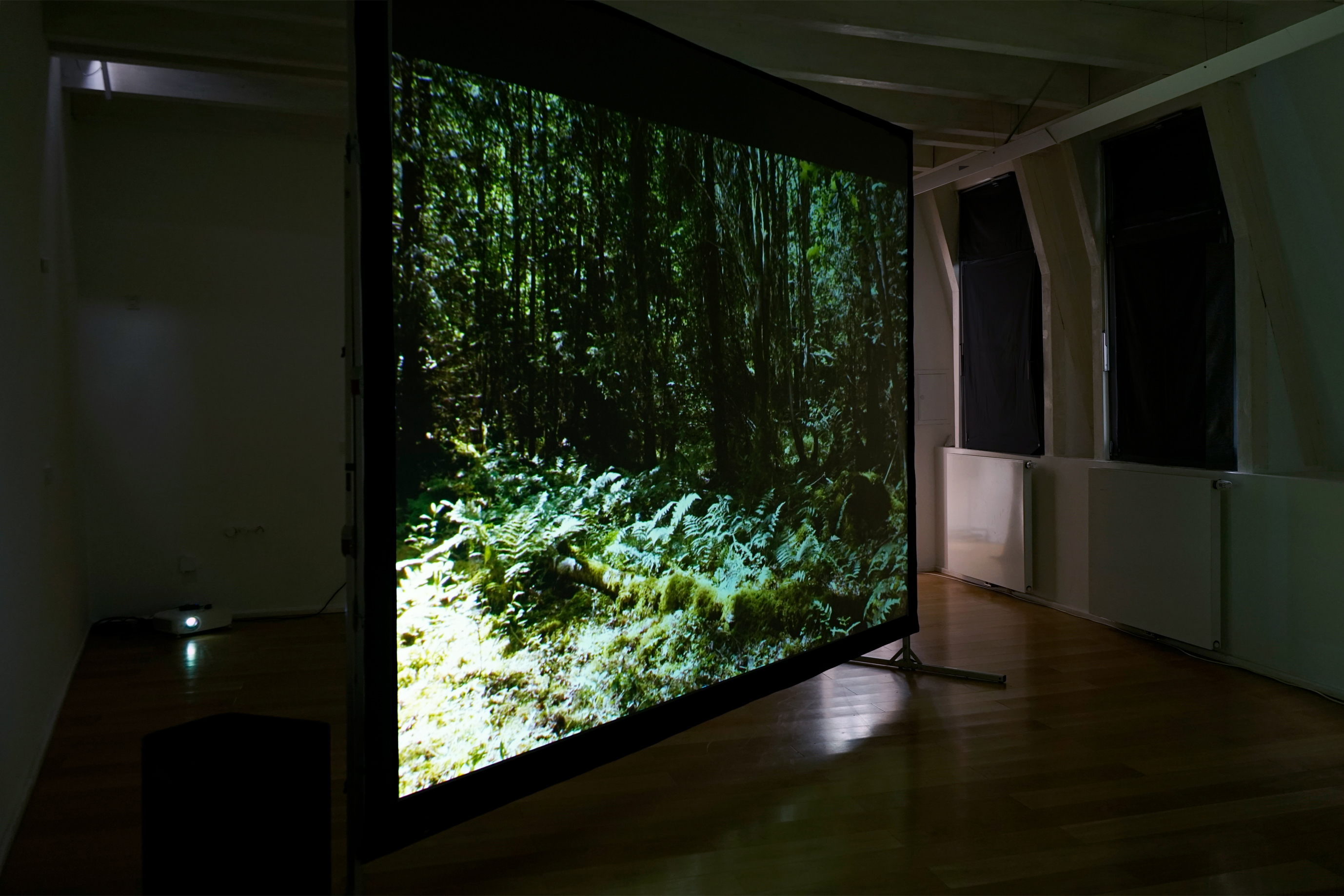
Elke Dreier, Betrachtungen des Waldes, 2021, video installation (installation view)

Elke Dreier, Betrachtungen des Waldes, 2021, video installation (installation view)

Elke Dreier, Betrachtungen des Waldes, 2021, video installation (installation view)

Elke Dreier, Betrachtungen des Waldes, 2021, video installation (installation view)

The clearing in the forest is such a compelling image. It always seems to happen quite suddenly. The trees fall away to reveal an empty space. The sun shines there. Birds sing.  A butterfly flutters by.  Things become visible in the clearing as the eye adjusts to the bright light. We begin to perceive things that were previously hidden — things that otherwise might have escaped our notice. When we enter the clearing things show themselves to us. But what are these things that we see? And who are the ‘we’ to who see them?

For me, the clearing always will belong to Heidegger. When in ‘The Origin of the Work of Art’ he starts to describe the relation between truth and unconcealment, it is the clearing to which he turns. He writes here so memorably,

In the midst of being as a whole an open place occurs. There is a clearing. Thought of in reference to beings, this being is more in being than are beings. Thos open center is therefore not surrounded by beings; rather, the clearing center itself encircles all that is, as does the nothing, which we scarcely know. (‘Origin of the Work of Art,’ in Heidegger, Basic Writings, 114)

Heidegger makes good use of the way the clearing makes the forest visible to us, the moment when we finally see the space, light, and air, that despite always being present, within the forest remaining unnoticed, overlooked. For Heidegger, the clearing then becomes the metaphor for how beings stand in Being. 

But there are so many other approaches to the clearing, and it is this that the work of Elke Dreier shows so well: the clearing in its compelling-ness. We might look at the video footage of the local forest and see the light, the trees and the leaves. Those who are more observant might catch a glimpse of an insect or bird.  An expert bird imitator however, would know the names of all the birds he hears and be able to replicate their song exactly. Similarly, the staff at Munich’s Xylotheque could identify the wood structures of each of the trees found there. The clearing is thus open to all those who wish to enter. It invites us in.

The clearing as presented by Elke Dreier in Betrachtungen des Waldes is the first in a series of exhibitions (entitled, Thinking Nature) held at GiG Munich. These exhibitions hope to examine man’s relation to nature, or more accurately, how man’s thinking is structured through the relation he has with nature. For too long this kind of thinking had been focused on the relationship man establishes with nature. Traditionally, the condition of knowledge lies within the human subject and whatever his experience of the world might be. More recently Marxist, feminist, and postmodern thought have set to critique this relationship further.  I would argue the challenge is to think nature outside this relation, with our current climate crisis as well as the ongoing corona pandemic making this task all the more urgent. The clearing of Elke Dreier work is to provide the open space for discussion. 

Magdalena Wisniowska 2021

Maria VMier

Vier

12.10 – 23.11.2019


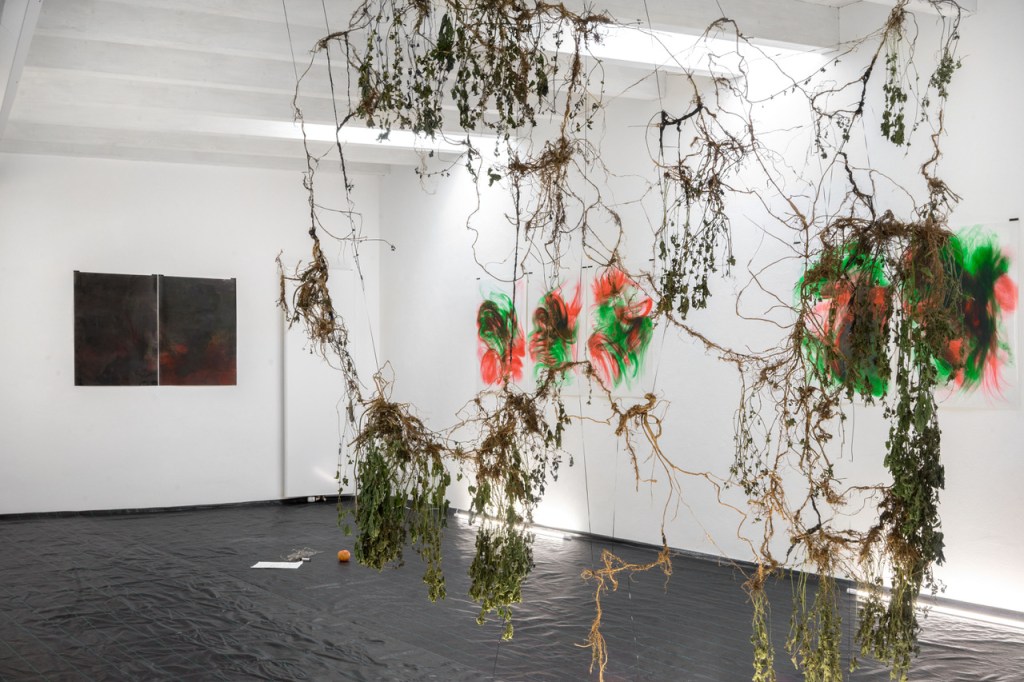
sVrg1-5_DSC0813Vier, 2019, installation view


3_DSC0275Vier, 2019, installation view


4_DSC0620Vier, 2019, installation view


rg1-3_DSC0639Vier, 2019, installation view


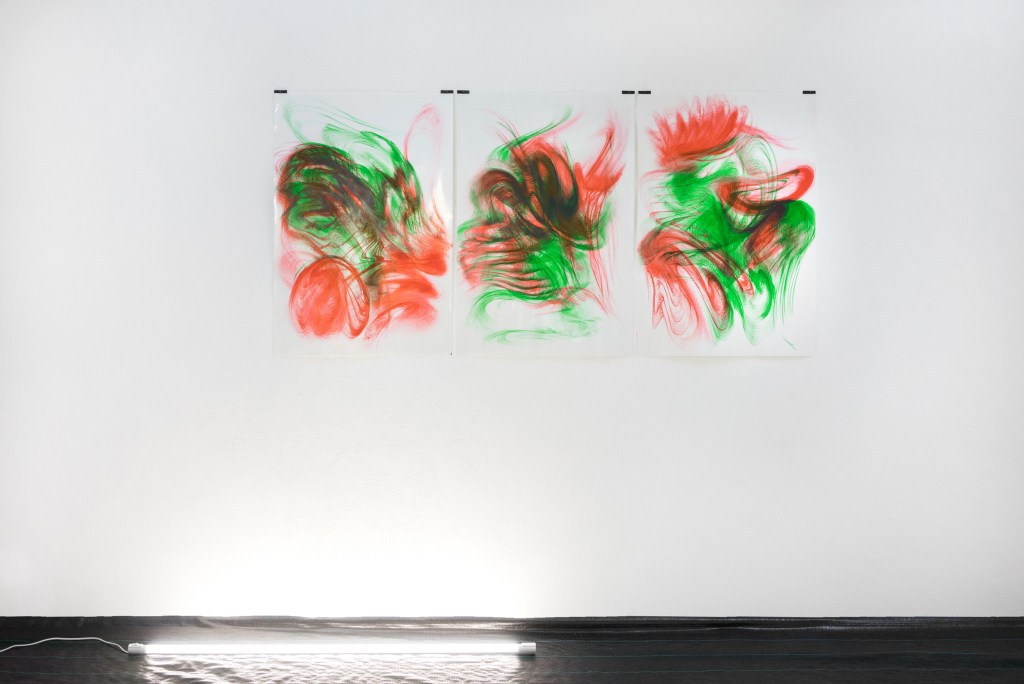
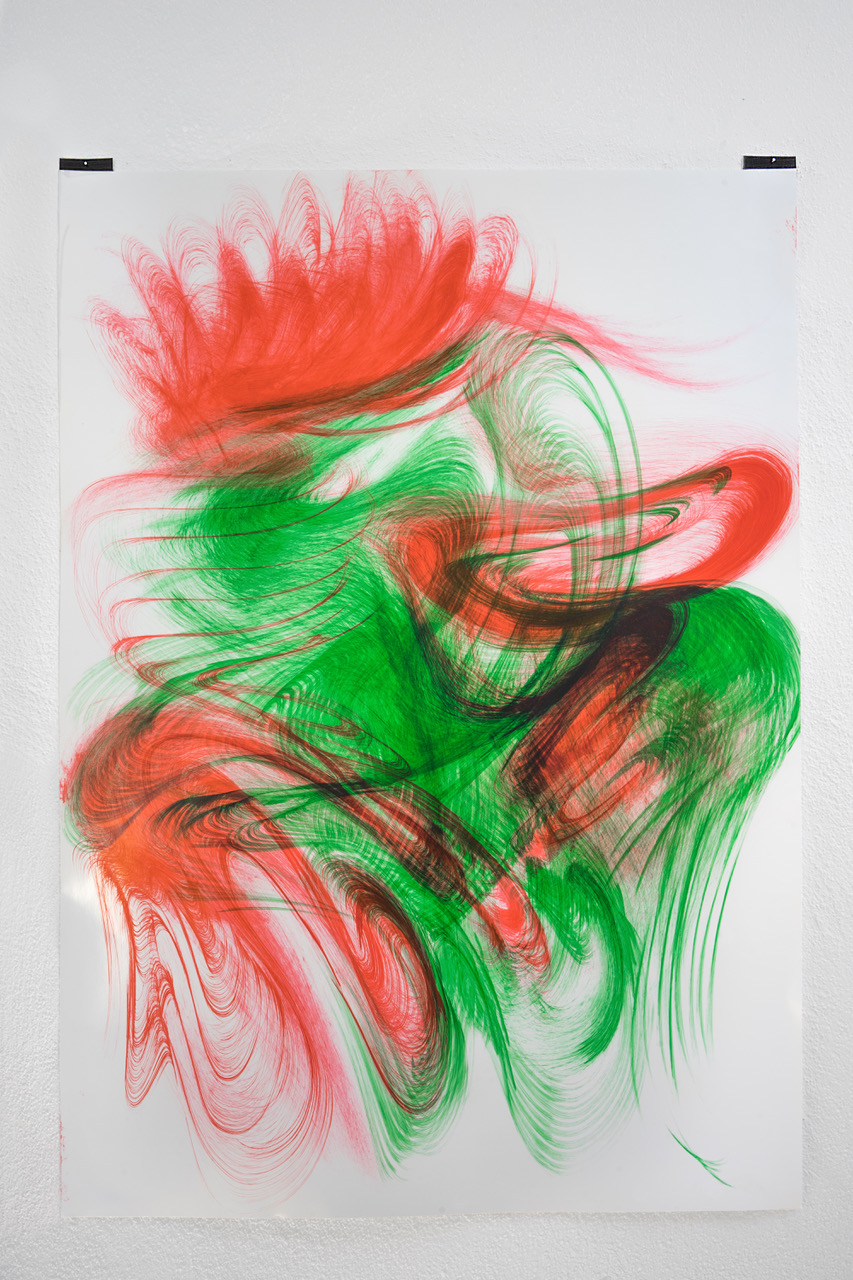
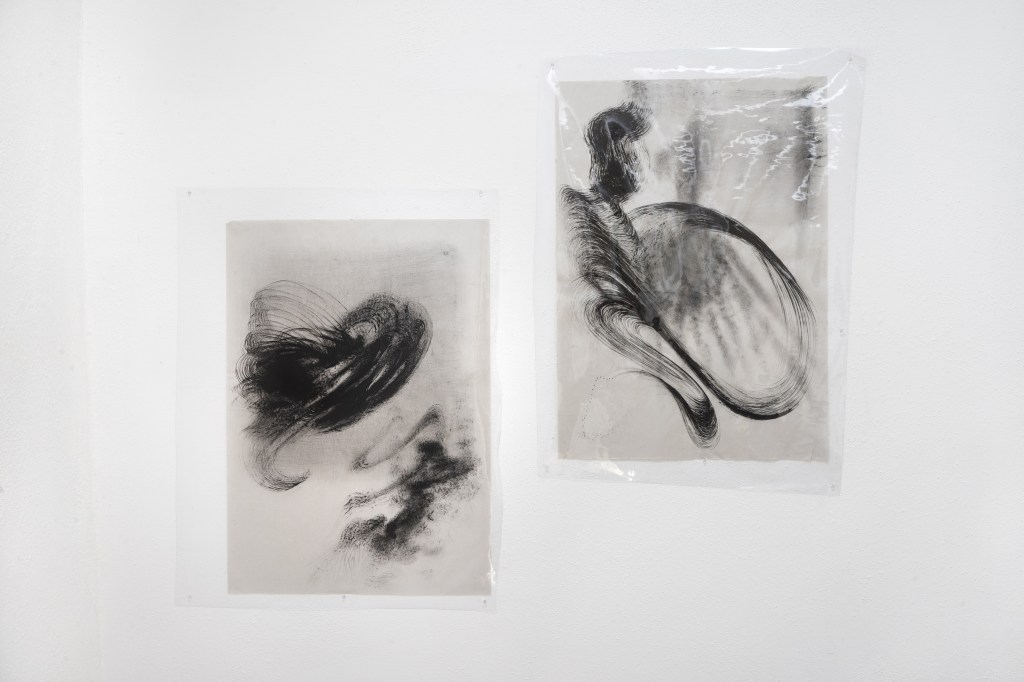
rg3_DSC0702o. T. [ scarlet red and sap green ], 2019, Indian ink on chromolux, 70 x 100 cm
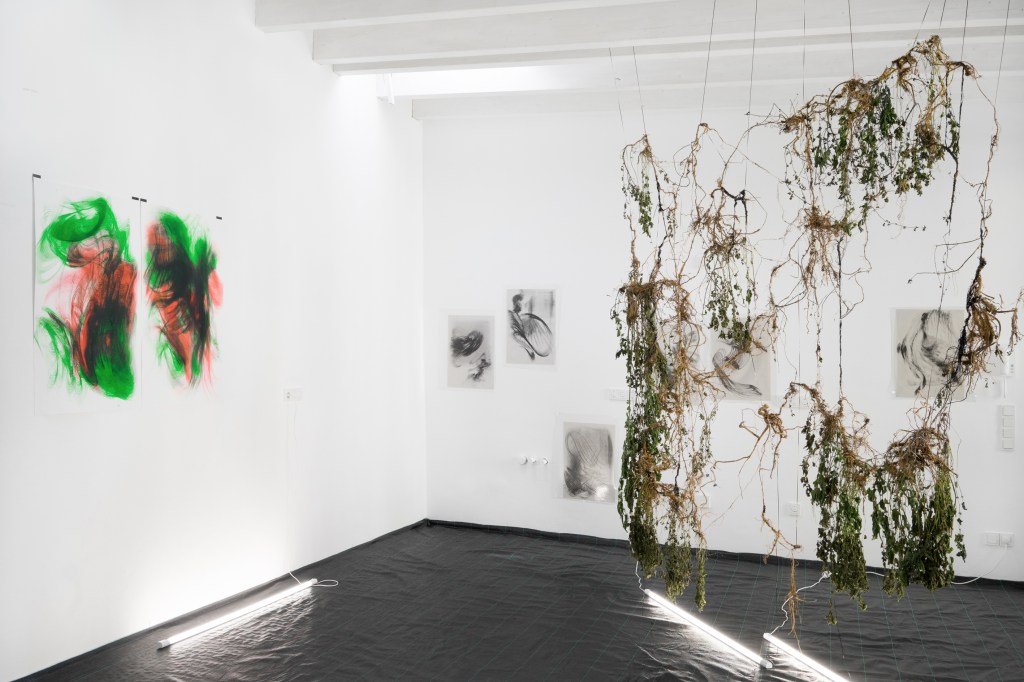
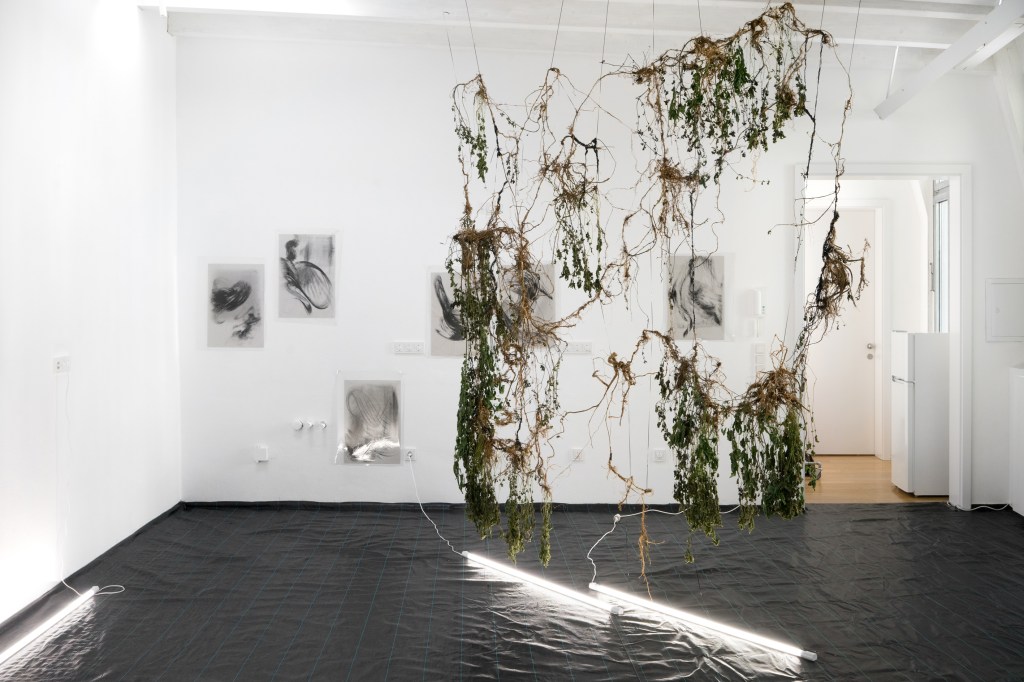
 

12_DSC0475Vier, 2019, installation view


9_DSC0629o. T. [ scarlet red and sap green ], 2019, Indian ink on chromolux, 70 x 100 cm


22_DSC0406Vier, 2019, installation view


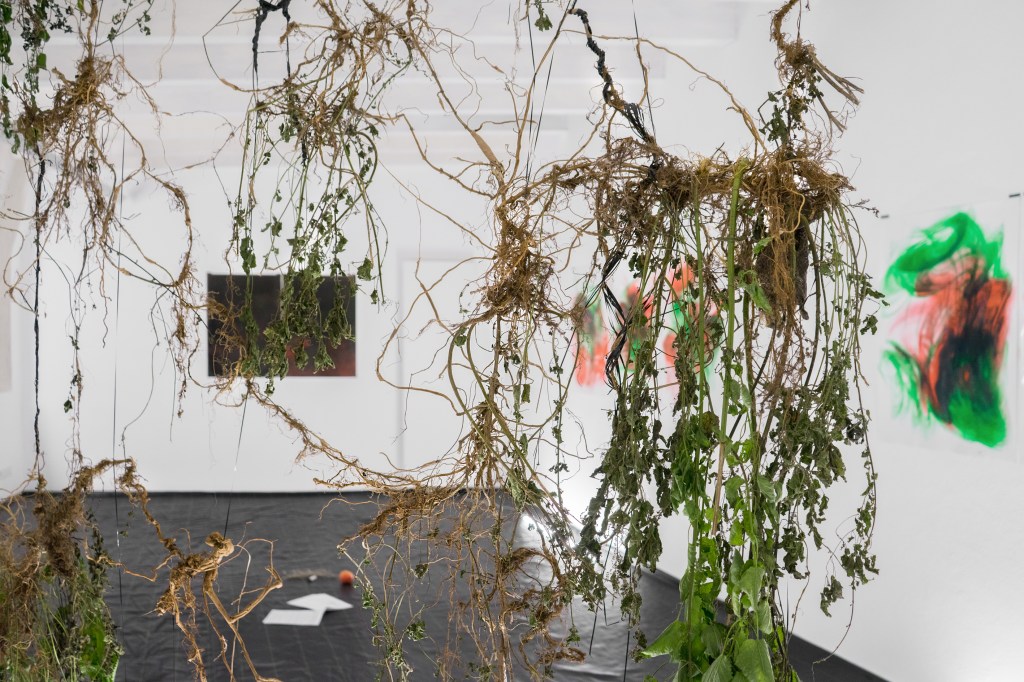
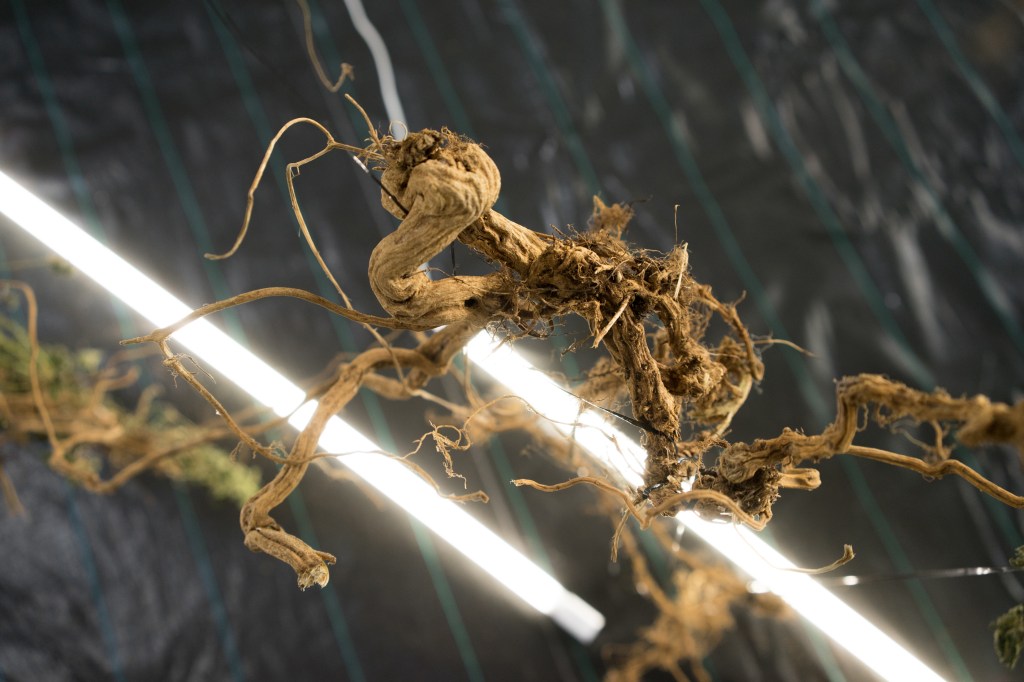
13_DSC0395o.  T. , 2019, Stinging nettles,  black plastic, dimensions variable, detail


15_DSC0480o.  T. , 2019, Stinging nettles,  black plastic, dimensions variable, detail


20_DSC0482 o.  T. , 2019, Stinging nettles,  black plastic, dimensions variable, detail


23_DSC0752o. T. [black ], 2019, Indian ink on newsprint, 42 x 60 cm
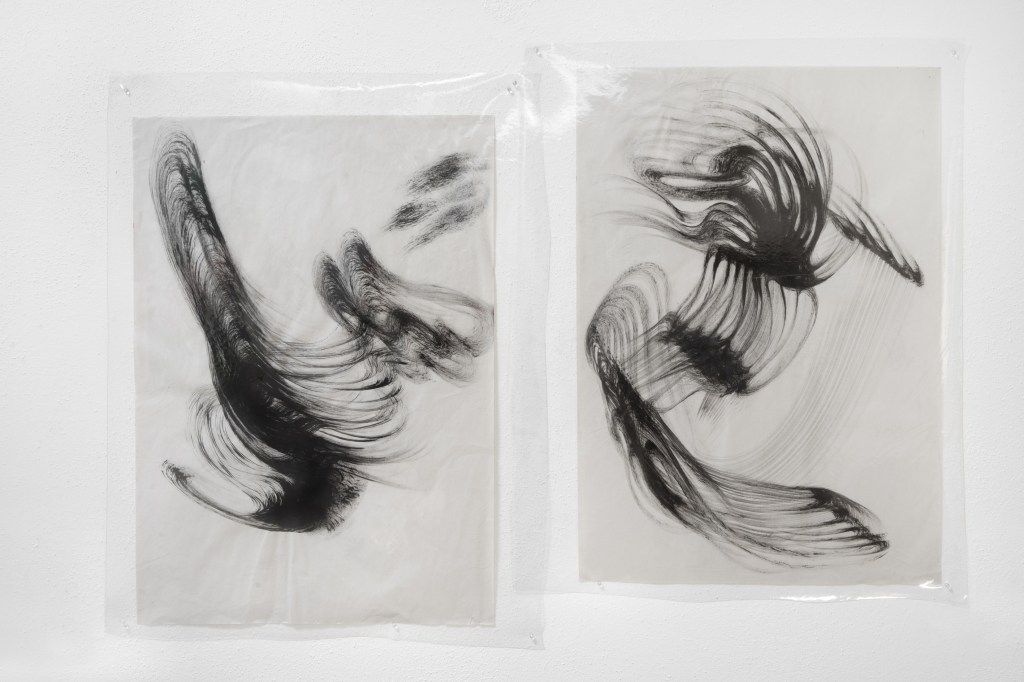
 

26_DSC0755o. T. [black ], 2019, Indian ink on newsprint, 42 x 60 cm


28_DSC0780o. T. [black ], 2019, Indian ink on newsprint, 42 x 60 cm


pd_DSC0816Dear Fear, 2019, reading performance


When Adorno was writing his Aesthetic Theory in the 50s and 60s, he could still make the claim, now by all accounts obsolete, that the experience of art is akin to the experience of natural beauty.  “Authentic artworks,” he writes, “hold fast to the idea of a reconciliation with nature by making themselves completely a second nature.” Although already wary of man’s subjugation of nature,  Adorno still believed it was possible to find beauty, if not in nature, then in art that we experience as if it was nature. He would argue we find certain objects in nature beautiful because these present themselves in such a way that allow us to do so.  Artworks are like a second nature because they also allow us to find beauty in them. Genius is nothing more than the creative principle by which this second nature can be produced.

Postmodern and especially feminist critique put this association of natural beauty with the beauty of art into question. While there might be objects that seem to engender claims of beauty, these are by large culturally determined by race, gender or class. Genius is not an innate principle but a historical concept, very much misogynistic in origin, that by definition excludes women from the production of art. So what would it mean to address natural beauty in art now? How can one as an artist approach the problem of nature?

These are some of the questions central to Maria VMier’s practice, and especially to the body of work she presents at GiG Munich, developed during her recent residency at a remote location in Uckermark, near Berlin. On the one hand, the reading she presents to us is a result of her research into the closely connected structures of patriarchy, capitalism and disenchanted nature, taking into account both feminist critique and postcolonial discourse. On site at Uckermack she would walk with her audience to various locations in the surrounding countryside to reflect on her relationship to nature while also referring to our current ecological crisis (the burning of the amazon, climate change denial and climate activism), the political consequences of capitalism’s belief in progress for postcolonial struggles in the global south and ecofeminist attempts to define the common as future sites of resistance. In her writing there is a Thoreau-like longing for a simpler existence within nature as well as the rejection of  hipster or even non-western spirituality, tainted as it is by the colonial representation of the other.

On the other hand her drawings are not so dissimilar to the paintings by Wols that Adorno was writing about more than 60 years ago. Black, scarlet and sap green ink on paper, meandering and interweaving brushstrokes – these formal elements recall the conventions of lyrical abstraction and in their modernism seem to pursue the image of a second nature. But the work also acknowledges that if this image is to be achieved at all it must be done knowingly, the exhibition constructed in such a way to expose the dialectics involved in all our dealings with nature. The meandering arabesques of VMiers large drawings are done on paper more suited to digital printouts than the handmade; the delicate smaller works are pinned like specimens behind plastic covers; the shamanistic frame of drying stinging nettles is set above a shimmering floor of the same plastic sheeting that is used to kill weeds. VMier’s drawings pursue a second nature almost stubbornly, aware of all the historical, political and personal difficulties involved. 

Magdalena Wisniowska 2019

Maria VMier

Vier

12.10 – 23. 11. 2019


fullsizeoutput_12af


Opening: 12.10.2019, 7 – 9 pm

Reading by the artist: 8 pm


GiG Munich is excited to present the exhibition, ‘Vier’ by Maria VMier, artist and collaborator, known for her work with Ruine München and the Hammann von Mier Verlag. VMier’s multidisciplinary practice has two distinct aspects. On the one hand there is her performative work, with its postfeminist, social and political references, on the other, her formal, abstract drawings on paper. For her GiG Munich exhibition she shows both – performance and drawing – developed during her recent residency in Uckermark, near Berlin, as part of the Libken e.V. Kunst & Umwelt fellowship.

The work is made in response to her remote location in Uckermark and the concept of nature, as well as our relation to it, forms a large part of exhibition. With her performance VMier acknowledges the feminist approaches to ecological concerns, endorsing an ecofeminism that demonstrates the close ties between the structures of capitalism, patriarchy and the disenchantment of nature. With her drawings, she subverts the traditional place of nature in aesthetic discussions of art. Utilising an abstract language of expressive signs, she shows that to identify with nature in the work of art need not be the privilege of the male genius, but can be rather, a postfeminist critical gesture.

inorganic landscape – images and text

fullsizeoutput_1ad2

fullsizeoutput_1ac6

fullsizeoutput_1ade

fullsizeoutput_1ac8

fullsizeoutput_1ae0

fullsizeoutput_1ac9

fullsizeoutput_1acd

fullsizeoutput_1acf

fullsizeoutput_1ace

“Organic” in its current usage tends to be associated with organic farming, pesticide and chemical fertilizer free – the equivalent German term would be the familiar “bio” from the “bio” supermarket range. Food here is produced organically, meaning that it stays true to its biological origin. Organic is, chemically speaking, carbon-based.

Etymologically however, “organic” derives from the Greek “organikos” meaning “relating to organ or instrument.” An organic landscape is a landscape, which is organised. The natural environment surrounding us is a consequence of human activity, whether this is farming, building, mining etc. But the concept itself refers to a construction. Landscape as such is always constituted through a prior representation. There are picturesque landscapes or sublime ones. Landscape consists of a specific format, with a horizon, back- and foreground and certain distinguishable features. An inorganic landscape would be one that lacks this kind of organisation. It would somehow be free of human activity, both physically and conceptually. In an extreme sense, it would be non-biological, without animal or plant matter. It would also present a challenge to the relation we establish with it. Without the structure landscape offers, nature becomes something we cannot relate to.

The three artists GiG presents as part of the current exhibition, inorganic landscape – Stefanie Hofer, Rebecca Partridge and Miriam Salamander – work with this constructed sense of landscape, often employing traditional techniques to make its mediated nature more apparent.

To produce her etchings Miriam Salamander, first disassembles her chosen environment (in this case, the fields and meadows of southern England) into its constituent components (field, line, path, plant) to then reconstitute them in an idealised form. The etchings are both minimal and matter of fact, consisting of the least amount of mark making required to produce the landscape form.

Stefanie Hofer’s aquatints of classical and modernist gardens take a highly idealised vision of nature and manipulate it further. For GiG she has made two new prints, based on found images of the “El Cabrío” gardens, part of the larger El Pedregal development in Mexico City by Luis Barragán. The gardens were designed according to modernist utopian principles, enclosed spaces where one can retire and enjoy nature. In Stefanie Hofer’s aquatints this harmony of the natural and the manmade becomes darker and foreboding, dismissive of utopian claims.

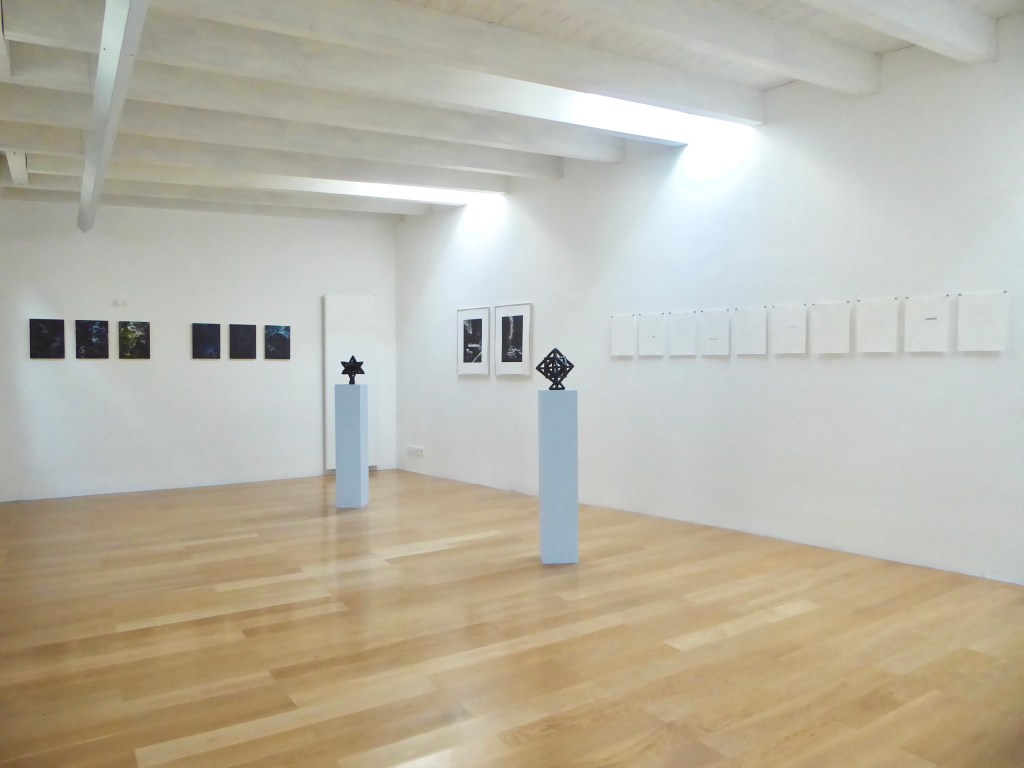
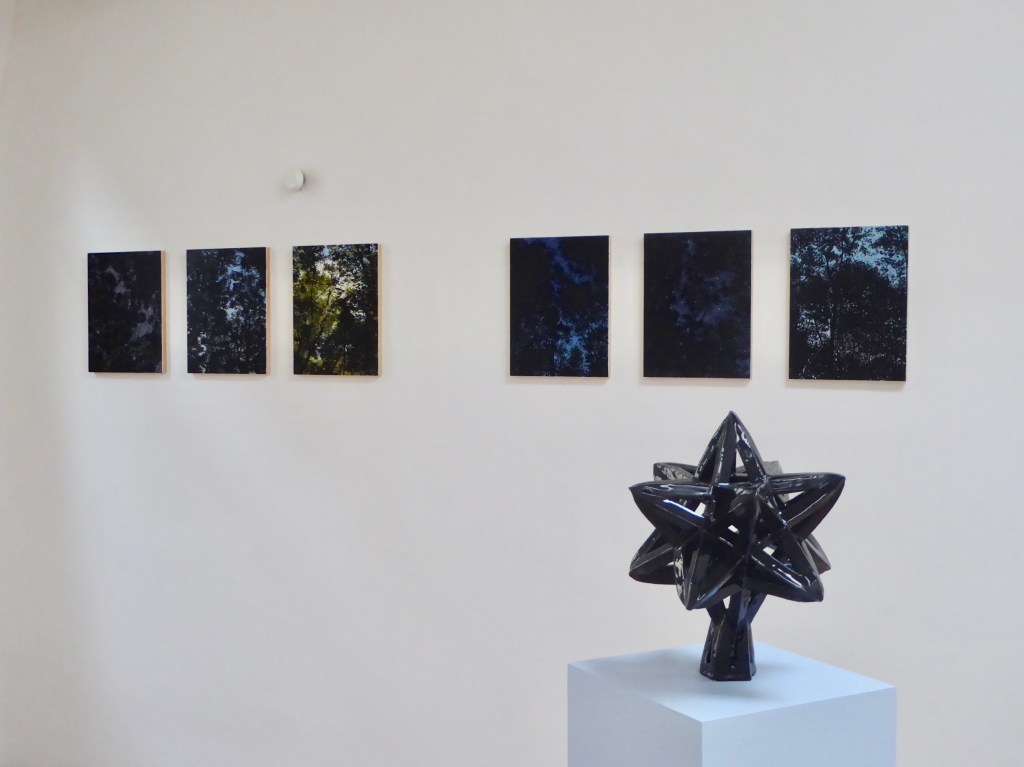
Rebecca Partridge has a longstanding interest in synaesthesia as a means of relating to the outside world without recourse to representation. Watercolour landscapes of trees painted at a specific time and location are to resonate with ceramic abstract sculpture, producing a constellation of different stimuli. The experience the work demands is no longer bound to representation, but allows for a zone of mimetic relationality, where mimesis becomes a form of collusion with nature.

Both Miriam Salamander and Stefanie Hofer are Munich-based. Rebecca Partridge is a UK artist, currently living and working in Berlin.

Magdalena Wisniowska 2017