Hêlîn Alas,Pierre-Yves Delannoy, Lukas Hoffmann, Veronika Hilger, Ju Young Kim, Anna McCarthy, Jonathan Penca, Curtis Talwst Santiago, Valio Tchenkov, Ayaka Terajima, Gülbin Ünlü, Paul Valentin, Max Weisthoff
7.09 -28.09.2024
Temporary venue at Schillerstr. 38, Munich
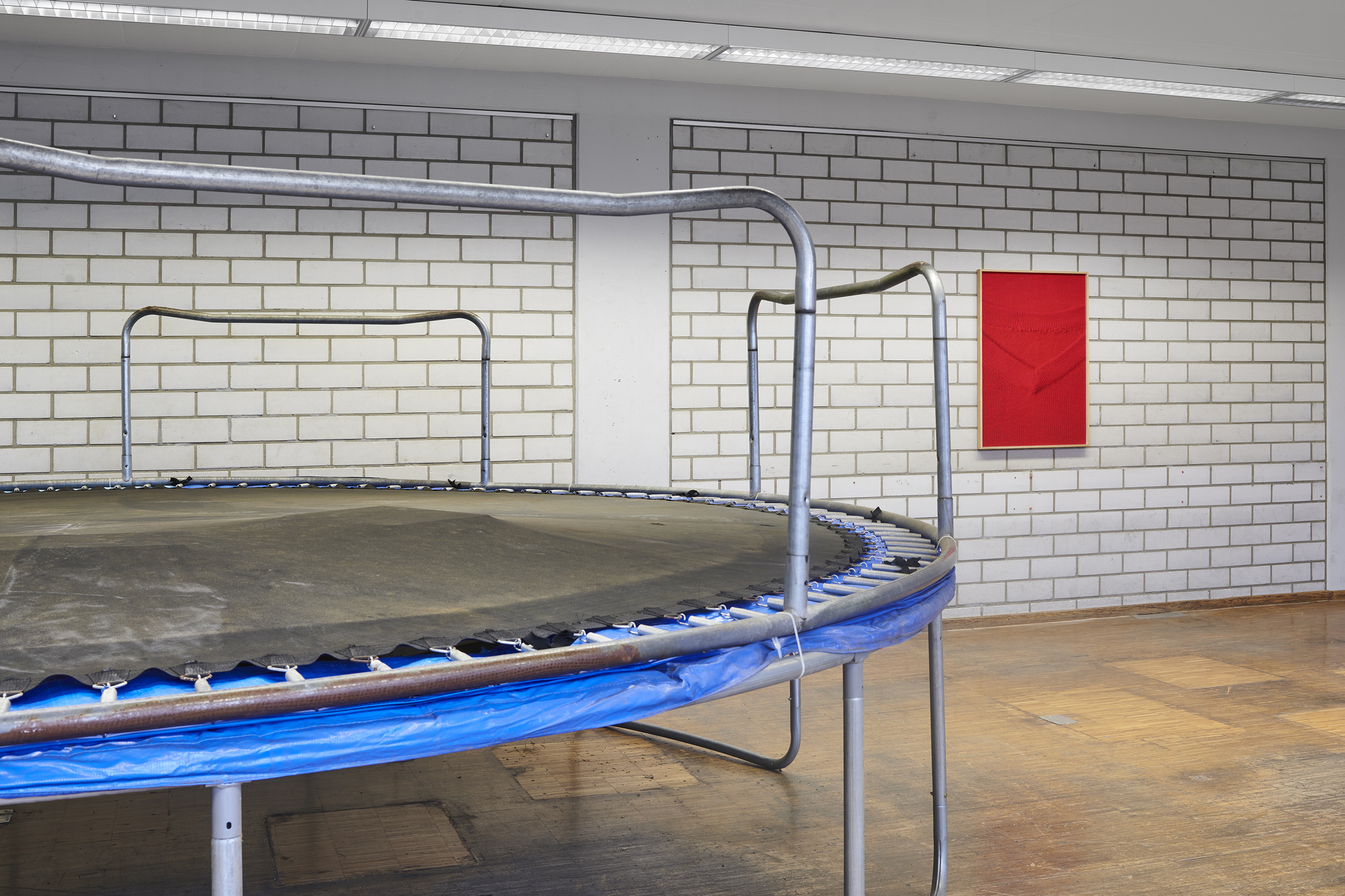
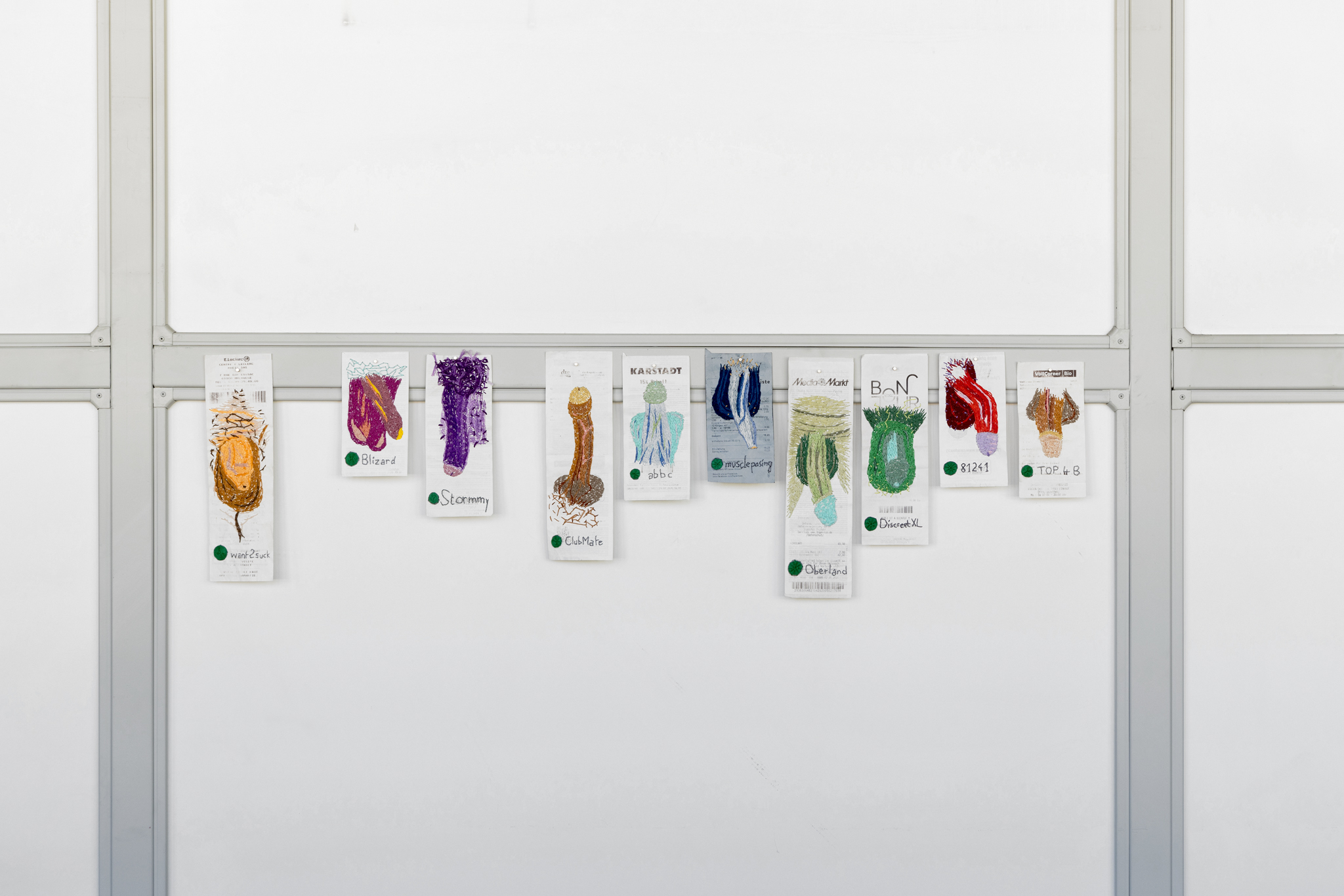
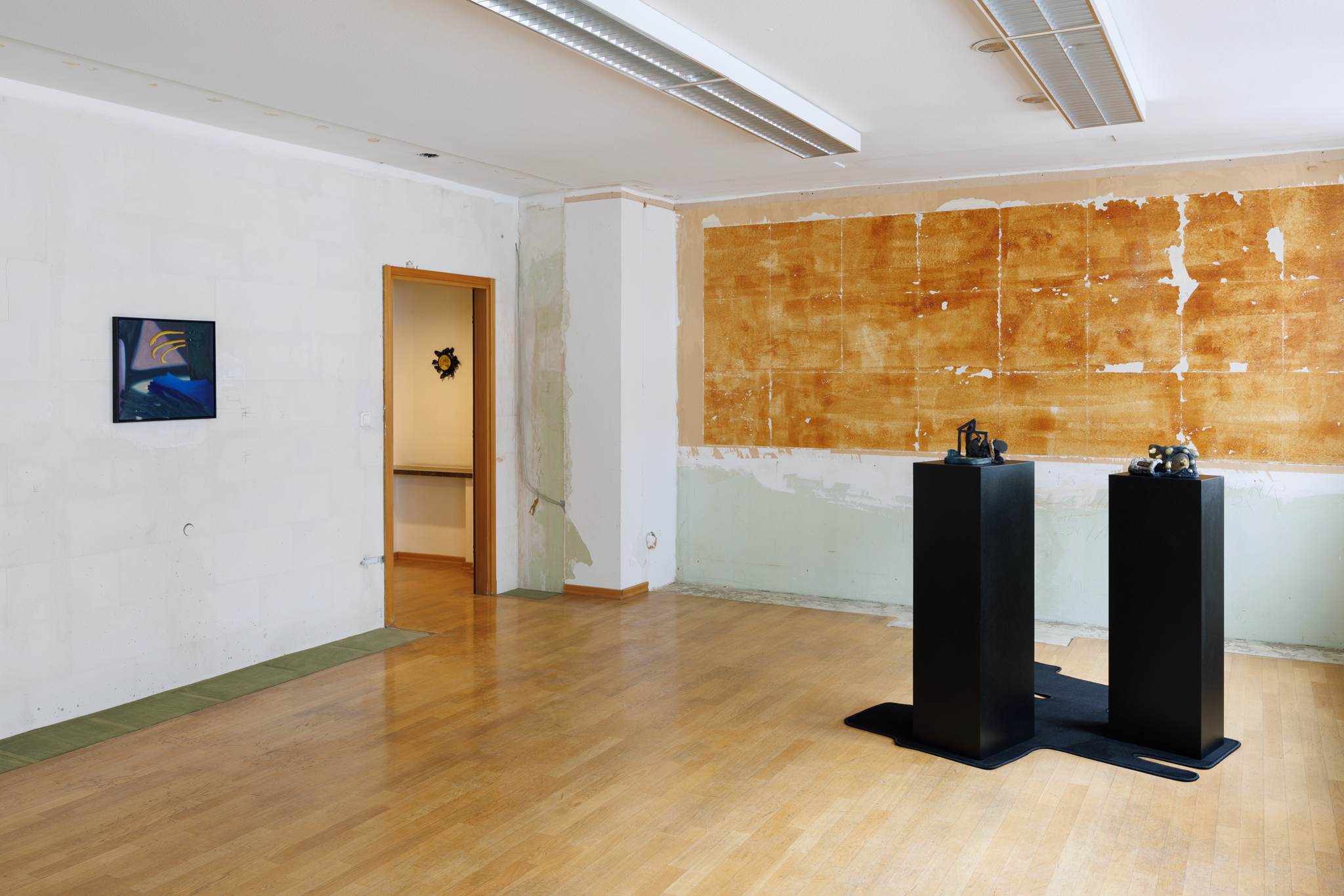
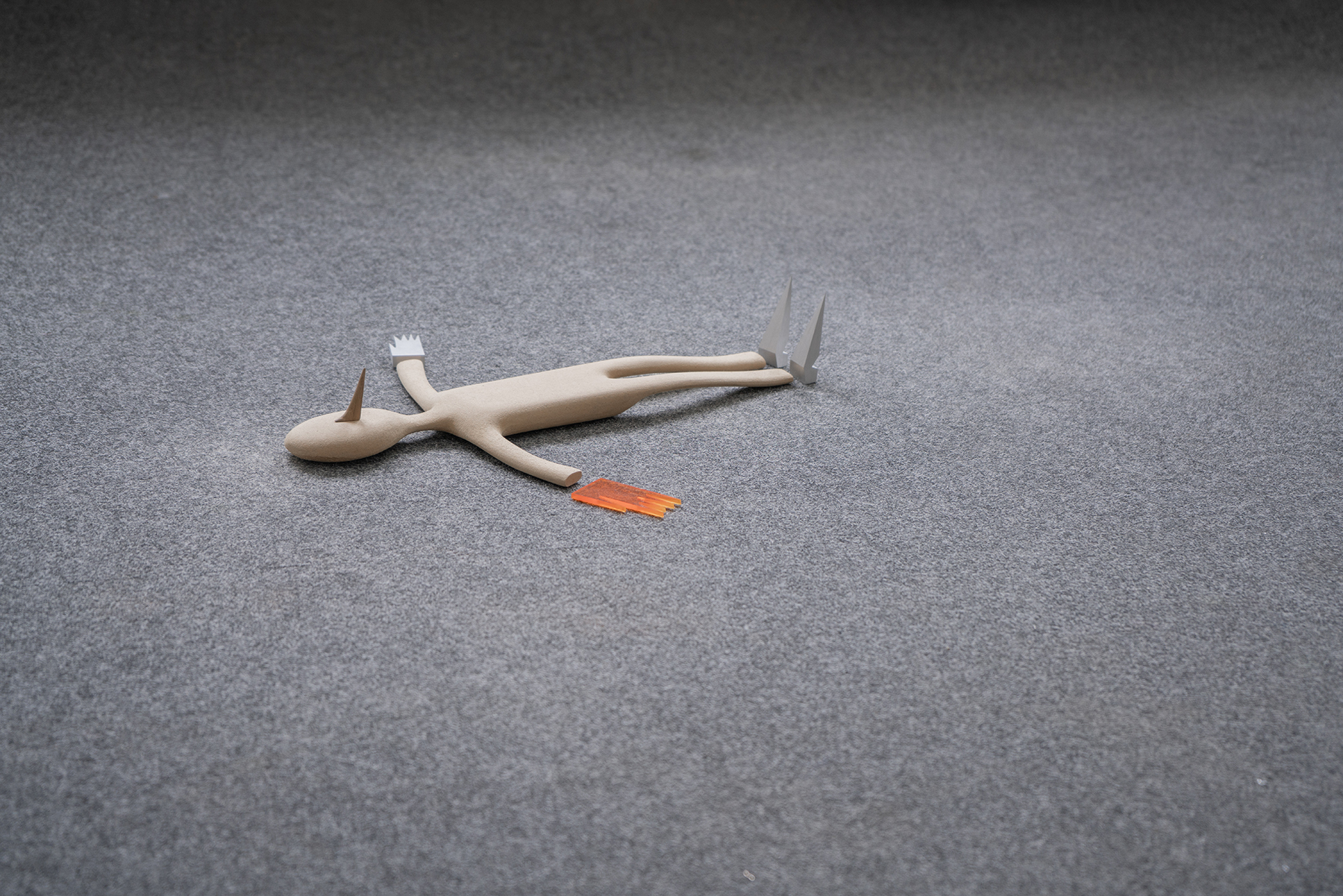
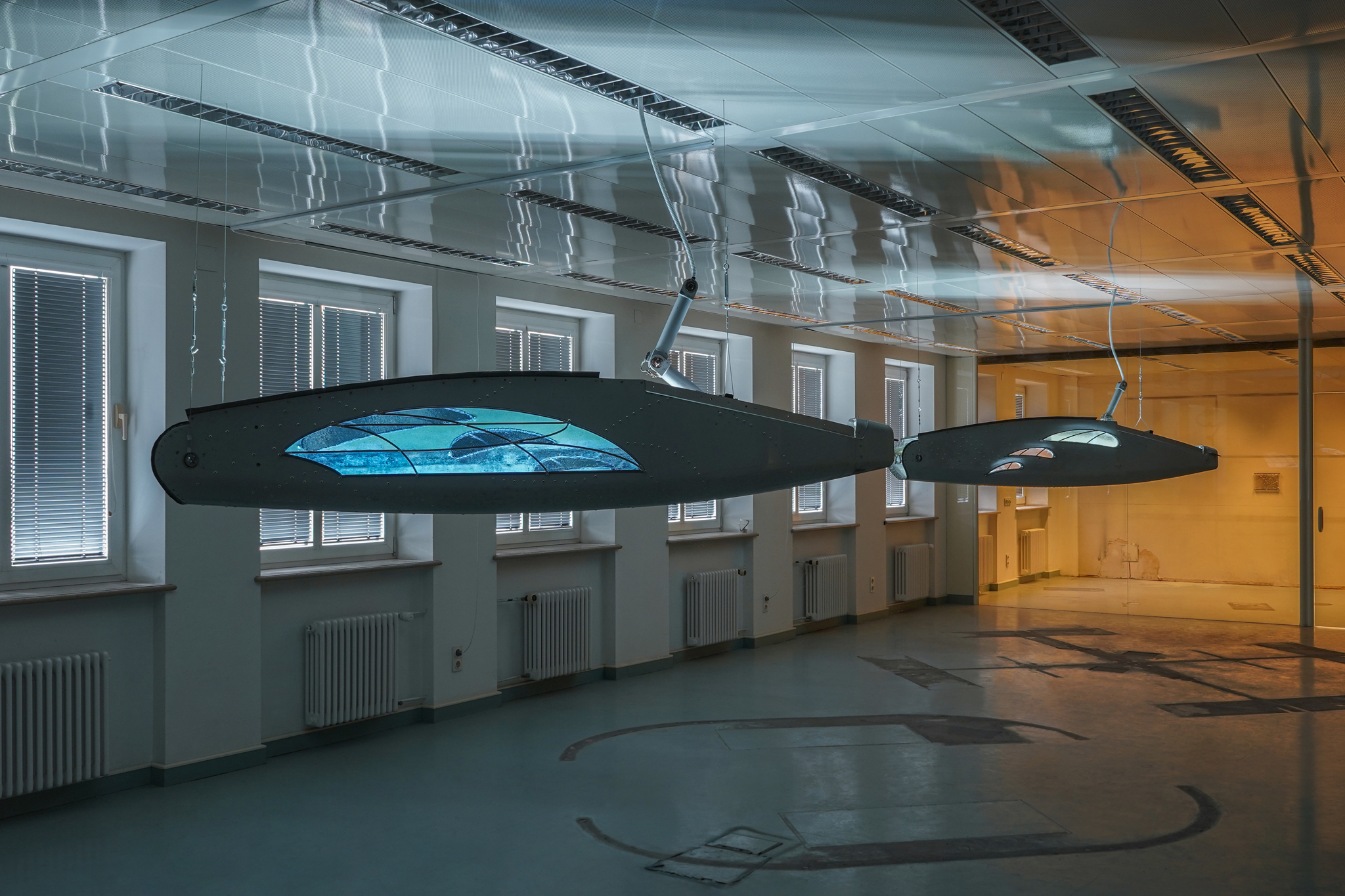
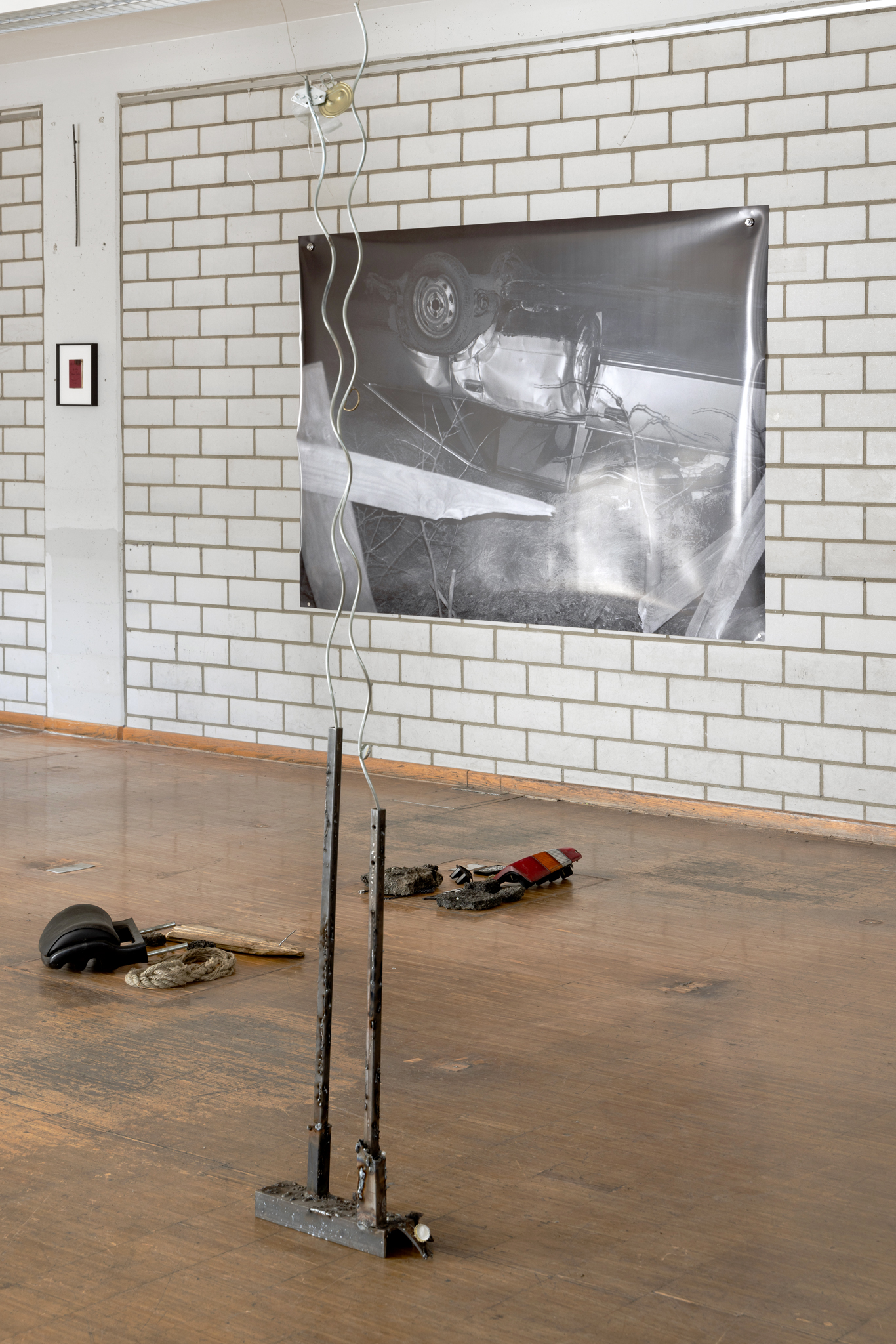
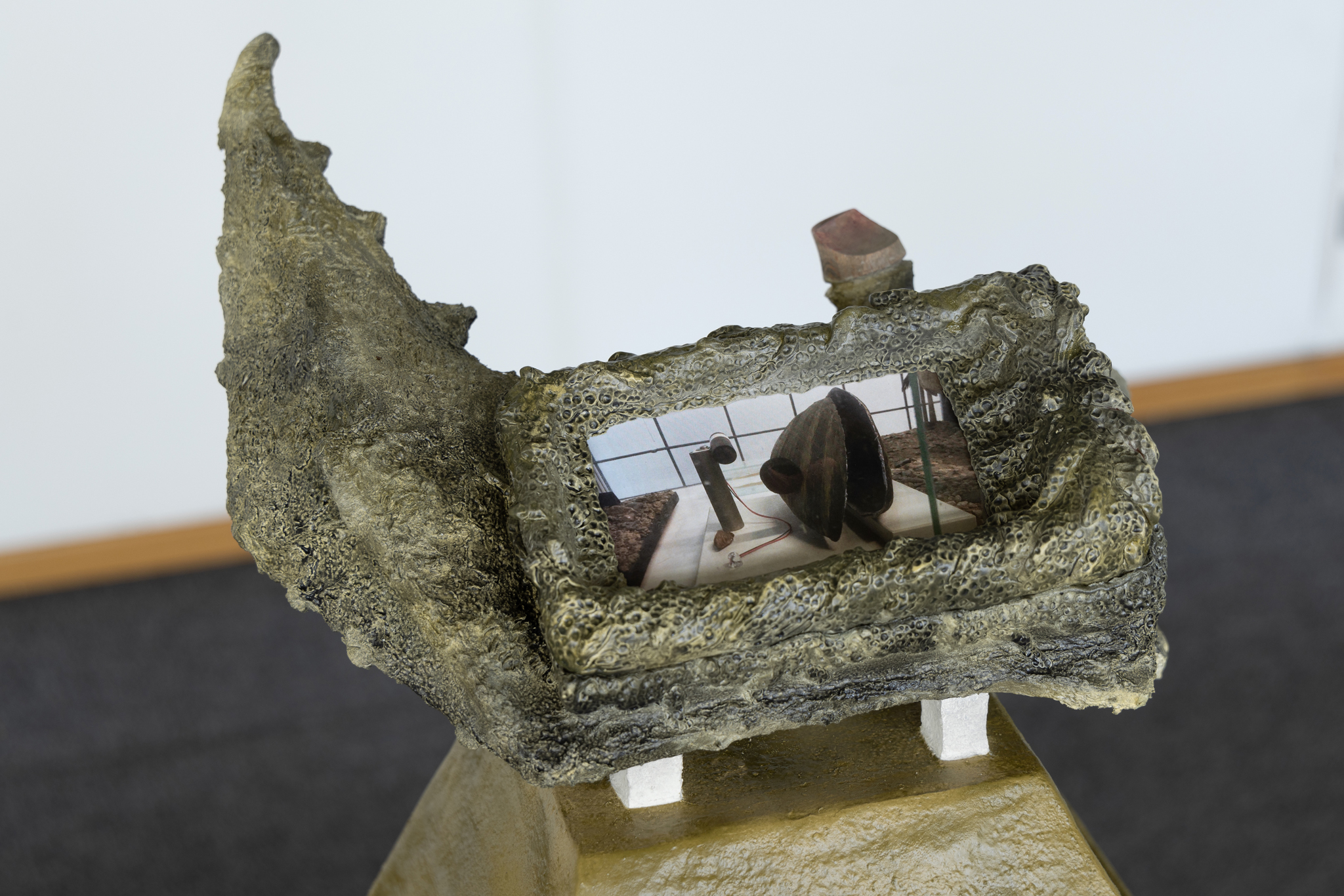
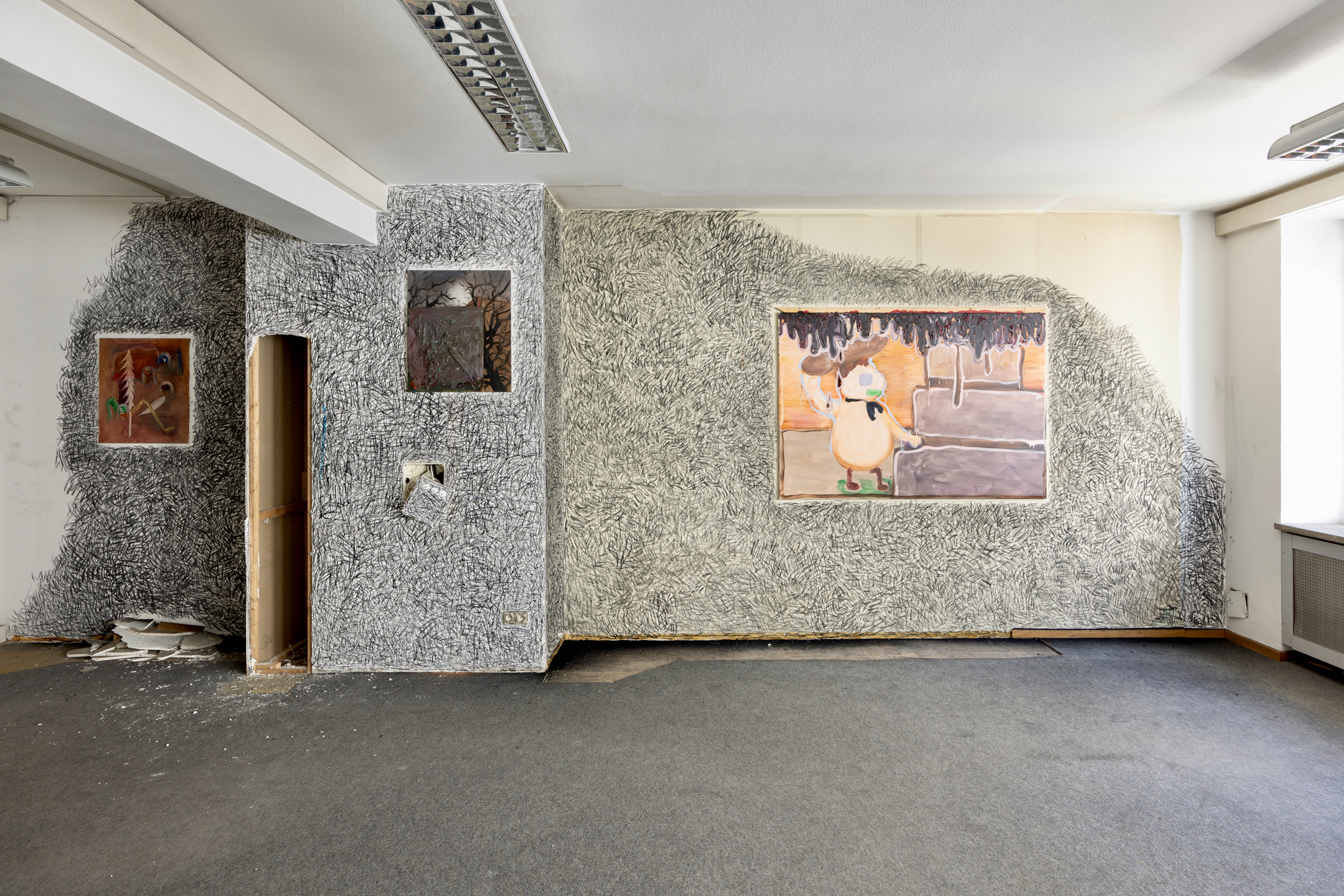
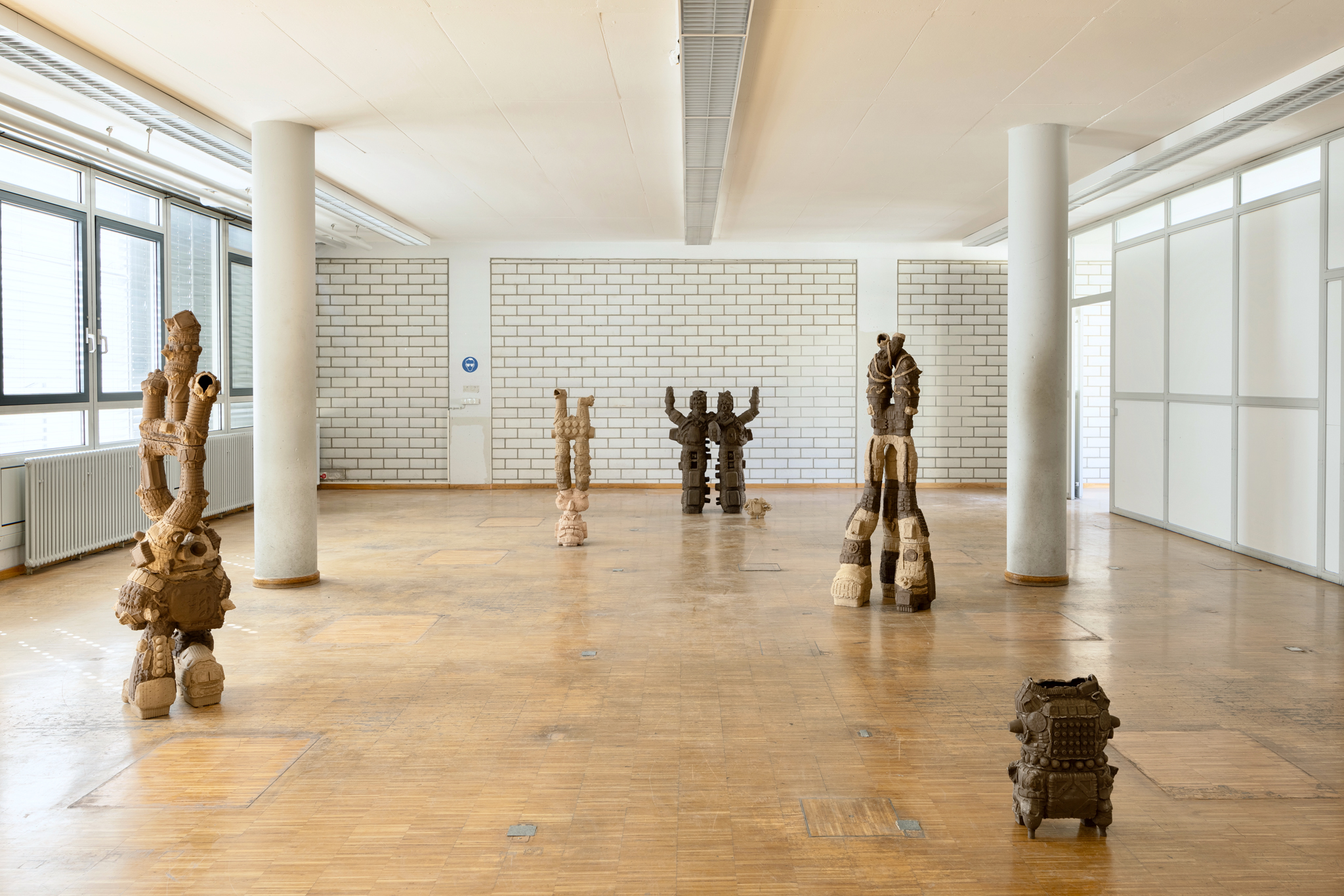
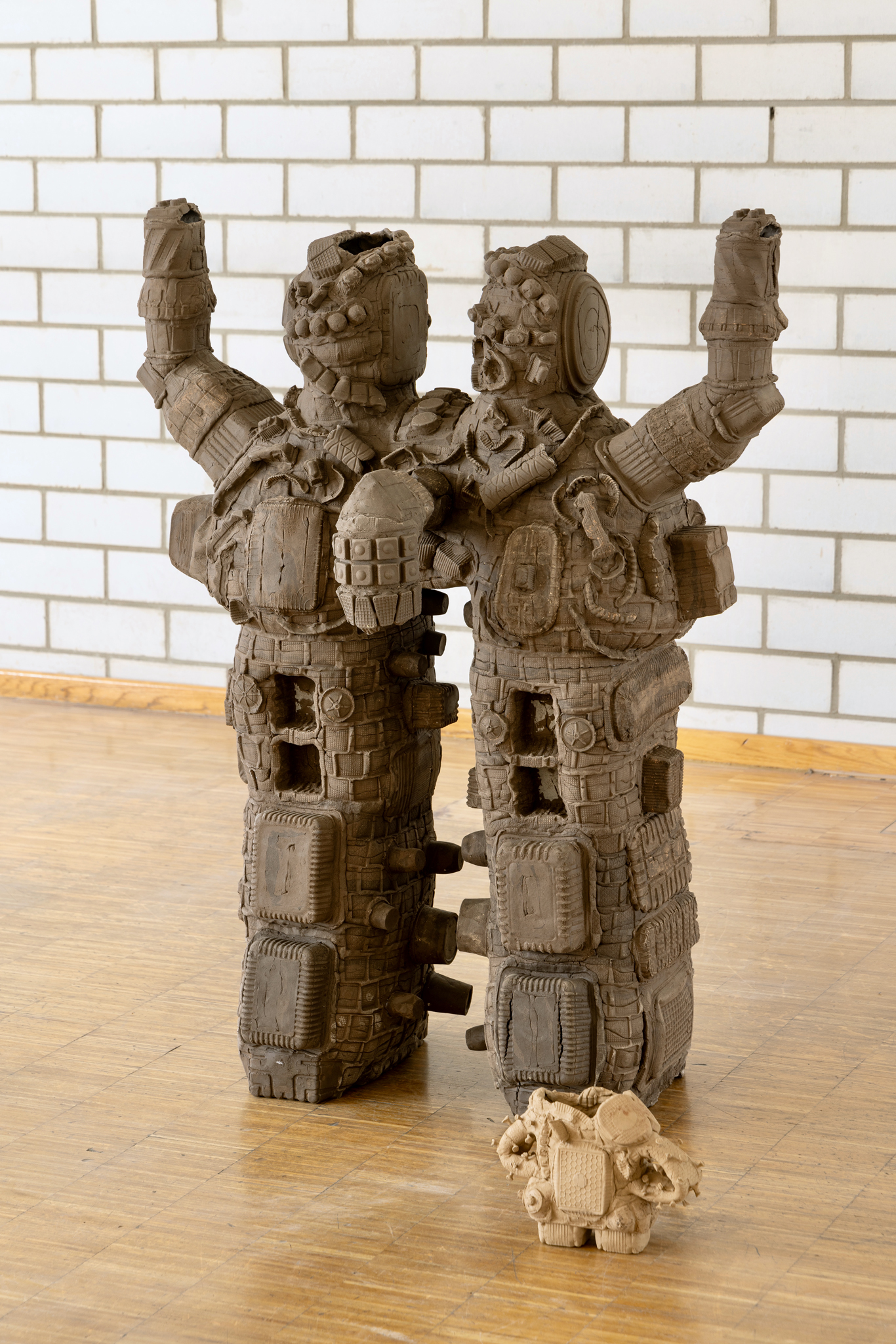
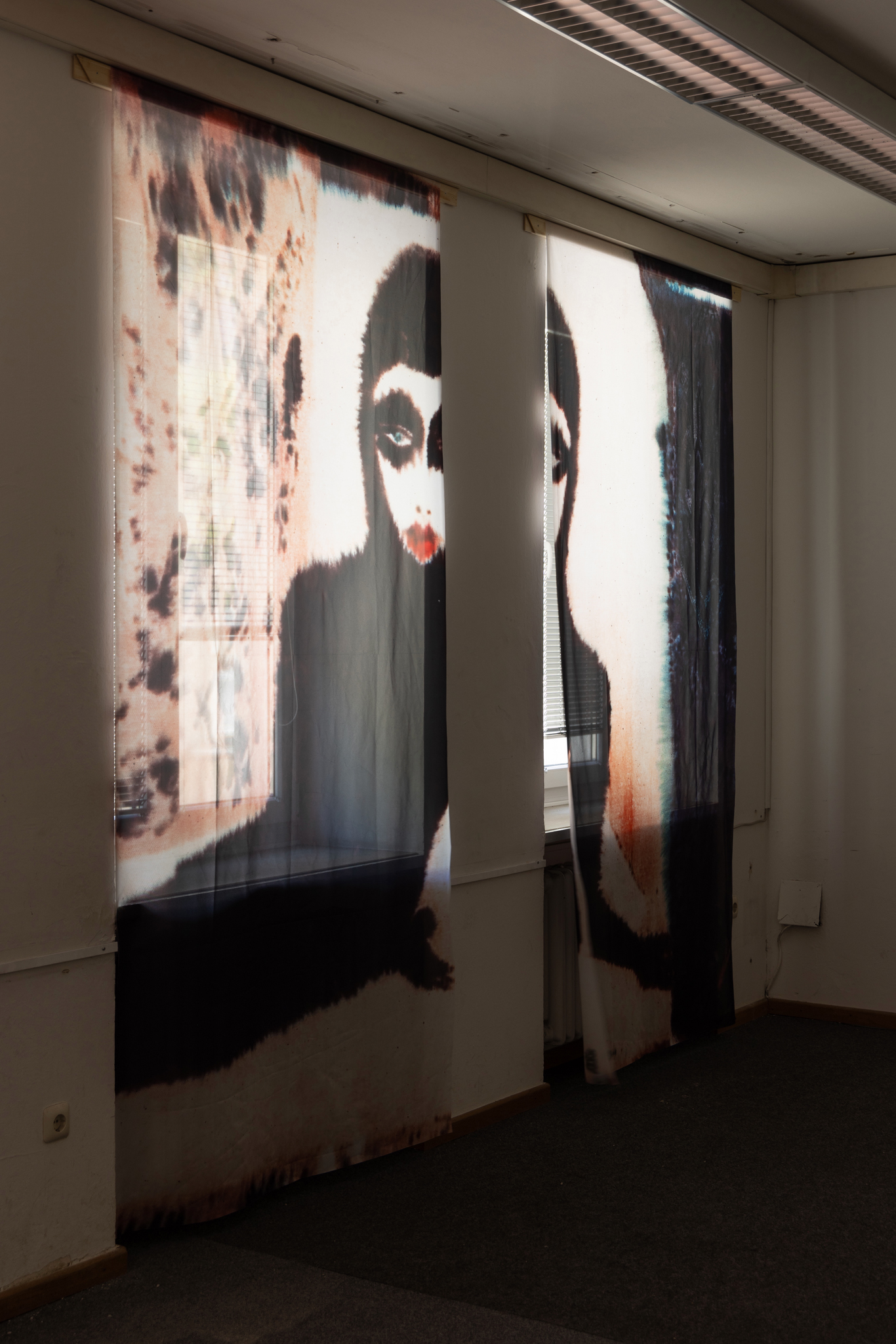
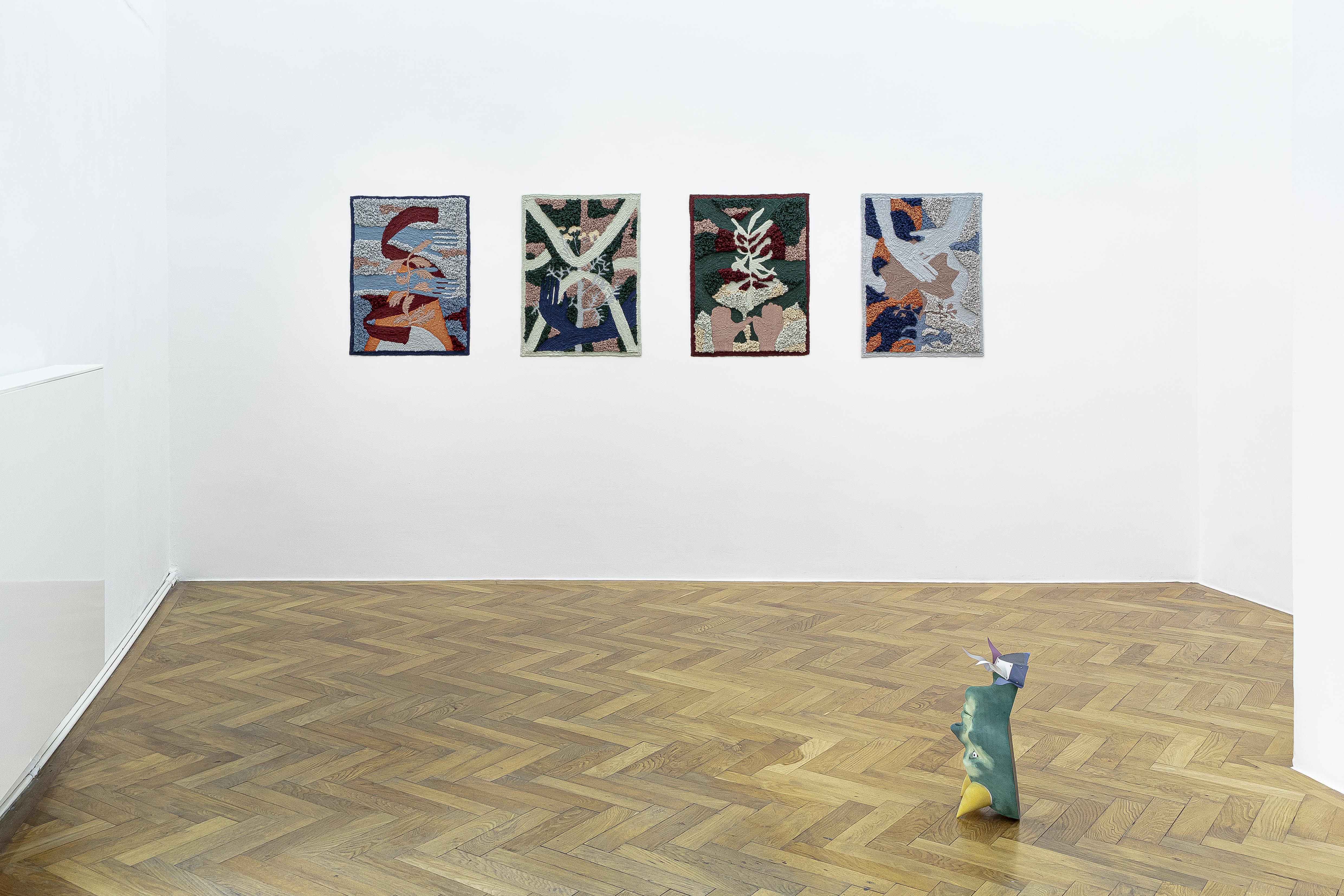
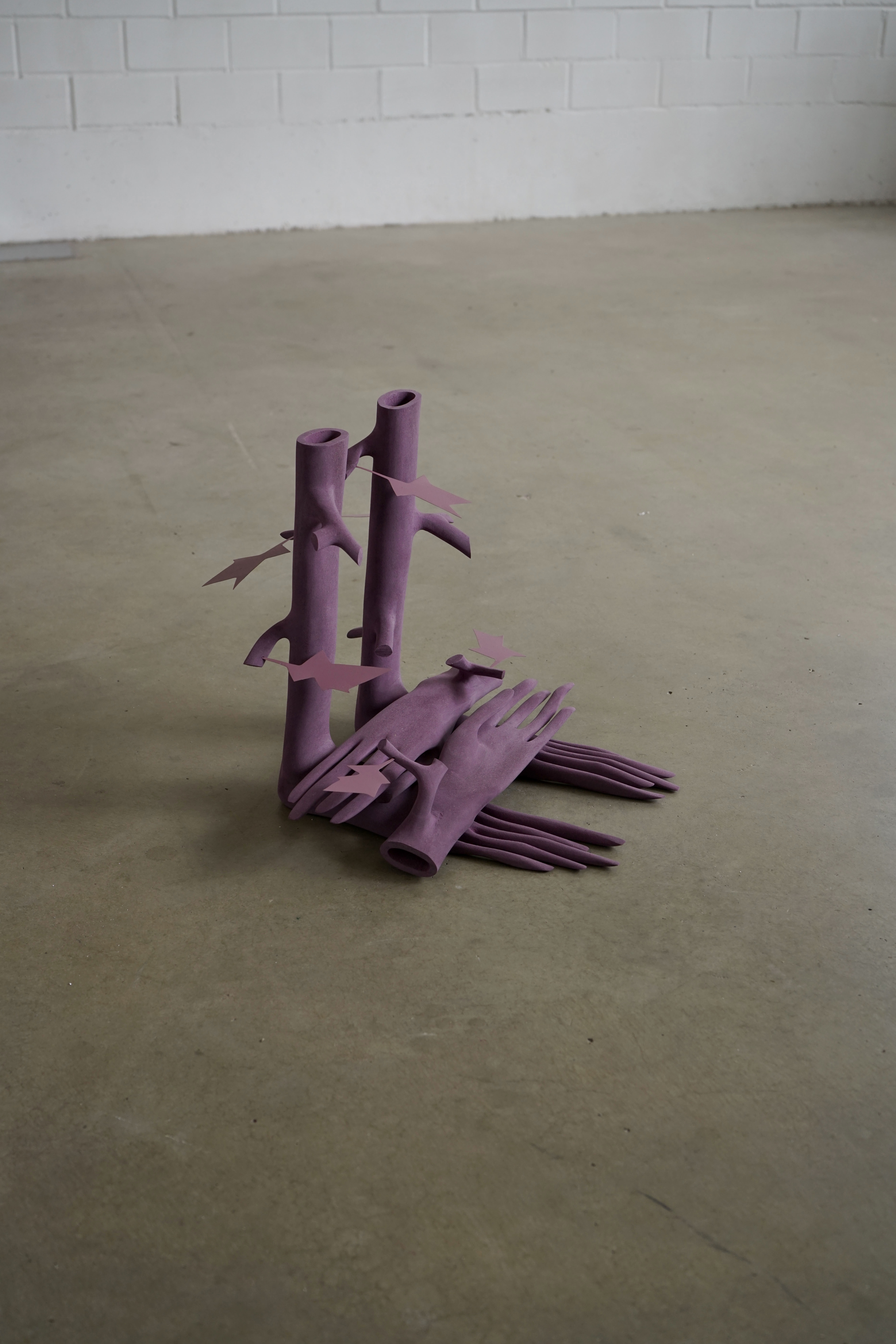
Hêlîn Alas, Carrying the Earth to the Sky, 2024, installation view with “Up and Up and Up and Up,” 2024, trampolines, cable ties, speakers, sound, cables, 490 x 165 cm and “Still Faced,” 2024 framed photo print (part of a series) 100 x 70 cm. Photo: Produktion PitzHêlîn Alas, “Traumhaus junior,” 2024, caramel, 118 x 90 x 8 cm. Photo: Produktion PitzHêlîn Alas, “Traumhaus junior,” 2024, caramel, 118 x 90 x 8 cm. Photo: Produktion PitzPierre-Yves Delannoy, “embroideries on cashier’s ticket,” 2019-24, cotton yarns, thermo paper, dimensions variable (8 x 16 cm (X10)). Photo: Thomas SplettVeronika Hilger, Carrying the Earth to the Sky, 2024, installation view. Photo: Thomas SplettVeronika Hilger, Untitled, 2024, ceramic, 27 × 24 × 3 cm. Photo: Thomas SplettLukas Hoffmann, “Figure,” 2020, MDF, oak, aluminum, acrylic glass, 50 x 45 x 8 cm. Photo: Lukas HoffmannLukas Hoffmann, “Castle,” 2024, Spraypaint, plywood, screws, MDF dyed through, 100 x 100 x 200 cm. Photo: Lukas HoffmannJu Young Kim, “Almost like Whale Watching,” 2024, a pair of aircraft fairings, stained glass, rivets, LED, 240 x 38 x 46 cm (X2). Photo: Younsik KimJu Young Kim, “Almost like Whale Watching,” 2024, a pair of aircraft fairings, stained glass, rivets, LED, 240 x 38 x 46 cm (X2). Photo: Younsik KimAnna McCarthy, Carrying the Earth to the Sky, 2024, installation view with “Car Crash b/w,” 2001, analogue photograph 230 x 160. Photo: Thomas Splett Anna McCarthy, “Car crash installation,” 2024, mixed media, dimensions variable. Photo: Thomas SplettJonathan Penca, “Synanthropop,” 2024, paper-maché, plaster, polymer clay, resin, cardboard, acrylic paint, wood, glass, digital print on paper, plinth, 120 x 60 x 60 cm. Photo: Thomas SplettJonathan Penca, “Mitten Crack,” 2024, paper-maché, plaster, polymer clay, resin, wooden bird whistle, lipstick, cardboard, acrylic paint, digital print on paper, plinth 120 x 60 x 60 cm. Photo: Thomas SplettCurtis Talwst Santiago, “History of Touch” 2024, installation view detail. Photo: Thomas SplettCurtis Talwst Santiago, “History of Touch” 2024, installation view. Photo: Thomas SplettValio Tchenkov, Carrying the Earth to the Sky, 2024, installation view. Photo: Thomas SplettValio Tchenkov, Carrying the Earth to the Sky, 2024, installation view. Photo: Thomas SplettAyaka Terajima, Carrying the Earth to the Sky, 2024, installation view. Photo: Thomas SplettAyaka Terajima, “Long legs doki,” 2023, Unglazed fired ceramic by recycled clay, 60 x 100 x 130 cm. Photo: Thomas SplettGülbin Ünlü, “Karanlik isik,” 2024, wood, printed fabric, dimensions variable (site specific installation). Photo: Thomas SplettGülbin Ünlü, “Karanlik isik,” 2024, wood, printed fabric, dimensions variable (site specific installation) detail. Photo: Thomas SplettPaul Valentin, “Kasside,” 2024, site specific video installation. Photo: Thomas SplettPaul Valentin, “Kasside,” 2024, site specific video installation. Photo: Thomas SplettMax Weisthoff, “perpetuator,” 2024, sculptural sound installation, 5 objects, cable, dimensions variable (site specific installation). Photo: Thomas SplettMax Weisthoff, “out of flesh,” 2024, mixed media installation, 2 channel video, x objects, dimensions variable (site specific installation). Photo: Thomas Splett
“Carrying the Earth to the Sky” will present works by 13 artists who are currently active in the contemporary art scene in Munich. The artists were selected in a two-stage process. First each of the 37 participants of VARIOUS OTHERS nominated one artist currently living in Munich. From this group, an international jury consisting of four institutional curators selected 13 artists who will show their work as part of the VARIOUS OTHERS program in September. The jury acknowledged that the quality of the applications received made their task both exciting and challenging. The final selection of multi-generational artists reflects the desire to see art beyond fixed categories and clichés and to honour distinctive works.
The exhibition’s curator, Magdalena Wisniowska, has meticulously chosen the works in collaboration with the artists. These will be presented together in an overarching curatorial concept at Schillerstraße 38 under the title “Carrying the Earth to the Sky”.
“The earth is something human, something we keep under our feet. The sky high above is without air, where no living thing can breathe. Moving away from one to the other means letting go of the earth and constructions that belong to it – actions, bodies, objects, sensations and desires – until only the elements, disconnected molecules, remain.”
We would like to express our gratitude to all supporters of the exhibition, particularly the owners of the property at Schillerstraße 38, the Cultural Department of the City of Munich, the Edith-Haberland-Wagner Foundation and Serviceplan Group for their generous support.
Jury: Rosa Ferré (TBA21, Madrid) Luis Silva (Kunsthalle Lissabon) Nicola Trezzi (CCA, Tel Aviv) Vivien Trommer (K21, Düsseldorf)
Kindly invited by Sperling Munich, Regerplatz 9, 81541 München
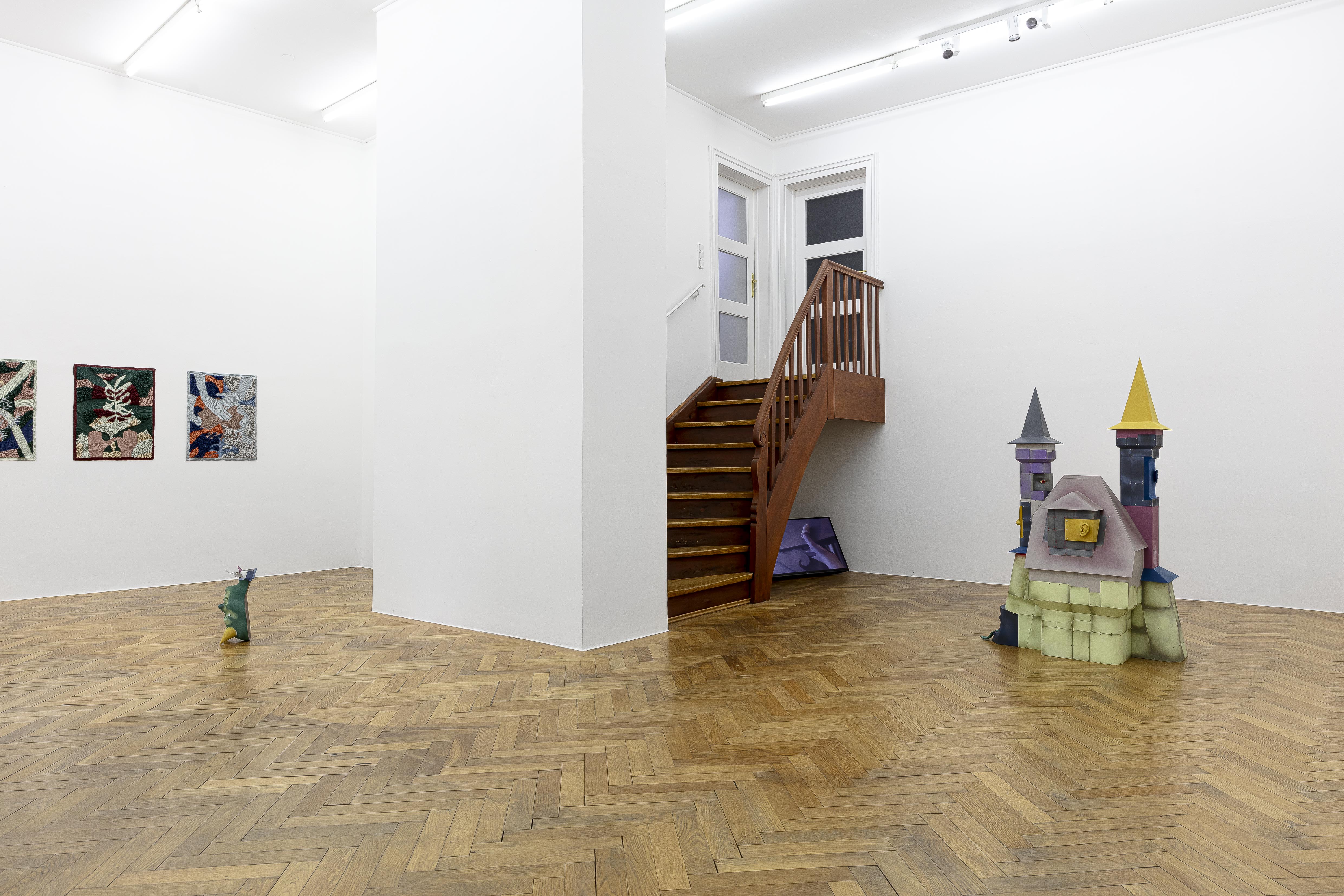
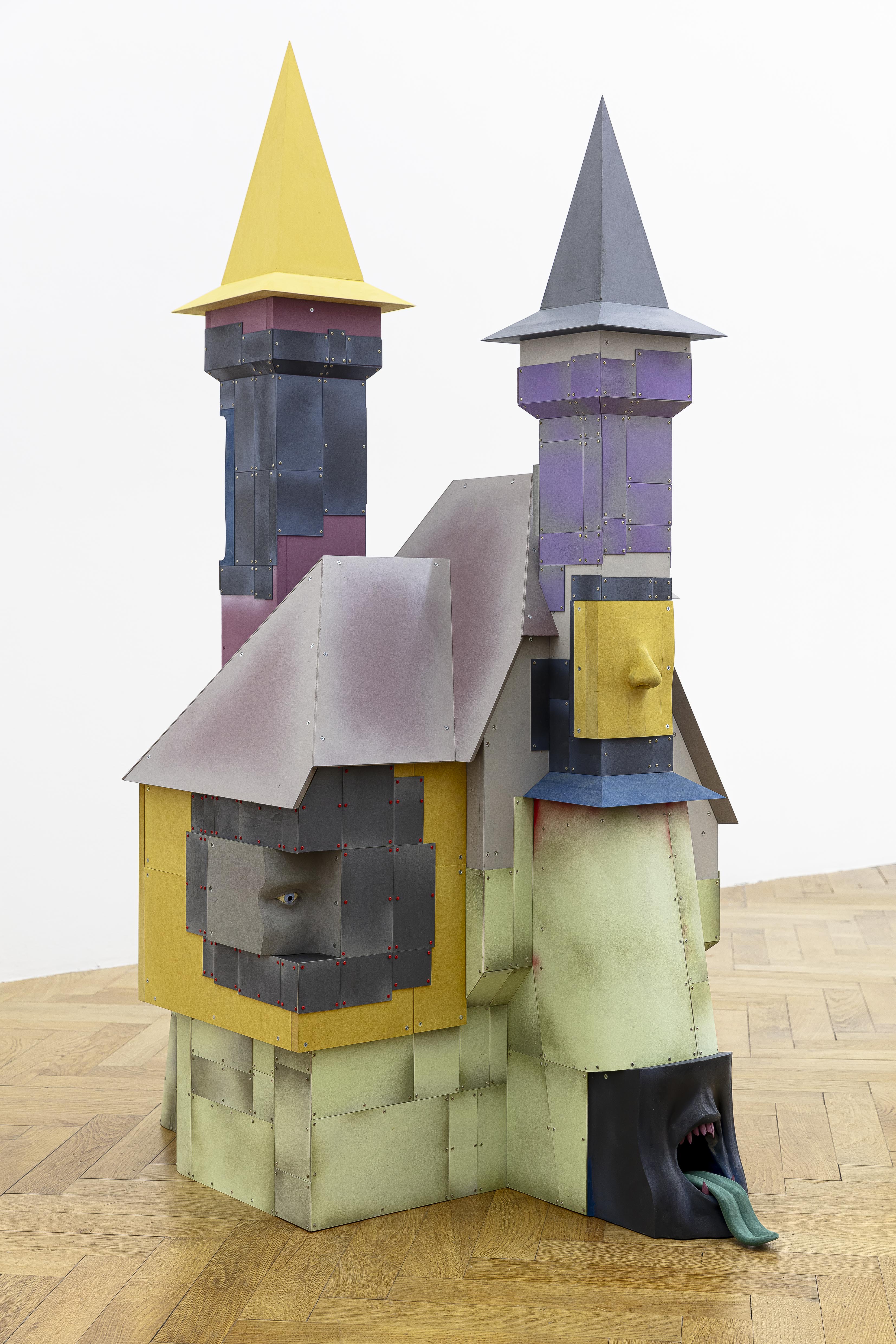
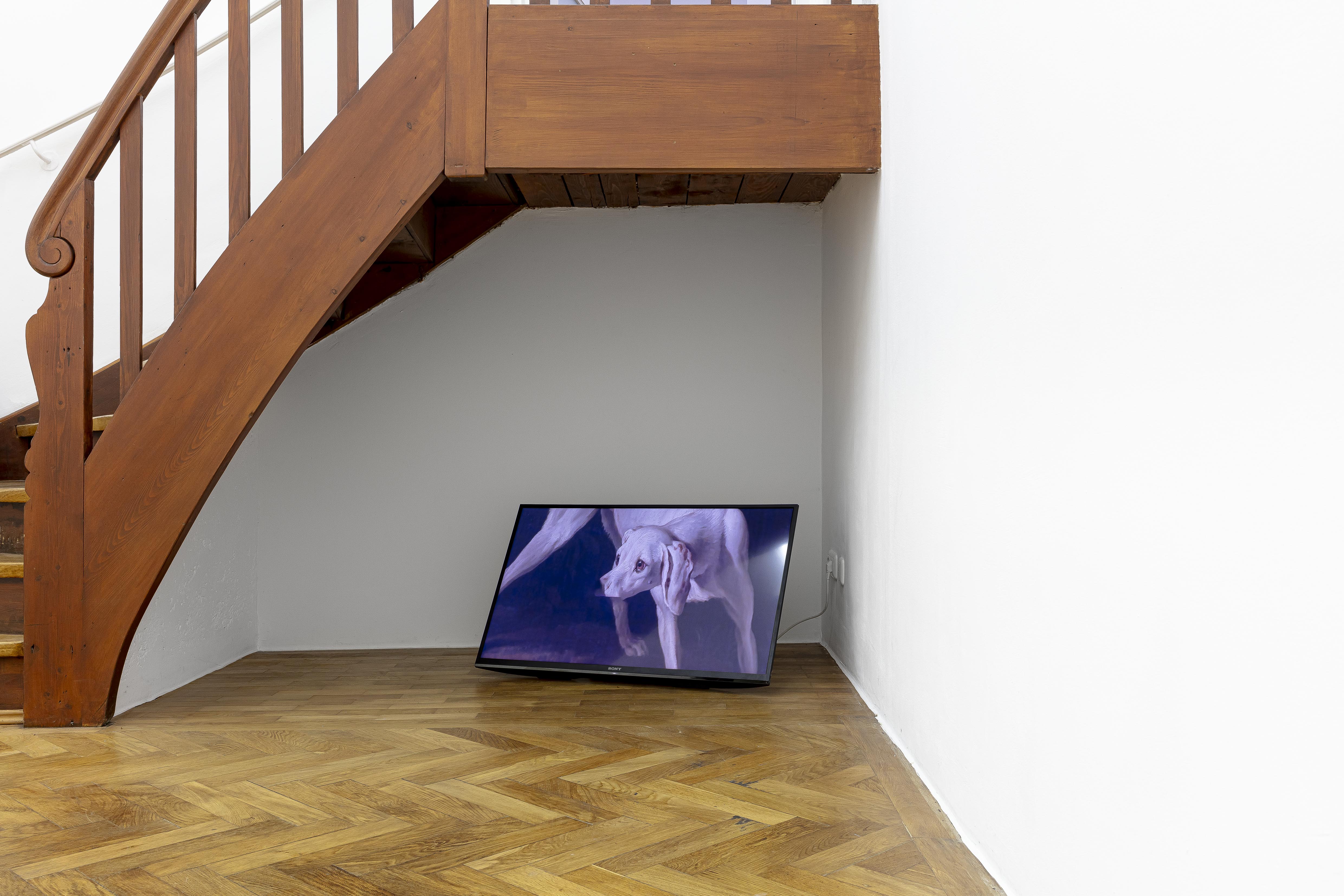
Throw of the dice, 2024, installation view. Photo: Sebastian Kissel, courtesy Sperling, Munich.Throw of the dice, 2024, installation view. Photo: Sebastian Kissel, courtesy Sperling, Munich.Throw of the dice, 2024, installation view. Photo: Sebastian Kissel, courtesy Sperling, Munich.Sophia Mainka, Oracle des Plantes series, 2024, silicone on cotton, 75 x 57 x 1 cm each. Photo: Sebastian Kissel, courtesy Sperling, Munich.Sophia Mainka, Tarot (Wheel of Fortune), 2924, silicone on cotton, 190 x 121 x 1 cm. Photo: Sebastian Kissel, courtesy Sperling, Munich.Sophia Mainka, Tarot (Wheel of Fortune), 2924, silicone on cotton, 190 x 121 x 1 cm (detail). Photo: Sebastian Kissel, courtesy Sperling, Munich.Lukas Hoffmann, Pan, MDF, paper, wood, spray-paint, 41 x 22 x 19 cm. Photo: Sebastian Kissel, courtesy Sperling, Munich.Throw off the dice, 2024, installation view. Photo: Sebastian Kissel, courtesy Sperling, Munich.Lukas Hoffmann, Schloss, 2024, paper, wood, screws, spray-paint, 158 x 102 x 75 cm. Photo: Sebastian Kissel, courtesy Sperling, Munich.Lukas Hoffmann, Schloss, 2024, paper, wood, screws, spray-paint, 158 x 102 x 75 cm. Photo: Sebastian Kissel, courtesy Sperling, Munich.Lukas Hoffmann, Schloss, 2024, paper, wood, screws, spray-paint, 158 x 102 x 75 cm (detail). Photo: Sebastian Kissel, courtesy Sperling, Munich.Lukas Hoffmann, Schloss, 2024, paper, wood, screws, spray-paint, 158 x 102 x 75 cm (detail). Photo: Sebastian Kissel, courtesy Sperling, Munich.Sophia Mainka, We used to be wild, 2024, video loop (full HD, stereo), 17 min & 17 sec. Photo: Sebastian Kissel, courtesy Sperling, Munich.
Throw of the dice – down a slippery slope
A standard game of dice is not a game of chance. At stake is probability, the odds of throwing this or that number, easily calculable. This is why we often lose, as the fable famously forewarns.[1] The young man inherits an estate and quickly gambles it away. In one sweep an entire forest is laid low. Is bad luck to blame? No, replies Fortune to an angry Pan. Just the foolishness of man.
A game of chance takes place on a far more slippery slope, like the round of croquet played in Alice in Wonderland, a game of cards of sorts.[2] Flamingos are mallets and a hedgehog is a ball. Whenever Alice wants to hit the hedgehog with the flamingo’s head, the bird turns floppy and spins round to look at her so comically that she laughs. And when she finally gets the flamingo’s head down, the hedgehog crawls away. In this game, cards move away from us and the players play all at once, quarrelling and fighting while the queen screams, “Off with their heads! Off with their heads!” For in a real game of chance, anything can happen. This would be the challenge: throwing the dice without knowing the rules of the game. To continue throwing the dice while accepting that each time the rules of the game change.
This is Nietzsche’s divine game, played across two tables, the earth and the sky.[3] Each time the dice is thrown the earth trembles, because the dice returns to us as divine. At that moment when the dice hover briefly in the air, they belong to the gods and all is possible. Our task is to affirm the entirety of possibility, any fate the gods prepared for us, cooking all of chance in one pot.[4] In this forest, we must wander bewildered and wild.[5]
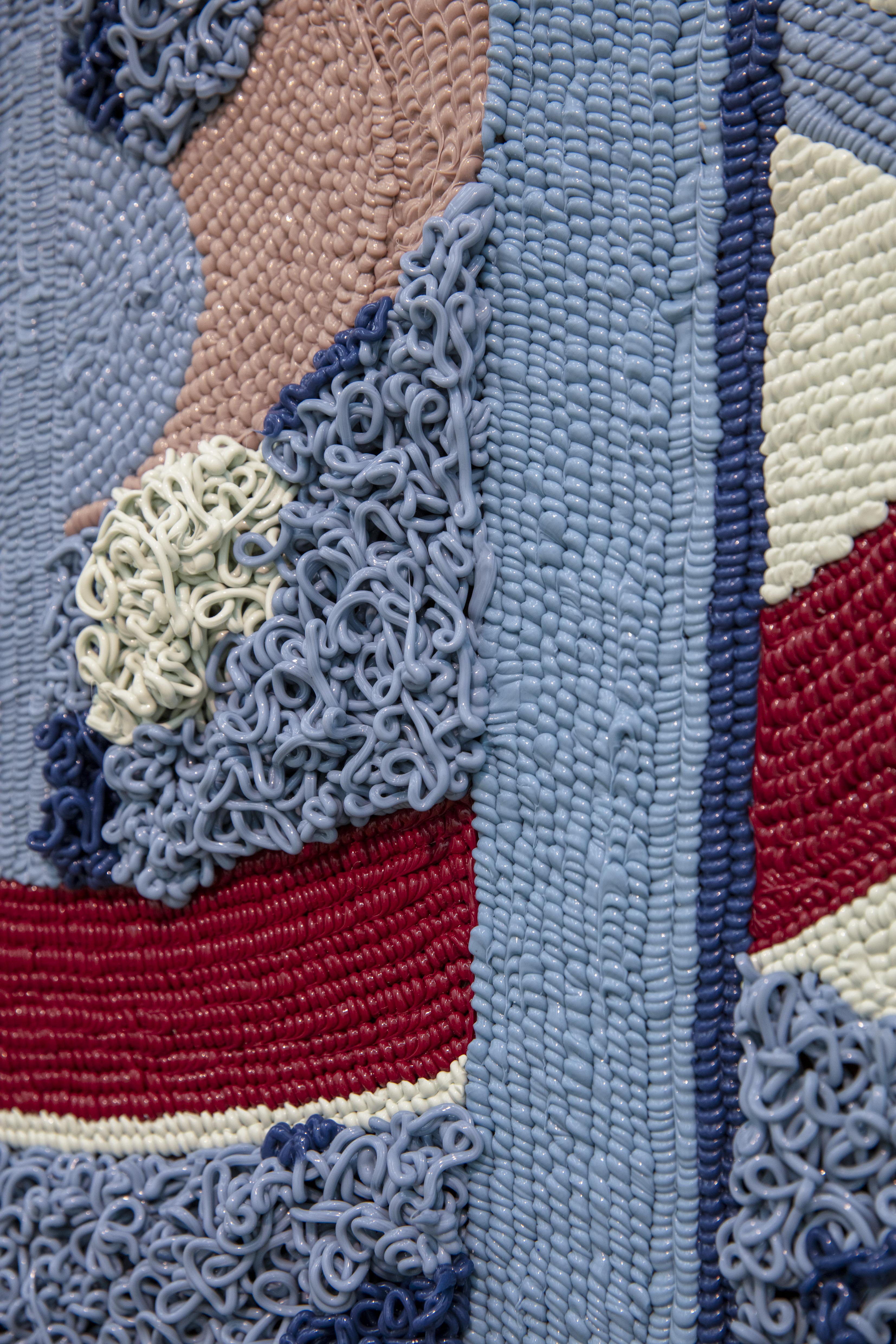
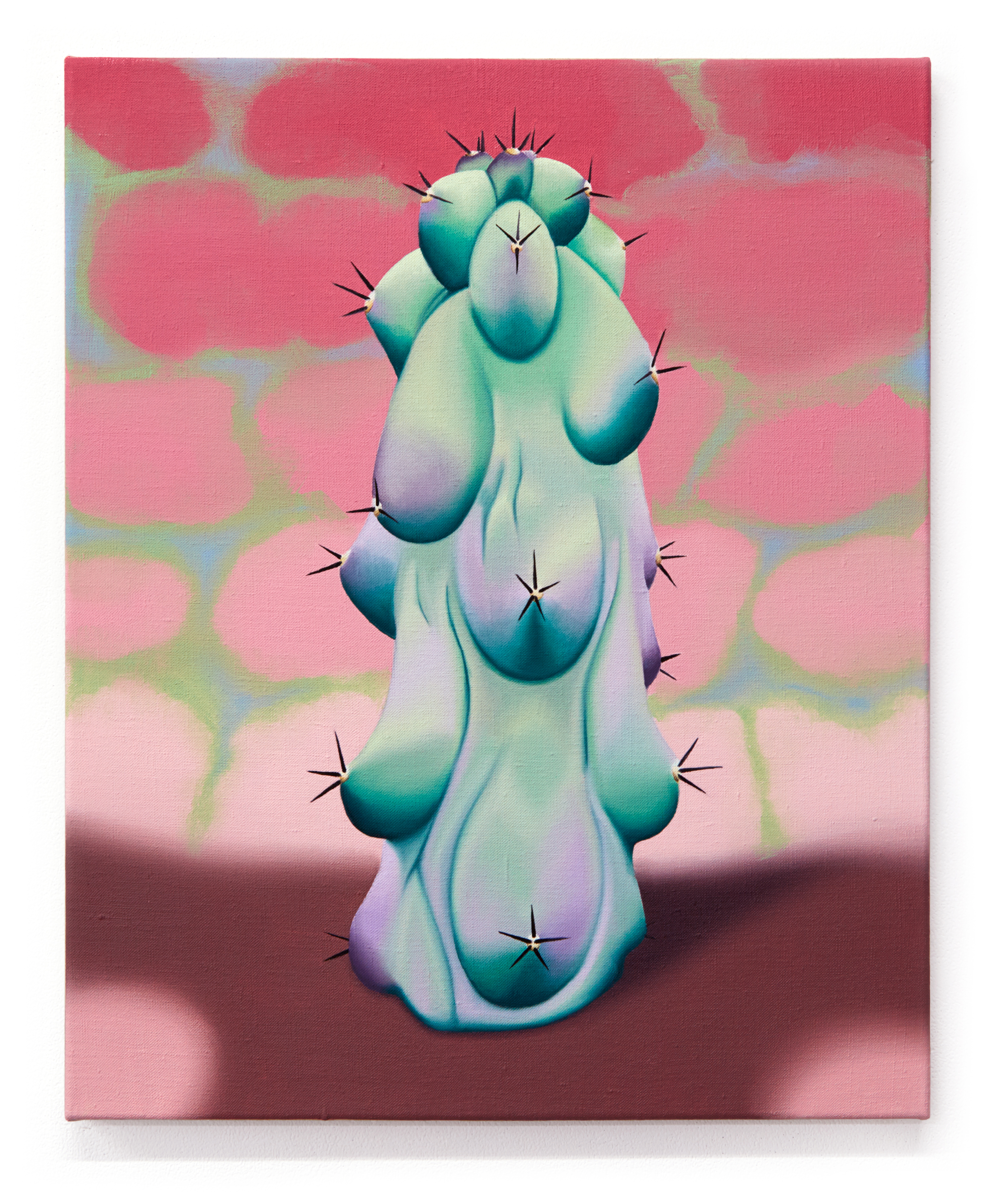
In the exhibition, Sophia Mainka shows a series of wall mounted works made from silicone paste. Heavy and solid, yet curiously slippery, they are based on a Tarot deck of cards. It is peculiarly appropriate that the largest is the wheel of fortune, usually interpreted as standing for change or becoming. Fortune can be good or bad depending on the game, the question asked of the cards, open to interpretation. In Tarot, one card can mean many things and then change meaning at different times. In contrast, destiny is the thread woven through the image and cut by the three mythological sisters. The turn of the card is always fateful. Whatever the outcome of the roll of dice, this outcome is necessarily so: sky back to earth, slide and snip.
Perhaps then, we wander not quite so bewildered in this forest, as we necessarily follow our fate. But we wander on a surface without ground or depth, because free of cause. Everything in Mainka’s work takes place on the surface, like the hybrid creature scuttering around the ornate interiors of the Musée de la Chasse et de la Nature in her video. It imitates not animals, but depictions of them. The two talking dogs are not half-human but half-sculpture, their head and paws the same silicone as Mainka’s wall pieces. In Nazim Bakour’s music score, they do not bark, but whoop with the sound of the cuica drum.
Lukas Hoffmann too stages a fictional world that has something of Lewis Carroll’s unsettling absurdity about it. There is a wooden castle with ears, eyes, a wide open mouth and a nose, and it is both too big and too small. Drink me, eat this, nibble both sides of the mushroom circle. As Alice grows bigger, her initial self also becomes smaller, pulled in both directions at once. With components jutting out and sliding in, the body both outside and inside, the castle too grows small as it becomes big. “Becoming without measure, a veritable becoming-mad.”[6] Observing this madness is the upside down head of Pan, the mischievous god of the wild. A mascaron fallen from its pediment. Run away in panic, it urges us – run away in chaos, it smiles.
[3] Friedrich Nietzsche, Thus Spoke Zarathustra, Book III, “Before Sunrise”, trans. Kaufmann, p.166cd and “The Seven Seals” 3, p. 258. See also Deleuze’s reading in Gilles Deleuze, Nietzsche and Philosophy, trans. Hugh Tomlinson, (London and New York: Continuum, 2002) p. 25–7.
[4] Zarathustra, Book III “The Bedwarfing Virtue” 3, p. 189.
From the 5.10.2021 GiG Munich will be away, doing the SWAB fair in Barcelona Spain with Lukas Hoffmann and Jane Hayes Greenwood. Come and visit us at our stand, Booth S4, or have a look online, on the website or on SWAB’s instagram profile. During this time the work will be also available to view on GiG Munich’s Artland page.
Tim Bennett, Jenny Dunseath, Jonah Gebka, Andrea Hanak, Jane Hayes-Greenwood, Hannes Heinrich, Melina Hennicker, David Henrichs, Stefanie Hofer, Lukas Hoffmann, Lou Jaworski, Steffen Kern, Stefan Lenhart, Jo Love, Michael Lukas, Robin Mason, Kathrin Partelli, Rebecca Partridge, Plastique Fantastique, Berthold Reiss, Miriam Salamander, Michael Schmidt, Maria Thurn und Taxis, Stefanie Ullmann, Maria VMier, Susanne Wagner, Youjin Yi, Andrea Zabric, Janka Zöller.
23.07 – 19.09.2020
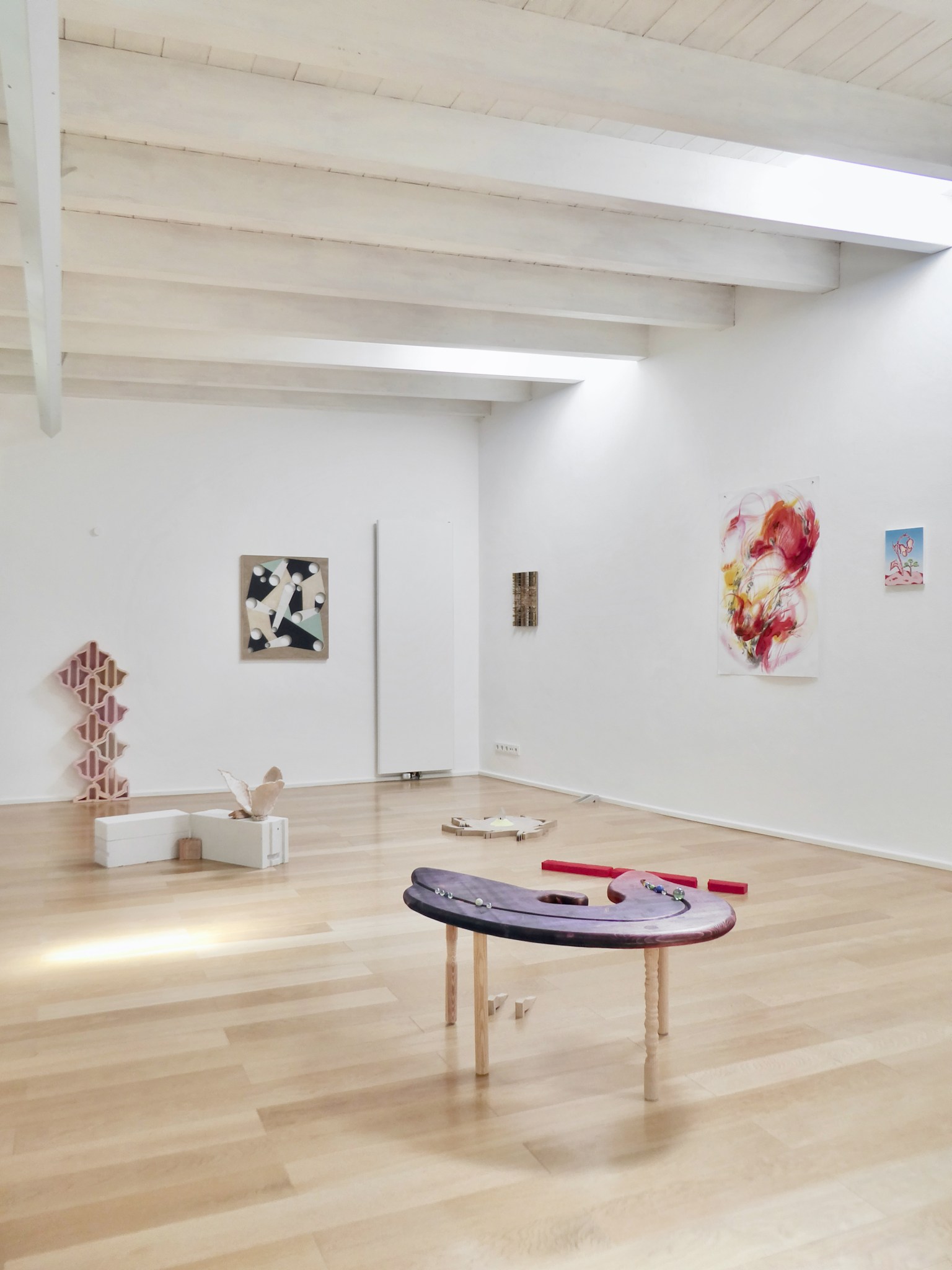
5 Year GiG, installation view, 2020
Lukas Hoffmann, Untitled, 2020, MDF, Sulphur, Aluminium, 80 x 70 x 20 cm
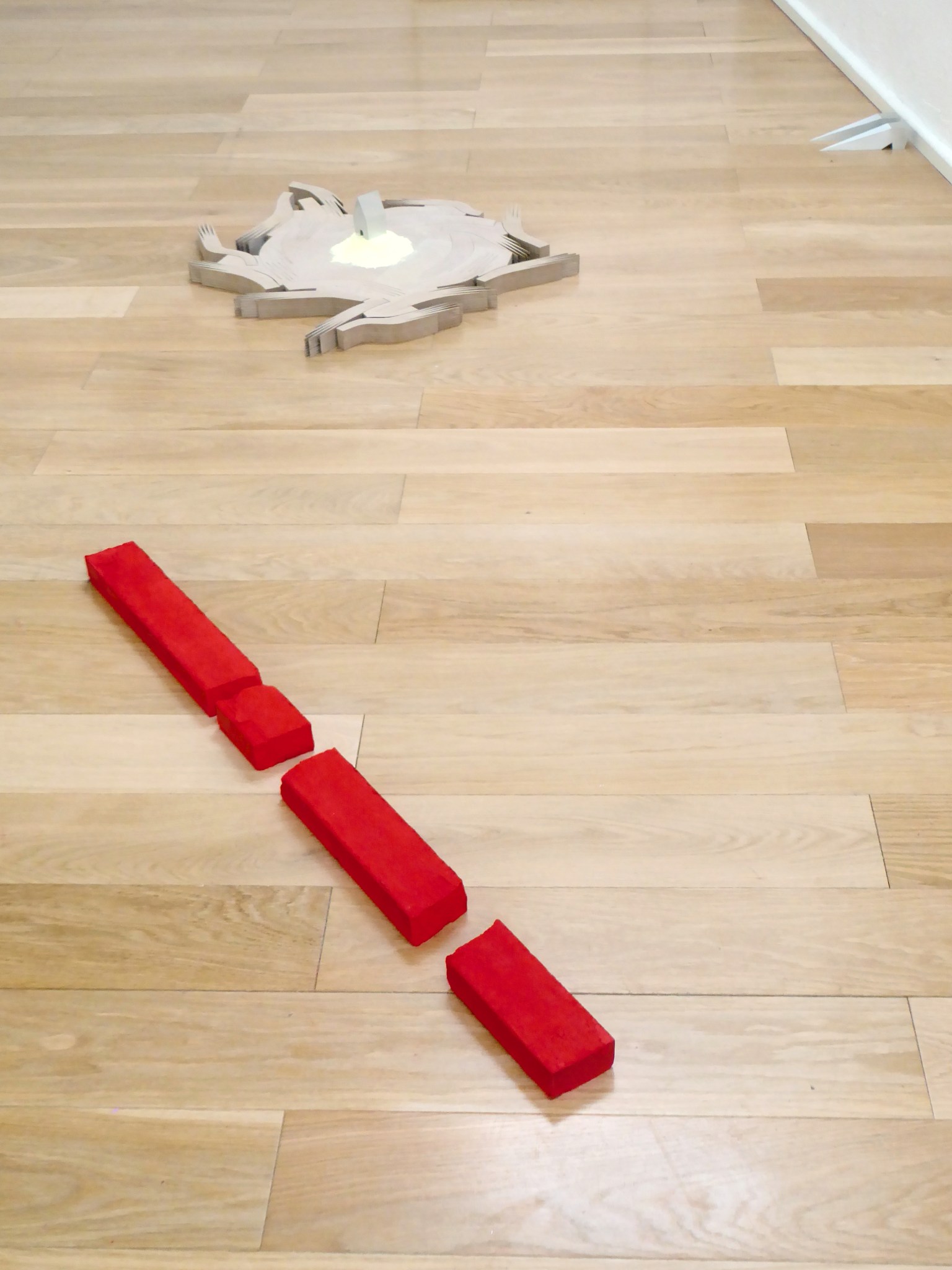
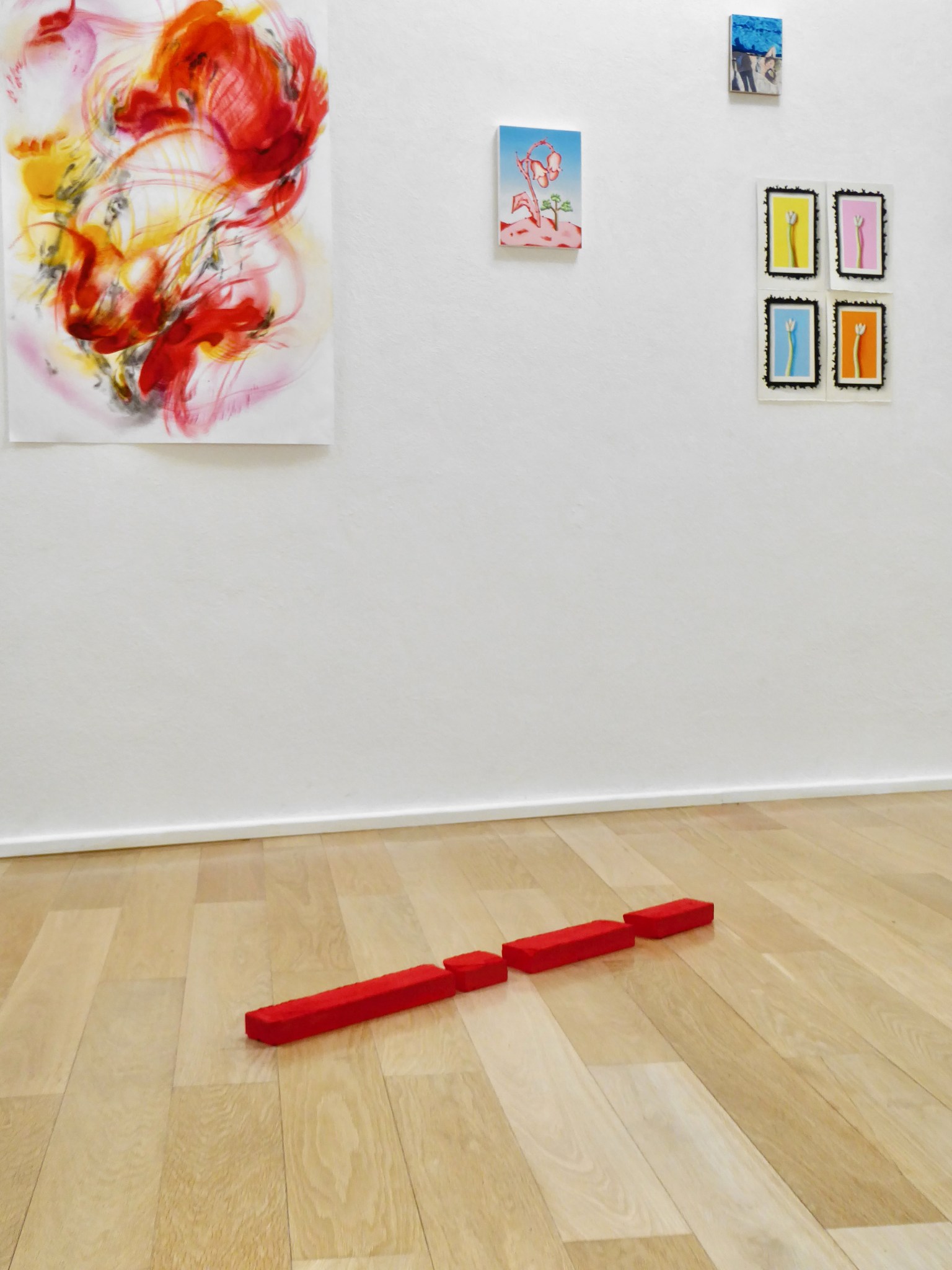
Foreground: Andrea Zabric, Pigment Sculpture 21110, 2020, 5 kg cadmium red pressed pigment, size variable
Background: Lukas Hoffmann, Untitled, 2020, MDF, Sulphur, Aluminium, 80 x 70 x 20 cm
5 Year GiG, installation view, 2020
5 Year GiG, installation view, 2020
5 Year GiG, installation view, 2020
Foreground: Maria VMier, o.T., 2020 stained wood and marbles, 140 x 50 x 50 cm and Lukas Hoffmann, Untitled, 2020, MDF, 15 x 2,5 x 4 cm
5 Year GiG, installation view, 2020
Foreground: Kathrin Partelli, Aus Tagundnachtgleiche, 2018, Gummi, Porenbeton, Ziegelstein, 55 x 65 x 95 cm
Background: Michael Lukas, Frame, 2013, Mixed technique on wood, 46 x 32 x 4 cm
5 Year GiG, installation view, 2020
Foreground: Kathrin Partelli, Aus Tagundnachtgleiche, 2018, Gummi, Porenbeton, Ziegelstein, 55 x 65 x 95 cm
Background: Susanne Wagner, Conchita, 2020, Gefärbter Gips, 120 x 40 x 10 cm and Tim Bennett, untitled (o-garden I) gipskartonrelief, akrylfarbe, 85 x 70 cm
Tim Bennett, Jenny Dunseath, Jonah Gebka, Andrea Hanak, Jane Hayes-Greenwood, Hannes Heinrich, Melina Hennicker, David Henrichs, Stefanie Hofer, Lukas Hoffmann, Lou Jaworski, Steffen Kern, Stefan Lenhart, Jo Love, Michael Lukas, Robin Mason, Kathrin Partelli, Rebecca Partridge, Plastique Fantastique, Berthold Reiss, Miriam Salamander, Michael Schmidt, Maria Thurn und Taxis, Stefanie Ullmann, Maria VMier, Susanne Wagner, Youjin Yi, Andrea Zabric, Janka Zöller.
Andrea Zabric, Pigment sculptures (Berlin red and Naples Yellow) 2018, pigment, dimensions variable
Andrea Zabric, Pigment sculptures (Berlin red and Naples Yellow) 2018, pigment, dimensions variable
Andrea Zabric, Pigment sculpture (Berlin red) 2018, pigment, dimensions variable
Andrea Zabric, Pigment sculptures (Naples yellow, 43870,) 2018, pigment, 12 x 10 x 10 cm
elements, 2018, installation view
Lukas Hoffmann, o. T., 2018, Series of 4, each in edition of 10, Stainless steel, dimensions variable
Lukas Hoffmann, o. T. and o. T, 2018, stainless steel, various textiles, pvc, plastic fittings, steel, aluminium bronze, German silver, 150 x 3 x 3 cm and 50 x 15 x 3 cm
Lukas Hoffman, o. T., 2018, various textiles, pvc, plastic fittings, steel, aluminium bronze, german silver, 150 x 3 x 3 cm
Lukas Hoffmann in elements, 2018, installation view
Lukas Hoffmann, o. T., 2018, bronze, 15 x 4 x 4 cm each
Lukas Hoffmann, o. T., 2018, series of 5, stainless steel, 9 x 1 cm each
Lukas Hoffmann, o. T. and o. T., 2018, stainless steel and various textiles, pvc, 9 x 1 cm each and 65 x 35 x 8 cm
Lukas Hoffmann, o. T., 2018, various textiles, pvc, 65 x 35 x 8 cm
The show elements, featuring new work by Lukas Hoffmann and Andrea Zabric, is GiG Munich’s first collaboration with Klasse Pia Fries, Akademie der bildene Kunst, München. Klasse Pia Fries is well known for its focus on abstract painting, especially in its material aspect. Both Andrea Zabric, a recent graduate (2018), and Lukas Hoffmann, a student at the class, incorporate material elements in their practice, but in a strongly conceptual rather than a painterly fashion.
Carbon, aluminium, iron, copper – basic chemical elements are at play in the work, often in their purest form. These instead of being manipulated by the artist’s hand are left in their natural alien state. Matter is subject to its own internal logic not the artist’s touch, and the method of production incorporates industrial, mechanical, and printing processes. While this is obviously human in origin, technology as much a product of man as any painting, when combined with the emphasis on materiality, lends their investigations a scientific rather than artistic quality. As an attempt to think the world outside of the personal relationship we have with it, the work relates to speculative realist concerns currently present in art and philosophy. It shares with speculative realism a taste for the dogmatic, the formal and the mathematical.
Zabric’s signature pigment sculptures, quite literally, take centre stage. Painting becomes reduced to its primary components: space, ground and pigment. The pigment is not mixed with medium and spread across the ground in its customary way, but is compressed at high pressure to form unusually perfect cuboid shapes. This gives her colours an uncanny density, a new found depth that recalls the violence of its making. For GiG Munich Zabric has produced three new pieces in pigments she had not used before. The work is also more experimental than previously, in that she allows the pieces to crumble, thus exposing their innate vulnerability.
For all its implications of aggression, Hoffmann’s work is curiously invisible, scattered around the room, sometimes disguised as items of furniture.Instead of paintings, we encounter clothes hooks, a javelin is placed against the wall ready for use. Bullets (or are they exercise bars? maybe dildos?) lie waiting on the floor. The casual method of display serves to highlight the works tactile qualities, drawing us in. In a moment of masochism, we want to touch the sharp points with our fingertip and wait for the skin to break. Yet simultaneously we feel that to do so would be an imposition, we would enter a space that its not for us, that belongs to someone else, or indeed to the work itself. Quietly, the work turns away from us and withdraws into its own realm.
Vernissage: Freitag 16. November, 18 – 21 Uhr,
16 November 2018 – 18 Januar 2019
Bitte nach Vereinbarung unter contact@gig-munich.com
Finissage: Freitag 18. Januar 2019, 19 – 21 Uhr
The exhibition elements, showcasing new work by Lukas Hoffmann and Andrea Zabric is GiG Munich’s first collaboration with Klasse Pia Fries, Akademie der Bildenden Künste München.
What connects the two young, upcoming artists is a shared interest in materialism, where their version of materialism belongs more to the philosophical developments centred around Speculative Realism than to the handmade, expressive variety traditionally associated with the activity of painting. Operating at the intersection of materialism and realism, they submit to the view that the primacy afforded to matter necessarily demotes the importance of the human understanding of it. If matter is all there is, then its reality must be encountered for itself. In their quasi-scientific, quasi-magical approaches, they reject the emphasis on the multiplicity of interpretations that art borrowed from dominant modes of contemporary critical theory (post-structuralism, deconstruction, psychoanalysis) in order to pursue an almost essential, almost dogmatic, grounding of reality. With this comes a violence, whether this is manifested in the high pressure Zabric submits her pigments to, or the highly polished weapon-like quality of Hoffmann’s metal work. They show that the material world, the inhuman one, is intense, forceful, elemental.
























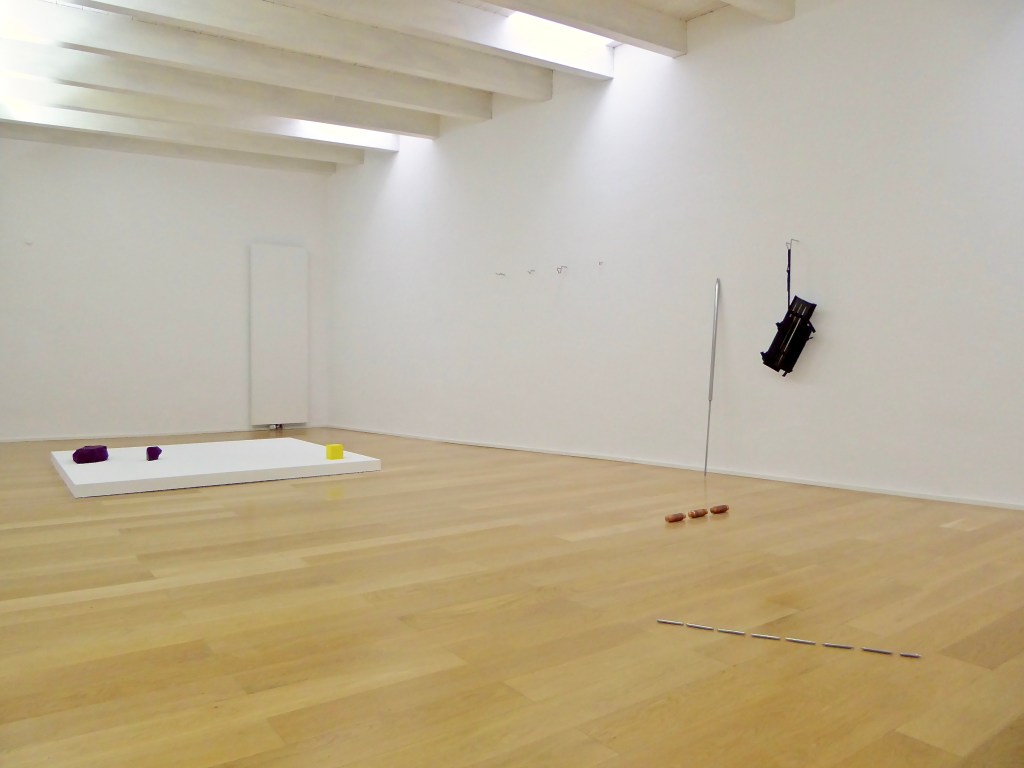 elements, 2018, installation view
 elements, 2018, installation view
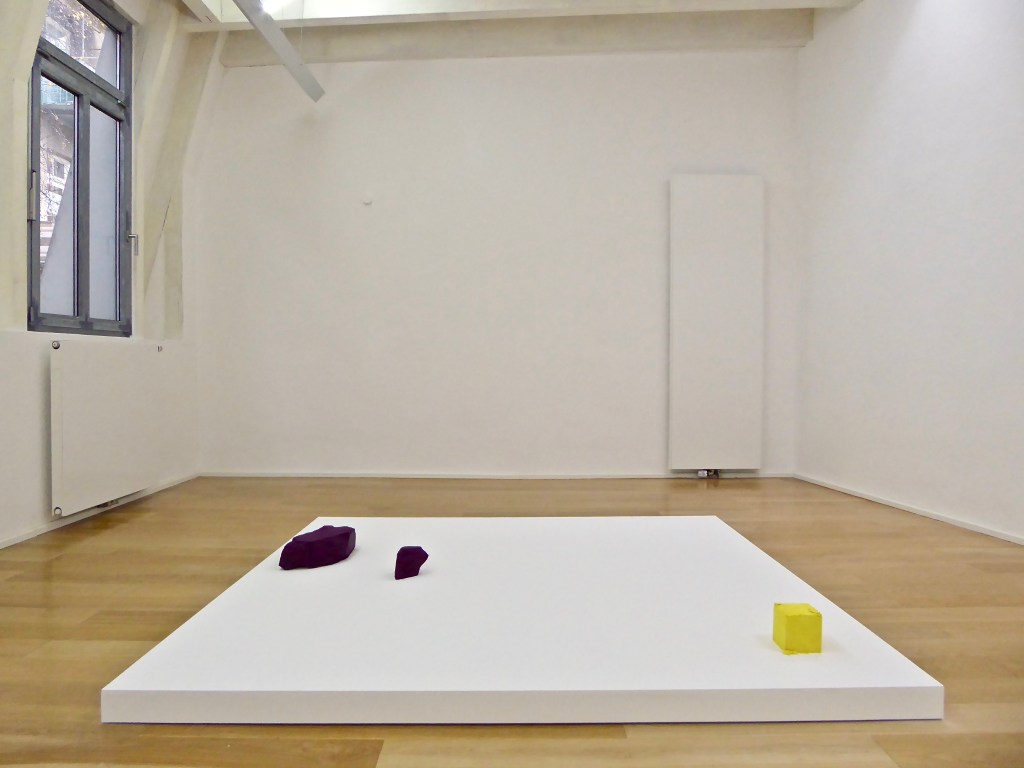 Andrea Zabric, Pigment sculptures (Berlin red and Naples Yellow) 2018, pigment, dimensions variable
 Andrea Zabric, Pigment sculptures (Berlin red and Naples Yellow) 2018, pigment, dimensions variable
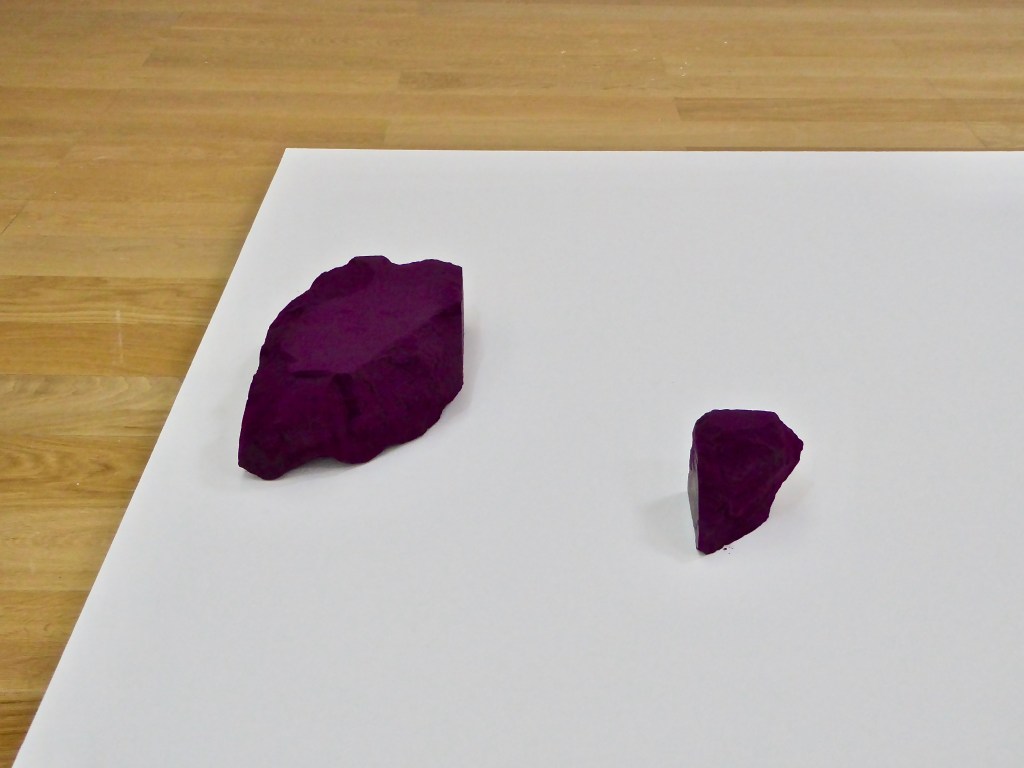 Andrea Zabric, Pigment sculpture (Berlin red) 2018, pigment, dimensions variable
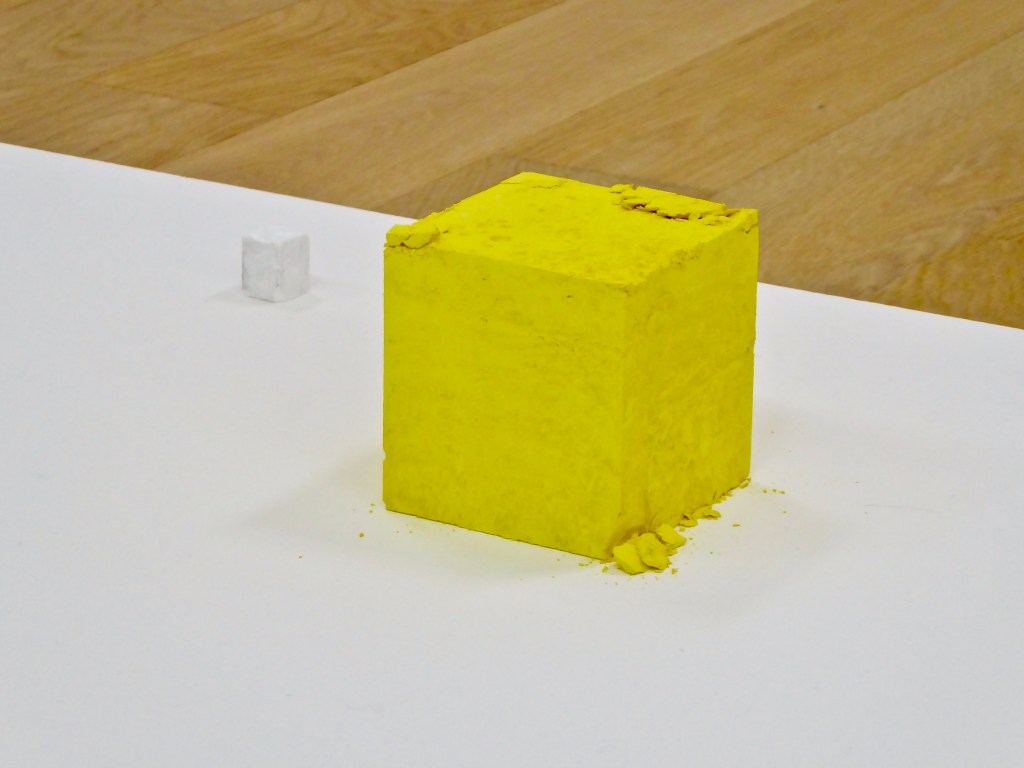 Andrea Zabric, Pigment sculptures (Naples yellow, 43870,) 2018, pigment, 12 x 10 x 10 cm
 elements, 2018, installation view
 Lukas Hoffmann, o. T., 2018, Series of 4, each in edition of 10, Stainless steel, dimensions variable
 Lukas Hoffmann, o. T. and o. T, 2018, stainless steel, various textiles, pvc, plastic fittings, steel, aluminium bronze, German silver, 150 x 3 x 3 cm and 50 x 15 x 3 cm
 Lukas Hoffman, o. T., 2018, various textiles, pvc, plastic fittings, steel, aluminium bronze, german silver, 150 x 3 x 3 cm
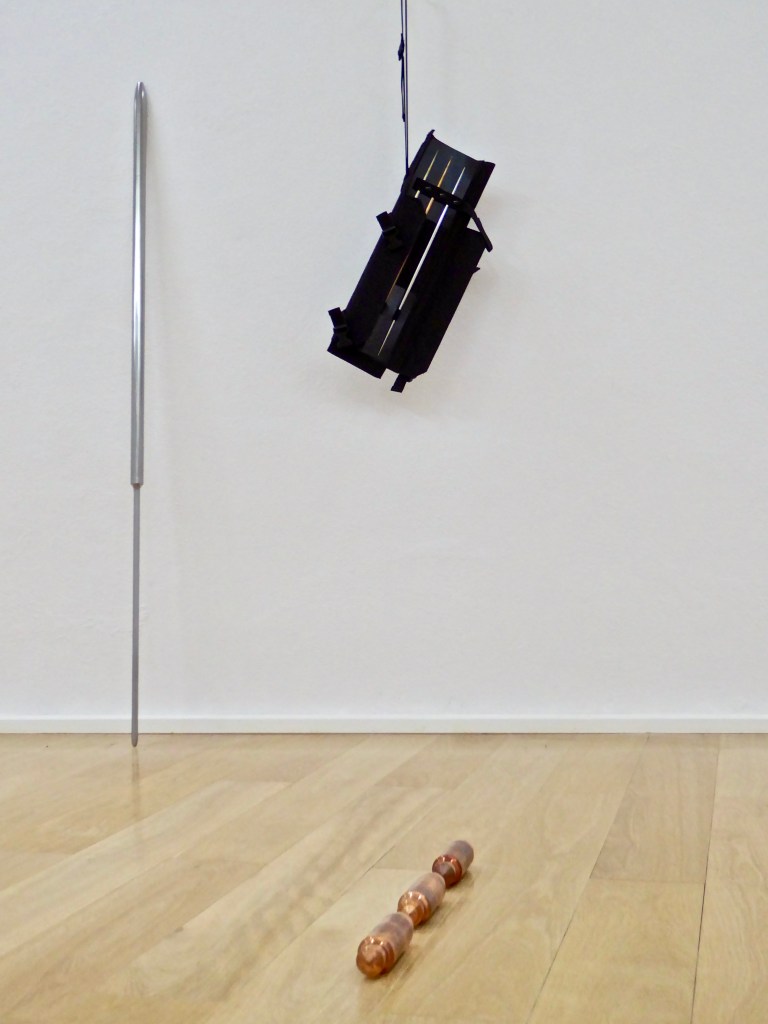 Lukas Hoffmann in elements, 2018, installation view
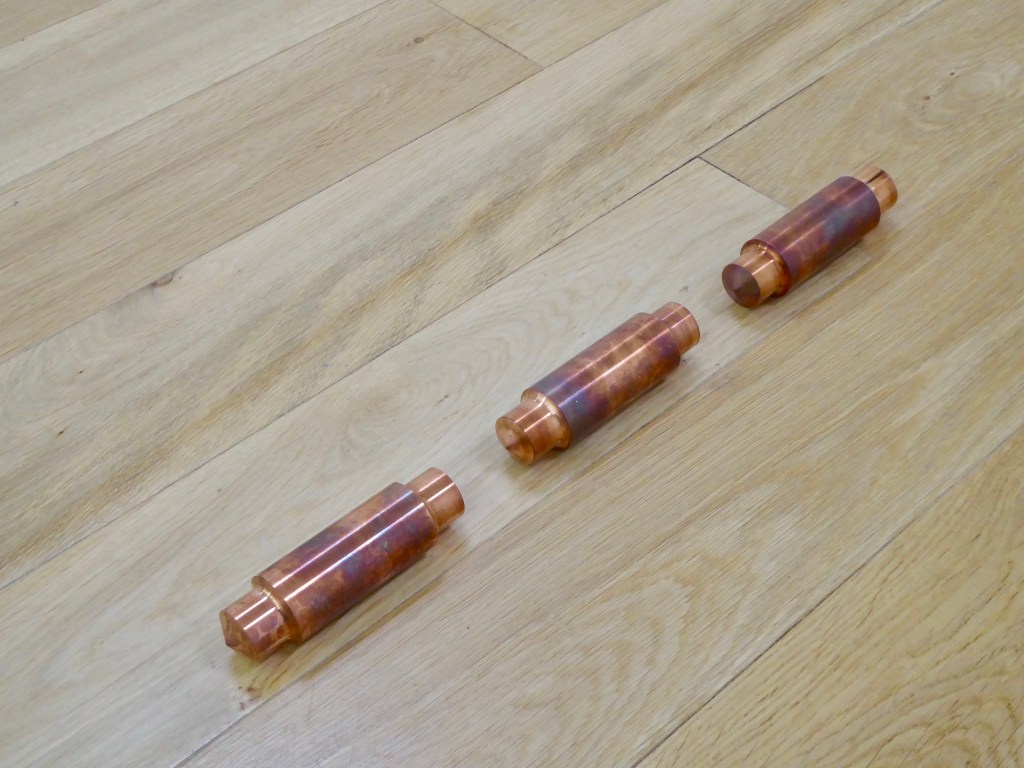 Lukas Hoffmann, o. T., 2018, bronze, 15 x 4 x 4 cm each
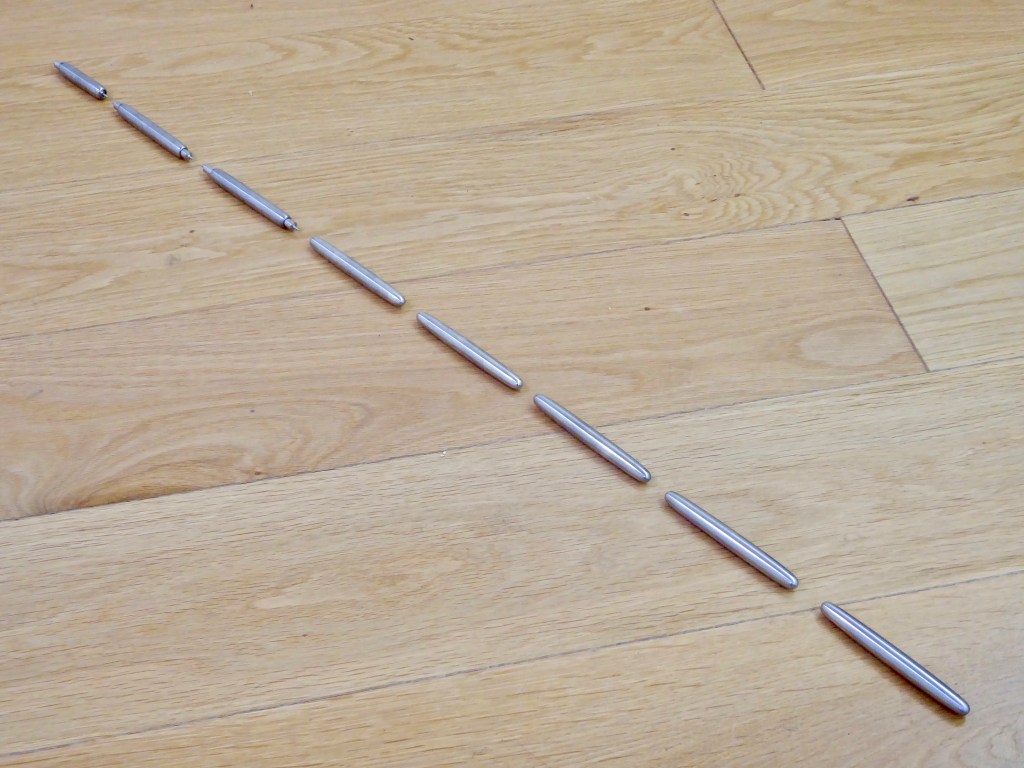 Lukas Hoffmann, o. T., 2018, series of 5, stainless steel, 9 x 1 cm each
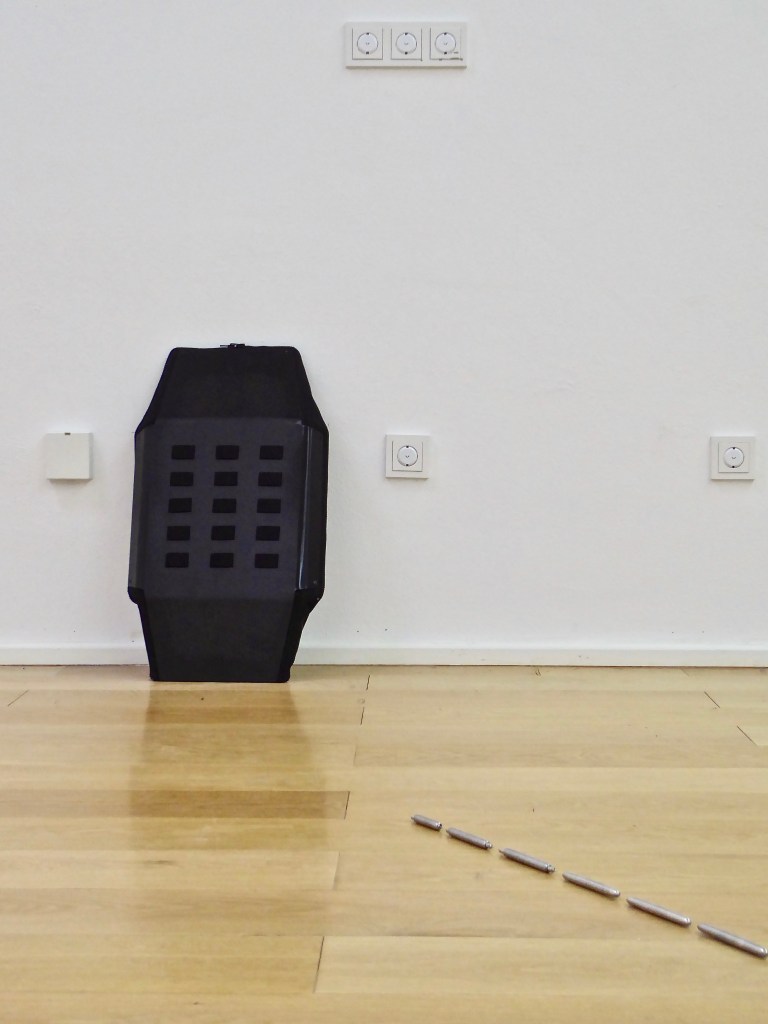 Lukas Hoffmann, o. T. and o. T., 2018, stainless steel and various textiles, pvc, 9 x 1 cm each and 65 x 35 x 8 cm
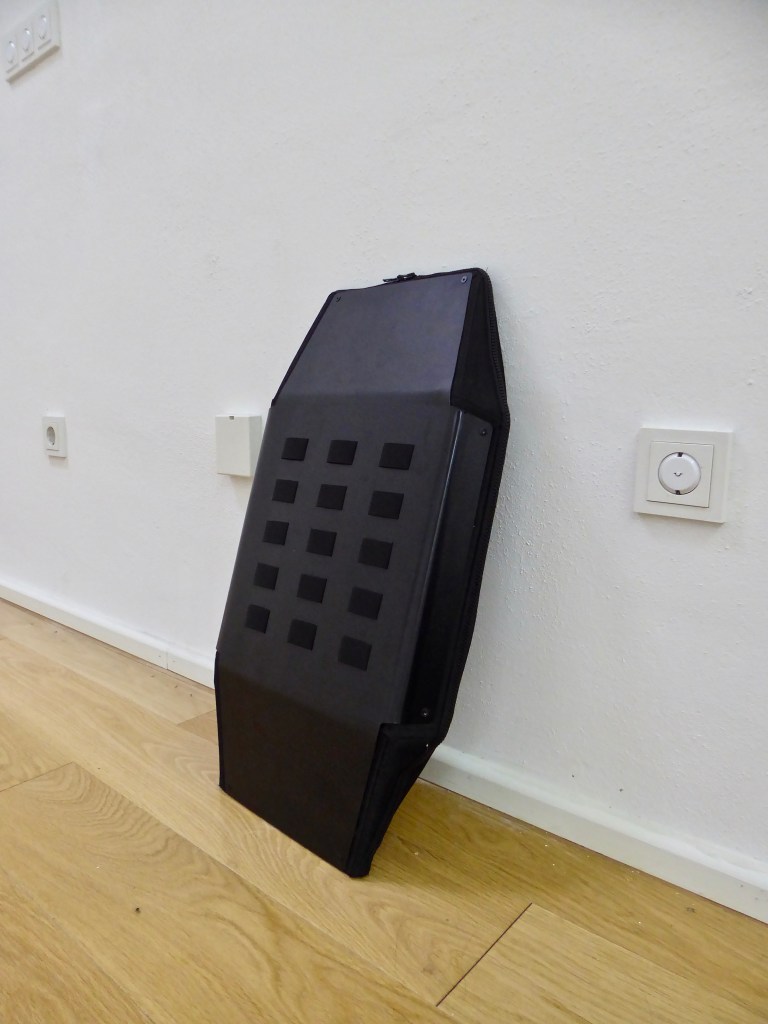 Lukas Hoffmann, o. T., 2018, various textiles, pvc, 65 x 35 x 8 cm
 GiG
GiG 