Animal Elegance

Jakob Gilg, Anka Helfertova, Julia Klemm and Jonathan Penca

9.10. – 7.11.2025

with Pracownia Portretu, Łódź, Poland
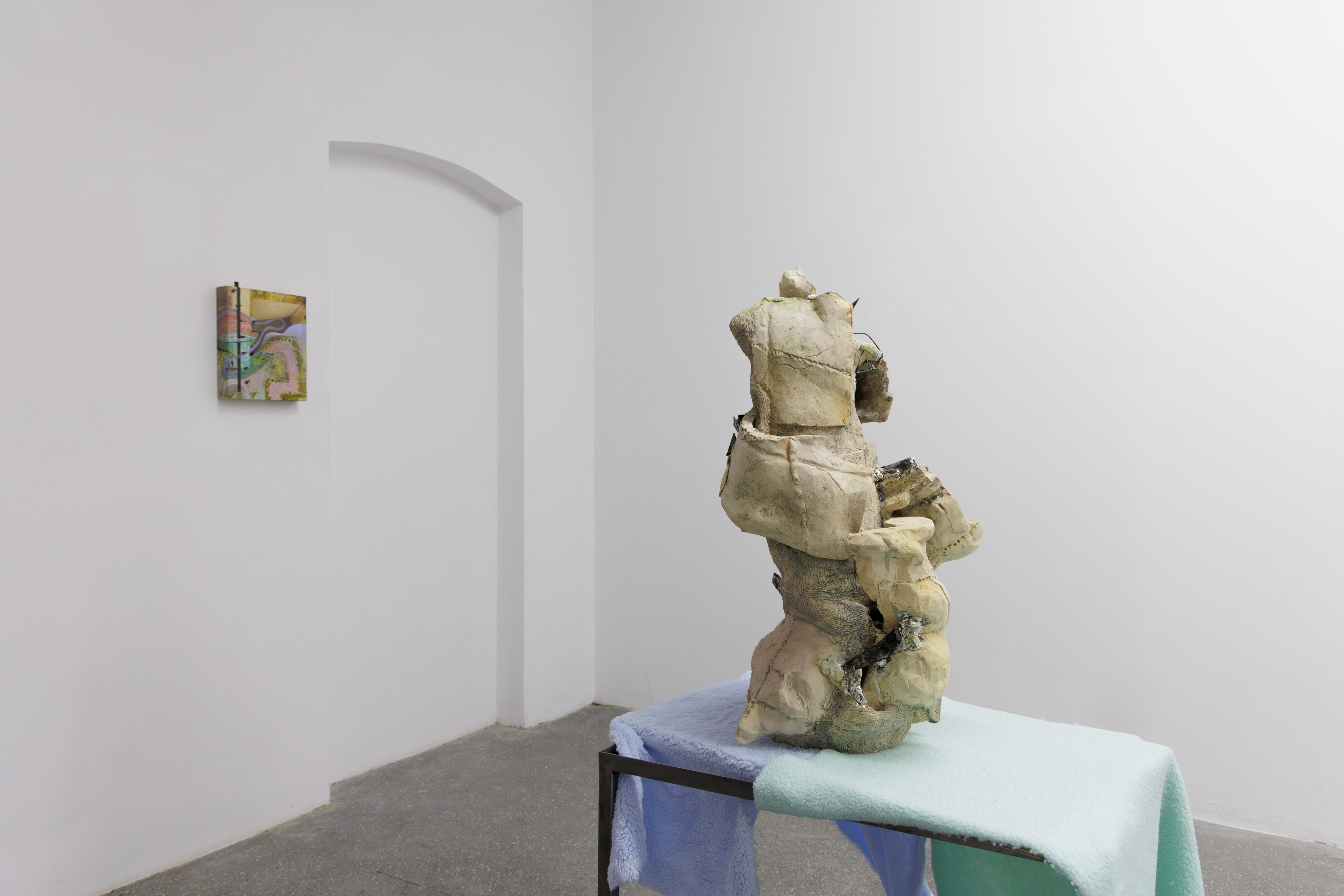
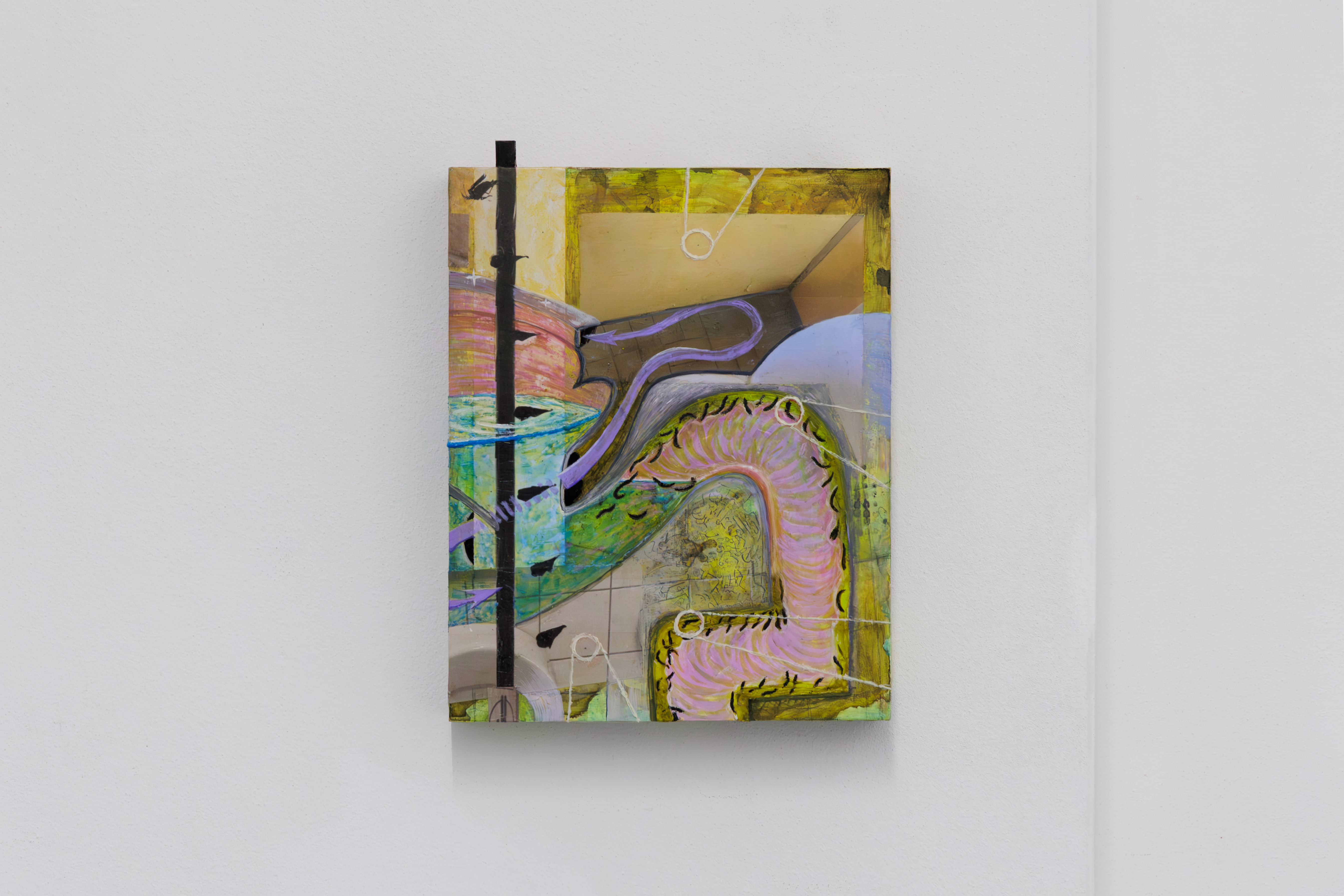
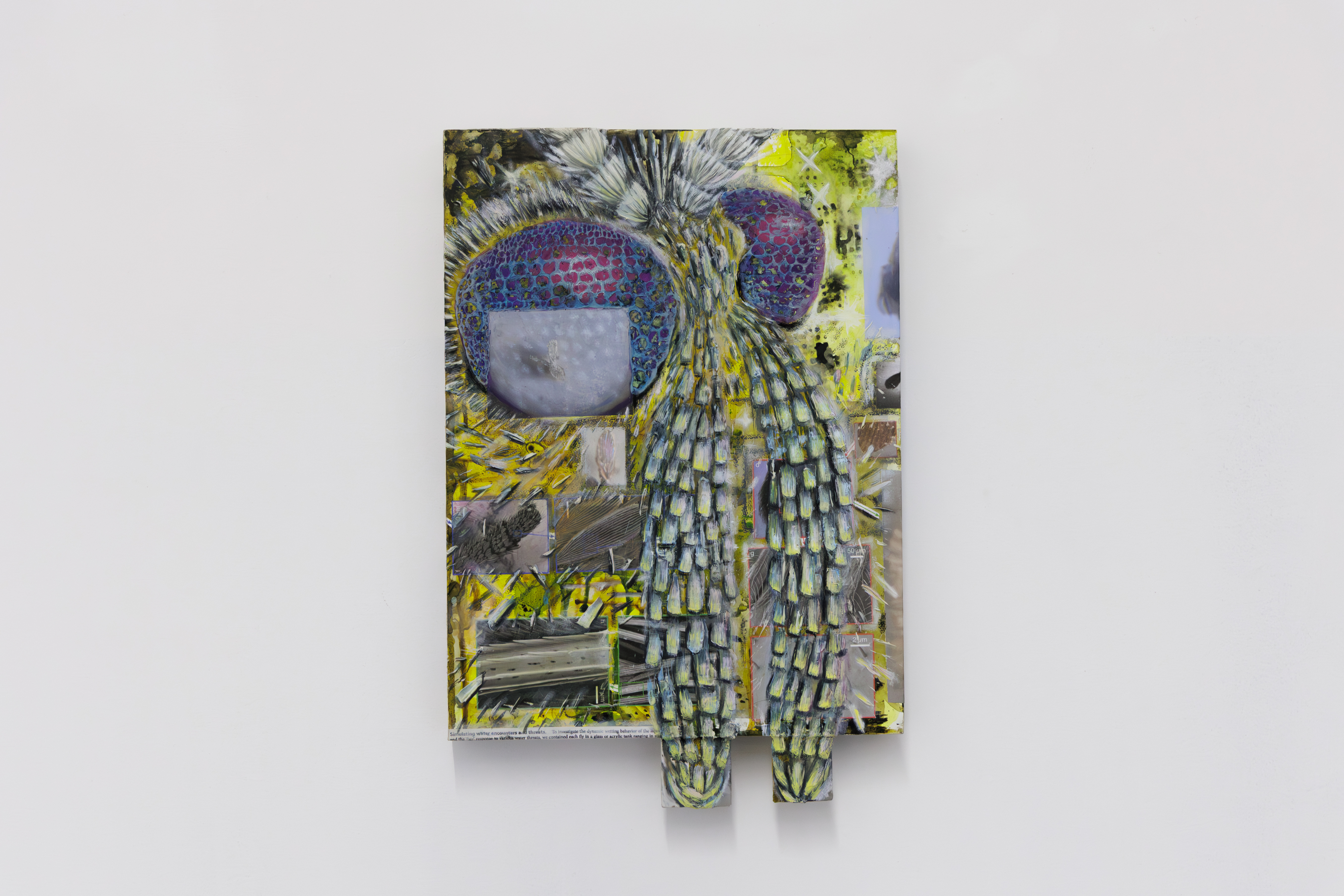
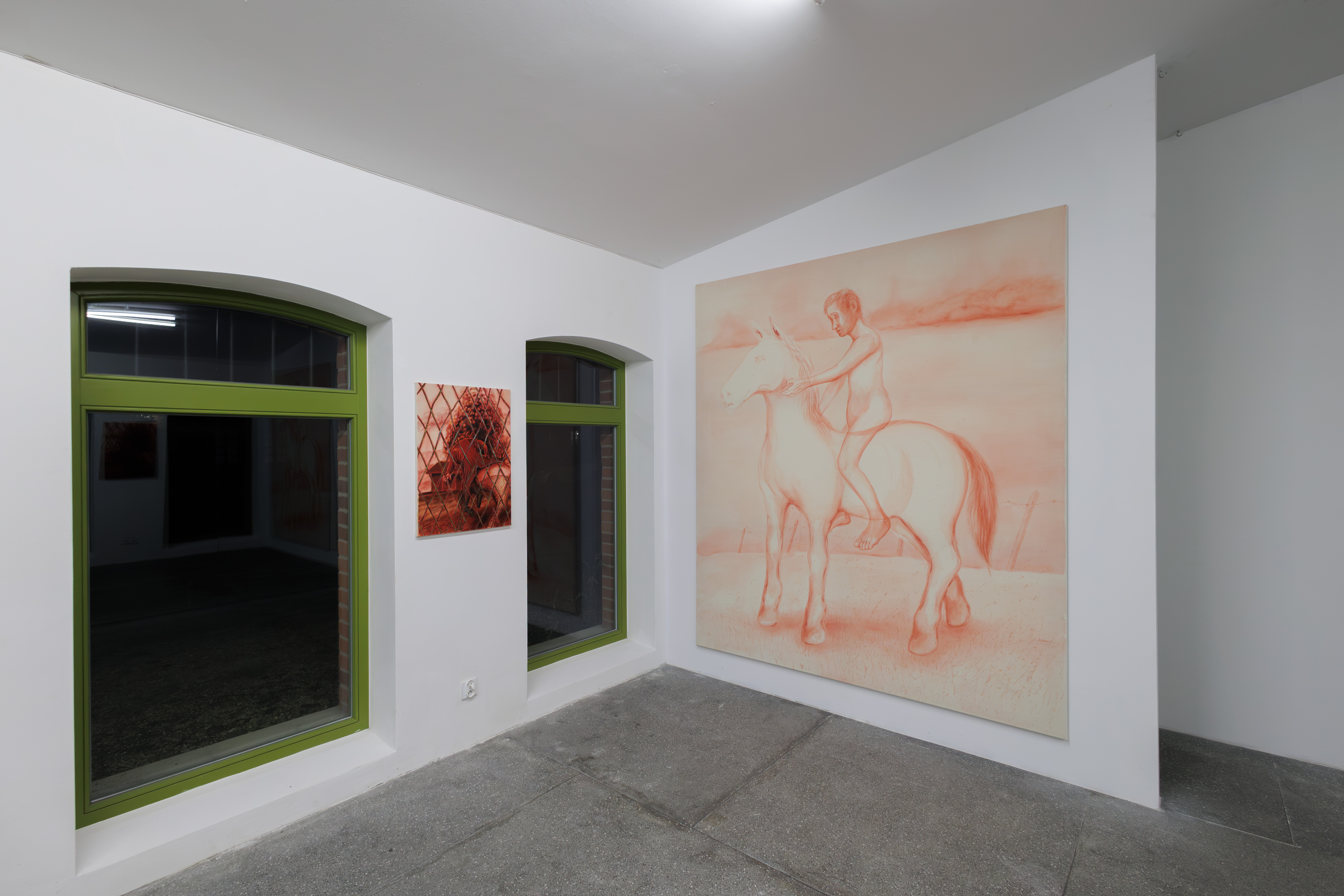
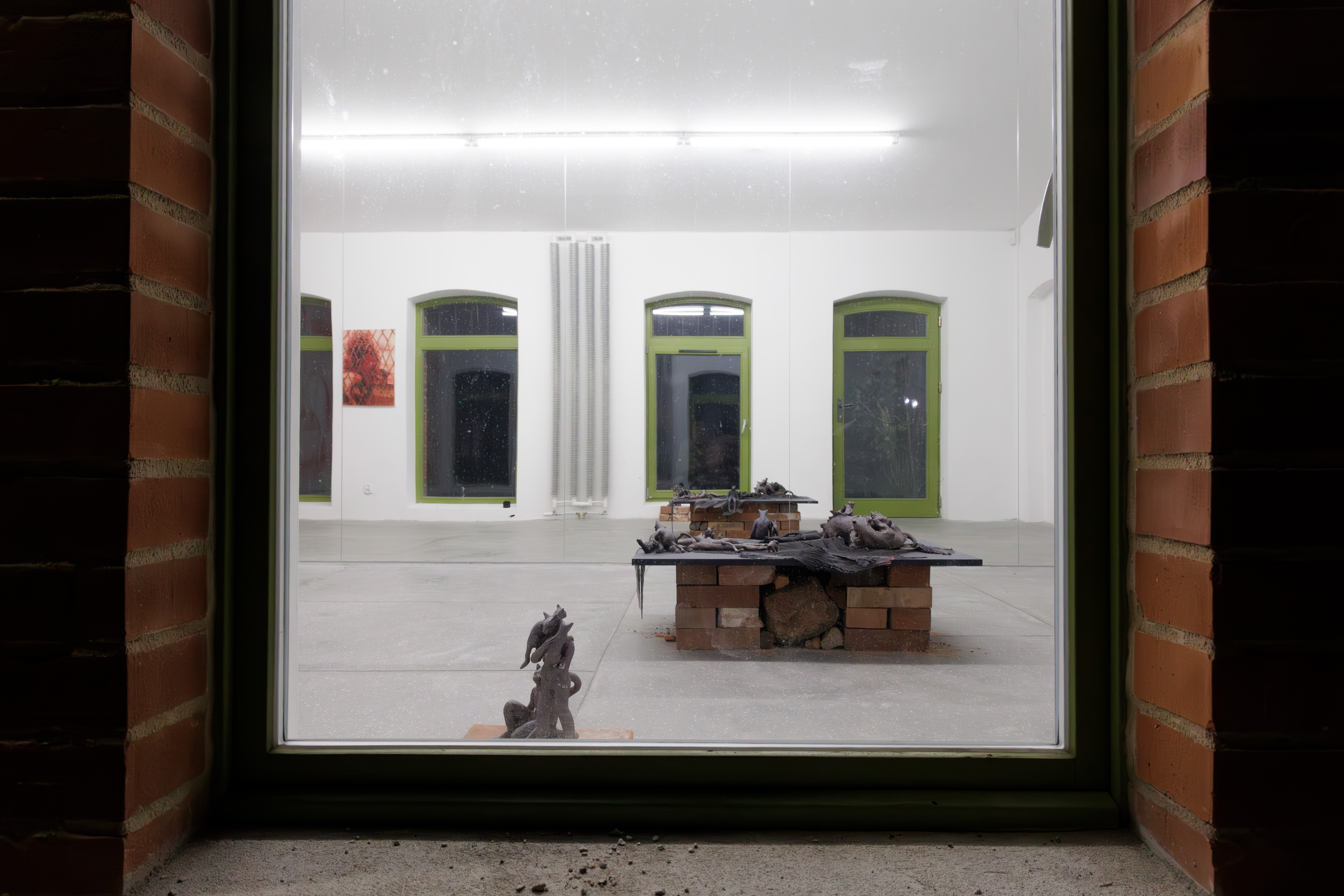
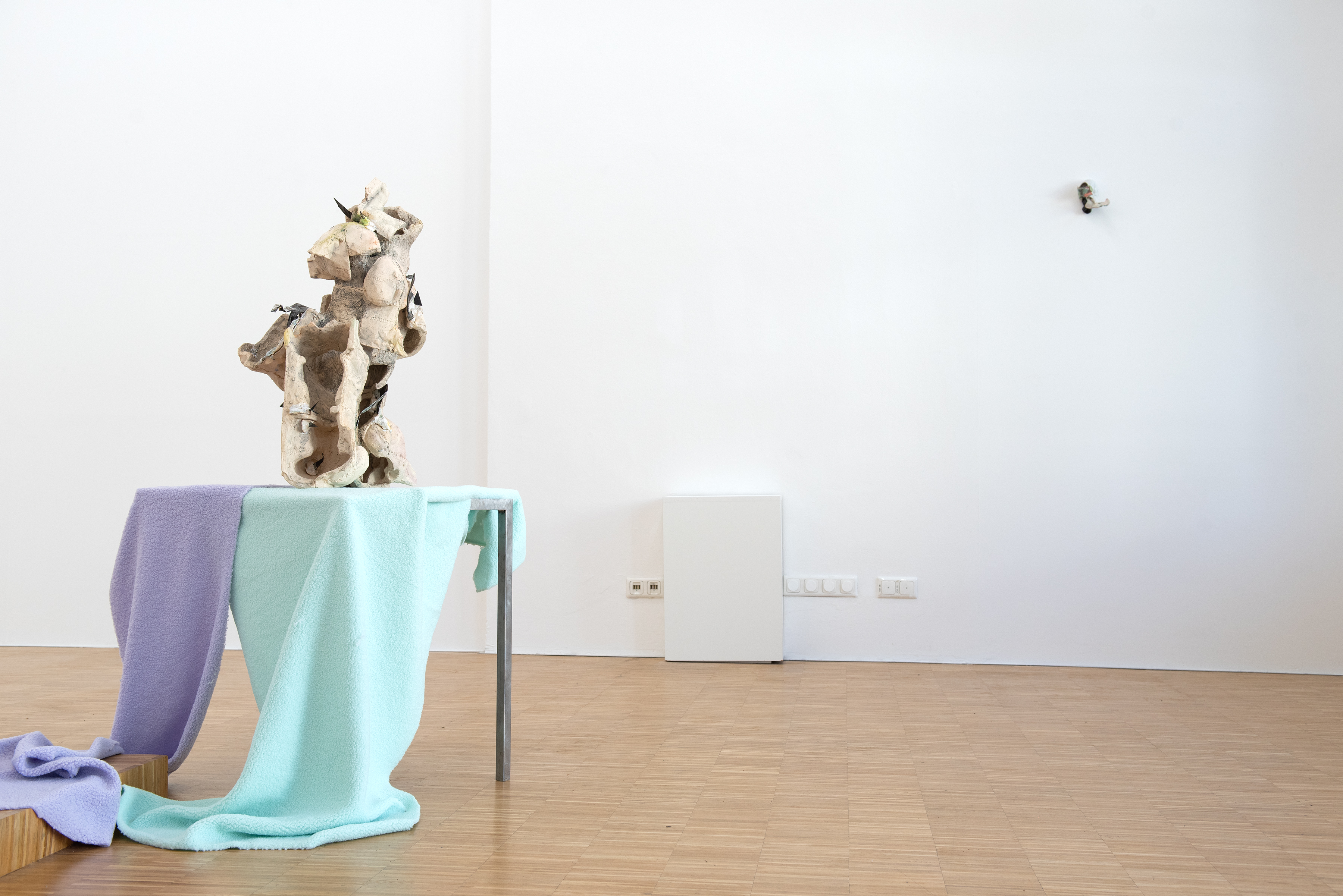
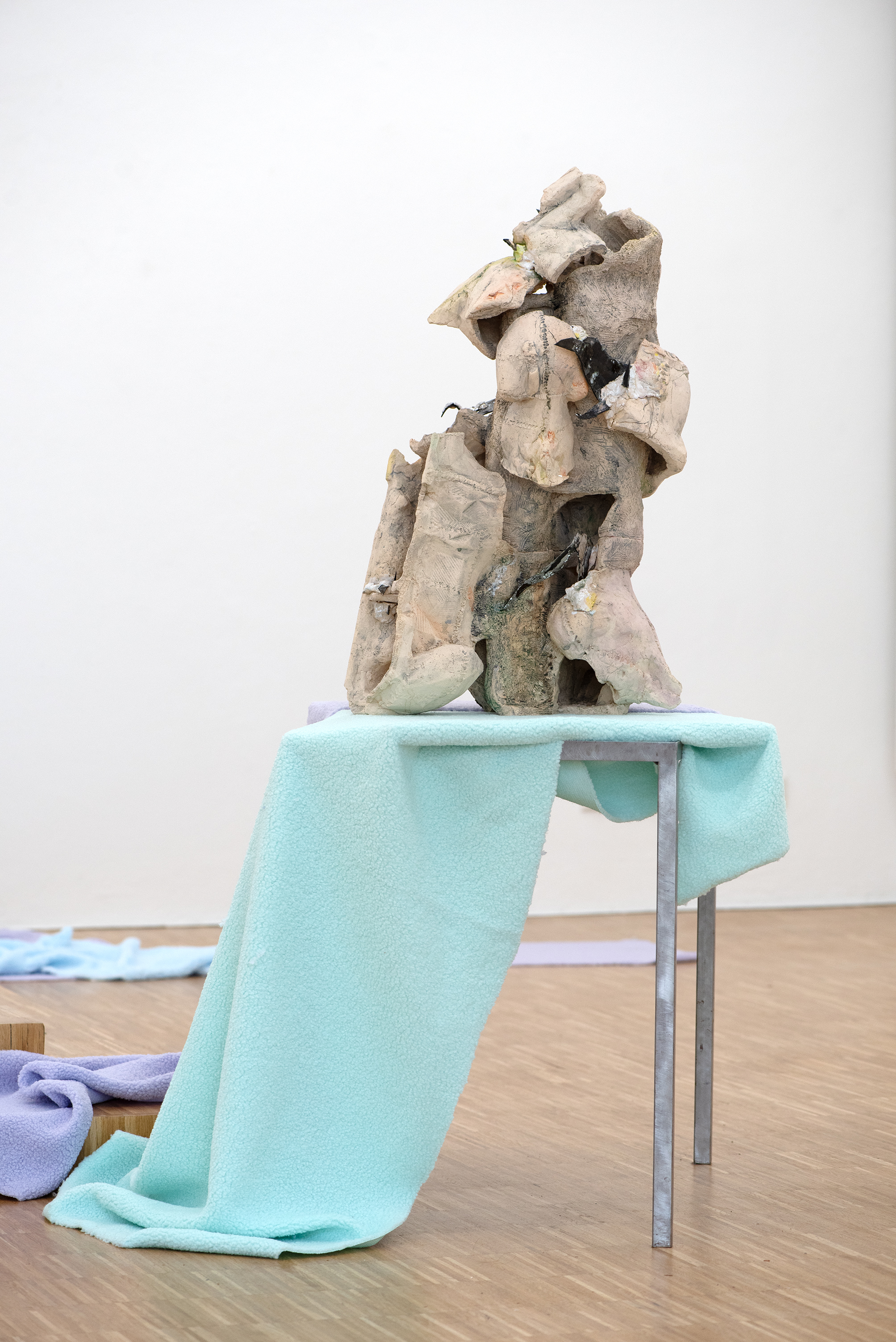
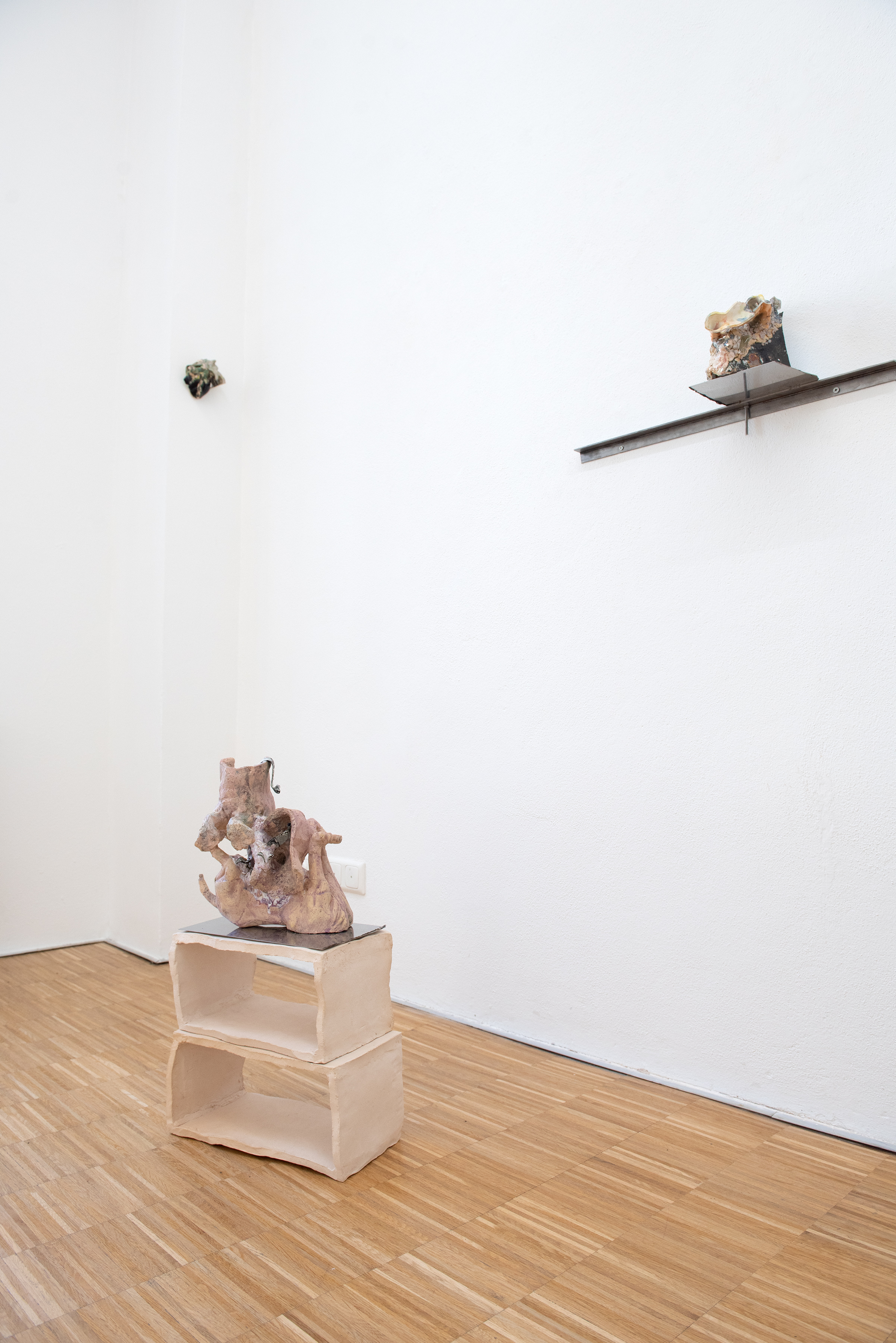
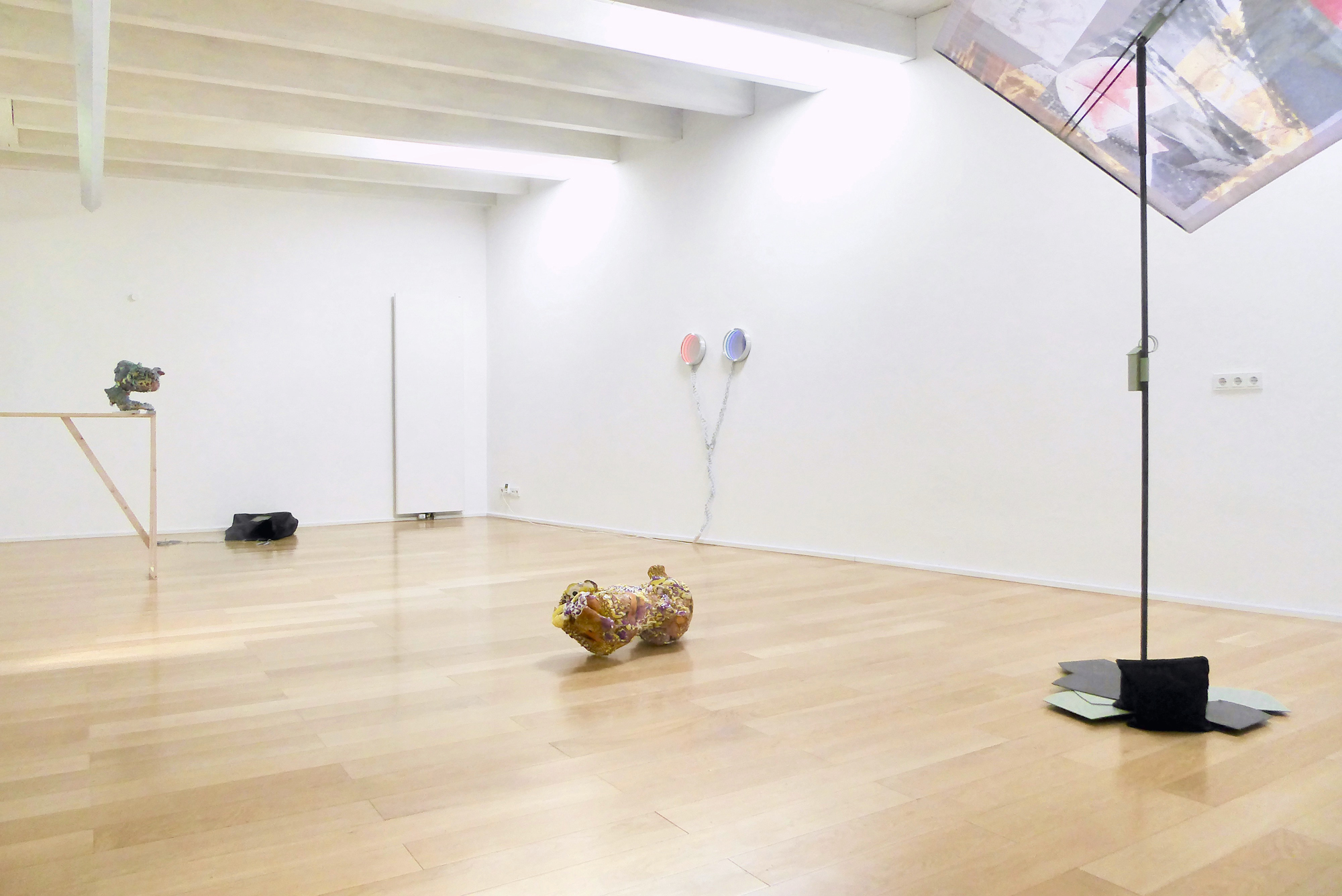
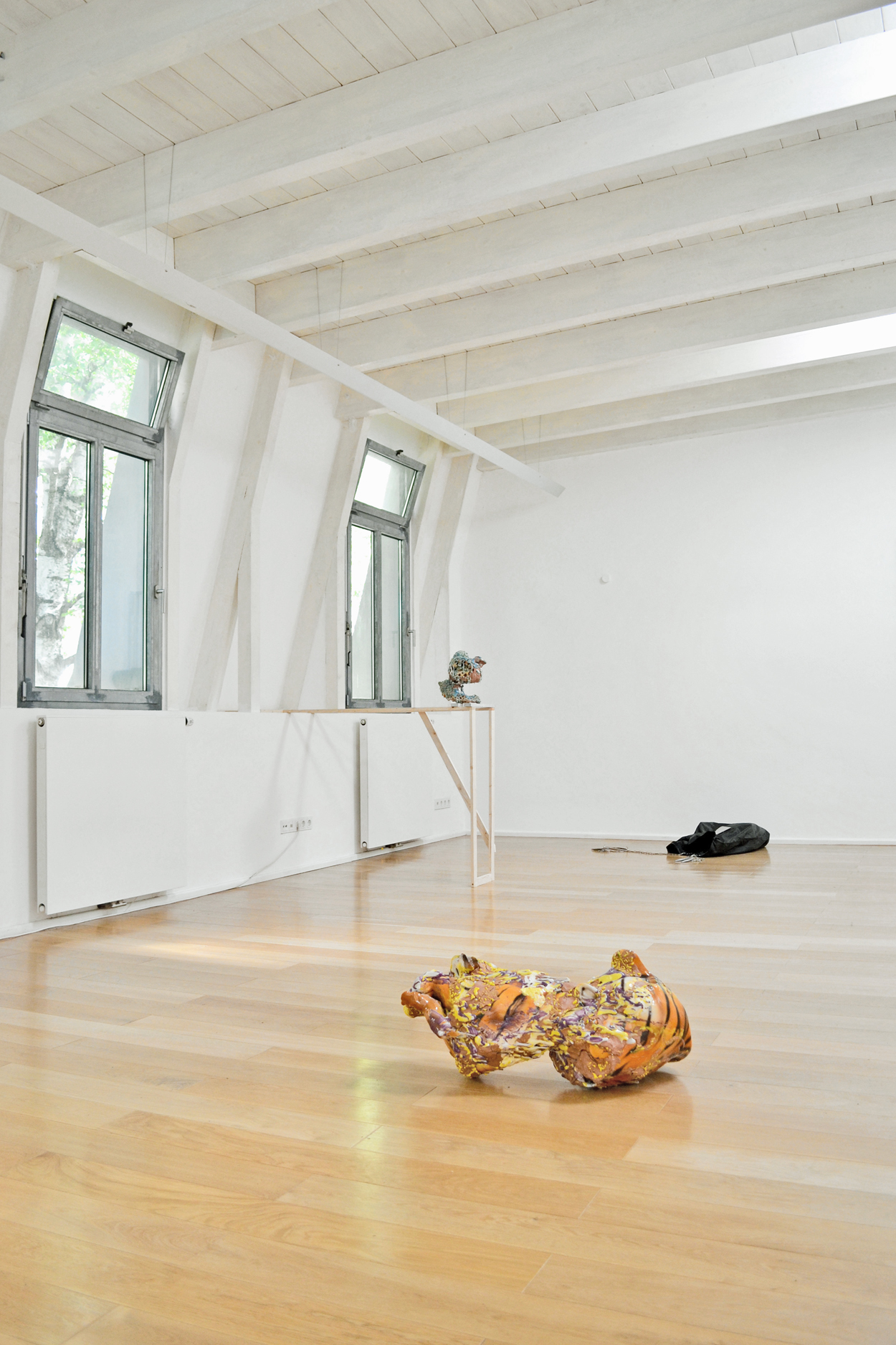
Animal Elegance, installation view (Jonathan Penca, Colonna Sonora, 2025, acrylic and
gouache paint, acrylic resin, biro, pencil, gesso and ink on wood. 31 x 24 x 5 cm; Julia Klemm, A chimera is not a pet 2, 2025, steel, glaze, ceramic, pigment, 44 x 38 x 74 cm, )
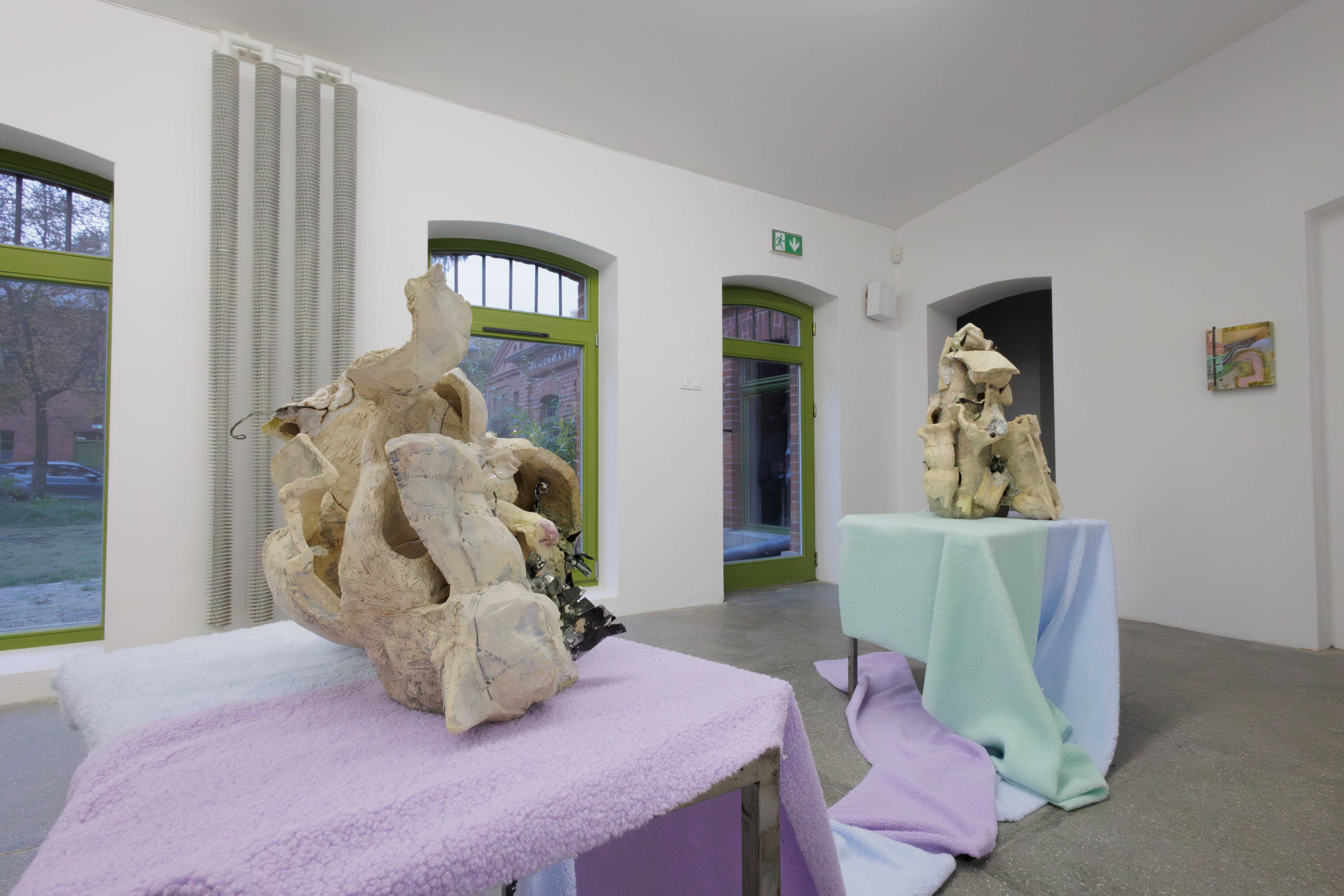
Animal Elegance, installation view (Jonathan Penca, Colonna Sonora, 2025, acrylic and
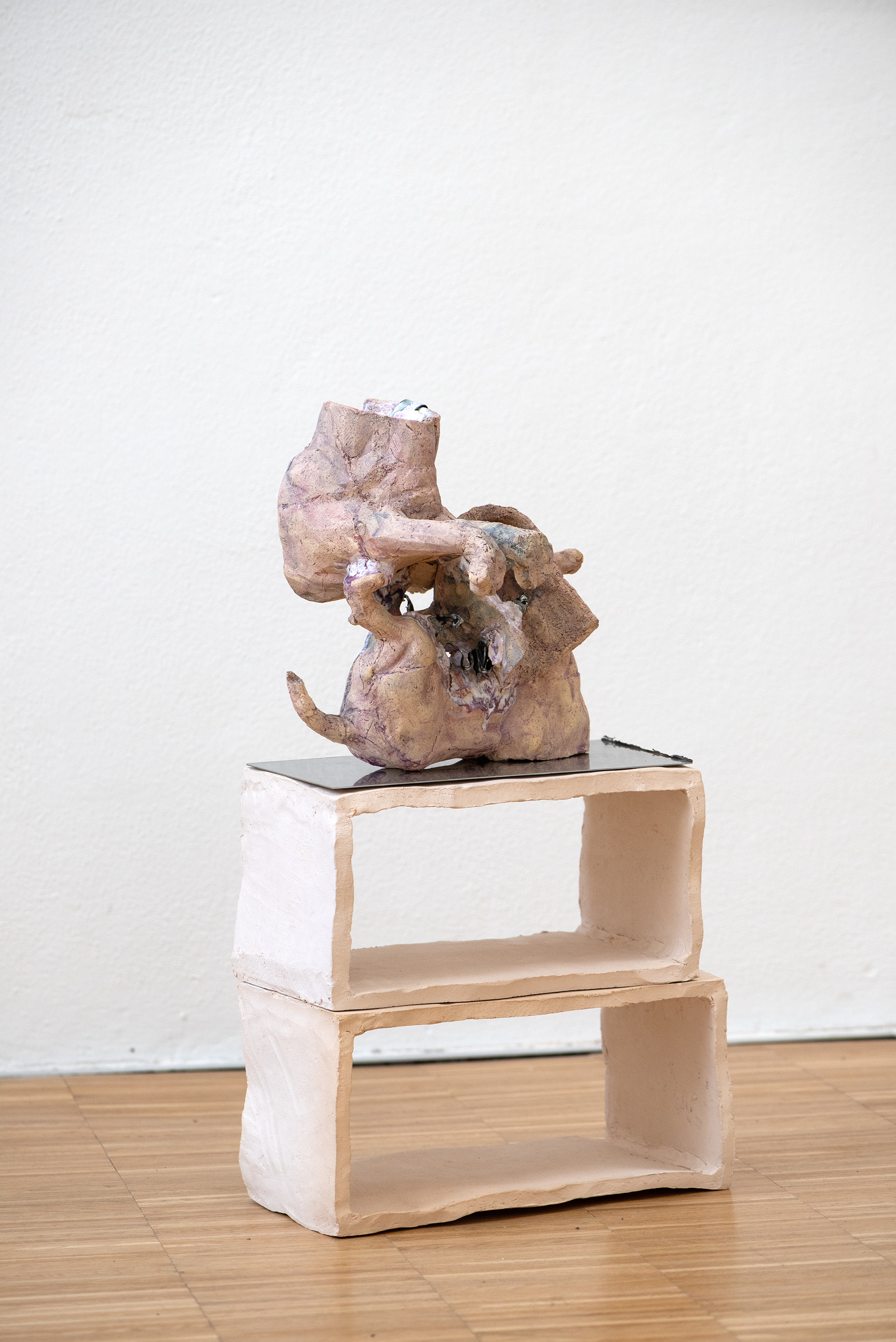
gouache paint, acrylic resin, biro, pencil, gesso and ink on wood. 31 x 24 x 5 cm, ; Julia Klemm, A chimera is not a pet 2, 2025, steel, glaze, ceramic, pigment, 44 x 38 x 74 cm,; Julia Klemm, A chimera is not a pet 3 , 2025, steel, glaze, ceramic, pigment, 46 x 34 x 42 cm)
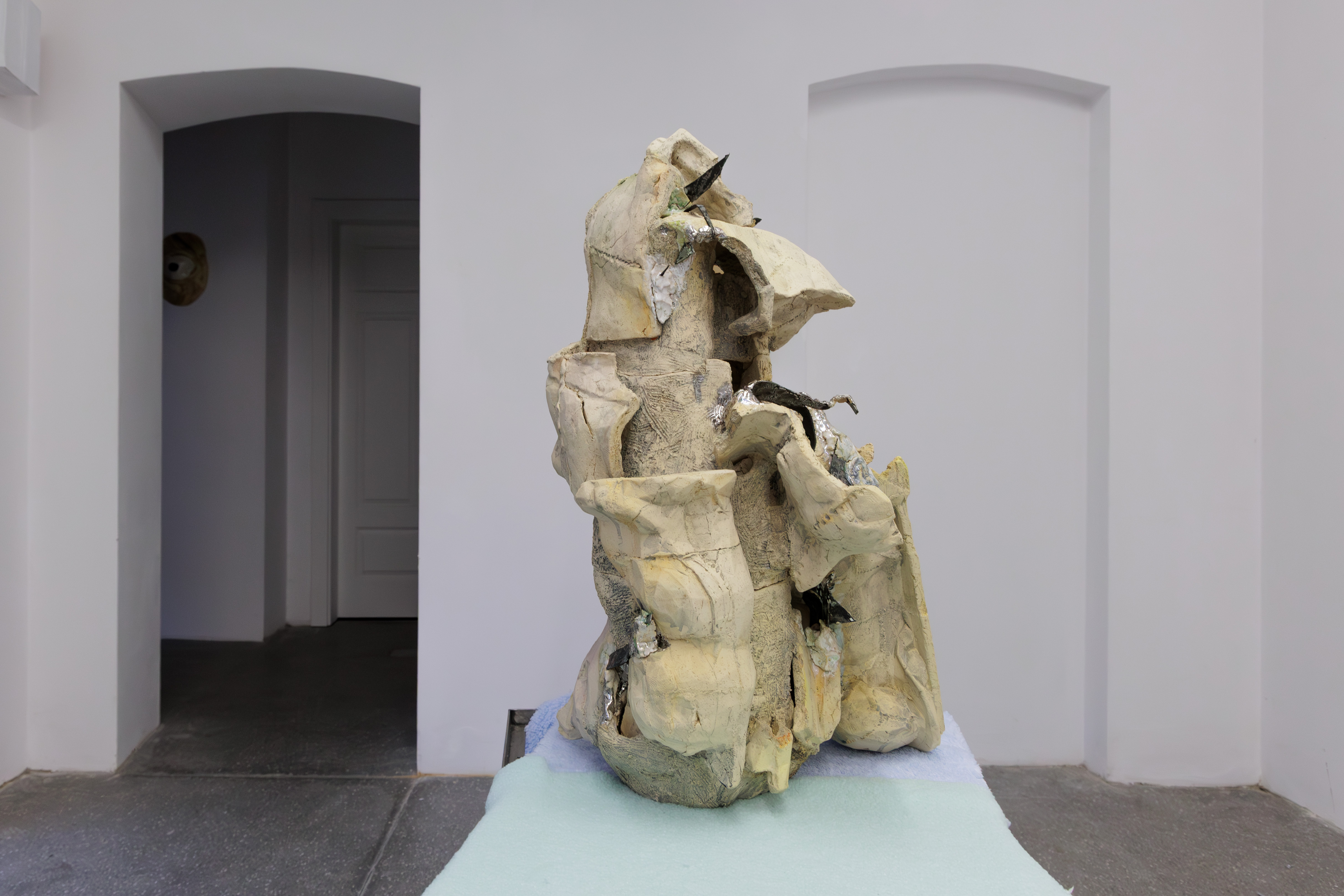
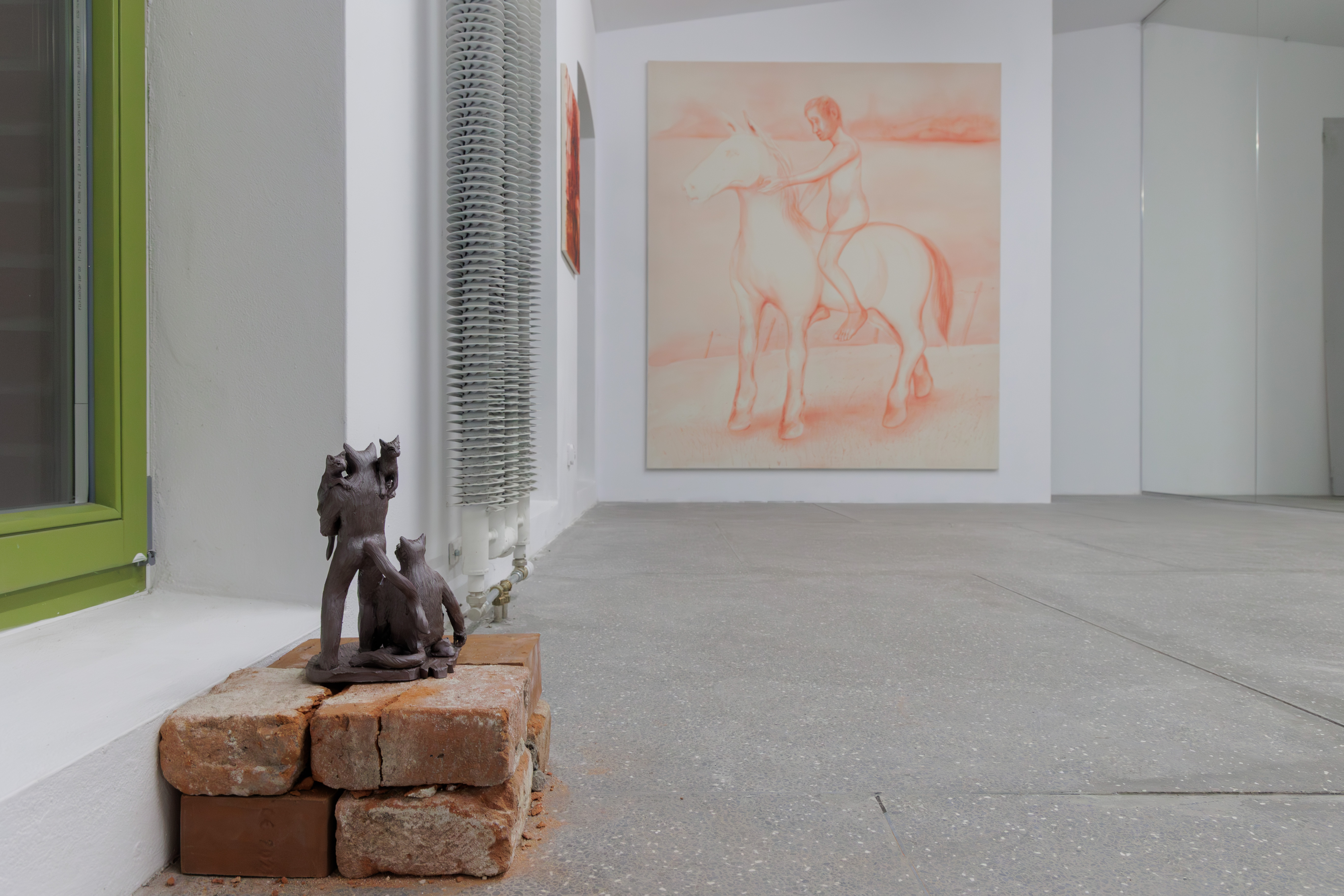
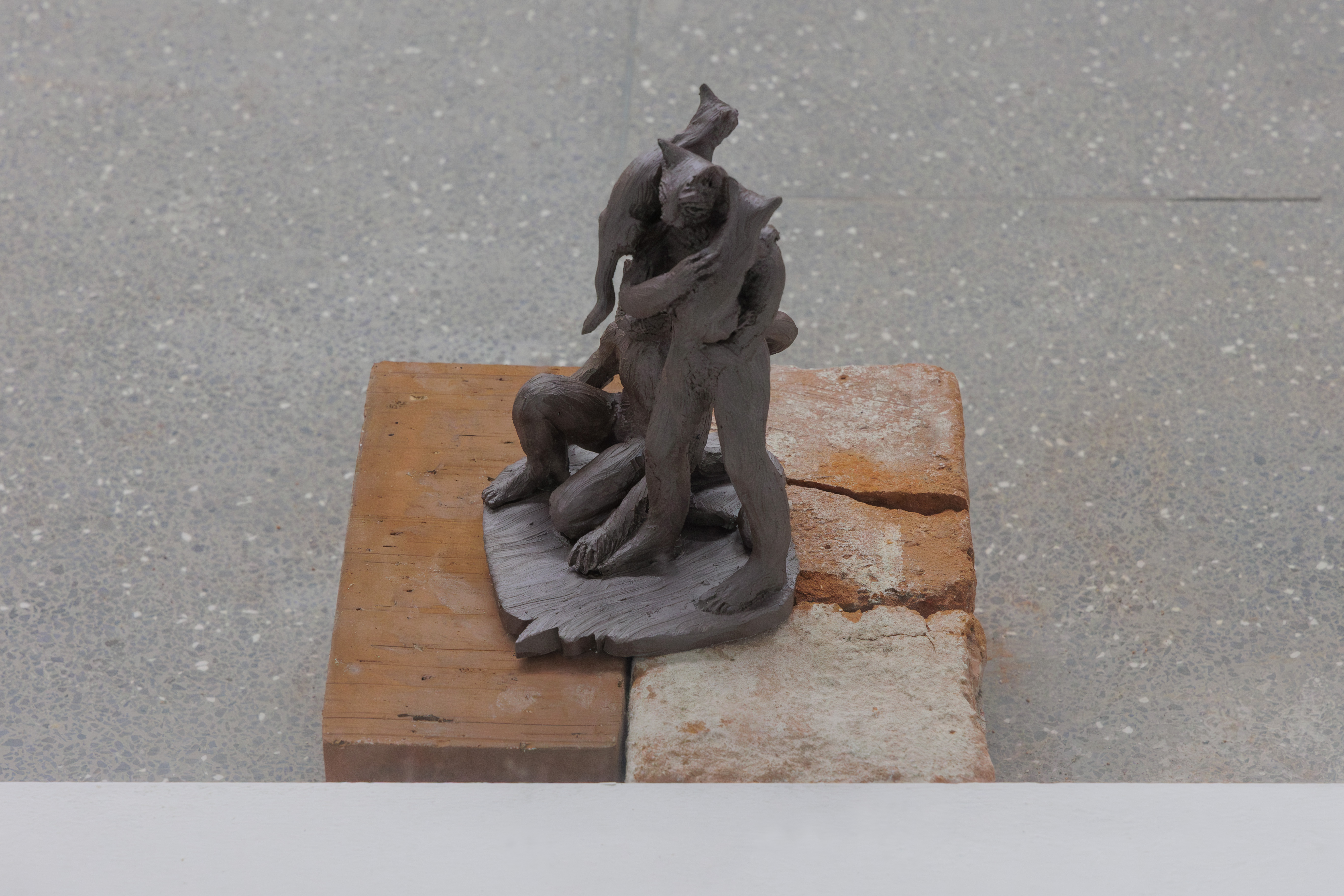
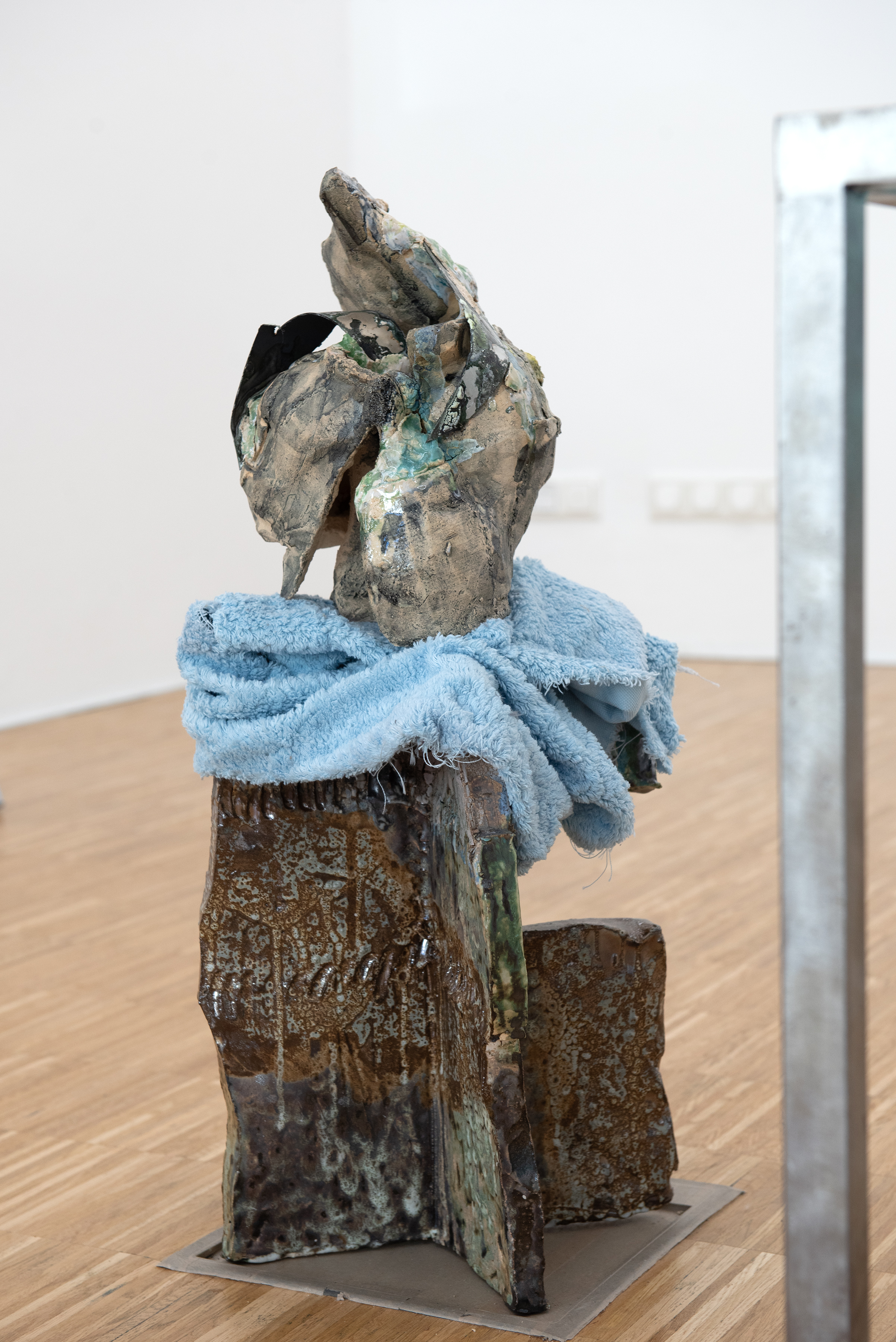
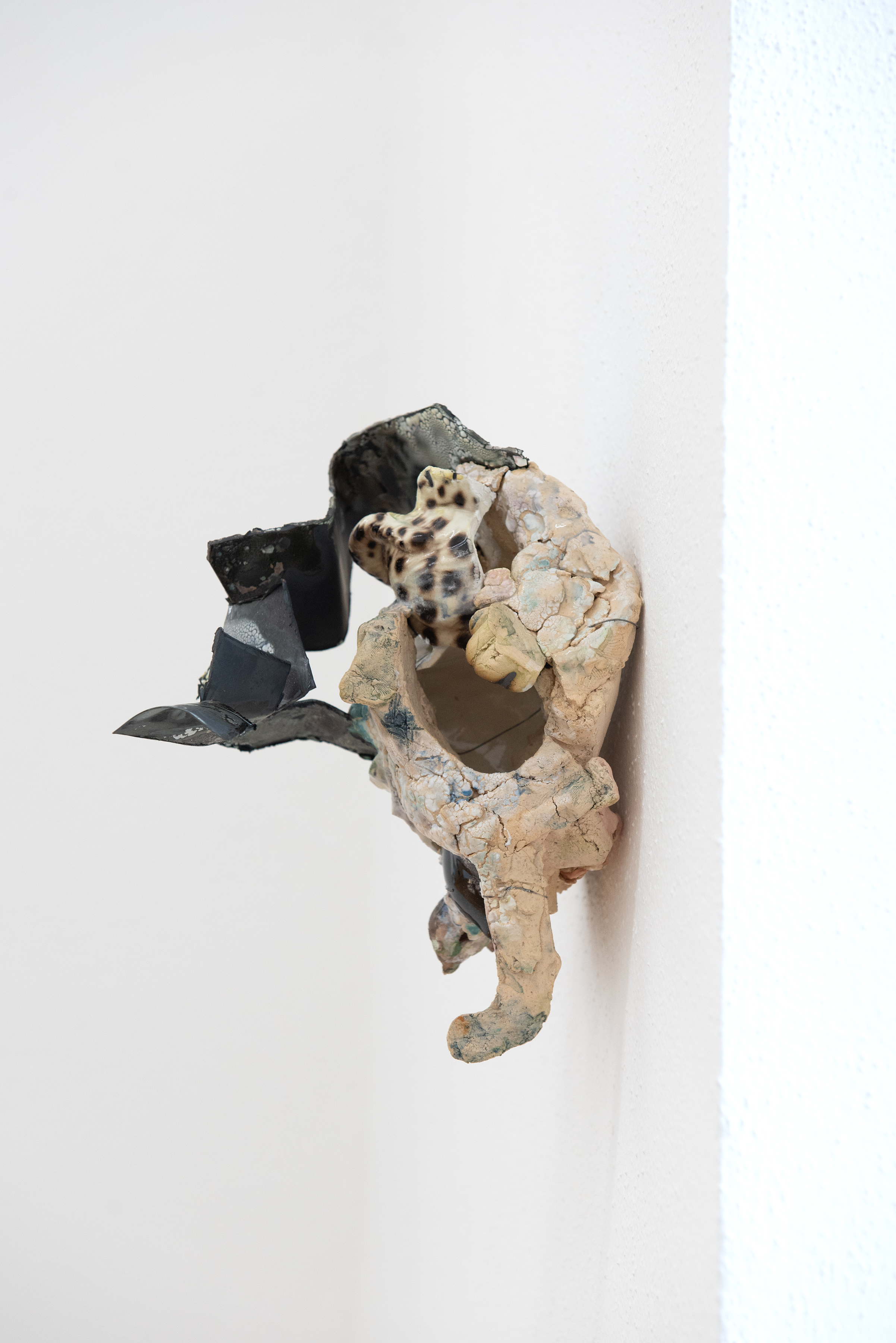
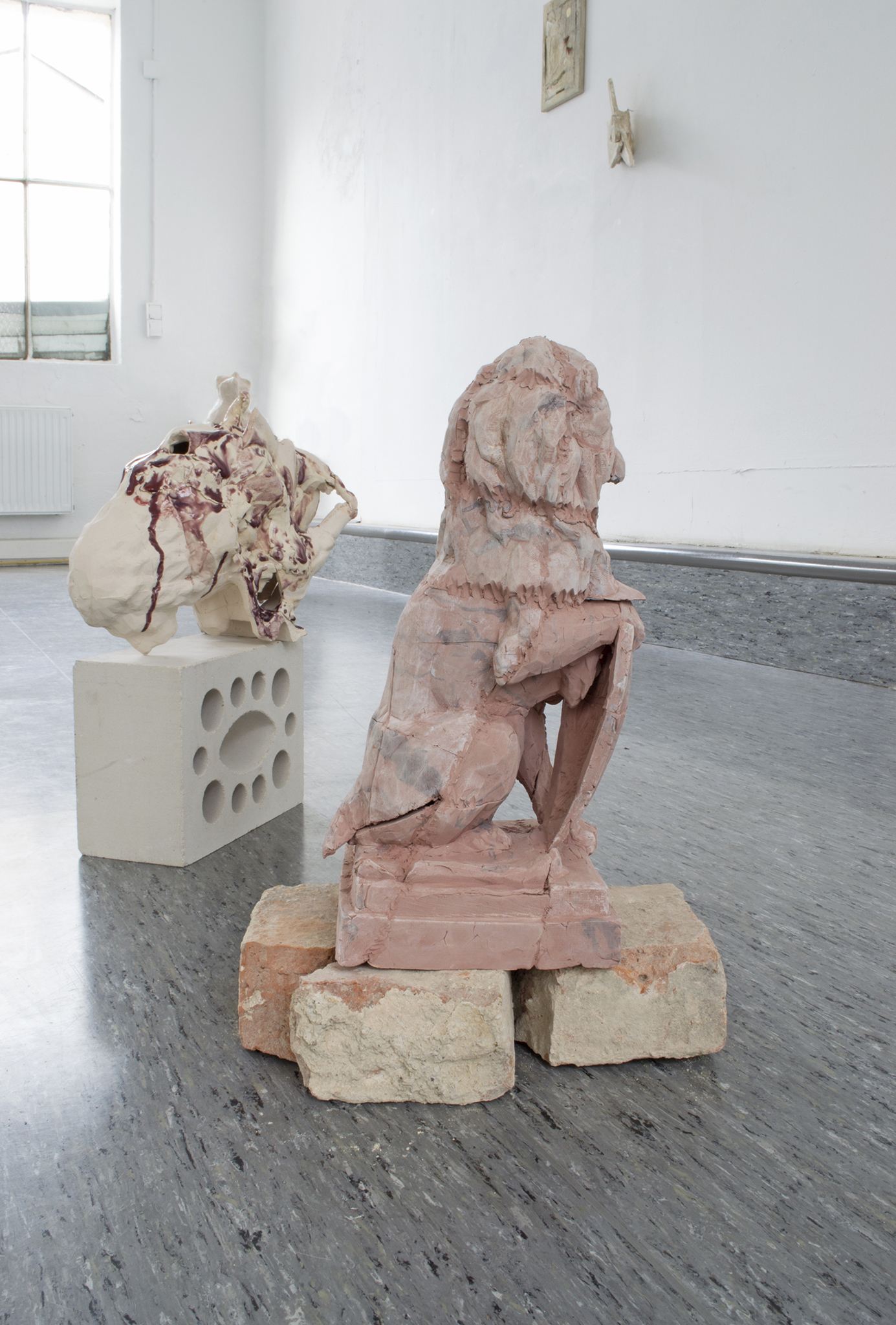
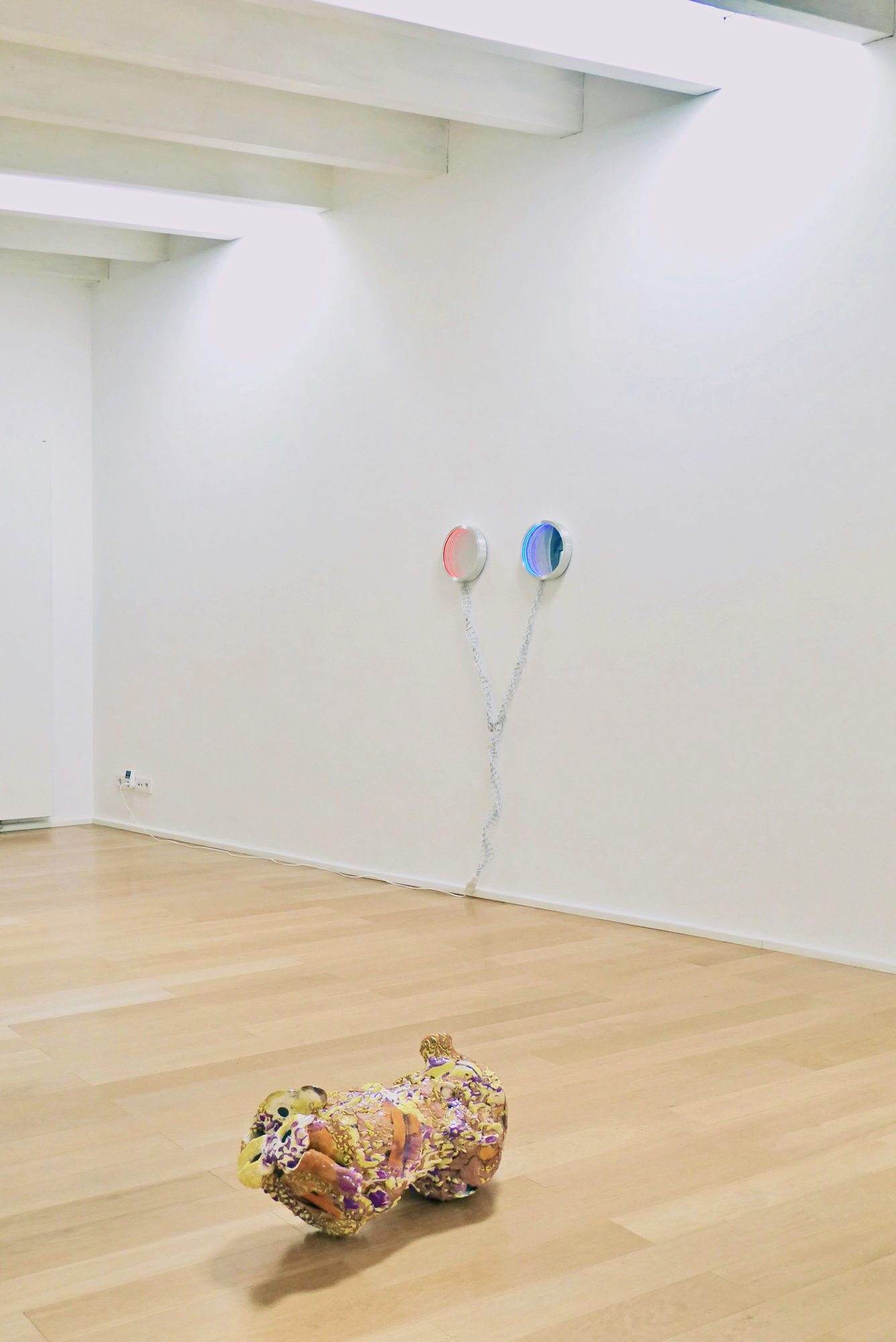
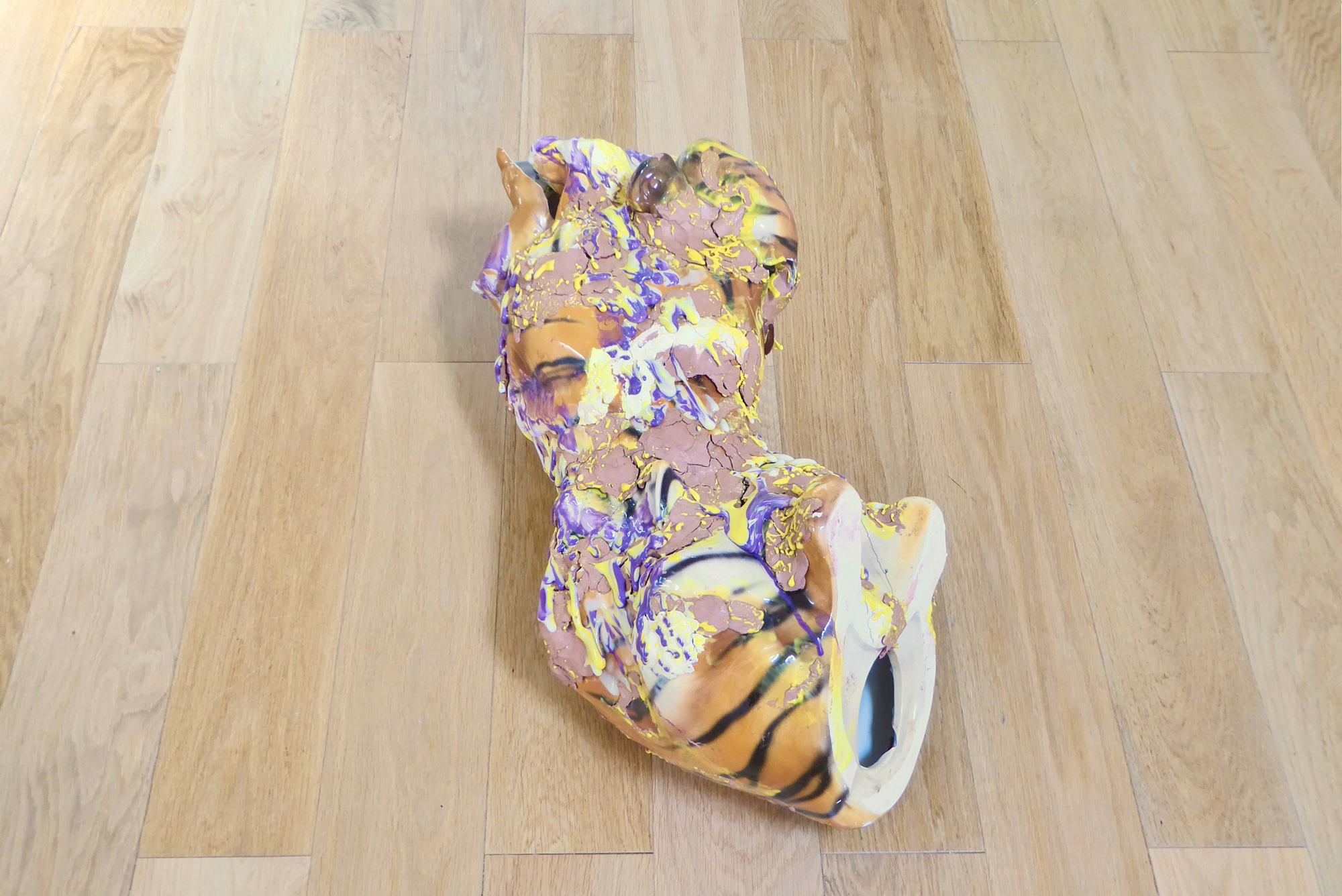
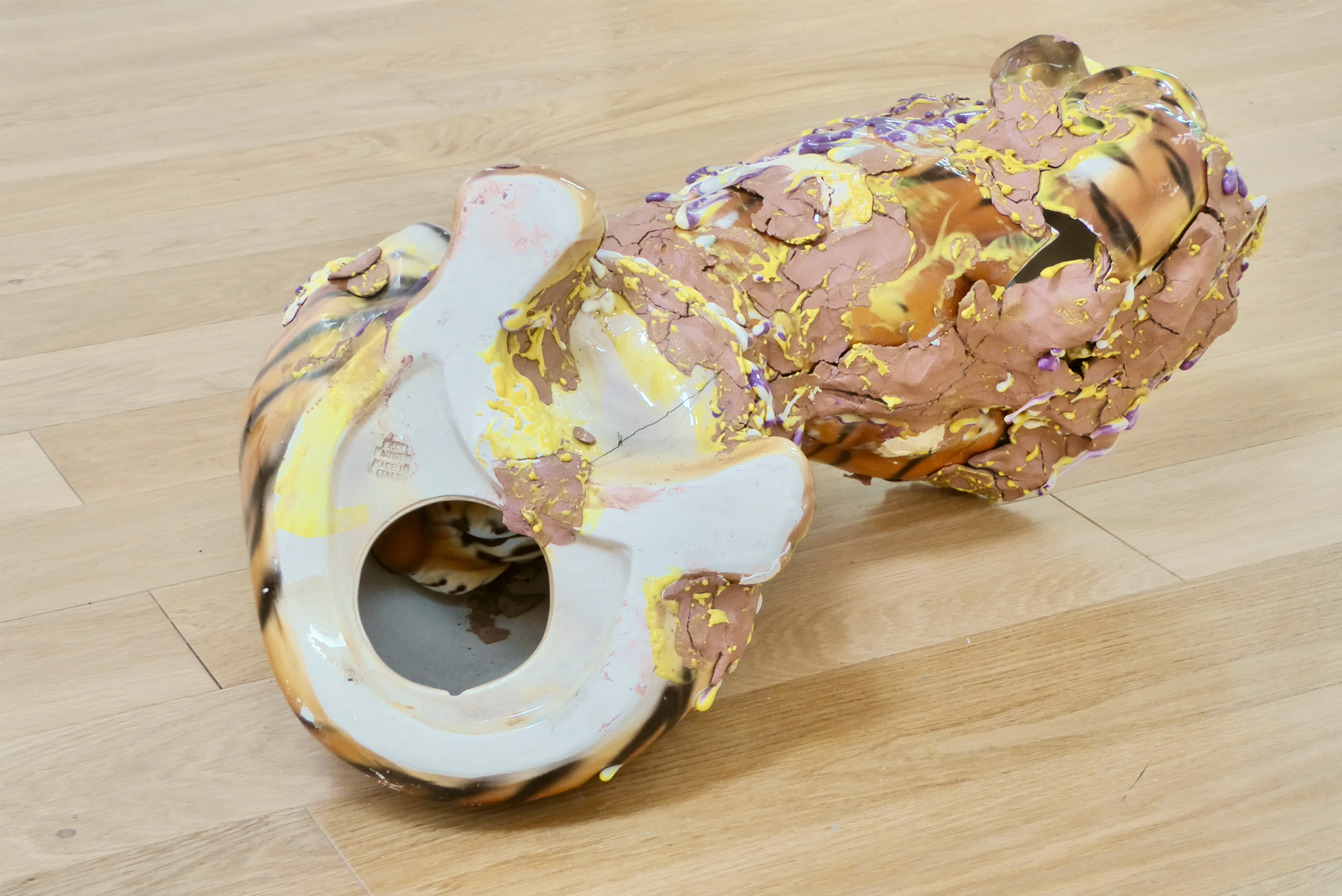
Julia Klemm, A chimera is not a pet 2,2025, steel, glaze, ceramic, pigment, 44 x 38 x 74 cm,
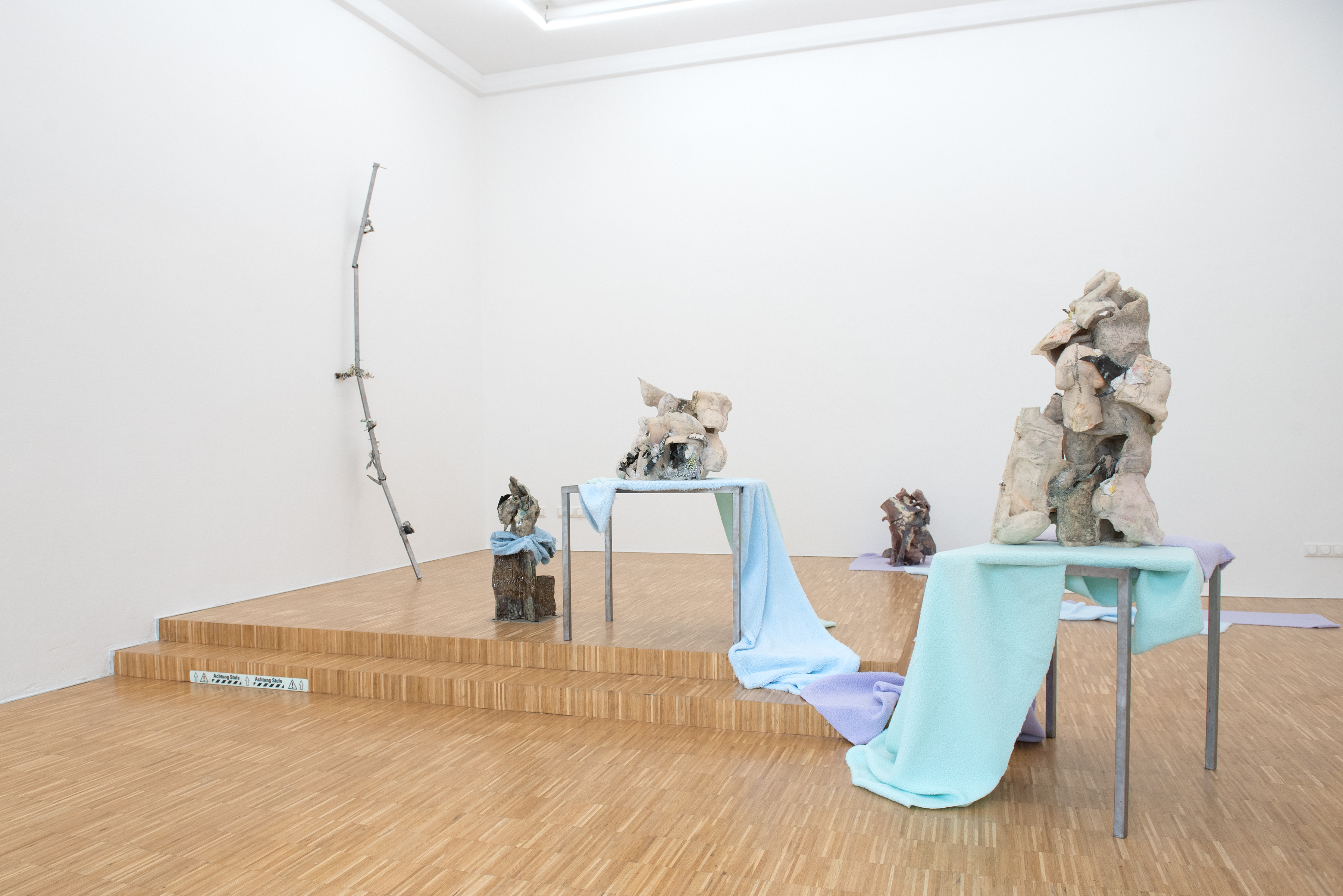
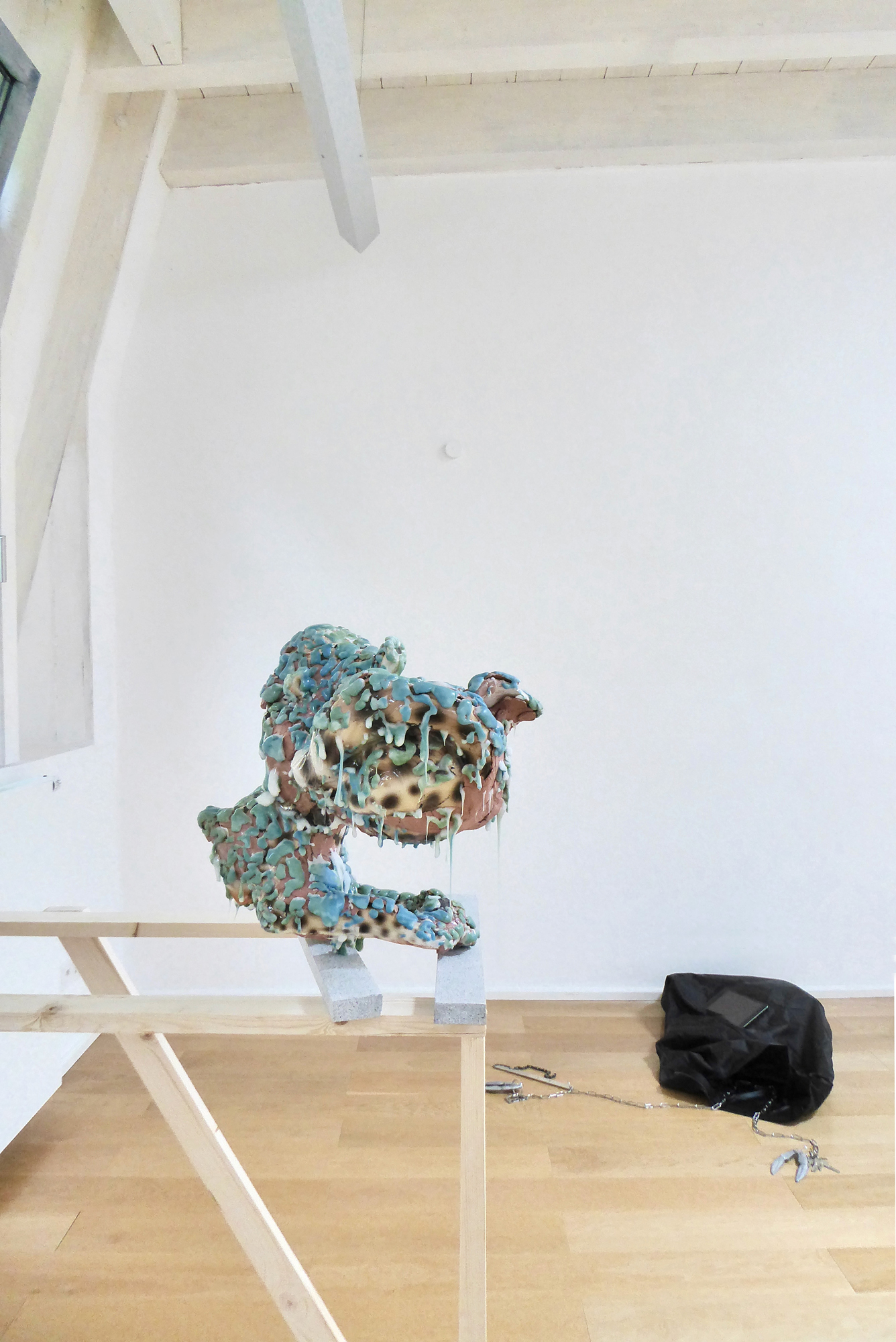
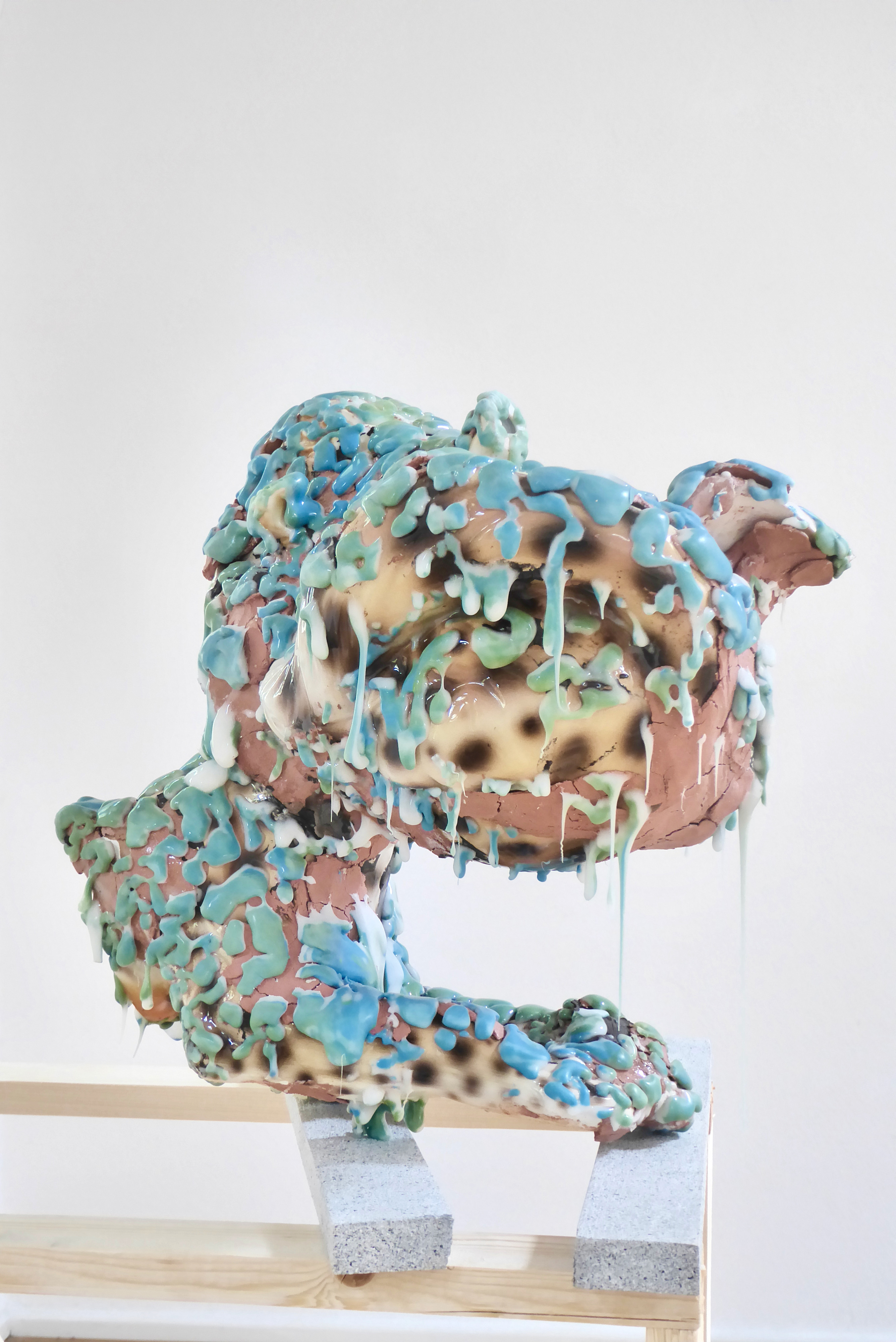
Animal Elegance, installation view (Jonathan Penca, Colonna Sonora, 2025, acrylic and
gouache paint, acrylic resin, biro, pencil, gesso and ink on wood. 31 x 24 x 5 cm; Julia Klemm, A chimera is not a pet 2,2025, steel, glaze, ceramic, pigment, 44 x 38 x 74 cm,; Julia Klemm, A chimera is not a pet 3 , 2025, steel, glaze, ceramic, pigment, 46 x 34 x 42 cm)
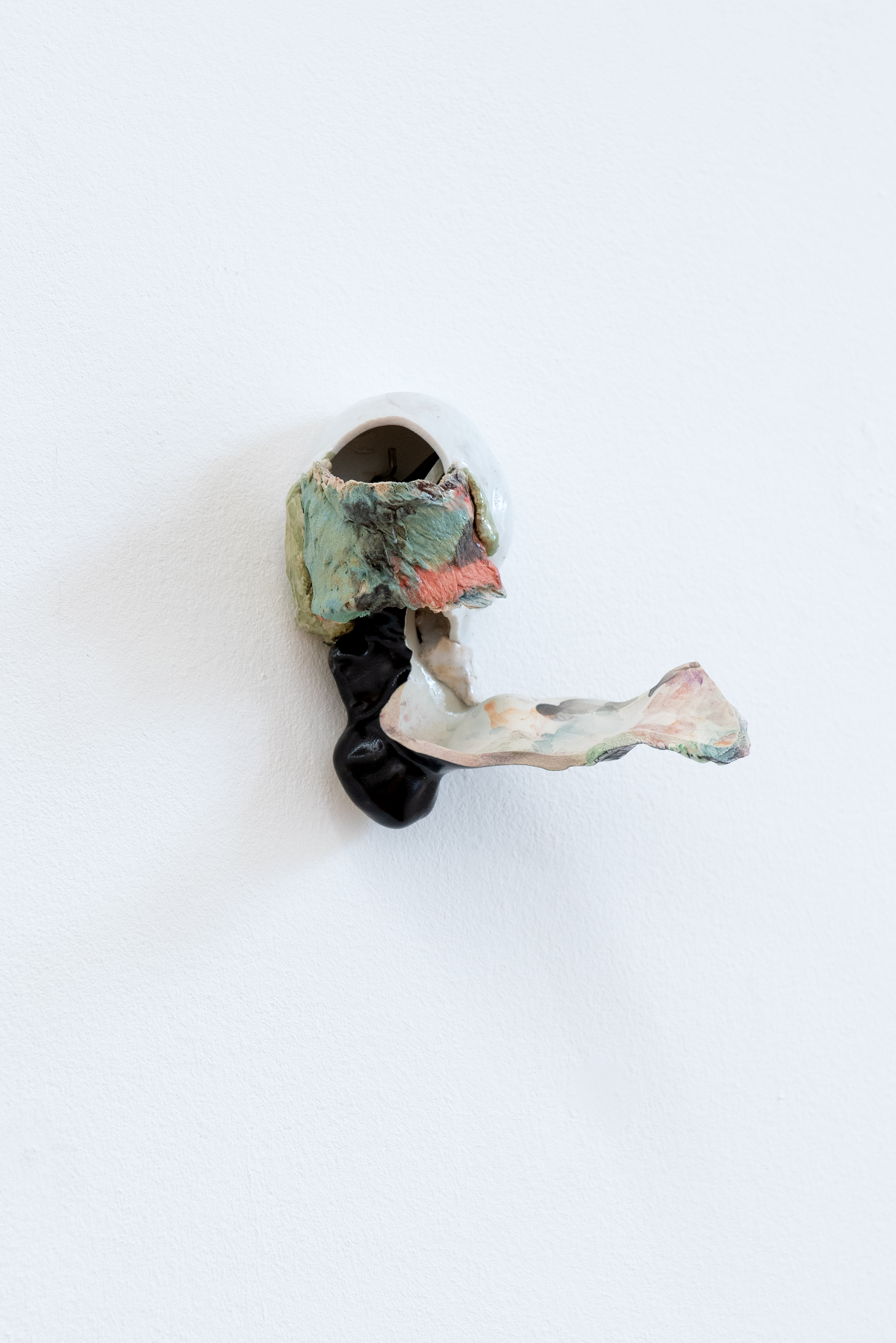
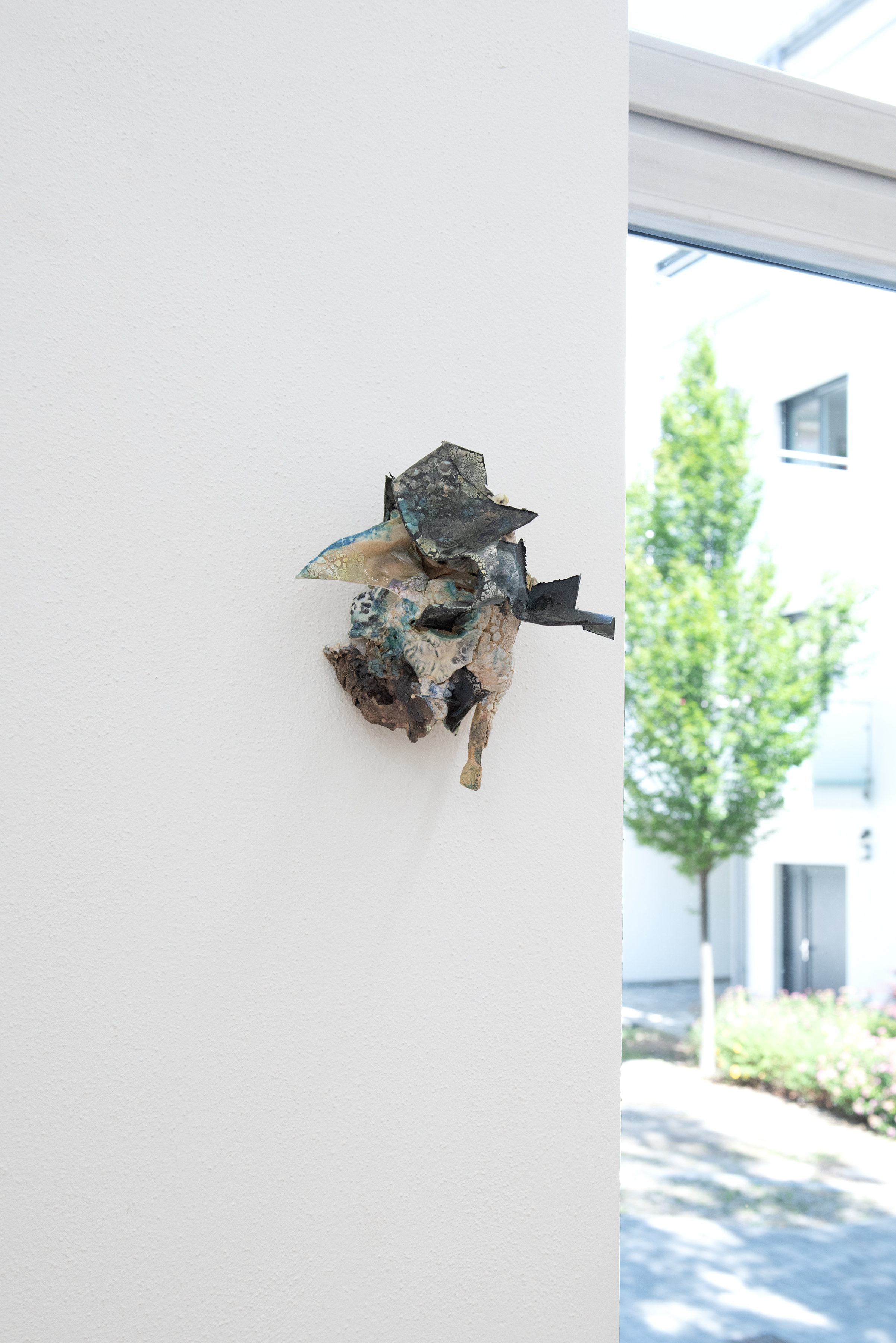
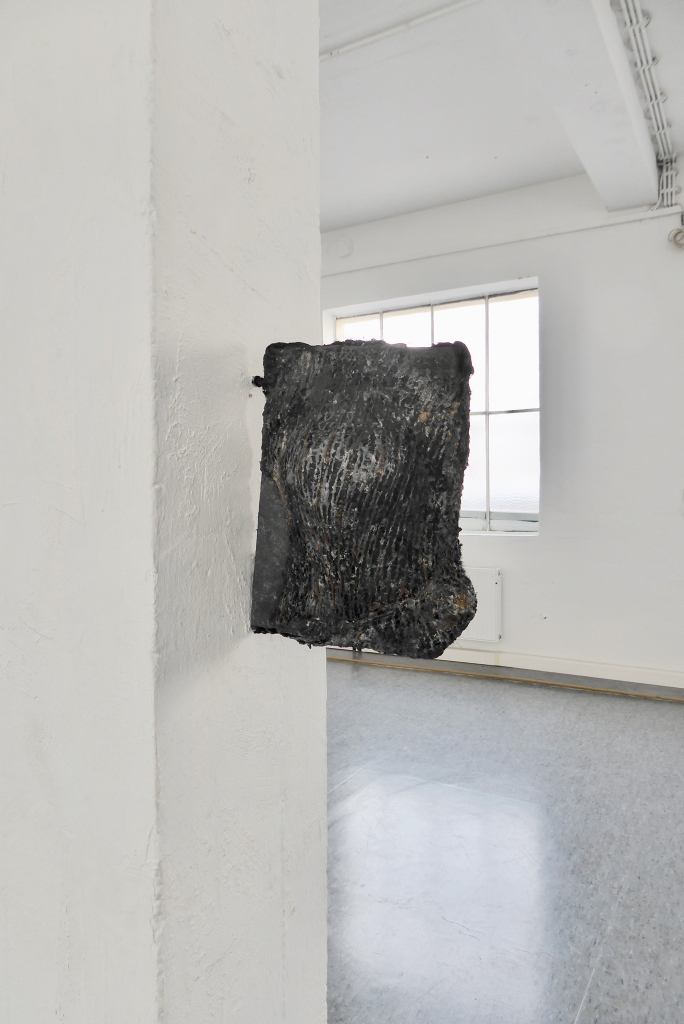
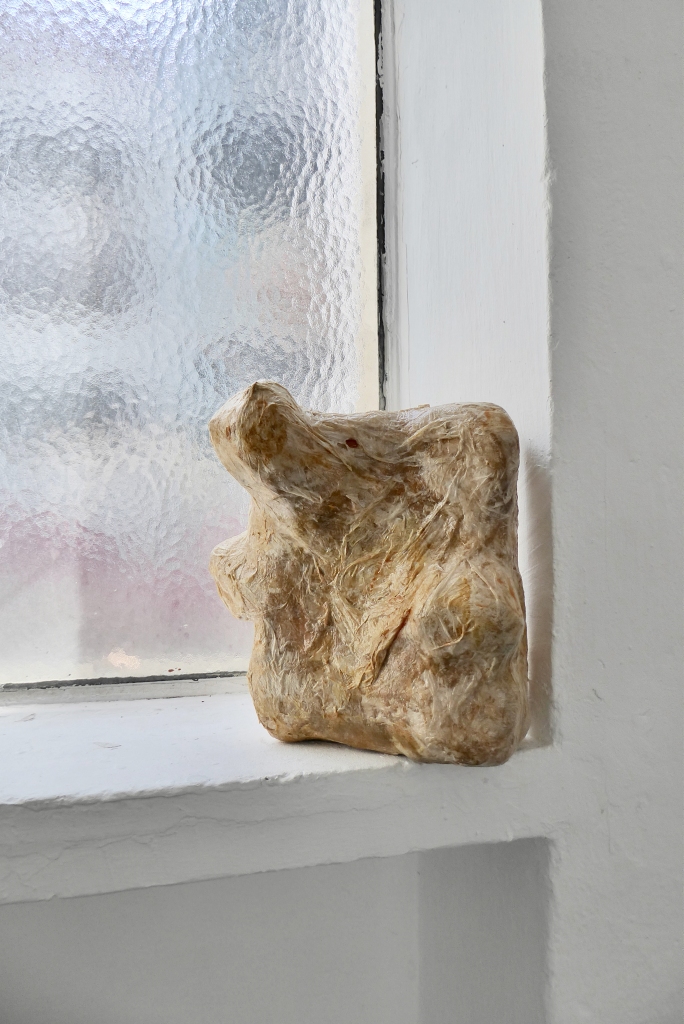
Jonathan Penca, Colonna Sonora, 2025, acrylic and
gouache paint, acrylic resin, biro, pencil, gesso and ink on wood. 31 x 24 x 5 cm,
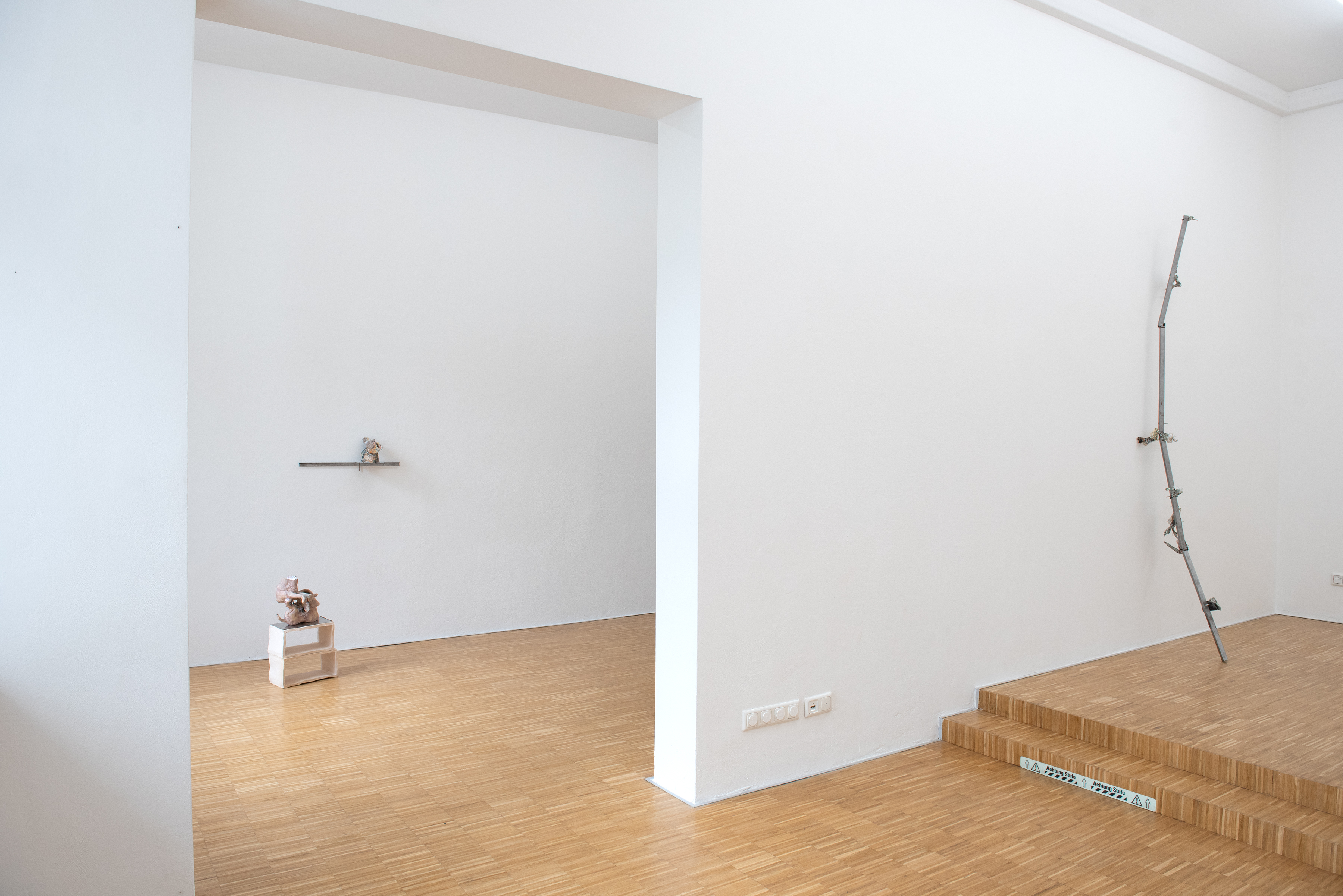
Animal Elegance, installation view , 2025
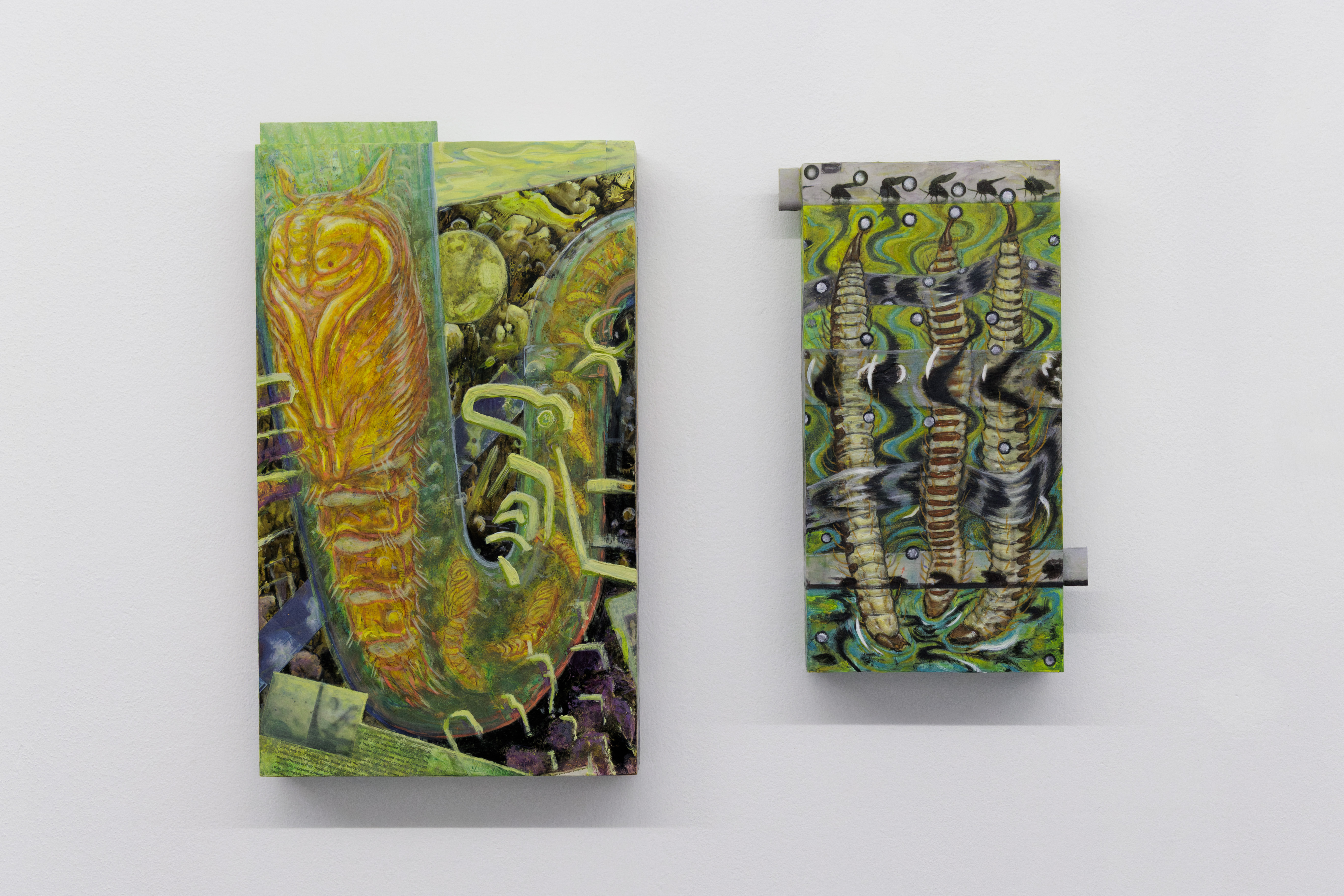
Jonathan Penca, inglers Groove, 2025, gouache, acrylic, watercolour, acrylic resin, pencil, gesso, ink and paper on wood, 52 x 30 x 5 cm; Jonathan Penca, Tufty Sequence, 2025, gouache, acrylic, acrylic resin, biro, gesso, ink and paper on wood, 40 x 19 x 5 cm)
Animal Elegance, 2025, installation view

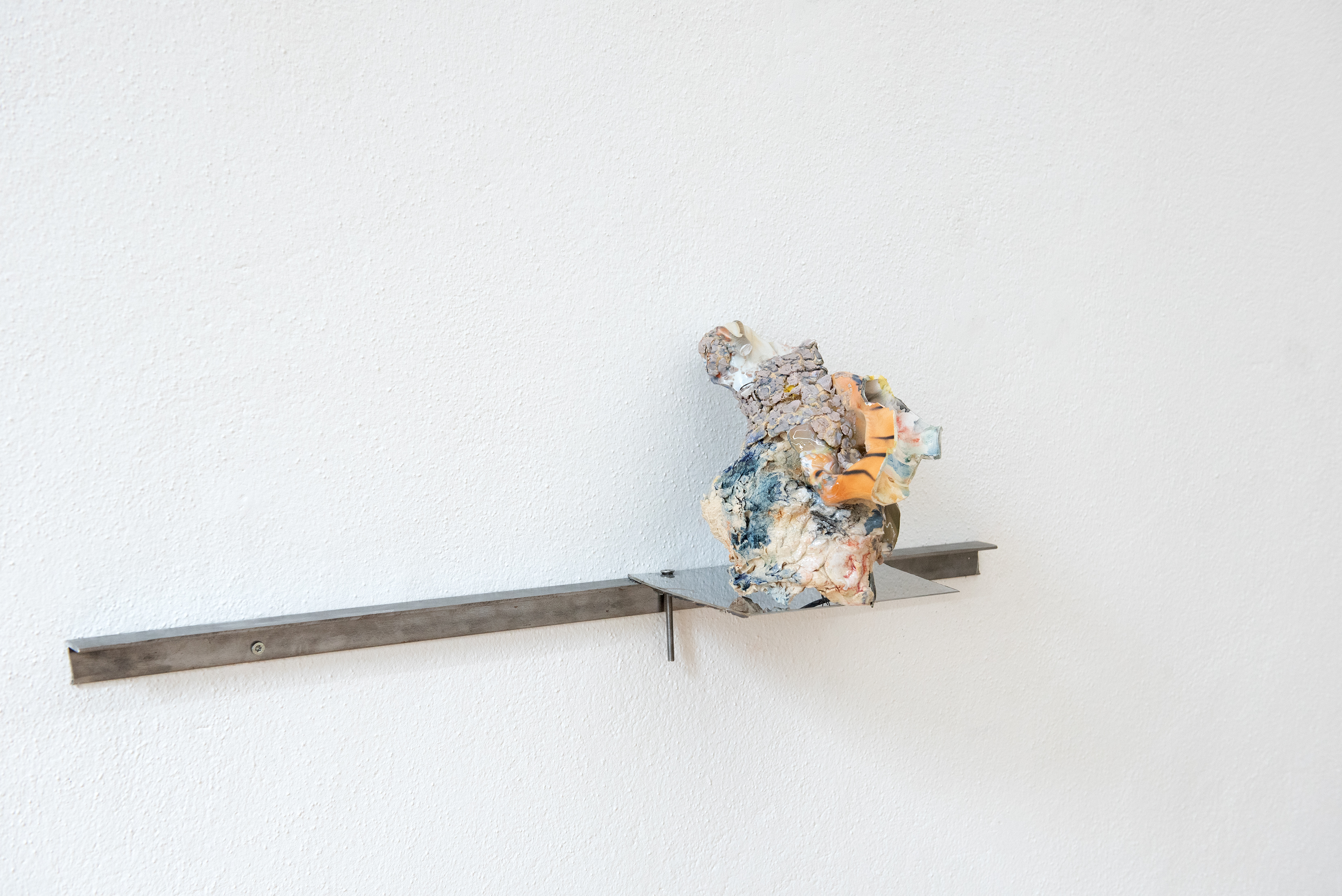
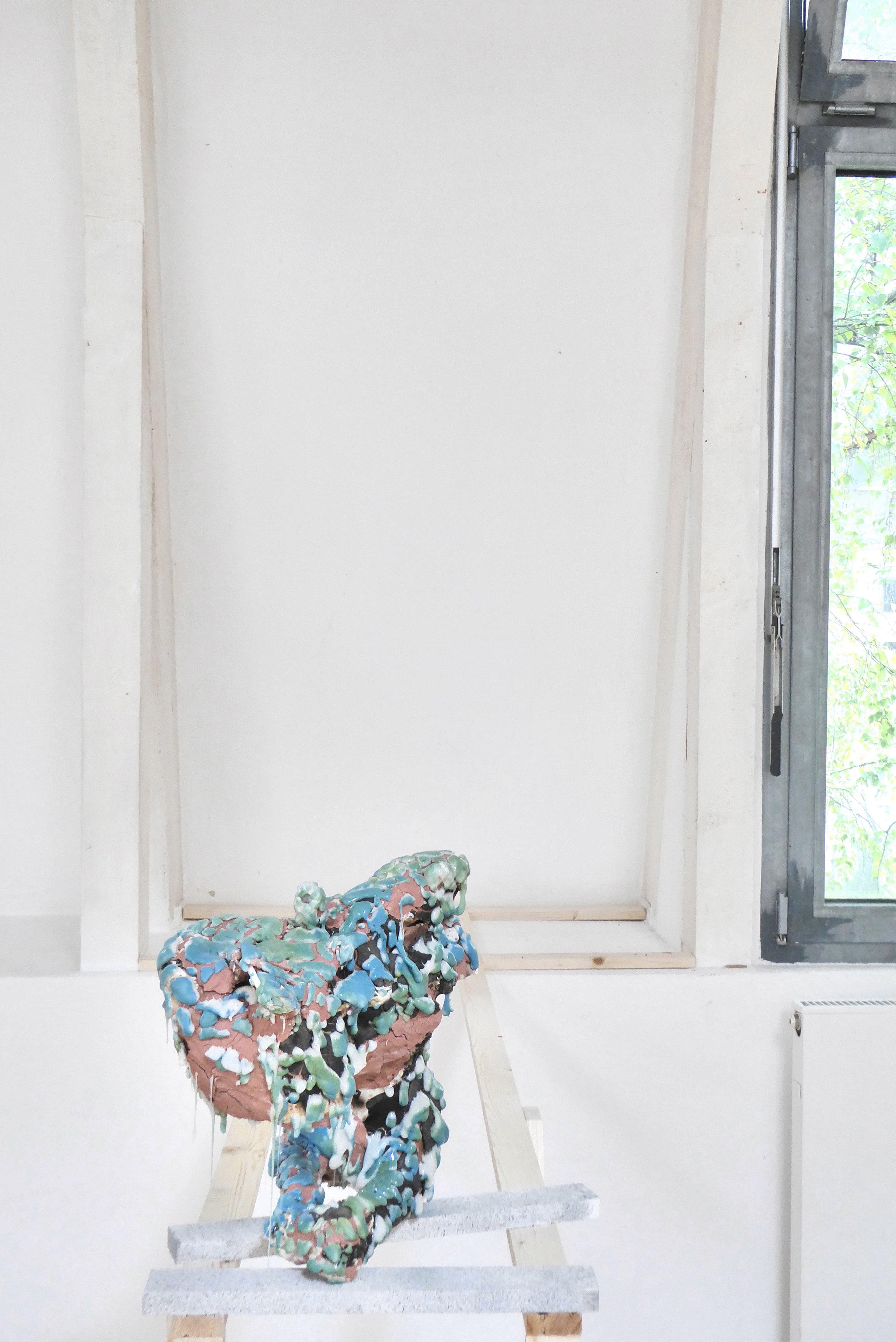
Julia Klemm, Transcending territories, 2024, glaze, ceramic, pigment, 32 x 30 x 48 cm
Animal Elegance, 2025, installation view
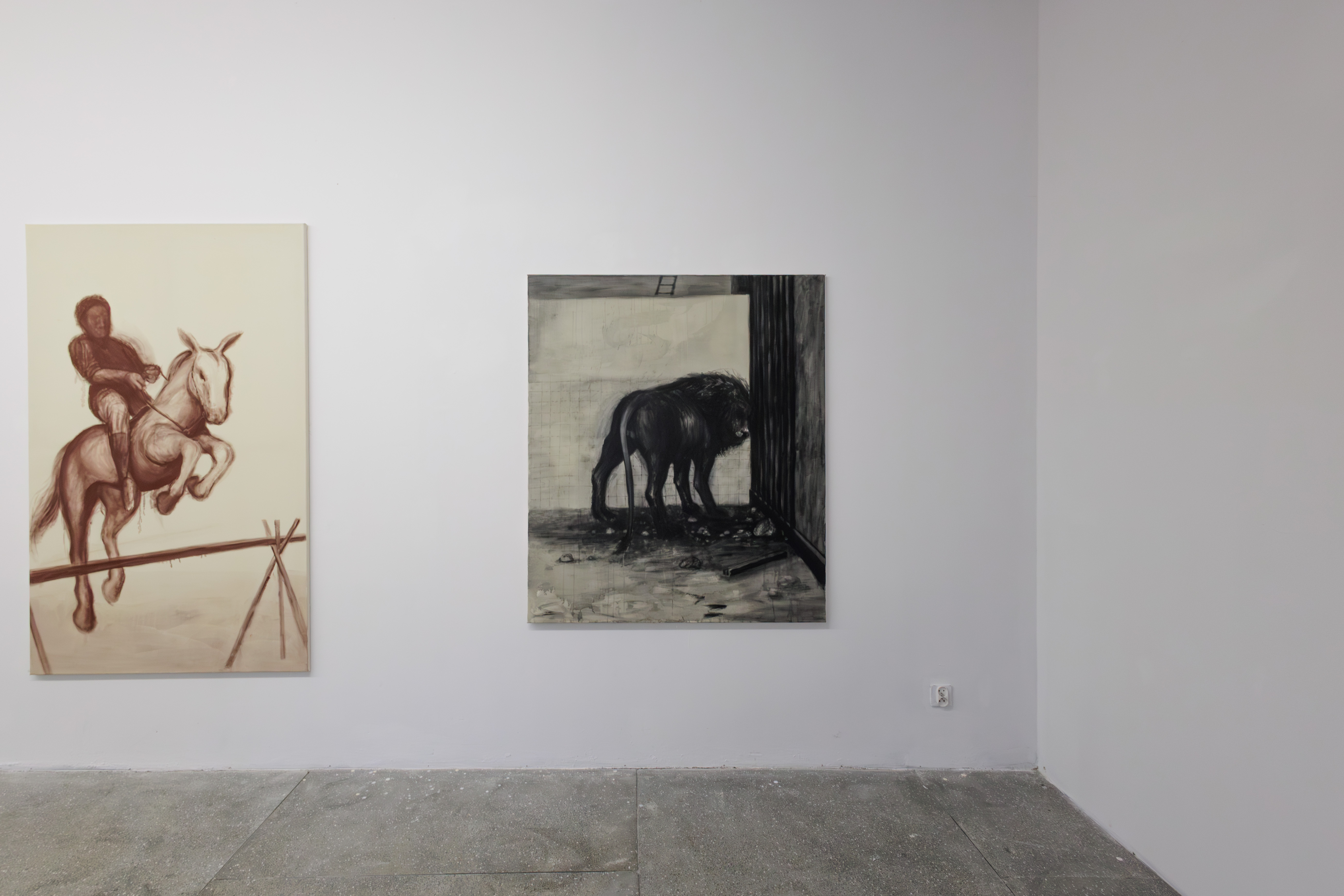
Jakob Gilg, Alignment, 2025, pigment and acrylic medium on canvas, 180 x 110 cm; Jakob Gilg, Virgo, 2025, pigment and acrylic medium on canvas, 140 x 120 cm)
Jonathan Penca, Clogmia, 2025, gouache, acrylic resin, gesso, ink, makeup powder and paper on wood, 44 x 30 x 5 cm
Jakob Gilg, I’m sorry, 2024, pigment and acrylic medium on canvas, 25o x 200 cm; Jakob Gilg, Kindling, 2025, pigment and acrylic medium on canvas, 70 x 50 cm
Jakob Gilg, Kindling, 2025, pigment and acrylic medium on canvas, 70 x 50 cm
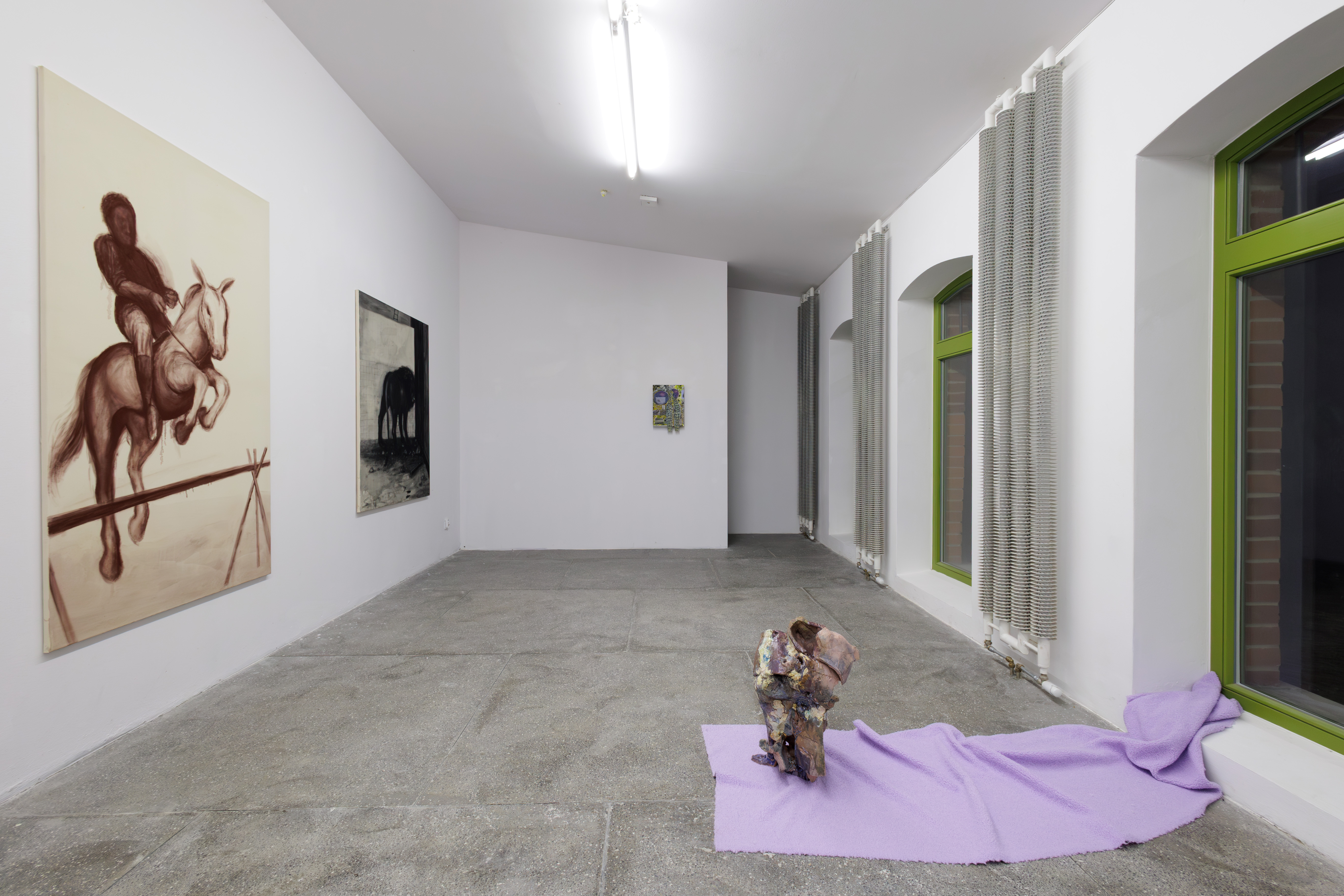
Animal Elegance, 2025, installation view
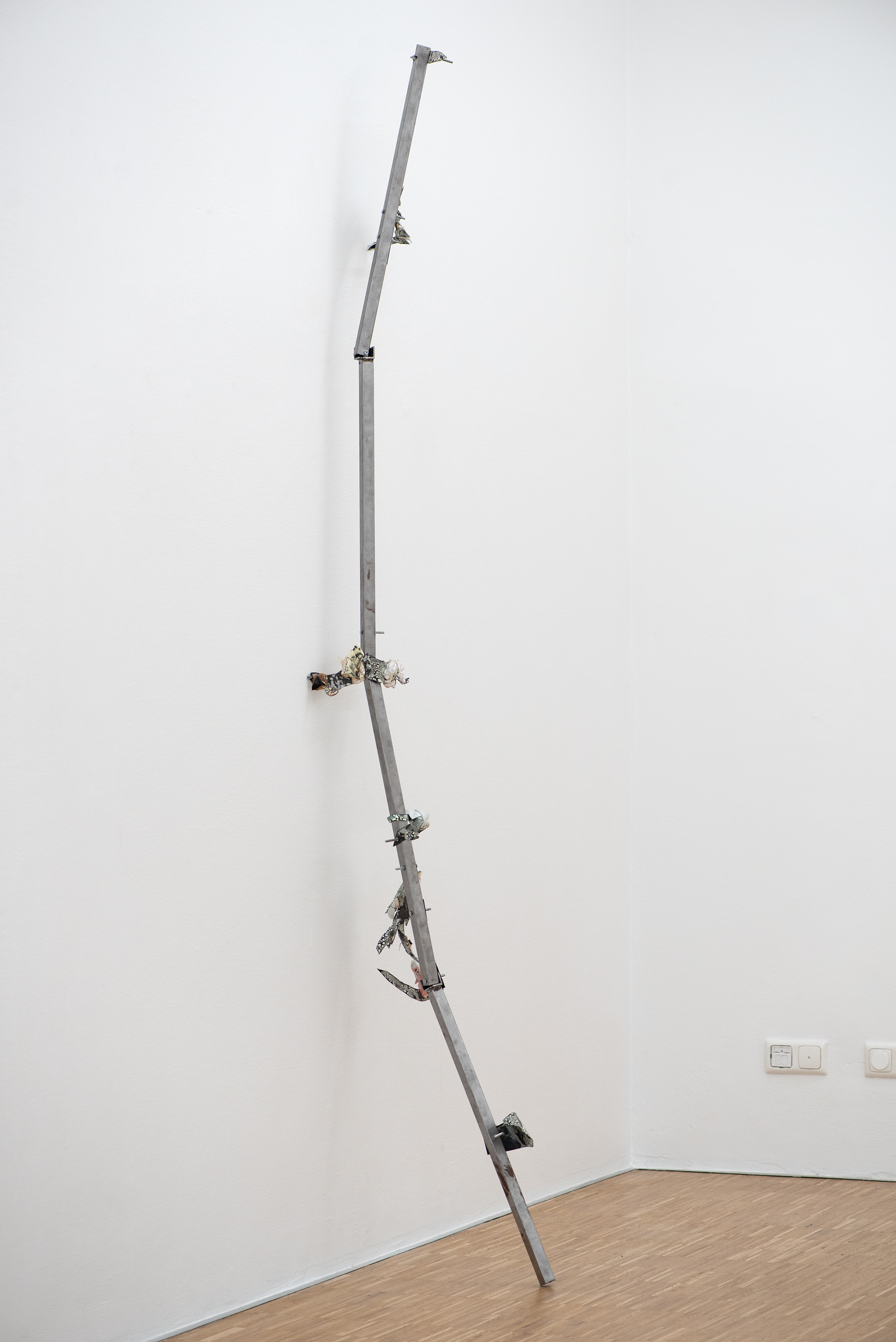
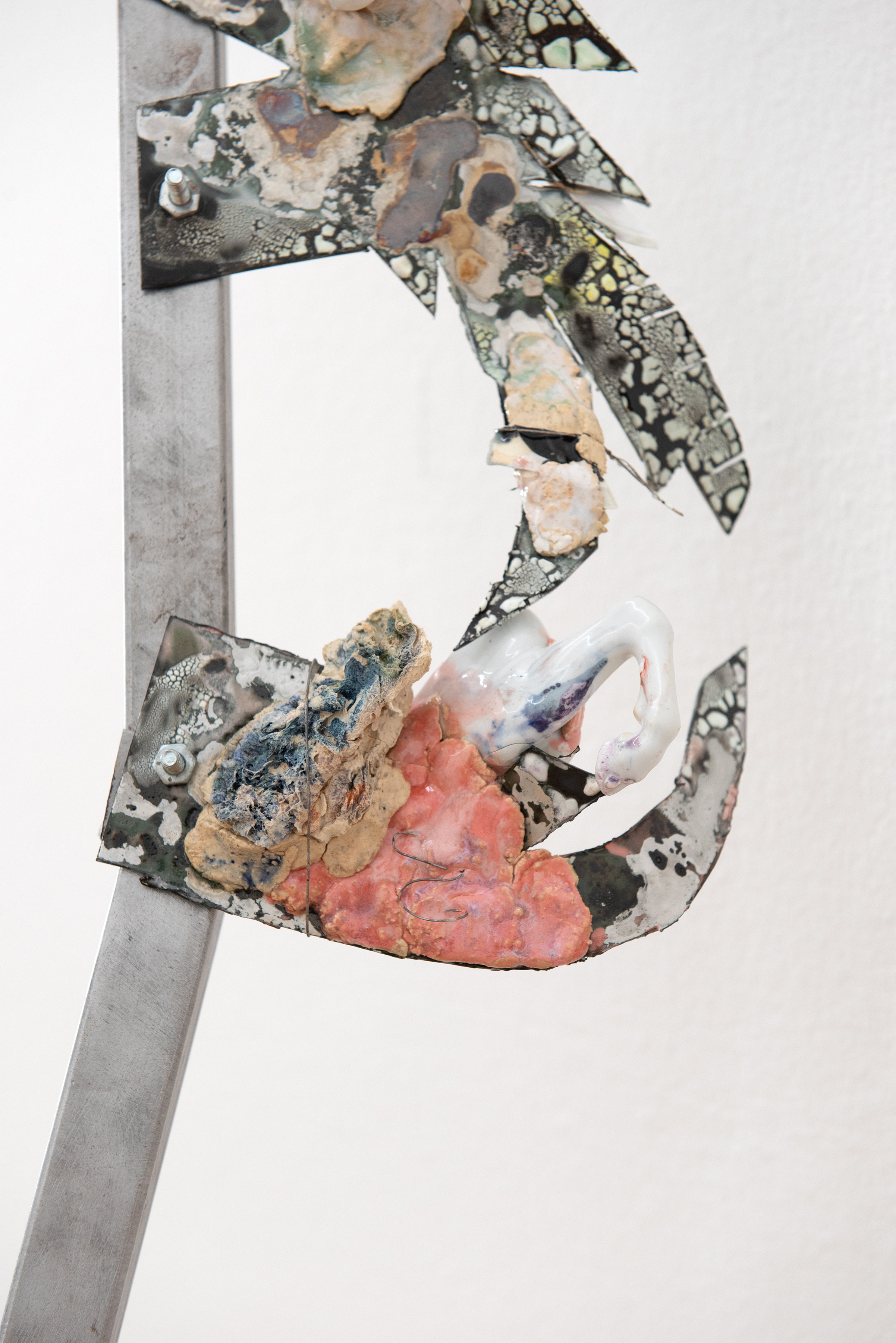
Anka Helfertova, To be in a time of war ( I keep changing my address but war never loses my scent) 2025, bricks, stone, MDF board, silicon, pigment, ceramic, 55 x 120 x 77 cm and 40 x 30 x 30 cm
Animal Elegance, 2025, installation view

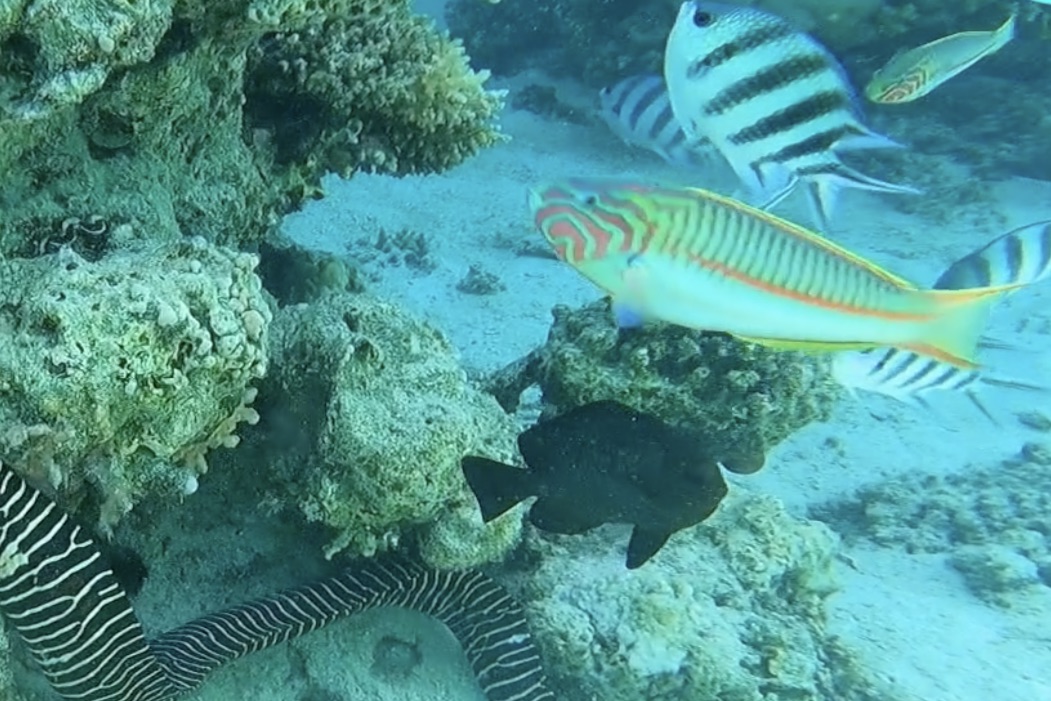
There is a fascist, who lives in my head, and he has been there for a while. I speak to him almost everyday about different things, mainly things I see in the news or read about online, but sometimes also about art. Recently I was telling him about the fish, Kluzinger’s wrasse, which reminded me of a passage I read in “A Thousand Plateaus” by Deleuze and Guattari. They ascribe to a tropical fish an animal elegance, because of the way it uses its colourful design to blend in with its surroundings. The lines of the design are abstract and yet have the capacity to construct an entire underwater world. 

Look, I tell him, we think we know what a fish is, the way you think you know what a dog or horse or lion is, an animal, a species, a type. Certainly your lot has made enough statues and animal monuments – porcelain shepherd dog figurines graced your tables. A fish lives in water and like all other fish has scales, fins and gills.  We can compare this fish to another and note down the similarities of their characteristics, in order to classify them, genus: Thalassoma, family: Labridae. You think we know what kind of an animal a fish is. There it is. Put it in an aquarium. 

Ah, I say, but can we see the animal Deleuze and Guattari describe as possessing an English kind of elegance? With a refinement that does not seek attention, but that remains quietly unobtrusive?  This involves the appreciation of the small and the detailed, like those drain moths found in Jonathan Penca’s paintings, charming us with their fuzzy faces and furry wings. More than that, unobtrusiveness requires an effort. To go through life unnoticed is not easy and drain moths have a life cycle with four stages, larvae feeding on toilet sludge before developing into pupae. 

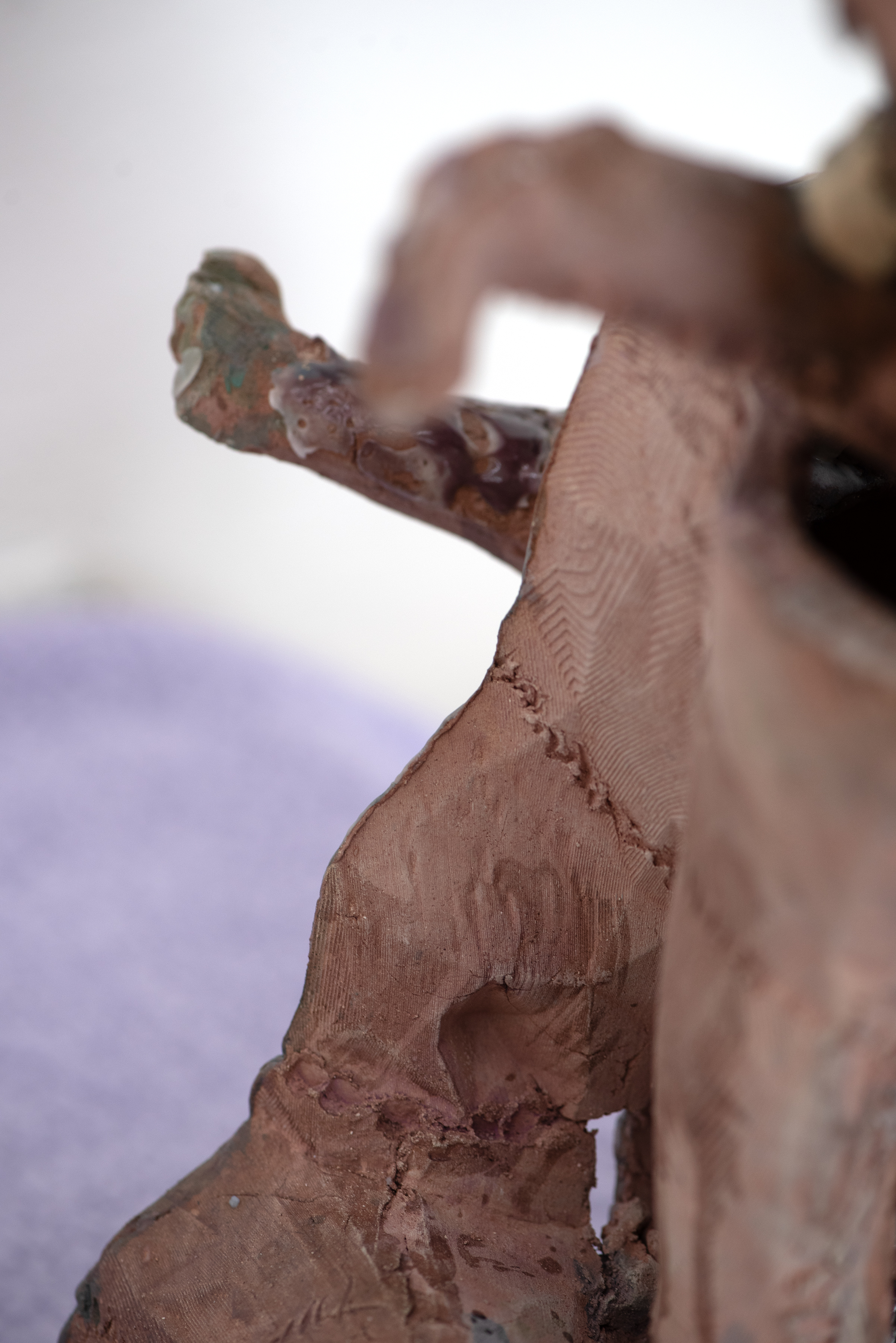
There are animals we see and animals we do not. The animals we do see, we organise and use, tame and breed. We control them as meticulously as Eadweard Muybridge did, when he set up multiple cameras to capture the image of the horse in motion or a lion in a cage, the starting point of Jakob Gilg’s paintings. We assign animals different roles: you there, you look soft and cuddly, you will be a pet. And you, you over there, so powerful and strong, you we will make into a symbol. Kitsch ceramic cats and scaled-down digital scans of lion monuments tumble, shatter and recombine in Julia Klemm’s work. 

But this animal you don’t see, is something other than a molar entity, a different “affair” as Deleuze and Guattari would say, involving “becoming” not “being.” And it might seem we are meant to think this becoming morphologically, as the becoming of something else, a change from one permanent state to another, equally permanent one. A human could become a cat perhaps – or a cat, a human – as in the work of Anka Helfertova. Violence swirls around and we try to find our peace, not to lose ourselves within. To think becoming is to think loss, the elimination of all of our complaints, demands, unsatisfied desires, “everything that roots us in ourselves,” so that at the end, we are left with nothing, which is also everything. Becoming-animal is always a becoming-imperceptible, a shrinking best found in science fiction novels, the shrinking man becoming smaller and smaller without ever disappearing. Because when animals are thought in their becoming, the molecular comes into play, those invisible abstract forces that in their millions of interactions are actually responsible for constituting a world. To think an animal in its becoming is to engage with these molecular forces at work.

This is the demand elegance places on us: to think less of ourselves and more of the other. It is to be more attuned to our surroundings by paying attention to what continues to constitute us, which is always small and inorganic, indiscernible and impersonal. Elegance is a kind of molecular attention, but with a focus that opens out onto the world. To think things in their becoming molecularly is also to think in terms of the cosmos in its entirety. And then we might indeed stop seeing fish, but we will begin to see everything else.

Magdalena Wiśniowska 2025
Animal Elegance

Jakob Gilg, Anka Helfertova, Julia Klemm and Jonathan Penca

9.10. – 7.11.2025

with Pracownia Portretu, Łódź, Poland

Screenshot

In the imaginary conversation with a fascist that I seem to almost daily conduct in my head, I like to present him (my fascist is always a man) the example of an animal, this time of a fish. Deleuze and Guattari describe this fish as being “criss-crossed by abstract lines” – I like to think of the Klunzinger’s Wrasse I saw on a recent trip to Egypt, criss-crossed by a rainbow of colour.

Here it is, I would say, look at this fish, look how beautiful it is, the colours, the design. The pattern doesn’t seem to follow the shape of the fish. There is an orange line across, stripes above, more pink wavy lines around its chubby face. Very bright. But in a certain trick of the light, the fish merges almost completely with its underwater environment. What is abstract, a matter of shape, line and colour, allows the fish to become rock, sand or a bit of coral. As Deleuze and Guattari write “this fish is criss-crossed by abstract lines that resemble nothing, that do not even follow its organic divisions; but thus disorganized, disarticulated, it worlds with the lines of a rock, sand, and plants, becoming imperceptible.”

The fish worlds and when it worlds it becomes imperceptible. It loses itself in the most vibrant way to become unnoticed and thus more firmly part of the world it belongs to. In losing itself it can become everything else.

A chimera is not a pet

Julia Klemm

28.06 – 26.07.2025

together with The Tiger Room at Heßstr. 48 b, 80798 Munich

Julia Klemm, A chimera is not a pet, 2025, installation view
Julia Klemm, A chimera is not a pet 3, 2025, steel, glaze, ceramic, pigment, 46 × 34 × 42 cm
Julia Klemm, Evasion, 2025, steel, glaze, ceramic, pigment, cloth, 23 × 23 × 65 cm
Julia Klemm, A chimera is not a pet, 2025, installation view
Julia Klemm, Transcending territories, 2024, glaze, ceramic, pigment, 32 × 30 × 48 cm
Julia Klemm, Julia Klemm, Transcending territories, 2024, glaze, ceramic, pigment, 32 × 30 × 48 cm (detail)
Julia Klemm, A chimera is not a pet 4, 2025, secondhand ceramic figures, steel, glaze, ceramic, screws, 27 × 46 × 260 cm
Julia Klemm, A chimera is not a pet 4, 2025, secondhand ceramic figures, steel, glaze, ceramic, screws, 27 × 46 × 260 cm (detail)
Julia Klemm, A chimera is not a pet, 2025, installation view
Julia Klemm, A chimera is not a pet 2, 2025, steel, glaze, ceramic, pigment, 44 × 38 × 74 cm
Julia Klemm, Untitled, 2025, secondhand ceramic figures, glaze, ceramic, fired soft toy, chandelier, 12 × 14 × 11 cm
Julia Klemm, A chimera is not a pet, 2025, installation view
Julia Klemm, Double trouble, 2025, ceramic, steel, pigment, glaze, 24 × 34× 60 cm
Julia Klemm, A chimera is not a pet 1, 2025, secondhand ceramic figures, glaze, ceramic, steel, fired soft toy, 15 × 25 × 14,5 cm
Julia Klemm, A chimera is not a pet, 2025, installation view
Julia Klemm, Mimicry, 2025, second ceramic figures, steel, chandelier, glaze, ceramic, 12 × 14 × 8 cm
Julia Klemm, Gryphon, 2025, secondhand ceramic figures, glaze, ceramic, steel, fired soft toy, 18 × 22 × 17cm

The problem I think, is that too often a chimera is seen as a pet. We visualise chimeras as these mythical fire breathing monsters, maybe with a lion’s head, a body of a goat, and a serpent for a tail. Three distinct animals are combined into one, their individual characteristics clearly visible for us to see. In contrast, biologically,a genetic chimera is often invisible, a nightmarish combination of two different sets of DNA, a result of one or more zygotes fusing together during the early stages of prenatal development. How this alien DNA might manifest is not altogether clear, but you hear stories of mothers having different DNA than their children, and the DNA from semen and saliva not matching in rape tests. To look for distinctions in chimeras would be the first step towards their domestication, treating the hybrid animal as another family member, a pet. But you cannot cuddle the long lost twin you might be carrying with you, inside.

Julia Klemm’s ceramic work often involves a combination of several smaller ceramic pieces, each with their own specific animal DNA. Sometimes these are readymade figurines of cats, lions or horses, glossy and kitsch, inhabitants of Flohmärkte and Omas’ living rooms. At other times, these are recreations of existing public art, of lion statues such as those found on Odeonsplatz, scanned, scaled down and then modelled with a 3D-printed negative mould. Rarely, an animal-type structure is moulded in clay by Julia on the spot, traces of fur scratched with a serrated scraper onto its surface. These smaller animal ceramics are first broken, smashed into almost unrecognisable fragments before they are combined, their intertwining made permanent by the heat of the ceramic oven. I look for these fragments as I walk around the work and try to classify them: look, here are some lion’s legs, and here, a cat’s head, but upside down and half-broken, so that I can see the form inside and outside. Focussing on the surface helps, as I detect the glossy spots of a panther or the layer lines of the 3D printer.

In doing so, I am looking for a pet, with fur strokable like a pastel-coloured soft toy. I try to make the strange shapes of Julia Klemm’s work once again familiar to me. But their outward appearance is a result of a logic that remains hidden. The work demands I see it as a multiplicity, which means in animal terms, as a population. And science teaches us that a population is not a fixed set of individuals of the same species, but an always evolving, interacting mass that changes in relation to its location and environment. The alliances made in a population are not just of the filial kind between individual members of the group, but those made with other groups, other animals, with plants, and with geography.  To see the inner workings of the animal in Julia Klemm’s ceramics, I need to step away from the animal and take a more expansive view, one that acknowledges population change forged by mutation. It is very alien to see the world in this way, as foreign and as violent as the shards of steel that interpenetrate the work, both holding it together and ripping it apart. 

Magdalena Wiśniowska 2025

Animals on my mind

Julia Klemm, Zuza Piekoszewska

21.10 – 6.11.2022

Lothringer 13 Studio, Lothringer Str. 13, 81667 München

Animals on my mind, 2022, installation view
Zuza Piekoszewska, Old body, 2020, bioplastic, copper spray paint
Zuza Piekoszewska, The nest, 2022, jute, bioplastic
Animals on my mind, 2022, installation view
Zuza Piekoszewska, I’d rather not open my eyes, 2022, mixed
media, fabric, fibre, jute
Zuza Piekoszewska, Ganglions, 2021, bioplastic
Zuza Piekoszewska, Home for troubled eggs, 2022, mixed media
Julia Klemm, pack (series), 2022, ceramic, pigments, dimensions
variable
Julia Klemm, pack (series), 2022, ceramic, pigments, dimensions
variable
Julia Klemm, pack (series), 2022, ceramic, pigments, dimensions
variable
Zuza Piekoszewska, Superrock, 2022, mixed media
Animals on my mind, 2022, installation view
Julia Klemm, pack (series), 2022, ceramic, pigments, dimensions
variable
Zuza Piekoszewska, Serene morning on the cornfied, 2022, mixed
media
Zuza Piekoszewska, The angular dog, 2022, mixed media
Julia Klemm, pack (series), 2022, ceramic, pigments, dimensions
variable
Julia Klemm, pack (series), 2022, ceramic, pigments, dimensions
variable
Julia Klemm, pack (series), 2022, ceramic, pigments, dimensions
variable

Zuza Piekoszewska, Complex problems, 2022, fibre on canvas

Last night I tried to think of the first animal I can remember. My grandmother’s black, shaggy dog perhaps? Or earlier, as my mother would say, the jellyfish that stung me on my wrist. I was only two then. Or earlier still I remember the fish on the beach I would make out of the warm sand. But maybe I am thinking about this wrong, maybe it is not about the actual animals I might or might not remember, but rather that all memories belong to the animal kingdom. Maybe memories are like animals.

First of all, there are the individual memories of different things that happened to us, personal memories like family pets, domesticated. Zuza Piekoszewska shows a small landscape of fields in the early morning mist as described to her by her parents. Elsewhere she remakes a kind of very specific dish cloth her mother used in mid-90s Poland, pastel, striped, homely. Julia Klemm’s lions do not prowl but play around the rubble like kittens. The lions though are a different type of memory. They belong not just to us, but to our culture, much like in the taxonomist’s biological classification, a species belongs to a genus. These animals are ordered along evolutionary lines, significant events of our shared past marking out a historical trajectory. These lions that Julia Klemm gathers, derives from 3D scans of bronze and stone lions dotted around European capitals, traditional symbols of strength, courage and nobility in our Judeo-Christian tradition.   

Finally there are the memories of the pack, memories like the swarm of cicadas that emerge all together and so suddenly, after 17 years of underground sleep. History has no place for such memories; this kind of animal is missing from the taxonomist’s classification systems.  It is less about individuals, identification and contextualisation and more about how to think the animal as already a population. Memories are never single – there is never the one lion. An animal before it is this or that animal, my animal, yours and ours, is an animal like another, but also different. I mean lions as the same but also as mutants, the repetition of genetic material always harbouring mutation. These memories of the pack are always unknowingly carried with us. I am a product of memories I do not even remember; we are a multiplicity of memories that history cannot contain. The most interesting things happen in between the lines, in shared proximities where the discernibility of points disappears. As Deleuze and Guattari write, 

The line-system … of becoming is opposed to the point-system of memory. Becoming is the movement by which the line frees itself from the point, and renders points indiscernible…(Thousand Plateaus, 294)

 Here becoming is an anti-memory. To really learn how to remember animals, we must first forget. 

Magdalena Wisniowska, 2022

Animals on my mind

Julia Klemm, Zuza Piekoszewska

21.10 – 6.11.2022

Lothringer 13 Studio, Lothringer Str. 13, 81667 München


Julia Klemm, o. T., 2022, ceramics, pigment, 16 x 17 x 35 cm

When I try to recall something or other, I do not immediately think of animals, though perhaps I should. I think of things that happened and other things that happened before that: points on an ever distant timeline. A line of evolution, of successful pairings, of inherited traits. But what about all those other things I don’t remember? Unclear, awkward pairings, stolen encounters in the night? Different species, no offspring, yet also a closeness and an intimacy. 


Animals on my mind is the second of GiG Munich’s ‘Re-collection’ series of exhibitions at Lothringer 13 Studio, featuring the work of Julia Klemm and Zuza Piekoszewska, in collaboration with Lectwo, Poland. 

Julia Klemm (*1983 in Backnang) lives and works in Munich. 2010 she began her art studies at the AdBK Munich with Prof. Norbert Prangenberg and graduated 2017 as a master student with Markus Karstieß. In 2018 she received a scholarship from the Bavarian State Ministry for Education and Culture, Science and Art for a six-month stay at the Cité Internationale des Arts, Paris. She has exhibited in Munich, Cologne, Düsseldorf and internationally, in New Jersey, Rome and Beirut. Klemm is represented in the collection of contemporary art of the Federal Republic of Germany and is currently participating in a group exhibition in the Bundeskunsthalle Bonn in 2022.

Zuza Piekoszewska (*1996) completed an BFA in Photography at the University of the Arts Poznan and a MFA in Fine Art Media in the Szczecin Art Academy. At Łęctwo Poznań she had solo exhibitions ‘You are a little soul carrying about a corpse’ in 2020, and ‘Ready to hatch’ in 2019. Her recent group exhibitions include ‘The Discomfort of Evening’, Zachęta, Warsaw, 2022, ‘Material fatigue’ at the 17th International Triennial of Tapestry in Łódź, 2022,  ‘We breathe the remains of everything that was’ organised by GiG Munich and Łęctwo at Lothringer 13 Studio, Munich, 2022, ’The earth is flat again’ at the Museum of Art in Łódź, 2021 and ‘Lebenswelt’ at the Bovisamare Via Mercantini, Milan, 2021. 


Animals on my mind 

Wenn ich versuche, mich an etwas zu erinnern, denke ich nicht sofort an Tiere, obwohl ich das vielleicht sollte. Ich denke an Dinge, die passiert sind, und andere Dinge, die davor passiert sind: Punkte auf einer immer weiter entfernten Zeitlinie. Eine Linie der Evolution, der erfolgreichen Paarungen, der vererbten Eigenschaften. Aber was ist mit all den anderen Dingen, an die ich mich nicht erinnere? Unklare, ungeschickte Paarungen, gestohlene Begegnungen in der Nacht? Verschiedene Spezies, keine Nachkommen, aber auch eine Nähe und Intimität. 


Animals on my mind ist die zweite Ausstellung der Reihe “Re-collection” von GiG Munich im Lothringer 13 Studio, in der die Arbeiten von Julia Klemm und Zuza Piekoszewska gezeigt werden. 

Julia Klemm (*1983 in Backnang) lebt und arbeitet in München. Sie beginnt 2010 ihr Kunststudium an der AdBK München bei Prof. Norbert Prangenberg und macht 2017 als Meisterschülerin bei Markus Karstieß ihren Abschluss. 2018 erhält sie ein Stipendium des Bayerischen Staatsministeriums für Bildung und Kultur, Wissenschaft und Kunst für einen sechsmonatigen Aufenthalt an der Cité Internationale des Arts, Paris. Sie stellte bisher in München, Köln, Düsseldorf sowie international u. a. in New Jersey, Rom und Beirut aus.Klemm ist in der Sammlung zeitgenössischer Kunst der Bundesrepublik Deutschlandvertreten und 2022 an einer Gruppenausstellung in der Bundeskunsthalle Bonn beteiligt.

Zuza Piekoszewska (*1996) absolvierte einen BFA in Fotografie an der Universität der Künste Poznan und einen MFA in Fine Art Media an der Kunstakademie Szczecin. Im Łęctwo Poznań hatte sie die Einzelausstellungen “You are a little soul carrying about a corpse” im Jahr 2020 und “Ready to hatch” im Jahr 2019. Zu ihren jüngsten Gruppenausstellungen gehören “The Discomfort of Evening”, Zachęta, Warschau, 2022, “Material fatigue” auf der 17. Internationalen Triennale der Tapisserie in Łódź, 2022,  “Wir atmen die Reste von allem, was war”, organisiert von GiG Munich und Łęctwo im Studio Lothringer 13, München, 2022, “Die Erde ist wieder flach” im Kunstmuseum in Łódź, 2021 und “Lebenswelt” im Bovisamare Via Mercantini, Mailand, 2021.

LOST AND FOUND

Julia Klemm, Justin Lieberman, Lilian Robl, Pat Shoulder, Johanna Strobel

30.07 – 2.09.2021

Lost and Found, 2021, installation view

Lost and Found, 2021, installation view

Lost and Found, 2021, installation view

Lost and Found, 2021, installation view

Lost and Found, 2021, installation view

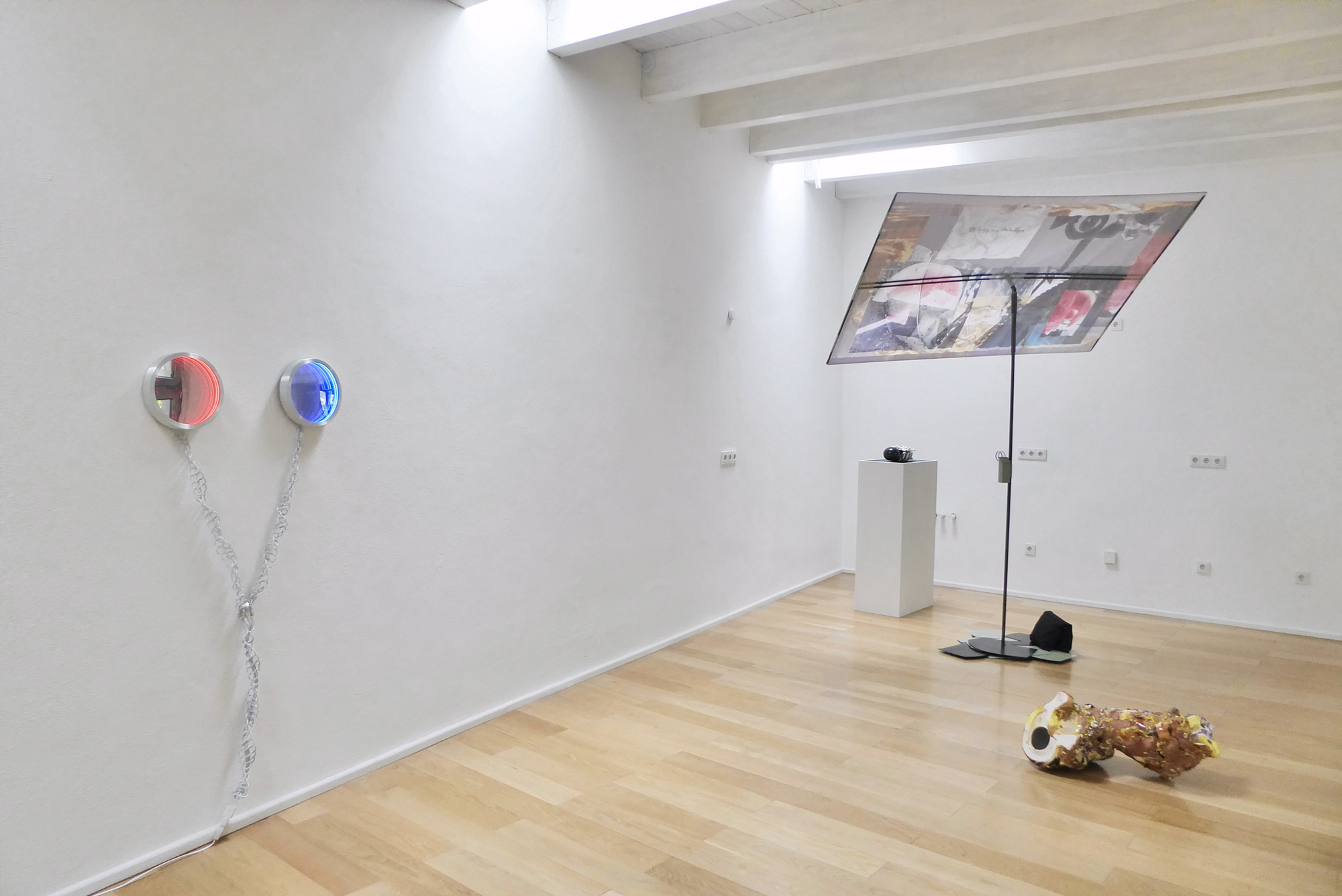
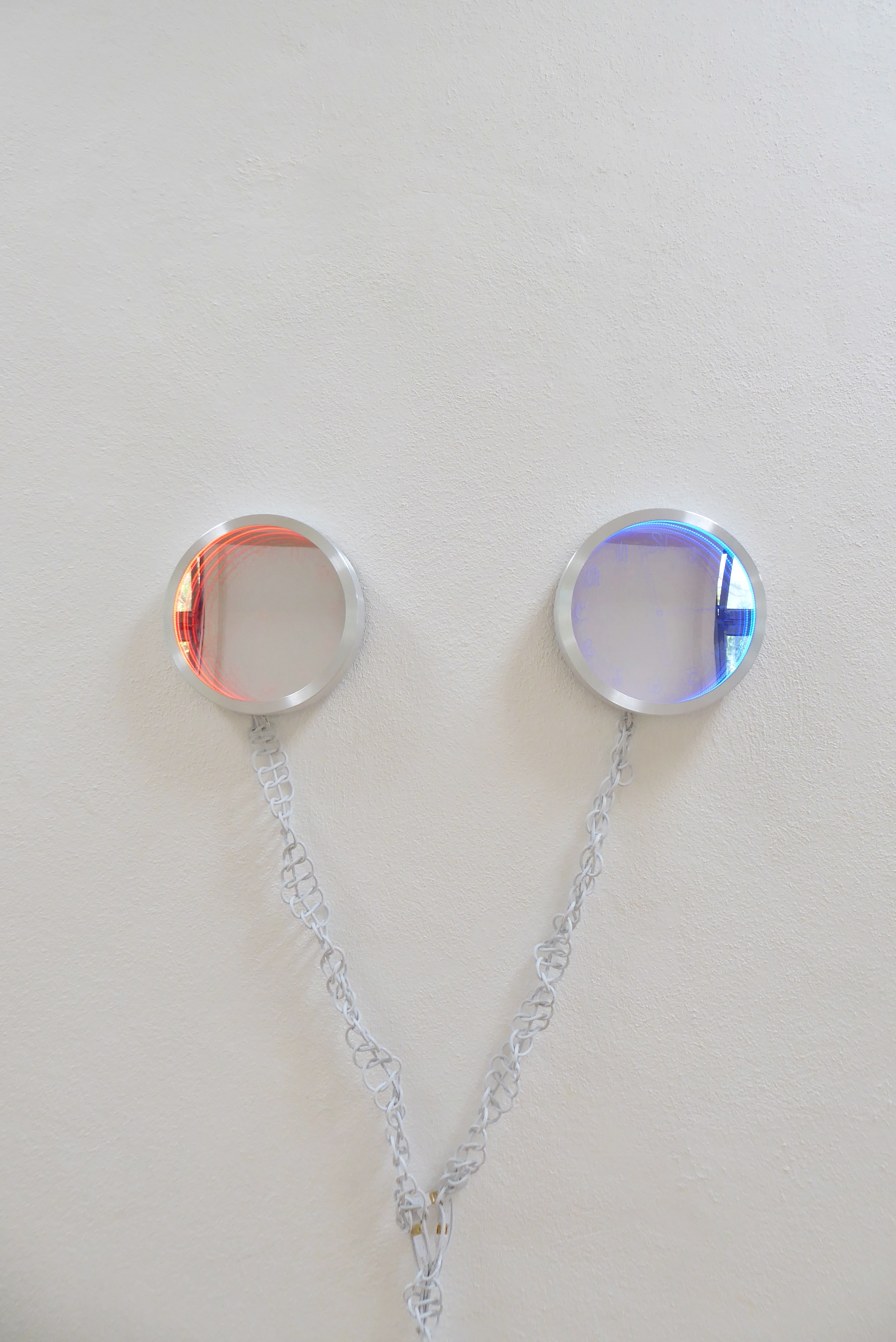
Johanna Strobel, False Friends, 2021, acrylic mirrors, plastic, glass, aluminium, clockworks 

(clockwise and counterclockwise), LEDs, USB extension cords, digital timer, size variable (each approx. 25

x 25 x 5 cm)

Julia Klemm, untitled, 2020, ceramic, glaze, second-hand ceramic leopards, 76 x 30 x 33 cm

Julia Klemm, untitled, 2020, ceramic, glaze, second-hand ceramic leopards, 76 x 30 x 33 cm

Lost and Found, 2021, installation view,

Julia Klemm, untitled, 2021, ceramic, glaze, second-hand ceramic leopard, 32 x 28 x 33 cm

Julia Klemm, untitled, 2021, ceramic, glaze, second-hand ceramic leopard, 32 x 28 x 33 cm

Julia Klemm, untitled, 2021, ceramic, glaze, second-hand ceramic leopard, 32 x 28 x 33 cm

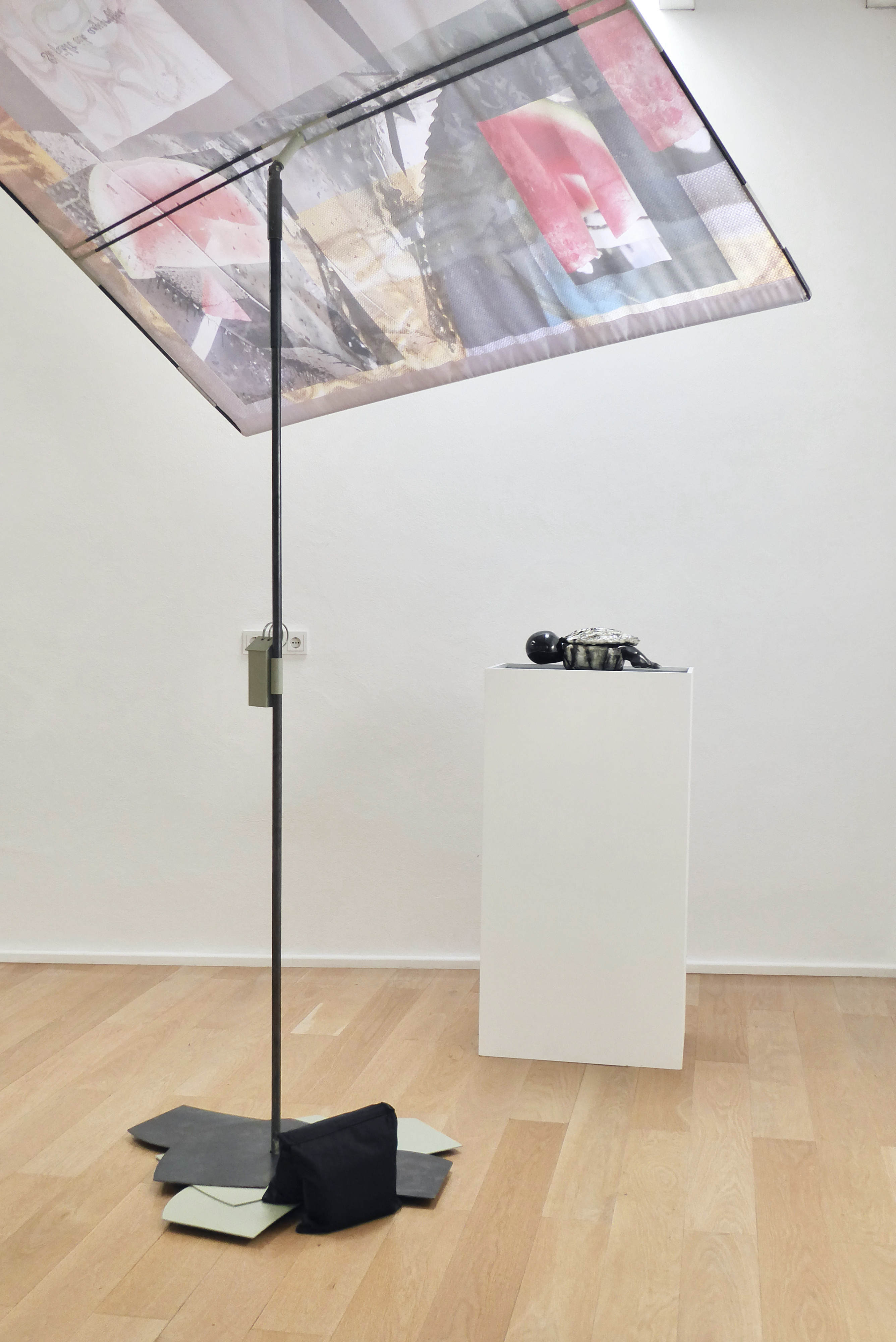
Pat Shoulder, Sun Umbrella, 2020, Steel, paint, print on textile

Lost and Found, 2021, installation view

Justin Lieberman, Obscure Readability, 2020, ceramic, glass and pedestal with sand, 41 x 22 x 12 cm (Courtesy of Galerie Christine Mayer)

Justin Lieberman, Obscure Readability, 2020, ceramic, glass and pedestal with sand, 41 x 22 x 12 cm (Courtesy of Galerie Christine Mayer)

Lilian Robl,Winning Hearts and Minds, 2016, 5 min 55 sec (plus textile bag and assorted metal objects)

A naturalist, specifically an 18th century one, likes to classify. After an expedition to the jungles of some remote land he – and it is almost always a he – takes out his specimens and begins to compare. This one looks like the second, the third does not, the fourth has some features of the first two, but also some traits seen in the third. He makes up categories and puts labels on boxes, marking the time and place at which the specimens were found. He then takes out a scalpel and cuts them open in order to examine their inner structure. Here are the muscles and these are the breathing organs. This is the skin, and under the microscope he can see the epidermal structure. Visually speaking, the naturalist proceeds mimetically, by finding patterns and organising resemblances. He looks and compares. He judges accordingly. 

There are however animals that escape the naturalist’s grasp. Fictional beings like vampires and werewolves, who live in darkness of our imaginations and spread by infecting others with their poisonous bite – these can be easily dismissed as unworthy of our serious attention. Viruses and pandemics less so. A virus can hardly be deemed alive, reproducing only in the host’s body. Although it mutates, it does not develop to evolve into ever more complex organisms. While it can be placed into groups of similar viruses, it eludes the classificatory system with its orders, families, genera and species.

The exhibition ‘Lost and Found’ has a slightly dystopian, even post-apocalyptic quality, of various objects assembled in haste and then disregarded, leftovers from a Mad-Max film set. A preview exhibition, it consists of artists who will hopefully be part of GiG Munich’s ‘Thinking Nature’ 2022 programme, which examines the relationship between man and nature, as it presents itself in thought. These artists were selected because their practices are not of class and order, but rather of mutation and infection. We see this most in Julia Klemm’s sculpture were kitsch ceramic animals are broken up and then reassembled, set precariously on their rickety plinths. Pat Shoulder’s work is collaborative, a result of an exchange of letters between the two artists during the first lockdown. The order of time is put into question with Johanna Strobel’s installations and  logic disintegrates in Lilian Robl’s videos.  There is a celebration of nature’s structures in the glass turtle shells of Justin Lieberman but again this order is not that of the naturalist. As with the others, it is a viral order of an unnatural kind. 

LOST AND FOUND

30.07 – 2.03.2021

Soft Opening: 29.07.21, 6 – 9 pm

As the previously planned exhibition had to unfortunately be cancelled, GiG Munich would like to use this opportunity to introduce a few artists, who it will be collaborating with next year as part of the ongoing ‘Thinking Nature’ series. Lost and Found is a preview exhibition, ‘lost’ because of the work that got lost in the post, ‘found’, because of the new work about to be discovered. The exhibition is a spontaneous one – what will happen, will happen.