Here it is, by popular request! For those of you who did not make it to the Vernissage, the finissage will take place on Friday, July 22nd. The catalogue should be ready by then as well.

MUNICH
Here it is, by popular request! For those of you who did not make it to the Vernissage, the finissage will take place on Friday, July 22nd. The catalogue should be ready by then as well.
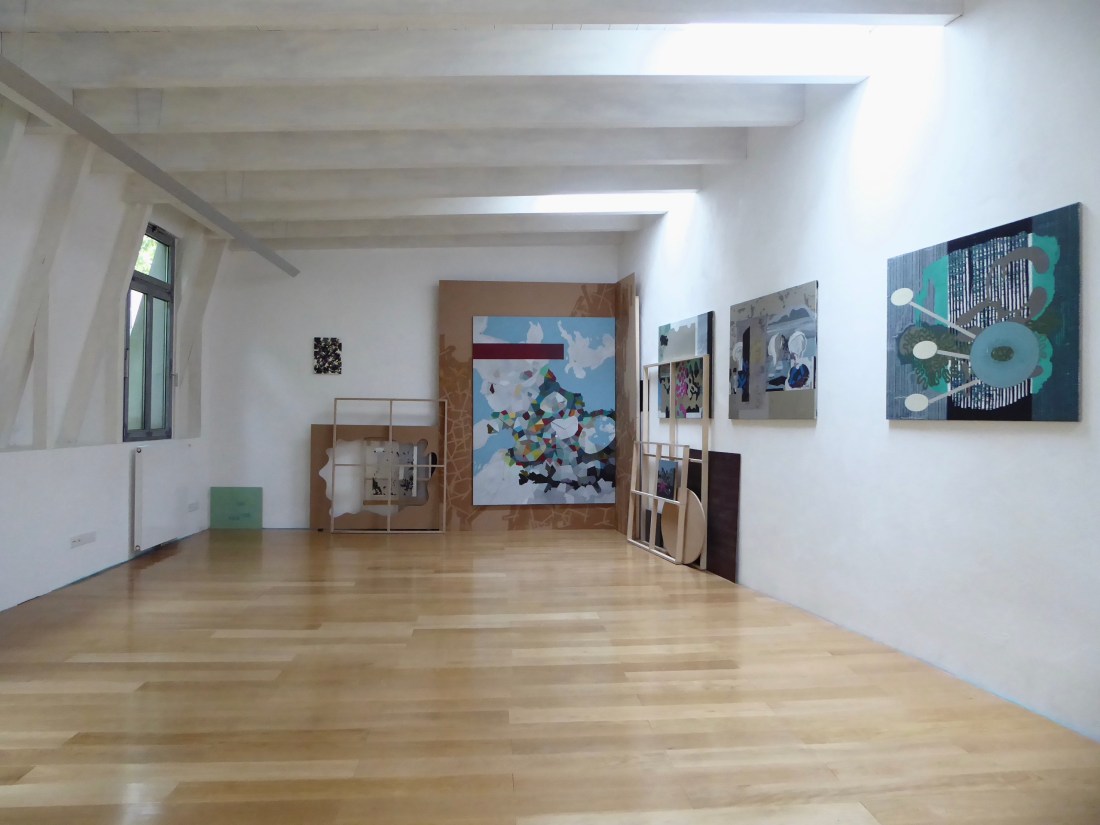

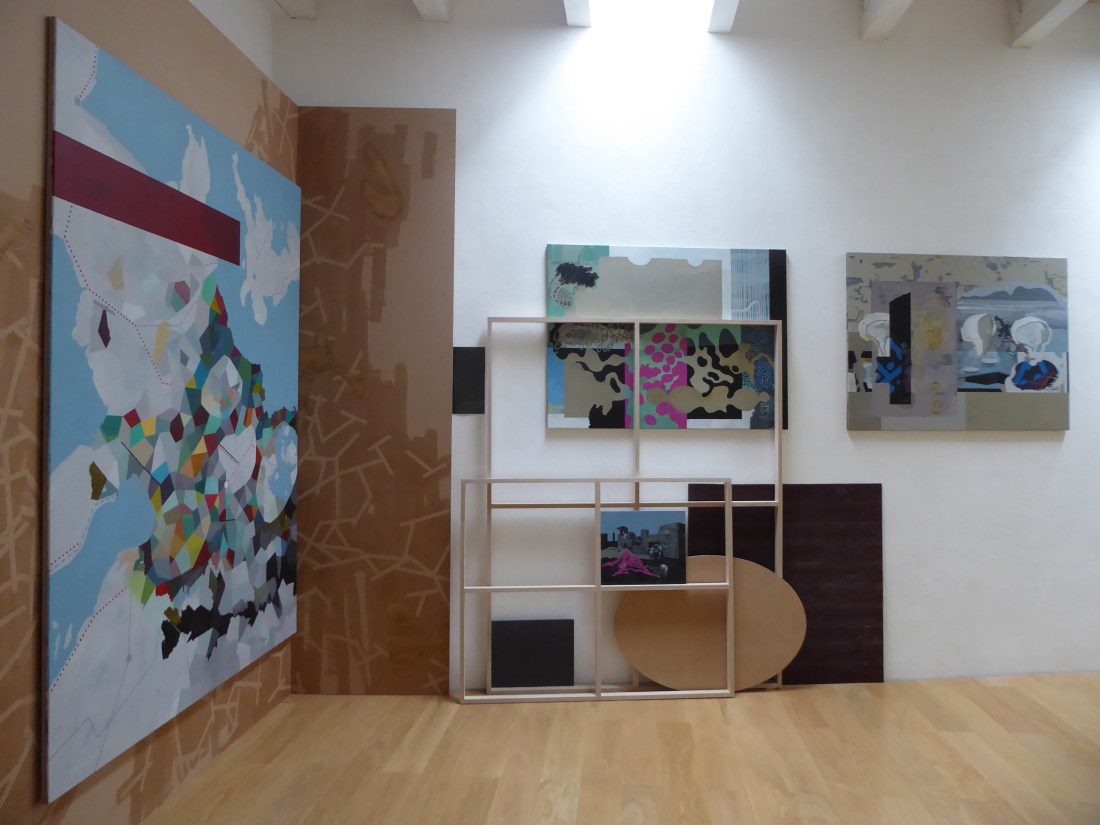
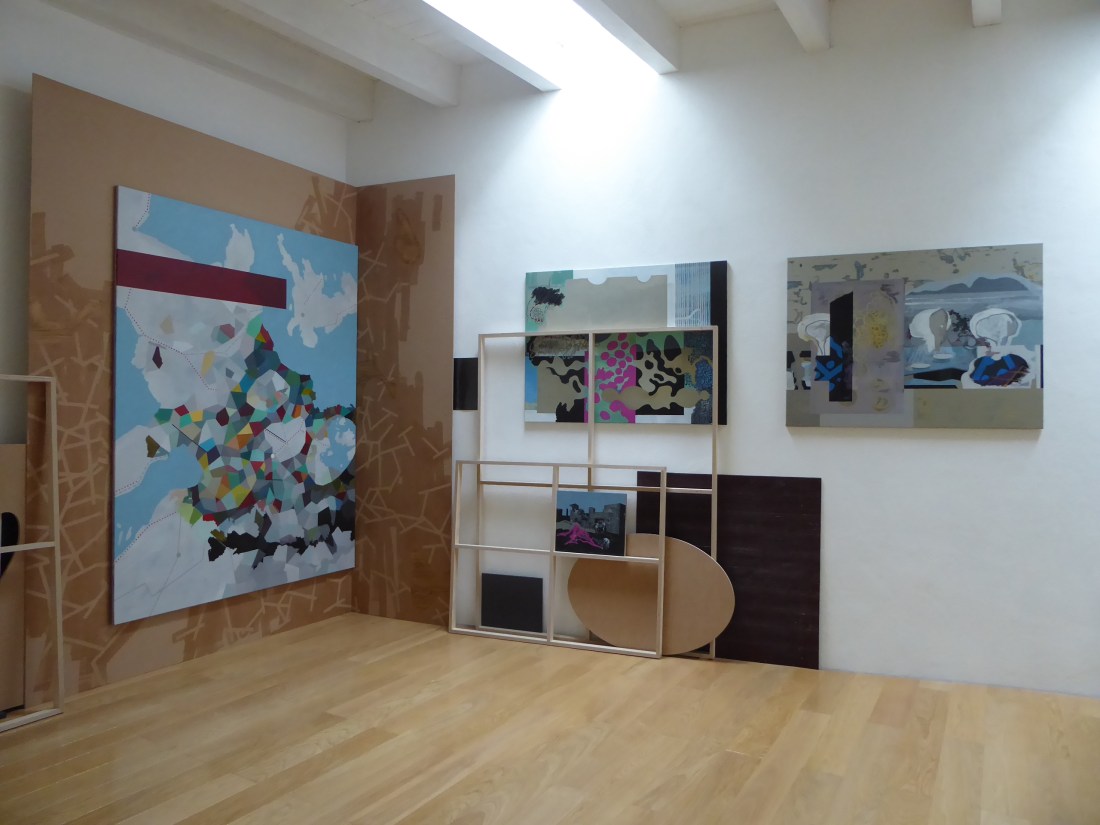
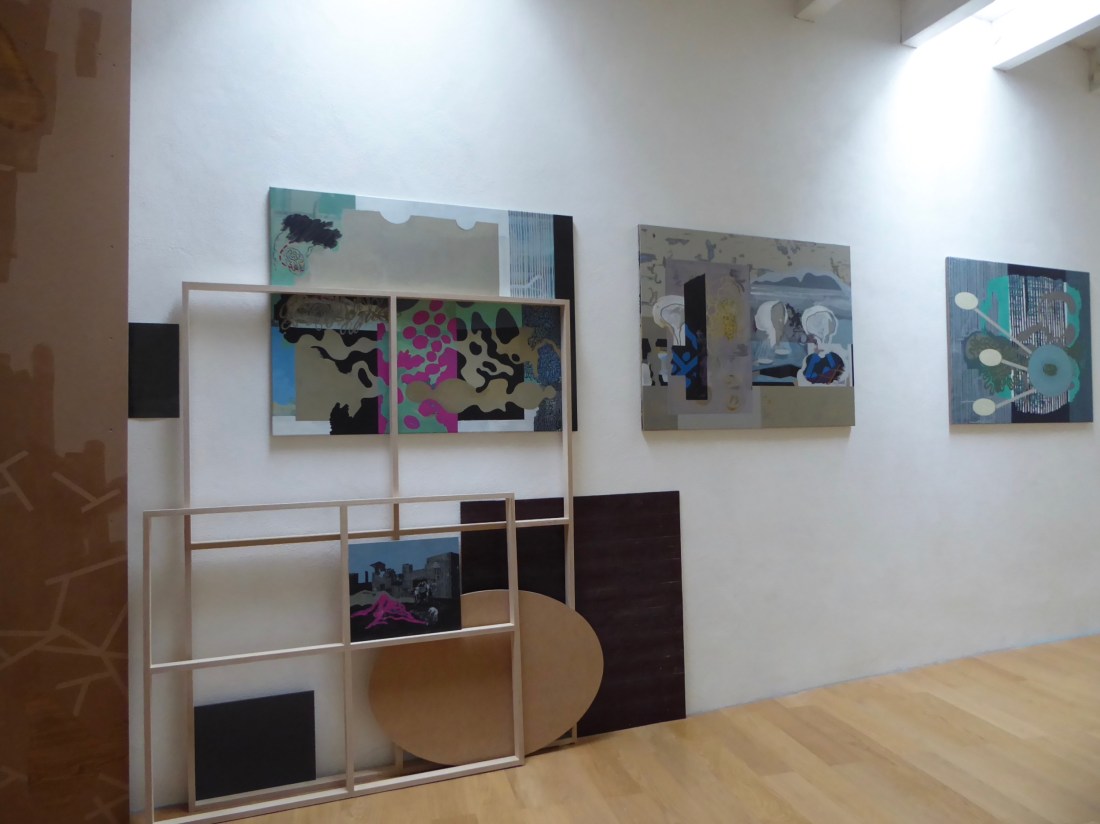
Just as there are two ways of interpreting the aesthetic object, there are two ways in which the work of Michael Lukas can be approached. If we take the perspective prior to aesthetic experience, the work becomes the object of our study. We begin by situating the work and cataloguing its numerous themes. These include but are not limited to the fields of ontology, topology, geography, social science and history. From the perspective of aesthetic experience however, we need to examine the kind of experience the work engenders, which I would argue is unique. Perhaps the term aesthetic experience is misleading as Michael Lukas’s work involves much more than the traditional sense of the term, with the object to be viewed by the human subject, the individual artwork to be judged by the art expert, the connoisseur. Michael Lukas’s work presents a problem: in Deleuze’s words, it forces us to think.
The site-specific work we see at GiG Munich does not exist as the one or even the group of paintings, what we know as compositions of brushstrokes on wood or canvas. It consists of the relations and connections these material elements make with each other, with other paintings, with the artist and with us, the viewer. The relations are physical but also abstract or intellectual, the connections between nebulous ideas just as important as those made by objects in Euclidean space. In other words the painting installation of Michael Lukas stages an encounter, an encounter always being the confrontation between a set of forces. The result of the encounter is an assemblage of affects.
For Spinoza, who is my main reference point here, the forces set up in the encounter have two possible outcomes. The encounter results either in the increase of the capacity for action, which is perceived as pleasurable, or in its decrease, which is felt as pain. The assemblage of affects is the consequence of the first kind of encounter, the pleasurable composition of relations, which ultimately is to bring us knowledge of God. Deleuze complicates matters by insisting that in the encounter, the position adopted by the body is one of combat. In combat, forces struggles against each other, going across and breaking up the organised body, as set within its boundaries. For combat to be considered by Deleuze as a positive encounter, this struggle cannot be resolved with the dominance of one force over the others. Any kind of resolution compromises combat’s inherent creative element. Something new is only produced when the struggles of the forces is maintained.
Michael Lukas’s work keeps up this tension, this struggle between various forces. He uses the frame, a repeated motif in his paintings and physically manifest as a sculptural relief hanging in the gallery corner, to demand from us the move out of an organised framework – to shift from one material aspect to another, to make those intellectual connections we would otherwise not make, all the time preventing us from ever settling on the one object, the one image, the one idea. When encountering Michael Lukas’s work, we are forced to think, in that we are forced into a position of creativity. It spurs us to action. But it never allows this activity to be resolved. We are continually intrigued, looking, making sense, thinking.
Here is an installation view of some of the new work, as seen in the artist’s studio:

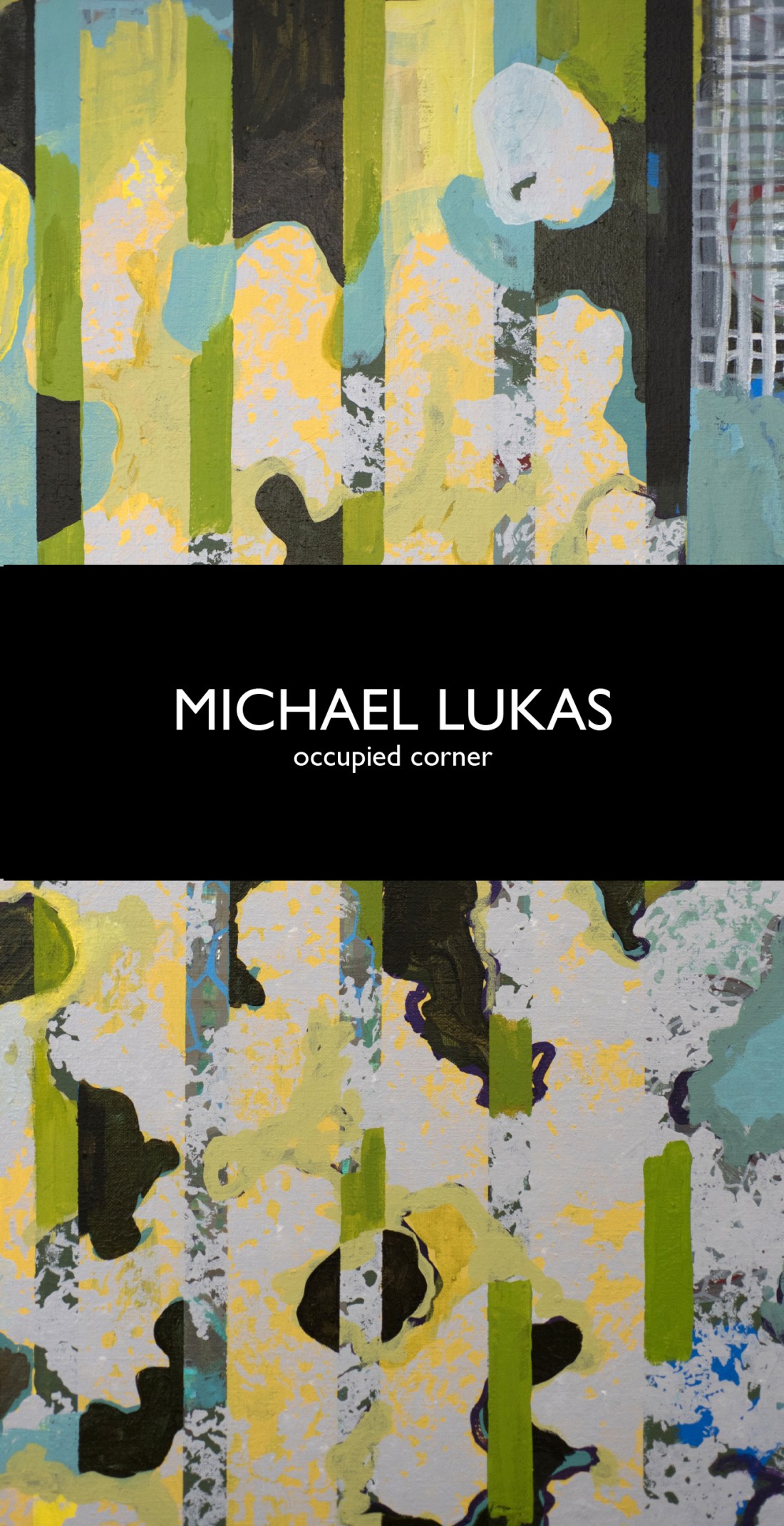
Eröffnung: Samstag, den 18. Juni 2016 um 15:00 Uhr
Einführung: Dr. Magdalena Wisniowska
Ausstellungsdauer: 18. Juni – 26. Juli 2016
Öffnungszeiten: Montag – Donnerstag 15:00 – 18:00 Uhr und nach Vereinbarung unter: gigmunich@gmail.com
Occupied Corner ist die neueste raumbezogene Arbeit von Michael Lukas, die er speziell für GIG Munich gestaltet. Die Installation ist eine fließende geometrische Konstruktion von Beziehungen, Verbindungen und Netzwerken, in der sich die einzelnen Elemente in ständiger Spannung befinden. In ihr vereint er Gemälde, Skulpturen und Zeichnungen, um unsere Rolle im größeren Zusammenhang einer globalen Landschaft zu untersuchen.
Der etablierte Münchner Künstler mit zahlreichen Einzel- und Gruppenausstellungen arbeitet auch als Kurator. Er organisierte Ausstellungen mit internationaler Besetzung u.a. in München den Weltkongress für Kartographie 2006 und in Berlin die von der Kulturstiftung des Bundes geförderte Ausstellung Luise. Die Inselwelt der Königin 2010.
Occupied Corner is the latest art installation by Michael Lukas, made specifically for the GiG Munich site. The installation constructs a fluid geometry of relations, connections and networks, its different elements held in continual tension. Incorporating painting, sculpture, and drawing, it critically examines our place within a larger global landscape.
Michael Lukas is a well-established Munich artist, with numerous solo and group exhibitions. He has also worked as a curator, most notably organising the World Congress for Cartography in 2006 and the Berlin exhibition, Luise Die Inselwelt der Königin in 2010.

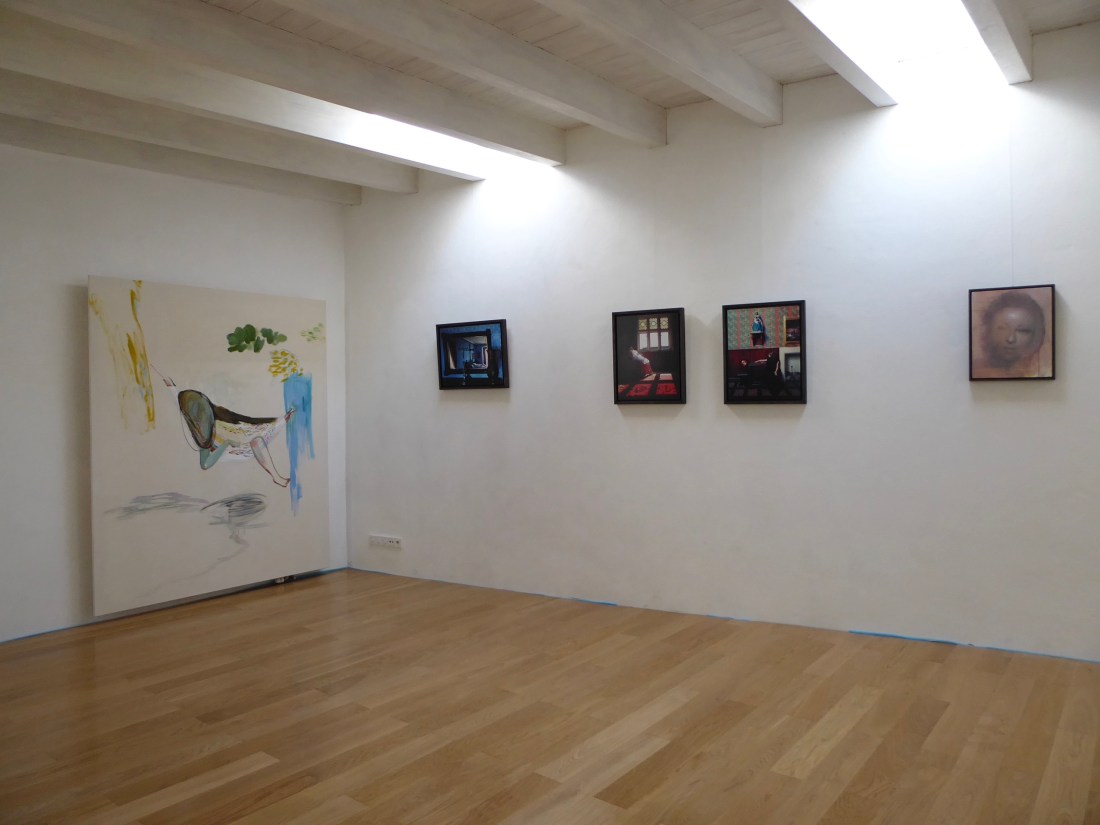
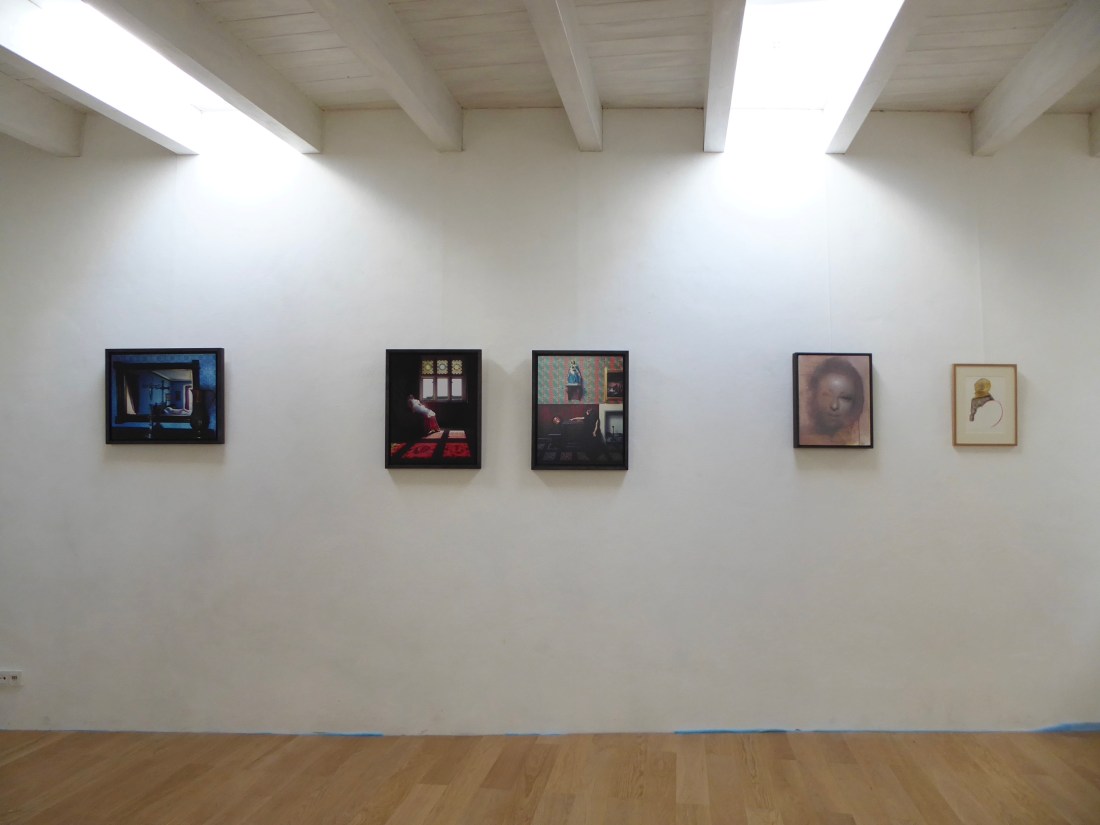


Combining sculpture, photography and video, Liane Lang constructs elaborate mise en scenes, using casts of the human body and highly charged environments. Her interventions animate historical events and individuals, houses, statues and monuments. In After Realism she shows three photographs from her Saint series, taken in the house of the Gothic Victorian architect, Augustus Pugin.
In einer Verschmelzung aus Skulptur, Fotografie und Video konstruiert Liane Lang ausgefeilte Inszenierungen, in denen sie Gipsabgüsse des menschlichen Körpers in emotional aufgeladene Kulissen setzt. Ihre Interventionen beleben historische Ereignisse sowie Individuen, Gebäude, Statuen und Monumente. In After Realism zeigt sie drei Fotografien aus der Serie Saint, die im Haus von Augustus Pugin aufgenommen wurden, der den architektonischen Stil des Gothic Revival geprägt hat.

Richard Moon is a painter, who uses old-fashioned photographic tools to force grand gestures often denied to contemporary painting. Tackling such subject matter as death, madness and alienation, he exploits the medium’s history of failure and irrelevance in order to pursue his Romantic inclinations. For After Realism, he presents a black and white still life of some bananas in a colander, resting on a skull and bone tablecloth.
Richard Moon ist ein Maler, der altmodische fotografische Mittel verwendet, um große Gesten zu erzeugen, die zeitgenössischen Gemälden oft verwehrt bleiben. Während er sich mit Themen wie Tod, Wahnsinn und Entfremdung beschäftigt, macht er sich die Geschichte des Scheiterns und der Belanglosigkeit dieses Mediums zunutze, um seinen romantischen Neigungen nachzugehen. Für After Realism präsentiert er ein Stilleben in Schwarz-Weiß: ein Büschel Bananen in einem Sieb, der auf einer mit Schädeln und Knochen bedruckter Tischdecke platziert ist.

Maria Thurn und Taxis is a recent graduate of the City and Guilds of London Art School, showing with Patrick Ebensperger in Berlin. Her recent paintings deal with the carnivalesque, finding in disguise and concealment a means of presenting the hidden aspects of reality.
Maria Thurn und Taxis ist junge Absolventin der City and Guilds of London Art School, die von der Galerie Patrick Ebersperger in Berlin repräsentiert wird. Ihre jüngsten Gemälde beschäftigen sich mit dem Phänomen “Karneval”, in welchen sie in der Verkleidung und Tarnung ein Mittel entdeckt hat die verborgenen Aspekte der Realität aufzuzeigen.

Gavin Tremlett produces technically accomplished portraits, which despite their obvious pornographic vulgarity also exhibit the artist’s more abstract yearnings towards the sublime. The work is psychologically charged, simultaneously voyeuristic and self-aware. He is currently having a solo show, HYBRIS, with Charlie Smith, in London.
Gavin Tremlett produziert technisch vollendete Porträts, welche trotz ihrer offensichtlichen pornografischen Vulgarität die eher abstrakten Sehnsüchte des Künstlers zum Erhabenen aufzeigen. Sein Werk ist psychologisch aufgeladen, gleichermaßen voyeuristisch und selbstkritisch. Er hat zurzeit eine Einzelausstellung, HYBRIS, in der Londoner Galerie Charlie Smith.
 GiG
GiG 