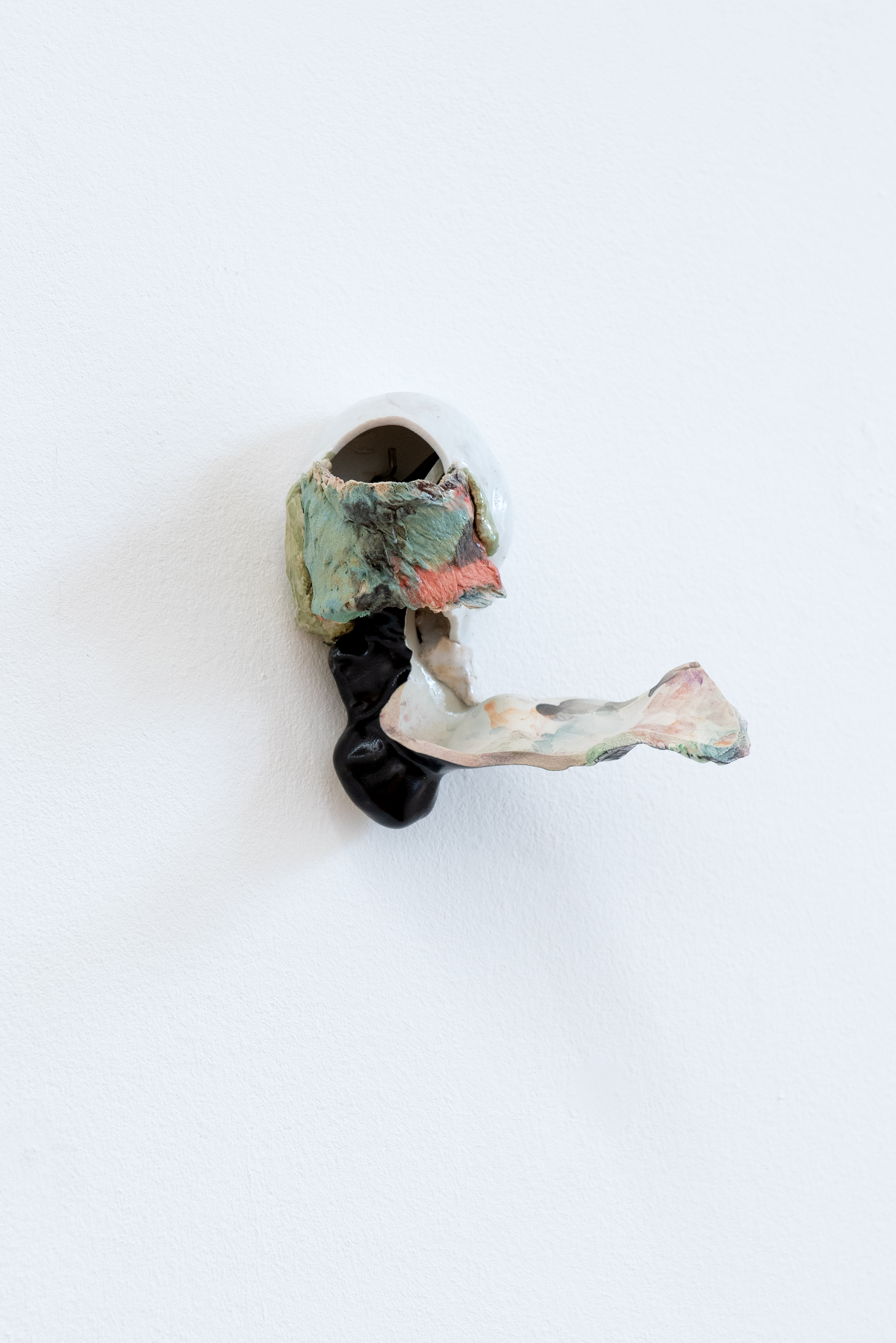
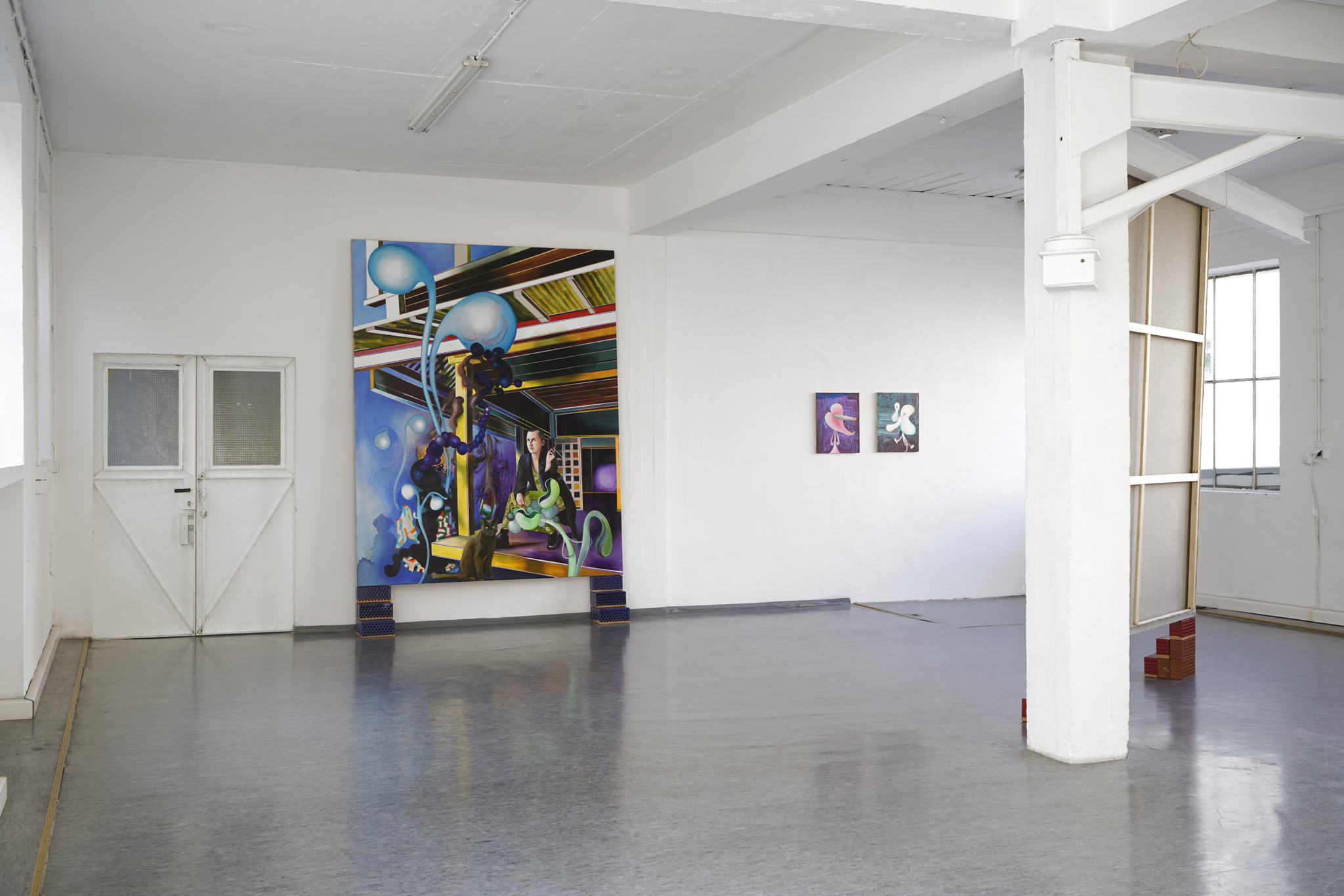
Animal Elegance

Jakob Gilg, Anka Helfertova, Julia Klemm and Jonathan Penca

9.10. – 7.11.2025

with Pracownia Portretu, Łódź, Poland
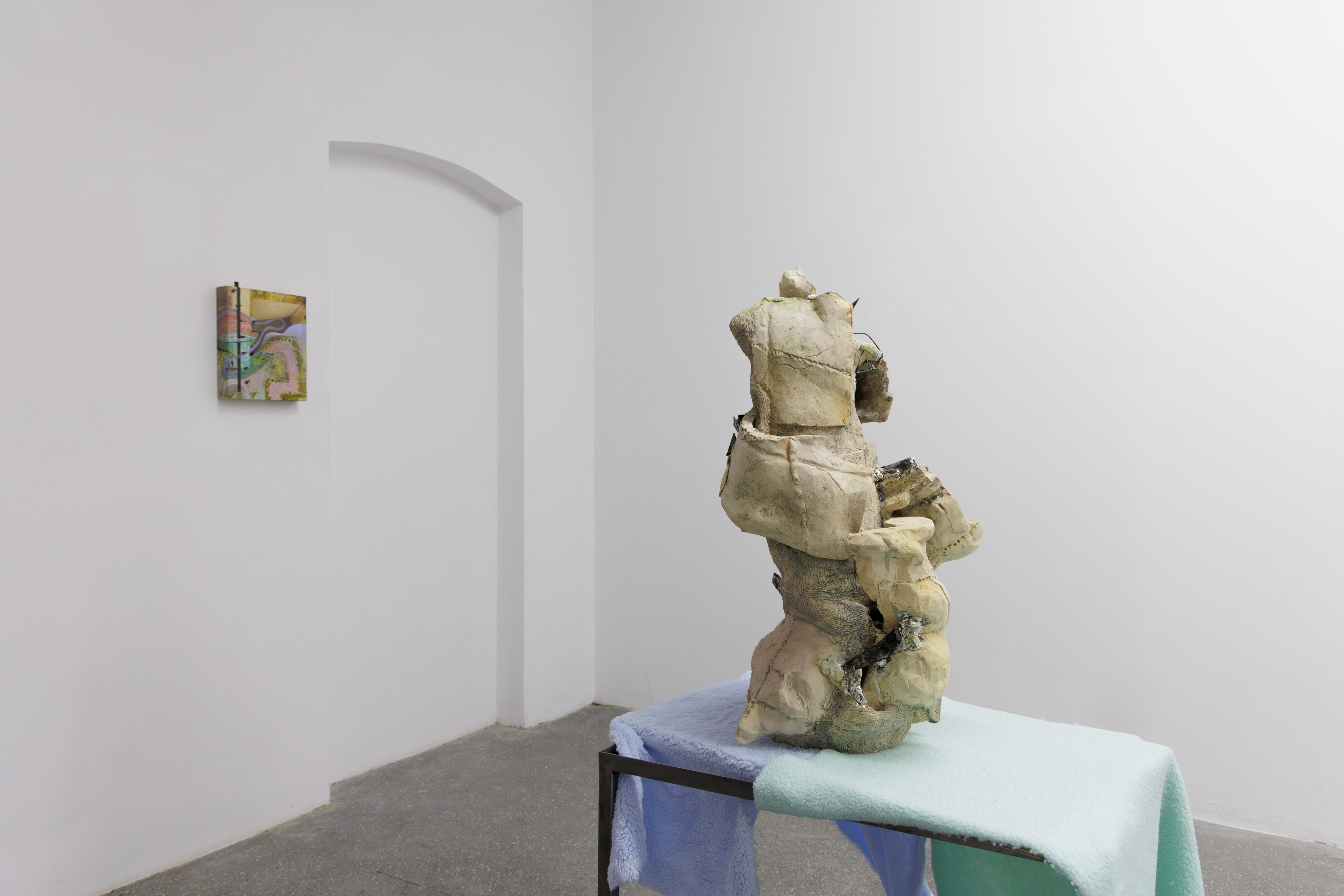
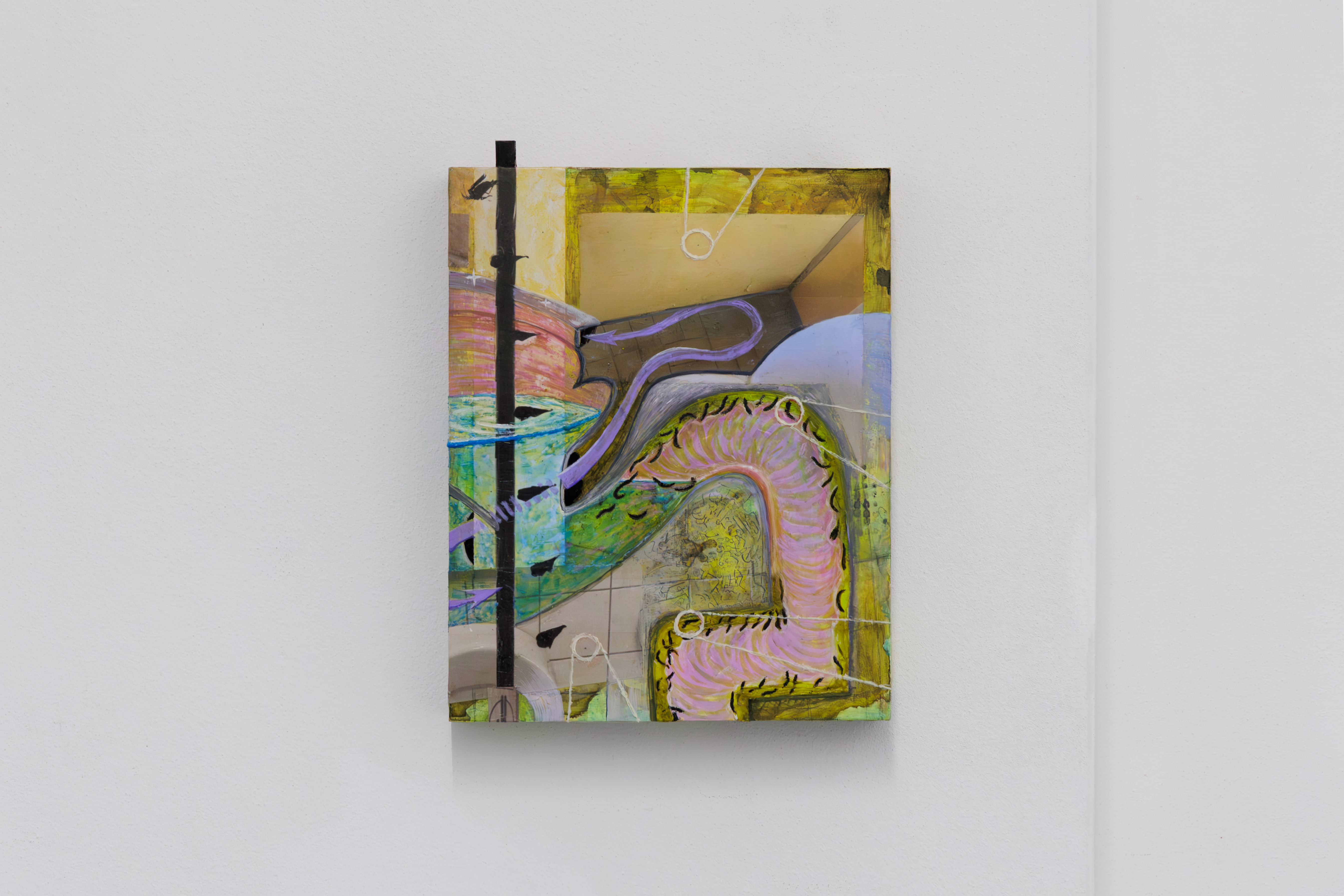
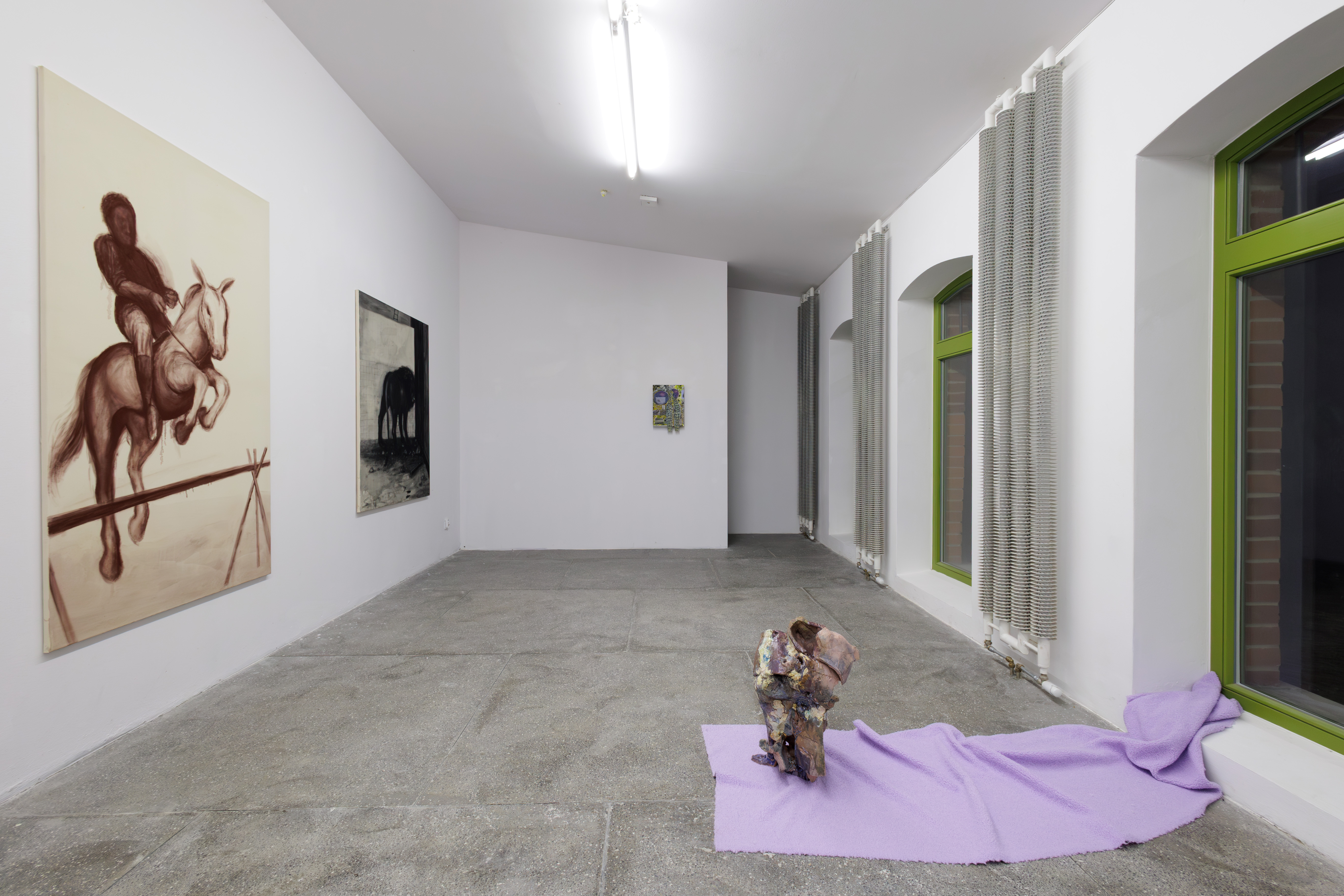
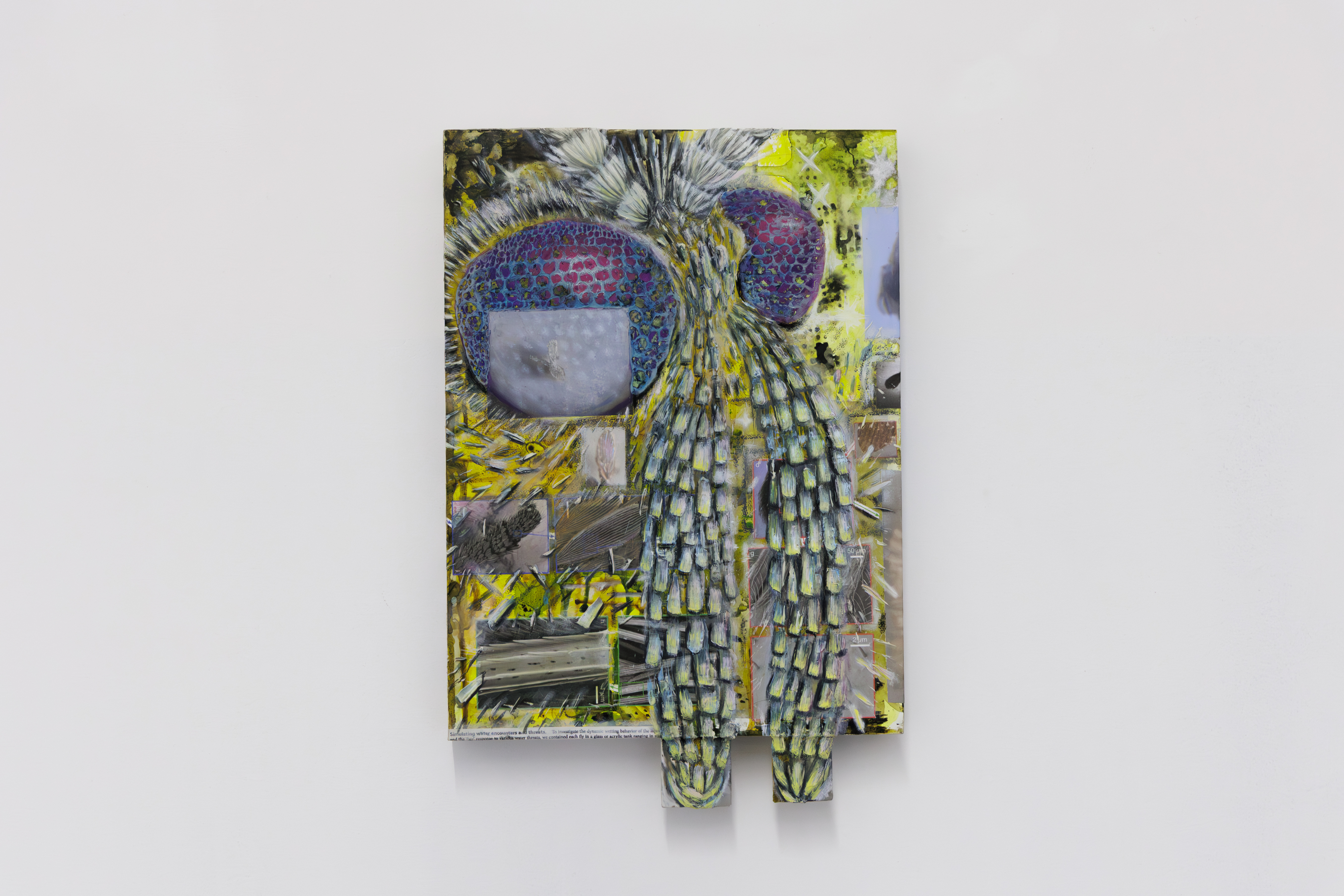
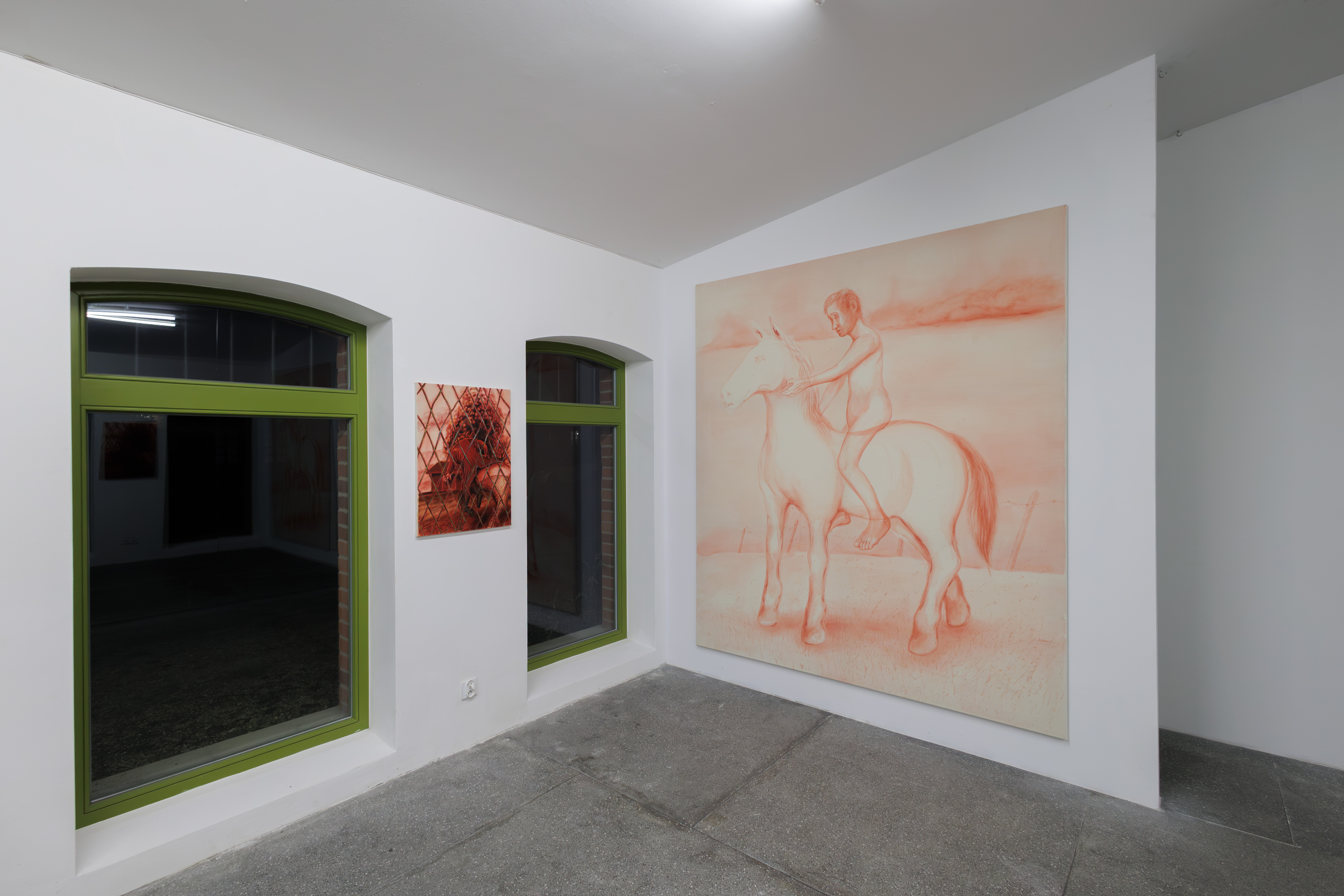
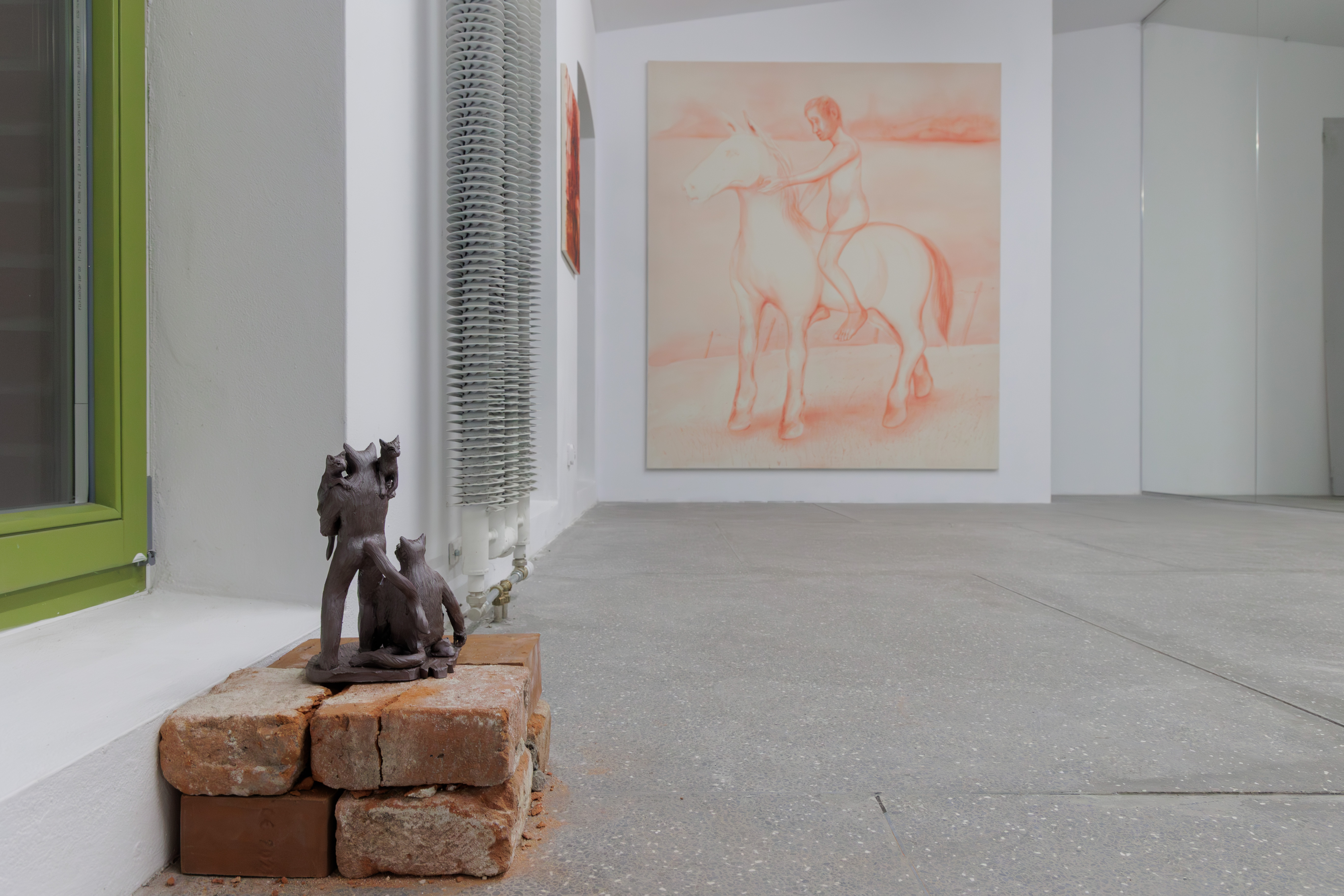
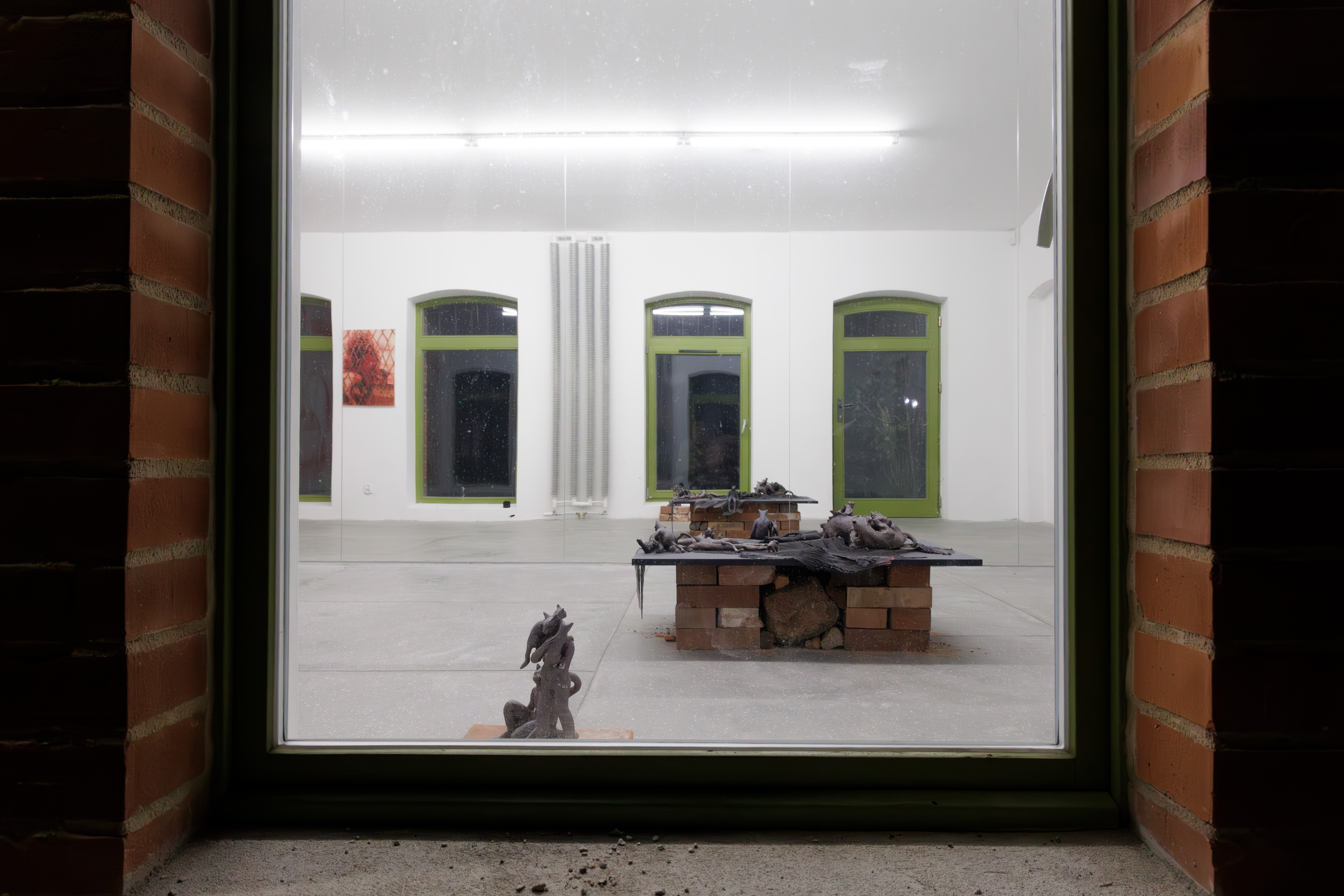
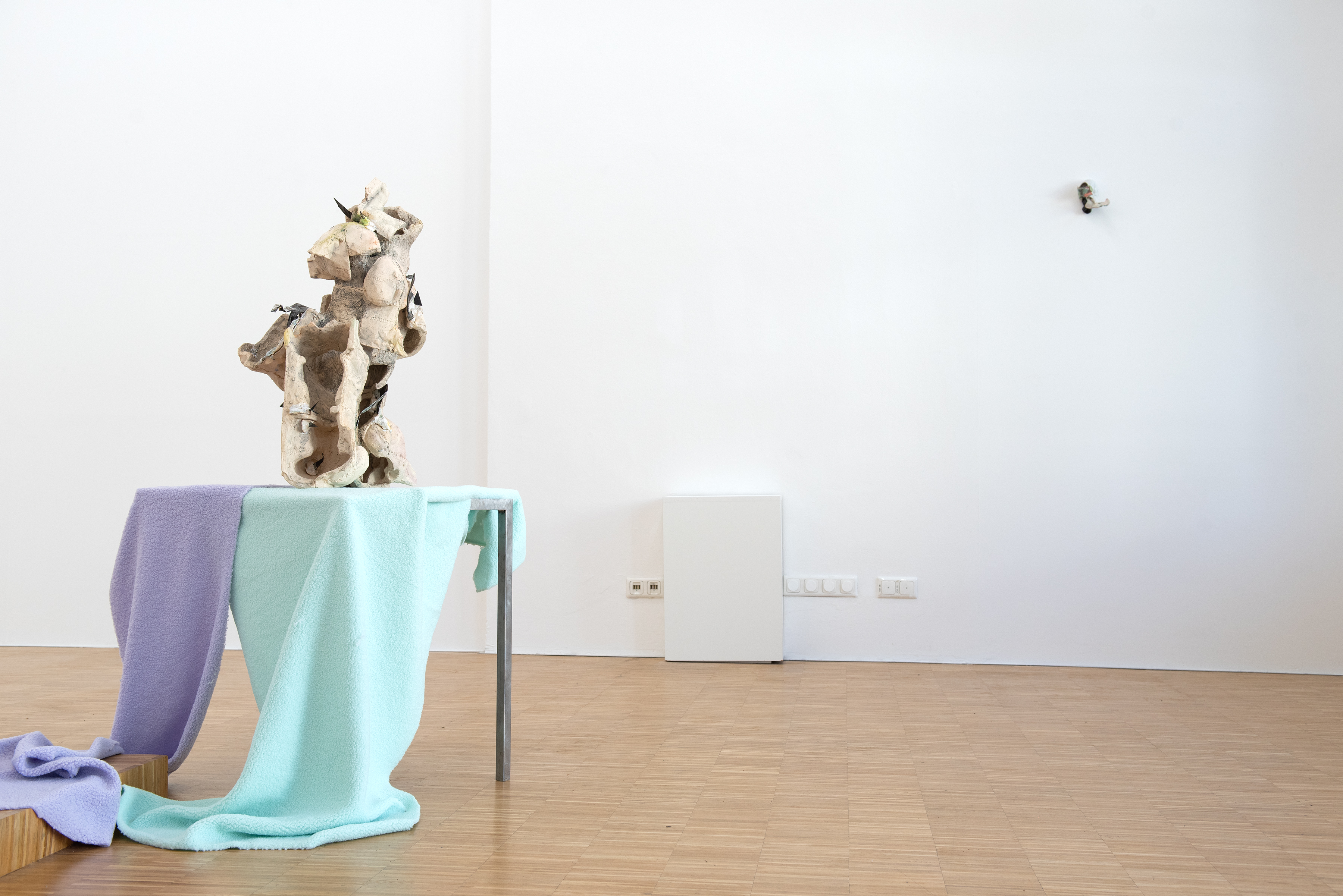
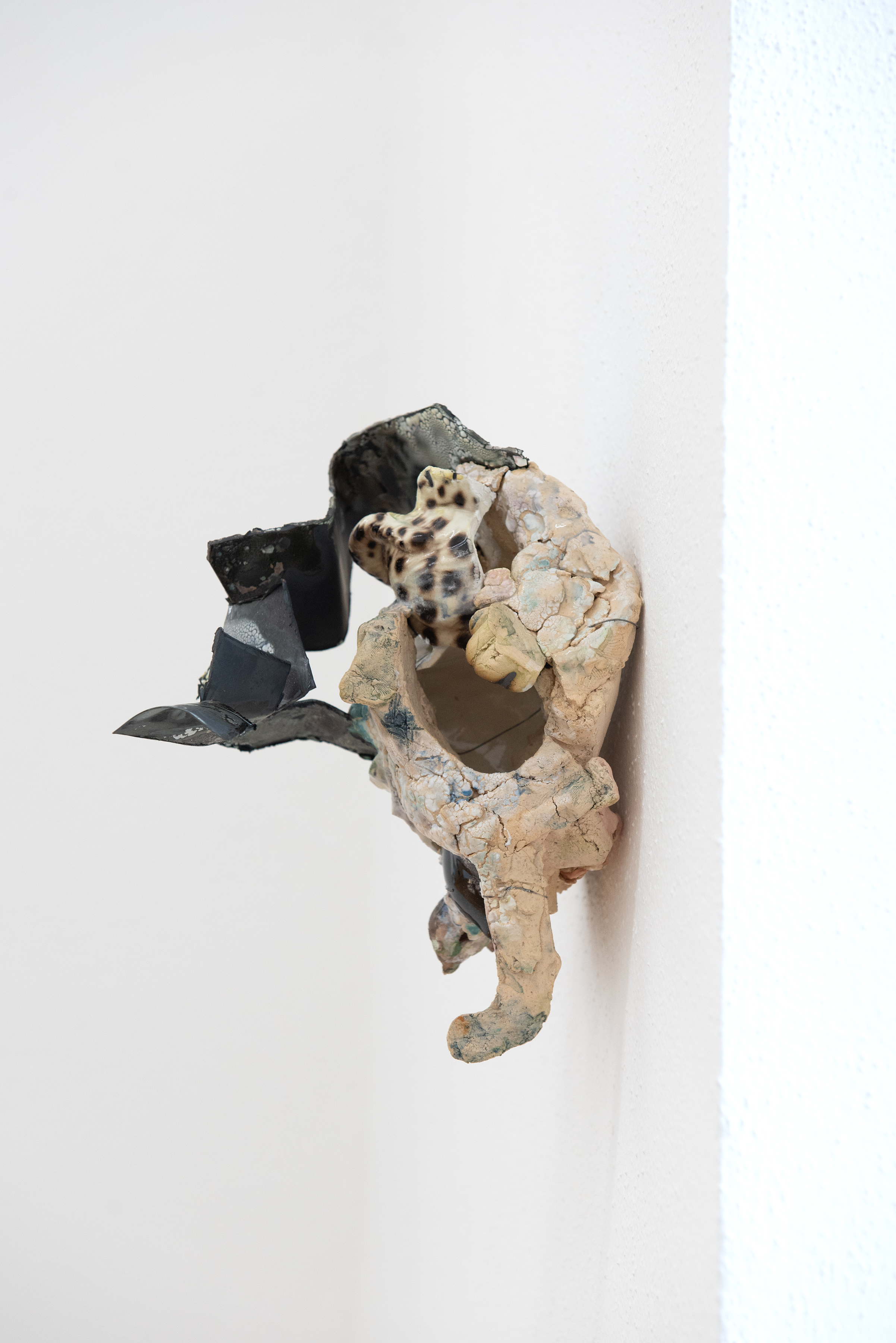
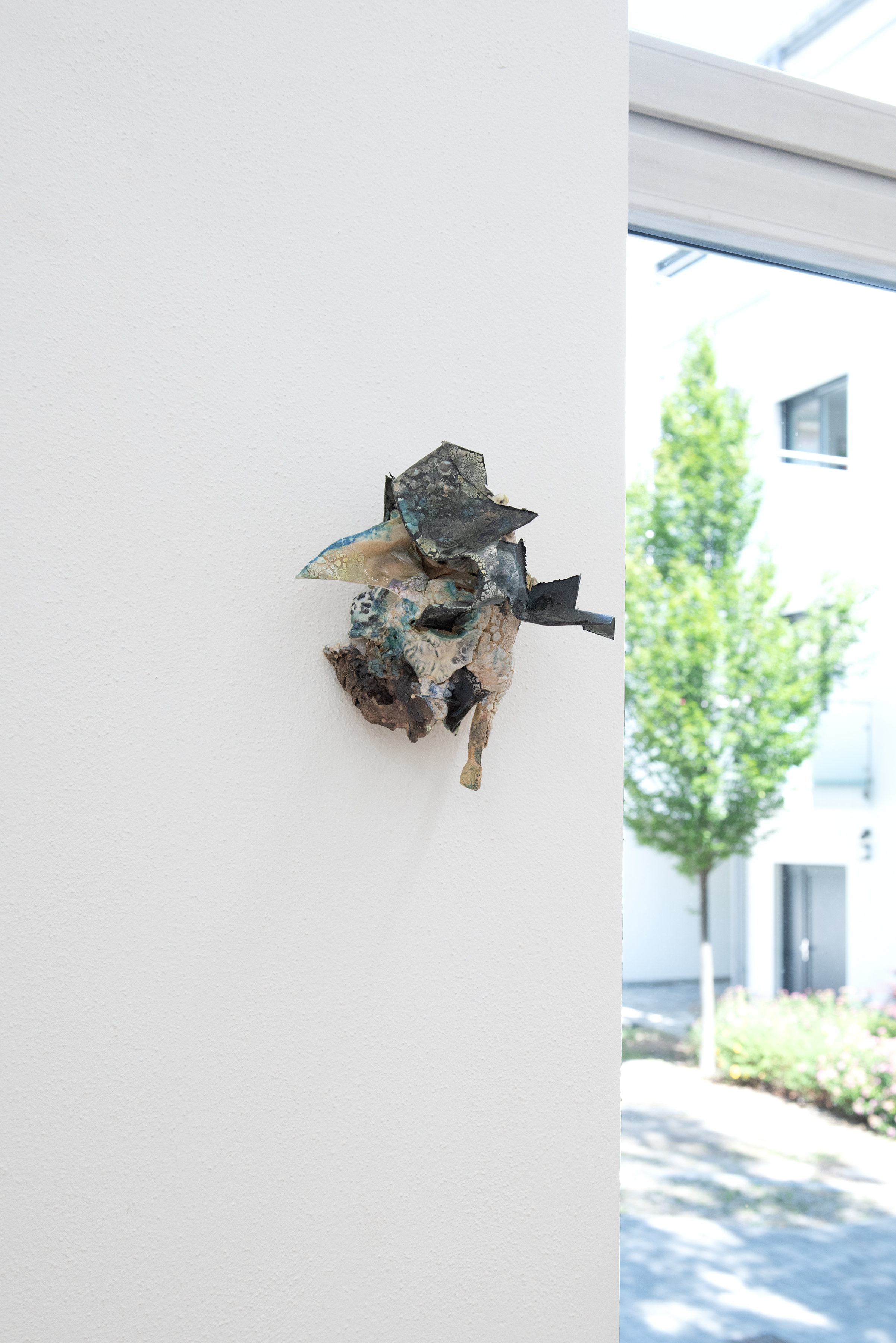
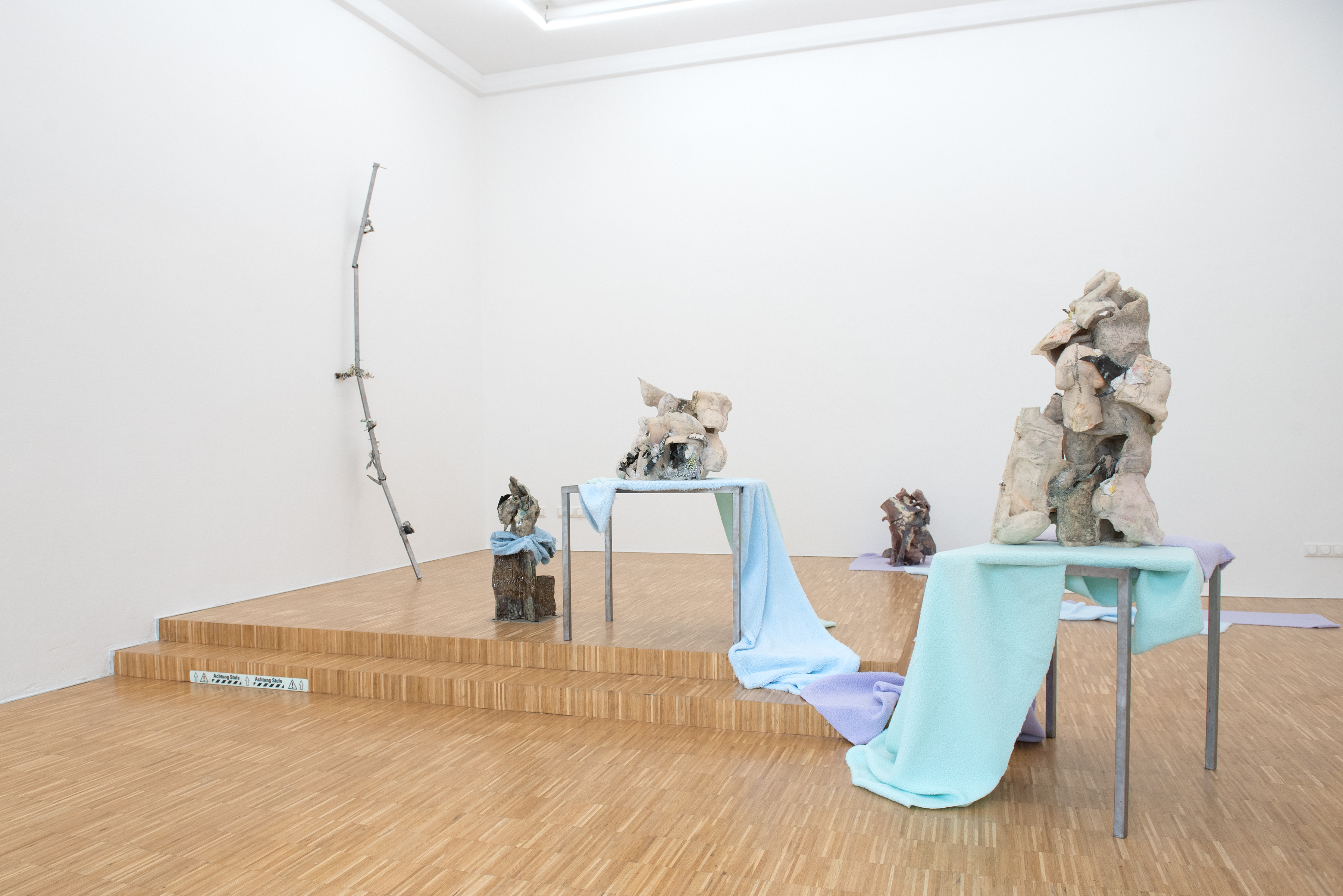
Animal Elegance, installation view (Jonathan Penca, Colonna Sonora, 2025, acrylic and
gouache paint, acrylic resin, biro, pencil, gesso and ink on wood. 31 x 24 x 5 cm; Julia Klemm, A chimera is not a pet 2, 2025, steel, glaze, ceramic, pigment, 44 x 38 x 74 cm, )
Animal Elegance, installation view (Jonathan Penca, Colonna Sonora, 2025, acrylic and
gouache paint, acrylic resin, biro, pencil, gesso and ink on wood. 31 x 24 x 5 cm, ; Julia Klemm, A chimera is not a pet 2, 2025, steel, glaze, ceramic, pigment, 44 x 38 x 74 cm,; Julia Klemm, A chimera is not a pet 3 , 2025, steel, glaze, ceramic, pigment, 46 x 34 x 42 cm)
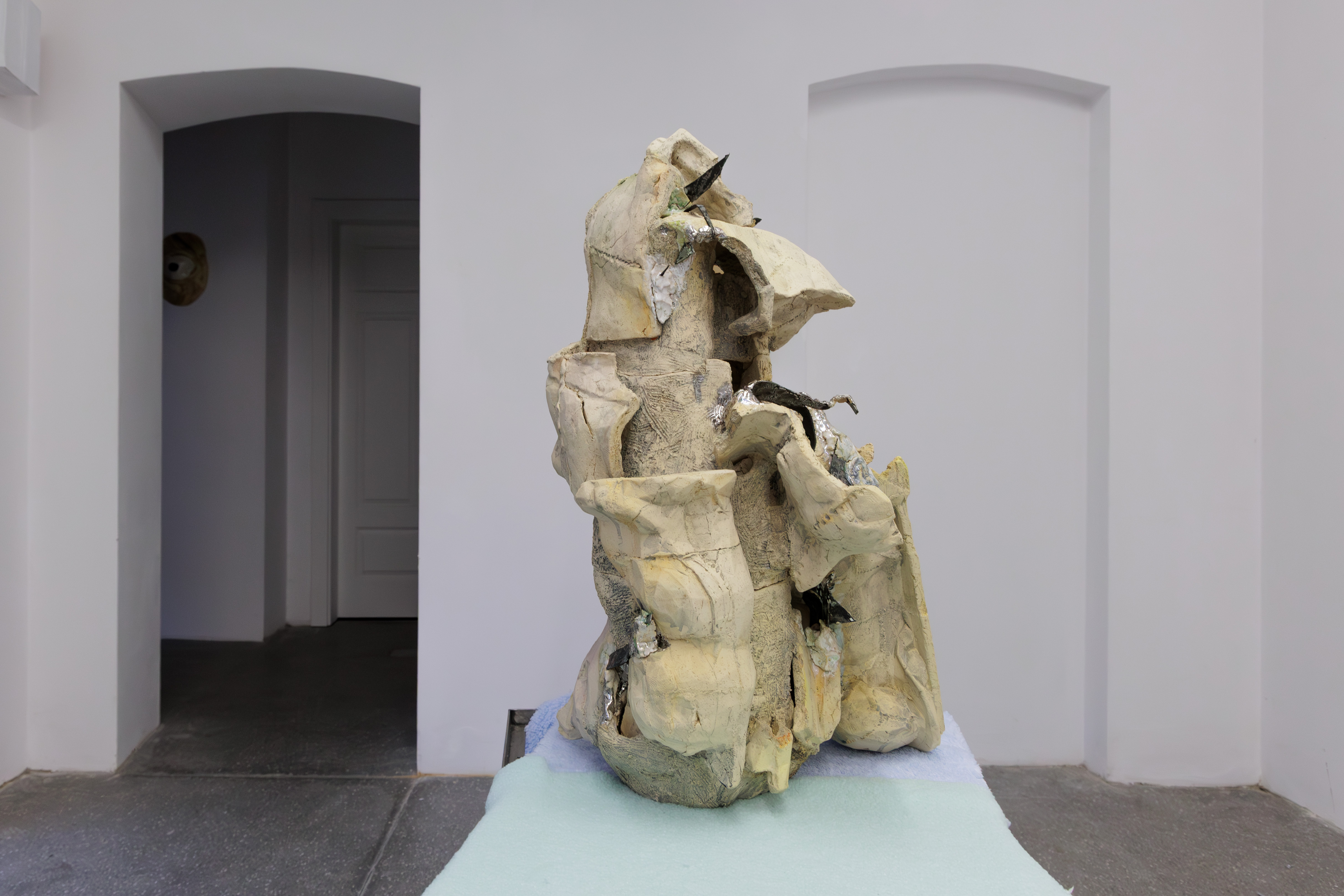
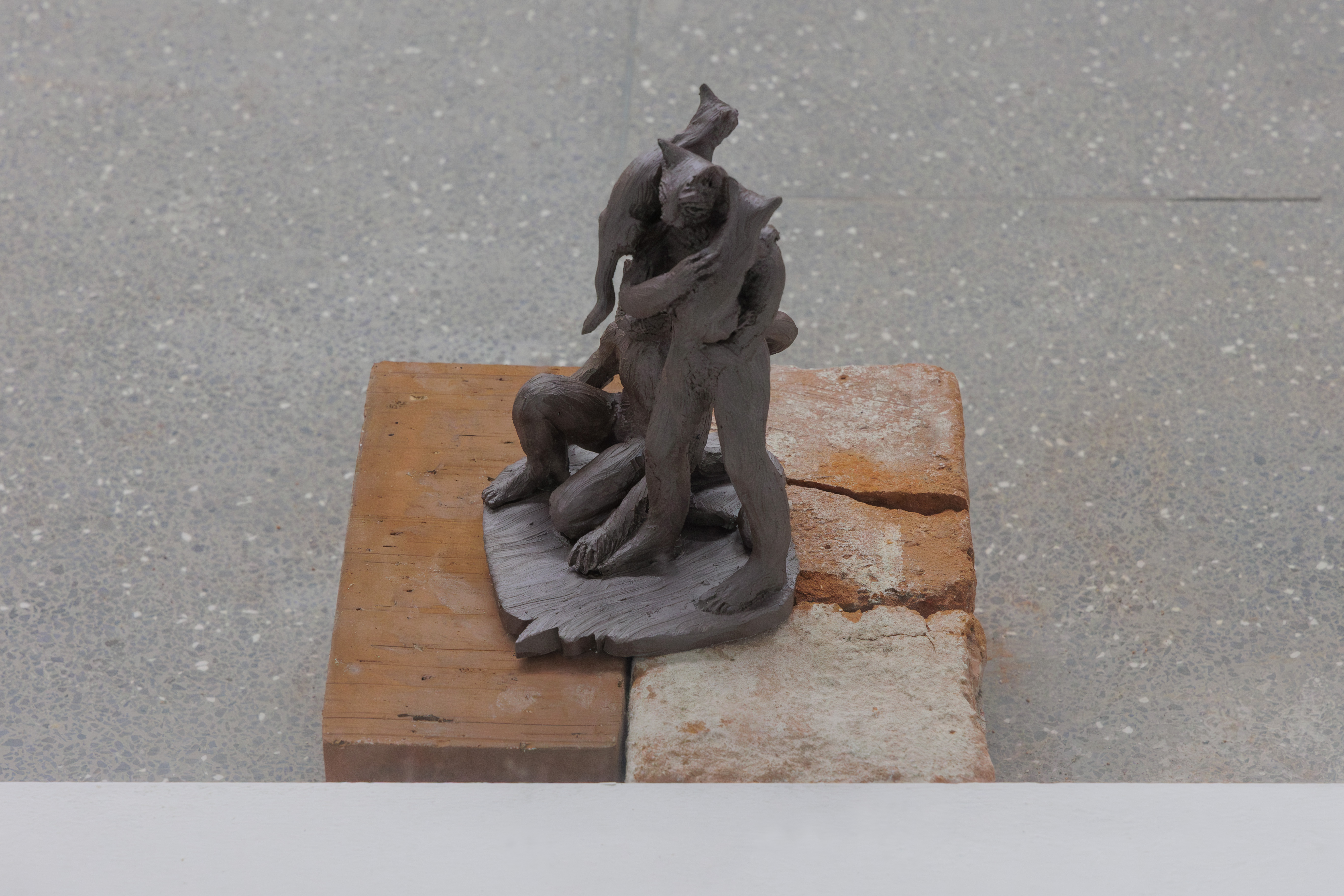
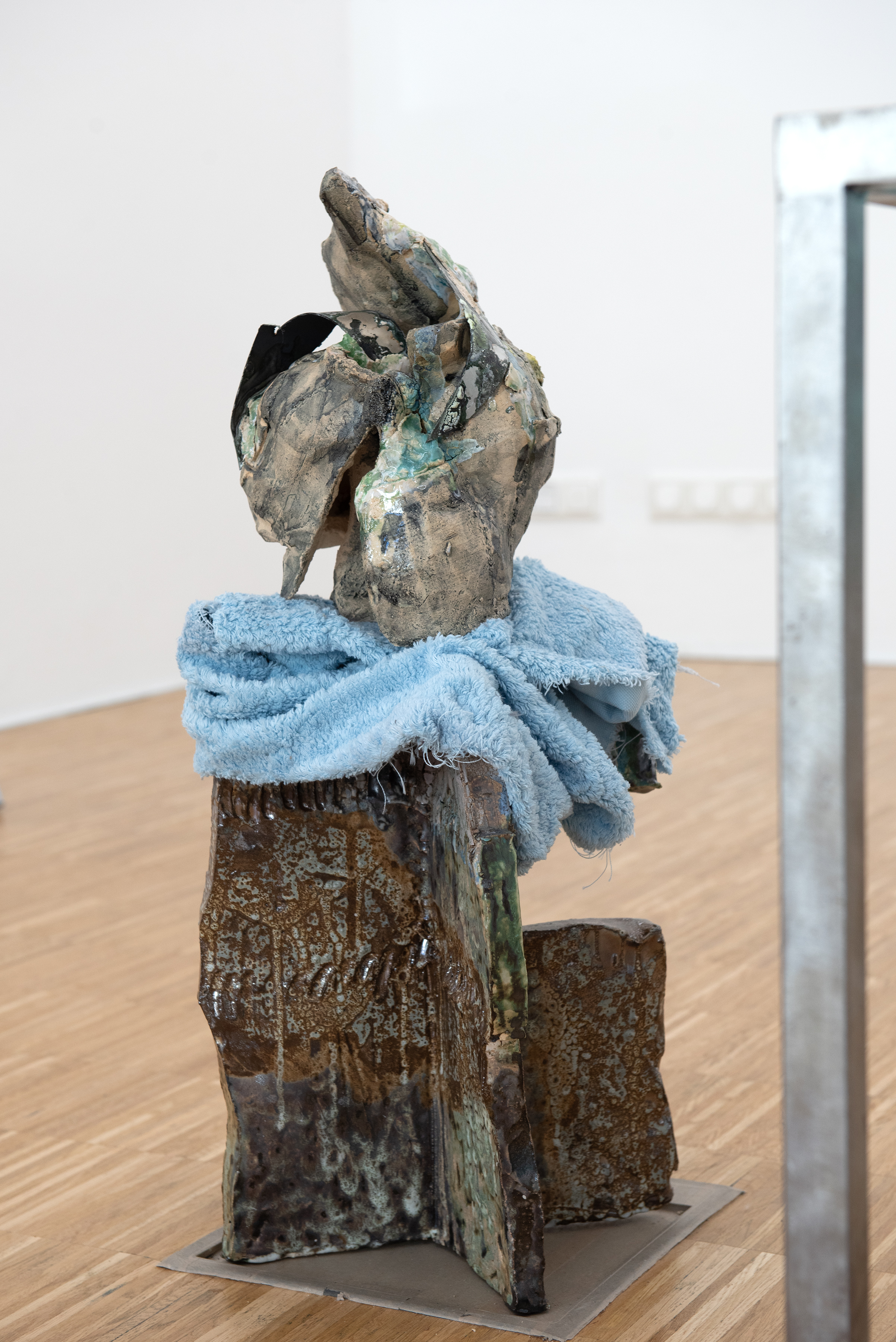
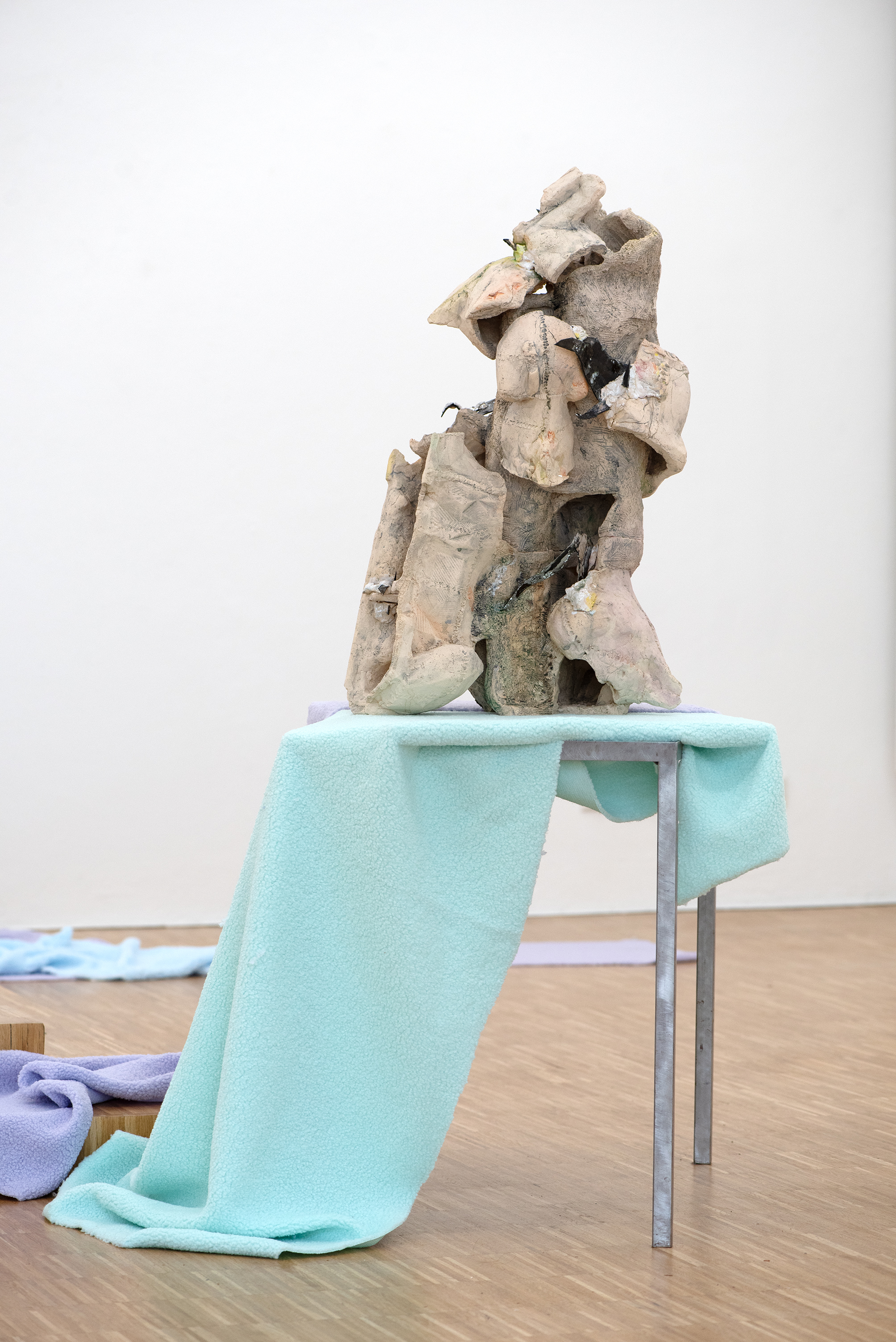
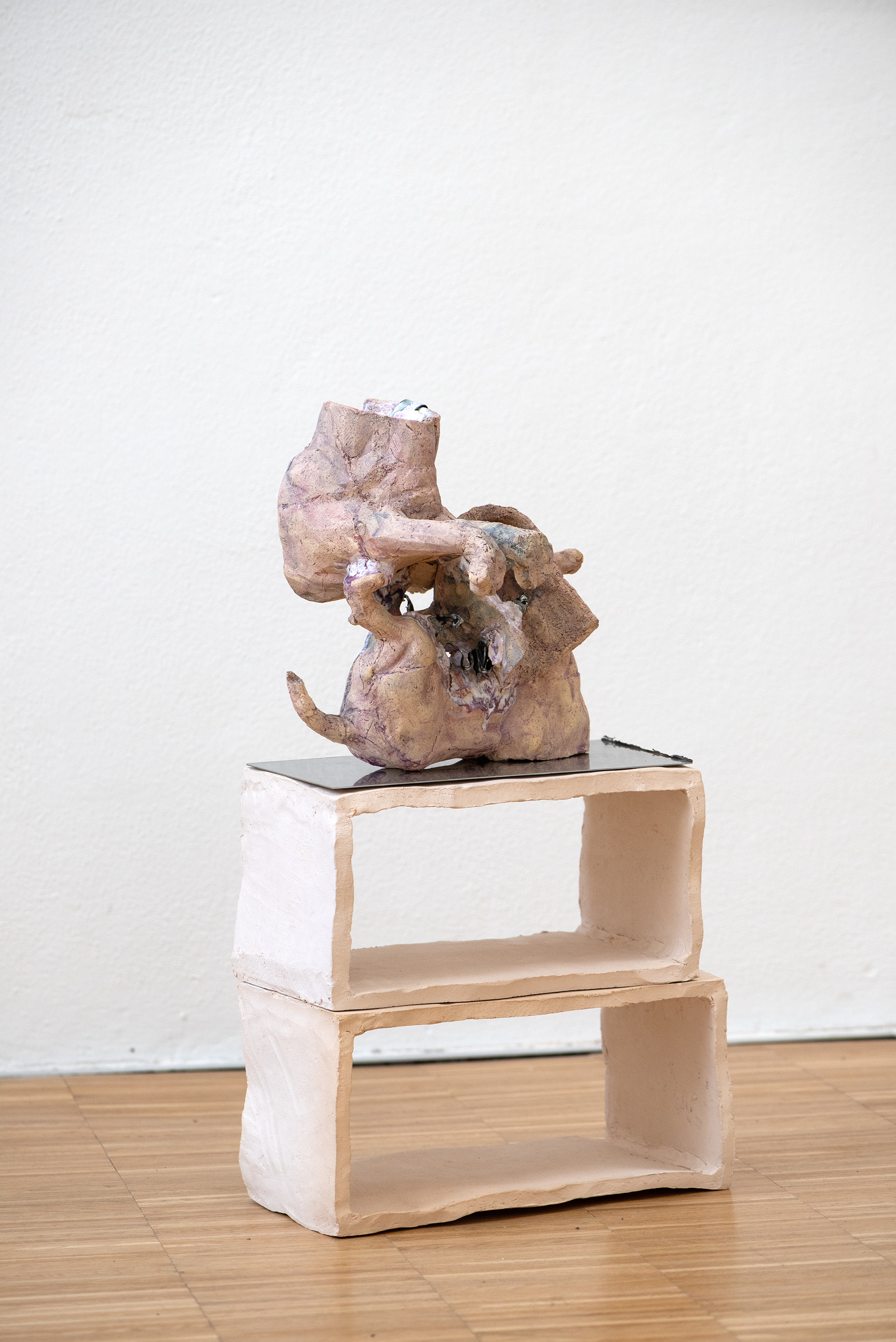
Julia Klemm, A chimera is not a pet 2,2025, steel, glaze, ceramic, pigment, 44 x 38 x 74 cm,
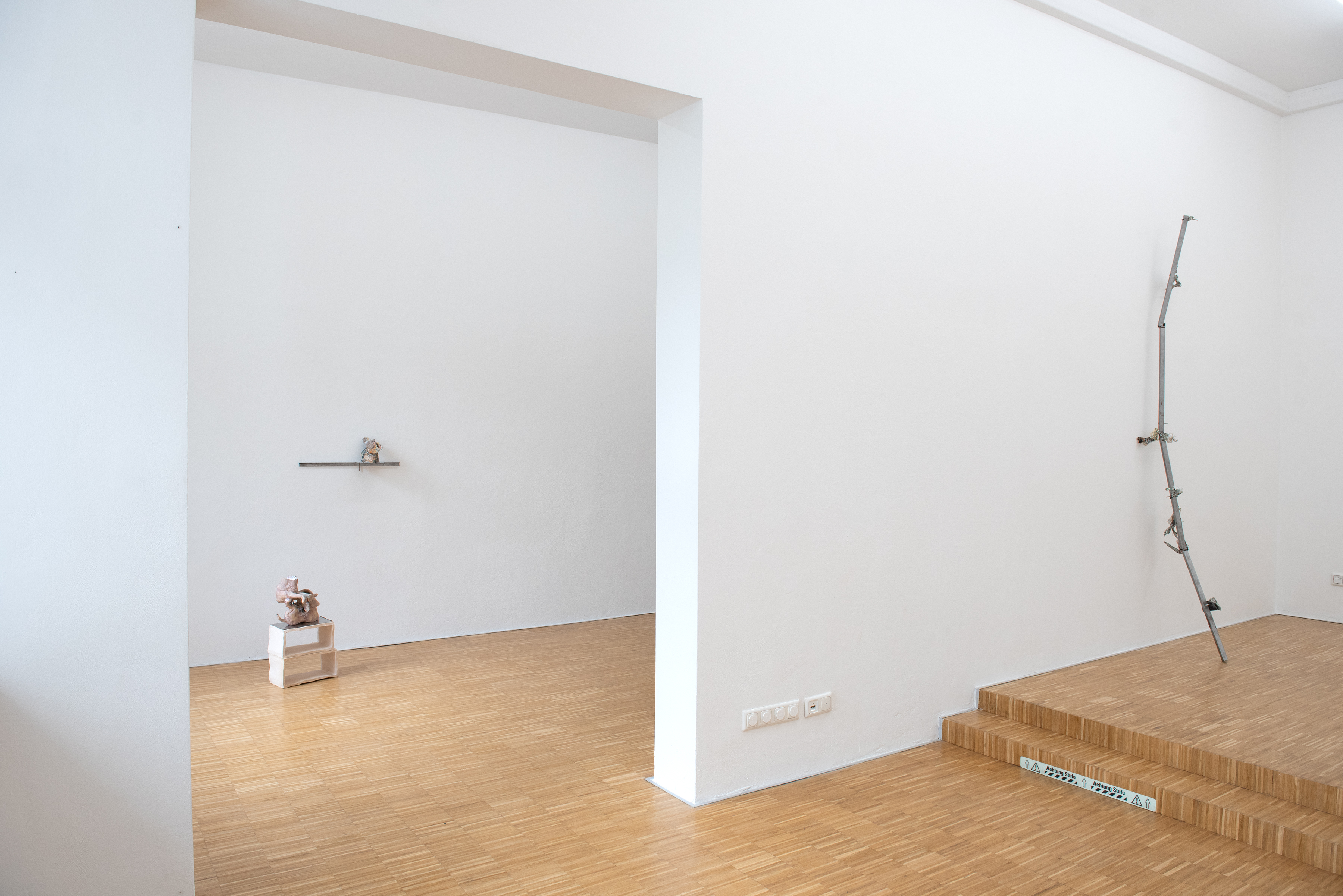
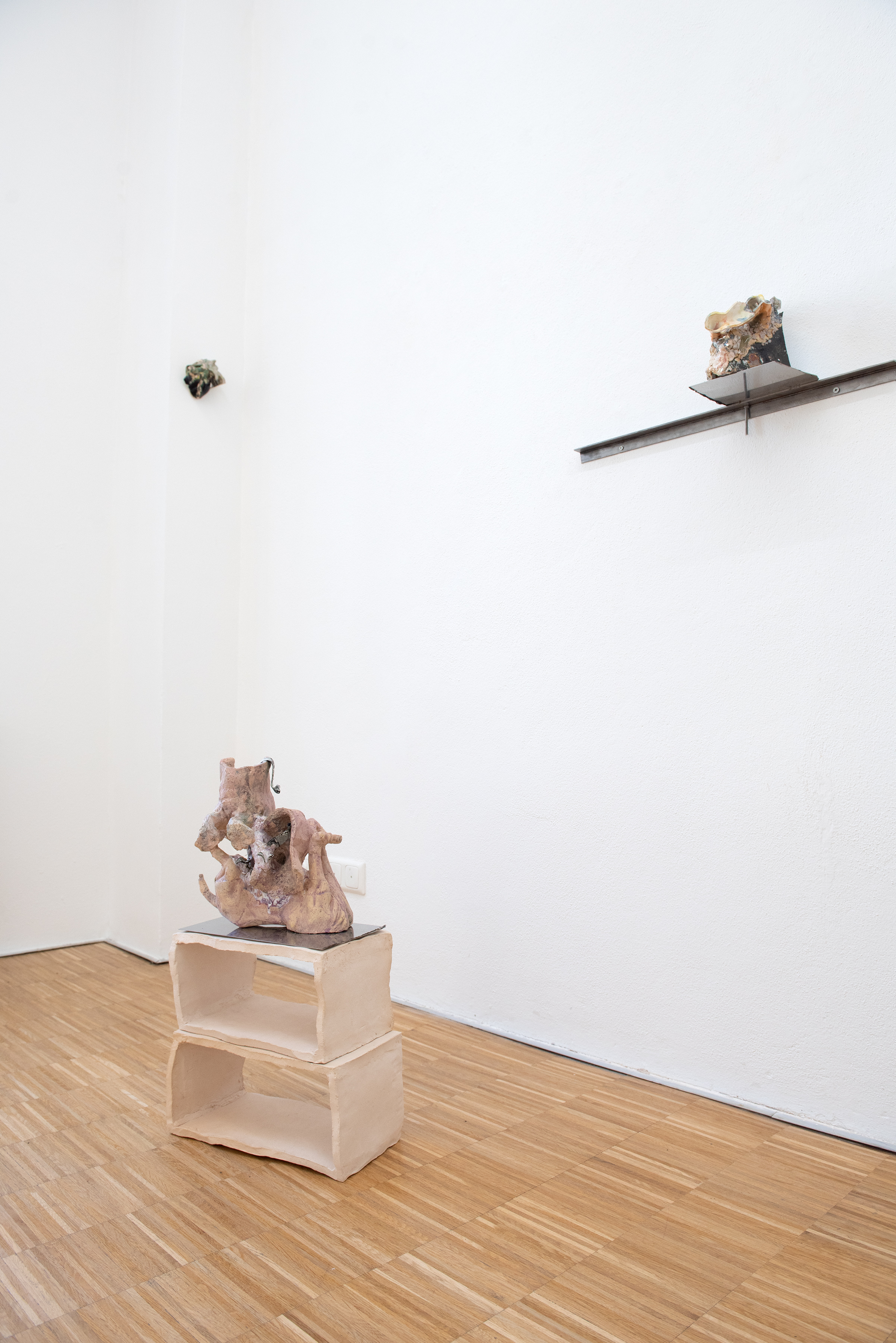
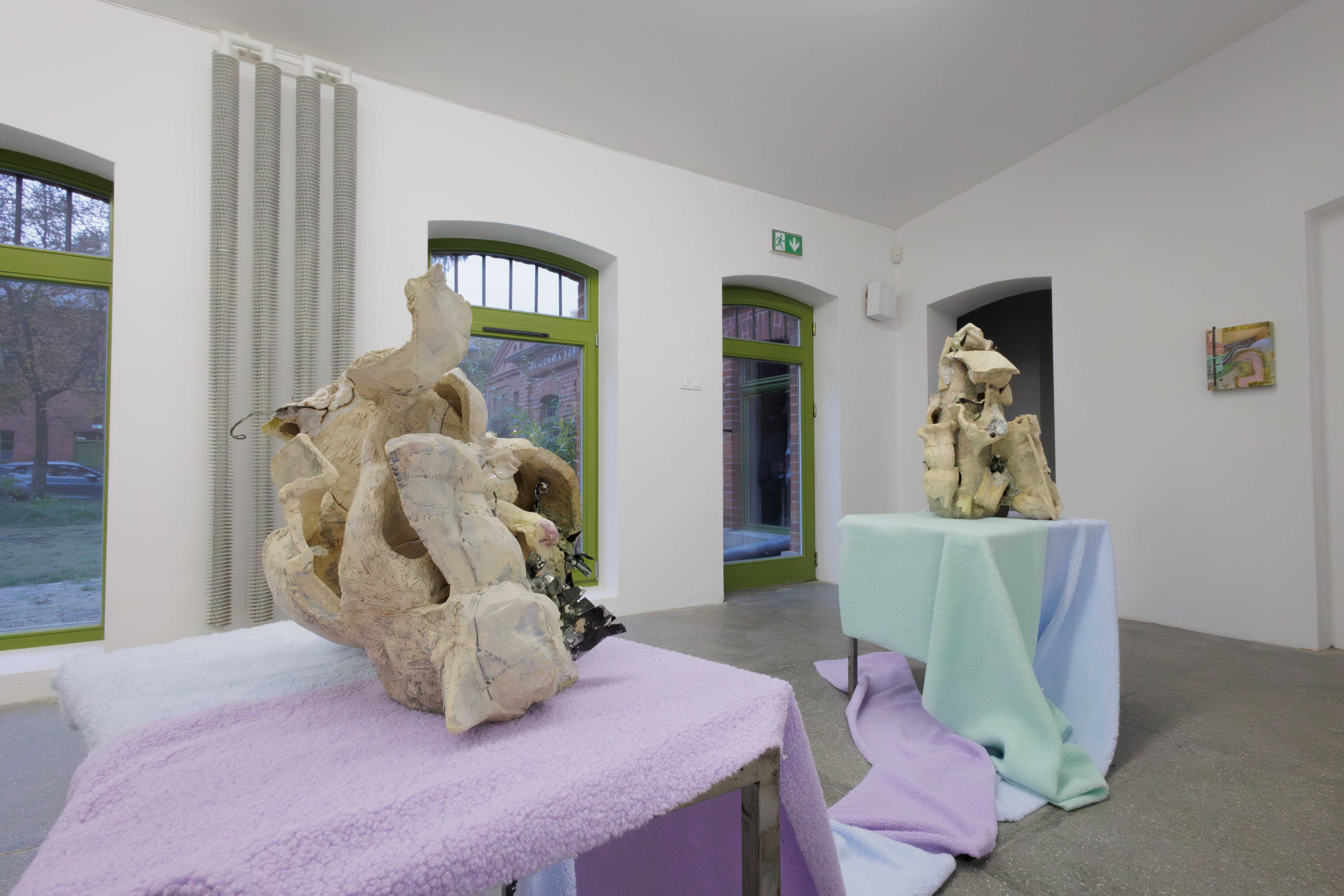
Animal Elegance, installation view (Jonathan Penca, Colonna Sonora, 2025, acrylic and
gouache paint, acrylic resin, biro, pencil, gesso and ink on wood. 31 x 24 x 5 cm; Julia Klemm, A chimera is not a pet 2,2025, steel, glaze, ceramic, pigment, 44 x 38 x 74 cm,; Julia Klemm, A chimera is not a pet 3 , 2025, steel, glaze, ceramic, pigment, 46 x 34 x 42 cm)
Jonathan Penca, Colonna Sonora, 2025, acrylic and
gouache paint, acrylic resin, biro, pencil, gesso and ink on wood. 31 x 24 x 5 cm,
Animal Elegance, installation view , 2025
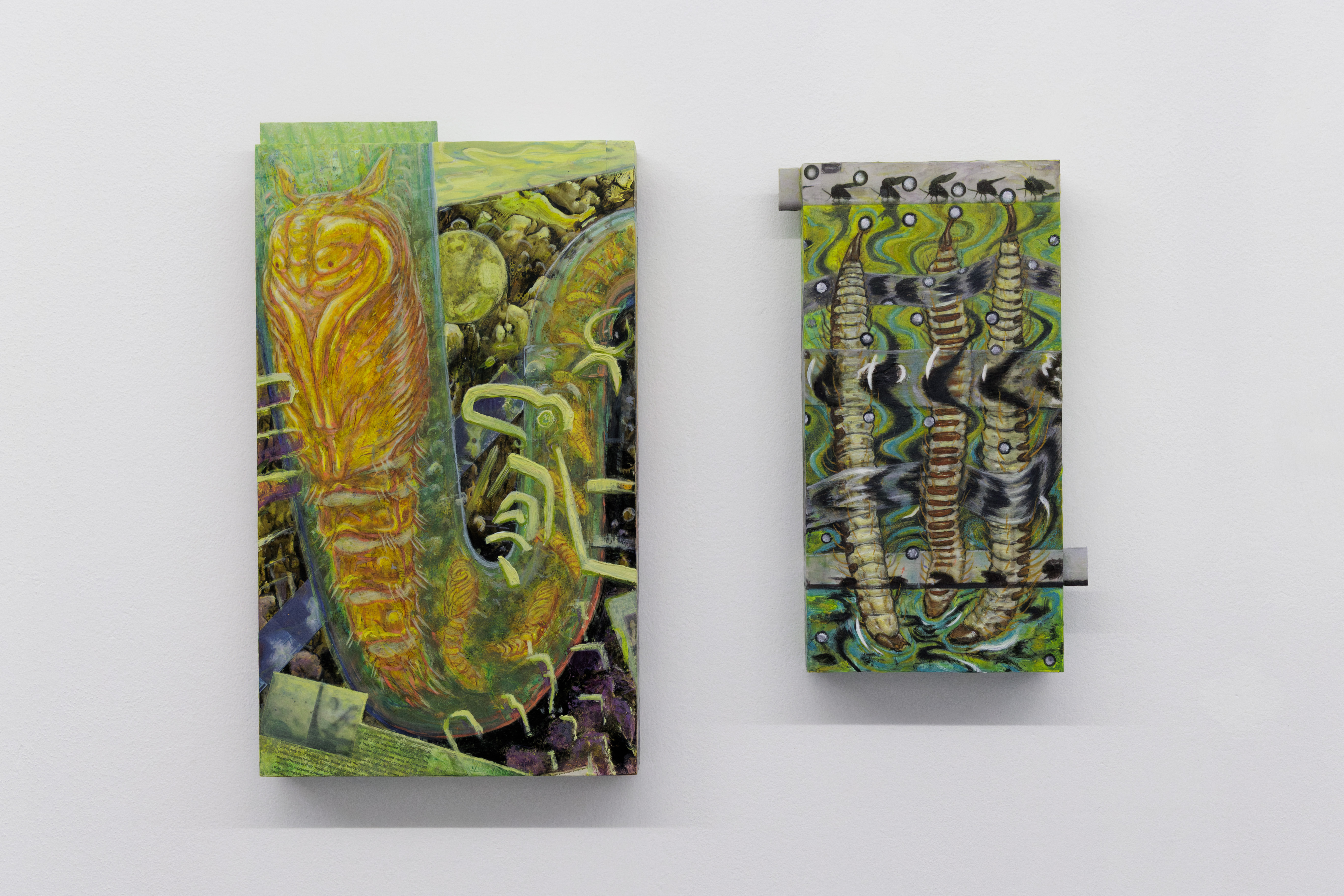
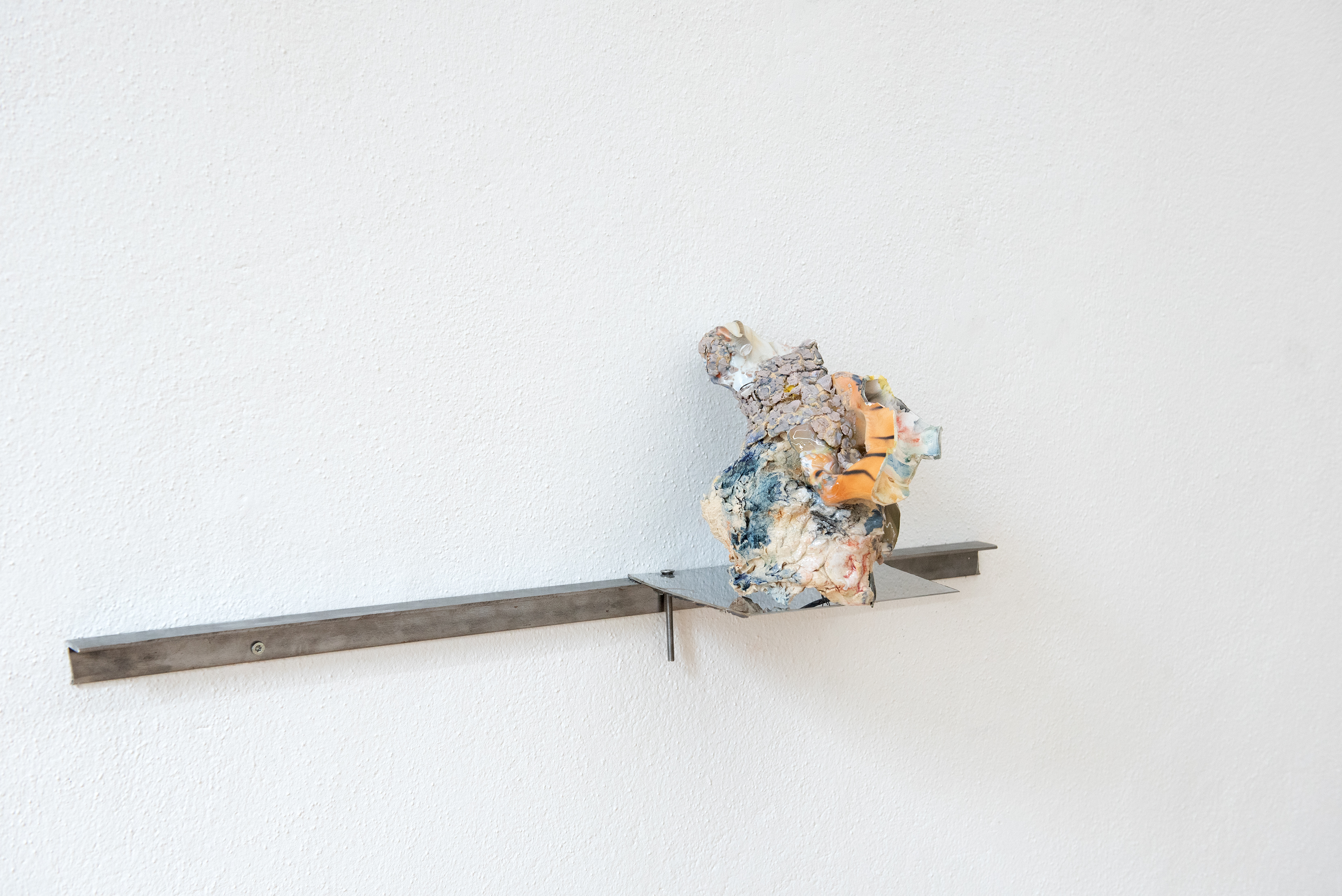
Jonathan Penca, inglers Groove, 2025, gouache, acrylic, watercolour, acrylic resin, pencil, gesso, ink and paper on wood, 52 x 30 x 5 cm; Jonathan Penca, Tufty Sequence, 2025, gouache, acrylic, acrylic resin, biro, gesso, ink and paper on wood, 40 x 19 x 5 cm)
Animal Elegance, 2025, installation view

Julia Klemm, Transcending territories, 2024, glaze, ceramic, pigment, 32 x 30 x 48 cm
Animal Elegance, 2025, installation view
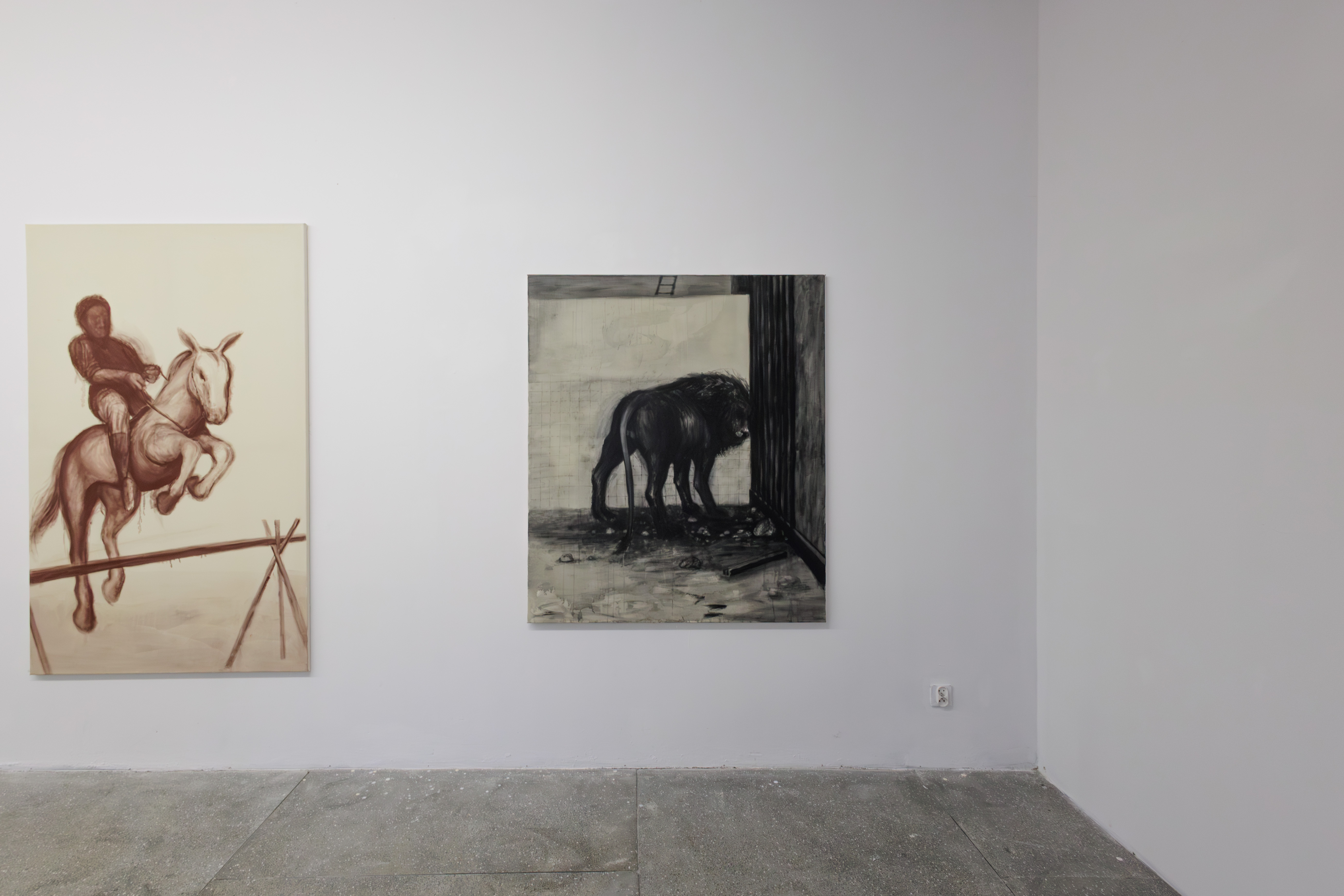
Jakob Gilg, Alignment, 2025, pigment and acrylic medium on canvas, 180 x 110 cm; Jakob Gilg, Virgo, 2025, pigment and acrylic medium on canvas, 140 x 120 cm)
Jonathan Penca, Clogmia, 2025, gouache, acrylic resin, gesso, ink, makeup powder and paper on wood, 44 x 30 x 5 cm
Jakob Gilg, I’m sorry, 2024, pigment and acrylic medium on canvas, 25o x 200 cm; Jakob Gilg, Kindling, 2025, pigment and acrylic medium on canvas, 70 x 50 cm
Jakob Gilg, Kindling, 2025, pigment and acrylic medium on canvas, 70 x 50 cm
Animal Elegance, 2025, installation view
Anka Helfertova, To be in a time of war ( I keep changing my address but war never loses my scent) 2025, bricks, stone, MDF board, silicon, pigment, ceramic, 55 x 120 x 77 cm and 40 x 30 x 30 cm
Animal Elegance, 2025, installation view

There is a fascist, who lives in my head, and he has been there for a while. I speak to him almost everyday about different things, mainly things I see in the news or read about online, but sometimes also about art. Recently I was telling him about the fish, Kluzinger’s wrasse, which reminded me of a passage I read in “A Thousand Plateaus” by Deleuze and Guattari. They ascribe to a tropical fish an animal elegance, because of the way it uses its colourful design to blend in with its surroundings. The lines of the design are abstract and yet have the capacity to construct an entire underwater world. 

Look, I tell him, we think we know what a fish is, the way you think you know what a dog or horse or lion is, an animal, a species, a type. Certainly your lot has made enough statues and animal monuments – porcelain shepherd dog figurines graced your tables. A fish lives in water and like all other fish has scales, fins and gills.  We can compare this fish to another and note down the similarities of their characteristics, in order to classify them, genus: Thalassoma, family: Labridae. You think we know what kind of an animal a fish is. There it is. Put it in an aquarium. 

Ah, I say, but can we see the animal Deleuze and Guattari describe as possessing an English kind of elegance? With a refinement that does not seek attention, but that remains quietly unobtrusive?  This involves the appreciation of the small and the detailed, like those drain moths found in Jonathan Penca’s paintings, charming us with their fuzzy faces and furry wings. More than that, unobtrusiveness requires an effort. To go through life unnoticed is not easy and drain moths have a life cycle with four stages, larvae feeding on toilet sludge before developing into pupae. 

There are animals we see and animals we do not. The animals we do see, we organise and use, tame and breed. We control them as meticulously as Eadweard Muybridge did, when he set up multiple cameras to capture the image of the horse in motion or a lion in a cage, the starting point of Jakob Gilg’s paintings. We assign animals different roles: you there, you look soft and cuddly, you will be a pet. And you, you over there, so powerful and strong, you we will make into a symbol. Kitsch ceramic cats and scaled-down digital scans of lion monuments tumble, shatter and recombine in Julia Klemm’s work. 

But this animal you don’t see, is something other than a molar entity, a different “affair” as Deleuze and Guattari would say, involving “becoming” not “being.” And it might seem we are meant to think this becoming morphologically, as the becoming of something else, a change from one permanent state to another, equally permanent one. A human could become a cat perhaps – or a cat, a human – as in the work of Anka Helfertova. Violence swirls around and we try to find our peace, not to lose ourselves within. To think becoming is to think loss, the elimination of all of our complaints, demands, unsatisfied desires, “everything that roots us in ourselves,” so that at the end, we are left with nothing, which is also everything. Becoming-animal is always a becoming-imperceptible, a shrinking best found in science fiction novels, the shrinking man becoming smaller and smaller without ever disappearing. Because when animals are thought in their becoming, the molecular comes into play, those invisible abstract forces that in their millions of interactions are actually responsible for constituting a world. To think an animal in its becoming is to engage with these molecular forces at work.

This is the demand elegance places on us: to think less of ourselves and more of the other. It is to be more attuned to our surroundings by paying attention to what continues to constitute us, which is always small and inorganic, indiscernible and impersonal. Elegance is a kind of molecular attention, but with a focus that opens out onto the world. To think things in their becoming molecularly is also to think in terms of the cosmos in its entirety. And then we might indeed stop seeing fish, but we will begin to see everything else.

Magdalena Wiśniowska 2025
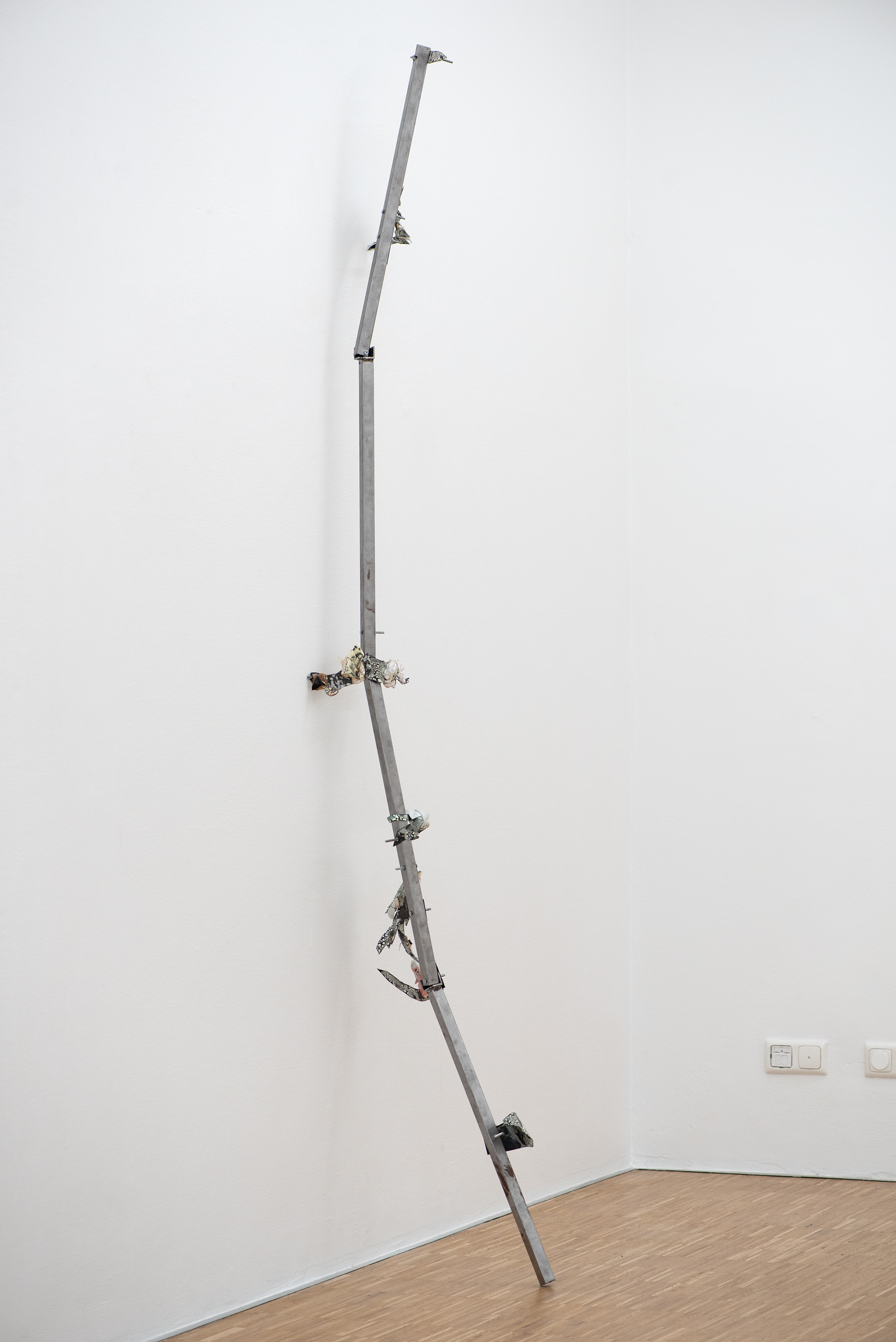
A chimera is not a pet

Julia Klemm

28.06 – 26.07.2025

together with The Tiger Room at Heßstr. 48 b, 80798 Munich

Julia Klemm, A chimera is not a pet, 2025, installation view
Julia Klemm, A chimera is not a pet 3, 2025, steel, glaze, ceramic, pigment, 46 × 34 × 42 cm
Julia Klemm, Evasion, 2025, steel, glaze, ceramic, pigment, cloth, 23 × 23 × 65 cm
Julia Klemm, A chimera is not a pet, 2025, installation view
Julia Klemm, Transcending territories, 2024, glaze, ceramic, pigment, 32 × 30 × 48 cm
Julia Klemm, Julia Klemm, Transcending territories, 2024, glaze, ceramic, pigment, 32 × 30 × 48 cm (detail)
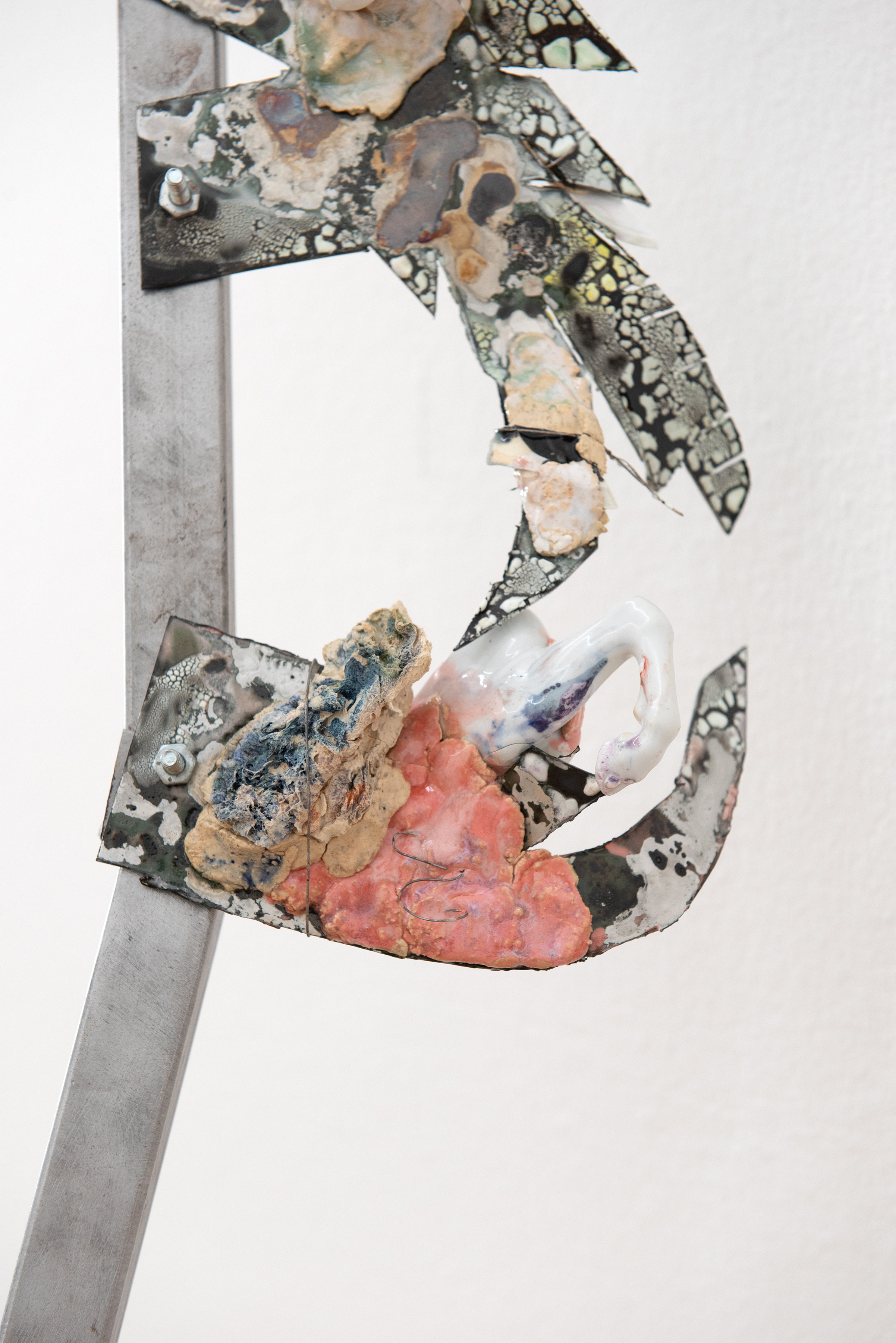
Julia Klemm, A chimera is not a pet 4, 2025, secondhand ceramic figures, steel, glaze, ceramic, screws, 27 × 46 × 260 cm
Julia Klemm, A chimera is not a pet 4, 2025, secondhand ceramic figures, steel, glaze, ceramic, screws, 27 × 46 × 260 cm (detail)
Julia Klemm, A chimera is not a pet, 2025, installation view
Julia Klemm, A chimera is not a pet 2, 2025, steel, glaze, ceramic, pigment, 44 × 38 × 74 cm
Julia Klemm, Untitled, 2025, secondhand ceramic figures, glaze, ceramic, fired soft toy, chandelier, 12 × 14 × 11 cm
Julia Klemm, A chimera is not a pet, 2025, installation view
Julia Klemm, Double trouble, 2025, ceramic, steel, pigment, glaze, 24 × 34× 60 cm
Julia Klemm, A chimera is not a pet 1, 2025, secondhand ceramic figures, glaze, ceramic, steel, fired soft toy, 15 × 25 × 14,5 cm
Julia Klemm, A chimera is not a pet, 2025, installation view
Julia Klemm, Mimicry, 2025, second ceramic figures, steel, chandelier, glaze, ceramic, 12 × 14 × 8 cm
Julia Klemm, Gryphon, 2025, secondhand ceramic figures, glaze, ceramic, steel, fired soft toy, 18 × 22 × 17cm

The problem I think, is that too often a chimera is seen as a pet. We visualise chimeras as these mythical fire breathing monsters, maybe with a lion’s head, a body of a goat, and a serpent for a tail. Three distinct animals are combined into one, their individual characteristics clearly visible for us to see. In contrast, biologically,a genetic chimera is often invisible, a nightmarish combination of two different sets of DNA, a result of one or more zygotes fusing together during the early stages of prenatal development. How this alien DNA might manifest is not altogether clear, but you hear stories of mothers having different DNA than their children, and the DNA from semen and saliva not matching in rape tests. To look for distinctions in chimeras would be the first step towards their domestication, treating the hybrid animal as another family member, a pet. But you cannot cuddle the long lost twin you might be carrying with you, inside.

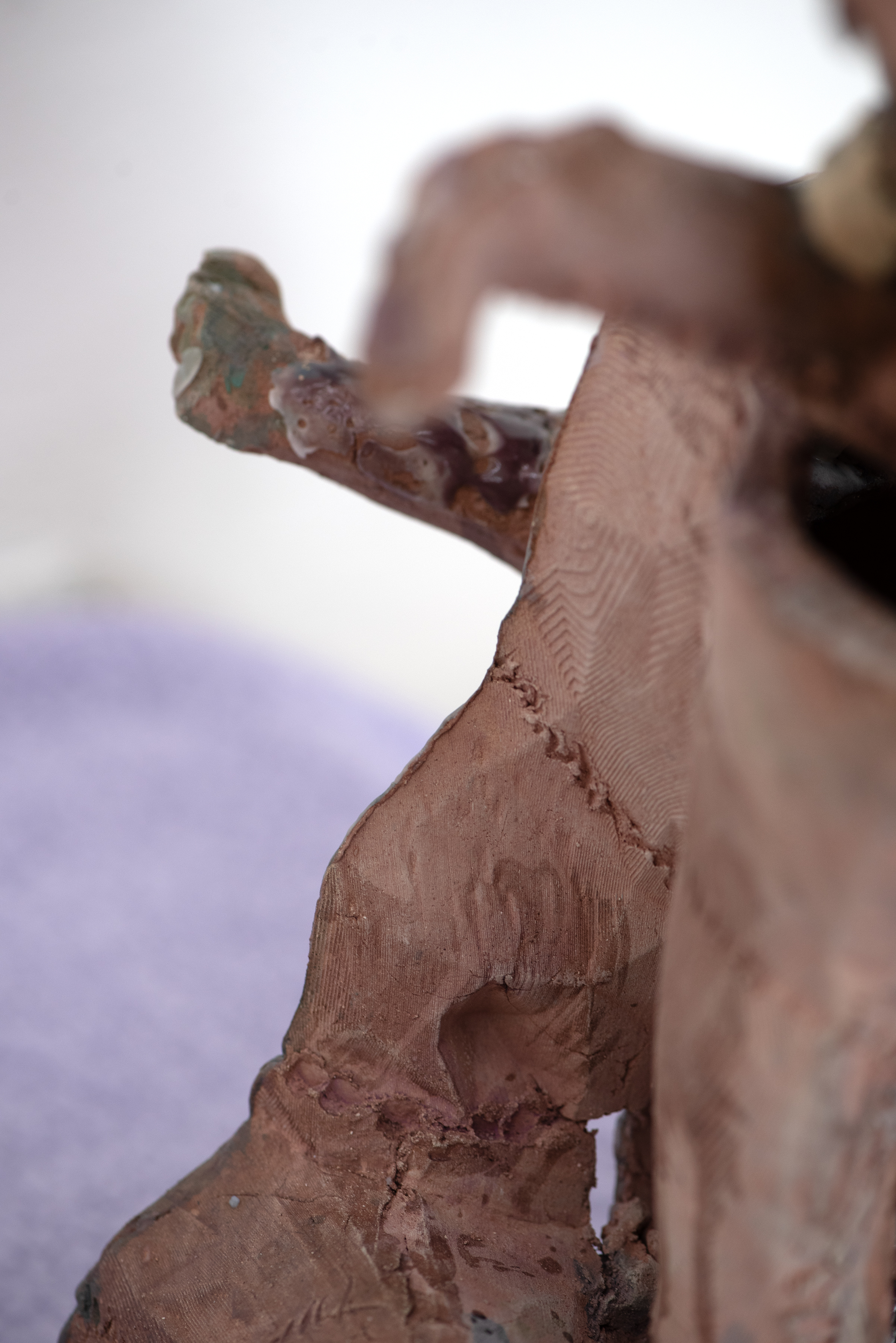
Julia Klemm’s ceramic work often involves a combination of several smaller ceramic pieces, each with their own specific animal DNA. Sometimes these are readymade figurines of cats, lions or horses, glossy and kitsch, inhabitants of Flohmärkte and Omas’ living rooms. At other times, these are recreations of existing public art, of lion statues such as those found on Odeonsplatz, scanned, scaled down and then modelled with a 3D-printed negative mould. Rarely, an animal-type structure is moulded in clay by Julia on the spot, traces of fur scratched with a serrated scraper onto its surface. These smaller animal ceramics are first broken, smashed into almost unrecognisable fragments before they are combined, their intertwining made permanent by the heat of the ceramic oven. I look for these fragments as I walk around the work and try to classify them: look, here are some lion’s legs, and here, a cat’s head, but upside down and half-broken, so that I can see the form inside and outside. Focussing on the surface helps, as I detect the glossy spots of a panther or the layer lines of the 3D printer.

In doing so, I am looking for a pet, with fur strokable like a pastel-coloured soft toy. I try to make the strange shapes of Julia Klemm’s work once again familiar to me. But their outward appearance is a result of a logic that remains hidden. The work demands I see it as a multiplicity, which means in animal terms, as a population. And science teaches us that a population is not a fixed set of individuals of the same species, but an always evolving, interacting mass that changes in relation to its location and environment. The alliances made in a population are not just of the filial kind between individual members of the group, but those made with other groups, other animals, with plants, and with geography.  To see the inner workings of the animal in Julia Klemm’s ceramics, I need to step away from the animal and take a more expansive view, one that acknowledges population change forged by mutation. It is very alien to see the world in this way, as foreign and as violent as the shards of steel that interpenetrate the work, both holding it together and ripping it apart. 

Magdalena Wiśniowska 2025

ROBOTA CeLLs

Susanne Kühn

07.09. – 12.11.2023

Lothringer 13 Studio, Lothringer Str. 13, 81667 München

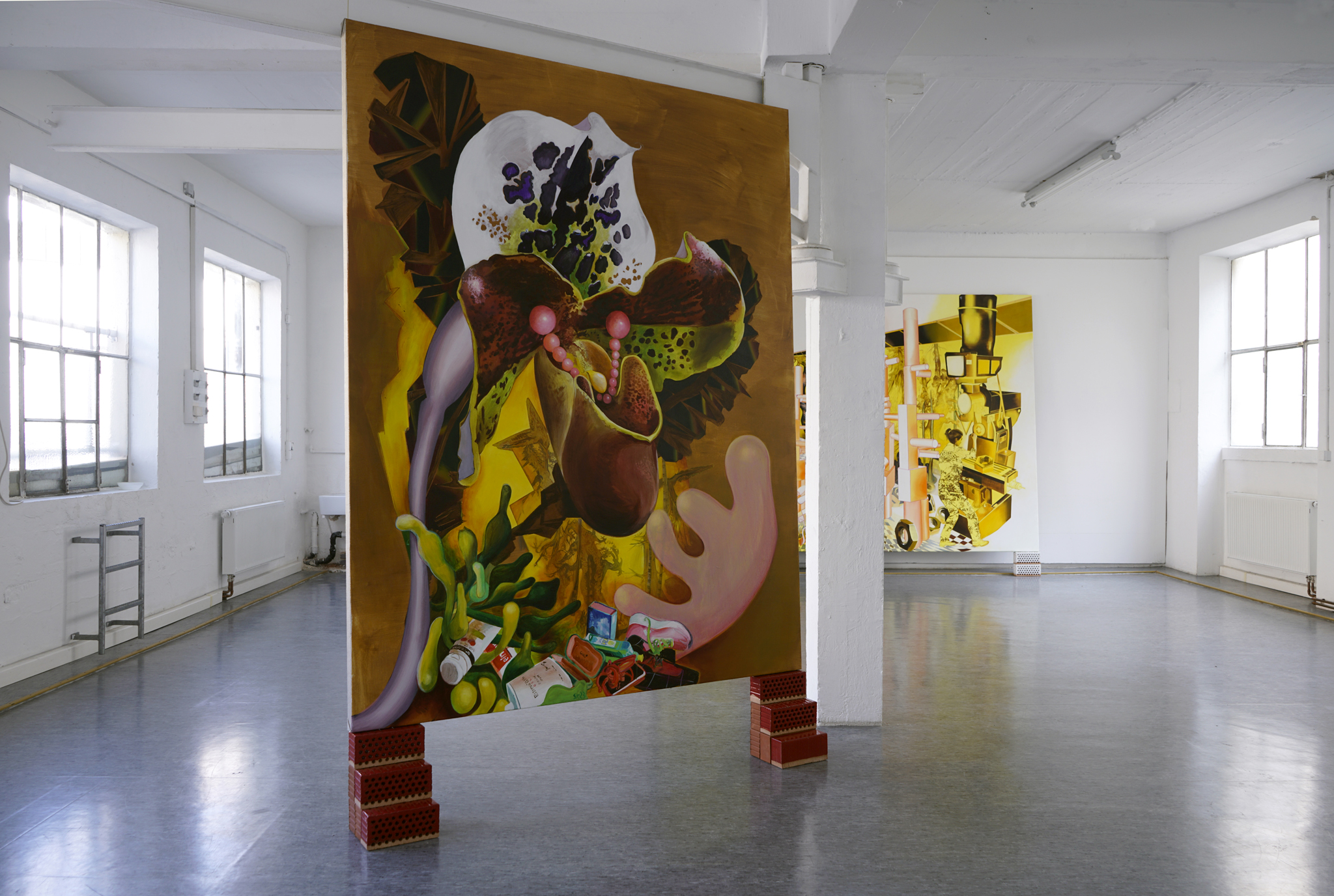
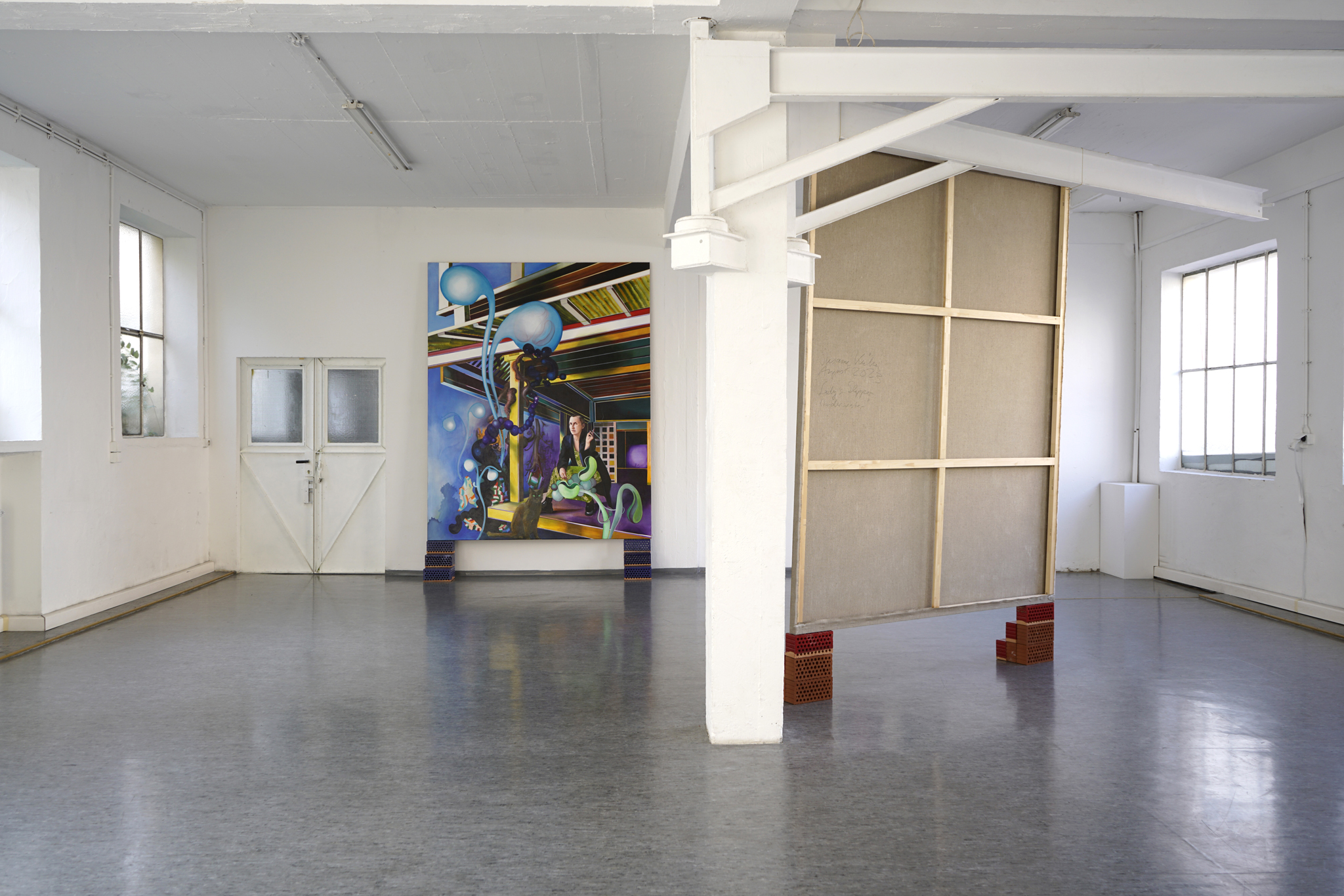
Susanne Kühn, Lady’s Slipper, 2023, 240 x 190 cm, acrylics on canvas
Photo credit: Bernhard Strauss
Susanne Kühn, Lady’s Slipper, 2023, 240 x 190 cm, acrylics on canvas, installation view
Susanne Kühn, ROBOTA CeLLs, 2023, installation view
Susanne Kühn, ROBOTA I, 2018, acrylics on canvas, glazed bricks, 250 x 380 cm (two parts)
Photo: Bernhard Strauss
Susanne Kühn, ROBOTA I, 2018, acrylics on canvas, glazed bricks, 250 x 380 cm (two parts) installation view
Susanne Kühn, ROBOTA CeLLs, 2023, installation view
Susanne Kühn, AUGINELLA from the series Her name is Amygadala Vertigo, 2022, acrylics on canvas, glazed bricks, 250 x 200 cm
Photo: Bernhard Strauss
Susanne Kühn, AUGINELLA from the series Her name is Amygadala Vertigo, 2022, acrylics on canvas, glazed bricks, 250 x 200 cm (detail)
Susanne Kühn, ROBOTA CeLLS, 2023, installation view
. Susanne Kühn, Auturio, 2023, acrylics on board, 50 x 40 cm and  Nierchen, 2023, acrylics on board, 50 x 40 cm
Susanne Kühn, Auturio, 2023, acrylics on board, 50 x 40 cm
Photo: Bernhard Strauss
Susanne Kühn, Nierchen, 2023, acrylics on board, 50 x 40 cm
Photo: Bernhard Strauss

It begins with the amoeba, like the one we drew at school: flower-like, dotted with vacuoles, a circular nucleus in the middle.  An amoeba, despite not having a brain, a nervous system or indeed any kind of sensory cells, can react. It moves around the murky pond water that makes up its environment, finding food, avoiding predators, anticipating, reacting. It has no need for organs. Organs developed later, in the course of evolution, as a means fulfilling functions to a higher degree. An organism with a brain, can think better than an organism without one.

French philosopher Raymond Ruyer considers all organs to be technical artefacts, technologies developed by the organism as it evolved. By having a brain and a nervous system, we have access to technologies an amoeba doesn’t have and this makes us feel sophisticated. We can make complex decisions, solve problems and form concepts, leaving murky pond water behind.

Like in Susanne Kühn’s paintings, there is no line between the artificial and the nature. If the organ is a technical artefact, it does not differ from the other artefacts, those tools and machines that we surround ourselves with. The organ belongs to an internal proto-technicity, while the machine is the externalised projection of the organ. Each also has its own evolutionary trajectory, one internal, the other external, an exo-darwinism.

In the painting “Robota I” we see the artist in three different guises: as St. Barbara reading, as a young woman in East Germany working, and as a mother tending the fireplace. Three technologies are depicted here, all extensions of the body. There is the book, the pool of knowledge, acting as an extension of the brain. Tools and machines such as found in a factory are extensions of the human hand. Fire, to keep us warm and to heat up food, is the most primitive of technologies, an extension of our thermoregulation and digestive system. Working with these technologies makes up the life of the artist.

Similarly, the biological has a technological aspect in “Her name is Amygdala Vertigo.” The reference is to the amygdalae, two bean-shaped clusters of deep within the cerebrum of the brain, which we learn are responsible for memory, decision making and emotional response. Diagrammatically, they look like the EarPods which seem to sprout out of the picture frame, softly-curved and convex. They are surrounded by the sharp, multicoloured concave curves of the hand ax, one of the first man-made tools. The portrait is of an extended body, spread over various technologies depicted on the canvas.Foremost, Susanne Kühn is interested in those moments in which the forward pushing trajectory of evolution and technological development foams up in bubbles of effervescence. Her painting is not of lines which separate, marked by horizontal and vertical coordinates – the sharp perspective she often uses, stutters quickly in her work. Hers are lines without connecting points.

“Frauenschuh – Lady’s slipper” is a self-portrait, the mess of detritus standing in for the technologically extended body: we see a smartphone, medication for the menopause, a sneaker, toothpaste. The flower itself is a cultivated hybrid, its natural evolution determined by man. In this work, the extended body of man, is also a body outside of the dictates of evolution, a “deterritorialised” body no longer adapted to any particular environment. A “deterritorialised” hand is nothing more than a useless pink cartoon blob. It ends with the amoeba in the pond, the water now an acid yellow, surrounded by toxic corals and water plants.

Magdalena Wisniowska 2023