Before your eyes open

Laura Hinrichsmeyer, Luisa Kasalicky, Andrea Zabric

15.05 – 04.07.2026

together with The Tiger Room at Heßstr. 48 b, 80798 Munich
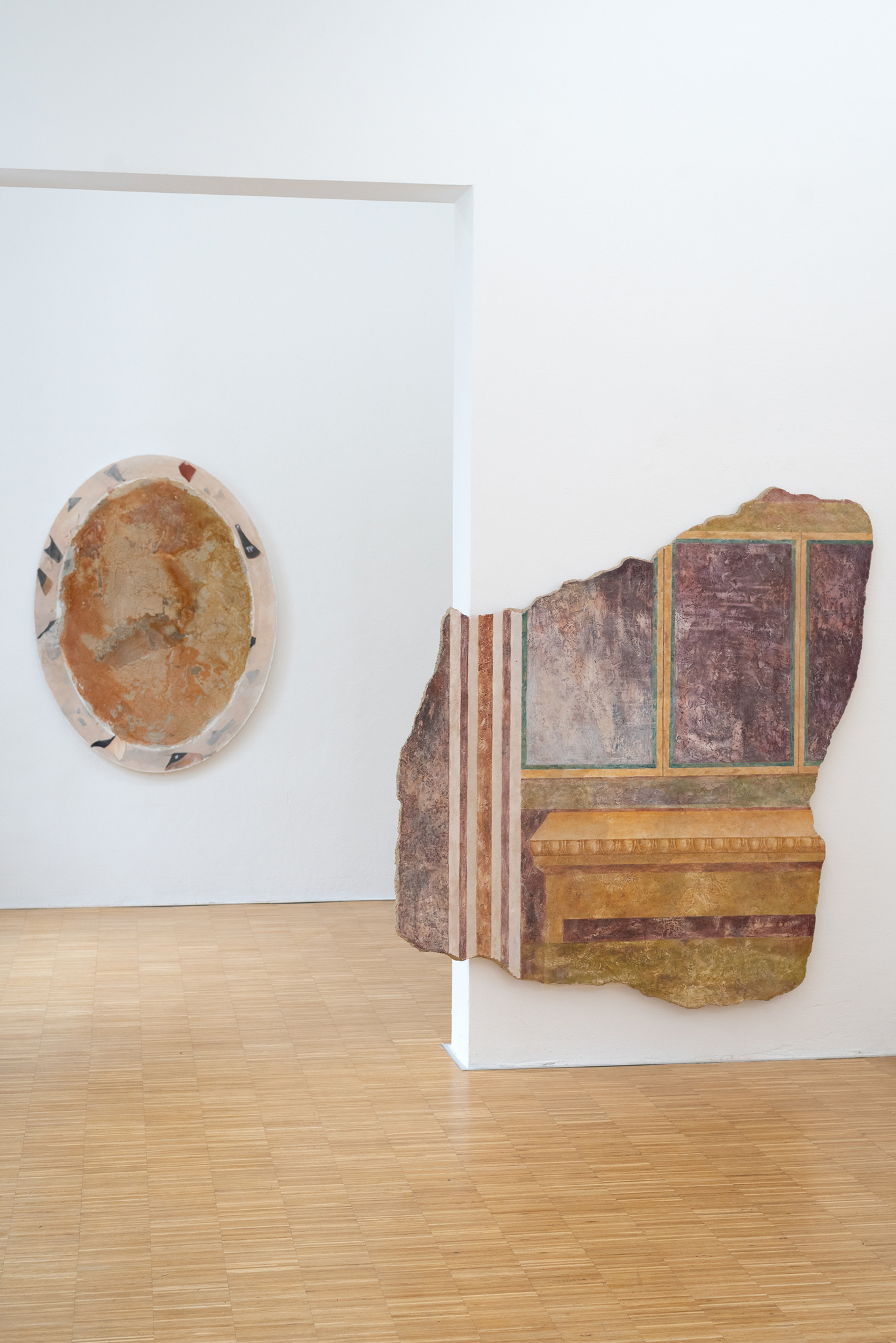
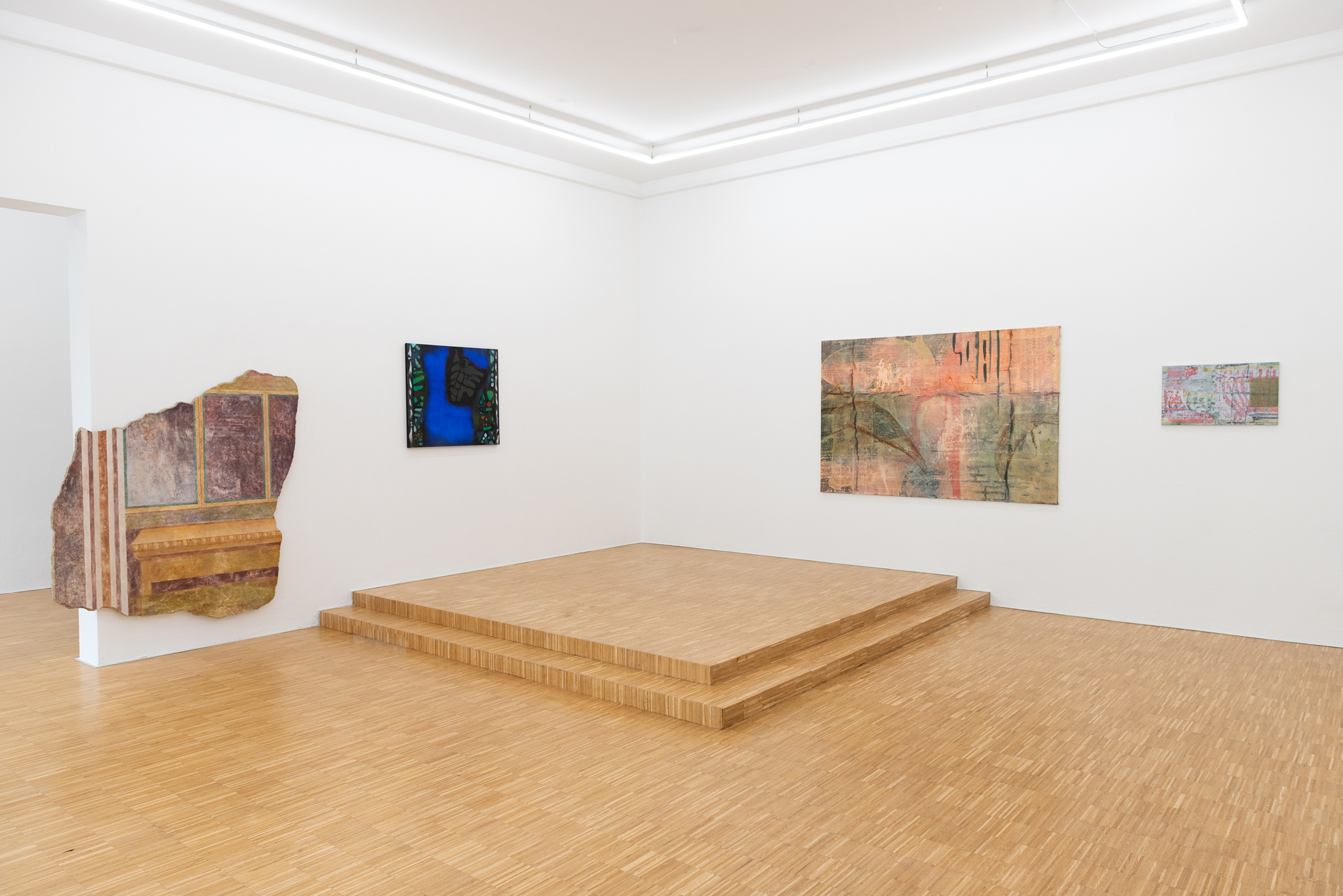
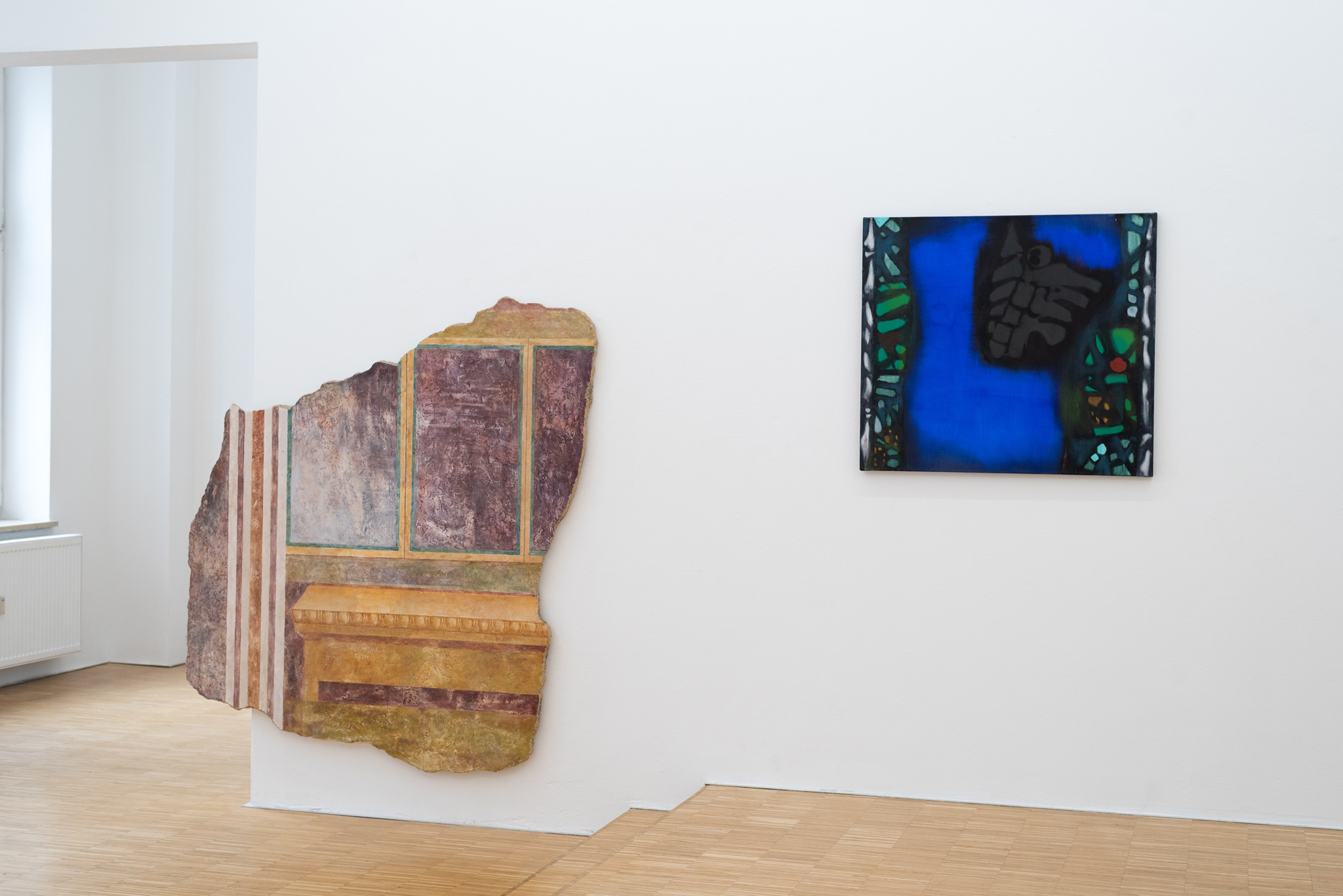
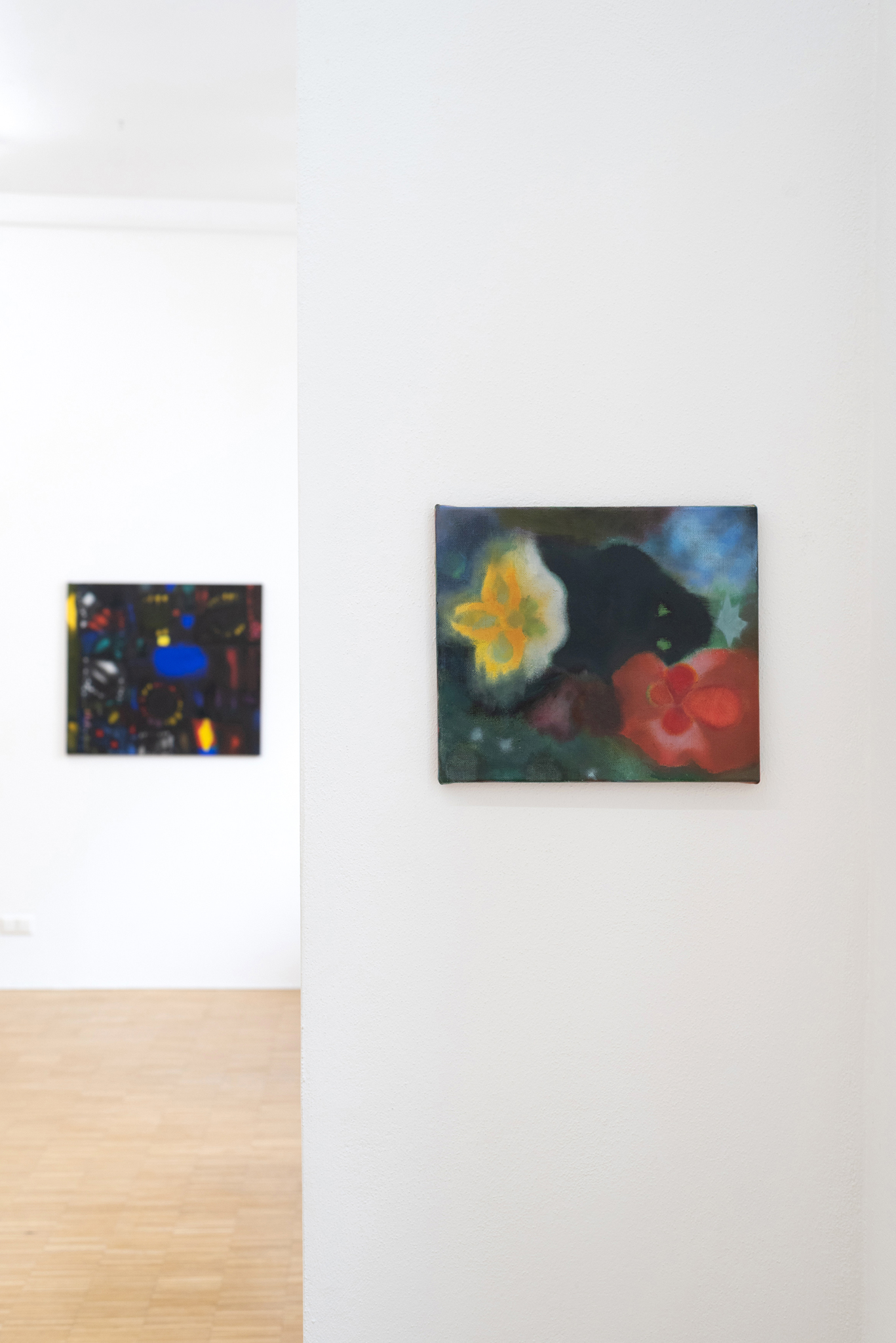
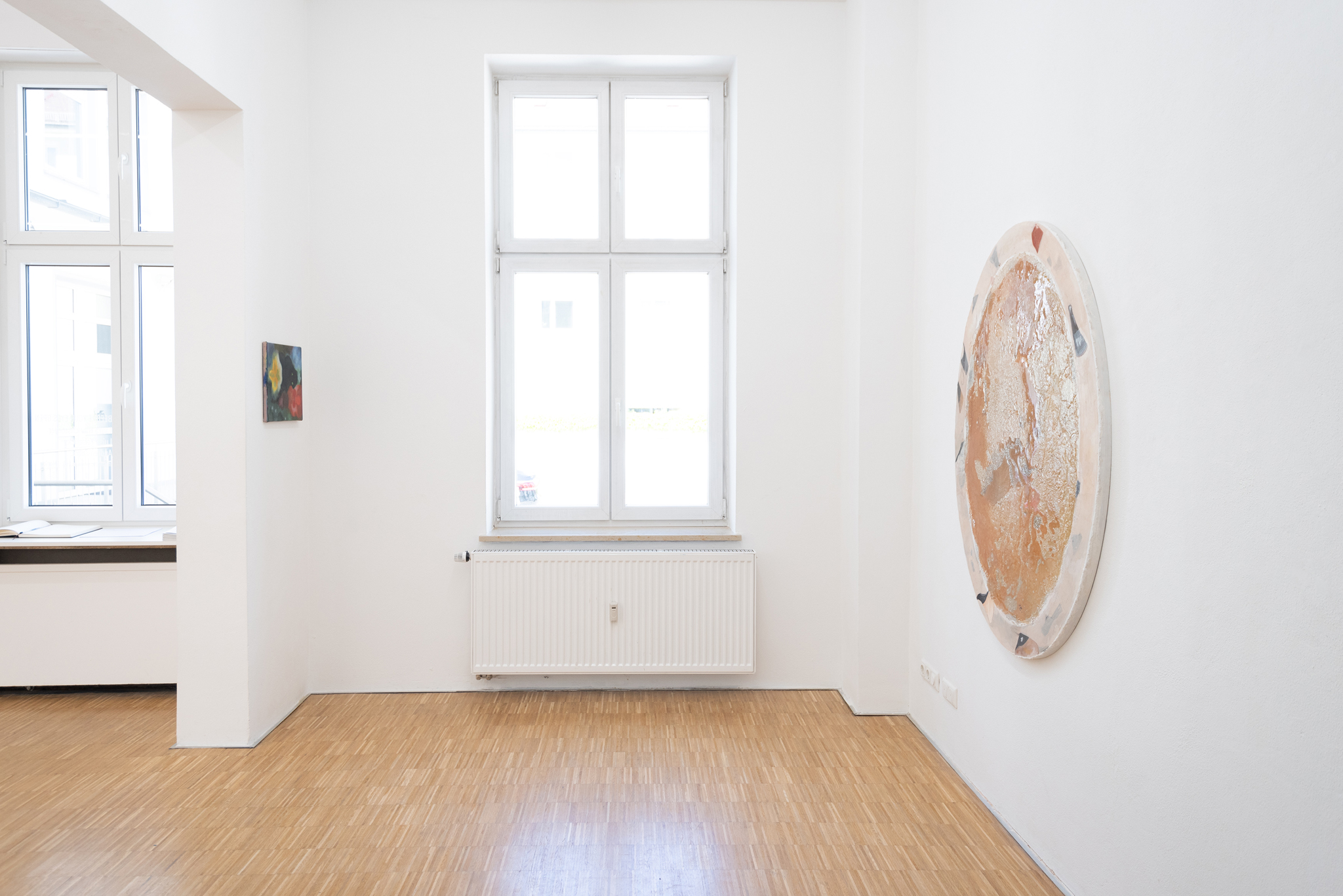
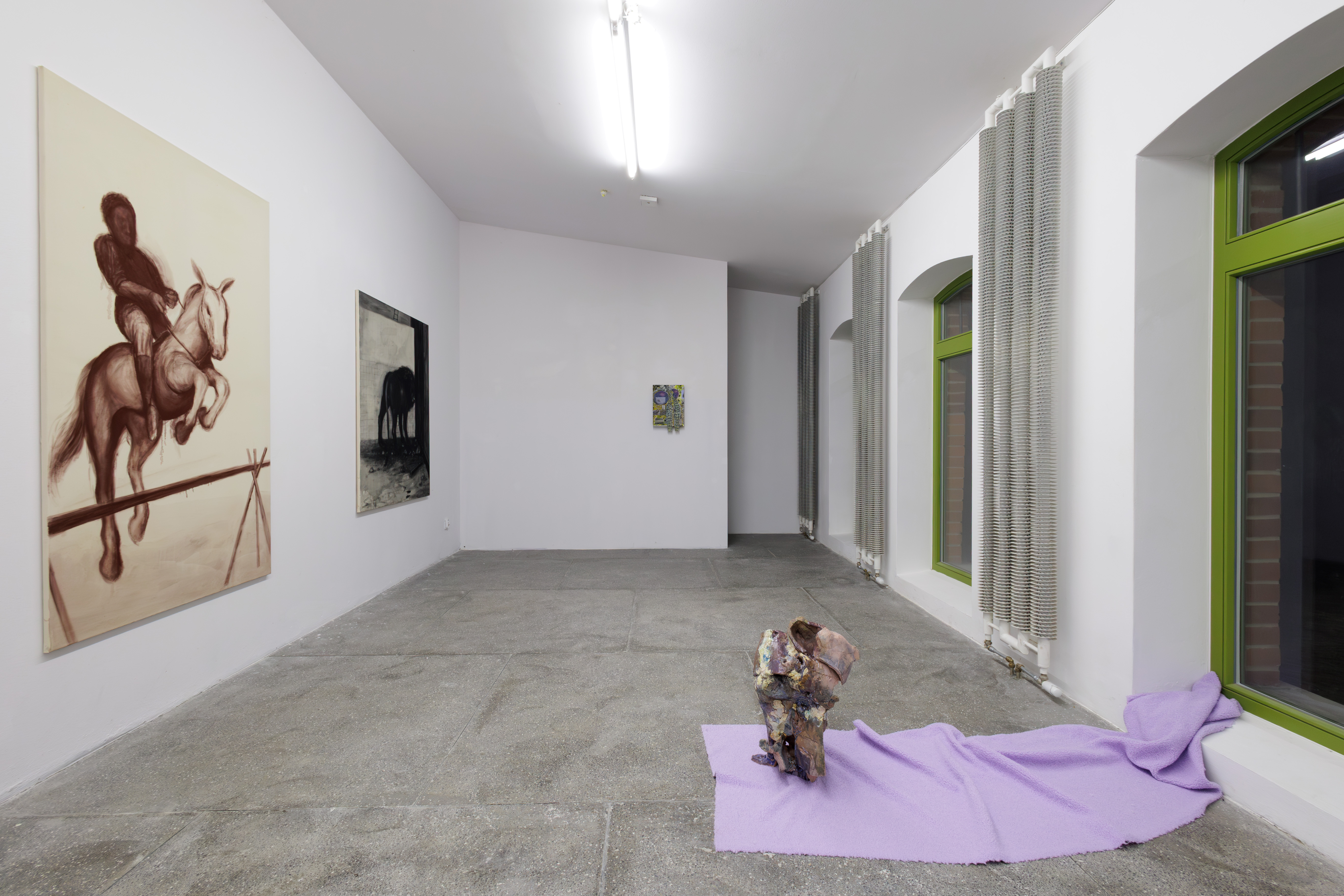
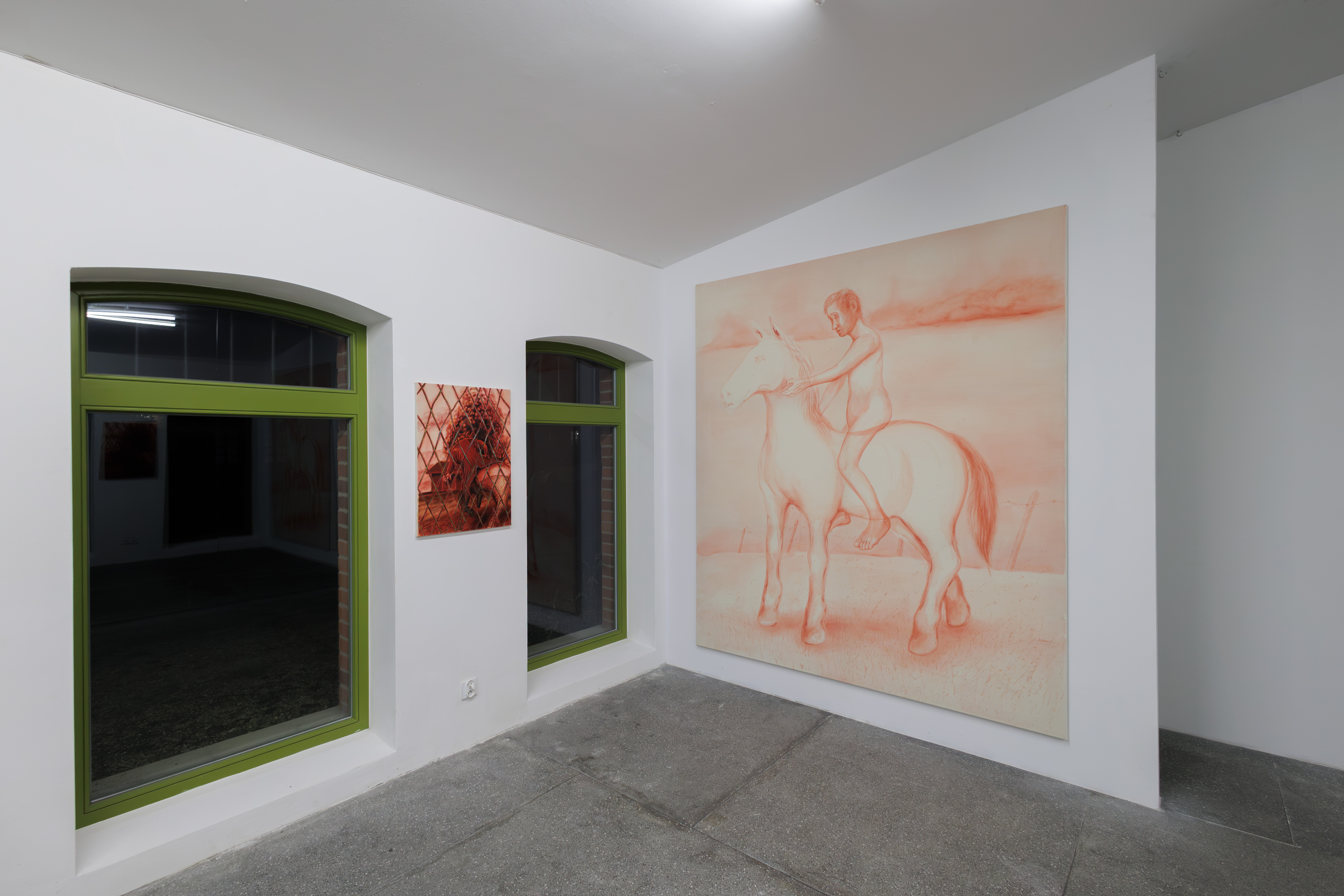
Before your eyes open, 2026, installation view
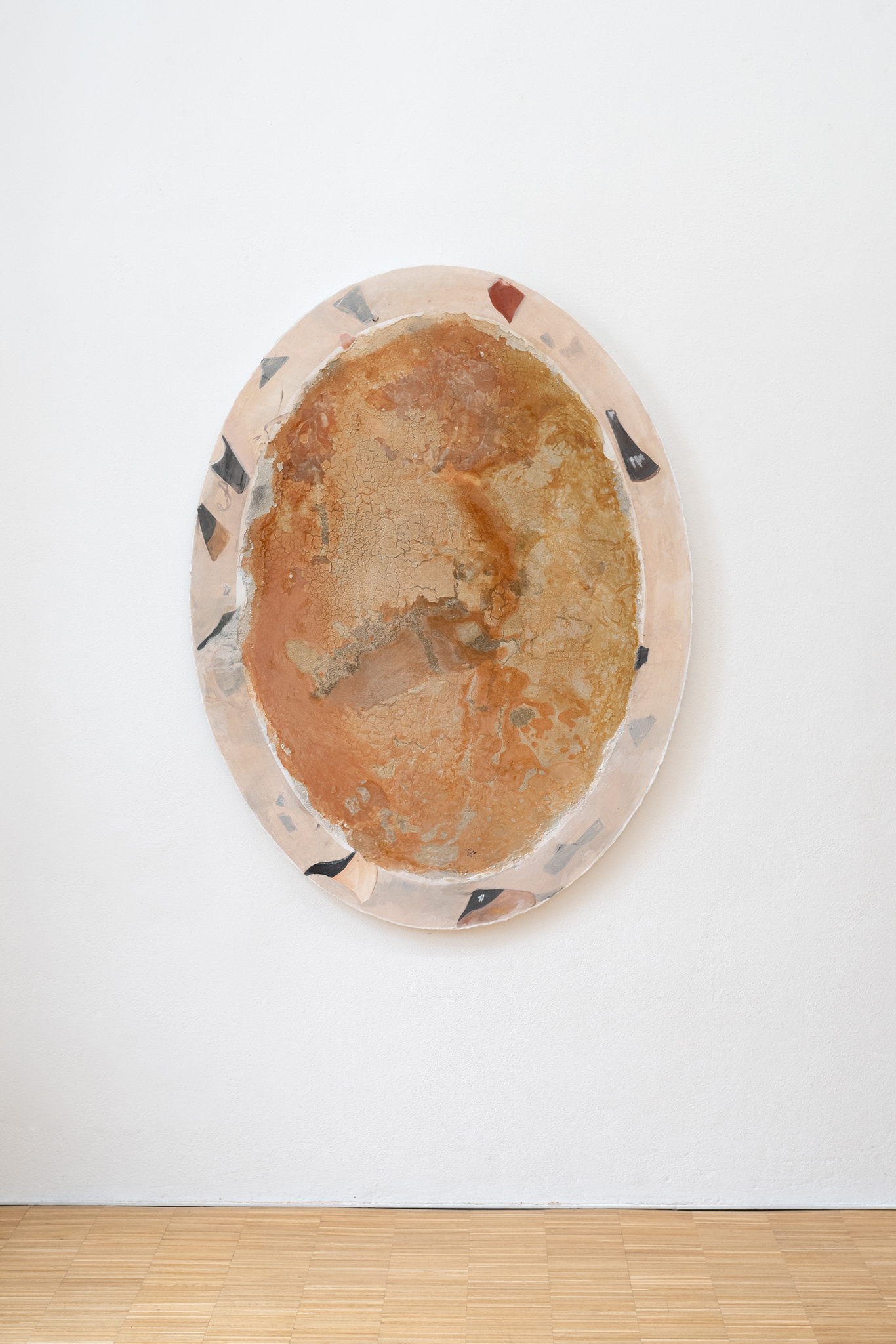
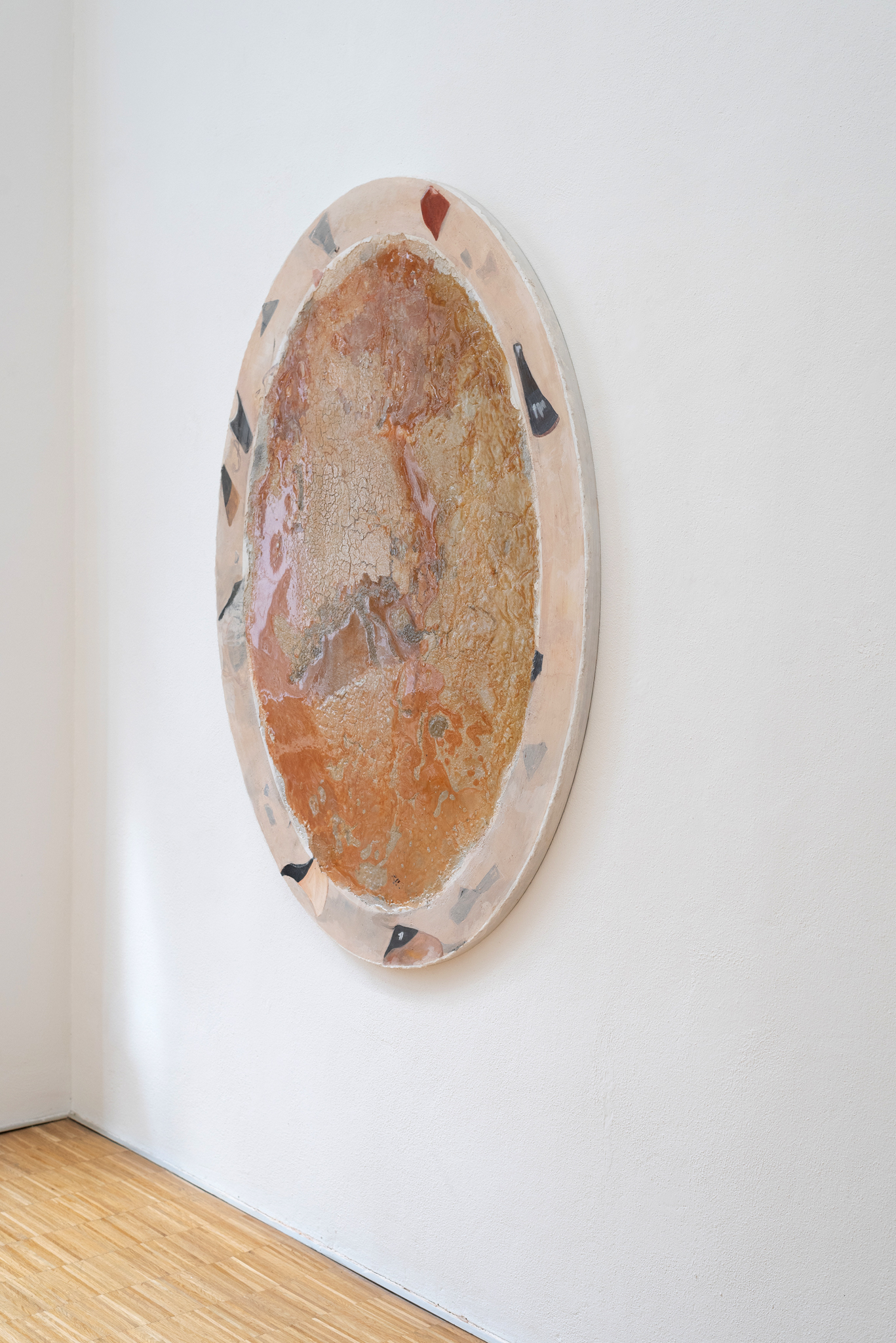
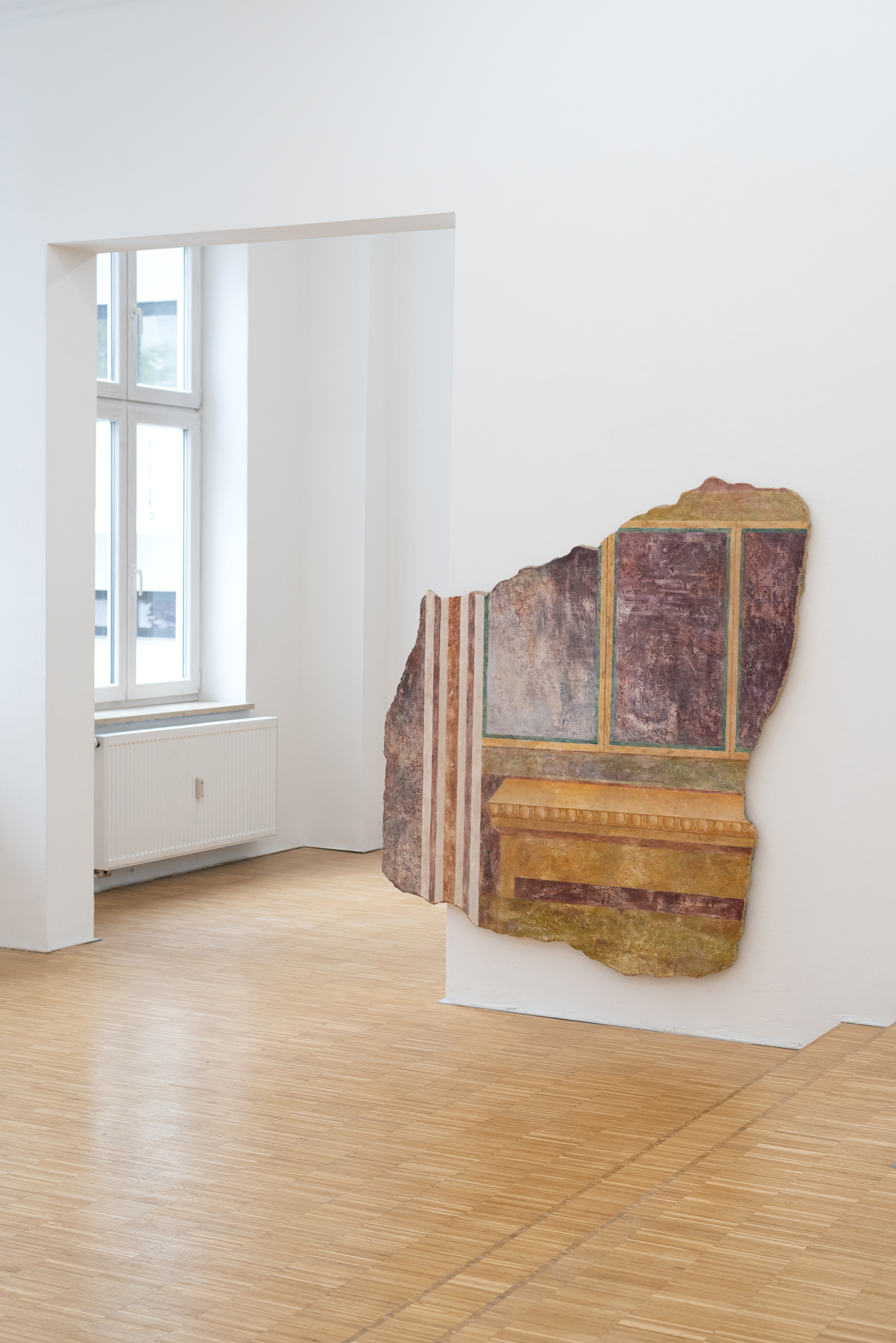
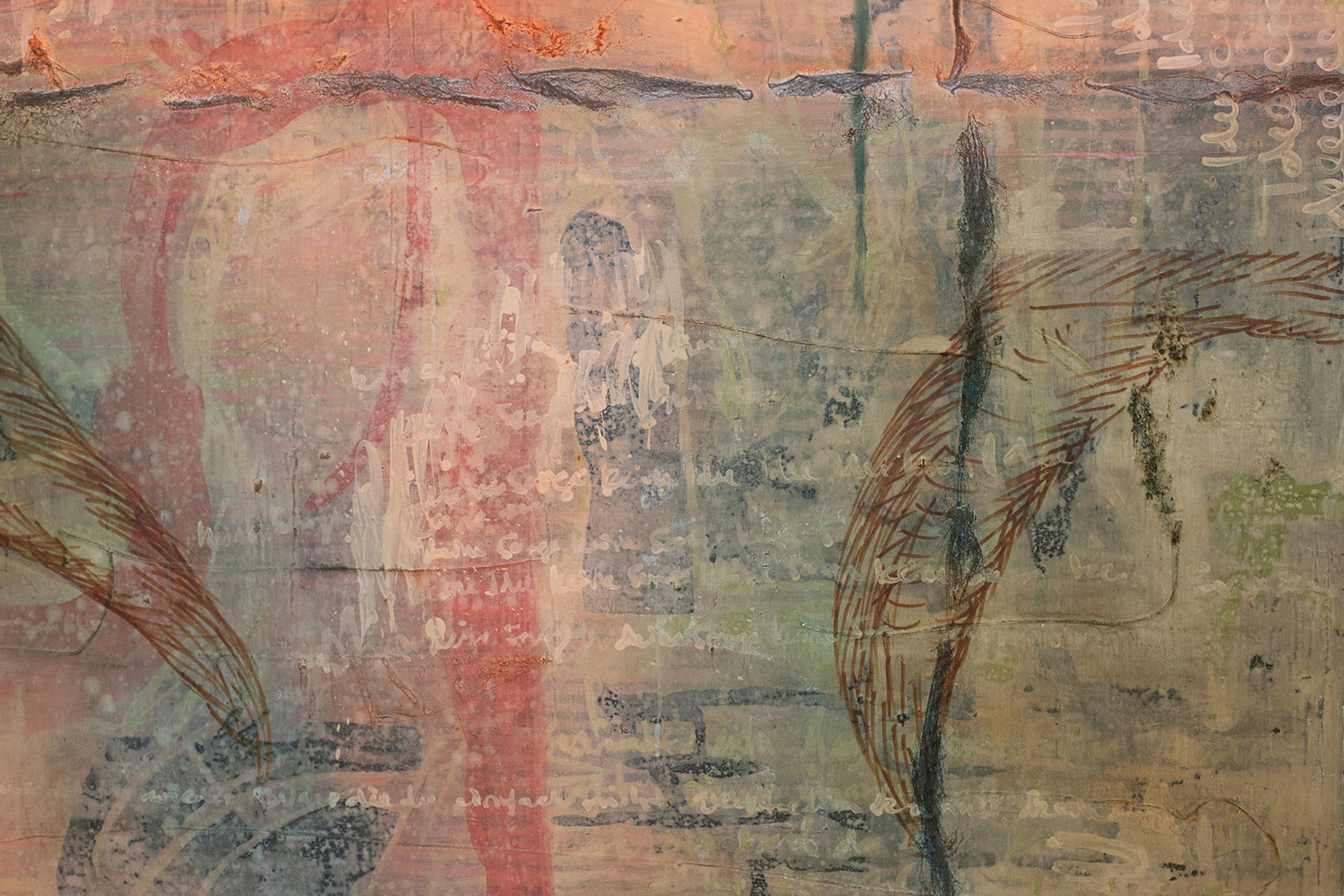
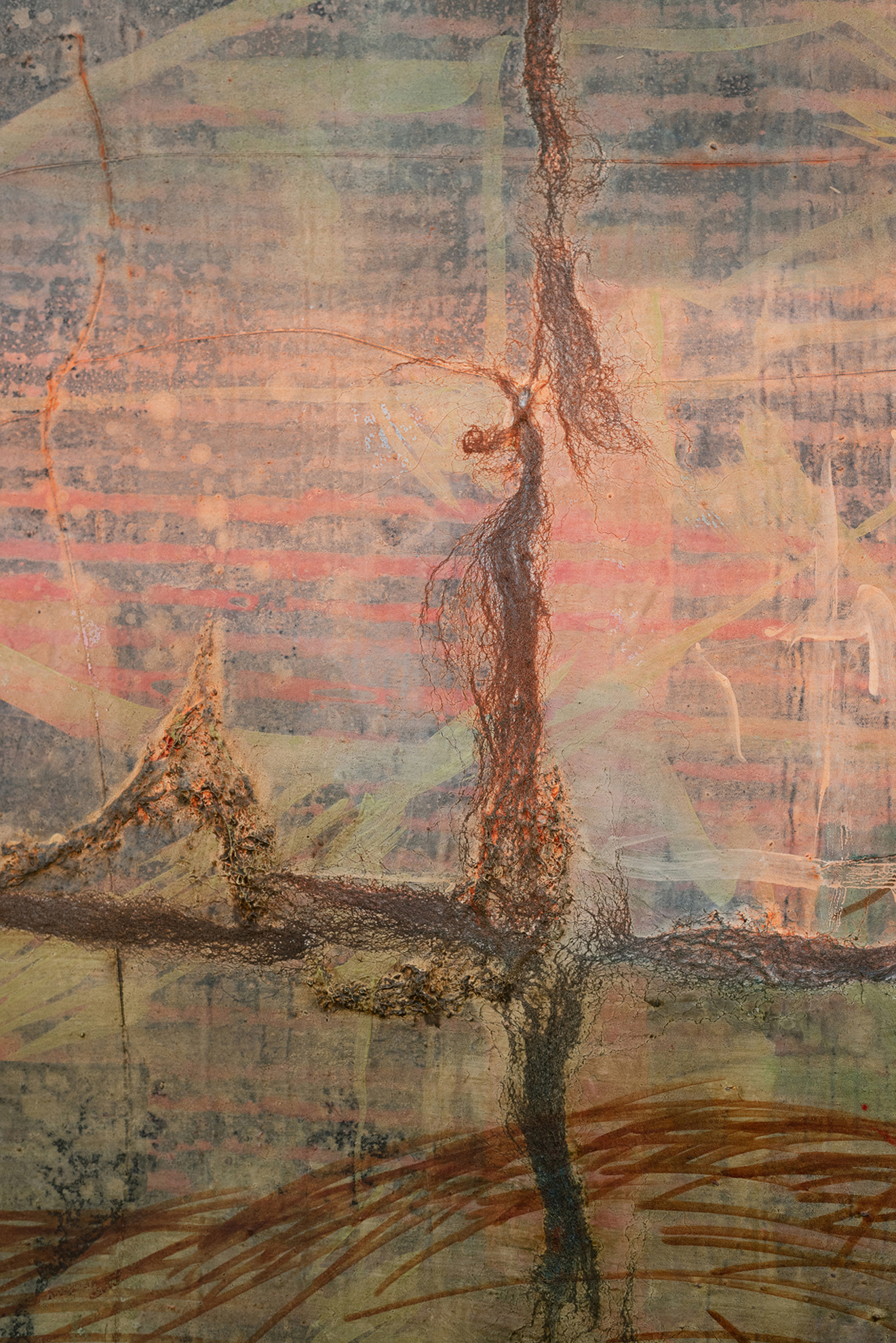
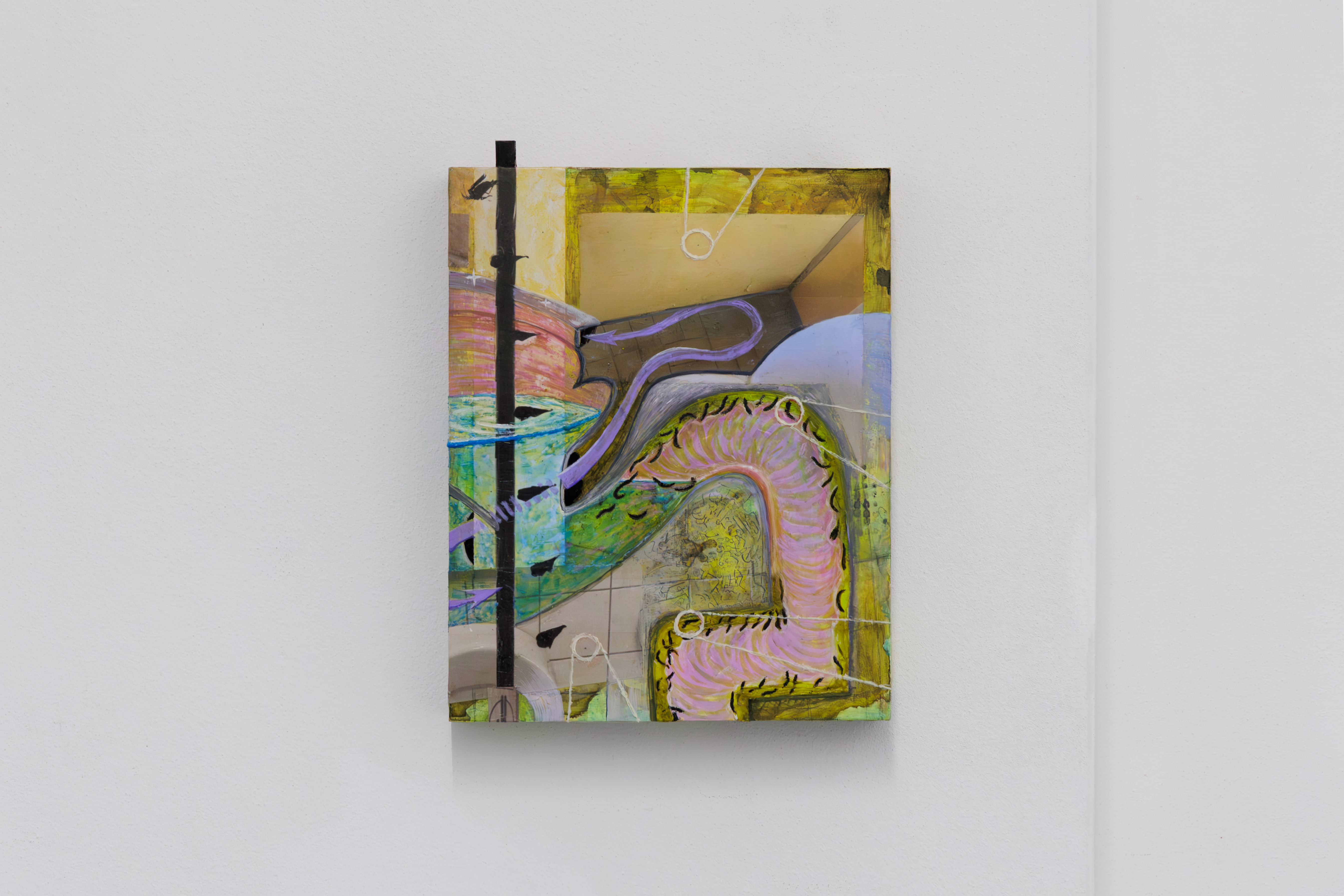
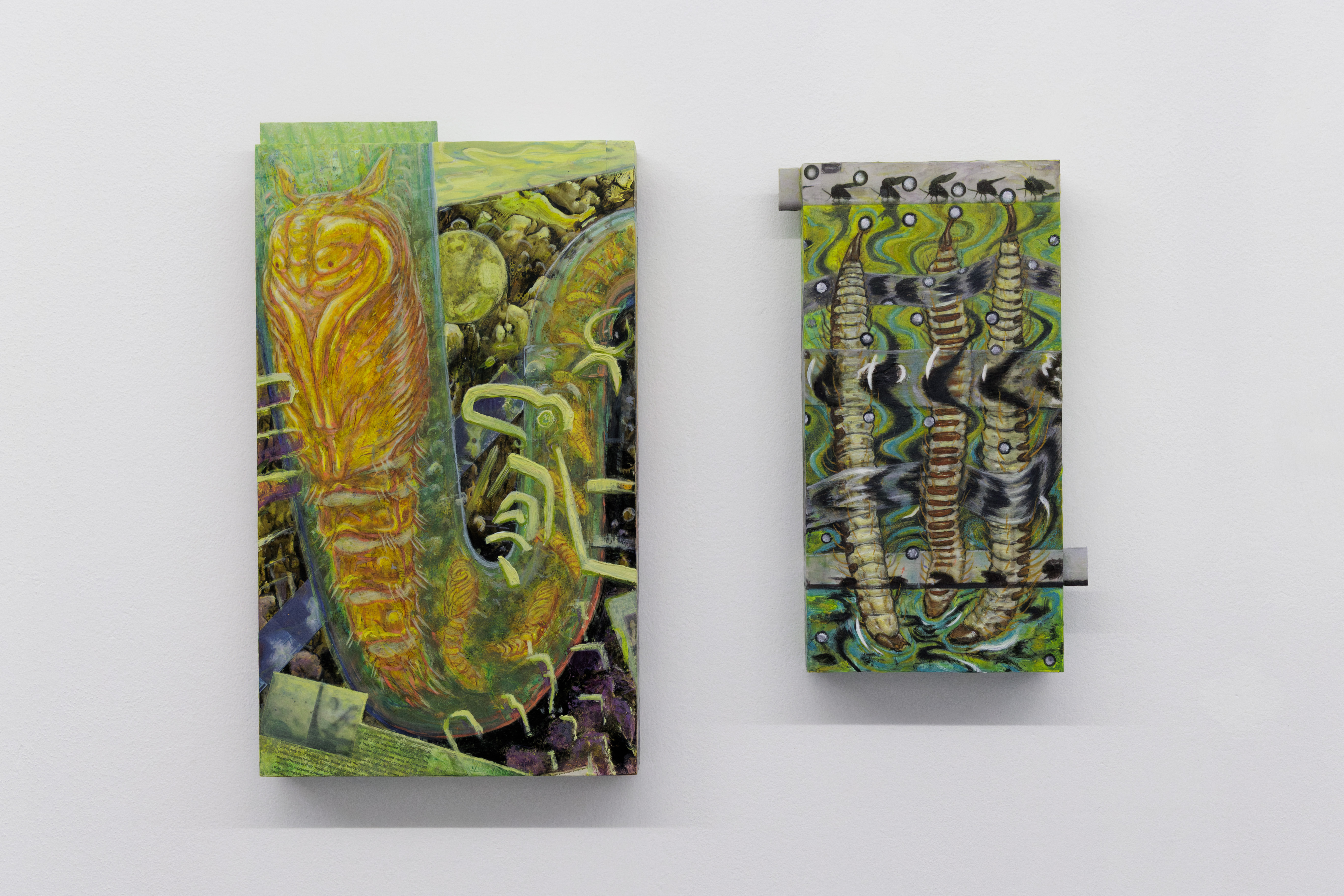
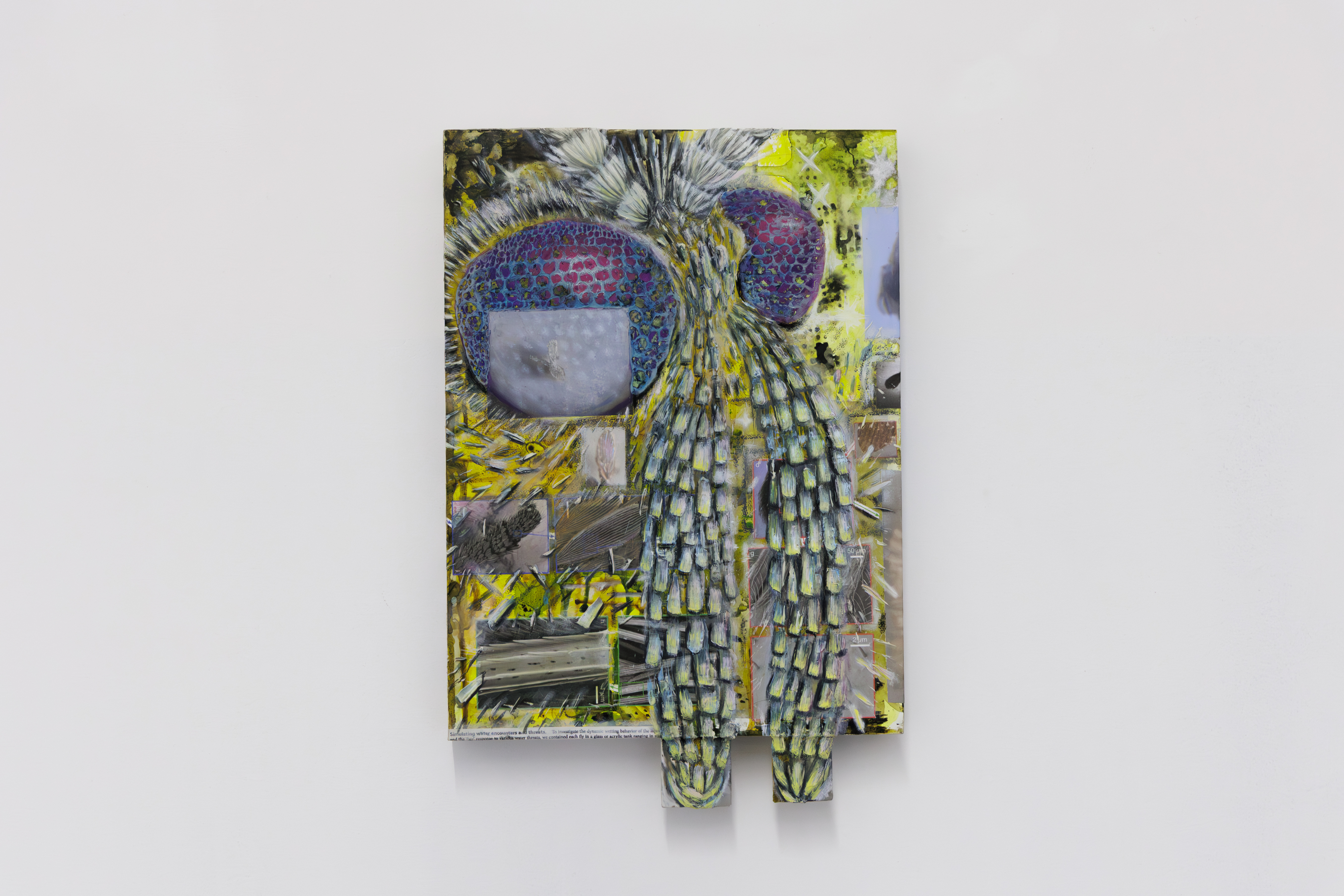
Andrea Zabric, Untitled (from the Karst Series No. VI), 2025
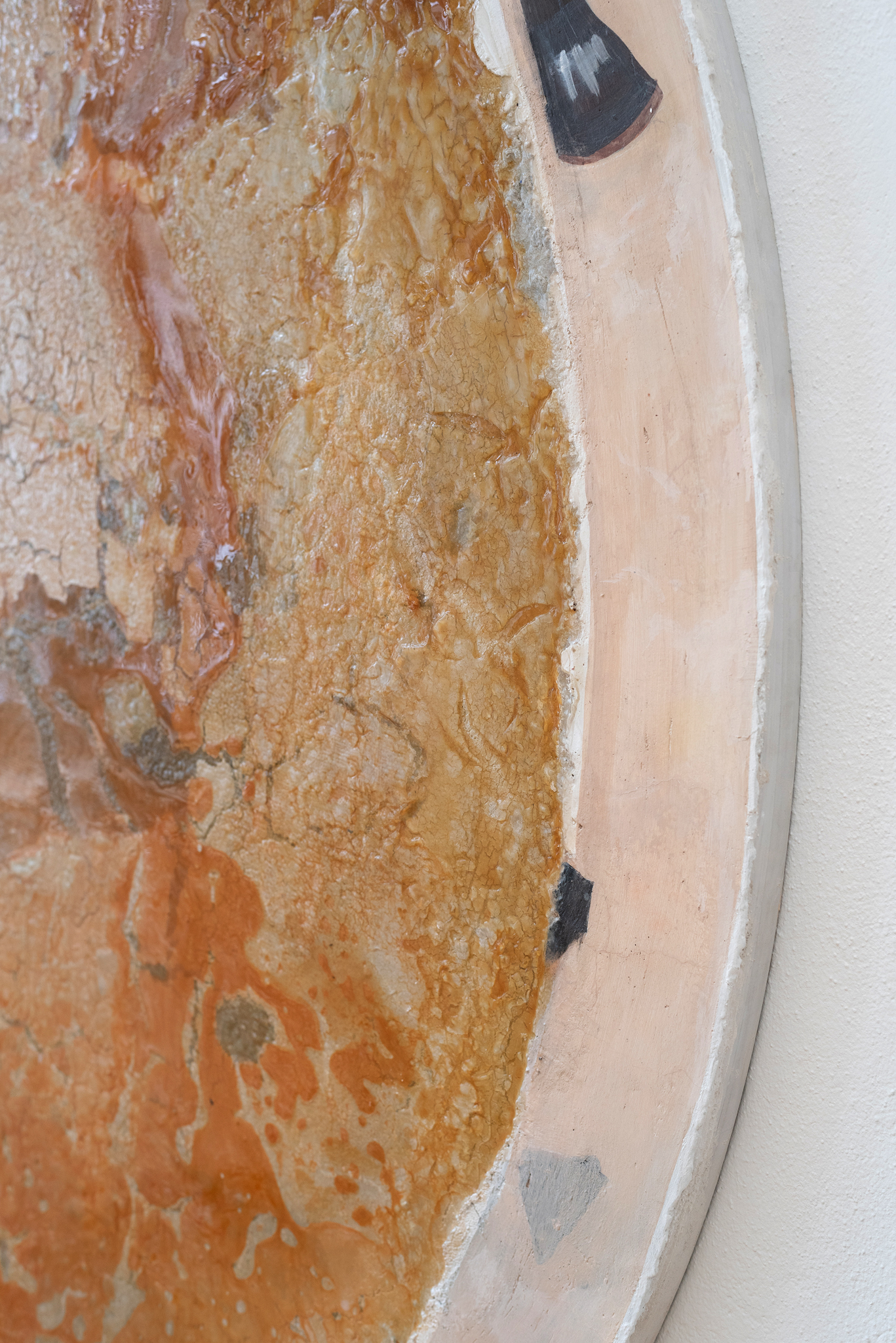
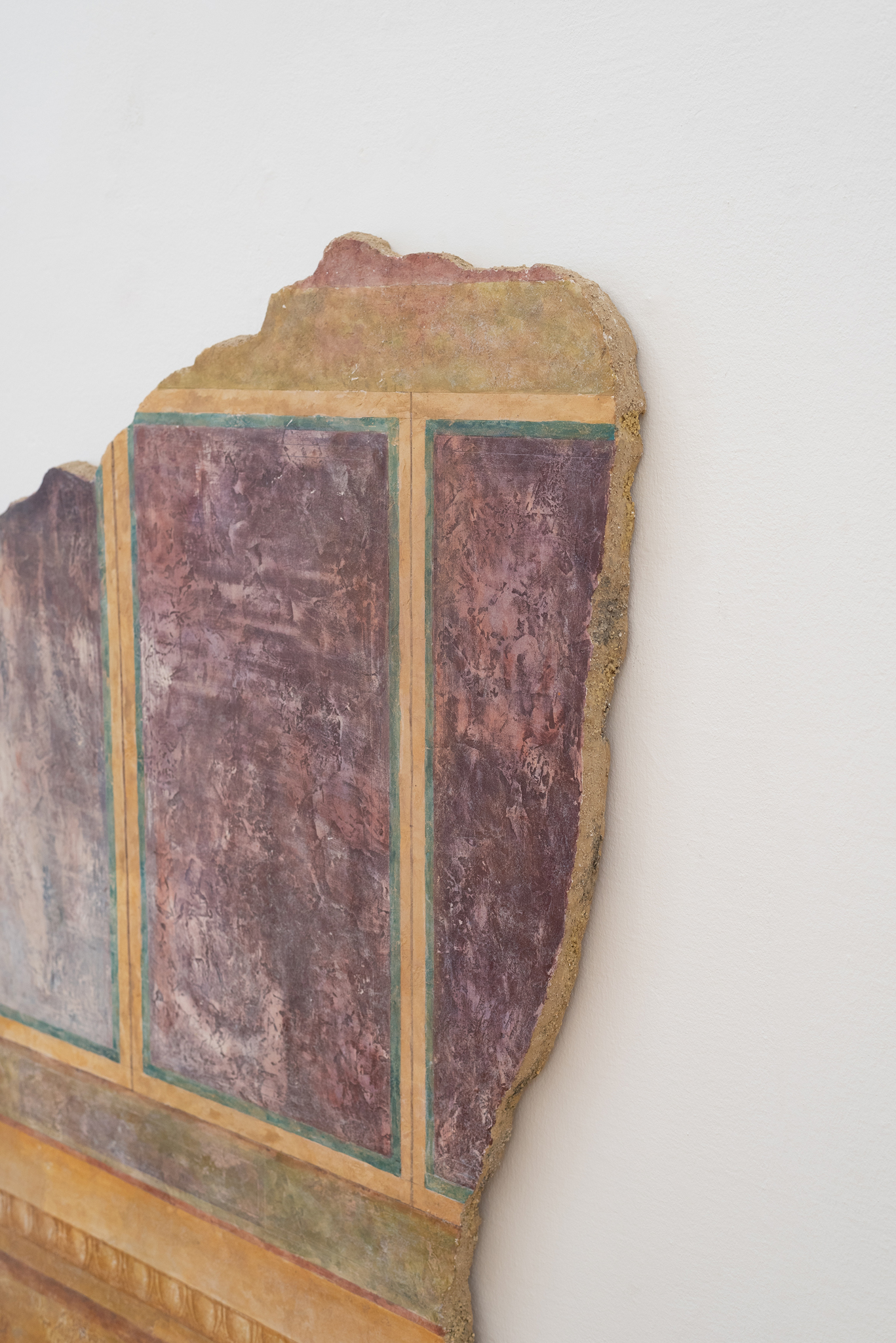
Andrea Zabric, Untitled (from the Karst Series No. VI), 2025 (detail)
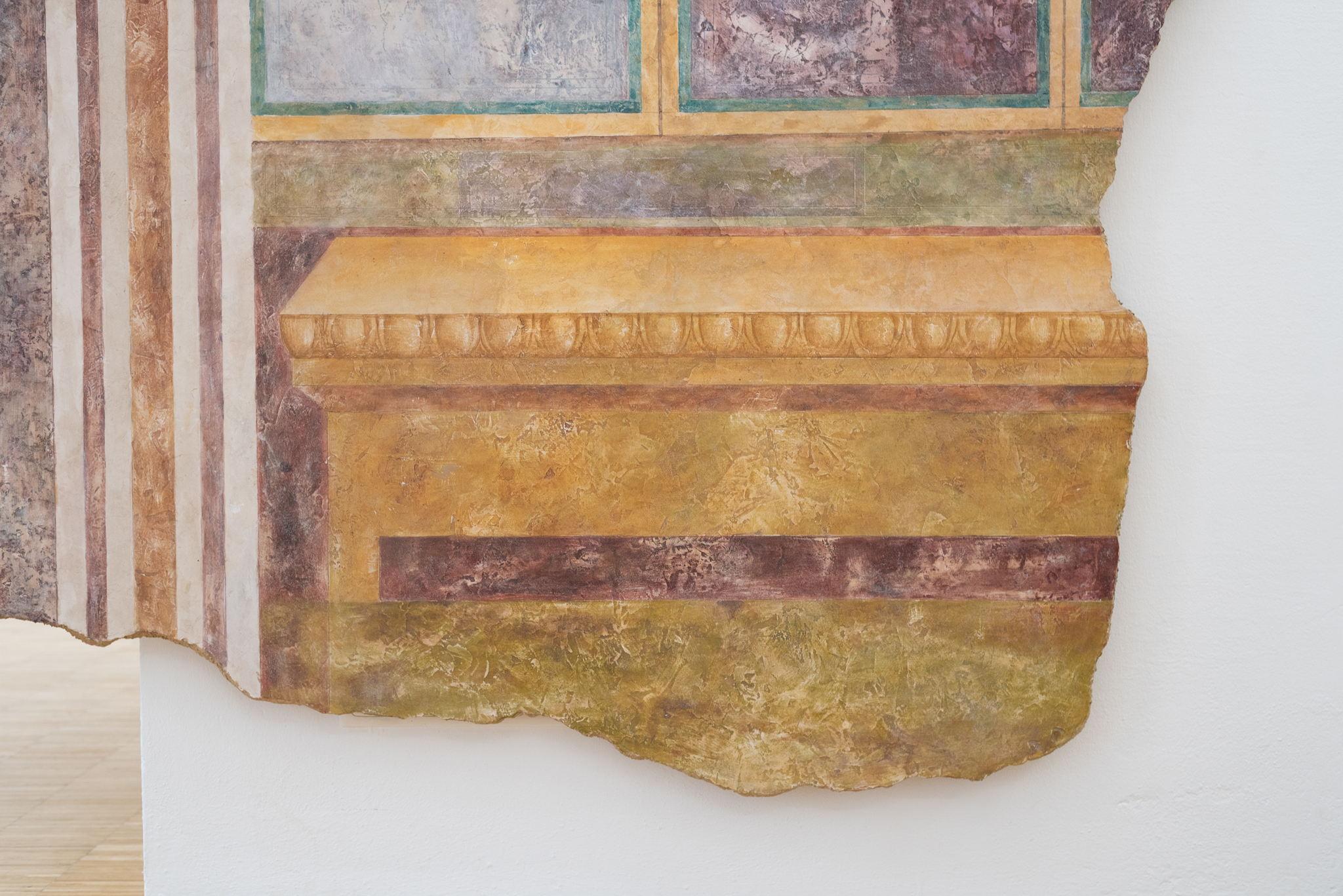
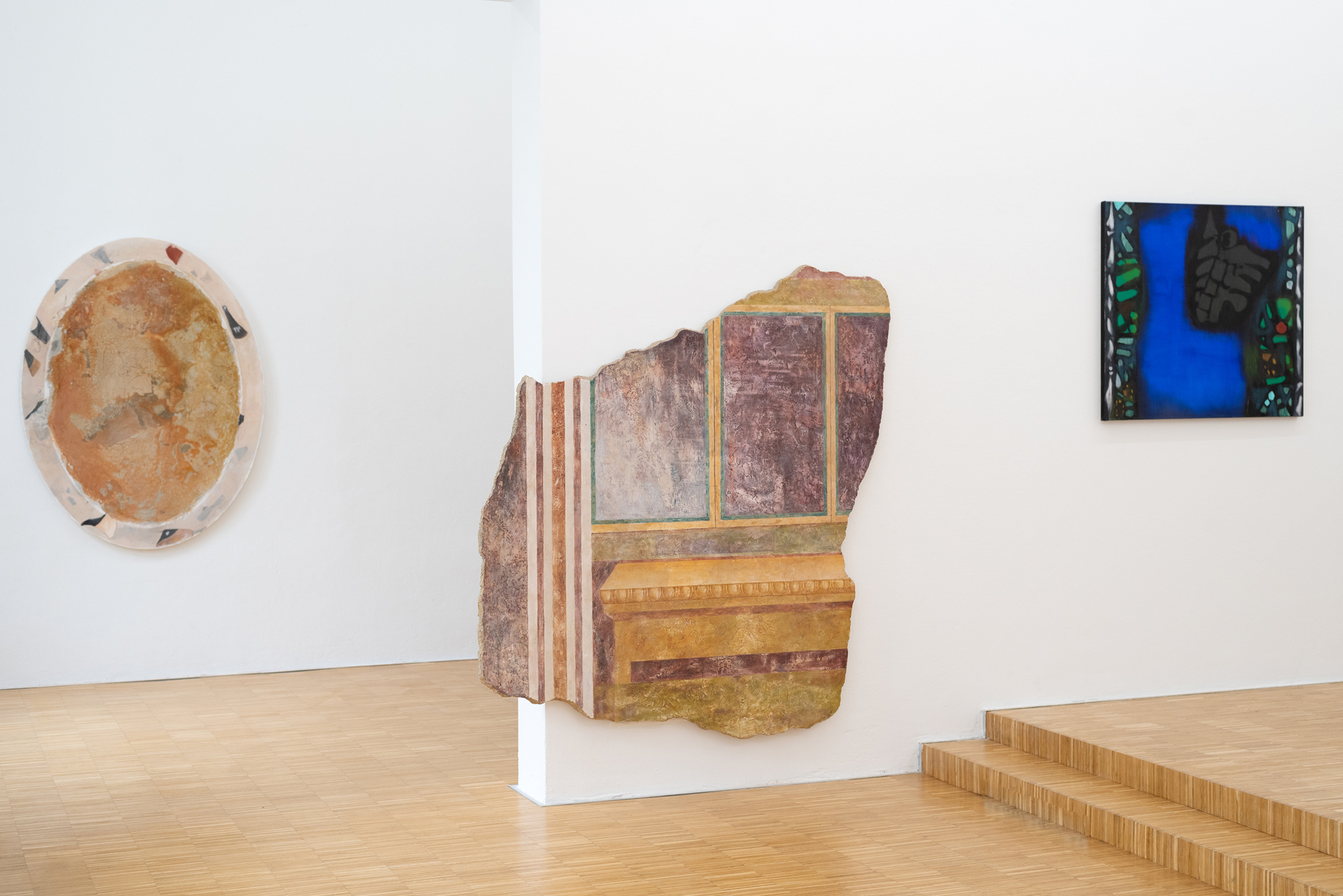
Andrea Zabric in collaboration with Bernt Preisegger, Untitled (Pompeii Propp III) 2024, Pigments and binding agents on plaster and birch plywood 160 x 150 x 4 cm
Andrea Zabric in collaboration with Bernt Preisegger, Untitled (Pompeii Propp III) 2024, Pigments and binding agents on plaster and birch plywood 160 x 150 x 4 cm (detail)
Before your eyes open, 2025, installation view
Before your eyes open, 2026, installation view
Luisa Kasalicky, Dedications: Augusto G., 2024, acrylic and oil on canvas, 80 x 90 cm
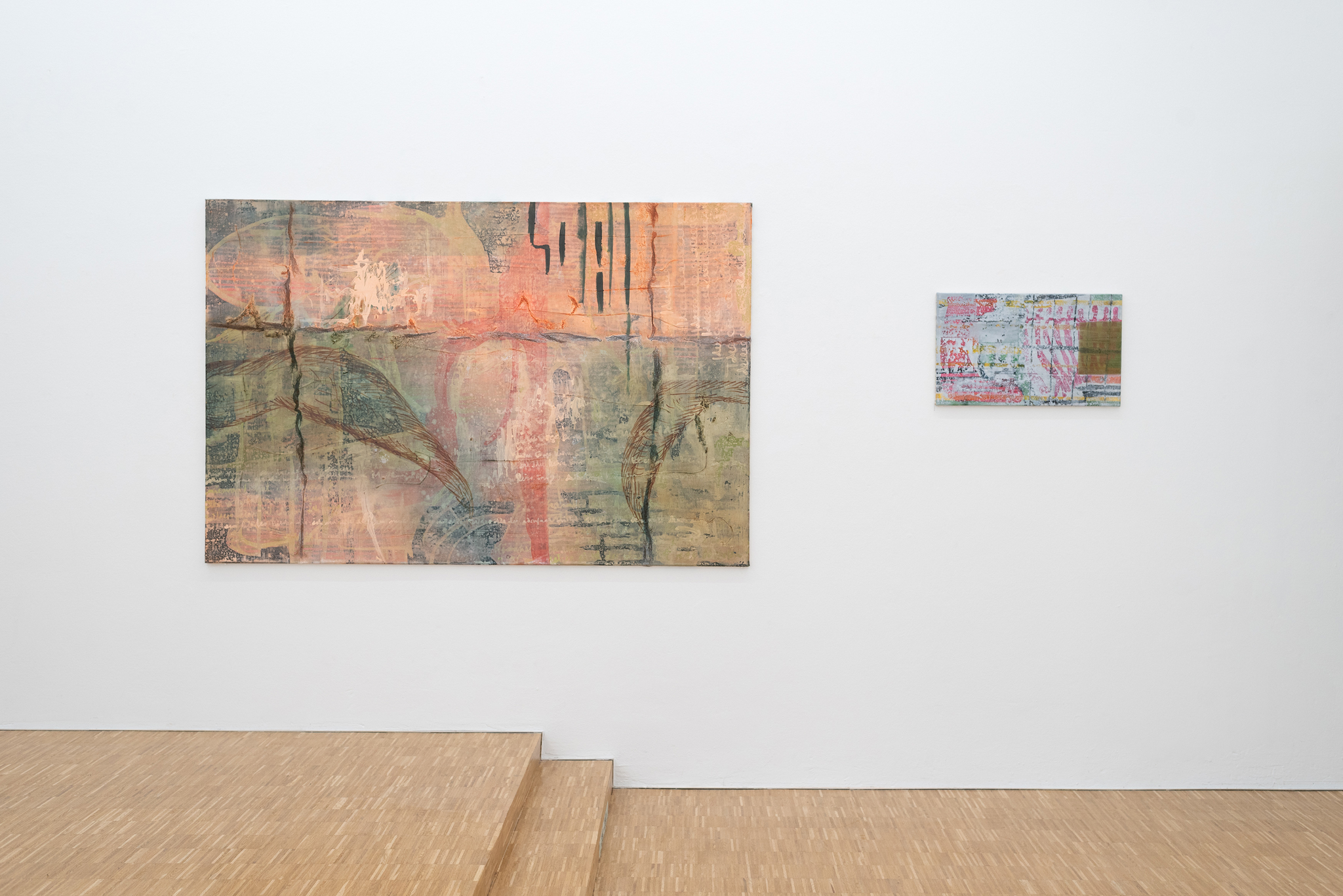
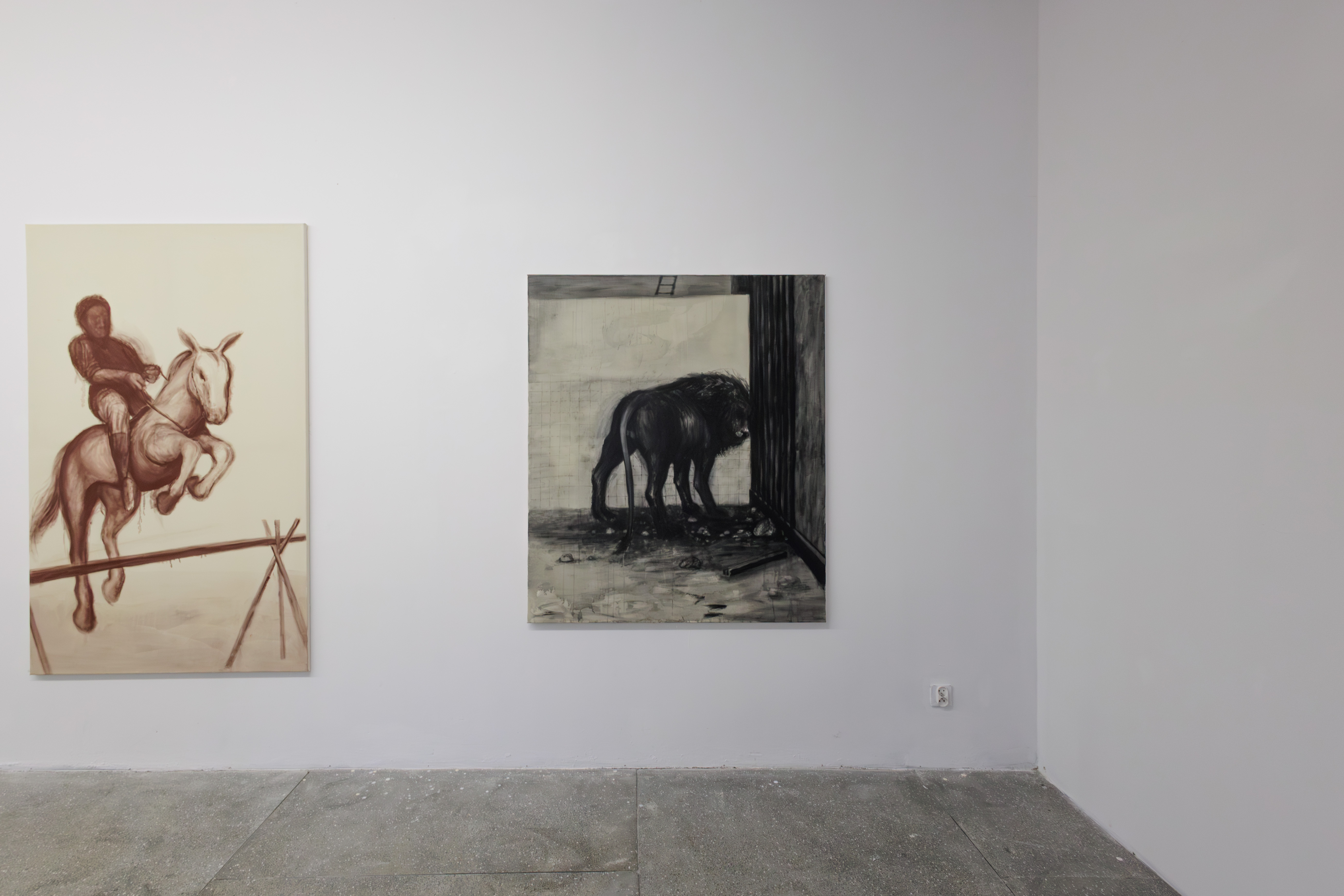
Laura Hinrichsmeyer, Debt text dead text (four paintings, some thrown brick stones) 2025, Oil, chalk and hair on cotton, 130 x 195 cm and Körper als Gruppe (ancestor painting and accentuated waist, with letters like L, A and E) 2026, Oil, chalk and hair on cotton 40 x 66 cm
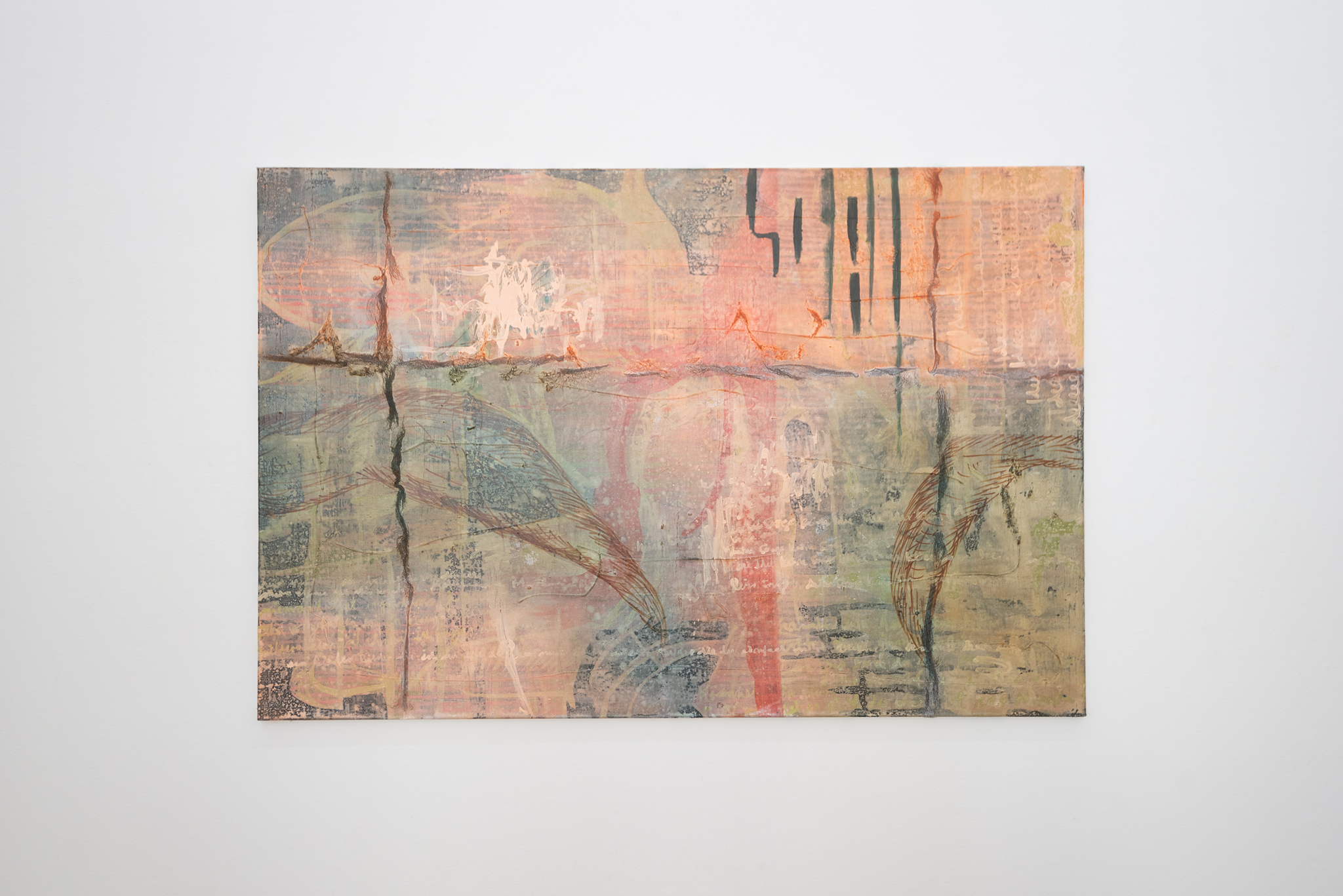
Laura Hinrichsmeyer, Debt text dead text (four paintings, some thrown brick stones) 2025, Oil, chalk and hair on cotton, 130 x 195 cm
Laura Hinrichsmeyer, Debt text dead text (four paintings, some thrown brick stones) 2025, Oil, chalk and hair on cotton, 130 x 195 cm (detail)
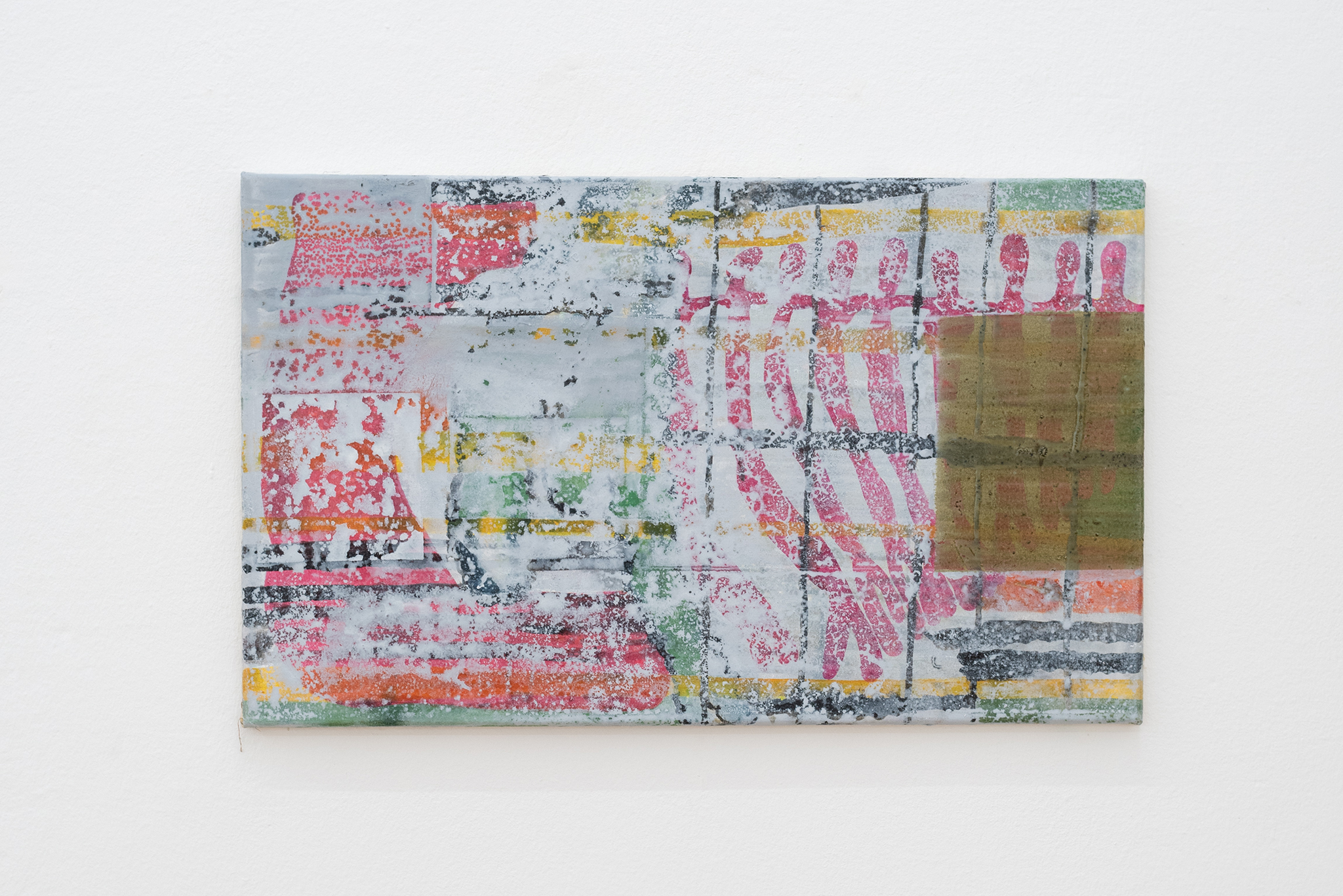
Laura Hinrichsmeyer, Körper als Gruppe (ancestor painting and accentuated waist, with letters like L, A and E) 2026, Oil, chalk and hair on cotton 40 x 66 cm
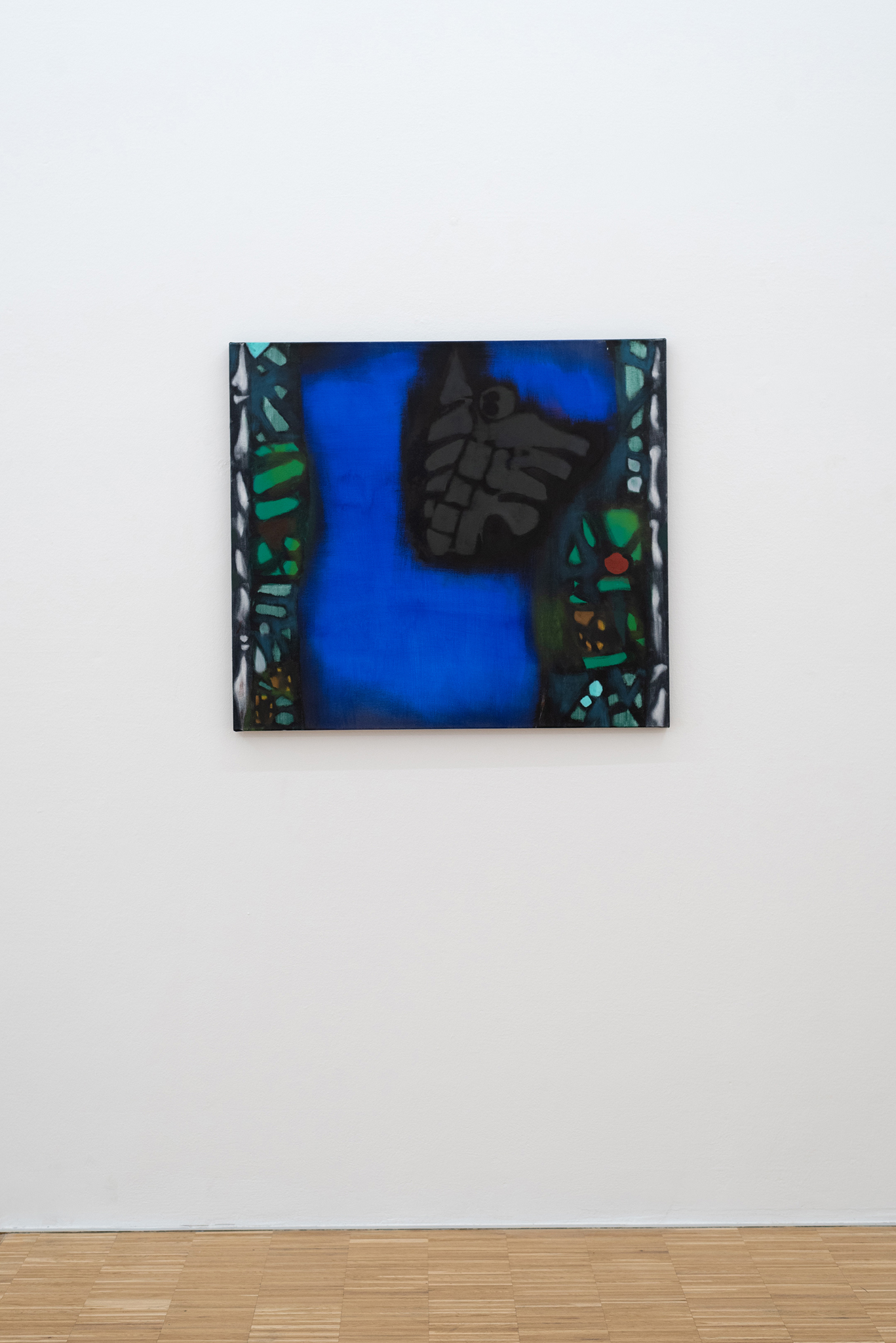
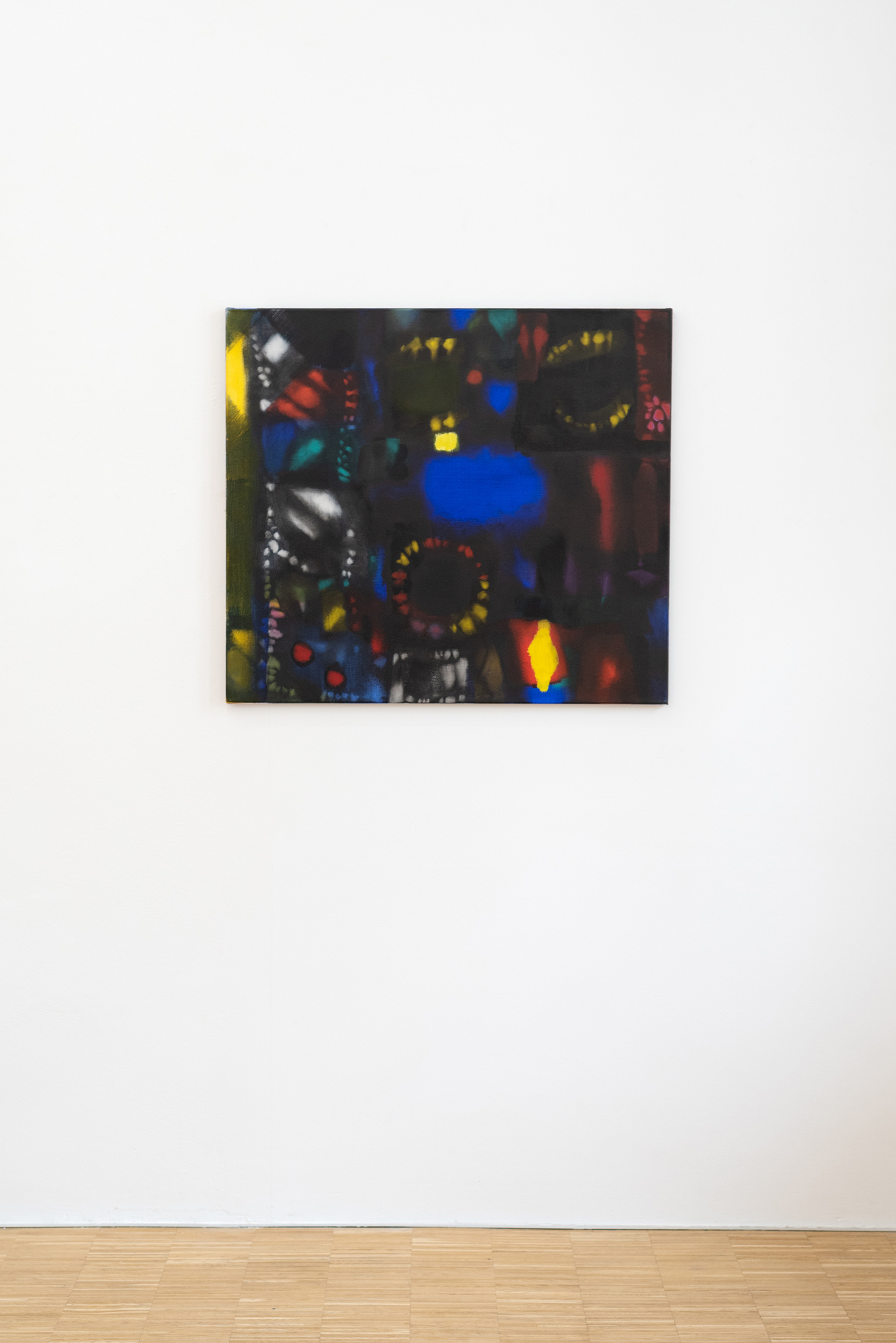
Luisa Kasalicky, Dedication to Desiderio Monsu II, 2025 acrylic and oil on canvas, 80 x 90 cm
Luisa Kasalicky, Dedication to Desiderio Monsu II, 2025 acrylic and oil on canvas, 80 x 90 cm and Insight the helio green, 2025 acrylic and oil on canvas, 36 x 41 cm
Before your eyes open, 2026, installation view

We all see the same thing when our eyes are closed, whether we are a man, a fascist, or a nomad. This is not darkness, but a kind of afterimage, similar to those afterimages of the sun painted by the Polish modernist, Władysław Strzemiński, in the late 1940s. These afterimages are more than physiological phenomena, visual impressions that persist long after the original light source is gone, our photoreceptors lagging behind, too tired and desensitised to adjust to changed lighting conditions. We can also think of the afterimage as all those things we carry with us as we go about our daily lives, the routines and organisational structures – those endless to-do lists which keep us awake at night. More broadly they consist of the economies we operate in, the society in which we function, the histories and cultures in which we are participants.

Painters encounter these persistent images every time they begin to paint. As the French philosopher, Gilles Deleuze, so memorably tells us when discussing the work of Francis Bacon: a painter’s canvas is never blank. It is always full, too full to start working straight away, filled with “things in the painter’s head, or around him, or in his studio.” There are always “givens” and a painter must decide, which of these to use, and more importantly, which of these are mere hindrances, obstacles even, and must be done away.

The painter, the fascist and the nomad see the same things in the dark, but they do not act the same way towards them. A painter like Bacon selects. Fascists on the other hand, take great pleasure in destroying certain socio-political structures, as this gives them a feeling of power. There is much nihilism to be found here. But the nomad, the nomad sees everything, the burdens and the obstacles, and nevertheless manages to forge a path, as if these structures were no hindrance, as if the space was left wide open, unmarked, smooth to travel. Nomads do not use the obstacles to determine their route – they do not say, today I will travel from this point to that, map in hand, following stars and compass, because I wish to reach a destination and settle there. Obstacles do not determine the direction in which nomads head. They throw our maps to the wind and carry their movement with them.

The three painters of “Before your eyes open” – Laura Hinrichsmeyer, Luisa Kasalicky and Andrea Zabric – retain a nomadic position in painting. Of different generations and backgrounds, they share an acute awareness of the historical and cultural “givens” of a painter’s practice, especially in its modernist guise, but these do not determine the trajectories their work takes. They still select, just not one given or another, or a point to be reached. Rather they select a direction, which allows them to operate as a point moving in-between lines: for Hinrichsmeyer this is text in combination with images and a deep understanding of painting’s materiality; for Kasalicky in her most recent series of work, light, colour and the tensions of their juxtaposition. Zabric’s practice, so embedded within art history in her use of fresco technique, holds up a mirror to the nomadic subject, where the self is distributed in open space, like scattered fragments of broken shells found on a beach.

Text: Magdalena Wisniowska 2026
Animal Elegance

Jakob Gilg, Anka Helfertova, Julia Klemm and Jonathan Penca

9.10. – 7.11.2025

with Pracownia Portretu, Łódź, Poland

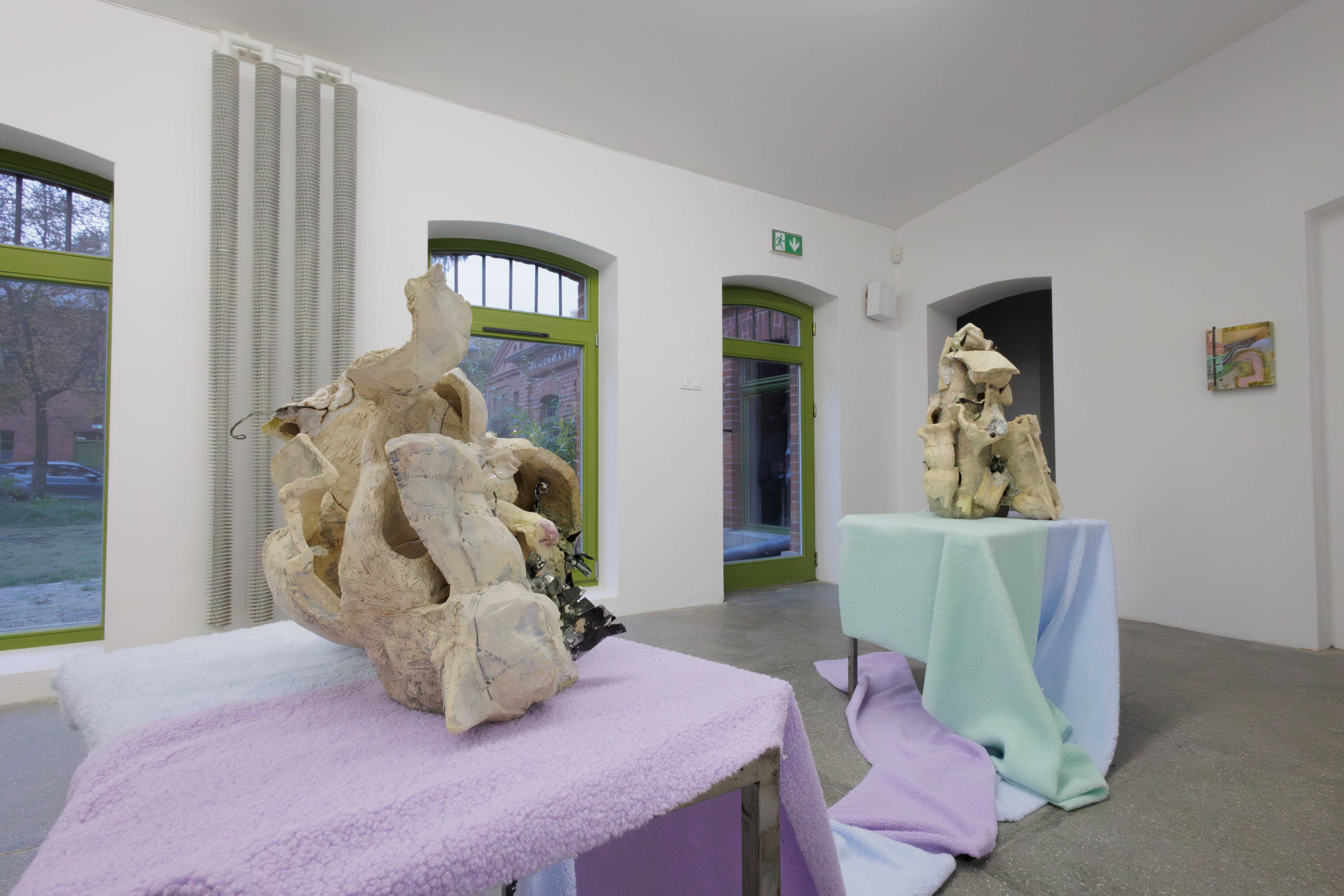
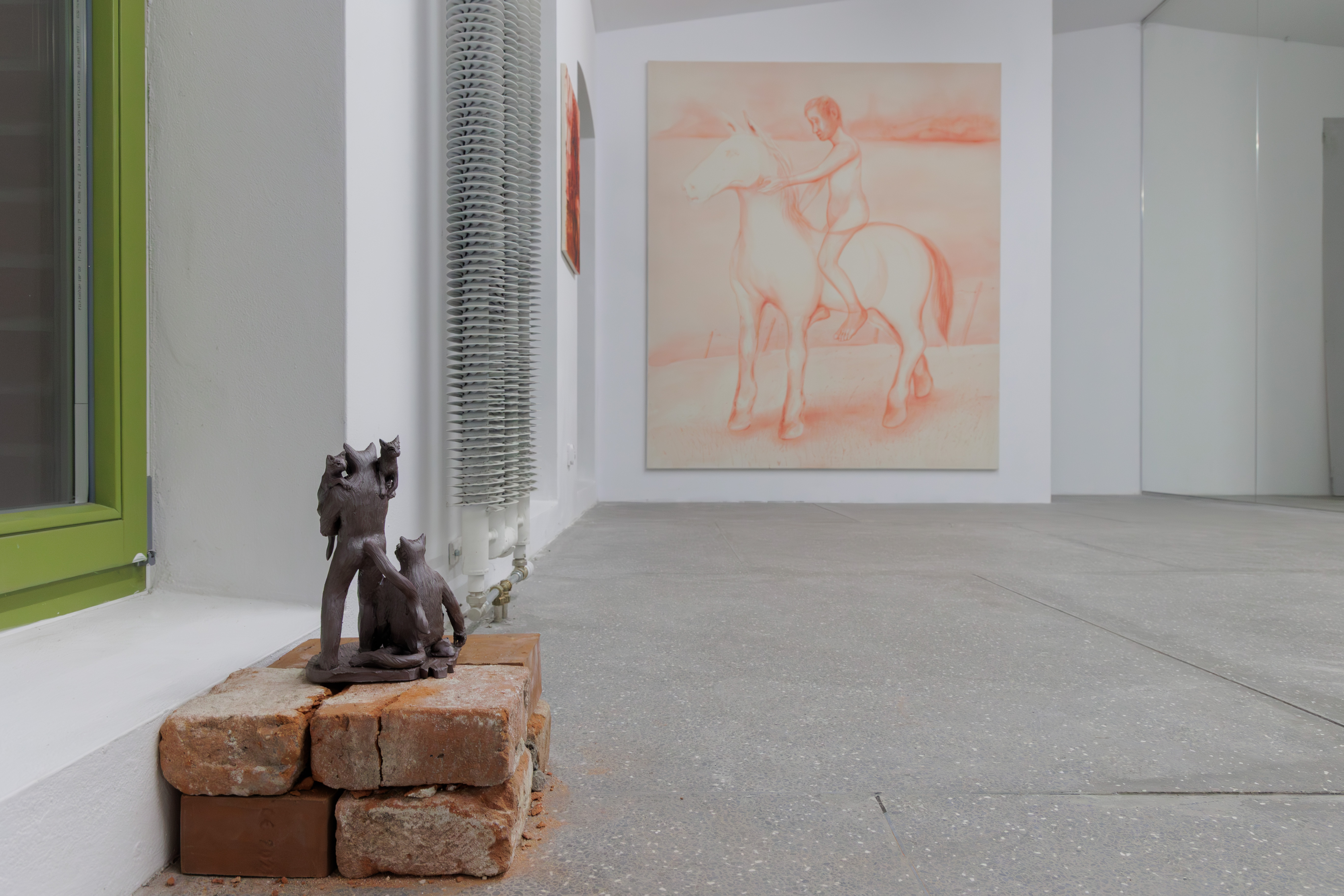
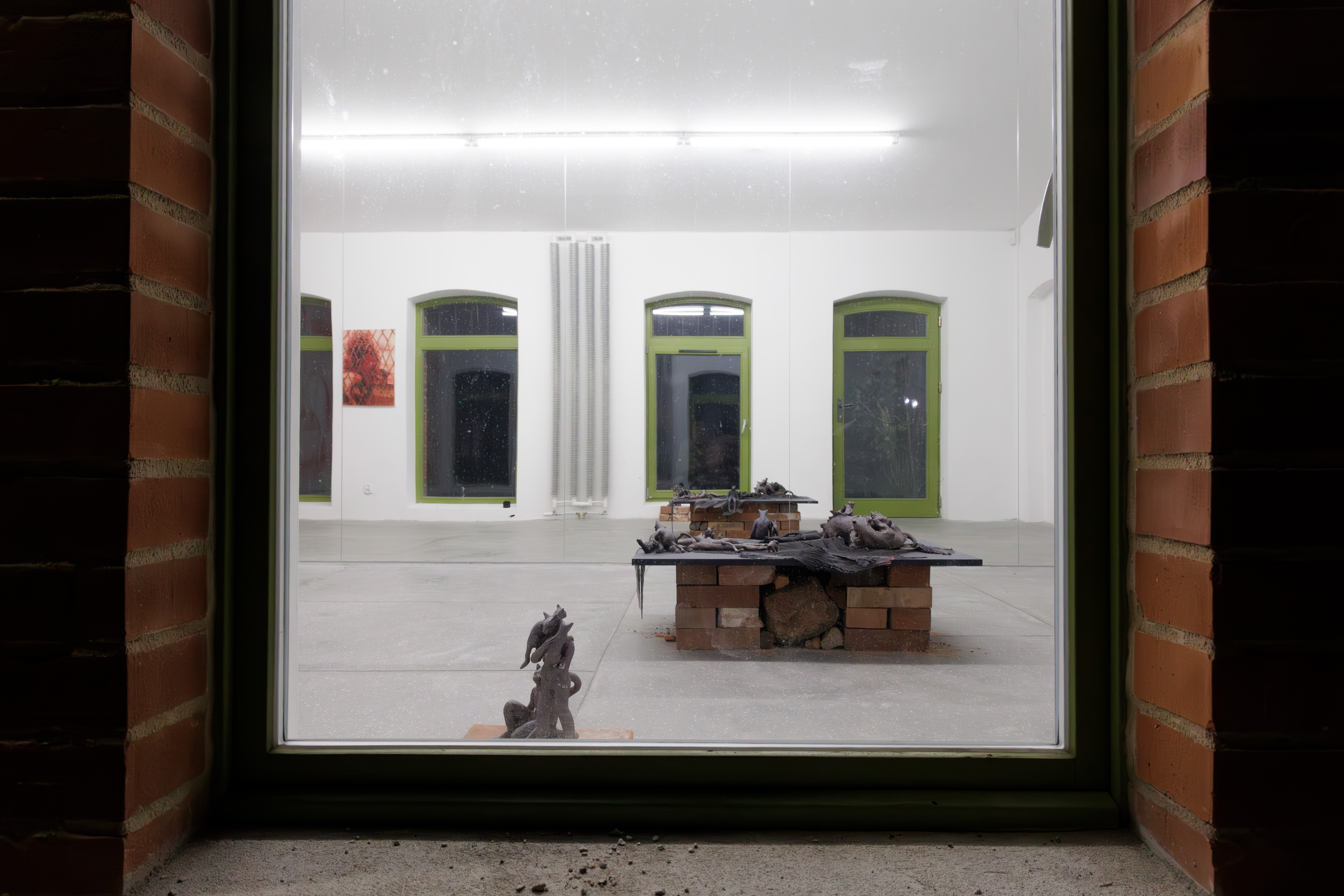
Animal Elegance, installation view (Jonathan Penca, Colonna Sonora, 2025, acrylic and
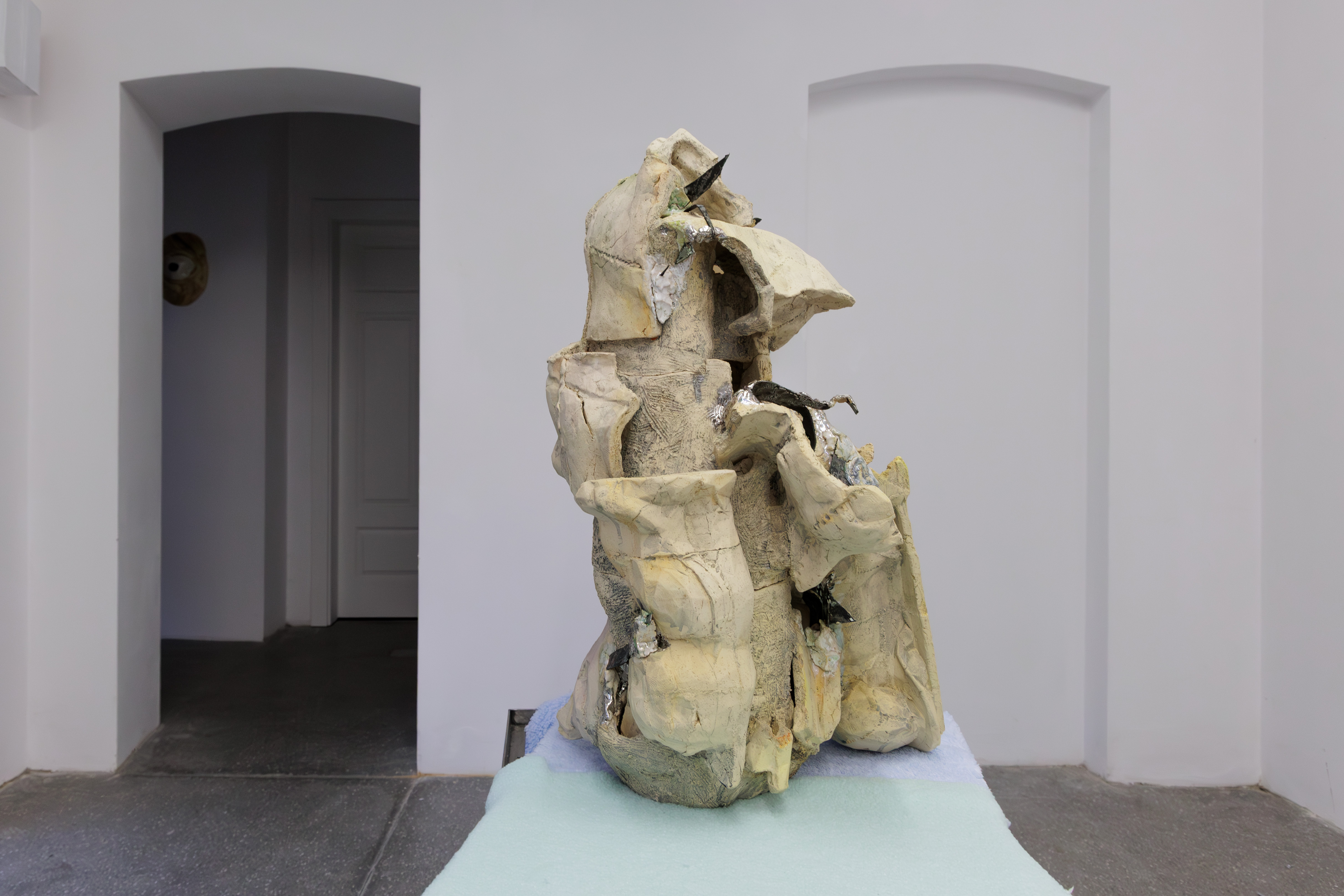
gouache paint, acrylic resin, biro, pencil, gesso and ink on wood. 31 x 24 x 5 cm; Julia Klemm, A chimera is not a pet 2, 2025, steel, glaze, ceramic, pigment, 44 x 38 x 74 cm, )
Animal Elegance, installation view (Jonathan Penca, Colonna Sonora, 2025, acrylic and
gouache paint, acrylic resin, biro, pencil, gesso and ink on wood. 31 x 24 x 5 cm, ; Julia Klemm, A chimera is not a pet 2, 2025, steel, glaze, ceramic, pigment, 44 x 38 x 74 cm,; Julia Klemm, A chimera is not a pet 3 , 2025, steel, glaze, ceramic, pigment, 46 x 34 x 42 cm)
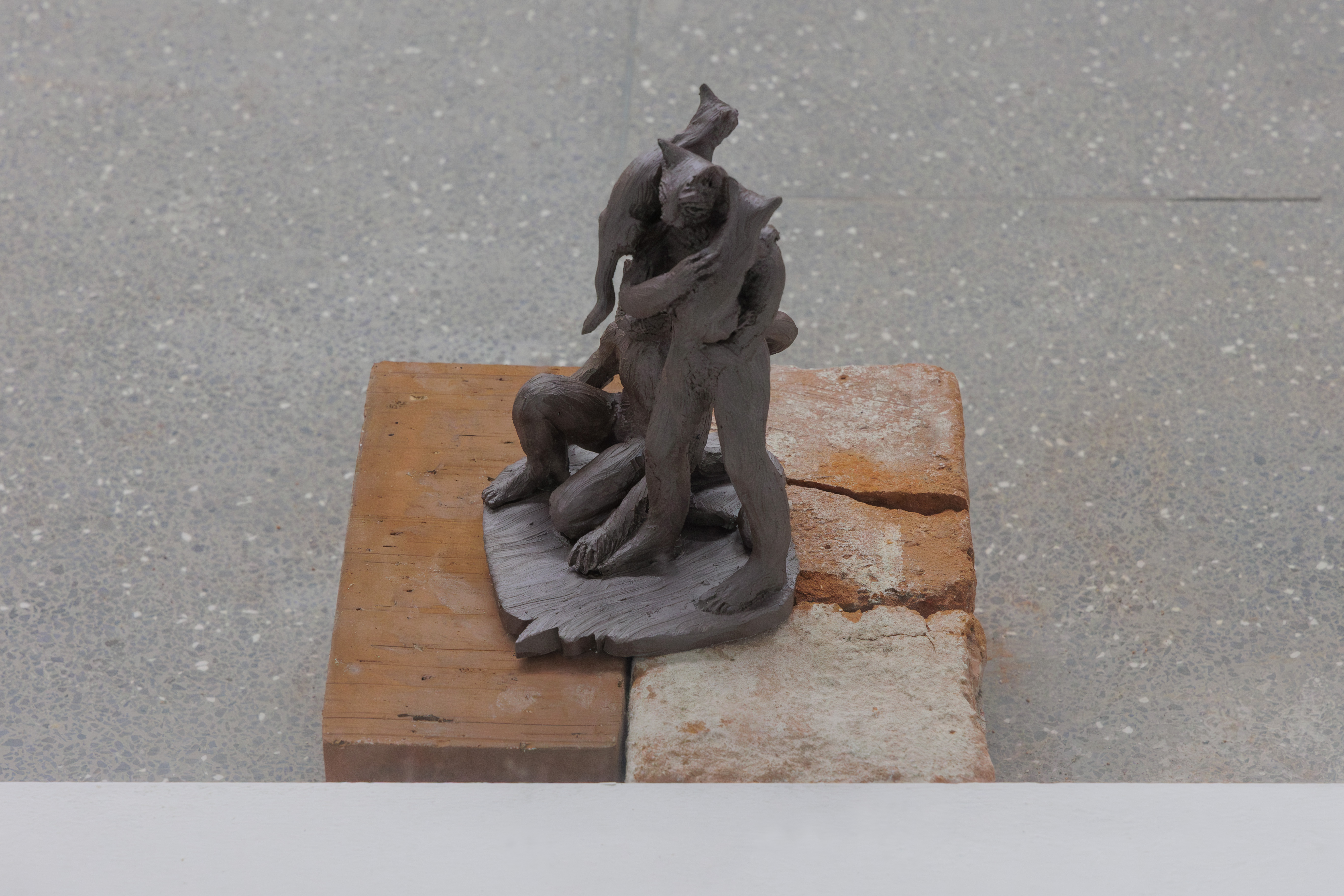
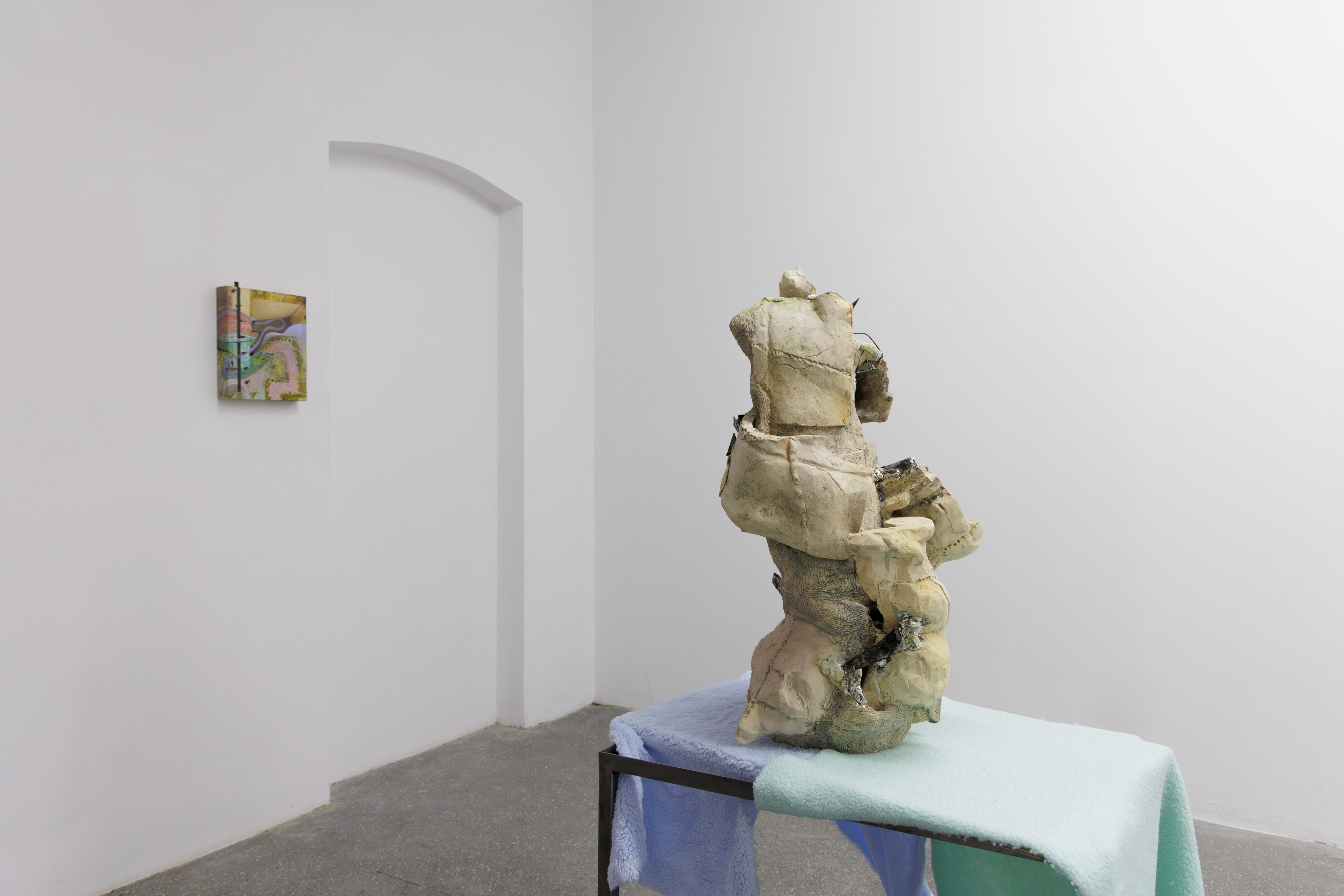
Julia Klemm, A chimera is not a pet 2,2025, steel, glaze, ceramic, pigment, 44 x 38 x 74 cm,
Animal Elegance, installation view (Jonathan Penca, Colonna Sonora, 2025, acrylic and
gouache paint, acrylic resin, biro, pencil, gesso and ink on wood. 31 x 24 x 5 cm; Julia Klemm, A chimera is not a pet 2,2025, steel, glaze, ceramic, pigment, 44 x 38 x 74 cm,; Julia Klemm, A chimera is not a pet 3 , 2025, steel, glaze, ceramic, pigment, 46 x 34 x 42 cm)
Jonathan Penca, Colonna Sonora, 2025, acrylic and
gouache paint, acrylic resin, biro, pencil, gesso and ink on wood. 31 x 24 x 5 cm,
Animal Elegance, installation view , 2025
Jonathan Penca, inglers Groove, 2025, gouache, acrylic, watercolour, acrylic resin, pencil, gesso, ink and paper on wood, 52 x 30 x 5 cm; Jonathan Penca, Tufty Sequence, 2025, gouache, acrylic, acrylic resin, biro, gesso, ink and paper on wood, 40 x 19 x 5 cm)
Animal Elegance, 2025, installation view

Julia Klemm, Transcending territories, 2024, glaze, ceramic, pigment, 32 x 30 x 48 cm
Animal Elegance, 2025, installation view
Jakob Gilg, Alignment, 2025, pigment and acrylic medium on canvas, 180 x 110 cm; Jakob Gilg, Virgo, 2025, pigment and acrylic medium on canvas, 140 x 120 cm)
Jonathan Penca, Clogmia, 2025, gouache, acrylic resin, gesso, ink, makeup powder and paper on wood, 44 x 30 x 5 cm
Jakob Gilg, I’m sorry, 2024, pigment and acrylic medium on canvas, 25o x 200 cm; Jakob Gilg, Kindling, 2025, pigment and acrylic medium on canvas, 70 x 50 cm
Jakob Gilg, Kindling, 2025, pigment and acrylic medium on canvas, 70 x 50 cm
Animal Elegance, 2025, installation view
Anka Helfertova, To be in a time of war ( I keep changing my address but war never loses my scent) 2025, bricks, stone, MDF board, silicon, pigment, ceramic, 55 x 120 x 77 cm and 40 x 30 x 30 cm
Animal Elegance, 2025, installation view

There is a fascist, who lives in my head, and he has been there for a while. I speak to him almost everyday about different things, mainly things I see in the news or read about online, but sometimes also about art. Recently I was telling him about the fish, Kluzinger’s wrasse, which reminded me of a passage I read in “A Thousand Plateaus” by Deleuze and Guattari. They ascribe to a tropical fish an animal elegance, because of the way it uses its colourful design to blend in with its surroundings. The lines of the design are abstract and yet have the capacity to construct an entire underwater world. 

Look, I tell him, we think we know what a fish is, the way you think you know what a dog or horse or lion is, an animal, a species, a type. Certainly your lot has made enough statues and animal monuments – porcelain shepherd dog figurines graced your tables. A fish lives in water and like all other fish has scales, fins and gills.  We can compare this fish to another and note down the similarities of their characteristics, in order to classify them, genus: Thalassoma, family: Labridae. You think we know what kind of an animal a fish is. There it is. Put it in an aquarium. 

Ah, I say, but can we see the animal Deleuze and Guattari describe as possessing an English kind of elegance? With a refinement that does not seek attention, but that remains quietly unobtrusive?  This involves the appreciation of the small and the detailed, like those drain moths found in Jonathan Penca’s paintings, charming us with their fuzzy faces and furry wings. More than that, unobtrusiveness requires an effort. To go through life unnoticed is not easy and drain moths have a life cycle with four stages, larvae feeding on toilet sludge before developing into pupae. 

There are animals we see and animals we do not. The animals we do see, we organise and use, tame and breed. We control them as meticulously as Eadweard Muybridge did, when he set up multiple cameras to capture the image of the horse in motion or a lion in a cage, the starting point of Jakob Gilg’s paintings. We assign animals different roles: you there, you look soft and cuddly, you will be a pet. And you, you over there, so powerful and strong, you we will make into a symbol. Kitsch ceramic cats and scaled-down digital scans of lion monuments tumble, shatter and recombine in Julia Klemm’s work. 

But this animal you don’t see, is something other than a molar entity, a different “affair” as Deleuze and Guattari would say, involving “becoming” not “being.” And it might seem we are meant to think this becoming morphologically, as the becoming of something else, a change from one permanent state to another, equally permanent one. A human could become a cat perhaps – or a cat, a human – as in the work of Anka Helfertova. Violence swirls around and we try to find our peace, not to lose ourselves within. To think becoming is to think loss, the elimination of all of our complaints, demands, unsatisfied desires, “everything that roots us in ourselves,” so that at the end, we are left with nothing, which is also everything. Becoming-animal is always a becoming-imperceptible, a shrinking best found in science fiction novels, the shrinking man becoming smaller and smaller without ever disappearing. Because when animals are thought in their becoming, the molecular comes into play, those invisible abstract forces that in their millions of interactions are actually responsible for constituting a world. To think an animal in its becoming is to engage with these molecular forces at work.

This is the demand elegance places on us: to think less of ourselves and more of the other. It is to be more attuned to our surroundings by paying attention to what continues to constitute us, which is always small and inorganic, indiscernible and impersonal. Elegance is a kind of molecular attention, but with a focus that opens out onto the world. To think things in their becoming molecularly is also to think in terms of the cosmos in its entirety. And then we might indeed stop seeing fish, but we will begin to see everything else.

Magdalena Wiśniowska 2025

Throw of the dice

Lukas Hoffmann, Sophia Mainka

29.06 – 3.08. 2024

Kindly invited by Sperling Munich, Regerplatz 9, 81541 München

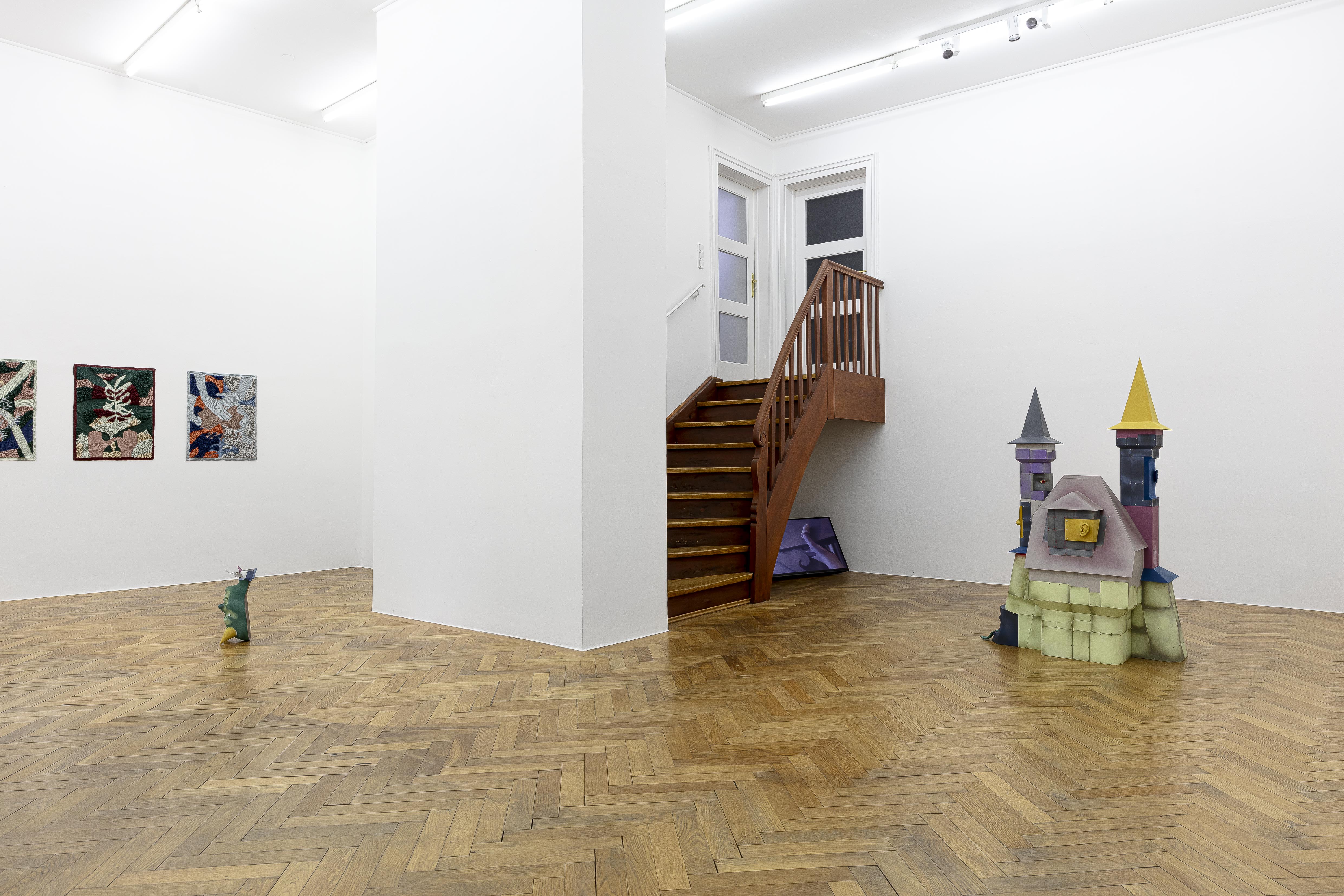
Throw of the dice, 2024, installation view. Photo: Sebastian Kissel, courtesy Sperling, Munich.
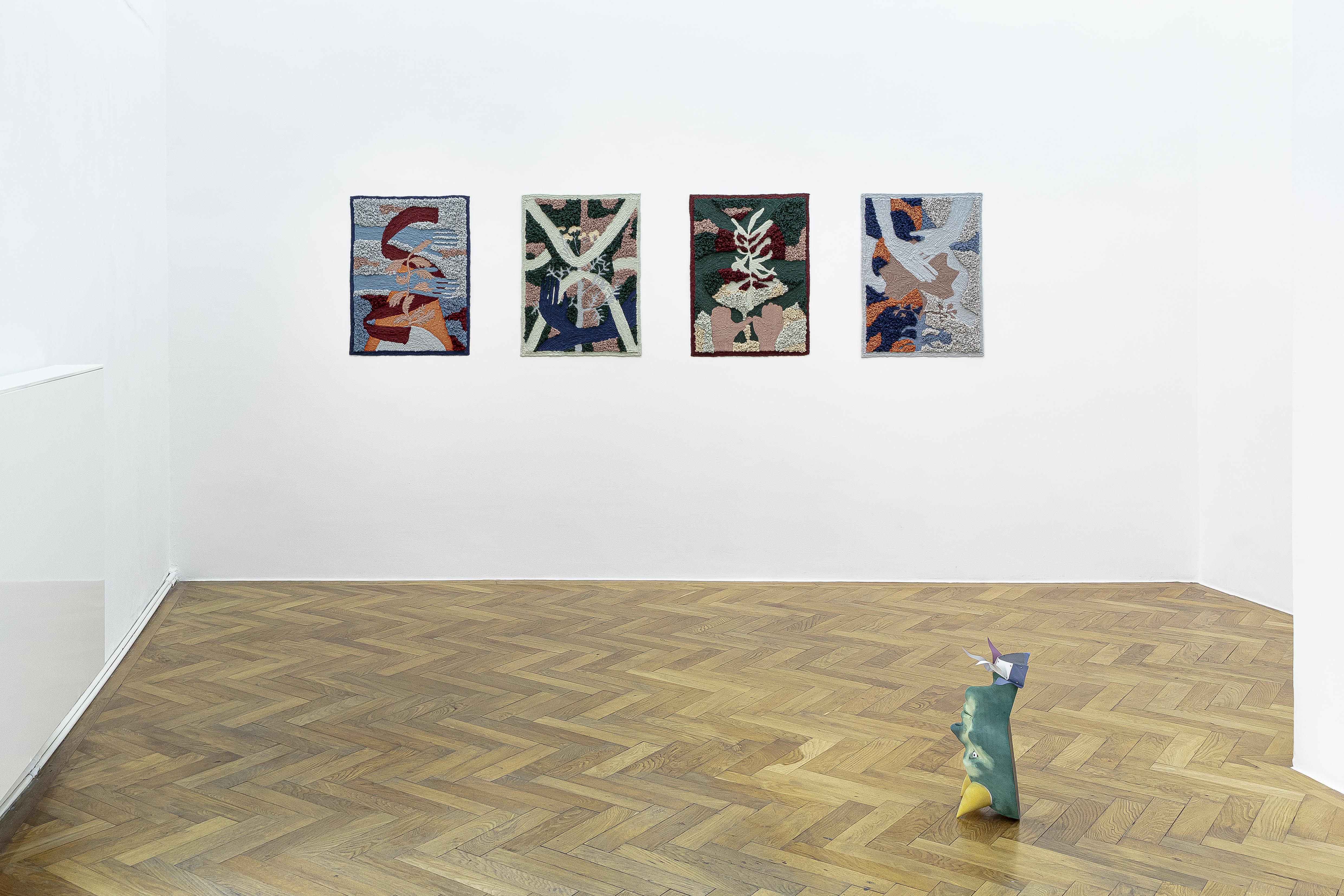
Sophia Mainka, Oracle des Plantes series, 2024, silicone on cotton, 75 x 57 x 1 cm each. Photo: Sebastian Kissel, courtesy Sperling, Munich.
Sophia Mainka, Tarot (Wheel of Fortune), 2924, silicone on cotton, 190 x 121 x 1 cm. Photo: Sebastian Kissel, courtesy Sperling, Munich.
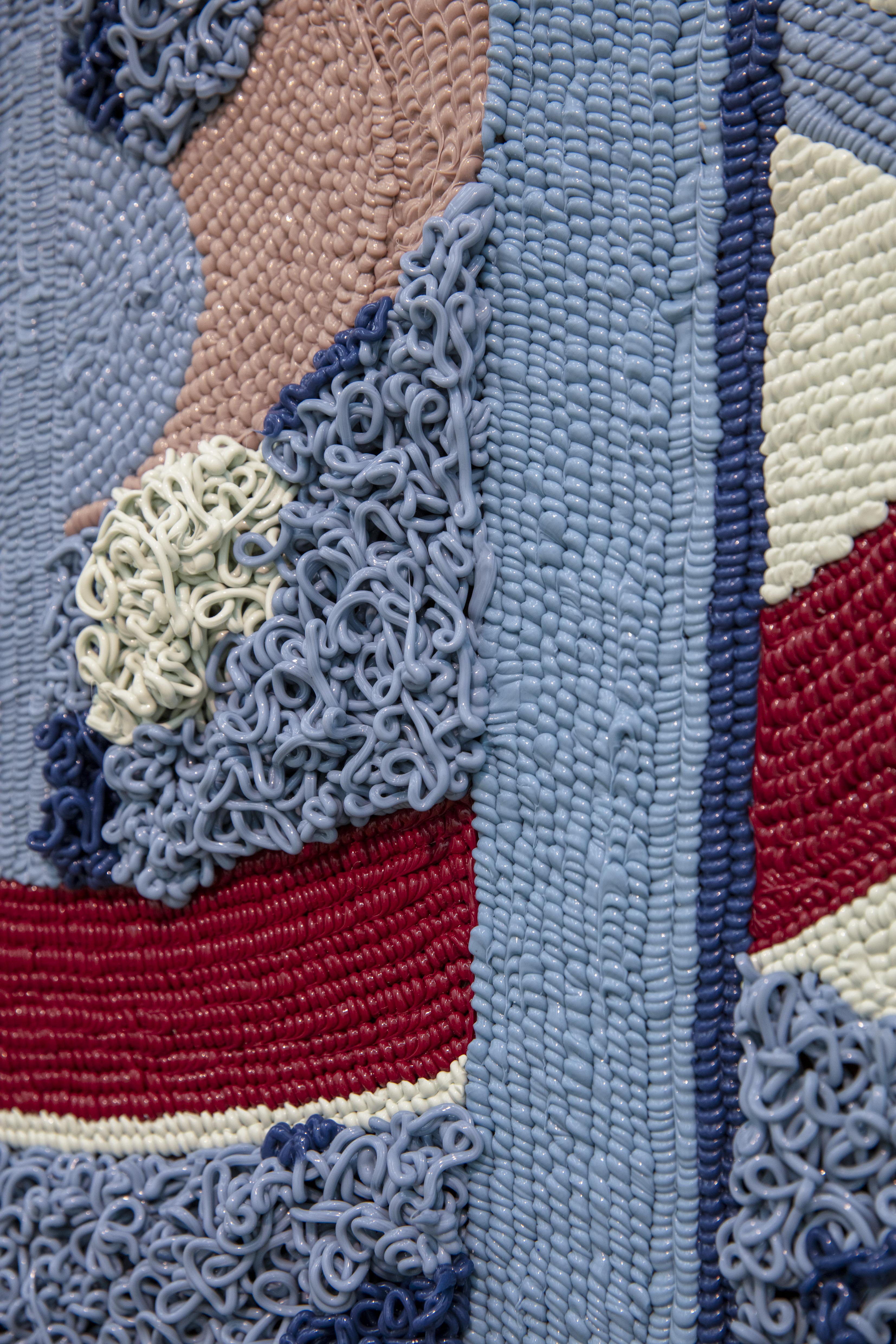
Sophia Mainka, Tarot (Wheel of Fortune), 2924, silicone on cotton, 190 x 121 x 1 cm (detail). Photo: Sebastian Kissel, courtesy Sperling, Munich.
Lukas Hoffmann, Pan, MDF, paper, wood, spray-paint, 41 x 22 x 19 cm. Photo: Sebastian Kissel, courtesy Sperling, Munich.
Throw off the dice, 2024, installation view. Photo: Sebastian Kissel, courtesy Sperling, Munich.
Lukas Hoffmann, Schloss, 2024, paper, wood, screws, spray-paint, 158 x 102 x 75 cm. Photo: Sebastian Kissel, courtesy Sperling, Munich.
Lukas Hoffmann, Schloss, 2024, paper, wood, screws, spray-paint, 158 x 102 x 75 cm (detail). Photo: Sebastian Kissel, courtesy Sperling, Munich.
Sophia Mainka, We used to be wild, 2024, video loop (full HD, stereo), 17 min & 17 sec. Photo: Sebastian Kissel, courtesy Sperling, Munich.

Throw of the dice – down a slippery slope

A standard game of dice is not a game of chance. At stake is probability, the odds of throwing this or that number, easily calculable. This is why we often lose, as the fable famously forewarns.[1] The young man inherits an estate and quickly gambles it away. In one sweep an entire forest is laid low. Is bad luck to blame? No, replies Fortune to an angry Pan. Just the foolishness of man.

A game of chance takes place on a far more slippery slope, like the round of croquet played in Alice in Wonderland, a game of cards of sorts.[2] Flamingos are mallets and a hedgehog is a ball. Whenever Alice wants to hit the hedgehog with the flamingo’s head, the bird turns floppy and spins round to look at her so comically that she laughs. And when she finally gets the flamingo’s head down, the hedgehog crawls away. In this game, cards move away from us and the players play all at once, quarrelling and fighting while the queen screams, “Off with their heads! Off with their heads!” For in a real game of chance, anything can happen. This would be the challenge: throwing the dice without knowing the rules of the game. To continue throwing the dice while accepting that each time the rules of the game change.

This is Nietzsche’s divine game, played across two tables, the earth and the sky.[3] Each time the dice is thrown the earth trembles, because the dice returns to us as divine. At that moment when the dice hover briefly in the air, they belong to the gods and all is possible. Our task is to affirm the entirety of possibility, any fate the gods prepared for us, cooking all of chance in one pot.[4] In this forest, we must wander bewildered and wild.[5]

In the exhibition, Sophia Mainka shows a series of wall mounted works made from silicone paste. Heavy and solid, yet curiously slippery, they are based on a Tarot deck of cards. It is peculiarly appropriate that the largest is the wheel of fortune, usually interpreted as standing for change or becoming. Fortune can be good or bad depending on the game, the question asked of the cards, open to interpretation. In Tarot, one card can mean many things and then change meaning at different times. In contrast, destiny is the thread woven through the image and cut by the three mythological sisters. The turn of the card is always fateful. Whatever the outcome of the roll of dice, this outcome is necessarily so: sky back to earth, slide and snip.

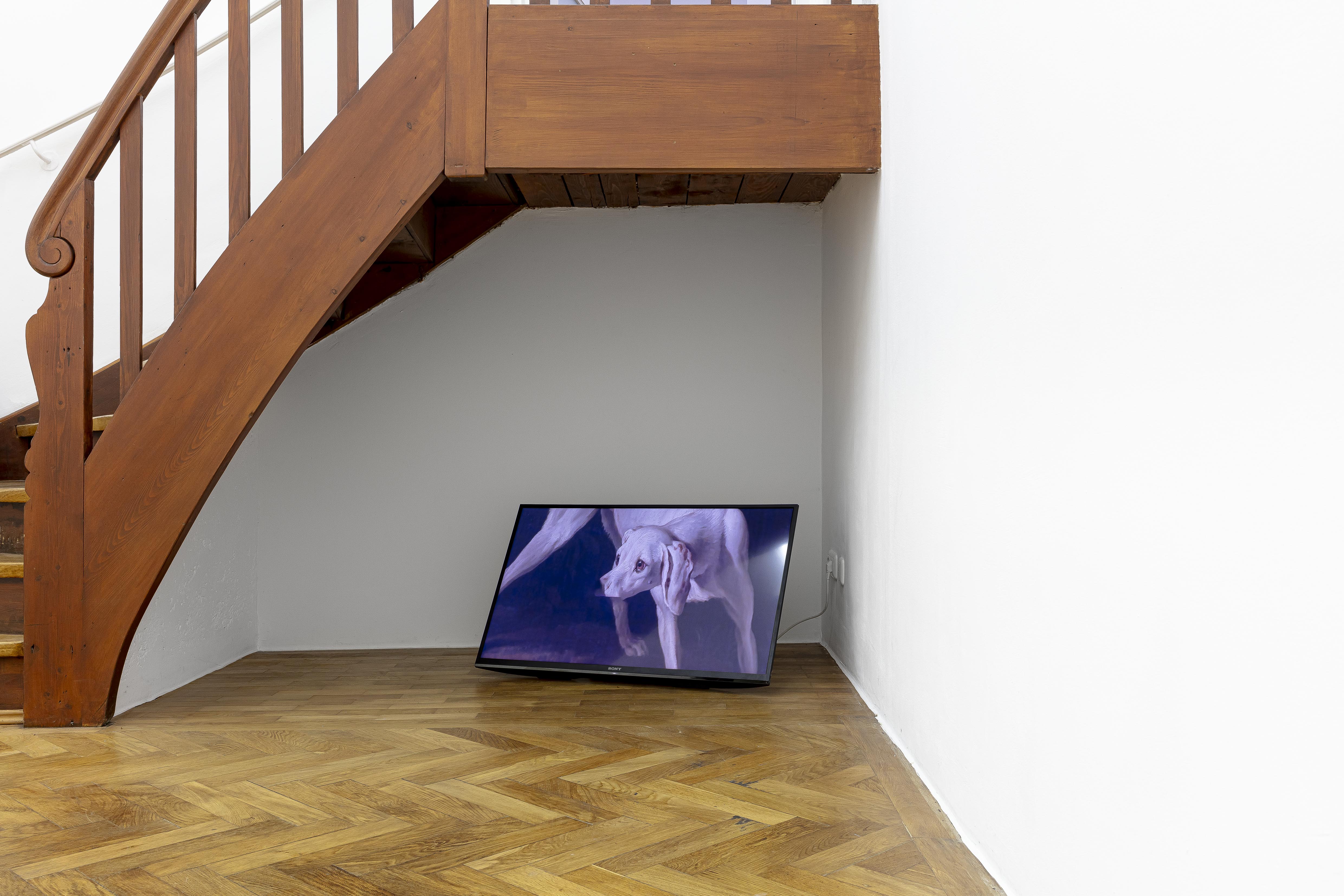
Perhaps then, we wander not quite so bewildered in this forest, as we necessarily follow our fate. But we wander on a surface without ground or depth, because free of cause. Everything in Mainka’s work takes place on the surface, like the hybrid creature scuttering around the ornate interiors of the Musée de la Chasse et de la Nature in her video. It imitates not animals, but depictions of them. The two talking dogs are not half-human but half-sculpture, their head and paws the same silicone as Mainka’s wall pieces. In Nazim Bakour’s music score, they do not bark, but whoop with the sound of the cuica drum.

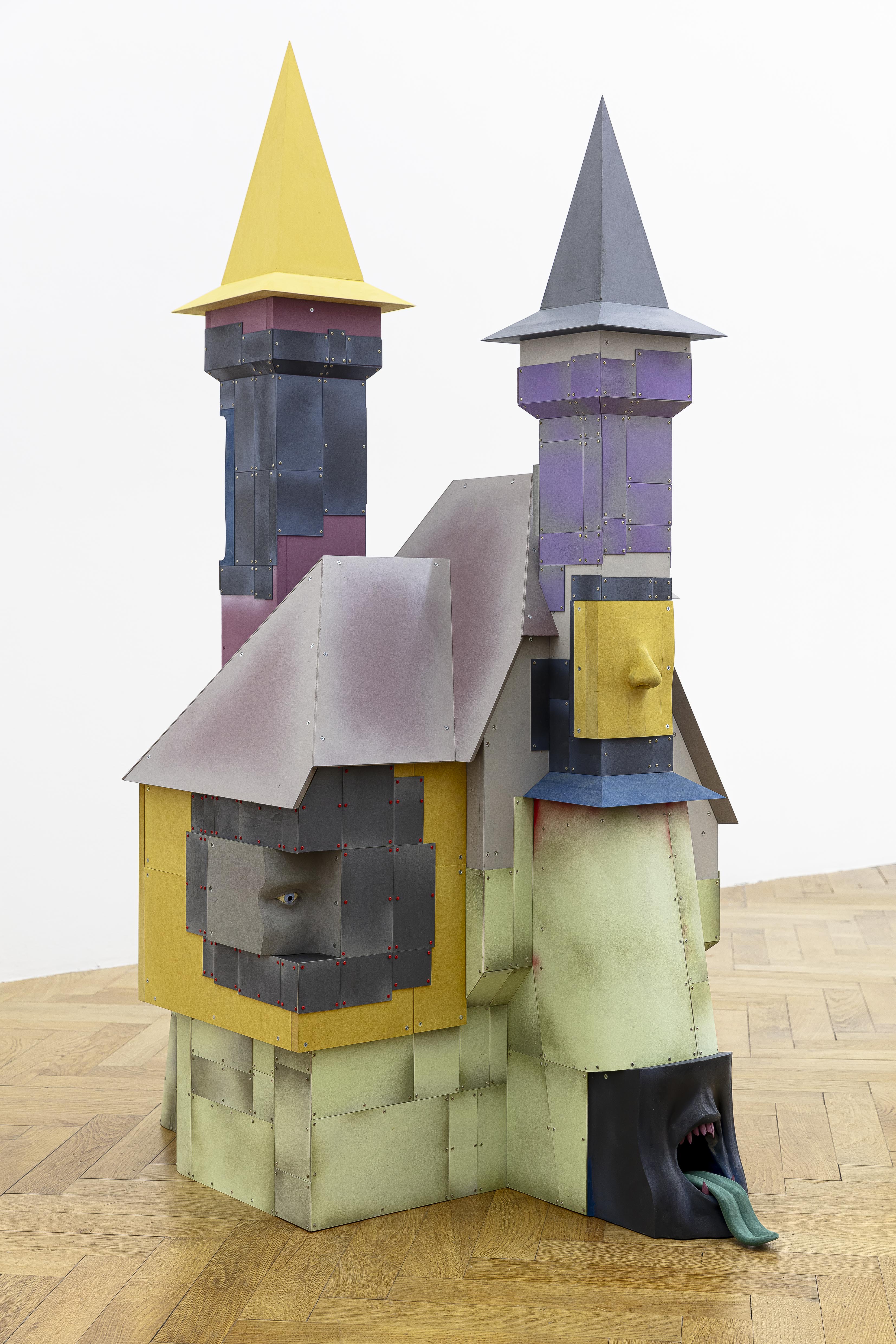
Lukas Hoffmann too stages a fictional world that has something of Lewis Carroll’s unsettling absurdity about it. There is a wooden castle with ears, eyes, a wide open mouth and a nose, and it is both too big and too small. Drink me, eat this, nibble both sides of the mushroom circle. As Alice grows bigger, her initial self also becomes smaller, pulled in both directions at once. With components jutting out and sliding in, the body both outside and inside, the castle too grows small as it becomes big. “Becoming without measure, a veritable becoming-mad.”[6] Observing this madness is the upside down head of Pan, the mischievous god of the wild. A mascaron fallen from its pediment. Run away in panic, it urges us – run away in chaos, it smiles.

Magdalena Wisniowska

[1] John Gay, Pan and Fortune, Fable XII, ”Yo a young Heir” see https://kalliope.org/en/text/gay2005052971

[2] Lewis Carroll, Alice in Wonderland, for a replica of the original first edition see https://www.adobe.com/be_en/active-use/pdf/Alice_in_Wonderland.pdf

[3] Friedrich Nietzsche, Thus Spoke Zarathustra, Book III, “Before Sunrise”, trans. Kaufmann, p.166cd and “The Seven Seals” 3, p. 258. See also Deleuze’s reading in Gilles Deleuze, Nietzsche and Philosophy, trans. Hugh Tomlinson, (London and New York: Continuum, 2002) p. 25–7.

[4] Zarathustra, Book III “The Bedwarfing Virtue” 3, p. 189.

[5] See blog by Corry Shores, https://piratesandrevolutionaries.blogspot.com/2009/05/dicethrow-11-in-deleuze-nietzsche.html

[6] Gilles Deleuze, The Logic of Sense, trans. Mark Lester (London and New York: Bloomsbury, 2004), p. 3.