Animal Elegance

Jakob Gilg, Anka Helfertova, Julia Klemm and Jonathan Penca

9.10. – 7.11.2025

with Pracownia Portretu, Łódź, Poland
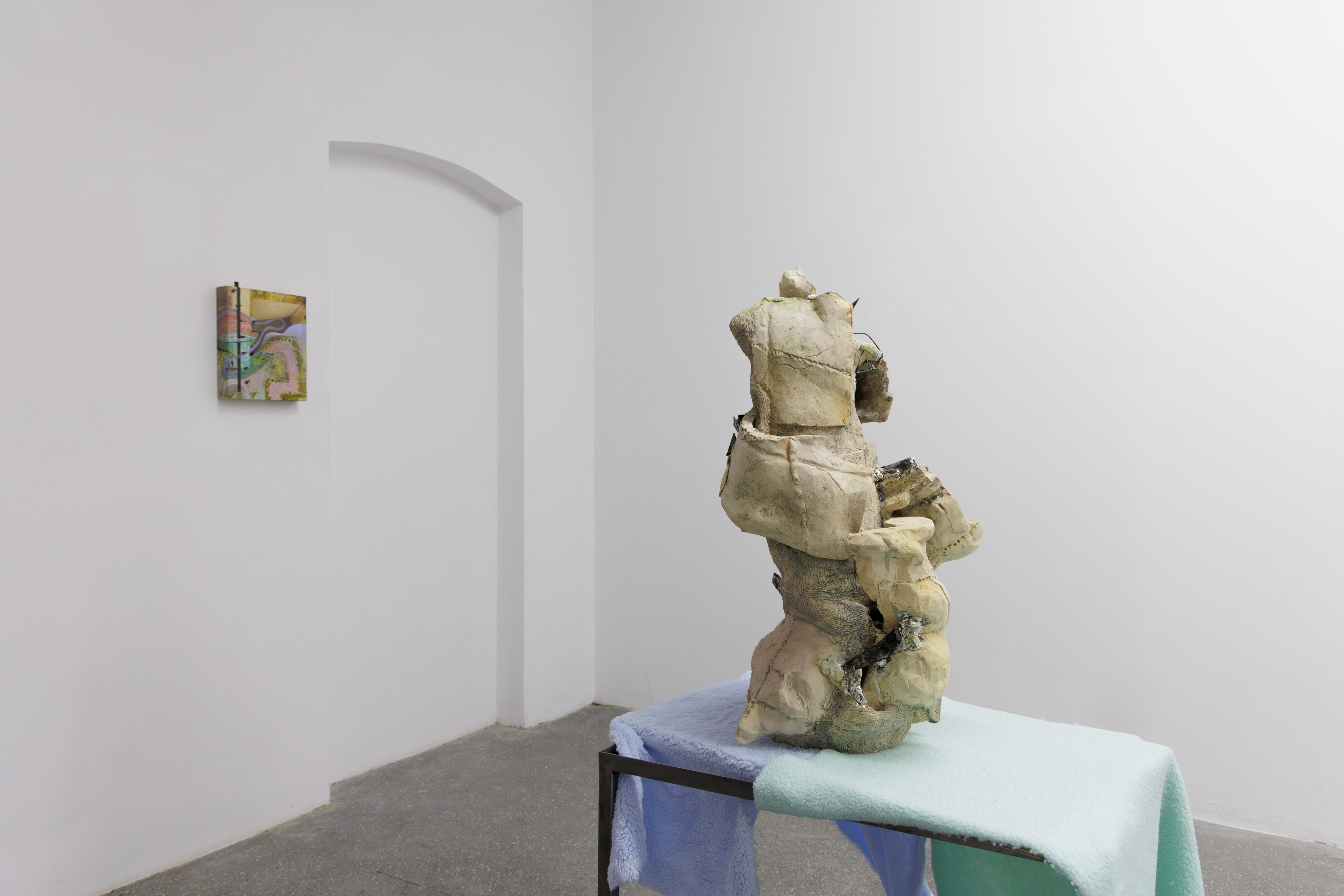
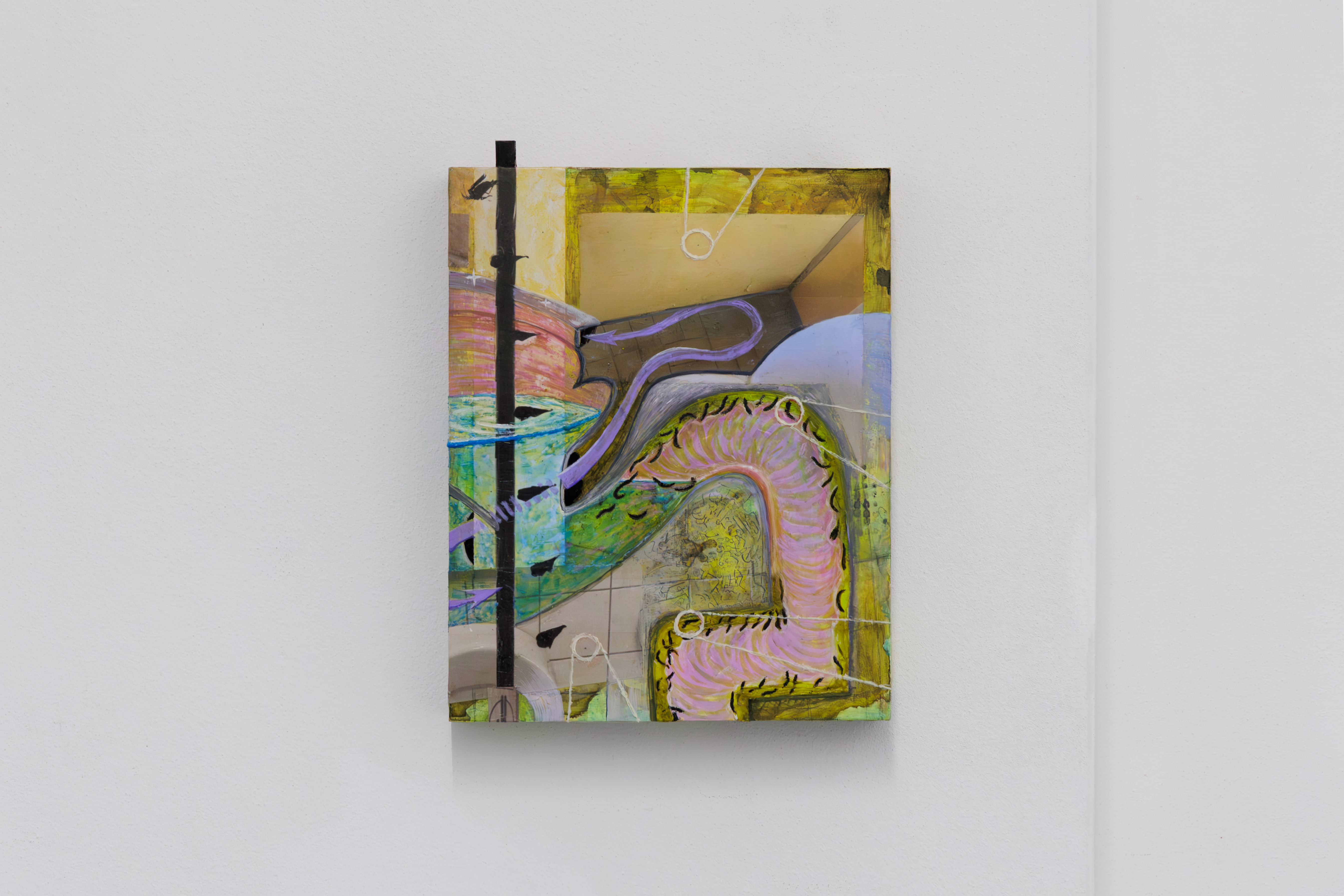
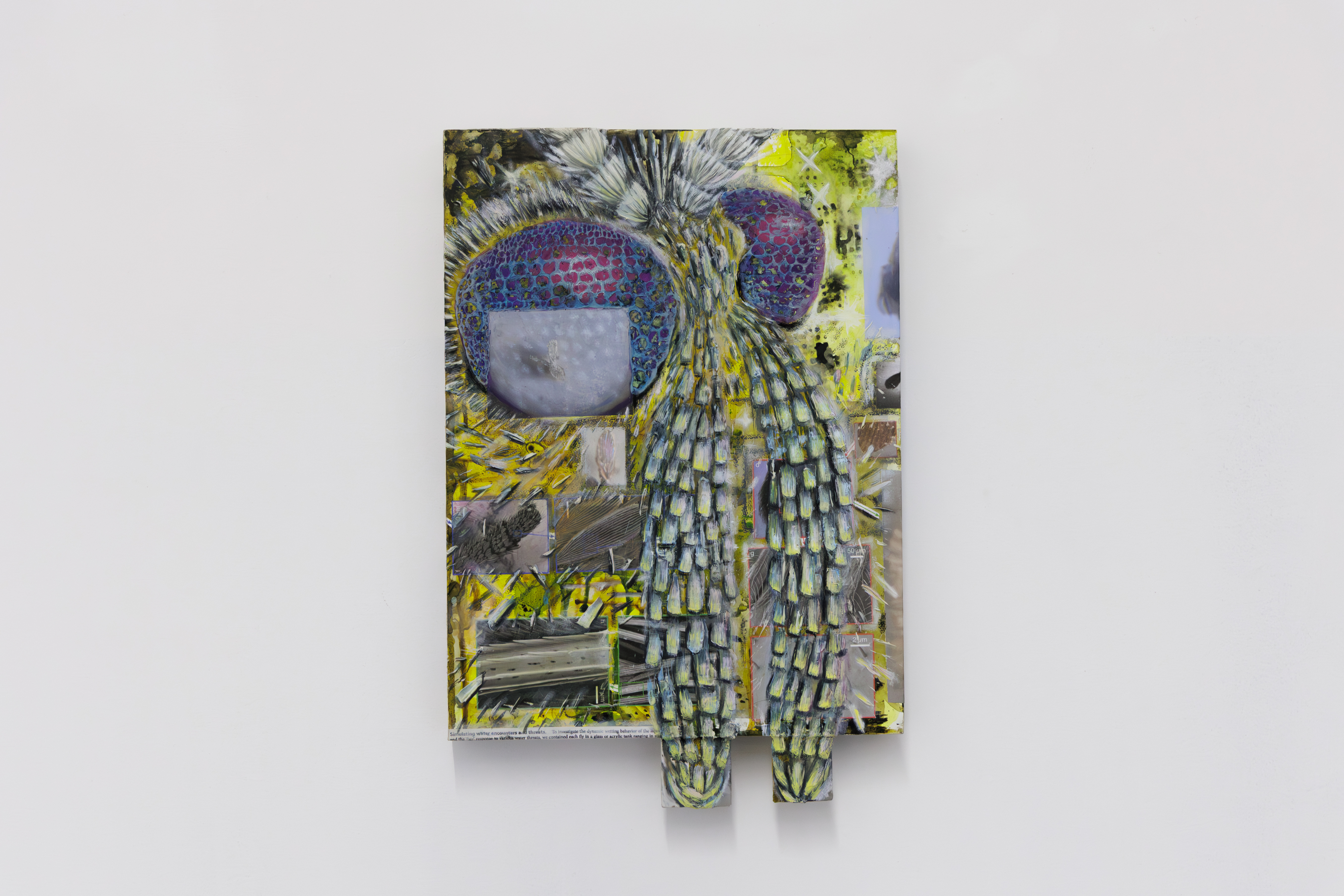
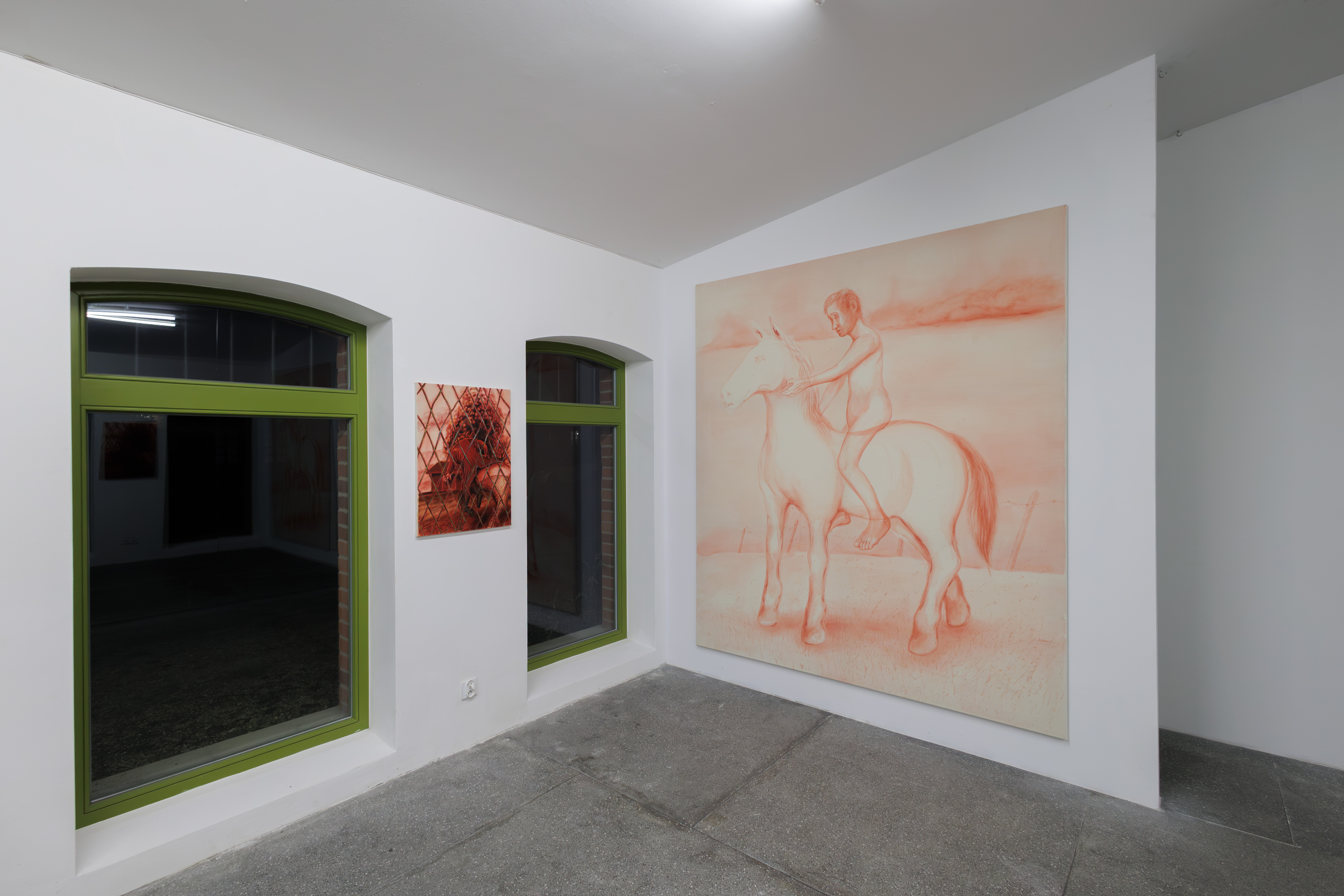
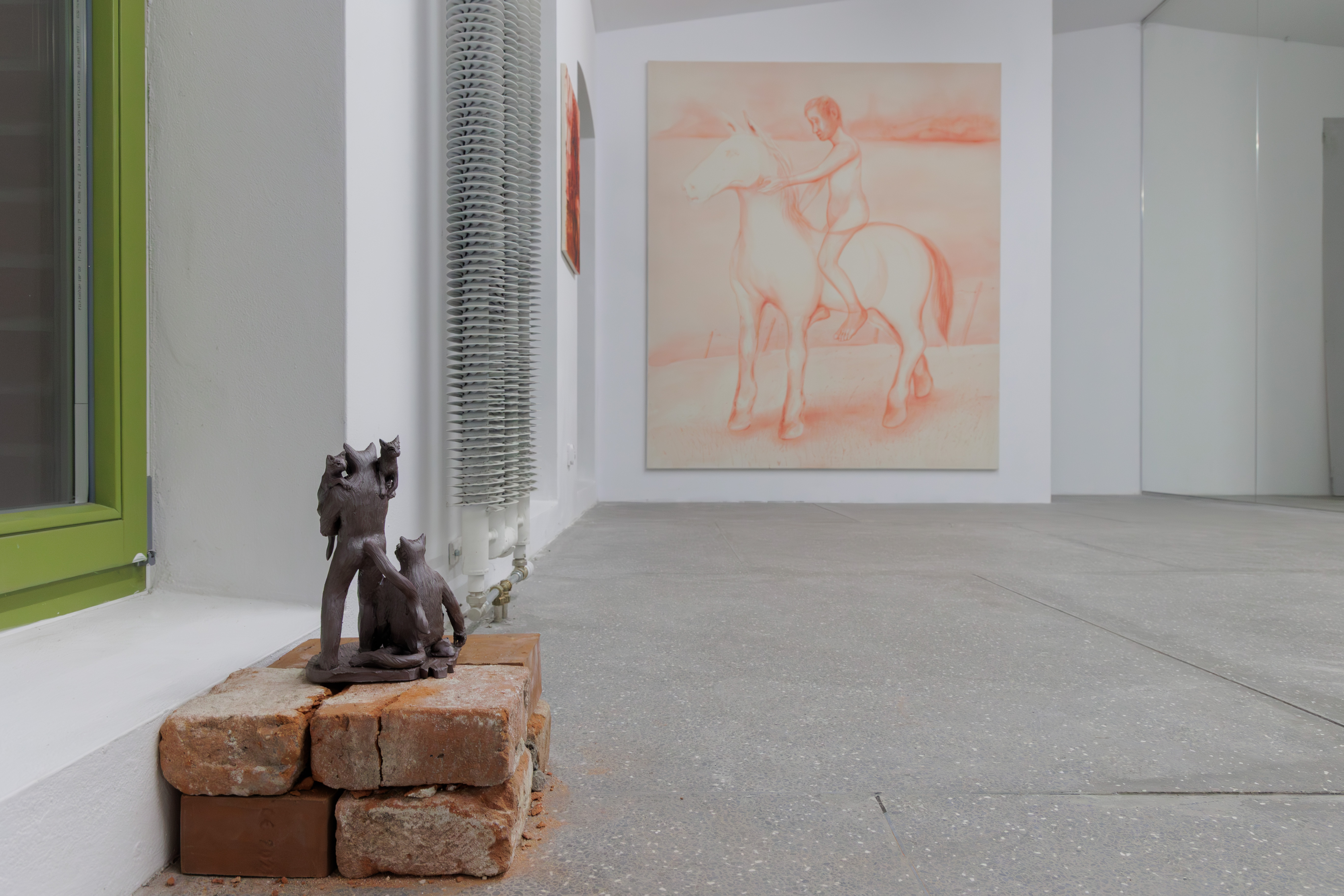
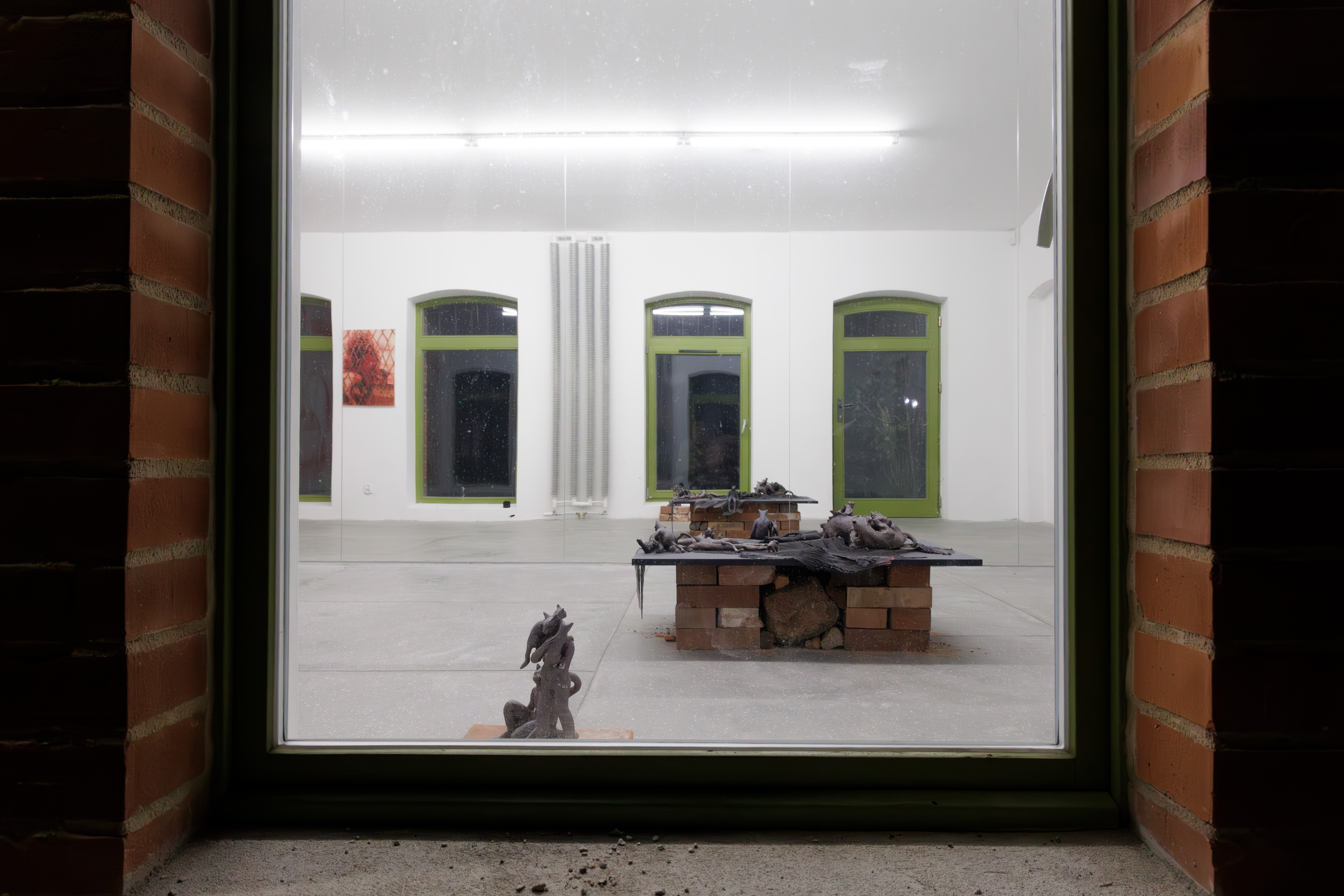
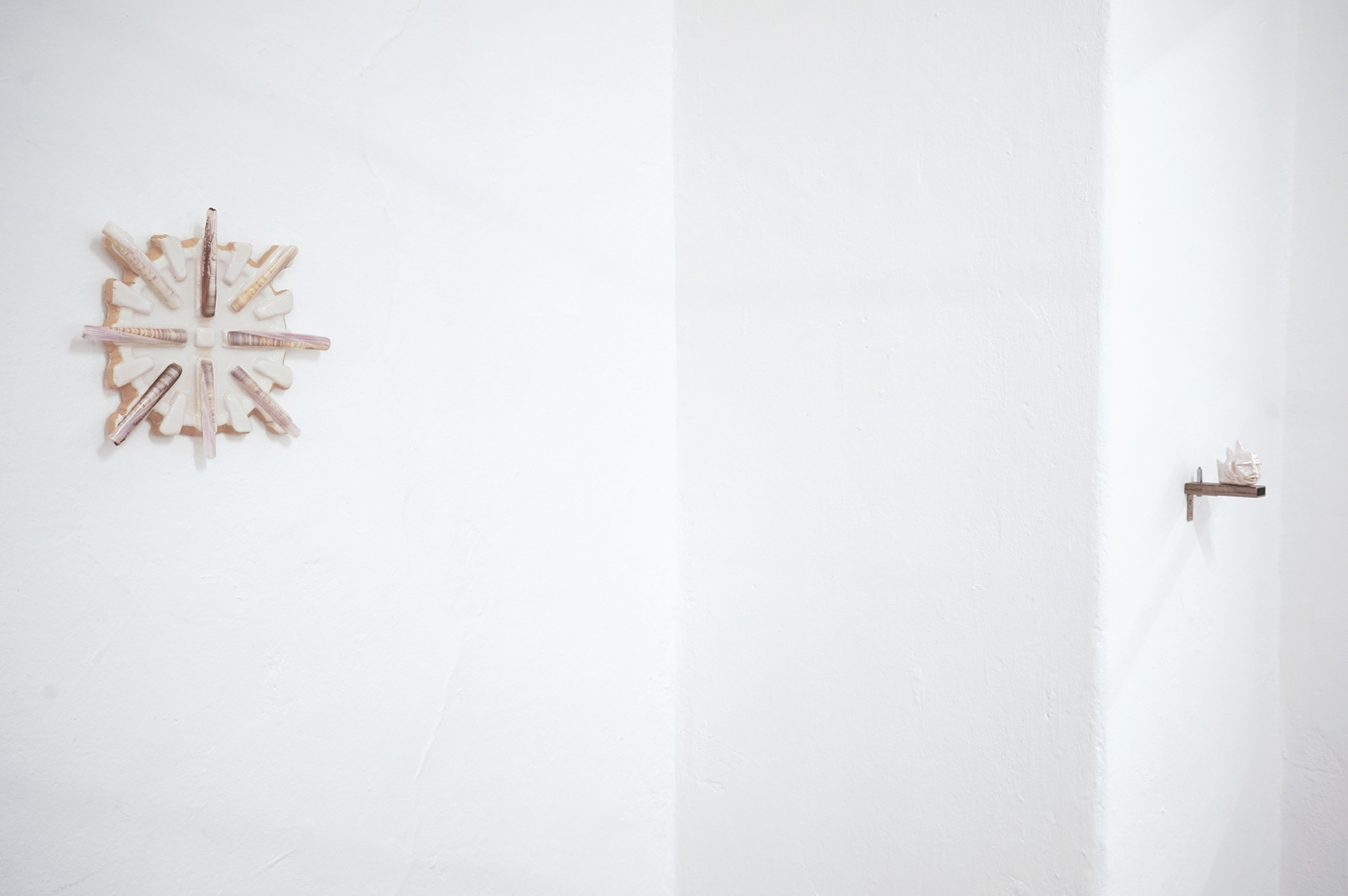
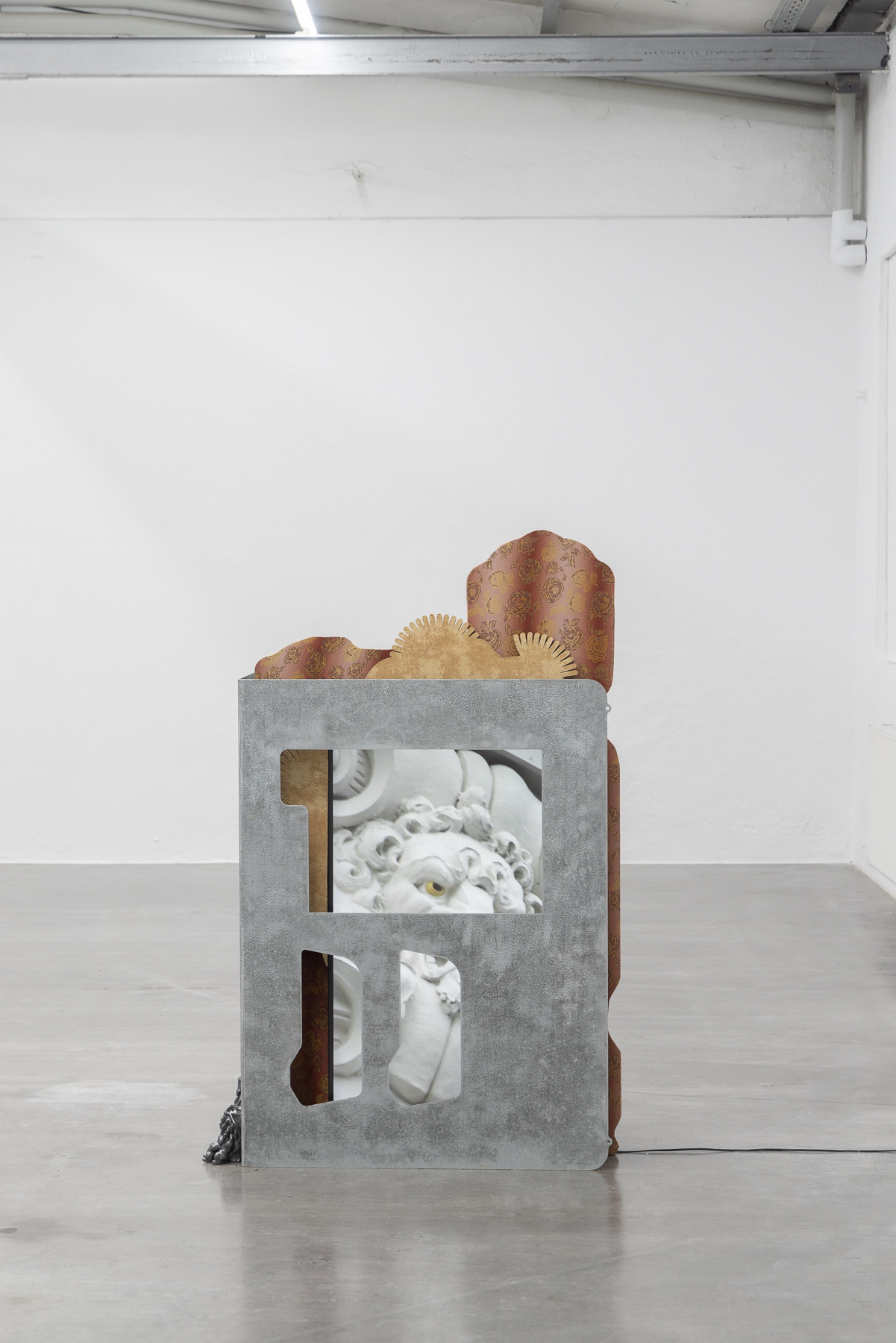
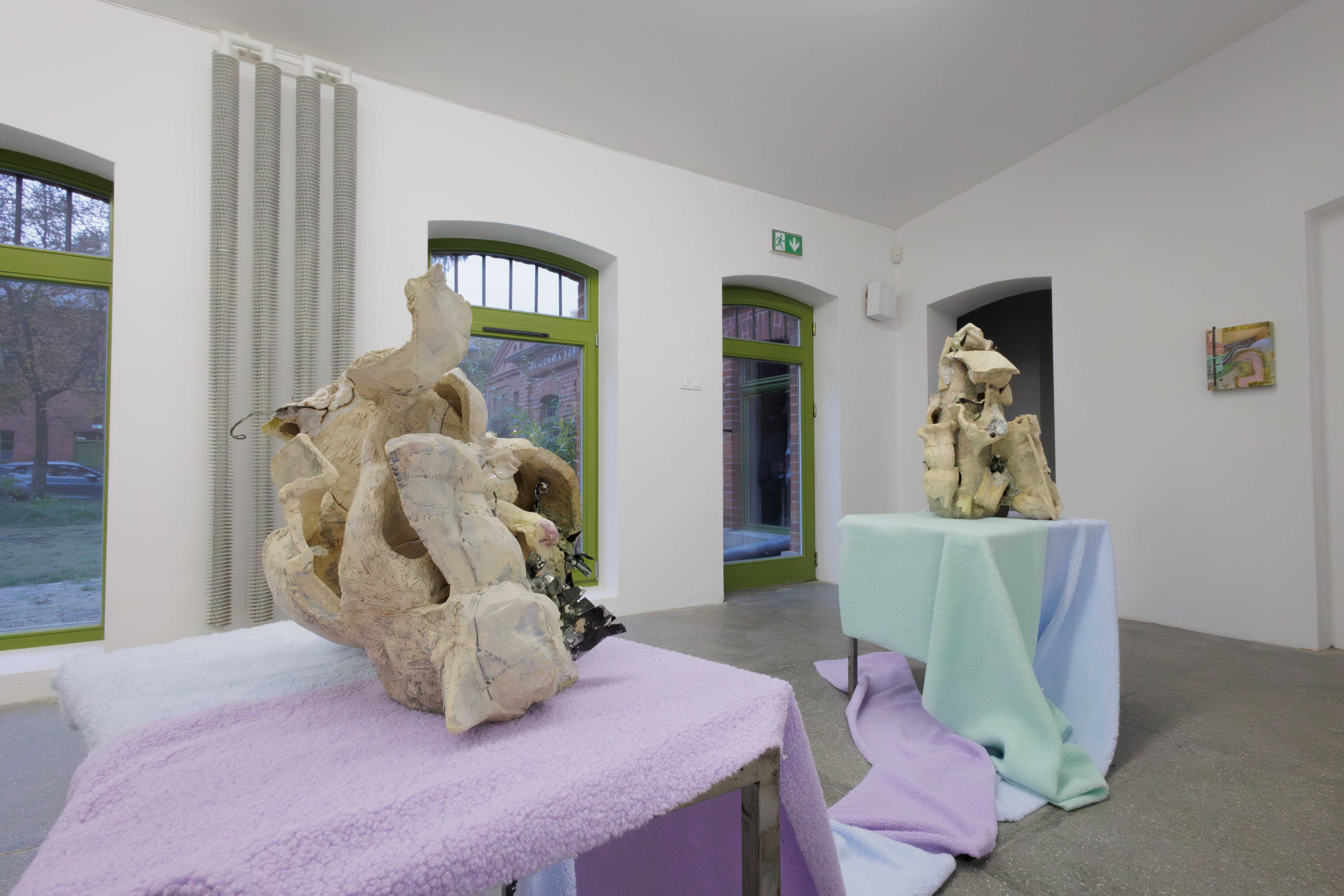
Animal Elegance, installation view (Jonathan Penca, Colonna Sonora, 2025, acrylic and
gouache paint, acrylic resin, biro, pencil, gesso and ink on wood. 31 x 24 x 5 cm; Julia Klemm, A chimera is not a pet 2, 2025, steel, glaze, ceramic, pigment, 44 x 38 x 74 cm, )
Animal Elegance, installation view (Jonathan Penca, Colonna Sonora, 2025, acrylic and
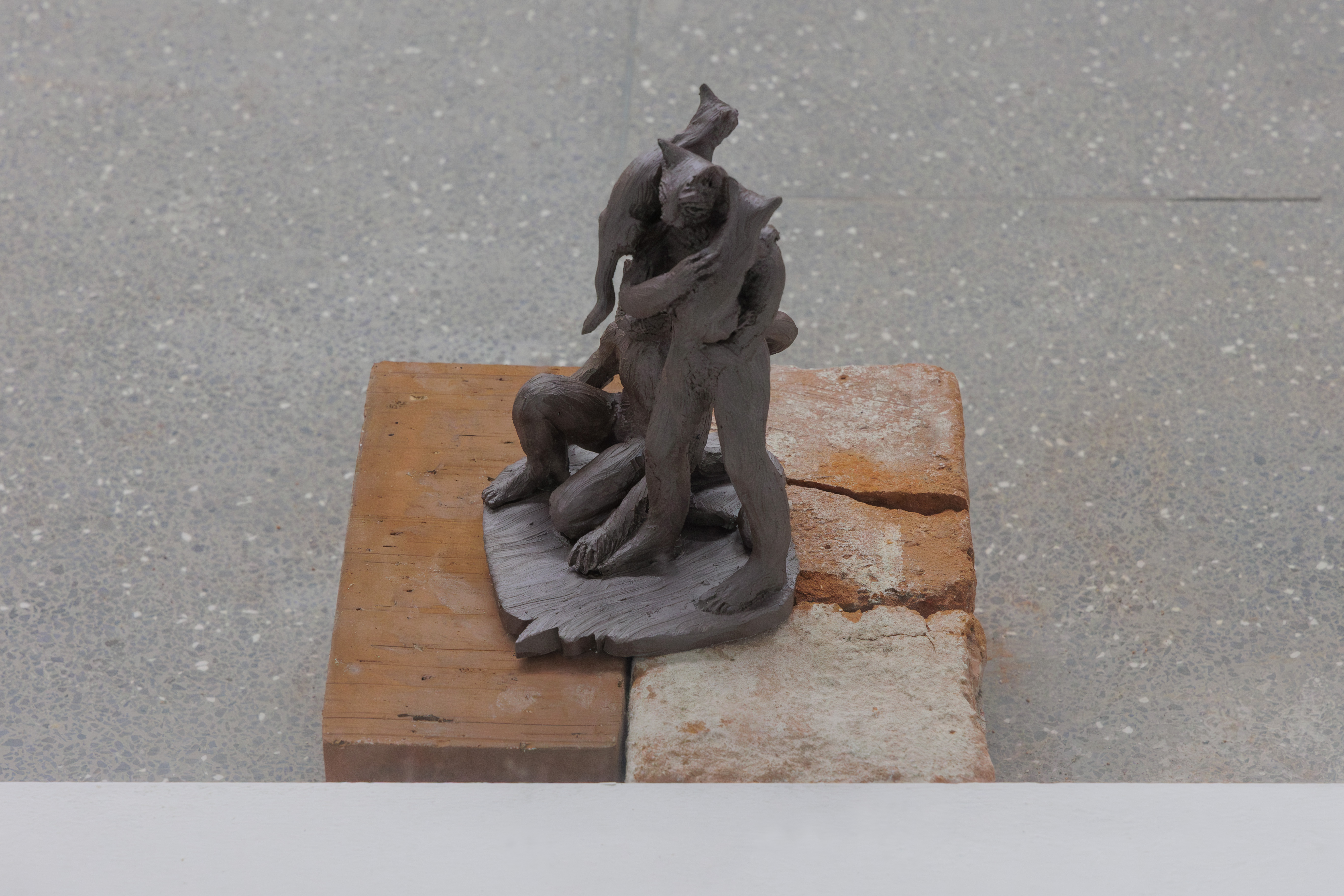
gouache paint, acrylic resin, biro, pencil, gesso and ink on wood. 31 x 24 x 5 cm, ; Julia Klemm, A chimera is not a pet 2, 2025, steel, glaze, ceramic, pigment, 44 x 38 x 74 cm,; Julia Klemm, A chimera is not a pet 3 , 2025, steel, glaze, ceramic, pigment, 46 x 34 x 42 cm)
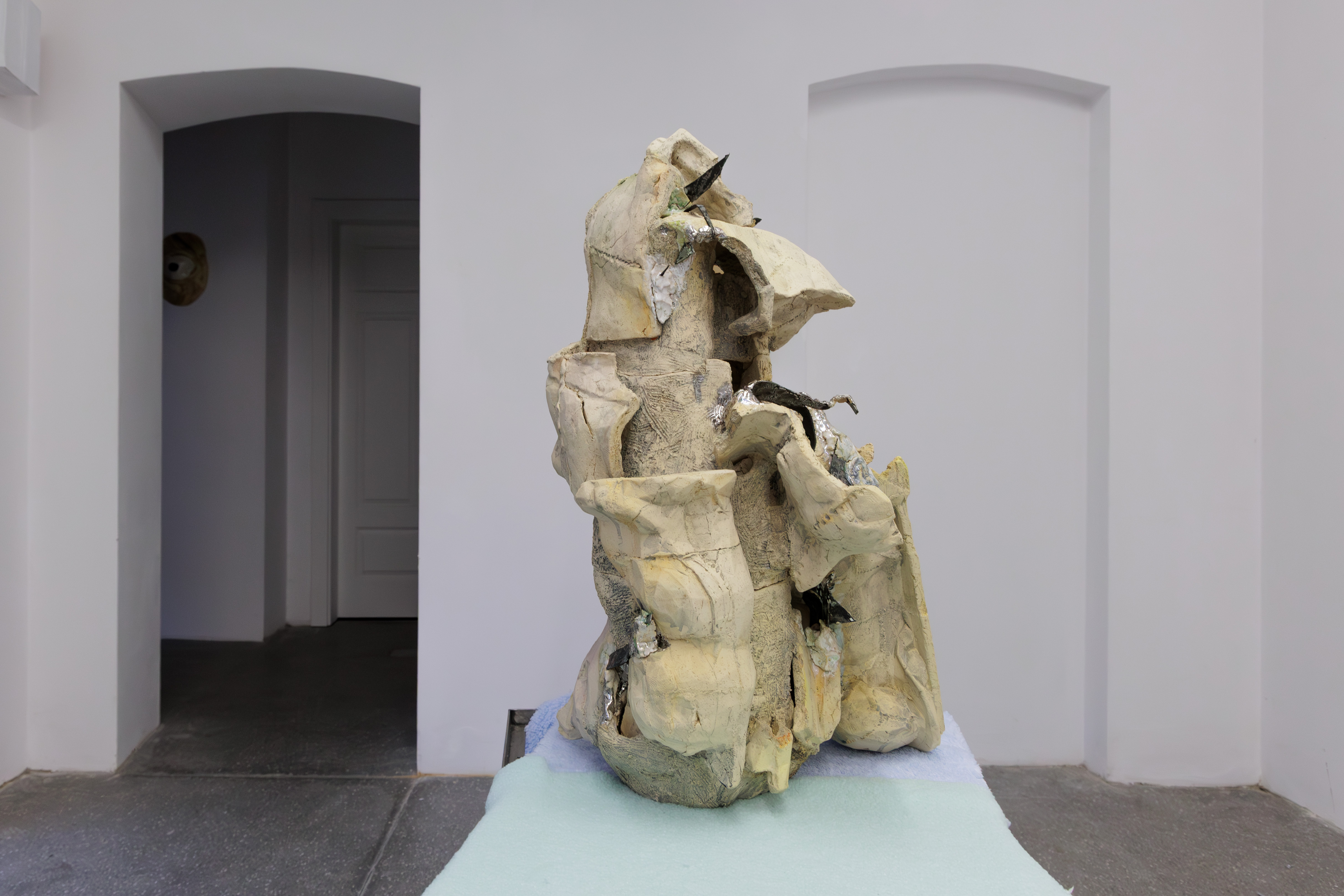
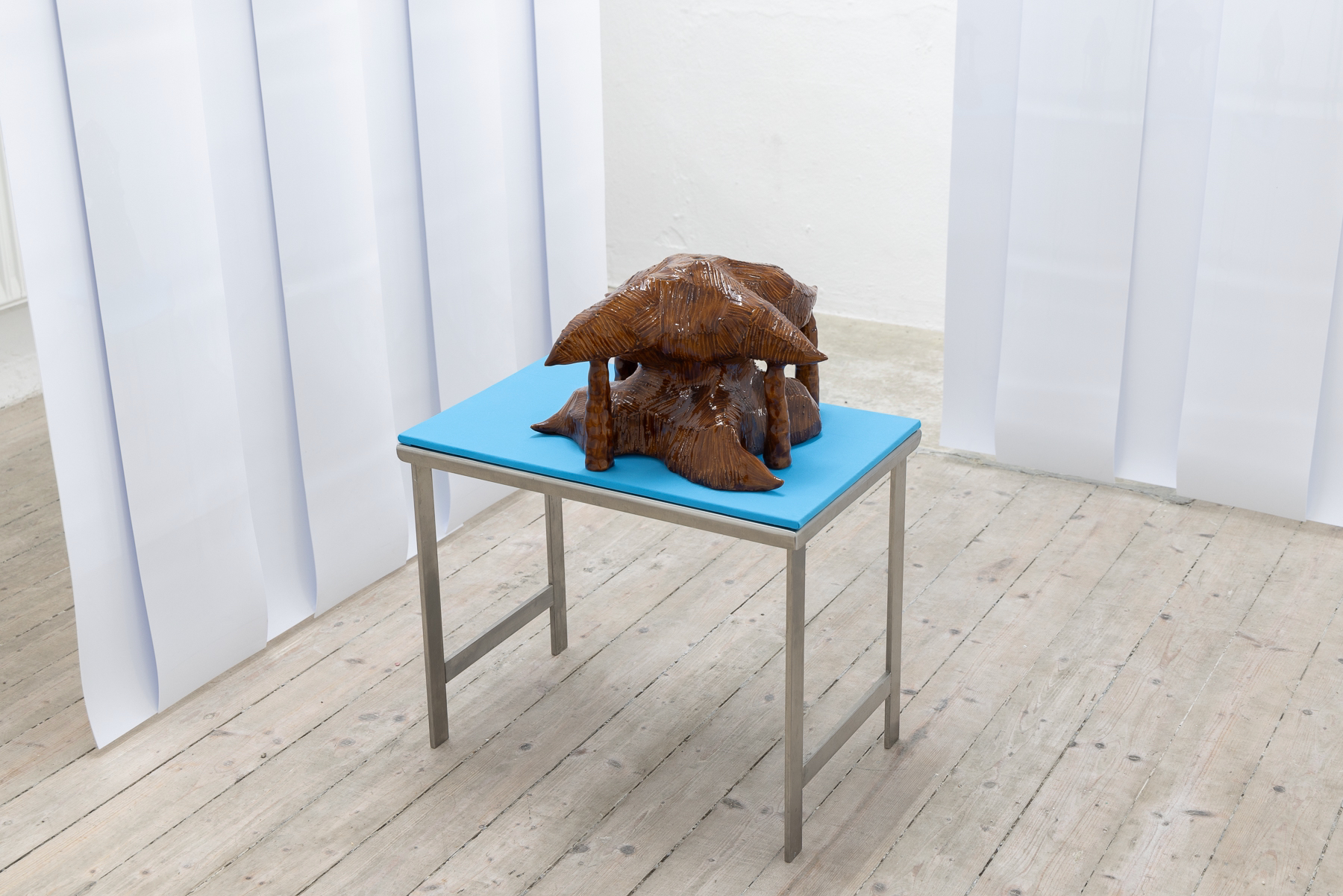
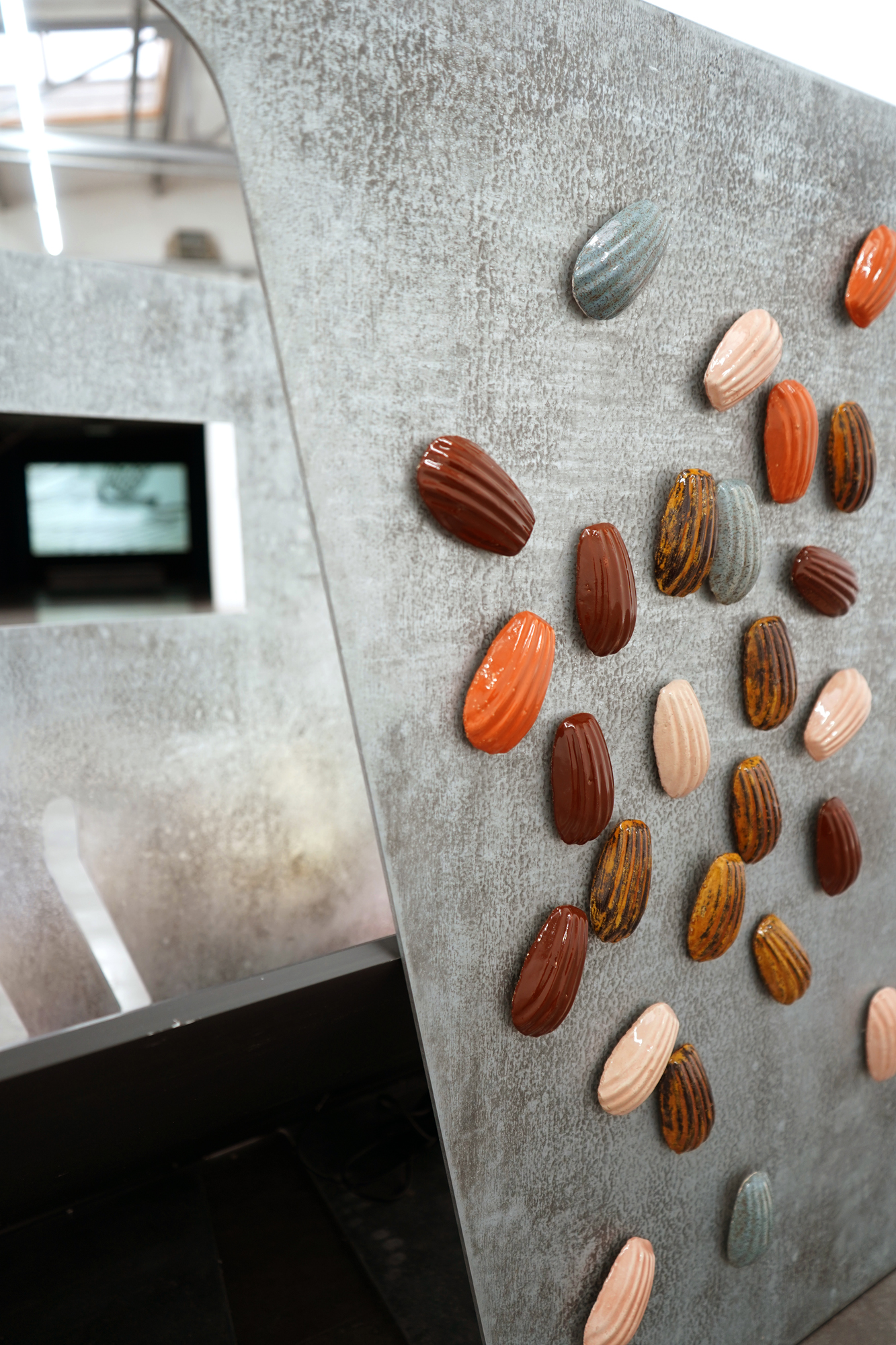
Julia Klemm, A chimera is not a pet 2,2025, steel, glaze, ceramic, pigment, 44 x 38 x 74 cm,
Animal Elegance, installation view (Jonathan Penca, Colonna Sonora, 2025, acrylic and
gouache paint, acrylic resin, biro, pencil, gesso and ink on wood. 31 x 24 x 5 cm; Julia Klemm, A chimera is not a pet 2,2025, steel, glaze, ceramic, pigment, 44 x 38 x 74 cm,; Julia Klemm, A chimera is not a pet 3 , 2025, steel, glaze, ceramic, pigment, 46 x 34 x 42 cm)
Jonathan Penca, Colonna Sonora, 2025, acrylic and
gouache paint, acrylic resin, biro, pencil, gesso and ink on wood. 31 x 24 x 5 cm,
Animal Elegance, installation view , 2025
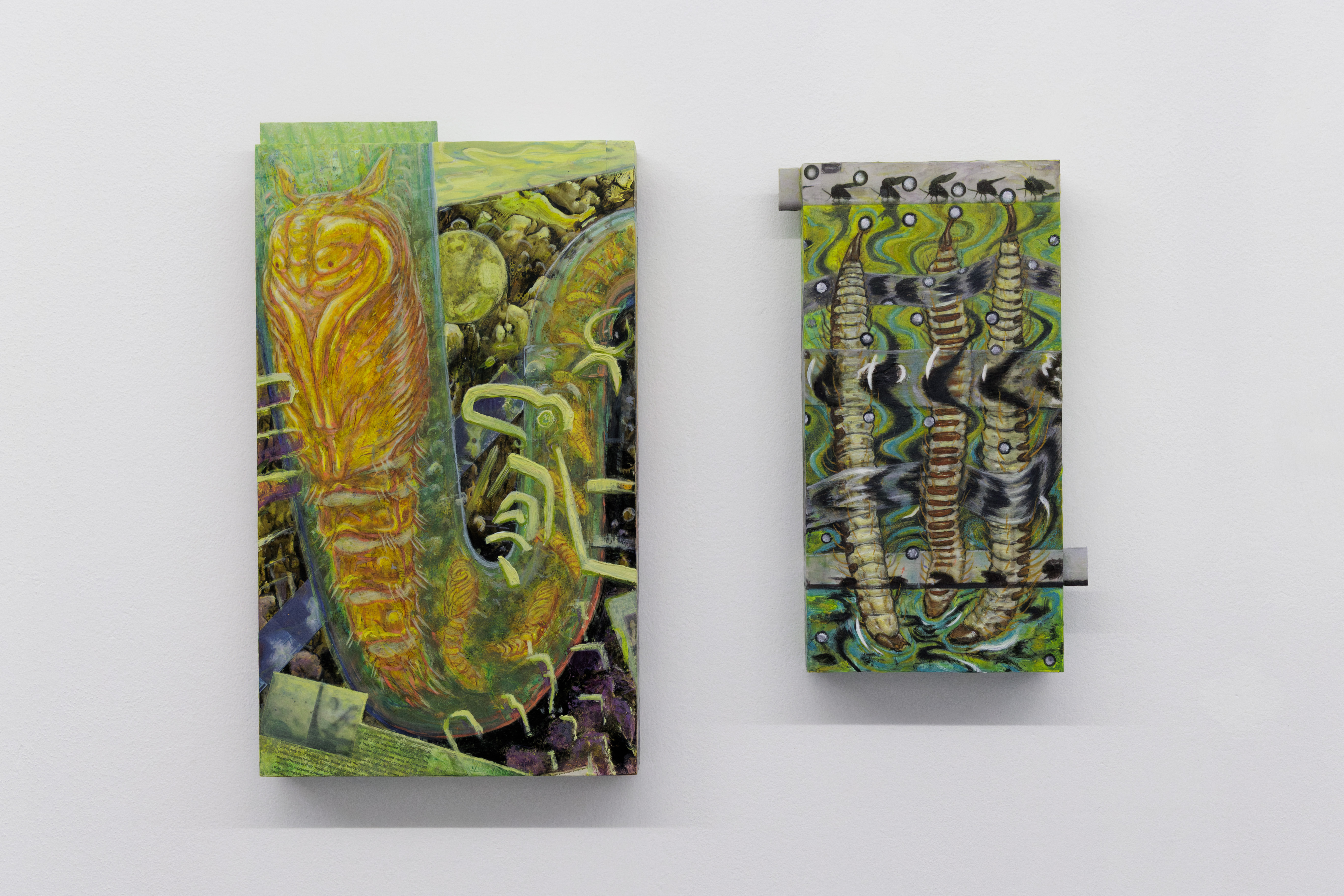
Jonathan Penca, inglers Groove, 2025, gouache, acrylic, watercolour, acrylic resin, pencil, gesso, ink and paper on wood, 52 x 30 x 5 cm; Jonathan Penca, Tufty Sequence, 2025, gouache, acrylic, acrylic resin, biro, gesso, ink and paper on wood, 40 x 19 x 5 cm)
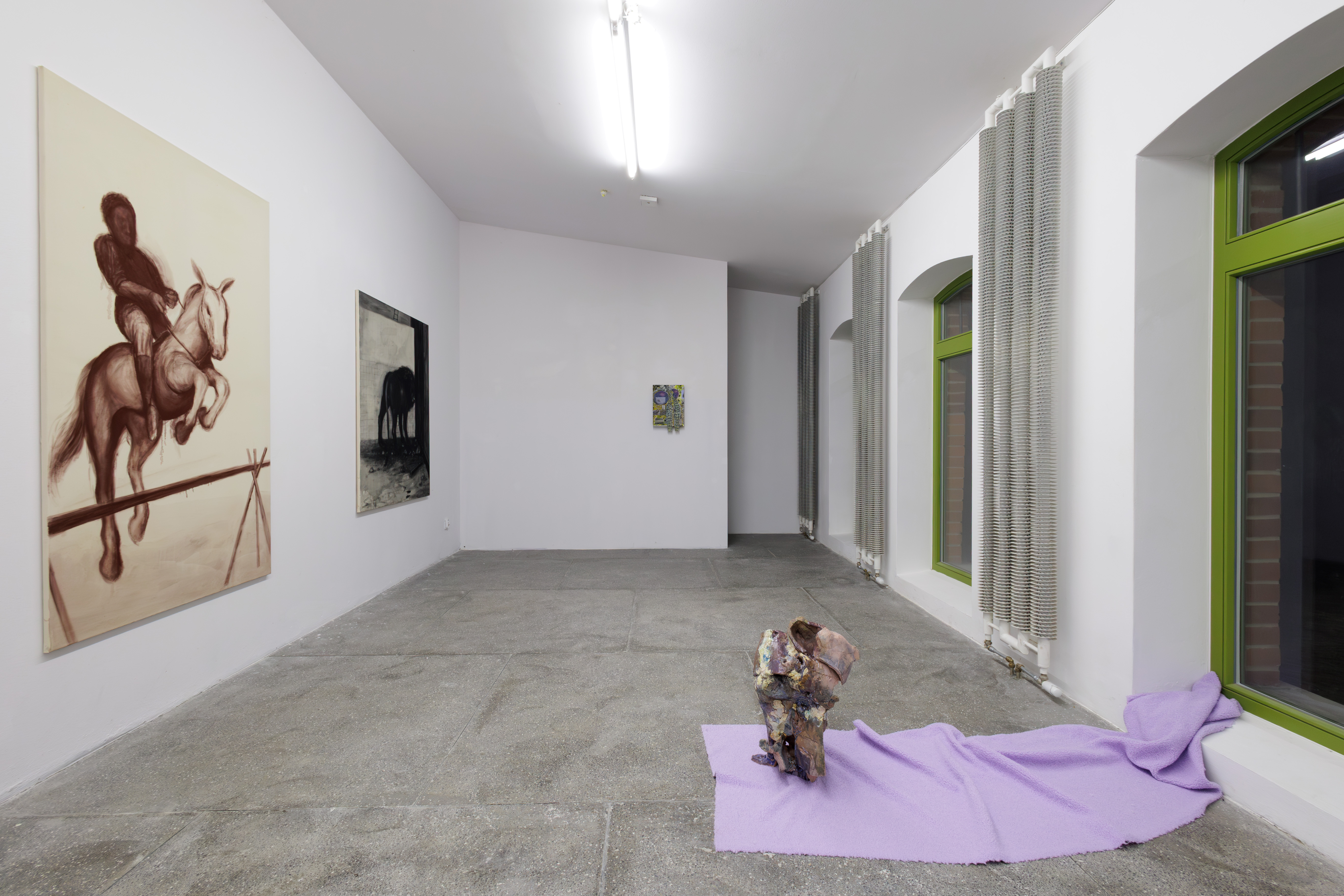
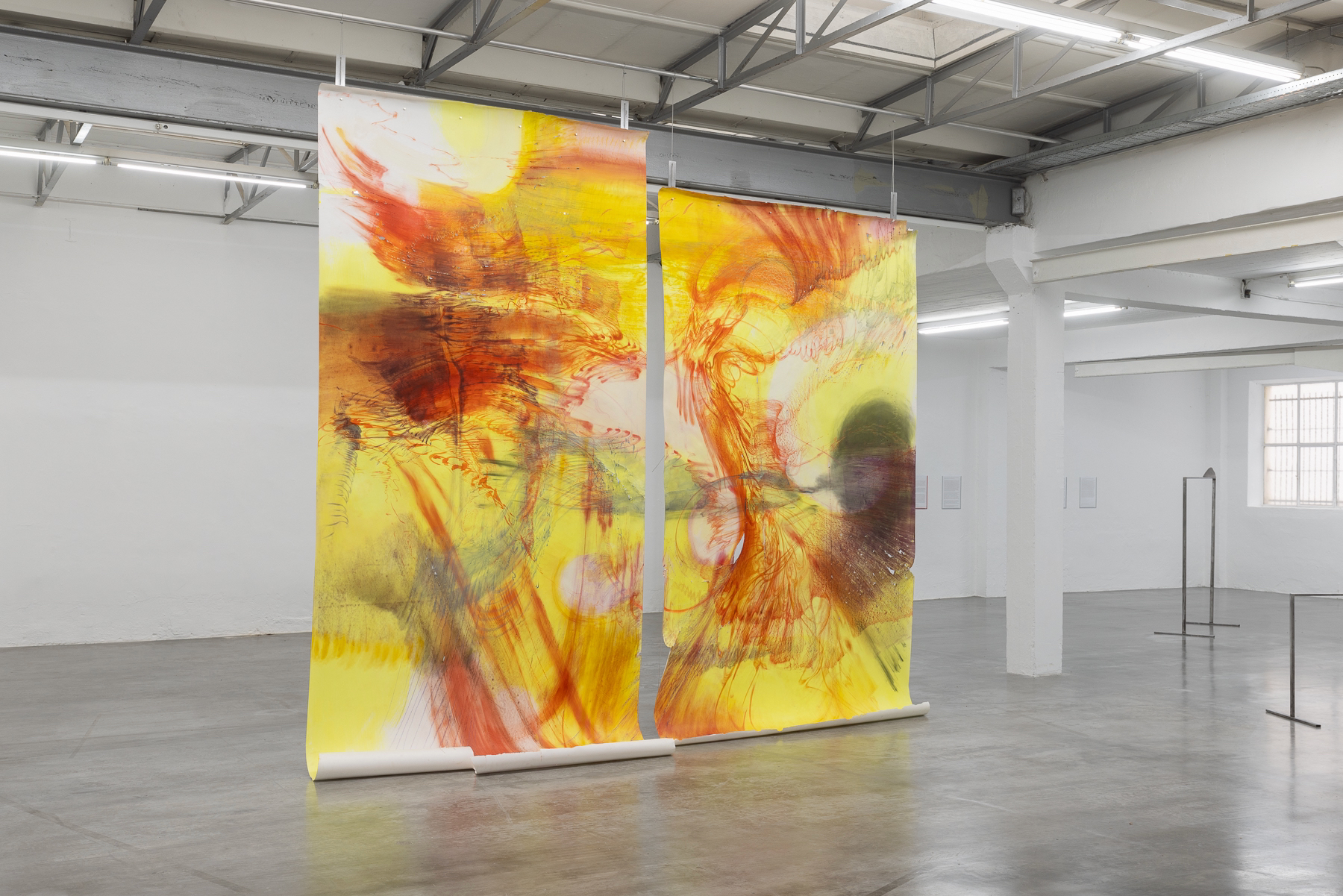
Animal Elegance, 2025, installation view

Julia Klemm, Transcending territories, 2024, glaze, ceramic, pigment, 32 x 30 x 48 cm
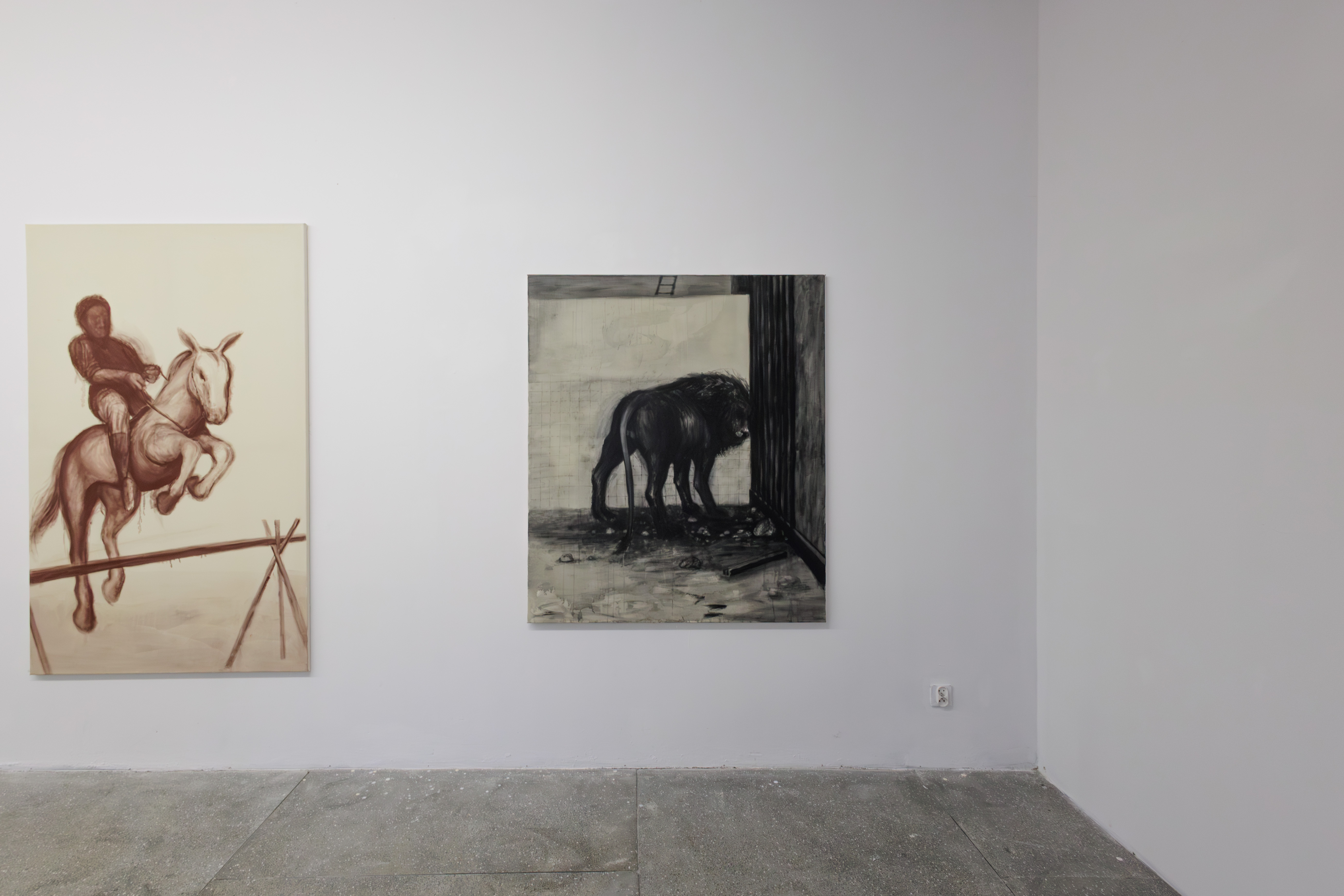
Animal Elegance, 2025, installation view
Jakob Gilg, Alignment, 2025, pigment and acrylic medium on canvas, 180 x 110 cm; Jakob Gilg, Virgo, 2025, pigment and acrylic medium on canvas, 140 x 120 cm)
Jonathan Penca, Clogmia, 2025, gouache, acrylic resin, gesso, ink, makeup powder and paper on wood, 44 x 30 x 5 cm
Jakob Gilg, I’m sorry, 2024, pigment and acrylic medium on canvas, 25o x 200 cm; Jakob Gilg, Kindling, 2025, pigment and acrylic medium on canvas, 70 x 50 cm
Jakob Gilg, Kindling, 2025, pigment and acrylic medium on canvas, 70 x 50 cm
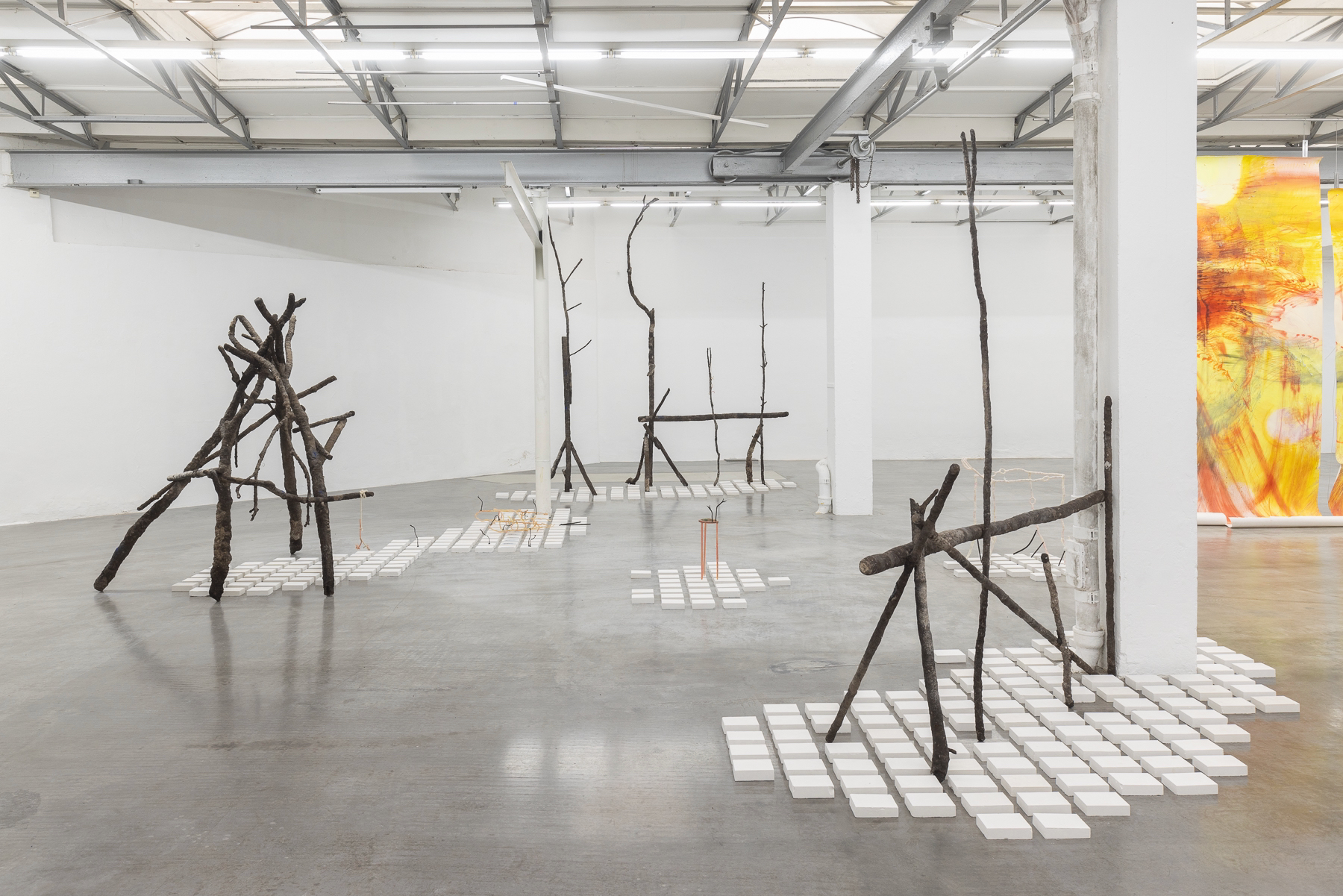
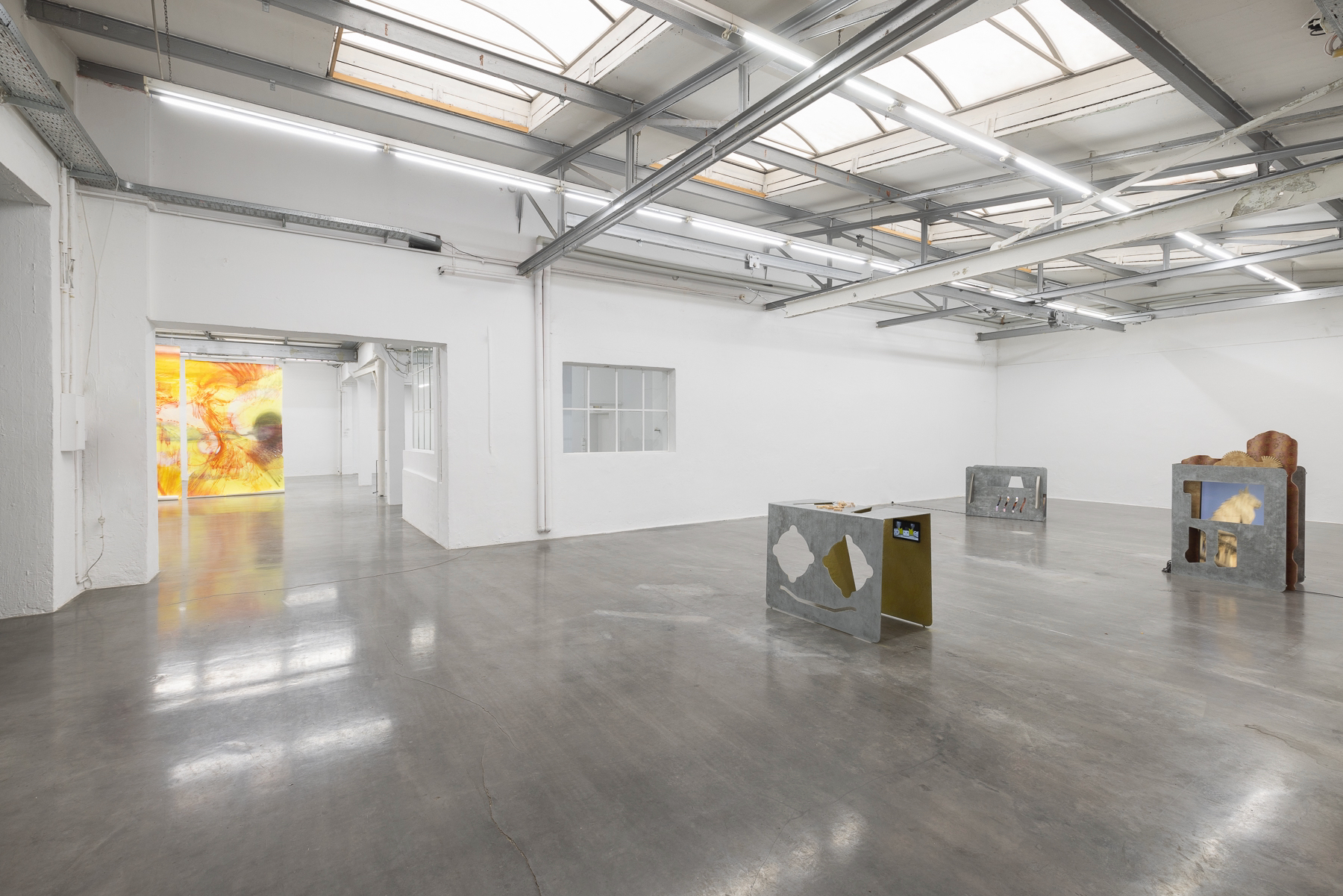
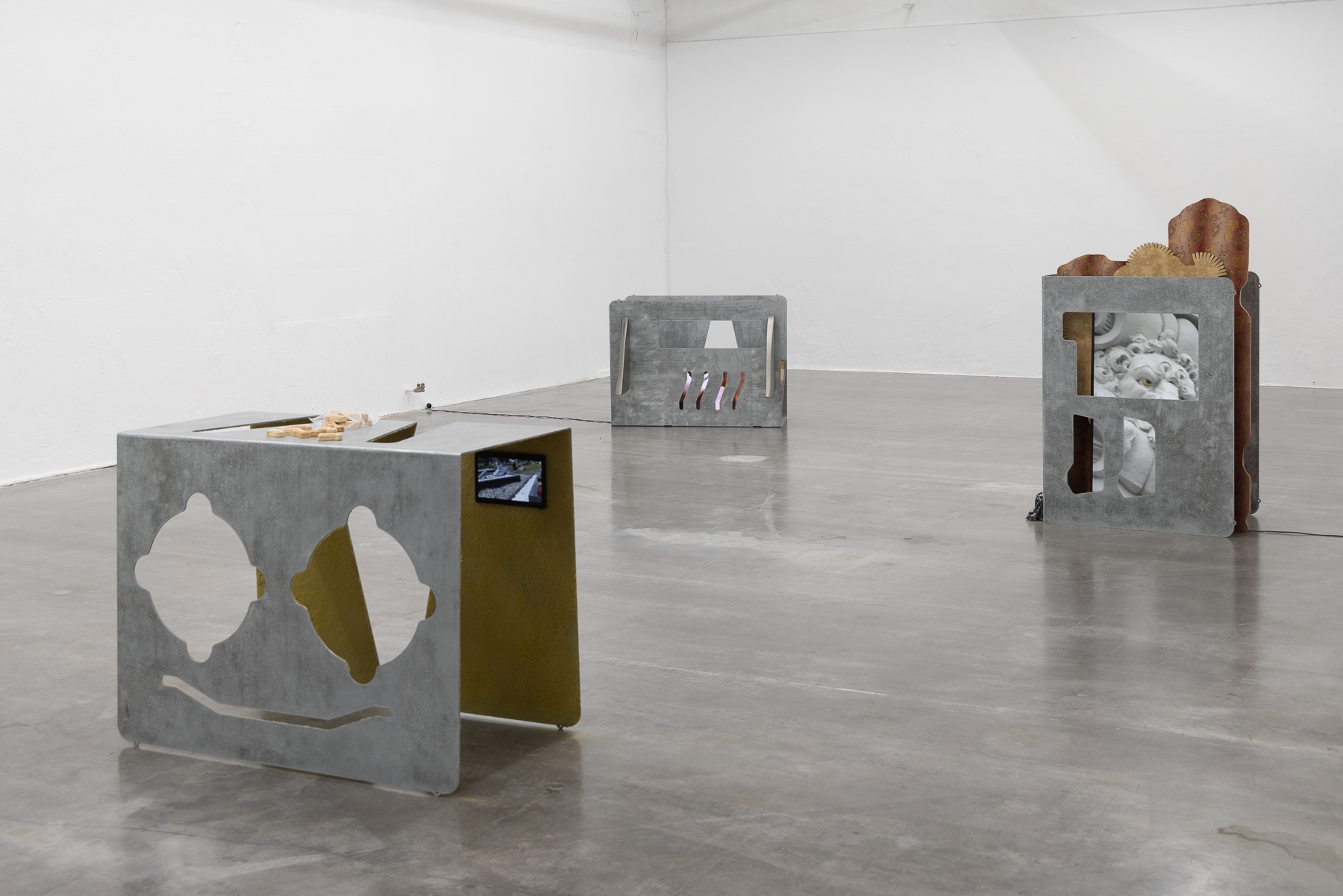
Animal Elegance, 2025, installation view
Anka Helfertova, To be in a time of war ( I keep changing my address but war never loses my scent) 2025, bricks, stone, MDF board, silicon, pigment, ceramic, 55 x 120 x 77 cm and 40 x 30 x 30 cm
Animal Elegance, 2025, installation view

There is a fascist, who lives in my head, and he has been there for a while. I speak to him almost everyday about different things, mainly things I see in the news or read about online, but sometimes also about art. Recently I was telling him about the fish, Kluzinger’s wrasse, which reminded me of a passage I read in “A Thousand Plateaus” by Deleuze and Guattari. They ascribe to a tropical fish an animal elegance, because of the way it uses its colourful design to blend in with its surroundings. The lines of the design are abstract and yet have the capacity to construct an entire underwater world. 

Look, I tell him, we think we know what a fish is, the way you think you know what a dog or horse or lion is, an animal, a species, a type. Certainly your lot has made enough statues and animal monuments – porcelain shepherd dog figurines graced your tables. A fish lives in water and like all other fish has scales, fins and gills.  We can compare this fish to another and note down the similarities of their characteristics, in order to classify them, genus: Thalassoma, family: Labridae. You think we know what kind of an animal a fish is. There it is. Put it in an aquarium. 

Ah, I say, but can we see the animal Deleuze and Guattari describe as possessing an English kind of elegance? With a refinement that does not seek attention, but that remains quietly unobtrusive?  This involves the appreciation of the small and the detailed, like those drain moths found in Jonathan Penca’s paintings, charming us with their fuzzy faces and furry wings. More than that, unobtrusiveness requires an effort. To go through life unnoticed is not easy and drain moths have a life cycle with four stages, larvae feeding on toilet sludge before developing into pupae. 

There are animals we see and animals we do not. The animals we do see, we organise and use, tame and breed. We control them as meticulously as Eadweard Muybridge did, when he set up multiple cameras to capture the image of the horse in motion or a lion in a cage, the starting point of Jakob Gilg’s paintings. We assign animals different roles: you there, you look soft and cuddly, you will be a pet. And you, you over there, so powerful and strong, you we will make into a symbol. Kitsch ceramic cats and scaled-down digital scans of lion monuments tumble, shatter and recombine in Julia Klemm’s work. 

But this animal you don’t see, is something other than a molar entity, a different “affair” as Deleuze and Guattari would say, involving “becoming” not “being.” And it might seem we are meant to think this becoming morphologically, as the becoming of something else, a change from one permanent state to another, equally permanent one. A human could become a cat perhaps – or a cat, a human – as in the work of Anka Helfertova. Violence swirls around and we try to find our peace, not to lose ourselves within. To think becoming is to think loss, the elimination of all of our complaints, demands, unsatisfied desires, “everything that roots us in ourselves,” so that at the end, we are left with nothing, which is also everything. Becoming-animal is always a becoming-imperceptible, a shrinking best found in science fiction novels, the shrinking man becoming smaller and smaller without ever disappearing. Because when animals are thought in their becoming, the molecular comes into play, those invisible abstract forces that in their millions of interactions are actually responsible for constituting a world. To think an animal in its becoming is to engage with these molecular forces at work.

This is the demand elegance places on us: to think less of ourselves and more of the other. It is to be more attuned to our surroundings by paying attention to what continues to constitute us, which is always small and inorganic, indiscernible and impersonal. Elegance is a kind of molecular attention, but with a focus that opens out onto the world. To think things in their becoming molecularly is also to think in terms of the cosmos in its entirety. And then we might indeed stop seeing fish, but we will begin to see everything else.

Magdalena Wiśniowska 2025
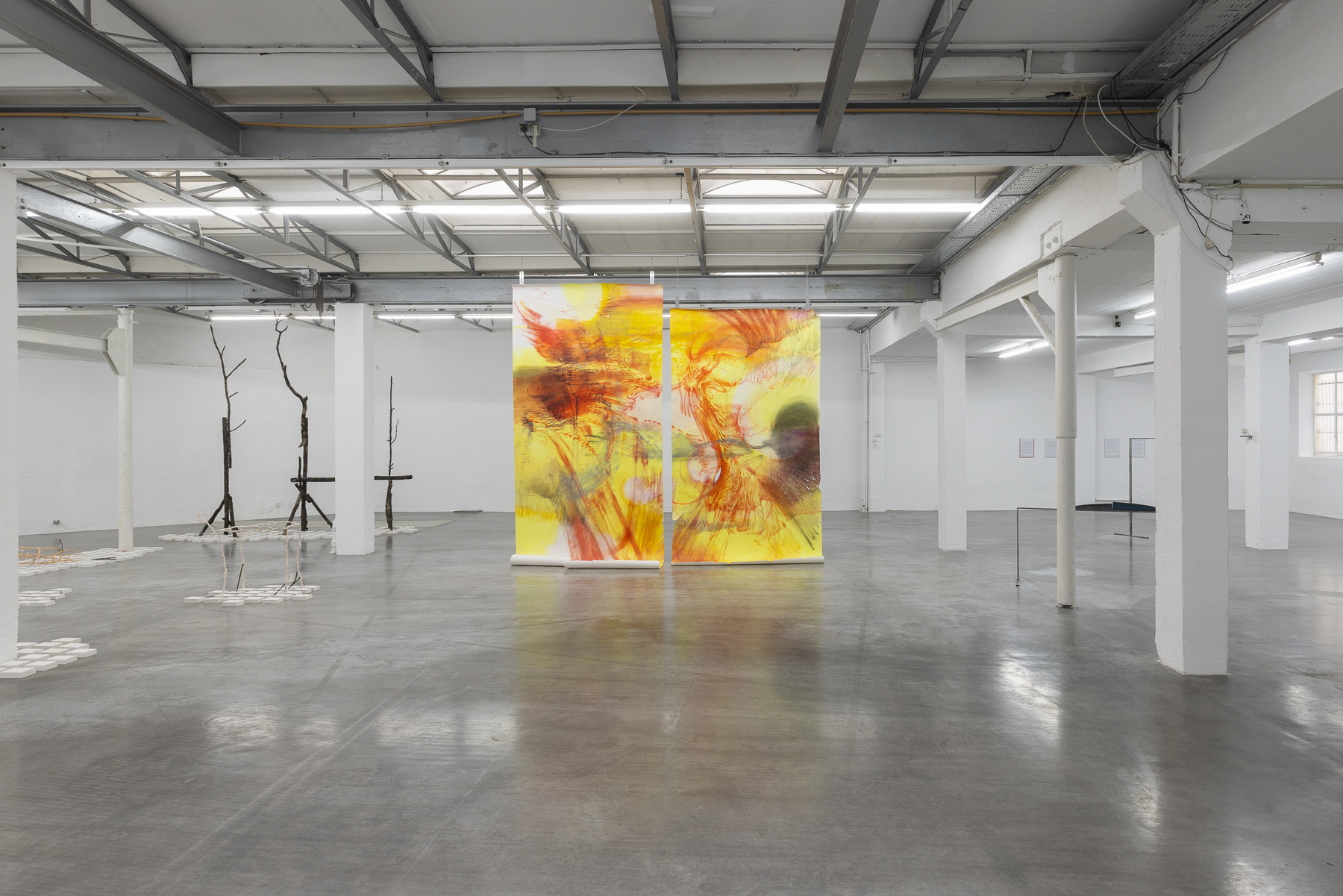
From Animal to Mineral

Judith Adelmann, Rachel Fäth, Sophia Mainka, Hannah Mitterwallner, Jonathan Penca, Maria VMier

15.12. 2023 – 18.02.2024

Lothringer Halle, Lothringer Str. 13, 81667 München

From Animal to Mineral, 2023, installation view. Photo: Thomas Splett
Maria VMier, Noch o.T. [ZINNOBER-SCHWEFEL],2023, Ink, pigment, tempera, pencil, chalk and charcoal on perforated paper. Photo: Thomas Splett.
Maria VMier, Noch o.T. [ZINNOBER-SCHWEFEL],2023, Ink, pigment, tempera, pencil, chalk and charcoal on perforated paper (detail) Photo: Thomas Splett
Hannah Mitterwallner, Mis-play, 2023, plaster, wood, sugar, installation view. Photo: Thomas Splett
Hannah Mitterwallner, Mis-play, 2023, plaster, wood, sugar, detail. Photo: Thomas Splett
Hannah Mitterwallner, Mis-play, 2023, plaster, wood, sugar, installation view. Photo: Thomas Splett
Hannah Mitterwallner, Mis-play, 2023, plaster, wood, sugar (detail). Photo: Hannah Mitterwallner
Judith Adelmann, I like your curvy waves, 2023, glazed ceramic, steel, plastic, installation view. Photo: Thomas Splett
Judith Adelmann, I like your curvy waves, 2023, glazed ceramic, steel, installation view. Photo: Thomas Splett
Judith Adelmann, I like your curvy waves, 2023, glazed ceramic, steel (detail). Photo: Thomas Splett
Hannah Mitterwallner, Mis-play, 2023, plaster, wood, sugar (detail).
Judith Adelmann, I like your curvy waves, 2023, glazed ceramic, metal, readymades (detail). Photo: Thomas Splett
From Animal to Mineral, 2023, installation view
Sophia Mainka, Habit Loss, 2023, Metal, fabric, wood, leather imitate, plastics, glazed ceramics, video. Photo: Thomas Splett
Sophia Mainka, Habit Loss, 2023, Metal, fabric, wood, leather imitate, plastics, glazed ceramics, video (detail).
Sophia Mainka, Habit Loss, 2023, Metal, fabric, wood, leather imitate, plastics, glazed ceramics, video. Photo: Thomas Splett
Jonathan Penca with Jakob Penca, Field Plots, 2023, animation film, 14 min, installation view. Photo: Thomas Splett.
Rachel Fäth, Passage, 2022, Glass, steel, screws and nuts. Photo: Thomas Splett.

Texts included in the exhibition:

The Flamekeepers

Lilian Robl

13.07. – 20.08.2023

Lothringer 13 Studio, Lothringer Str. 13, 81667 München

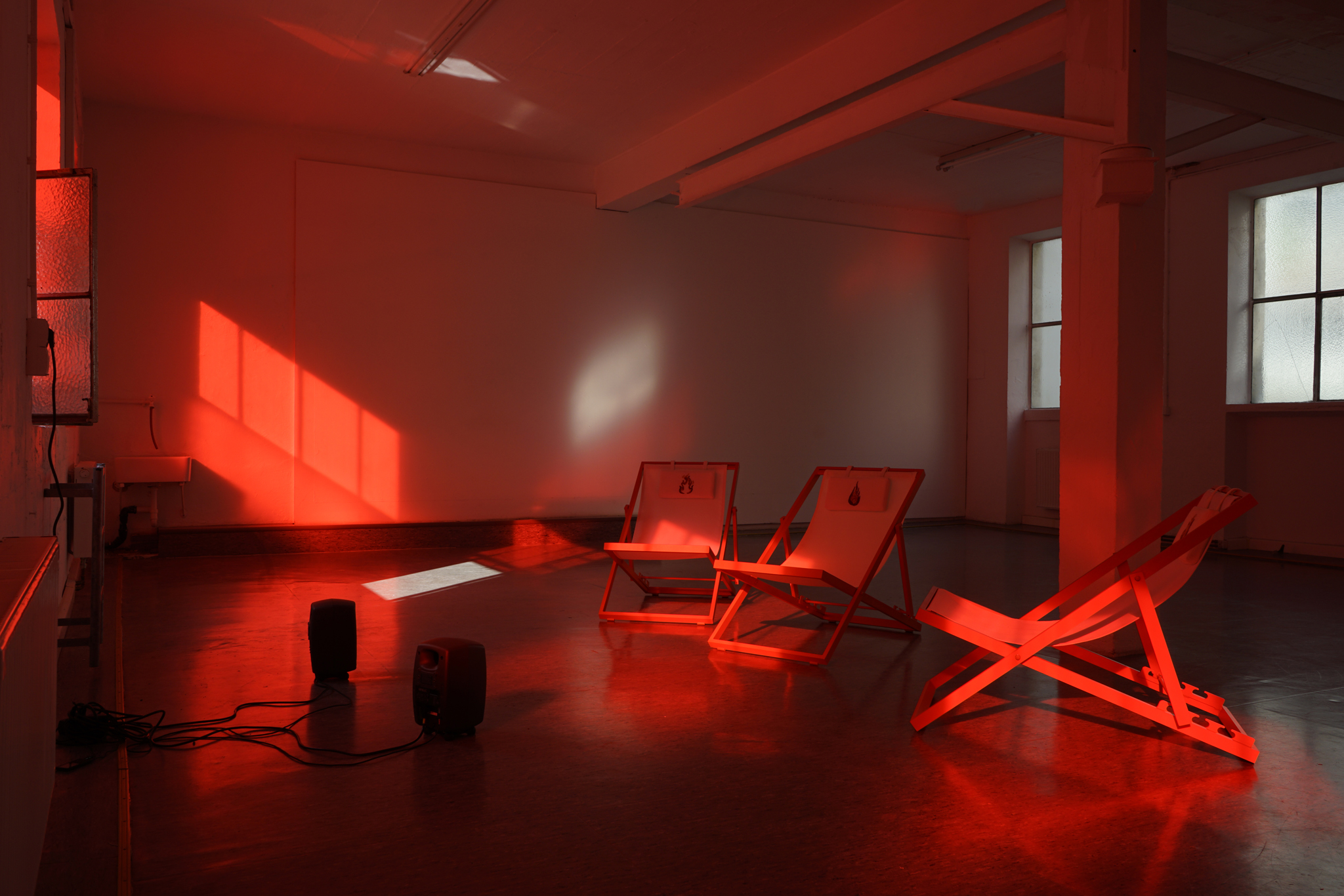
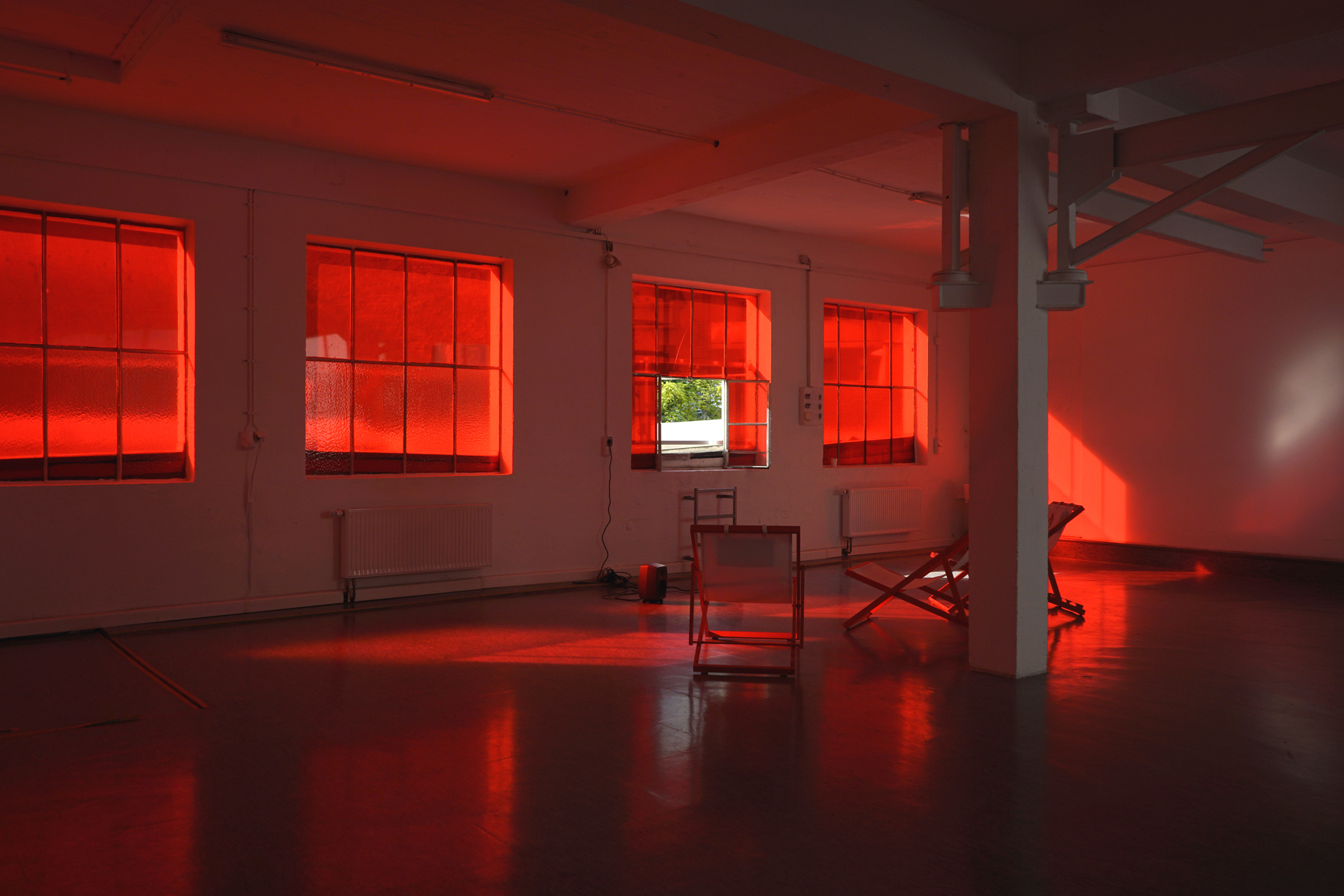
Lilian Robl, The Flamekeepers, 2023, installation view
Lilian Robl, The Flamekeepers, 2023, installation view with red filter and poster
Lilian Robl, The Flamekeepers, 2023 with red filter and poster
Lilian Robl, The Flamekeepers, 2023 with poster
Lilian Robl, The Flamekeepers, 2023 with red filter, speakers and poster
Lilian Robl, The Flamekeepers, 2023 installation view
Lilian Robl, The Flamekeepers, 2023 with customised deckchairs
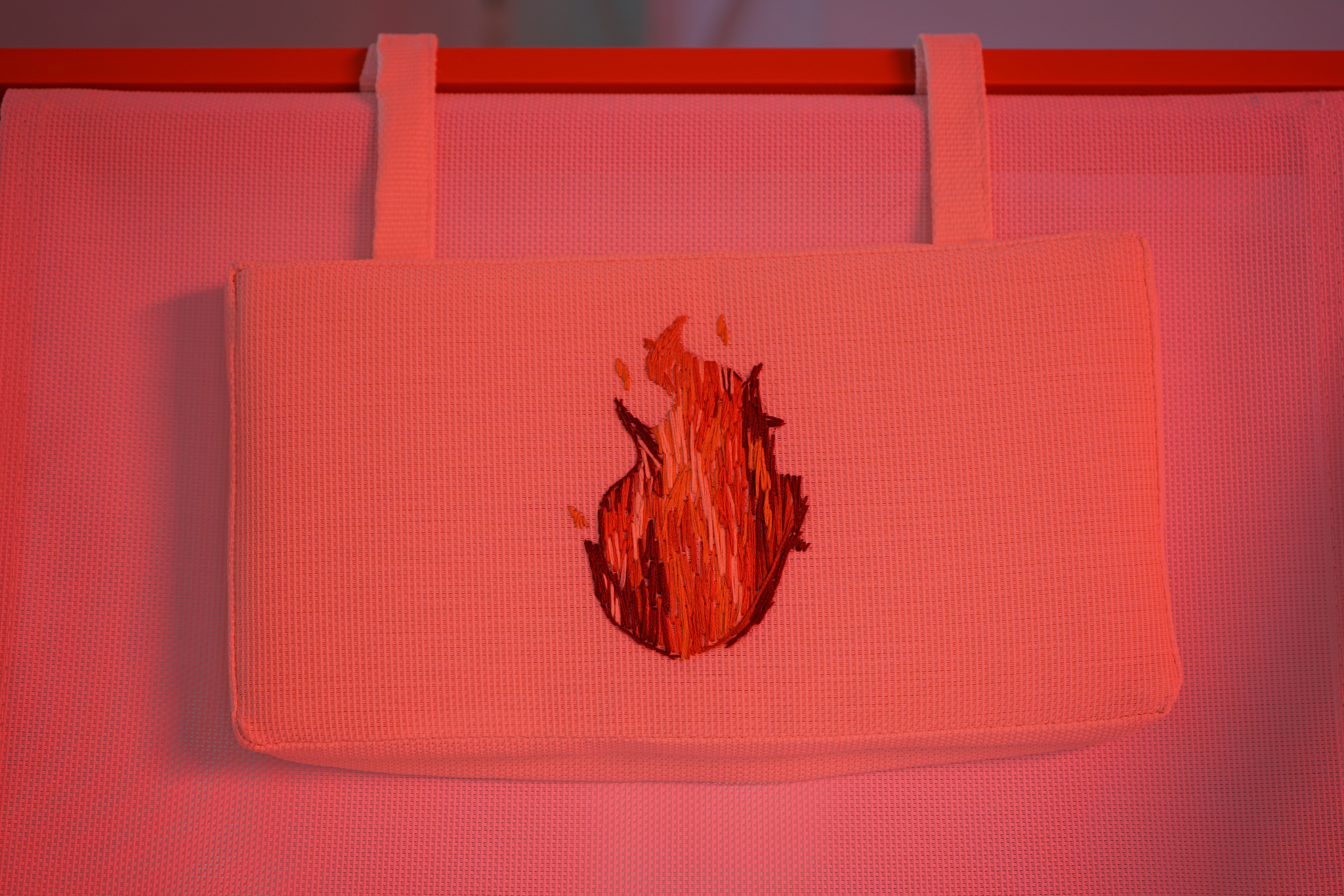
Lilian Robl, The Flamekeepers, 2023 deckchair embroidery (detail)
Lilian Robl, The Flamekeepers, 2023 installation view

At each corner, each fork in the road, we encounter the same: Man. Not some man, a particular man with a friendly, if white European face, but man as a standard on which every opposition is based. This is the man that is the principle term in the opposition of male/female, white/red, rational/mad. A center point from which all other points take measure. The point of origin all other points echo. This kind of man is one “gigantic memory.”

The path we take instead is a straight one, without any crossroads. As soon as we open the door to the Lothringer 13 Studio space there is only the left. Nothing takes place on the right hand side. On the left there are four large windows covered with transparent red filter and once again there is no alternative to the redness that saturates the entire room with colour.  Also on the left there are three deck chairs clustered around some speakers. Left is an open window. A poster hangs at the very edge of the distant wall behind.

At each step of the exhibition “The Flamekeepers” Lilian Robl invites us to think of lines. In this sound sketch that is part of the preparation work for a larger video piece, the protagonists –  Emma Hauck, Ingeborg Bachmann, Rabe Perplexum – are not points but lines. For points would be women who as minorities are defined in opposition to the major term, man. Whereas lines flicker with flames of becoming. The lines of becoming are not the mathematical lines of history connecting two or more distant events in the point system of memory. Rather these lines pass between points, constituting a distinct no-man’s land. On this land no man can stand, because here is a place where the discernibility of points disappears. Deleuze and Guattari write that these murky zones form a “line-system of becoming.” 

Robl is very good at identifying these indiscernible points, these lines of becoming, in order to constitute a kind of anti-archive, a non-collection of anti-memories. There is Emma Hauck, who in her schizophrenia feels she can control her world and make a nurse jump or a housefly drown. She sits down to repeatedly write to her husband: komm! Her writing is her body as she mechanically writes and rewrites the same word. Her writing is also a landscape she sees out of her window, a grey forest of lines you can walk into. Recalling Heathcliff’s wish to embrace Catherine’s corpse, Ingeborg Bachmann writes of wanting to embrace the skeleton of her lover, filling her decayed mouth and choking on the with the dust he has become, at one with his nothingness. Rabe Perplexum changes their name by deed poll to become-raven, flying about and causing havoc from Gärtnerplatz to Stachus.  

Their’s is a terrible suffering. Emma Hauck dies in the Wiesloch asylum, without ever seeing her husband or daughters again. While high on drugs, Ingeborg Bachmann accidentally sets herself alight and dies from her injuries. Rabe’s tongue is a knife and they commit suicide after alienating their friends. To walk in straight lines and not remember – not to make memories by not connecting the distant points of historical events – is painful. But pain and suffering is also what brings about proximity.  We are close to them in their suffering because we no longer separate entities but participants in becoming. When there are no binary distinction at play, they can affect us still and something of theirs passes to us. The wound for Robl must continually be licked open.

  1. Deleuze and Guattari, A Thousand Plateaus: Capitalism and Schizophrenia, trans. Brian Massumi (London and New York: Continuum, 2004), 293. 
  2. Ibid., 294.

Magdalena Wisniowska 2023