A chimera is not a pet

Julia Klemm

28.06 – 26.07.2025

together with The Tiger Room at Heßstr. 48 b, 80798 Munich
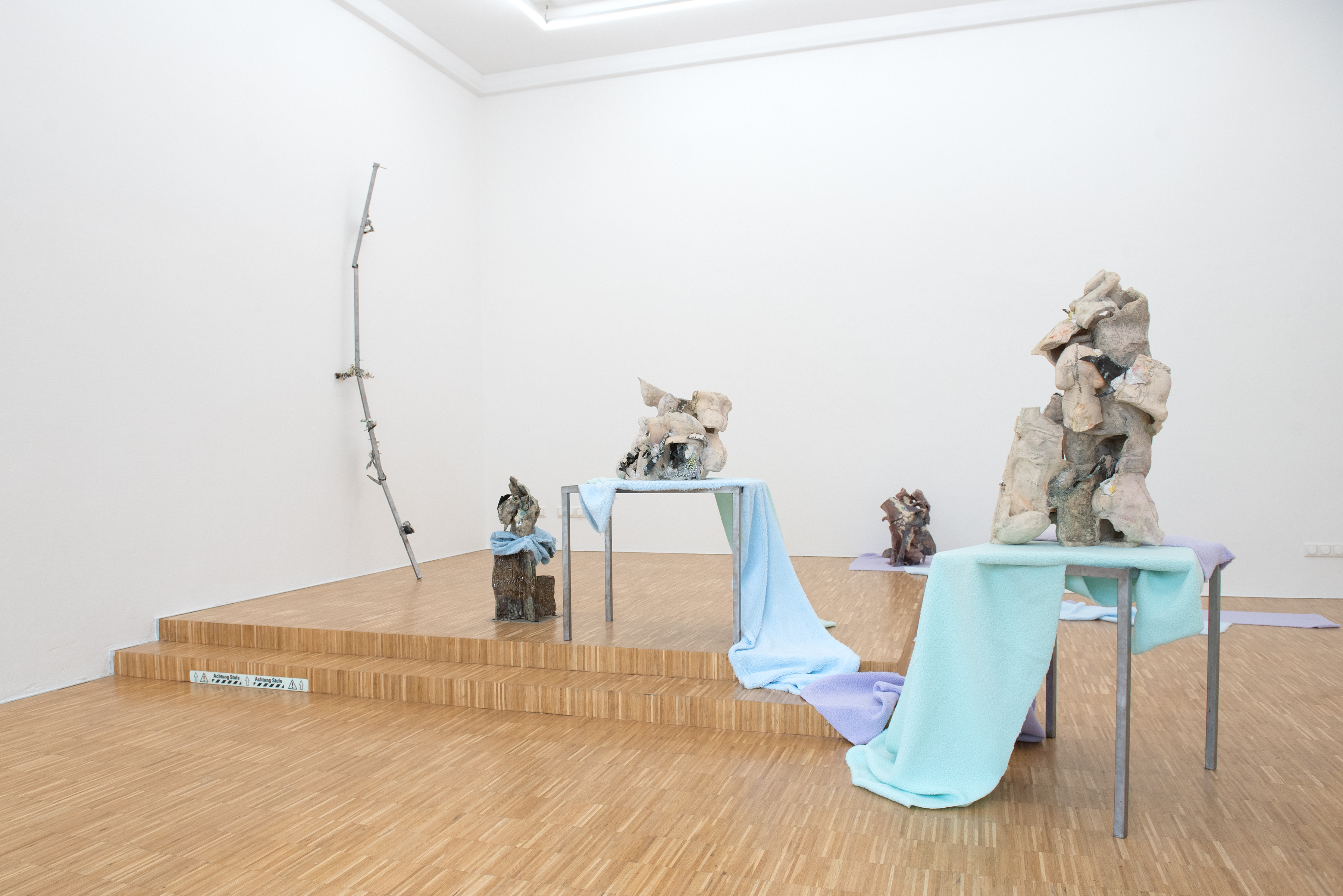
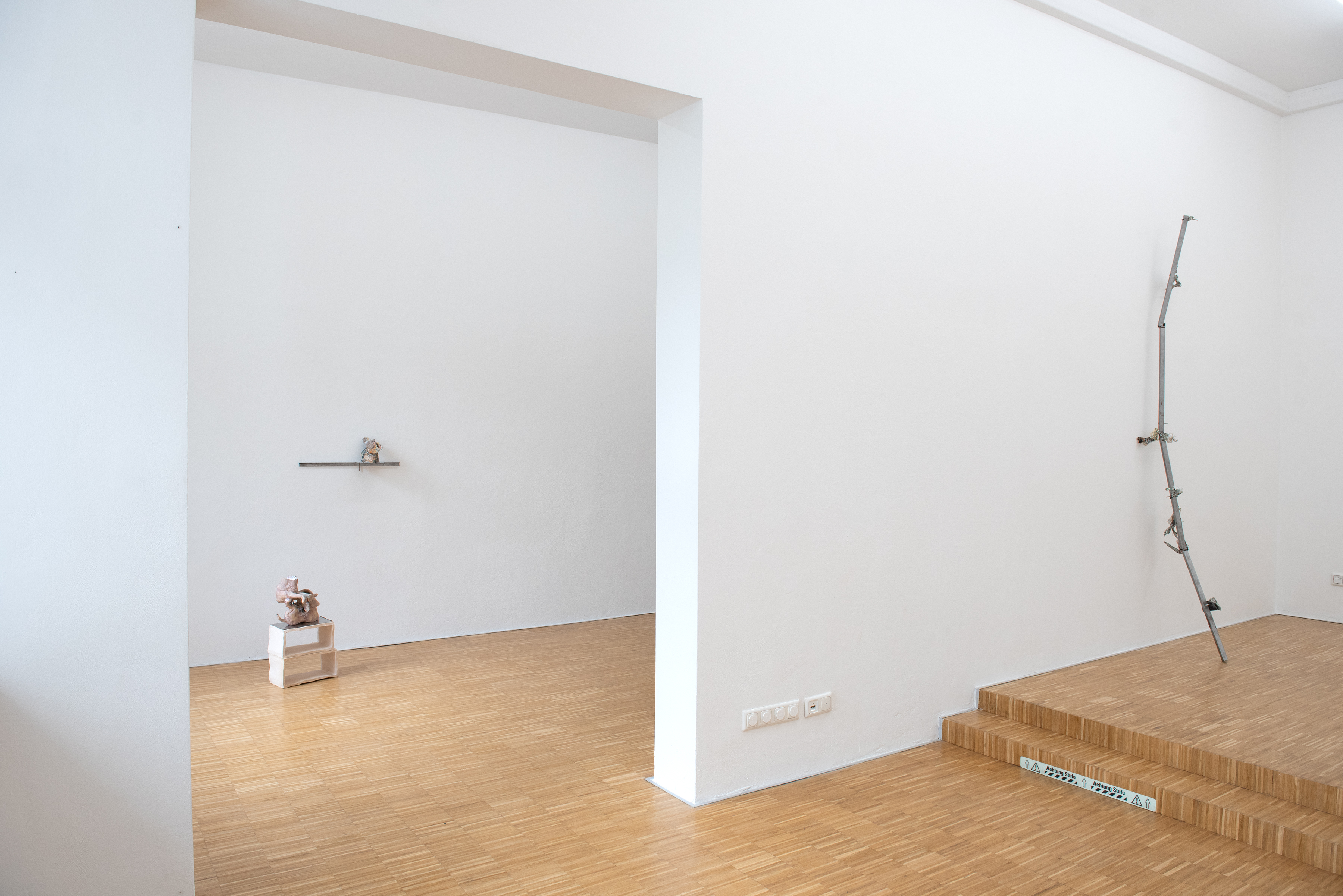
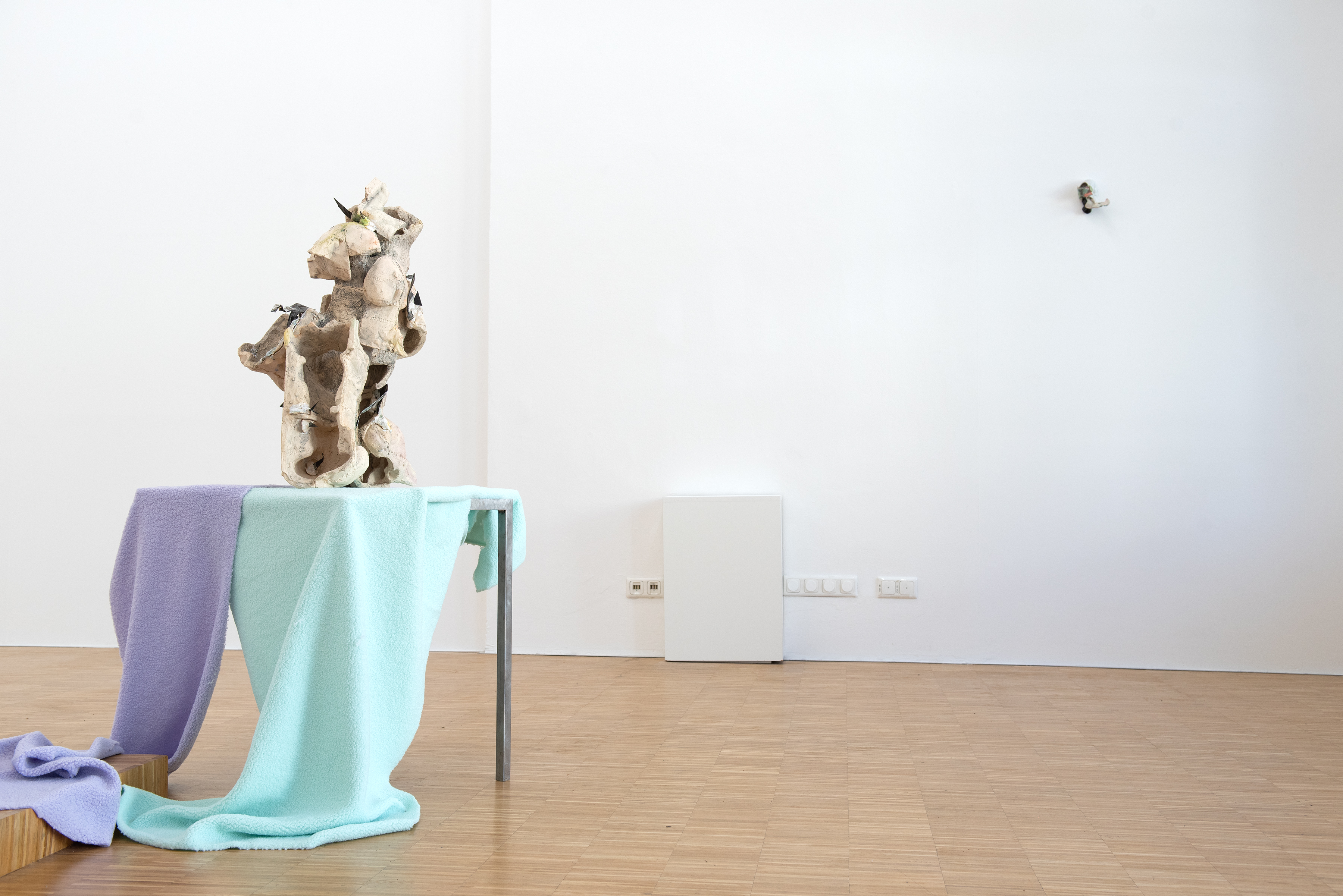
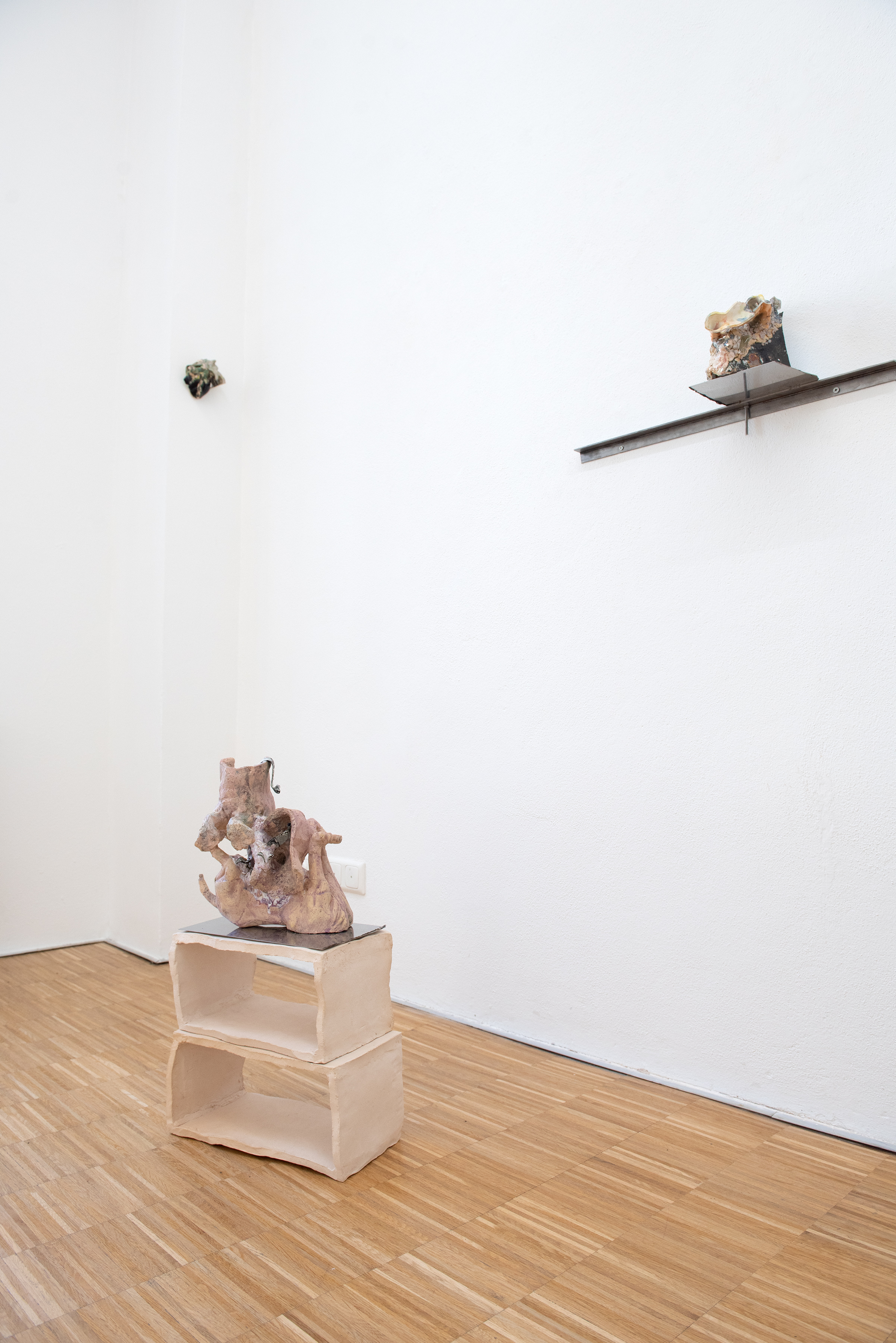
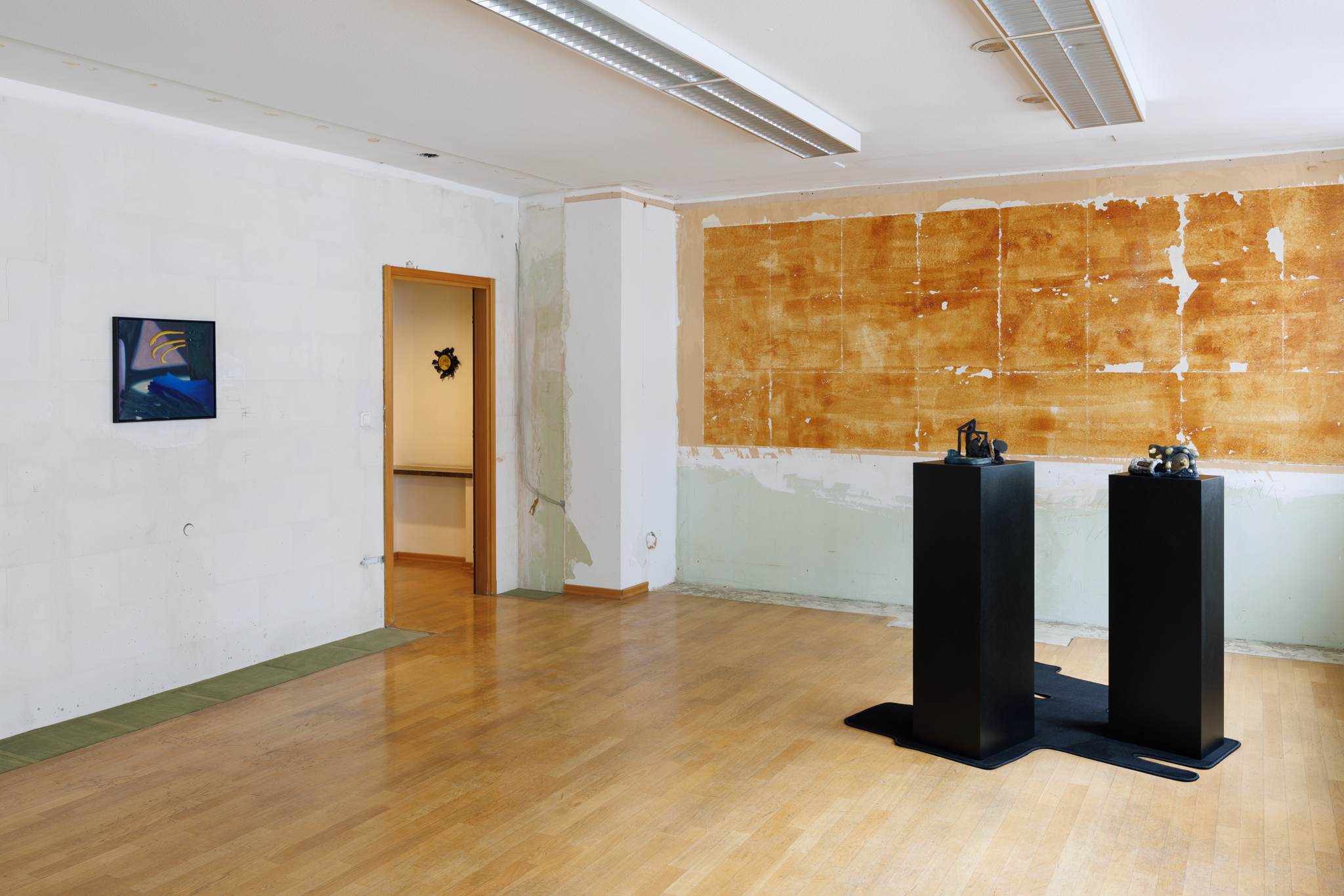
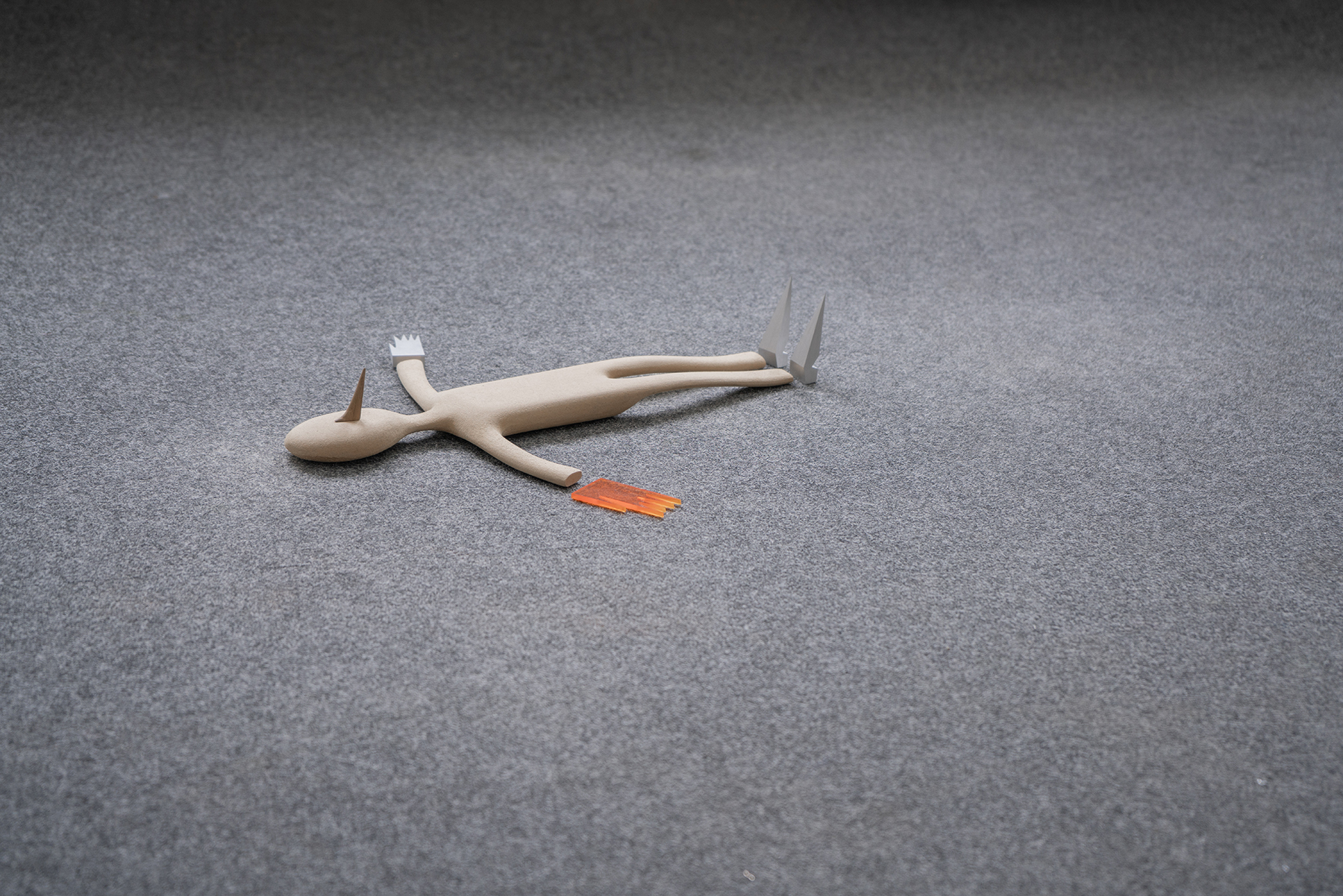
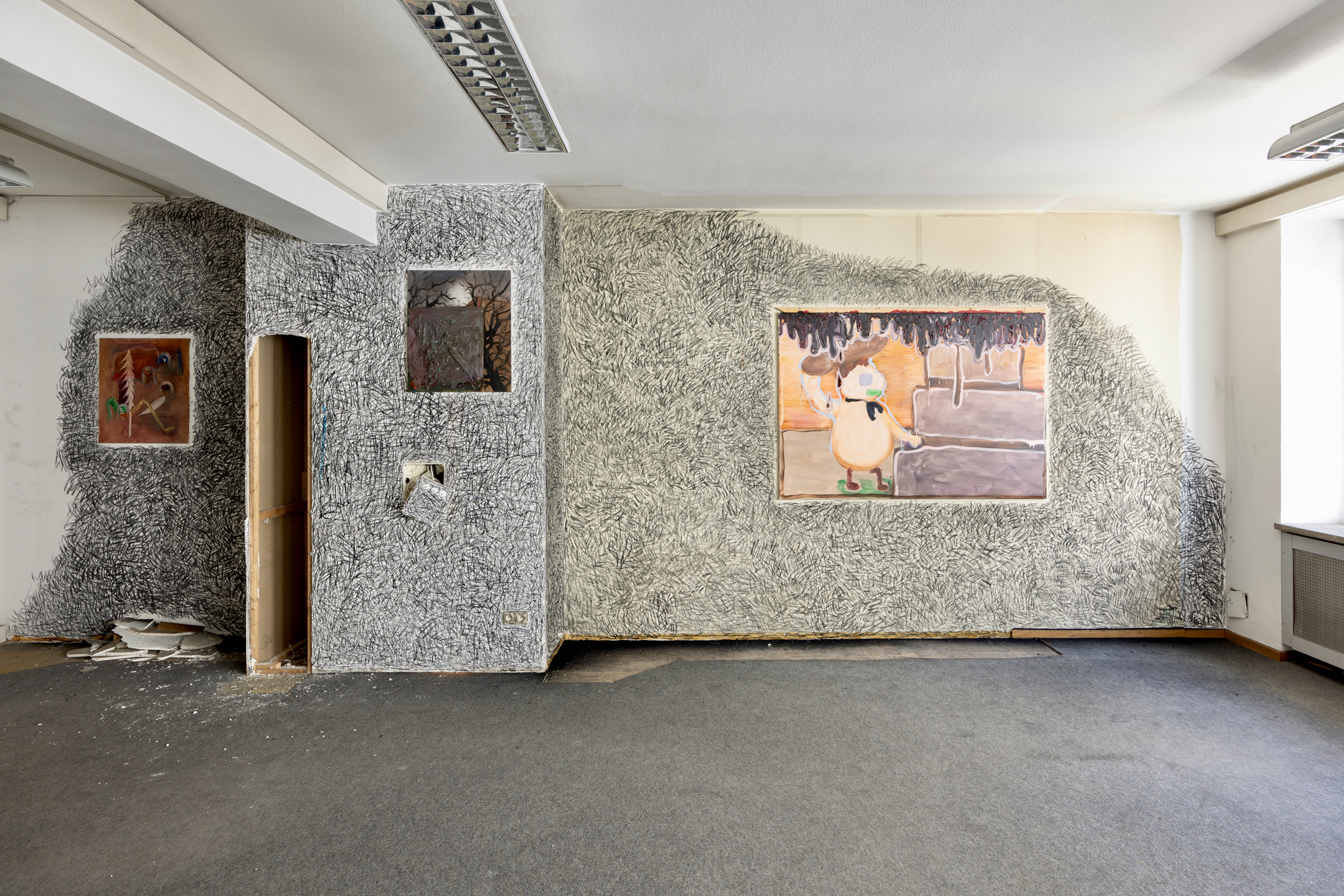
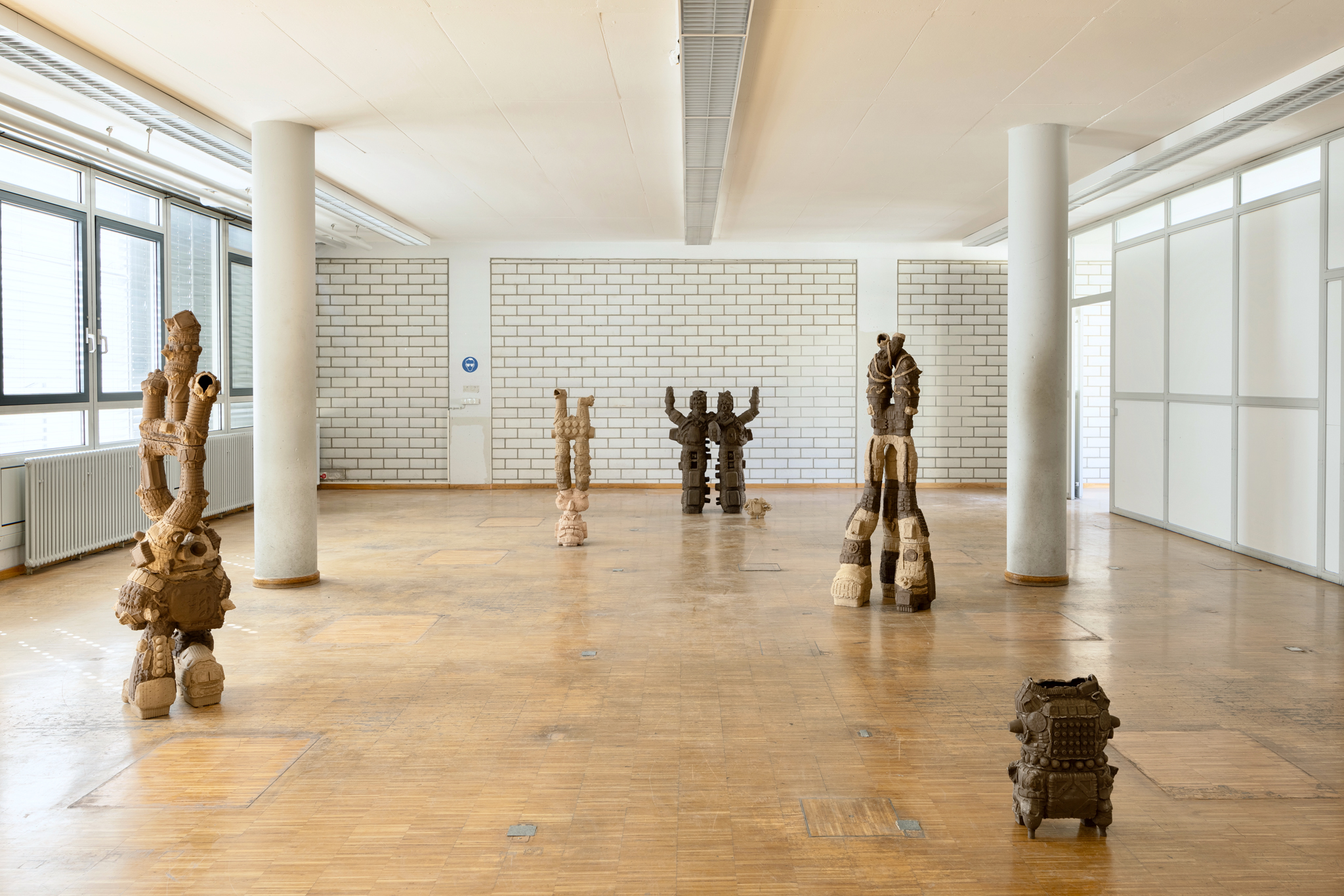
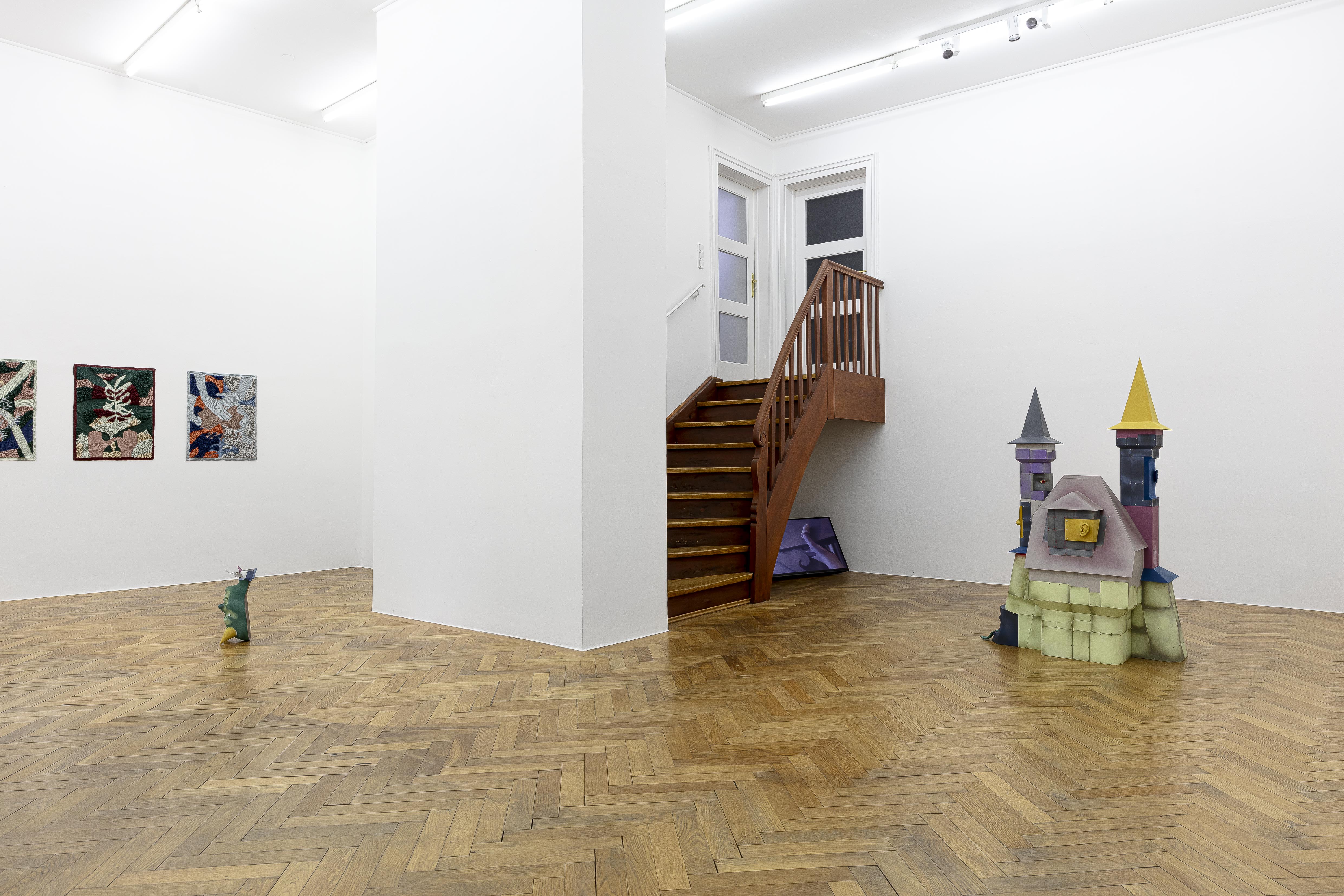
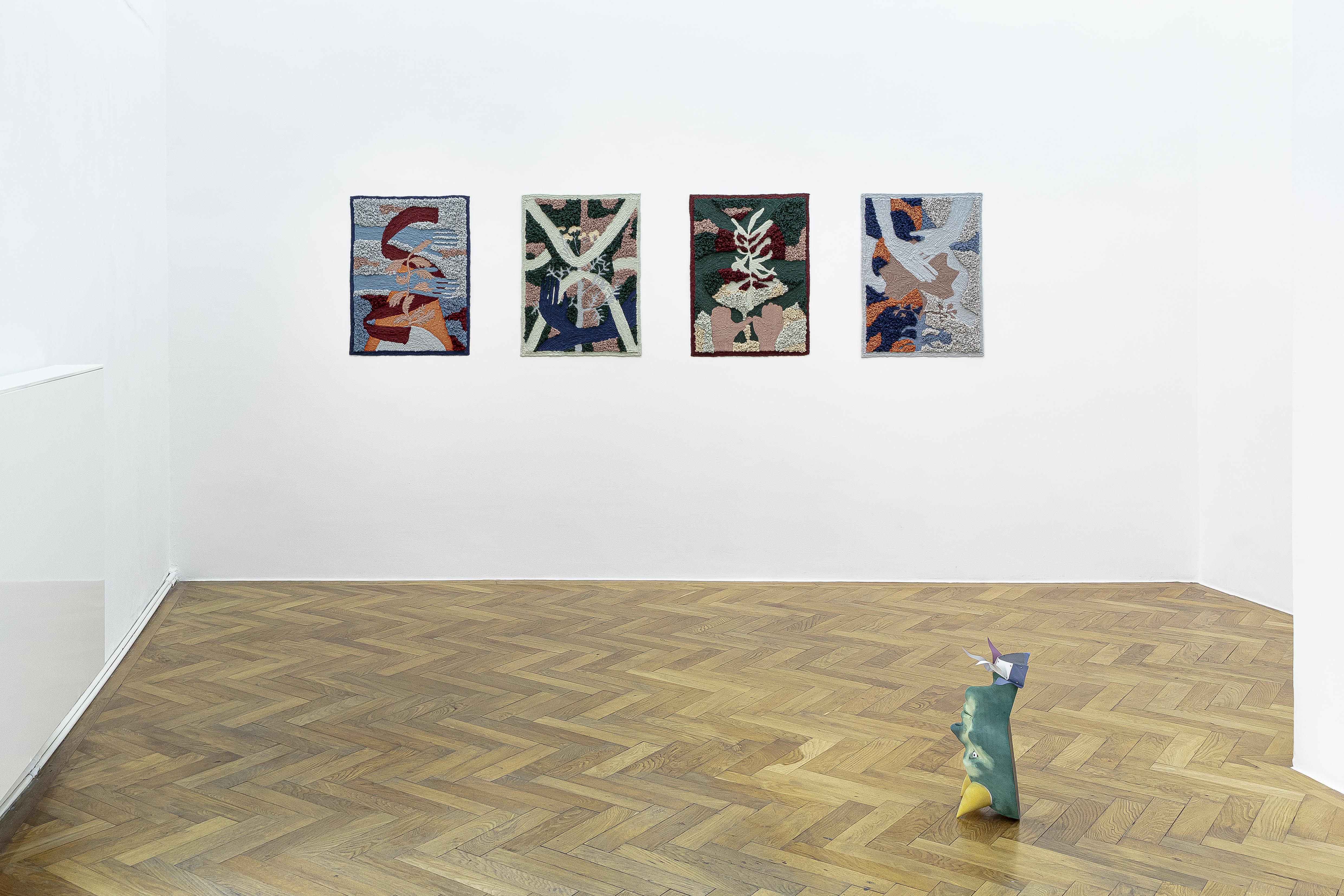
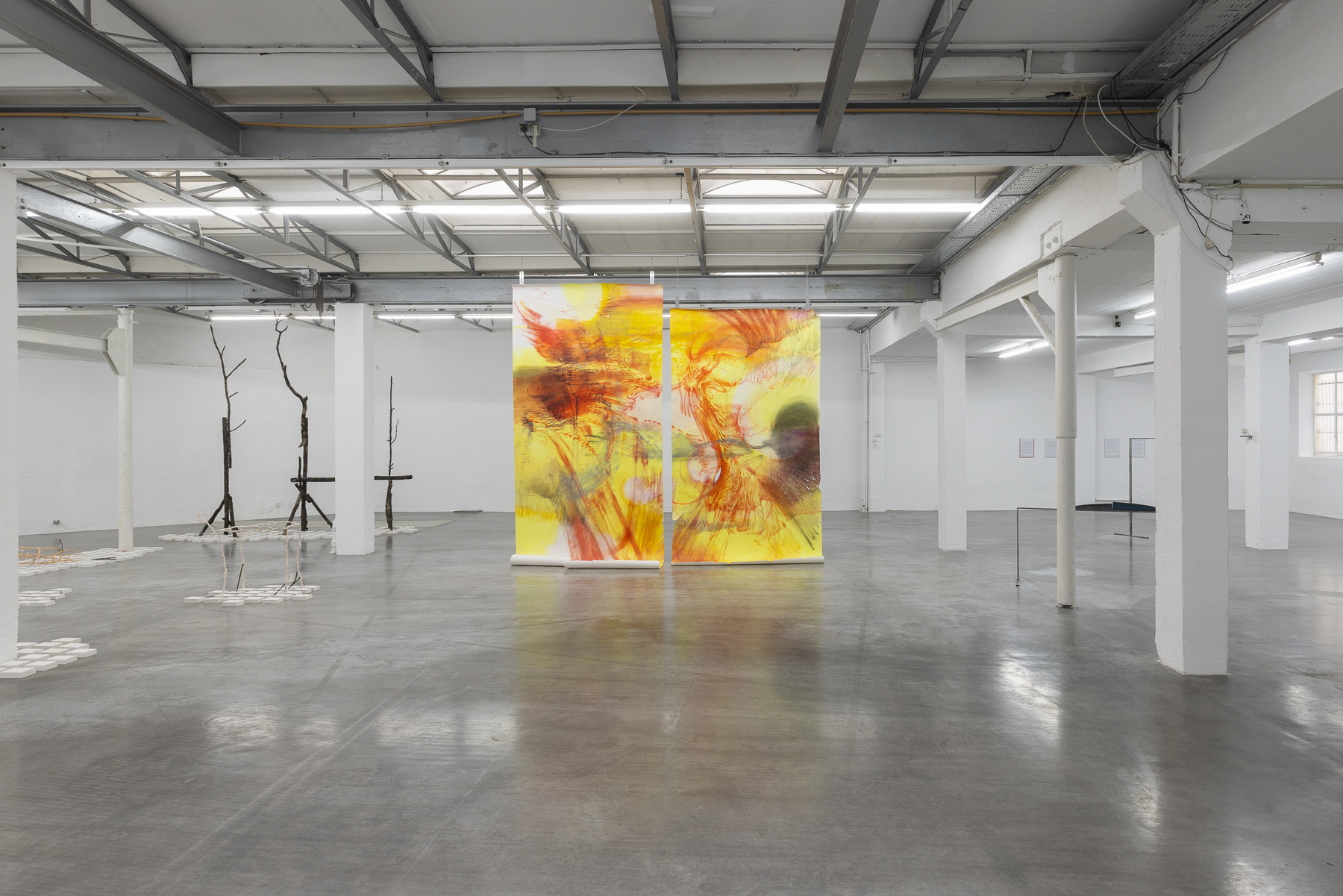
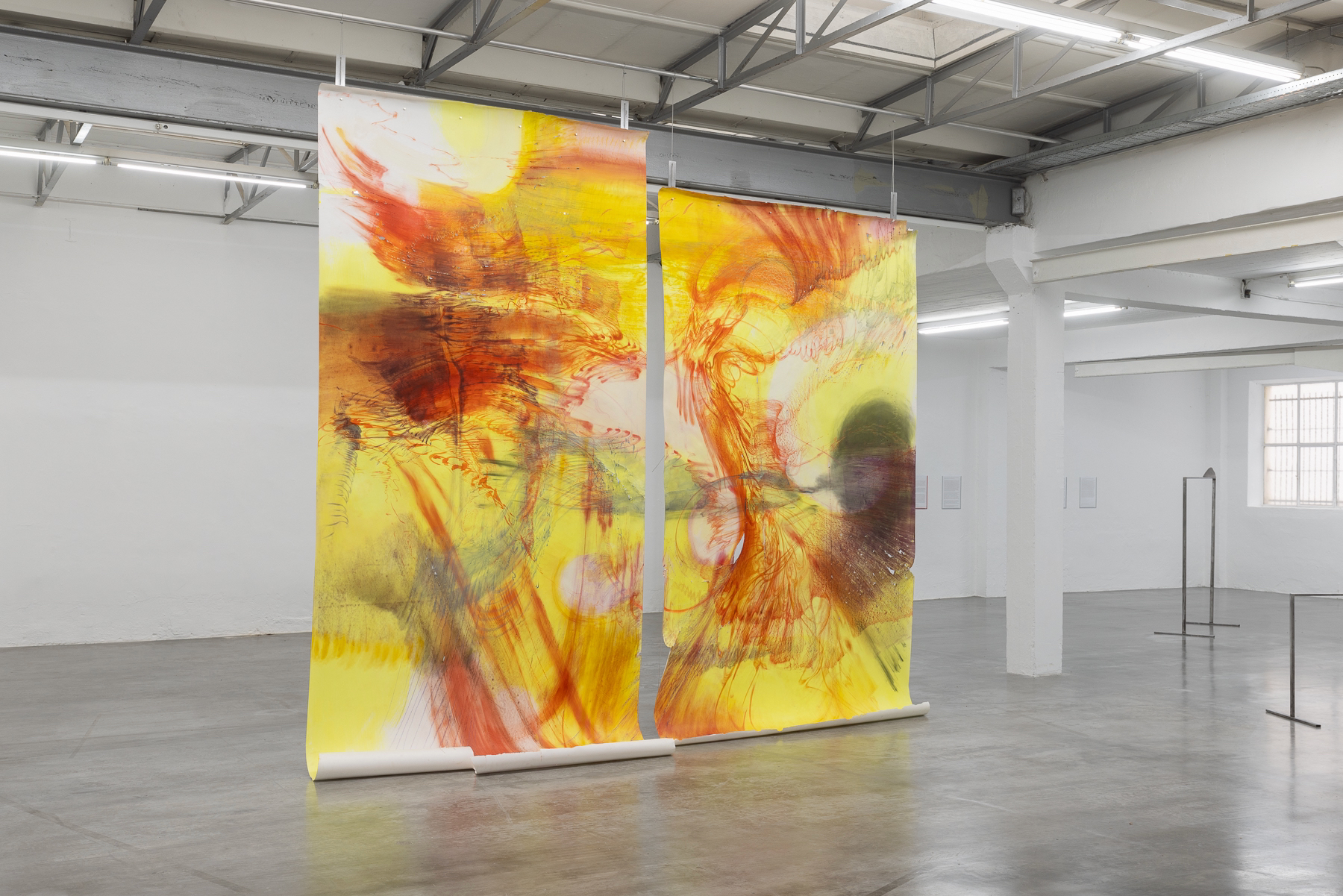
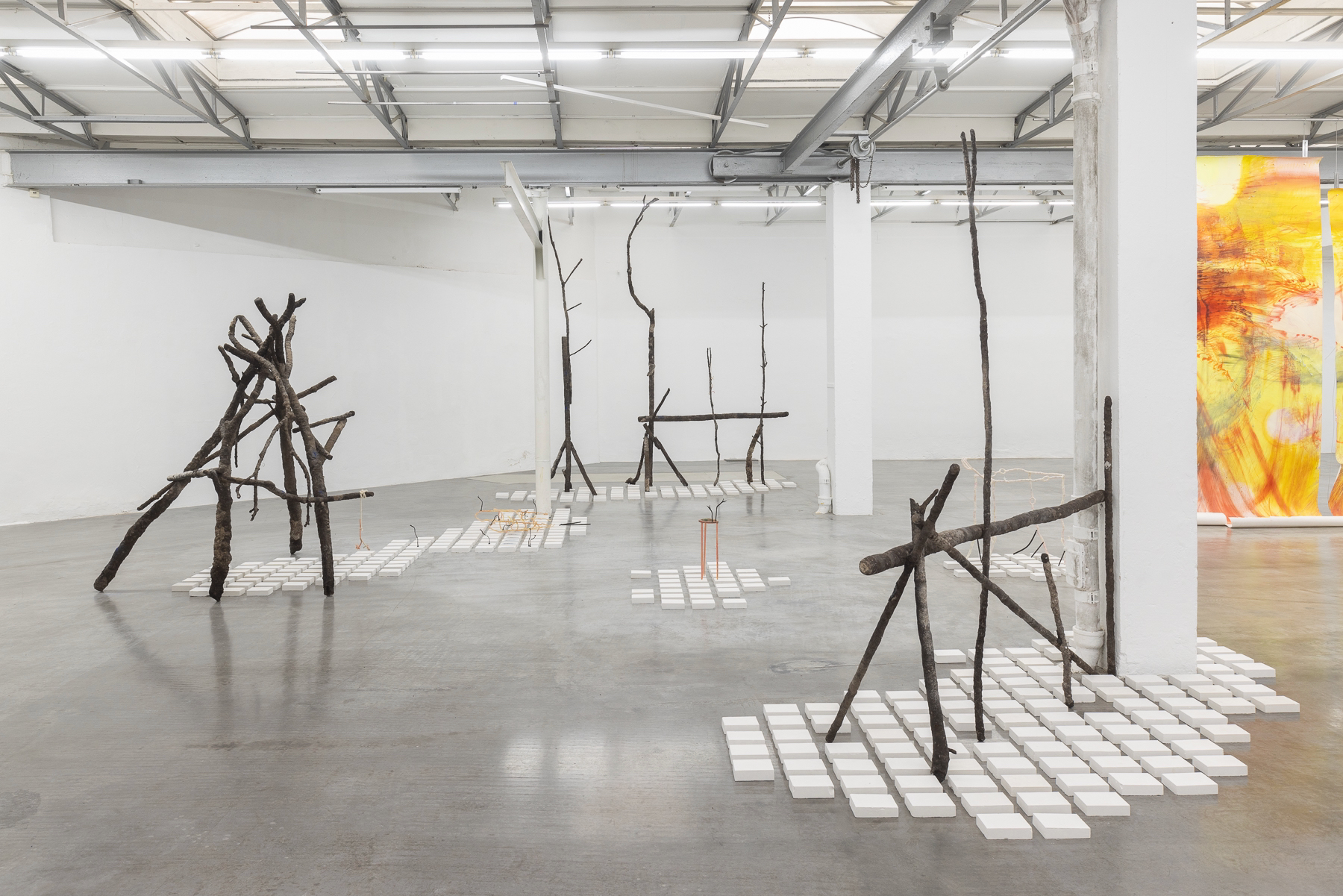
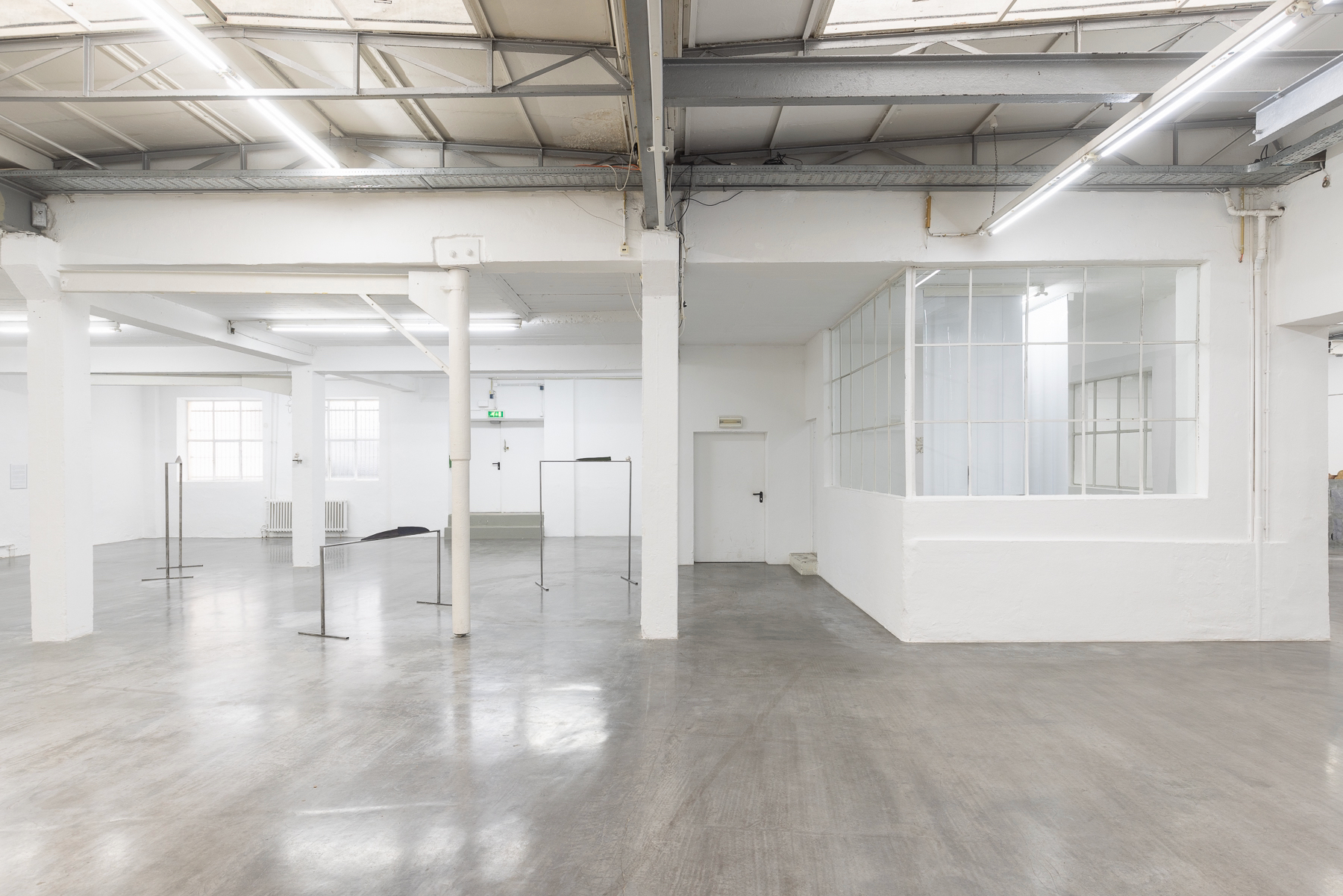
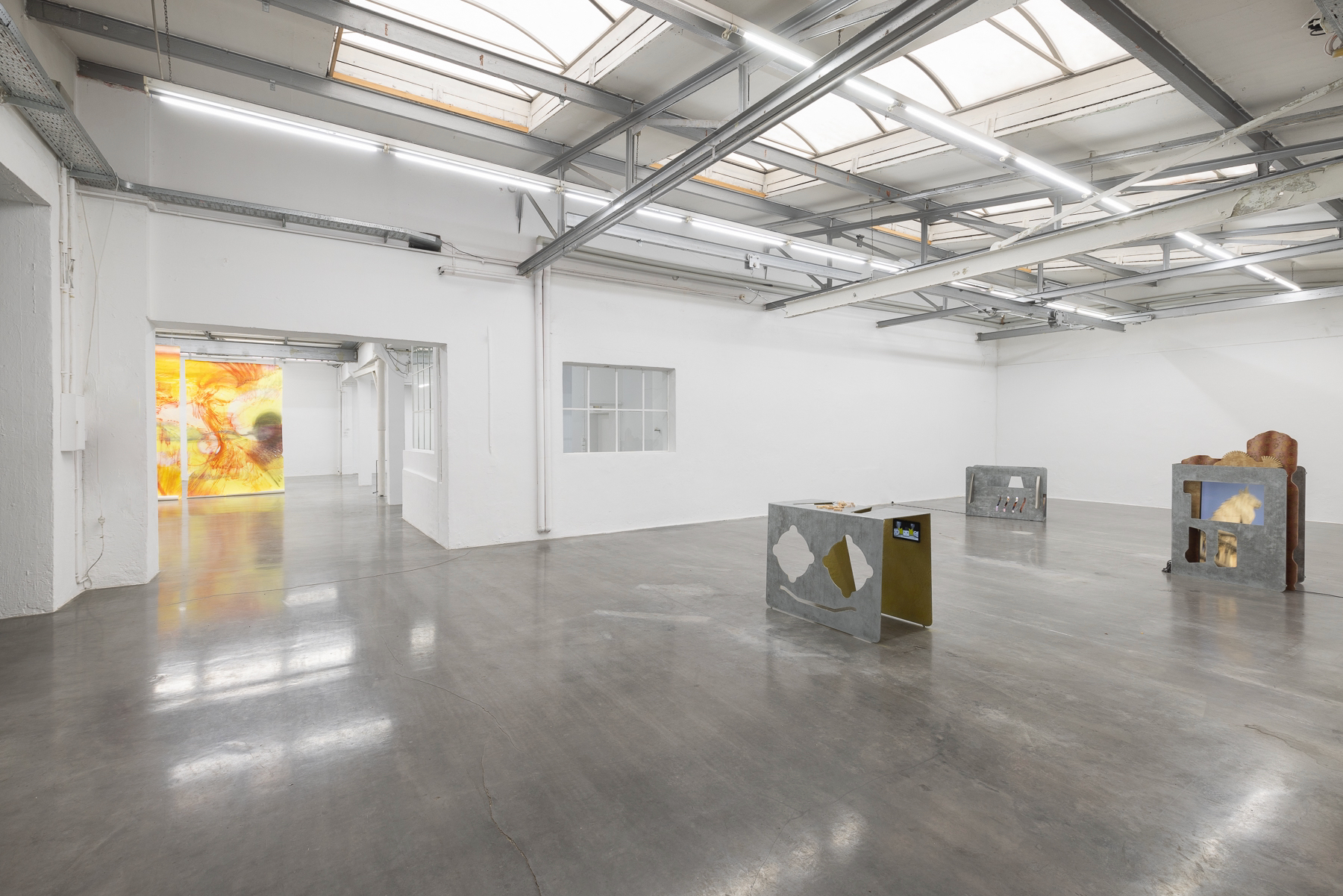
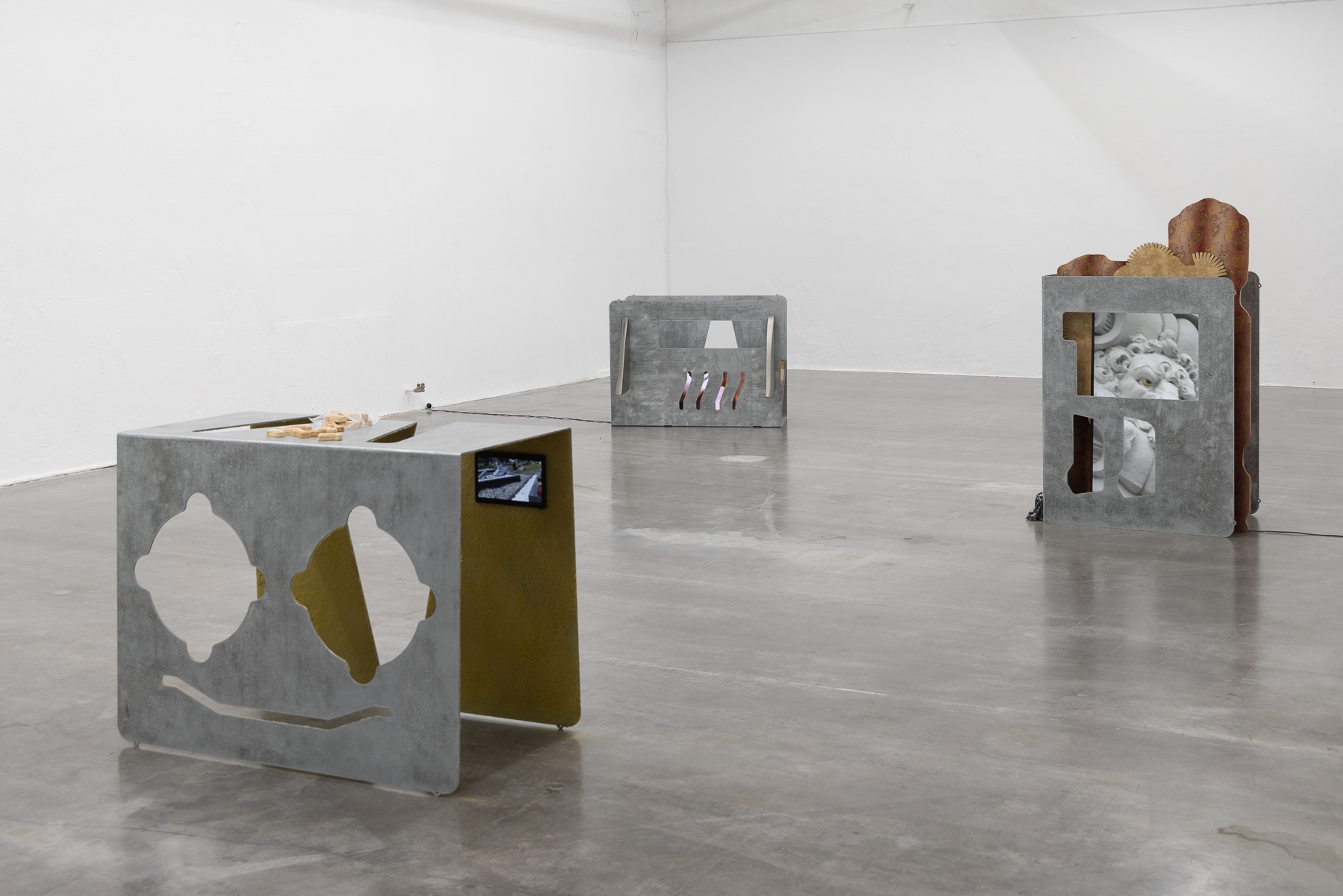
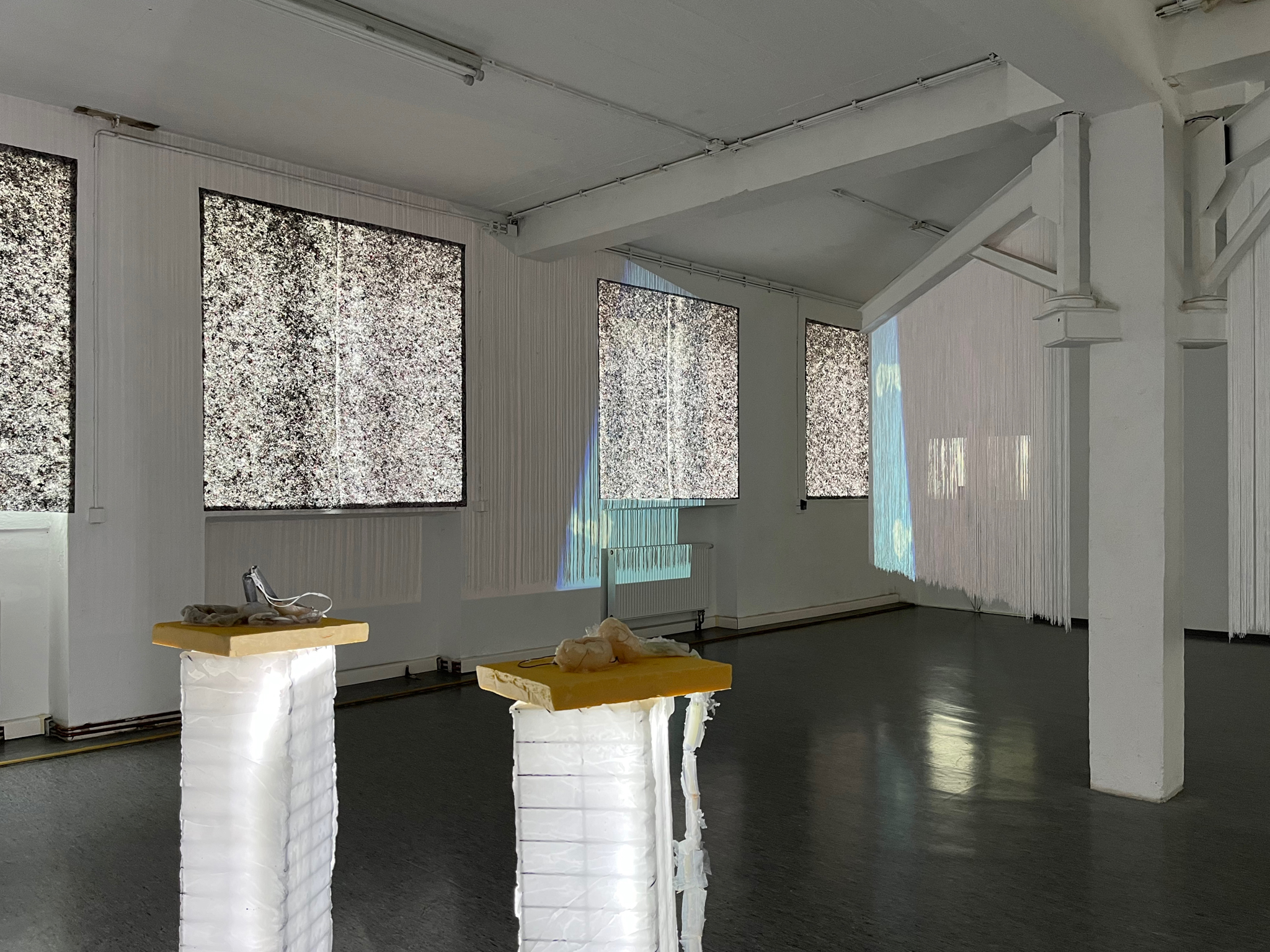
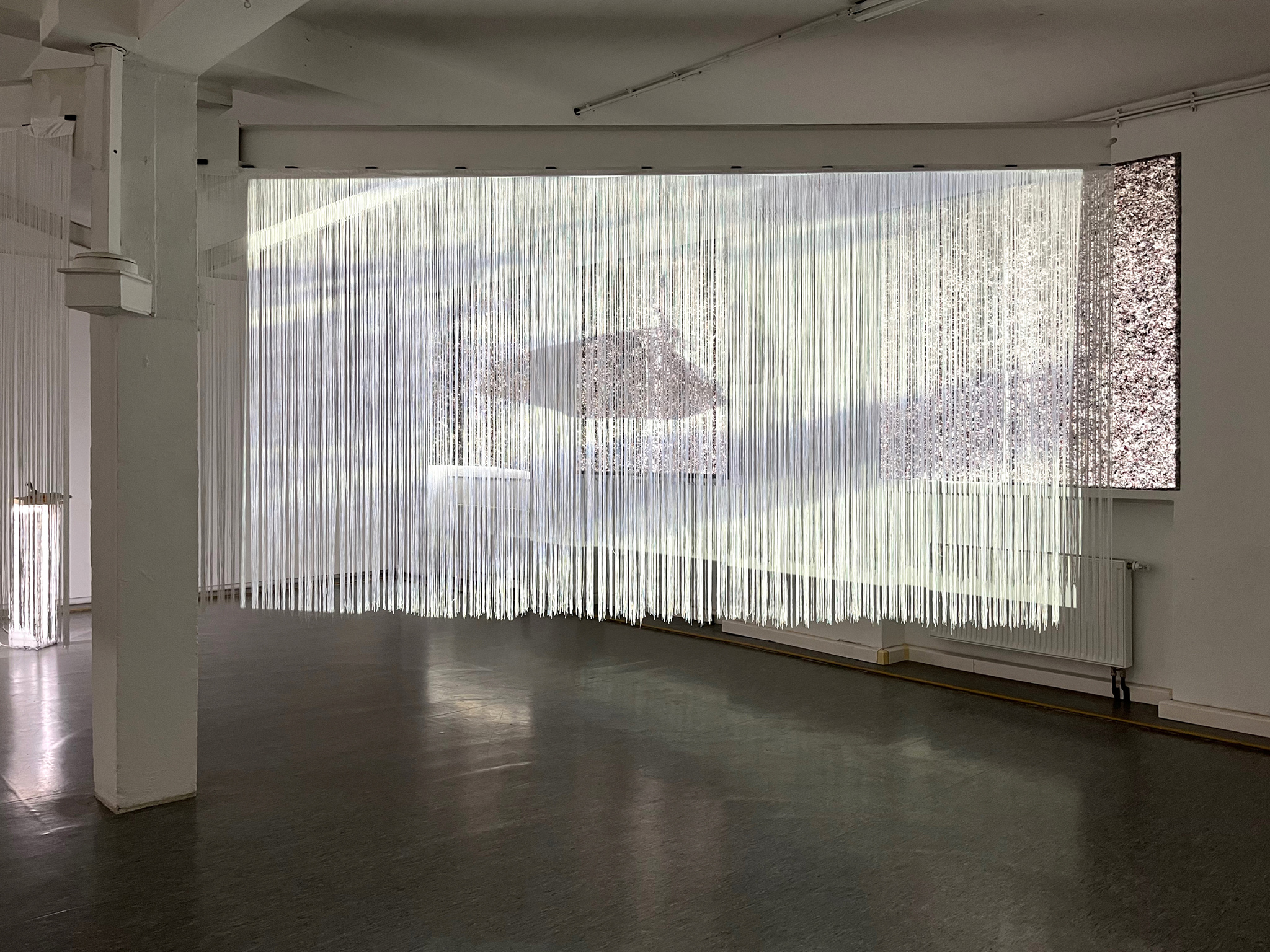
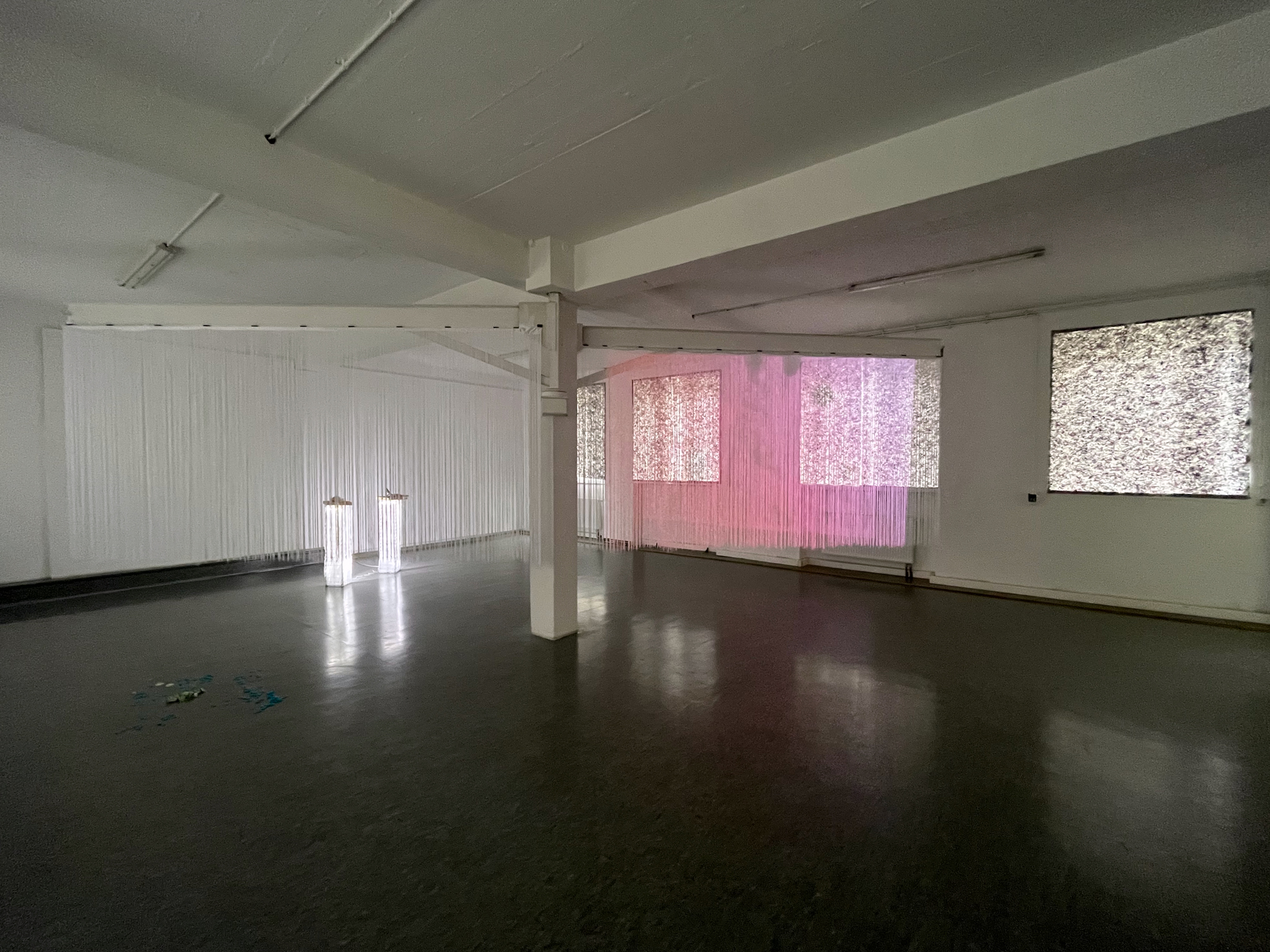
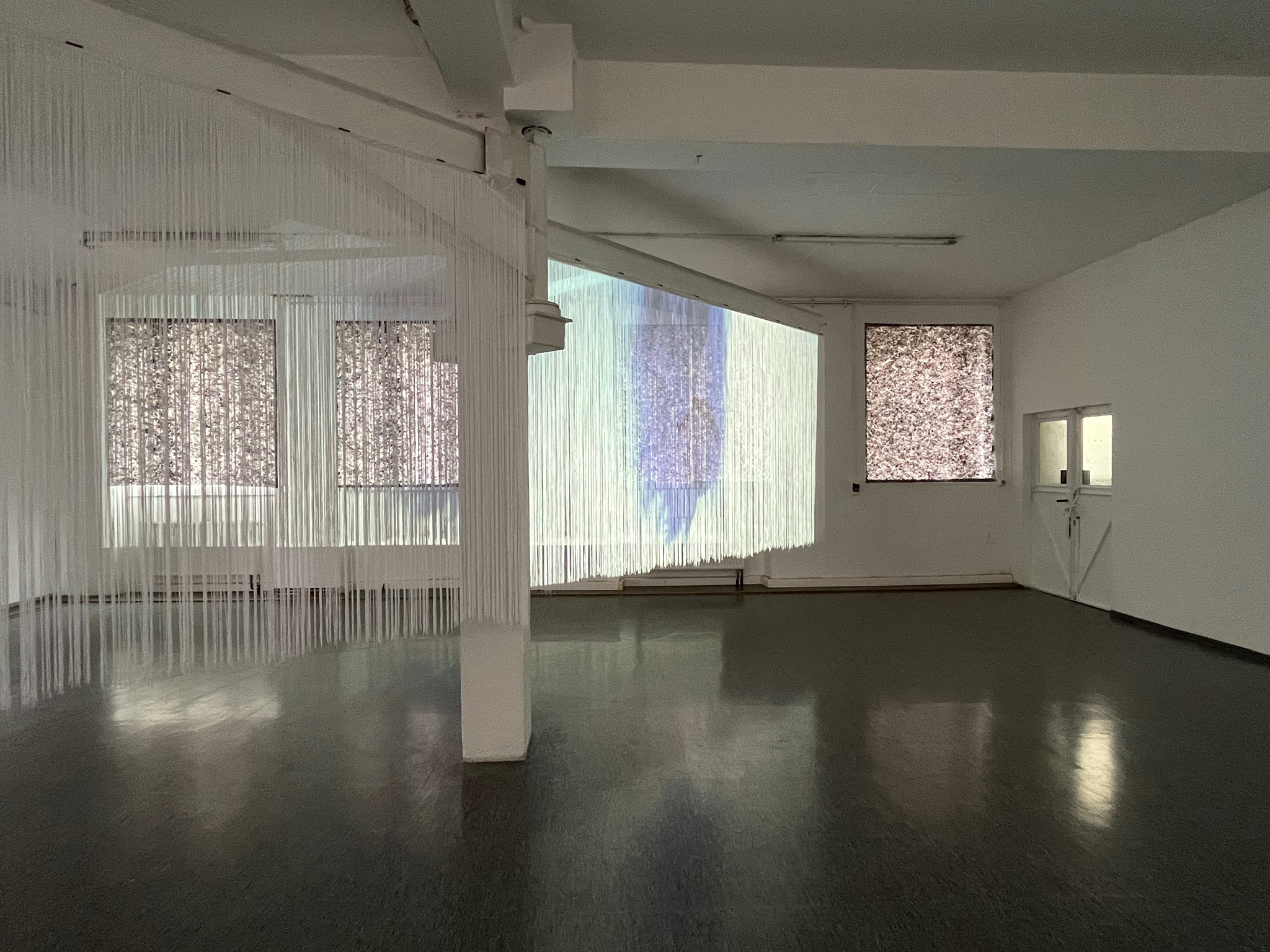
Julia Klemm, A chimera is not a pet, 2025, installation view
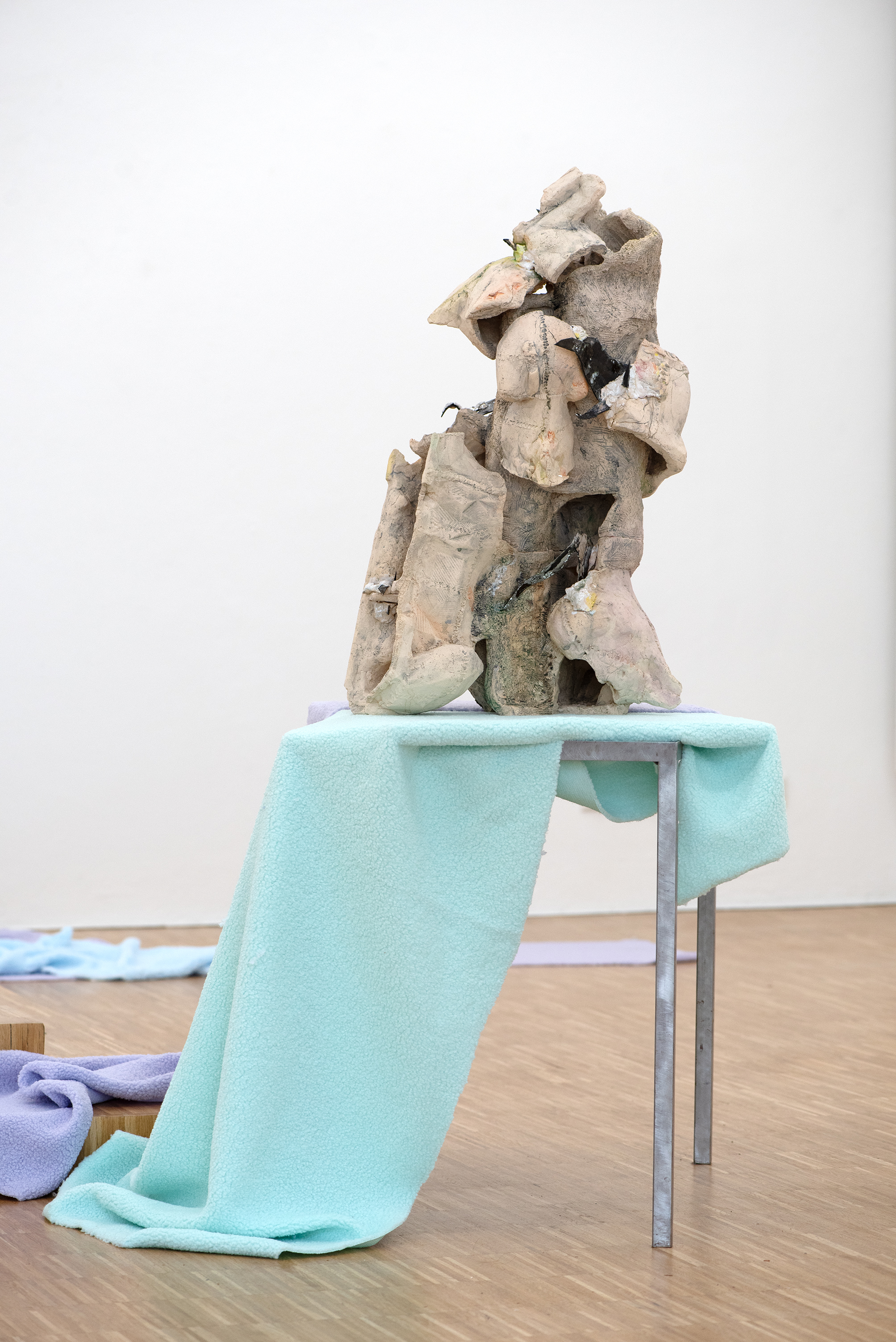
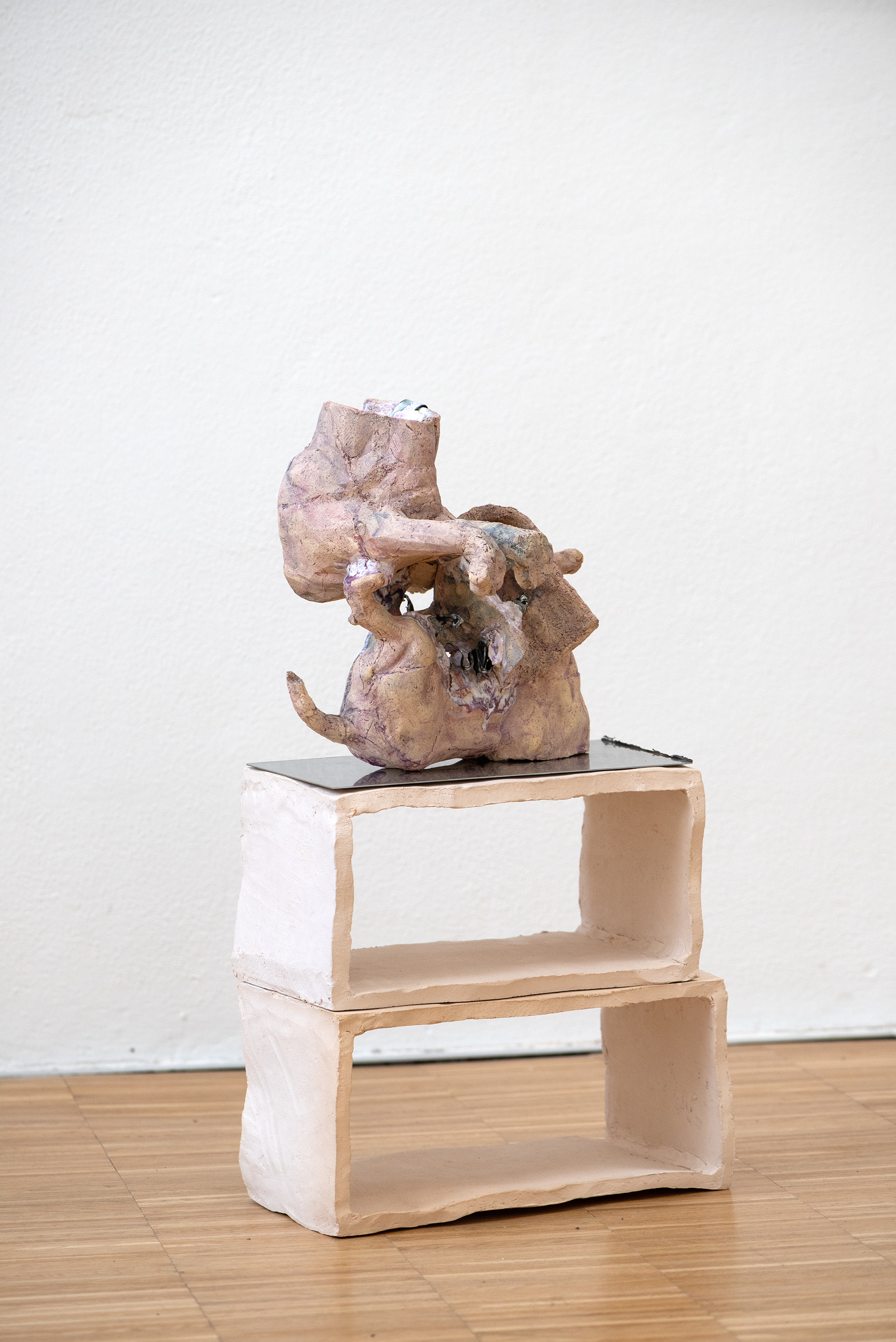
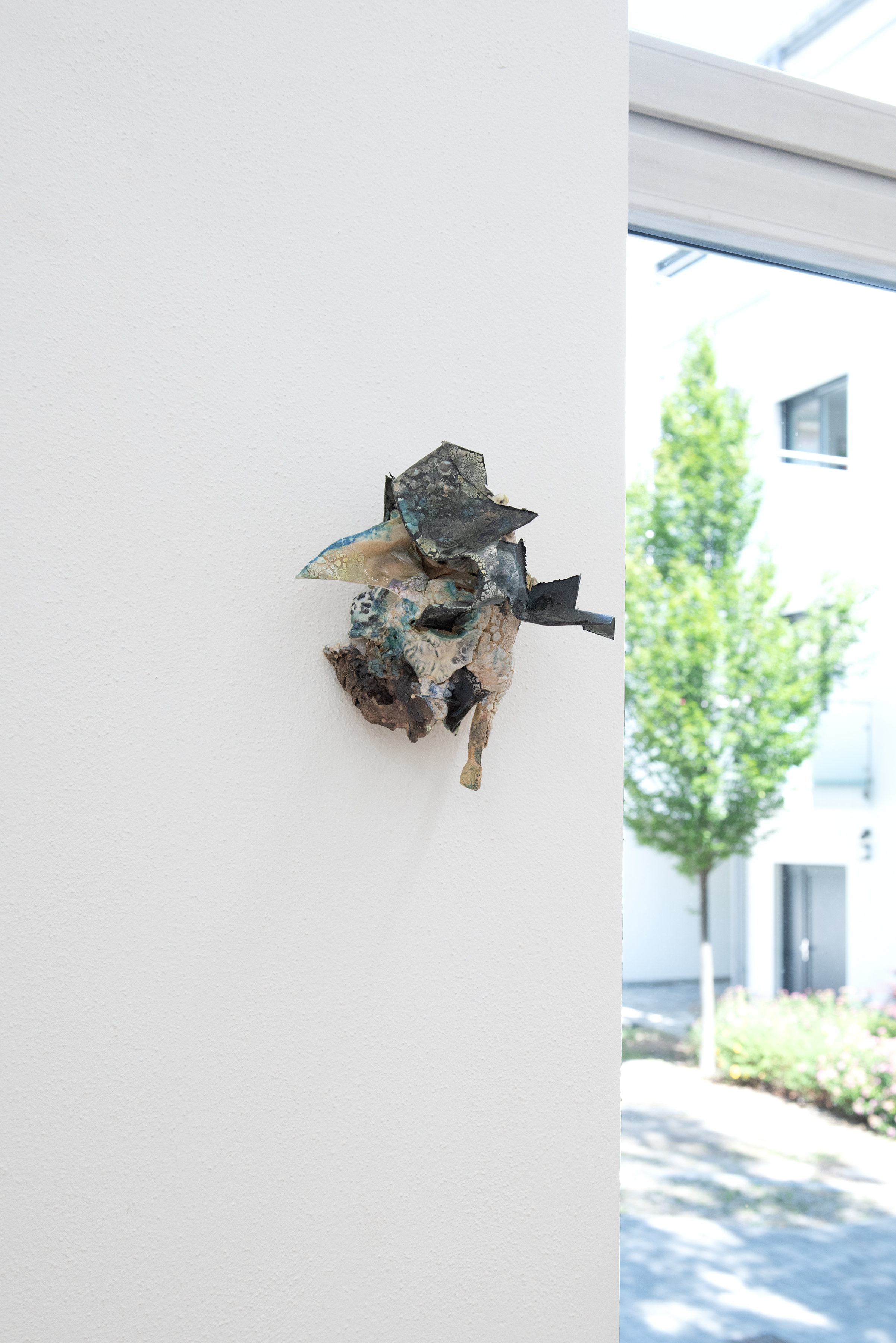
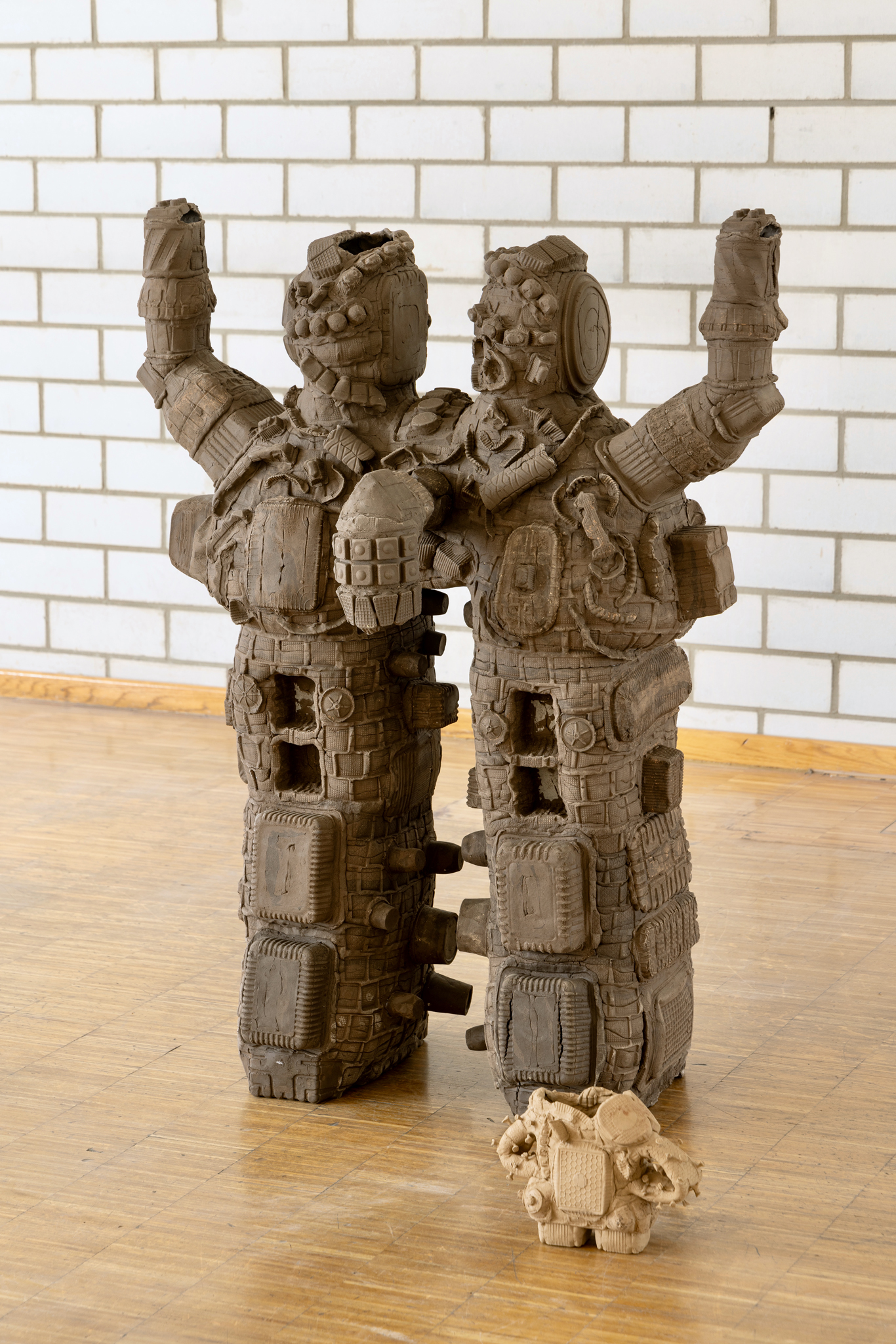
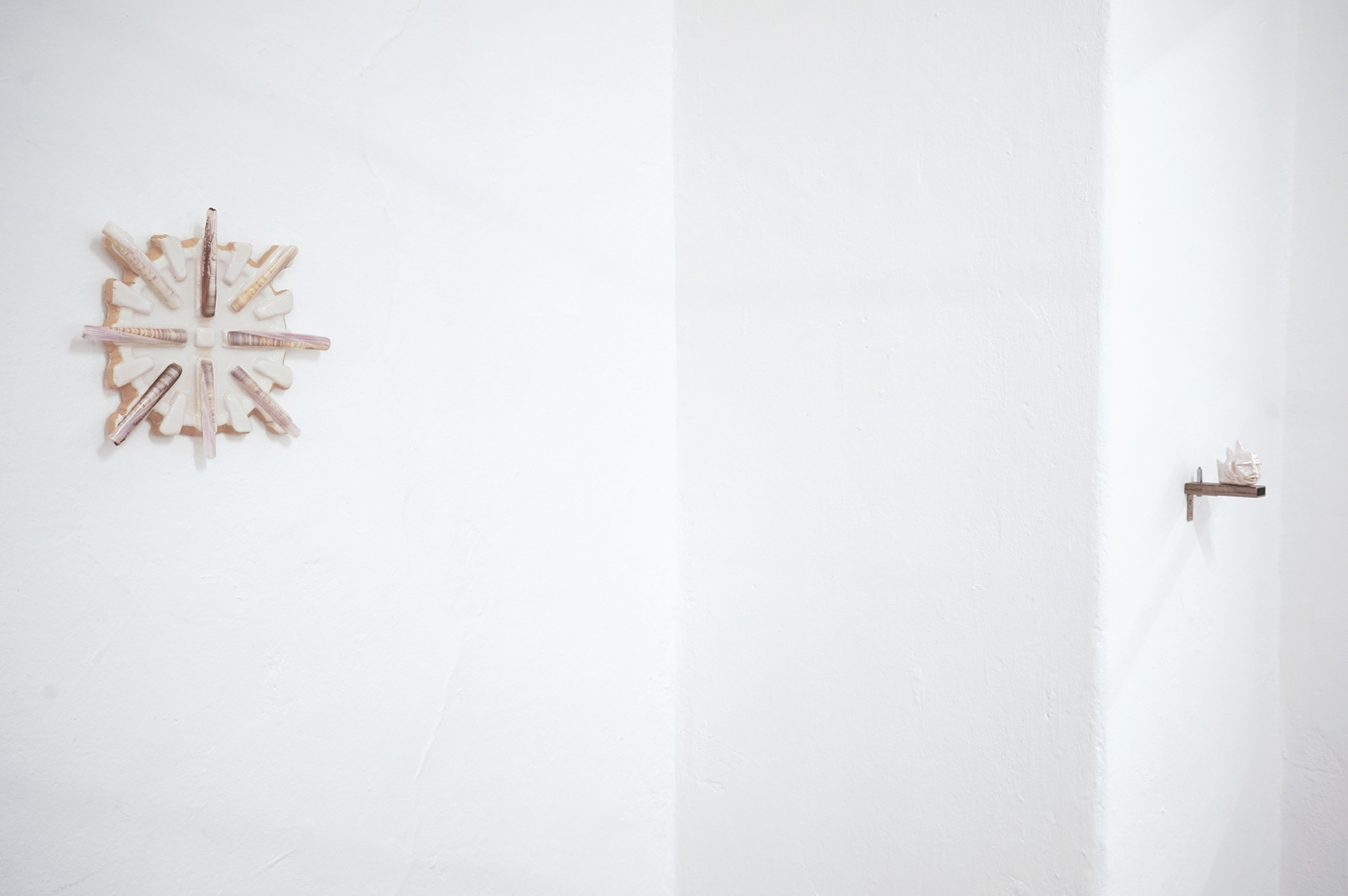
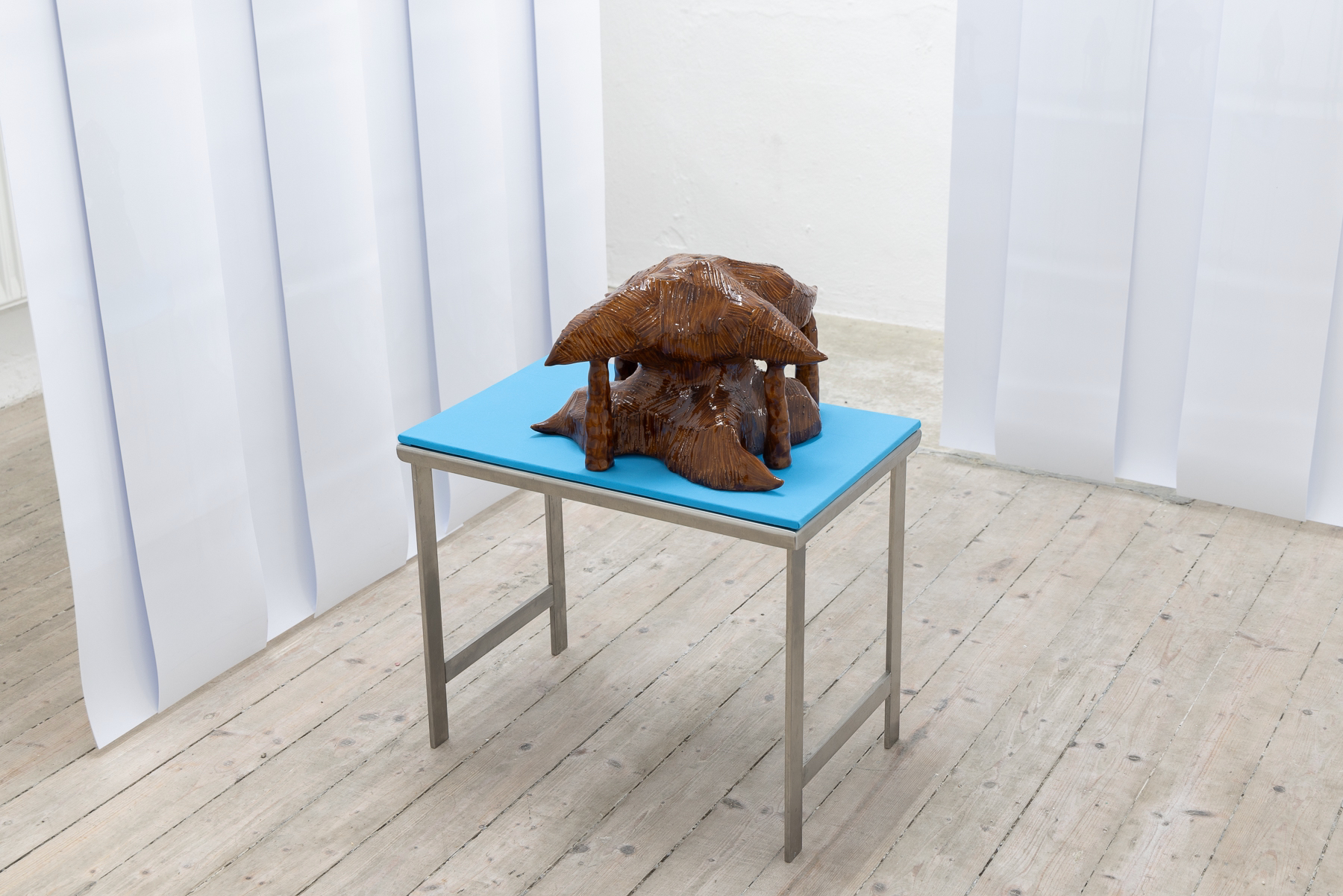
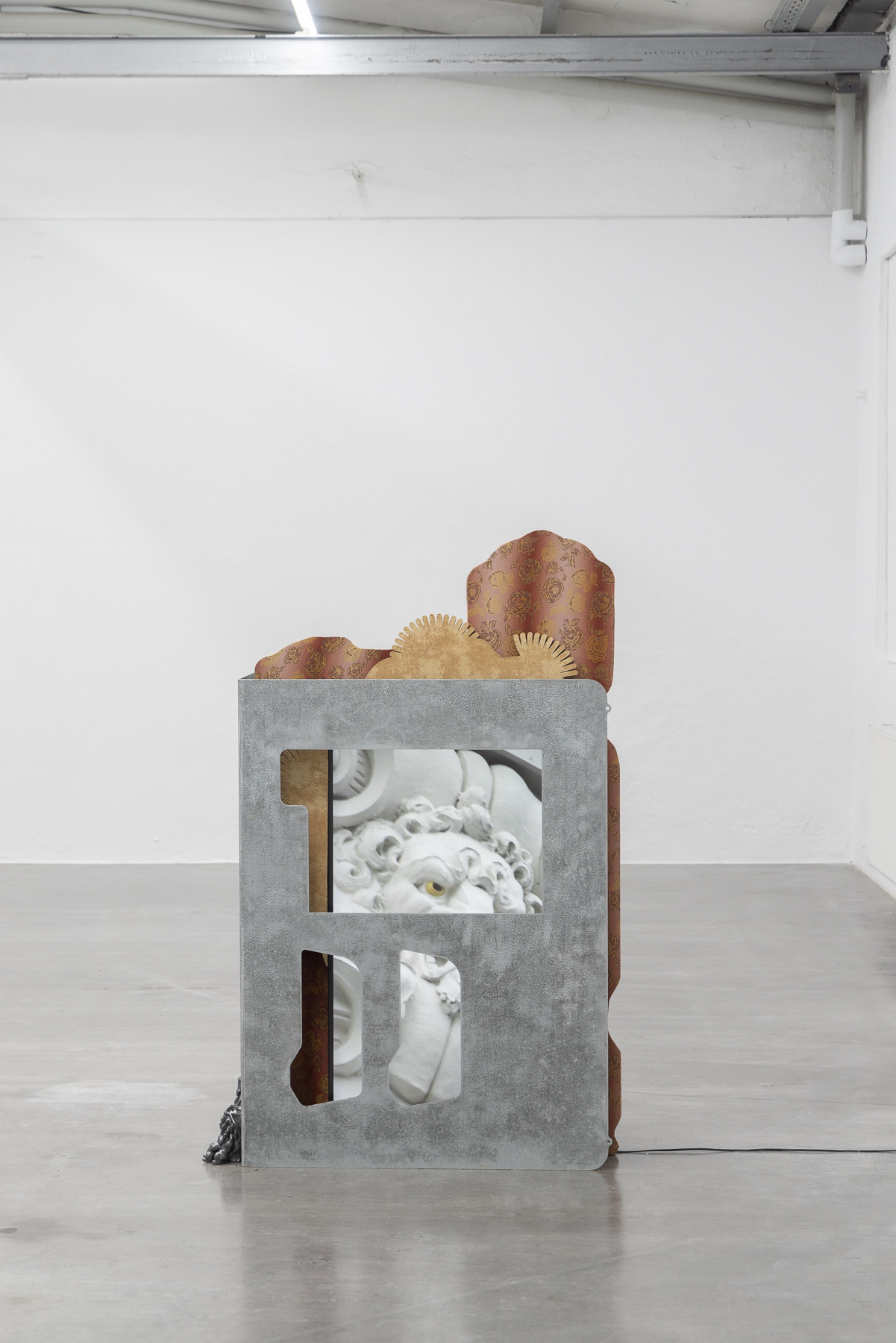
Julia Klemm, A chimera is not a pet 3, 2025, steel, glaze, ceramic, pigment, 46 × 34 × 42 cm
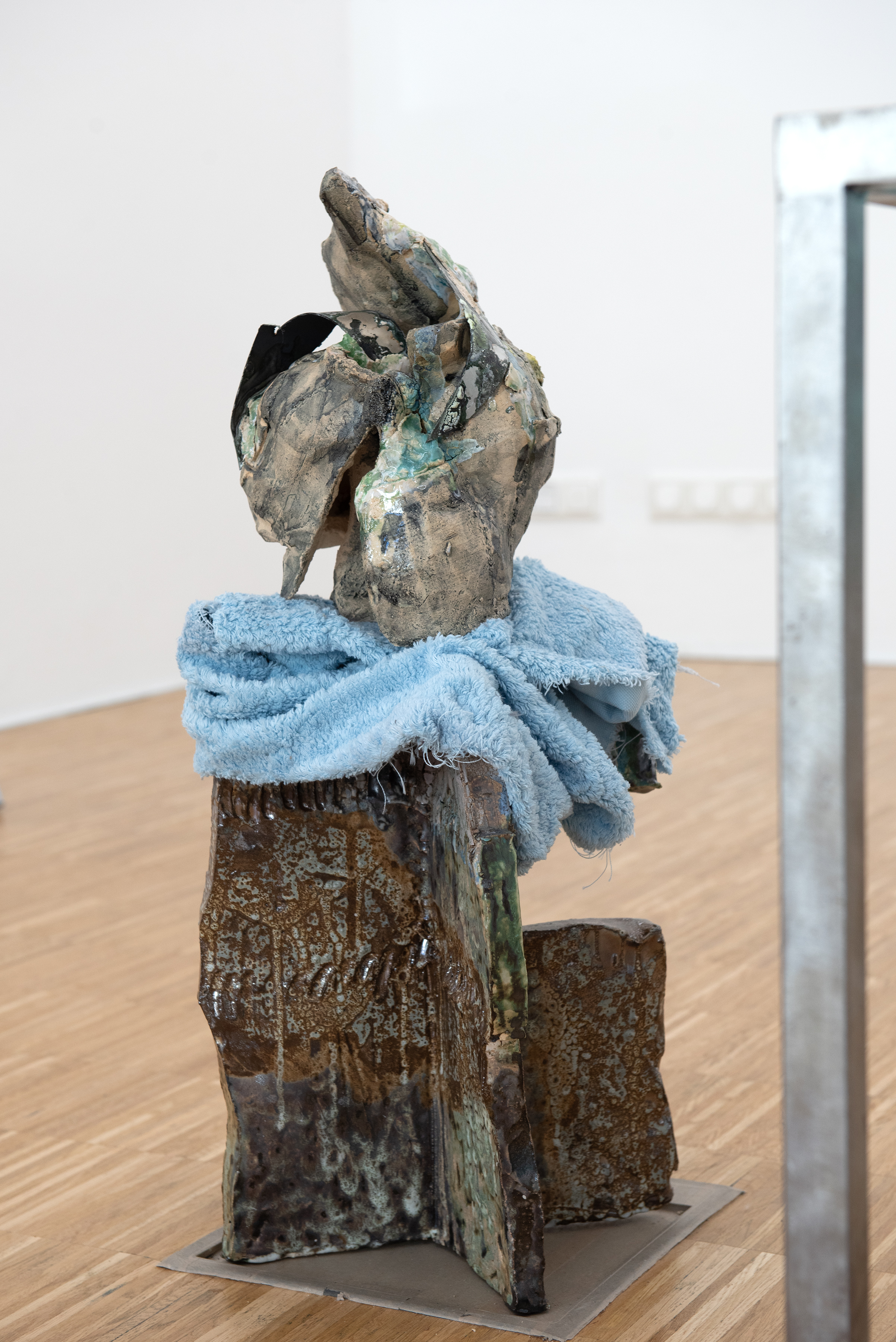
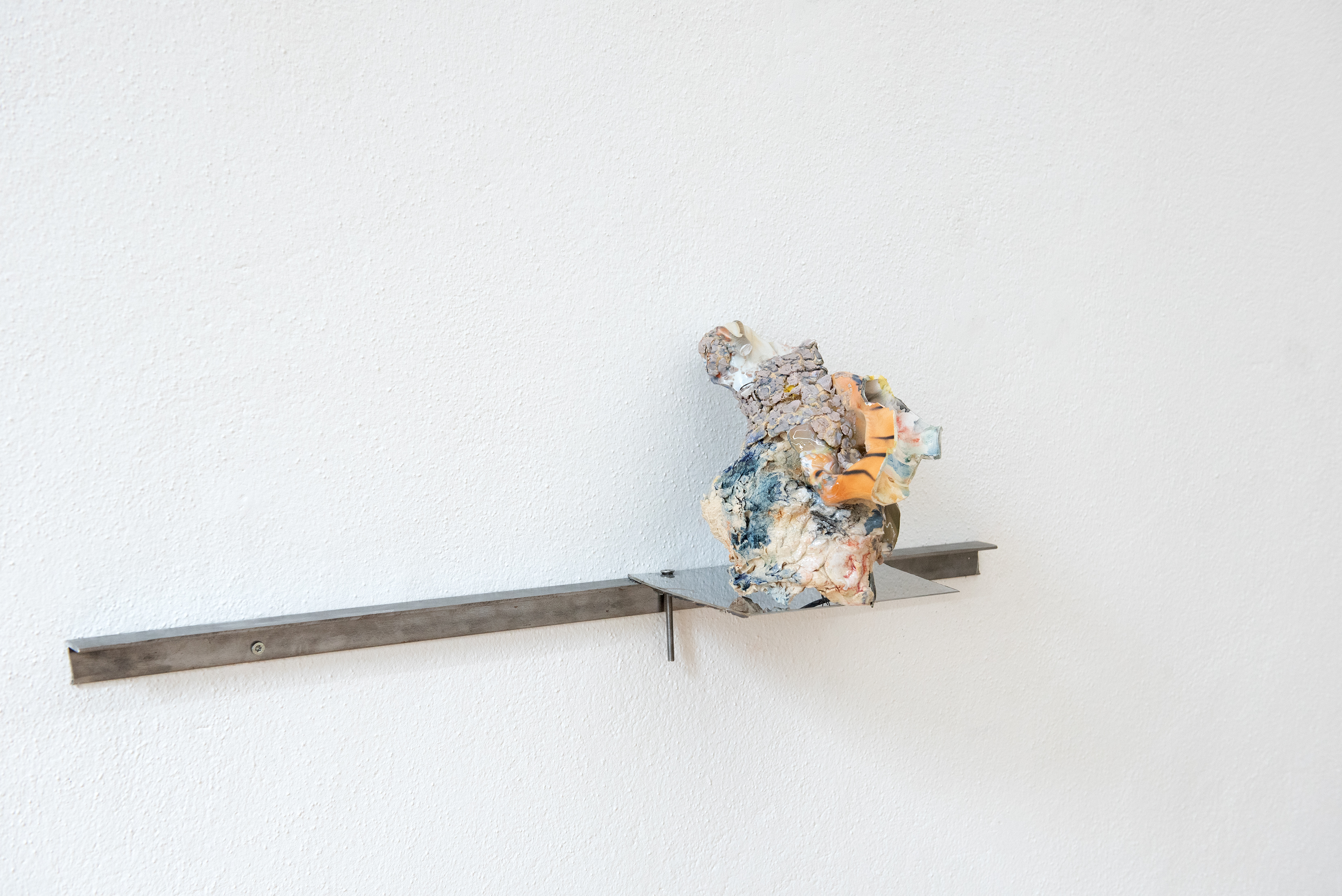
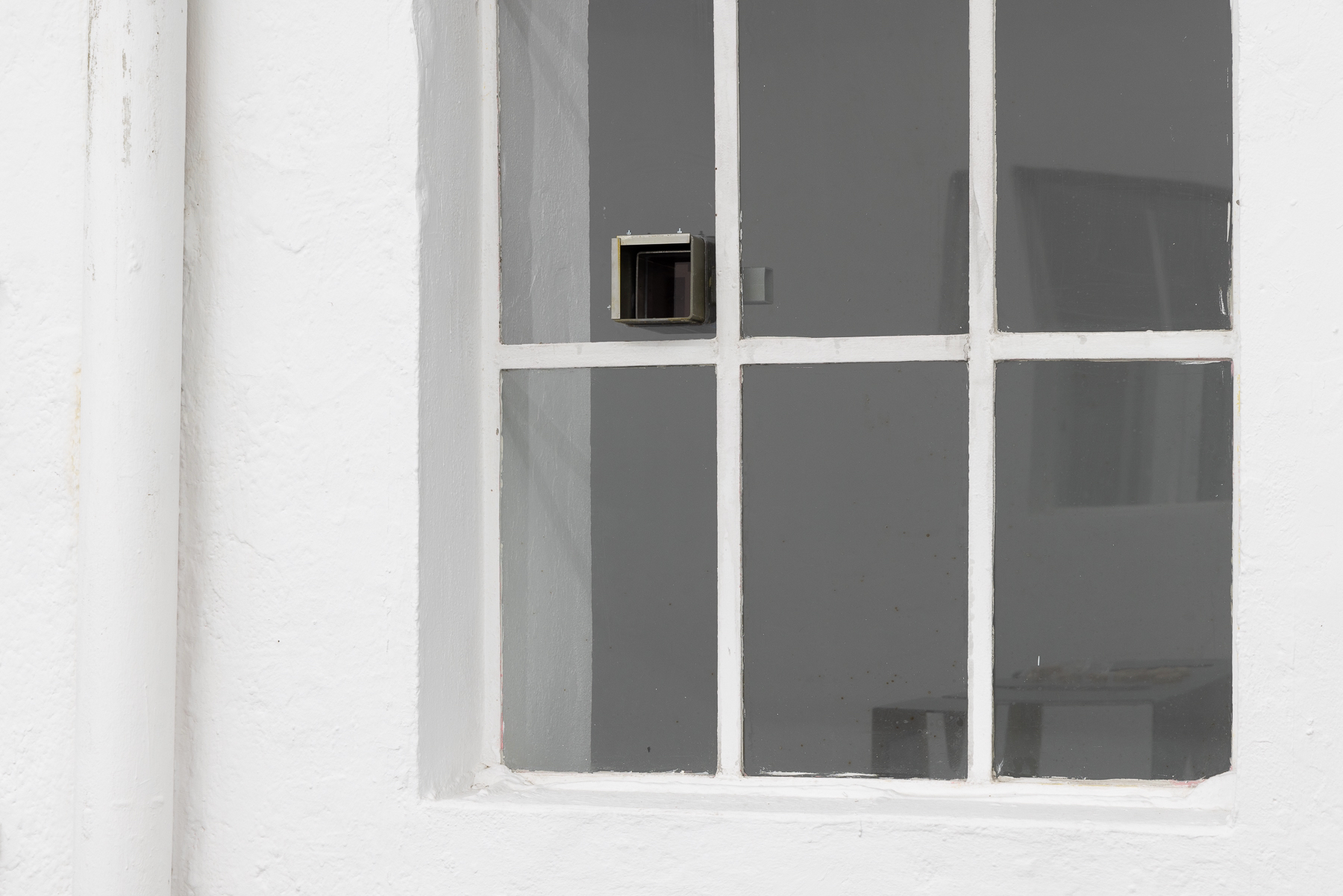
Julia Klemm, Evasion, 2025, steel, glaze, ceramic, pigment, cloth, 23 × 23 × 65 cm
Julia Klemm, A chimera is not a pet, 2025, installation view
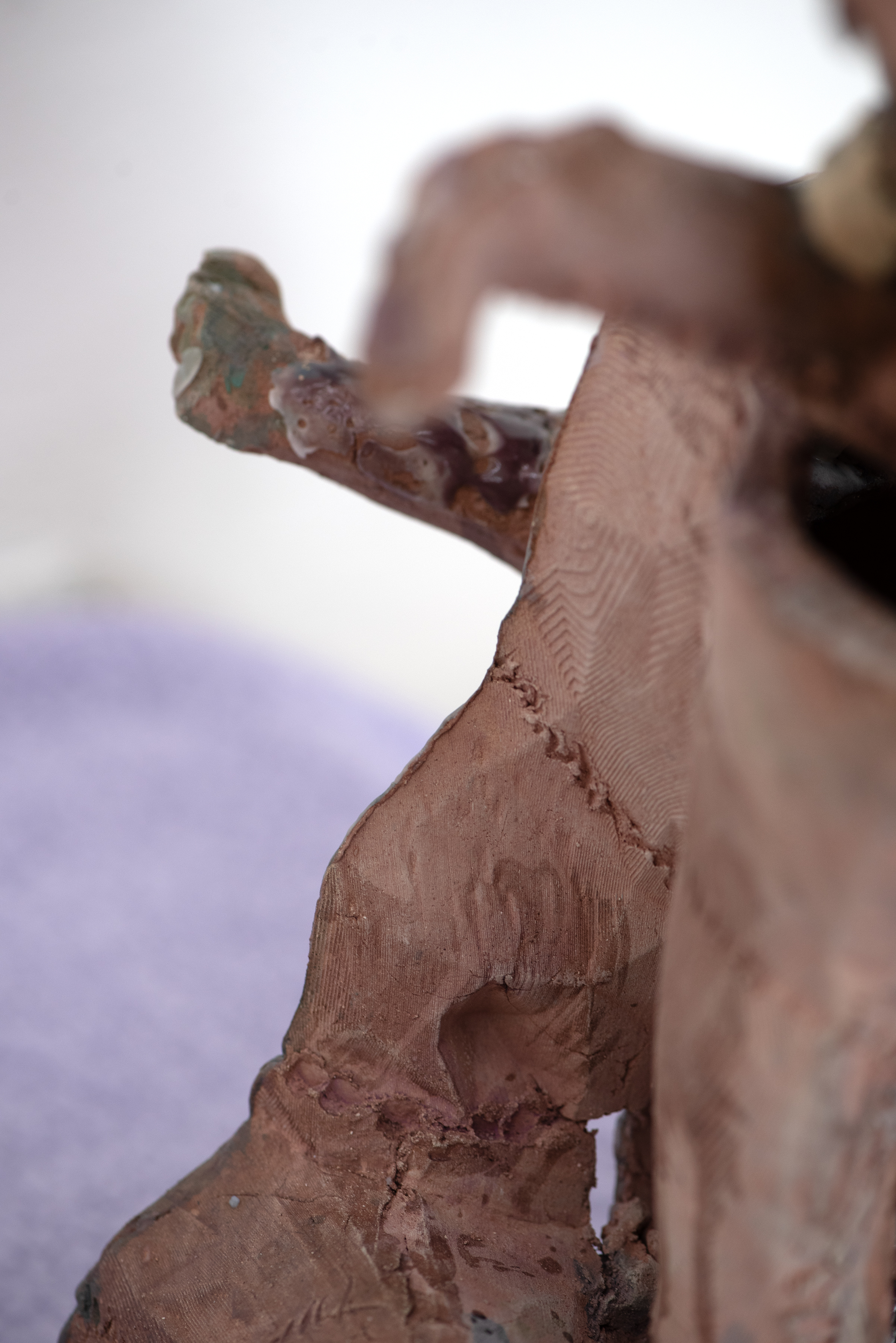
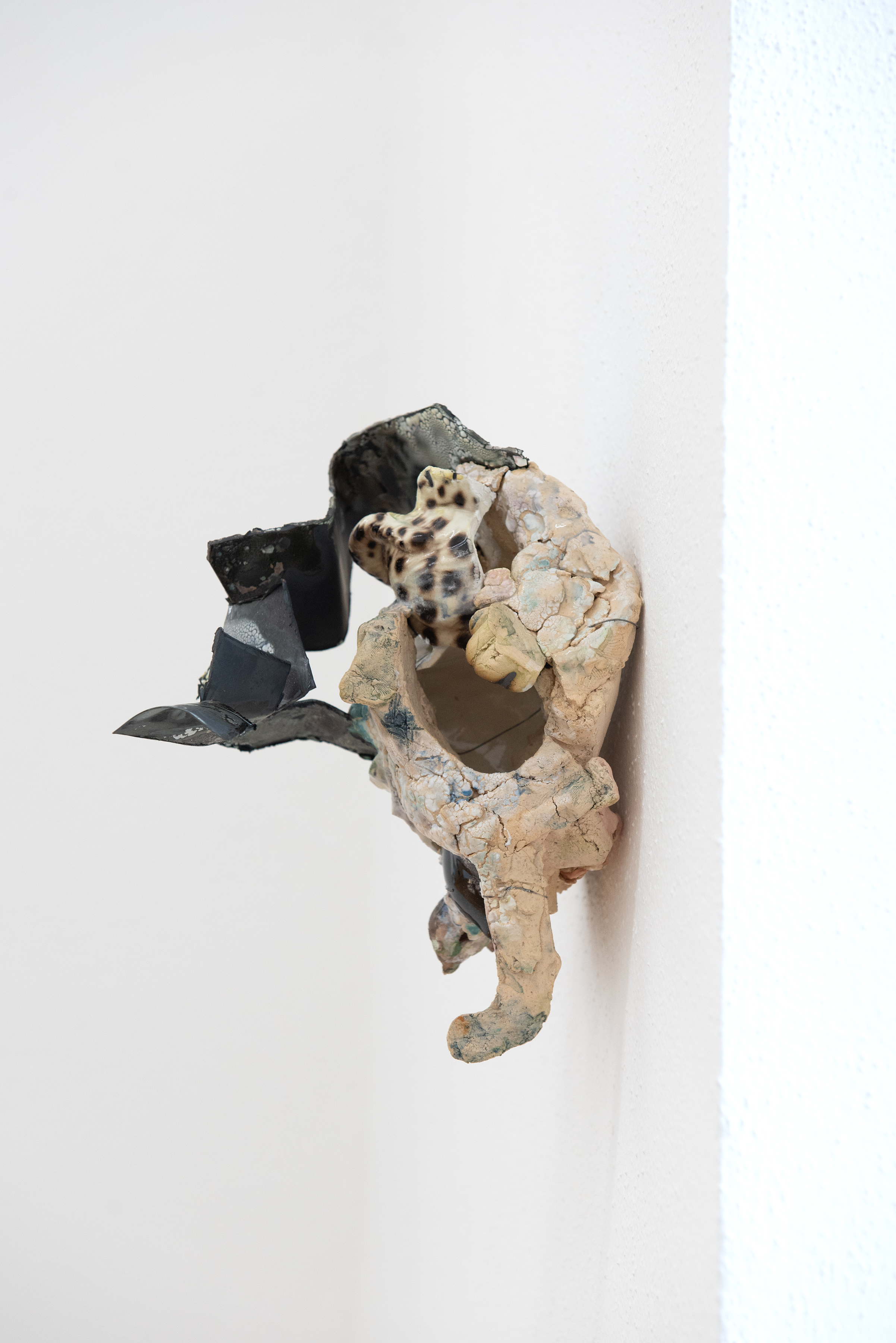
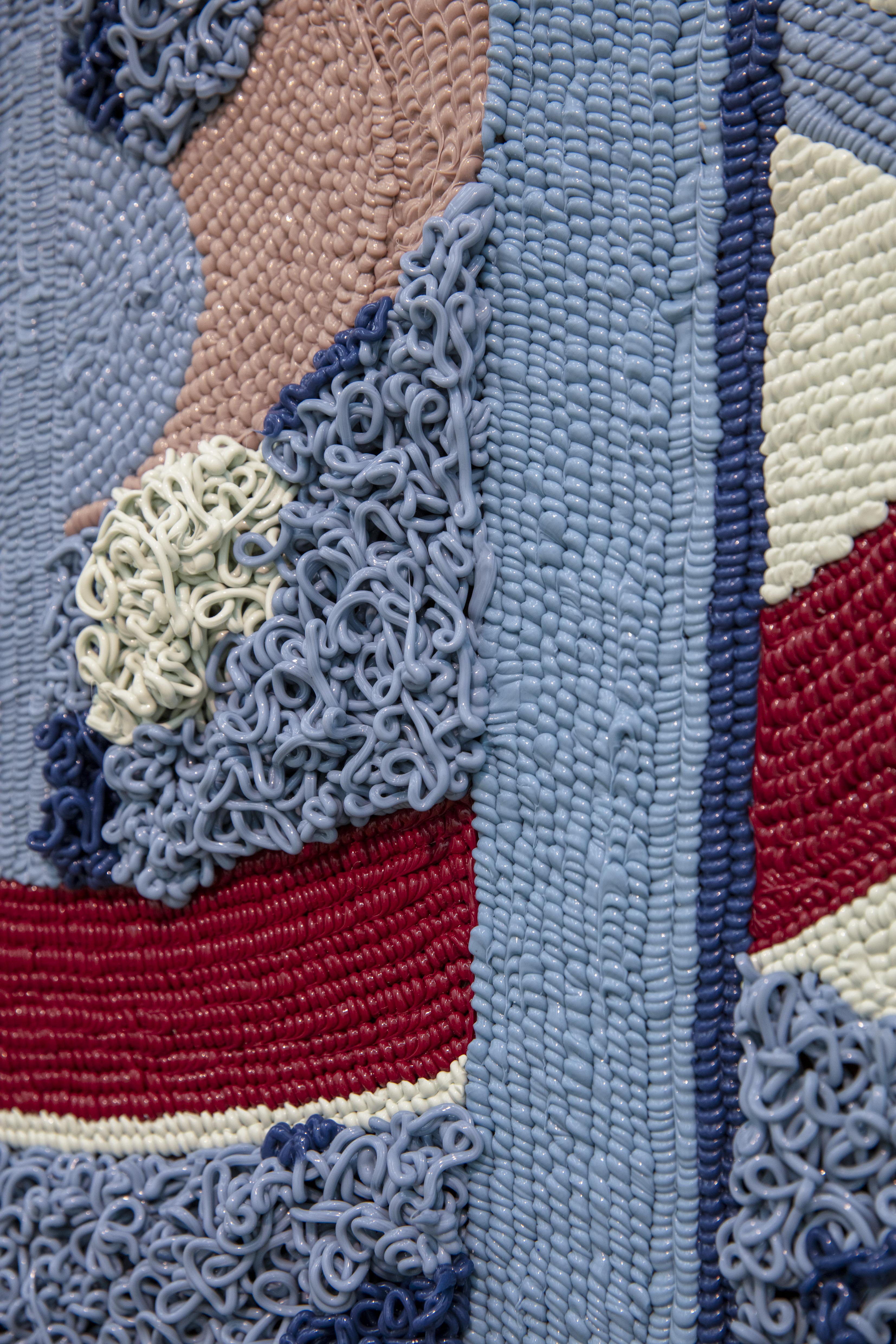
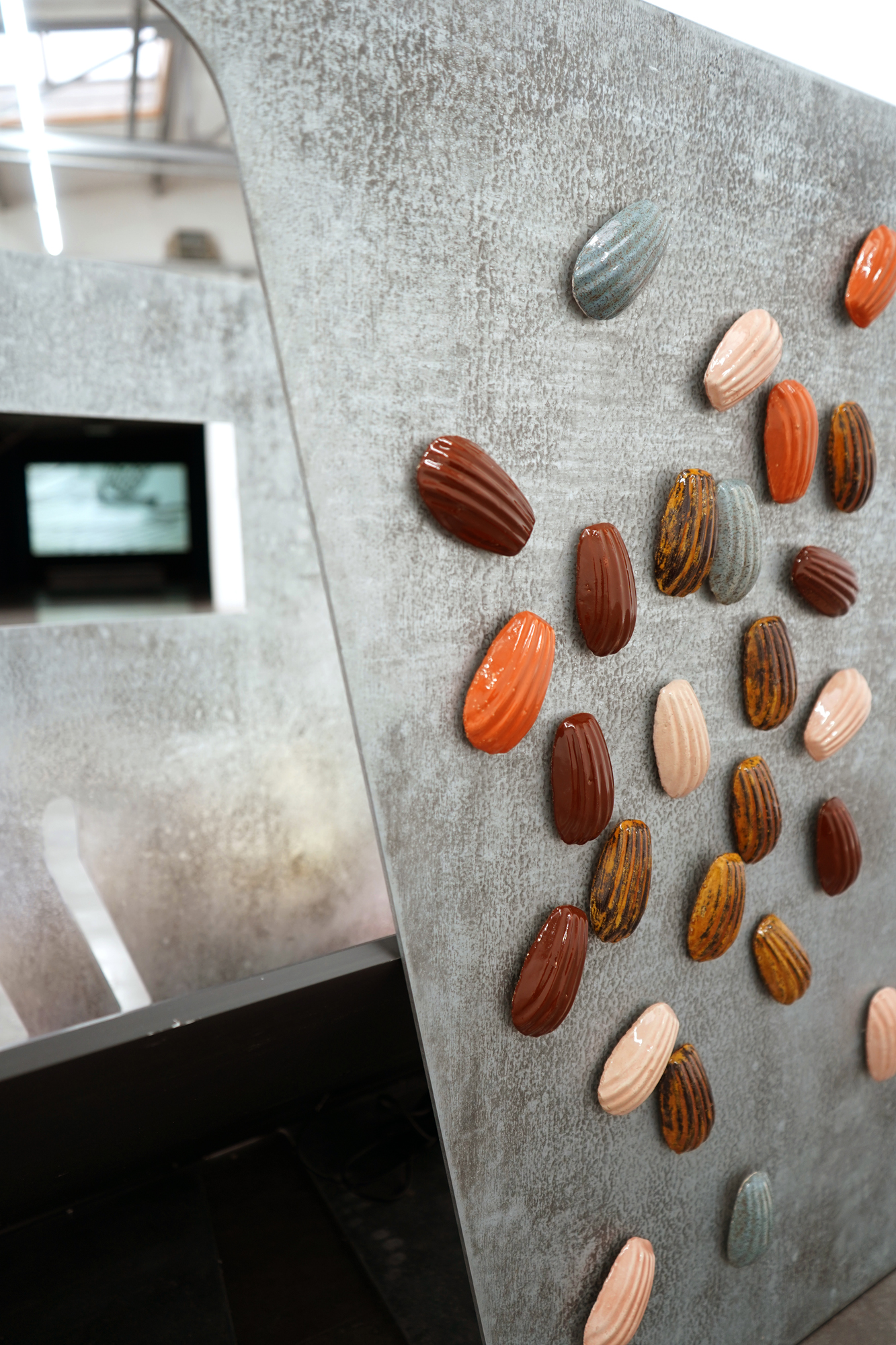
Julia Klemm, Transcending territories, 2024, glaze, ceramic, pigment, 32 × 30 × 48 cm
Julia Klemm, Julia Klemm, Transcending territories, 2024, glaze, ceramic, pigment, 32 × 30 × 48 cm (detail)
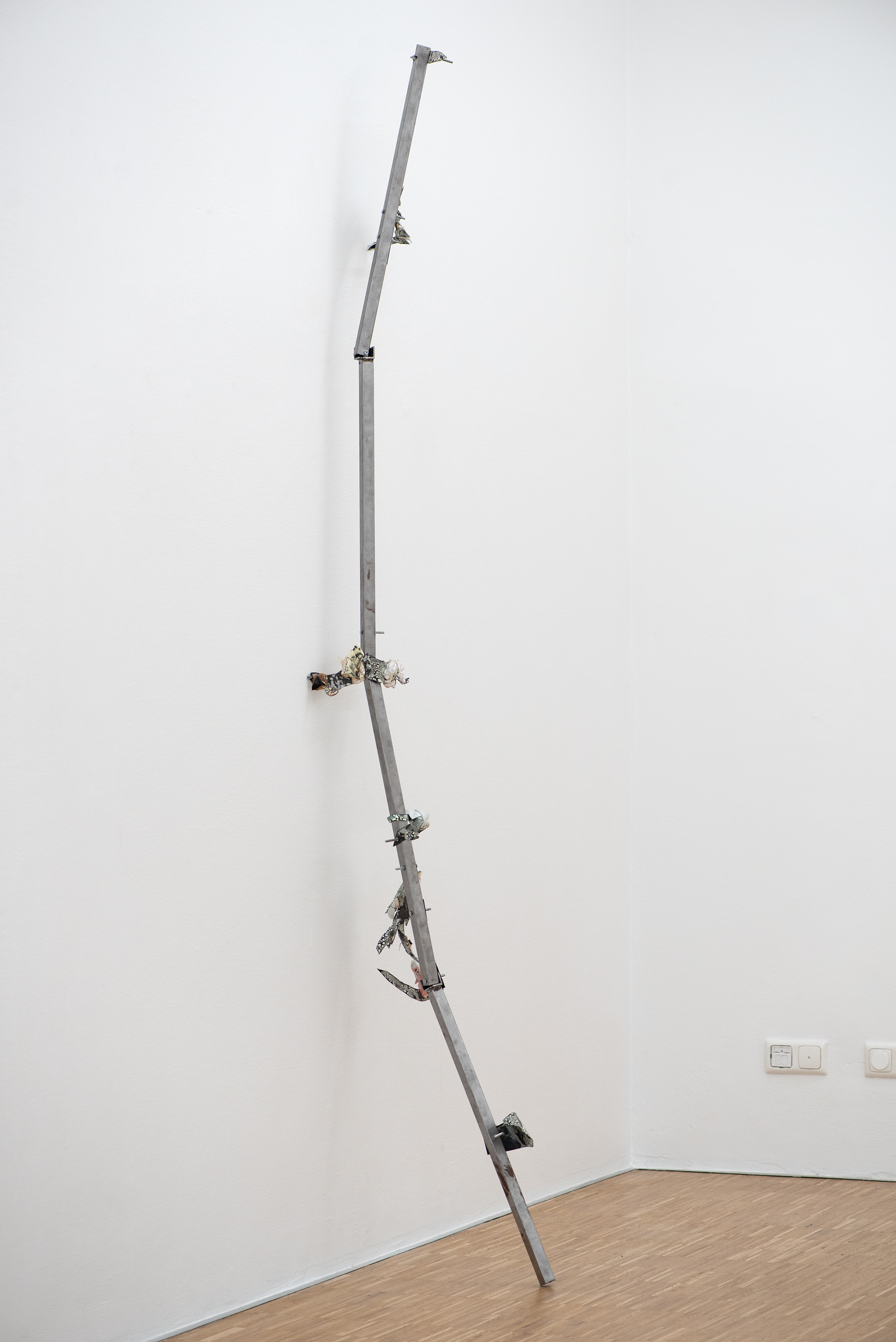
Julia Klemm, A chimera is not a pet 4, 2025, secondhand ceramic figures, steel, glaze, ceramic, screws, 27 × 46 × 260 cm
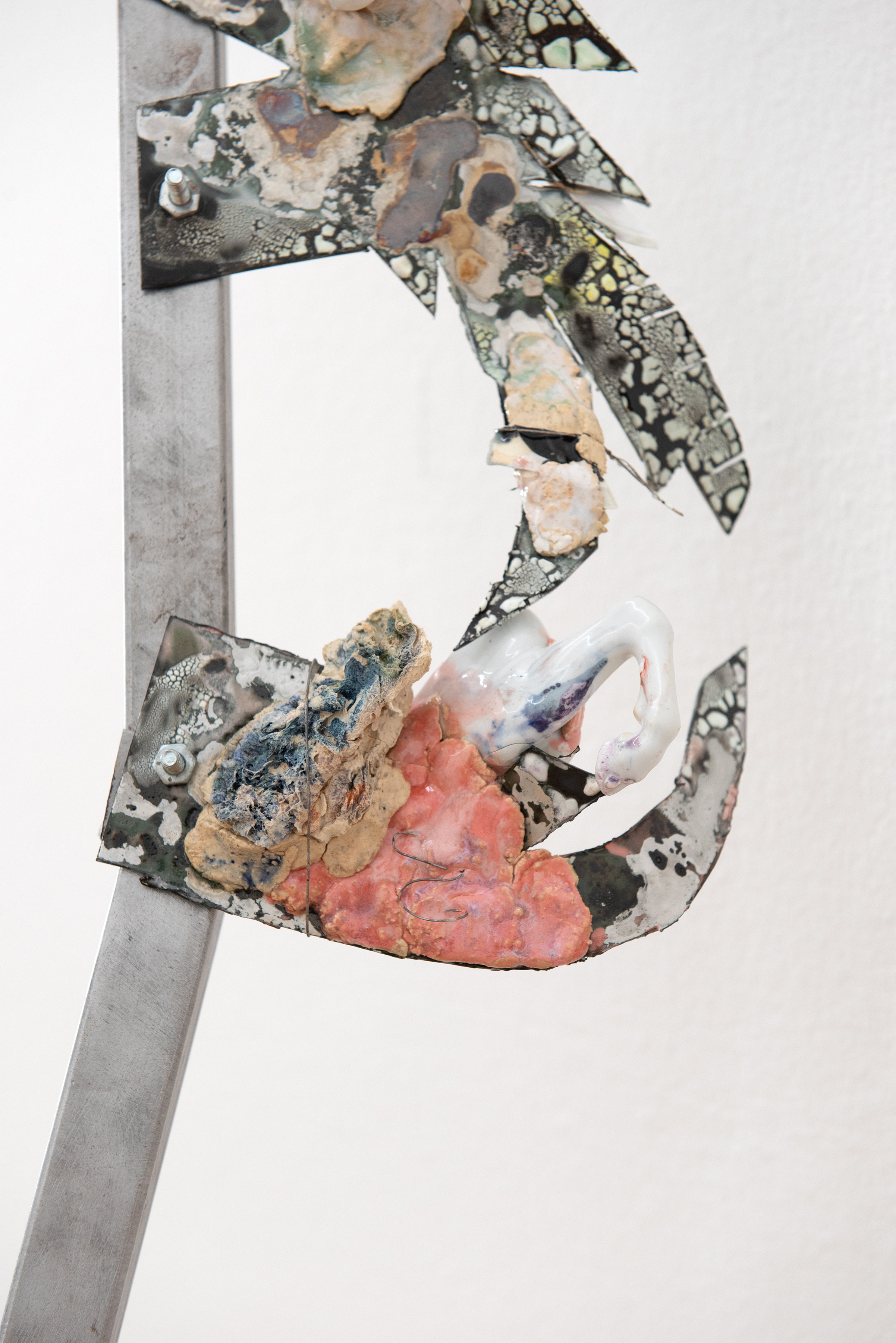
Julia Klemm, A chimera is not a pet 4, 2025, secondhand ceramic figures, steel, glaze, ceramic, screws, 27 × 46 × 260 cm (detail)
Julia Klemm, A chimera is not a pet, 2025, installation view
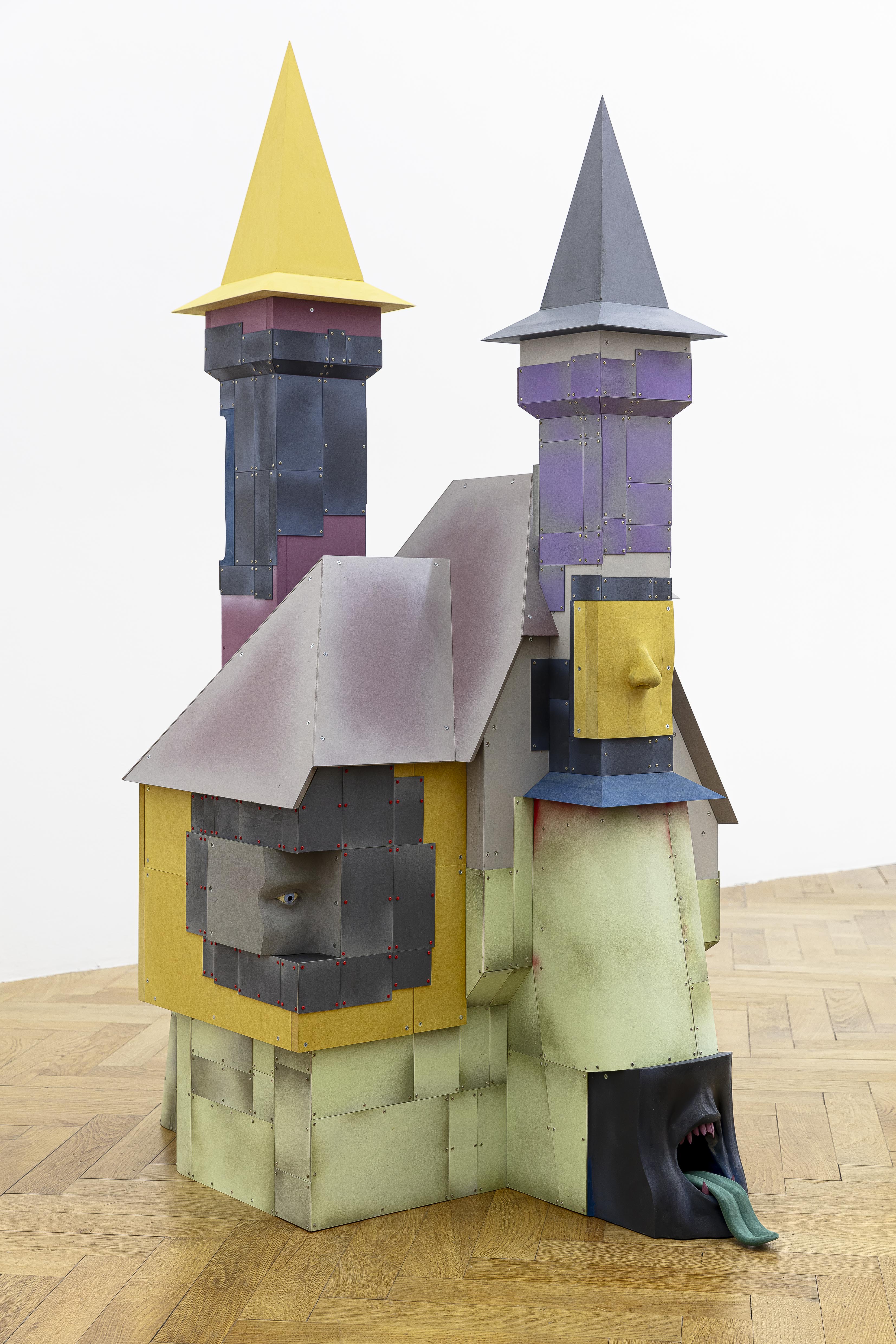
Julia Klemm, A chimera is not a pet 2, 2025, steel, glaze, ceramic, pigment, 44 × 38 × 74 cm
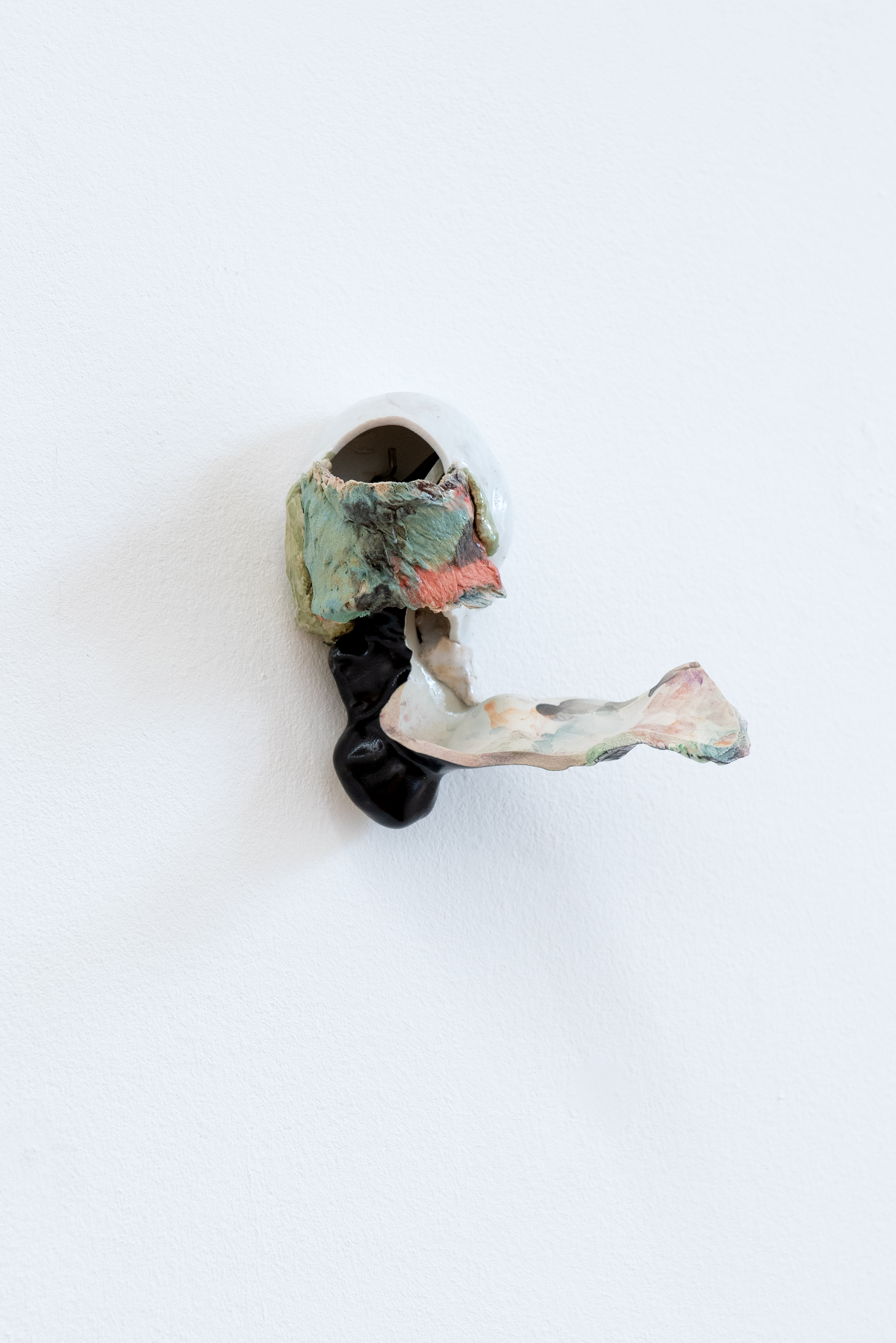
Julia Klemm, Untitled, 2025, secondhand ceramic figures, glaze, ceramic, fired soft toy, chandelier, 12 × 14 × 11 cm
Julia Klemm, A chimera is not a pet, 2025, installation view
Julia Klemm, Double trouble, 2025, ceramic, steel, pigment, glaze, 24 × 34× 60 cm
Julia Klemm, A chimera is not a pet 1, 2025, secondhand ceramic figures, glaze, ceramic, steel, fired soft toy, 15 × 25 × 14,5 cm
Julia Klemm, A chimera is not a pet, 2025, installation view
Julia Klemm, Mimicry, 2025, second ceramic figures, steel, chandelier, glaze, ceramic, 12 × 14 × 8 cm
Julia Klemm, Gryphon, 2025, secondhand ceramic figures, glaze, ceramic, steel, fired soft toy, 18 × 22 × 17cm

The problem I think, is that too often a chimera is seen as a pet. We visualise chimeras as these mythical fire breathing monsters, maybe with a lion’s head, a body of a goat, and a serpent for a tail. Three distinct animals are combined into one, their individual characteristics clearly visible for us to see. In contrast, biologically,a genetic chimera is often invisible, a nightmarish combination of two different sets of DNA, a result of one or more zygotes fusing together during the early stages of prenatal development. How this alien DNA might manifest is not altogether clear, but you hear stories of mothers having different DNA than their children, and the DNA from semen and saliva not matching in rape tests. To look for distinctions in chimeras would be the first step towards their domestication, treating the hybrid animal as another family member, a pet. But you cannot cuddle the long lost twin you might be carrying with you, inside.

Julia Klemm’s ceramic work often involves a combination of several smaller ceramic pieces, each with their own specific animal DNA. Sometimes these are readymade figurines of cats, lions or horses, glossy and kitsch, inhabitants of Flohmärkte and Omas’ living rooms. At other times, these are recreations of existing public art, of lion statues such as those found on Odeonsplatz, scanned, scaled down and then modelled with a 3D-printed negative mould. Rarely, an animal-type structure is moulded in clay by Julia on the spot, traces of fur scratched with a serrated scraper onto its surface. These smaller animal ceramics are first broken, smashed into almost unrecognisable fragments before they are combined, their intertwining made permanent by the heat of the ceramic oven. I look for these fragments as I walk around the work and try to classify them: look, here are some lion’s legs, and here, a cat’s head, but upside down and half-broken, so that I can see the form inside and outside. Focussing on the surface helps, as I detect the glossy spots of a panther or the layer lines of the 3D printer.

In doing so, I am looking for a pet, with fur strokable like a pastel-coloured soft toy. I try to make the strange shapes of Julia Klemm’s work once again familiar to me. But their outward appearance is a result of a logic that remains hidden. The work demands I see it as a multiplicity, which means in animal terms, as a population. And science teaches us that a population is not a fixed set of individuals of the same species, but an always evolving, interacting mass that changes in relation to its location and environment. The alliances made in a population are not just of the filial kind between individual members of the group, but those made with other groups, other animals, with plants, and with geography.  To see the inner workings of the animal in Julia Klemm’s ceramics, I need to step away from the animal and take a more expansive view, one that acknowledges population change forged by mutation. It is very alien to see the world in this way, as foreign and as violent as the shards of steel that interpenetrate the work, both holding it together and ripping it apart. 

Magdalena Wiśniowska 2025

The Brutality of Spring

Anna Łuczak, Sophie Schmidt

14.12.2024-2.02.2025

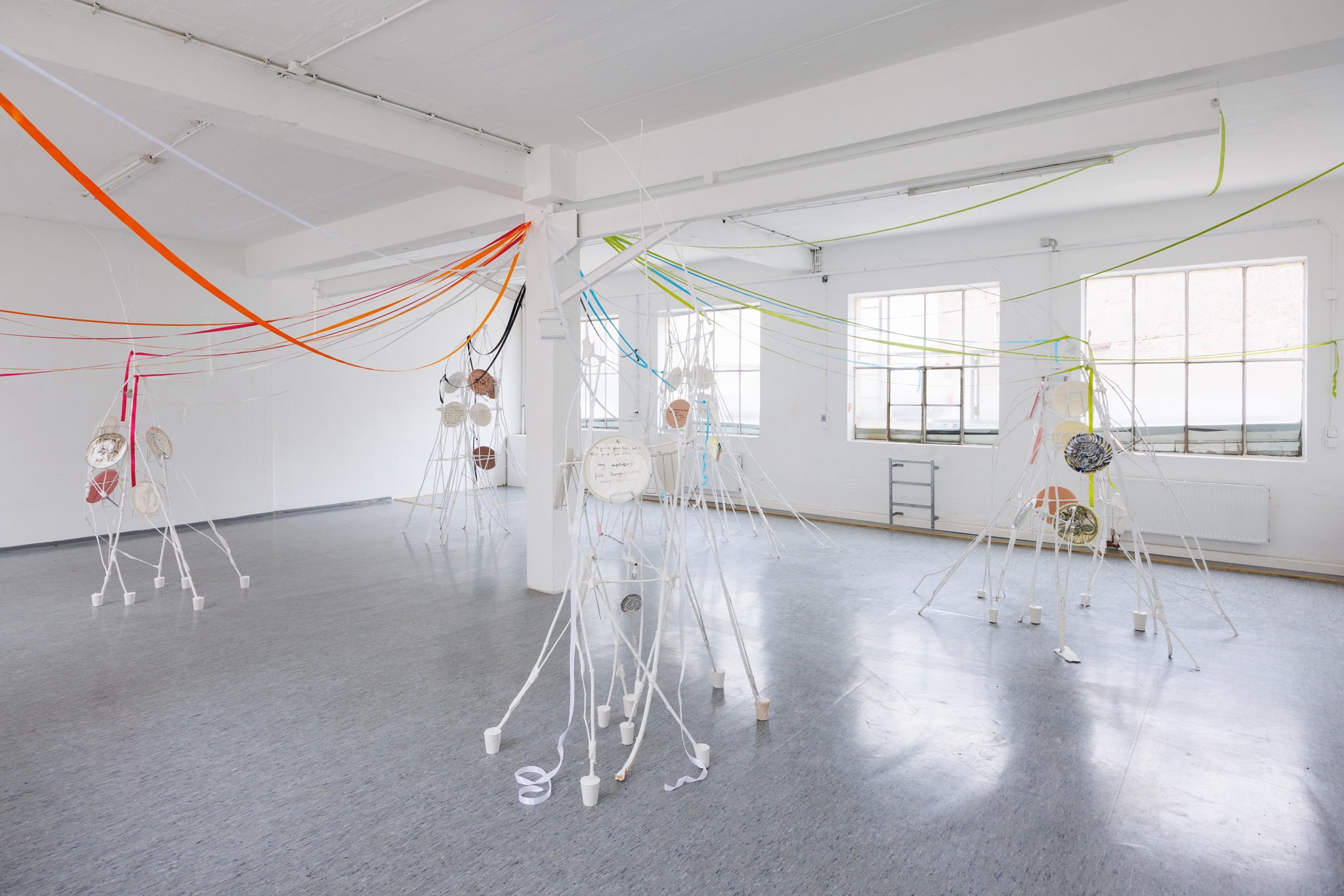
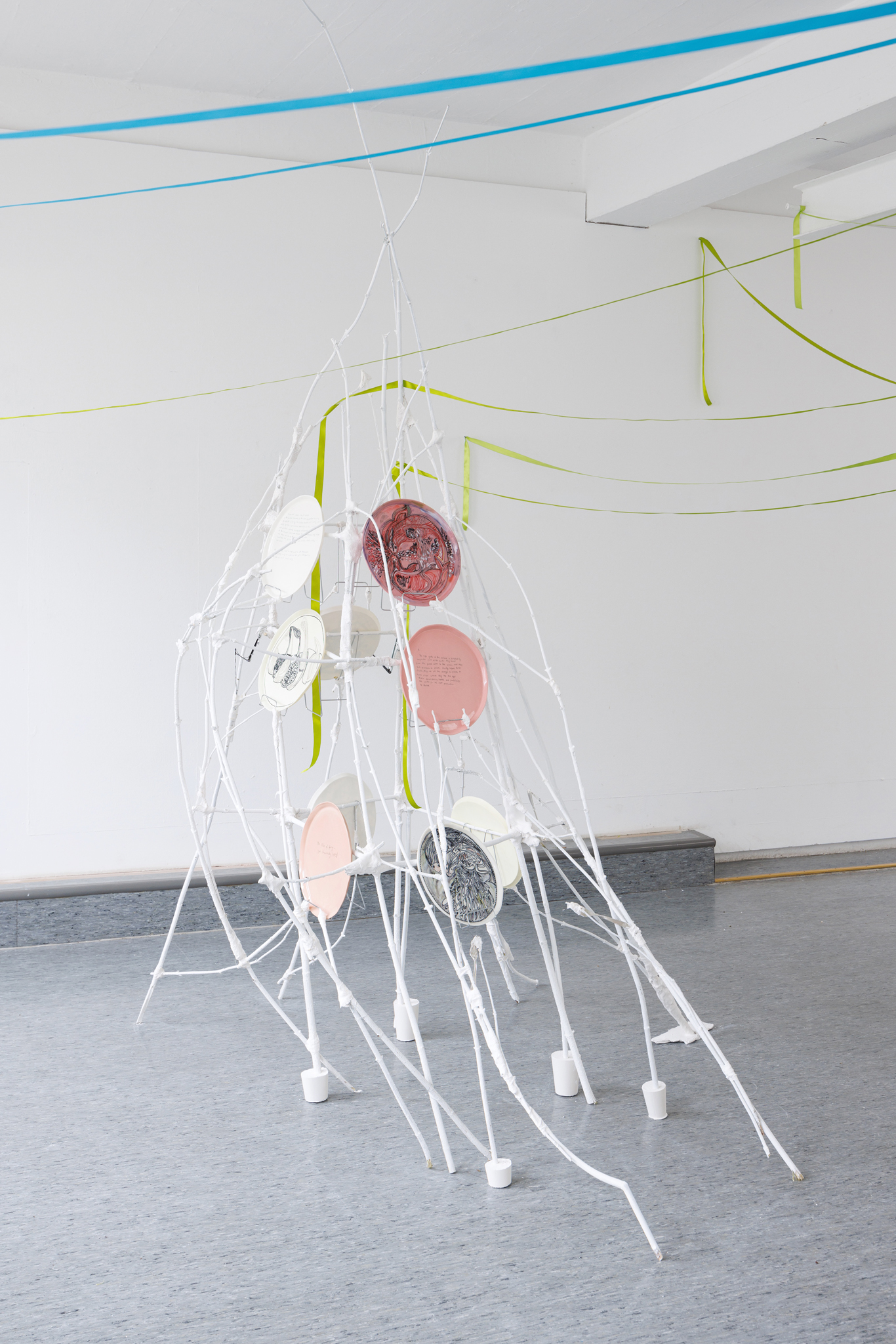
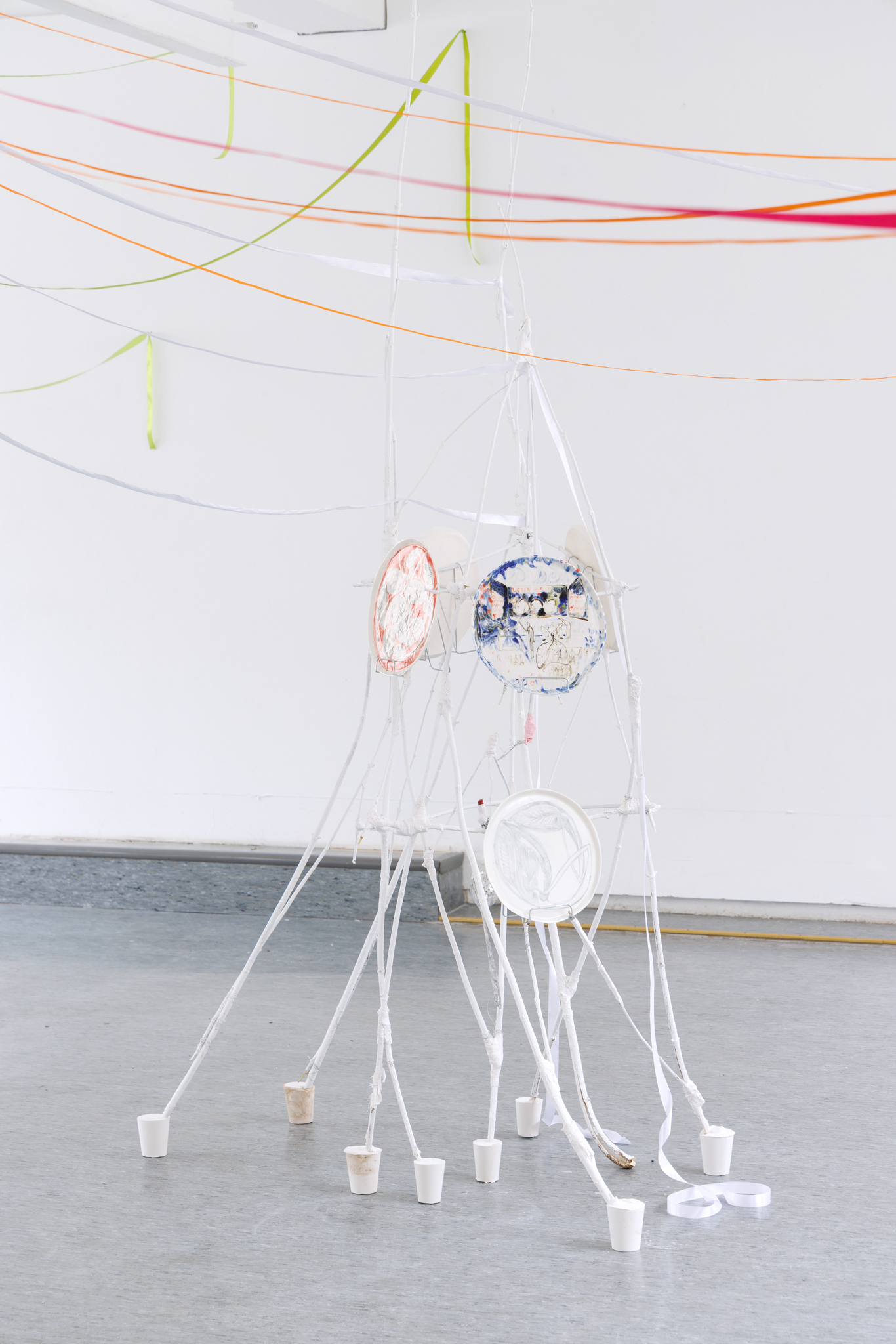
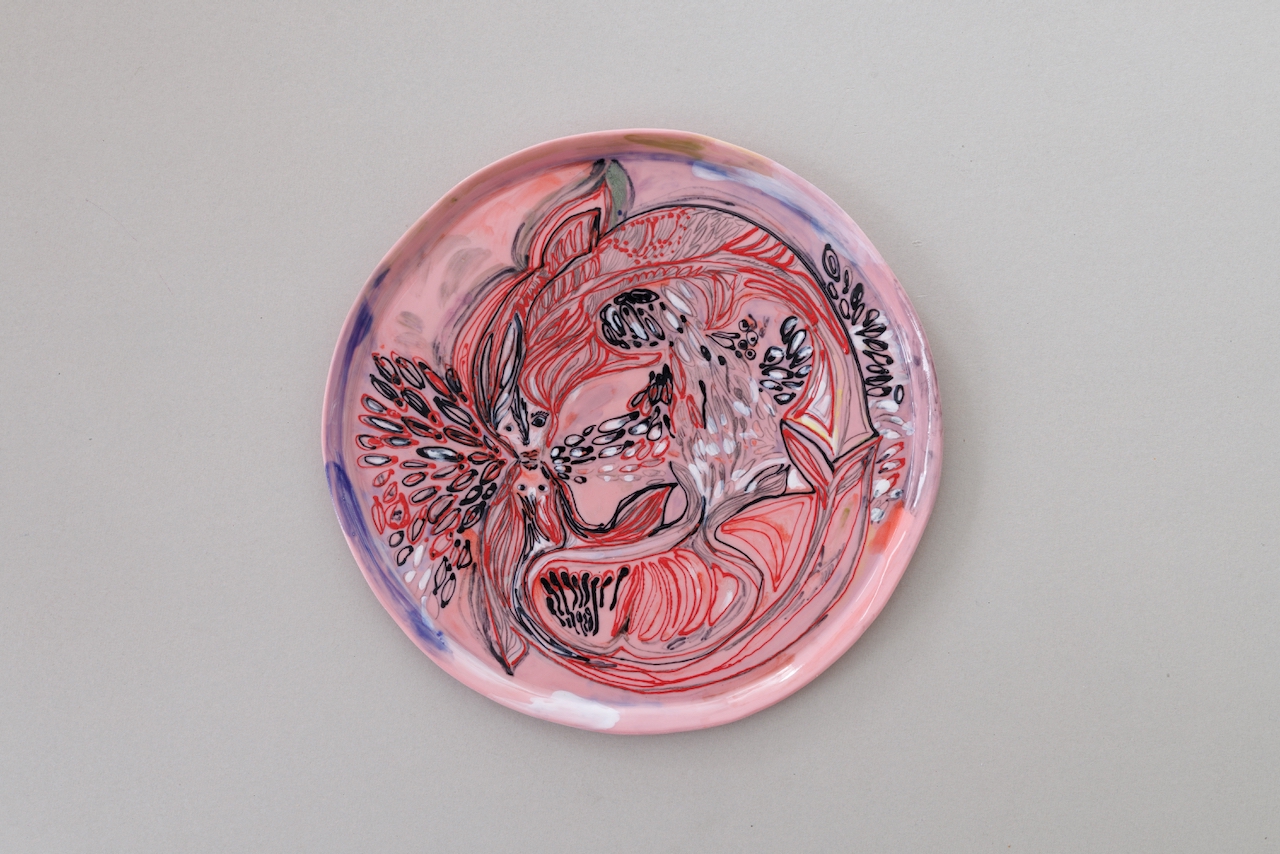
Anna Łuczak, Sophie Schmidt, “Brutality of Spring,” 2024, installation view (porcelain plates, white paint, wood ribbon, metal plate holders, cutlery, make up). Photo: Thomas Splett
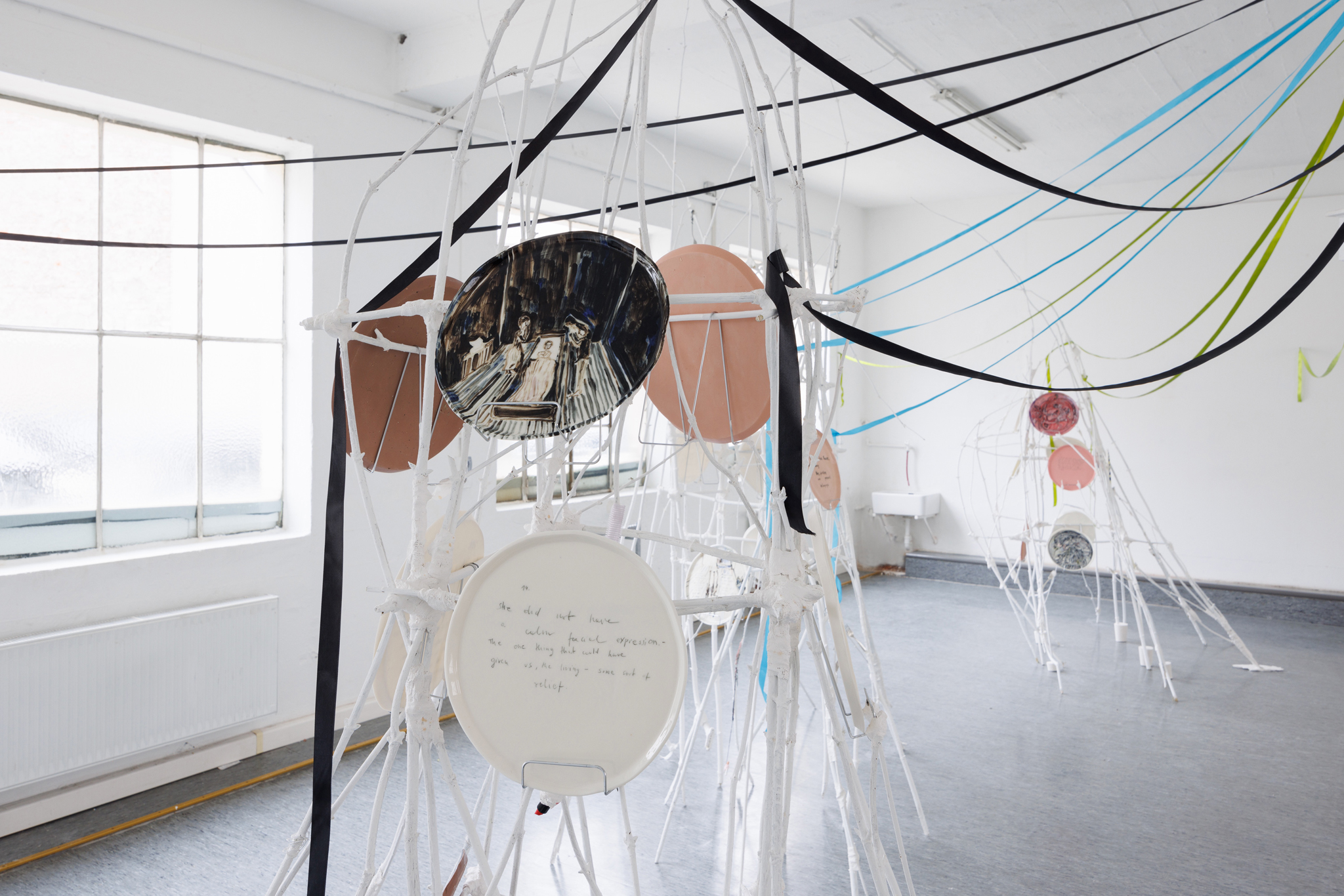
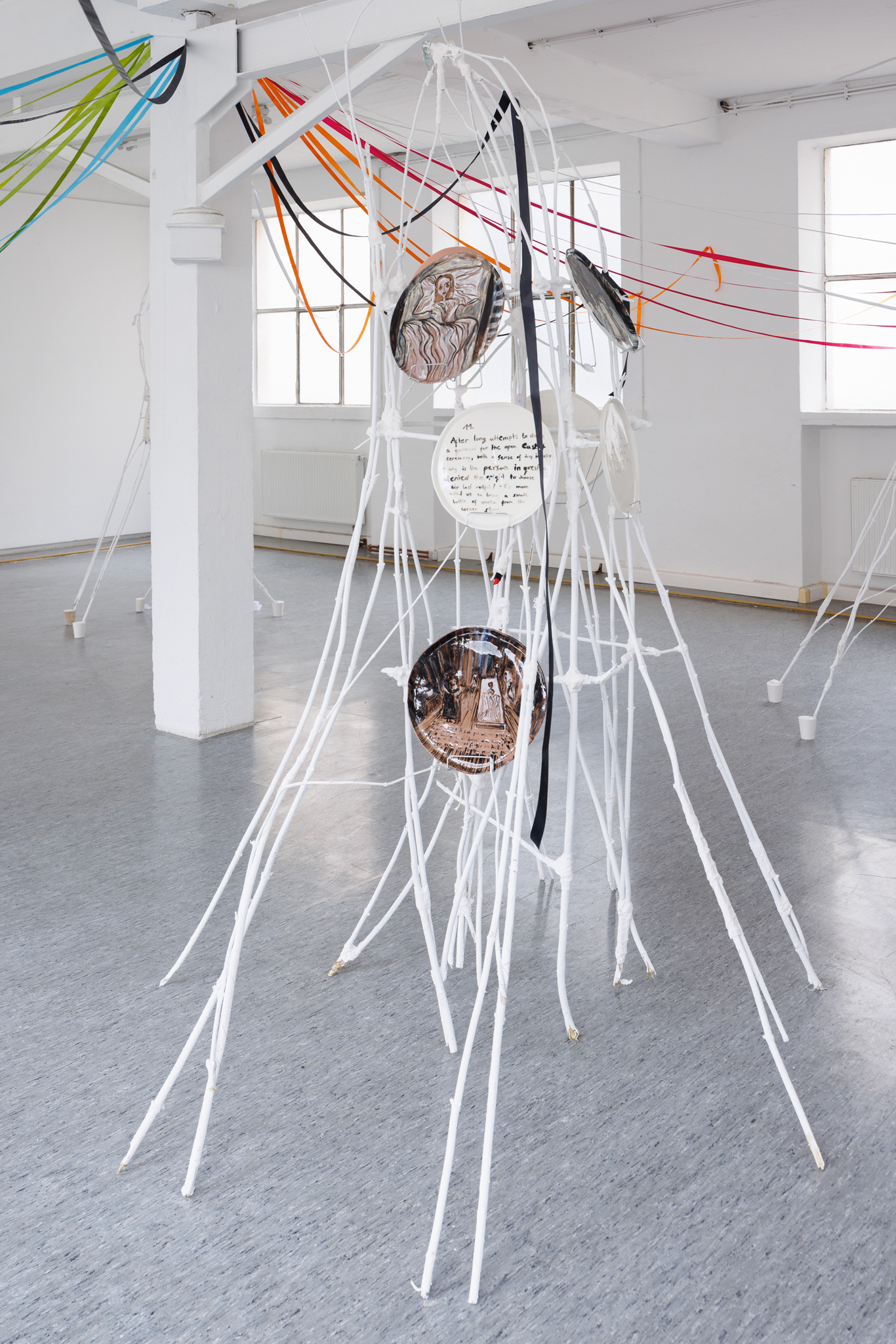
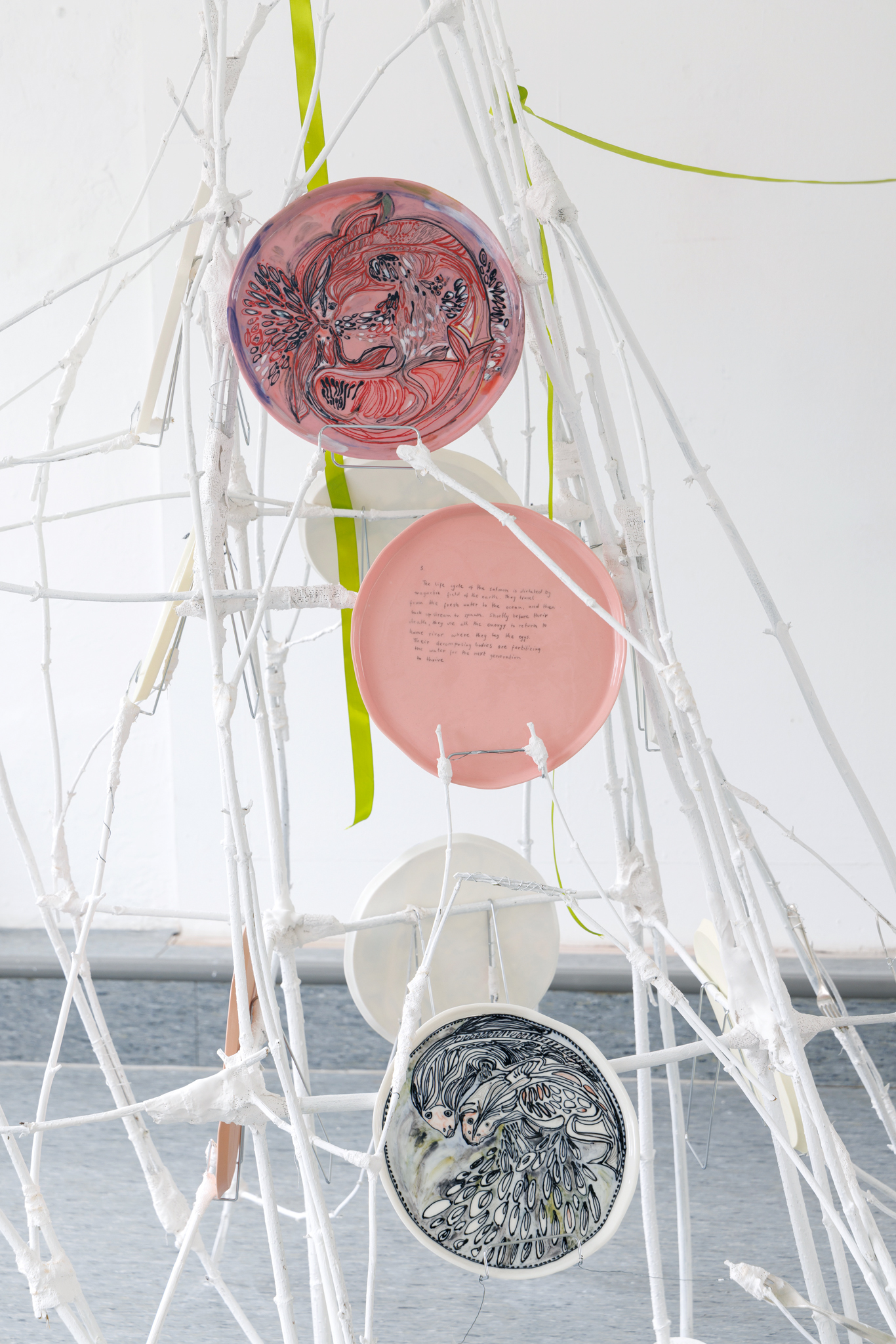
Anna Łuczak, Sophie Schmidt, “Brutality of Spring,” 2024, detail (porcelain plates, white paint, wood ribbon, metal plate holders, cutlery, make up). Photo: Thomas Splett
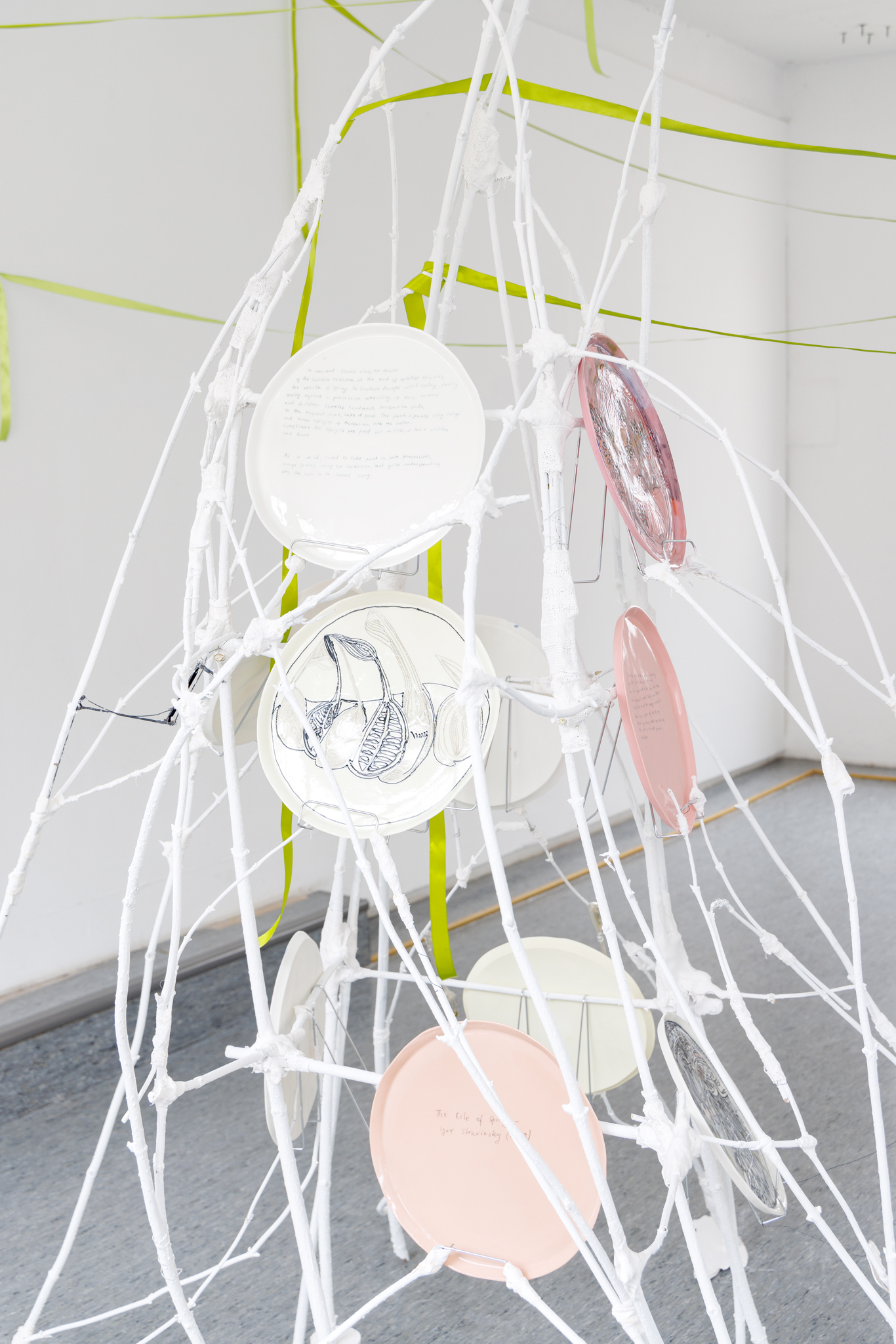
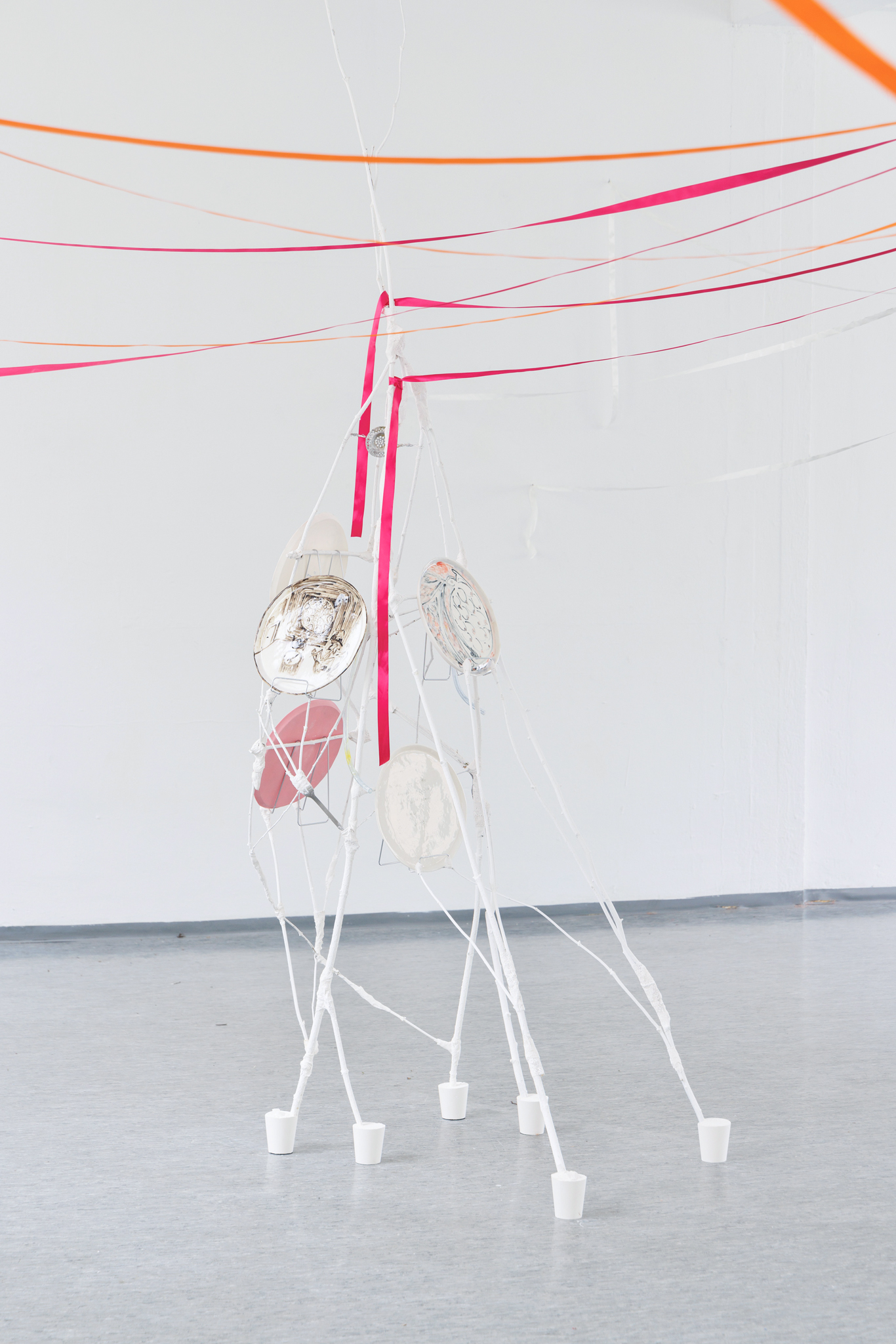
Anna Łuczak, Sophie Schmidt, “Brutality of Spring,” 2024, installation view (porcelain plates, white paint, wood ribbon, metal plate holders, cutlery, make up). Photo: Thomas Splett
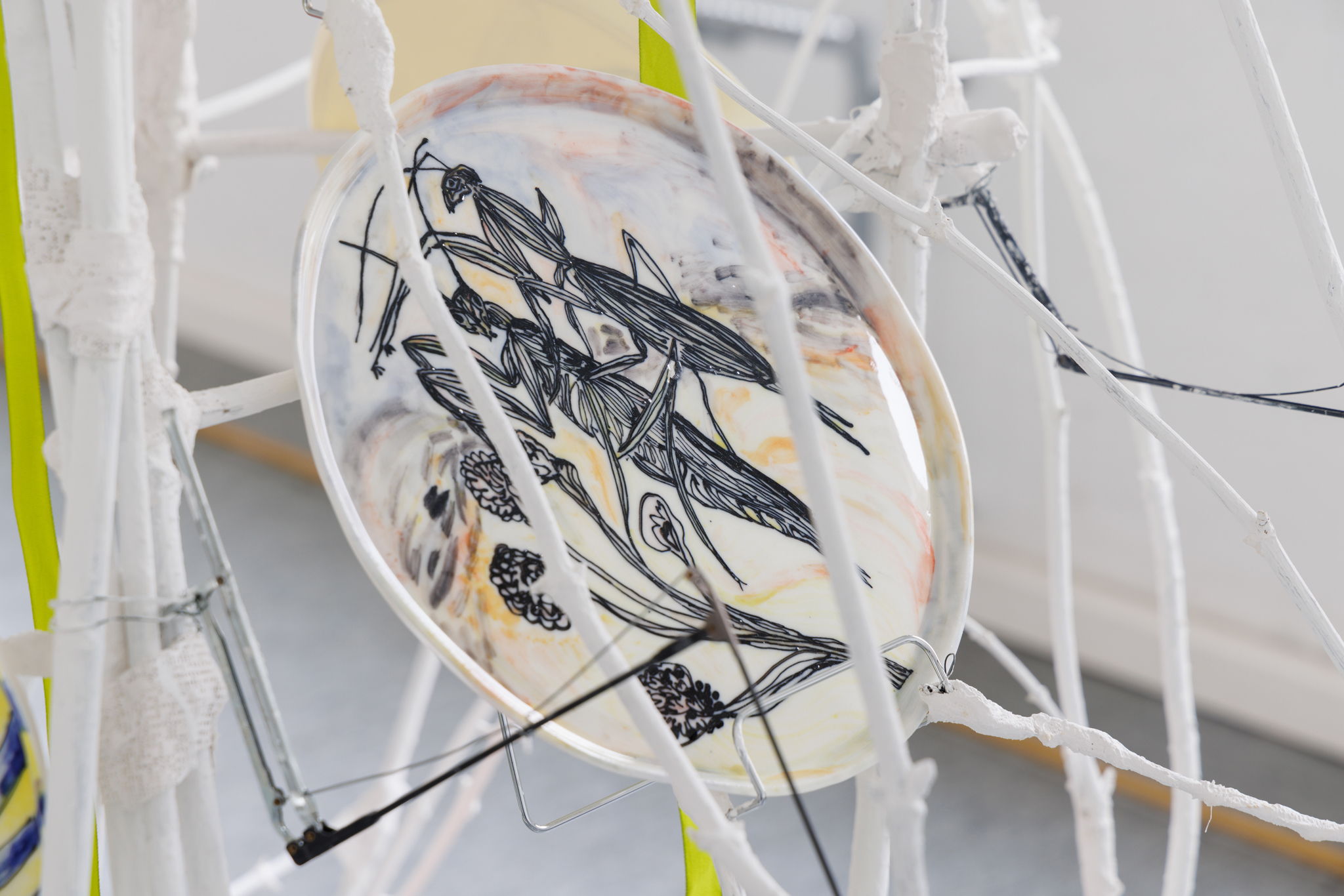
Anna Łuczak, Sophie Schmidt, “Brutality of Spring,” 2024, detail (porcelain plates, white paint, wood ribbon, metal plate holders, cutlery, make up). Photo: Thomas Splett
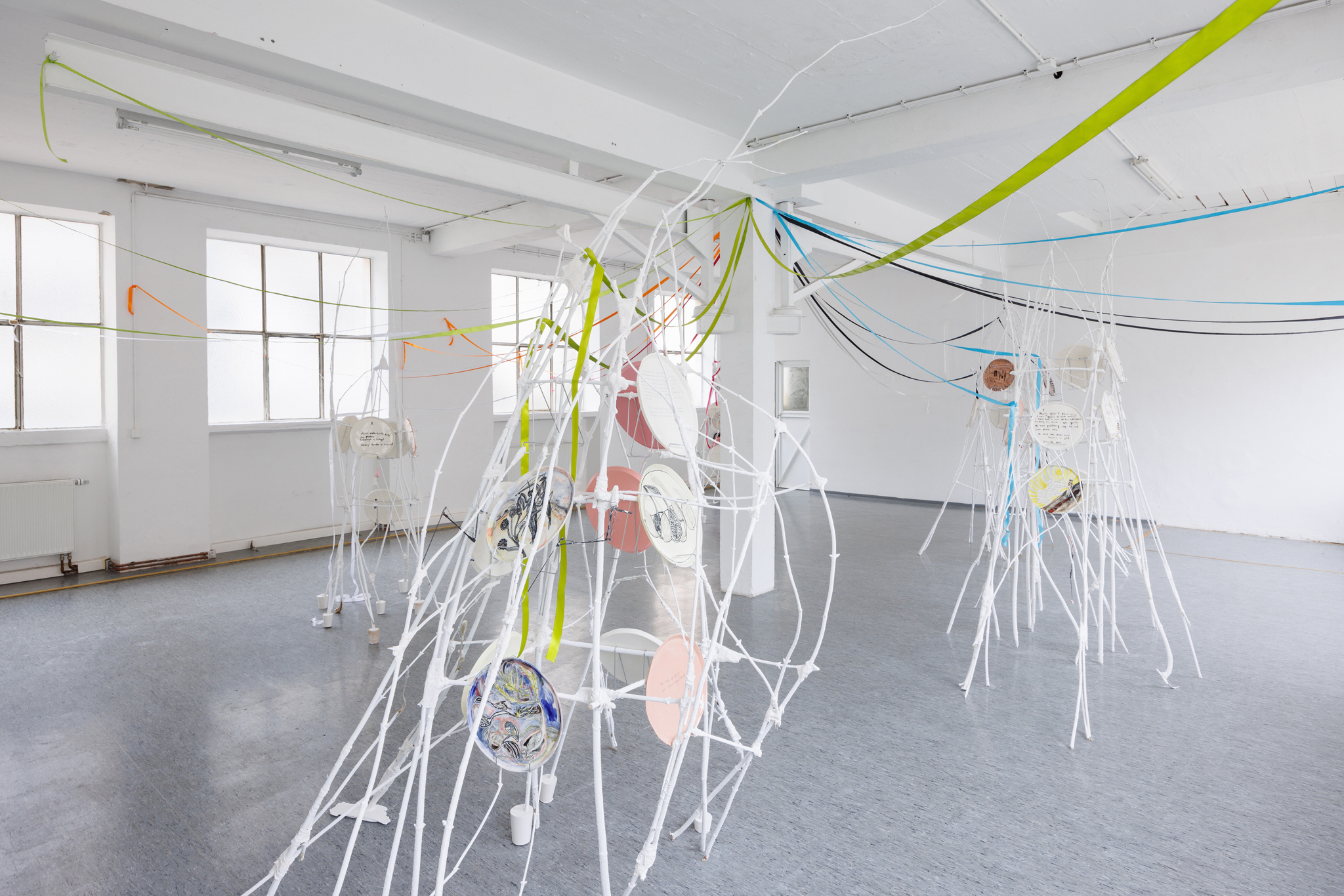
Anna Łuczak, Sophie Schmidt, “Brutality of Spring,” 2024, installation view (porcelain plates, white paint, wood ribbon, metal plate holders, cutlery, make up). Photo: Thomas Splett
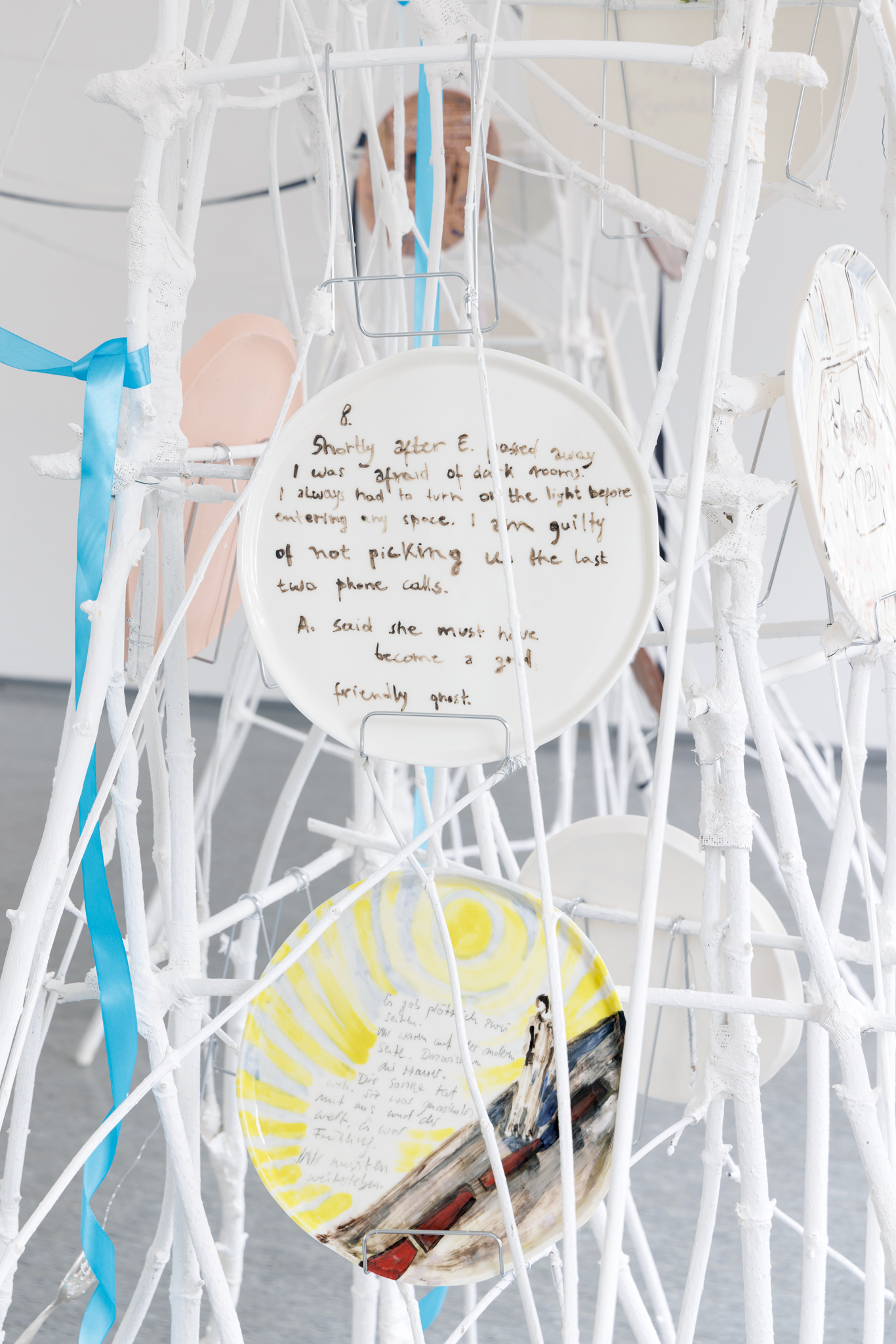
Anna Łuczak, Sophie Schmidt, “Brutality of Spring,” 2024, detail (porcelain plates, white paint, wood ribbon, metal plate holders, cutlery, make up). Photo: Thomas Splett
Anna Łuczak, Sophie Schmidt, “Brutality of Spring,” 2024, installation view (porcelain plates, white paint, wood ribbon, metal plate holders, cutlery, make up). Photo: Thomas Splett
Anna Łuczak, Sophie Schmidt, “Brutality of Spring,” 2024, detail (porcelain plates, white paint, wood ribbon, metal plate holders, cutlery, make up). Photo: Thomas Splett
Anna Łuczak, Sophie Schmidt, “Brutality of Spring,” 2024, installation view (porcelain plates, white paint, wood ribbon, metal plate holders, cutlery, make up). Photo: Thomas Splett
Anna Łuczak, Sophie Schmidt, “Brutality of Spring,” 2024, detail (porcelain plates, white paint, wood ribbon, metal plate holders, cutlery, make up). Photo: Thomas Splett

A person has died.

Andrea Éva Győri is dead. 

These two statements are not the same, though they might seem very similar. When I say, E. is dead, I think of her and how she was, someone I never met but heard so much about: the tone of her voice, her laugh, her enthusiasm and strong personality. She is someone with a consciousness, a memory, a personal identity. But when I say, a person has died, I mean something different. The logic is different because it is impersonal. It has nothing to do with E. and yet everything to do with her.  A person is singular – the one – yet not particular. I cannot say anything specific about a person.  A person is dead is an indefinite statement, because a person is a life, and life is indefinite, singular, impersonal. 

How can I describe a life?  Without talking about E. who lived? Deleuze was right, this requires an empiricism, an empirical kind of thinking, an almost scientific kind of rigour. I keep making lists:

  • There is the Marzanna, an effigy out of twigs and straw that Polish children drown in a nearby river as spring approaches.
  • There is the life cycle of the salmon, swimming upstream and spawning, then dying and their bodies fertilising the river.
  • Did you know that skeletal muscle stem cells continue living up to 17 days after all other cells have died? 
  • That scene in Dicken’s novel, “Our Mutual Friend,” when the Rogue lays dying in Miss Abbey’s first-floor bedroom. While he barely breaths everyone tries to help, but as soon as his eyelid trembles, his nose twitches, the doctor and the four men grow distant and caution returns. 

Anna Łuczak and Sophie Schmidt made a series of porcelain plates together, as individual responses to E.’s passing.  Anna made the plates and wrote the texts, Sophie painted images: 

  • There is the day of E.’s diagnosis. The breast cancer. 
  • There is the day at the crematorium. 
  • And the time just after, laying on the floor.
  • There is salmon spawning, seeds germinating. 

The plates refer to the domestic language of the vanitas. We eat on them with fork and knife, we wash them and we put them away. The colourful ribbons belong to the “kapliczka,” the wayside shrine found on nearly every road in Poland, equally catholic and pagan. Sophie Schmidt’s wooden structures hold everything together ever so precariously, extensions of the body, with the body’s fragility, strength and breakability. 

Magdalena Wiśniowska 2024

The Brutality of Spring

Anna Łuczak, Sophie Schmidt

14.12.2024-2.02.2025

Opening: 13.12.2024, 6-9 pm 

  • In Poland every year in spring, school children gather together at the banks of frozen rivers to drown the Marzanna. I remember throwing stones at the doll to make her sink faster. We then walked home without looking back. 
  • Salmon swim upstream to lay their eggs in their home river. They die and their decomposing bodies help fertilise the water. 
  • Everyone helps the rogue in the Dicken’s novel as he lays dying in Miss Abbey’s first-floor bedroom. But as he grows warm – “Did that eyelid tremble? Did that nostril twitch?” – the doctor and the four men cool and “their faces and their hearts harden to him.”

These occasions recognise what for Deleuze is not reducible to experience, but which nevertheless can be confronted: a life. Not the lived, individual life, so full of things that need to be done, but a life, singular and impersonal, indefinite; a life with no moments, but only the in-between, a passage, a becoming, of events yet to come that have already happened. “Pure power and bliss” Deleuze writes. Just life, only life, a life. 

  • In “The Brutality of Spring” Anna Łuczak and Sophia Schmidt collaborate together in homage to a recently deceased mutual friend to produce a multimedia installation, a vanitas-type project, founded equally in the transience of domestic sphere and the fragility of the human body. 

VO Special: Carrying the Earth to the Sky

Hêlîn Alas,Pierre-Yves Delannoy, Lukas Hoffmann, Veronika Hilger, Ju Young Kim, Anna McCarthy, Jonathan Penca, Curtis Talwst Santiago, Valio Tchenkov, Ayaka Terajima, Gülbin Ünlü, Paul Valentin, Max Weisthoff

7.09 -28.09.2024

Temporary venue at Schillerstr. 38, Munich

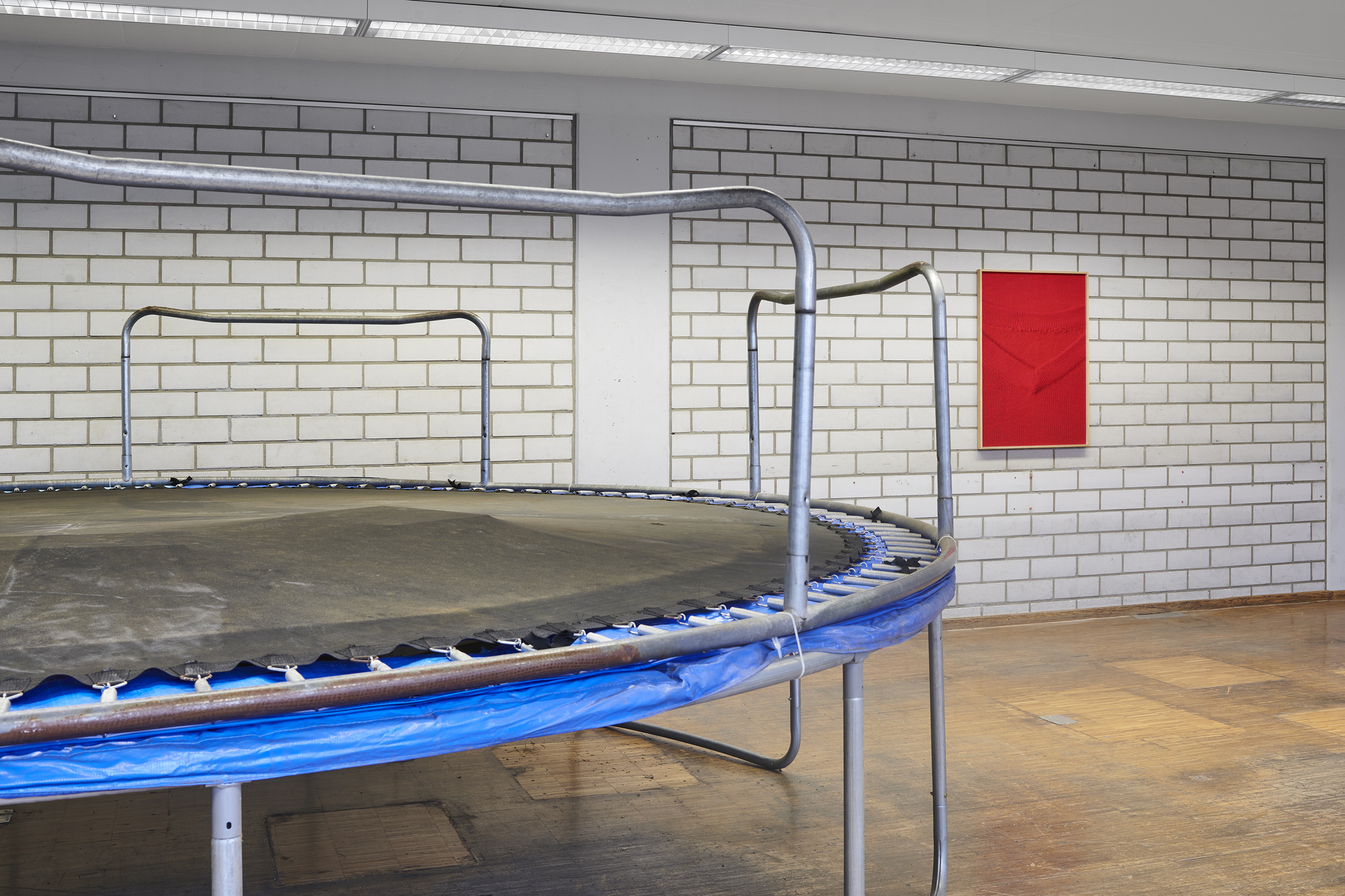
Hêlîn Alas, Carrying the Earth to the Sky, 2024, installation view with “Up and Up and Up and Up,” 2024, trampolines, cable ties, speakers, sound, cables, 490 x 165 cm and “Still Faced,” 2024
framed photo print (part of a series) 100 x 70 cm. Photo: Produktion Pitz
Hêlîn Alas, “Traumhaus junior,” 2024, caramel, 118 x 90 x 8 cm. Photo: Produktion Pitz
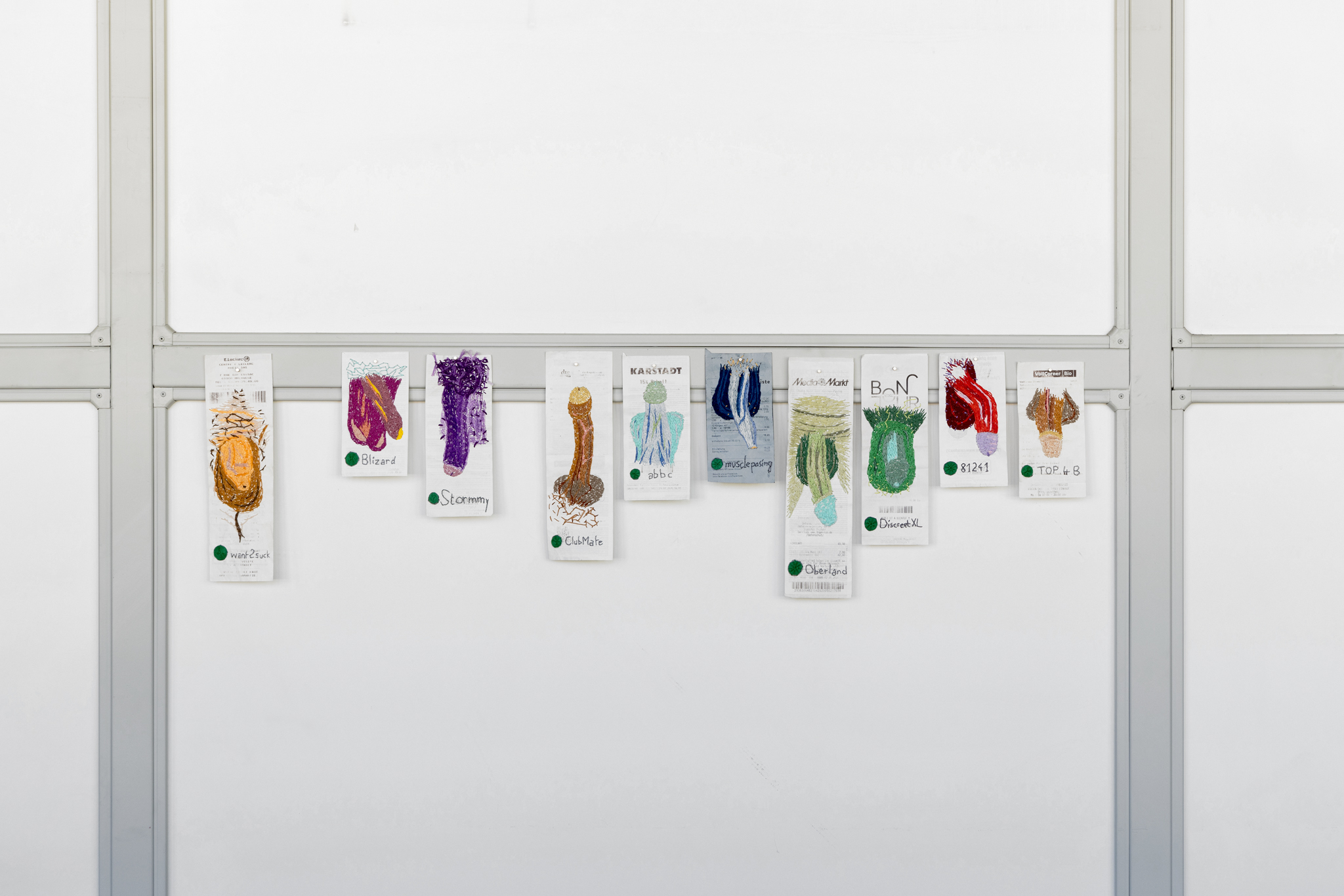
Pierre-Yves Delannoy, “embroideries on cashier’s ticket,” 2019-24, cotton yarns, thermo paper, dimensions variable (8 x 16 cm (X10)). Photo: Thomas Splett
Veronika Hilger, Carrying the Earth to the Sky, 2024, installation view. Photo: Thomas Splett
Veronika Hilger, Untitled, 2024, ceramic, 27 × 24 × 3 cm. Photo: Thomas Splett
Lukas Hoffmann, “Figure,” 2020, MDF, oak, aluminum, acrylic glass, 50 x 45 x 8 cm. Photo: Lukas Hoffmann
Lukas Hoffmann, “Castle,” 2024, Spraypaint, plywood, screws, MDF dyed through, 100 x 100 x 200 cm. Photo: Lukas Hoffmann
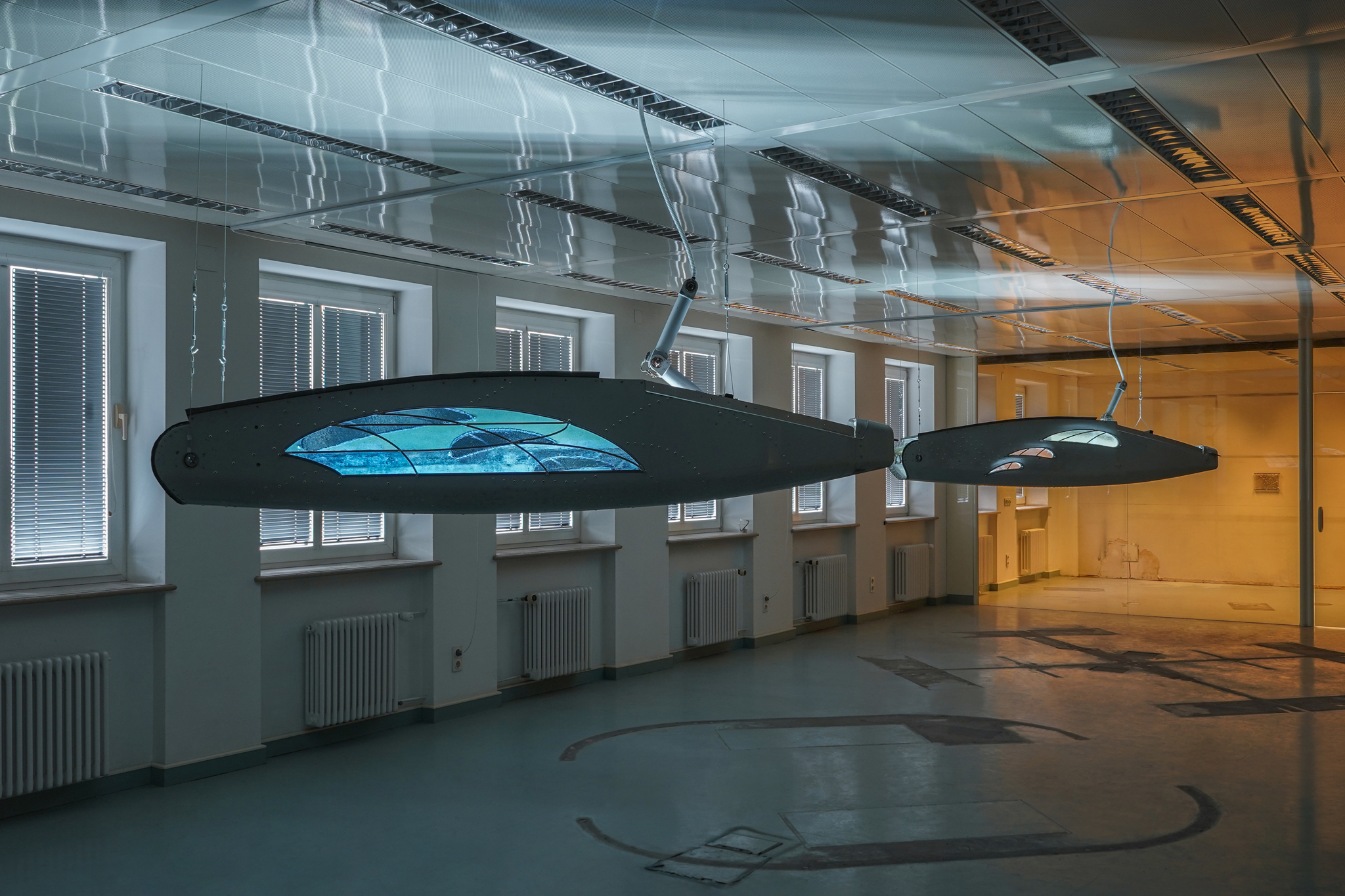
Ju Young Kim, “Almost like Whale Watching,” 2024, a pair of aircraft fairings, stained glass, rivets, LED, 240 x 38 x 46 cm (X2). Photo: Younsik Kim
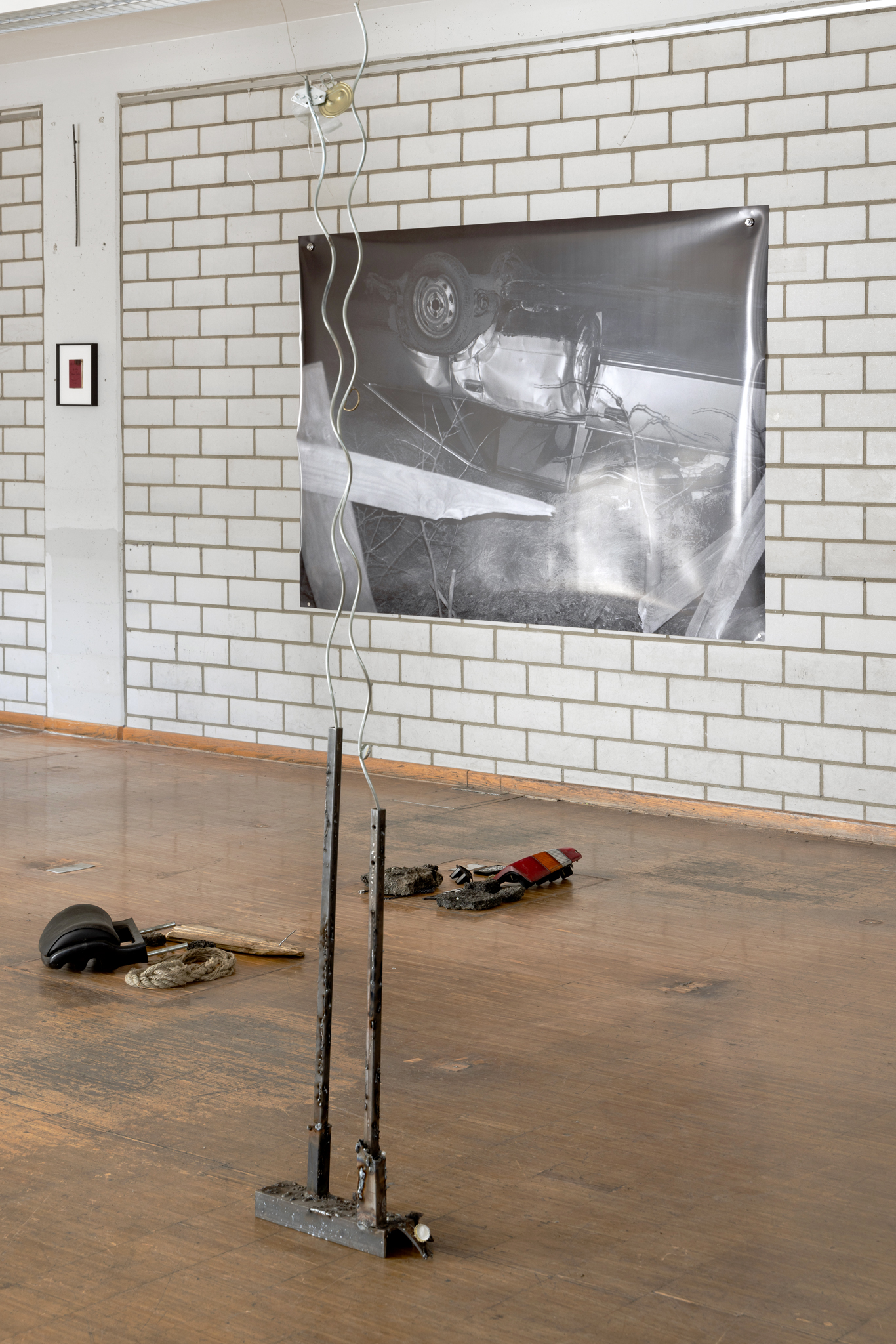
Anna McCarthy, Carrying the Earth to the Sky, 2024, installation view with “Car Crash b/w,” 2001, analogue photograph 230 x 160. Photo: Thomas Splett 
Anna McCarthy, “Car crash installation,” 2024, mixed media, dimensions variable. Photo: Thomas Splett
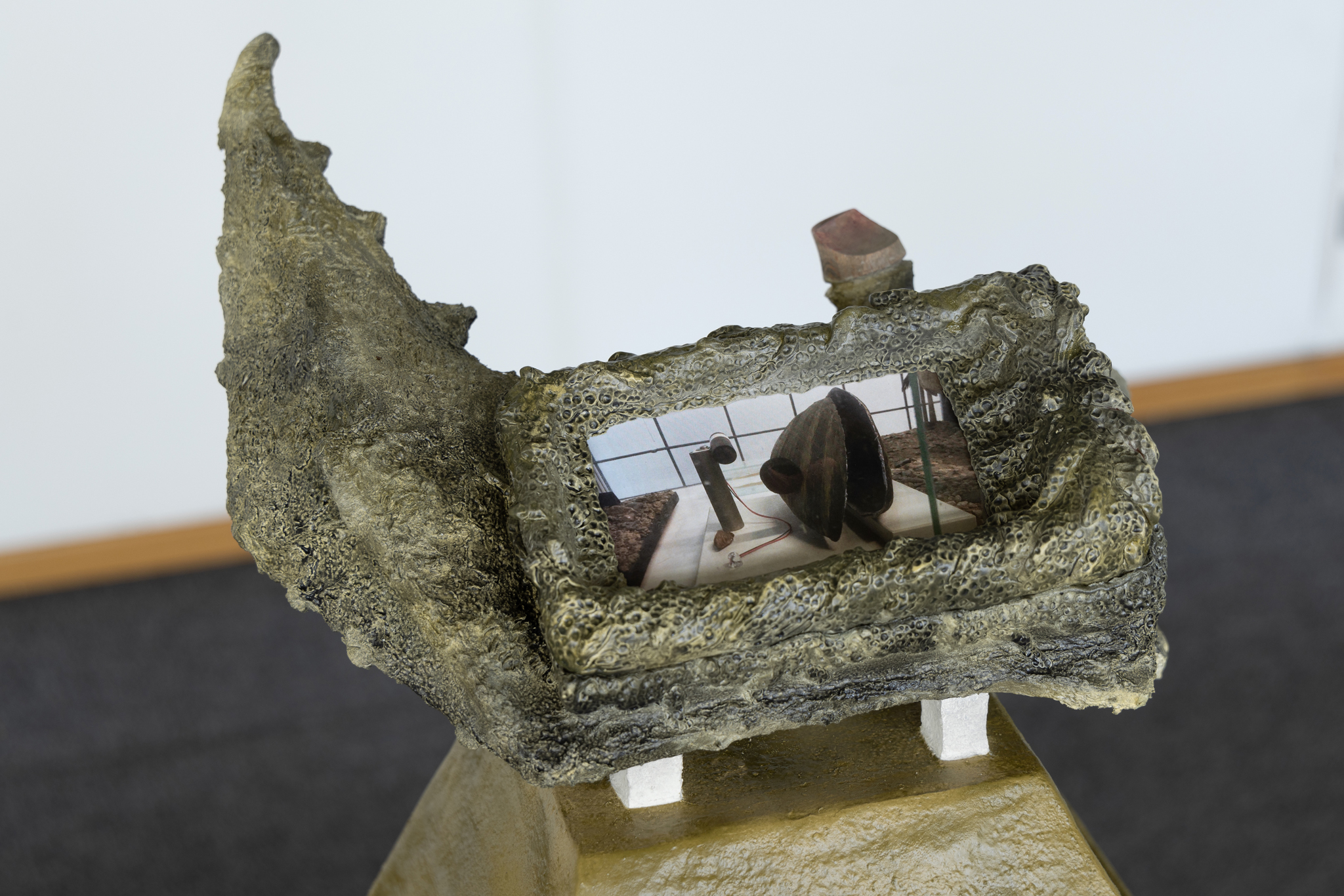
Jonathan Penca, “Synanthropop,” 2024, paper-maché, plaster, polymer clay, resin, cardboard, acrylic paint, wood, glass, digital print on paper, plinth, 120 x 60 x 60 cm. Photo: Thomas Splett
Jonathan Penca, “Mitten Crack,” 2024, paper-maché, plaster, polymer clay, resin, wooden bird whistle, lipstick, cardboard, acrylic paint, digital print on paper, plinth 120 x 60 x 60 cm. Photo: Thomas Splett
Curtis Talwst Santiago, “History of Touch” 2024, installation view detail. Photo: Thomas Splett
Curtis Talwst Santiago, “History of Touch” 2024, installation view. Photo: Thomas Splett
Valio Tchenkov, Carrying the Earth to the Sky, 2024, installation view. Photo: Thomas Splett
Ayaka Terajima, Carrying the Earth to the Sky, 2024, installation view. Photo: Thomas Splett
Ayaka Terajima, “Long legs doki,” 2023, Unglazed fired ceramic by recycled clay, 60 x 100 x 130 cm. Photo: Thomas Splett
Gülbin Ünlü, “Karanlik isik,” 2024, wood, printed fabric, dimensions variable (site specific installation). Photo: Thomas Splett
Gülbin Ünlü, “Karanlik isik,” 2024, wood, printed fabric, dimensions variable (site specific installation) detail. Photo: Thomas Splett
Paul Valentin, “Kasside,” 2024,  site specific video installation. Photo: Thomas Splett
Max Weisthoff, “perpetuator,” 2024, sculptural sound installation, 5 objects, cable, dimensions variable (site specific installation). Photo: Thomas Splett
Max Weisthoff, “out of flesh,” 2024, mixed media installation, 2 channel video, x objects, dimensions variable (site specific installation). Photo: Thomas Splett

“Carrying the Earth to the Sky” will present works by 13 artists who are currently active in the contemporary art scene in Munich. The artists were selected in a two-stage process. First each of the 37 participants of VARIOUS OTHERS nominated one artist currently living in Munich. From this group, an international jury consisting of four institutional curators selected 13 artists who will show their work as part of the VARIOUS OTHERS program in September. The jury acknowledged that the quality of the applications received made their task both exciting and challenging. The final selection of multi-generational artists reflects the desire to see art beyond fixed categories and clichés and to honour distinctive works.

The exhibition’s curator, Magdalena Wisniowska, has meticulously chosen the works in collaboration with the artists. These will be presented together in an overarching curatorial concept at Schillerstraße 38 under the title “Carrying the Earth to the Sky”.

“The earth is something human, something we keep under our feet. The sky high above is without air, where no living thing can breathe. Moving away from one to the other means letting go of the earth and constructions that belong to it – actions, bodies, objects, sensations and desires – until only the elements, disconnected molecules, remain.”

We would like to express our gratitude to all supporters of the exhibition, particularly the owners of the property at Schillerstraße 38, the Cultural Department of the City of Munich, the Edith-Haberland-Wagner Foundation and Serviceplan Group for their generous support.

Jury:
Rosa Ferré (TBA21, Madrid)
Luis Silva (Kunsthalle Lissabon)
Nicola Trezzi (CCA, Tel Aviv)
Vivien Trommer (K21, Düsseldorf)

Notes on Roommates (a dog, a parrot, a whale and a canal)

Sophia Mainka

in collaboration with Fondation Fiminco, Paris

6.09 – 13.10.2023

Lothringer 13 Studio, Lothringer Str. 13, 81667 München

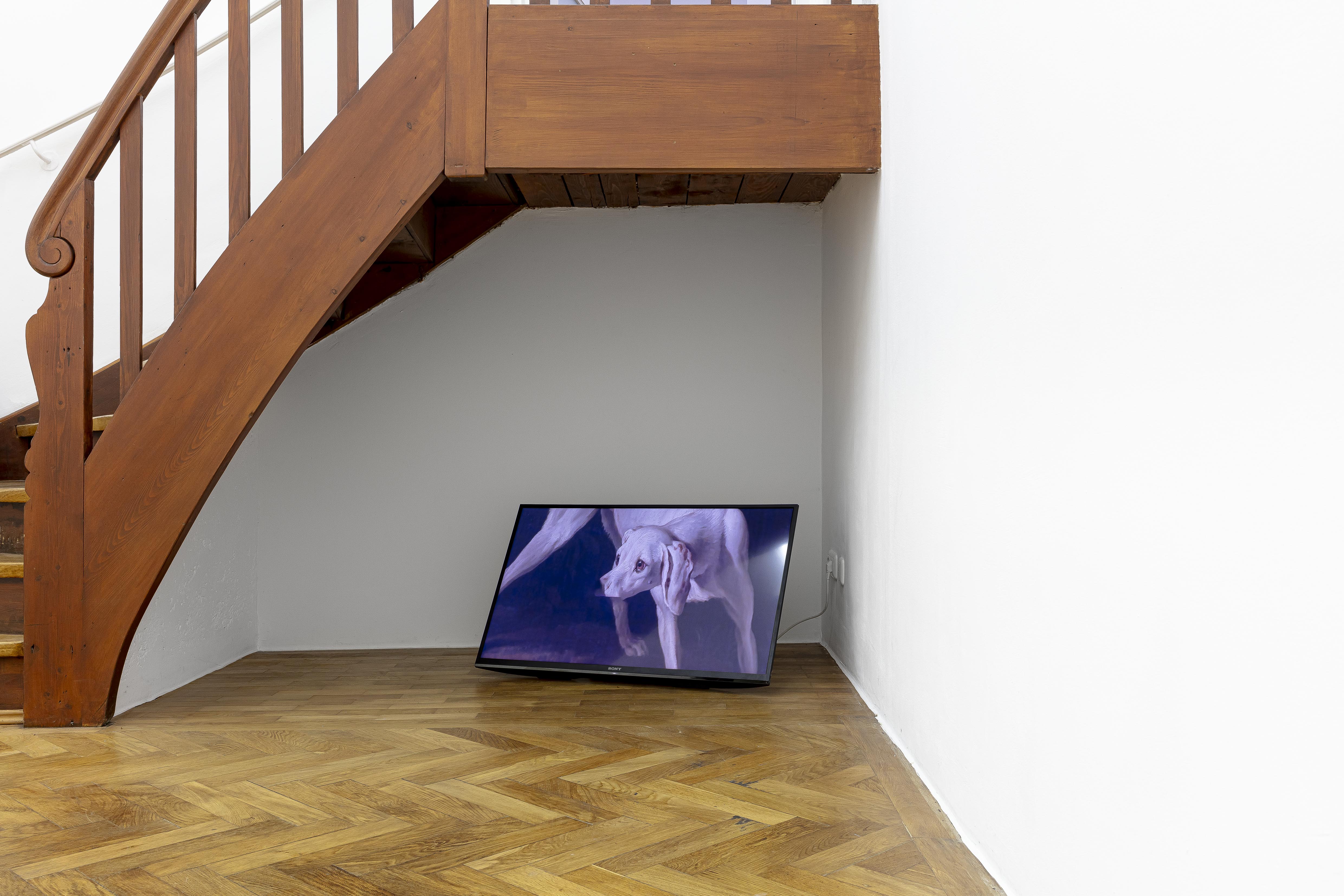
Sophia Mainka, Chien et canal, 2024 video still (3.44min, fullHD, without sound, loop)

We participate in nature and nature participates in us: in her art practice, Sophia Mainka has always been open to strange encounters with animals, plants and minerals. The work created during her stay at the Fondation Fiminco in Paris deals with the coexistence of different species within an urban space. Parrots fly across the city, a whale swims up the Seine and dogs walk on paved streets. Mainka responds ethologically, allowing the animal encounter to affect the way she acts.
“Notes on Roommates” is a series of video sculptures Mainka first presented at the residency, restaged at GiG Munich. To produce her fictitious gathering of animals, she builds a room for them: industrial material is bent into organic shapes and upholstered with fabrics featuring botanical patterns. Here we see her become dog, her painted fists becoming paws; we see her as the whale, in the murky river water, rising up to breathe.

Wir sind Teil der Natur und die Natur ist Teil von uns: Sophia Mainka öffnet sich in ihrer künstlerischen Praxis für ungewöhnliche Begegnungen mit Tieren, Pflanzen und Mineralien. Während ihres Aufenthalts in der Fondation Fiminco in Paris entstanden Werke, die das Miteinander verschiedener Arten im urbanen Raum thematisieren: Papageien fliegen durch die Stadt, ein Wal schwimmt die Seine hinauf, Hunde laufen auf gepflasterten Straßen. Mainka reagiert ethologisch, lässt zu, dass diese Begegnungen ihr Handeln beeinflussen.
„Notes on Roommates“ ist eine Installation mit Videoskulpturen, die sie während ihrer Residency präsentierte und nun im GiG Munich neu inszeniert. Um die Zusammenkunft der Tiere darzustellen, baut sie einen Raum für sie: Industrielles Material wird zu organischen Formen gebogen und mit botanisch gemusterten Stoffen gepolstert. Mainka verwandelt sich selbst in einen Hund, ihre Fäuste werden zu Pfoten; wir sehen sie als Wal, der im trüben Wasser auftaucht, um zu atmen.

Throw of the dice

Lukas Hoffmann, Sophia Mainka

29.06 – 3.08. 2024

Kindly invited by Sperling Munich, Regerplatz 9, 81541 München

Throw of the dice, 2024, installation view. Photo: Sebastian Kissel, courtesy Sperling, Munich.
Sophia Mainka, Oracle des Plantes series, 2024, silicone on cotton, 75 x 57 x 1 cm each. Photo: Sebastian Kissel, courtesy Sperling, Munich.
Sophia Mainka, Tarot (Wheel of Fortune), 2924, silicone on cotton, 190 x 121 x 1 cm. Photo: Sebastian Kissel, courtesy Sperling, Munich.
Sophia Mainka, Tarot (Wheel of Fortune), 2924, silicone on cotton, 190 x 121 x 1 cm (detail). Photo: Sebastian Kissel, courtesy Sperling, Munich.
Lukas Hoffmann, Pan, MDF, paper, wood, spray-paint, 41 x 22 x 19 cm. Photo: Sebastian Kissel, courtesy Sperling, Munich.
Throw off the dice, 2024, installation view. Photo: Sebastian Kissel, courtesy Sperling, Munich.
Lukas Hoffmann, Schloss, 2024, paper, wood, screws, spray-paint, 158 x 102 x 75 cm. Photo: Sebastian Kissel, courtesy Sperling, Munich.
Lukas Hoffmann, Schloss, 2024, paper, wood, screws, spray-paint, 158 x 102 x 75 cm (detail). Photo: Sebastian Kissel, courtesy Sperling, Munich.
Sophia Mainka, We used to be wild, 2024, video loop (full HD, stereo), 17 min & 17 sec. Photo: Sebastian Kissel, courtesy Sperling, Munich.

Throw of the dice – down a slippery slope

A standard game of dice is not a game of chance. At stake is probability, the odds of throwing this or that number, easily calculable. This is why we often lose, as the fable famously forewarns.[1] The young man inherits an estate and quickly gambles it away. In one sweep an entire forest is laid low. Is bad luck to blame? No, replies Fortune to an angry Pan. Just the foolishness of man.

A game of chance takes place on a far more slippery slope, like the round of croquet played in Alice in Wonderland, a game of cards of sorts.[2] Flamingos are mallets and a hedgehog is a ball. Whenever Alice wants to hit the hedgehog with the flamingo’s head, the bird turns floppy and spins round to look at her so comically that she laughs. And when she finally gets the flamingo’s head down, the hedgehog crawls away. In this game, cards move away from us and the players play all at once, quarrelling and fighting while the queen screams, “Off with their heads! Off with their heads!” For in a real game of chance, anything can happen. This would be the challenge: throwing the dice without knowing the rules of the game. To continue throwing the dice while accepting that each time the rules of the game change.

This is Nietzsche’s divine game, played across two tables, the earth and the sky.[3] Each time the dice is thrown the earth trembles, because the dice returns to us as divine. At that moment when the dice hover briefly in the air, they belong to the gods and all is possible. Our task is to affirm the entirety of possibility, any fate the gods prepared for us, cooking all of chance in one pot.[4] In this forest, we must wander bewildered and wild.[5]

In the exhibition, Sophia Mainka shows a series of wall mounted works made from silicone paste. Heavy and solid, yet curiously slippery, they are based on a Tarot deck of cards. It is peculiarly appropriate that the largest is the wheel of fortune, usually interpreted as standing for change or becoming. Fortune can be good or bad depending on the game, the question asked of the cards, open to interpretation. In Tarot, one card can mean many things and then change meaning at different times. In contrast, destiny is the thread woven through the image and cut by the three mythological sisters. The turn of the card is always fateful. Whatever the outcome of the roll of dice, this outcome is necessarily so: sky back to earth, slide and snip.

Perhaps then, we wander not quite so bewildered in this forest, as we necessarily follow our fate. But we wander on a surface without ground or depth, because free of cause. Everything in Mainka’s work takes place on the surface, like the hybrid creature scuttering around the ornate interiors of the Musée de la Chasse et de la Nature in her video. It imitates not animals, but depictions of them. The two talking dogs are not half-human but half-sculpture, their head and paws the same silicone as Mainka’s wall pieces. In Nazim Bakour’s music score, they do not bark, but whoop with the sound of the cuica drum.

Lukas Hoffmann too stages a fictional world that has something of Lewis Carroll’s unsettling absurdity about it. There is a wooden castle with ears, eyes, a wide open mouth and a nose, and it is both too big and too small. Drink me, eat this, nibble both sides of the mushroom circle. As Alice grows bigger, her initial self also becomes smaller, pulled in both directions at once. With components jutting out and sliding in, the body both outside and inside, the castle too grows small as it becomes big. “Becoming without measure, a veritable becoming-mad.”[6] Observing this madness is the upside down head of Pan, the mischievous god of the wild. A mascaron fallen from its pediment. Run away in panic, it urges us – run away in chaos, it smiles.

Magdalena Wisniowska

[1] John Gay, Pan and Fortune, Fable XII, ”Yo a young Heir” see https://kalliope.org/en/text/gay2005052971

[2] Lewis Carroll, Alice in Wonderland, for a replica of the original first edition see https://www.adobe.com/be_en/active-use/pdf/Alice_in_Wonderland.pdf

[3] Friedrich Nietzsche, Thus Spoke Zarathustra, Book III, “Before Sunrise”, trans. Kaufmann, p.166cd and “The Seven Seals” 3, p. 258. See also Deleuze’s reading in Gilles Deleuze, Nietzsche and Philosophy, trans. Hugh Tomlinson, (London and New York: Continuum, 2002) p. 25–7.

[4] Zarathustra, Book III “The Bedwarfing Virtue” 3, p. 189.

[5] See blog by Corry Shores, https://piratesandrevolutionaries.blogspot.com/2009/05/dicethrow-11-in-deleuze-nietzsche.html

[6] Gilles Deleuze, The Logic of Sense, trans. Mark Lester (London and New York: Bloomsbury, 2004), p. 3.

From Animal to Mineral

Judith Adelmann, Rachel Fäth, Sophia Mainka, Hannah Mitterwallner, Jonathan Penca, Maria VMier

15.12. 2023 – 18.02.2024

Lothringer Halle, Lothringer Str. 13, 81667 München

From Animal to Mineral, 2023, installation view. Photo: Thomas Splett
Maria VMier, Noch o.T. [ZINNOBER-SCHWEFEL],2023, Ink, pigment, tempera, pencil, chalk and charcoal on perforated paper. Photo: Thomas Splett.
Maria VMier, Noch o.T. [ZINNOBER-SCHWEFEL],2023, Ink, pigment, tempera, pencil, chalk and charcoal on perforated paper (detail) Photo: Thomas Splett
Hannah Mitterwallner, Mis-play, 2023, plaster, wood, sugar, installation view. Photo: Thomas Splett
Hannah Mitterwallner, Mis-play, 2023, plaster, wood, sugar, detail. Photo: Thomas Splett
Hannah Mitterwallner, Mis-play, 2023, plaster, wood, sugar, installation view. Photo: Thomas Splett
Hannah Mitterwallner, Mis-play, 2023, plaster, wood, sugar (detail). Photo: Hannah Mitterwallner
Judith Adelmann, I like your curvy waves, 2023, glazed ceramic, steel, plastic, installation view. Photo: Thomas Splett
Judith Adelmann, I like your curvy waves, 2023, glazed ceramic, steel, installation view. Photo: Thomas Splett
Judith Adelmann, I like your curvy waves, 2023, glazed ceramic, steel (detail). Photo: Thomas Splett
Hannah Mitterwallner, Mis-play, 2023, plaster, wood, sugar (detail).
Judith Adelmann, I like your curvy waves, 2023, glazed ceramic, metal, readymades (detail). Photo: Thomas Splett
From Animal to Mineral, 2023, installation view
Sophia Mainka, Habit Loss, 2023, Metal, fabric, wood, leather imitate, plastics, glazed ceramics, video. Photo: Thomas Splett
Sophia Mainka, Habit Loss, 2023, Metal, fabric, wood, leather imitate, plastics, glazed ceramics, video (detail).
Sophia Mainka, Habit Loss, 2023, Metal, fabric, wood, leather imitate, plastics, glazed ceramics, video. Photo: Thomas Splett
Jonathan Penca with Jakob Penca, Field Plots, 2023, animation film, 14 min, installation view. Photo: Thomas Splett.
Rachel Fäth, Passage, 2022, Glass, steel, screws and nuts. Photo: Thomas Splett.

Texts included in the exhibition:

The Flamekeepers

Lilian Robl

13.07. – 20.08.2023

Lothringer 13 Studio, Lothringer Str. 13, 81667 München

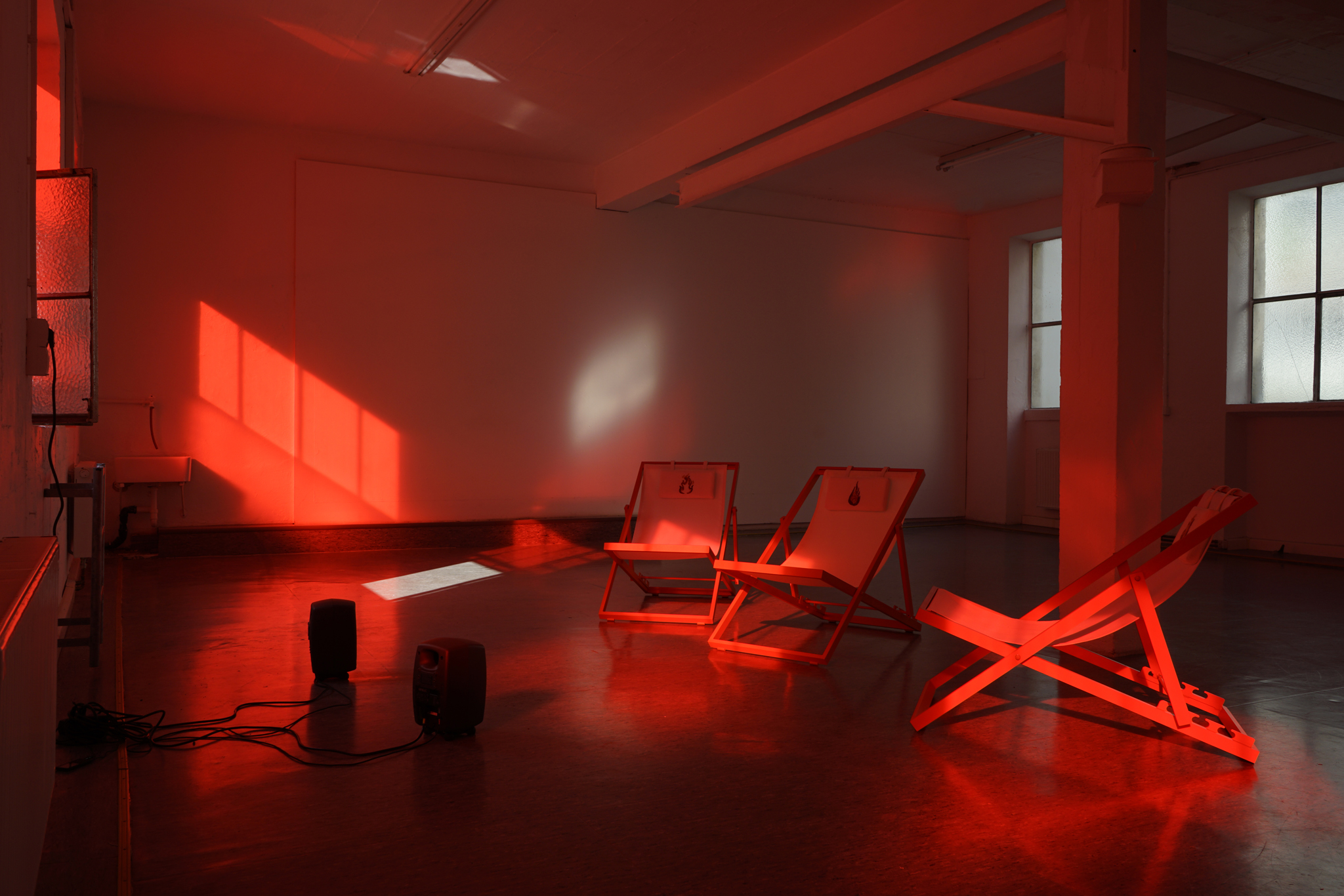
Lilian Robl, The Flamekeepers, 2023, installation view
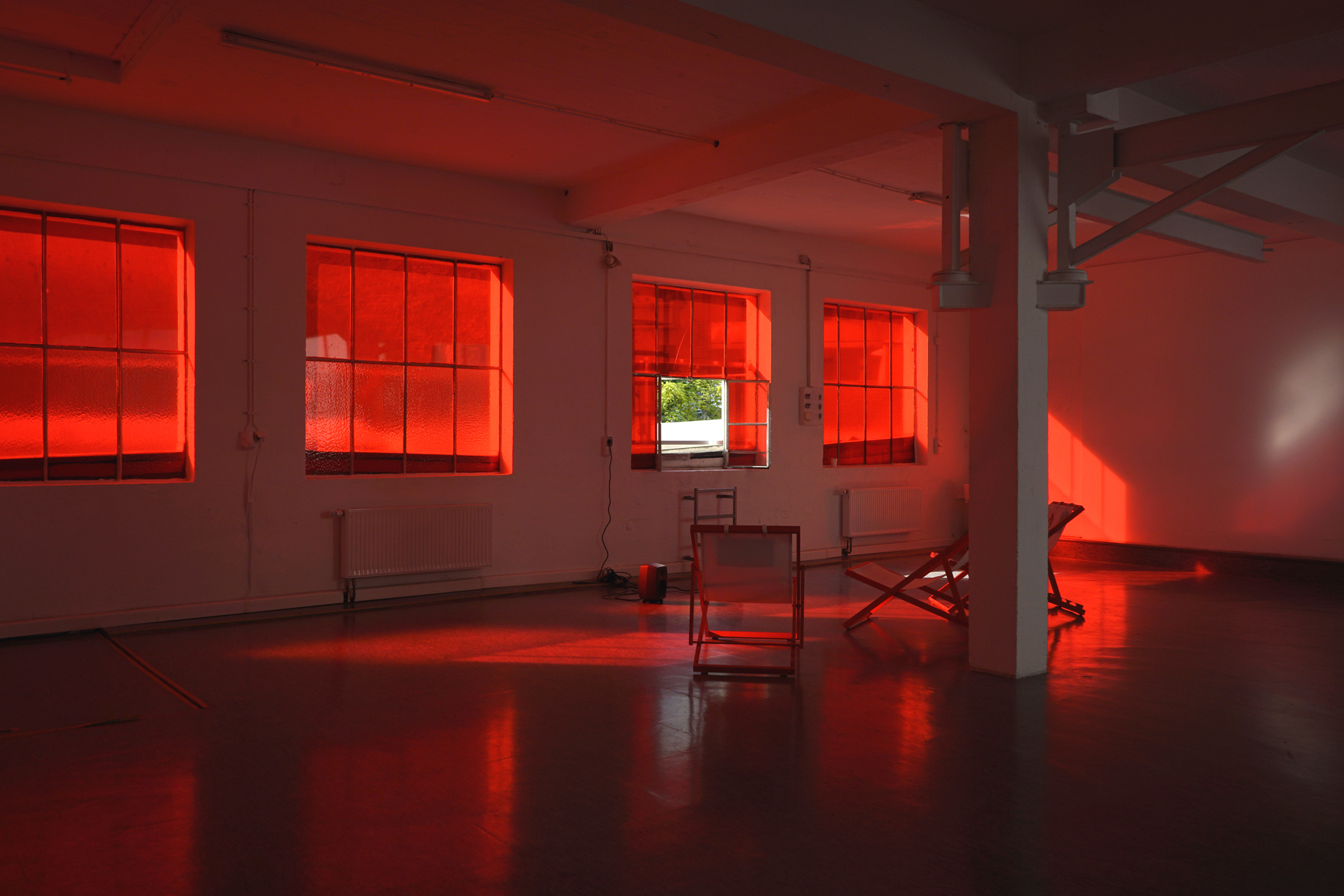
Lilian Robl, The Flamekeepers, 2023, installation view with red filter and poster
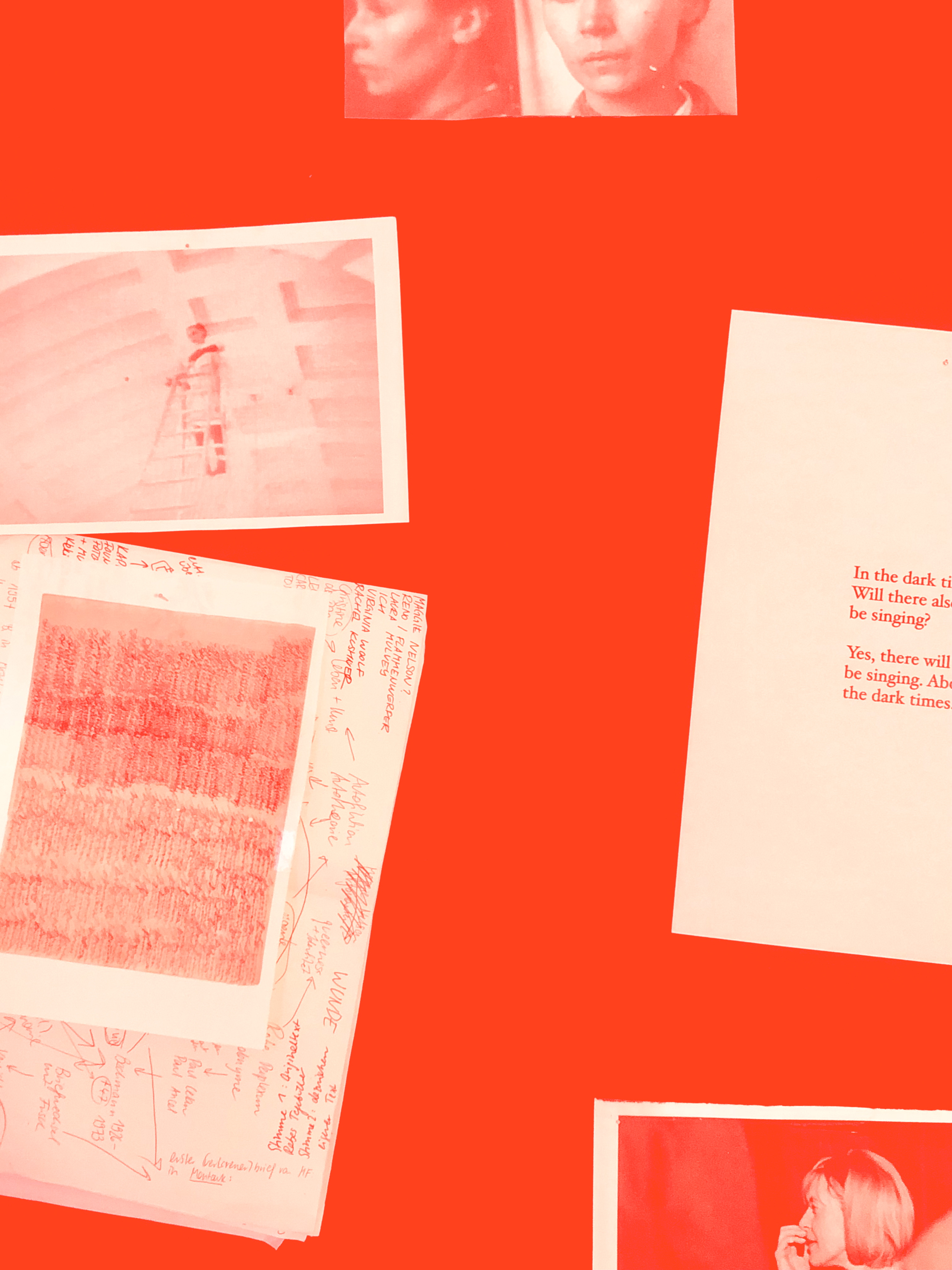
Lilian Robl, The Flamekeepers, 2023 with red filter and poster
Lilian Robl, The Flamekeepers, 2023 with poster
Lilian Robl, The Flamekeepers, 2023 with red filter, speakers and poster
Lilian Robl, The Flamekeepers, 2023 installation view
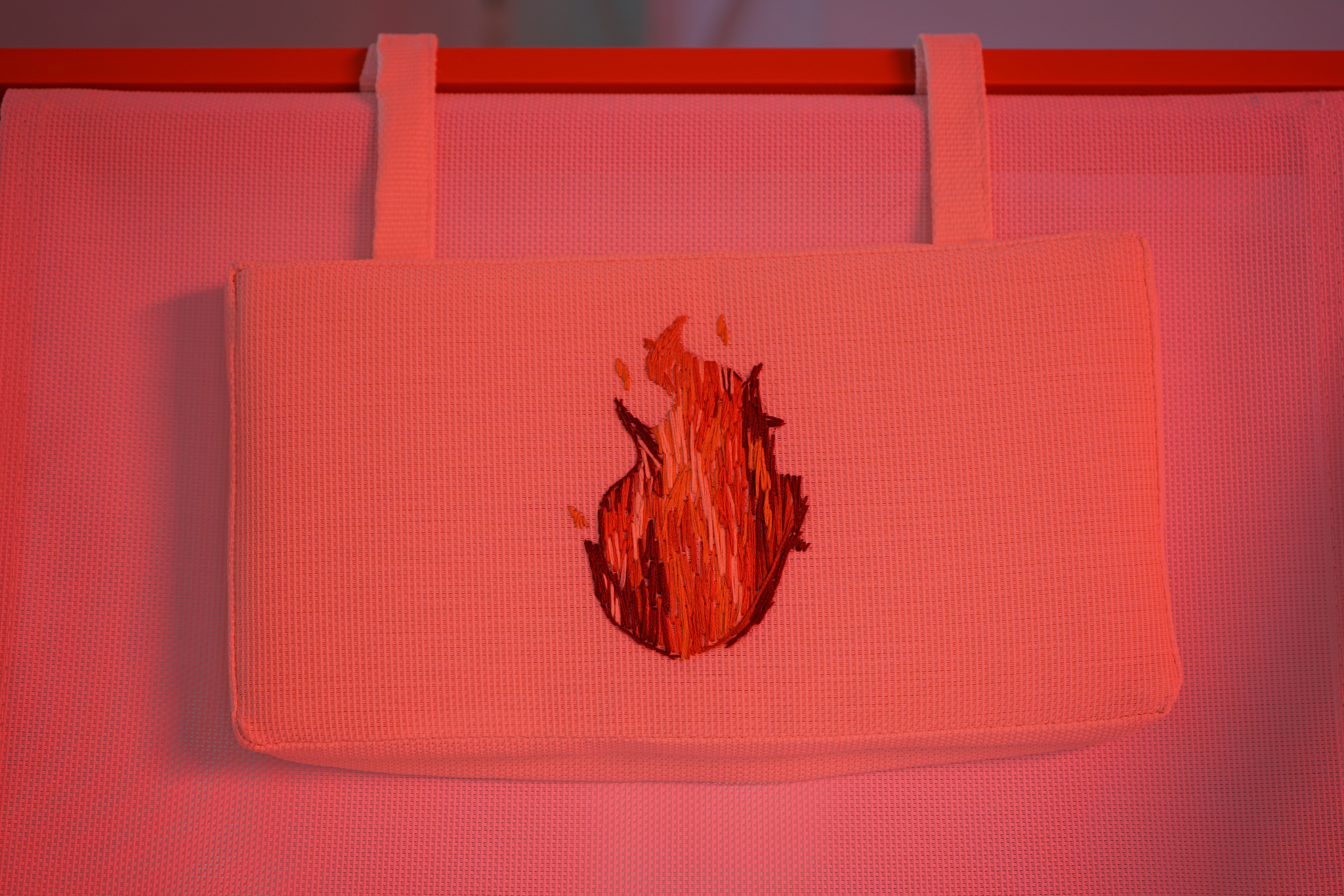
Lilian Robl, The Flamekeepers, 2023 with customised deckchairs
Lilian Robl, The Flamekeepers, 2023 deckchair embroidery (detail)
Lilian Robl, The Flamekeepers, 2023 installation view

At each corner, each fork in the road, we encounter the same: Man. Not some man, a particular man with a friendly, if white European face, but man as a standard on which every opposition is based. This is the man that is the principle term in the opposition of male/female, white/red, rational/mad. A center point from which all other points take measure. The point of origin all other points echo. This kind of man is one “gigantic memory.”

The path we take instead is a straight one, without any crossroads. As soon as we open the door to the Lothringer 13 Studio space there is only the left. Nothing takes place on the right hand side. On the left there are four large windows covered with transparent red filter and once again there is no alternative to the redness that saturates the entire room with colour.  Also on the left there are three deck chairs clustered around some speakers. Left is an open window. A poster hangs at the very edge of the distant wall behind.

At each step of the exhibition “The Flamekeepers” Lilian Robl invites us to think of lines. In this sound sketch that is part of the preparation work for a larger video piece, the protagonists –  Emma Hauck, Ingeborg Bachmann, Rabe Perplexum – are not points but lines. For points would be women who as minorities are defined in opposition to the major term, man. Whereas lines flicker with flames of becoming. The lines of becoming are not the mathematical lines of history connecting two or more distant events in the point system of memory. Rather these lines pass between points, constituting a distinct no-man’s land. On this land no man can stand, because here is a place where the discernibility of points disappears. Deleuze and Guattari write that these murky zones form a “line-system of becoming.” 

Robl is very good at identifying these indiscernible points, these lines of becoming, in order to constitute a kind of anti-archive, a non-collection of anti-memories. There is Emma Hauck, who in her schizophrenia feels she can control her world and make a nurse jump or a housefly drown. She sits down to repeatedly write to her husband: komm! Her writing is her body as she mechanically writes and rewrites the same word. Her writing is also a landscape she sees out of her window, a grey forest of lines you can walk into. Recalling Heathcliff’s wish to embrace Catherine’s corpse, Ingeborg Bachmann writes of wanting to embrace the skeleton of her lover, filling her decayed mouth and choking on the with the dust he has become, at one with his nothingness. Rabe Perplexum changes their name by deed poll to become-raven, flying about and causing havoc from Gärtnerplatz to Stachus.  

Their’s is a terrible suffering. Emma Hauck dies in the Wiesloch asylum, without ever seeing her husband or daughters again. While high on drugs, Ingeborg Bachmann accidentally sets herself alight and dies from her injuries. Rabe’s tongue is a knife and they commit suicide after alienating their friends. To walk in straight lines and not remember – not to make memories by not connecting the distant points of historical events – is painful. But pain and suffering is also what brings about proximity.  We are close to them in their suffering because we no longer separate entities but participants in becoming. When there are no binary distinction at play, they can affect us still and something of theirs passes to us. The wound for Robl must continually be licked open.

  1. Deleuze and Guattari, A Thousand Plateaus: Capitalism and Schizophrenia, trans. Brian Massumi (London and New York: Continuum, 2004), 293. 
  2. Ibid., 294.

Magdalena Wisniowska 2023

The Flamekeepers

Lilian Robl

13.07. – 20.08.2023

Lothringer Studio, Lothringer Str. 13, 81667 München

flyer-flamekeepers4-B

Emma Hauck. Ingeborg Bachmann. Rabe Perplexum. Not points but lines. Lines which do not connect points but travel swiftly in between. The archive, history, memory are collections of points tied to one central point: Man, defined as white, male and rational. In her exhibition with GiG Munich, “The Flamekeepers” Lilian Robl seeks ways of remembering without memory, recording without constructing an archive. Just lines. Only lines.

Lilian Robl (*1990) studied Fine Arts at the Academy of Fine Arts, Munich and at the Ecole de recherche graphique, Brussels, graduating as a master student of Prof. Alexandra Bircken in 2019. Her work was shown in numerous exhibitions: Top Space, Berlin (DE); Kunstraum Kreuzberg, Berlin (DE); fructa, Munich (DE); Wienwoche (AT); Cabaret Voltaire, Zurich (CH); Kunstverein Marburg (DE) as well as at film festivals: Les Instants Vidéo, Marseille (FR); Barcelona International Short Film Festival (ES); GRRL Haus Cinema, Berlin (DE); FILE, São Paulo (BR); Women’s Voices Now, Los Angeles (US); Non- syntax, Tokyo (JP); International Moving Film Festival (IR); Light Mattter Film Festival (US). She has received residencies at the Cité Paris (FR), among others.

Emma Hauck. Ingeborg Bachmann. Rabe Perplexum. Nicht Punkte, sondern Linien. Linien, die keine Punkte verbinden, sondern sich schnell dazwischen bewegen. Das Archiv, die Geschichte, die Erinnerung sind Ansammlungen von Punkten, die mit einem zentralen Punkt verbunden sind: Der Mensch, definiert als weiß, männlich und rational. In ihrer Ausstellung “The Flamekeepers” im GiG Munich sucht Lilian Robl nach Wegen des Erinnerns ohne Gedächtnis, des Aufzeichnens ohne Aufbau eines Archivs. Gerechte Linien. Nur Linien.

Lilian Robl (*1990) hat Freie Kunst an der Akademie der Bildenden Künste München und an der Ecole de Recherche graphique Brüssel studiert und 2019 als Meisterschülerin von Prof. Alexandra Bircken abgeschlossen. Ihre Arbeiten werden in Ausstellungen, z.B. Top Space, Berlin (DE); Kunstraum Kreuzberg, Berlin (DE); fructa, München (DE); Wienwoche (AT); Cabaret Voltaire, Zürich (CH) sowie auf Filmfestivals, z.B. Les Instants Vidéo, Marseille (FR); Barcelona International Short Film Festival (ES); GRRL Haus Cinema, Berlin (DE); FILE, São Paulo (BR); Women’s Voices Now, Los Angeles (US); Non- syntax, Tokyo (JP); International Moving Film Festival (IR); Light Mattter Film Festival (US). Sie erhielt Residenzstipendien unter anderem an der Cité Paris (FR).

Electric bodies shooting through space

Janna Jirkova

25.11 – 30.12.2022

Lothringer 13 Studio, Lothringer Str. 13, 81667 München

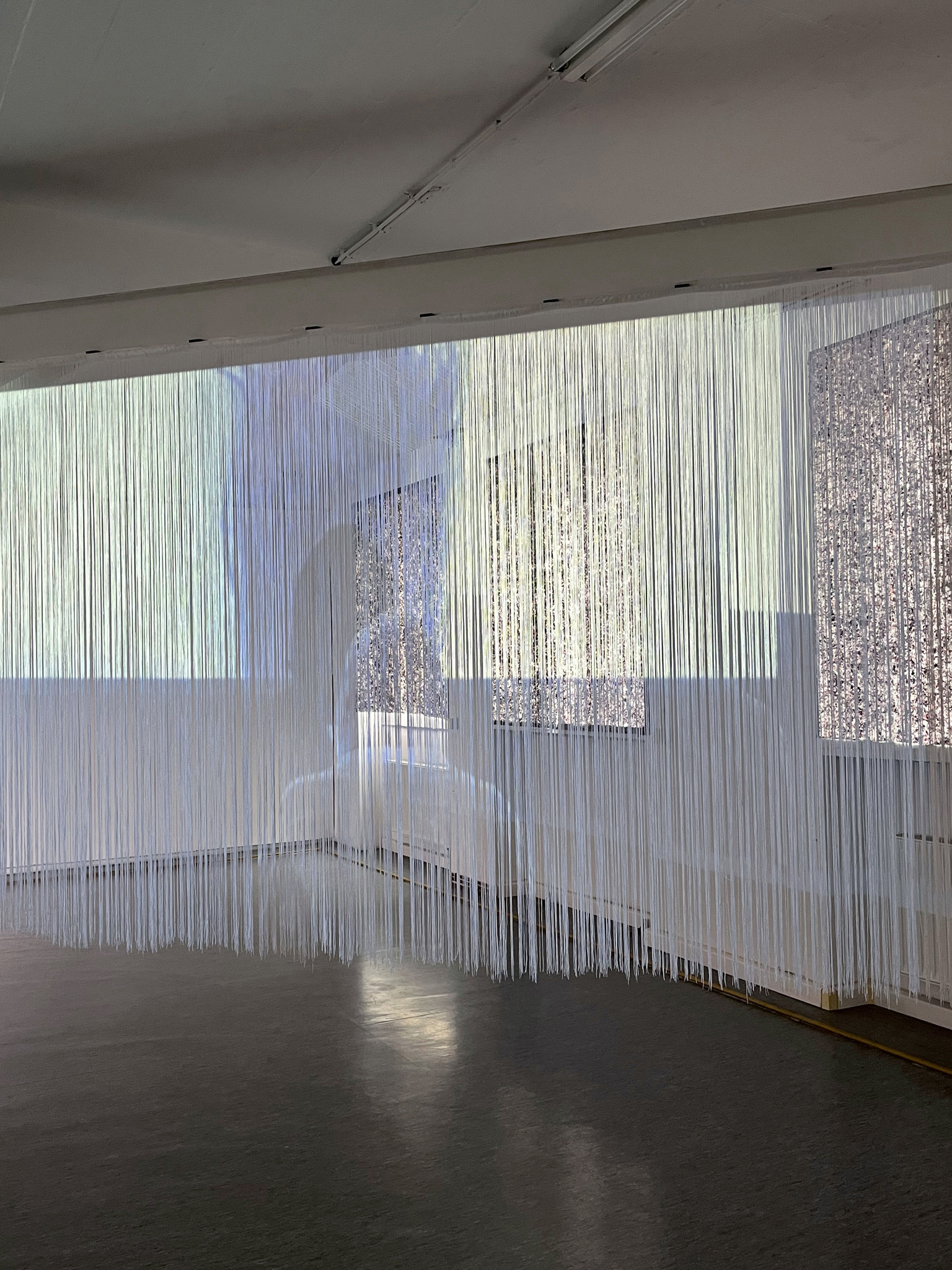
Janna Jirkova, Electric bodies shooting through space, 2022, installation view
Janna Jirkova, Her Do, 2022, video, HD, 16:9, 7:32 min, Sound: Daniel Geßl
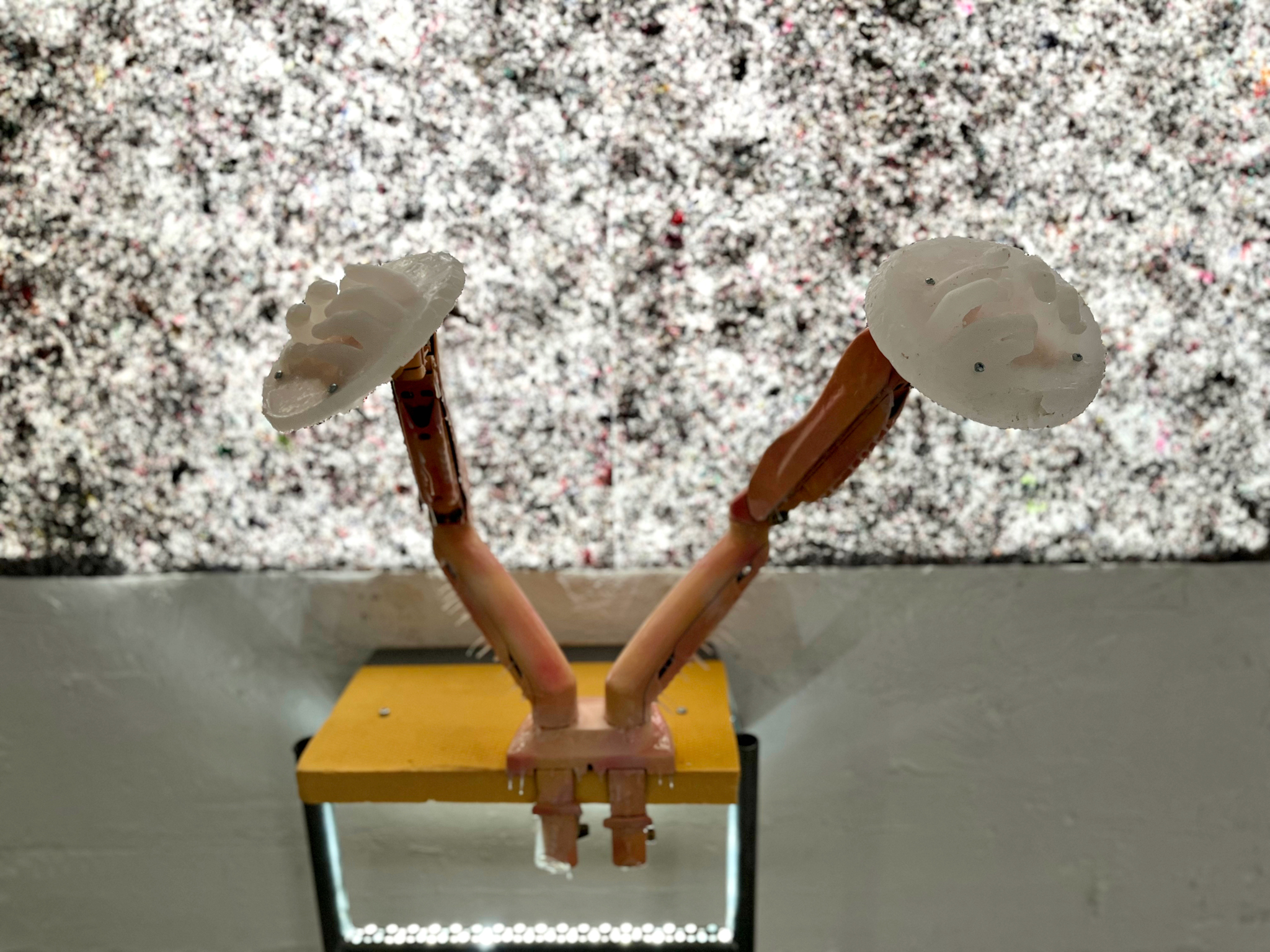
anna Jirkova, Feeler, 2022, monitor mount, spray paint, silicon, wax
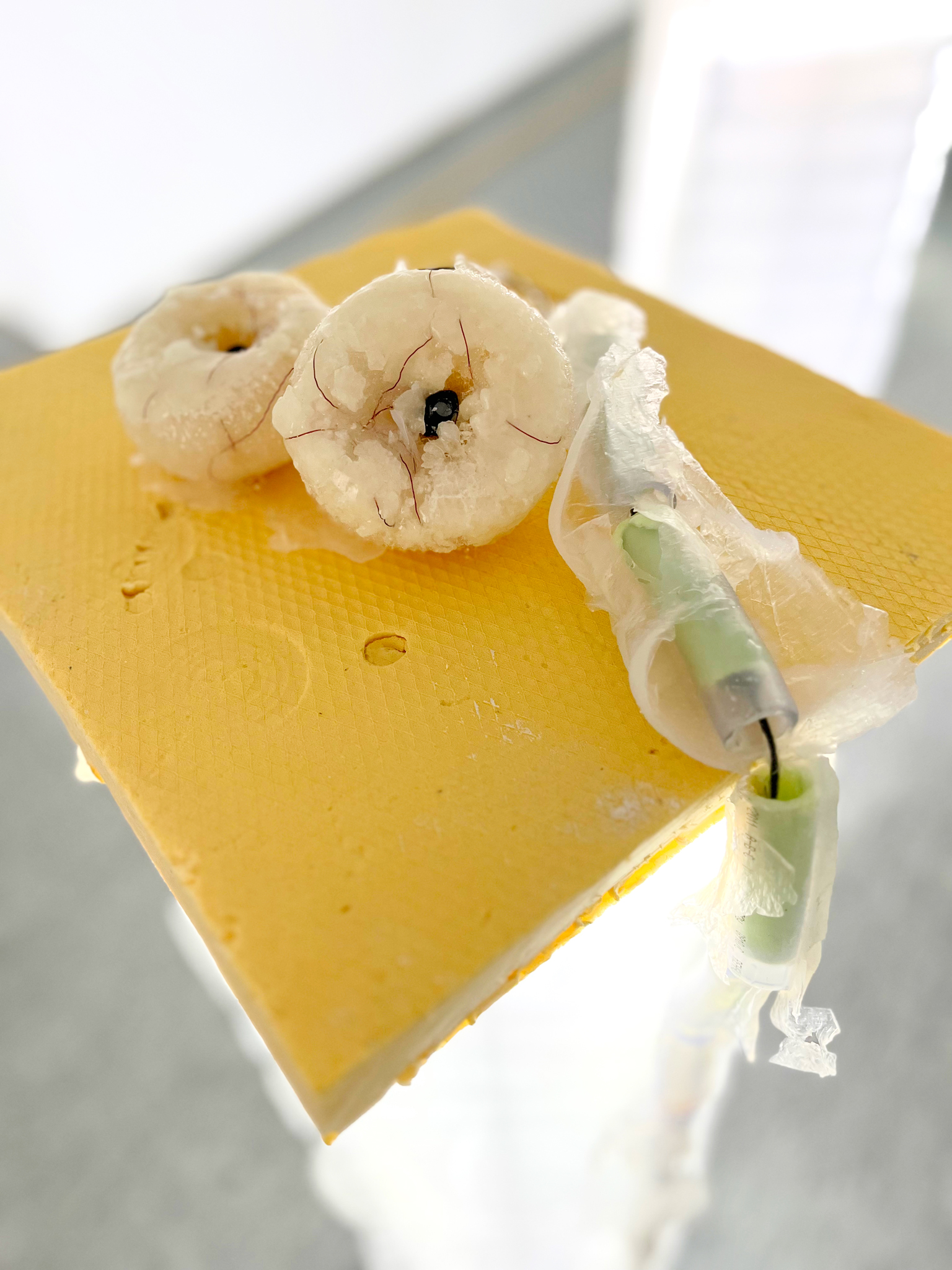
Janna Jirkova, Audiobun, 2022, headphones, silicon, hairwax, PVC, wire, hair donut
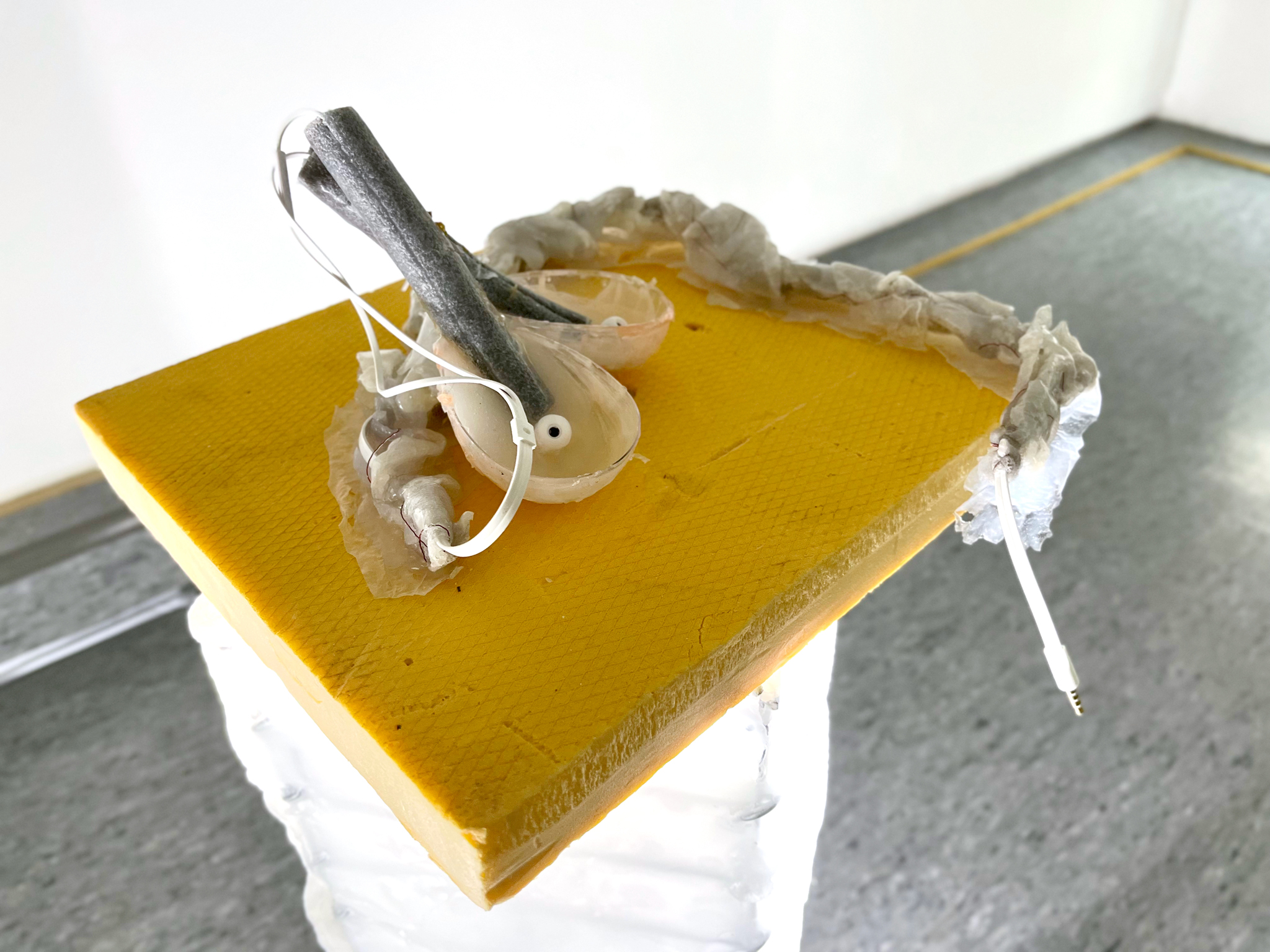
Janna Jirkova, Braidphones, 2022, headphones, silicon, wax, wire, nylon ribbon
Janna Jirkova, Electric bodies shooting through space, 2022, installation view
Janna Jirkova, Her Do, 2022, video, HD, 16:9, 7:32 min, Sound: Daniel Geßl
Janna Jirkova, Electric bodies shooting through space, 2022, installation view
Janna Jirkova, Her Do, 2022, video, HD, 16:9, 7:32 min, Sound: Daniel Geßl

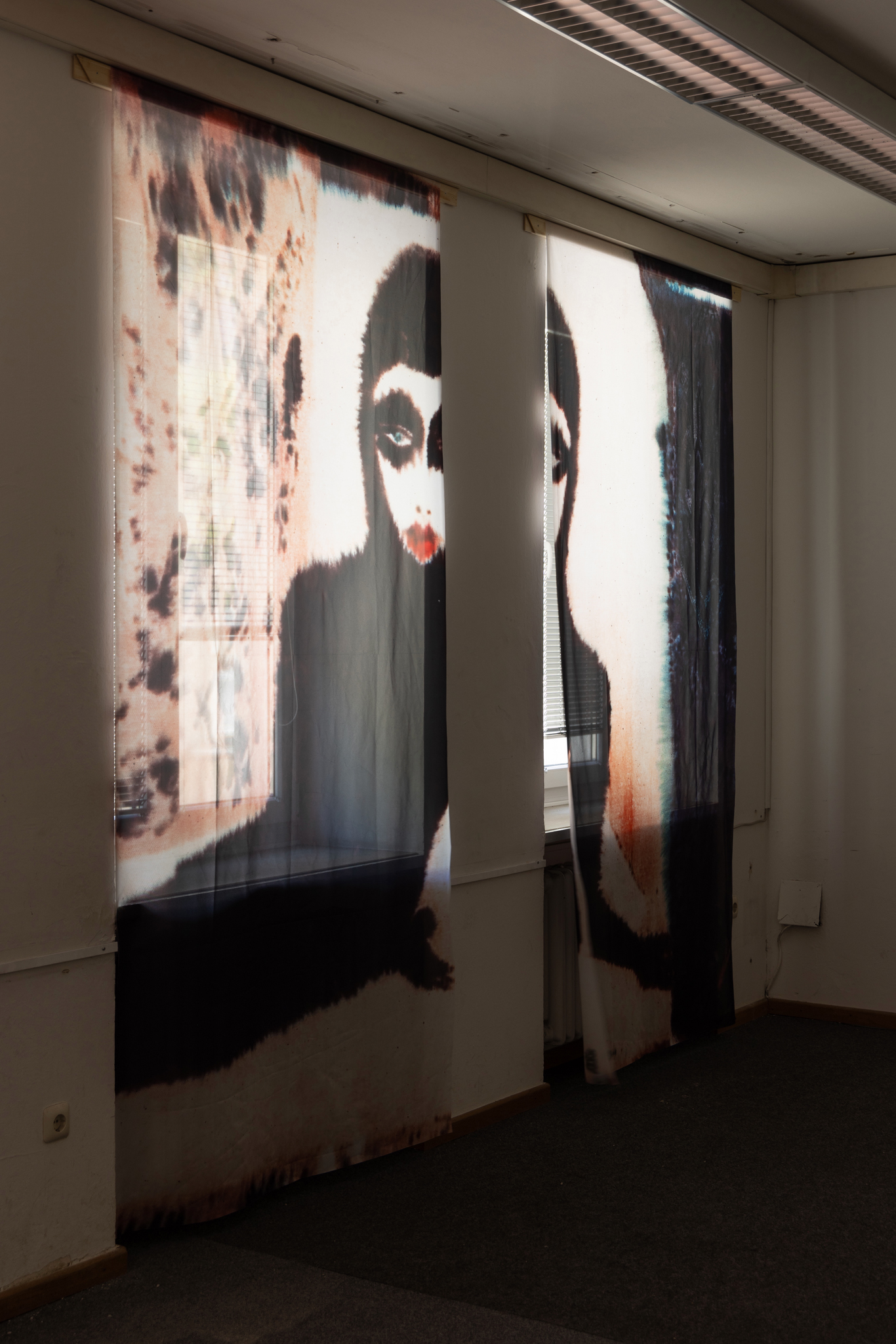
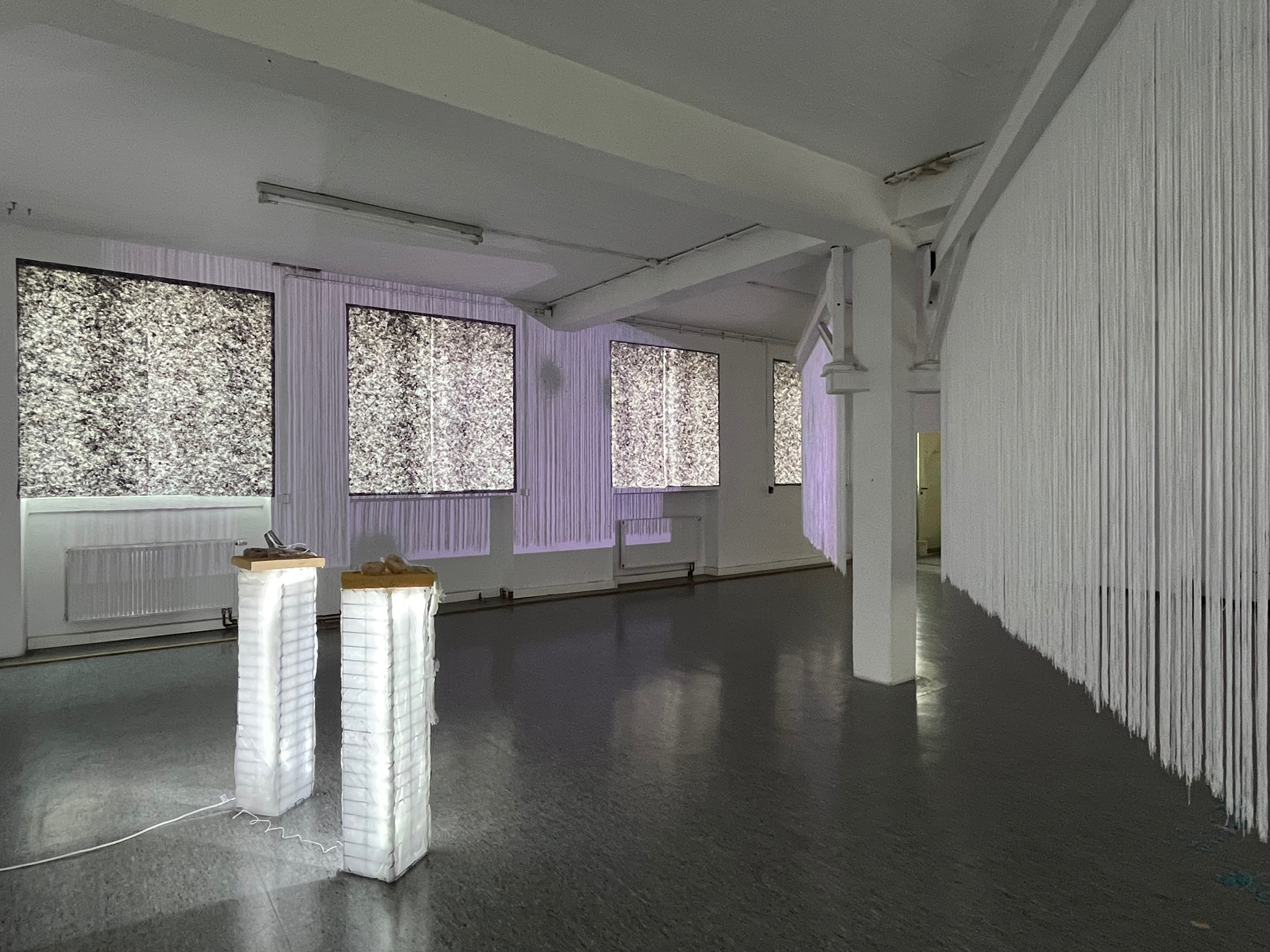
I have long, straight hair, slightly dry at the ends, too seldom cut. When I read or write, I tuck the loose strands behind my ear. It is always present, over there, too much to count yet infinitely countable. Oddly, I think of hair when I read Brian Massumi’s definition of the virtual (“Envisioning the Virtual” in The Oxford handbook of Virtuality, 55-70), and not only because of his arguments about value (because you are worth it!). For he opposes the virtual to the actual, rather than the natural or the real, and explains through Whitehead’s opposition of the sensuous and non-sensuous. Hair is sensuous because it exists over there, ready to be counted. There is a reference to space – counting unfolds in time. But hair is also virtual I guess, because it also appears to perception all at once: I do not have to pick a strand and start counting. Hair is there in one fell swoop, or rather swoosh. I already have a rough idea of a number – through habit, previous knowledge and earlier, other experiences. But as soon as I try to locate and fix this dimension – to grasp it in my hand – this virtual aspect disappears into the actual. Massumi describes the non-sensuous as having “a strangely compelling, shimmering sterility” (60) and this makes me think of the hair in this exhibition, Electric bodies shooting through space, silky white curtains on which the video work, Her do, shimmers. 

In her work, Janna Jirkova plays with the natural and the artificial. Natural are our bodies: nails, mouth, belly, hair; artificial is the technology, both high and low tech, she attaches to her body in cyborg-like fashion. The electric bodies shooting through space are us, joggers wearing headlights in the dark, Major Tom floating in a tin can. But it is not that technology functions as some sort of extension of our body and its capacities, rather, Jirkova shows how our bodies are already artificial (and by extension, the artificial is already also natural). “Self-prosthetic” is Massumi’s term (64). 

The English labels Jirkova reads out in her video, “pretty package… high performance …. the type I like” – but also negatively, “broken … malfunctioning” – are ways to describe both: the human body and technology, the natural and the artificial tangled together in language. On the shimmering screen, we see purple hair being used to tickle a belly, except that the hair is another video projection and the belly, a plaster cast. Again, she touches her navel, but this is on a mobile phone screen, forward facing, in a pouch of a rubber apron, worn over a white protective suit. “Samson, Samson, show me your hair!” Her hair, the hair of the empress Elisabeth. There is body hair shown as a video of a fern unfurling, and the abstract red and pinks are made by placing fingers over the recording device. Jirkova sets out to produce a field of tensions between different modes of existence, actual and virtual. These are tensions that come with the contrast between the sensuous and the non-sensuous. As Massumi argues, modes do not add up to anything – they do not form anything. Experience emerges when the pressure becomes unsustainable and these tensions break (62). 

Through this intensive force field all of our experience is conditioned. What we bring to the conditional field phenomenon is our tendencies, in which they are a formative factor. Only these tendencies can be either natural, in the sense of a genetic predisposition or artificial, as in learnt. For Massumi, art and technology merely extend the body’s pre-existing regime of natural and acquired artifice, “already long in active duty in producing the virtual reality of our everyday lives” (64).  We are caught between our tendencies in an intensive force field of emergence, indeed like “motes,” “caught up in a tumult of non-Newtonian motion” (Beckett, Murphy, Chapter 6).

Magdalena Wisniowska  2022