Before your eyes open

Laura Hinrichsmeyer, Luisa Kasalicky, Andrea Zabric

15.05 – 04.07.2026

together with The Tiger Room at Heßstr. 48 b, 80798 Munich
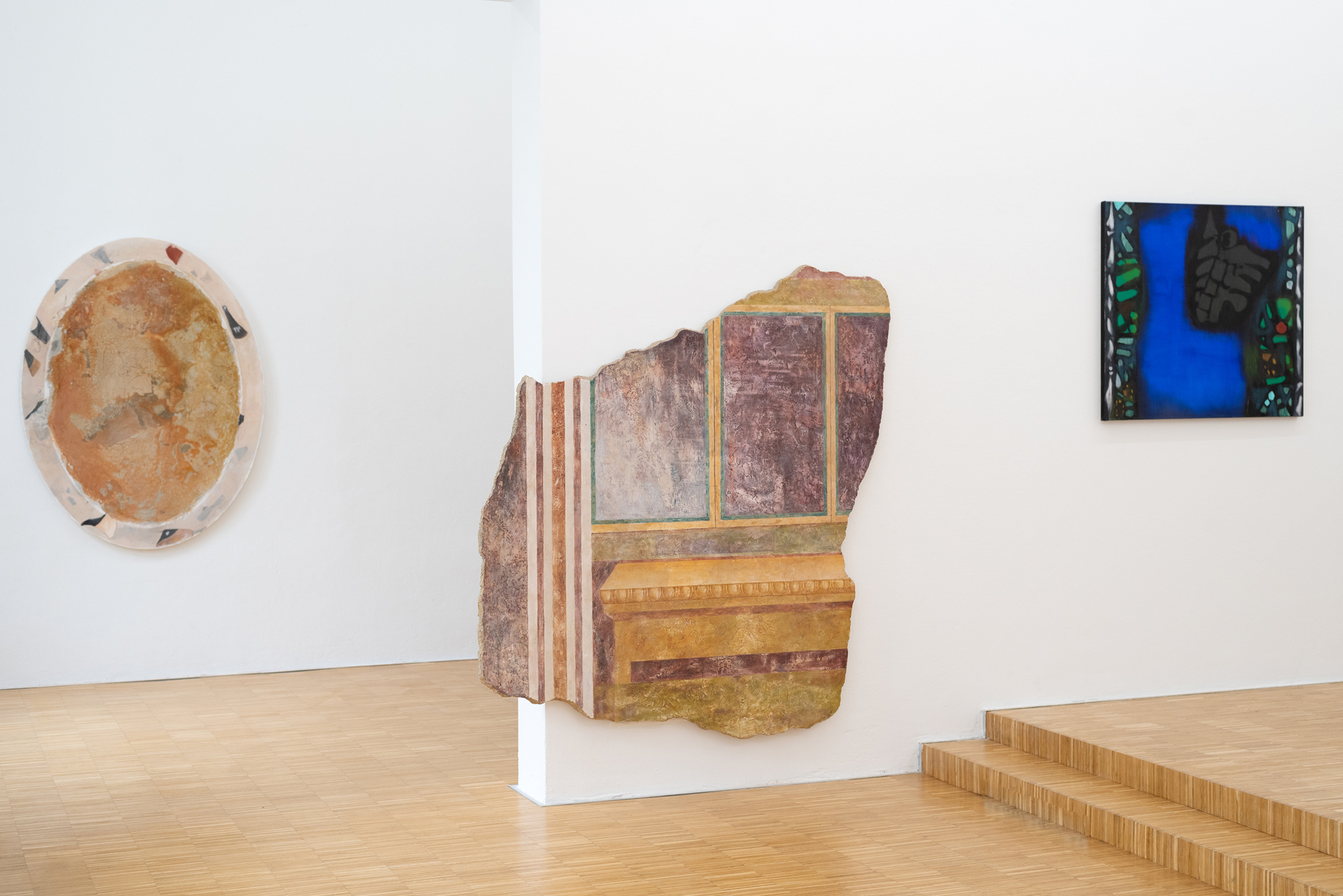
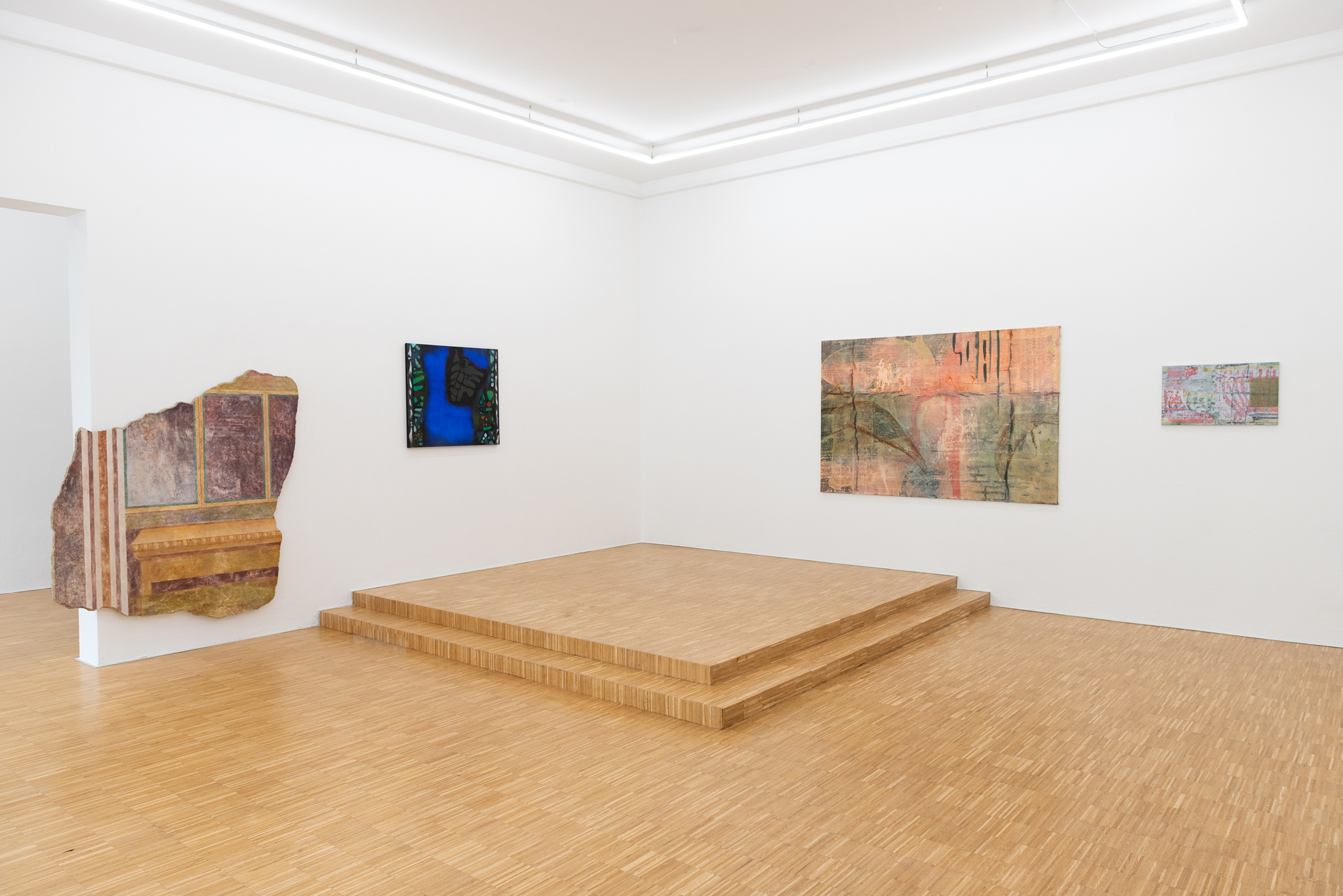
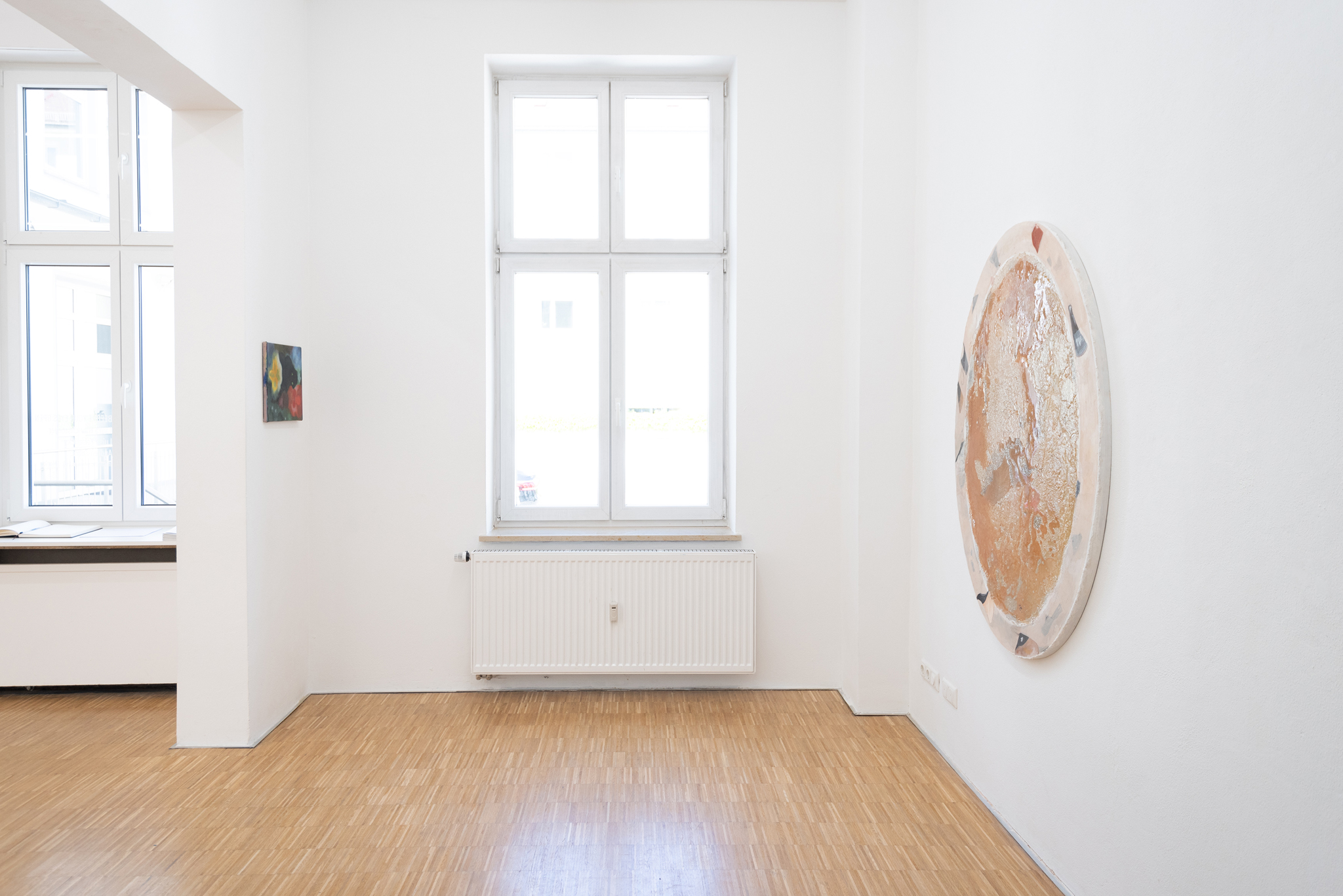
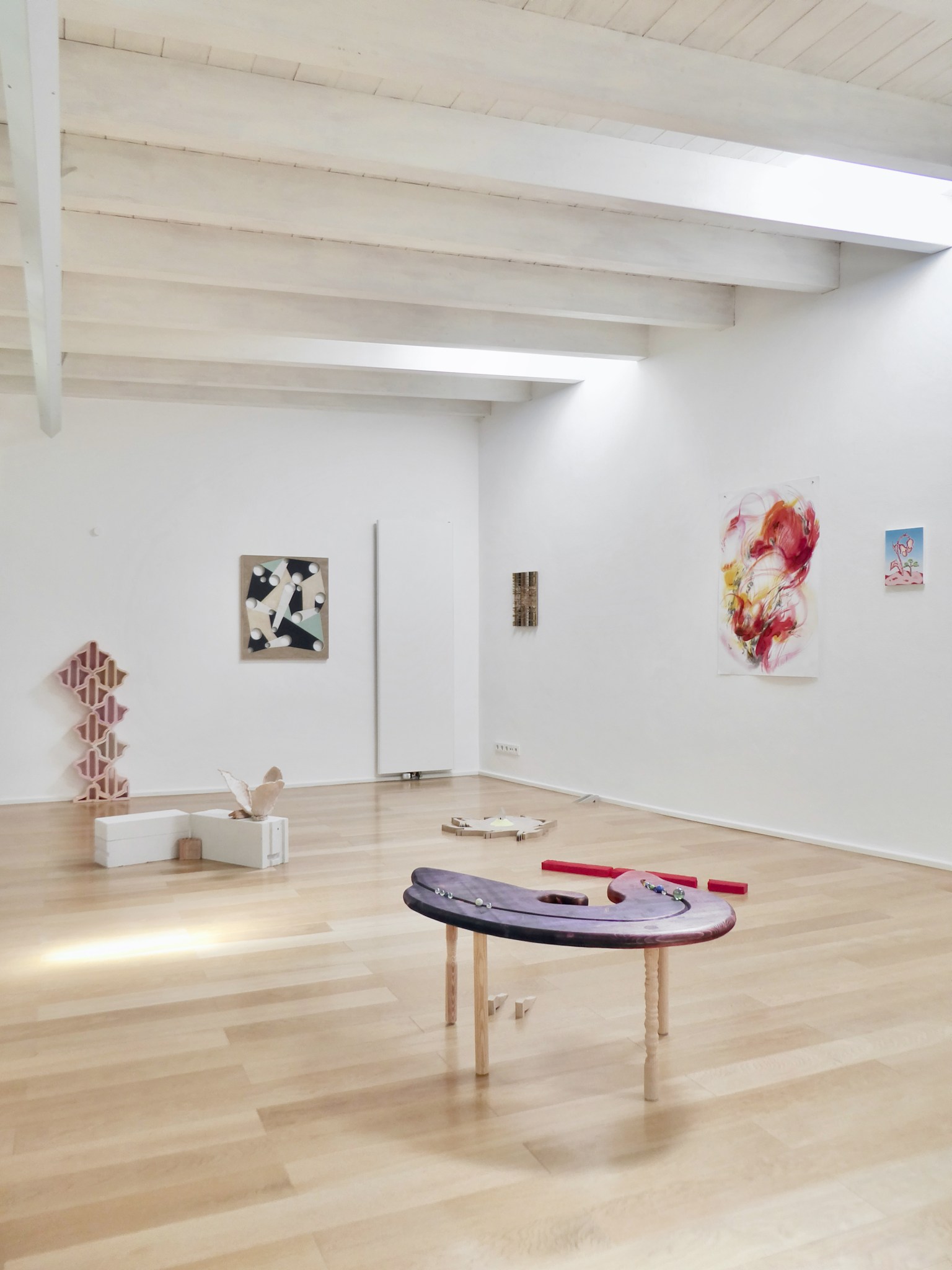
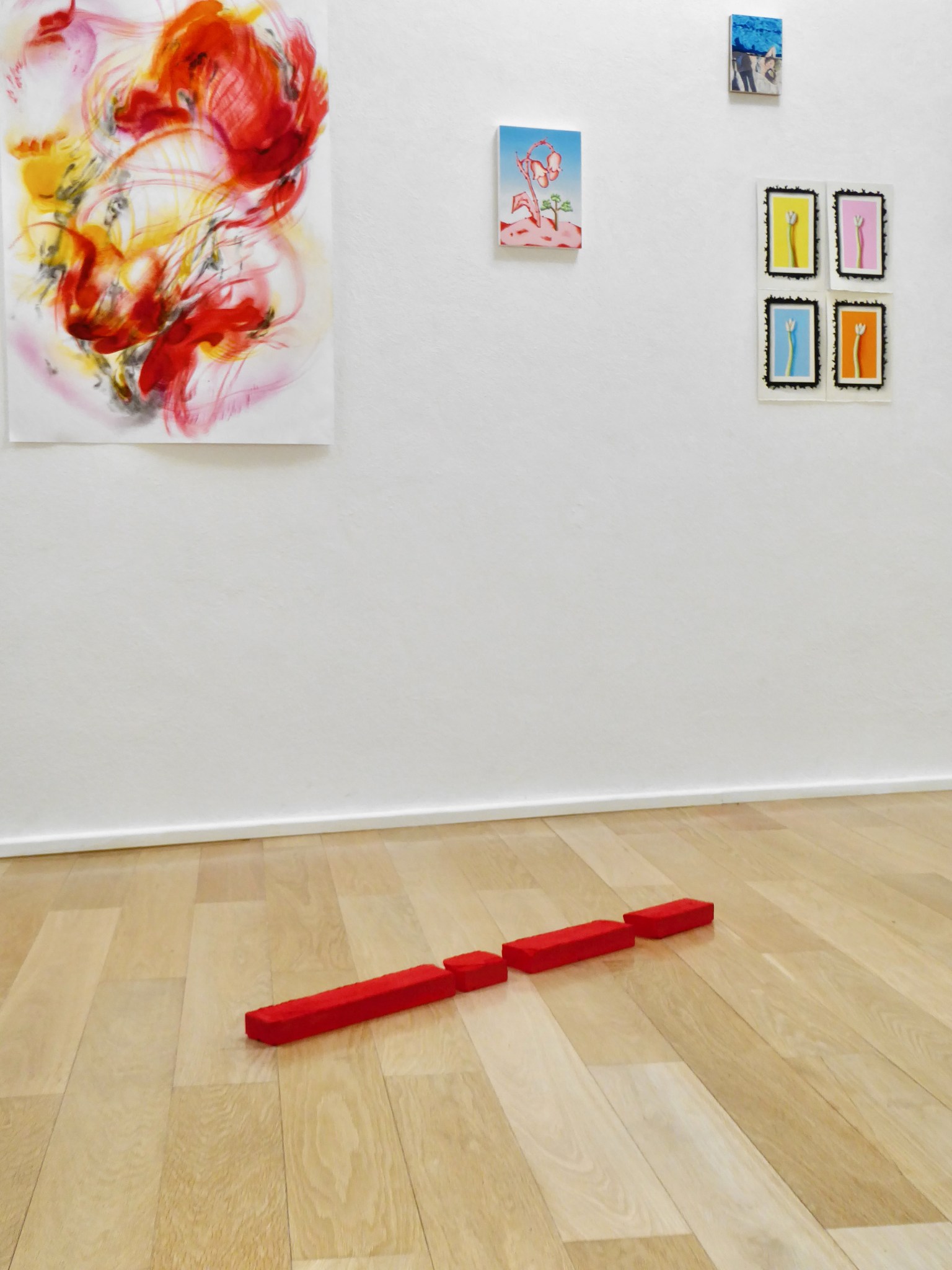
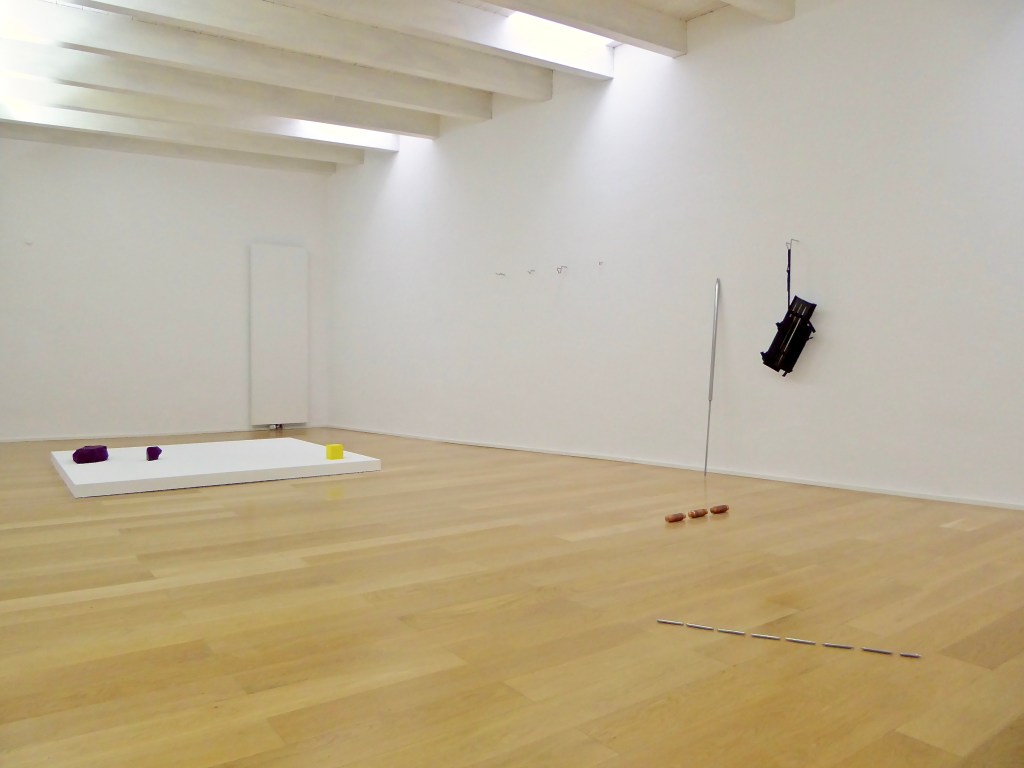
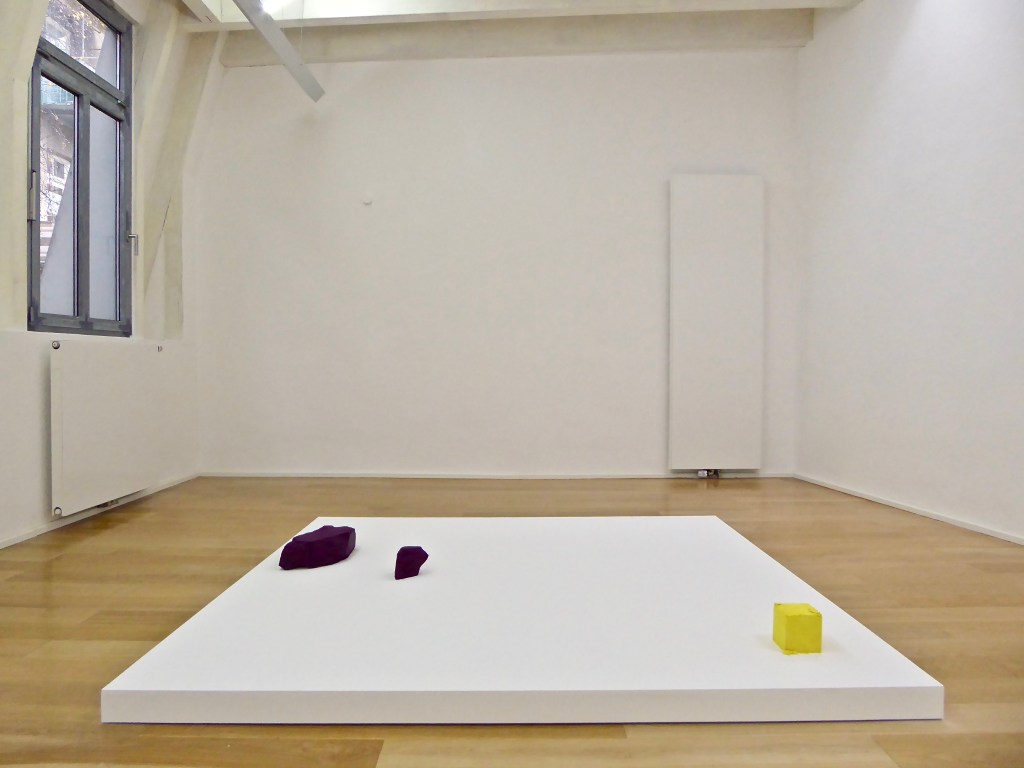
Before your eyes open, 2026, installation view
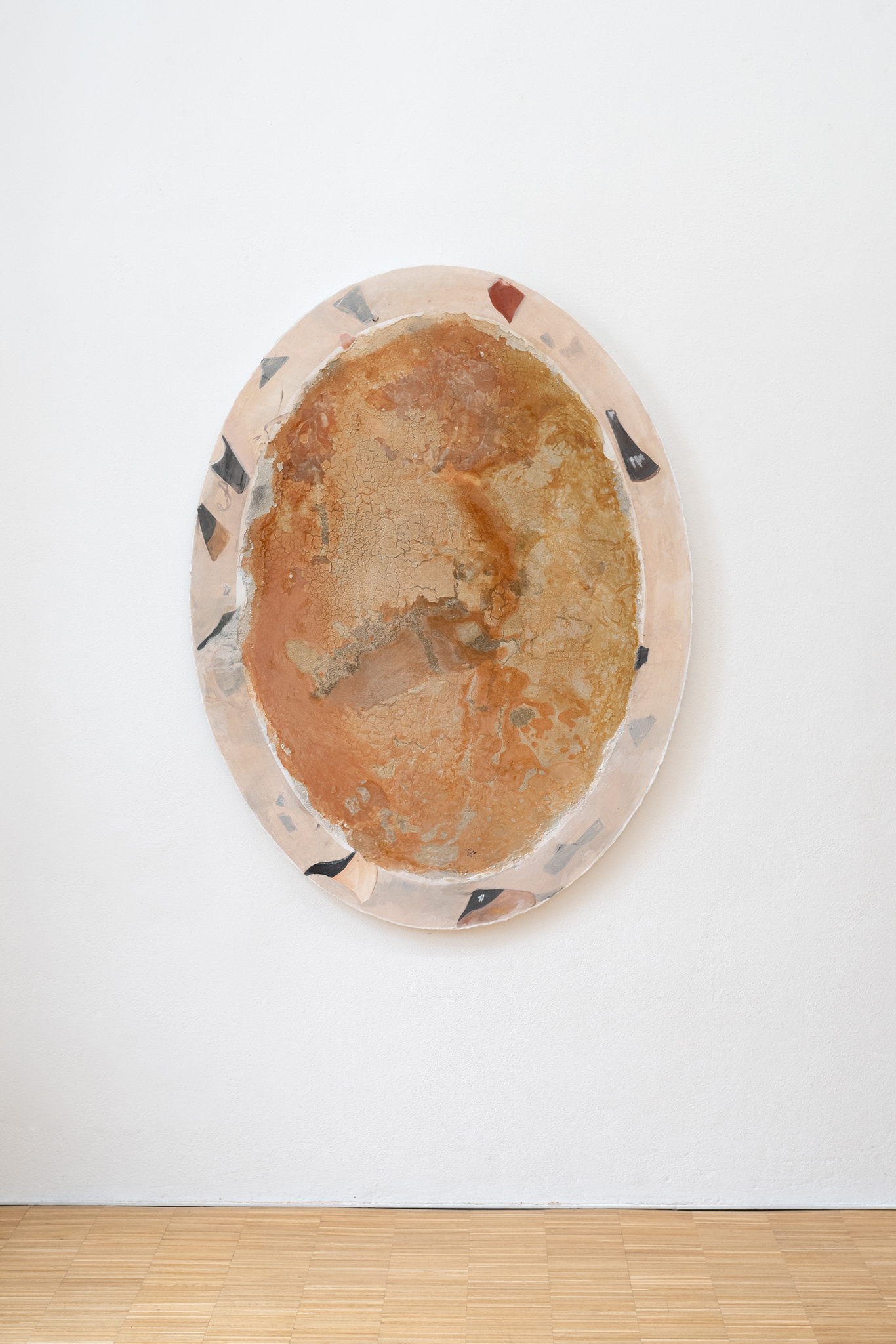
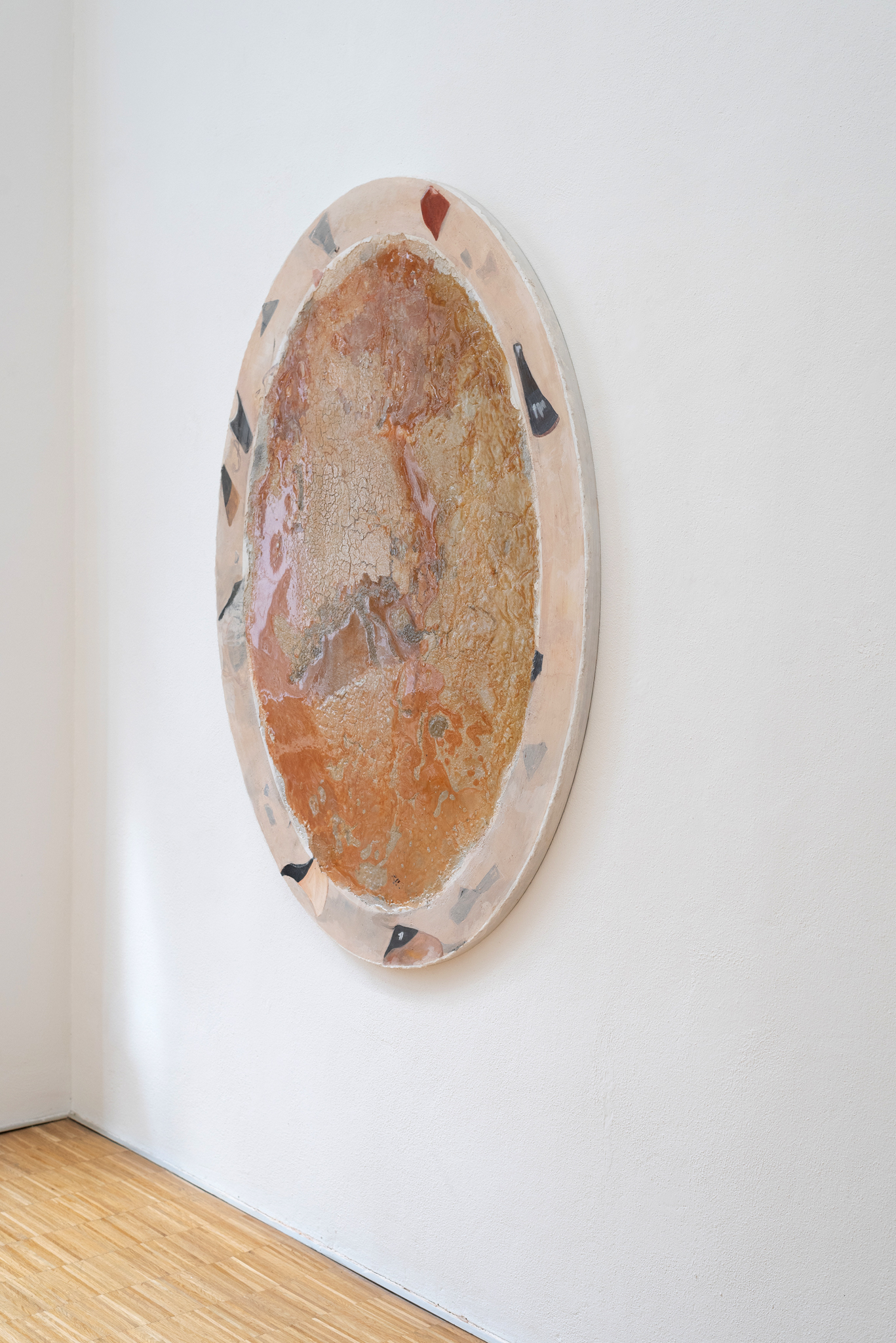
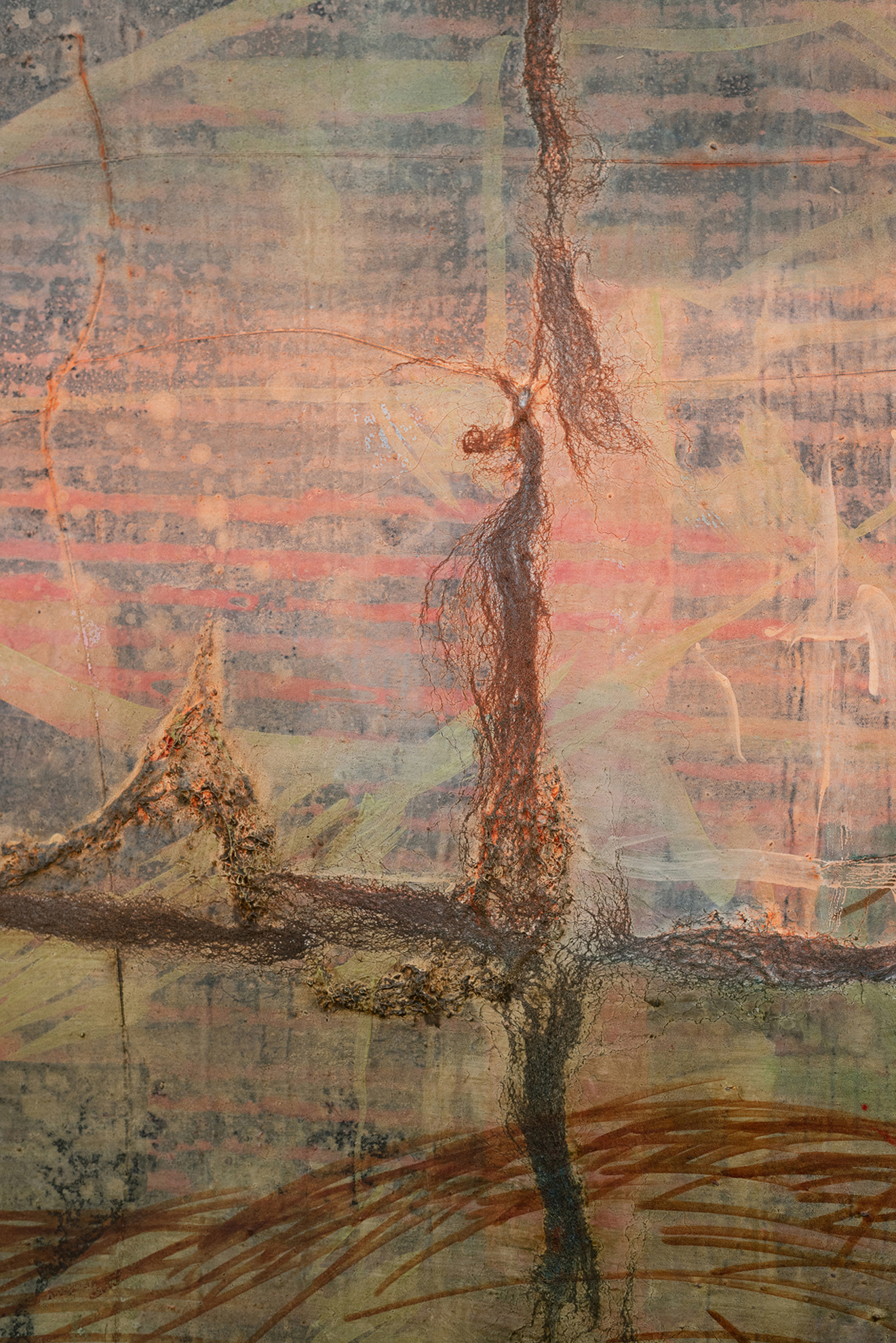
Andrea Zabric, Untitled (from the Karst Series No. VI), 2025
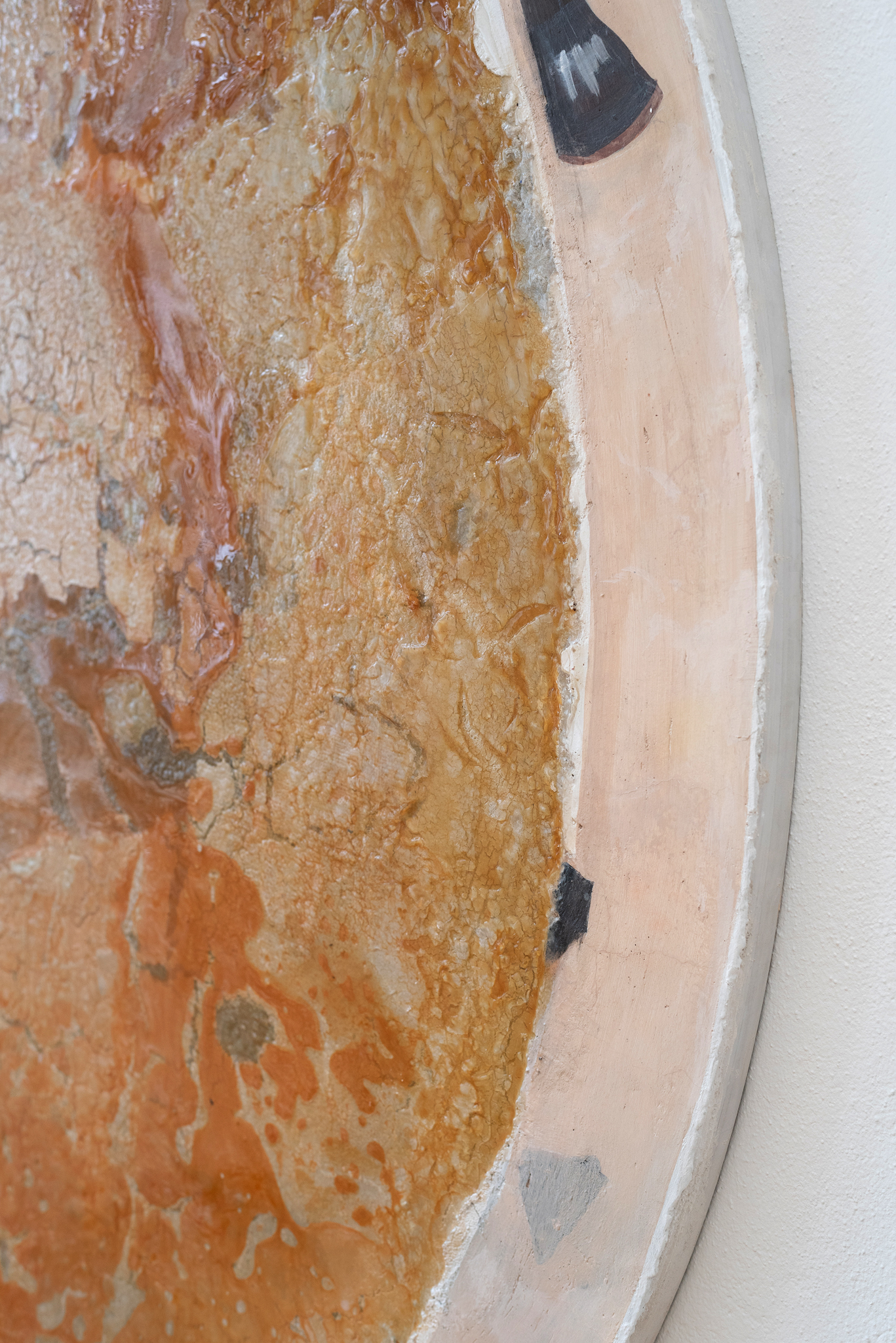
Andrea Zabric, Untitled (from the Karst Series No. VI), 2025 (detail)
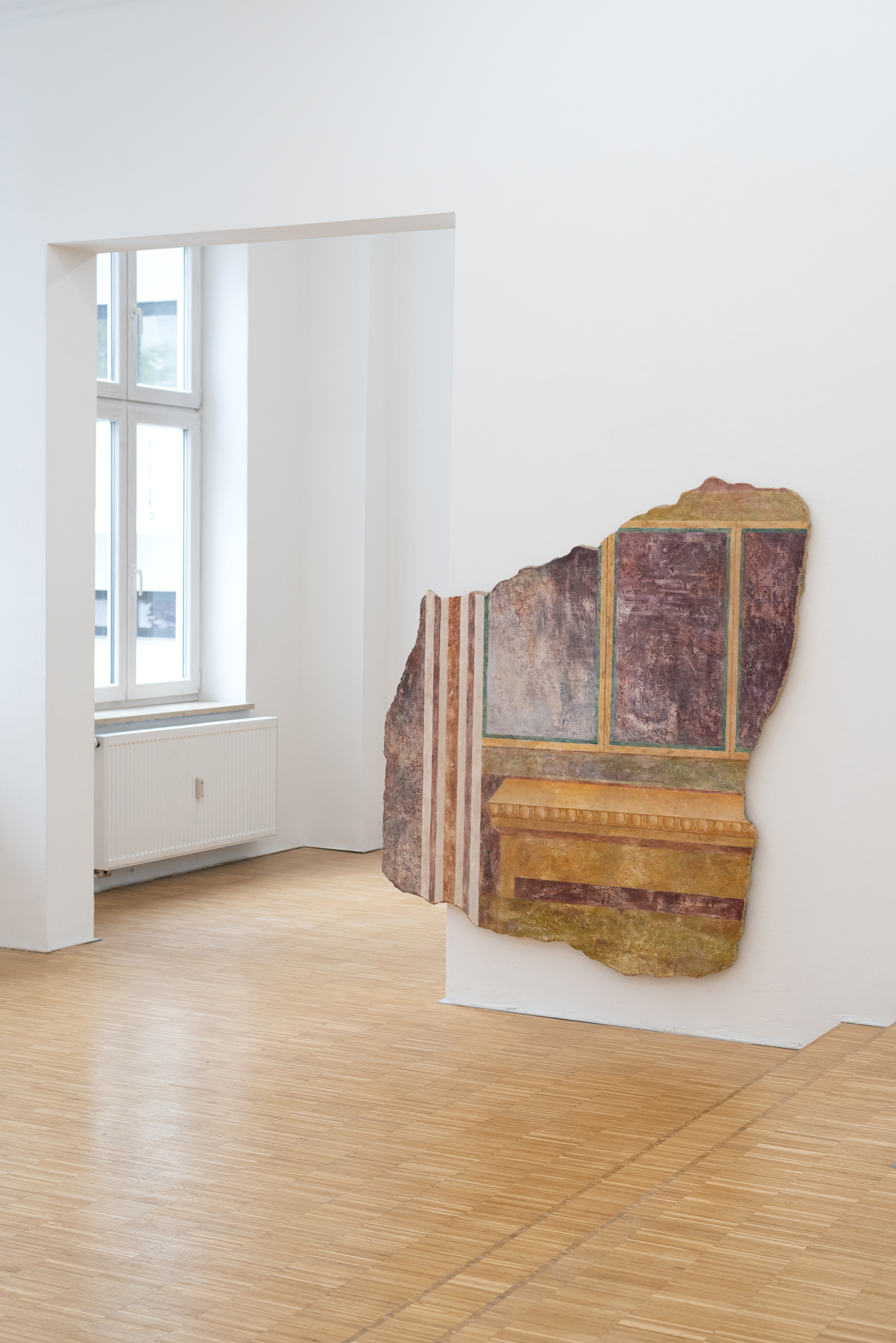
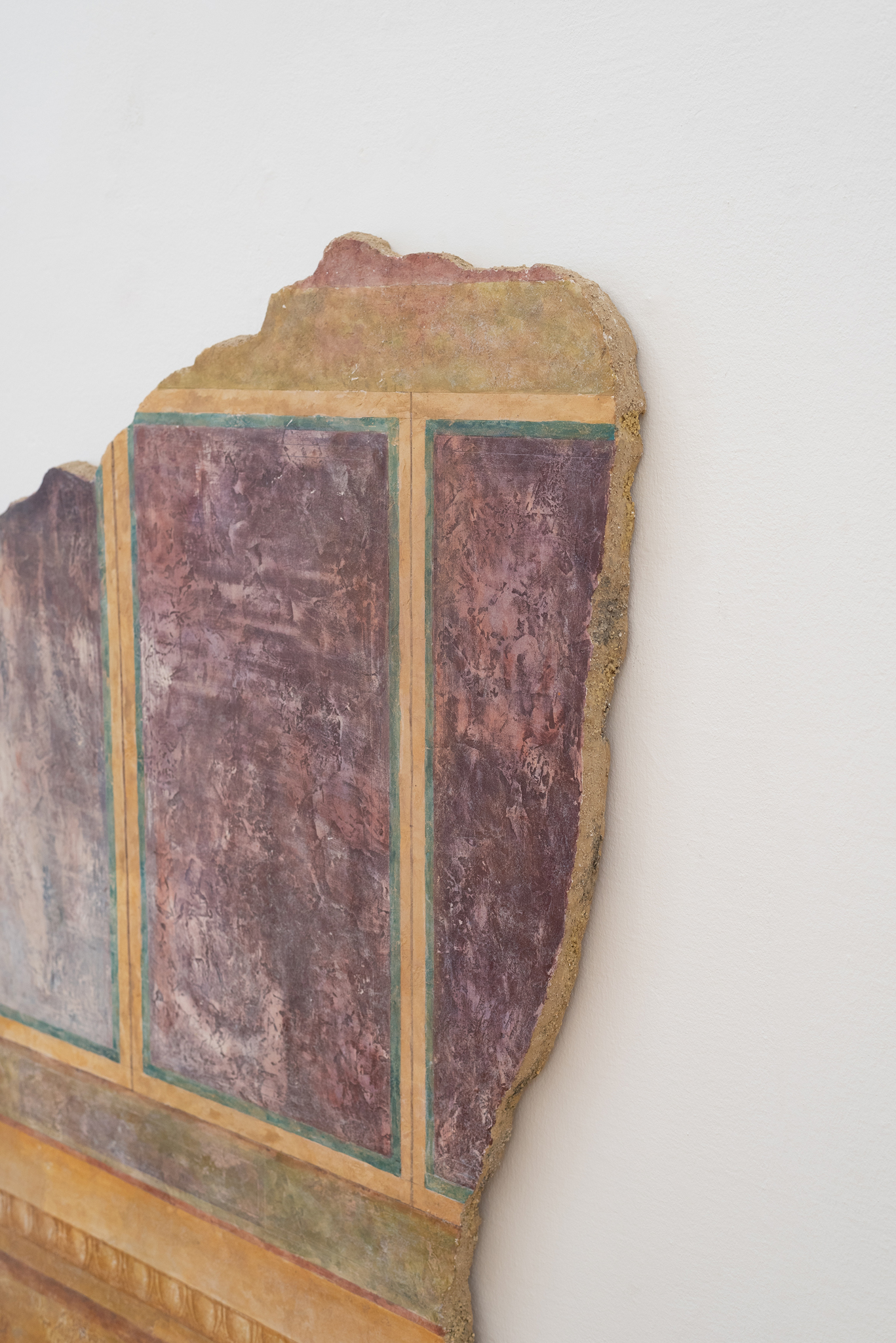
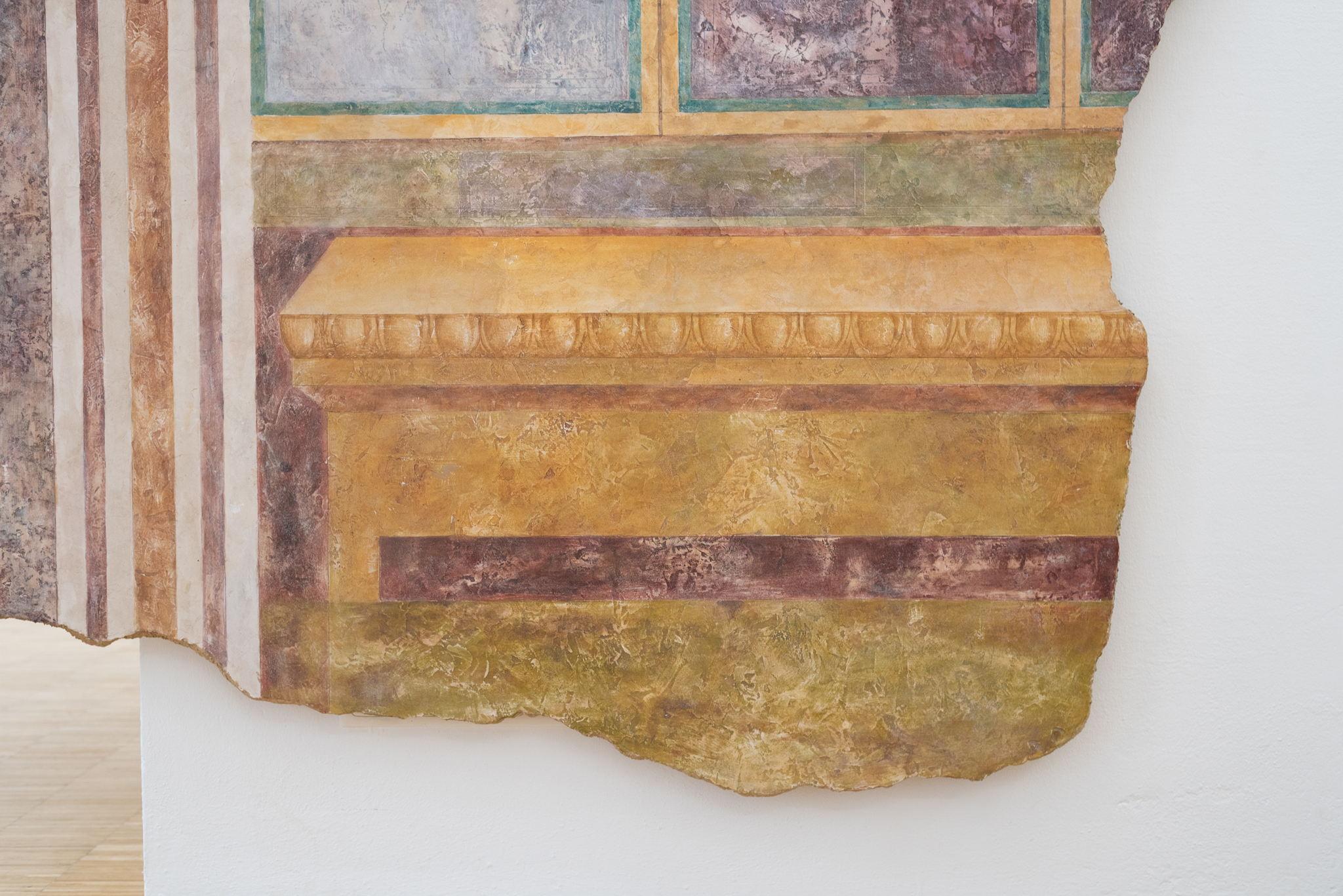
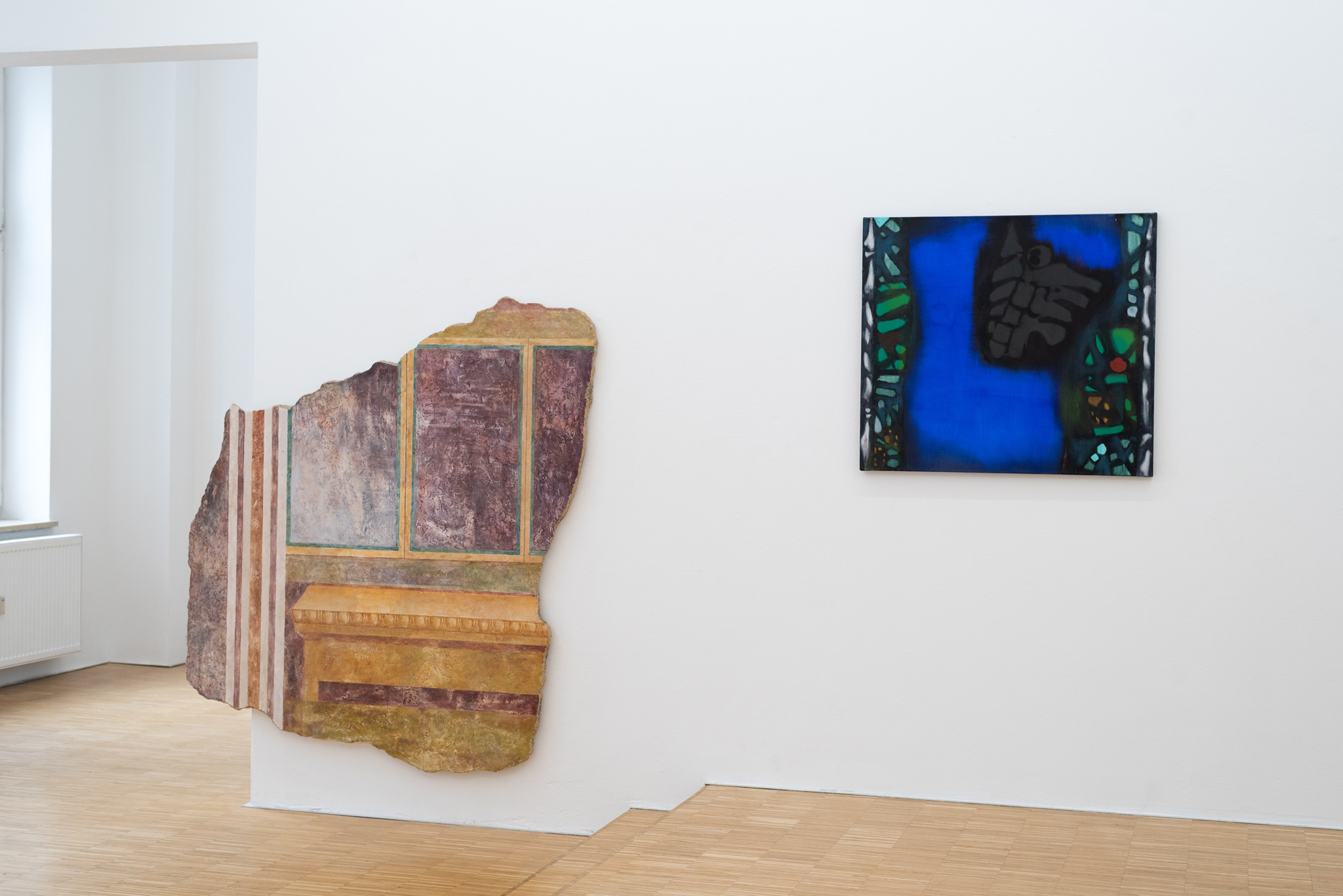
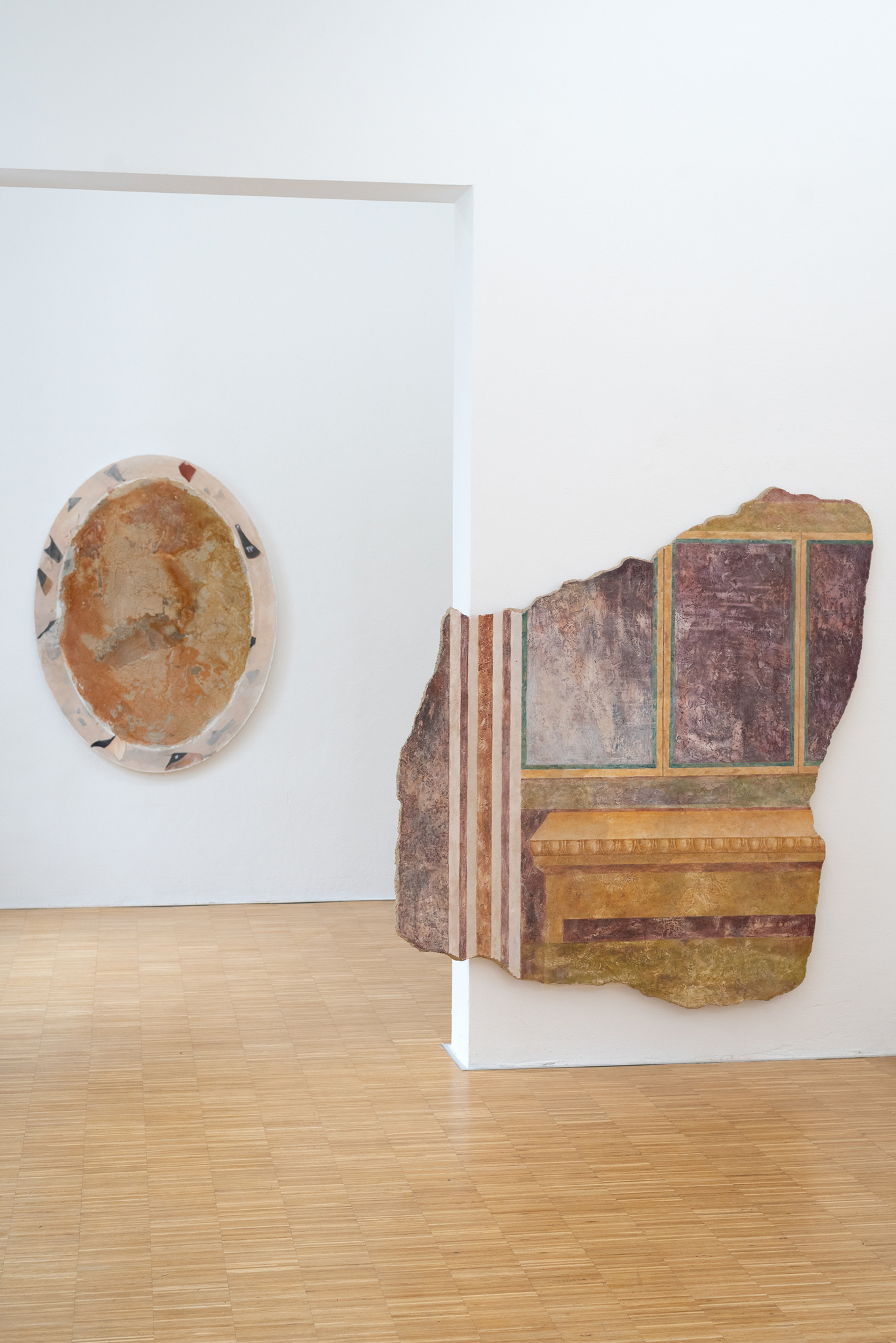
Andrea Zabric in collaboration with Bernt Preisegger, Untitled (Pompeii Propp III) 2024, Pigments and binding agents on plaster and birch plywood 160 x 150 x 4 cm
Andrea Zabric in collaboration with Bernt Preisegger, Untitled (Pompeii Propp III) 2024, Pigments and binding agents on plaster and birch plywood 160 x 150 x 4 cm (detail)
Before your eyes open, 2025, installation view
Before your eyes open, 2026, installation view
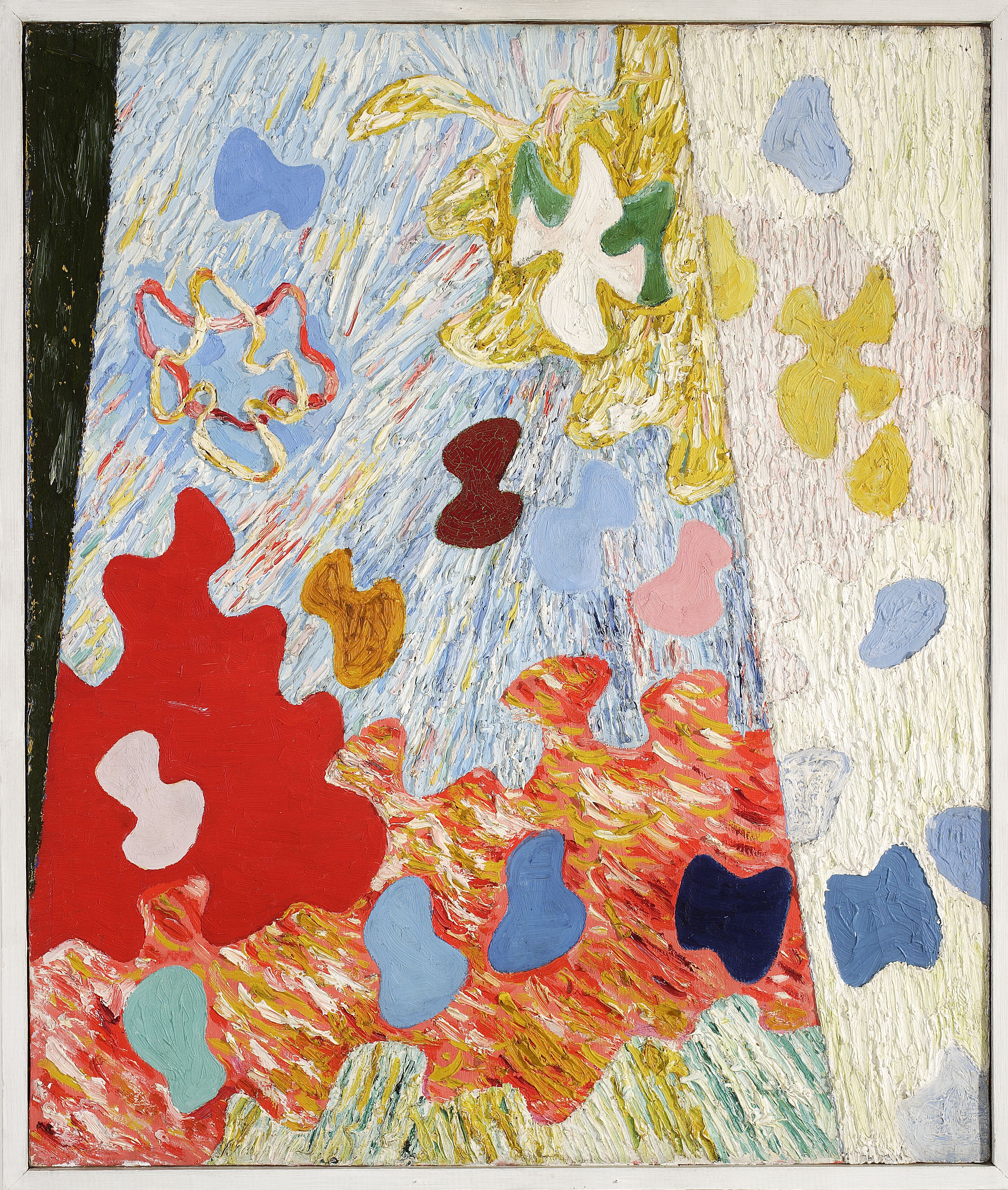
Luisa Kasalicky, Dedications: Augusto G., 2024, acrylic and oil on canvas, 80 x 90 cm
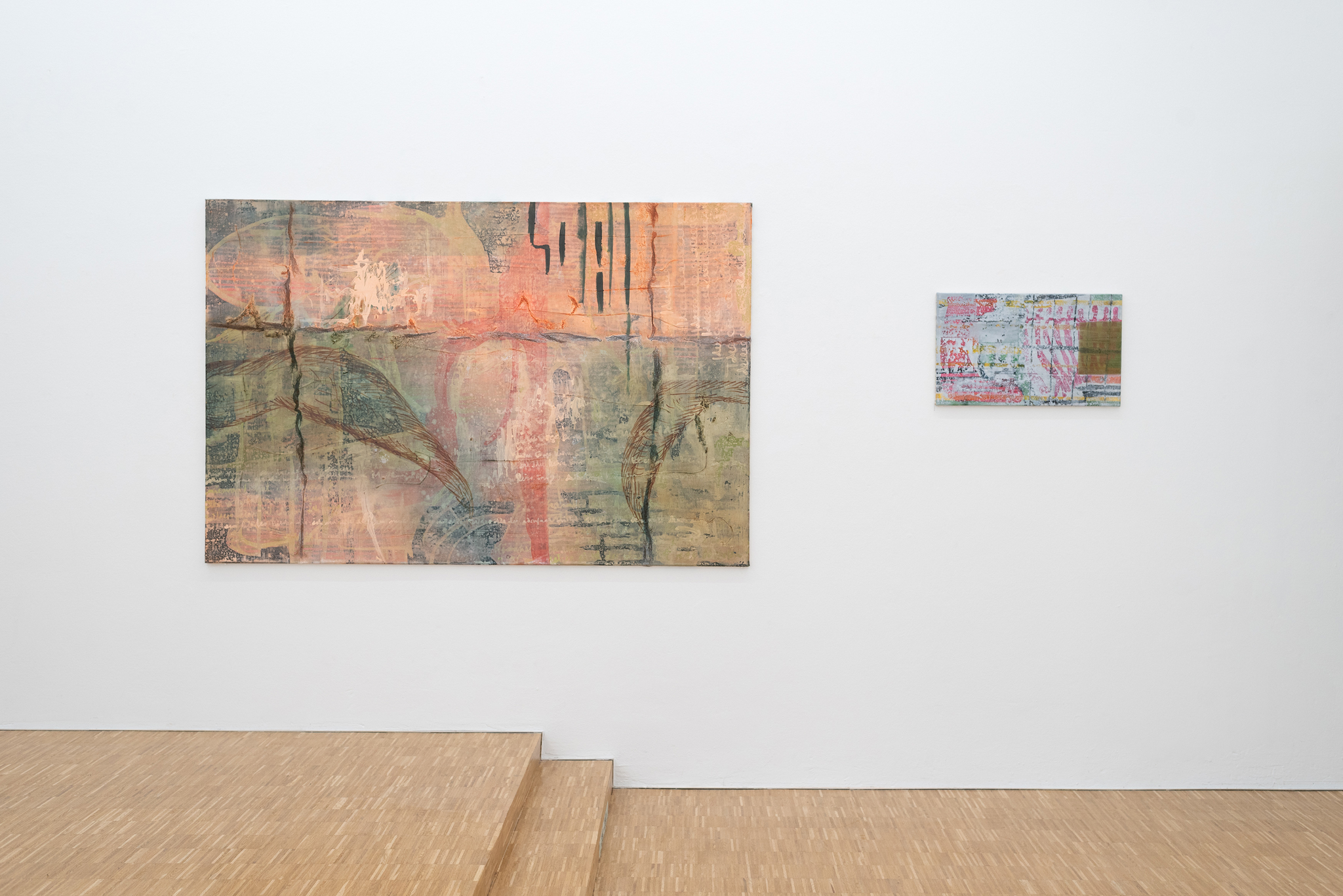
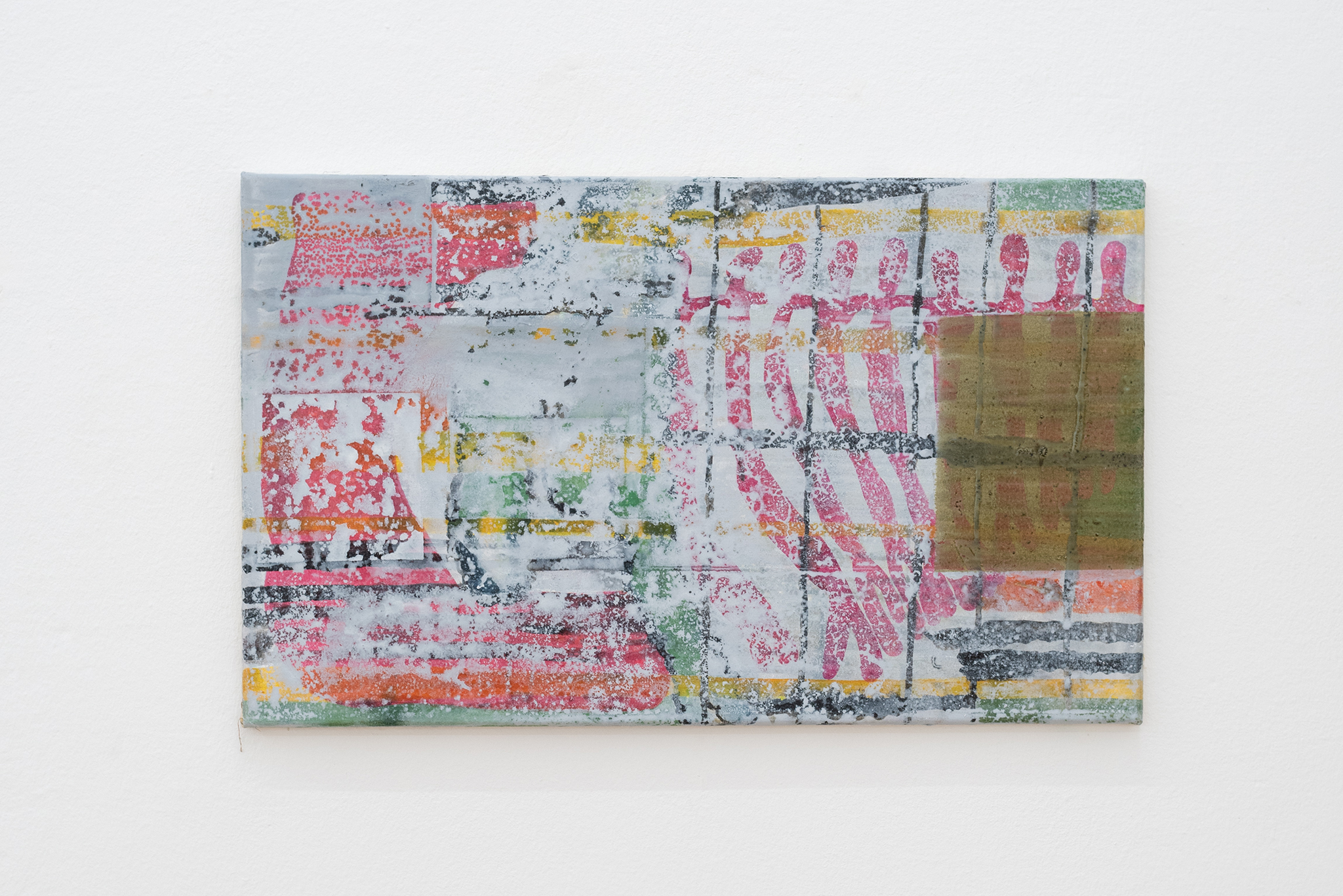
Laura Hinrichsmeyer, Debt text dead text (four paintings, some thrown brick stones) 2025, Oil, chalk and hair on cotton, 130 x 195 cm and Körper als Gruppe (ancestor painting and accentuated waist, with letters like L, A and E) 2026, Oil, chalk and hair on cotton 40 x 66 cm
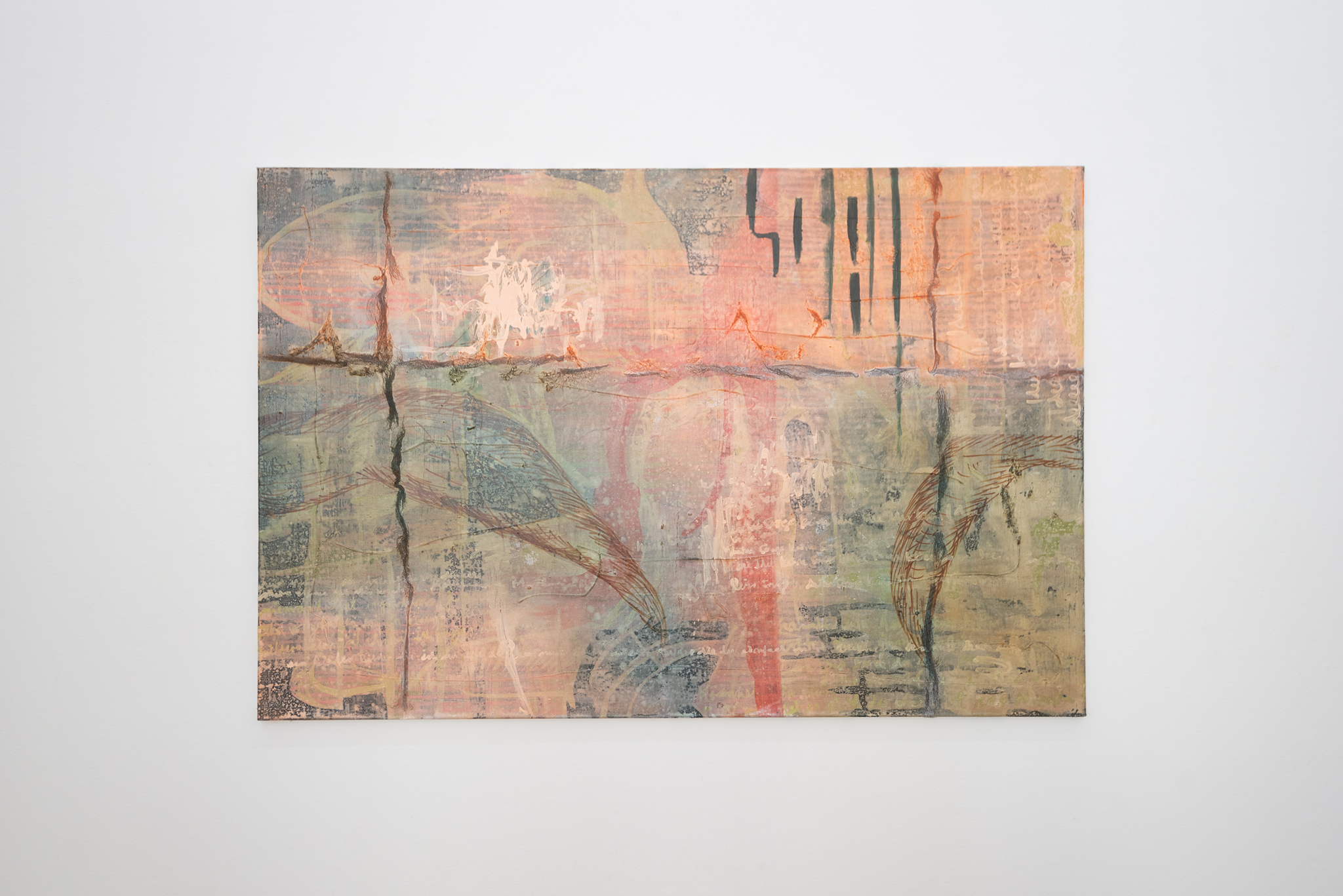
Laura Hinrichsmeyer, Debt text dead text (four paintings, some thrown brick stones) 2025, Oil, chalk and hair on cotton, 130 x 195 cm
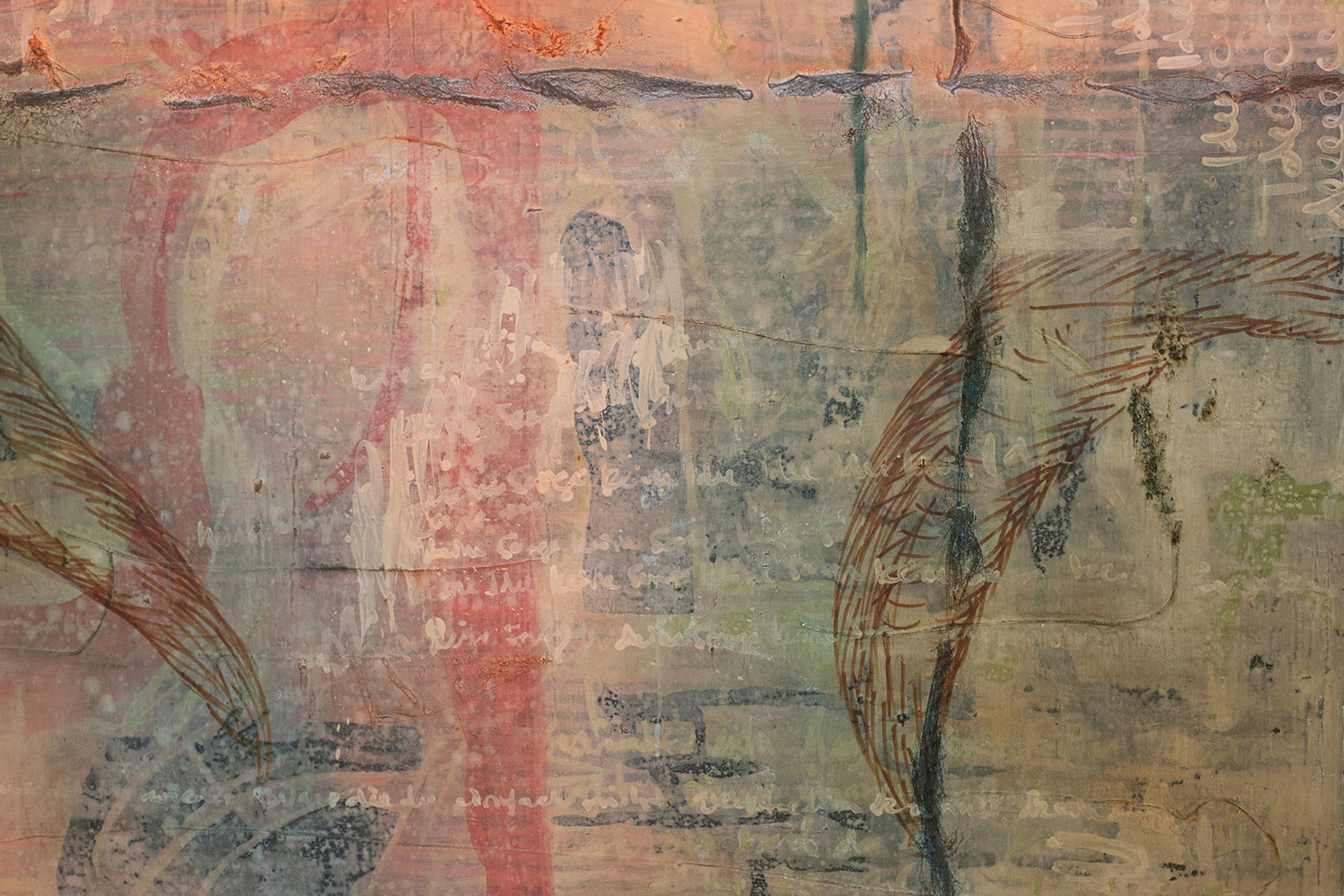
Laura Hinrichsmeyer, Debt text dead text (four paintings, some thrown brick stones) 2025, Oil, chalk and hair on cotton, 130 x 195 cm (detail)
Laura Hinrichsmeyer, Körper als Gruppe (ancestor painting and accentuated waist, with letters like L, A and E) 2026, Oil, chalk and hair on cotton 40 x 66 cm
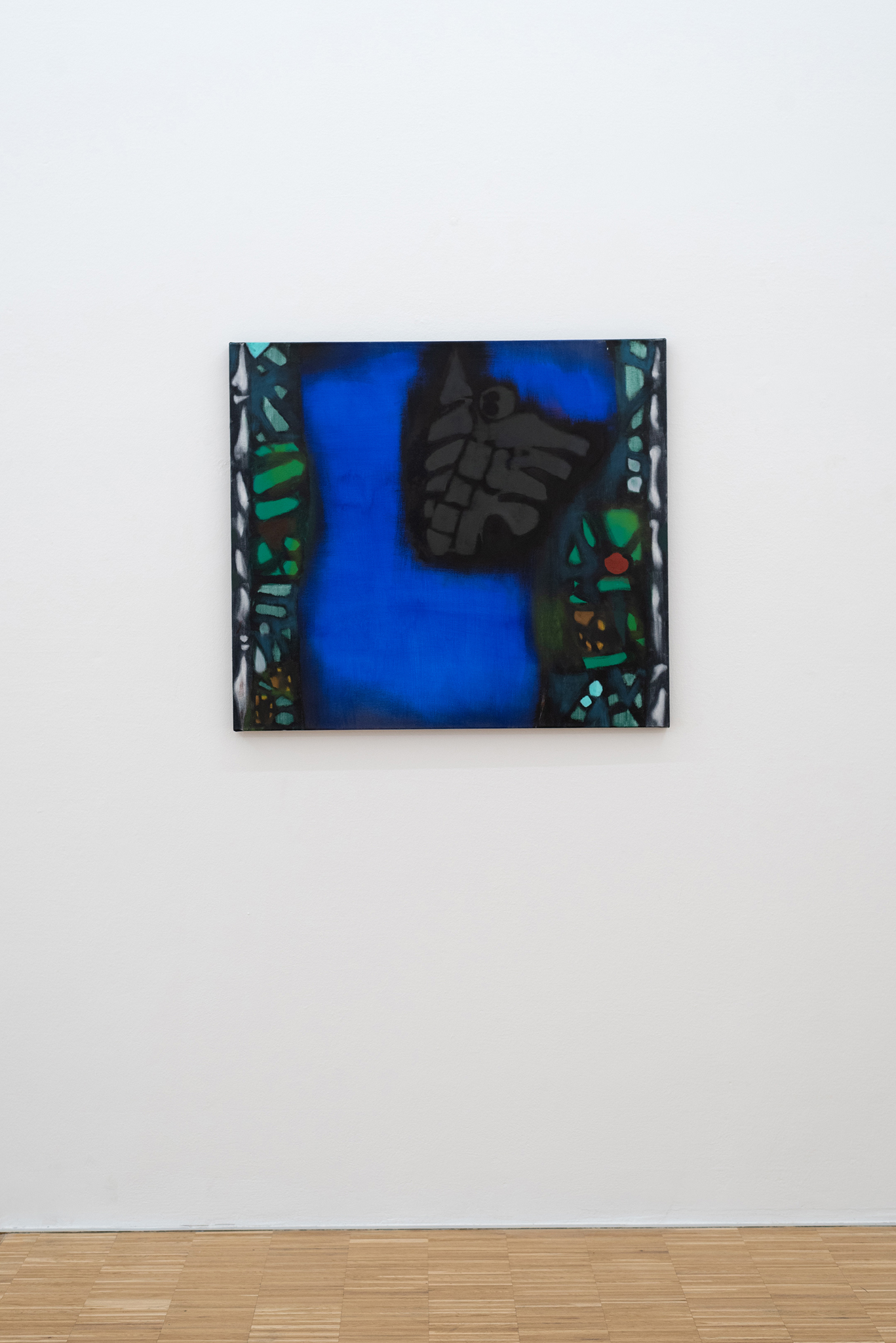
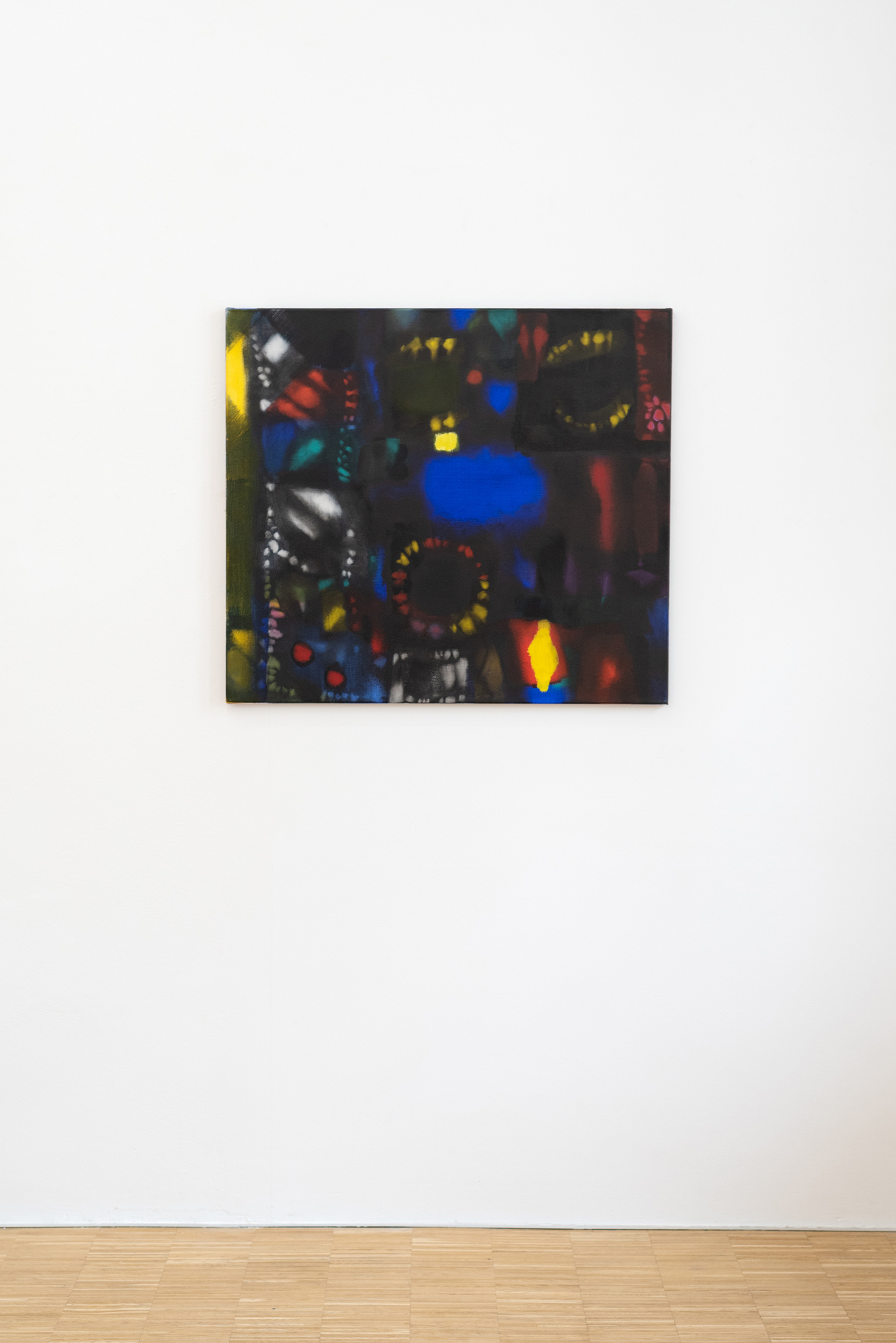
Luisa Kasalicky, Dedication to Desiderio Monsu II, 2025 acrylic and oil on canvas, 80 x 90 cm
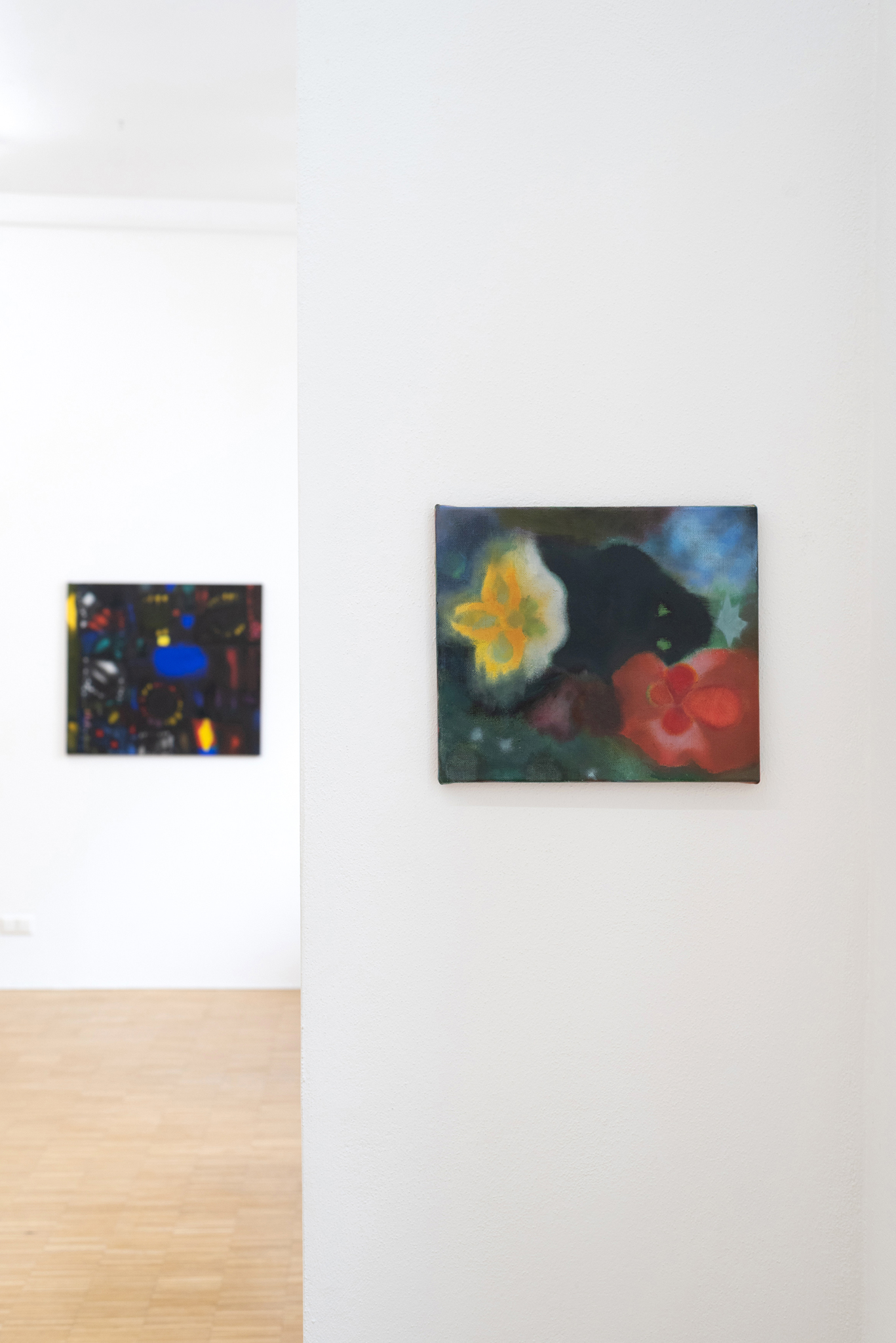
Luisa Kasalicky, Dedication to Desiderio Monsu II, 2025 acrylic and oil on canvas, 80 x 90 cm and Insight the helio green, 2025 acrylic and oil on canvas, 36 x 41 cm
Before your eyes open, 2026, installation view

We all see the same thing when our eyes are closed, whether we are a man, a fascist, or a nomad. This is not darkness, but a kind of afterimage, similar to those afterimages of the sun painted by the Polish modernist, Władysław Strzemiński, in the late 1940s. These afterimages are more than physiological phenomena, visual impressions that persist long after the original light source is gone, our photoreceptors lagging behind, too tired and desensitised to adjust to changed lighting conditions. We can also think of the afterimage as all those things we carry with us as we go about our daily lives, the routines and organisational structures – those endless to-do lists which keep us awake at night. More broadly they consist of the economies we operate in, the society in which we function, the histories and cultures in which we are participants.

Painters encounter these persistent images every time they begin to paint. As the French philosopher, Gilles Deleuze, so memorably tells us when discussing the work of Francis Bacon: a painter’s canvas is never blank. It is always full, too full to start working straight away, filled with “things in the painter’s head, or around him, or in his studio.” There are always “givens” and a painter must decide, which of these to use, and more importantly, which of these are mere hindrances, obstacles even, and must be done away.

The painter, the fascist and the nomad see the same things in the dark, but they do not act the same way towards them. A painter like Bacon selects. Fascists on the other hand, take great pleasure in destroying certain socio-political structures, as this gives them a feeling of power. There is much nihilism to be found here. But the nomad, the nomad sees everything, the burdens and the obstacles, and nevertheless manages to forge a path, as if these structures were no hindrance, as if the space was left wide open, unmarked, smooth to travel. Nomads do not use the obstacles to determine their route – they do not say, today I will travel from this point to that, map in hand, following stars and compass, because I wish to reach a destination and settle there. Obstacles do not determine the direction in which nomads head. They throw our maps to the wind and carry their movement with them.

The three painters of “Before your eyes open” – Laura Hinrichsmeyer, Luisa Kasalicky and Andrea Zabric – retain a nomadic position in painting. Of different generations and backgrounds, they share an acute awareness of the historical and cultural “givens” of a painter’s practice, especially in its modernist guise, but these do not determine the trajectories their work takes. They still select, just not one given or another, or a point to be reached. Rather they select a direction, which allows them to operate as a point moving in-between lines: for Hinrichsmeyer this is text in combination with images and a deep understanding of painting’s materiality; for Kasalicky in her most recent series of work, light, colour and the tensions of their juxtaposition. Zabric’s practice, so embedded within art history in her use of fresco technique, holds up a mirror to the nomadic subject, where the self is distributed in open space, like scattered fragments of broken shells found on a beach.

Text: Magdalena Wisniowska 2026

Before your eyes open

Laura Hinrichsmeyer, Luisa Kasalicky, Andrea Zabric

15.05 – 04.07.2026

together with The Tiger Room at Heßstr. 48 b, 80798 Munich
We are told it is a mistake to think that the painter begins with a white surface. There is no empty canvas to be filled with life, for there is too much life already, too much clutter, too much stuff. “The painter has many things in his head, or around him, or in his studio.” And everything the painter has in his head is there on the canvas before him, before he begins his work. So many images! Thus before he begins, the painter has to empty the canvas, to remove what is there already. And to this argument I want to say, hmm. Perhaps. Or rather not. 

Perhaps this is true of the painter, who is sure of himself and his place in the world, which is organised around him. But there are others who paint, better defined through a counter-subjectivity, which is non-unitary, not fixed. This subjectivity is not set against the clutter of life, but at home within it. For VO 2026, GiG Munich would like to introduce three painters, Laura Hinrichsmeyer, Luisa Kasalicky and Andrea Zabric.

Powidok slonca; Strzeminski, Wladyslaw (1893-1952); 1948-1949 (1948-00-00 – 1948-00-00); Pobrano z systemu MUZA Muzeum Narodowego w Warszawie; malarskie / farba / olej; wyroby z wlókien / tkanina / p?ótno; wys. 73 cm, szer. 61 cm; MPW 1121 MNW; Wszystkie prawa zastrzezone.

5 Years

Tim Bennett, Jenny Dunseath, Jonah Gebka, Andrea Hanak, Jane Hayes-Greenwood, Hannes Heinrich, Melina Hennicker, David Henrichs, Stefanie Hofer, Lukas Hoffmann, Lou Jaworski, Steffen Kern, Stefan Lenhart, Jo Love, Michael Lukas, Robin Mason, Kathrin Partelli, Rebecca Partridge, Plastique Fantastique, Berthold Reiss, Miriam Salamander,  Michael Schmidt, Maria Thurn und Taxis, Stefanie Ullmann, Maria VMier, Susanne Wagner, Youjin Yi, Andrea Zabric, Janka Zöller.

23.07 – 19.09.2020

P1030974
5 Year GiG, installation view, 2020


P1030976
Lukas Hoffmann, Untitled, 2020, MDF, Sulphur, Aluminium, 80 x 70 x 20 cm


P1030977
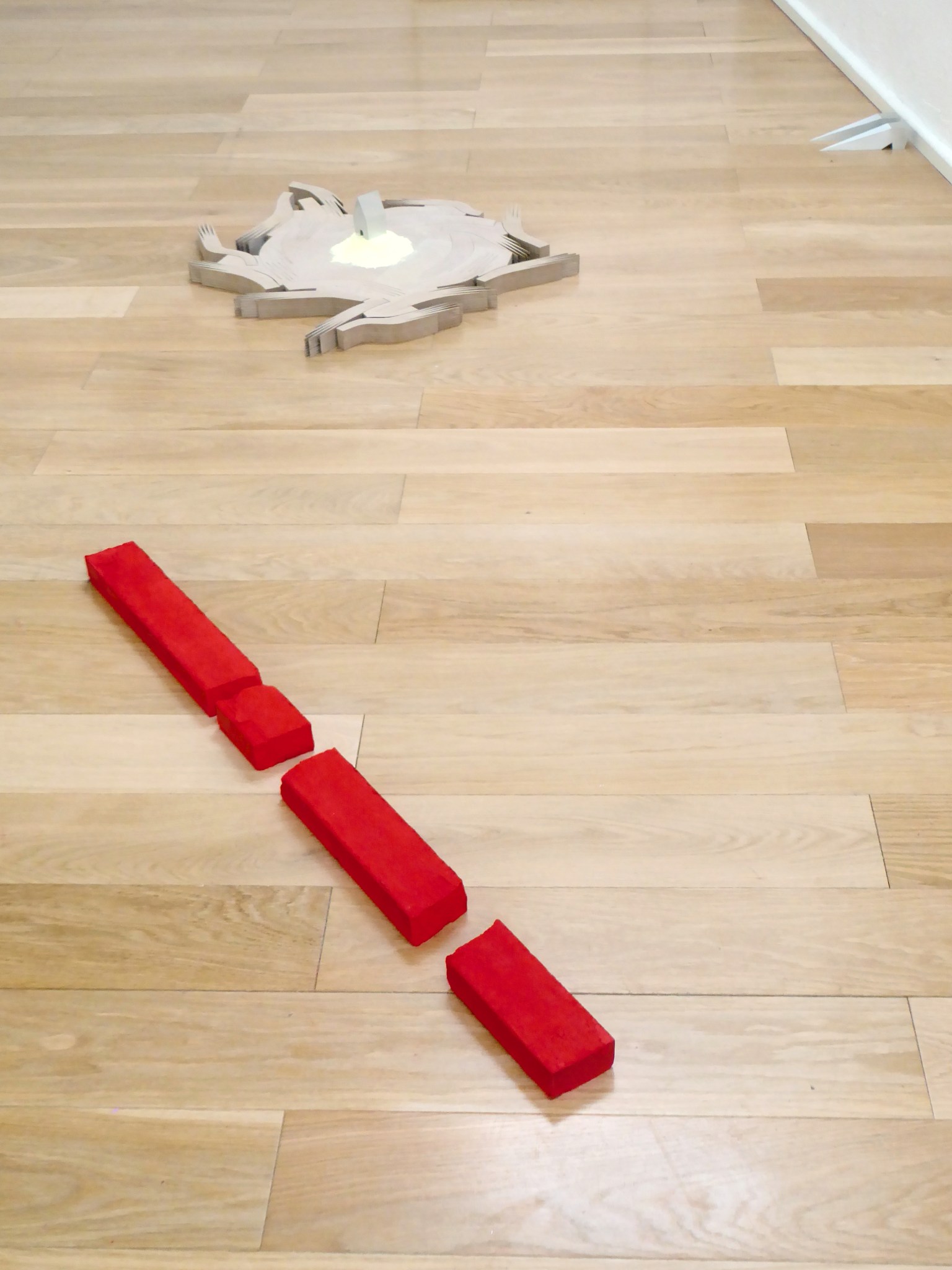
Foreground: Andrea Zabric, Pigment Sculpture 21110, 2020, 5 kg cadmium red pressed pigment, size variable
Background: Lukas Hoffmann, Untitled, 2020, MDF, Sulphur, Aluminium, 80 x 70 x 20 cm


P1030984
5 Year GiG, installation view, 2020


P1030972
5 Year GiG, installation view, 2020


P1030983
5 Year GiG, installation view, 2020
Foreground: Maria VMier, o.T., 2020 stained wood and marbles, 140 x 50 x 50 cm and Lukas Hoffmann, Untitled, 2020, MDF, 15 x 2,5 x 4 cm


P1030980
5 Year GiG, installation view, 2020
Foreground: Kathrin Partelli, Aus Tagundnachtgleiche, 2018, Gummi, Porenbeton, Ziegelstein, 55 x 65 x 95 cm
Background: Michael Lukas, Frame, 2013, Mixed technique on wood, 46 x 32 x 4 cm


P1030985
5 Year GiG, installation view, 2020
Foreground: Kathrin Partelli, Aus Tagundnachtgleiche, 2018, Gummi, Porenbeton, Ziegelstein, 55 x 65 x 95 cm
Background: Susanne Wagner, Conchita, 2020, Gefärbter Gips, 120 x 40 x 10 cm and Tim Bennett, untitled (o-garden I) gipskartonrelief, akrylfarbe, 85 x 70 cm


5 Years

Tim Bennett, Jenny Dunseath, Jonah Gebka, Andrea Hanak, Jane Hayes-Greenwood, Hannes Heinrich, Melina Hennicker, David Henrichs, Stefanie Hofer, Lukas Hoffmann, Lou Jaworski, Steffen Kern, Stefan Lenhart, Jo Love, Michael Lukas, Robin Mason, Kathrin Partelli, Rebecca Partridge, Plastique Fantastique, Berthold Reiss, Miriam Salamander,  Michael Schmidt, Maria Thurn und Taxis, Stefanie Ullmann, Maria VMier, Susanne Wagner, Youjin Yi, Andrea Zabric, Janka Zöller.

23.07 – 19.09.2020

71285180-985E-477D-B87A-CEE20FBADEF6

Image: Hannes Heinrich

elements

Lukas Hoffmann, Andrea Zabric

16.12.2018 – 11.01.2019


fullsizeoutput_820elements, 2018, installation view


fullsizeoutput_82delements, 2018, installation view


fullsizeoutput_823Andrea Zabric, Pigment sculptures (Berlin red and Naples Yellow)  2018, pigment, dimensions variable


fullsizeoutput_835Andrea Zabric, Pigment sculptures (Berlin red and Naples Yellow)  2018, pigment, dimensions variable
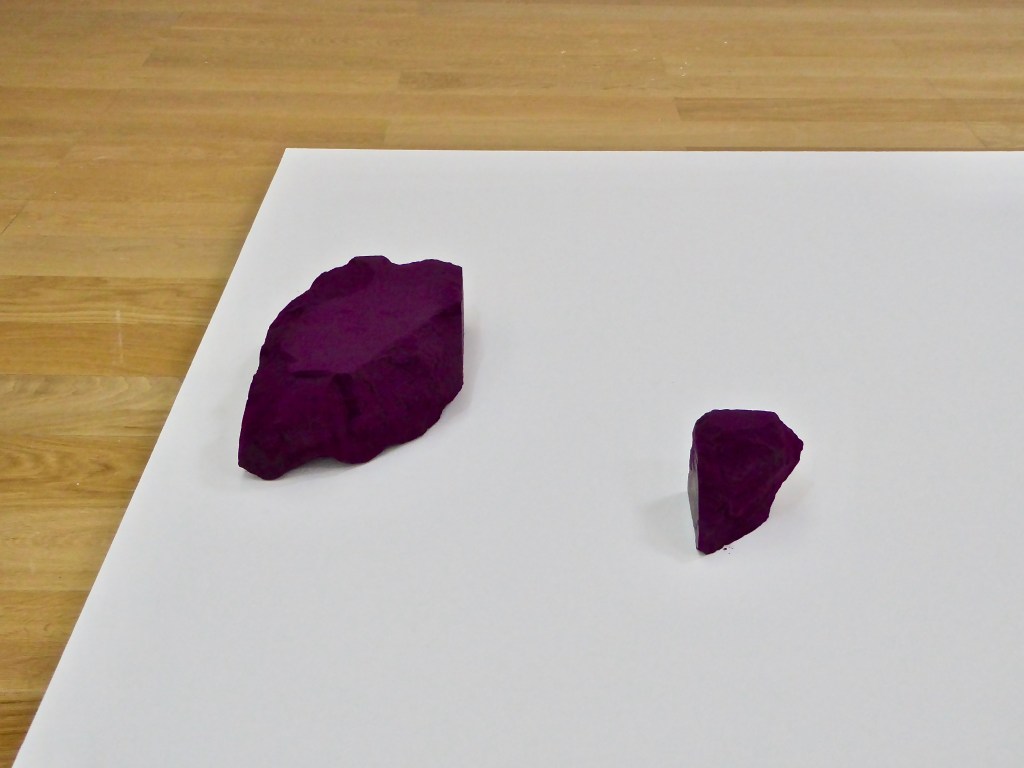
 

fullsizeoutput_824Andrea Zabric, Pigment sculpture (Berlin red)  2018, pigment, dimensions variable
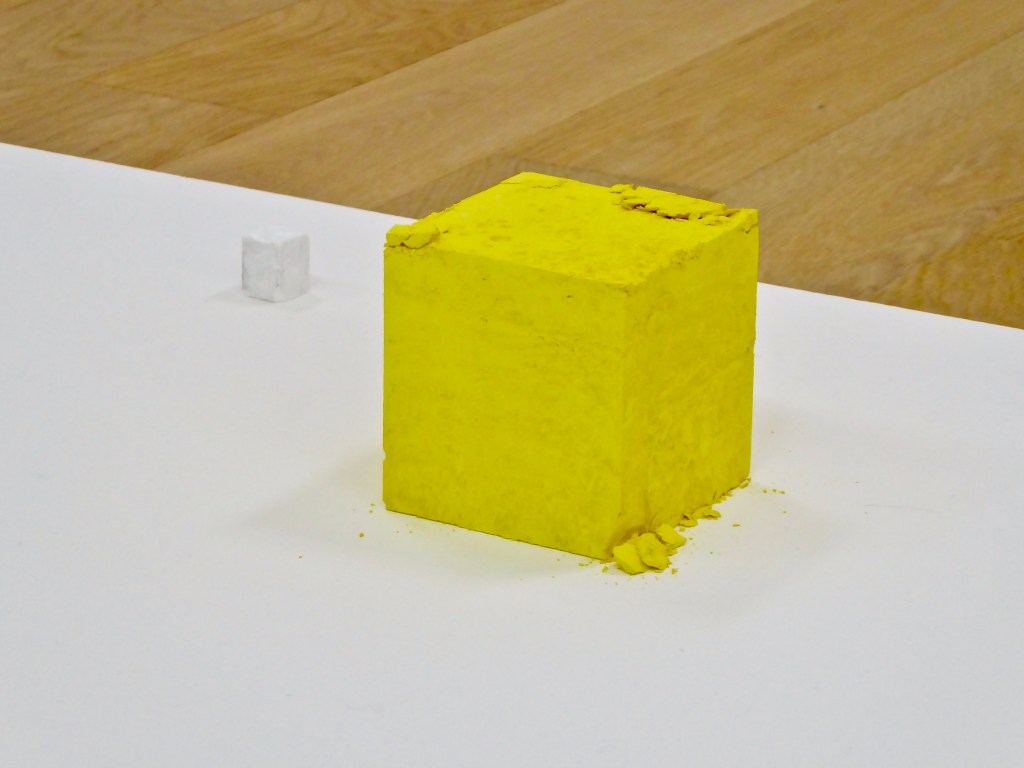
 

fullsizeoutput_825Andrea Zabric, Pigment sculptures (Naples yellow, 43870,)  2018, pigment, 12 x 10 x 10 cm


fullsizeoutput_827elements, 2018, installation view


fullsizeoutput_828Lukas Hoffmann, o. T., 2018, Series of 4, each in edition of 10, Stainless steel, dimensions variable


fullsizeoutput_830Lukas Hoffmann, o. T. and o. T, 2018, stainless steel, various textiles, pvc, plastic fittings, steel, aluminium bronze, German silver, 150 x 3 x 3 cm and 50 x 15 x 3 cm


fullsizeoutput_82aLukas Hoffman, o. T., 2018, various textiles, pvc, plastic fittings, steel, aluminium bronze, german silver, 150 x 3 x 3 cm
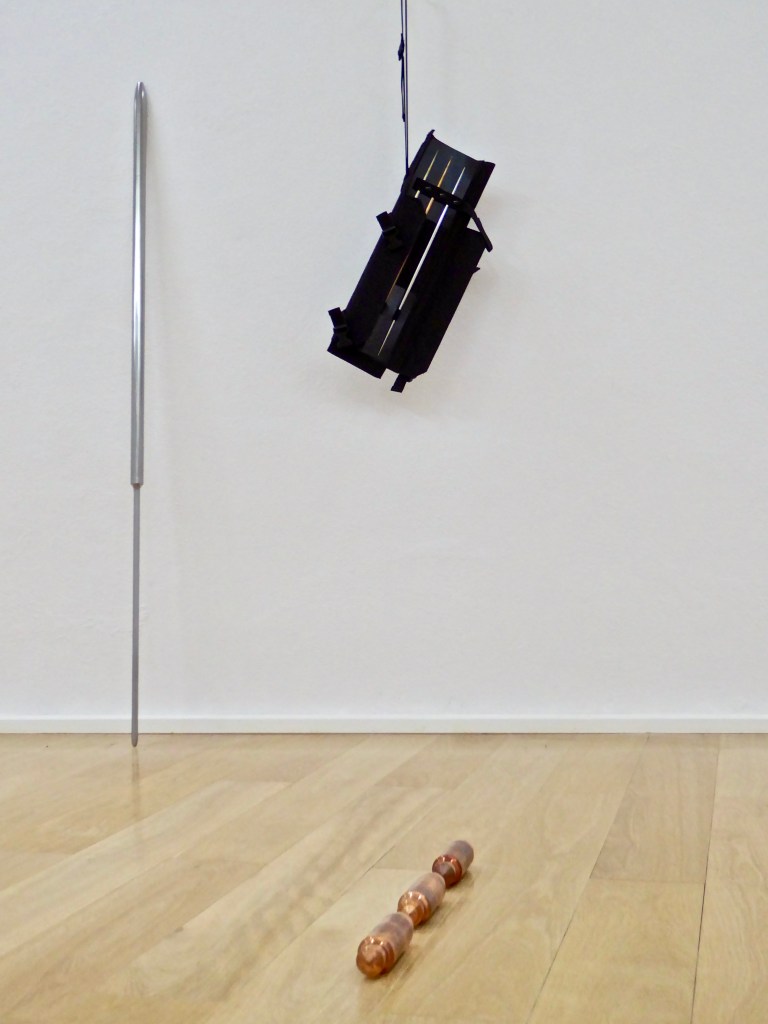
 

fullsizeoutput_832Lukas Hoffmann in elements, 2018, installation view
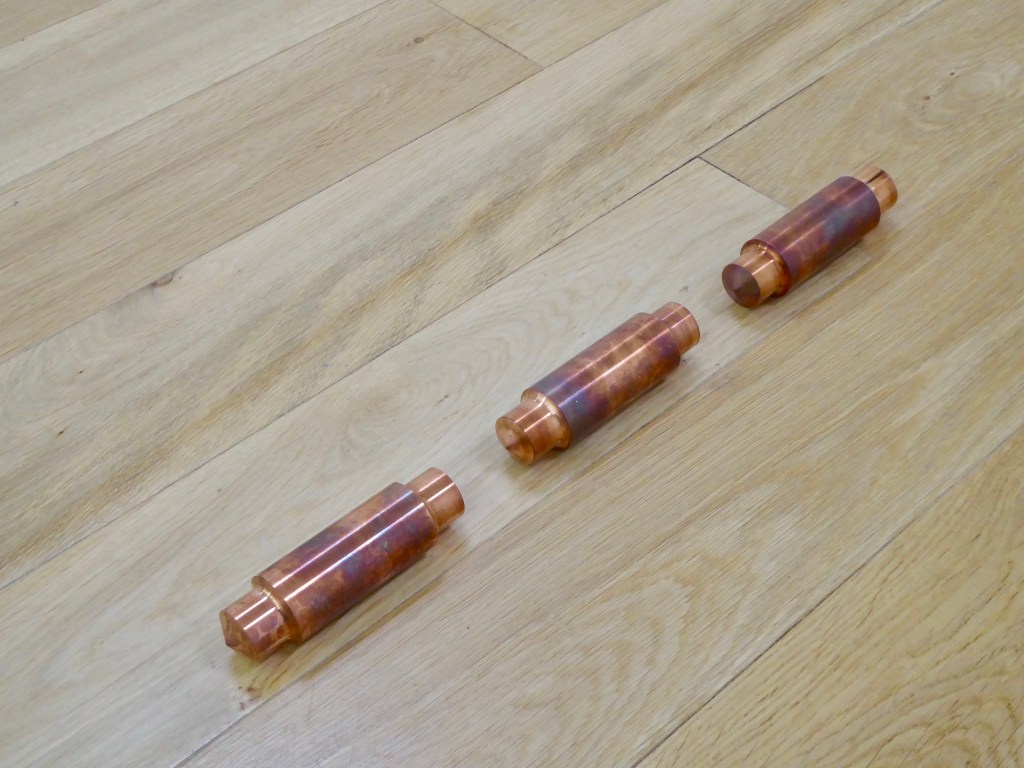
 

fullsizeoutput_82cLukas Hoffmann, o. T., 2018, bronze, 15 x 4 x 4 cm each
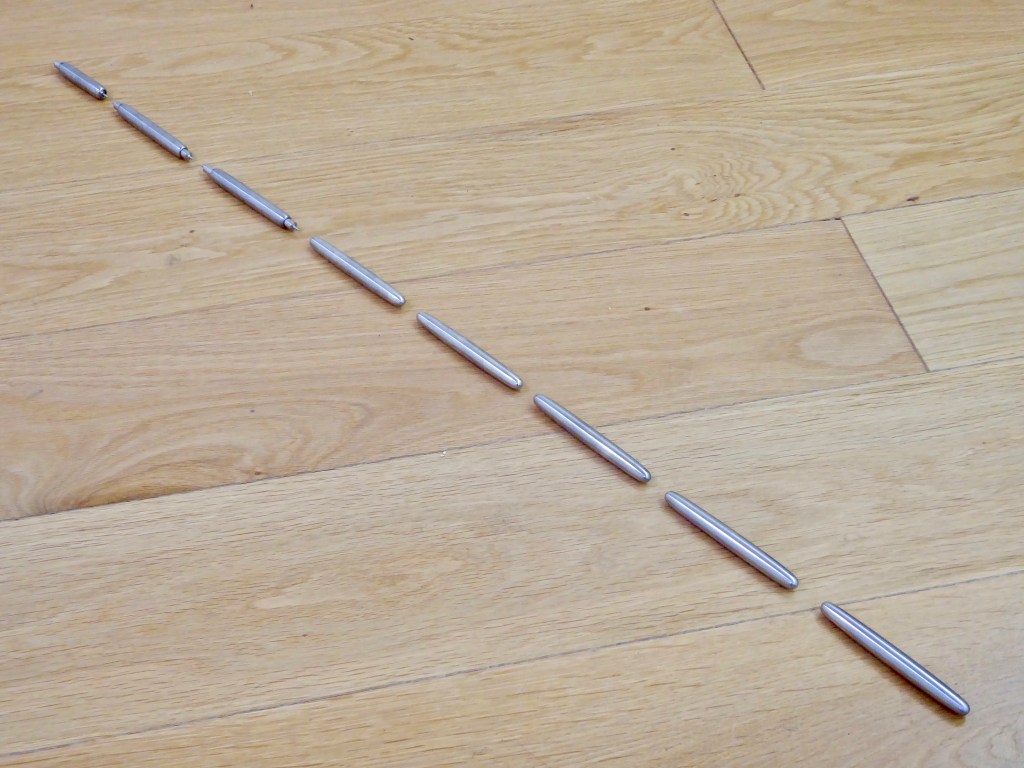
 

fullsizeoutput_82eLukas Hoffmann, o. T., 2018, series of 5, stainless steel, 9 x 1 cm each
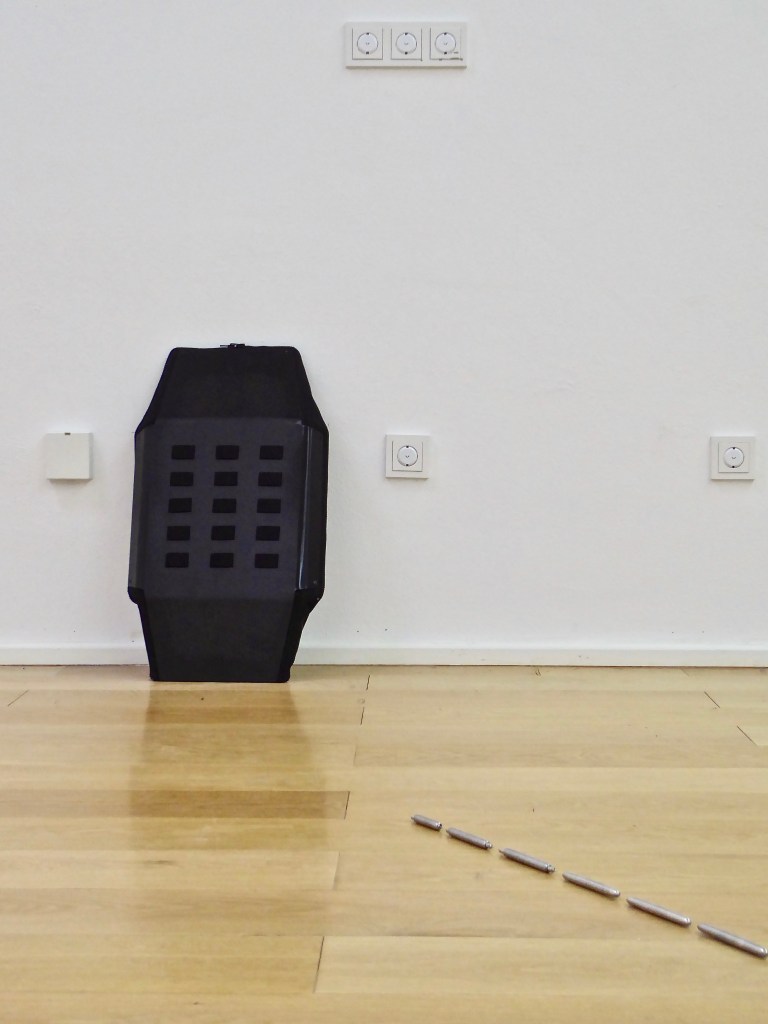
 

fullsizeoutput_82fLukas Hoffmann, o. T. and o. T., 2018, stainless steel and various textiles, pvc, 9 x 1 cm each and 65 x 35 x 8 cm
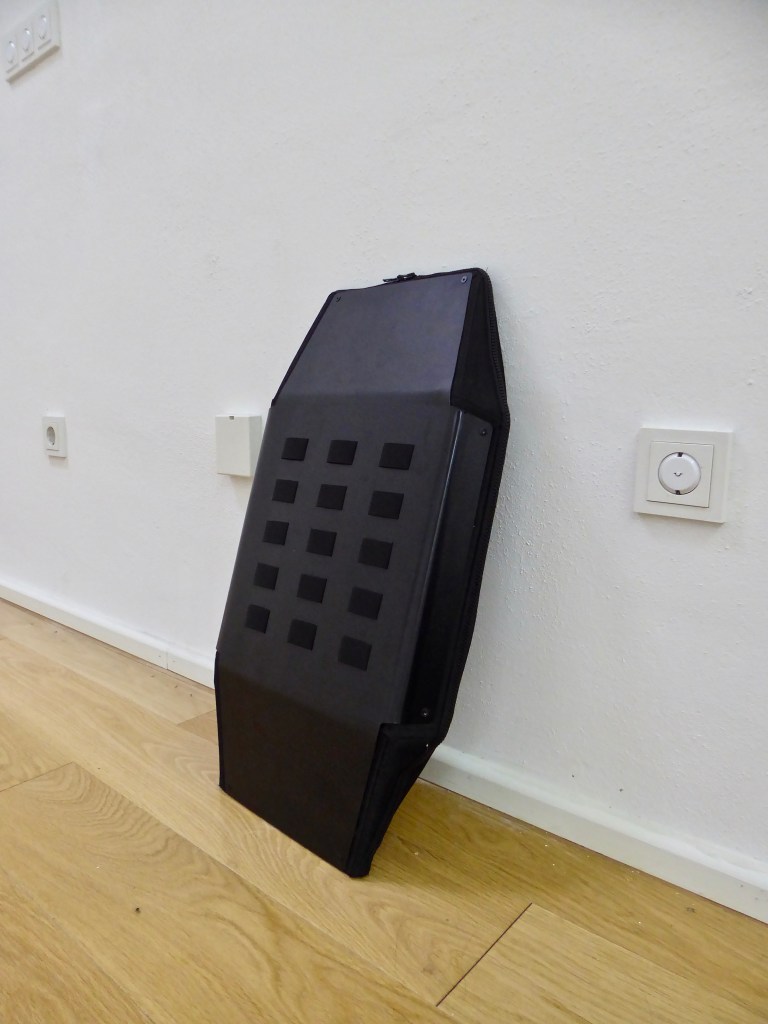
 

fullsizeoutput_833Lukas Hoffmann, o. T., 2018, various textiles, pvc, 65 x 35 x 8 cm

 

The show elements, featuring new work by Lukas Hoffmann and Andrea Zabric, is GiG Munich’s first collaboration with Klasse Pia Fries, Akademie der bildene Kunst, München. Klasse Pia Fries is well known for its focus on abstract painting, especially in its material aspect. Both Andrea Zabric, a recent graduate (2018), and Lukas Hoffmann, a student at the class, incorporate material elements in their practice, but in a strongly conceptual rather than a painterly fashion.

Carbon, aluminium, iron, copper – basic chemical elements are at play in the work, often in their purest form. These instead of being manipulated by the artist’s hand are left in their natural alien state. Matter is subject to its own internal logic not the artist’s touch, and the method of production incorporates industrial, mechanical, and printing processes. While this is obviously human in origin, technology as much a product of man as any painting, when combined with the emphasis on materiality, lends their investigations a scientific rather than artistic quality. As an attempt to think the world outside of the personal relationship we have with it, the work relates to speculative realist concerns currently present in art and philosophy. It shares with speculative realism a taste for the dogmatic, the formal and the mathematical.  

Zabric’s signature pigment sculptures, quite literally, take centre stage. Painting becomes reduced to its primary components: space, ground and pigment. The pigment is not mixed with medium and spread across the ground in its customary way, but is compressed at high pressure to form unusually perfect cuboid shapes. This gives her colours an uncanny density, a new found depth that recalls the violence of its making. For GiG Munich Zabric has produced three new pieces in pigments she had not used before. The work is also more experimental than previously, in that she allows the pieces to crumble, thus exposing their innate vulnerability. 

For all its implications of aggression, Hoffmann’s work is curiously invisible, scattered around the room, sometimes disguised as items of furniture.  Instead of paintings, we encounter clothes hooks, a javelin is placed against the wall ready for use. Bullets (or are they exercise bars? maybe dildos?) lie waiting on the floor. The casual method of display serves to highlight the works tactile qualities, drawing us in. In a moment of masochism, we want to touch the sharp points with our fingertip and wait for the skin to break. Yet simultaneously we feel that to do so would be an imposition, we would enter a space that its not for us, that belongs to someone else, or indeed to the work itself. Quietly, the work turns away from us and withdraws into its own realm. 

Magdalena Wisniowska 2018

elements

Lukas Hoffmann, Andrea Zabric

26.11.2018 – 18.01.2019


fullsizeoutput_76e


Vernissage: Freitag 16. November, 18 – 21 Uhr,
16 November 2018 – 18 Januar 2019
Bitte nach Vereinbarung unter contact@gig-munich.com
Finissage: Freitag 18. Januar 2019, 19 – 21 Uhr


The exhibition elements, showcasing new work by Lukas Hoffmann and Andrea Zabric is GiG Munich’s first collaboration with Klasse Pia Fries, Akademie der Bildenden Künste München.

What connects the two young, upcoming artists is a shared interest in materialism, where their version of materialism belongs more to the philosophical developments centred around Speculative Realism than to the handmade, expressive variety traditionally associated with the activity of painting. Operating at the intersection of materialism and realism, they submit to the view that the primacy afforded to matter necessarily demotes the importance of the human understanding of it. If matter is all there is, then its reality must be encountered for itself. In their quasi-scientific, quasi-magical approaches, they reject the emphasis on the multiplicity of interpretations that art borrowed from dominant modes of contemporary critical theory (post-structuralism, deconstruction, psychoanalysis) in order to pursue an almost essential, almost dogmatic, grounding of reality. With this comes a violence, whether this is manifested in the high pressure Zabric submits her pigments to, or the highly polished weapon-like quality of Hoffmann’s metal work. They show that the material world, the inhuman one, is intense, forceful, elemental.


Magdalena Wisniowska 2018