Animal Elegance

Jakob Gilg, Anka Helfertova, Julia Klemm and Jonathan Penca

9.10. – 7.11.2025

with Pracownia Portretu, Łódź, Poland
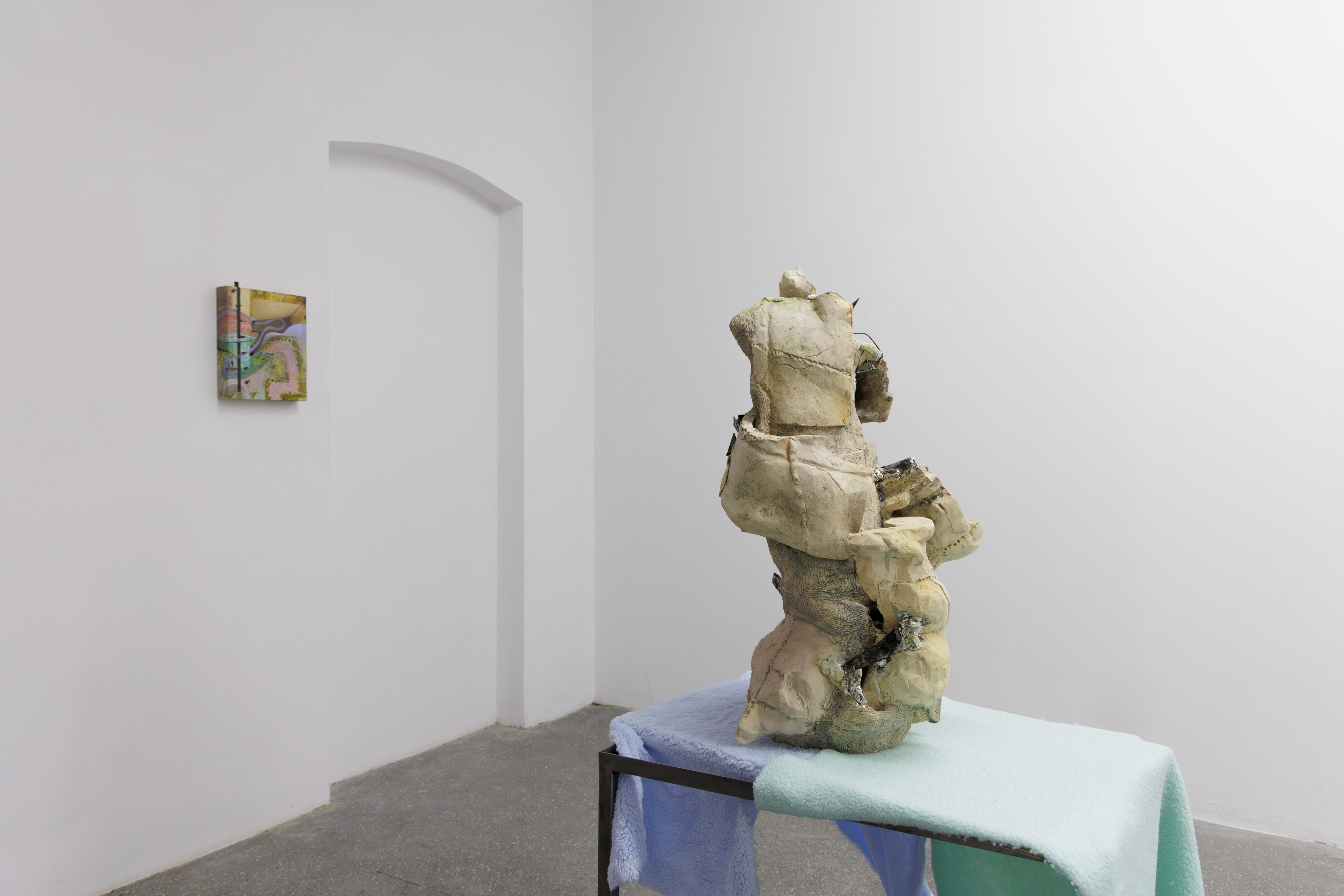
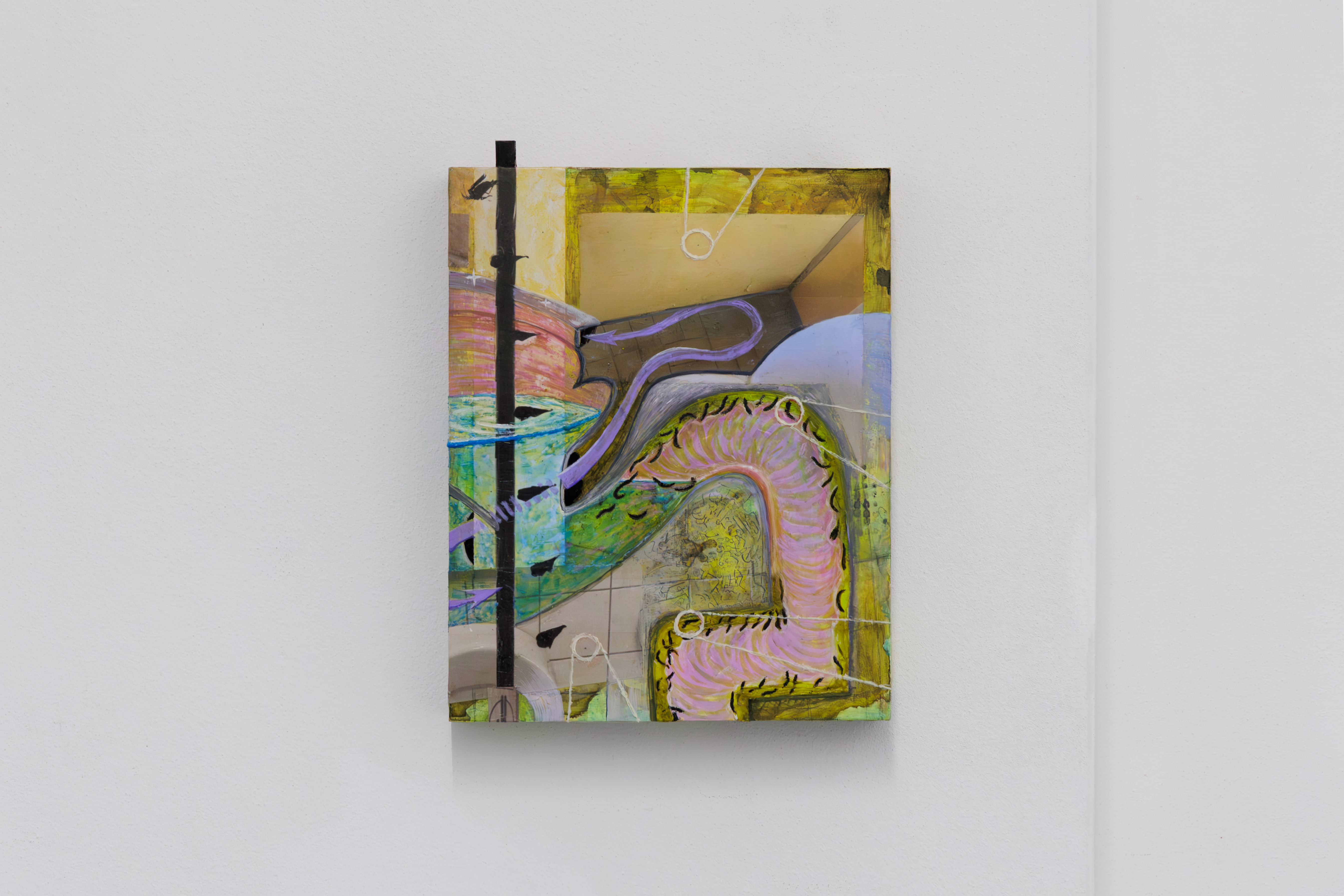
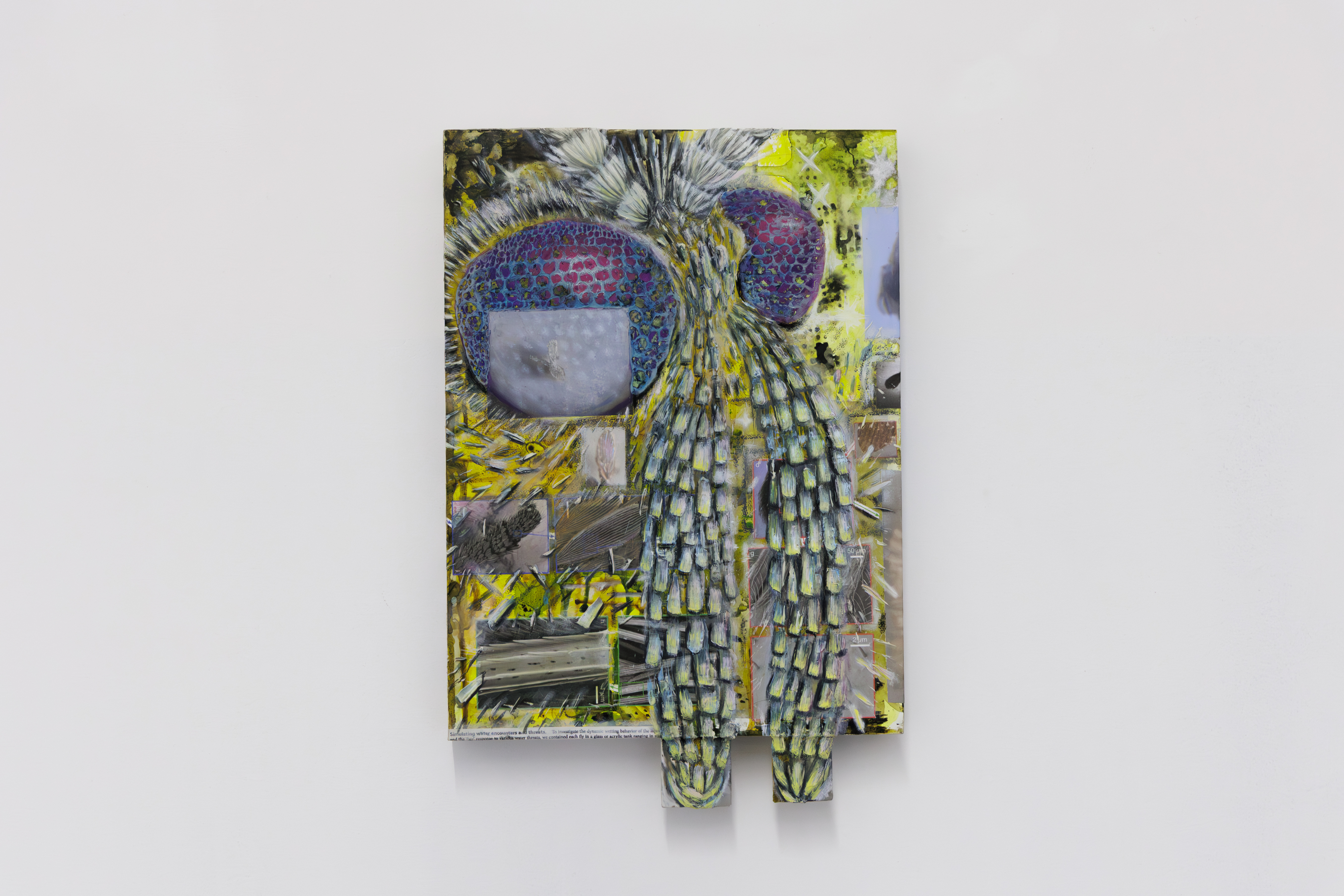
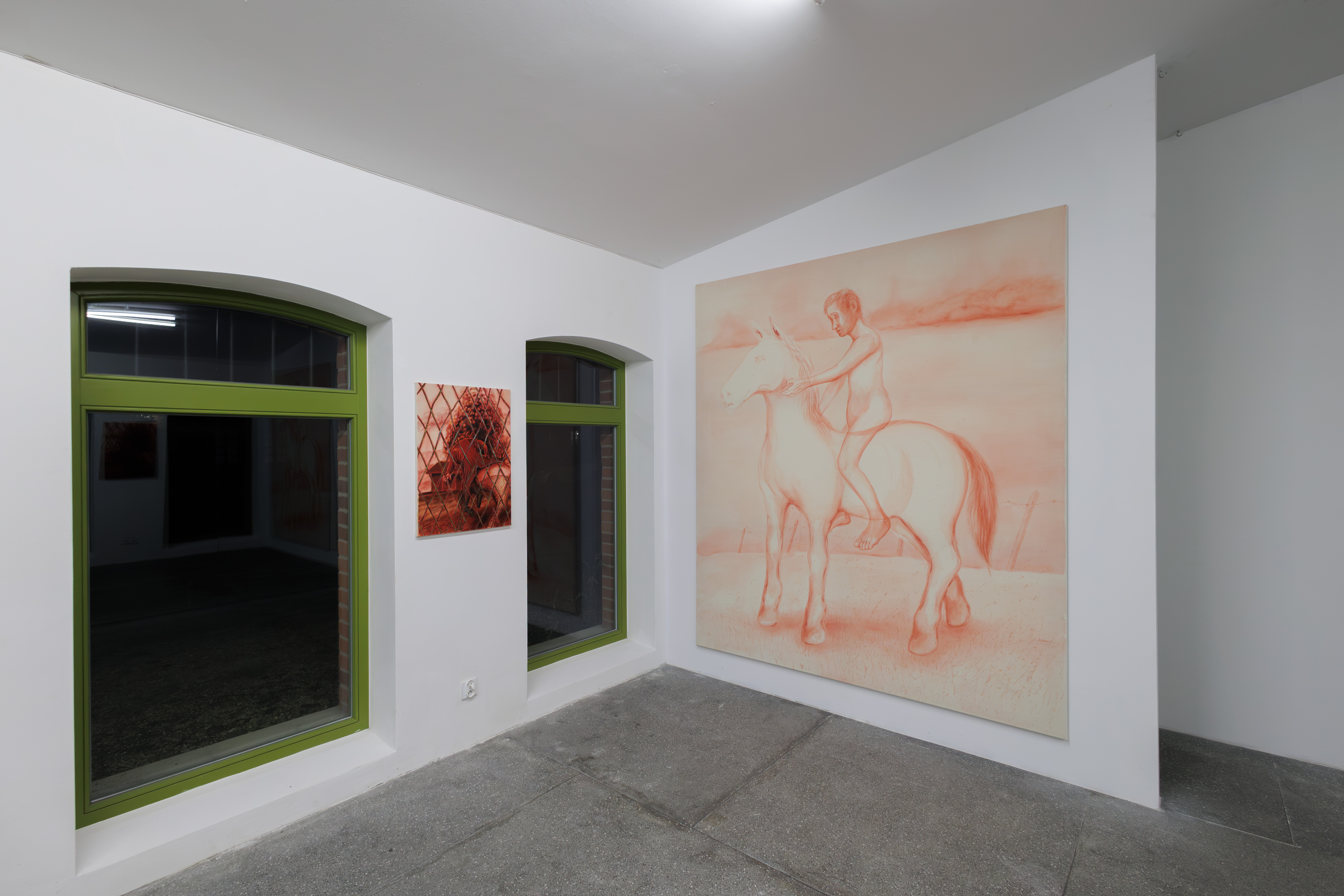
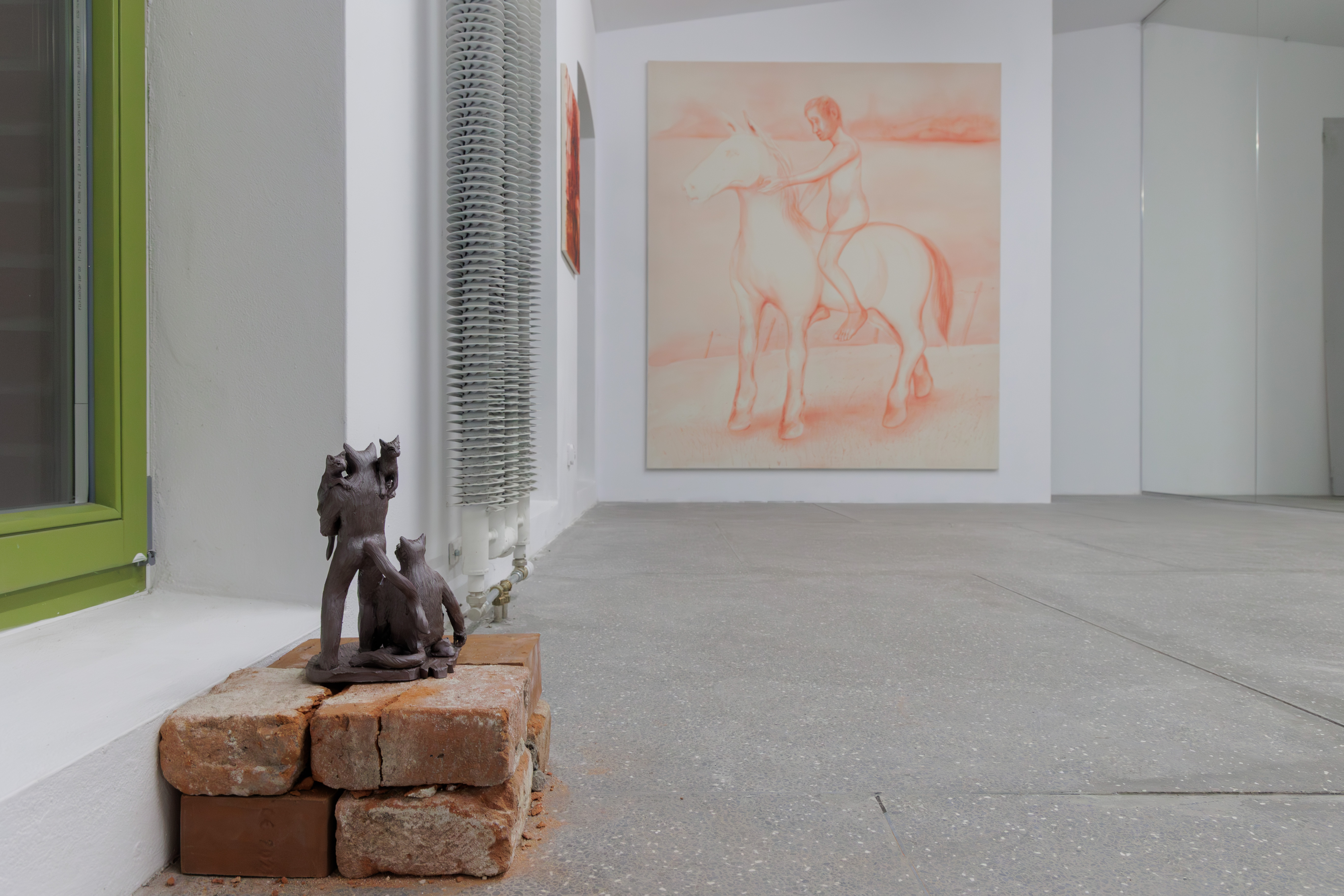
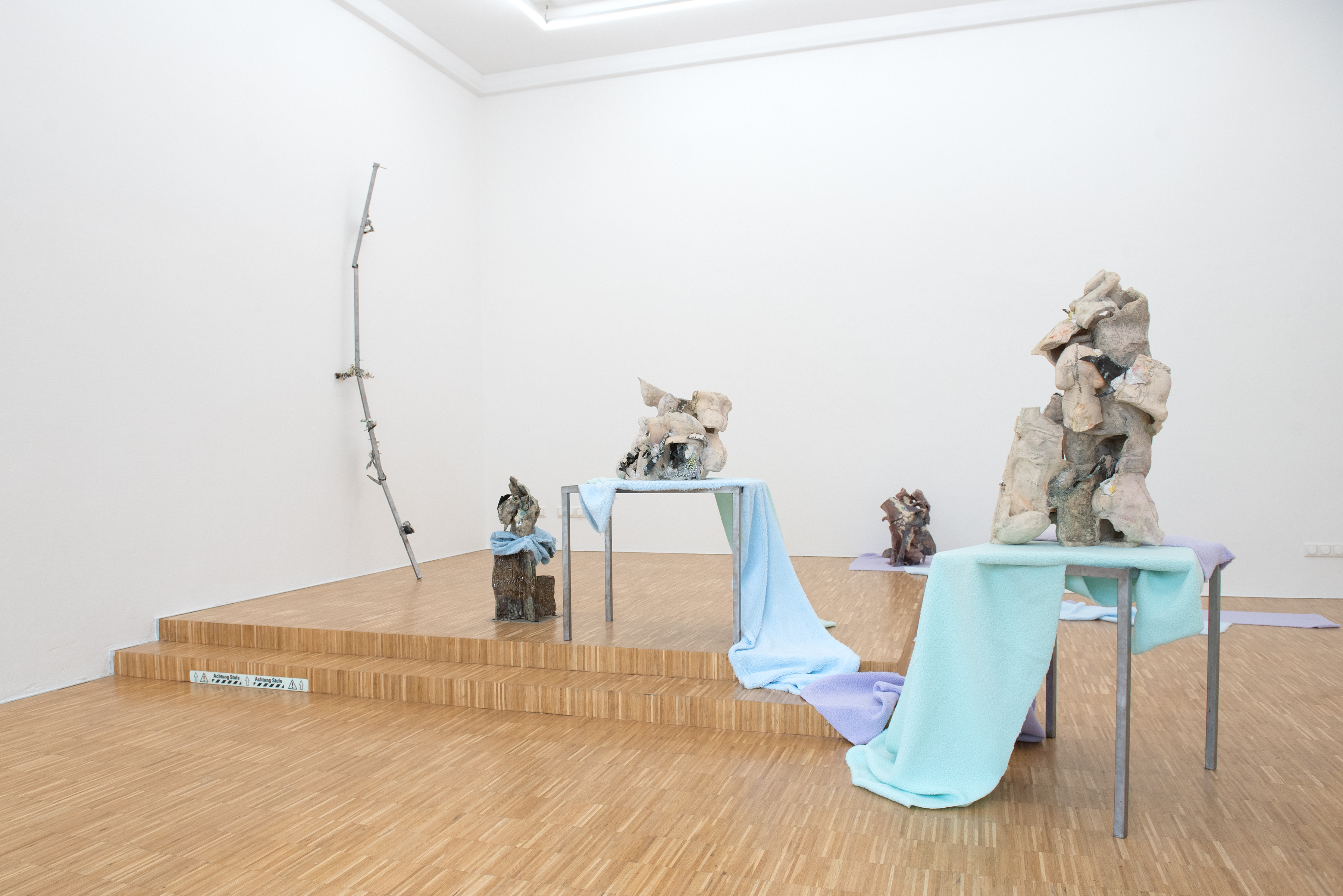
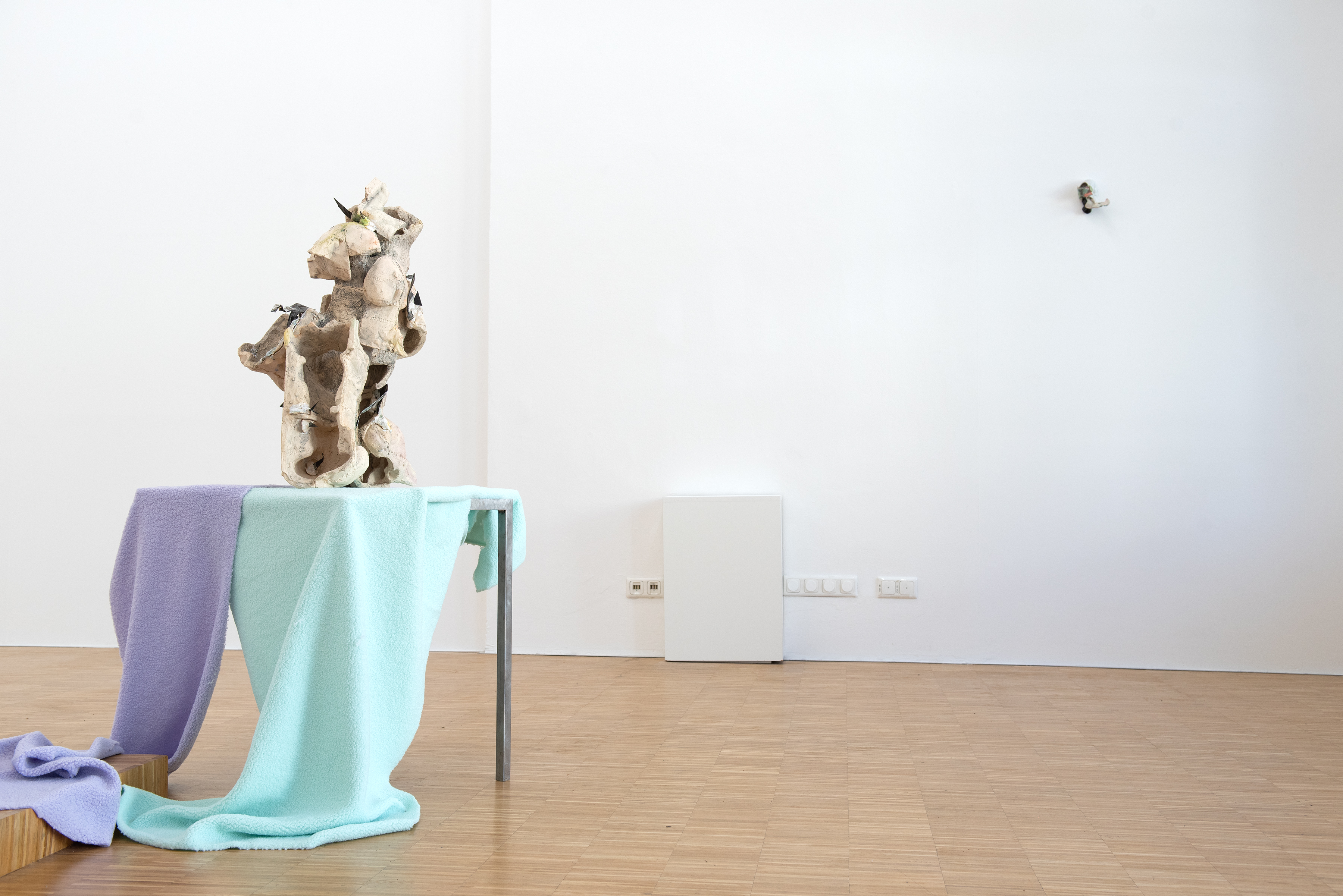
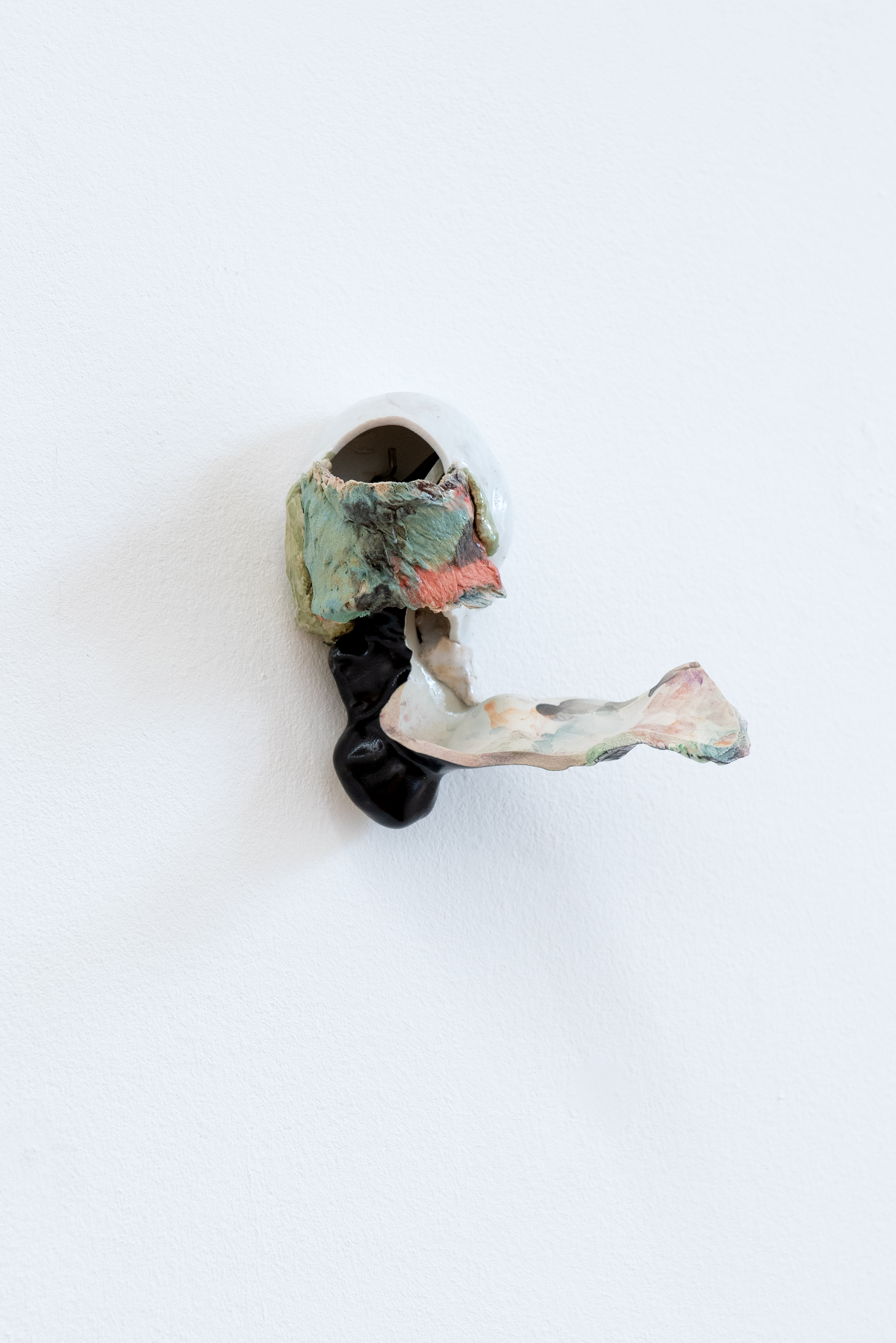
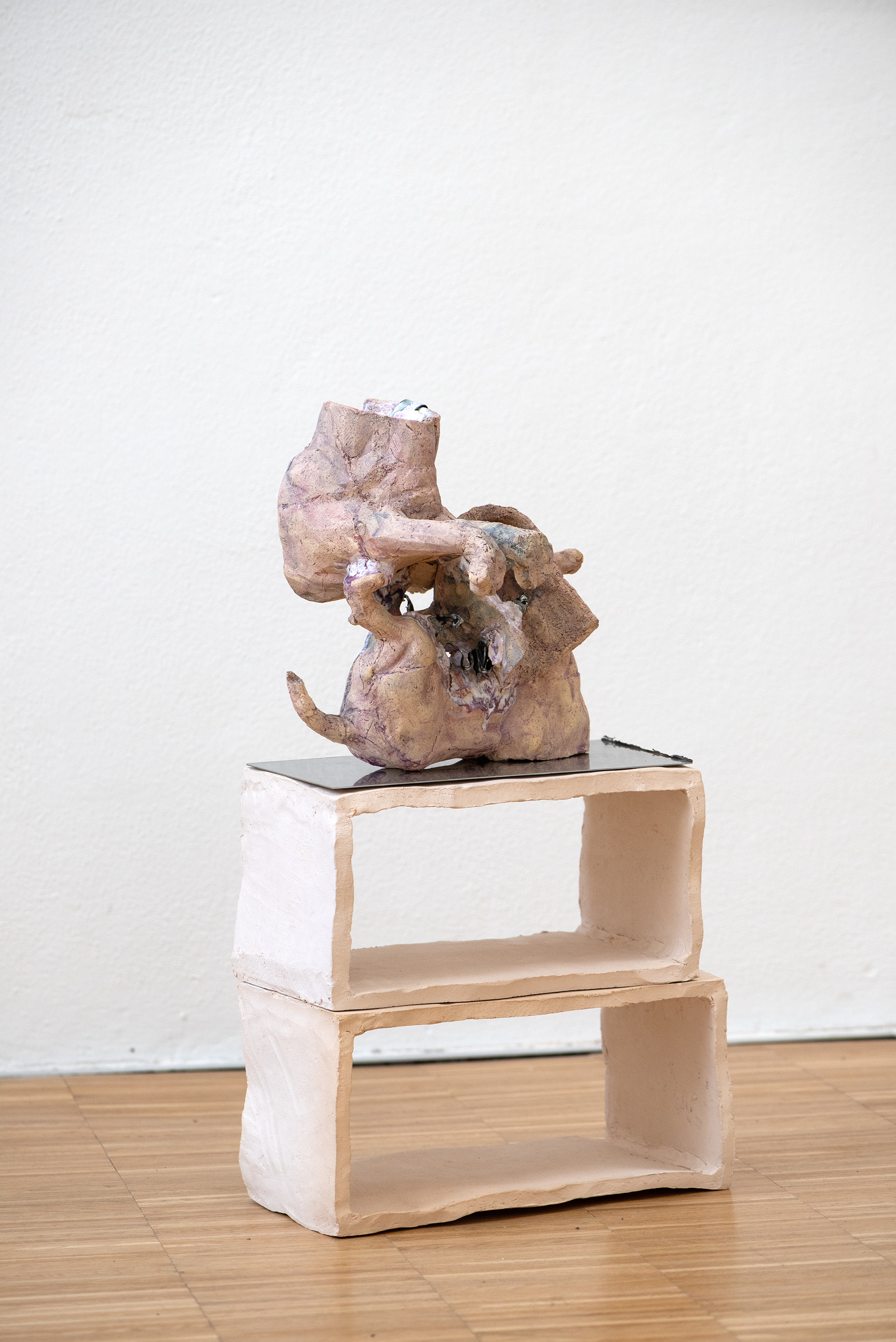
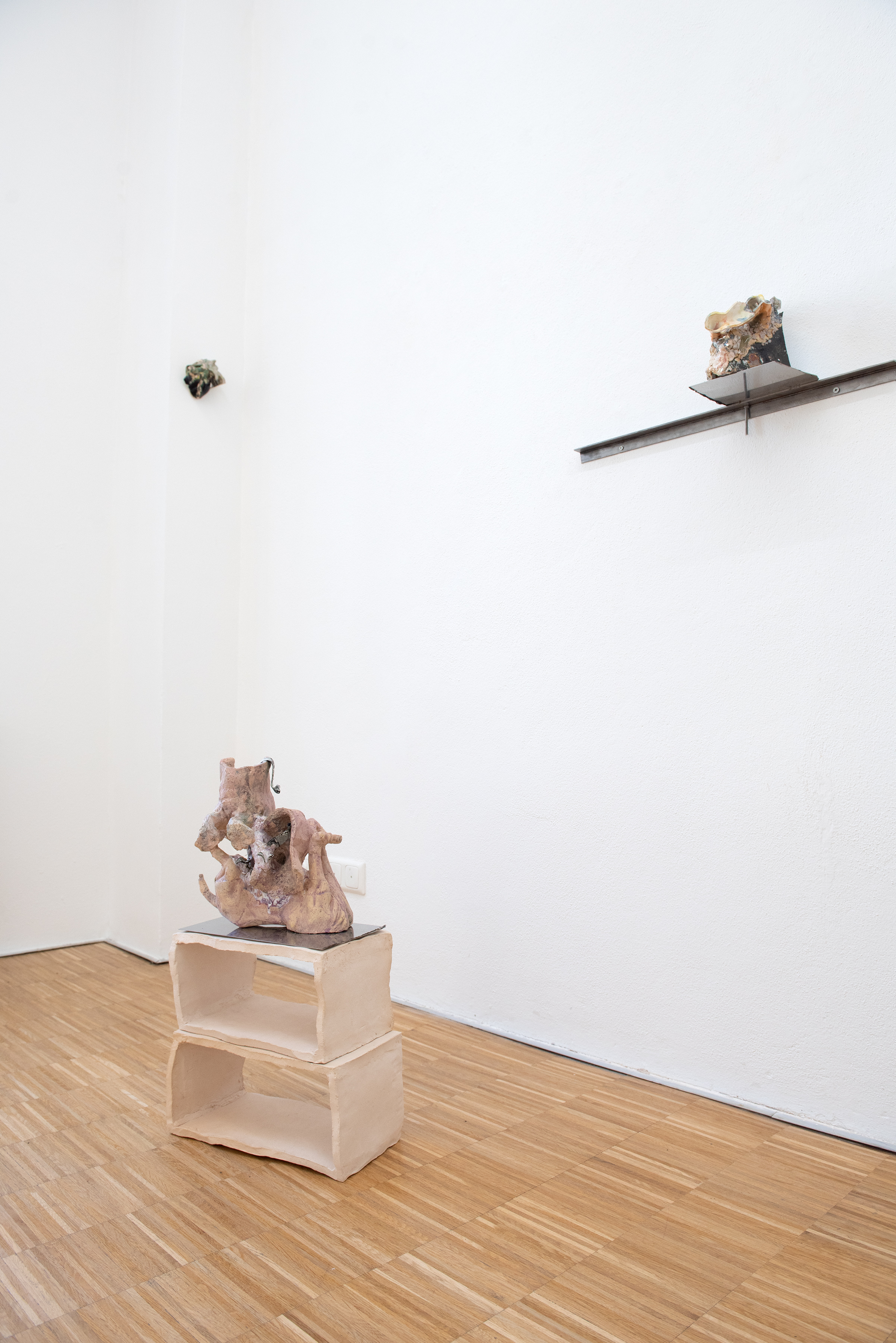
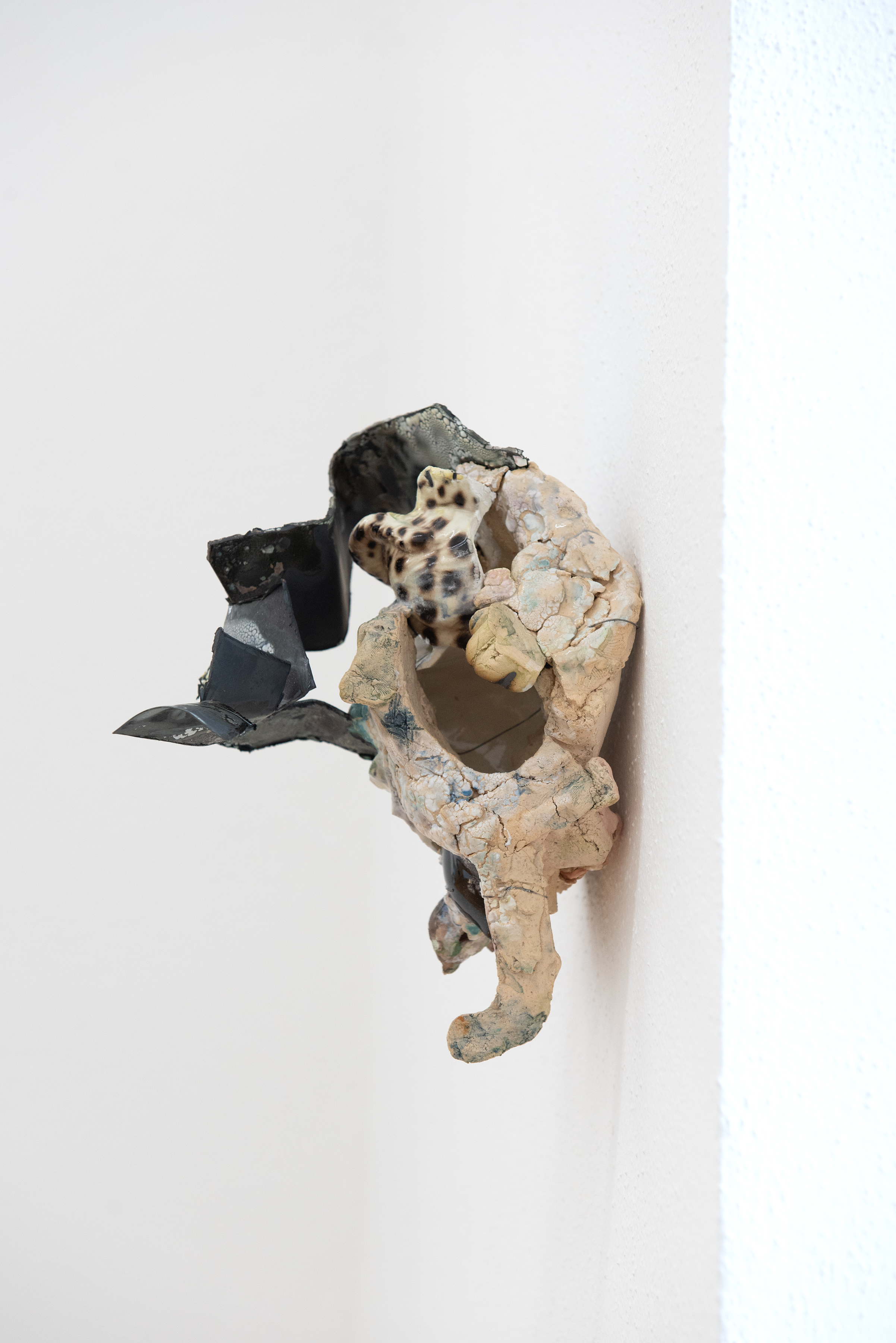
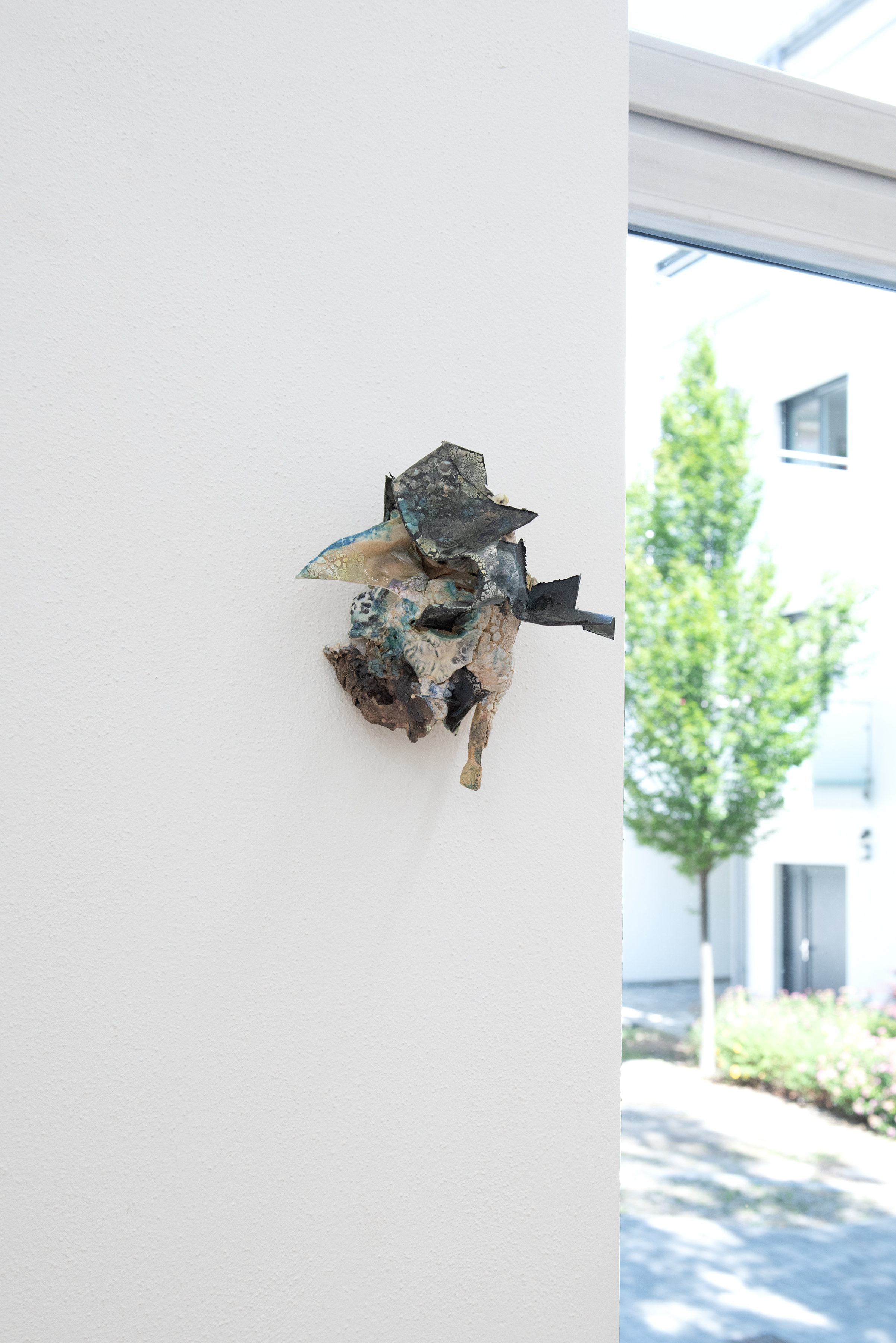
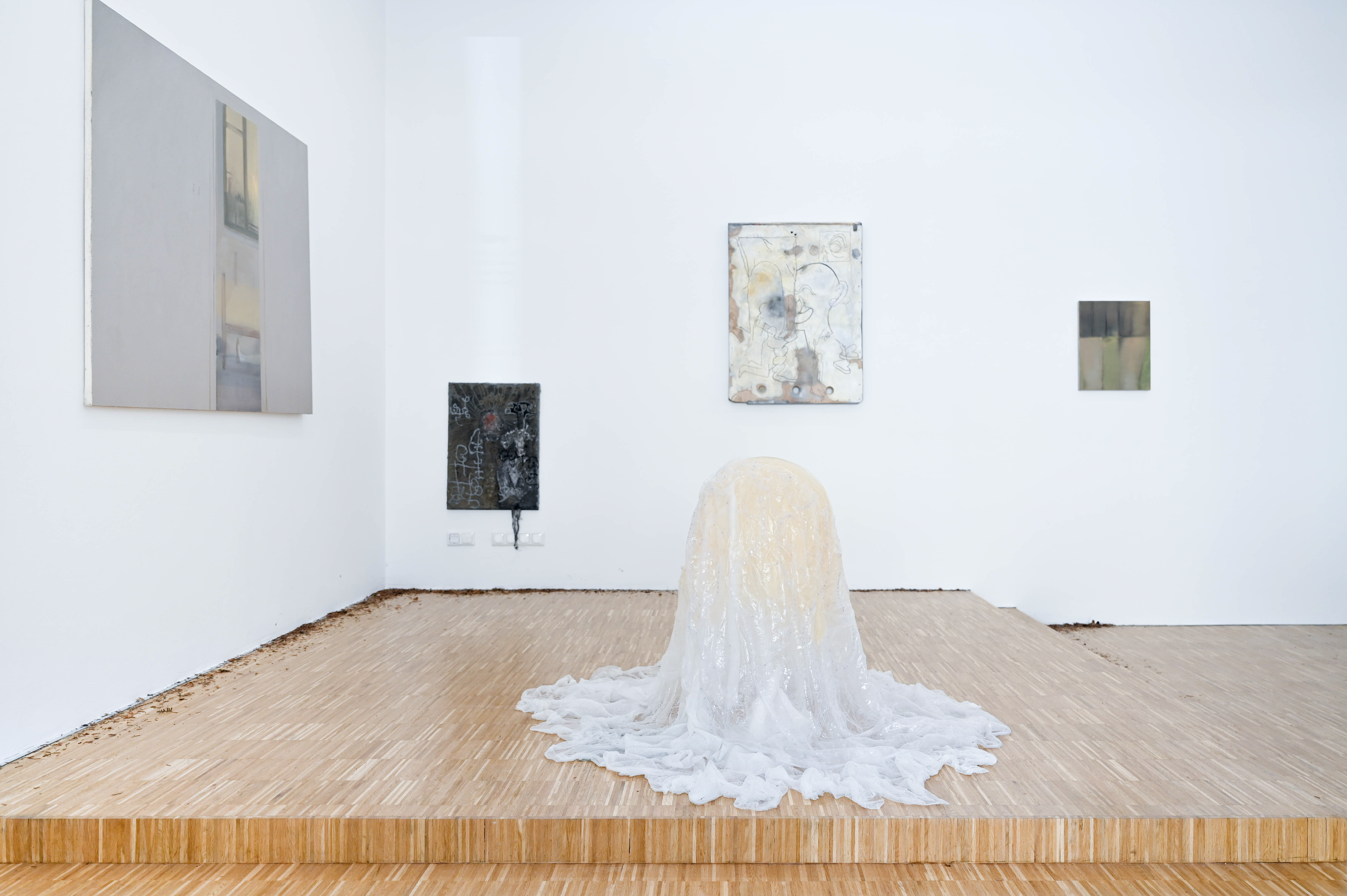
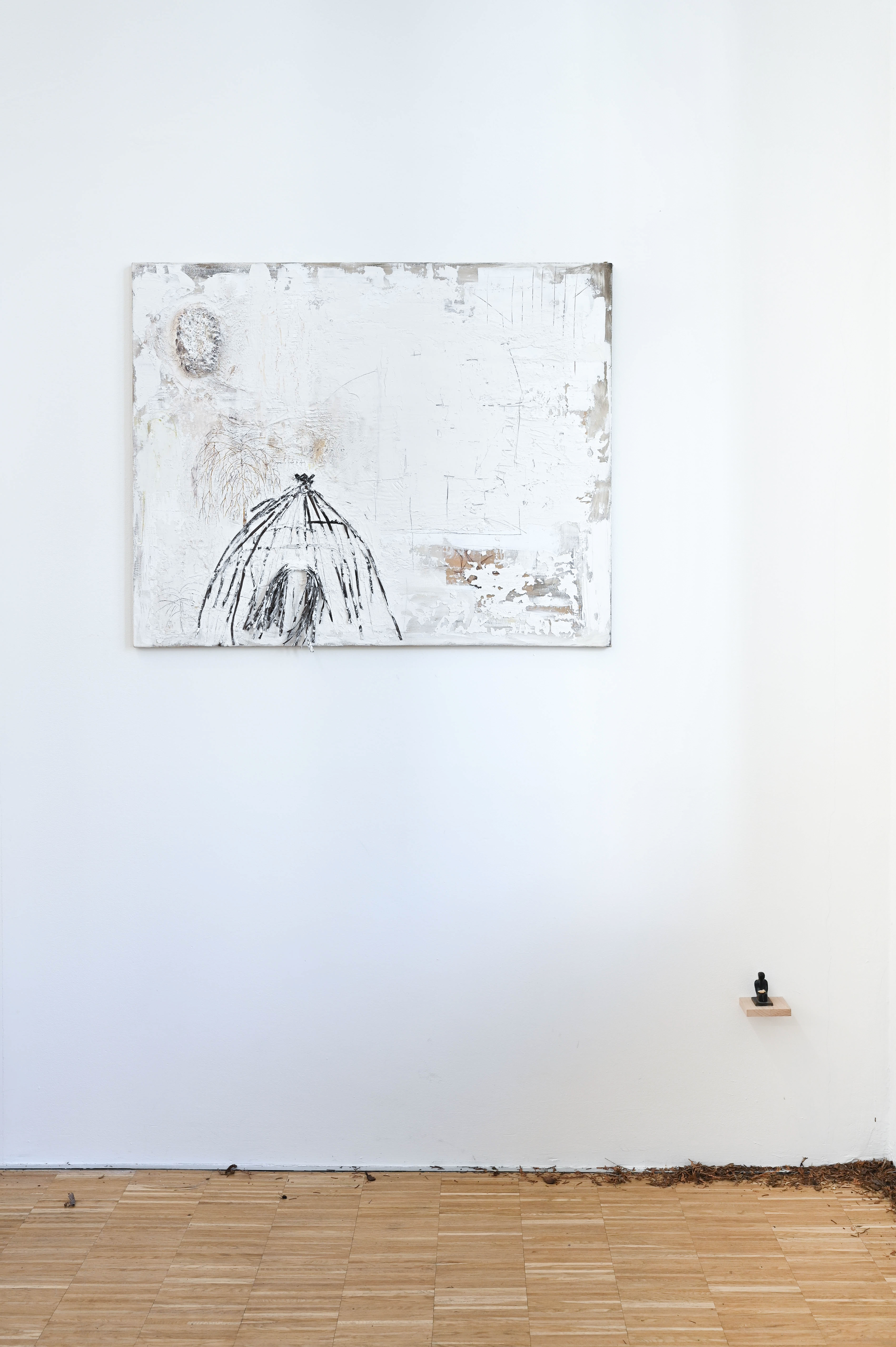
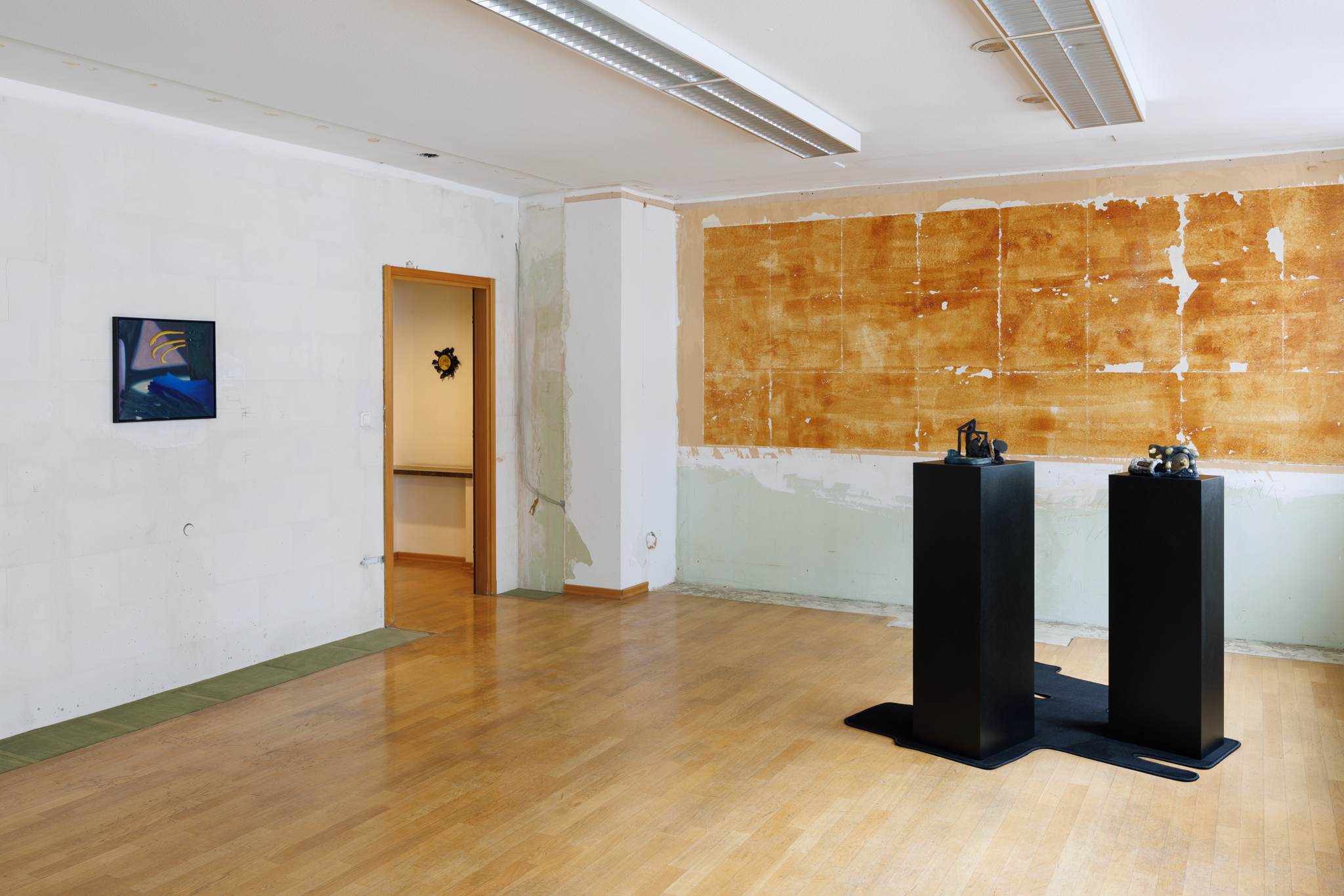
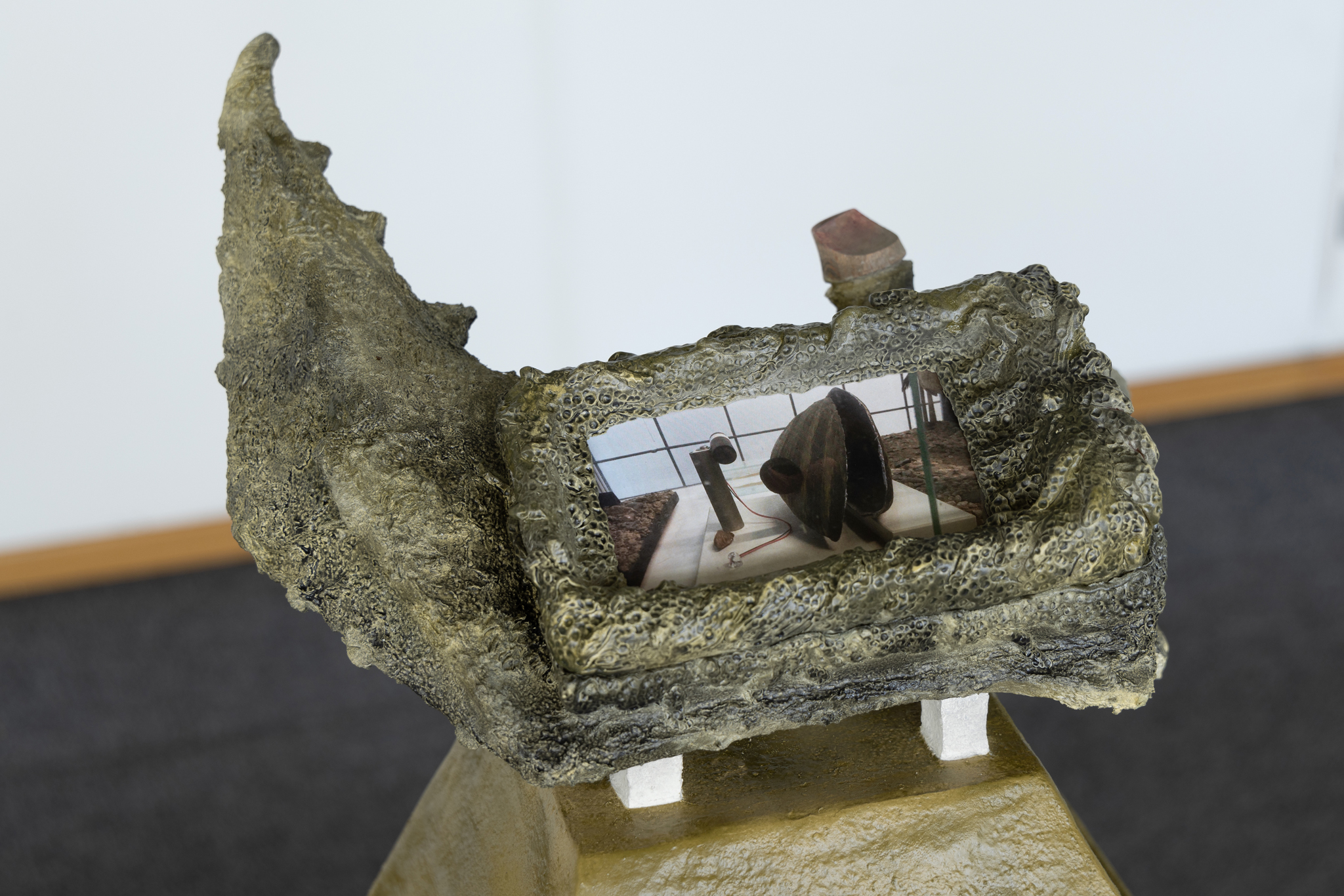
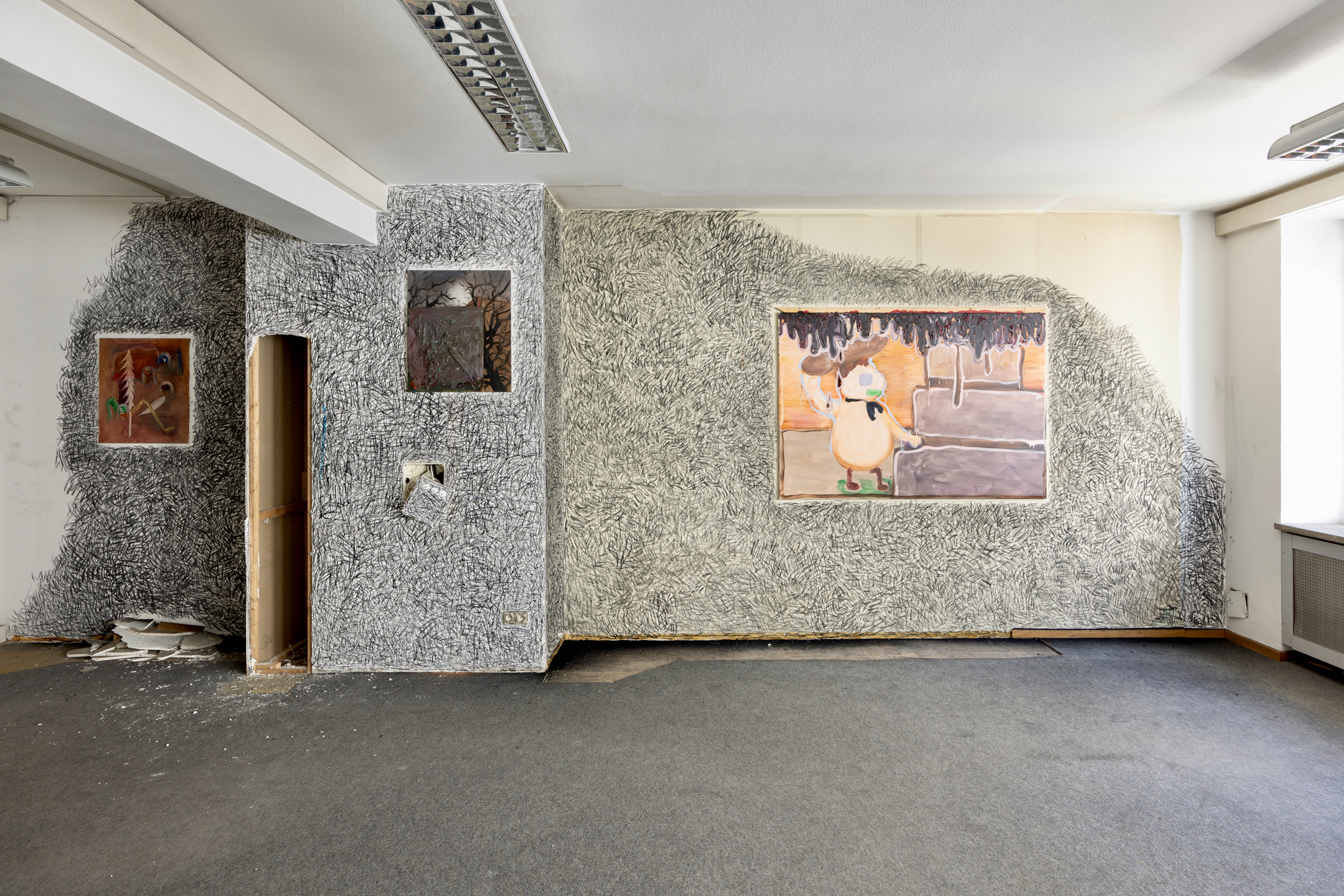
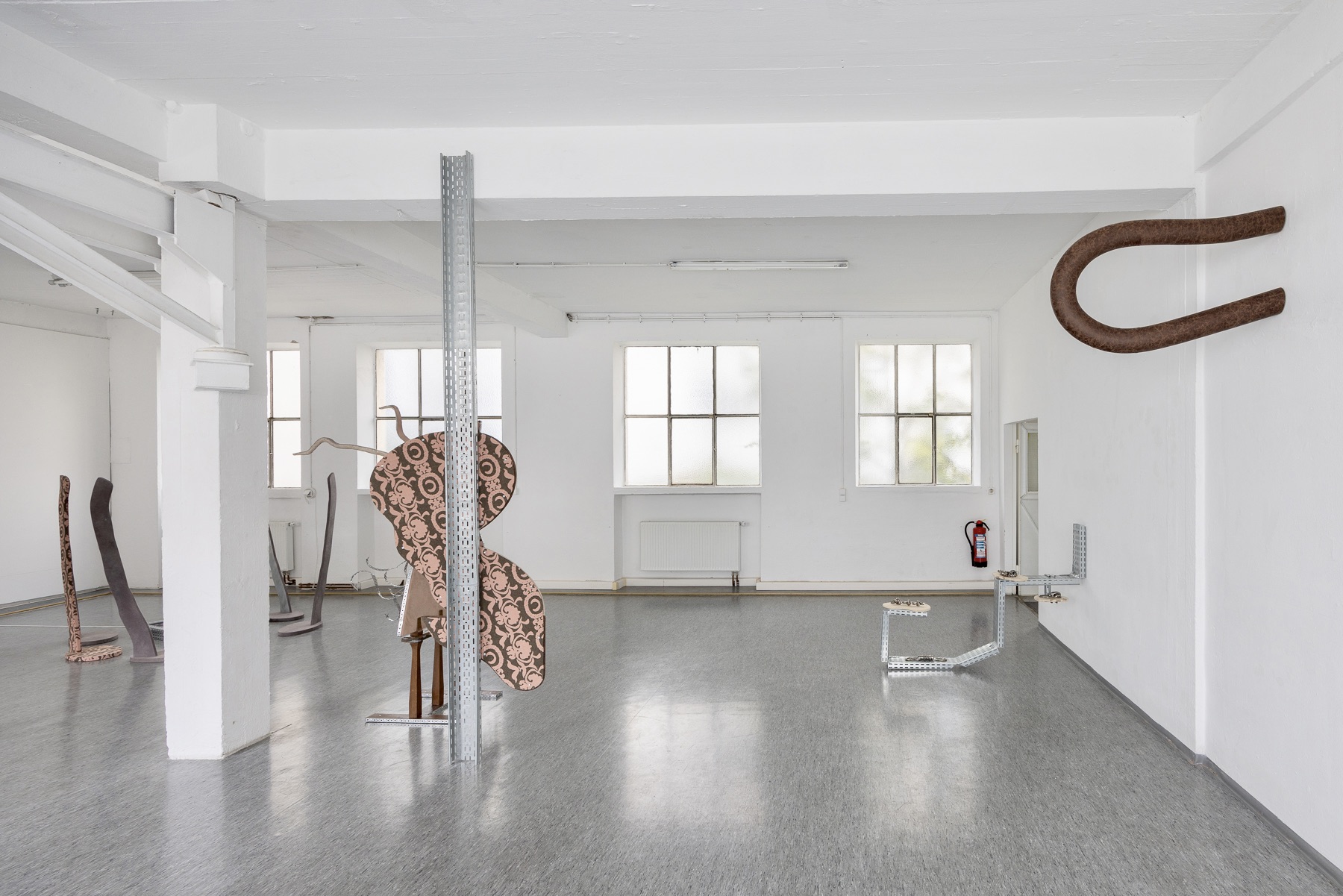
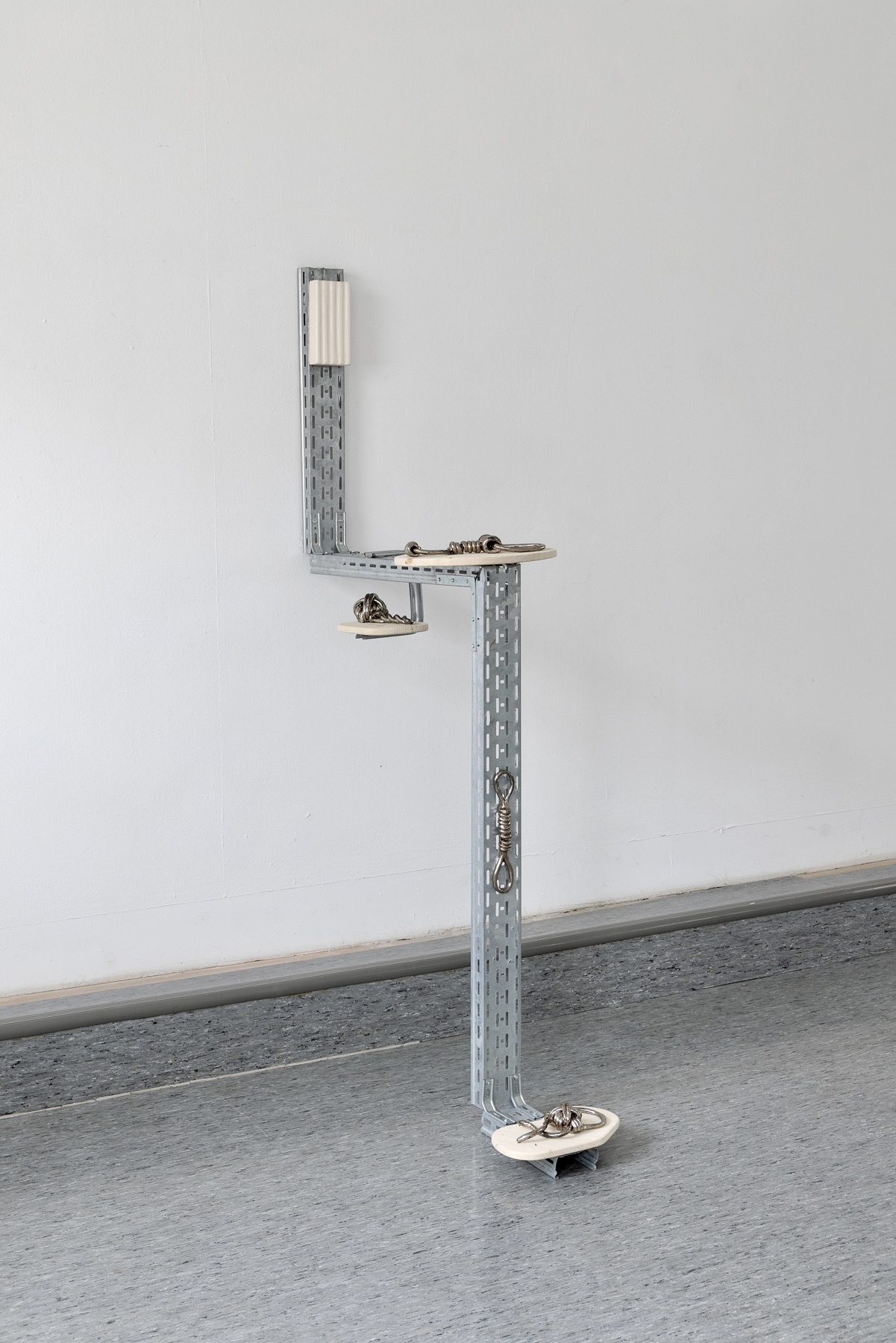
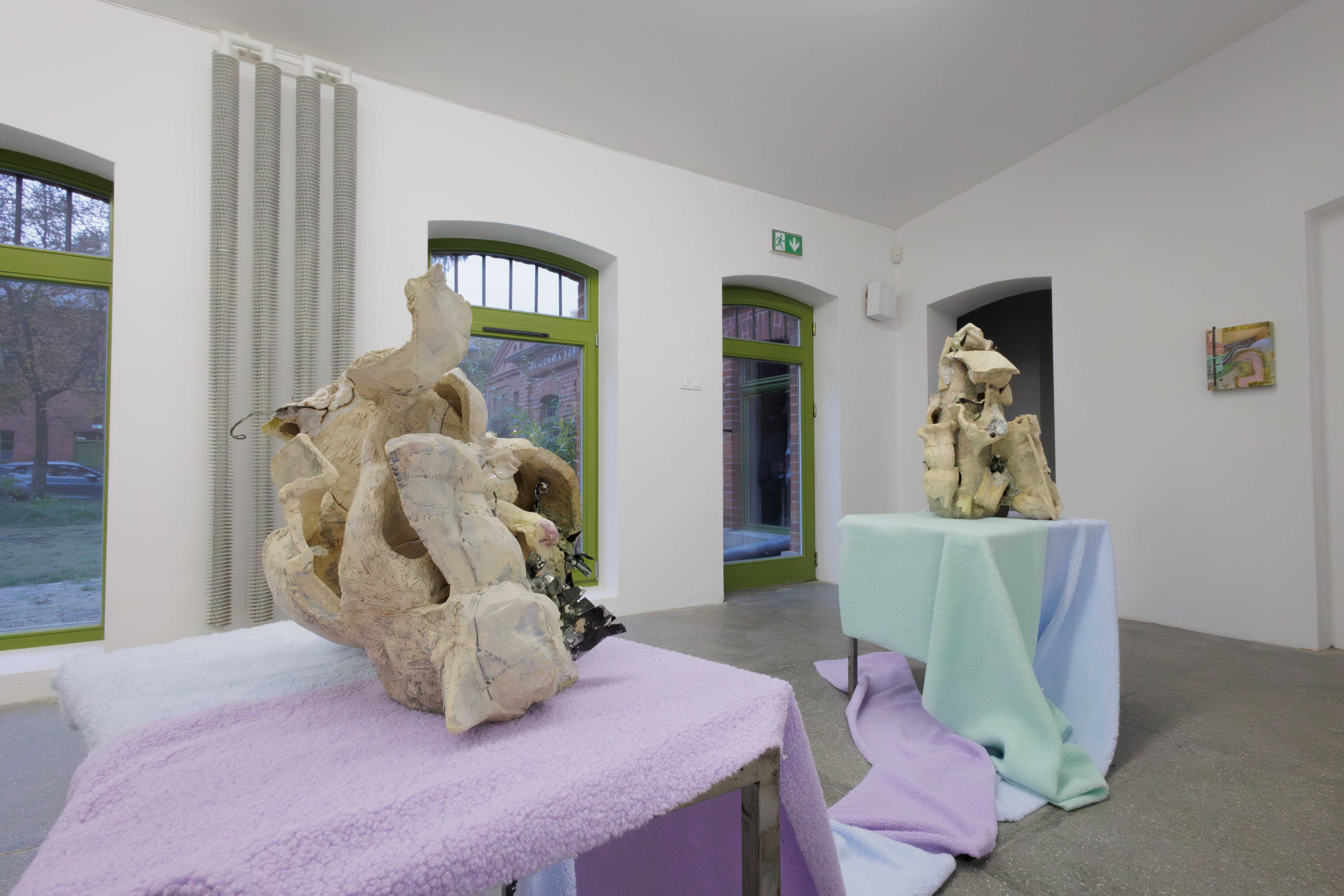
Animal Elegance, installation view (Jonathan Penca, Colonna Sonora, 2025, acrylic and
gouache paint, acrylic resin, biro, pencil, gesso and ink on wood. 31 x 24 x 5 cm; Julia Klemm, A chimera is not a pet 2, 2025, steel, glaze, ceramic, pigment, 44 x 38 x 74 cm, )
Animal Elegance, installation view (Jonathan Penca, Colonna Sonora, 2025, acrylic and
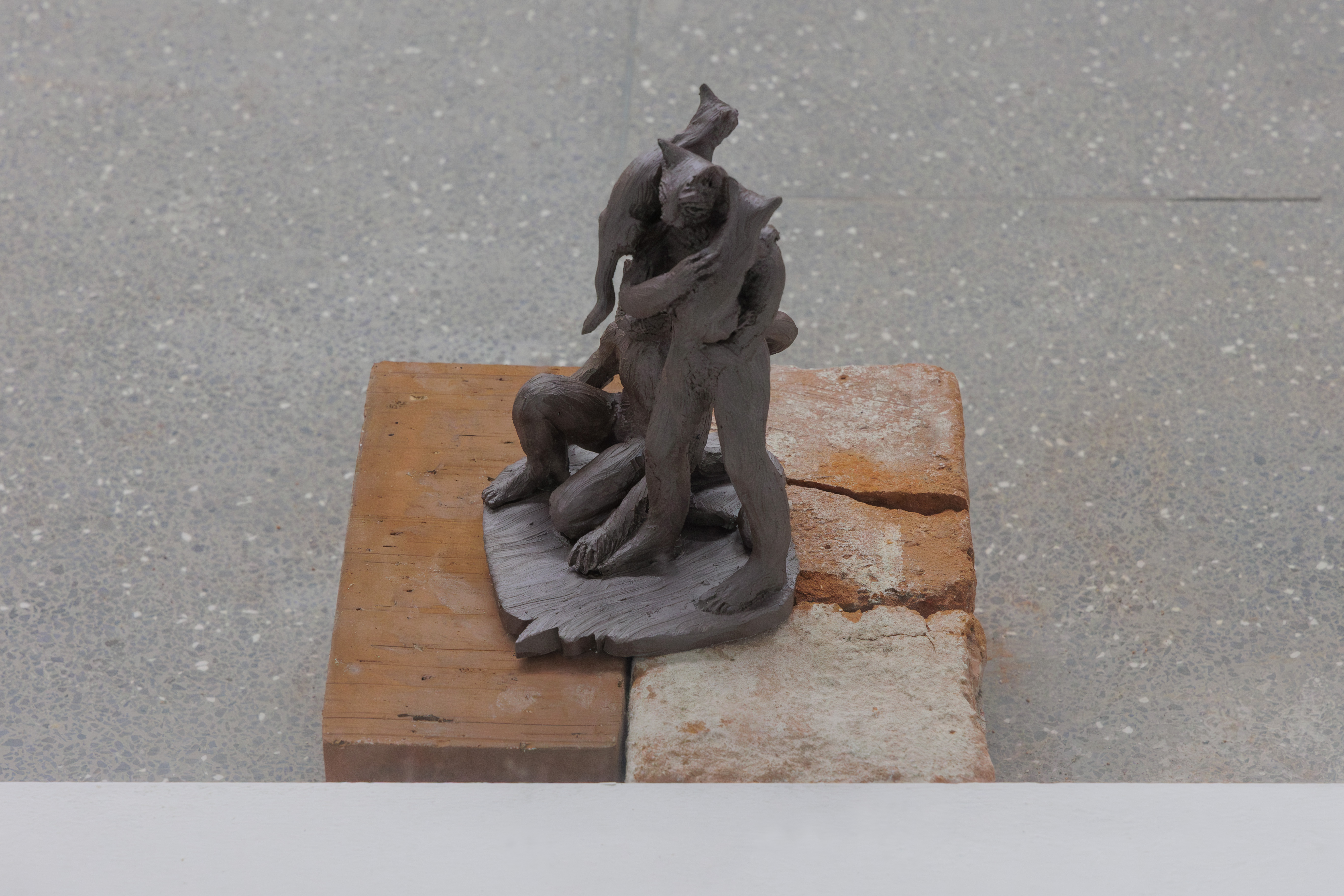
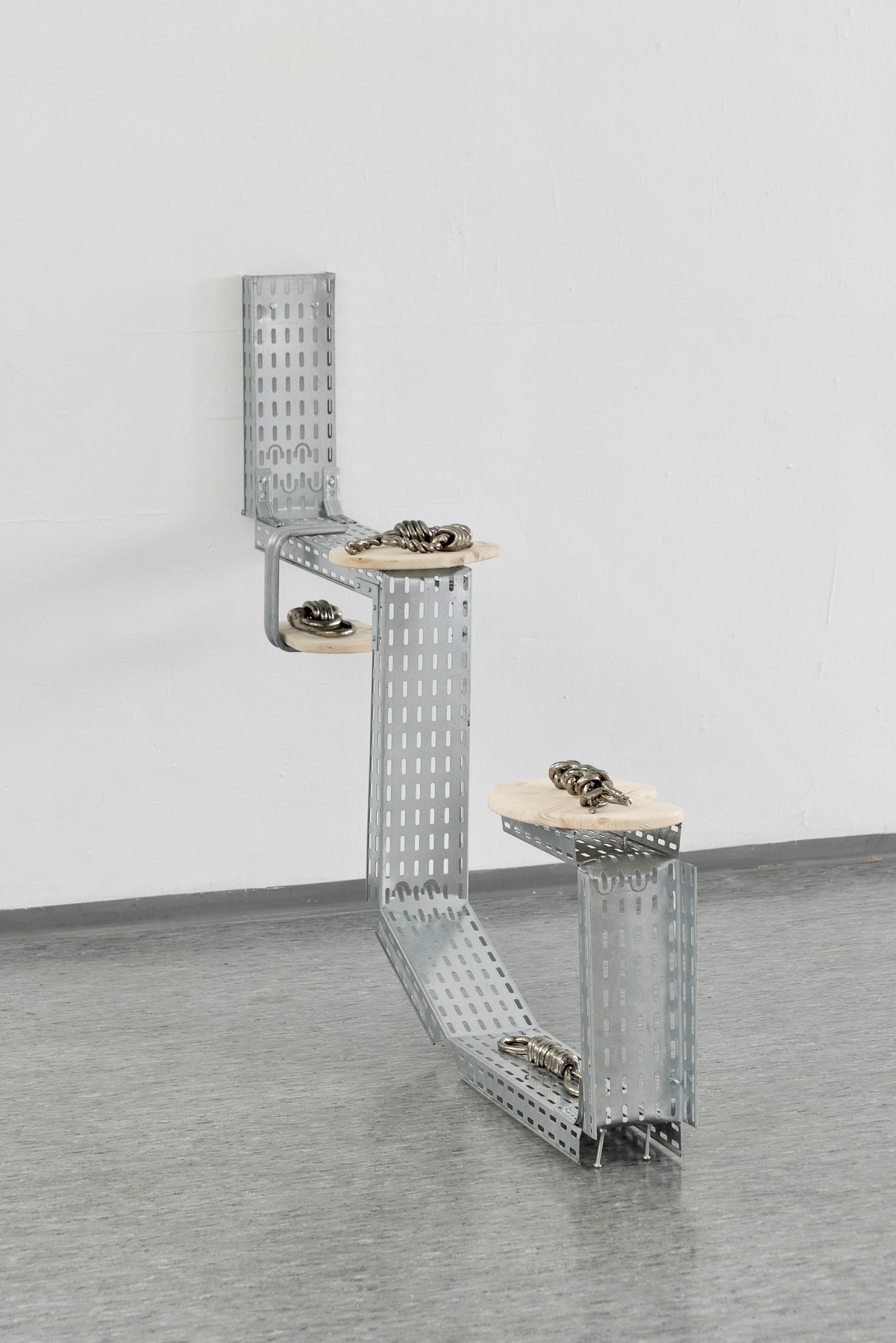
gouache paint, acrylic resin, biro, pencil, gesso and ink on wood. 31 x 24 x 5 cm, ; Julia Klemm, A chimera is not a pet 2, 2025, steel, glaze, ceramic, pigment, 44 x 38 x 74 cm,; Julia Klemm, A chimera is not a pet 3 , 2025, steel, glaze, ceramic, pigment, 46 x 34 x 42 cm)
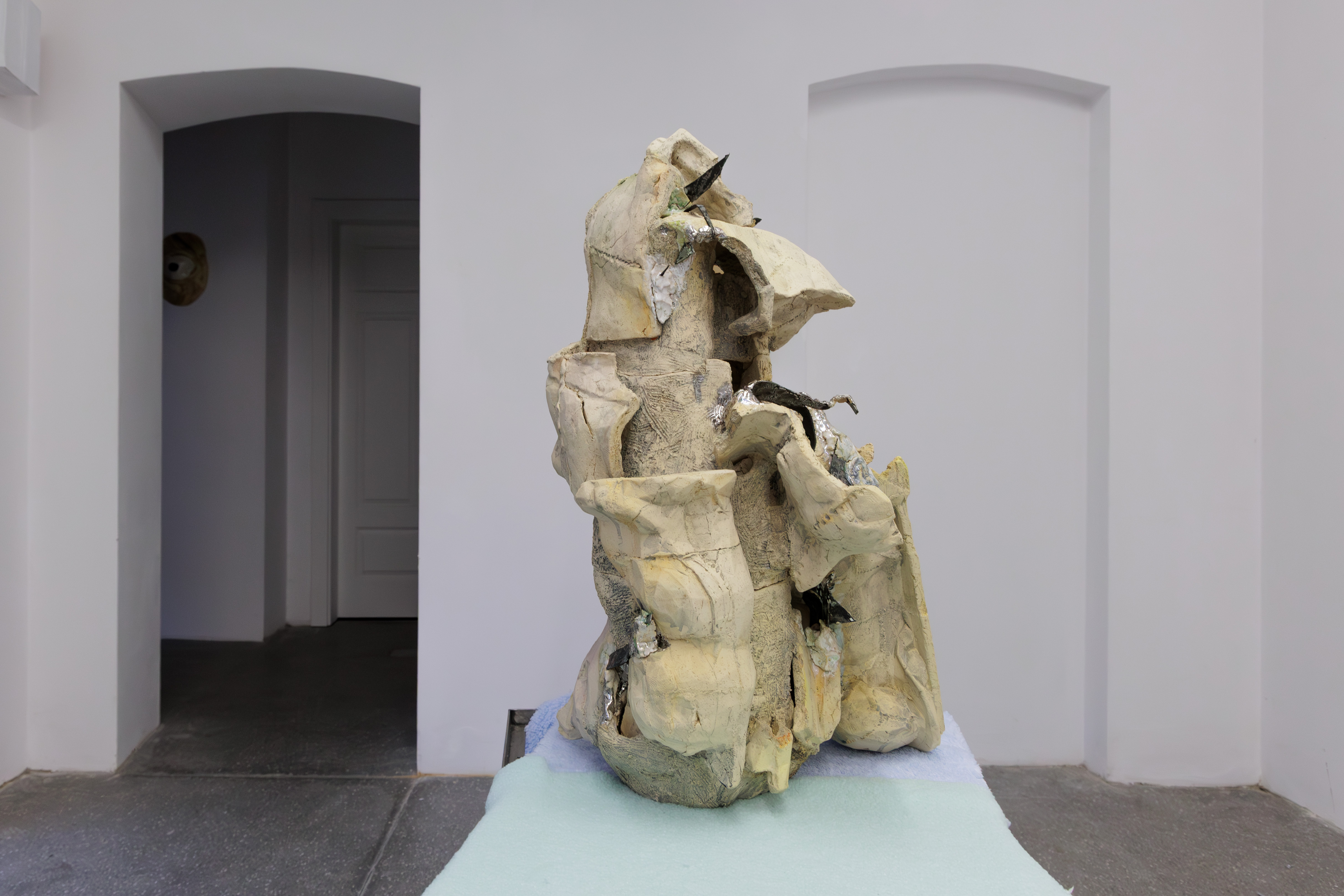
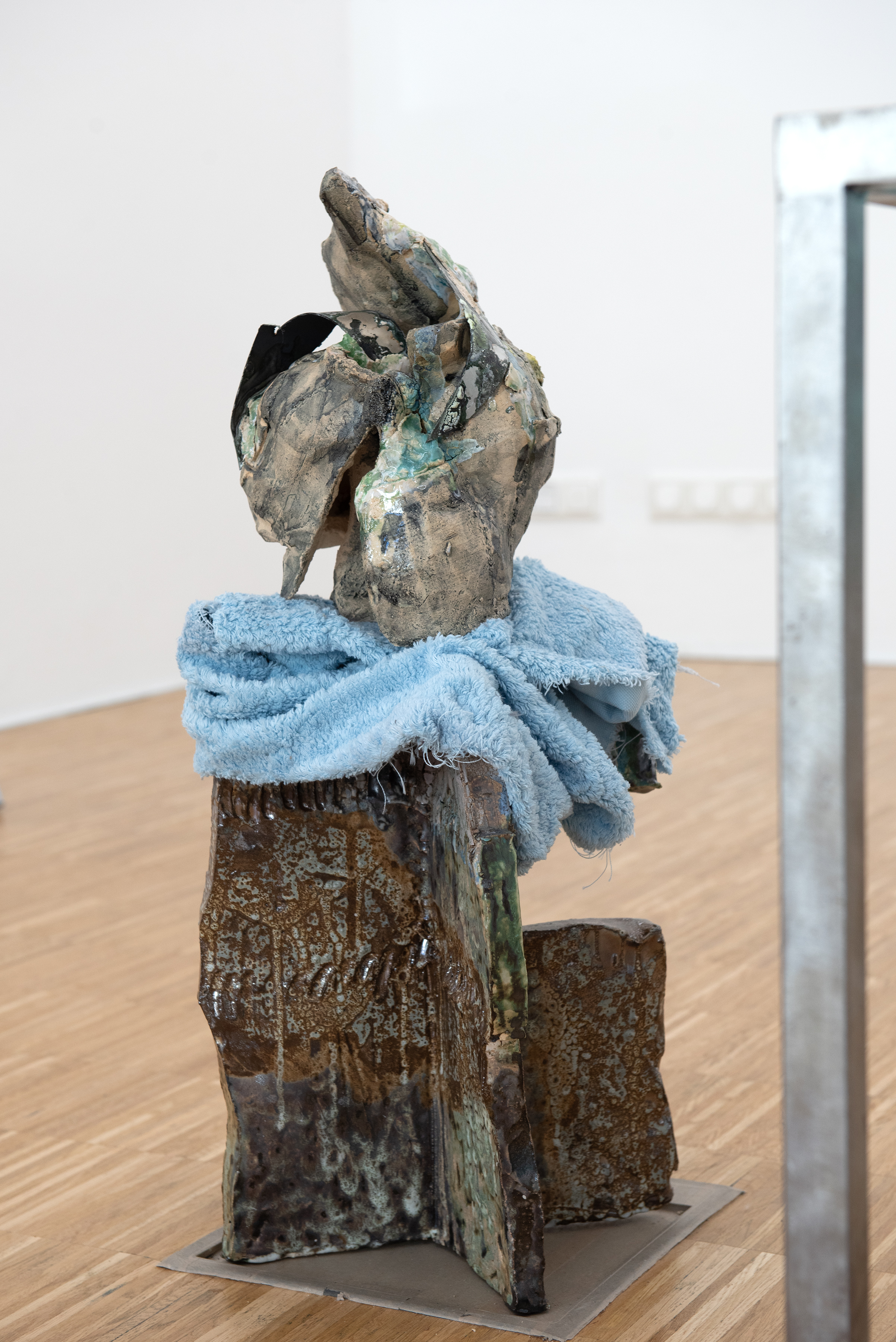
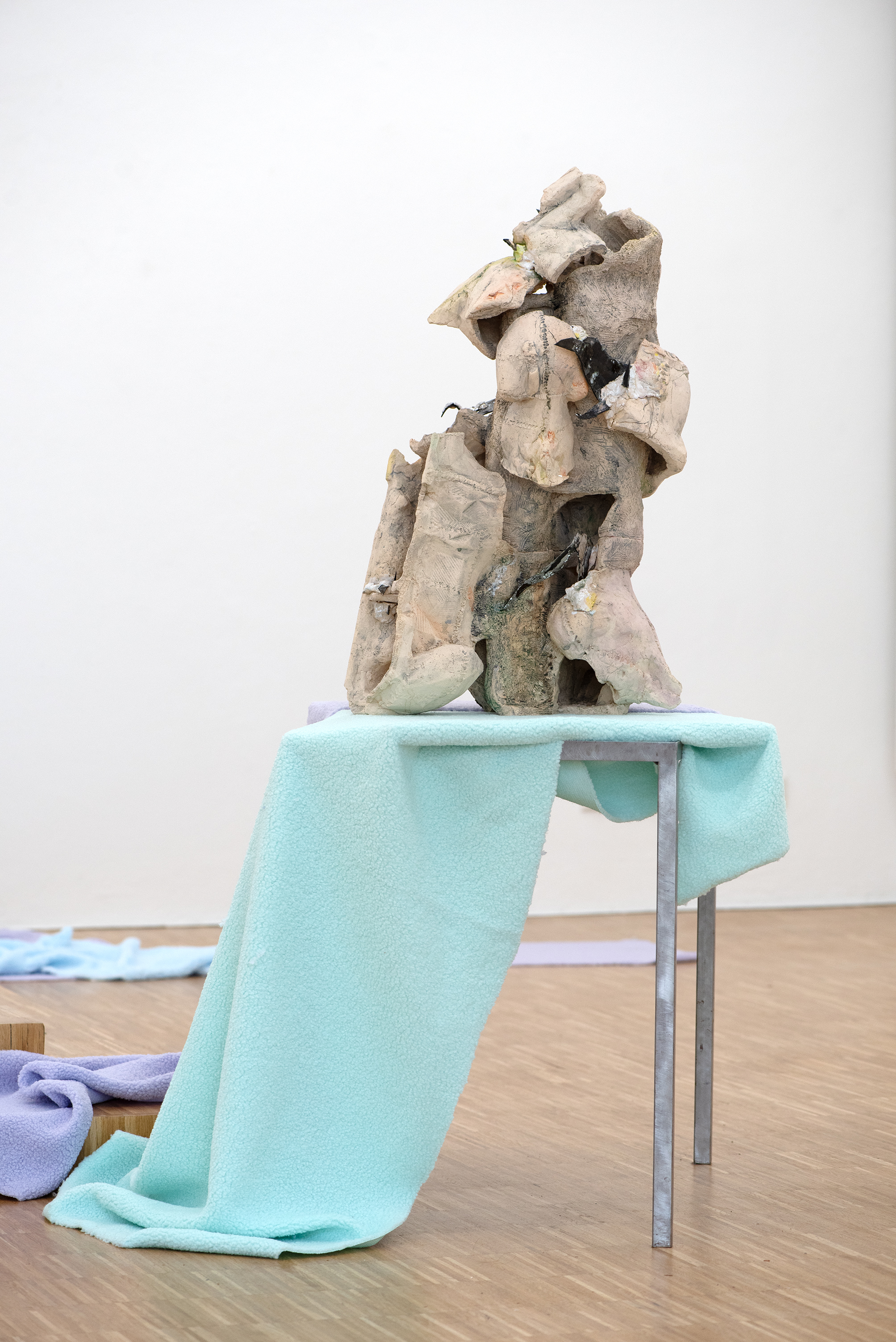
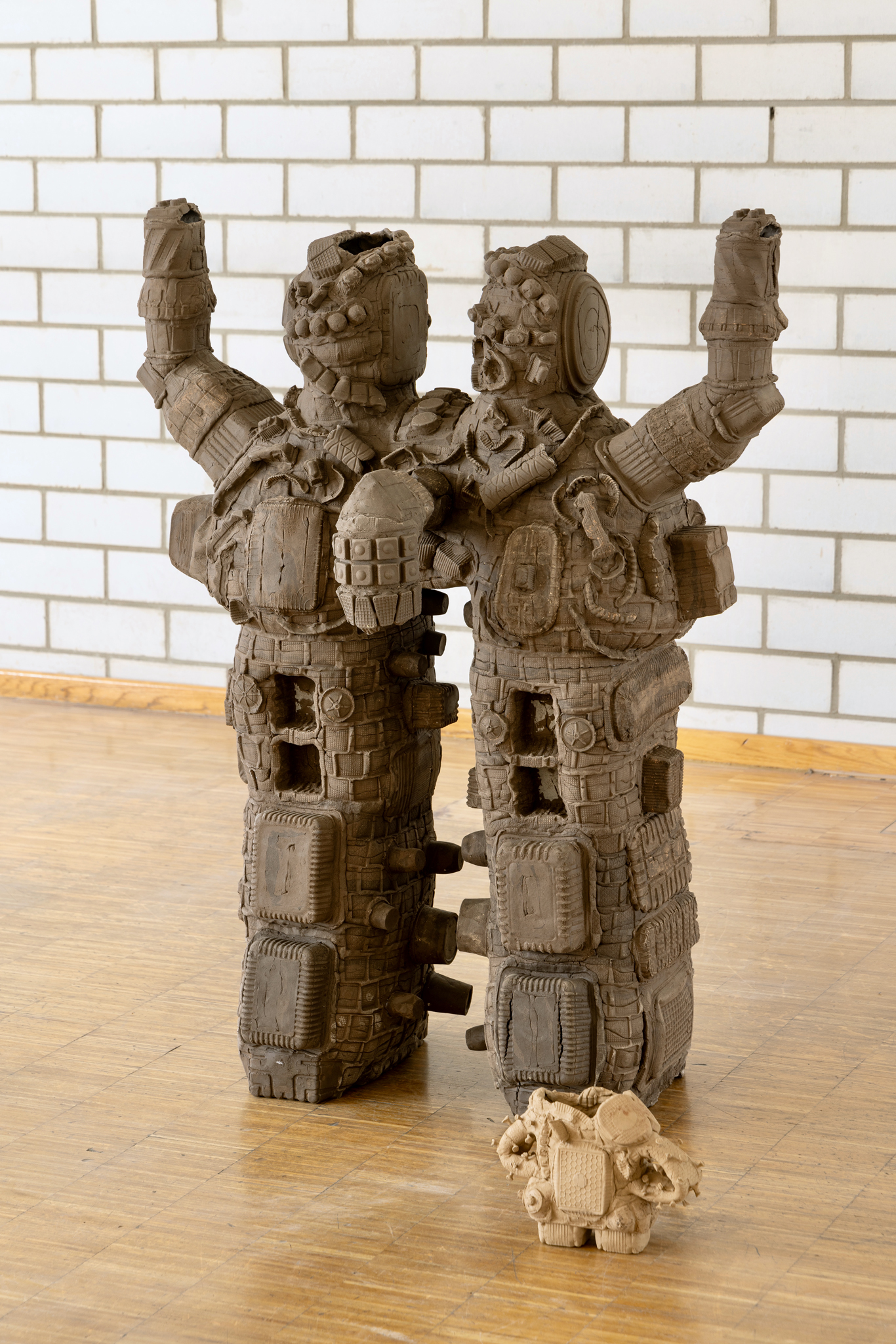
Julia Klemm, A chimera is not a pet 2,2025, steel, glaze, ceramic, pigment, 44 x 38 x 74 cm,
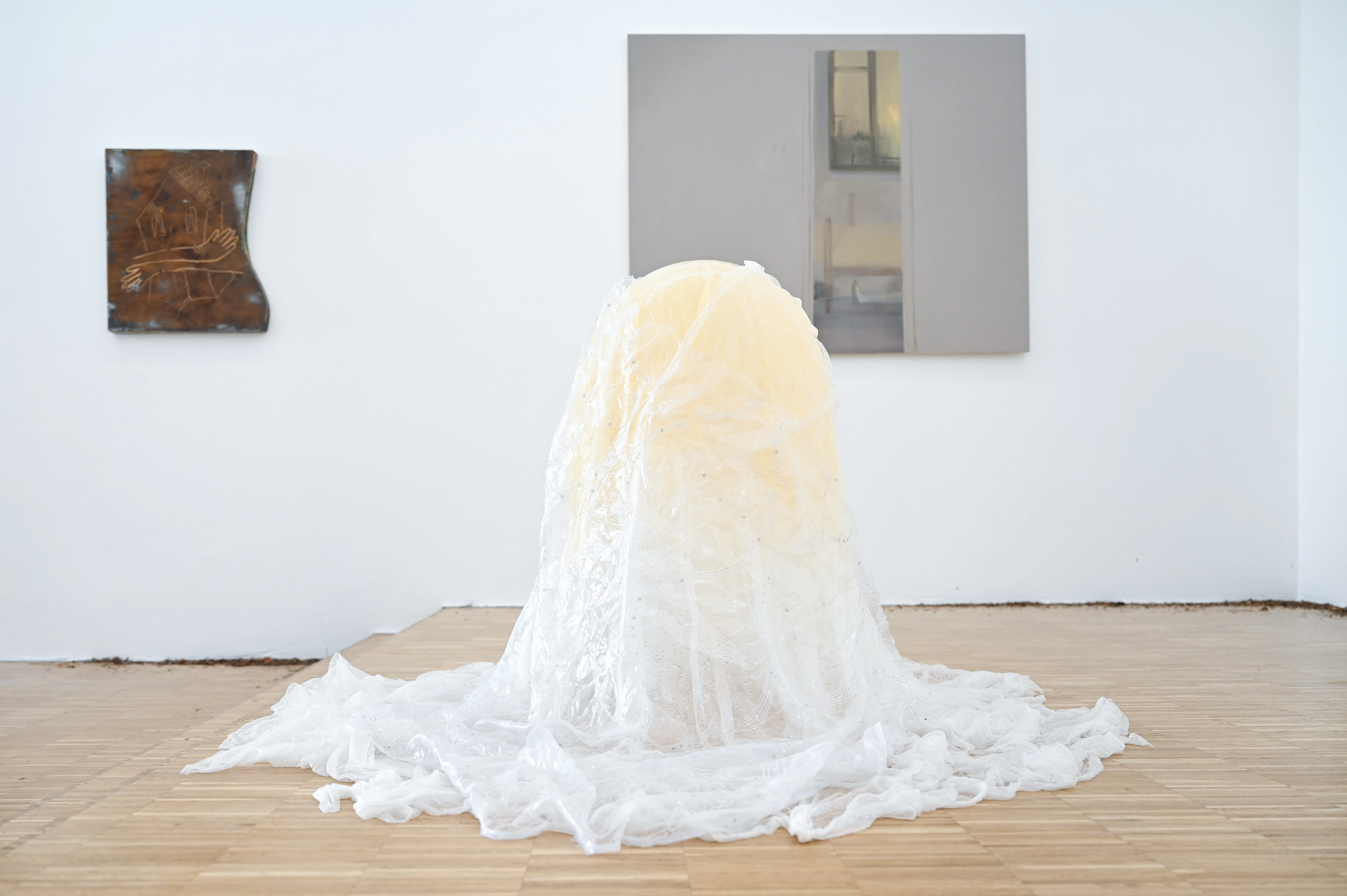
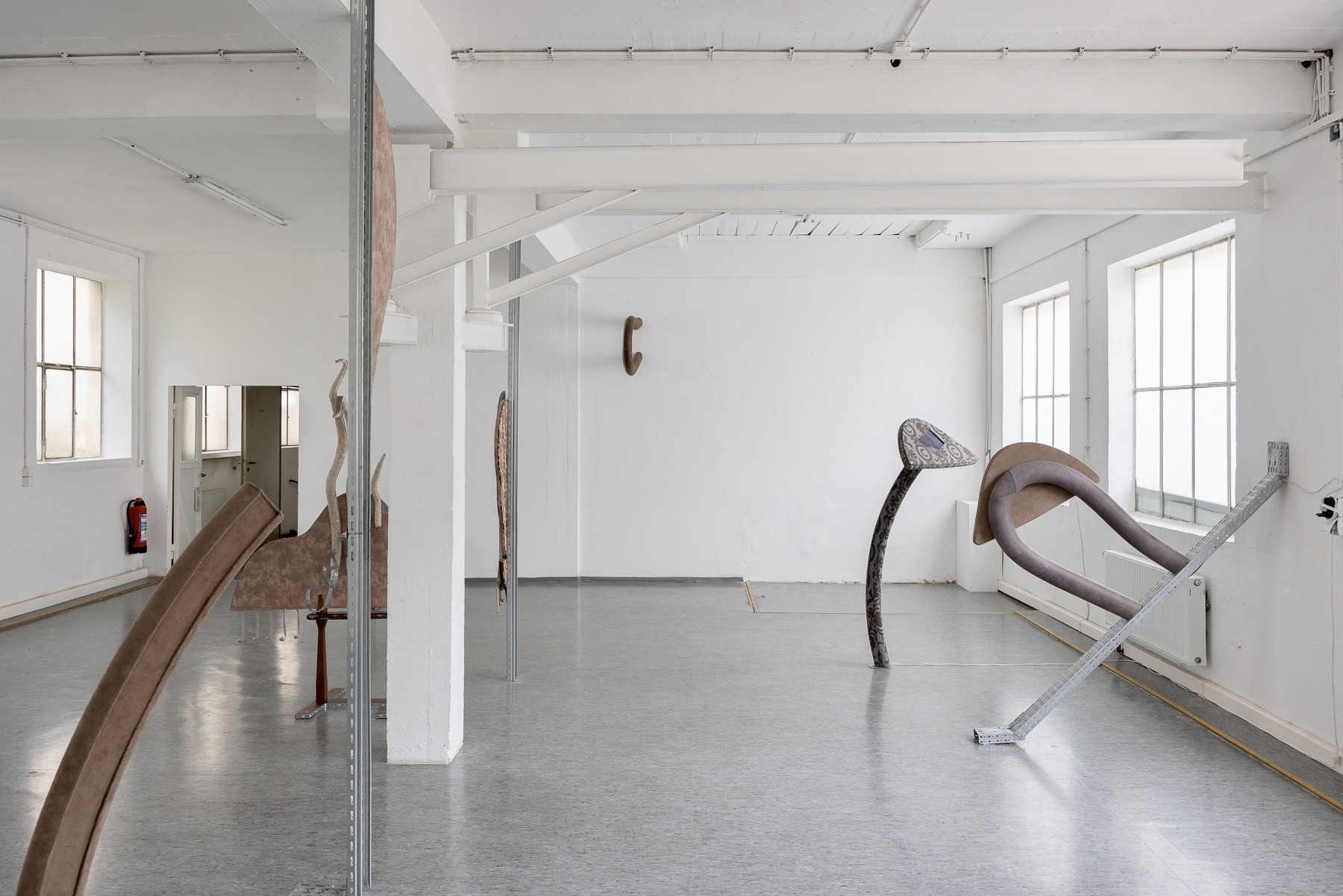
Animal Elegance, installation view (Jonathan Penca, Colonna Sonora, 2025, acrylic and
gouache paint, acrylic resin, biro, pencil, gesso and ink on wood. 31 x 24 x 5 cm; Julia Klemm, A chimera is not a pet 2,2025, steel, glaze, ceramic, pigment, 44 x 38 x 74 cm,; Julia Klemm, A chimera is not a pet 3 , 2025, steel, glaze, ceramic, pigment, 46 x 34 x 42 cm)
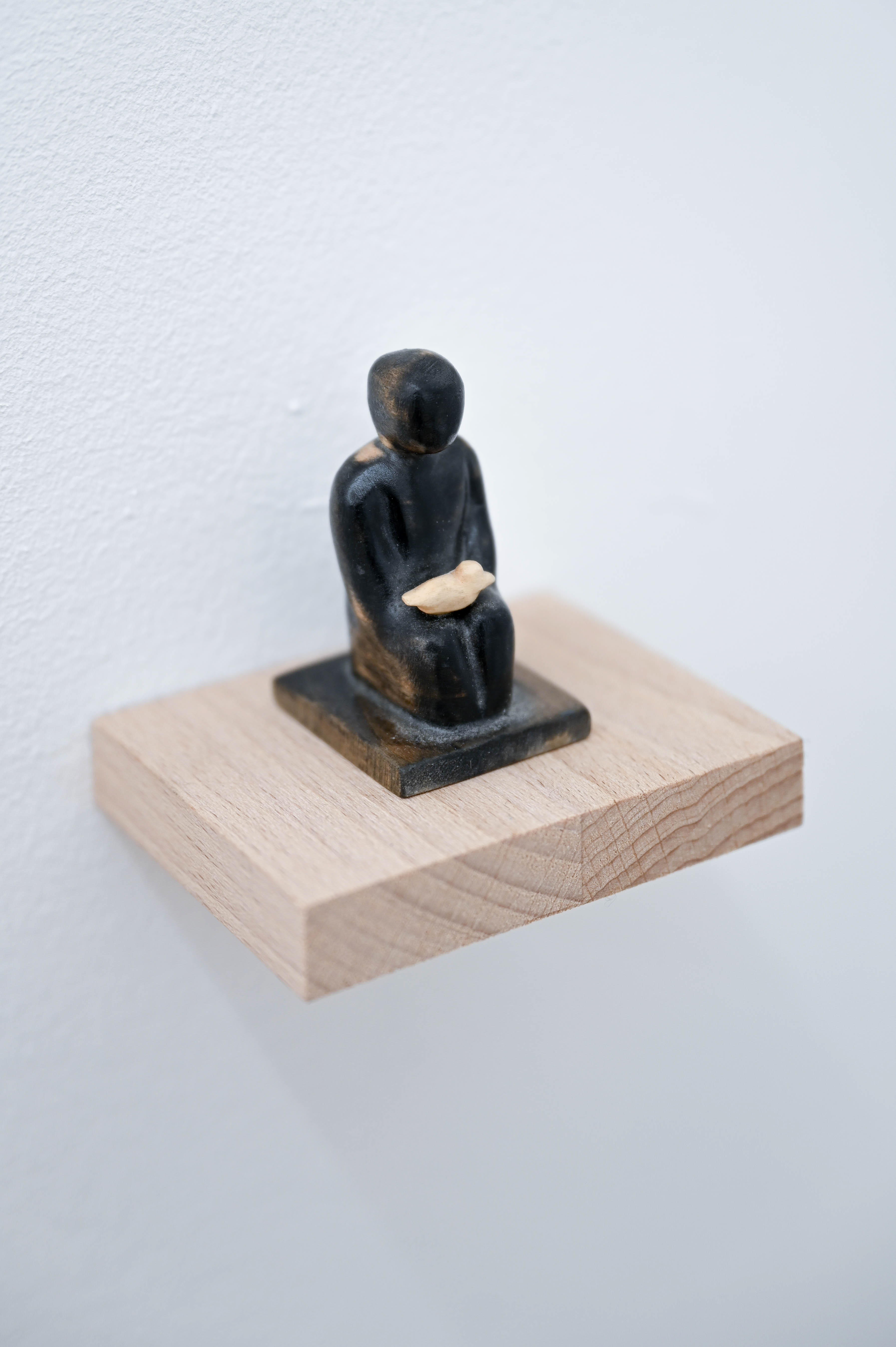
Jonathan Penca, Colonna Sonora, 2025, acrylic and
gouache paint, acrylic resin, biro, pencil, gesso and ink on wood. 31 x 24 x 5 cm,
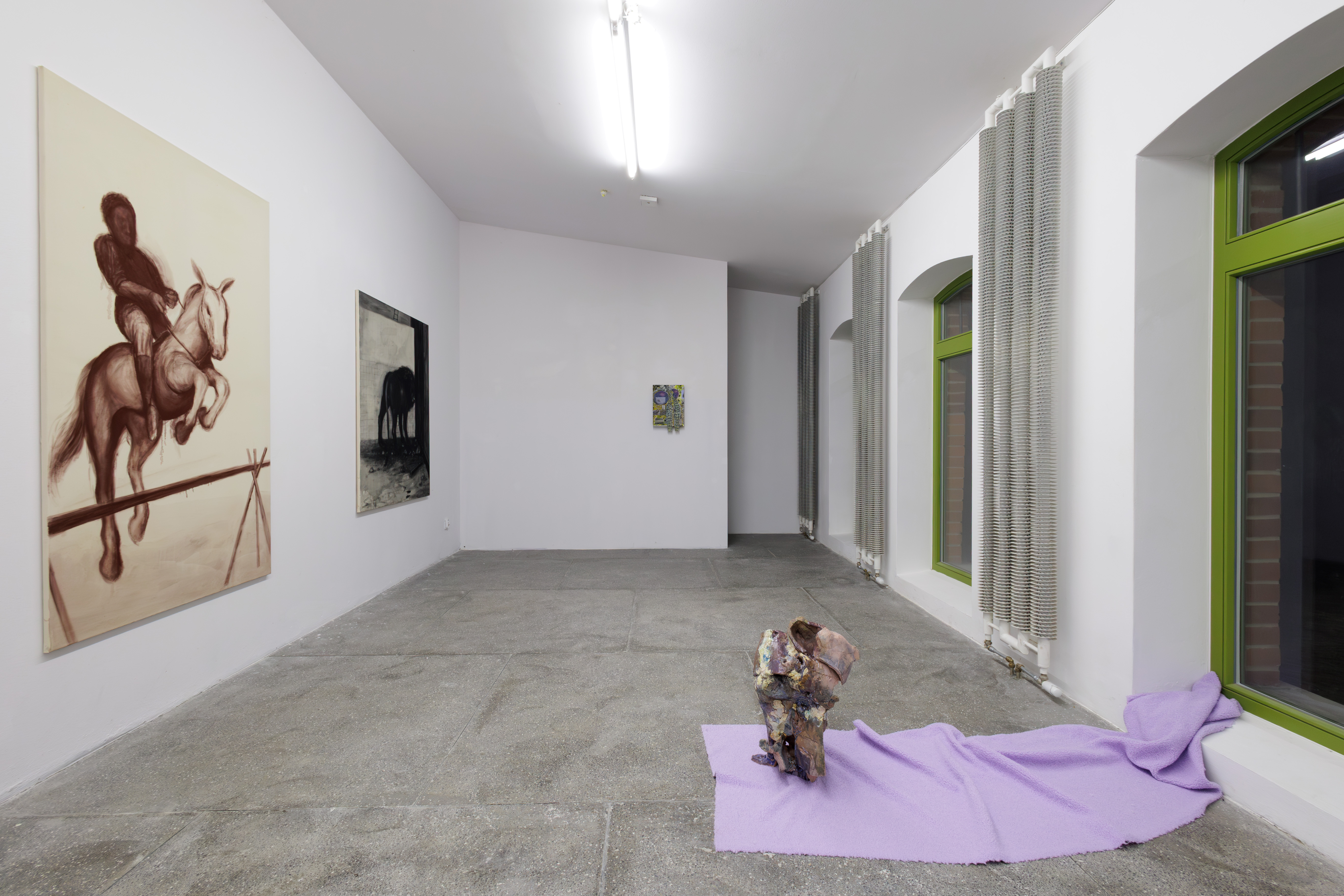
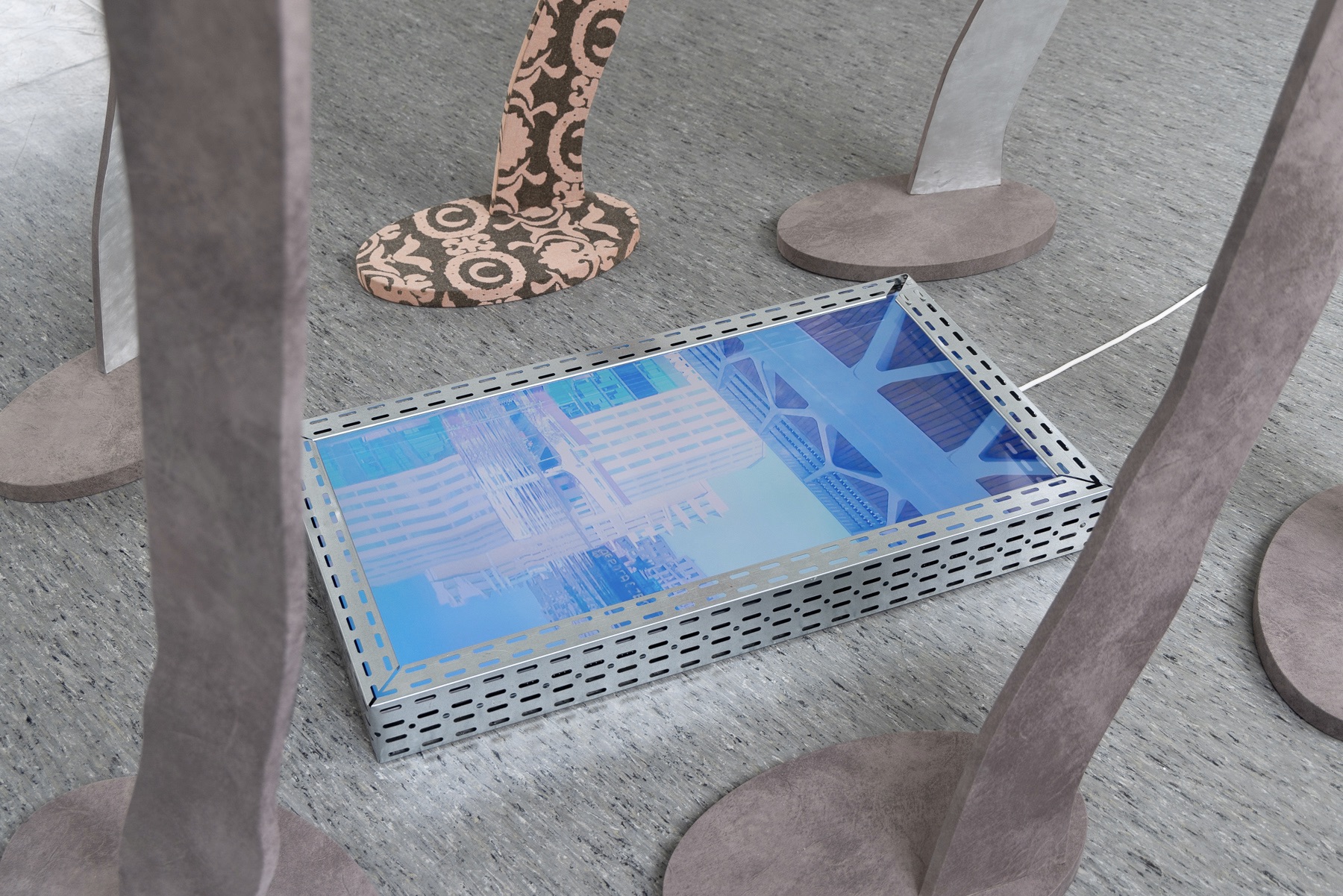
Animal Elegance, installation view , 2025
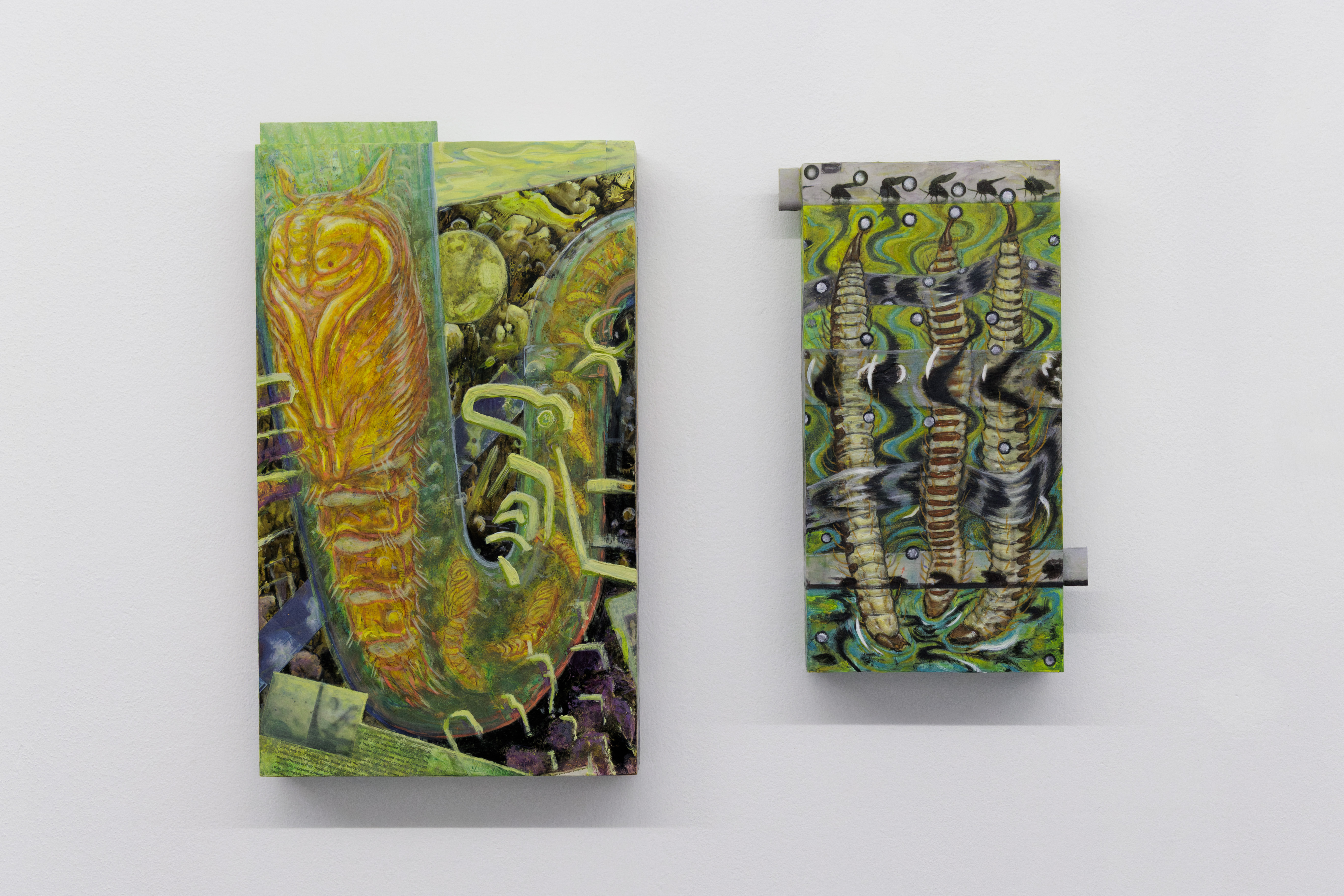
Jonathan Penca, inglers Groove, 2025, gouache, acrylic, watercolour, acrylic resin, pencil, gesso, ink and paper on wood, 52 x 30 x 5 cm; Jonathan Penca, Tufty Sequence, 2025, gouache, acrylic, acrylic resin, biro, gesso, ink and paper on wood, 40 x 19 x 5 cm)
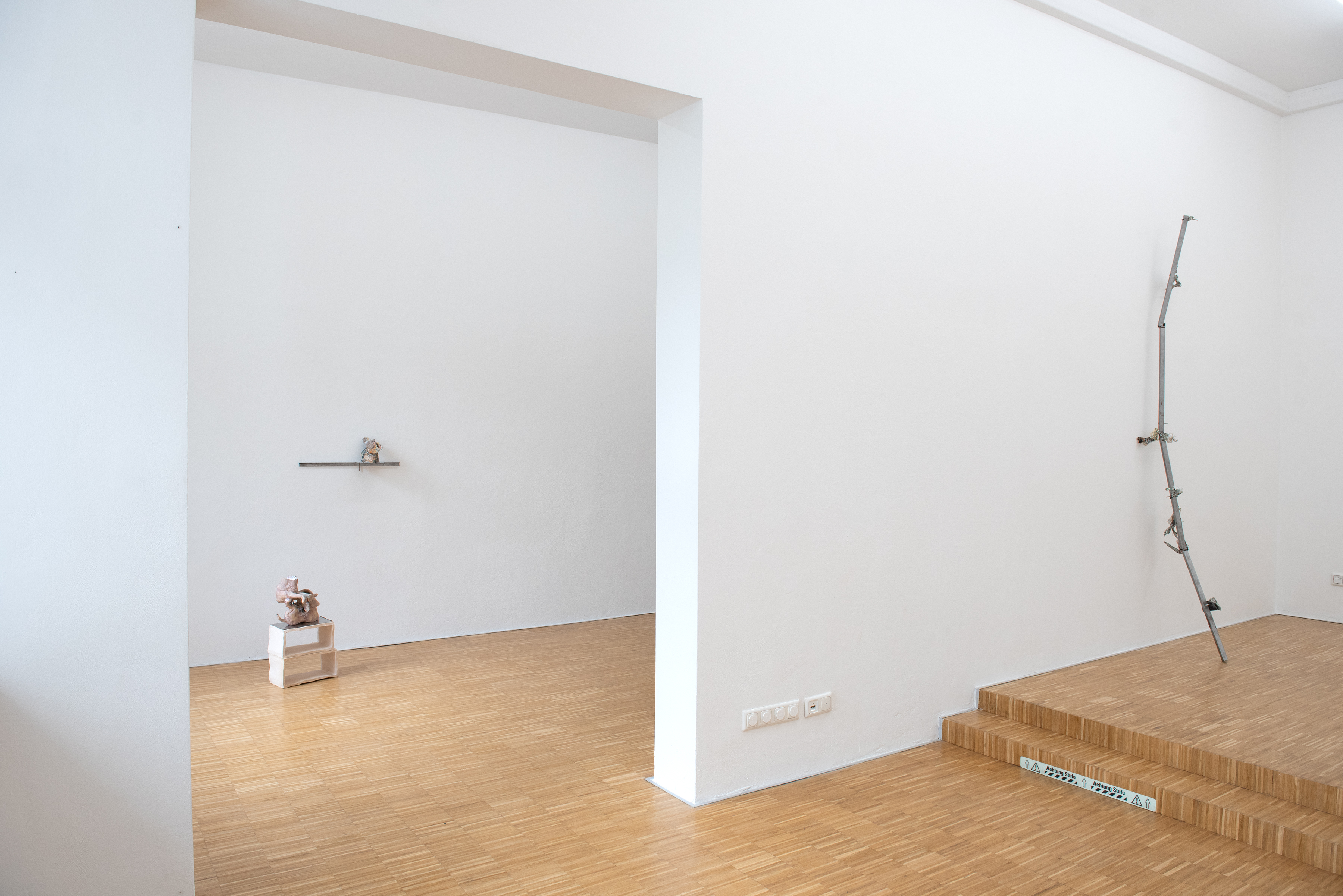
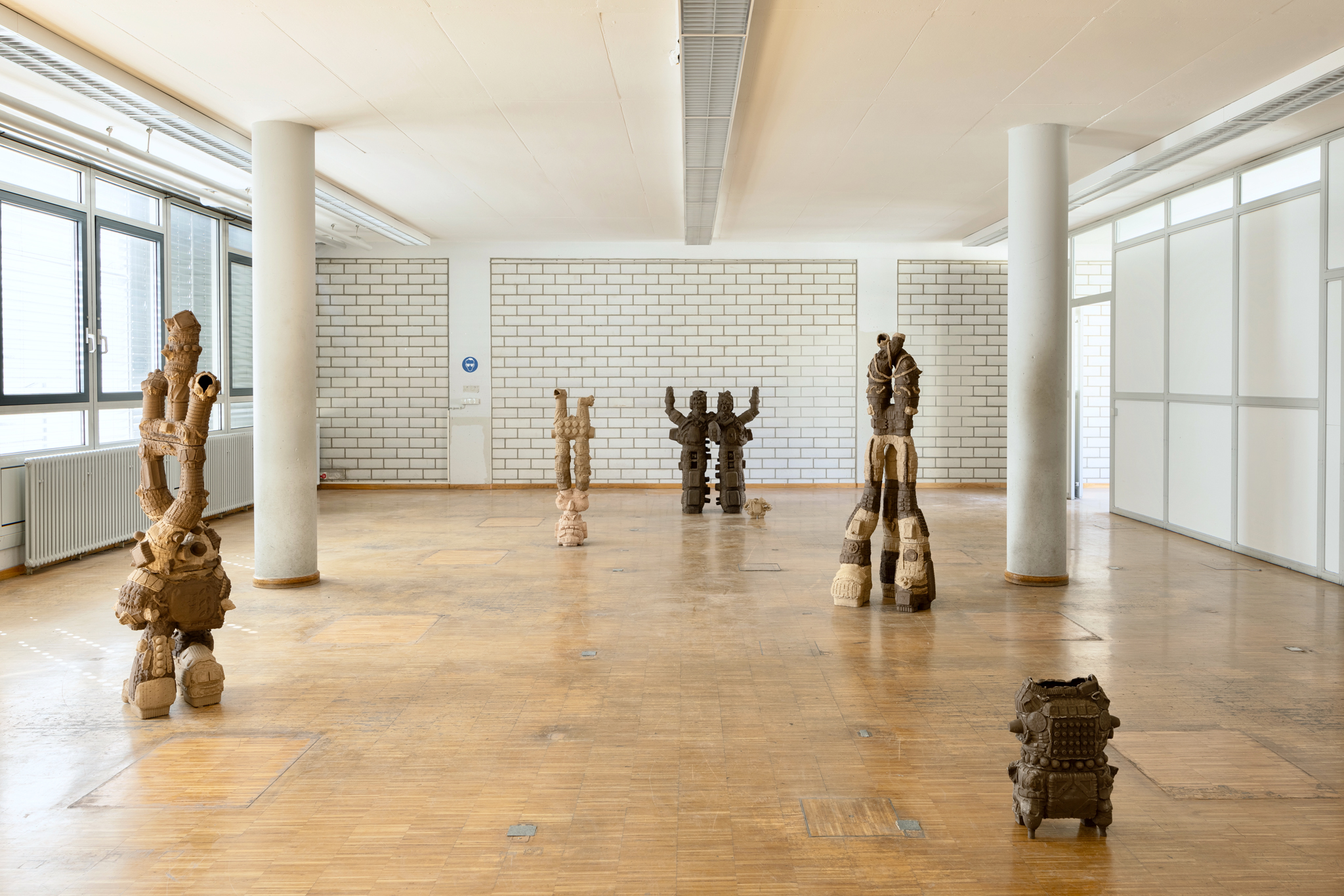
Animal Elegance, 2025, installation view

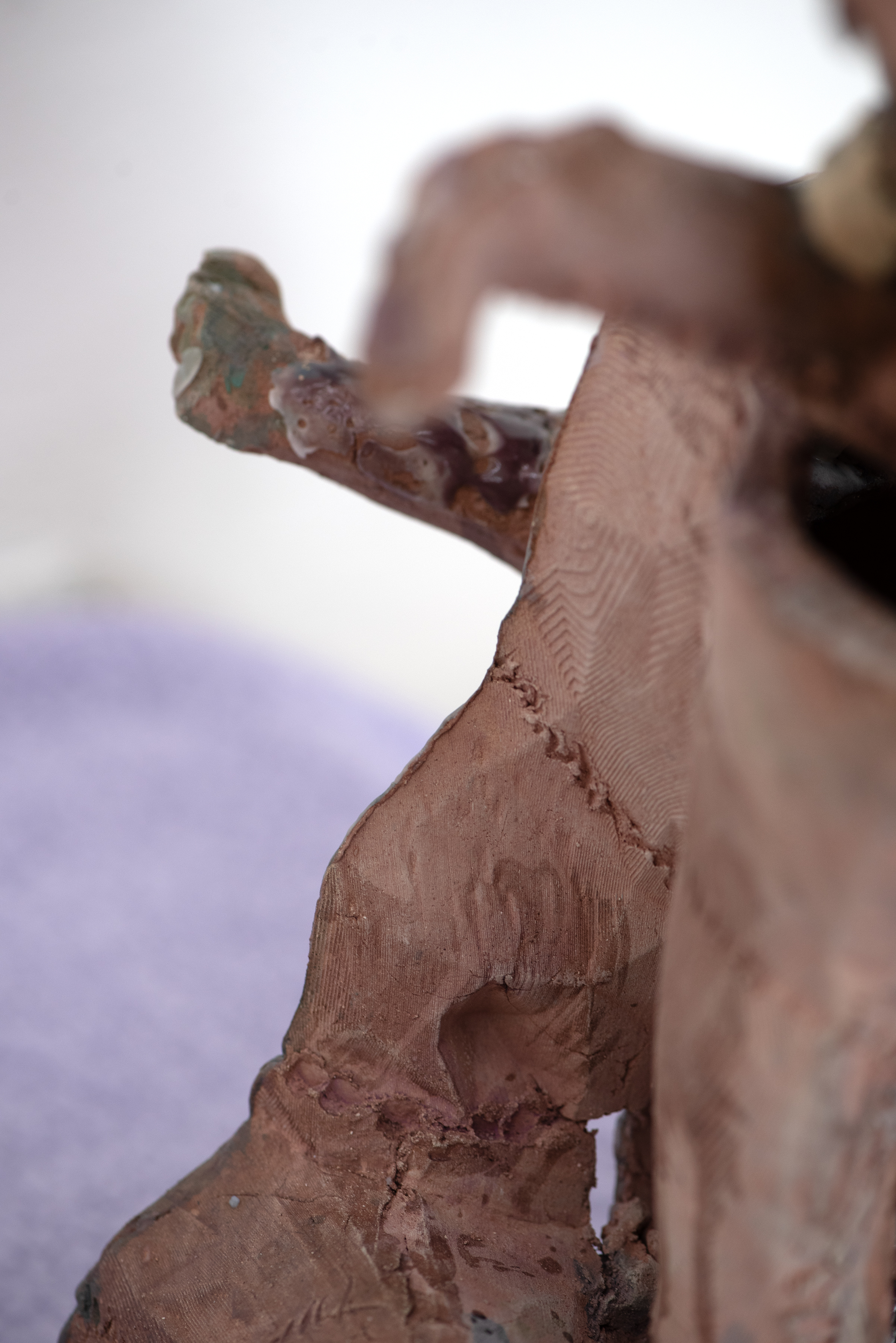
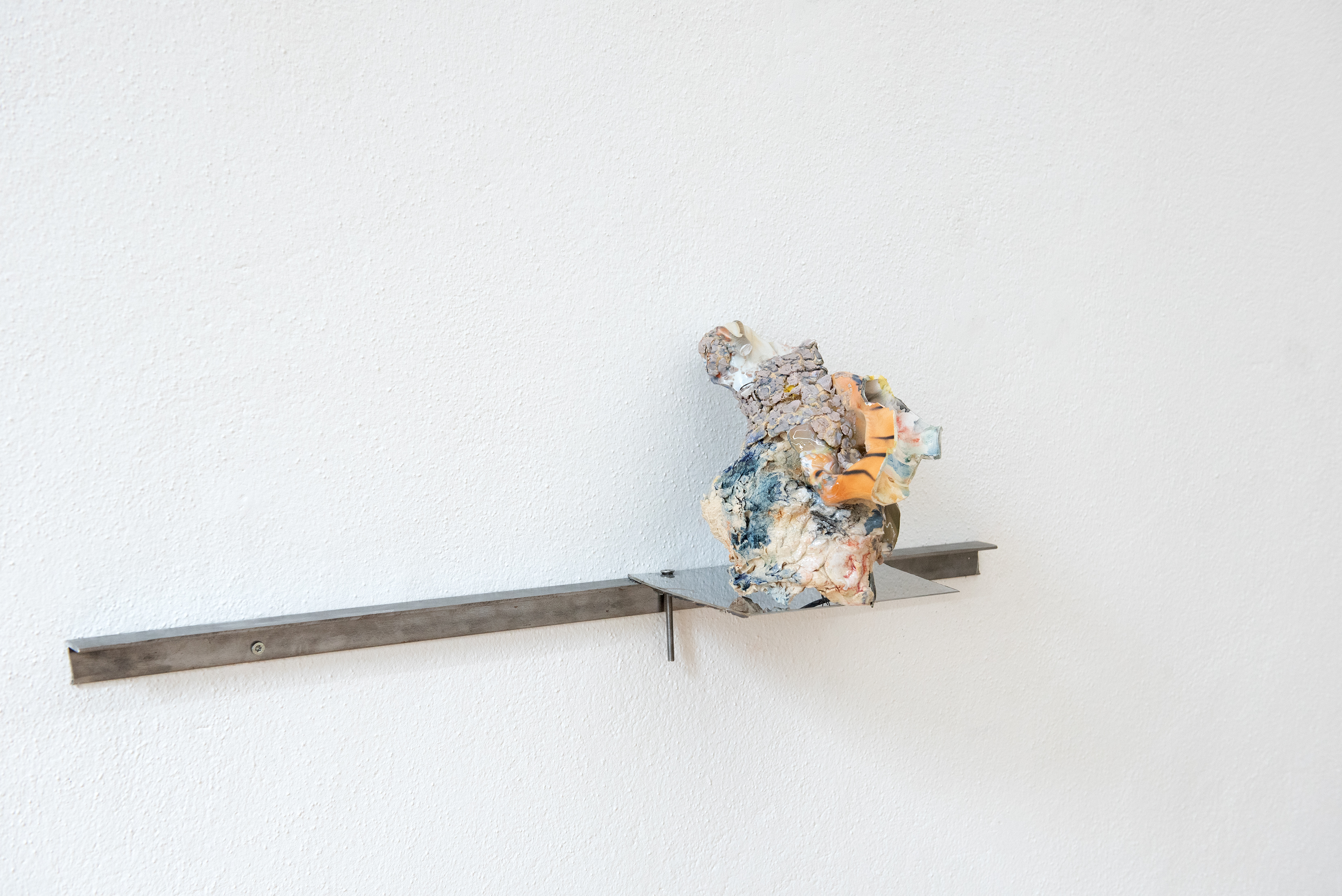
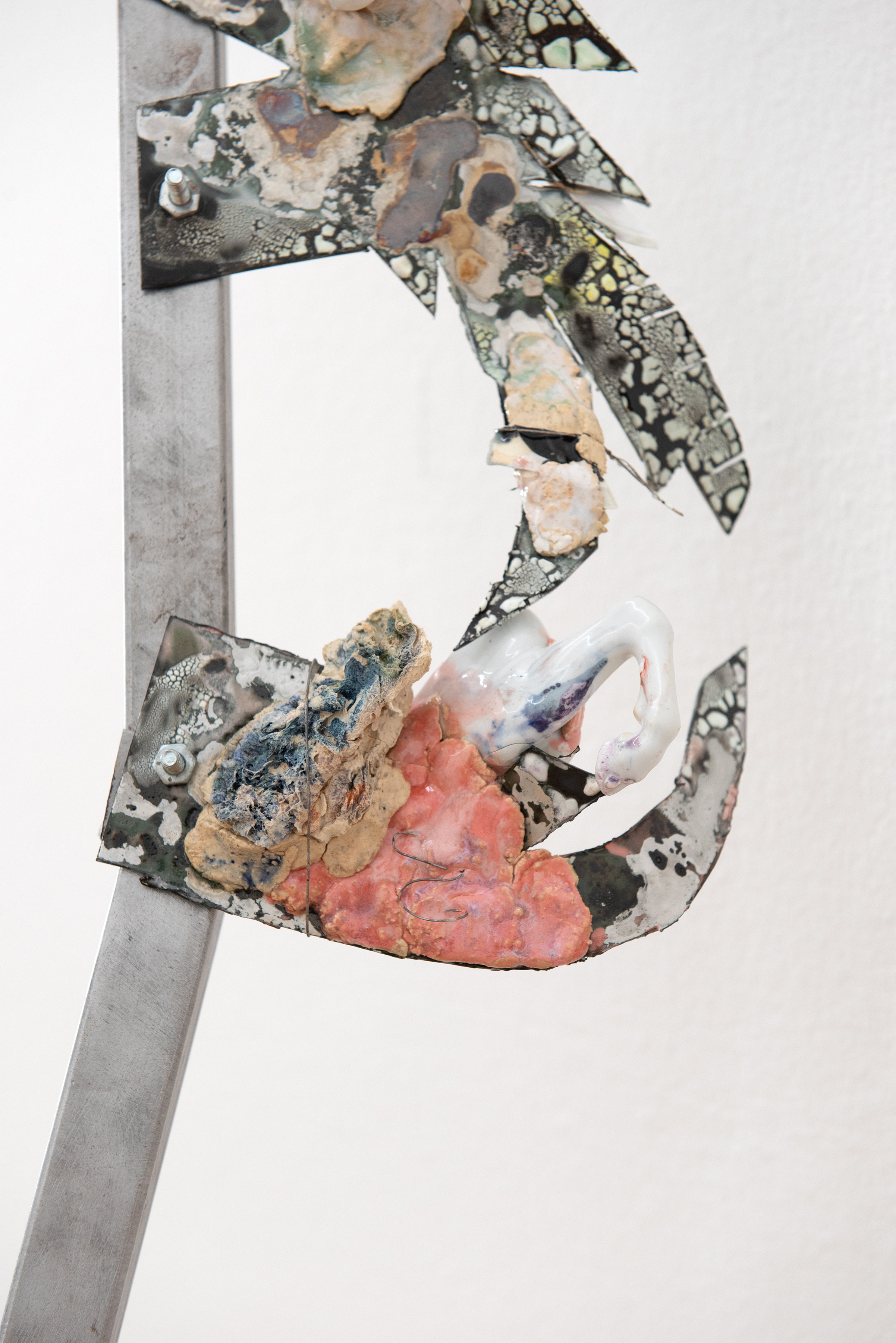
Julia Klemm, Transcending territories, 2024, glaze, ceramic, pigment, 32 x 30 x 48 cm
Animal Elegance, 2025, installation view
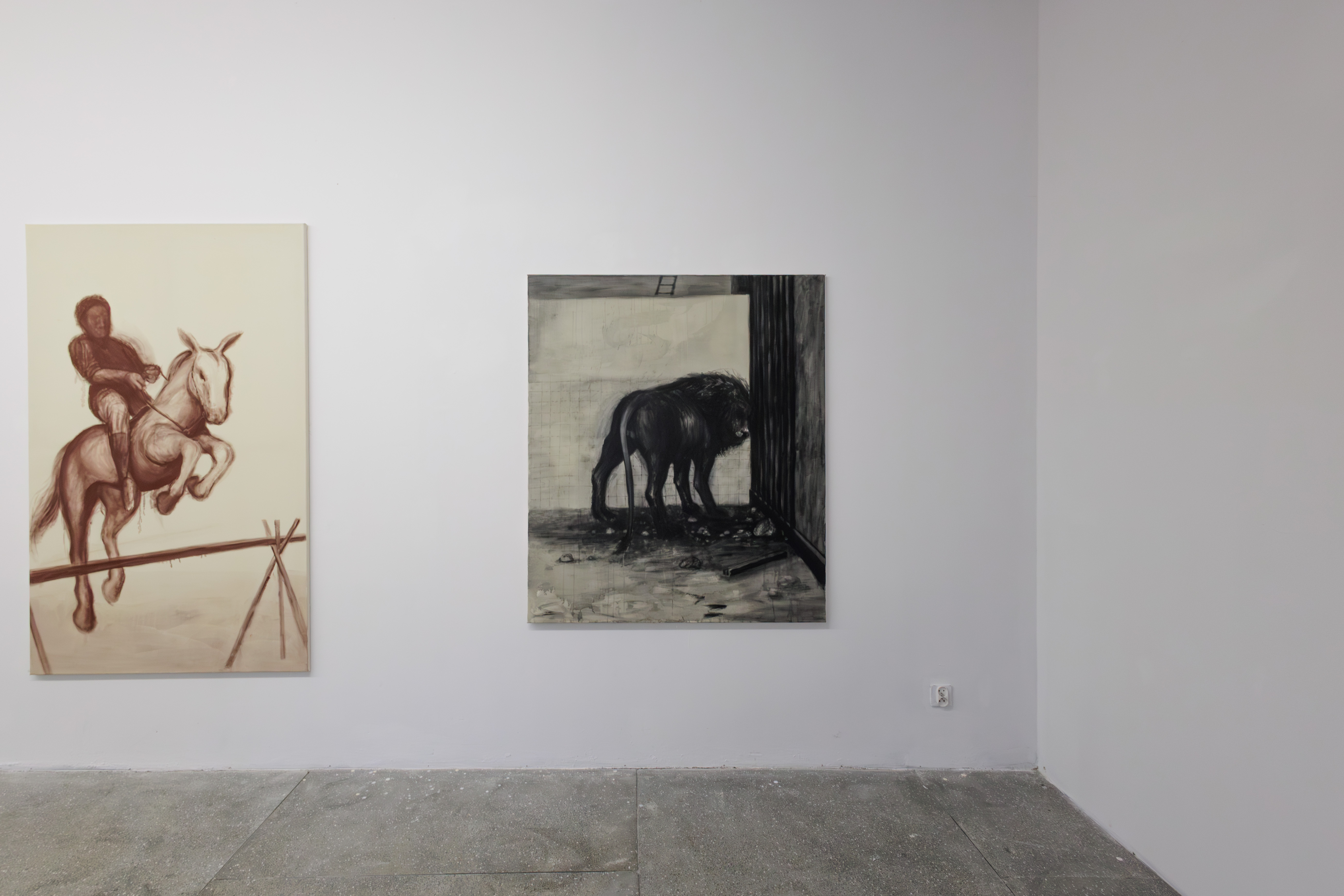
Jakob Gilg, Alignment, 2025, pigment and acrylic medium on canvas, 180 x 110 cm; Jakob Gilg, Virgo, 2025, pigment and acrylic medium on canvas, 140 x 120 cm)
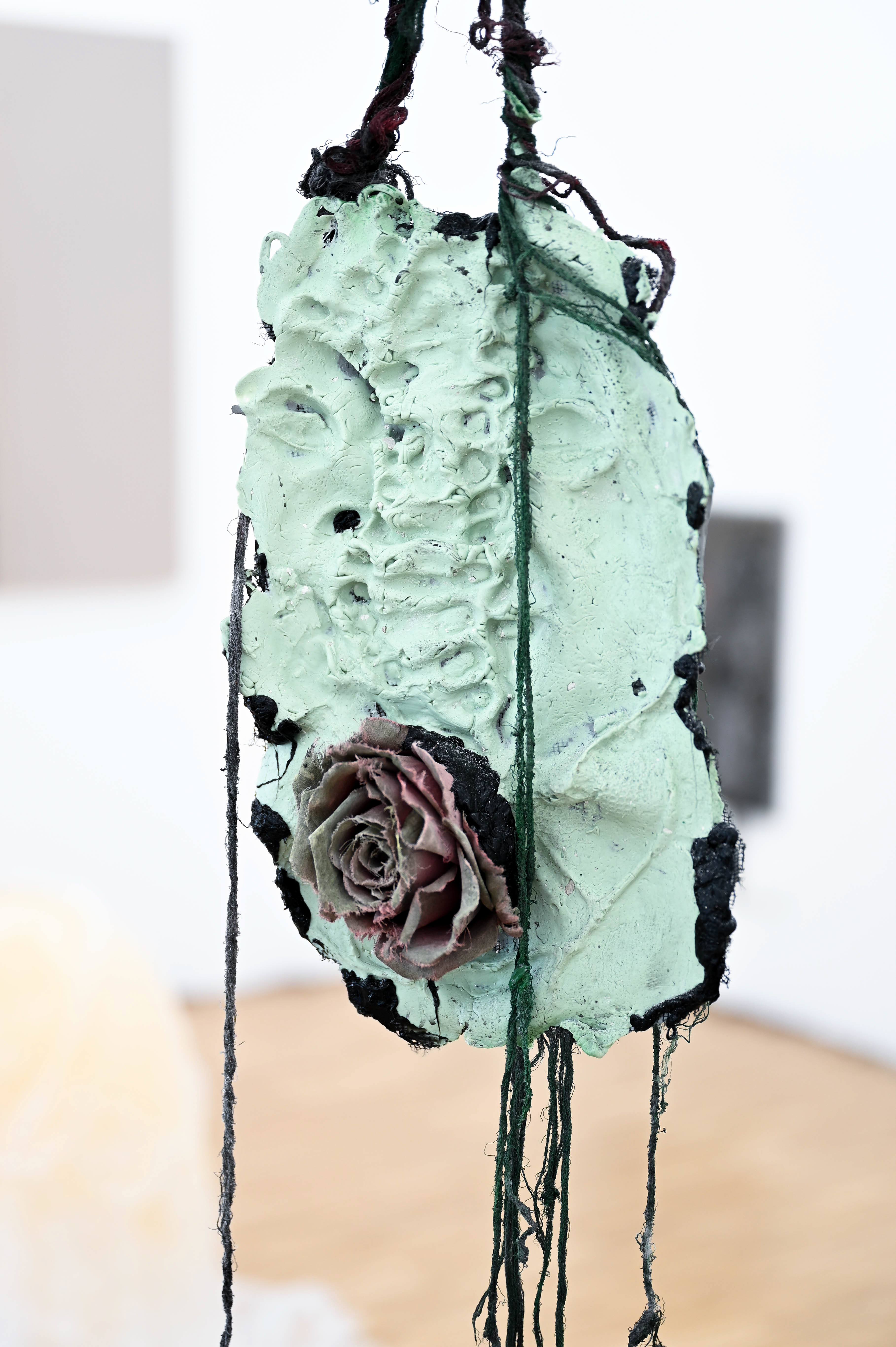
Jonathan Penca, Clogmia, 2025, gouache, acrylic resin, gesso, ink, makeup powder and paper on wood, 44 x 30 x 5 cm
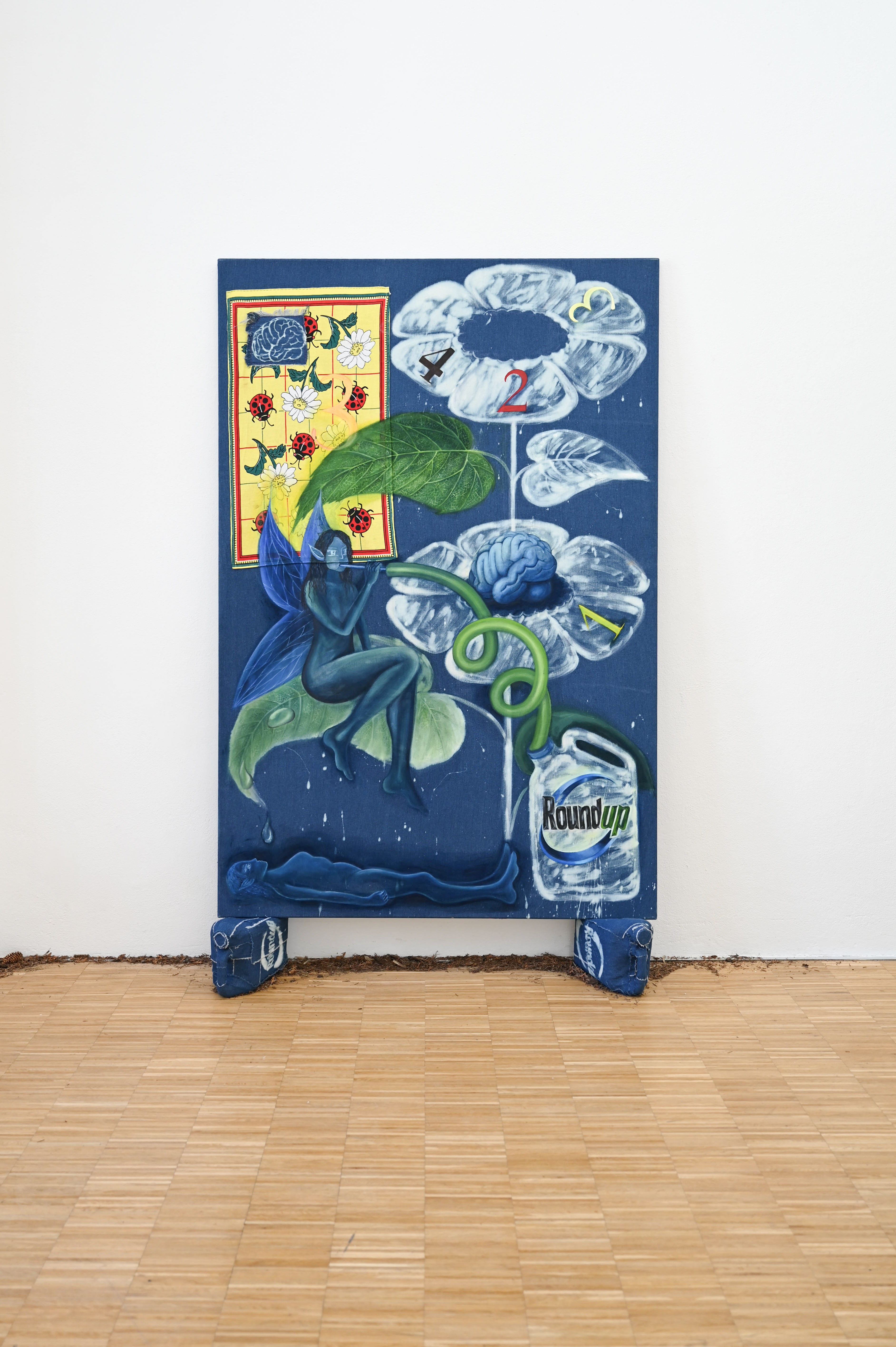
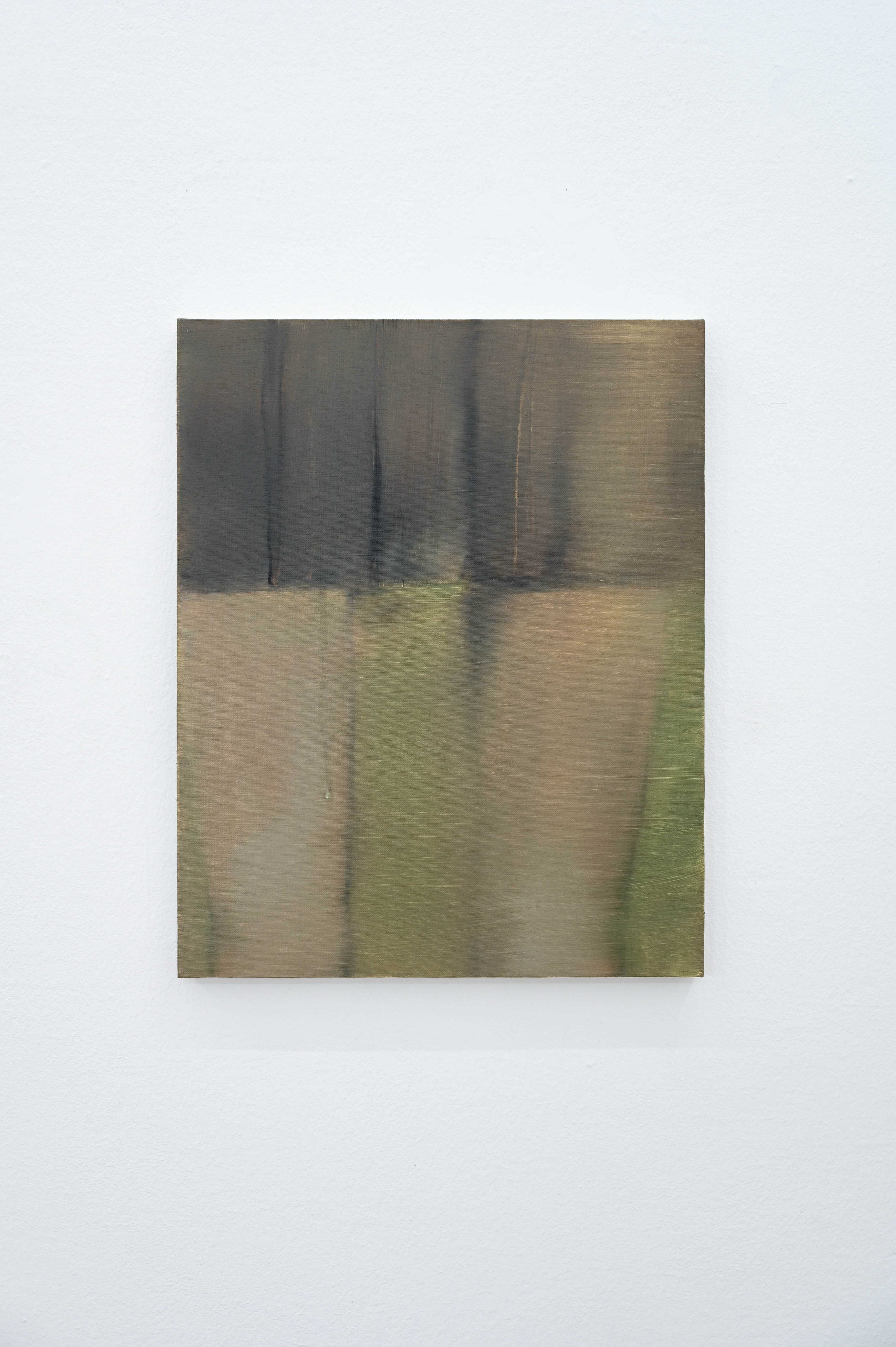
Jakob Gilg, I’m sorry, 2024, pigment and acrylic medium on canvas, 25o x 200 cm; Jakob Gilg, Kindling, 2025, pigment and acrylic medium on canvas, 70 x 50 cm
Jakob Gilg, Kindling, 2025, pigment and acrylic medium on canvas, 70 x 50 cm
Animal Elegance, 2025, installation view
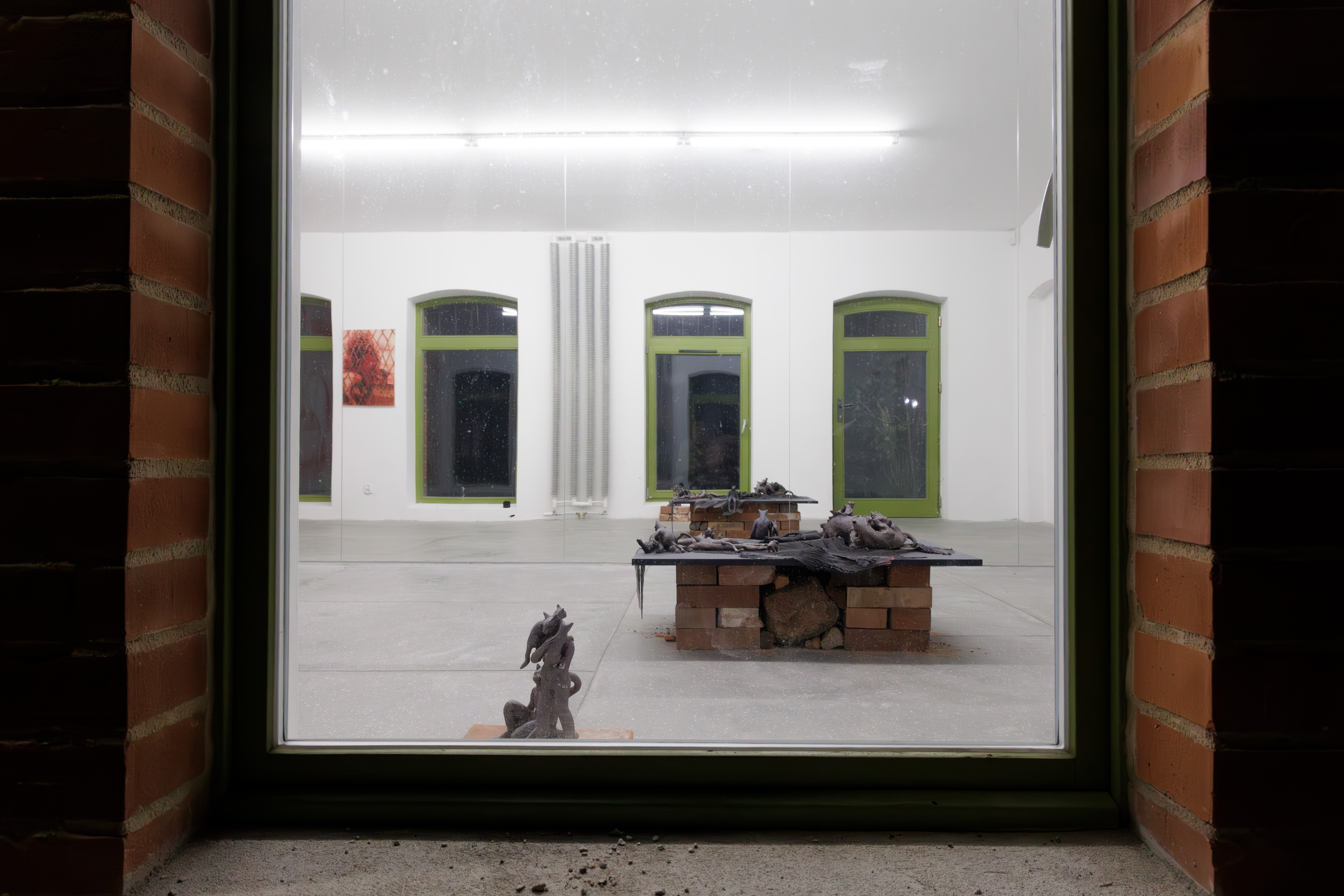
Anka Helfertova, To be in a time of war ( I keep changing my address but war never loses my scent) 2025, bricks, stone, MDF board, silicon, pigment, ceramic, 55 x 120 x 77 cm and 40 x 30 x 30 cm
Animal Elegance, 2025, installation view

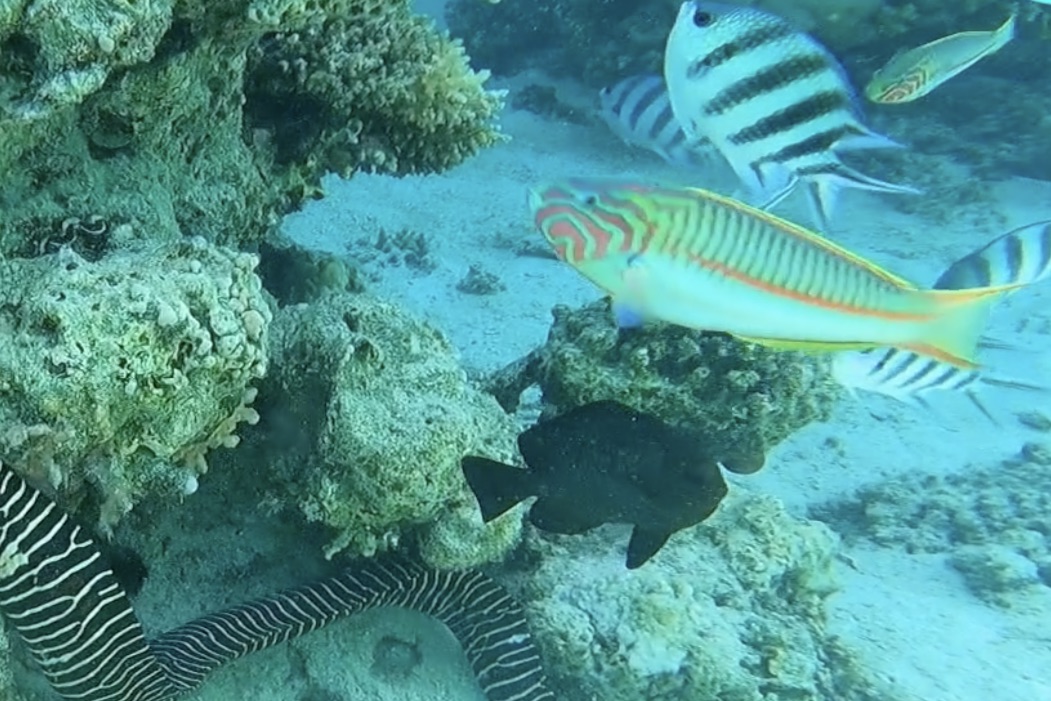
There is a fascist, who lives in my head, and he has been there for a while. I speak to him almost everyday about different things, mainly things I see in the news or read about online, but sometimes also about art. Recently I was telling him about the fish, Kluzinger’s wrasse, which reminded me of a passage I read in “A Thousand Plateaus” by Deleuze and Guattari. They ascribe to a tropical fish an animal elegance, because of the way it uses its colourful design to blend in with its surroundings. The lines of the design are abstract and yet have the capacity to construct an entire underwater world. 

Look, I tell him, we think we know what a fish is, the way you think you know what a dog or horse or lion is, an animal, a species, a type. Certainly your lot has made enough statues and animal monuments – porcelain shepherd dog figurines graced your tables. A fish lives in water and like all other fish has scales, fins and gills.  We can compare this fish to another and note down the similarities of their characteristics, in order to classify them, genus: Thalassoma, family: Labridae. You think we know what kind of an animal a fish is. There it is. Put it in an aquarium. 

Ah, I say, but can we see the animal Deleuze and Guattari describe as possessing an English kind of elegance? With a refinement that does not seek attention, but that remains quietly unobtrusive?  This involves the appreciation of the small and the detailed, like those drain moths found in Jonathan Penca’s paintings, charming us with their fuzzy faces and furry wings. More than that, unobtrusiveness requires an effort. To go through life unnoticed is not easy and drain moths have a life cycle with four stages, larvae feeding on toilet sludge before developing into pupae. 

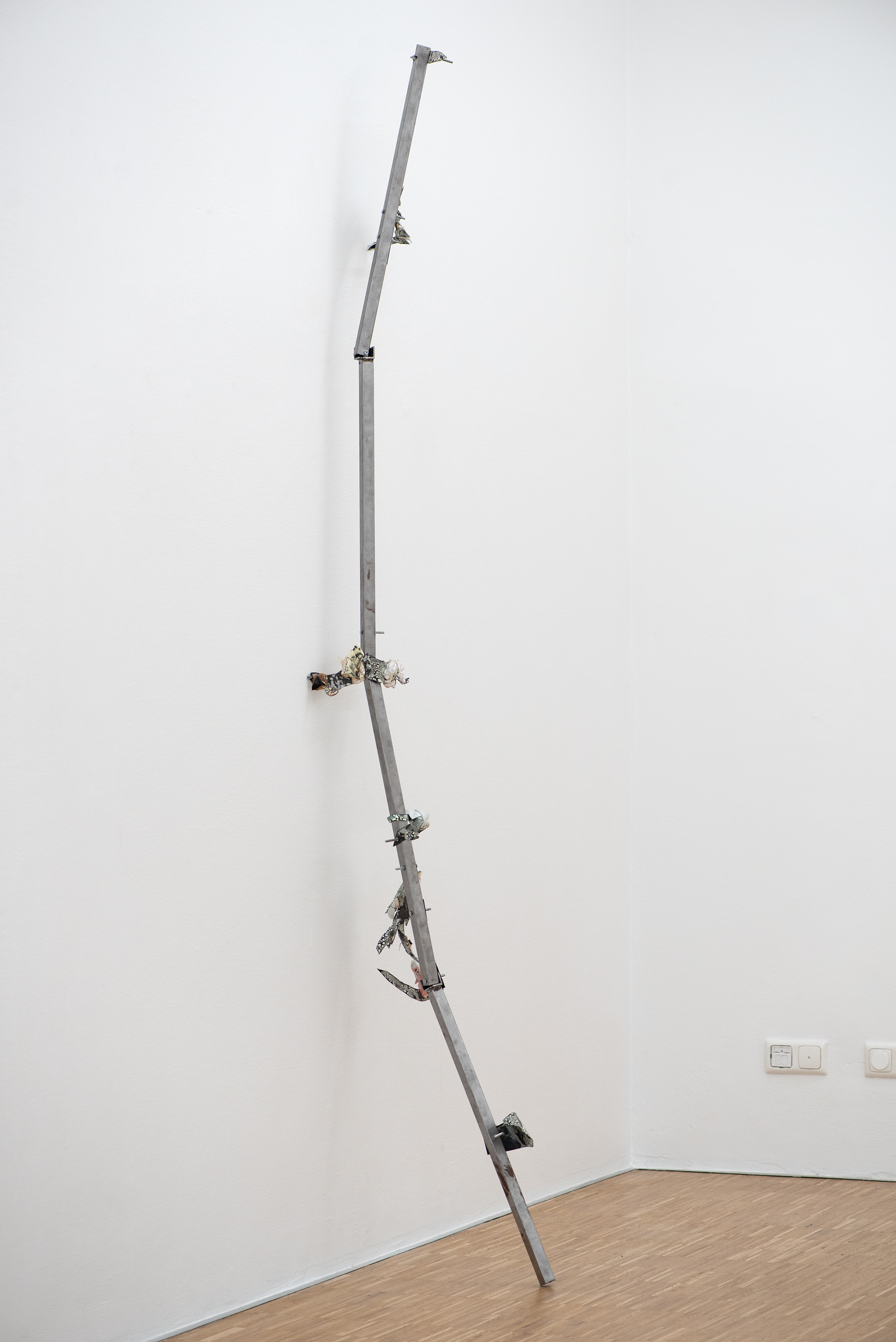
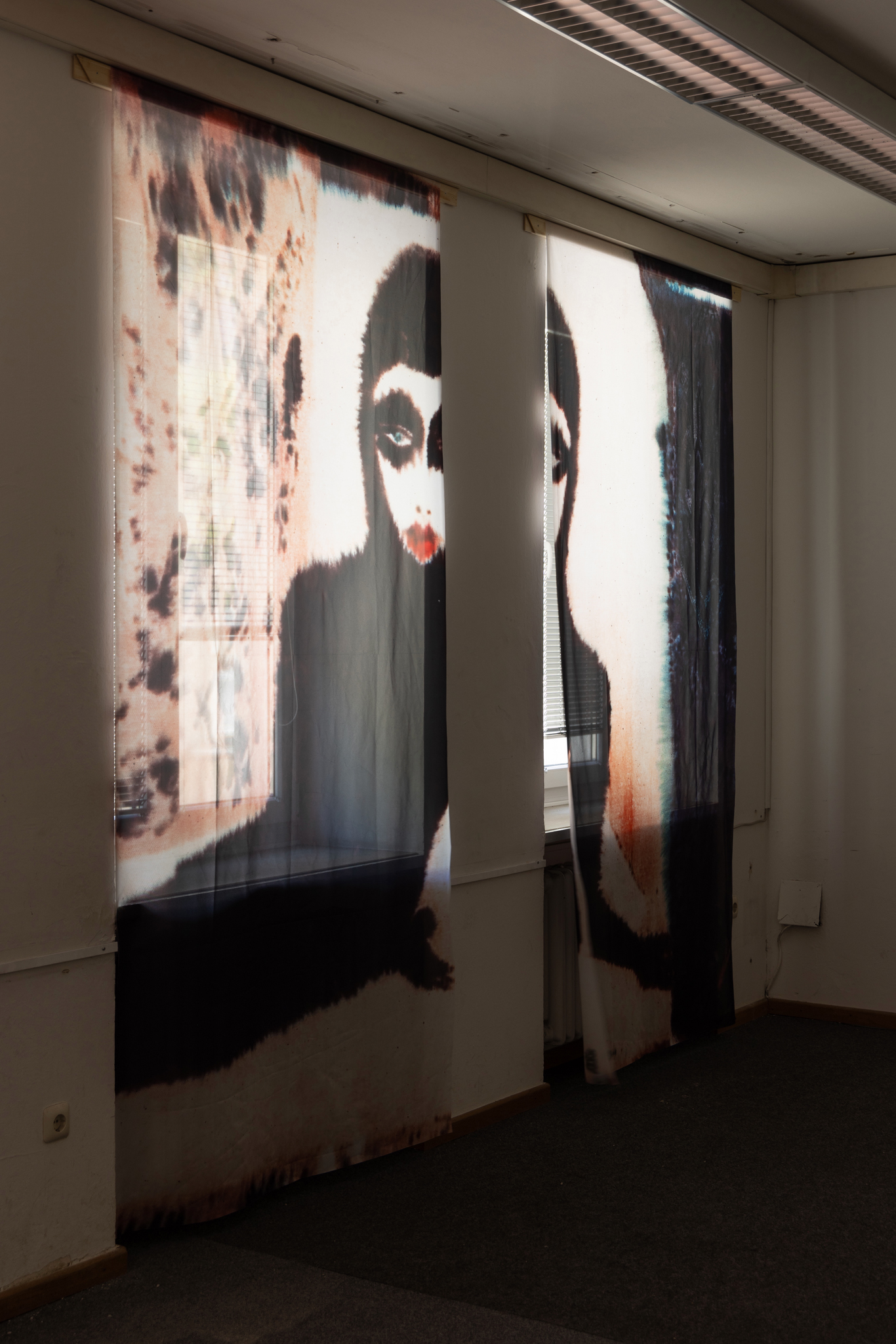
There are animals we see and animals we do not. The animals we do see, we organise and use, tame and breed. We control them as meticulously as Eadweard Muybridge did, when he set up multiple cameras to capture the image of the horse in motion or a lion in a cage, the starting point of Jakob Gilg’s paintings. We assign animals different roles: you there, you look soft and cuddly, you will be a pet. And you, you over there, so powerful and strong, you we will make into a symbol. Kitsch ceramic cats and scaled-down digital scans of lion monuments tumble, shatter and recombine in Julia Klemm’s work. 

But this animal you don’t see, is something other than a molar entity, a different “affair” as Deleuze and Guattari would say, involving “becoming” not “being.” And it might seem we are meant to think this becoming morphologically, as the becoming of something else, a change from one permanent state to another, equally permanent one. A human could become a cat perhaps – or a cat, a human – as in the work of Anka Helfertova. Violence swirls around and we try to find our peace, not to lose ourselves within. To think becoming is to think loss, the elimination of all of our complaints, demands, unsatisfied desires, “everything that roots us in ourselves,” so that at the end, we are left with nothing, which is also everything. Becoming-animal is always a becoming-imperceptible, a shrinking best found in science fiction novels, the shrinking man becoming smaller and smaller without ever disappearing. Because when animals are thought in their becoming, the molecular comes into play, those invisible abstract forces that in their millions of interactions are actually responsible for constituting a world. To think an animal in its becoming is to engage with these molecular forces at work.

This is the demand elegance places on us: to think less of ourselves and more of the other. It is to be more attuned to our surroundings by paying attention to what continues to constitute us, which is always small and inorganic, indiscernible and impersonal. Elegance is a kind of molecular attention, but with a focus that opens out onto the world. To think things in their becoming molecularly is also to think in terms of the cosmos in its entirety. And then we might indeed stop seeing fish, but we will begin to see everything else.

Magdalena Wiśniowska 2025
Animal Elegance

Jakob Gilg, Anka Helfertova, Julia Klemm and Jonathan Penca

9.10. – 7.11.2025

with Pracownia Portretu, Łódź, Poland

Screenshot

In the imaginary conversation with a fascist that I seem to almost daily conduct in my head, I like to present him (my fascist is always a man) the example of an animal, this time of a fish. Deleuze and Guattari describe this fish as being “criss-crossed by abstract lines” – I like to think of the Klunzinger’s Wrasse I saw on a recent trip to Egypt, criss-crossed by a rainbow of colour.

Here it is, I would say, look at this fish, look how beautiful it is, the colours, the design. The pattern doesn’t seem to follow the shape of the fish. There is an orange line across, stripes above, more pink wavy lines around its chubby face. Very bright. But in a certain trick of the light, the fish merges almost completely with its underwater environment. What is abstract, a matter of shape, line and colour, allows the fish to become rock, sand or a bit of coral. As Deleuze and Guattari write “this fish is criss-crossed by abstract lines that resemble nothing, that do not even follow its organic divisions; but thus disorganized, disarticulated, it worlds with the lines of a rock, sand, and plants, becoming imperceptible.”

The fish worlds and when it worlds it becomes imperceptible. It loses itself in the most vibrant way to become unnoticed and thus more firmly part of the world it belongs to. In losing itself it can become everything else.

A chimera is not a pet

Julia Klemm

28.06 – 26.07.2025

together with The Tiger Room at Heßstr. 48 b, 80798 Munich

Julia Klemm, A chimera is not a pet, 2025, installation view
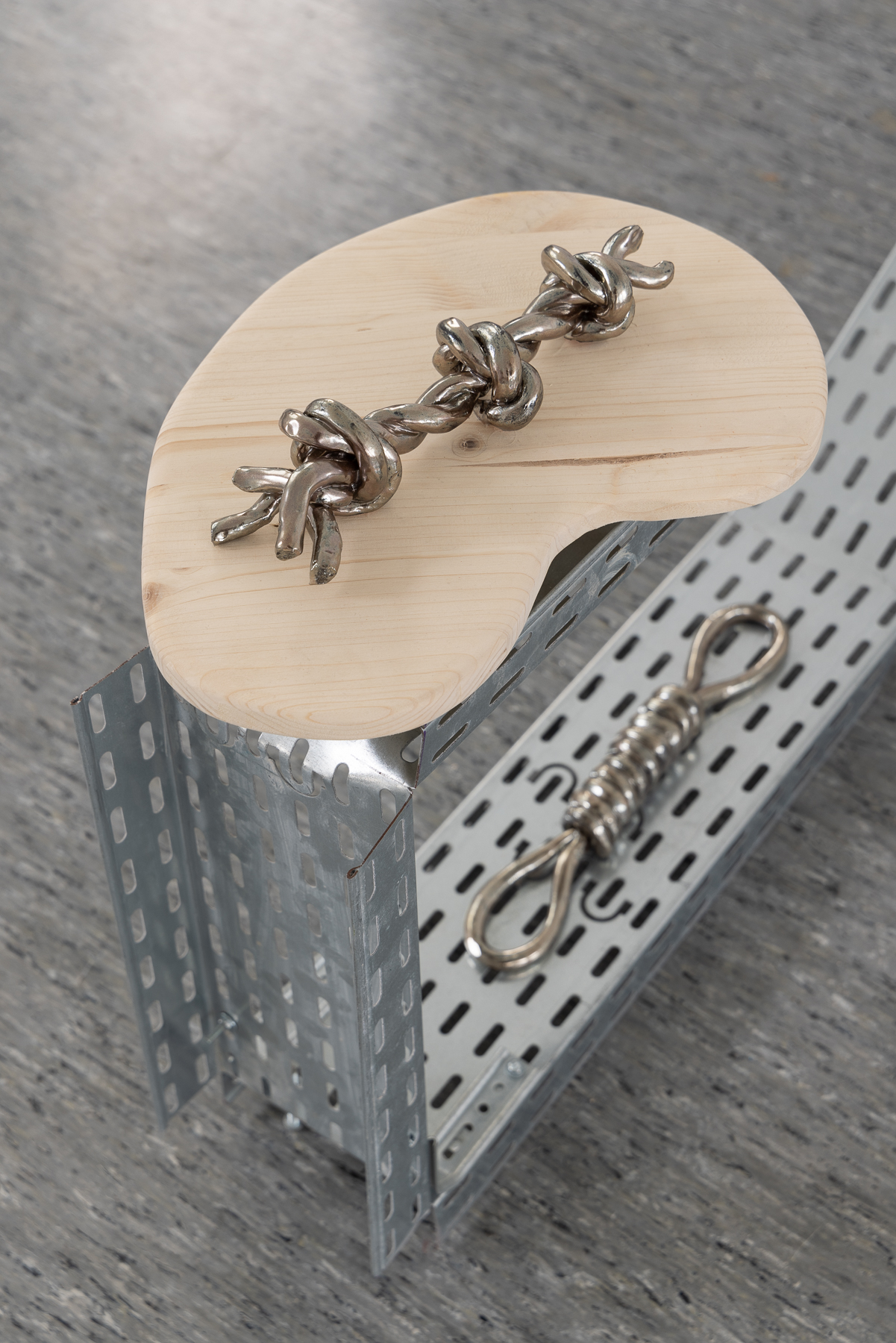
Julia Klemm, A chimera is not a pet 3, 2025, steel, glaze, ceramic, pigment, 46 × 34 × 42 cm
Julia Klemm, Evasion, 2025, steel, glaze, ceramic, pigment, cloth, 23 × 23 × 65 cm
Julia Klemm, A chimera is not a pet, 2025, installation view
Julia Klemm, Transcending territories, 2024, glaze, ceramic, pigment, 32 × 30 × 48 cm
Julia Klemm, Julia Klemm, Transcending territories, 2024, glaze, ceramic, pigment, 32 × 30 × 48 cm (detail)
Julia Klemm, A chimera is not a pet 4, 2025, secondhand ceramic figures, steel, glaze, ceramic, screws, 27 × 46 × 260 cm
Julia Klemm, A chimera is not a pet 4, 2025, secondhand ceramic figures, steel, glaze, ceramic, screws, 27 × 46 × 260 cm (detail)
Julia Klemm, A chimera is not a pet, 2025, installation view
Julia Klemm, A chimera is not a pet 2, 2025, steel, glaze, ceramic, pigment, 44 × 38 × 74 cm
Julia Klemm, Untitled, 2025, secondhand ceramic figures, glaze, ceramic, fired soft toy, chandelier, 12 × 14 × 11 cm
Julia Klemm, A chimera is not a pet, 2025, installation view
Julia Klemm, Double trouble, 2025, ceramic, steel, pigment, glaze, 24 × 34× 60 cm
Julia Klemm, A chimera is not a pet 1, 2025, secondhand ceramic figures, glaze, ceramic, steel, fired soft toy, 15 × 25 × 14,5 cm
Julia Klemm, A chimera is not a pet, 2025, installation view
Julia Klemm, Mimicry, 2025, second ceramic figures, steel, chandelier, glaze, ceramic, 12 × 14 × 8 cm
Julia Klemm, Gryphon, 2025, secondhand ceramic figures, glaze, ceramic, steel, fired soft toy, 18 × 22 × 17cm

The problem I think, is that too often a chimera is seen as a pet. We visualise chimeras as these mythical fire breathing monsters, maybe with a lion’s head, a body of a goat, and a serpent for a tail. Three distinct animals are combined into one, their individual characteristics clearly visible for us to see. In contrast, biologically,a genetic chimera is often invisible, a nightmarish combination of two different sets of DNA, a result of one or more zygotes fusing together during the early stages of prenatal development. How this alien DNA might manifest is not altogether clear, but you hear stories of mothers having different DNA than their children, and the DNA from semen and saliva not matching in rape tests. To look for distinctions in chimeras would be the first step towards their domestication, treating the hybrid animal as another family member, a pet. But you cannot cuddle the long lost twin you might be carrying with you, inside.

Julia Klemm’s ceramic work often involves a combination of several smaller ceramic pieces, each with their own specific animal DNA. Sometimes these are readymade figurines of cats, lions or horses, glossy and kitsch, inhabitants of Flohmärkte and Omas’ living rooms. At other times, these are recreations of existing public art, of lion statues such as those found on Odeonsplatz, scanned, scaled down and then modelled with a 3D-printed negative mould. Rarely, an animal-type structure is moulded in clay by Julia on the spot, traces of fur scratched with a serrated scraper onto its surface. These smaller animal ceramics are first broken, smashed into almost unrecognisable fragments before they are combined, their intertwining made permanent by the heat of the ceramic oven. I look for these fragments as I walk around the work and try to classify them: look, here are some lion’s legs, and here, a cat’s head, but upside down and half-broken, so that I can see the form inside and outside. Focussing on the surface helps, as I detect the glossy spots of a panther or the layer lines of the 3D printer.

In doing so, I am looking for a pet, with fur strokable like a pastel-coloured soft toy. I try to make the strange shapes of Julia Klemm’s work once again familiar to me. But their outward appearance is a result of a logic that remains hidden. The work demands I see it as a multiplicity, which means in animal terms, as a population. And science teaches us that a population is not a fixed set of individuals of the same species, but an always evolving, interacting mass that changes in relation to its location and environment. The alliances made in a population are not just of the filial kind between individual members of the group, but those made with other groups, other animals, with plants, and with geography.  To see the inner workings of the animal in Julia Klemm’s ceramics, I need to step away from the animal and take a more expansive view, one that acknowledges population change forged by mutation. It is very alien to see the world in this way, as foreign and as violent as the shards of steel that interpenetrate the work, both holding it together and ripping it apart. 

Magdalena Wiśniowska 2025

Roztopy

Dominika Olszowy, Klaudia Figura, Julia Woronowicz, Czaro Malinkiewicz, Paweł Marcinek, Przemysław Piniak, Zuza Piekoszewska, Maryna Sakowska, Karolina Szwed

curated by Przemek Sowiński (Łęctwo, Poznań) and hosted by The Tiger Room

9.05 – 14.06.2025

together with The Tiger Room at Heßstr. 48 b, 80798 Munich

Roztopy, 2025, installation view. Photo: Przemek Sowinski
Dominika Olszowy, Suń in the Sheer Curtains, 2024, sheer curtains, epoxy resin. Photo: Przemek Sowinski
Paweł Marcinek, Sick House, 2024, 67 x 58 cm, furniture, acrylic, spray paint. Courtesy of the artist and Lectwo Gallery.
Paweł Marcinek, Complex Problem (Zlozony Problem) . 100 x 74 cm. Furniture, acrylic. Photo: Przemek Sowiński.
Czaro Malinkiewicz, Behind the Barrack, 2024, 70 x 50 cm silicon, bandage, acrylic, prints, ink, dust. Photo: Przemek Sowinski
Czaro Malinkiewicz, The Sadness that Comes at the End of the Day, 2024, 38 x 20 cm, silicone, bandage, acrylic. Photo: Przemek Sowinski
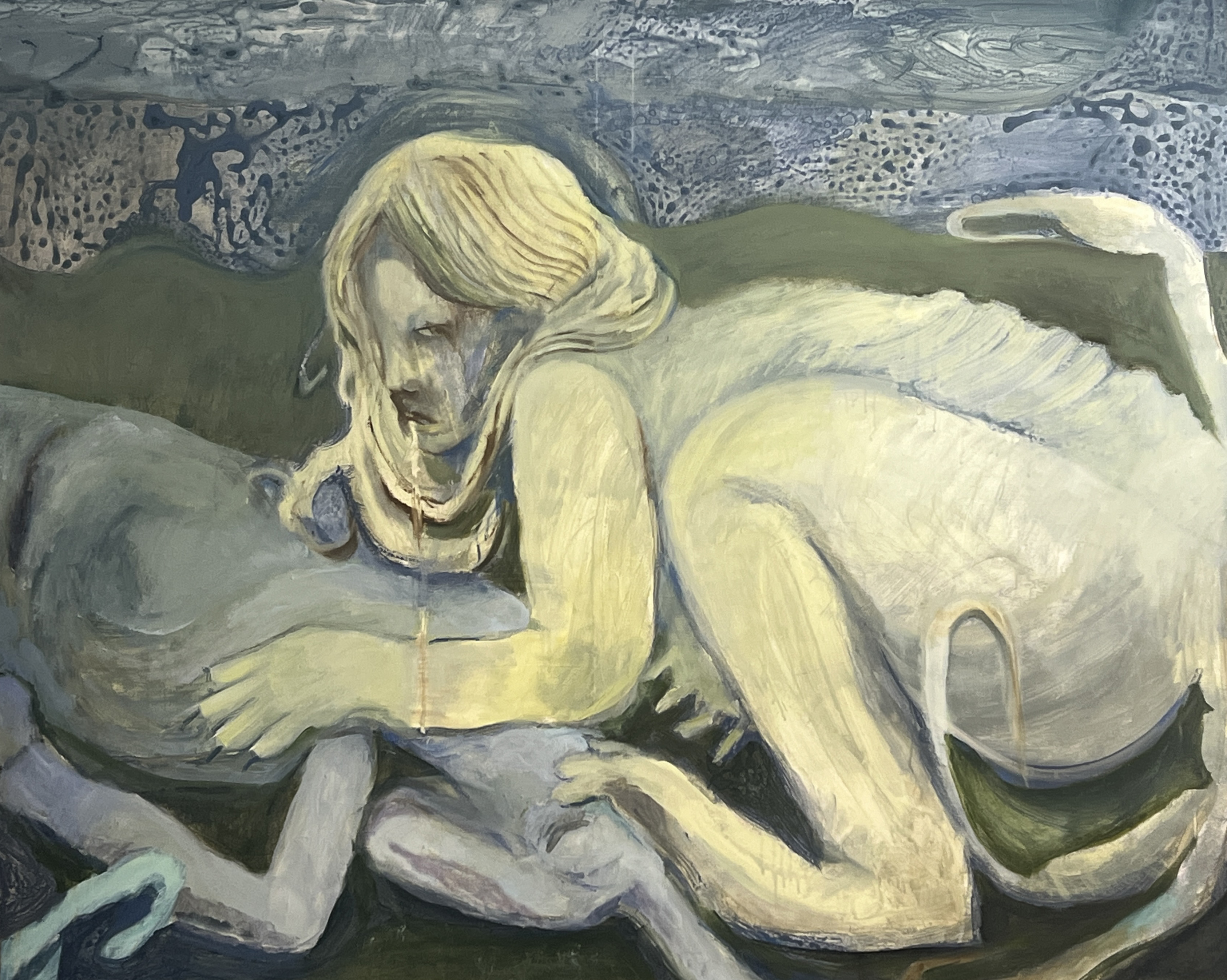
Karolina Szwed, I Skipped the Test and Passed, 150 x 120 cm, oil on canvas. Photo: Przemek Sowinski
Karolina Szwed, Spring, 40 x 50 cm, oil on canvas. Photo: Przemek Sowinski
Przemysław Piniak, Wróblok, Video, 1’36. Photo: Przemek Sowiński
Dominika Olszowy, Suń Clown, 2023, concrete, nappies, epoxy resin. Photo: Przemek Sowiński
Julia Woronowicz, Rise and Fall of the Pandcity Universe, 2024, oil on canvas. Photo: Przemek Sowinski
Klaudia Figura, Negative Sentiment, 164 x 90 cm, oil on canvas, crayon, pastel. Photo: Przemek Sowinski
Zuza Piekoszweska, Base for Little Ones, 100 x 80 cm, wool, plaster on canvas, acrylic, crayons, corn, raffia.
Pawel Marcinek. Inner Observer with Duck, 4 x 5 x 7 cm, wood, varnish. Photo: Przemek Sowinski
Roztopy, 2025, installation view. Photo: Przemek Sowinski.
Maryna Sakoszewska, Roulette. 180 x 120 cm, bleach, oil and domestic in jeans and kitchen cloth. Photo: Przemek Sowinski
Dominika Olszowy, House of Little Coffee. 140 x 70 x 2 cm, stained glass, gravel, epoxy resin. Photo: Przemek Sowinski
Maryna Sakoszewska, Post Mortem, 21 x 29 cm, pencil on paper. Photo: Przemek Sowinski
Pawel Marcinek, Unititled, 21 x 29 cm, pencil on paper. Photo: Przemek Sowinski

Jestem już na to za stara – I am too old for this.  I still remember when everything changed. It was the little things that I noticed at first. At the beginning there was only one or two vegetable stands close to the tram stop across the street. They were soon joined by others selling second hand clothes from the west. Advent calendars followed with real chocolate inside (!) – then a baker – then a stand with underwear and nylon stockings and slippers with elastic bands. Dynasty was on TVP after the news each Sunday at a quarter past eight and a chewing gum cost 1.000 zloty. The next week it was 1.500 zloty. 100.000 zloty was a Christmas gift from my grandmother and I was told to spend this quickly. When I visit Poland, which is not at all often, these are the memories I carry with me and their images of the past always shape how I see the place where my parents live now.

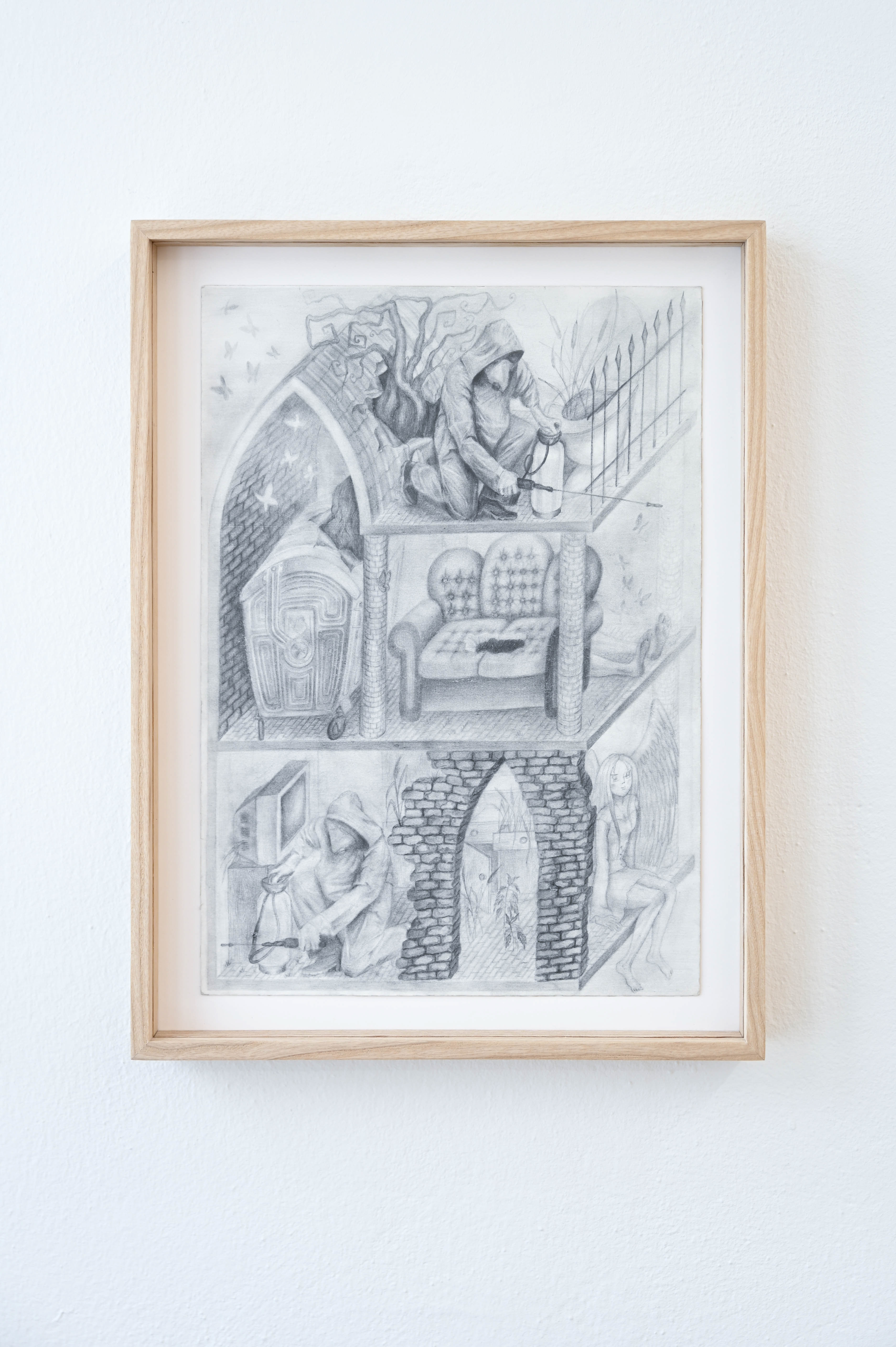
Most of the artists in the exhibition “Roztopy” curated by Przemek Sowinski and hosted by the Tiger Room were born much later, in the late 90s, and they are not burdened with these particular recollections. When Przemek writes of the “thaw” this is what he means. I admit that initially I misunderstood. I assumed the period of transition that the exhibition refers to was the historical transition from one political system to the next. I guess I really am too old for this – I am too late. In 1990, as a ten year old child I only witnessed the beginnings of a transition. But it is this transition time, which is now perhaps coming to an end, melting away as it were, like old winter’s snow. And in the green-tinted light we can see the dirt that has been left behind. Spring is here at last – a sun is rising in Dominika Olszowy’s work! It is also there in the small drawing by Paweł Marcinek, outside his block of flats, on an advertising banner. Yet in the painting by Karolina Szwed, spring is a girl’s short skirt, a drop of liquid like a tear, tricking down her bare thigh. In the work by Klaudia Figura another girl stomps on her schoolwork with clumpy shoes. So vomit spews from the second sun by Olszowy setting in the corner of the gallery space – and from the wooden sick house by Paweł Marcinek hanging in the other corner. Two arms embrace it from behind, whether to comfort it in its distress or to stop it from choking, we cannot tell. In a small drawing by Maryna Sakowska, a gothic, multi-story dwelling is being disinfected by men in biohazard suits, after a grandmother was found lying dead behind the stained sofa. Whereas, the dwelling in Zuza Piekoszewska’s piece is one made for insects to crawl in. 

There are other memories present here as well, but these refer to a past I do not share because it was an impossible future for me, the turn of the century when everything was supposed to get better, cooler somehow. Czaro Malinkiewicz’s heavily textured reliefs of silicon and paste and dirt, refer to splatter film gore and manga comics and more references to manga are also present in Sakowska’s work. Whereas we in the early 90s would try to find old copies of Lucky Luke. Przemysław Piniak celebrates this time to come in his video, dancing wildly in front of his grey block of flats while dressed in his most shiny and colourful sports clothes. Julia Woronowicz, who often reinterprets local histories and myths, has also seen the future in her painting, and it looks like Piaseczno! Presiding over this detritus of change is s small kneeling figure, shiny and black holding a duck in its arms. Like Benjamin’s angel, it looks towards us as it is blown to the future.  

Magdalena Wiśniowska 2025
Roztopy

Dominika Olszowy, Klaudia Figura, Julia Woronowicz, Czaro Malinkiewicz, Paweł Marcinek, Przemysław Piniak, Zuza Piekoszewska, Maryna Sakowska, Karolina Szwed

curated by Przemek Sowiński (Łęctwo, Poznań) and hosted by The Tiger Room

9.05 – 14.06.2025

Opening: 9.05.2025, 5pm

Heßstr. 48 b, 80798 Munich

Julia Woronowicz, Sphinx and Foal, 2024, courtesy of the artist

The exhibition “Roztopy” explores the relationship between a characteristic Polish landscape of melting snow, folklore, and tradition, and what remains following the political, social, and economic upheavals of the 1990s. “Roztopy” translates as snowmelt, a transitional period in which one condition changes into another. It refers to a specific moment in time that captures the tension between what has passed and what is to come. The show features recent work of young Polish artists, approaching the theme from an economic perspective, the shifting locations and the resurfacing of emotions that are becoming more obvious after a period of stagnation. Just like any transformation, melting snow reveals what lies beneath. Cracks, debris, and everything else that went unseen is forced into a confrontation, just like we face buried memories. The works are connected by the notions of transgression and experimentation. This is a story about the mud we bring from the streets into our own homes.

Roztopy widmet sich der Verbindung zwischen der schmelzenden Schneelandschaft Polens, ihrer Folklore und Tradition sowie den Spuren, die die politischen, sozialen und wirtschaftlichen Umbrüche der 1990er Jahre hinterlassen haben. Roztopy bedeutet Schneeschmelze – eine Übergangsphase, in der ein Zustand in einen anderen übergeht. Der Begriff beschreibt einen Moment der Spannung zwischen Vergangenem und Zukünftigem. Gezeigt werden aktuelle Arbeiten junger polnischer Künstler*innen, die sich dem Thema aus einer wirtschaftlichen Perspektive nähern und die Veränderungen sichtbar machen, die nach einer Zeit der Stagnation einsetzen. Wie die Schneeschmelze verborgene Risse und Trümmer freilegt, zwingen uns die Werke, sich mit verschütteten Erinnerungen auseinanderzusetzen. Was die Arbeiten vereint, ist die Bereitschaft zum Experiment und das Spiel mit Grenzen. Die Ausstellung erzählt die Geschichte des Schlamms, den wir unweigerlich von draußen mit nach Hause bringen.

The Brutality of Spring

Anna Łuczak, Sophie Schmidt

14.12.2024-2.02.2025

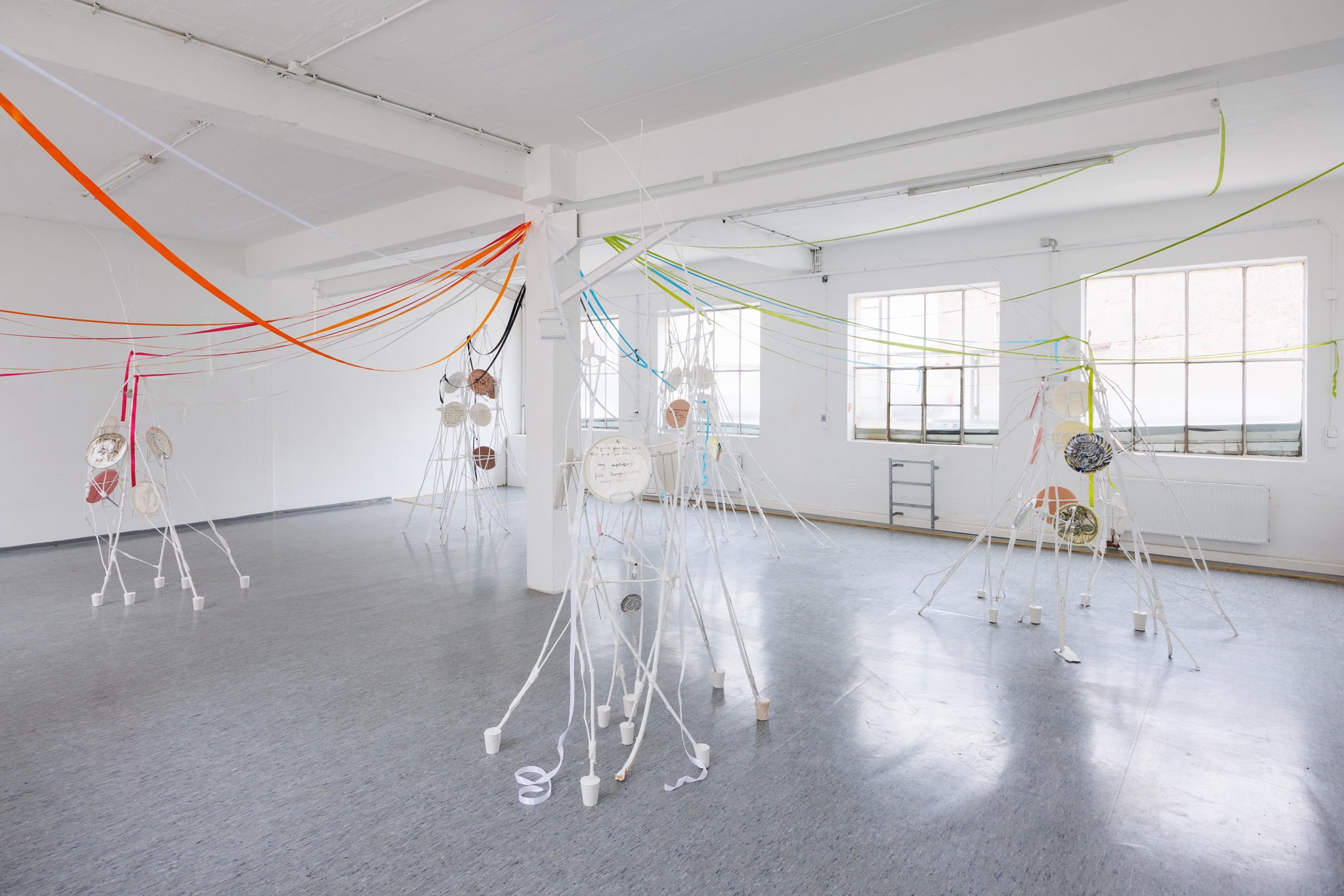
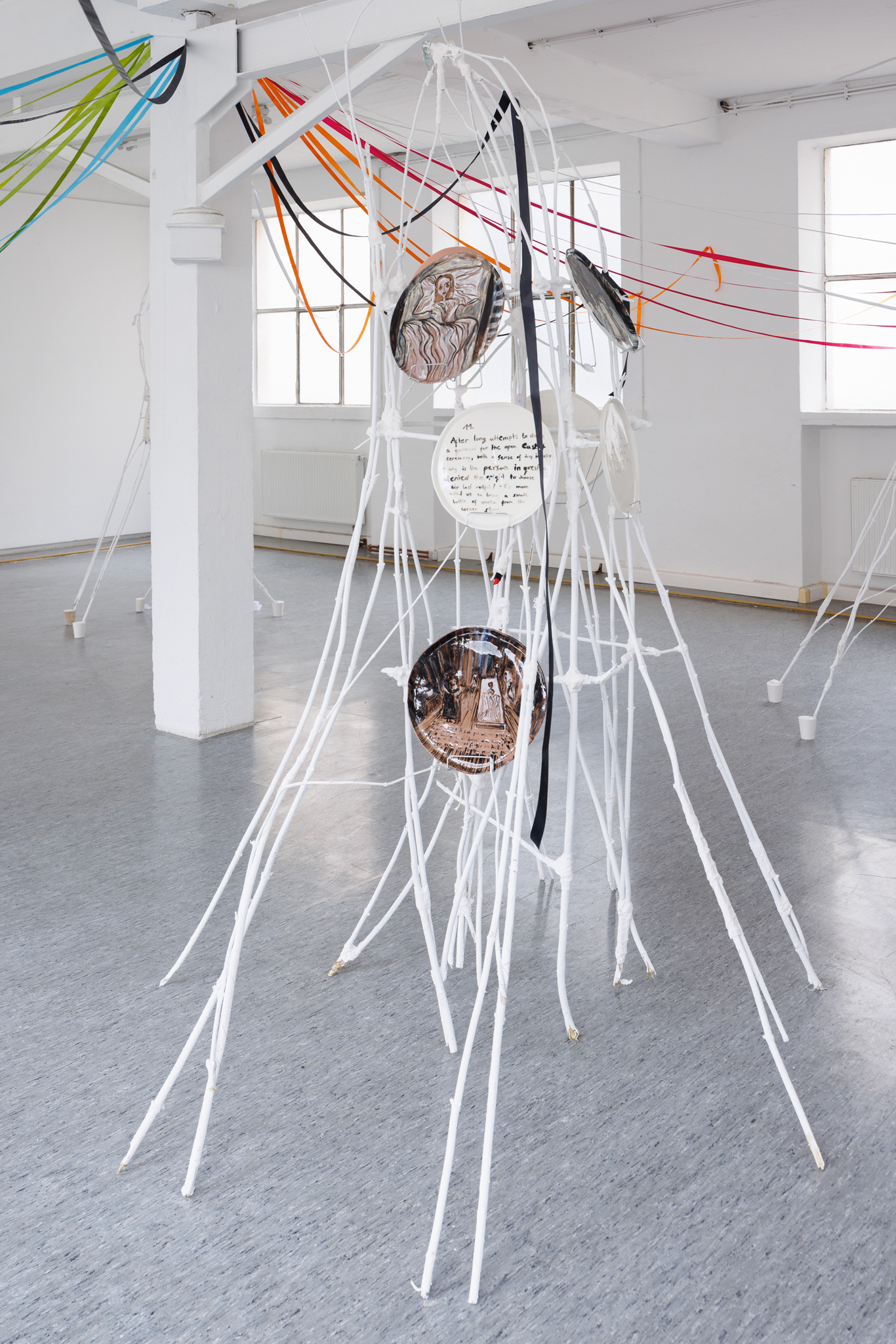
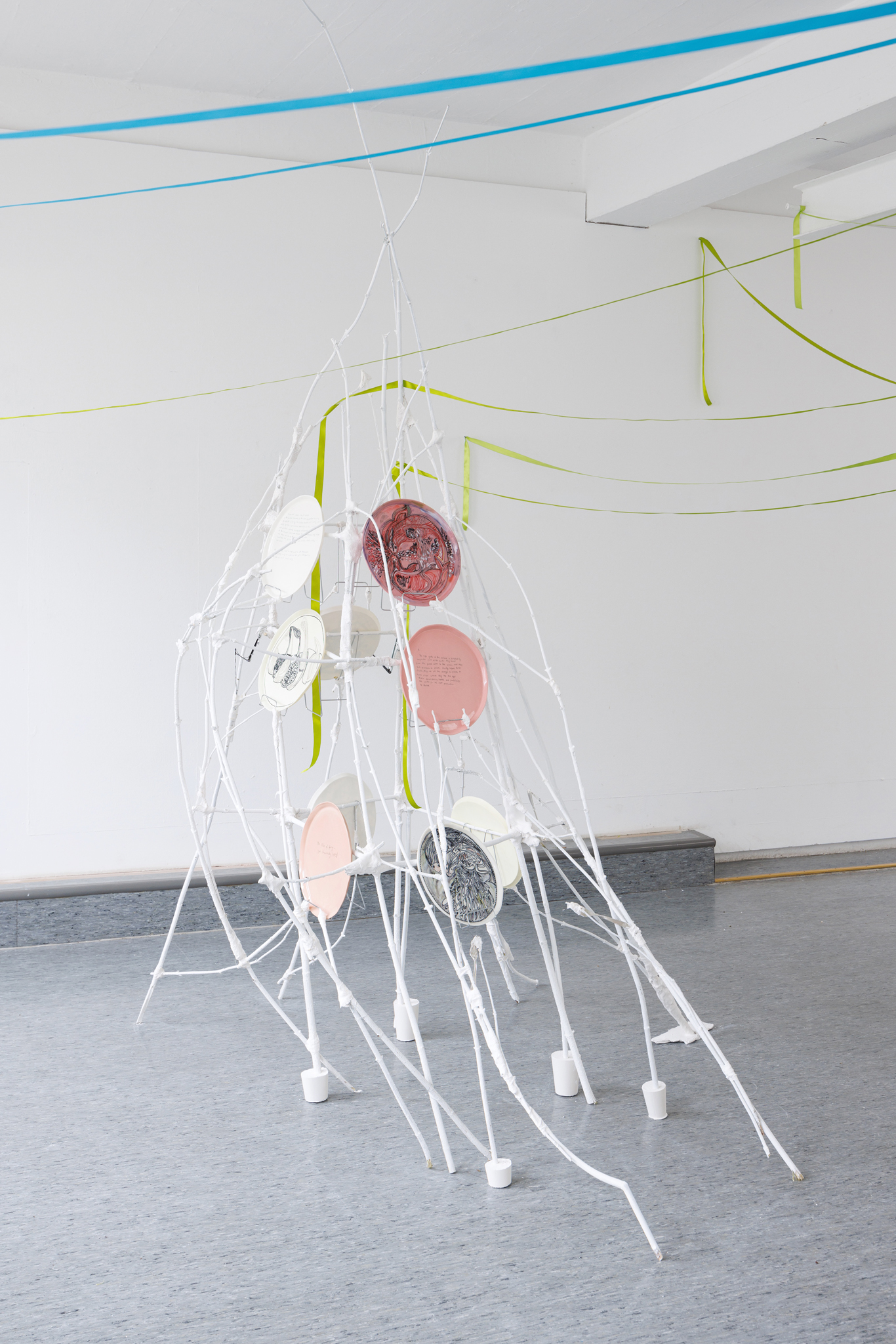
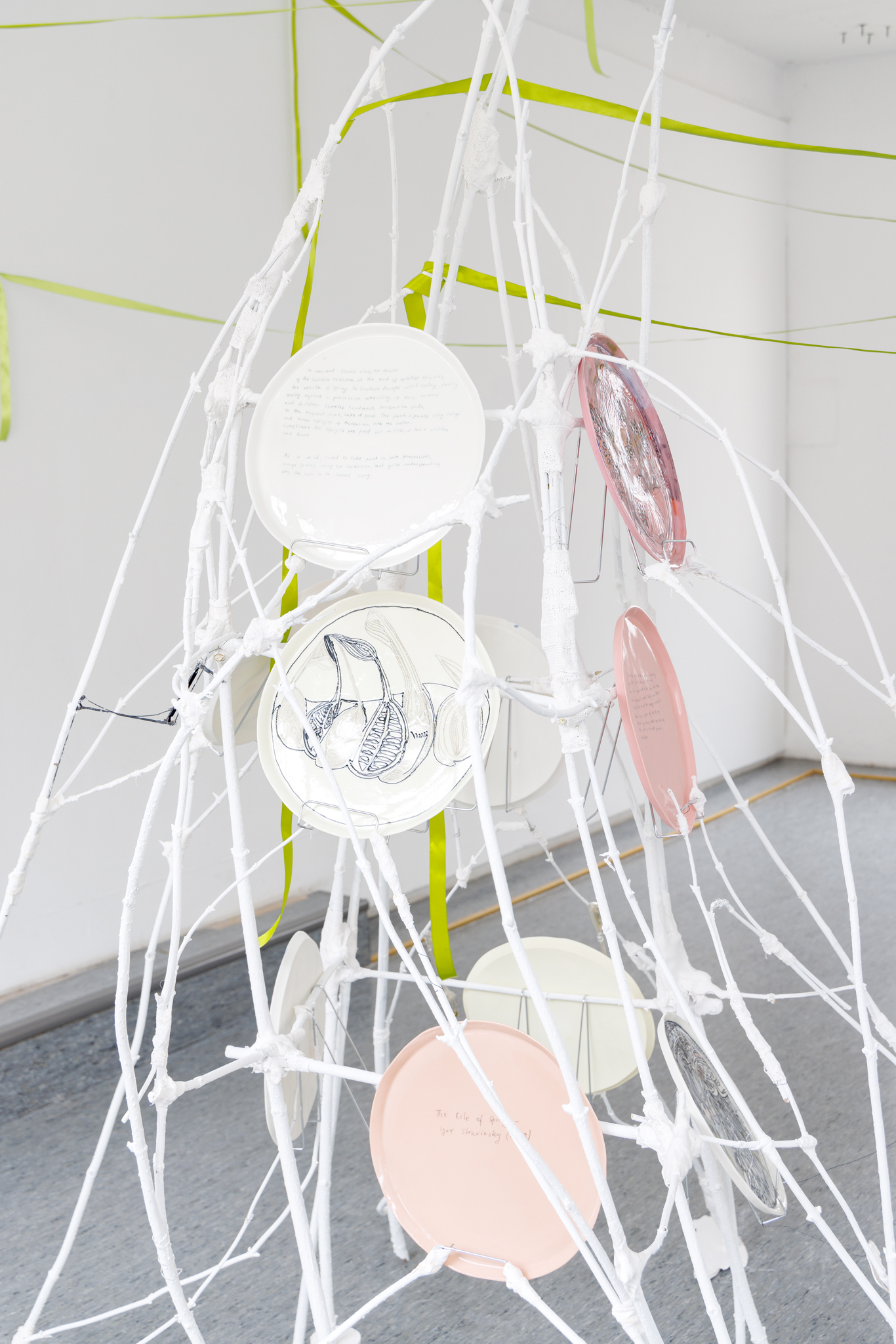
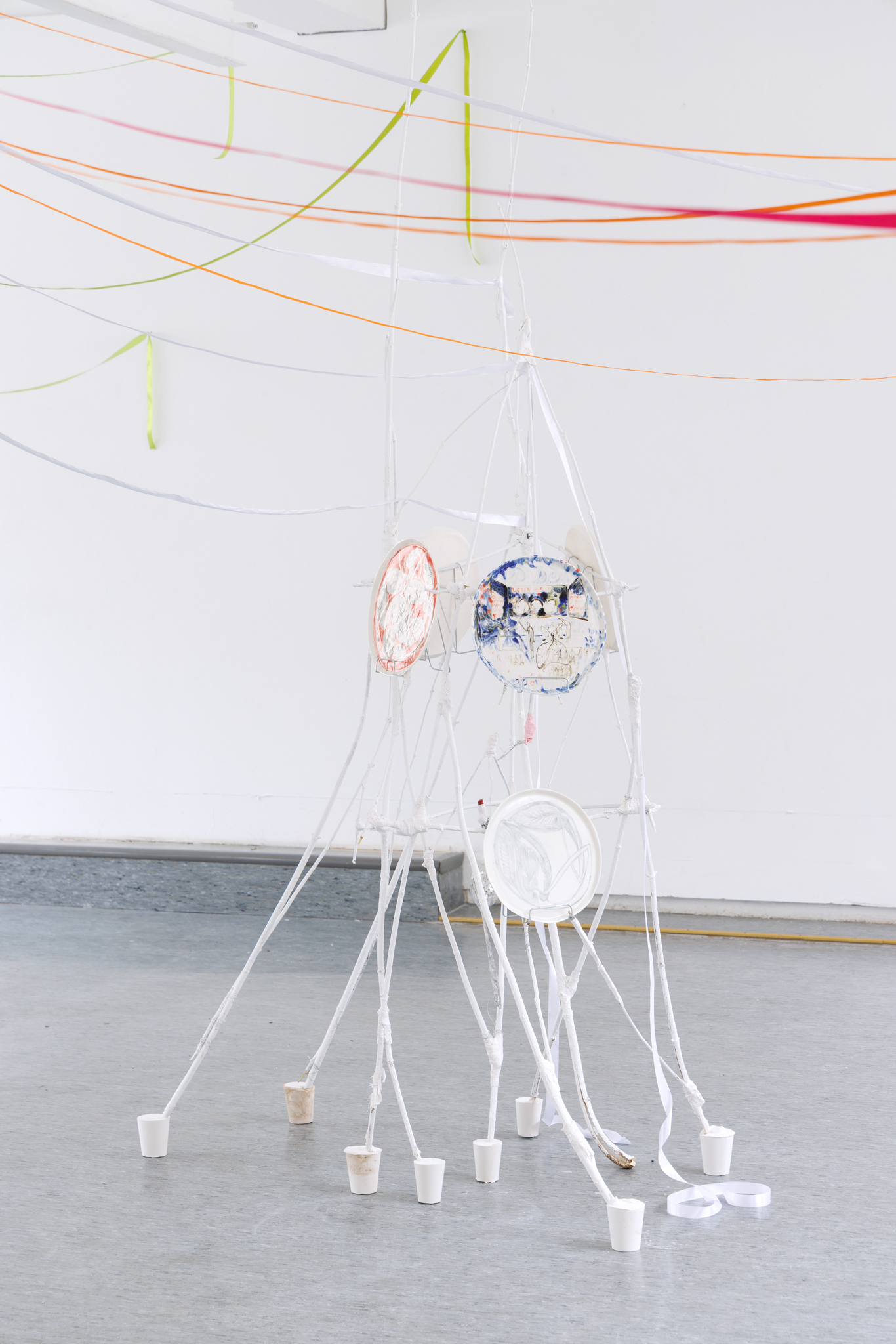
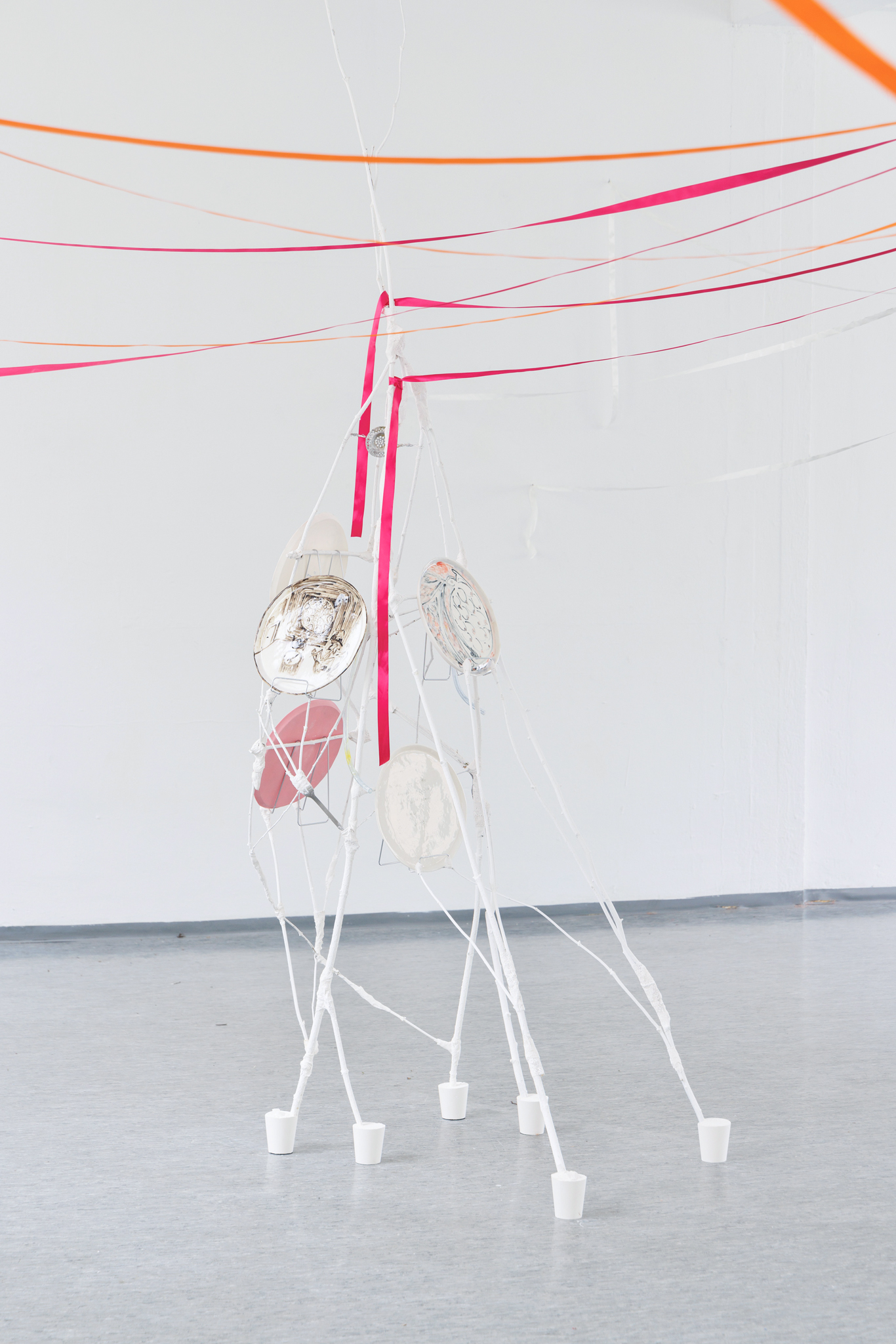
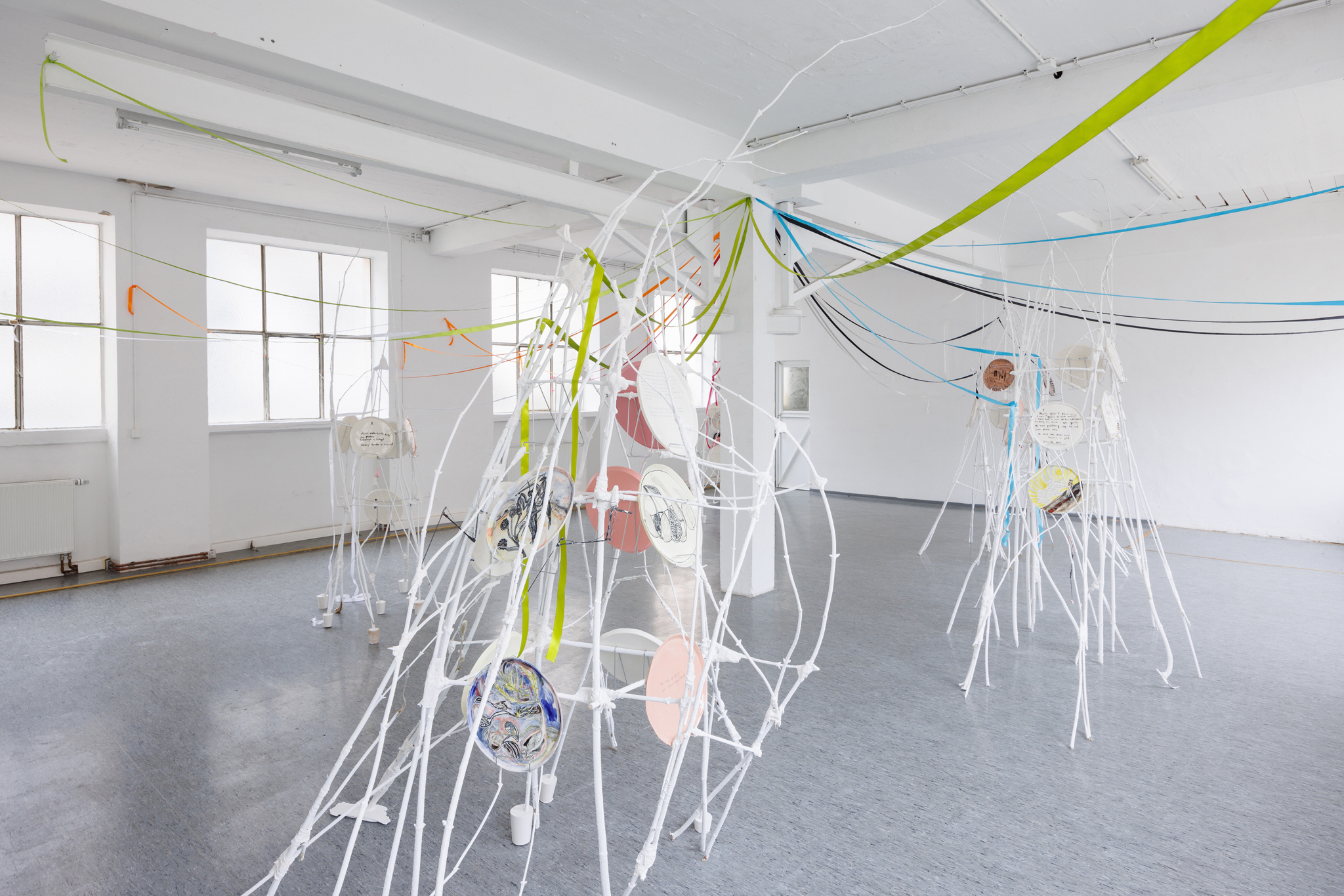
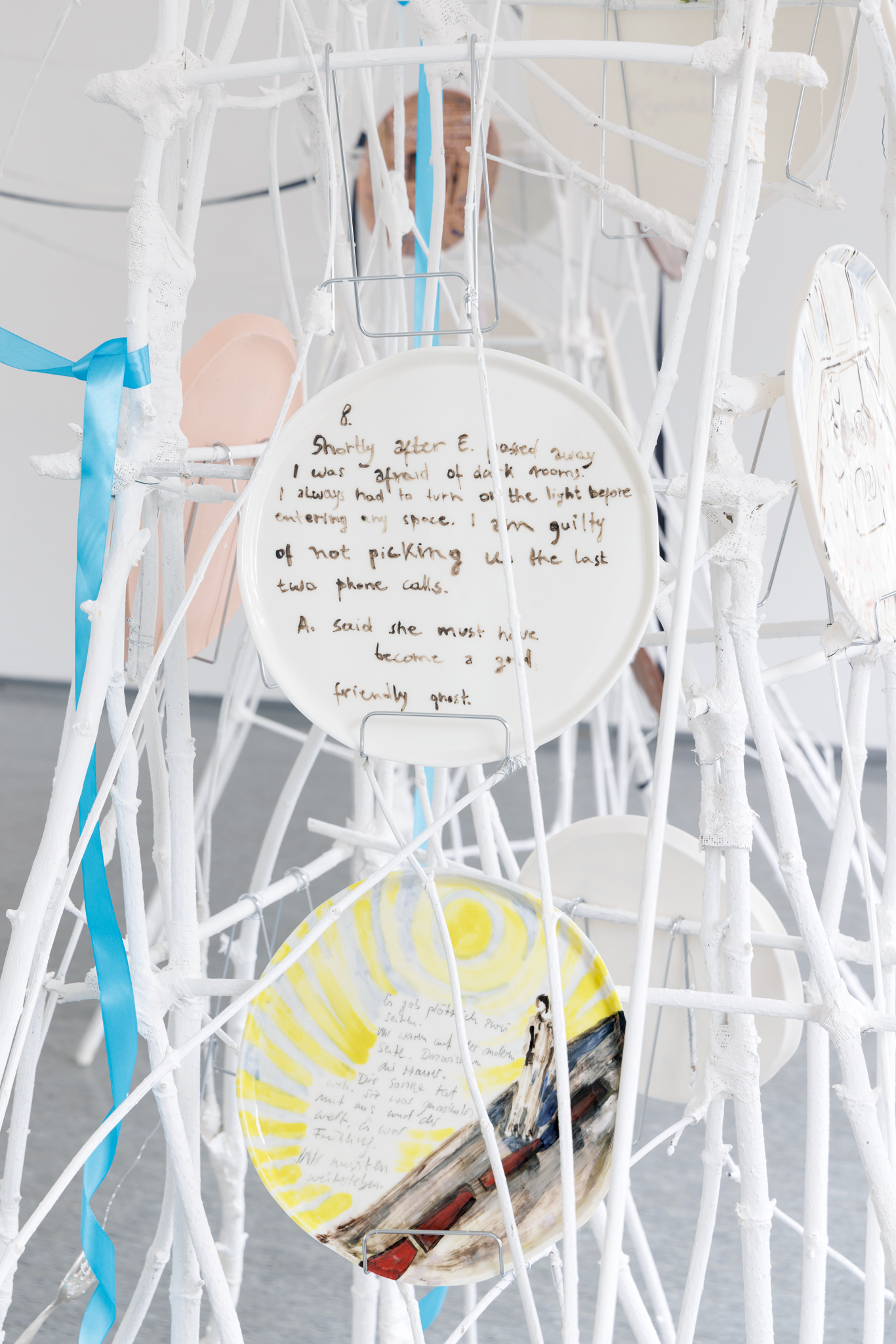
Anna Łuczak, Sophie Schmidt, “Brutality of Spring,” 2024, installation view (porcelain plates, white paint, wood ribbon, metal plate holders, cutlery, make up). Photo: Thomas Splett
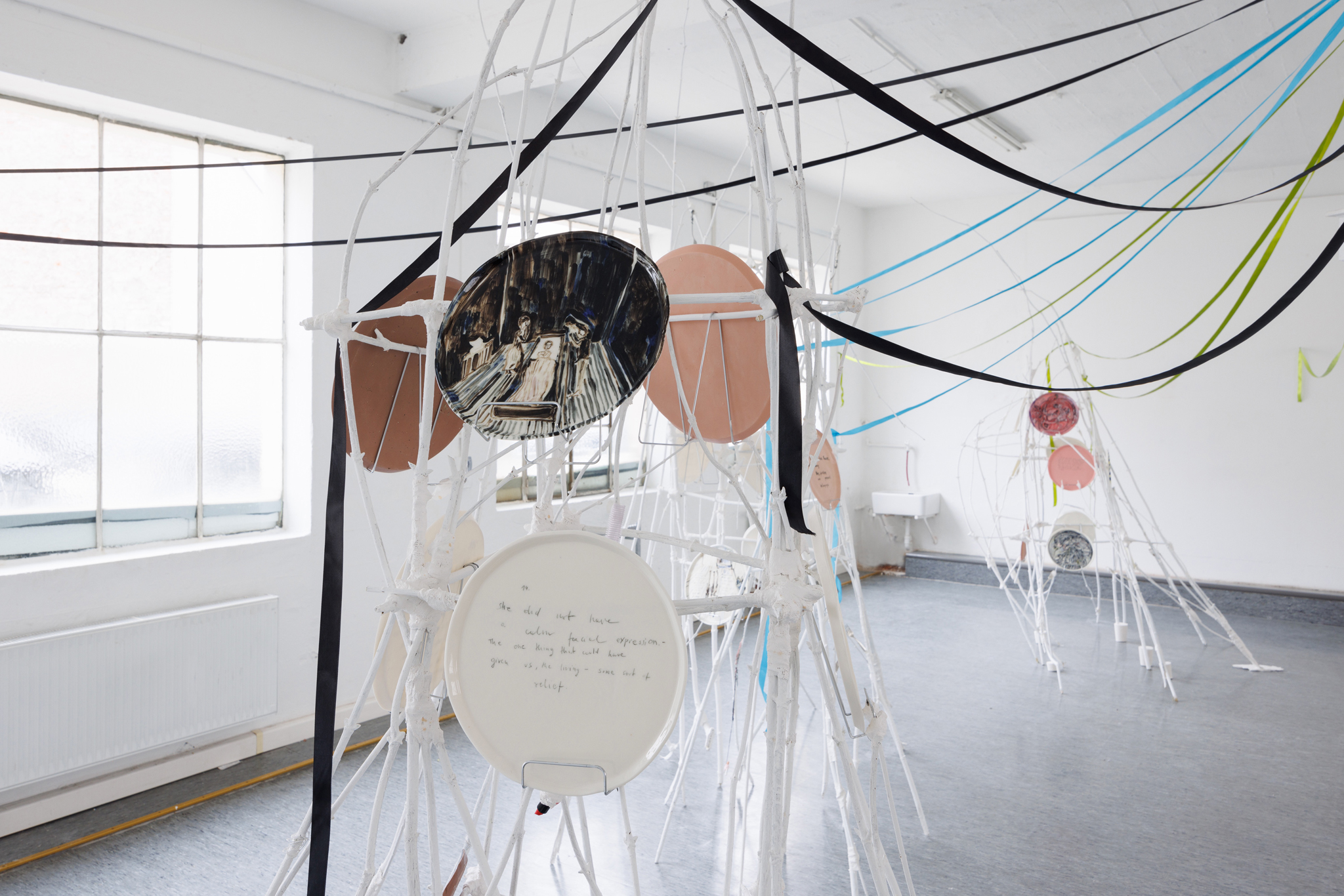
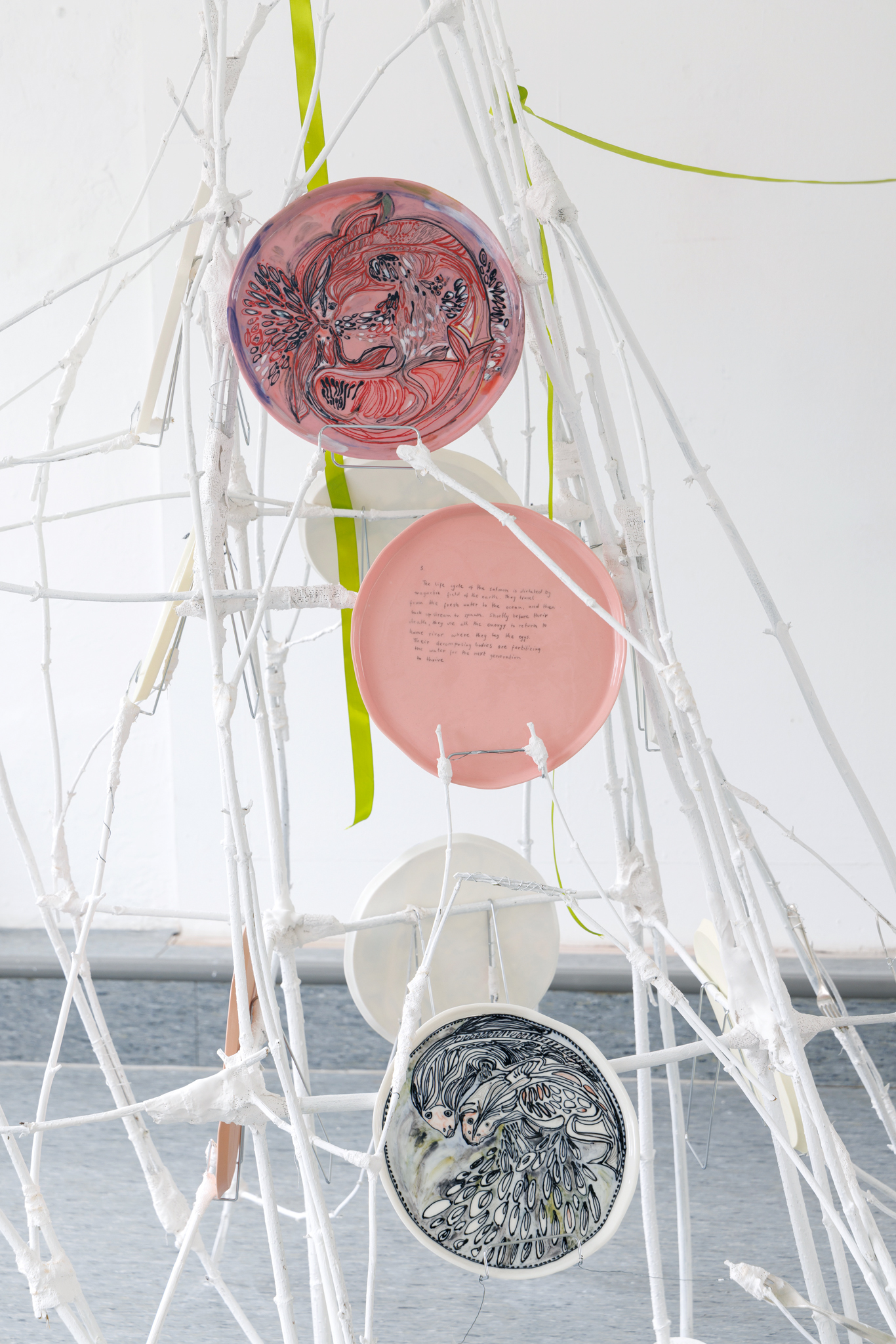
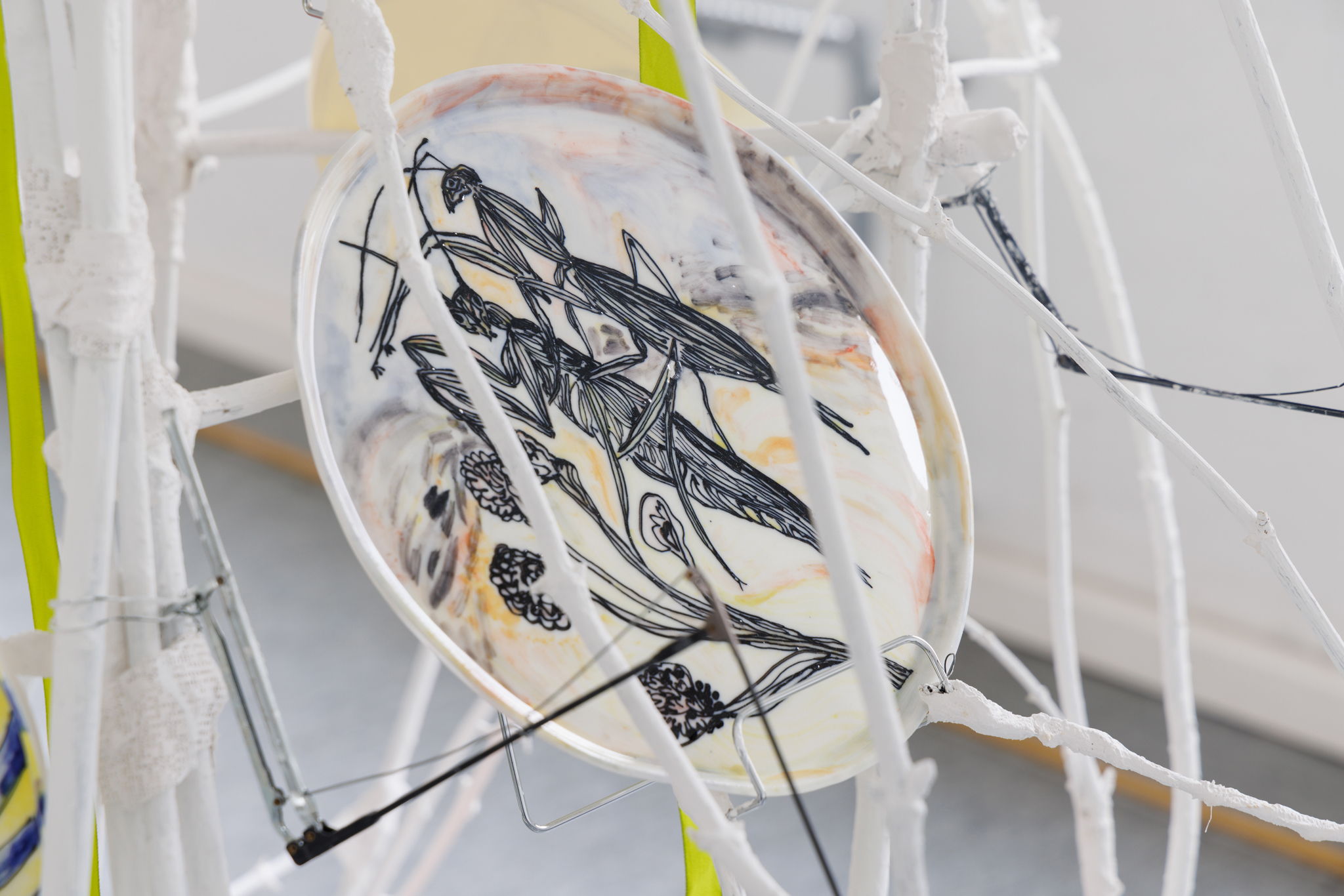
Anna Łuczak, Sophie Schmidt, “Brutality of Spring,” 2024, detail (porcelain plates, white paint, wood ribbon, metal plate holders, cutlery, make up). Photo: Thomas Splett
Anna Łuczak, Sophie Schmidt, “Brutality of Spring,” 2024, installation view (porcelain plates, white paint, wood ribbon, metal plate holders, cutlery, make up). Photo: Thomas Splett
Anna Łuczak, Sophie Schmidt, “Brutality of Spring,” 2024, detail (porcelain plates, white paint, wood ribbon, metal plate holders, cutlery, make up). Photo: Thomas Splett
Anna Łuczak, Sophie Schmidt, “Brutality of Spring,” 2024, installation view (porcelain plates, white paint, wood ribbon, metal plate holders, cutlery, make up). Photo: Thomas Splett
Anna Łuczak, Sophie Schmidt, “Brutality of Spring,” 2024, detail (porcelain plates, white paint, wood ribbon, metal plate holders, cutlery, make up). Photo: Thomas Splett
Anna Łuczak, Sophie Schmidt, “Brutality of Spring,” 2024, installation view (porcelain plates, white paint, wood ribbon, metal plate holders, cutlery, make up). Photo: Thomas Splett
Anna Łuczak, Sophie Schmidt, “Brutality of Spring,” 2024, detail (porcelain plates, white paint, wood ribbon, metal plate holders, cutlery, make up). Photo: Thomas Splett
Anna Łuczak, Sophie Schmidt, “Brutality of Spring,” 2024, installation view (porcelain plates, white paint, wood ribbon, metal plate holders, cutlery, make up). Photo: Thomas Splett
Anna Łuczak, Sophie Schmidt, “Brutality of Spring,” 2024, detail (porcelain plates, white paint, wood ribbon, metal plate holders, cutlery, make up). Photo: Thomas Splett

A person has died.

Andrea Éva Győri is dead. 

These two statements are not the same, though they might seem very similar. When I say, E. is dead, I think of her and how she was, someone I never met but heard so much about: the tone of her voice, her laugh, her enthusiasm and strong personality. She is someone with a consciousness, a memory, a personal identity. But when I say, a person has died, I mean something different. The logic is different because it is impersonal. It has nothing to do with E. and yet everything to do with her.  A person is singular – the one – yet not particular. I cannot say anything specific about a person.  A person is dead is an indefinite statement, because a person is a life, and life is indefinite, singular, impersonal. 

How can I describe a life?  Without talking about E. who lived? Deleuze was right, this requires an empiricism, an empirical kind of thinking, an almost scientific kind of rigour. I keep making lists:

  • There is the Marzanna, an effigy out of twigs and straw that Polish children drown in a nearby river as spring approaches.
  • There is the life cycle of the salmon, swimming upstream and spawning, then dying and their bodies fertilising the river.
  • Did you know that skeletal muscle stem cells continue living up to 17 days after all other cells have died? 
  • That scene in Dicken’s novel, “Our Mutual Friend,” when the Rogue lays dying in Miss Abbey’s first-floor bedroom. While he barely breaths everyone tries to help, but as soon as his eyelid trembles, his nose twitches, the doctor and the four men grow distant and caution returns. 

Anna Łuczak and Sophie Schmidt made a series of porcelain plates together, as individual responses to E.’s passing.  Anna made the plates and wrote the texts, Sophie painted images: 

  • There is the day of E.’s diagnosis. The breast cancer. 
  • There is the day at the crematorium. 
  • And the time just after, laying on the floor.
  • There is salmon spawning, seeds germinating. 

The plates refer to the domestic language of the vanitas. We eat on them with fork and knife, we wash them and we put them away. The colourful ribbons belong to the “kapliczka,” the wayside shrine found on nearly every road in Poland, equally catholic and pagan. Sophie Schmidt’s wooden structures hold everything together ever so precariously, extensions of the body, with the body’s fragility, strength and breakability. 

Magdalena Wiśniowska 2024

The Brutality of Spring

Anna Łuczak, Sophie Schmidt

14.12.2024-2.02.2025
Opening: 13.12.2024, 6-9 pm 

  • In Poland every year in spring, school children gather together at the banks of frozen rivers to drown the Marzanna. I remember throwing stones at the doll to make her sink faster. We then walked home without looking back. 
  • Salmon swim upstream to lay their eggs in their home river. They die and their decomposing bodies help fertilise the water. 
  • Everyone helps the rogue in the Dicken’s novel as he lays dying in Miss Abbey’s first-floor bedroom. But as he grows warm – “Did that eyelid tremble? Did that nostril twitch?” – the doctor and the four men cool and “their faces and their hearts harden to him.”

These occasions recognise what for Deleuze is not reducible to experience, but which nevertheless can be confronted: a life. Not the lived, individual life, so full of things that need to be done, but a life, singular and impersonal, indefinite; a life with no moments, but only the in-between, a passage, a becoming, of events yet to come that have already happened. “Pure power and bliss” Deleuze writes. Just life, only life, a life. 

  • In “The Brutality of Spring” Anna Łuczak and Sophia Schmidt collaborate together in homage to a recently deceased mutual friend to produce a multimedia installation, a vanitas-type project, founded equally in the transience of domestic sphere and the fragility of the human body. 

VO Special: Carrying the Earth to the Sky

Hêlîn Alas,Pierre-Yves Delannoy, Lukas Hoffmann, Veronika Hilger, Ju Young Kim, Anna McCarthy, Jonathan Penca, Curtis Talwst Santiago, Valio Tchenkov, Ayaka Terajima, Gülbin Ünlü, Paul Valentin, Max Weisthoff

7.09 -28.09.2024

Temporary venue at Schillerstr. 38, Munich

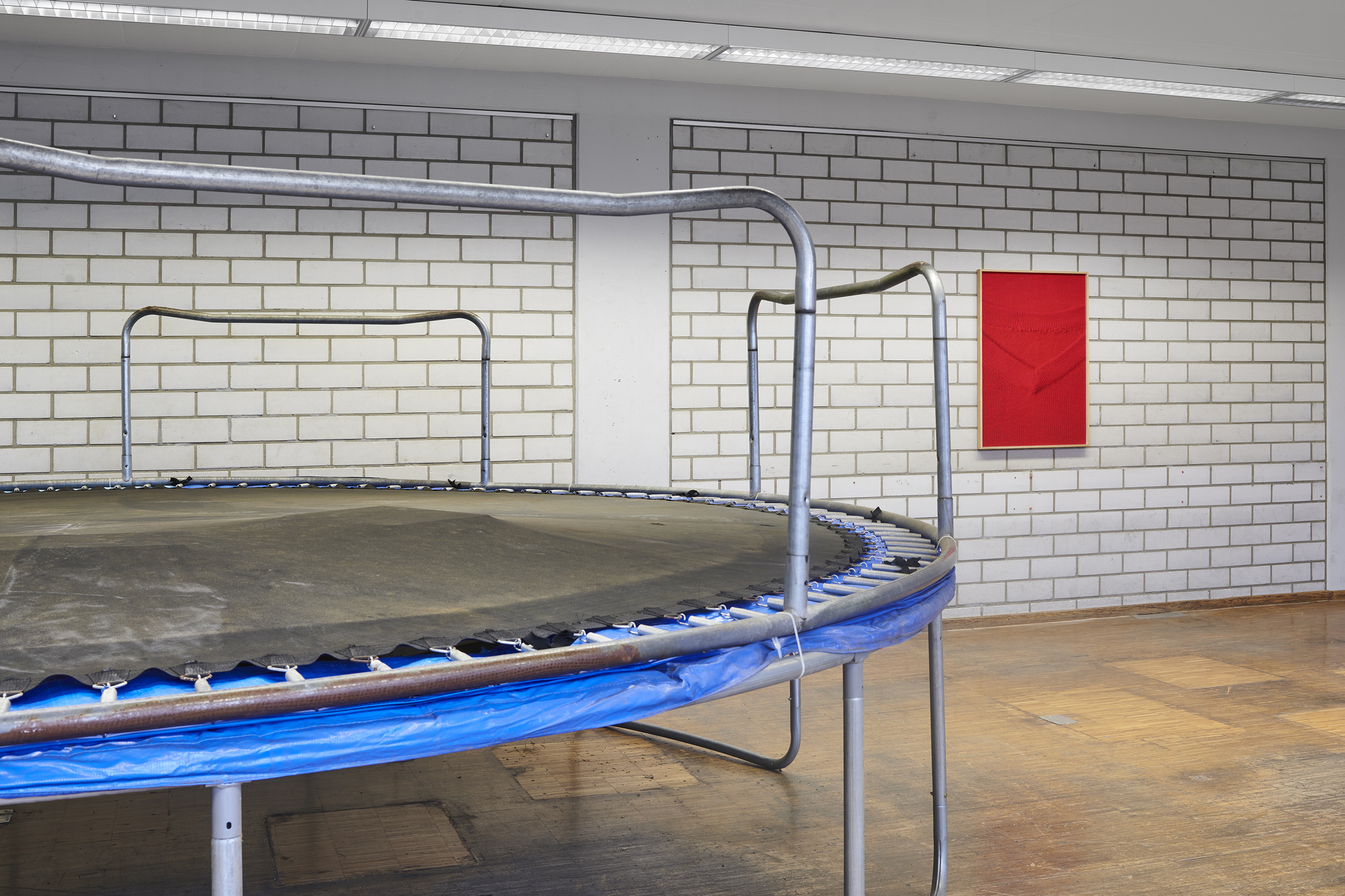
Hêlîn Alas, Carrying the Earth to the Sky, 2024, installation view with “Up and Up and Up and Up,” 2024, trampolines, cable ties, speakers, sound, cables, 490 x 165 cm and “Still Faced,” 2024
framed photo print (part of a series) 100 x 70 cm. Photo: Produktion Pitz
Hêlîn Alas, “Traumhaus junior,” 2024, caramel, 118 x 90 x 8 cm. Photo: Produktion Pitz
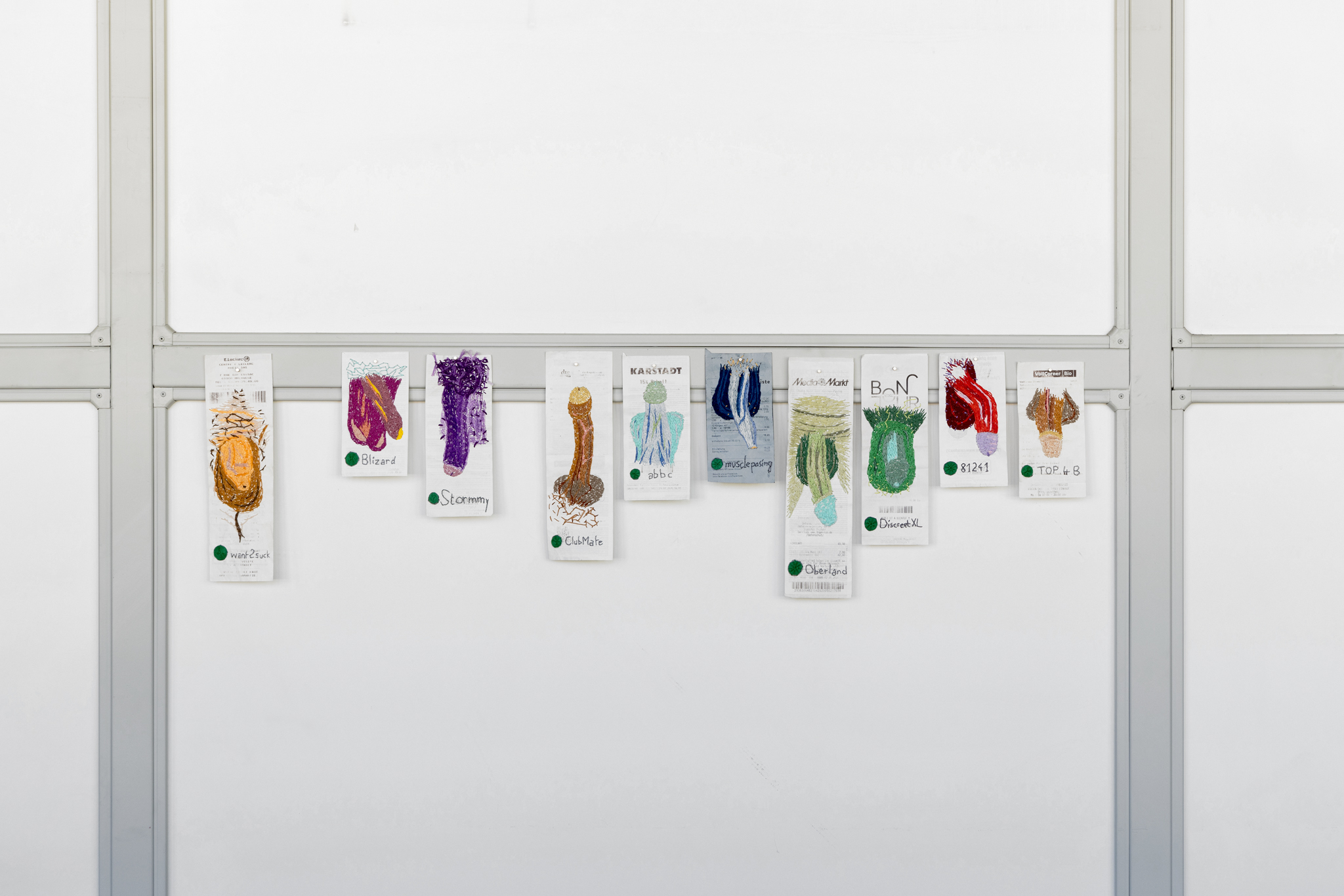
Pierre-Yves Delannoy, “embroideries on cashier’s ticket,” 2019-24, cotton yarns, thermo paper, dimensions variable (8 x 16 cm (X10)). Photo: Thomas Splett
Veronika Hilger, Carrying the Earth to the Sky, 2024, installation view. Photo: Thomas Splett
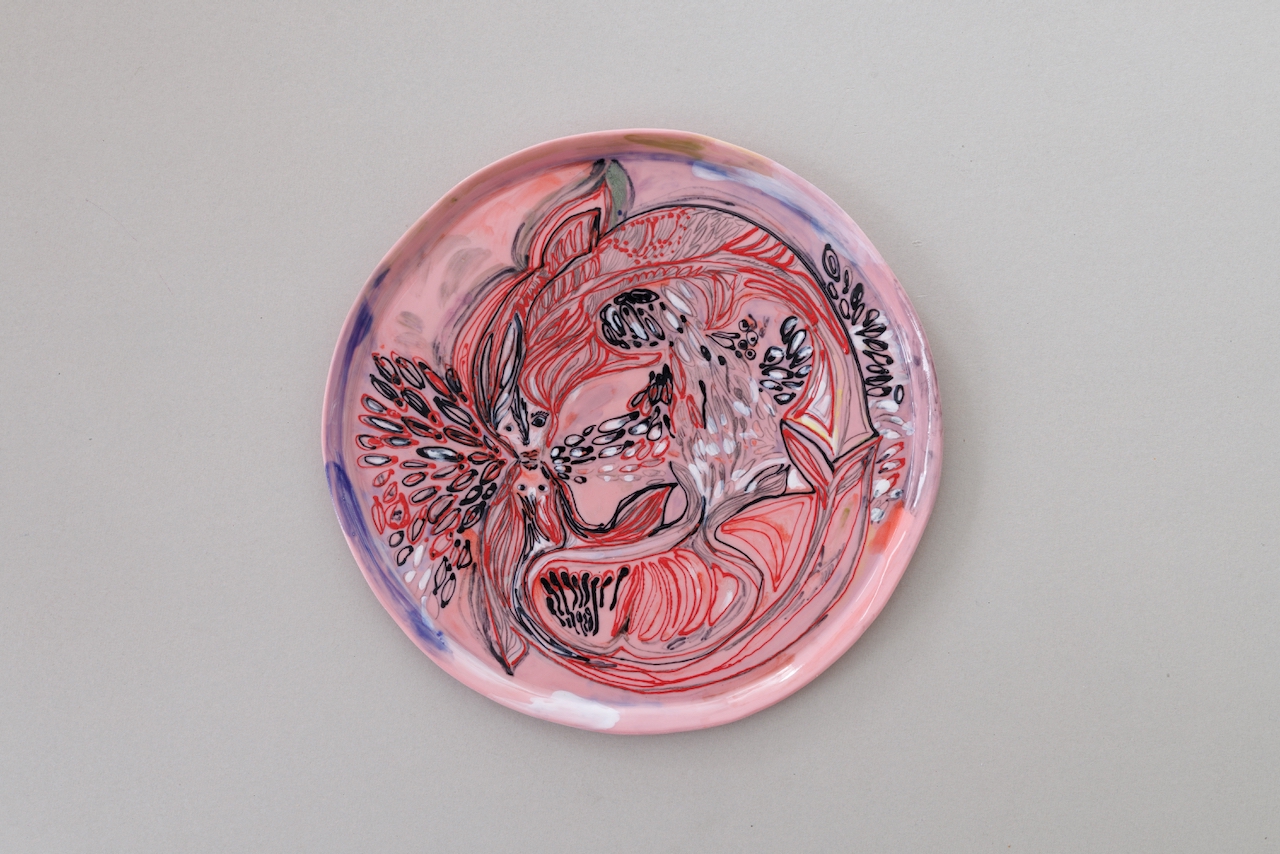
Veronika Hilger, Untitled, 2024, ceramic, 27 × 24 × 3 cm. Photo: Thomas Splett
Lukas Hoffmann, “Figure,” 2020, MDF, oak, aluminum, acrylic glass, 50 x 45 x 8 cm. Photo: Lukas Hoffmann
Lukas Hoffmann, “Castle,” 2024, Spraypaint, plywood, screws, MDF dyed through, 100 x 100 x 200 cm. Photo: Lukas Hoffmann
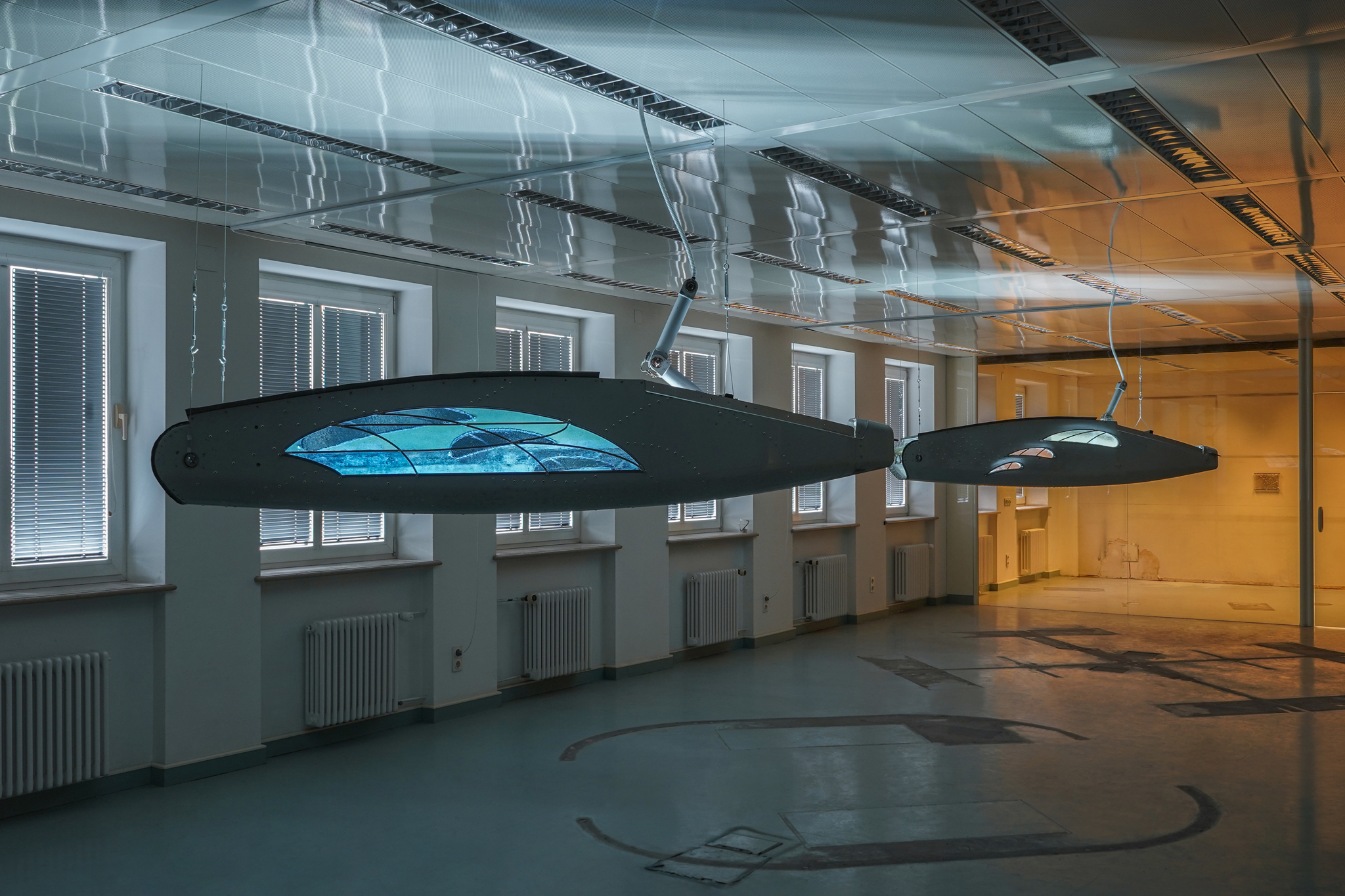
Ju Young Kim, “Almost like Whale Watching,” 2024, a pair of aircraft fairings, stained glass, rivets, LED, 240 x 38 x 46 cm (X2). Photo: Younsik Kim
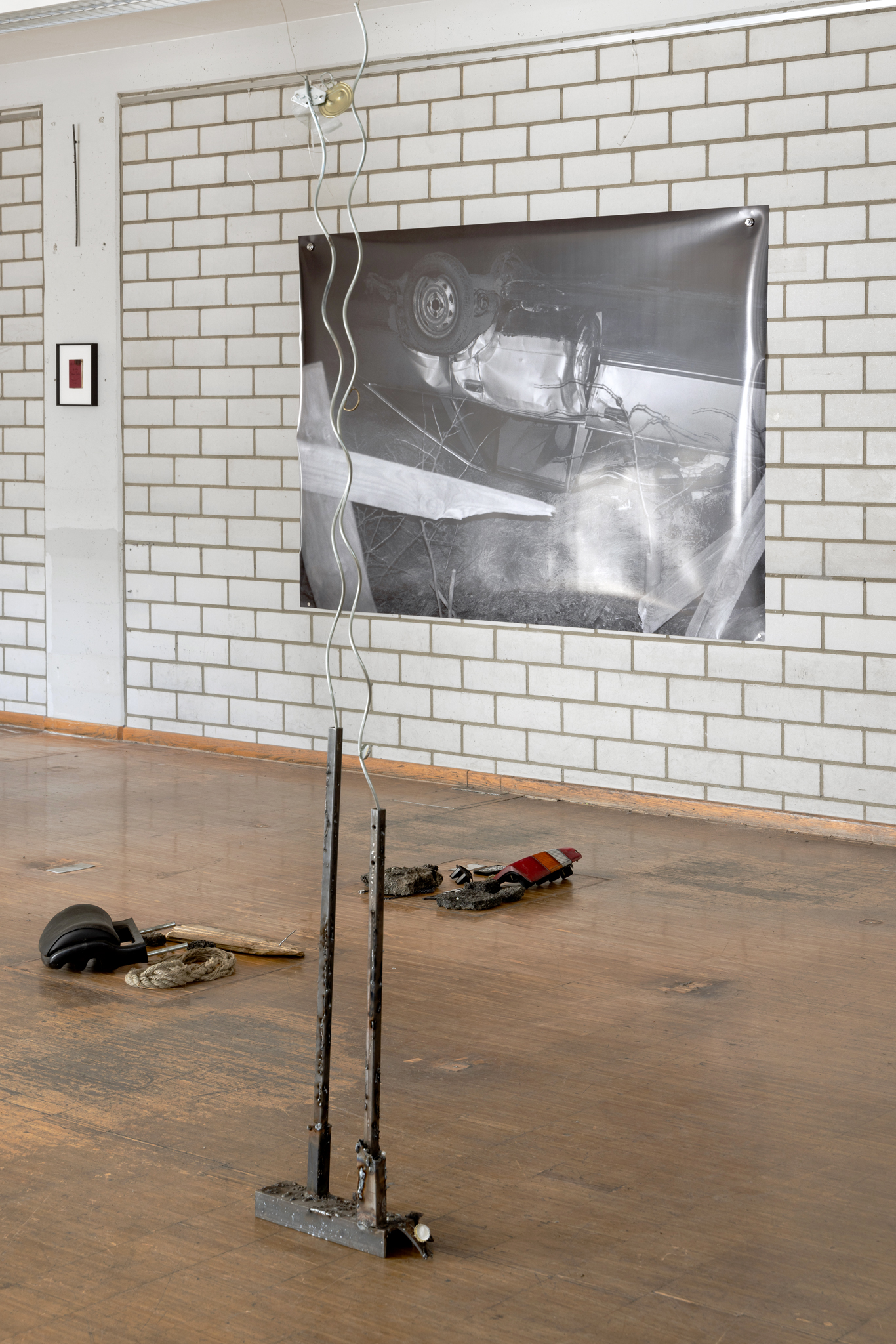
Anna McCarthy, Carrying the Earth to the Sky, 2024, installation view with “Car Crash b/w,” 2001, analogue photograph 230 x 160. Photo: Thomas Splett 
Anna McCarthy, “Car crash installation,” 2024, mixed media, dimensions variable. Photo: Thomas Splett
Jonathan Penca, “Synanthropop,” 2024, paper-maché, plaster, polymer clay, resin, cardboard, acrylic paint, wood, glass, digital print on paper, plinth, 120 x 60 x 60 cm. Photo: Thomas Splett
Jonathan Penca, “Mitten Crack,” 2024, paper-maché, plaster, polymer clay, resin, wooden bird whistle, lipstick, cardboard, acrylic paint, digital print on paper, plinth 120 x 60 x 60 cm. Photo: Thomas Splett
Curtis Talwst Santiago, “History of Touch” 2024, installation view detail. Photo: Thomas Splett
Curtis Talwst Santiago, “History of Touch” 2024, installation view. Photo: Thomas Splett
Valio Tchenkov, Carrying the Earth to the Sky, 2024, installation view. Photo: Thomas Splett
Ayaka Terajima, Carrying the Earth to the Sky, 2024, installation view. Photo: Thomas Splett
Ayaka Terajima, “Long legs doki,” 2023, Unglazed fired ceramic by recycled clay, 60 x 100 x 130 cm. Photo: Thomas Splett
Gülbin Ünlü, “Karanlik isik,” 2024, wood, printed fabric, dimensions variable (site specific installation). Photo: Thomas Splett
Gülbin Ünlü, “Karanlik isik,” 2024, wood, printed fabric, dimensions variable (site specific installation) detail. Photo: Thomas Splett
Paul Valentin, “Kasside,” 2024,  site specific video installation. Photo: Thomas Splett
Max Weisthoff, “perpetuator,” 2024, sculptural sound installation, 5 objects, cable, dimensions variable (site specific installation). Photo: Thomas Splett
Max Weisthoff, “out of flesh,” 2024, mixed media installation, 2 channel video, x objects, dimensions variable (site specific installation). Photo: Thomas Splett

“Carrying the Earth to the Sky” will present works by 13 artists who are currently active in the contemporary art scene in Munich. The artists were selected in a two-stage process. First each of the 37 participants of VARIOUS OTHERS nominated one artist currently living in Munich. From this group, an international jury consisting of four institutional curators selected 13 artists who will show their work as part of the VARIOUS OTHERS program in September. The jury acknowledged that the quality of the applications received made their task both exciting and challenging. The final selection of multi-generational artists reflects the desire to see art beyond fixed categories and clichés and to honour distinctive works.

The exhibition’s curator, Magdalena Wisniowska, has meticulously chosen the works in collaboration with the artists. These will be presented together in an overarching curatorial concept at Schillerstraße 38 under the title “Carrying the Earth to the Sky”.

“The earth is something human, something we keep under our feet. The sky high above is without air, where no living thing can breathe. Moving away from one to the other means letting go of the earth and constructions that belong to it – actions, bodies, objects, sensations and desires – until only the elements, disconnected molecules, remain.”

We would like to express our gratitude to all supporters of the exhibition, particularly the owners of the property at Schillerstraße 38, the Cultural Department of the City of Munich, the Edith-Haberland-Wagner Foundation and Serviceplan Group for their generous support.

Jury:
Rosa Ferré (TBA21, Madrid)
Luis Silva (Kunsthalle Lissabon)
Nicola Trezzi (CCA, Tel Aviv)
Vivien Trommer (K21, Düsseldorf)

Notes on Roommates (a dog, a parrot, a whale and a canal)

Sophia Mainka

in collaboration with Fondation Fiminco, Paris

6.09 – 13.10.2023

Lothringer 13 Studio, Lothringer Str. 13, 81667 München

Sophia Mainka, Notes on roommates (a dog, a parrot, a whale and a canal), 2024, installation view
Sophia Mainka, Notes on roommates (a dog, a parrot, a whale and a canal), 2024, detail
Sophia Mainka, Notes on roommates (a dog, a parrot, a whale and a canal), 2024, installation view

Photos: Thomas Spelt

In the summer of 2022, a Beluga whale strayed into the river Seine and began swimming towards Paris. It was stopped by a lock, refused to eat and was subsequently euthanised. Nobody knows when parrots entered Parisian airspace, but they have been observed in the French capital since the 1970s. They can now be seen in most of Paris’s public parks, from the Bois de Boulogne in the west to the Bois de Vincennes in the east. And dogs – well, dogs have been roaming Parisian streets since forever. Terriers, Dachshunds, Spaniels, and of course, the French Bulldog.


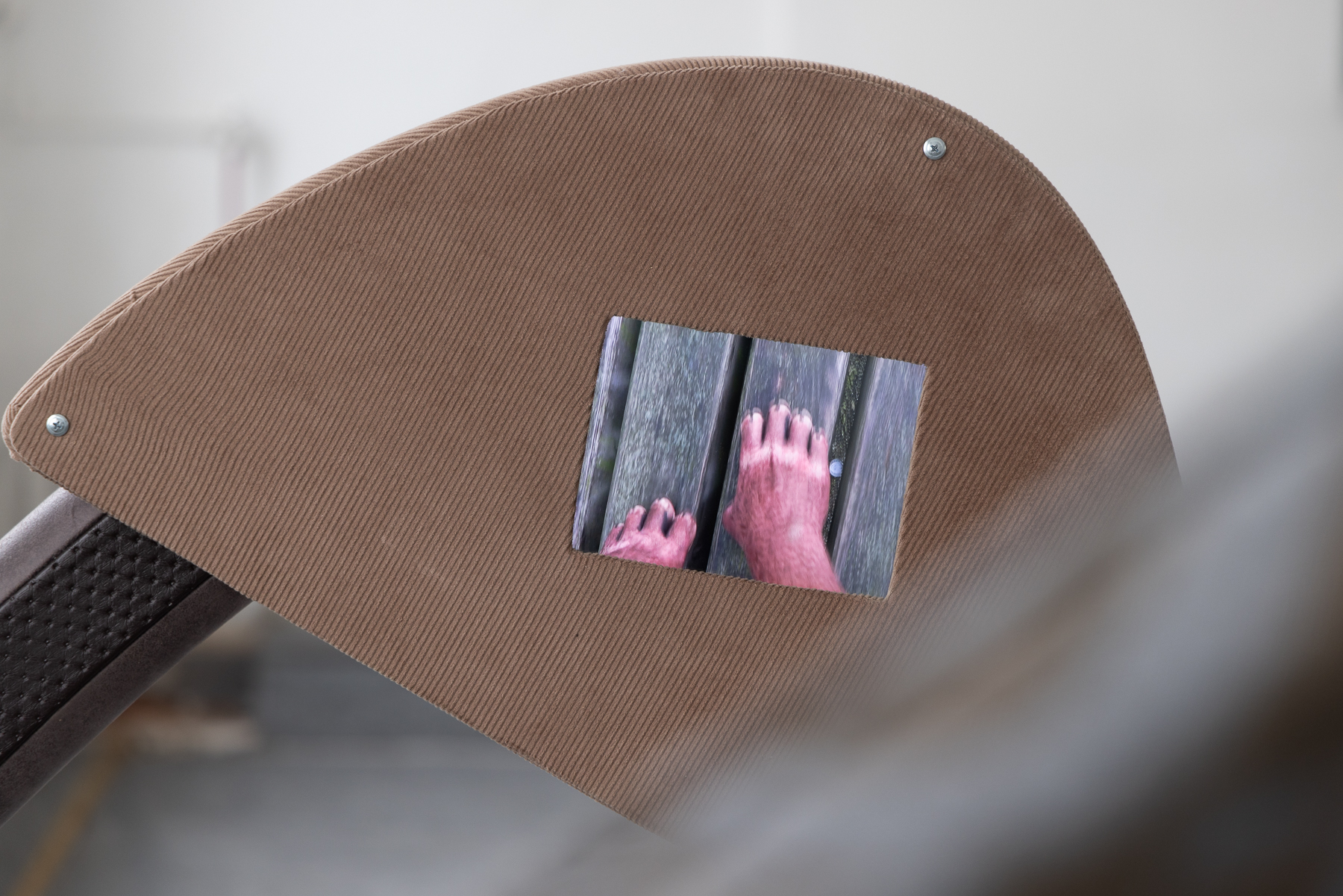
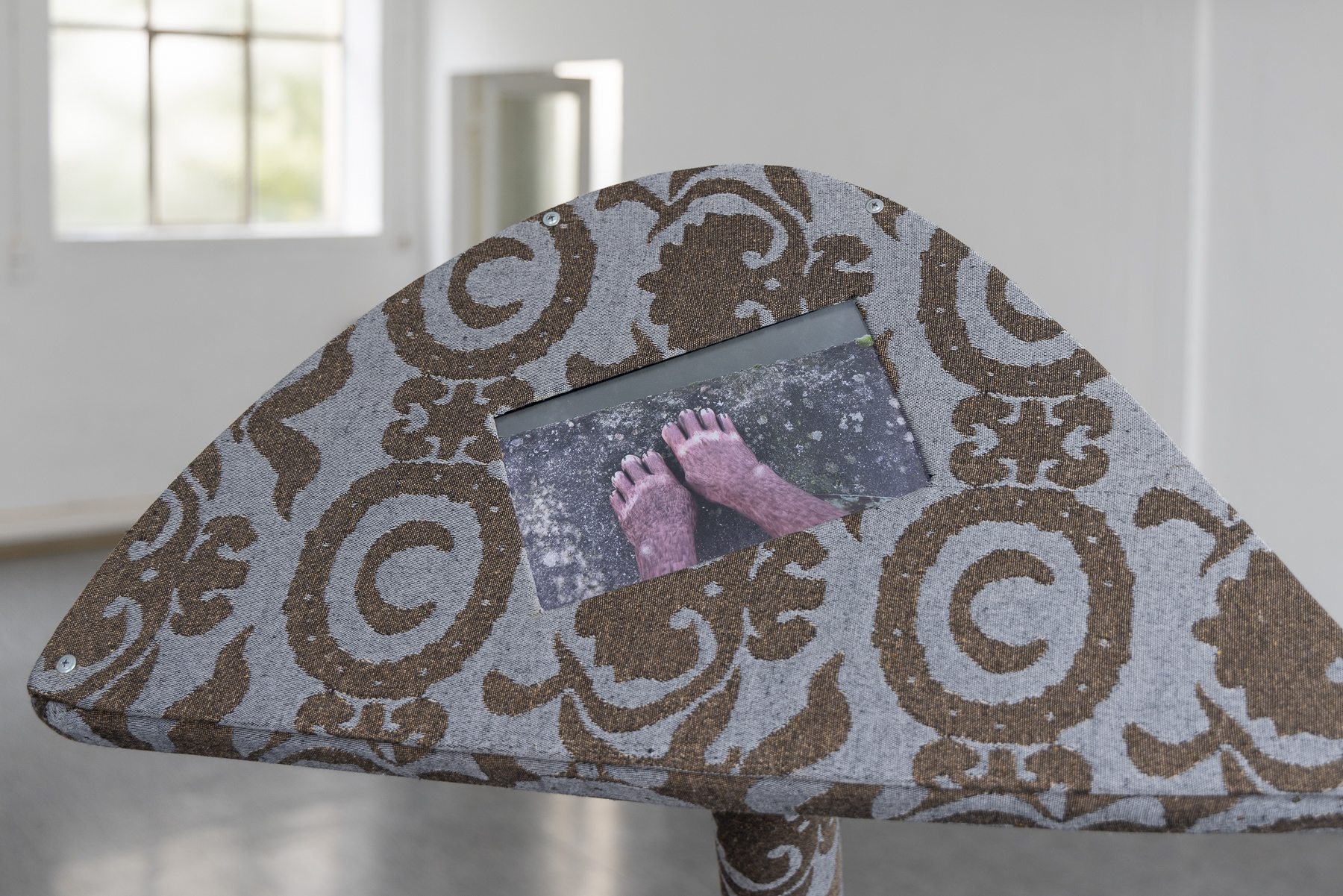
These stories of animals adapting to urban environments lay at the heart of Sophia Mainka’s video and sculpture installation, “Notes on Roommates (a dog, a parrot, a whale and a canal)” produced and first shown during her residency at Fondation Fiminco in Paris. Amid the organic playful forms of the metal sculptures there are three videos, all filmed from the animal perspective. In the first two, Mainka paints her arms and hands to resemble a dog’s paws, and we see these on screen as the fictional dog walks, stops and occasionally runs around the cobblestones and concrete pavements, once even jumping from a wooden bench. In the third, she takes on the perspective of the whale, the camera capturing what the whale would have seen, providing it swam further, into the city canals. The image rises and dips to the rhythm of the whale’s breathing. Surrounding us are the sounds of birds singing, except this too is staged: these are not parrots, but a toy, a bird whistle device.


Her work then, could be described as ethological in spirit. Sophia Mainka does not imitate animals, but rather behaves like them. She scratches, she sniffs, she swims, she trills and peeps. She acts the way an animal would act, if she were a animal in this situation and in this sense, we can think of her work in terms of what the French philosopher Gilles Deleuze would call becoming.


For Deleuze and Guattari, the process of becoming-animal is best described by Vladimir Slepian in his short text, “Fils de Chien.” Written in the first person, Slepian confesses how, despite being a man, his hunger leads him to behave like a dog, putting shoes on his hands and tying them using his mouth. It is a reversal of the evolutionary process described by anthropologist André Leroi-Gourhan, in which humans, through their adoption of an upright posture, free their mouths from the task of grasping and develop speech. Slepian recomposes himself, so that his mouth instead of speaking, grasps like a dog’s. And it is irrelevant how this dog looks like, whether this is the short snout of a bulldog or longer nose of a dachshund.


Similarly, Mainka makes us rethink our relation to nature, which is redrawn along affective lines as a participatory process. Animals are not considered as distinct molar entities, standing alongside the human. All entities are defined by their capacity to act, which changes depending on how they affect and how they are affected by others. There is a sensing of utopia in the environs of the Canal Saint-Martin that Mainka would walk along so happily – a secluded, sheltered place of inter-species co-existence. Or rather, it is a place where different populations, human, mammal and bird, continually compose and re-compose together.

Notes on Roommates (a dog, a parrot, a whale and a canal)

Sophia Mainka

in collaboration with Fondation Fiminco, Paris

6.09 – 13.10.2023

Lothringer 13 Studio, Lothringer Str. 13, 81667 München

Sophia Mainka, Chien et canal, 2024 video still (3.44min, fullHD, without sound, loop)

We participate in nature and nature participates in us: in her art practice, Sophia Mainka has always been open to strange encounters with animals, plants and minerals. The work created during her stay at the Fondation Fiminco in Paris deals with the coexistence of different species within an urban space. Parrots fly across the city, a whale swims up the Seine and dogs walk on paved streets. Mainka responds ethologically, allowing the animal encounter to affect the way she acts.
“Notes on Roommates” is a series of video sculptures Mainka first presented at the residency, restaged at GiG Munich. To produce her fictitious gathering of animals, she builds a room for them: industrial material is bent into organic shapes and upholstered with fabrics featuring botanical patterns. Here we see her become dog, her painted fists becoming paws; we see her as the whale, in the murky river water, rising up to breathe.

Wir sind Teil der Natur und die Natur ist Teil von uns: Sophia Mainka öffnet sich in ihrer künstlerischen Praxis für ungewöhnliche Begegnungen mit Tieren, Pflanzen und Mineralien. Während ihres Aufenthalts in der Fondation Fiminco in Paris entstanden Werke, die das Miteinander verschiedener Arten im urbanen Raum thematisieren: Papageien fliegen durch die Stadt, ein Wal schwimmt die Seine hinauf, Hunde laufen auf gepflasterten Straßen. Mainka reagiert ethologisch, lässt zu, dass diese Begegnungen ihr Handeln beeinflussen.
„Notes on Roommates“ ist eine Installation mit Videoskulpturen, die sie während ihrer Residency präsentierte und nun im GiG Munich neu inszeniert. Um die Zusammenkunft der Tiere darzustellen, baut sie einen Raum für sie: Industrielles Material wird zu organischen Formen gebogen und mit botanisch gemusterten Stoffen gepolstert. Mainka verwandelt sich selbst in einen Hund, ihre Fäuste werden zu Pfoten; wir sehen sie als Wal, der im trüben Wasser auftaucht, um zu atmen.